



Abstract
The purpose of this research is to compare the perceptions of Spanish and British tourists in the formation of the overall perceived value of the purchase decision-making process for a hotel stay. Comparison is made between two key tourism distribution channels: offline, via a travel agency; and online, via the Internet. The sample comprised 600 tourists. Of these, 300 (150 Spanish and 150 British) had purchased hotel accommodation for their last holiday via an offline travel agency, and the other 300 (again, 150 Spanish and 150 British) had done so via the Internet. Given that the two countries differ in their cultural dimensions, the results show that the “uncertainty-avoidance” and “individualism/collectivism” dimensions moderate the relationship between the antecedents of overall perceived value. These differences are not homogeneous, depending instead on the medium through which the service is purchased. The present research takes a comprehensive approach to overall perceived value formation, considering differences both in culture and also in distribution channel, and including different phases: purchase and use.
Introduction
Perceived value has been acknowledged in marketing research as fundamental to understanding consumer behavior (Nilson 1992; Ostrom and Iacobucci 1995). Overall perceived value can be considered a subjective construct that will vary between consumers, between cultures, and over time. Following this premise, many researchers have analyzed the antecedents and consequences of perceived value in the tourism realm, both in terms of destination and also specific tourism services.
More specifically, several studies provide an analysis of perceived value in the experience of a tourist destination. Petrick and colleagues (Petrick, Duarte, and William 2001; Petrick 2004) found significant relationships between perceived value and the intention to revisit destinations, and distinguished between the antecedents of perceived value for first-time and repeat visitors to a tourist destination. Gallarza and Gil-Saura (2006) found that tourists’ perceived value directly affects their satisfaction, while satisfaction has a direct impact on their loyalty to the same destination. As regards antecedents, Prebensen et al. (2013) studied the relationship between motivation and involvement and the perceived value of destination experience. More recently, Pandza (2014) demonstrates the significant effect of perceived value on the satisfaction and intended future behavior of tourists toward the destination.
Other works provide an analysis of perceived value in the experience of using different tourism products and services. In the hotel context, Al-Sabbahy, Ekinci, and Riley (2004) and Kashyap and Bojanic (2000) identified a significant relationship between perceived service value and intention to revisit the hotel. In the specific context of cruise vacations, Dumand and Mattila (2005) examined the perceived value construct. Elsewhere, Lee, Petrick, and Crompton (2007) found that perceived value is the best predictor of behavioral intentions among festival visitors. In the package tour service field, He and Song (2008) investigated the relationship between tourists’ perceived service quality, value, satisfaction, and intentions to repurchase. Meanwhile, in the adventure tourism context, Williams and Soutar (2009) demonstrated a direct, positive, and moderate to strong relationship between perceived value and satisfaction and between perceived value and behavioral intentions, while Chen and Chen (2010) analyzed perceived value in heritage tourism. Bradley and Sparks (2012) analyzed the antecedents and consequences of changes in consumer value in a specific sector of the tourism industry, namely, timeshare.
Yet despite the range of studies examining the question of value in the tourism sphere, these focus on the phase relating to consumption of the tourism service and do not address the effects that tourists’ evaluations of the purchasing channel (in terms of quality or satisfaction with the channel) may have on this phase. However, the tourist’s perception of overall value once they have consumed the tourism service will be shaped not only by their consumption experience but also by their experience of purchasing it in the first place (Sánchez et al. 2006).
Travel agencies have traditionally been the most commonly used distribution channel among tourists (Buhalis and Laws 2008; Suárez, Díaz, and Vázquez 2007). However, in recent years, the Internet has revolutionized the travel and tourism field (Xiang et al. 2014) and has become one of the most important sources of tourism information (Wu, Wei, and Chen 2008; IET 2010) as well as currently being the most widely used medium for purchasing certain tourism services (IET 2010). The extent to which the purchase process undertaken via the travel agency or the Internet may influence tourist perceived value will be influenced by the degree of suitability of the purchasing channel to the tourist’s preferences. Such preferences, in turn, will be shaped by the national culture to which the tourist belongs.
The influence of culture on consumer behavior is evident in all areas of service, and particularly in the fields of travel and tourism. This is so because in today’s global economy there has been an unprecedented growth in overseas travel, making tourism truly a cross-cultural phenomenon (Manrai and Manrai 2011). Earlier studies propose that to achieve successful international tourism development, industry professionals need to understand the cultural differences between international tourists, as well as between tourists and the host society (Meng 2010), and adapt the design of their sales platforms, as appropriate, to address the cultural needs of international tourists (Tigre, Gnoth, and Deans 2014). For example, Manrai and Manrai (1996, 2011) and Kim and Lee (2000) corroborate that the cultural dimensions developed by Hofstede (1980) influence individuals’ motives for traveling. Another group of researchers discuss the behavior of international tourists on group tours (Pizam and Sussmann 1995; Wong and Lau 2001; Meng 2010; Kim and McKercher 2011). Cross-cultural research is relevant within the tourism industry for several reasons (Pizam and Fleischer 2005). First, the industry has undergone significant international growth in recent years. Second, cultural characteristics are of vital importance to the actual appeal of a product. Finally, tourism is a service that is consumed by people from different backgrounds.
Despite the recognized importance of culture in tourism (e.g., Pizam and Jeong 1996; Kozak 2002), little has been done to comprehend how cultural dimensions influence the overall perceived value of the decision-making process behind a tourism purchase. In this context, it is important to consider the defining role of national culture in shaping human interaction in all its forms, including both offline and online tourism commercialization, given that culture can help to explain many of the patterns seen in tourist preferences and behaviors (You et al. 2001). In the words of Reisinger and Turner (2003, p. 10) “tourist culture explains tourist behaviour.” Taking this premise as a reference point, the aim of the present work is to analyze the influence of culture on the overall perceived value of a tourism service, differentiating between the distribution channels used: offline travel agencies versus the Internet. More specifically, the research seeks to understand the influence of the cultural dimensions of “uncertainty-avoidance” and “individualism/collectivism” in the process of overall perceived value formation, depending on the medium through which the service is purchased.
This study makes two specific contributions to current knowledge. First, in light of the competition that exists between travel agencies and the Internet, and the importance of both for international tourism, the work analyzes overall perceived value formation by differentiating between two distinct distribution channels. Second, the present research sets out to explain the ways in which culture accounts for patterns in tourist preferences and behaviors.
Literature Review and Hypotheses
Overall Perceived Value Formation
Perceived value has been widely discussed in tourism and hospitality literature and business and sociology literature. However, the concept of perceived value has not often been clearly operationalized (Lee, Lee, and Choi 2011). Furthermore, scholars appear to differ in their notions and definitions of it (McDougall and Levesque 2000; Zeithaml 1988; Woodruff 1997). Khalifa (2004) points out that value has become one of the most overused and misused constructs in social sciences and management literature. Various concepts of perceived value, including those of Zeithaml (1988), Monroe (1990), and Holbrook (1999), have been adopted in the tourism and hospitality literature. That said, according to Prebensen et al. (2013), the most commonly referred-to definition of perceived value is that of Zeithaml (1988), namely, as “an overall assessment of the utility of a product or service based on perceptions of what is received and what is given” (p. 14). The conceptualization of value as a trade-off between “get” and “give” has boosted a universal interest in the composite nature of consumer value (e.g. Bradley and Sparks 2012; Gallarza and Gil-Saura 2006; Sweeney and Soutar 2001; Woodruff 1997). In this definition, perceived value as a construct is formed by two factors: benefits received and sacrifices made by the customer (Cronin, Brady, and Hult 2000; Dodds, Monroe, and Grewal 1991). Then the proposed theoretical model is shown (Figure 1).
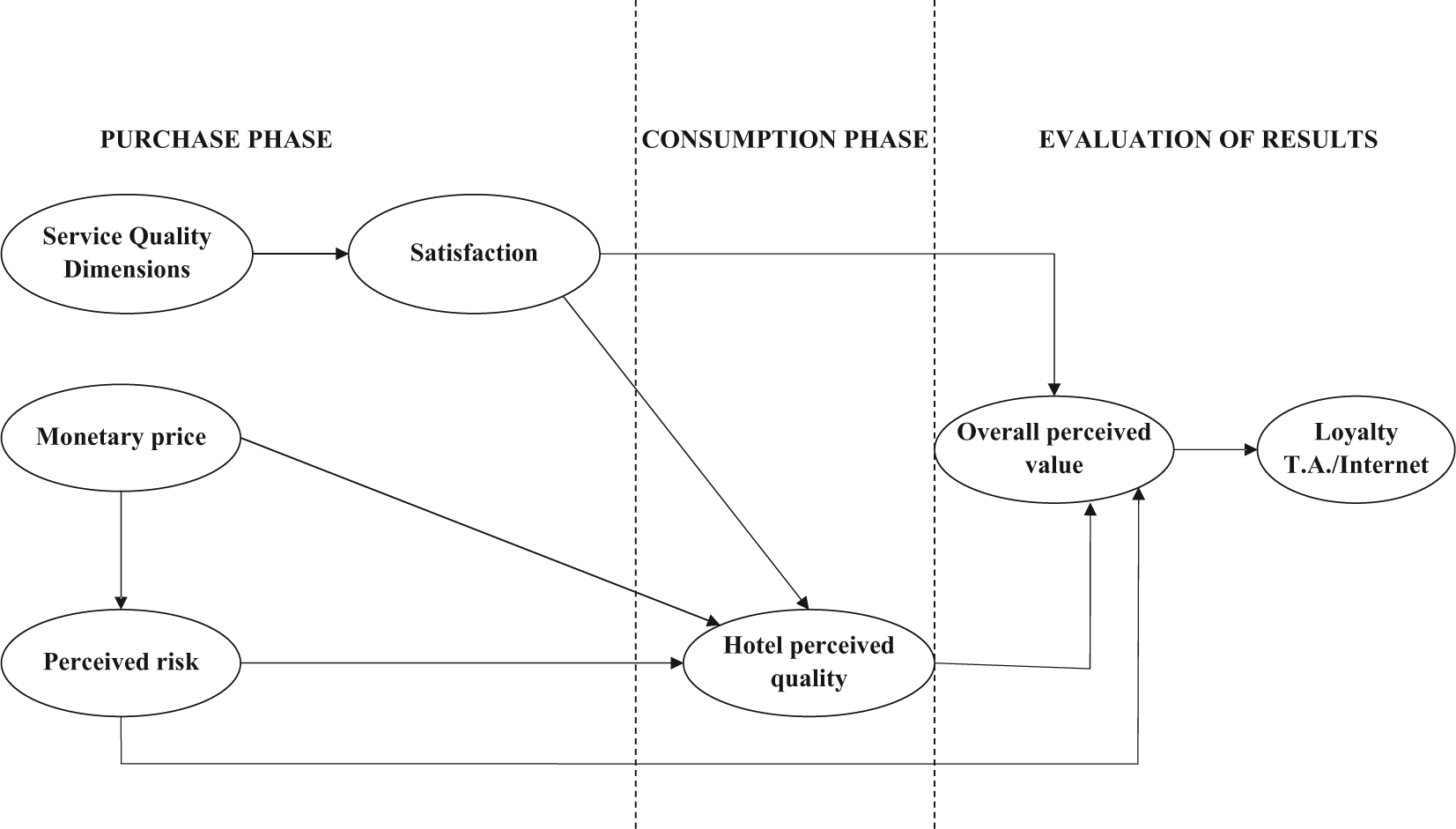
Model of overall tourist perceived value formation.
A further key issue, as indicated by Woodruff (1997), is that the majority of proposed definitions of value draw on concepts such as quality and satisfaction, whose differential significance is not made entirely clear in the literature. Indeed, the existing literature demonstrates that there is no consensus as regards how to view perceived quality relative to perceived value. While some authors consider service quality to be an antecedent of perceived value (Liao and Wu 2009; Hume 2008; Kumar and Lim 2008; Kim, Zhao, and Yang 2008; Wu and Hsing 2006; Terblanche 2006; Snoj, Pinsnik, and Mumel 2004; Tam 2004; Wang et al. 2004), others regard it as a component (Petrick 2002; Sweeney and Soutar 2001; Lapierre 2000; Holbrook 1999; Zeithaml 1988).
From 2000 onwards, it may be said there has been an emerging consensus regarding the conceptual and operational relationships between quality and value. Cronin, Brady, and Hult (2000) provide theoretical and empirical order for the relationships between constructs dealing with value, such as quality, sacrifice, and satisfaction, and conclude that both quality and sacrifice are antecedents of perceived value. In the present research, quality, price, and satisfaction are addressed as differentiated constructs, albeit related to value.
With a view to scoping other possible antecedents of value, it is important to bear in mind the typology of value being addressed (Holbrook 1999; Schembri and Sandberg 2011). The literature differentiates between acquisition, transaction, in-use and redemption value (Monroe and Chapman 1987; Parasuraman and Grewal 2000), and even addresses value with regard to different phases of the product purchase–use process (Woodruff 1997; Oliver 1981). However, it should be borne in mind that a global perspective on perceived value offers a more complete view, in that it measures value prepurchase, during purchase, and postpurchase (Zeithaml 1988). The present research, in line with the approach taken by Monroe (1990) as regards the aggregation of different components of value into one sole dimension, considers overall perceived value, in a bid to capture both the value generated in the purchasing process and also that generated while consuming the tourism service. According to Pura (2005), in the area of ICT, these two typologies of value have been found to be the most relevant.
Taking into account this concept of overall perceived value in the purchase–consumption process, satisfaction with the purchasing element must precede the overall perceived value generated by the process in its entirety once the individual has gone on to consume the product or service. Furthermore, satisfaction with the purchase will be determined by the perceived service quality of the channel used to make that purchase (Cronin, Brady, and Hult 2000).
Meanwhile, price is an indicator of product or service quality (Zeithaml 1988; Monroe 1990; Aqueveque 2006) and an element that influences perceptions of risk (Sweeney, Soutar, and Johnson 1999). Furthermore, when addressing the interrelationships between the variables influencing perceived value, there is agreement that a higher level of perceived risk has a negative impact on perceived value (Sweeney, Soutar, and Johnson 1999; Teas and Agarwal 2000; Snoj, Pinsnik, and Mumel 2004; Shimp and Bearden 1982; Wood and Scheer 1996). Although price is considered to be a key component of sacrifice in the evaluation of overall perceived value, Cronin, Brady, and Hult (2000) conclude that in only one of the six sectors that they analyze (namely fast food) does sacrifice have a negative effect on consumer perceived value. They find that service consumers seem to place greater importance on the quality of a service than they do on the costs associated with its acquisition; hence, the authors do not propose a direct relationship between price and overall perceived value.
Finally, several studies suggest that perceived value is one of the most important determinants of repeat-purchase and repeat-visit intention (Frost, Goode, and Hart 2010; Srinivasan, Anderson, and Ponnavolu 2002; Lynch, Kent, and Srinivasan 2001; Cronin, Brady, and Hult 2000; Oh 1999; Parasuraman and Grewal 2000).
National Culture
Previous studies establish that culture is pervasive in all aspects of consumption and consumer behavior and that it should be integrated into all elements of consumer behavior theory (Mooij 2005). Since the 1980s, various researchers have debated the most appropriate choice of dimensions to conceptualize culture (e.g., Hofstede 1980; Keillor and Hule 1999; Steenkamp 2001). However, it is the framework developed by Hofstede (1980) and Hofstede, Hofstede, and Minkov 2010) that has become established as the most dominant and influential cultural paradigm (Sivakumar and Nakata 2001; Steenkamp 2001; Tigre, Gnoth, and Deans 2014). Hofstede defines national culture as “the programming of the mind which distinguishes the members of one group or category of people from another”. His framework based on his original study presents four dimensions (Hofstede 1980), to which he has subsequently added two further dimensions in later versions of the study. These six dimensions illustrate that “cultural differences between modern nations could be meaningfully measured and ordered along a discrete set of variables, representing different answers to universal problems of human societies” (Hofstede, Hofstede and Minkov 2010). The six dimensions are power distance; uncertainty-avoidance; individualism/collectivism; masculinity/femininity; long-term/short-term orientation; and indulgence/restraint. However, individualism/collectivism and uncertainty avoidance appear to be the most extensively employed dimensions in cross-cultural consumer behavior research. More specifically, these two dimensions are the most widely used in the literature on online consumer behavior (Jarvenpaa and Tractinsky 1999; Weber and Hsee 1998; Liu, Furrer, and Sudharshan 2001; Frost, Goode, and Hart 2010; Gong, Li, and Stump 2007), not only for their ease of interpretation in the context of the online market but also because the existing literature shows that individual characteristics such as perceived risk (Cheung, Chan, and Limayen 2005) and the degree of individualism/collectivism (Gong, Li, and Stump 2007) are among the most important determinants of consumers’ purchasing behavior.
Individualism refers to a culture in which “people look after themselves and their immediate family only,” and collectivism refers to a culture in which “people belong to in-groups (families, clans and organisations) who look after them in exchange for loyalty.” Meanwhile, uncertainty avoidance may be defined as “the extent to which people feel threatened by uncertainty and ambiguity and try to avoid such situations” (Hofstede 1980, 2001).
However, Hofstede’s framework has not entirely avoided criticism. Certain researchers have criticized the process of identifying the dimensions for being empirical, rather than deriving from theory (Albers-Miller and Gelb 1996); being based on factors such as luck or opportunity (Erez and Earley 1993); constituting a subjective and arbitrary grouping of elements (Fernández et al. 1997; Dorfman and Howell 1988); being far from exhaustive in nature (Schwartz 1994); being based on results derived from one single firm (Schwartz 1994; Erez and Earley 1993; Lenartowicz and Roth 2001); and because the data were taken from people from the middle classes and the statistical procedures cover several confusing and varying sources (Sondergaard 1994).
While acknowledging that these criticisms may be considered valid (Soares, Farhangmehr, and Shoham 2007), the benefits of this perspective for international marketing and cross-cultural research outweigh its limitations (Smith, Dugan, and Trompenaars 1996, p. 232). Hofstede’s model is one of the most widely tested and validated models in the field of cross-cultural studies (Dorfman and Howel 1988), having been proven by cross-cultural research in a range of disciplines including psychology, sociology, marketing, and other social sciences.
Differences between Distribution Channels: Offline versus Online
Travel agencies, as an offline medium, have traditionally been the most popular distribution channel among tourists (Buhalis and Law 2008; Suárez, Díaz, and Vázquez 2007). However, the online medium (i.e., the Internet) has become one of the most important sources of tourism information (Wu, Wei, and Chen 2008; IET 2010) as well as currently being the most widely used medium for purchasing certain tourism services (Frontur 2010).
The literature demonstrates that consumers’ evaluation of the electronic offer differs from that of traditional, interpersonal services (Liljander and Mattsson 2002; Santos 2003; Van Riel, Liljander, and Jurriens 2001). Quite clearly, the differentiating component is technology (Parasuraman and Grewal 2000). The Internet exhibits considerable advantages relative to travel agencies such as accessibility, convenience of updating, real-time information, interactive communications, and so on. On the other hand, travel agencies perform better than travel websites in terms of the human touch and personalized services (Law, Leung, and Wong 2004). Furthermore, from the consumer’s point of view, the perceived risk of using the online medium for making purchases is greater than that associated with the traditional channel, as they must provide personal details and information relating to payment before they receive the product. In other words, purchasing over the Internet brings with it a greater degree of ambiguity than shopping in traditional, physical establishments (Suki and Suki 2007).
When an individual makes an evaluation of these two channels, this too is based on different attributes. The literature includes various different works that seek to identify the dimensions that are most appropriate for measuring both offline and online service quality, and concludes that the most suitable approach is to use a specific scale for each medium. The most widely used scale in the offline medium is that known as SERVQUAL (Parasuraman, Zeithaml, and Berry 1985), and in the online medium it is the E-S-QUAL scale (Parasuraman, Zeithaml, and Malhotra 2005). The dimensions for measuring service quality and their equivalencies with the dimensions of the SERVQUAL and E-S-QUAL scales are shown in Table 1. In both cases, it is considered useful to include a dimension that reflects content quality (the “relevant information” dimension), used previously by Bergeron (2001) and Heim and Sinha (2001).
Service Quality Dimensions.

Source: Own elaboration.
Individualism/collectivism and the distribution channel
In individualist cultures, customers have been found to be more independent and self-centered than those from collectivist cultures (Furrer, Li, and Sudharshan 2000; Donthu and Yoo 1998). By contrast, cultures displaying a low level of individualism place greater emphasis on human, personal contact (Malhotra et al. 1994). Specifically, people from individualist cultures, because of their personal drive, expect others to be efficient and are more demanding than people from more collectivist cultures (Furrer, Li, and Sudharshan 2000). Hence, the very characteristics associated with individuals belonging to different cultures can mean that their expectations of the distribution channel may also differ from one another. Therefore it can be considered that individuals from highly collectivist cultures will place a more positive value on the service provider’s friendliness and willingness to help customers when delivering a service, while those from highly individualist cultures prefer to maintain a distance between themselves and the provider and are more interested in the service’s efficiency than in the relationship with its provider (Furrer, Li, and Sudharshan 2000 and Donthu and Yoo 1998). In short, people from collectivist cultures value more highly the help provided by the distribution channel during the purchase of a service and are more tolerant of delays or errors, while those from more individualist cultures pay more attention to the quality of the process than to the human dimension. Bearing in mind that the quality dimension “responsiveness” is only to be found in the offline travel agency channel, it is proposed that:
Hypothesis 1offline. The coefficient between “responsiveness” and satisfaction with the travel agency channel is higher for tourists from collectivist cultures than for tourists from individualist cultures.
Similarly, tourists from individualist cultures tend to believe that success is the result of personal effort and that they do not require help from third parties to achieve their aims (Dash, Bruning and Acharya 2009)—hence greater ease of use implies greater speed and usefulness when browsing websites. Therefore, it is possible that, in more collectivist cultures, ease of use does not carry the same importance as it does in individualist cultures. Given that ease of use only refers to service quality in the online channel, it is proposed that:
Hypothesis 2online. The coefficient between “ease of use” and satisfaction with the Internet channel is higher for tourists from individualist cultures than for tourists from collectivist cultures.
Individuals from cultures with a high level of individualism tend to be more competitive and place greater importance on the utilitarian values of their exchanges with the service provider (Bhawuk and Brislín 1992), focusing more on efficacy than those from cultures where collectivist values predominate (Dagwell, Weber, and Kling 1983). Kvist and Klefsjö (2006) conclude that service reliability is a dimension of great importance for people from individualistic cultures. Specifically, in such cultures consumers principally pursue their own interests (Dash, Bruning, and Acharya 2009) and are less tolerant of providers offering poor service quality. Conversely, collectivist consumers are more tolerant of poor service as they place a greater emphasis on retaining the relationship with the service provider and adapt their expectations to the service quality accordingly (Donthu and Yoo 1998). Individualist consumers value more highly the effectiveness of the distribution channel (be it on- or offline) when acquiring a service. It is therefore proposed that:
Hypothesis 3offline/online. The coefficient between “efficacy” and satisfaction with the travel agency or Internet channel is higher for tourists from individualist cultures than for tourists from collectivist cultures.
Uncertainty avoidance and distribution channel
People from cultures with high uncertainty avoidance will be more inclined to avoid online purchasing than individuals from cultures with a low level of uncertainty avoidance (Lim et al. 2004). Individuals from cultures with a low level of uncertainty avoidance may also differ in terms of their perceptions and beliefs about e-commerce (Kim and Peterson 2003). From the consumer’s point of view, the perceived risk of using the online medium for making purchases is greater than that of the traditional channel (Suki and Suki 2007). More specifically, travel agencies generate less uncertainty because of their personal interaction and the control that the tourist feels regarding the medium they are using. The greater uncertainty associated with the online medium is reflected in several of the relationships proposed in the present work.
One such relationship is the effect of privacy on the tourist’s satisfaction with the channel. The high level of uncertainty associated with the online channel is also influenced by the “uncertainty-avoidance” cultural dimension. For example, to mitigate uncertainty and to increase their confidence level when undertaking a purchase online, compared to those from cultures with low uncertainty avoidance individuals with high uncertainty avoidance may require more guarantees in terms of privacy, and this, in turn, will affect their level of satisfaction. In this regard, in the online banking context, Brown and Buys (2005) identify that users from cultures with a high level of uncertainty avoidance present less satisfaction with the security of the online service. In the present study, it was therefore posited that those groups with higher scores for uncertainty avoidance would react more strongly to perceived security threats given the uncertainty that this created, and would therefore be less satisfied with security than those with a lower level of uncertainty avoidance. Considering that it is more likely that the moderating effect of privacy will manifest in a channel presenting high uncertainty (i.e., the Internet), it is proposed that:
Hypothesis 4online. The coefficient between “privacy” and satisfaction with the Internet channel is higher for tourists from high uncertainty-avoidance cultures than for tourists from low uncertainty-avoidance cultures.
Another relationship that is affected by the greater uncertainty inherent in the electronic channel is the effect of price on the perceived risk of purchasing. The literature asserts that price is an element that influences perceptions of risk (Sweeney, Soutar, and Johnson 1999). However, the effect of price on risk will be moderated by the “uncertainty-avoidance” cultural dimension. This dimension is related to the consumer’s perception of risk (Jarvenpaa and Tractinsky 1999). Those tourists from cultures with a low level of uncertainty avoidance will pay less attention to the risks they run in their purchasing behaviors, while those from cultures with a high level of uncertainty avoidance will evaluate such risks very carefully. These consumers will carefully analyze the price-related benefits in their purchase decision-making process (Zhou and Nakamoto 2001). Hence, taking into account the greater uncertainty associated with the online channel, the moderating effect of culture is proposed for this channel only, in the following terms:
Hypothesis 5online. The coefficient between “price” and perceived risk in the Internet channel is higher for tourists from high uncertainty-avoidance cultures than for tourists from low uncertainty-avoidance cultures.
Continuing with the theme of risk and its particular relevance for the online channel, which is perceived as being less secure, the effect of this variable on perceived hotel quality and on overall perceived value is also influenced by the “uncertainty-avoidance” cultural dimension. For tourists from cultures with a low level of uncertainty avoidance, the degree of perceived risk is a variable that will barely have any influence on their perceptions and evaluations. Consumers from societies with a strong degree of uncertainty avoidance are more concerned with the promises made by service providers and with security (Lee and Joshi 2007)—in other words, with service quality. For individuals from such cultures, the perceived risk associated with the purchase of a service will therefore be more relevant in the evaluations they make subsequent to using the service. Hence, the moderating effect of culture is proposed for the electronic channel only, as reflected in the following hypotheses:
Hypothesis 6online. The coefficient between “perceived risk” and hotel quality in the Internet channel is higher for tourists from high uncertainty-avoidance cultures than for tourists from low uncertainty-avoidance cultures.
Hypothesis 7online. The coefficient between “perceived risk” and perceived value in the Internet channel is higher for tourists from high uncertainty-avoidance cultures than for tourists from low uncertainty-avoidance culture.
Methodology
Sample Design and Data Collection
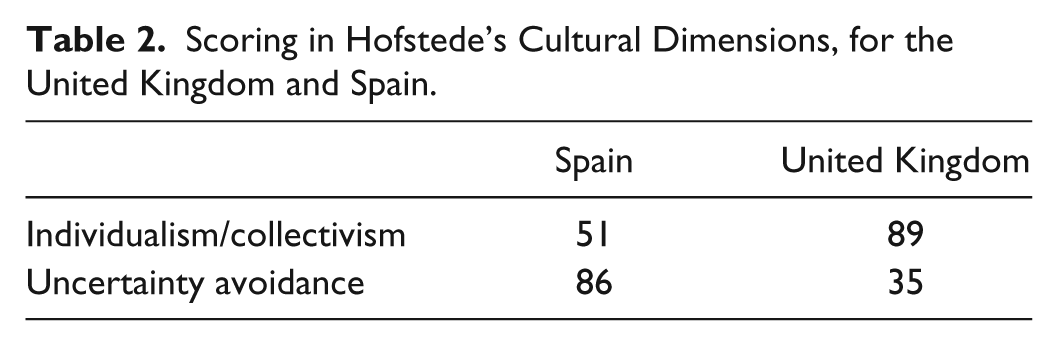
A sample of tourists was chosen from two nationalities, namely British and Spanish. This choice was based on the fact that Spain and the United Kingdom demonstrate major differences in the uncertainty-avoidance dimension (86 for the Spanish and 35 for the British) and also in individualism/collectivism (51 for the Spanish and 89 for the British; Table 2) (Hofstede 1980, 2001). Hofstede developed a survey instrument, the Value Survey Module, which enables the culture of a country to be summarized across a limited number of common dimensions, based on a scoring mechanism. It is assumed that systematic and stable differences between respondents from different countries can only be explained by the culture of the country in question. The literature review shows that Hofstede’s cultural dimensions are those that have the greatest influence on the process of perceived value formation.
Scoring in Hofstede’s Cultural Dimensions, for the United Kingdom and Spain.
In order to test the proposed hypotheses, a study based on two structured telephone questionnaires was carried out. One questionnaire was aimed at tourists (Spanish and British) who had acquired their tourism service via an offline travel agency, and the other was aimed at tourists (again, Spanish and British) who had acquired their tourism service via the Internet. On the basis of two filter questions, tourists had to fulfill two criteria in order to be included in the sample, namely, that they had purchased their hotel accommodation via the Internet or offline travel agency; and that their nationality, be it Spanish or British, matched their country of residence. Therefore, the individuals in the Spanish sample were Spanish speakers, and those in the British sample were English speakers; hence the interviews were conducted in either Spanish or English, respectively.
The initial stage of the present research consisted of two pretest studies. First, one pretest study was undertaken among degree students (Spanish only), with a subsequent shift being made in light of the results obtained, to test understanding of the questions and to refine the questionnaire accordingly. Secondly, another pretest was undertaken among a representative sample of the target audience (30 Spanish and 30 British) to analyze how the scales under study worked in practice. On the basis of the findings from both pretests, the final questionnaire was drawn up. The questionnaire was written in both English and Spanish. The translation/back-translation procedure was used, to ensure the equivalence of the questionnaires.
The sample was made up of 600 tourists. Of these, 150 were Spanish and had purchased hotel accommodation for their last holiday via an offline travel agency; 150 were Spanish and had purchased hotel accommodation for their last holiday via the Internet; 150 were British and had purchased hotel accommodation for their last holiday via an offline travel agency; and 150 were British and had purchased hotel accommodation for their last holiday via the Internet. The fieldwork was undertaken between December 2008 and February 2009 and was distributed geographically throughout Spain and the United Kingdom. To establish the sample, for the two groups of tourists a random sampling process was followed, the distribution of the telephone interviews being proportional to the size of different geographical areas, distinguishing between large, medium, and small cities.
The interviews were administered by an external company, M&H Marketing Soluciones Contact Center. This company has extensive experience in the market research sector and offers an exhaustive monitoring process to oversee the responses given by individuals to questionnaires in real time.
As regards the composition of the sample, 51.4% of those surveyed were men, and 48.6% were women. The majority of the tourists were more than 35 years of age. Some 90% of all those surveyed were from households comprising two or more people. Approximately 59% had completed University-level study, and 74% were in paid work.
Standardization of the Original Data
Undertaking cross-cultural research involves dealing with people from different cultures, making it necessary to take into account whether the scores obtained are comparable (Van de Vijver and Leung 2000). The literature affirms that several researchers have focused on determining whether data are contaminated by response styles or not (Fischer 2004). In order to detect extreme response styles, Cheung and Rensvold (2000) propose checking the factorial invariance to detect equality of factor loading, and examining whether members of both cultures give the same weight to the indicators.
The factorial invariance is detected by analyzing the variations arising when adjusting from the CFA model, from a free multigroup model (m1), to another where factor loading is restricted to equal (m2). Thus, the absence of significant differences in the chi-square of m1 and m2 is an indicator of factorial invariance (Table 3).
Comparison of Models 1 and 2.
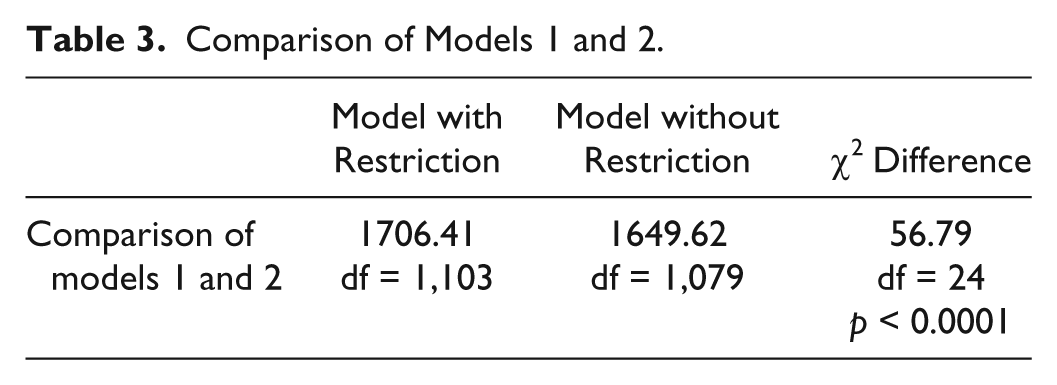
Significant differences can be seen between models 1 and 2, such that invariance between the two models cannot be affirmed. This confirms the existence of bias in the extreme response styles derived from comparison of the two, culturally different, samples.
To eliminate this bias, the “Standardization within Groups Method” was used (adjustment between variables) (Fischer 2004), such that each variable had the same mean and the same variance. This method assumes that the scoring in terms of overall percentage and/or the variance is comparable among variables, so that skewing due to the styles of response among and within cultures can be eliminated. This approach is based on the assumption that responses from within a particular culture may not be homogeneous either, given the possible influence of other sociodemographic characteristics. Using this procedure makes it possible to undertake a factorial analysis of the variables from the data overall, with the certainty that the resulting dimensions are “pure” representations of the factors, unaffected by the positioning effect of culture, given that the average scoring of each culture for each variable is zero. Of course, even so, the effect of culture on the model of variables is reflected in the data overall.
Measurement Scales
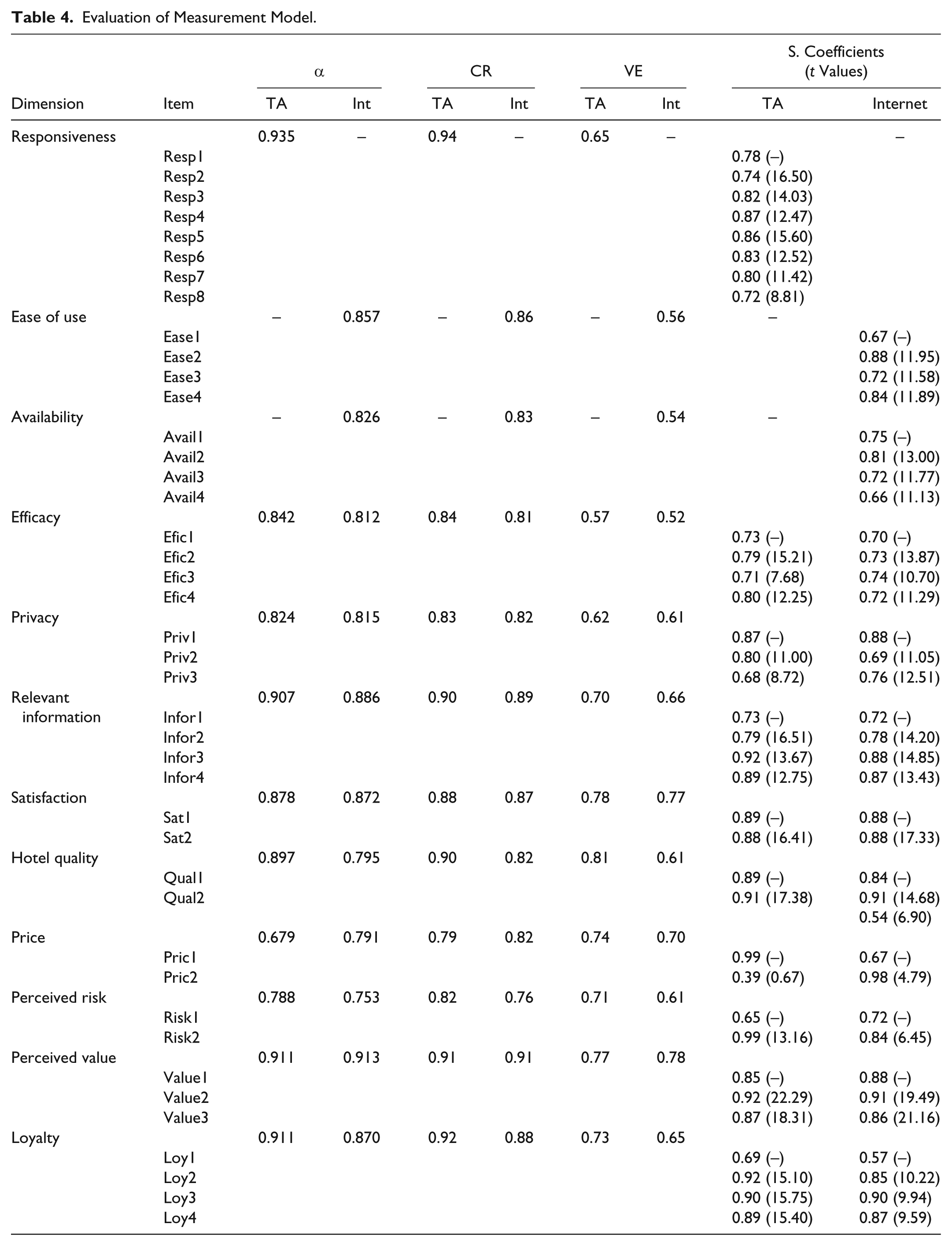
All the measurement scales were adapted from validated instruments used in the literature (see Table 4).
Evaluation of Measurement Model.
All of these dimensions were measured on a Likert-type scale, numbered 1–5.
Results
To estimate the two models, and given that in the case of both the travel agencies and also the Internet the data do not follow a multivariate normal distribution, the robust maximum likelihood was used.
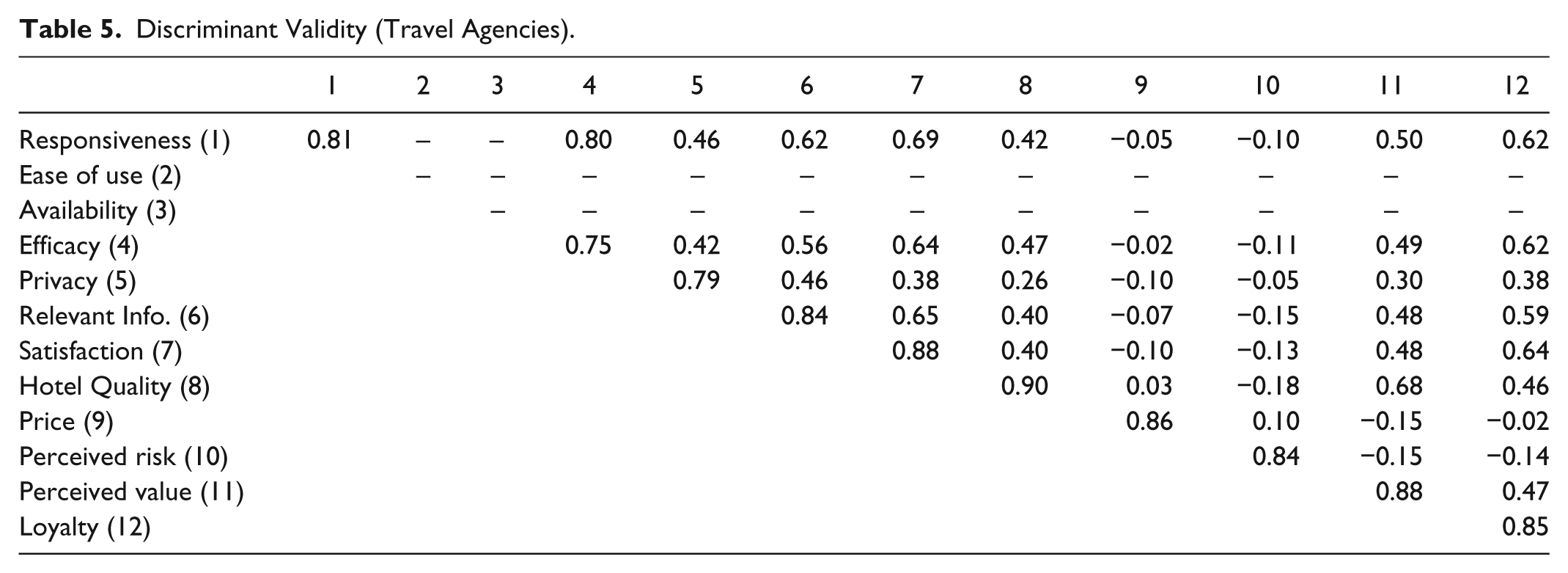
As regards evaluation of the measurement model, it was proven that Cronbach’s alpha (α) was within the limits recommended by the literature. Composite reliability (CR) and variance extracted (VE) were also calculated, with favorable results—above 0.7 and 0.5, respectively (see Table 4).
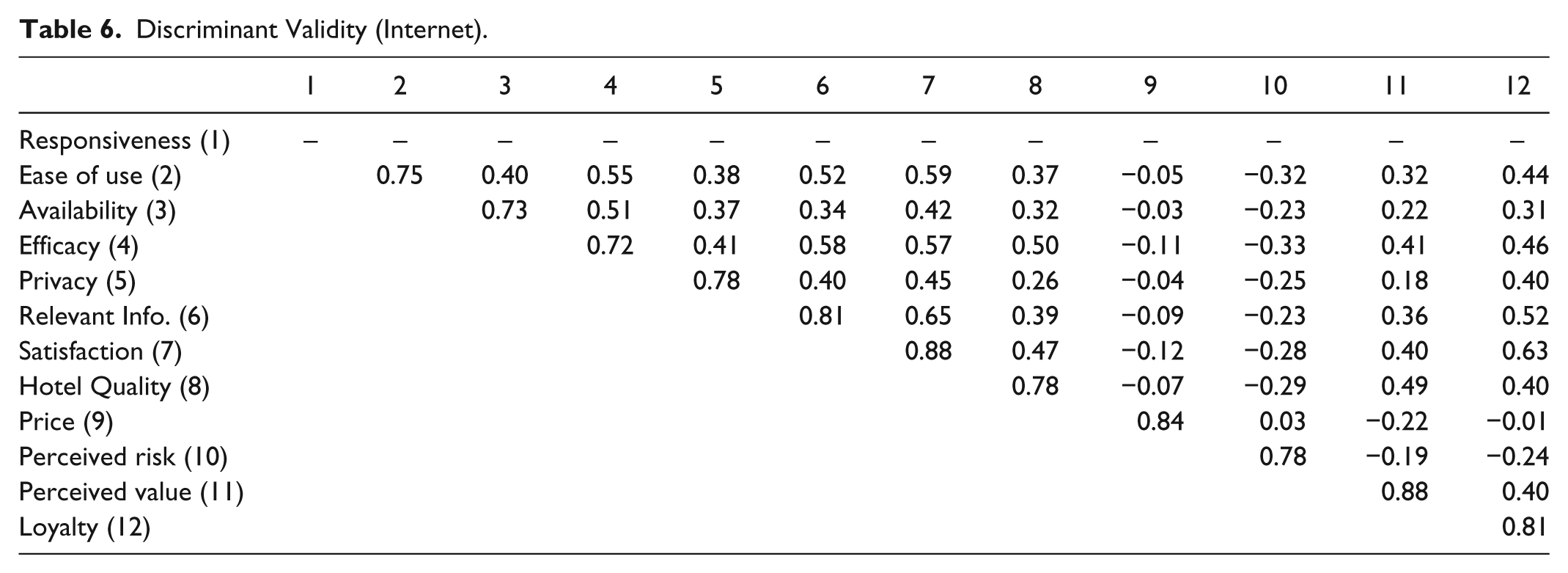
For convergent validity, Table 4 shows that the standardized factorial loads are high in all cases (over 0.7) and significant. Finally, discriminant validity was derived by comparing the variance extracted and the square of the correlations between latent variables. In all cases, this criterion was fulfilled, as reflected in the results outlined in Tables 5 and 6.
Discriminant Validity (Travel Agencies).
Discriminant Validity (Internet).
To analyze the structural model, using the asintotic variance-covariance matrix, the multigroup models were estimated (one for offline travel agencies, differentiating between Spanish and British tourists, and another for the Internet, again differentiating between Spanish and British tourists). The goodness-of-fit indicators of the two multigroup structural equation models are shown in Table 7.
Global Index.

Note: RMSEA = root mean square error of approximation; NFI = normed fit index; NNFI = nonnormed fit index; CFI = comparative fit index; IFI = incremental fit index; RFI = relative fit index.
All the indicators are within the limits recommended by the literature, with the exception of chi-square, which is affected by sample size.
Regarding the structural model, the standardized coefficients are shown with their corresponding standard error, distinguishing between groups of Spanish and British consumers by channel, in Table 8. Differences between coefficients for each pair of relationships are shown using pairwise t-test.
Estimated Coefficients (Standard Error).
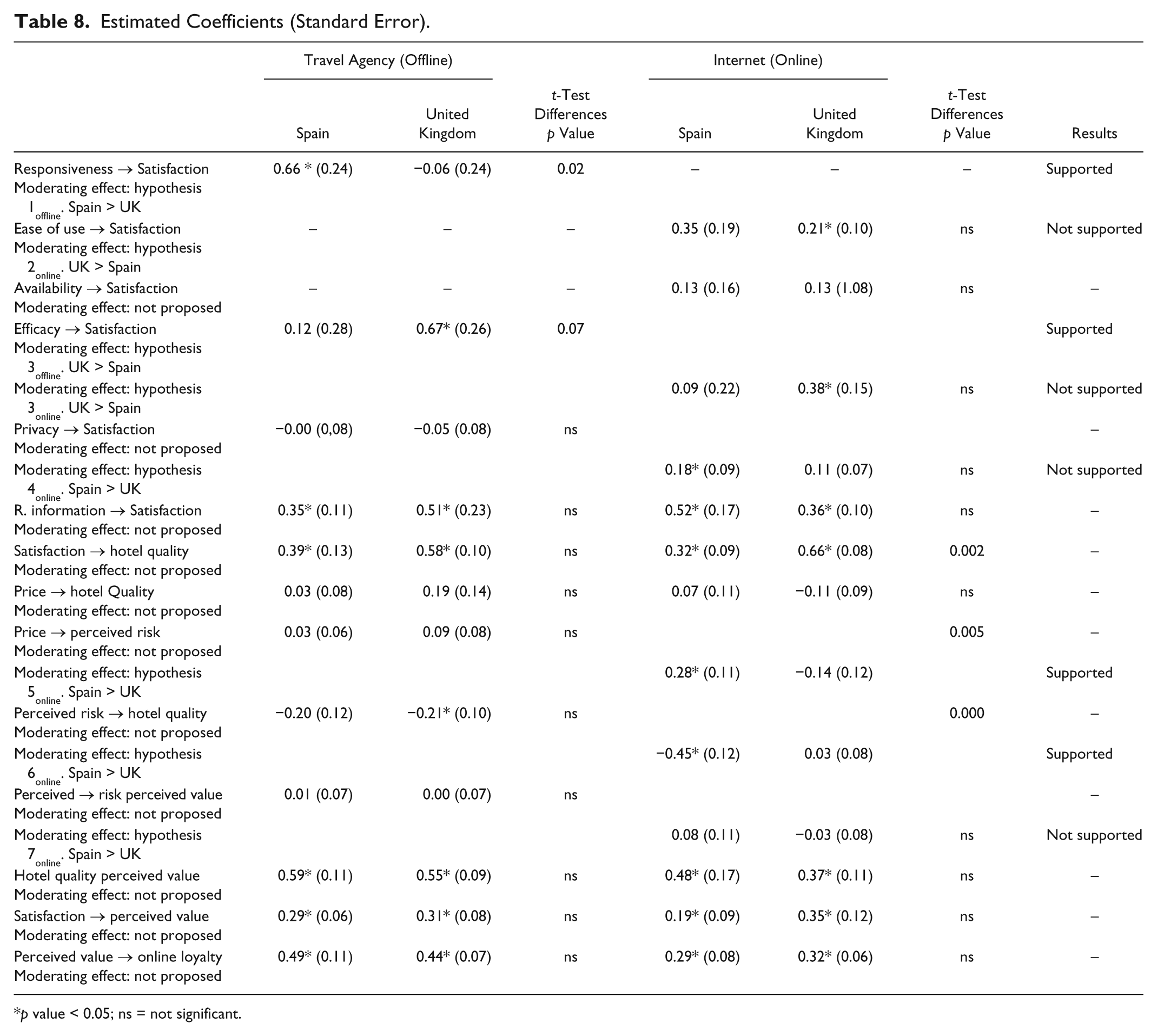
p value < 0.05; ns = not significant.
In general terms, the existence of a different pattern in the significance of the relationships when different cultures are analyzed within each channel suggests that the tourist’s country of origin exerts a certain moderating effect. The key results in terms of the proposed hypotheses will be analyzed in the next section.
Discussion of Findings
Empirical cross-cultural comparison is made between Spain (high uncertainty-avoidance and collectivist) and the United Kingdom (low uncertainty-avoidance and individualist), relative to the overall perceived value of the purchase decision-making process via an offline travel agency versus the Internet when purchasing a tourism service.
Individualism/Collectivism and the Distribution Channel
The relationship between responsiveness of, and satisfaction with, the travel agency channel is significant for tourists from collectivist cultures (the Spanish), while it is not significant for tourists from individualist cultures (the British). Comparison between the scale of the effect reveals that the relationship between responsiveness and satisfaction is significantly greater for the Spanish tourist sample (p value = 0.02), thus providing empirical support for hypothesis 1offline. These findings corroborate earlier studies that find that in cultures with a high level of individualism, customers are more independent and self-centered and they prefer to maintain a distance between themselves and the service provider, while those from collectivist cultures value more positively the provider’s willingness to be helpful (Furrer, Li, and Sudharshan 2000 and Donthu and Yoo 1998).
As regards the ease of use of the electronic medium, this only affects tourist satisfaction significantly and positively where the individuals concerned come from individualist cultures (in this case, the British). The results show that tourists from collectivist cultures do not consider ease of use as a determining factor in their satisfaction with the website; rather, they value personal interaction with the service provider (see hypothesis 1offline). Meanwhile, tourists from individualist cultures positively value a website that is easy to use as this enables them to acquire the service in an individualized way, thus delivering greater satisfaction. However, no significant differences were identified as regards the size of effect when comparing that relating to tourists from individualist cultures (British) with that of collectivist cultures (Spanish) (p value = 0.25). Hypothesis 2online therefore finds no empirical support.
As regards the influence of efficacy on satisfaction with the travel agency (hypothesis 3offline), the results show that efficacy influences satisfaction among tourists from individualist cultures; however, it does not influence satisfaction among consumers from collectivist cultures, with quasi-significant differences being found in the size of the estimated coefficients (p value = 0.07). The same result can be observed for the online channel as regards the significance of the coefficient of the relationship but only in the case of individualist cultures, although there were no significant differences in the size of effect. This result provides empirical support for hypothesis 3offline but no such support for hypothesis 3online. In this latter case, the small sample size—which clearly affects the robustness of the test—appears to influence the result, as the difference between coefficients and their significance pattern is found to be in the expected direction. These results corroborate those obtained in the study undertaken by Kvist and Klefsjö (2006), which concluded that reliability of the service is a dimension of great importance for individualist tourists (the British).
Uncertainty Avoidance and the Distribution Channel
The results relating to the influence of privacy on satisfaction suggest that this relationship is only significant among tourists from cultures with high uncertainty avoidance (in this case, the Spanish). These findings are in line with previous studies that establish that individuals from cultures with a high level of uncertainty avoidance tend to lack trust in the online service provider for fear of loss of privacy (Mooij 1998), whereas privacy does not influence online satisfaction among tourists from cultures with low uncertainty avoidance (Lee, Joshi, and Bae 2009). However, no significant differences were found when comparing the size of the coefficients for the Spanish and the British samples, and thus there is no empirical support for hypothesis 4online. This may be due to the small sample size, which affects the robustness of the test and appears to influence the result. As before, the difference between coefficients and their significance pattern is found to be in the expected direction. That said, in the low uncertainty channel (travel agency), as was to be expected, tourist satisfaction is determined by elements other than privacy.
With regard to hypothesis 5online, the relationship between monetary price and perceived risk is significant only for tourists from high uncertainty-avoidance cultures (the Spanish) and is not significant for tourists from low uncertainty-avoidance cultures, with significant differences being found in the comparison of size of effect (p value = 0.005). This finding supports the argument that the uncertainty-avoidance cultural dimension is related to consumer perceived risk (Jarvenpaa and Tractinsky 1999), with individuals who present high uncertainty avoidance paying significant attention to factors associated with that risk (Zhou and Nakamoto 2001). This result is only valid for the online channel; in the offline channel, no moderating effect for this cultural dimension is either proposed or found.
Empirical verification of hypothesis 6online shows that perceived risk influences perceived hotel quality both negatively and significantly among individuals from cultures with a high level of uncertainty avoidance. However, this effect is not significant for British tourists, with significant differences being found in the comparison of coefficient size (p value < 0.001). There is therefore empirical support for hypothesis 6online. In the case of the offline channel, for which no moderating effect of culture is proposed, the size of effect is virtually the same when comparing the high uncertainty-avoidance culture (0.20) with the low uncertainty-avoidance culture (0.21), with no significant differences between the two coefficients.
Empirical verification of hypothesis 7online reveals that perceived risk does not directly influence perceived value in the purchase of a tourism service for tourists from either of the two cultures. Therefore, there is no empirical support for the moderating effect proposed. With regard to the model, the relationship between perceived risk and overall perceived value is indirectly determined by perceived hotel quality. It is not possible to affirm the existence of a direct relationship. This may be because perceived risk is evaluated prior to the tourist’s overall assessment, which happens once they have consumed both the online services and the tourism service itself. Therefore, their perception of risk has already been assessed in terms of hotel quality, and hence does not directly affect the overall value of the purchase and consumption of the service. This is also found to be true for the offline channel.
Turning to the other relationships, for which no moderating effect was proposed, the literature shows that the relevance of information is considered a key indicator of success in tourism distribution channels (Mahmood, Hall, and Swanberg 2000). Relevant information is an important indicator of user satisfaction (Zeithaml, Parasuraman, and Malhotra 2002; Sindhuja and Dastidar 2009). Given the above, and bearing in mind the importance placed by the literature on the influence of the channel’s content quality on tourist/user satisfaction, it seems unlikely that the relationship between relevant information and satisfaction should be moderated by culture. With regard to the “availability” dimension, despite constituting a dimension of quality, availability itself will not impact significantly on tourist satisfaction as it is virtually taken for granted as a constant. In other words, as availability is a constant in this medium, its presence does not influence satisfaction, although its absence can generate dissatisfaction (Cheung and Lee 2005). For this reason, this characteristic is constant across different cultures and therefore is independent of cultural dimensions. Furthermore, although much of the literature establishes that price is widely considered to be a key extrinsic indicator for perceived product quality (Zeithaml 1988), some researchers suggest that this relationship, though generally positive, may not arise when other variables are present that may have an influence on quality (Zeithaml 1988). Chen and Dubinsky (2003) suggest that there is no relationship between price and quality. Consumers take price to infer quality when they are relatively unfamiliar with the product. The use of price as an indicator of quality may also depend on the category of product concerned, and on price variations within the same category (Chen and Dubinsky 2003). This study supports the latter view, that price does not directly influence perceived hotel quality.
The findings also show that satisfaction with the medium influences perceived hotel quality, while both of these influence overall perceived value; and overall perceived value influences loyalty toward the website, as was to be expected.
Conclusions
Earlier studies demonstrate that variables such as quality, satisfaction, or perceived value “have dominated the service literature” (Cronin, Brady, and Hult 2000). These studies also reveal a large number of relationships between these variables, and propose that these relationships are absolutely critical in understanding the decision-making processes of visitors in the tourism context (Cronin, Brady, and Hult 2000; Tam 2004; Oh 1999). However, there are no previous works studying the overall perceived value of the purchase decision-making process for a tourism service via different acquisition channels (offline and online), based on tourists from different cultures. Hence, the results of the present study demonstrate two important facts. First, it is shown that there are significant differences in the formation of the overall value of the purchasing process for a tourism service (hotel) between tourists from countries that differ culturally. These differences are seen, specifically, in the cultural dimensions of individualism/collectivism and uncertainty avoidance. Second, it is proven that there are also differences in the formation of overall value depending on the medium used by the tourist to acquire the service.
With regard to value formation in terms of culture and channel, and leaving aside differences between coefficients, it is demonstrated that for Spanish tourists (high uncertainty avoidance and collectivist) who have acquired their tourism service via an offline travel agency, responsiveness constitutes a determining factor in their satisfaction. These results are in line with the contributions of other, earlier studies that found that individuals from collectivist cultures place a higher value on personal contact and client–service provider interactions (Malhotra et al. 1994), while those from individualist cultures favor the utilitarian values associated with the interaction (Bhawuk and Brislín 1992). Hence tourism service providers working in this medium should devote significant efforts to sustaining close, direct contact with tourists from collectivist cultures, while maintaining a more distant relationship with tourists from individualist cultures. Meanwhile, for those who have acquired the tourism service via the Internet, it is privacy that constitutes the key factor in their online satisfaction. This is due to the fact that this channel presents a higher level of perceived uncertainty than the traditional channel of the travel agency. As found by earlier studies, individuals from cultures with a high level of uncertainty avoidance are reticent when it comes to using the Internet, for fear of a loss of privacy (Mooij 1998). Therefore, online tourism service providers should pay special attention to data protection when targeting tourists from markets characterized by high uncertainty-avoidance, such as in the Spanish case. For example, a suitable privacy policy is required, along with the implementation of technology systems that provide assurance of safe data transmission.
Meanwhile, for British tourists (low uncertainty-avoidance and individualist), efficacy is a key element in their satisfaction, in both online and traditional channels. When tourism service providers target their offer at individualist markets, they must bear in mind that, regardless of the distribution channel, tourists will be looking for a purchasing process that is as functional as possible, offering the greatest time saving and the least cognitive effort.
As regards the relationship between monetary price and perceived risk, and the relationship between perceived risk and perceived hotel quality, these are significant for tourists from high uncertainty-avoidance cultures when they make their purchase via the online medium, while they are not significant for those from low uncertainty-avoidance cultures, regardless of the medium via which they acquire the service. When dealing with tourists with high uncertainty-avoidance, online service providers should bear in mind that the pricing level they establish for the service has a direct influence on perceived risk, while perceived risk influences perceived service quality. This suggests the need to make decisions relating to price that are well thought through, to offer sufficient guarantees for customer transactions, and to establish efficient mechanisms for managing complaints. Hence, firms must endeavor to acquire tacit and codified knowledge in order to reduce risks (Williams and Baláz 2014).
From a management perspective, this knowledge is of great value. If tourism service providers are to compete more effectively in today’s globalized operating environment, they must understand how tourists assess the services they contract. This understanding is of particular interest in the international market as tourists’ evaluations are influenced by cultural variations. These results are in line with those of earlier works that underline the need to adapt sales platforms appropriately, to better reflect the needs and specificities of target markets (Tigre, Gnoth, and Deans 2014).
Furthermore, when tourism service providers understand the factors that influence how international consumers perceive overall value in the purchase decision-making process, and why they have this influence, this can help them understand how to tailor their service to consumers of different nationalities. This same knowledge is also invaluable when developing websites, to improve commercial services for customers from different cultures, enabling firms to carry out online trade that improves their competitive position.
Finally, it should be highlighted that these results could apply not only to companies that work internationally but also to those operating in one country. Hence, the authors of the present work suggest that all service providers should consider uncertainty avoidance and individualism/collectivism in their service offer.
Limitations and Future Lines of Research
When interpreting the findings of this research, certain limitations come to light. Given the international nature of the sample, a cautious approach should be taken with regard to generalizing on the basis of the findings. First, in this study just two cultures have been used to analyze the moderating effect of cultural dimensions on the tourist’s overall perceived value formation. Although the literature shows clearly that to undertake a cross-cultural analysis, comparing two cultures is quite sufficient, it would be interesting to repeat the analysis with a greater number of different cultures. Second, the consumers participating in the survey used different web portals and travel agencies and booked different hotels, meaning that one single website or travel agency and one specific category of hotel were not analyzed. A future line of research would be to undertake an experiment in which the website or travel agency and the category of hotel are controlled. Finally, the international nature of the sample is extremely costly and this has limited the sample size. Hence, some of the hypotheses that do not find empirical support may have been affected by the influence of sample size on the robustness of the test.
Footnotes
Acknowledgements
The authors thank the Junta de Andalusia for providing financing for the study.
Declaration of Conflicting Interests
The author(s) declared no potential conflicts of interest with respect to the research, authorship, and/or publication of this article.
Funding
The author(s) disclosed receipt of the following financial support for the research, authorship, and/or publication of this article: Financing received from the Junta de Andalusia for the research project P06-SEJ 02170 “Internet, Comercialización Turística y Desarrollo en Andalucía.”