



Abstract
The travel and tourism industry is seeking to achieve consistently seamless experience for customers to stay connected with brands. This study offers an analysis of the interconnected customer experience journey based on an understanding of multichannel behavior. In particular, it identifies the psychographic and sociodemographic factors associated with three segments of multichannel consumers: multichannel shoppers, multichannel searchers, and store-prone shoppers of the travel and tourism industry. Data from a sample of 315 customers from the travel and tourism sector in Egypt were collected and analyzed using multinomial logistic regression. The findings indicate that psychographic variables (shopping enjoyment, convenience seeking, customer innovativeness, perceived risk, Internet experience, frequency of travel, and channel experience) and some demographic variables (i.e., age and income) distinguish among the categories of multichannel shoppers, multichannel searchers, and store-prone shoppers. The study concludes with useful insights into the potential for developing multichannel strategy to achieve superior customer experience.
Keywords
Introduction
Travel purchasing behavior is complex and interconnected because of the use of interactive technologies and mobile devices; thus, the channel(s) used in purchasing decisions is/are becoming more and more important (Lamsfus et al. 2015), particularly because the multiple marketing channels have different attributes (Kim, Chung, Lee, and Preis 2015). The path from inspiration to adoption is no longer linear; a recent study shows that travelers will use about 22 travel websites and agents in multiple shopping sessions before deciding where or how to book and pay for a trip (van Rensburg 2014).
At the heart of the travel information and booking channels are online channels, especially on mobile devices. The online channels such as Expedia and Priceline have witnessed a great surge in the last decade because of higher rates of mobile device penetration, and increased rates of business travel and leisure travel (Schmidt 2015). Travel sales on these channels comprise more than 40% of the total travel sales in markets such as the USA and some European countries (Schmidt 2015). However, in many emerging markets such as Italy, China, Brazil, Greece, South Africa, and Egypt, traditional retail travel agencies are still relevant and valued travel shopping channels (van Rensburg 2014). Travelers still favor these travel agencies at least for specific stages of the purchasing decision, such as booking and payment (Del Chiappa and Zara 2015). Although travelers in these emerging markets are increasingly adopting mobile travel planning channels—for example, more than half of Chinese leisure travelers and 27% of those in Brazil booked their last leisure trip online via smartphones (Amadeus 2015)—many travelers in emerging markets still find the idea of travel planning and booking complex and perceive online booking as intimidating because of fraud and privacy concerns (Mahrous 2011) and thus are willing to exert more effort or pay a premium for the sake of human interaction and assistance (van Rensburg 2014), and accountability. Thus, many travelers in emerging markets use online channels for information search only, while others prefer to deal with traditional travel agencies only from start to finish (Del Chiappa 2013).
Therefore, travel and tourism companies seeking survival and growth in local and global markets need to understand the mechanisms of travelers’ channel choice in a multichannel environment, where options are numerous and customer loyalty is a competitive advantage. Specifically, it would be useful to identify what factors are associated with using a specific channel or group of channels when planning and booking journeys or trips. Nevertheless, previous studies have predominantly focused on information search behaviors, particularly the use of online information sources and the factors that differentiate between adopters and nonadopters of online channels (Couture, Arcand, Sénécal, and Ouellet 2015; Amaro and Duarte 2015). However, booking and payment decisions have received little research attention (Murphy, Chen, and Cossutta 2016). Furthermore, there is a dearth of studies about consumer behavior in multichannel environments, except for the study of Skallerud (2016), which investigated the tourists’ psychographic variables that are associated with multichannel use. More importantly, previous research on multichannel use has not yet differentiated between customers who use many channels to gather information only, then purchasing from traditional travel agencies (i.e., lookers or searchers) (Del Chiappa 2013), and shoppers who use many channels to plan and book their trips. Moreover, most studies on multichannel in the travel and tourism markets have investigated aspects of the multichannel strategy from the firms’ perspective rather than that of consumers, such as channel performance in a multichannel context (Pearce and Taniguchi 2008) and optimal multichannel mix (e.g., Law, Leung, Lo, Leung, and Fong 2015).
In light of the above, this study extends the growing body of research on multichannel shopping by developing an integrated approach to channel choice in the multichannel context. It aims at identifying the psychographic and demographic factors associated with travelers’ use of multiple channels rather than a single channel. Specifically, the study develops a taxonomy of multichannel customers, discriminates between travelers who use multiple channels for information search only (multichannel searchers), those who use multiple channels for information search and purchasing (multichannel shoppers), and those who use only traditional travel agencies (store-prone shoppers).
This paper extends the fast-growing research stream on multichannel shopping (e.g., Sahli and Legohérel 2016; Kucukusta, Law, Besbes, and Legohérel 2015) into the context of an emerging market. The study contributes to managerial practice through informing travel and tourism companies about the psychographic and demographic-related characteristics associated with travelers’ multichannel or single-channel use. Thus, it is likely to help to attract, target, and influence travelers’ multichannel behavior in emerging markets, and to enable companies to divert customers from using a specific channel to using another one that is more lucrative to the company. It will also assist companies to design greater customer shopping experiences through designing the firm–customer interaction platforms from a customer-centric standpoint, that is, by meeting the criteria that customers judge by, such as comparative promotional offers, user-friendly shopping, and thereby making the companies more likely to attract and retain customers than travel agencies that design their interaction platforms from a merely functional perspective.
The following sections review the extant channel choice literature and discuss the methodology used below. The findings are then described and explained. Conclusions, managerial implications, and limitations are discussed in the final section.
Customer Experience Management and Multichannel Shopping Behavior
Customer experience refers to “the internal and subjective responses customers have during the interactions with the firm” (Meyer and Schwager 2007, 118). Customer experience is personal and it originates and accumulates at each touch point with the firm during the sales cycle (presale, sale, and aftersale). Customer experience is crucial in building loyalty to brands and channels. Creating positive customer experience is an imperative objective in today’s travel and tourism environment. Hoffman and Offutt (2015, 2) argue that a “customer’s experience is likely to be the most influential factor in his or her choice of supplier.” Therefore, customer experience management (hereafter CEM) aims at aligning a company’s capabilities with customer needs at each interaction channel to create a superior customer experience and achieve a reciprocal relationship benefiting both parties (Debruyne and Dullweber 2015).
One of the components of CEM is a multichannel integration strategy (i.e., it integrates the most appropriate channel(s) options and channel partners). Therefore, marketers should understand what drives customers to use one or more specific channels and which channels are preferred, in order to build an integrated multichannel strategy that delivers customers’ needs at every channel interaction to produce a positive customer experience and create maximum value for them (Grewal, Levy, and Kumar 2009).
However, a synthesis of the literature on CEM and channel choice in travel and tourism management reveals that CEM is an underresearched topic in the travel and tourism literature. Instead previous research has tended to focus on factors associated with service quality, perceived value, and customer satisfaction (e.g., Chen and Chen 2010), although the CEM has potential for wider applications in many contexts (Debruyne and Dullweber 2015). The current literature on customer experience indicates that CEM is affected by the dynamic interaction of many elements, some of which are under the retailer’s control (e.g., the customer–firm interaction platform, service quality, product assortment, and price), and other factors that are beyond the retailer’s control such as customer-related factors (e.g., shopping enjoyment, convenience seeking, price sensitivity) (Verhoef, Lemon, Parasuraman, Roggeveen, Tsiros, and Schlesinger 2009). Nevertheless, previous studies have focused on examining the effects of the retail environment on customer experience, and few if any studies have examined the customer-related factors associated with customer experience and the way in which these experiences might affect a customer’s perception of value and channel choice.
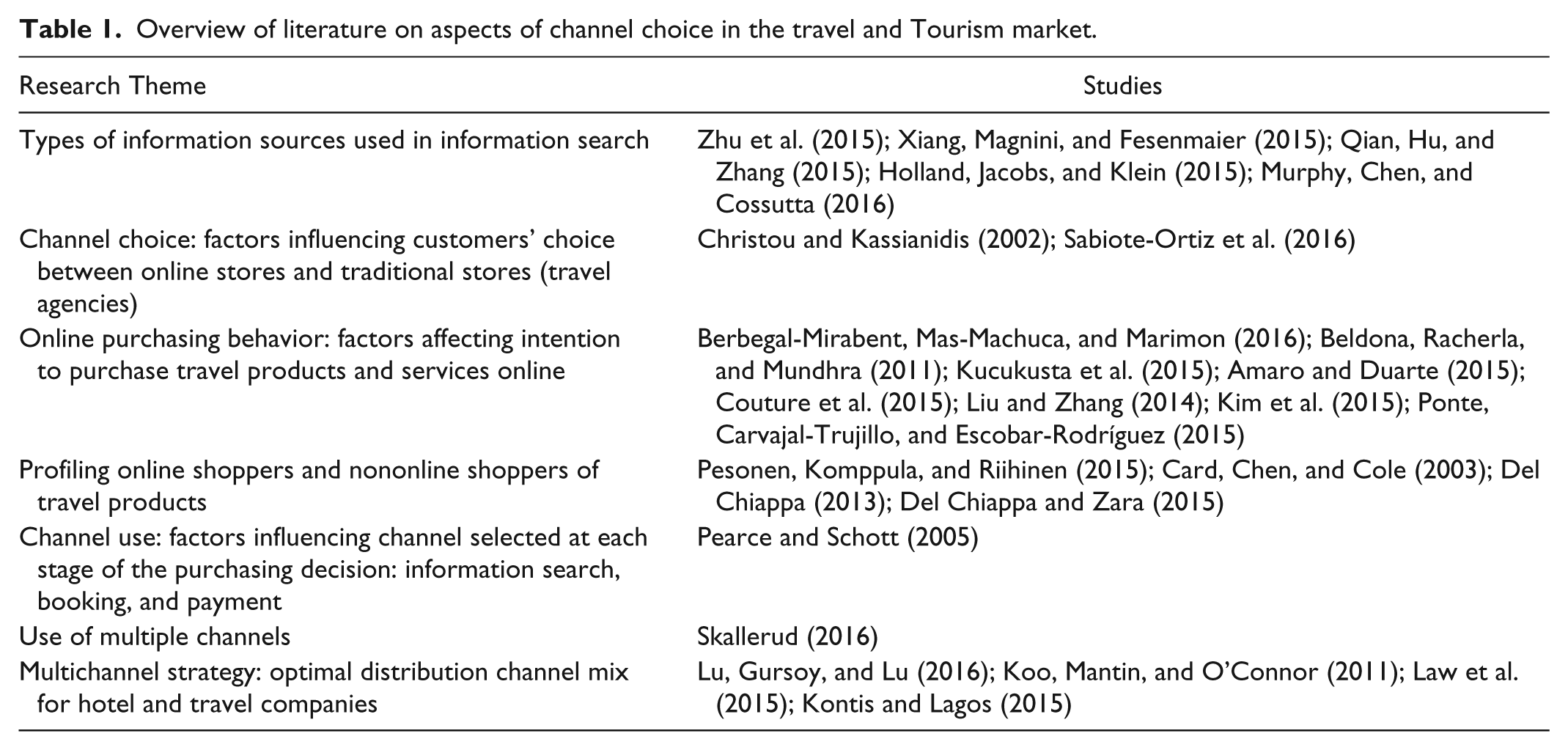
Furthermore, although the previous literature on channel choice, as indicated in Table 1, shows that most studies have focused on the factors associated with channel choice in the information search stage, the factors associated with channel choice in the shopping stage have not received the same attention. In addition, the studies on the shopping channel have focused on the drives of online channels versus traditional travel agencies, and the use of multichannel versus a single channel; the differentiation between types of multichannel user have received little attention.
Overview of literature on aspects of channel choice in the travel and Tourism market.
Against this background, the present research aims at advancing a theoretical framework for customers’ experience of multichannel use. Specifically, this study examines the impact of customer-related factors of CEM (i.e., psychographics and demographics) on channel choice in order to help travel and tourism companies to develop an integrated multichannel strategy from a customer perspective rather than from a channel-focused perspective so as to enhance customers’ experience of those channels as depicted in Figure 1.

Theoretical framework.
Literature Review
Multichannel shopping
Technological changes in the past two decades have led to tremendous changes in the scope of retail channels, resulting in a plethora of information and shopping channels (e.g., online stores, referral websites, social media, mobile devices, emails, and branded applications) (Hoffman and Offutt 2015). For example, travel agencies, hotels, and airlines have invested heavily in information communication technologies (ICTs) since the introduction of computerized reservation systems (CRSs) in the 1980s (Amaro and Durate 2015). They have also invested in the use of Internet-based applications to provide customers with various information and booking channels, such as online travel agents (e.g., Booking.com, TripAdvisor) and supplier sites (Murphy, Chen, and Cossutta 2016; Holland, Jacobs, and Klein 2015; Wang, Fung So, and Sparks 2016). These changes have created many different shopping patterns and behaviors among consumers. These shopping patterns are prevalent and persistent across travel products and purchasing situations (Del Chiappa, Alarcón-Del-Amo, and Lorenzo-Romero 2016; Oh, Cheng, Lehto, and O’Leary 2004) as indicated below.
Previous studies tended to segment shoppers into multichannel shoppers and single-channel shoppers (i.e., high street travel agencies). However, multichannel shopping behavior has since found more shopping paths than those two choices. Recent studies noted that tourists and travelers can be grouped according to the way they use the multi-information and purchasing channels into: searchers or browsers and bookers or buyers (Del Chiappa, Alarcón-Del-Amo, and Lorenzo-Romero 2016). On one hand, shoppers or bookers are those who (1) shop across a number of channels (online travel booking websites, mobile travel branded applications, etc.) in order to choose the best deal for a particular purchasing situation and/or (2) those who buy travel products from the same retailer but across more than one channel, for example, tourists who prefer a specific airline carrier and search for the best deal for this specific brand across more than one booking channel (Holland, Jacobs, and Klein 2015). On the other hand, searchers or browsers are those travelers who tend to conduct extensive searches over the Internet to find the best deal (e.g., a convenient flight at a minimum price) and then buy from an offline travel agency (Holland, Jacobs, and Klein 2015). Accordingly, this research study argues that customers are considered multichannel shoppers if they purchase from more than two channels. Customers who use many marketing channels but only for information search purposes are not considered multichannel shoppers; rather, they are called multichannel searchers (Kaufman Scarborough and Lindquist 2015), because a customer who uses call centers and the Internet only for search purposes is no more than a shopper who gathers prior information from advertisements or word of mouth (McGoldrick and Collins 2007).
These shopping patterns have usually been contrasted with conventional shopping behavior, that of “store-prone shopper,” who use a single marketing channel (i.e., traditional travel agencies) throughout all the phases of the purchasing decision (cf. Pan and Crask 2015), such as purchasing tour packages at travel agency outlets, or buying airline tickets from a specific airline’s store outlet (Kim, Chung, Lee, and Preis 2015).
Psychographic Variables
Psychographic variables is a term that refers to the psychological characteristics of travelers and tourists, such as their motives and lifestyle. Consumer innovativeness, convenience seeking, shopping enjoyment, price consciousness, need to conform, Internet experience, and channel experience are conceptualized as motive-related variables, while the frequency of travel is conceptualized as a lifestyle-related variable.
Consumer Innovativeness
Consumer innovativeness refers to customers’ positive attitude to trying new and different products, marketing channels, or technologies (Konuş, Verhoef, and Neslin 2008). Previous research suggests that customer innovativeness is related to the use of new retail channels, especially those that use technologies such as shopping on the Internet or on mobile devices (Liu and Zhang 2014). Studies have indicated that customers with a high level of innovativeness tend to use more channels, such as the Internet and social media, than are used by those with a low level of innovativeness ( Couture, Arcand, Sénécal, and Ouellet 2015). In the hotel and tourism sectors, studies have also shown that customer innovativeness is positively related to information searches and purchasing behaviors on tourism websites. For example, Couture, Arcand, Sénécal, and Ouellet 2015 indicate that tourist innovativeness is positively related to the frequency and density of site visits, downloading of information brochures, use of the online purchasing mode, and volume of online purchases. Accordingly, it can be hypothesized that customer innovativeness is associated with membership of the multichannel shopping segment. Hence, we posit that:
Hypothesis 1/1: Innovative consumers are more likely to be in the multichannel shoppers group than in the multichannel searchers and store-prone shoppers groups.
Convenience Seeking
Convenience seeking refers to customers who want to minimize their shopping efforts (e.g., time and money resources) (Pan and Crask 2015). A survey of Greek tourists showed that a relationship exists between time pressure and the urgency of some purchasing situations and channel selection in the travel and tourism markets (Christou and Kassianidis 2002). In addition, some studies on the adoption of the Internet and catalogue shopping have indicated that one of the motives for using these channels is their ease of use and ability to minimize shopping efforts (Campbell, Ferraro, and Sands 2014). Moreover, time saving has been found to be one of the most relevant factors affecting the adoption of mobile booking for restaurants and airlines (Kim, Chung, Lee, and Preis 2015). Therefore, it can be expected that multichannel shoppers would have a greater tendency to be convenience seeking than would multichannel information seekers and store-prone shoppers. Accordingly, this study hypothesizes that:
Hypothesis 1/2: Convenience-seeking consumers are more likely to be in the multichannel shoppers group than in the multichannel searchers and store-prone groups.
Need to conform
Currie, Wesley, and Sutherland (2008) indicate that family, friends, and peers have a marked influence on travelers’ decisions. They influence their likelihood of engaging in a certain behavior, and the decision to perform or not perform a behavior can be defined as the performer’s perception of social pressure. In the case chosen for the present study, if information search or purchases made through specific channels such as the Internet are seen as a socially desirable behavior based on what important others think about it, then the individual is more likely to engage in it. Verhoef et al. (2009) indicate that individuals tend to use the channels used by their friends and family. Dickinger (2011) found that the influence of important others on a traveler’s intention to adopt a specific information channel is significant, while other studies—especially those conducted in collectivist cultures such as Egypt—have found that the need to conform with important others may discourage travelers from adopting electronic ticketing and reservation channels (Tarek, Mahrous, and Kortam 2012). Moreover, the results of in-depth interviews demonstrate that those who use conventional marketing channels were encouraged to use them by people who were important to them. Thus, the current study predicts that:
Hypothesis 1/3: Consumers who need to conform to peers are more likely to be in the multichannel searchers’ and store-prone groups than in the multichannel shoppers group.
Shopping Enjoyment
Shopping enjoyment refers to the hedonic utilities that shopping offers to customers, such as entertainment and joy (Johnson, Kim, Mun, and Lee 2015). A few previous studies have shown shopping enjoyment to be related to channel selection. For example, Skallerud (2016) indicates that people who enjoy shopping are more likely to use multichannel shopping. However, customers in Middle Eastern countries prefer shopping from physical stores rather than from other channels because shopping for them is a way of spending their free time (Al-Maghrabi, Dennis, and Halliday 2011). Although this may be true in the case of specific product categories, such as apparel and furniture (Algharabat and Shatnawi 2014), the travel and tourism sector provides a different purchasing situation for customers (Tarek, Mahrous, and Kortam 2012). These customers cannot try products out; therefore, customers who enjoy shopping and are not troubled by the extra time and effort needed for the shopping process tend to use multiple rather than single channels.
Furthermore, studies in the travel and tourism marketing literature have asserted that consumers perceive intrinsic joy in their use of searching and shopping technologies, such as information searches or shopping through mobile devices and personal computers. This perceived enjoyment may explain the decision to buy travel and tourism services by means of technology-based channels (Beritelli and Schegg 2016; Kim, Chung, Lee, and Preis 2015). Therefore, it can be argued that the higher the level of shopping enjoyment, the greater the likelihood that the customer will be in the multichannel shoppers’ and multichannel searchers’ groups than in the store-prone shoppers group. Accordingly, this study hypothesizes that:
Hypothesis 1/4: Consumers who enjoy shopping are more likely to be in the multichannel shoppers’ and multichannel searchers groups than in the store-prone group.
Price Consciousness
Price consciousness refers to travelers’ and tourists searches for the lowest price for the item they want to purchase (Correia and Kozak 2016). These customers tend to search for and compare prices from several retailers or channels in order to find the lowest price or the best deal (price vs. service attributes) (Lu, Gursoy, and Lu 2016). As price-conscious customers search for monetary savings across different channels and are more likely to be driven by low prices when selecting a channel, they tend to buy from the lowest price channel. Del Chiappa (2013) indicates that Italian price conscious travelers prefer traditional travel agencies to any other travel shopping channel because they can negotiate prices and get better deals or more benefits, such as upgraded airline seats or better hotel rooms and amenities. Therefore, van Rensburg (2014) states that travelers believe that online travel agents may not always provide the lowest prices because prices may differ due to taxes or hidden costs. Thus, they prefer to consult multichannel (i.e., online and offline booking agents) before making a purchasing decision to get the best deal. However, Skallerud (2016) finds no support for the hypothesized relationship between price consciousness and multichannel use, while the in-depth interviews in the present study indicated that customers who want to get the best deals search many channels before buying from the channel that made the best price offer. Hence, it can be argued that higher price consciousness leads to a greater likelihood that a customer will be in the multichannel shoppers group than in the multichannel searchers’ and store-prone shoppers groups. Accordingly, this study predicts that:
Hypothesis 1/5: Price-conscious consumers are more likely to be in the multichannel shoppers group than in the multichannel searchers’ and store-prone shoppers groups.
Perceived Risk
In the digital environment, perceived risk can be defined as “the user’s expectations of losing in a given electronic transaction” (Ruiz and Lassala Navarré 2006, 10). In the travel and tourism literature, previous studies have shown that perceived risk is related to channel selection; for example, tourists who prefer to shop from an offline travel agency are usually more concerned about financial issues, service attributes, and loss of time/convenience than those who shop from the Internet or catalogues (Sabiote-Ortiz, Frías-Jamilena, and Castañeda-García 2016). In addition, perceived risk has been indicated as one of the most important factors affecting online purchases of travel and tourism services, both in general and for low-cost carriers ( Kim, Chung, Lee, and Preis 2015; Ponte, Carvajal-Trujillo, and Escobar-Rodríguez 2015). Furthermore, a recent survey of Middle Eastern customers shows that because of privacy and security concerns, only 40% of customers shop online, when purchasing airline tickets or hotel accommodation, for example (GoGulf 2015). Jonas and Mansfeld (2015) also indicate that there is a relationship between a tourist’s perception of risk and the information search sources used. For example, previous studies have asserted that there is a negative relationship between perceived risk and impersonal channels such as the Internet (Amaro and Durate 2015). Nevertheless, few studies have examined the effect of perceived risk on travel and tourism shopping channels (Amaro and Durate 2015). Accordingly, it can be argued that customers who have a strong perception of perceived risk are more likely to be store-prone shoppers or multichannel searchers than multichannel shoppers. Thus, this study predicts that
Hypothesis 1/6: Consumers who perceive risk are more likely to be in the store-prone shoppers or multichannel searchers groups than in the multichannel shoppers group.
Channel Experience
Channel experience refers to the previous use of a specific channel in specific purchasing situations (Gensler, Verhoef, and Böhm 2012). Although previous research in the multichannel use context revealed that channel choice—either in the information search phase (Mahrous 2016) or the purchasing phase (Skallerud 2016)—is associated with channel attributes (e.g., price, quality), a few studies have argued that channel choice is associated more with channel experience than with channel attributes (Gensler, Verhoef, and Böhm 2012). Consumers tend to develop purchasing patterns or routines that govern their future purchasing behavior, including channel choice (Lim, Kim, and Biocca 2015). Therefore, consumers who used a specific channel in the past will be more likely to continue using it in the future.
Nevertheless, few studies on channel choice in travel and tourism market have examined the role of channel experience in channel choice. Furthermore, most of these studies focus only on the impact of Internet experience as an indicator of the experience of using online channels. For example, Li and Buhalis (2006) find that extensive Internet experience is one of the important factors that lead Chinese travelers and tourists to switch from being online searchers to becoming online shoppers. Ozturk, Bilgihan, Nusair, and Okumus (forthcoming) also indicate that as self-efficacy, that is, Internet experience, increases, the use of mobile hotel booking technologies increases. Furthermore, previous research on e-ticketing in Egypt has consistently shown that Internet experience is a discriminating factor between pairs of shoppers (online shoppers, prospective online shoppers, and persistent non-online shoppers) (e.g., Tarek, Mahrous, and Kortam 2012). However, these studies focused only on online channels; although online channels constitute a major part of the shopping channels in the travel and tourism market, there are other important channels (e.g., call centers and traditional travel agencies, especially in emerging markets) that should be considered.
Given this line of reasoning, it can be argued that consumers who used a specific channel in a previous purchasing situation will continue to use it in the future. In addition, consumers who have extensive Internet experience will more probably be multichannel shoppers than multichannel searchers or store-prone shoppers because increased Internet experience will lessen the perceived risks associated with booking through call centers or online channels such as seating plan problems, overbooking, tickets not coming through, etc. Hence, we posit the following:
Hypothesis 1/7a: Previous use of a channel is associated with consumers’ channel choice (multichannel shoppers, multichannel searchers, store-prone shoppers).
Hypothesis 1/7b: Consumers who have Internet experience are more likely to be in the multichannel shoppers group than in the multichannel searchers or store-prone shoppers groups.
Frequency of Travel
Frequent travelers are more experienced in many aspects of travel shopping than nonfrequent travelers. For example, they have greater travel knowledge than infrequent travelers have. Therefore, they do not, as nonfrequent travelers would, perceive a financial risk or time risk when dealing with the many information or booking channels available nowadays (Beldona, Racherla, and Mundhra 2011). Therefore, it can be assumed that frequent travelers will be more willing than nonfrequent travelers to use multichannel for shopping and booking purposes. However, van Rensburg (2014) argued that first-time or nonfrequent travelers, especially those with lower technological competencies or less Internet experience, will be overwhelmed by the plethora of travel information and booking channels and will prefer human interaction. Hence, nonfrequent travelers would tend to favor traditional travel agents over other channels. Accordingly, we posit that:
Hypothesis 1/8: Consumers who travel frequently are more likely to be in the multichannel shoppers group than to be in the multichannel searchers or store-prone shoppers groups.
Sociodemographics
Demographics such as age, education, income, and gender can be predictors of travel and tourism shopping ( Couture, Arcand, Sénécal, and Ouellet 2015 ) and can influence single- or multichannel shopping behavior (Perry 2010). A review of the travel and tourism literature shows that customers who use multiple online channels (e.g., online travel websites and agents, social network sites) are younger (Park, Hsieh, and Lee 2016), are better educated, and have higher income than online nonconsumers (Ezeuduji and Jager 2015; Liu and Zhang 2014). Moreover, Kucukusta et al. (2015) indicate that younger travelers are more informed about technology and hence have a higher propensity to use online booking channels. Grønflaten (2011) also finds that younger travelers would rather search for travel information online than use traditional agents. Therefore, it can be argued that age is negatively related to online travel shopping behavior; however, for consumers who use the Internet in their pre-purchase information search, age is positively related to Internet shopping (Smith 2015). The latter result is supported in the recent travel and tourism literature. For example, Pesonen, Komppula, and Riihinen (2015) find that the senior travelers’ market is heterogeneous with regard to the use of tourism information technologies and that many of these people use reservation and booking technologies for both information searches and purchasing. In addition, age is positively correlated with catalogue shopping; older people prefer catalogue shopping to online shopping. In fact, catalogue shopping has been found to generate high traffic to websites (PwC 2015).
In addition, Kim, Lehto, and Morrison (2007) argue that gender differences affect the use of online travel websites. Smith (2015) finds that men are more likely than women to make online purchases on their smart phones. Moreover, studies of travelers’ behavior in emerging markets indicate that men and women differ in their channel choices because women are more involved than men in the travel decision making (Beldona, Racherla, and Mundhra 2011). In addition, Del Chiappa (2013) has found a significant association between gender and travel shopping channel choice (online channels vs. traditional travel agents); men used more online channels for booking hotel rooms than did women. However, a recent survey of multichannel shopping habits in Western Europe found that women and men equally shop regularly on online channels (Perry 2010). But DeNinno (2014) indicates that although men and women shop online almost equally, men use more channels and devices than women do. In light of the above, the following hypothesis is proposed:
Hypothesis 2: Multichannel shoppers (H2/1) are younger, (H2/2) are male, (H2/3) have higher income, (H2/4) and are more educated than (H2/5) multichannel searchers and store-prone shoppers.
Research Context
The Egyptian travel and tourism industry account for 40% of all Egyptian exports of services, 7% of its gross domestic product (GDP), and 12.6% of jobs created (SIS 2016). A recent survey of the travel and tourism market in Egypt showed that outbound trips totaled 3.7 million in 2013, with Saudi Arabia and Kuwait accounting for the highest share (approximately 72%) of outbound trips (Euromonitor International 2014a). Domestic tourism has also grown in response to attractive hotel offers and stability in the political situation in the country (Euromonitor International 2014a). The domestic tourism market in Egypt reached 8.5 million trips in 2014 and is predicted to reach 14 million trips in 2015 (Euromonitor International 2014b). Domestic tourism contributed to 5.9% of the GDP in 2014; this percentage is expected to rise to 9.1% in 2015 (Turner 2015). Moreover, domestic GDP is almost 64.1% of Egyptian travel and tourism GDP in 2014, compared to 35.9% for inbound tourism during the same period (Turner 2015).
Multichannel shopping in emerging markets has a huge potential for growth (Sahli and Legohérel 2016). Recent surveys have indicated that intensive multichannel shopping through the Internet, smart phone, social media, and catalogs are prevalent in airline and hotel bookings in the MENA region, specifically in the UAE, Egypt, Saudi Arabia, and Qatar (PwC 2013). However, conventional methods for conducting searches and making purchases, such as brick-and-mortar stores and telephones, are still used by consumers in the MENA region (Amadeus 2013). For example, consumers in Egypt are increasingly browsing booking websites to compare products and prices and search for the best deals before making reservations through a travel agency (Tarek, Mahrous, and Kortam 2012).
Internet penetration in Egypt is progressing rapidly. At 2014, Internet penetration reached 54.81 million users, demonstrating a 10.45% annual growth rate. In addition, mobile Internet users are gaining popularity (20.55 million users in 2014), with the proportion of mobile Internet users to the total mobile subscription reaching 21.73 million users and showing an annual growth rate of 7.59% (MCIT 2014). In the same vein, online shopping is becoming increasingly popular in Egypt. According to a 2014 MasterCard survey, 44% of those surveyed indicated that they use the Internet for online shopping. The online shopping phenomenon has been led by consumers who are 18 to 24 years old (MasterCard survey 2014). Furthermore, smartphone use is driving e-commerce in Egypt; data show that 80% of smartphone users make at least one online purchase a month and 70% of those are younger than 31 years (MCIT 2014). Therefore, it is important for companies in the travel and tourism industry to identify the search and purchasing trends and adapt their strategies to provide their customers with the desired retail channels (Amadeus 2013).
Methodology
Qualitative Study
In an effort to better understand the factors influencing channel choice in Egypt, semistructured interviews were conducted with 21 consumers who represented the target population. Interviewees were selected by convenience sampling. The qualitative study ended when no new variables were found in the answers of the interviewees. Data from these interviews were used in the literature review section to develop the research framework (Figure 1), which demonstrates the factors influencing channel choice in Egypt. Each interview lasted about an hour and was attended by one of the authors. The research aim was explicitly discussed with the interviewees using a laddering technique through a semistructured interview guide. First, respondents were asked to indicate whether they purchased travel and tourism services during the 12 months before the interview date, and the procedure of the interview was determined according to their reply to this question; some freely elaborated on their channel experience and motives for choosing certain channels, while others needed help according to the interview guidelines.
In particular, the interview guide included the following questions: What are the channels that you used in the past 12 months to purchase/search for travel and tourism services (e.g., call center, Internet, etc.)? Do you use one or many channels? Do you use different channels when searching for information than when shopping? Why? What are the reasons behind using this specific channel/these specific channels? Respondents’ answers during the interview were recorded. Later, the data were entered into Excel sheets, each row representing a respondent (his/her answers and demographic details), and then these data were subjectively analyzed to identify themes in the data. In order to assess the reliability of the study, we conducted cross-check codes, in which a colleague reviewed the themes and codes of the respondents’ answers. Reliability was achieved if there was more than 80% agreement between the codes identified by the researcher and those identified by the colleague (Creswell 2009). The findings of this qualitative study were embedded when appropriate in the literature review section, above.
Population and Sample
The research population includes all the current Egyptian customers of the travel and tourism market during the last 12 months: customers who buy airplane tickets, reserve hotel accommodations, buy tour packages, etc. A nonprobability convenient sample was drawn, because of the lack of a population frame. The sample size was determined based on the nature of research, the number of variables examined in the research framework, and the statistical analysis method used (Malhotra, Birks, and Wills 2013). First, the research was exploratory in nature and involved 13 variables distinguishing between three groups using multinomial logistic regression. Second, the sample size guidelines for multinomial logistic regression indicate that a minimum of 10 cases per independent variable should be available (Starkweather and Moske 2011). Thus, about 130 cases per each group of the three groups examined should be available (i.e., 390 cases). Accordingly, a sample size of 400 customers was deemed appropriate for this study.
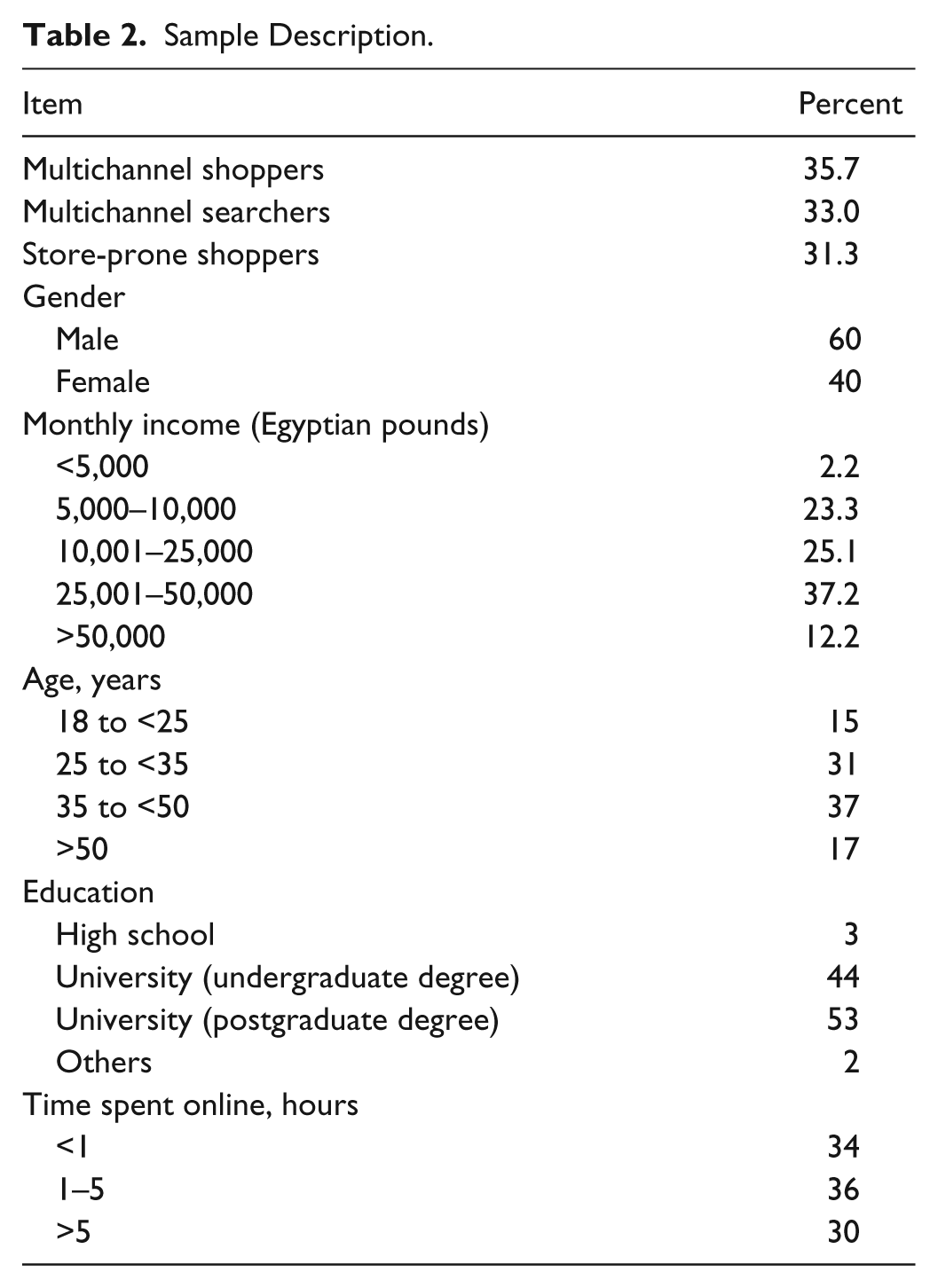
A self-administered questionnaire was distributed in selected areas of Greater Cairo, where most of the customers of the travel and tourism industry in Egypt are located (World Telecommunication Development Conference 2014). Over a three-month period, 315 questionnaires were returned, resulting in a response rate of 78%. In order to identify the sampling unit (i.e., current travel and tourism customers), we included a screening question at the beginning of the questionnaire about whether the respondent had purchased airline tickets or hotel accommodations or both during the preceding 12 months. If the respondent answered no, she or he is advised not to complete the questionnaire and return it to the data collector. Table 2 summarizes the sample’s characteristics.
Sample Description.
Measures
The questionnaire comprises three parts. The first part focuses on identifying customers’ channel choice. The second part includes psychographic and channel experience–related questions. The final part includes some demographic questions about age, income, and level of education.
Channel choice—that is, the channel(s) used by travel and tourism shoppers—was measured using the following steps. Respondents were classified as multichannel shoppers if they had made purchases through more than two channels (Internet, smart phone, call center, social media, and catalog) when purchasing travel and tourism services within the preceding 12 months. Those who used many channels during the search phase only and then bought from stores were classified as multichannel searchers. Those who searched and bought only from stores (e.g., travel agency outlets, specific airline store outlets) were grouped as store-prone shoppers (Gensler, Verhoef, and Böhm 2012).
The measurement scales intended to represent the constructs in the research model were adapted from previously validated scales as follows: consumer innovativeness (Roehrich 2004), price consciousness (Konuş, Verhoef, and Neslin 2008), shopping enjoyment (Babin, Darden, and Griffin 1994), perceived risk (Sweeney, Soutar, and Johnson 1999), need to conform (Konuş, Verhoef, and Neslin 2008), frequency of travel (Beldona, Racherla, and Mundhra 2011), Internet experience (Mahrous 2011), and convenience-seeking (Konuş, Verhoef, and Neslin 2008). All items were measured using a Likert scale ranging from 1 to 5 (1 = strongly disagree, 5 = strongly agree). Finally, channel experience was measured using a dummy variable that indicated the prior channel(s) that the customer predominantly used on the previous purchasing occasion (Gensler, Verhoef, and Böhm 2012).
The validity and reliability of the measurement scales were examined using factor analysis and the Cronbach α test, respectively. The factor analysis resulted in an eight-factor solution explaining 73% of the variance in the outcome. Loadings of 0.60 and above are considered significant based on the sample size of the present study (Field 2010). Finally, with regard to the reliability test, all Cronbach’s αs were greater than 0.70 and ranged from 0.798 to 0.887. Therefore, it can be concluded that the measures used in this study showed a satisfactory level of internal consistency and could be used for further analysis.
Results
Multinomial logistic regression (MNL) was used to analyze the data because it can predict the probability of category membership of a dependent variable based on multiple independent variables. In addition, this method is considered a simple extension of binary logistic regression, which allows for more than two categories of the dependent variable to be included. Furthermore, the independent (predictors) variables can be either dichotomous (i.e., nominal scale) or continuous (i.e., interval or ratio in scale), as is the case with the variables in this study. Finally, this method does not require careful consideration of the sample size or the examination of outlying cases (Starkweather and Moske 2011). MNL does not make any assumptions about the linearity, normality, or heterogeneity of variance of the independent variables (Starkweather and Moske 2011). The MNL analysis first tests the model fit by examining the chi-square of the final model. The probability of the model chi-square (17.142) was 0.005, which is less than the level of significance of 0.01 (p value <0.01). Therefore, it can be concluded that the model fits the data. Second, the research model specification was tested by calculating the likelihood ratio test, as indicated in Table 3. Specifically, the likelihood ratio test, which follows a chi-square distribution, examines the significance of the incremental contribution of each variable of the independent variables in the model. The results in Table 3 indicate that almost all the independent variables in the research model significantly discriminate between the three categories of shopper, because the log-likelihood ratio is significant and the degrees of freedom do not increase when any independent variable in the model is omitted (Field 2010).
Likelihood Ratio Tests.

Note: The chi-square statistic is the difference in −2 log-likelihoods between the final model and a reduced model. The reduced model is formed by omitting an independent variable from the model one after another. The reduced model is equivalent to the final model because omitting the independent variables does not increase the degrees of freedom.
p < 0.05, **p < 0.01.
Next, the log odds ratios (Exp B) were used to evaluate the ability of independent factors to distinguish between pairs of categories of shoppers (i.e., multichannel shopper vs. store-prone shopper and multichannel researchers vs. store-prone shopper) and determine the contribution made by changing the odds of being in one dependent variable group rather than another (Table 4). In this stage, two log-odds ratios were calculated by MNL analysis: (1) the log probability of being a multichannel shopper versus being a store-prone shopper, and (2) the log probability of being a multichannel searcher versus being a store-prone shopper.
Parameter Estimates.

Note: The reference category is store-prone shoppers. Pseudo-R2 results: 32.1% (Cox and Snell R2), and 44% (Nagelkerke R2).
p < 0.05, **p < 0.01.
The results of the association between psychographics and channel choice revealed a significant positive relationship between consumer innovativeness and multichannel shopping: A high level of consumer innovativeness increases the likelihood of being in the multichannel shopper category by 2.95 times (p value = 0.00) rather than in the store-prone category. At the same time, consumer innovativeness does not increase the odds of being in the multichannel searchers category (p value = 0.45), as indicated in Table 4. Therefore, hypothesis 1/1 is accepted. The results also indicate that respondents who enjoy shopping are 2.96 times (p value = 0.00) more likely to be in the multichannel group than in the store-prone or multichannel searchers groups, as indicated in Table 4. Thus, hypothesis 1/4 is accepted. Moreover, respondents who seek convenience are more likely to be in the multichannel shoppers group (1.61 times, p value = 0.04) than in the store-prone group. Therefore, hypothesis 1/2 is accepted.
With respect to the need to conform, the results indicate a negative association between the need to conform and being in the multichannel shoppers group. In particular, the higher the social pressure, the more likely it is that the respondent will belong to the store-prone group by 0.51 times (p value = 0.04) or the multichannel searchers by 0.87 times (p value = 0.05) rather than the multichannel shoppers group (Table 4). Thus, hypothesis 1/3 is accepted.
According to the data, price consciousness is a significant predictor of the channel choice. Thus, it can be concluded that the more price conscious consumers are, the more likely they are to be in the multichannel shoppers category by 2.11 times (p value = 0.02) rather than in the store-prone shoppers category or the multichannel searchers category. In light of these results, hypothesis 1/5 is accepted. In addition, the results in Table 4 show that the odds of being a store-prone shopper increased by 0.84 times (p value = 0.04) as the level of perceived risk increased (Table 4). Comparable results were found for multichannel searchers: the results show that the odds of being a multichannel searcher increased by 1.01 times (p value = 0.04) as the level of perceived risk increased. Hence, hypothesis 1/6 is accepted.
The results regarding the effects of channel experience show that frequency of channel use significantly distinguishes multichannel shoppers from store-prone shoppers. Furthermore, being a frequent user of a channel increases the likelihood that the respondent belongs to the multichannel group rather than the store-prone group by approximately 1.54 times. Channel experience also differentiates between multichannel searchers and store-prone shoppers; respondents who have used multiple information channels (e.g., the Internet and the social web) in the previous purchasing situation are 1.22 times more likely to be in the multichannel searchers than the store-prone group. Accordingly, hypothesis 1/7a is partially accepted. Moreover, the more Internet experience respondents have, the more likely they are to be in the multichannel shoppers category. Hence, hypothesis 1/7b is accepted. Finally, being a frequent traveler increases the likelihood that the respondent belongs to the multichannel shoppers group rather than the store-prone shoppers group by 1.54 times (p value = 0.02). Thus, hypothesis 1/8 is accepted.
With regard to sociodemographic variables, the results show that the variables that significantly distinguish multichannel shoppers from store-prone shoppers were income and age (from 18 to 25 and from 35 to 50 years), whereas the variable that significantly distinguished multichannel searchers from store-prone shoppers was age alone (35 to 50 years). Specifically, 18- to 25-year-olds are 1.47 times more likely to be in the multichannel shoppers group than the store-prone group, as indicated in Table 4. However, 35- to 50-year-olds are approximately twice as likely to be in the multichannel searchers’ group as the store-prone group, as indicated in Table 4. In light of these results, it can be concluded that hypothesis 2 is partially supported.
Finally, in order to evaluate the model classification accuracy, the overall percentage accuracy rate was compared to the chance accuracy. The classification accuracy rate is 55.5% (Table 5), which is more than the proportion of chance accuracy criteria (calculated) of 34.5%. The proportion by chance accuracy percentage was calculated by squaring the number of cases in each group (Table 5) and then summing the proportion of cases in each group (0.4172 + 0.3332 + 0.252 = 0.345), which indicated that the model is useful.
Classification Accuracy.

Discussion
This study investigated channel choice in the travel and tourism market in Egypt. The major contribution of this study is to identify the variables distinguishing between the categories of multichannel shoppers, multichannel searchers, and store-prone shoppers. This study, while contributing to a growing stream of literature about the factors associated with channel choice in the travel and tourism market, extends this literature by differentiating not only between multichannel shoppers and store-prone shoppers but also between multichannel searchers and store-prone shoppers. Previous travel and tourism studies used to ignore browsers or consider them part of the traditional shoppers in travel agencies, but the results indicate that there are significant psychographic and sociodemographic differences between searchers and shoppers.
The results indicate that significant differences do exist between multichannel shoppers and store-prone shoppers in terms of age and income (whereas past research conducted in other countries found differences based on age only), and psychographic variables, that is, shopping enjoyment, convenience seeking, customer innovativeness, perceived risk, Internet experience, frequency of travel, and channel experience. In particular, multichannel shoppers are more innovative than store-prone customers; they have positive attitudes to trying new marketing channels and products. They use more than one channel to shop, including online and offline channels. This result is consistent with previous findings (Skallerud 2016). It was also evident that multichannel shoppers enjoy shopping more than store-prone customers do and they are more price conscious than store-prone customers. These results support the findings of recent studies conducted in the hotel booking sector of tourism (Liu and Zhang 2014) and mobile tourism shopping (Kim, Chung, Lee, and Preis 2015). However, the results related to price consciousness contradict the results of Gensler, Verhoef, and Böhm (2012) and Skallerud (2016), who have found that price is not a major driver of channel choice. Finally, the results show that multichannel shoppers are less likely than store-prone customers to perceive risks. This is consistent with the findings of Amaro and Duarte’s (2015) study, which indicates that perceived risk is associated with the adoption of online travel shopping. It is also in line with the results of Gensler, Verhoef, and Böhm (2012) in the retail banking context, which indicate that perceived risk is relevant only to after-sales services. Moreover, the results indicate that multichannel shoppers have more extensive Internet experience and channel experience and are more frequent travelers than store-prone shoppers. The results regarding Internet experience are consistent with the results of Tarek, Mahrous, and Kortam (2012), but the result of frequency of travel contradicts the results of Beldona, Racherla, and Mundhra (2011).
The results of the present study also highlight significant differences between multichannel shoppers and store-prone shoppers in terms of sociodemographic factors. Specifically, multichannel shoppers are younger and have more income than store-prone shoppers. These results contradict the results of Konuş, Verhoef, and Neslin (2008), who find no effect of sociodemographics on channel choice. However, it partially supports the results of Del Chiappa (2013), who found a significant association between the age and income of travelers and their use of various online channels.
With regard to using multiple channels only for information search purposes, the results indicate that multichannel searchers use different channels in both the information search and purchasing phases. The results suggest that the only characteristics that differentiate these respondents from store-prone shoppers are shopping enjoyment, need to conform, perceived risk, and channel experience. The results also show that respondents who use multiple channels in the information search phase are older (i.e., aged 35–50 years) than the respondents in the store-prone category.
Conclusion and Managerial Implications
This study offered an analysis of the interconnected customer experience journey based on an understanding of multichannel behavior. It identified the psychographic and sociodemographic factors associated with three kinds of multichannel consumers—multichannel shoppers, multichannel searchers, and store-prone shoppers. This study advocates that the customer should dictate the channel strategy of travel and tourism companies to ensure that it provides superior shopping experience. Therefore, the results of the study should guide the multichannel integration strategy of the travel and tourism companies; the psychographic and sociodemographic characteristics of every segment of the target market should be translated into value-adding interactions with customers to enhance their shopping experience.
Furthermore, the results of studies conducted on an emerging Middle Eastern market such as Egypt contribute to the literature by helping to maintain the explanatory power of channel choice models developed in previous research across contexts and discover the boundary conditions of those models.
Managerial Implications
The results of this study have several implications for the multichannel strategy and CEM of international travel and tourism companies targeting customers from an emerging Middle Eastern market such as Egypt’s. Figure 2 presents some of the channel-specific strategic decisions that should be used to provide each category of customers with what they are looking for in their interaction with specific types of channel. These decisions also help to divert customers from one channel to another and/or from one category of customer to another. For example, the results indicate that Egyptian customers who shop from traditional travel agencies only have a high perception of risk. Therefore, channel strategies that address these perceptions of risk (as indicated in Figure 2) can persuade customers to switch to another channel, such as online booking.
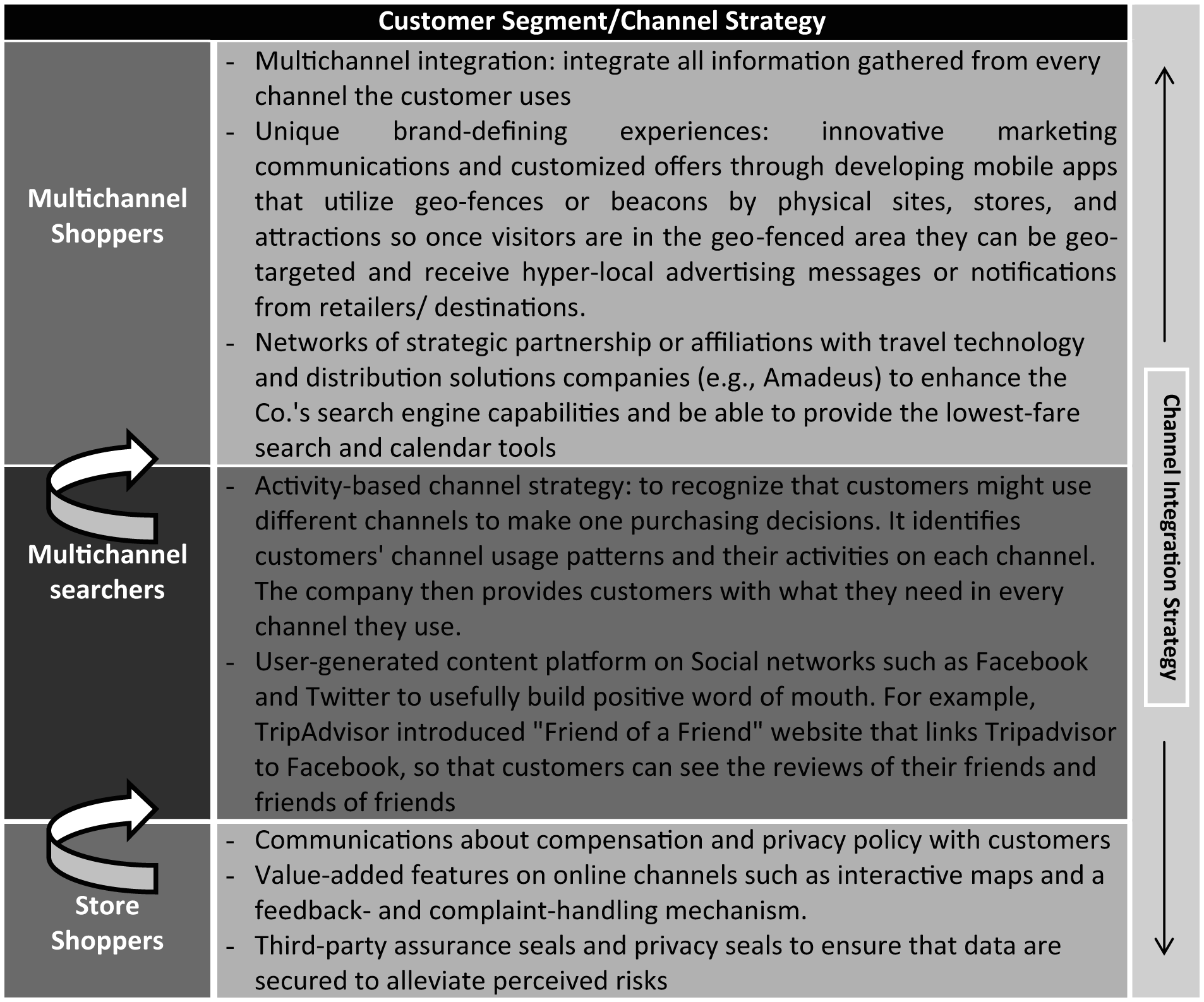
Channel-customer experience management framework.
Limitations and Future Research
Opportunities for future research are abundant. Multichannel shopping is turning into “Multiscreen Branding”; in this plethora of communication messages and channels, consumers expect more from brands. Therefore, future research should take into consideration the following to advance the literature on consumer behavior in the multichannel environment. First, this cross-sectional study could be extended with longitudinal research to reveal how Egyptian consumers’ adoption of multichannel shopping has changed with market development and growing consumer sophistication. Second, future studies could also examine the impact of the aspects of the retail environment that are under the retailer’s control (e.g., the customer-firm interaction platform, service quality, product assortment, and price) on channel choice behavior. Third, this study used a nonprobability sample; hence caution is advised when attempting to generalize the results beyond the sample boundaries. Fourth, a comparative study between emerging and developed markets with regard to the drivers of multichannel shopping might greatly enhance our understanding of multichannel shopping behavior. Finally, future research should investigate other aspects of the multichannel shopping phenomenon, such as transparent pricing and brand clarity.
Footnotes
Declaration of Conflicting Interests
The author(s) declared no potential conflicts of interest with respect to the research, authorship, and/or publication of this article.
Funding
The author(s) received no financial support for the research, authorship, and/or publication of this article.