



Abstract
Understanding the factors that motivate tourists to engage in pro-environmental behavior is an increasingly important topic in the tourism industry. In order to incentivize such green behavior, lodging properties often offer incentives to tourists who are willing to participate in property-level sustainability programs. Unfortunately, incentivizing participation in such initiatives is a difficult task, as tourists’ willingness to engage in pro-environmental behavior often depends on a number of situation-specific factors. Accordingly, the purpose of this research is to advance the understanding of the motivating factors that underlie tourist reactions to sustainability programs. Based on the tenets of motivation crowding theory, this research demonstrates that such reactions depend not only on the nature of the incentive that is offered but also on the image of the destination in which the property is located.
Introduction
Recent research has shown that people act differently at home than when they travel (Dolnicar and Leisch 2008; Miao and Wei 2013). While individuals may tend to engage in environmentally friendly behavior as a matter of course during their daily lives at home, they are often less motivated to engage in green behaviors when on vacation (Miao and Wei 2013). However, even when on holiday, pro-environmental (or green) behavior is not a consistent behavioral function. For example, Line and Hanks (2016) found that tourists are more willing to patronize green hotels in nature-based tourism destinations than urban destinations, suggesting that the destination itself can affect green behavior.
The inconsistencies in tourists’ willingness to engage in pro-environmental behavior represent a challenge for lodging properties that invest large amounts of financial, human, and marketing resources in customer-driven sustainability initiatives. For such establishments, customer participation is often a precondition for the success of the program (Barber 2014; Miao and Wei 2016). Accordingly, to encourage tourists to engage with their sustainability initiatives, hotels and other lodging establishments often provide incentives to motivate them to accept these programs. Sometimes a tangible incentive such as a food and beverage credit or an amenity is offered. Other times, an intangible incentive such as a donation to environmental preservation in the customer’s name may be offered. Regardless of the offering, however, the prevailing sentiment in the industry is that tourists will be more likely to participate in an optional sustainability initiative if some kind of behavioral incentive is offered.
Given the significant financial resources that are often allocated to designing, implementing, and evaluating property-level sustainability platforms (Barber and Deale 2014), understanding the factors that motivate tourists to participate in such programs has become an increasingly important topic in the tourism industry. Unfortunately, given the established inconsistencies in pro-environmental behavior, current research perspectives do little to establish which types of incentives are most effective or if such incentives actually lead to positive emotional reactions and increased participation. In acknowledgement of this gap in the literature, the purpose of the present research is to (1) provide an empirical account of tourist reactions to different sustainability incentive structures and (2) demonstrate how tourists’ emotional and behavioral responses to these incentives can differ depending on the image of destination.
Literature Review
Motivation and Goal Framing
Prevailing theories of motivation suggest that motivational incentives are either intrinsic or extrinsic in nature (Frey and Jegen 2001). Intrinsic motives are tied to structures such as morals, values, and obligations. For example, when it comes to sustainability, a person may participate in pro-environmental behavior because he thinks it is morally right to do so for the good of humanity, because he values the Earth and wants to preserve its resources, or because he feels a sense of obligation to future generations to maintain the environment. Such intrinsic motivations are often a product of internal standards of behaviors and are specific to the individual.
On the other hand, extrinsic motivations include incentives such as money, status, and power. When it comes to sustainable tourism behavior, many tourists are motivated by tangible financial incentives, such as discounts, coupons, or loyalty points that incentivize pro-environmental behavior. Others are extrinsically motivated to participate in sustainability initiatives through an intangible incentive, such as a gain in status or power. For example, Griskevicius, Tybur, and Van den Bergh (2010) found that some consumers are motivated to participate in green behavior in order to increase status among their peers. By choosing a relatively more costly green product or service, the consumer signals to others in the service environment that he has spare resources and can afford to expend those resources for the good of others. This results in an increase in social status and power among his peer group, which the individual can then trade at a later date for intangible resources in the group (Bird and Smith 2005).
Motivations to engage in specific behaviors (such as sustainable consumption) depend on the ultimate goal of that behavior (Hsu, Cai, and Li 2010). Acknowledging this, prior research has classified motivations for green behavior into three categories, also known as goal frames. These categories include normative frames, gain frames, and hedonic frames (Lindenberg 2001; Lindenberg and Steg 2007; Steg et al. 2014).
Normative goal frames motivate individuals to act appropriately or in line with the expectations of a social group (Lindenberg and Steg 2007). Accordingly, normative goal frames are often understood in terms of “oughts” or “shoulds” (see Van der Werff, Steg, and Keizer 2013). Normative goals motivate a person to act in ways that conform to their own internal expectations of themselves, the expectations of society or their community, or in accordance with peer pressure. In the case of sustainability, normative goals often serve to encourage green behavior, as many people feel that protecting the environment is simply the right thing to do (Van der Werff, Steg, and Keizer 2013).
Unlike normative frames, which carry intrinsic value, gain goal frames carry the potential for extrinsic value. Specifically, gain goal frames feature incentives that are tied to net gains in financial resources (Lindenberg and Steg 2007). When a gain goal frame is made salient, the decision-making criteria are predicated on how the perceived outcome of the behavior will impact the decision maker’s financial situation (Steg et al. 2014). In the case of sustainability, gain goals can motivate individuals to engage in pro-environmental behavior when there is a financial incentive for such behavior. However, gain goals can also serve to discourage green behavior when making a green purchase will negatively impact one’s financial resources. If engaging in pro-environmental behavior is more expensive than purchasing a traditional (i.e., nongreen) product, gain-framed motivations may disincentivize the green option in favor of the cheaper, less environmentally friendly choice.
Hedonic goal frames also carry extrinsic value; however, unlike their tangible normative counterpart, hedonically framed motives are often intangible. Hedonically framed motivations for green behavior are centered on pleasure, enjoyment, and happiness (Lindenberg 2001; Lindenberg and Steg 2007). In the tourism marketplace, hedonic goals often serve to discourage green behavior, as tourists may perceive that engaging in green behavior decreases their level of luxury, comfort, and enjoyment (Baker, Davis, and Weaver 2014; Dolnicar, Crouch, and Long 2008). For example, hotel patrons might be disinclined to reuse linens or to forego housekeeping services (even though such actions are environmentally friendly) because they perceive that doing so will decrease their level of luxury, enjoyment, and comfort.
While normative, gain, and hedonic goal frames work to influence behavior in distinct ways, they are not mutually exclusive, and indeed, often coexist in a given situation (Lindenberg and Steg 2007). In fact, when faced with a situation in which an individual must make a choice about how to behave, all three goal frames may be relevant and salient. In such a situation, these motivations may work together in concert, or they may work in opposition to each other, creating a situation known as motivation crowding (Frey and Jegen 2001; Huang et al. 2014).
Motivation Crowding
The motivation crowding effect (Frey and Jegen 2001; Frey and Oberholzer-Gee 1997) suggests that when both extrinsic and intrinsic motivations for behavior are present, the two can work against each other. When extrinsic motivations are present, such as cash or incentives, research has demonstrated that intrinsic motivation levels decrease (Deci and Ryan 1985a; Deci, Koestner, and Ryan 1999). This can result in a decreased likelihood that the consumer will act in a similar manner in the future if such incentives are not present, inhibiting the future effects of intrinsic motivations.
Motivation crowding theory is based on the classic juxtaposition of intrinsic and extrinsic motivations, a concept robustly developed and tested by Deci and Ryan (1985b). Intrinsic motivation can be defined as “the doing of an activity for its inherent satisfactions rather than for some separable consequence” (Ryan and Deci 2000, 56). The satisfaction derived from performing the activity could be because the activity is interesting, fun, or challenging. However, individuals can also be intrinsically motivated because of the innate psychological and emotional results of performing the task, such as happiness, well-being, self-esteem, or satisfaction (Deci and Ryan 1985b, 2012; Hull 1943; Ryan and Deci 2000).
In contrast to intrinsic motivation, extrinsic motivation is “a construct that pertains whenever an activity is done in order to attain some separable outcome” (Ryan and Deci 2000, 60). Extrinsic motivations are typically characterized in terms of rewards or incentives, but can also be understood in terms of the avoidance of negative outcomes, such as sanctions or punishments (Ryan and Deci 2000; Deci and Ryan 2012). A large body of research has suggested that the presence of extrinsic rewards can undermine intrinsic motivation (Lepper, Greene, and Nisbett 1973).
Goldstein, Cialdini, and Griskevicius (2008) found that extrinsic motivators (such as cash) can be effective in a hotel context; however, such incentives often come at a high monetary cost to the hotel. Thus, while financial incentive programs can result in the desired green behavior, the disadvantage is that the incentives may be costly. Moreover, according to the tenets of motivation crowding, these costly incentives (1) might also be responsible for decreasing pro-environmental behavior in the future and (2) might not have been necessary in the first place. So if this is the case, when should incentives be used to motivate tourists to engage in green behavior and when should such incentives be eschewed in favor of the simple intrinsic value of the behavior?
Given that lodging properties wish to incentivize tourists to participate in sustainability programs, but at the same time minimize financial costs, a greater understanding of the dynamic relationship between intrinsic motivations (in the form of normative goal frames), and extrinsic motivations (in the form of gain and hedonic goal frames) is necessary to answer this question. Moreover, the best strategy for incentivizing green behavior may also be dependent on other factors inherent to both the individual and the destination. Based on the tenets of motivation crowding theory, this research suggests that normative goal frames (a result of intrinsic motivation) and gain/hedonic frames (which are the result of extrinsic motivations) may work differently when it comes to their effect on green behavior. Additionally, it is predicted that the image of the destination will moderate tourists’ responses to sustainability offerings.
Destination Image
Destination image can be defined as “a set of qualities, attributes and benefits that visitors hold about the destination; it represents the sum of beliefs and impressions that a person has of a destination” (Chiu, Lee, and Chen 2013, 877). A destination’s image is typically conceptualized to consist of both a cognitive component and an affective component (Baloglu and Mangaloglu 2001; Kim and Perdue 2011). Cognitive destination image is reflective of the subjective manner in which the tourist recognizes the tangible elements that define the destination. For example, a person familiar with Las Vegas might note that this destination contains many large buildings, multiple restaurants, and many bars, casinos, and hotels. Conversely, a visitor to Yellowstone National Park may note that this destination has fewer man-made structures, a wide variety of flora and fauna, and numerous geysers and hot springs. Cognitive destination image, therefore, is the visitor’s perception of “what is here.” Affective destination image, on the other hand, is reflective of the tourist’s perception of “how I feel about what is here.” Any given tourist may find a particular destination to be pleasant, relaxing, stressful, fun, energetic, or have any number of other affective reactions to the location.
While a person’s image of a particular destination can be influenced by many factors, one of the most important determinants of a destination’s image is the physical attributes of the destination itself (Obenour, Groves, and Lengfelder 2006; Turner and Reisinger 1999). Given the importance of destination image as a determinant of consumption behavior (Tasci and Gartner 2007), this study is concerned with understanding how tourists’ willingness to engage in pro-environmental behavior may vary in different types of destinations. As follows, two types of destinations are considered, each exhibiting a distinct set of attributes: nature-based tourism destinations and urban destinations.
Nature-based tourism (NBT) destinations can be described as “relatively undeveloped or undisturbed natural areas” (Lee 2009, 215) and usually feature such attractions as wildlife, outdoor activities, natural elements, and impressive landscapes. These types of destinations tend to have less developed infrastructure in terms of lodging, restaurant, and retail outlets. Conversely, urban tourism destinations “are often much better developed than other types of destinations” and “are easily accessible through airports and scheduled services” (Edwards, Griffin, and Hayllar 2008, 1033). Urban destinations typically feature a wide variety of dining, lodging, entertainment, transportation, and shopping options. Using the framework of motivation crowding, it is predicted that when both intrinsic and extrinsic motivations are present, destination image will moderate the impact of the incentive on the emotional and behavioral outcomes. In other words, when intrinsic and extrinsic motivations are in opposition, the effectiveness of each type of motivation will be impacted by the image of the destination.
Intrinsic and Extrinsic Motivations
As discussed previously, intrinsic motivations spur the desired behavior in the absence of any outside incentive. When intrinsically motivated, the individual acts in a specific manner simply because such behavior conforms to his or her internal norms. In the present context, intrinsic motivations are introduced when the tourist is not offered any type of incentive to participate in a sustainability initiative. In the absence of any incentive, the benefit of participating in the program becomes entirely intrinsic.
Conversely, extrinsic motivation is the result of outside forces. In the case of the present research, incentives offered to participate in sustainability initiatives serve as extrinsic motivators. When intrinsic motivations are absent, the introduction of an incentive may be necessary to motivate the individual to behave in the desired manner. The present study examines two kinds of extrinsic motivators (i.e., tangible and intangible incentives) on tourist behavior.
Tangible Incentives
Many lodging properties offer a financial incentive for participation in green behavior. This incentive often comes in the form of a discount, a coupon for use in the property’s food and beverage outlets, or loyalty points (which can later be redeemed for monetary value). For example, Starwood guests who opt to forego full housekeeping services receive either 250–500 loyalty points or a $5 food and beverage voucher for each day that they elect this option (Starwood Hotels and Resorts 2016). Such tangible incentives have been successful in motivating guests to participate in green behavior (Barber 2014).
Based on the tenets of motivation crowding, the present research examines the interplay of such tangible incentives on tourists’ intentions to engage in pro-environmental behavior via the moderating effect of destination image. Specifically, it is suggested that in an NBT destination, where the environment, natural features, and wildlife are a central part of the experience (Lee 2009), the prominence of these elements makes environmental preservation salient to the tourist, highlighting the importance of acting in a green manner. In other words, when a visitor has purposefully chosen a travel destination that is focused on the natural elements of the environment, is surrounded with natural features such as flora, fauna, and unspoiled wilderness, and is spending valuable time and money to enjoy these features, he will be hyperaware of the necessity of preserving this environment for future enjoyment, both for himself and others. Thus, in an NBT destination, a normative goal frame will be activated, and individuals will have a strong intrinsic motivation to participate in a sustainability program because it is “the right thing to do.” However, in an urban destination, where environmental elements are not as salient, such intrinsic motivations will not be as strong, as the natural elements of the destination are not top of mind. This will lead to motivation crowding, meaning that while intrinsic motivations may exist, tangible incentives will be the determining factor in motivating tourists to make green behavior choices. Thus, it is hypothesized that
Hypothesis 1: The impact of an incentive on the acceptance of a sustainability program is moderated by destination image (NBT vs. urban) such that in urban destinations, tangible incentives will result in greater acceptance of the sustainability program than will no incentive. No such difference will be found in NBT destinations.
Emotional Responses to Sustainability Programs
Being asked to engage in green/pro-environmental behavior evokes an emotional response, which may be either positive or negative (Nameghi and Shadi 2013). Prior studies have found that being asked to participate in sustainability programs can elicit negative affect (Baker, Davis, and Weaver 2014). However, such frustrations and irritations may be offset if the guest receives a tangible incentive for their green behavior, such as a financial incentive or an extra amenity, thus making the perceived inconveniences “worth it.” For example, the minor annoyance of having to make one’s own bed in the morning may be mitigated by the knowledge that doing so has earned the guest a free breakfast coupon for choosing to forego housekeeping services.
However, it is again predicted that destination image will have a significant impact on negative emotions when tourists are asked to engage in a green behavior. Specifically, it is proposed that in an NBT destination, where nature and the preservation of the environment are salient, tourists will experience fewer negative emotions when asked to engage in green behavior, because they will be intrinsically motivated to do so. However, in an urban destination, where environmental protection is not top of mind, it is predicted that a request to “act green” may result in a negative emotional response, but that offering a tangible incentive may mitigate this response. As such, it is hypothesized that
Hypothesis 2: The impact of an incentive on negative emotions is moderated by destination image (NBT vs. urban) such that in urban destinations, tangible incentives will result in lower levels of negative emotional responses than when no incentive is offered. No such difference will be found in NBT destinations.
Intangible Incentives
While the impact of tangible, financial incentives is an important aspect of the framework, it is also important to understand situations in which the individual does not stand to gain financially from making a green choice. For example, if the incentive for green behaviors was intangible, and he or she did not stand to gain financially from participation in the green behavior, would the same pattern still hold?
Motivation crowding theory (Frey and Jegen 2001; Frey and Oberholzer-Gee 1997) suggests that the introduction of extrinsic motivators can negate the impact of intrinsic motivations. Based on this framework, hypotheses 1 and 2 suggest that extrinsic motives activate a gain goal frame, thus negating the normative goal frame that predominates when no incentive is offered. Accordingly, it is predicted that nonfinancial incentives will follow the same pattern. Even if the incentive for green behavior is intangible, the mere presence of an extrinsic motivator should activate the gain goal frame. However, again, it is hypothesized that in NBT destinations, the salience of the environment will activate a normative goal frame, negating this effect. Thus, it is predicted that the relationships proposed in hypotheses 1 and 2 will hold, even when the extrinsic motivator comes in the form of an intangible incentive:
Hypothesis 3: The impact of an incentive on the acceptance of a sustainability program is moderated by destination image (NBT vs. urban) such that in urban destinations, intangible incentives will result in greater acceptance of the sustainability program than will no incentive. No such difference will be found in NBT destinations.
Hypothesis 4: The impact of an incentive on negative emotions is moderated by destination image (NBT vs. urban) such that in urban destinations, intangible incentives will result in lower levels of negative emotional responses than when no incentive is offered. No such difference will be found in NBT destinations.
Methods
In order to test the hypotheses concerning the interaction between incentives for green behavior and destination image and their effect on tourist responses, two studies were conducted. Both studies featured an intrinsic condition (no incentive) and two extrinsic conditions (see Figure 1). In study 1, the extrinsic motivators came in the form of tangible incentives. In study 2, the extrinsic motivators came in the form of intangible incentives.
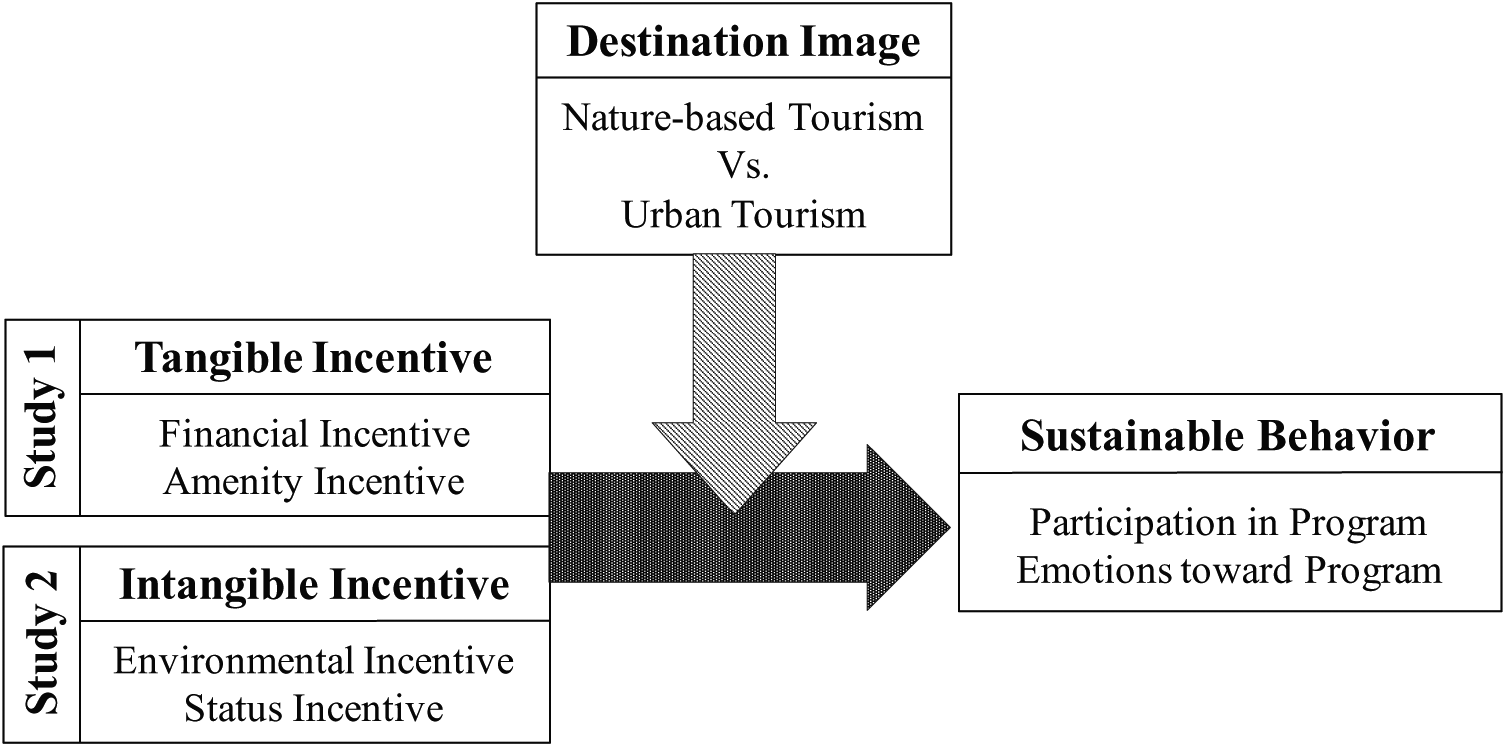
Proposed effect of destination image on response to sustainability incentives.
For both studies, data were collected using Amazon Mechanical Turk as the sampling frame. As an incentive to complete the survey, each participant received a $0.50 credit to his or her Mechanical Turk account. After screening out respondents that failed either of the two attention check items embedded in the survey, a total of 163 people participated in study 1 and another 182 participated in study 2.
For both studies, participants were first asked to consider taking a trip with a friend to a pictorially evoked destination. Each respondent was shown a total of eight color photographs designed to evoke either an NBT destination or an urban tourism destination. They were then asked to consider the prospect of taking a trip to a place similar to the one presented in the pictures. To evoke the NBT destination, two prominent U.S. national parks (one from the east coast and one from the west coast) were chosen. To evoke the urban destination, two prominent U.S. destination cities (one from the east coast and one from the west coast) were chosen. To minimize the effect of any bias on the part of the respondents concerning the sampled destinations, none of the destinations were explicitly identified.
Following the introduction of the destination, participants were presented with the following scenario: “You and a friend decide to take a four-day trip to a destination like the one portrayed in the pictures. After searching the Internet, you find a hotel (The Beacon Hotel) that looks quite comfortable and is being offered at a reasonable price. When you arrive at The Beacon, you are pleased to see that it is just as described on the website: comfortable, clean, convenient, and safe. As you are checking in, the front desk agent asks you if you would like to participate in the hotel’s sustainability program. She informs you that participation means,
• Instead of receiving fresh towels and bed linens daily, you will receive them every other day (cutting down on water and electricity usage). • You will be assigned to a room with a number of water/energy efficient features such as decreased flow water faucets and reusable (as opposed to disposable) water glasses. • You will agree to separate your recyclables from your trash in the bins provided in your room.
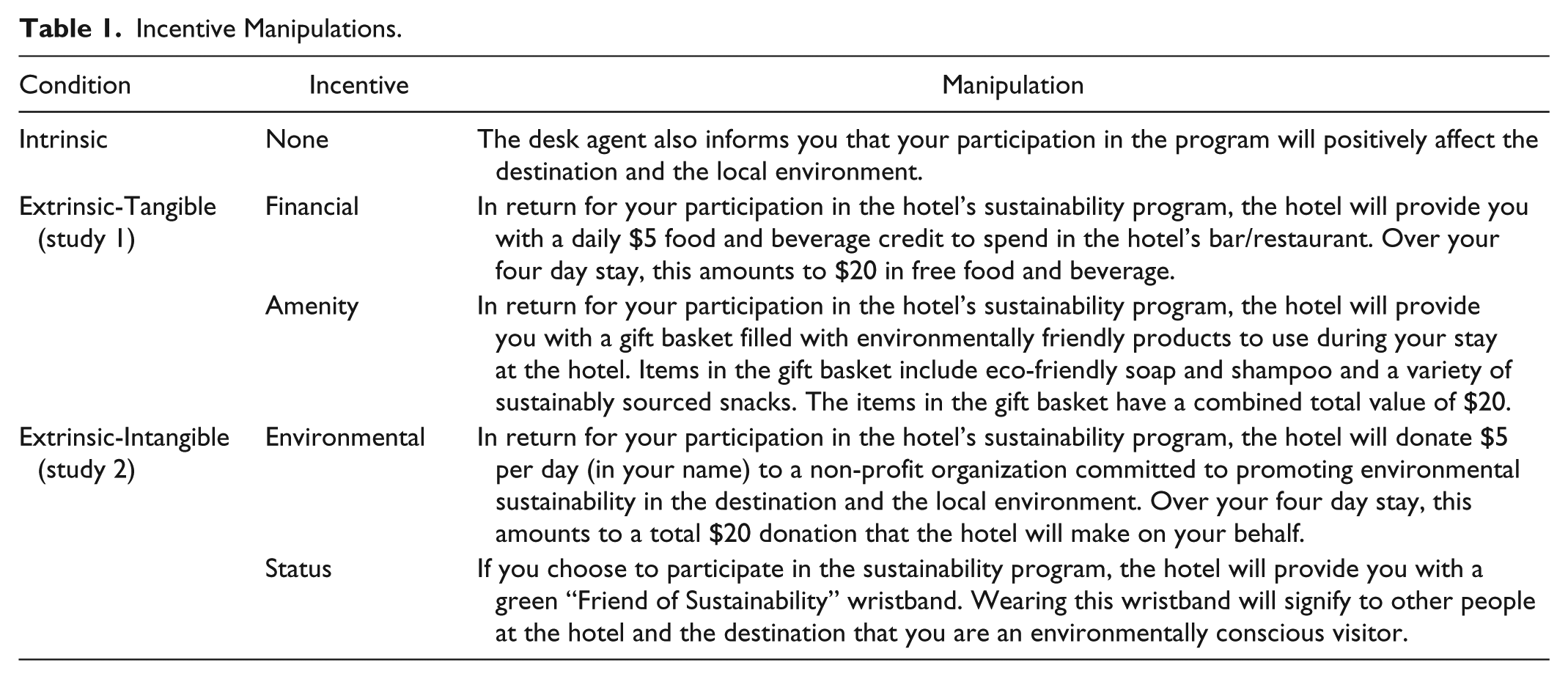
Following the introductory scenario, participants were presented with the incentives manipulation. All incentive manipulations are presented in full in Table 1. The scenario and manipulations were carefully constructed to avoid the introduction of extraneous error. For example, in the introduction, the hotel was conveyed as meeting expectations concerning comfort, cleanliness, safety, etc. This helped to avoid the introduction of variance in the dependent variables unrelated to the core phenomenon (i.e., the incentive structure). Additionally, it is important to note the hotel’s sustainability program was designed to include aspects of the three primary types of private sphere pro-environmental behavior (see Miao and Wei 2016; Rice 2006): reuse of materials (e.g., linens/towels), reduction of waste (e.g., water), and recycling (e.g., room waste). Ensuring that all three forms of behavior were represented is important as previous research indicates that consumers do not necessarily value (or engage in) all forms of pro-environmental behavior equally (Gatersleben, Steg, and Vlek 2002).
Incentive Manipulations.
Measurement
The two dependent variables in this study were (1) willingness to participate in the sustainability program and (2) emotional response to the sustainability offering. Participants’ willingness to participate in the sustainability program was measured by asking the following question: “Given that participating in the hotel’s sustainability program is optional, how likely are you to accept the front desk agent’s offer to participate in The Beacon Hotel’s sustainability program?” Responses were measured on a 7-point likelihood scale anchored by 1 = very unlikely and 7 = very likely.
Emotional response to the sustainability offering was measured using a scale previously employed by Valenzuela, Mellers, and Strebel (2010). This scale was chosen because of its established validity in measuring consumer response to incentives. Specifically, participants were asked how they would feel about the sustainability program after having the check-in experience described in the scenario. Participants were asked to what extent they would experience emotions such as anger, disappointment, outrage, irritation, frustration, and unhappiness (α=.95).
In addition to the dependent variables, several other variables were measured as potential covariates of the constructs in the hypothesized relationships. All covariates were chosen based on previous research of green hotel behavior. These constructs were included to ensure that significant effects and interactions were not due to relevant individually varying traits and preferences among the respondents. To these ends, Manaktola and Jauhari’s (2007) green attribute importance scale (α=.97) was included as a metric of the importance that each participant placed on specific green hotel behaviors. Similarly, Haws, Winterich, and Naylor’s (2014) green meaning scale (α=.91) was included as a global measurement of personal concern for the environment. A measurement of self-esteem (Rosenberg 1965; α=.94) was also included as this individual difference may influence people’s responses to intangible incentives such as status. Finally, preference for comfort and luxury as a hotel patron (Baker, Davis, and Weaver 2014; α=.82) were measured to include an account of the extent to which study participants believe in the existence of a trade-off between comfort/luxury and green behavior (i.e., a hedonic goal frame).
Study 1: Tangible Incentives
A total of 163 people participated in study 1. Among the participants, about half (51.5%) were male, and a majority were white (74.2%). The age of the participants ranged from 18 to 74, with a median age of 31. A majority of the participants indicated that they had some college (36.8%) or a college degree (41.7%), and household income was somewhat evenly distributed (<$19,000, 10.4%; $20,000–$39,999, 27.6%; $40,000–$59,999, 22.1%; $60,000–$79,999, 17.2%).
For each study, the manipulation of destination image was checked using an attribute likelihood scaling technique (see Echtner and Ritchie 1993; Line and Hanks 2016; Tasci, Gartner, and Cavusgil 2007). The results of two independent sample t-tests showed that participants primed for the NBT and urban destinations reacted to two significantly different destination images. For the NBT condition, participants ranked the natural attributes significantly higher (p<.001) than those in the urban tourism condition. In contrast, respondents in the urban tourism condition ranked the man-made attributes significantly higher (p<.001) than those in the NBT condition.
The manipulation of the incentives variable was also checked. On a 7-point Likert scale, participants were asked to what extent the hotel offered (1) no incentive, (2) a dining credit, and (3) a gift basket. The results of a one-way analysis of variance (ANOVA) indicated that the participants were aware of the type of incentive offered in the scenario (FNoIncentive[2, 160]=131.67, p<.001; FFinancial[2, 160]=153.14, p<.001; FAmenity[2, 160]=213.74, p<.001). These findings suggest that participants in each incentive condition were able to clearly identify the type of incentive offered (in the no incentive condition: MNoIncentive=5.88, MFinancial=1.90, MAmenity=1.83; in the financial condition: MFinancial=6.65, MAmenity=2.38, MNoIncentive=2.06; in the amenity condition: MAmenity=6.54, MFinancial=2.13, MNoIncentive=1.78).
Acceptance of the Sustainability Program
To test hypothesis 1 concerning the tangible incentive offerings, an analysis of covariance (ANCOVA) was performed on the participation variable, with destination image and the type of incentive specified as between-subjects factors. A set of control variables (perceived importance, preference for comfort, preference for luxury, green meaning, and self-esteem) was also included. The ANCOVA results indicate a significant main effect of destination image on acceptance of the sustainability program (F[1, 149]=4.30, p<.05). The main effect was further qualified by a significant interaction with the type of incentive (F[2, 149]=4.65, p<.01). Specifically, in the NBT condition, whether (or what type of) a tangible incentive was offered made no difference in participants’ decisions to participate in the sustainability program (MNoIncentive=5.90, MFinancial=5.58, MAmenity=5.42). In contrast, in the urban destination condition, individuals in the tangible incentive conditions reported significantly higher levels of program acceptance than those in the no incentive condition (MNoIncentive=4.15, MFinancial=5.65, MAmenity=5.36). Therefore, hypothesis 1 predicting an asymmetrical pattern of the effect of destination image on program acceptance is supported. Figure 2 illustrates the interaction pattern.

The interaction of destination image and tangible incentives on acceptance of the sustainability program.
Emotional Response to the Sustainability Program
To test the second hypothesis, an ANCOVA was conducted to determine the effects of destination image and type of incentive on participants’ emotional response to the sustainability program when tangible incentives are offered. The results reveal a significant main effect of destination image on negative emotions toward the sustainability program (F[1, 152]=3.86, p<.05). Furthermore, the interaction effect of destination image and the type of incentive was also significant (F[2, 152]=3.83, p<.05). Specifically, in the NBT destination condition, there was no significant difference in the negative emotions experienced among the no-incentive, financial incentive, and amenity incentive conditions (MNoIncentive=1.28, MFinancial=1.76, MAmenity=1.47). In contrast, in the urban destination condition, participants who did not receive an incentive reported significantly higher levels of emotional negativity toward the sustainability program than those who received a tangible incentive (MNoIncentive=2.29, MFinancial=1.68, MAmenity=1.59). Therefore, hypothesis 2 predicting an asymmetrical pattern of the effect of destination image on the emotional response to the sustainability program is supported. Figure 3 illustrates the interaction pattern.
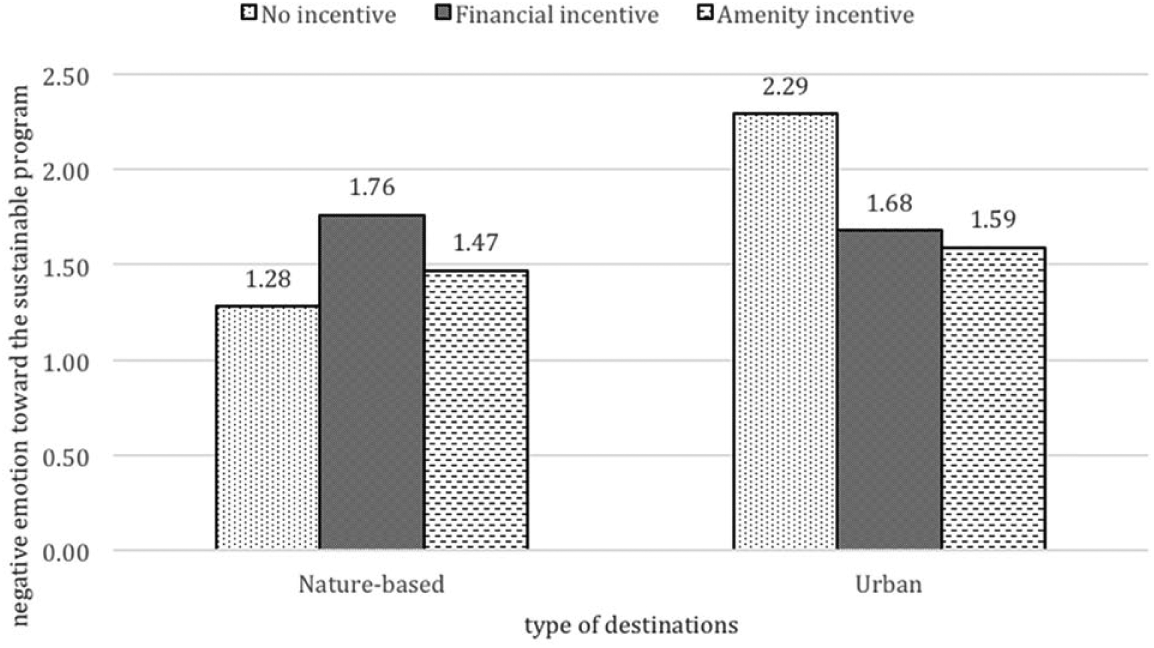
The interaction of destination image and tangible incentives on negative emotions toward the sustainability program.
Study 2: Intangible Incentives
A total of 182 people participated in study 2. In terms of gender, about half of the respondents (46.2%) were male. The majority of the participants were white (77.5%). The age of the participants ranged from 18 to 65 years, with a median age of 32. The majority of the participants indicated that they had some college (33.0%) or a college degree (51.1%), and household income was again relatively evenly distributed (<$19,000, 14.3%; $20,000–$39,999, 28.0%; $40,000–$59,999, 22.0%; $60,000–$79,999, 21.4%).
The destination image and incentive manipulations were checked according to the same process outlined for study 1 with similar results. Regarding incentives, participants were again asked about all three relevant conditions (no incentive, environmental incentive, status incentive). The results of a one-way ANOVA showed that the participants were clearly aware of the type of incentive offered in the scenario (FNoIncentive[2, 179] = 92.84, p<.001; FEnvironmental[2, 179]=249.17, p<.001; FStatus[2, 179]=151.11, p<.001). Thus, participants in each incentive condition were able to clearly identify the type of incentive offered in their respective scenarios (in the no incentive condition: MNoIncentive=5.88, MEnvironmental=1.87, MStatus=2.56; in the environmental condition: MEnvironmental=6.43, MStatus=2.20, MNoIncentive=1.62; in the status condition: MStatus=6.15, MEnvironmental=2.10, MNoIncentive=1.80).
Acceptance of the Sustainability Program
To test hypothesis 3, an ANCOVA on participation was performed with the destination image factor and the type of intangible incentive modeled as between-subjects factors. The same covariates from study 1 were also included in the model. The results showed that the main effect of destination image on acceptance of the sustainability program was significant (F[1, 170]=6.44, p<.01). The main effect was further qualified by a significant interaction with the type of intangible incentive (F[2, 170]=3.99, p<.05). Specifically, in the NBT condition, individuals who did not receive an incentive reported the highest level of acceptance of the program (MNoIncentive=5.89, MEnvironmental=5.42, MStatus=4.70). In contrast, in the urban destination condition, individuals in the no incentive condition reported the lowest level of acceptance (MNoIncentive=4.50, MEnvironmental=5.13, MStatus=4.78). Therefore, hypothesis 3 is supported. Figure 4 illustrates the interaction pattern.
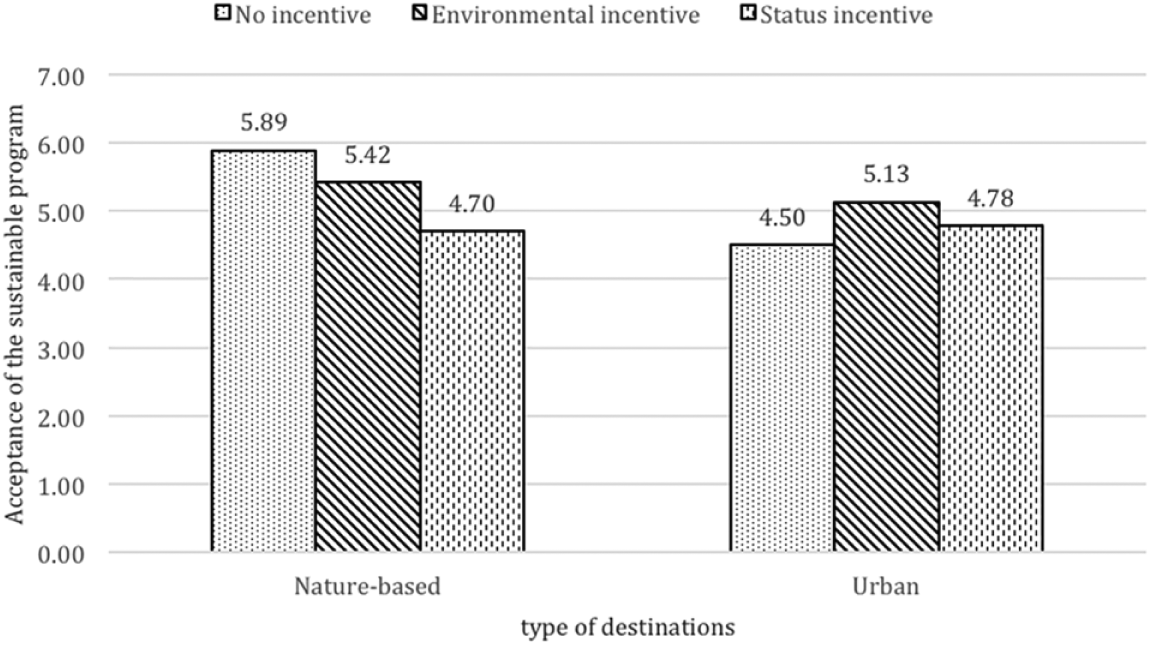
The interaction of destination image and intangible incentives on acceptance of the sustainability program.
Emotional Response to the Sustainability Program
To test the final hypothesis, an ANCOVA was conducted to determine the effects on participants’ emotional responses to the sustainability program when intangible incentives are offered. The results showed a significant main effect of destination image on negative emotions toward the sustainability program (F[1, 170]=3.81, p<.05). Furthermore, the interaction effect of destination image and the type of intangible incentive was also significant (F[2, 170]=2.71, p<.05). Specifically, in the NBT condition, participants who received no incentive to participate reported the lowest level of negative emotions toward the sustainability program (MNoIncentive=1.41, MEnvironmental=2.04, MStatus=1.75). In contrast, in the urban condition, individuals who did not receive a participation incentive reported the highest level of negative emotions toward the sustainable program (MNoIncentive=2.31, MEnvironmental=1.96, MStatus=1.93). Therefore, hypothesis 4 is supported. Figure 5 illustrates the interaction pattern.
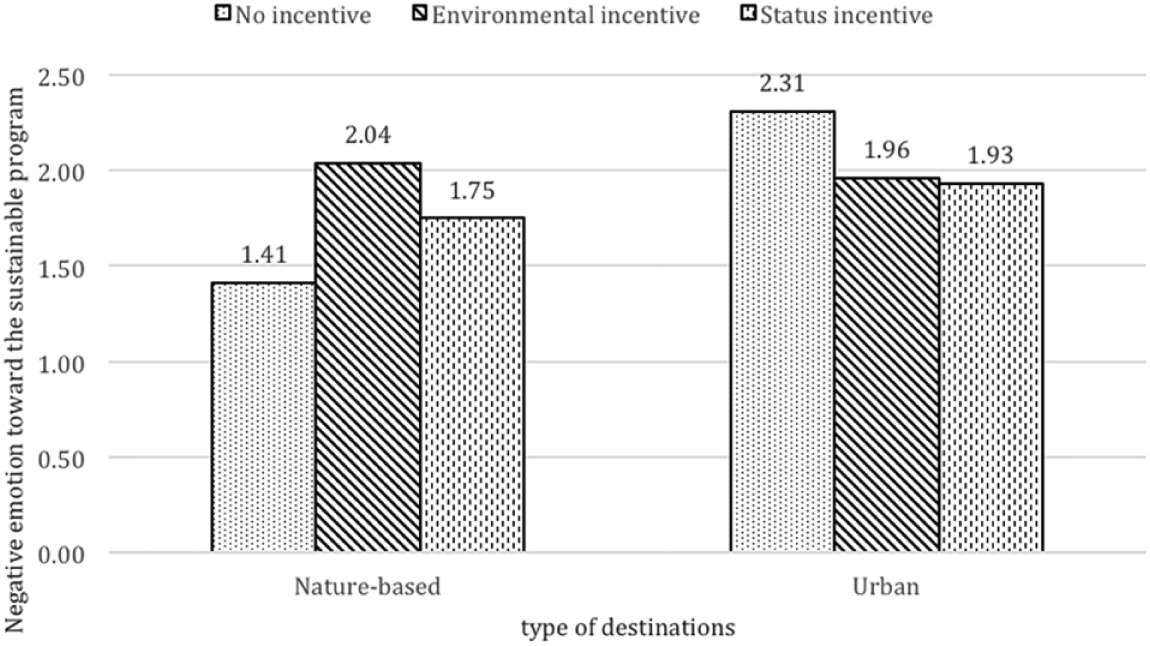
The interaction of destination image and tangible incentives on negative emotions toward the sustainability program.
Post Hoc Analyses: Comfort and Luxury Preference
The results of studies 1 and 2 make it clear that tourists display drastically different green behavior in NBT and urban destinations. Tourists in urban destinations perceive a cost to participating in sustainability programs, but the perception of this cost can be mitigated by offering an incentive. In contrast, not offering an incentive works best in NBT destinations. In the case of NBT destinations, the presence of an external incentive can actually decrease tourists’ likelihood to engage in green behavior, a manifestation of motivation crowding.
These findings are robust and empirically confirm the idea that in certain situations, incentives are beneficial and even necessary, while in others they may be superfluous and undesirable. In NBT destinations, this cost perception is attenuated by the activation of a normative goal frame, intrinsically motivating the tourist to participate in the sustainability program simply because it is the right thing to do. In urban destinations, the perception of the cost of participation is mitigated by the activation of a gain goal frame when the tourist is extrinsically motivated to engage in green behavior.
While the results are strong, clear, and consistent, the cognitive mechanisms through which these responses take place are less readily apparent. So what, exactly, is the nature of the perceived trade-off that makes incentives necessary in certain destinations? If consumers sometimes feel that they must be compensated for the loss that accrues to them by participating in a sustainability program, what is the loss that they perceive? These questions are germane to the issue of green behavior incentive programs if hotel operators are to design cost-effective, customer-friendly programs.
Inherent in the mentality that mandates that consumers should be incentivized for engaging in green behavior is the idea that a trade-off exists between green behavior and the hedonic elements of the tourism experience, such as comfort and luxury. Accordingly, the extent to which a tourist perceives that there is an inherent cost to making green behavior choices is predicated on the concept of luxury beliefs. In a sustainability context, luxury beliefs can be defined as “the extent to which an individual believes that the consumption of green products results in a reduction in luxury value” (Line and Hanks 2016, 5). Importantly, such beliefs can discourage tourists from choosing green products and services (Baker, Davis, and Weaver 2014). Luxury is, by definition, a state of excess, characterized by “that which is simply not necessary at any level” (Bernstein 1999, 48). Green behavior, on the other hand, is focused on the idea that humans should not consume more than they need and should attempt to use fewer resources. This contrast between the ideas of luxury and sustainability can result in the impression that there is a trade-off between the environmentally friendly characteristics of a product or service and the hedonic elements of that service (Griskevicius, Tybur, and Van den Bergh 2010). This trade-off may be especially salient from a vacation standpoint, when tourists are particularly attuned to the hedonic aspects of the travel experience (Miao and Wei 2013), activating a hedonic goal frame.
Because this perception of the trade-off between luxury and sustainability is fundamental to the research question at hand, a post hoc investigation was conducted to determine (1) if an individual’s luxury beliefs, or the extent to which they perceive a trade-off between green behavior and luxury, significantly impacts their acceptance of and participation in green behavior, and (2) how this effect interacts with destination image and the incentive type. Stated more simply, the exploratory post hoc investigation was undertaken to account for the potential effect of hedonic goal framing in the motivation crowding effect established in studies 1 and 2.
Results of Post Hoc Test
The data collected for the first two studies were collapsed and further analyzed. The participants were classified into two groups (low vs. high levels of comfort and luxury preference) by making a median split on the composite scale. An ANCOVA was performed using destination image, type of incentive, and level of comfort and luxury preference as between-subjects variables. Acceptance of the program was specified as the dependent variable.
The ANCOVA results showed that the main effect of destination image on the acceptance of the sustainability program was marginally significant (F[1, 312]=3.52, p<.10). However, the main effect of the level of comfort and luxury preference on the acceptance of the sustainability program was highly significant (F[1, 312]=22.48, p<.001). The two-way interaction between the type of incentives and the level of comfort and luxury preference was also marginally significant (F[1, 312]=2.07, p<.10). More importantly, the three-way interaction among destination image, the type of incentives, and the level of comfort and luxury preference was also marginally significant (F[1, 312]=1.85, p<.10).
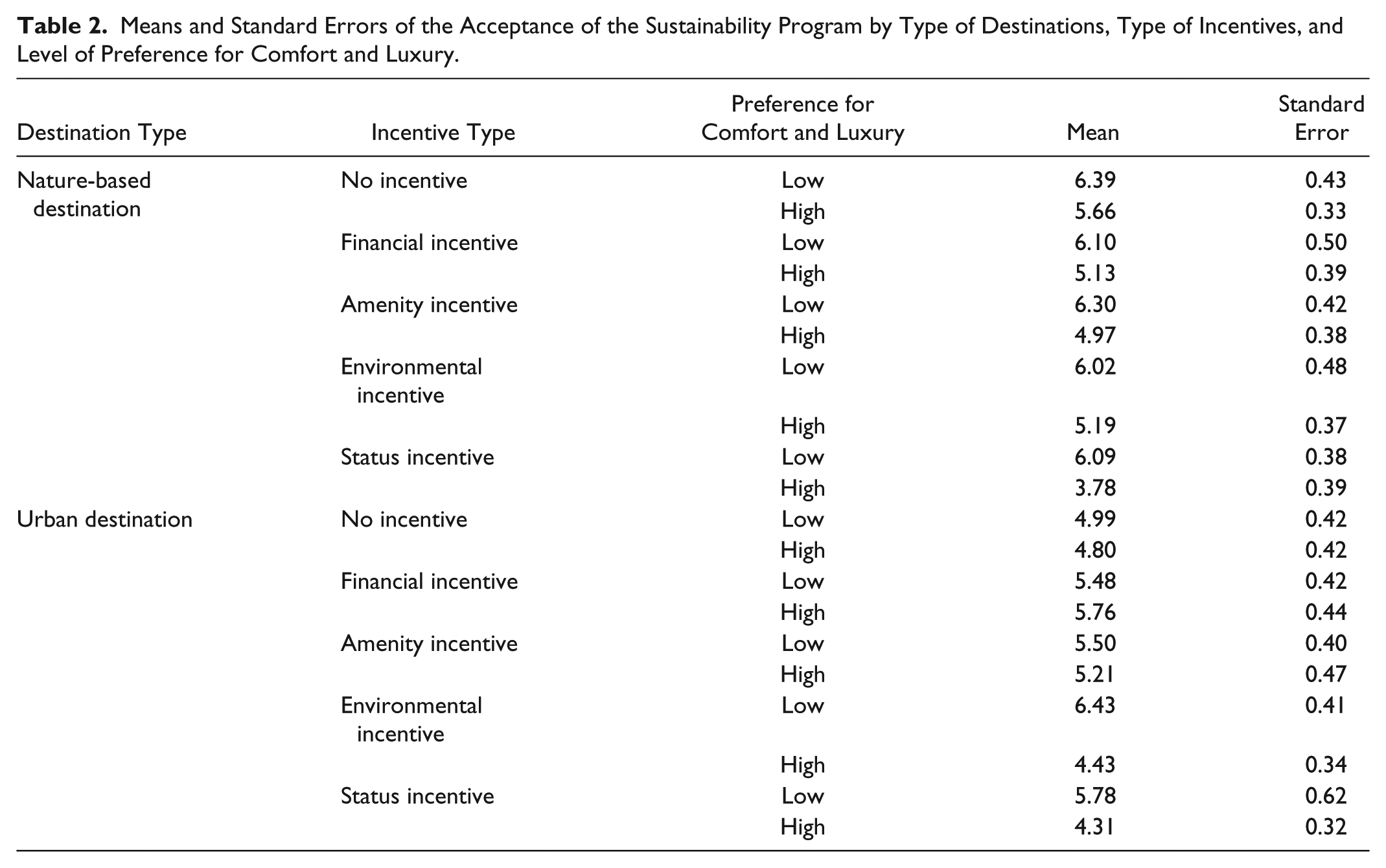
In the NBT condition, individuals with low levels of comfort and luxury preference reported consistently higher levels of acceptance of the sustainability program than those with high levels of comfort and luxury preference (MNoIncentive=6.38 vs. 5.65; MFinancial =6.09 vs. 5.13; MAmenity=6.30 vs. 4.97; MEnvironmental=6.01 vs. 5.19; and MStatus=6.08 vs. 3.78). Whether an incentive was offered (or what type of incentive was offered) had no impact on acceptance of the sustainability program among individuals with low levels of comfort and luxury preference in an NBT destination. In contrast, for individuals with high levels of comfort and luxury preference in an NBT destination, acceptance of the sustainability program with a status incentive was the lowest (M = 3.78), while acceptance of the program with no incentive was the highest (M = 6.38).
In the urban destination condition, there was no difference between the two groups with low and high preferences for comfort and luxury when tangible incentives were offered (MLowFinancial=5.48 vs. MHighFinancial=5.76; MLowAmenity=5.50 vs. M=HighAmenity=5.21). However, there were significant differences between the two groups when intangible incentives were offered (i.e., environmental incentives or status incentives). Specifically, the acceptance of the program by individuals with low preferences for comfort and luxury was consistently higher than those with high preferences for comfort and luxury when intangible incentives were offered (MLowEnvironmental=6.43 vs. MHighEnvironmental=4.43; MLowStatus=5.78 vs. MHighStatus=4.31). Table 2 shows the means and standard errors of acceptance of the sustainability program by type of destination, type of incentive, and level of preference for comfort and luxury.
Means and Standard Errors of the Acceptance of the Sustainability Program by Type of Destinations, Type of Incentives, and Level of Preference for Comfort and Luxury.
Discussion
In study 1, the main effect of destination image on acceptance of the sustainability program was significant. Furthermore, the interaction effect of destination image and the type of tangible incentive was also significant. This suggests that, in the case of NBT destinations, offering tangible incentives has no impact on individuals’ willingness to participate in sustainability programs. However, in urban destinations, individuals are significantly more likely to participate in sustainability programs when a tangible incentive is offered.
In study 2, the research focus was on intangible incentives. Again, as expected, the main effect of destination image on program participation was significant, as was the interaction effect. As was the case with study 1, these results indicate that when it comes to NBT destinations, tourists are still more likely to participate in sustainability programs when no incentive is offered. However, in urban destinations, incentives are more effective in directing behavior. In the urban condition, those who were offered no incentive reported the lowest level of acceptance of the sustainability program.
In terms of emotional reactions to the program, a similar pattern emerged (i.e., significant main and interaction effects in both studies). For NBT destinations, there appears to be no significant effect on negative emotions regardless of whether or not a tangible incentive is offered. However, in urban destinations, the lack of an incentive results in significantly more negative responses to the sustainability program than when a tangible incentive is offered (study 1). In support of these results, the findings of study 2 indicate that in NBT destinations, offering incentives can actually lead to more negative affect than would be the case if no incentive were offered at all. However, in urban destinations, incentives are associated with less negativity.
The results of the post hoc test provided additional insight into the results of studies 1 and 2 by incorporating respondents’ luxury preferences into the model. The results of this analysis suggest that in NBT destinations, individuals with low levels of luxury preference are more likely to participate in sustainability programs than those with higher preferences for comfort and luxury. Additionally, whether an incentive was offered had no impact on participation among those with low levels of luxury preference assigned to the NBT condition. In contrast, for those in the NBT condition who reported higher levels of luxury preference, participation was the lowest when a status incentive was offered, but highest when no incentive was offered at all, demonstrating a motivation crowding effect.
In the urban destination condition, there was no difference between high/low preference for luxury when tangible incentives were offered. However, there were significant differences between the two groups when intangible incentives were offered. Specifically, participation among those with low preference for luxury was consistently higher than among those with high preference for luxury when intangible incentives were offered.
Theoretical Implications
From a theoretical standpoint, this study contributes an account of how tourists’ emotional responses and behaviors can differ depending on the image of destination. Specifically, this study highlights the importance of tourists’ perceptions of destination image as a determinant of pro-environmental behavior. To the authors’ knowledge, this is the first study that demonstrates the impact of destination image on pro-environmental hotel behavior, and as such, serves as an inception point for further investigation into the interaction of destination image and green behavior incentives.
The results of this study also support and extend the tenets of motivation crowding and demonstrate the application of this theory to pro-environmental behaviors. While the results lend support to Deci and Ryan’s work on motivation crowding (Deci and Ryan 1985a, 1985b; Deci, Koestner, and Ryan 1999), this study also examines the moderating effect of destination image on the relationship between motivations and behaviors. The results suggest that motivation crowding works differently under varying circumstances, thus extending the current understanding of motivation crowding theory. In particular, this paper introduces the concept that customer perceptions of the characteristics of the destination interact with the presence of intrinsic or extrinsic motivations to affect not only guests’ emotions but also their subsequent behavior.
Additionally, this study extends the extant literature by providing some insight into the mechanisms through which pro-environmental behaviors are impacted by destination image and incentive structures. The post hoc analysis explored the idea that individual differences in the level of comfort and luxury preference are a significant determinant of the processes through which tourists respond to the perceived trade-off between luxury and pro-environmental choices. The results of this analysis provided some support for this idea, adding to the extant understanding of this phenomenon and identifying a fruitful area for further exploration on this topic.
Practical Implications
The results also have important implications for hotel operators and marketers, in that they demonstrate that a careful consideration of destination image can provide insight and direction as to the necessity and effectiveness of incentive programs. While financial incentive programs can result in the desired pro-environmental behavior, the disadvantage to such an approach is that the incentives may be very costly. According to the tenets of motivation crowding, these costly incentives may not have been necessary in the first place, and for NBT tourists, may be undesirable.
The results indicated that nature-based tourists are motivated by a normative goal frame and thus do not require any additional incentive in order to engage in pro-environmental behavior. This information is useful from a managerial perspective, as it allows hoteliers to design inexpensive green behavior campaigns designed to appeal to normative goals, without incurring the cost of providing tourists with incentives. When framing messages asking for participation in green initiatives, managers and marketers should emphasize the moral and ethical aspects of conservation, rather than framing participation as reward-driven. Framing the message in terms of collective responsibility, “doing what’s right,” and preserving the environment for future generations will appeal to guests’ normative goal frames and lead to positive emotional responses and behavioral outcomes, without the necessity of incentives or rewards. The post hoc analysis also gives rise to some suggestions with regard to message framing. This analysis suggests that visitors perceive a trade-off between luxury and sustainable behavior. This is significant in that such a perception can inhibit a customer’s willingness to participate in pro-environmental behavior. Therefore, when framing messages asking for participation in green initiatives, it is imperative that the message emphasizes that participation in pro-environmental behavior will not involve a sacrifice in the level of luxury or comfort for the guest.
On the other hand, for urban tourism destinations, tourists do indeed need an incentive to feel good about the program and participate. These tourists are less likely to participate in the environmental campaign and more likely to experience negative feelings about the initiative unless such an incentive is provided. Hotel operators and marketers in urban destinations must therefore design programs that provide incentives to tourists if they wish to retain goodwill and gain participation in pro-environmental initiatives. The findings also show that tangible incentives are most effective in motivating tourists in urban destinations to engage in green behavior.
Additionally, this study highlights the fact that emotional outcomes, such as negative feelings associated with green initiatives, and pro-environmental behaviors, such as willingness to participate, are independent outcomes, both of which carry significant implications. While customer buy-in and participation in the pro-environmental campaign is a desirable outcome, marketers and managers must be aware that emotional responses are equally important. Negative emotions associated with green initiatives serve only to damage the brand image and create barriers to loyalty. Thus, managers must take care that guests are not only participating in the pro-environmental behavior, but that doing so is generating positive emotions toward the campaign and the property.
Lastly (with the understanding that it was primarily exploratory in nature), the post hoc analysis provides hotel managers with preliminary insight into the thought process of tourists being asked to participate in environmentally friendly programs. The findings indicate that tourists may indeed perceive a trade-off between participating in such programs and the level of luxury or comfort provided. This perceived trade-off is at the heart of the effectiveness of incentive programs, and the results provide managers with a better understanding of the tourists’ mindset. As hotel operators craft their environmental message, they may want to emphasize to guests that there is no sacrifice in luxury level or customer experience as a result of making environmentally friendly choices. In this way, the impact of the individual-level trait of luxury/comfort preference can be mitigated, resulting in higher acceptance of the program on the part of the guest.
Limitations and Future Research
While the results of this study yield a number of interesting insights, there are several limitations that provide some potentially fruitful areas of future research. First, it should be acknowledged that other types of destinations exist outside of the NBT destinations and urban destinations considered in this study. As such, the contributions of the present research would be enhanced through continued exploration of the identified effects in other destination contexts. Additionally, while this research is primarily concerned with the cognitive image of the destinations in question, future research should not ignore the potential effects of affective destination image.
It is also important to note that this research was conducted in the United States where perceptions of consumption and preservation differ wildly from other places in the world. Because this research was conducted within the context of western value structures, it should not be prematurely generalized outside of this context. To move toward generalizability, future research should seek to understand the effects of incentives on pro-environmental behavior in other cultural contexts. For example, given the recent emergence of the Asia-Pacific region in the global travel economy, an extension of this framework to eastern consumption/preservation values would be a worthwhile endeavor.
Likewise, it should be noted that because participation in this study was open to potential respondents in all U.S. states, at least one response was collected from 40 different states. Accordingly, because this research was designed to be national in scope, it cannot account for regionally- or state-based differences that may influence the established relationships. For example, it is possible that state- and/or regionally-based differences in attitudes about resource conservation may affect the established relationships between incentives and behavior for both types of destinations. As such, it is important that future research continue to explore the potential cultural moderators of the relationships identified in the present research.
Finally, this research makes the assumption that both the cost of green behavior and the benefits of the incentive will accrue to the individual tourist. While this is a realistic assumption given the leisure-travel based context of the research, the trade-offs of pro-environmental behavior are not always so equally balanced. For example, in the case of business travel or conference/convention travel, the cost of participation may accrue to the individual while the benefits accrue to the business or organization sponsoring the travel. For example, a businessperson traveling with an expense account or fixed per diem may not care about a food and beverage credit if he or she is not responsible for his or her own expenses. Thus, in order to better understand the behavior of those who are not traveling for leisure purposes, future research should continue to study the effect of green behavior on incentives outside of the leisure context.
Footnotes
Declaration of Conflicting Interests
The author(s) declared no potential conflicts of interest with respect to the research, authorship, and/or publication of this article.
Funding
The author(s) received no financial support for the research, authorship, and/or publication of this article.