




Abstract
Bargaining behavior is popular when tourists shop, with bargaining power representing the surplus sellers or buyers obtain after price negotiations. This article applies a two-tier stochastic frontier analysis to estimate sellers’ and buyers’ (i.e., tourists’) surplus terms as a measure of their respective bargaining power. Using large-scale data on shopping behavior obtained from a domestic tourist survey conducted in Nanjing, China, between 2005 and 2010, our empirical results indicate that in general, tourists exhibit stronger bargaining power than sellers. Additionally, tourists’ net surplus, as a measure of relative bargaining power, is heavily informed by their tripographic and sociodemographic characteristics, with the former being more influential. In particular, tourists traveling with companions and obtaining travel information from friends and mass media tend to have stronger-than-average bargaining power.
Keywords
Introduction
Shopping has long been considered a major tourist activity, accounting for a significant proportion of tourists’ total expenditure when traveling (Choi, Heo, and Law 2015). Bargaining is often an indispensable way to secure a deal during within-destination shopping. Negotiating a fair price, as a casual interpersonal interaction, is an important element of many tourists’ transactions (Buchan, Croson, and Johnson 2004), such as when purchasing souvenirs and local specialty products and services. This is especially true in many less-developed destinations with loose market regulations (Kozak 2015); thus, price negotiation has become the dominant means of price setting for tourists. The process generally begins with the seller asking a preposterous price, followed by the buyer trying his or her best to lower it until a compromise is reached. China’s cultural environment and less-regulated market have conditioned consumers to exhibit high bargaining intention when purchasing from vendors (Lee 2000).
In tourist destinations in some developing countries, many local retailers are infamous for overcharging travelers. Tourists often feel regret and anger over having been ripped off once they discover they paid more than an item’s normal price, leading to lower overall satisfaction with their entire trip. Bargaining power refers to the relative capacity of each transaction-related party (i.e., buyers and sellers) to come to an agreement on his or her own terms after negotiation (Larsen and Coleman 2014). Only a handful of tourism studies have investigated bargaining behavior (Kozak 2015; Tsang, Tsai, and Leung 2011), and they generally examine bargaining from an experience perspective to highlight tourists’ motivation, attitudes, and experiences associated with bargaining. However, because economic incentives have been recognized as the driving force behind bargaining, an understanding of bargaining and bargaining power from an economic perspective could be particularly helpful to uncovering factors contributing to tourists’ bargaining habits and how bargaining power varies across different tourist categories.
To address this research gap, we first discuss bargaining behavior based on information economics, highlighting information availability and different categories of moderating factors that shape tourists’ bargaining power. Second, we apply a two-tier stochastic frontier model to further calibrate (1) buyers’ (i.e., tourists’) and sellers’ surplus as measures of absolute bargaining power, and (2) tourists’ net surplus as a measure of their relative bargaining power over sellers. Based on these results, we then investigate the extent to which tourists’ sociodemographic and tripographic factors might explain their net bargaining power based on the predicted net surplus for each tourist. To our knowledge, our study represents the first empirical attempt to understand tourists’ bargaining behavior and bargaining power from an economic perspective. Our results could prove especially useful for destinations’ market regulation efforts.
A Review of Relevant Literature and Theory
Economic Modeling of Tourist Shopping
In a typical destination, economic revenue from tourist shopping acts as a major force to magnify tourism economic multipliers, particularly in urban destinations. From a sociocultural viewpoint, tourists can generate memorable destination images when shopping by immersing themselves in the local community (Josiam, Kinley, and Kim 2005). In terms of economic effects, shopping can contribute to local economies significantly in long-lasting and direct ways. More importantly, thanks to economic gains from tourist shopping, local communities are able to diversify local economic structures and address imbalances and gaps by creating indirect opportunities for income and employment (Divisekera 2010; D.C. Wu, Li, and Song 2012). Given the notable sociocultural and economic effects travelers’ shopping exerts on tourism destinations and local communities, researchers and practitioners have devoted increasing attention to tourists’ shopping behavior, especially their motivation for and satisfaction with shopping tourism (Choi, Heo, and Law 2015). Yet other important shopping-related topics, such as a broader economic analysis of shopping in general, remain largely unexplored. Despite convincing evidence that tourists tend to earmark higher budgets for shopping than for dining, accommodations, or sightseeing (Turner and Reisinger 2001), only a limited number of studies have empirically investigated tourist shopping expenditure using individual-level tourist expenditure data.
From a micro-level perspective, tourist demand analysis has been the subject of significant research, especially as it relates to destination choice (McCabe, Li, and Chen 2015) and length of stay (Yang and Zhang 2015). Tourism expenditure modeling, however, has received comparatively little attention at the micro or individual level (Yi. Wang and Davidson 2010). The determinants of tourist expenditure play pivotal roles in tourism marketing, and this area is widely considered a critical component of tourism economics research (Song et al. 2012). Several comprehensive reviews (i.e., meta-analyses) of tourist expenditure studies highlight the topic’s current popularity and future opportunities for research (e.g., Yi. Wang and Davidson 2010; Brida and Scuderi 2013; Thrane 2014; Frechtling 2006). The literature suggests that the most common technique for estimating tourist expenditure is ordinary least squares (OLS) regression (Thrane 2014). Apart from OLS, the quantile regression model has been found to present a more comprehensive picture by incorporating heterogeneity from expenditure distribution (e.g., Lew and Ng 2012; Santos and Cabral Vieira 2012; Hung, Shang, and Wang 2012) in order to fully understand tourist expenditure and provide more accurate information to tourism marketers. The explanatory variables of tourist expenditure can be categorized as economic, social, psychological, trip-related, and destination-related (Yi. Wang and Davidson 2010).
In addition to aggregate expenditure across all categories of travel, analysis of category-specific expenditure offers valuable insights for marketing and policy decisions (Wilton and Nickerson 2006). Several previous studies have investigated the effects of different expenditure determinants on tourists’ disaggregated expenditure, including lodging, meals, attractions, entertainment, and transportation (Yo. Wang et al. 2006; Engström and Kipperberg 2015; Suh and Gartner 2004). However, only a handful of economic studies have focused specifically on tourists’ shopping expenditure and behavior. For example, Lehto et al. (2004) found that travel purpose, travel style, age, and gender significantly affect Taiwanese travelers’ outbound shopping expenditure. Bojanic (2011) highlighted the effects of age and family life experiences on shopping expenditure for Mexican tourists visiting southcentral Texas.
Information Asymmetry in the Tourism Shopping Market
Compared to mainstream tourism shopping research, some scholars have paid special attention to tourists’ bargaining behavior in particular (Kozak 2015; Tsang, Tsai, and Leung 2011). Bargaining represents a type of price negotiation in which two parties in a transaction, the buyer and seller, dispute the price to be paid and the exact nature of the transaction before eventually coming to an agreement (Kozak 2015). Many products and services that contribute to significant resource expenditure (e.g., real estate, automobiles, antiques) are subject to bargaining in terms of price and value-added options (e.g., delivery, warranty, installation). Apart from high-value transactions, consumers also bargain over lower-stakes items, such as those found at garage sales and flea markets (Gillison, Northington, and Beatty 2014) as well as at traditional retail stores (Johnson 2008). In the context of tourism, bargaining over price is a traditional form and social protocol of shopping in many African, Middle Eastern, and Asian destinations, where the rules of economic structure are not well established (Kozak 2015). Overall, bargaining and negotiation research consists largely of experimental simulations to process analysis (Chatterjee and Samuelson 1987). Previous studies provided theoretical explanations and experimental simulations of whether the posted price strategy or negotiated price strategy prevails in a market where buyers are relatively uninformed about the quality of goods or services (Bester 1993). R. Wang (1995) found that bargaining is optimal when the product ultimately costs less than the posted price, whereas it is preferred when the product ultimately costs more than the intended price if and only if the common cost for both selling methods is large enough.
Studies on bargaining behavior highlight a variety of influential factors. Evans and Beltramini (1987) proposed a theoretical model of consumer-negotiated pricing and classified the determinants of consumer negotiation orientation as either general or specific. General determinants include background conditions such as negotiation expertise, the attitude between parties, psychological characteristics, and perceived rules of negotiation. Specific determinants consist of two subcategories: antecedent and concurrent conditions. Antecedent conditions include goal issues and perceived outcome expectations, incentives for initiating negotiation, and perceived power and dependency relationships. Concurrent conditions include the number of parties and coalitions, third parties and mediation mechanisms (e.g., a real estate agent), and associated stress and tension. Gillison, Northington, and Beatty (2014) applied the theory of reasoned action (TRA) to identify several factors driving customers’ bargaining behavior. In their study, factors were classified as either antecedent variables of TRA, individual difference factors, or demographic factors. The results indicated that antecedent variables of TRA exert significant effects on bargaining behavior, while personality and demographic variables cannot effectively predict consumers’ bargaining strategies.
Conceptual Framework of Bargaining Behavior in Tourism Shopping
In our study, a conceptual framework describing bargaining behavior in tourism shopping was developed based on previous research (see Figure 1). This conceptual framework provides a foundation to understand bargaining behavior and the implementation of tourism marketing strategies. According to Gillison, Northington, and Beatty (2014), in the first stage of the bargaining intention, the buyer synthesizes available information and decides to initiate the transaction and bargaining process. When this process starts, bargaining power, defined as the surplus extracted from the other side of the transaction, plays an important role. Endowed with different levels of bargaining power, the seller and buyer make offers and counteroffers until they either reach an agreement or one party decides to terminate the transaction (Perry 1986).
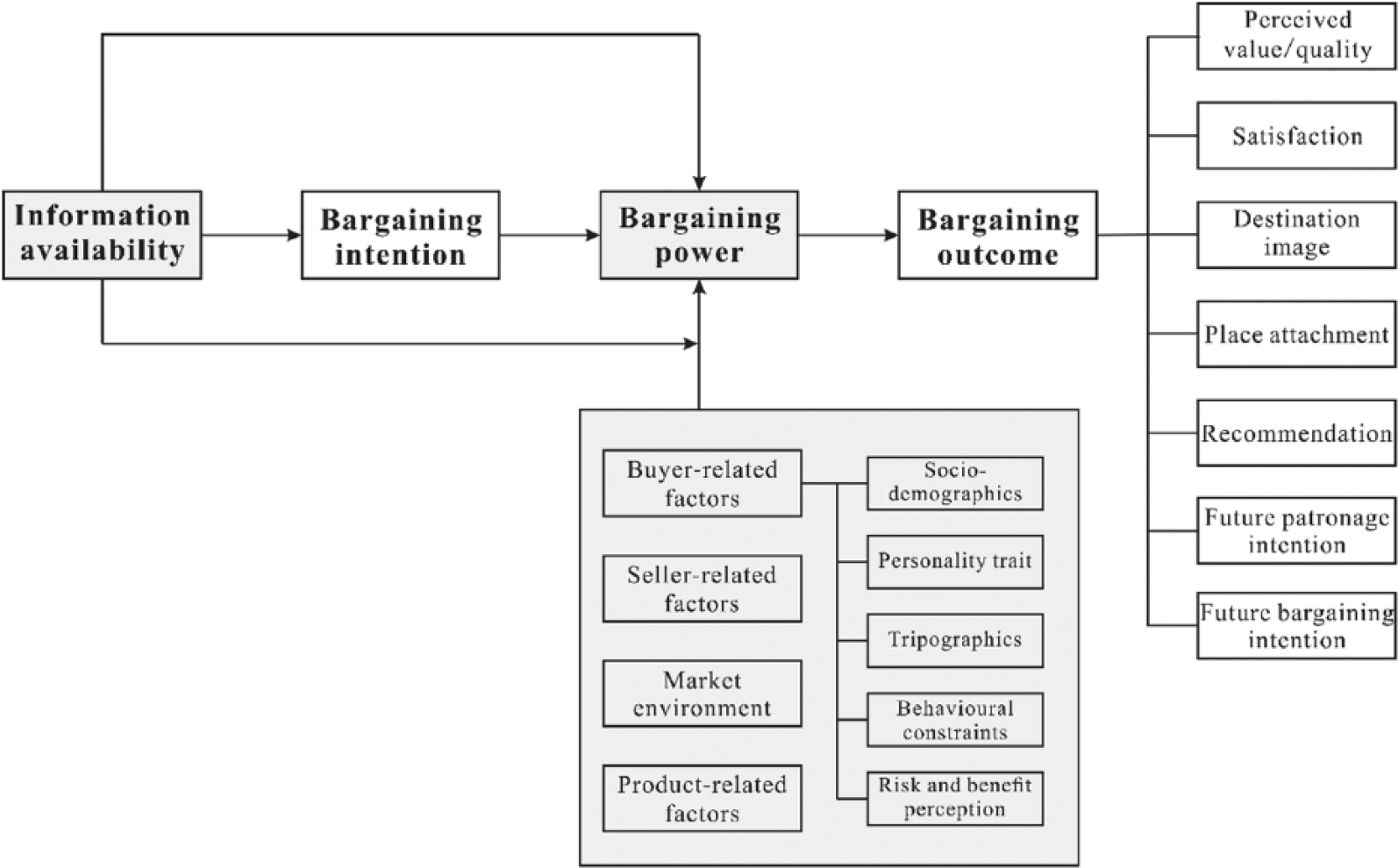
Conceptual framework of bargaining behavior in tourist shopping.
First, in our conceptual framework, we consider information availability to be the most influential factor in the bargaining process (Roth 1987), as it heavily molds tourists’ bargaining intention, power, and outcomes. Information asymmetry in the tourism shopping market leads to bargaining behavior because neither party in a transaction is certain of how dedicated the other is to reaching an agreement (Cramton 1984). The resolution of any price conflict is largely dependent on information availability: each party in a transaction collects and infers information about the other, such as preferences, willingness to buy/sell, and the psychologically agreeable price. For the purposes of this study, we classify factors affecting bargaining power into four broad categories: buyer-related factors, seller-related factors, market environment factors, and product-related factors.
Within the category of buyer-related factors, five subcategories are included in our conceptual framework: sociodemographic factors, personality traits, tripographic factors, behavioral constraints, and risk and benefit perception. Earlier studies shed light on the potential effects of sociodemographic factors. For example, men prefer negotiating for automobiles (Otnes and McGrath 2001) and exceed women’s negotiating abilities in retail buyer-wholesaler simulations (Neu, Graham, and Gilly 1988). As a complement to age, a decrease in inhibition may increase senior citizens’ bargaining behavior (Gillison, Northington, and Beatty 2014). Moreover, national culture informs tourists’ bargaining behavior on a broader scale. For instance, Pizam and Sussmann (1995) found that Italians often barter to pay less, whereas tourists from Japan and America often pay the asking price and choose not to bargain hunt.
In addition, tourists’ personality traits, such as value orientation, patience, and conflict avoidance, may explain their bargaining behavior (Gillison, Northington, and Beatty 2014). Some tourists regard bargaining as a money-saving practice for economic benefits, whereas others may avoid bargaining so as not to be seen as penny-pinchers while traveling. In the context of tourism, tripographies, which are trip characteristics (Hu and Morrison 2002), predict bargaining behavior. For example, tourism motivation (e.g., novelty seeking, exercise, experience of local culture and customs) may affect consumers’ bargaining attitudes and types of bargaining behavior (Tsang, Tsai, and Leung 2011). Returning tourists who are relatively familiar with a destination may possess a bargaining power advantage compared to first-time tourists. Kozak and Tasci (2005) found that local residents perceive foreign customers as more generous when on vacation compared to at home, which may render tourists legitimate targets for overcharging.
Regarding behavioral constraints, the presence of language barriers (Zhang et al. 2012), social inhibition (Andersson 2007), and other cultural constraints (Zhang et al. 2016) can limit tourists’ bargaining intention and power. Lastly, in terms of risk and benefit perceptions, factors affecting bargaining behavior include perceptions of financial, social, and psychological benefits. Risks associated with bargaining include financial, social, time, and psychological risks. Because of the risk-averse nature of most tourists, especially those who are international, all forms of risk may influence their bargaining behavior (Kozak 2015).
In the second category, seller-related factors include first offer price, attitude, service quality, store image and atmosphere, and other characteristics of sellers and stores (Ma et al. 2002). In the category of market environment, the level of competition, market regulation, and market culture are important factors. For example, if the market structure is an oligopoly, a seller may ask an unreasonably high price and allow no room for negotiation (Aguiló, Alegre, and Sard 2003; Yup Chung 2000). Lastly, product-related factors include brand, texture, and other observable attributes of a tourism commodity. In the tourism context, product authenticity, as a product-related factor, can be particularly important and is associated with tourists’ purchasing and bargaining decisions (Yu and Littrell 2003; Revilla and Dodd 2003).
Bargaining behavior, a process involving intense and direct interaction between a buyer and seller, also has a significant effect on the outcome of a tourist’s shopping experience (Darke and Dahl 2003; Allen et al. 1977). Cox, Cox, and Anderson (2005) pinpointed bargain hunting as the most significant factor that enhances tourists’ shopping experience. Tsang, Tsai, and Leung (2011) identified several dimensions underlying tourists’ perceptions of bargaining motivators, bargaining attitudes, and types of bargaining behavior. They discovered that for tourists in Hong Kong’s open-air market, bargaining behavior, bargaining intensity, and bargaining for psychological well-being had positive effects on shopping contentment indicators (i.e., overall shopping satisfaction, likelihood of subsequent visits, likelihood of giving recommendations). M-Y. Wu, Wall, and Pearce (2014) examined international tourists’ experiences in the Beijing Silk Market and found that bargaining emerged as an important theme in their experiences as well.
Previous research reinforcing the theoretical underpinnings of the present study has focused broadly on tourists’ shopping expenditure and bargaining behavior. To our knowledge, no empirical studies have investigated tourists’ shopping expenditure and bargaining behavior, especially bargaining power, from an economic perspective. Accordingly, the aims of this study are threefold. First, we propose a framework to understand tourists’ bargaining behavior in the context of destination shopping; second, we investigate bargaining power and net surplus on each side (i.e., buyer/seller) of a tourist shopping transaction; and third, we examine the differences in net surplus among tourist groups according to their sociodemographic and tripographic characteristics.
Research Design
A Bargaining Power Analytical Model
As discussed in the literature review, both sellers and buyers (i.e., tourists) can extract specific surplus from transactions in tourism shopping. The division of the surplus between the two parties depends on their respective bargaining power. Bargaining power is largely shaped by the amount of information available to an individual; thus, information asymmetry in tourism shopping marketsdetermins buyers’ and sellers’ respective bargaining power. Based on the bargaining model proposed by Kumbhakar and Parmeter (2009), the transaction price a tourist pays to the seller when shopping can be depicted as follows:

where
To introduce variables x explaining the final transaction price,

where the terms
Linking the Bargaining Power Model to a Two-Tier Stochastic Frontier Model
The difference in bargaining power between sellers and tourists in the destination shopping market is largely shaped by the level of information asymmetry. Stronger bargaining power for sellers leads to higher final transaction prices, whereas stronger bargaining power for tourists results in lower transaction prices. Therefore, information factors in each transaction have double-edged effects on the final transaction price. Equation (2) can then be rewritten as the regression equation:

where
Equation (3) is a common format for the two-tier stochastic frontier model. Compared with the classic two-component structure stochastic frontier model, first introduced by Polachek and Yoon (1987), the two-tier stochastic frontier model has a three-component error structure, including a nonnegative error term, a negative error term, and zero-mean symmetric random disturbance. The nonnegative and negative error terms are inefficiency components as in the classic stochastic frontier model used in studies of production, cost, revenue, profit, and other models of goal attainment (Assaf and Josiassen 2015). Specifically, this two-tier stochastic frontier approach attempts to measure the impact of informational inefficiencies (i.e., incomplete and imperfect information) on the prices of realized transactions. Informational inefficiencies, in most cases, characterize both sides in a transaction; therefore, two inefficiency components are presented to disentangle the two effects. This approach has already been applied to explain bargaining power in wage negotiations (Kumbhakar and Parmeter 2009; Polachek and Yoon 1987), job satisfaction (Poggi 2010), and medical expenses (Lu, Lian, and Lu 2011; Tomini, Groot, and Pavlova 2012). To estimate the net surplus and surplus extracted by tourists and sellers, we used the conditional expectation of the model error term and estimation method proposed by Kumbhakar and Parmeter (2009).
Data Description
To answer this study’s research questions, we used large-scale data about tourist shopping behavior obtained from a provincewide domestic tourist survey in Jiangsu province, China, between 2005 and 2010: the Jiangsu Domestic Tourist Survey (JSDTS). Considering its sample size, the scope and variety of questions, and the heterogeneity of surveyed tourists, the JSDTS, which was conducted by the Jiangsu Tourism Administration and released as annual reports, is one of the most comprehensive and largest domestic tourist surveys in China. The JSDTS was created using multistage sampling and stratified by conglomerations, with proportional sampling of primary units (i.e., cities) and secondary units (i.e., scenic tourism locations and hotels). Various types of information related to individual sociodemographic characteristics, tripographies, motivation, and trip satisfaction were collected through interviews using a structured questionnaire. For this study, we chose data from Nanjing, the capital of Jiangsu province and the second-largest city in eastern China after Shanghai. We retained respondents whose shopping data were available, resulting in a final sample size of 32,135. The sample size is relatively evenly distributed over 6 years with a maximum of 6,293 observations in 2007 and a minimum of 4,874 observations in 2009.
To empirically estimate the proposed two-tier stochastic frontier model, we selected the following dependent, independent, and control variables from the JSDTS data.
Dependent variable
We chose tourists’ total tourism shopping expenditure (in log) over an entire trip to represent the price paid for shopping during tourists’ destination visits. In the questionnaire, respondents were asked directly about actual shopping expenditure when traveling.
Independent variables
Guided by the theory of tourism demand (Yi Wang and Davidson 2010), we specified a set of independent variables in µ(xi)
Definitions and Descriptive Statistics of Variables.

Empirical Results
Determinants of Shopping Expenditure
Table 2 presents the estimation results of various econometric models explaining shopping expenditure determinants. Model 1 was estimated using OLS; model 2 was estimated by the maximum likelihood estimates of conventional linear regression; models 3–6 were estimated based on the two-tier stochastic frontier model that calibrates the effect of bargaining on price. The intra-area dummy variable, origin region dummy variable, and yearly dummy variable were added into the estimation successively. The deterministic part of the two-tier stochastic frontier model is similar to the OLS model. In both the OLS model and two-tier stochastic frontier models, the parameter estimates show significant effects of age, revisit, length of stay, travel distance, shopping interests, and price sensitivity on shopping expenditure.
Estimation Results of Shopping Expenditure Model.

Note: Standard errors are presented in parentheses. OLS = ordinary least squares; MLE = maximum likelihood estimate; SFA = stochastic frontier analysis; AIC = Akaike information criterion; BIC = Bayesian information criterion.
Significance at the 0.01 level; **significance at the 0.05 level; *significance at the 0.10 level.
To compare the models’ goodness of fit, the Akaike information criterion (AIC) and the Bayes information criterion (BIC) were used. The results of each pointed to model 6 (with the lowest AIC = 84994.160 and BIC = 85195.230) as the best among our specified models. Thus, we used model 6 to examine the effect of bargaining on tourists’ shopping transactions.
Variance Analysis: Predicting Bargaining Power
Variance analysis of
Variance Analysis of Bargaining Power.
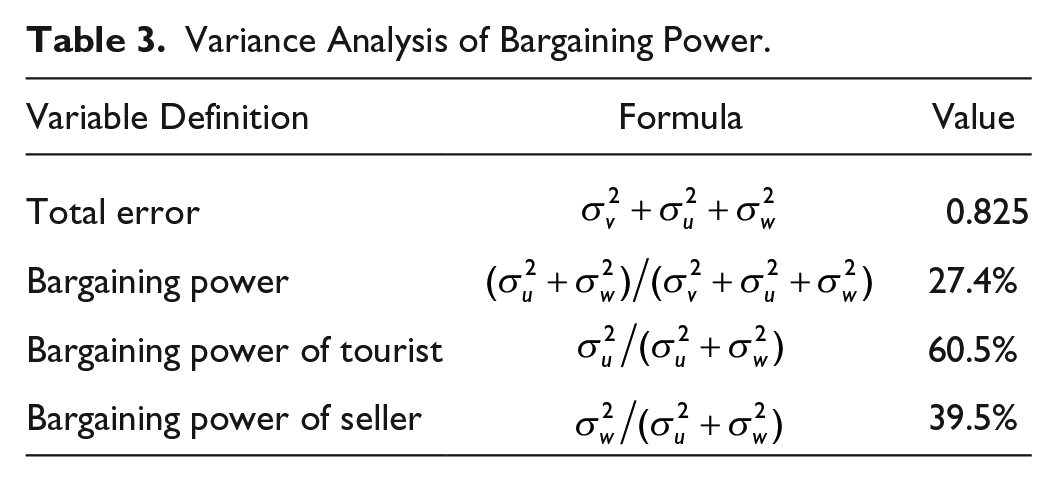
To identify more concretely the surplus of each individual tourist in the sample, we turned to tourist–seller pair estimates from the two-tier stochastic frontier approach. In this stage, we estimated the extracted surplus from tourists and sellers based on information asymmetry in the tourism shopping market, which is the conditional expectation of
Surplus Distribution.
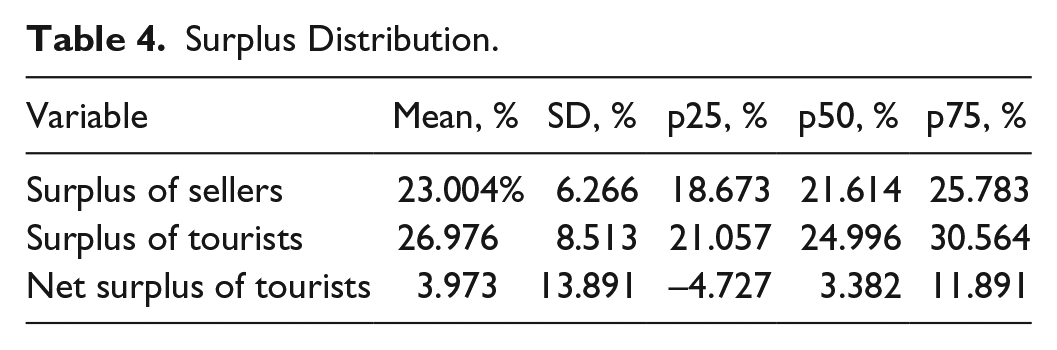
Figure 2 demonstrates the distribution of surplus extracted by sellers, surplus extracted by tourists, and net surplus. The left-skewed distribution in Figures 2A and 2B shows that only few individuals exhibit a high bargaining power, whether buyers or sellers. As shown in Figure 2C, the distribution of net surplus is highlight centered with a small range of variance, suggesting that only a few tourists are either highly inferior or superior when it comes to retaining a surplus after bargaining.
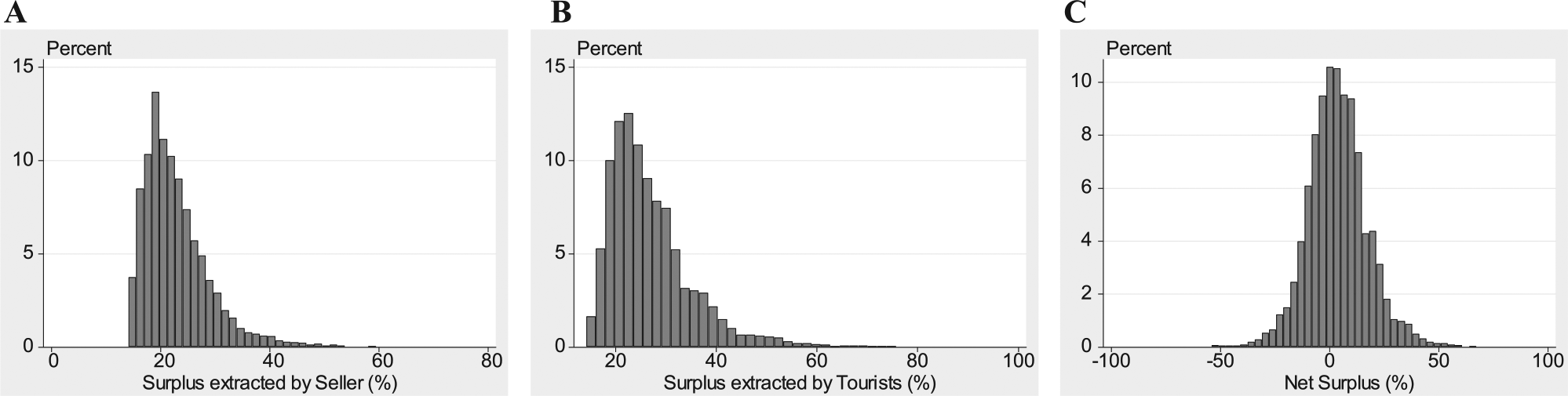
(A) Surplus extracted by sellers. (B) Surplus extracted by tourists. (C) Net surplus of tourists over sellers.
Sociodemographic/Tripographic Characteristics and Bargaining Power
The characteristics of product, market environment, sellers, and tourists were expected to influence tourists’ bargaining power. Therefore, we investigated whether net surplus, as an indicator of tourists’ net bargaining power, can be predicted by tourists’ sociodemographic and tripographic characteristics from the JSDTS data set. Table 5 presents the results of net surplus across different groups of tourists based on their sociodemographic characteristics. In terms of gender, we found no significant differences between male and female tourists in terms of net surplus from price bargaining. By residence type, it is clear that, on average, the net surplus of rural residents is larger than that of urban residents (4.358 vs. 3.916), and this difference is significant at the 0.1 level using the Mann-Whitney U test. Possible explanations include rural residents’ lower willingness to pay given a tight budget and stronger bargaining skills, likely cultivated from the pervasiveness of price negotiations in Chinese rural markets. With regard to age, the net surplus of older tourists exceeds that of younger tourists, suggesting that elderly tourists possess an advantage in bargaining power. Overall, however, this effect is not significant. Regarding education level, tourists with a college education have moderately larger net surpluses than the other two groups (i.e., secondary education and elementary education or less). These differences between education levels suggest that tourists with higher education extract greater surpluses by using their knowledge to offset the effects of information asymmetry. The results of nonparametric tests highlight insignificant differences within the groups by gender, age, and education level. In general, these results suggest that tourists’ net surplus from bargaining varies little across different groups of tourists with different sociodemographic characteristics.
Results of Nonparametric Tests of Differences in net Surplus among Different Sociodemographic Groups.

Note: Q1 stands for the first quartile, Q2 stands for the second quartile, and Q3 stands for the third quartile.
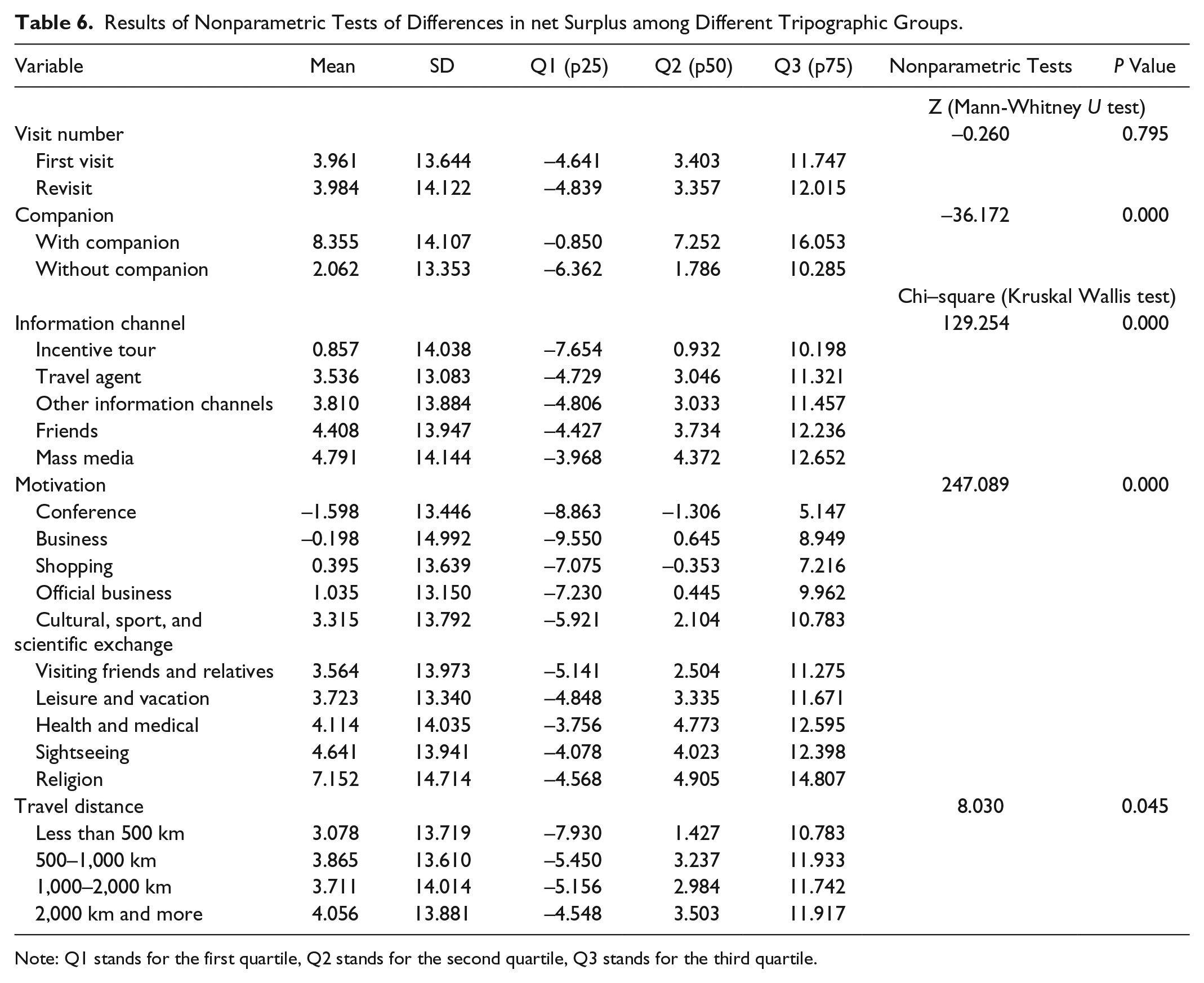
From the estimation results of net surplus across different tripographic characteristics and the results of nonparametric tests, we find that these characteristics have larger effects than sociodemographic characteristics on the net surplus. As shown in Table 6, tourists’ net surplus from bargaining varies significantly across groups depending on visit numbers, companion status, information channels, motivation, and travel distances. The net surplus across revisit status indicates no significant difference between first-time tourists and revisit tourists. Therefore, the results suggest that repeated tourists do not possess a significant bargaining power advantage over first-time tourists. One possible explanation is that many products and services offered for tourists are less localized and highly homogeneous across destinations. Hence, past local experiences may have little effect on bargaining power. Tourists traveling with companions have greater bargaining power than those who are unaccompanied. When tourists obtain travel information from friends and mass media, they generally secure a higher net surplus thanks to information affluence.
Results of Nonparametric Tests of Differences in net Surplus among Different Tripographic Groups.
Note: Q1 stands for the first quartile, Q2 stands for the second quartile, Q3 stands for the third quartile.
Net surplus estimates have different signs, on average, across different motivation groups. For example, tourists who are motivated to attend conferences and patronize businesses pay slightly above the benchmark price and often do not receive price reductions, implying low bargaining power. The net surplus across distance suggests a significant difference among different groups based on travel distance. In general, long-haul travelers are associated with greater bargaining power.
Conclusion
This study investigated tourists’ bargaining process in the context of destination shopping and presented a frameword explaining bargaining power. Based on information asymmetry in the tourism shopping market, this study used a two-tier stochastic frontier model to investigate the distribution of bargaining power between buyers and sellers in the tourism shopping market by estimating each party’s extracted surplus in transactions, which depends on respective bargaining power. Furthermore, this study examined differences in net surplus among buyer groups with different sociodemographic and tripographic characteristics.
Theoretical Implications
The findings of this study contribute to the current literature by proposing a comprehensive perspective that explains tourists’ bargaining behavior. Information asymmetry was identified as a vital factor shaping bargaining intention and bargaining power. The central role of information in tourists’ bargaining behavior is theoretically supported by behavioral game theory (Camerer 1997), which emphasizes the central role of information, such as in the ultimatum game (Roth and Malouf 1979). Information availability is the cornerstone of bargaining behavior; by knowing what the seller has and does, tourists are better able to strategize in order to reach a deal. Alternatively, when sellers have sufficient information about incoming tourists as buyers, sellers can easily infer how much tourists are willing to pay for the products in which they are interested. In addition, we concluded that four other categories affect bargaining power—product-related, buyer-related, seller-related, and market environment factors—which are different from previous studies’ classifications (Evans and Beltramini 1987; Gillison, Northington, and Beatty 2014). Our suggested categories are also more applicable in a tourism context, especially with regard to tourists’ shopping. Owing to the consumer perspective of this study, more attention was paid to buyer-related factors, and five subcategories were highlighted accordingly: sociodemographic characteristics, personality traits, tripographic characteristics, behavioural constraints, and risk and benefit perceptions.
Our empirical results indicated that several sociodemographic and tripographic variables have significant effects on tourism shopping expenditure. These findings are in line with previous studies. For tripographic variables, travel distance was positively associated with shopping expenditure. Extant literature has found that as tourists travel further away from home, they may spend more on items that are not readily available in their hometowns, including souvenirs or gifts for family and friends (Yo. Wang et al. 2006). Extending previous findings, this study provided additional insight on tourists’ price sensitivity and interests in commodities on tourism shopping expenditure. For example, shopping interests had a positive effect on tourism shopping expenditure.
Using the two-tier stochastic frontier approach, this study empirically investigated bargaining power of sellers and buyers as surplus measures. The distributions of the extracted surplus and net surplus indicate that only a very small proportion of individuals exhibited noteworthy bargaining power on either the seller side or tourist side. Surprisingly, these findings suggest that tourists’ average bargaining power was moderately larger than that of sellers, which may be explained by the fact that most products in the tourists’ shopping market were not basic necessities; thus, these products are seen as substitutable. In addition, most Chinese tourists prefer no-return travel routes. Sellers therefore tend to make deals early in the bargaining process, which gives tourists the upper hand when striking deals.
We also investigated variations in net surplus across groups with different sociodemographic and tripographic characteristics. Our results indicate that tripographic characteristics play more salient roles in explaining bargaining behavior than do sociodemographic characteristics. Tripographic characteristics mainly affected the amount of information available to tourists. Travel budget was found to play an important role in explaining bargaining power among different motivation groups. For example, conference and business travelers demonstrated the lowest bargaining power as indicated by the lowest net surplus shown in Table 6 across all motivation groups. This may be due to the fact that many of these tourists generally have a higher budget for shopping, and a substantial part of travel expenditures can be reimbursed. The comfort of having a generous budget may leave tourists less inclined to bargain. In addition, we found that tourists traveling with companions had greater bargaining power, a result consistent with that of Candy (2013) in which the presence of a companion was found to boost shoppers’ confidence in striving for better bargains.
Policy Implications
This study’s findings offer practical insights for a wide variety of stakeholders relevant to tourism shopping markets. Based on the theoretical framework of this study, retailers should improve the transparency of transactions to increase tourists’ surplus. As a market-based mechanism, it is essential for retailers to build a good reputation in tourism destinations by offering high-quality products and transaction transparency over the long term rather than by bargaining for more surplus in the short term. Practically speaking, retailers should establish their reputation by disclosing information to tourists, especially those with limited bargaining power, such as business travelers and tourists without companion. Such transparency helps to reduce information asymmetry for tourists and therefore reinforces the quality of tourism destination operations as a whole.
For local tourism administrative units, this study provides practical implications for market regulation. First, considering the positive effects of bargaining behavior, we recommend a flexible pricing strategy as a sound alternative to a posted-price strategy in China’s tourism shopping market. Room for negotiation creates more rewarding and memorable shopping experiences for tourists, leading to a positive image of the destination overall. A positive destination image and shopping experience could directly invigorate the local tourism economy. Second, on a destination scale, establishing a good reputation is of paramount importance. In this respect, our results suggest that tourists with different tripographic characteristics (e.g., motivation) warrant more attention than groups with different sociodemographic characteristics (e.g., age and gender). Timely pricing information can be posted on the Internet and in tourism information centers to strengthen tourists’ bargaining power. Using surplus estimates for different market segments, tourism administrative units can also propose more specific strategies to deal with the widely discussed issue of zero-fare group tours in China or the “lemon market” in the tourism industry (Chen, Mak, and Li 2013).
Limitations and Future Research
While this study contributed to an understanding of tourists’ bargaining behavior in tourism shopping, several limitations provide potentially interesting avenues for further research. First, considering China’s unique culture and economic context, it may be premature to generalize these research findings to other destinations. Tourist bargaining attitudes and intentions vary internationally (Pizam and Sussmann 1995), and future research efforts could be aimed at considering the impacts of culture and nationality on travelers’ bargaining behavior. Second, it is important to acknowledge that product-related factors, buyer-related factors, and market environments vary across different destinations, each of which can significantly affect tourists’ bargaining power but was not empirically investigated in this study due to data inavailability.
Footnotes
Declaration of Conflicting Interests
The author(s) declared no potential conflicts of interest with respect to the research, authorship, and/or publication of this article.
Funding
The author(s) disclosed receipt of the following financial support for the research, authorship, and/or publication of this article: We are grateful to the Ministry of Education, the National Tourism Administration, National Natural Science Foundation of China (NSFC), and the Fundamental Research Funds for the Central Universities for supporting our research through Humanities and Social Sciences Project No. 13YJC790193, Youth Tourism Expert Training Project No. TYETP201525, and NSFC project (No. 41301134).We also gratefully acknowledge financial support from China Scholarship Council (201406195033) (award to Dr. Honglei Zhang for one year’s visiting scholar research at the Temple University).