




Abstract
This research proposes a measurement model to evaluate tourist stereotypes. Study 1 assesses the positive and negative tourist stereotypes that Hong Kong residents hold toward Chinese outbound tourists by connecting previous research on stereotypes from the Princeton Trilogy and from the stereotype content model. Six positive stereotypes were identified across two dimensions (i.e., Approachable: friendly, sincere, and good; and Competent: intelligent, industrious, and competent) as well as six inappropriate biases across two factors (i.e., Boastful: materialistic and loud; Rude: unreasonable, immoral, rude, and uncivilized). Study 2 provides further support for the measurement model by using an additional sample to investigate tourist self-stereotypes. Collectively, studies 1 and 2 contribute to the tourism literature by highlighting the dynamics involved in (self)-stereotyping that are relevant for destination management organizations (DMOs) and public policymakers involved in managing public perceptions of tourist stereotypes.
Introduction
There is an increasing incidence of research on stereotyping in the tourism literature (e.g., Bender, Gidlow, and Fisher 2013; Woosnam et al. 2018). Studies have explored the prevalence of stereotypes in various contexts, such as stereotypes in media representations (Caton and Santos 2008), tourism education (Tung and King 2016), and ethnic enclave tourism (Woosnam et al. 2018). Studies have also explored the effects of stereotypes on destination image (Chen, Lin, and Petrick 2013) and tourist perceptions of service providers (Luoh and Tsaur 2014).
Despite the substantial stereotype research in the tourism field, more work is needed to identify and measure tourist stereotypes. Stereotypes refer to beliefs or expectations about the characteristics of individuals from outgroups (Taylor, Ruggiero, and Louis 1996). For example, in the case of gender stereotypes, men are often stereotyped as self-oriented while women are other-oriented (Cuddy et al. 2015). In age stereotypes, younger people often judge more senior individuals as being less physically and mentally competent (Lamont, Swift, and Abrams 2015). In the context of the present research, tourist stereotypes are defined as resident preconceptions of tourists in destination settings. Assessing stereotypes is important since mutual biases between hosts and tourists may shape perceptions and behaviors when in the presence of others (Yzerbyt 2016). Tourist stereotyping may have the detrimental effect of biasing impressions, thereby leading to discrimination and harassment (van Veelen et al. 2016).
In light of such view, the two components that make up the present research may contribute to the tourism literature by identifying the construct domains that capture tourist stereotypes, and by evaluating patterns of self-stereotyping to assess whether tourists themselves would endorse such patterns of biases that are attributed to them. From a practical perspective, it is believed to be important for destination management organizations (DMOs) and public policymakers involved in managing host–tourist relations to evaluate public perceptions of one another. For example, Woosnam et al. (2018) found that ethnic stereotypes can influence the degree of closeness felt between two groups and the sympathy of the majority group (i.e., Japanese residents) toward the needs of the minority (i.e., Brazilian residents). As a result, destination managers should address the stereotypes the majority group possess toward the minority by progressing toward greater interaction. In this regard, the present research can also contribute to the line of inquiry on stereotypes and host–tourist relations.
Study 1 seeks initially to develop a measurement model that assesses both positive and negative tourist stereotypes. The study will contribute to the tourism literature by connecting previous work on stereotypes from the Princeton trilogy and the stereotype content model in order to identify patterns of positive and negative tourist stereotypes, beyond simple negative preconceptions of tourists that are evaluative in nature (Cuddy, Fiske, and Glick 2008; Katz and Braly 1933; Madon et al. 2001). From a managerial perspective, it is believed DMOs should manage both positive and negative tourist stereotypes. Recent work has suggested that even the receipt of positive stereotypes (i.e., favorable beliefs about members of a social group) may be unpleasant (Siy and Cheryan 2013). Although individuals who express positive stereotypes may intend them to be “complimentary” (e.g., Japanese tourists are high spenders), the targets (e.g., Japanese tourists) may still feel depersonalized if they are acknowledged through categorical membership (Czopp, Kay, and Cheryan 2015). Furthermore, seemingly positive perceptions (e.g., tourists are high spenders) have the potential to be construed negatively (e.g., tourists are materialistic).
In extending the findings from study 1, study 2 investigates whether individuals from an ingroup hold similarly positive self-stereotypes, and whether they uphold even unflattering negative self-stereotypes. For example, would Mainland Chinese residents themselves view the stereotypical traits that are held toward fellow outbound Chinese tourists as reflection of their ingroup? The objective of study 2 is to evaluate tourist’s self-stereotyping, since the intricate connection between tourist stereotypes and self-stereotypes remains relatively unexplored. While stereotypes refer to beliefs or expectations about the characteristics of individuals from outgroups, self-stereotypes represent how an individual views fellow ingroup members (Taylor, Ruggiero, and Louis 1996). For example, Asian Americans tend to self-stereotype as quiet and reserved (Devos and Yokoyama 2014), and women may rate themselves as warm, sensitive, and emotional (Bell and Burkley 2014). Social psychology researchers have suggested that self-stereotyping, particularly when negative, may be harmful because it can perpetuate the internalization of biases and stigmatize existing discrimination about individuals and members of their ingroups (Laurin, Kay, and Shepherd 2011).
Additionally, study 2 will contribute to the tourist stereotype model that is developed in study 1 using a new sample of Mainland Chinese residents. This will allow the two studies to advance research on stereotyping and self-stereotyping, by highlighting the relevance of both positive and negative tourist self-stereotypes within the broader research area of stereotypes and host–tourist interactions, noting that such phenomena have been suggested to be critical for harmonious tourism development (Latrofa, Vaes, and Cadinu 2012; Woosnam and Aleshinloye 2013; Woosnam, Norman, and Ying 2009).
Literature Review
Stereotyping and Self-Stereotyping
Stereotyping occurs when an individual applies a set of characteristics to another whom they consider to be part of an outgroup (Ratliff and Nosek 2011). During this process, individuals tend to assimilate stereotypic expectations but discount, overlook, or minimize disconfirmatory information (Todd, Bodenhausen, and Galinsky 2012). For example, Scarles (2012) described the reinforcing role of tourist photography on the stereotyping of locals as anonymous natives, indigenous, and primitive representations of culture. It has been found that individuals tend to more readily apply stereotypic traits toward outgroups whom they view as homogenous, than those whom they consider to be heterogeneous (Ratliff and Nosek 2011). Individuals may also invoke non-dispositional factors (i.e., internal factors relevant to the specific outgroup member, but not to the outgroup as a whole) to justify their stereotypic-inconsistencies, particularly during interpersonal interactions (Sekaquaptewa et al. 2003).
Stereotypic attributions can also be influenced by the concept of negativity bias, which refers to the impact of negative information over positive information (Baumeister et al. 2001). Negative information exhibits a contagious effect whereby individuals extend the negative behaviors of an outgroup member to others whom they view as part of the same social group to strengthen the original stereotype (Rozin and Royzman 2001). It has been found that further contagion is less likely in the case of positive information. Individuals revisit their initial stereotypes infrequently on the basis of positive behavior by a single member. As a result, significant effort is needed if negative stereotypes are to be addressed (Anderson et al. 2015).
In contrast to the stereotyping of others, self-stereotyping concerns the extent to which individuals define, describe, and evaluate themselves in terms of their ingroup norms and values (van Veelen et al. 2016). An individual may tend to self-stereotype when his or her social identity is salient, particularly when confronted within an intergroup context since ingroup identities are likely important for one’s self-concept (Latrofa, Vaes, and Cadinu 2012; Tajfel and Turner 1979). While early studies have suggested that self-stereotyping is more prominent when preconceptions are positive, more recent research has shown that individuals can also readily attribute negative ingroup stereotypes to the self, notably in the case of inferior competence and intelligence (Latrofa et al. 2010).
A number of theories have been used to explain why individuals would endorse negative self-stereotypes, such as system justification theory, social identity theory, and optimal distinctiveness theory. System justification theory suggests that individuals are motivated to view their social system as stable, legitimate, and fair; thus, they may seek to satisfy this motivation by justifying the status quo (Jost and Hamilton 2005). For example, individuals may seek to justify inequalities in society by embracing self-stereotypes that certain ethnicities are more (or less) competent. Social identity theory suggests that individuals belong to social groups, and tend to perceive their ingroup as more favorable than outgroups; as a result, individuals high in ingroup identification are more likely to self-stereotype and consider group traits as descriptive of themselves (Tajfel and Turner 1979). Optimal distinctiveness theory suggests that individuals have two opposing motives: the need to feel connected and similar to others (i.e., assimilation) and the need to feel unique (i.e., differentiation) (Brewer 1991). Self-stereotyping could be used to strategically fulfill either assimilation or differentiation needs; for example, individuals can embrace both positive self-stereotypes (e.g., popular and outgoing) as well as negative self-stereotypes (e.g., materialistic and stuck-up) (Pickett, Bonner, and Coleman 2002). While thorough explanations into each of these theories are beyond the scope of this article, the key point here is that both positive and negative self-stereotyping are relevant and prevalent as ingroup members could seek to fulfill their needs to assimilate and differentiate, justify the legitimacy of their society, and protect their ingroup identity (Bell and Burkley 2014). The present research propose to extend this line of thinking and contribute to the tourism literature, by investigating the extent to which tourists hold similar views of positive self-stereotypes as well as detrimental and damaging negative self-stereotypes.
Stereotype Content
Identifying a focal context has been argued to be necessary in stereotype research (Amir and Ben-Ari 1985; Anastasopoulos 1992; Caton and Santos 2009; Pizam, Jafari, and Milman 1991). Previous studies have examined Israeli residents’ views toward Egypt (Milman, Reichel, and Pizam 1990) and Jordanians (Pizam, Fleischer, and Mansfeld 2002), as well as Asian tourist stereotypes among Dutch residents (Moufakkir 2011). The present research focuses on Hong Kong resident preconceptions about tourists from Mainland China.
It is believed the chosen context is relevant to many societies. Tourism is marked by an ever-increasing flow of Chinese tourists overseas (Weaver 2015). However, there are ongoing reports about tensions between Chinese tourists and their hosts, despite the substantial economic benefits that this travel market brings to the destination (Qiu Zhang et al. 2017). For example, in 2016, the number of Chinese tourists to Hong Kong reached 42.8 million, accounting for 76% of the total number of tourist arrivals (Hong Kong Tourism Commission 2017). Yet, there have been increased social tensions, with residents arguing that Chinese tourists exploit public resources; as a result, residents have formed a number of unfavorable preconceptions toward them (Ye, Qui, and Yuen 2011). These tourist stereotypes have not been limited to Hong Kong. There are reports that residents of France and Ireland are forming stereotypes toward outbound Chinese tourists (e.g., loud and rich) as visitation to the relevant destinations continue to rise (Coonan 2015).
Previous studies have reported conflicting stereotypes for persons from China. This applies to categories of Chinese as they appear in different social contexts, notably in the case of employees, students, and in the case of the present research, Chinese tourists. For example, Chinese were viewed as dirty, crude, and lazy, but as their socioeconomic status improved, more positive stereotypes have been reported such as intelligent, diligent, and competitive (Lin et al. 2005). Chinese students have also been seen as studious, efficient, polite, and intelligent, although socially awkward, loud, arrogant, and rude (T. L. Lee and Fiske 2006; Ruble and Zhang 2013). Other studies have also reported views of Chinese as dedicated and productive, but also threatening, sly, and deceitful (Y. T. Lee et al. 2007; Leong and Tang 2016). The key point here is that positive stereotypes that imply an outgroup’s superiority could be paired with negative stereotypes to balance an overall view of the outgroup. As in the above examples, Chinese have been typically viewed as high on competence but low on warmth, or smart and successful but interpersonally cold (Kay and Jost 2003; Zhu 2016).
Furthermore, most of such stereotypes emanate from a Western perspective and from outside the tourism context. The present research proposes to contribute to the literature by assessing tourists from Hong Kong rather than in a Western perspective. The present researchers have considered both the positive and negative stereotypes of outbound Chinese tourists. To reiterate, the research objectives are to develop a measurement model of positive and negative tourist stereotypes based on Churchill’s (1979) recommended procedures (study 1) and then to evaluate the relevance of these dimensions on self-stereotyping (study 2).
Methodology
Study 1
Specification of construct domains and generation of initial items
An initial pool of items related to positive and negative stereotypes was generated through a review of the literature on stereotype content, a supplementary review of the literature on Chinese stereotypes, and an exploratory study of Chinese tourist stereotypes via a free response task. A list of positive and negative attributes frequently used in stereotype research was compiled based on the stereotype content model and the Princeton trilogy. The Princeton trilogy is a list of attributes that individuals may use to describe a social group (Katz and Braly 1933). It has been refined and applied in a wide range of research on ethnic and national stereotypes, and includes positive attributes such as passionate and artistic, as well as negative characteristics such as unreliable and rude (Madon et al. 2001). The stereotype content model suggests that stereotypes can be measured along two dimensions: warmth and competence (Fiske et al. 2002). Warmth includes sociability and sincerity while competence represents capability and skills (Cuddy, Fiske, and Glick 2008). This list was supplemented by the literature on Chinese stereotypes (e.g., T. L. Lee and Fiske 2006; Lin et al. 2005; Ruble and Zhang 2013; L. Zhang 2015; Zhu 2016).
An exploratory study of Chinese tourist stereotypes was further conducted via a free response task based on the process in Hall, Phillips, and Townsend (2015). Forty-nine Hong Kong residents were recruited via convenience sampling to engage in free response, where they listed traits that residents would associate with Chinese tourists. Traits that two or more participants listed were retained, and only one version of repeated traits and variations of the same or similar traits (e.g., rich and wealthy) were noted. In summary, study 1 retained 41 items (i.e., 22 positive and 19 negative) from the free response task that overlapped with words from the Princeton trilogy, the stereotype content model, and prior Chinese stereotype research (see Table 1).
Potential Items for Measuring Tourist Stereotypes.
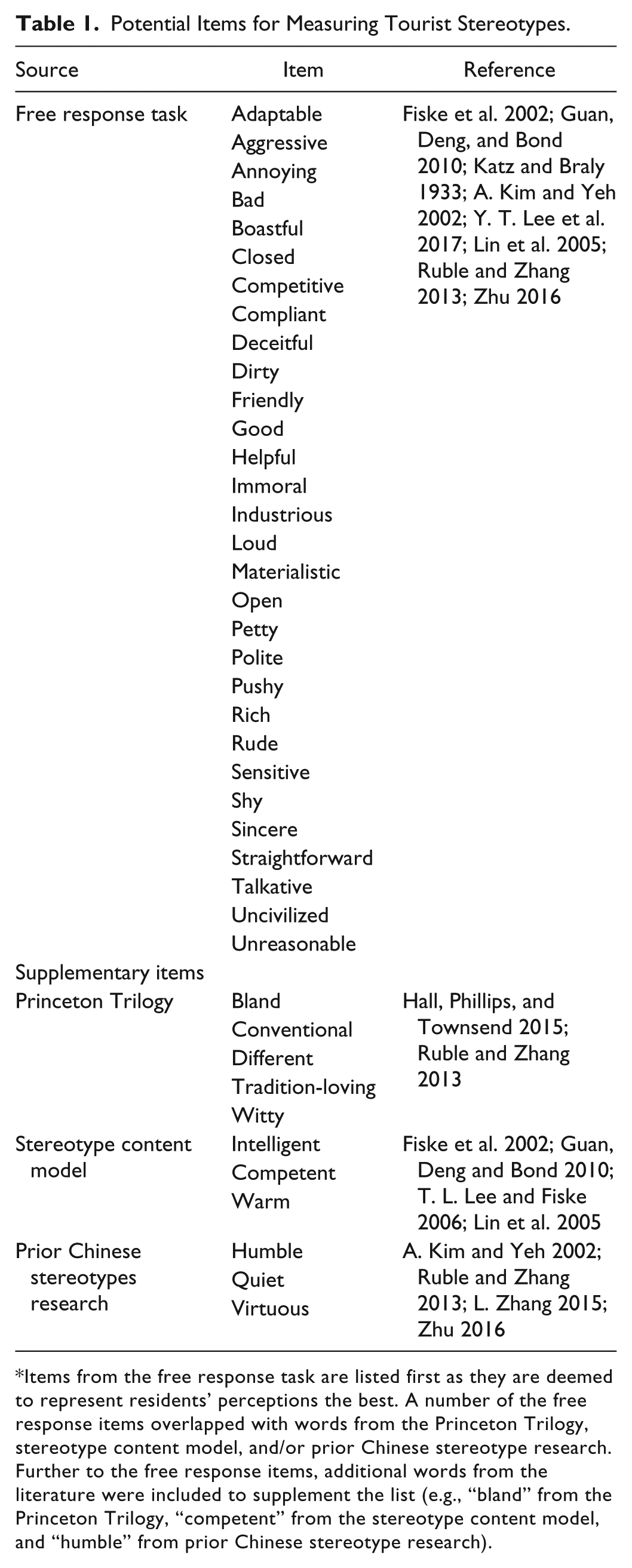
Items from the free response task are listed first as they are deemed to represent residents’ perceptions the best. A number of the free response items overlapped with words from the Princeton Trilogy, stereotype content model, and/or prior Chinese stereotype research. Further to the free response items, additional words from the literature were included to supplement the list (e.g., “bland” from the Princeton Trilogy, “competent” from the stereotype content model, and “humble” from prior Chinese stereotype research).
Calibration sample
An online questionnaire was distributed to Hong Kong residents to measure the extent to which they (dis)agreed with a word list of positive (e.g., friendly, sincere) and negative tourist stereotypes (e.g., loud, rude) based on a 7-point Likert-type scale (1 = strongly disagree to 7 = strongly agree). Respondents were recruited via convenience and snowball sampling. The research team first invited participants through their networks, and then asked them to forward the questionnaire to their contacts (N = 207; 62.8% female, 37.2% male; mean age = 32.1; 15.0% with up to a high school diploma, 52.2% with a bachelor’s degree). The questionnaire reached respondents across all three regions in the city: Hong Kong Island (32.4%), Kowloon (30.9%), and New Territories (33.8%) (see Table 2). There are many Chinese tourists in districts such as Central and Causeway Bay on Hong Kong Island, Yau Tsim Mong in Kowloon, and Sha Tin in the New Territories, and responses from all regions were believed to be relevant as the frequency of intercultural contact can influence resident views toward tourists (Ward and Berno 2011).
Sample Characteristics (Calibration Sample with Hong Kong Residents).
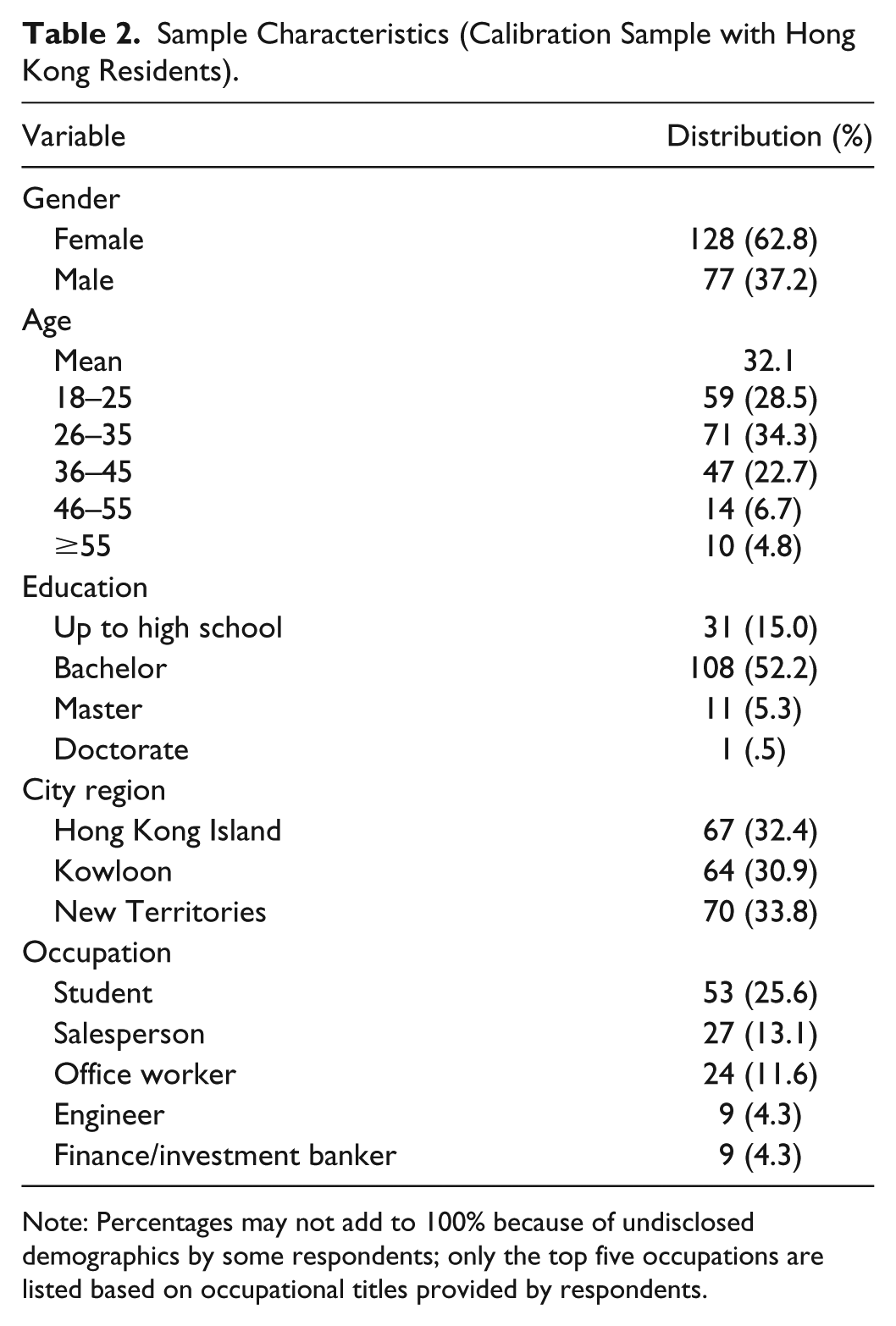
Note: Percentages may not add to 100% because of undisclosed demographics by some respondents; only the top five occupations are listed based on occupational titles provided by respondents.
Purification of the scale
Since the scale included both positive stereotypes (PS) and negative stereotypes (NS), scale purification was conducted separately before a full model assessment. Item-to-total correlations were computed for all items within each subscale (i.e., PS and NS), and items that were poorly correlated (r < 0.4) with the total score of that subscale were eliminated consistent with common practice (Choi and Sirakaya 2005; J. H. Kim, Ritchie, and McCormick 2012). For PS, Cronbach’s alpha was 0.892 after eliminating seven items. For NS, Cronbach’s alpha was 0.895 after eliminating five items. A reliability measure greater than 0.8 was considered as a representing good internal consistency (Peter and Churchill 1986).
For each subscale, exploratory factor analysis (EFA) using both Oblique (OBLIMIN) and orthogonal (VARIMAX) rotation methods were performed to assess dimensionality (Netemeyer, Bearden, and Sharma 2003). For PS, Bartlett’s test of sphericity was 1,088.007 (p < 0.001), indicating that the factor analysis was appropriate. The Kaiser-Meyer-Olkin (KMO) measure of sampling adequacy was 0.856. KMO between 0.8 and 0.9 is considered meritorious (Kaiser 1974). Factors with eigenvalues greater than one were extracted and items with low factor loading (r < 0.4), communality (r < 0.5), or high cross loading were removed (Floyd and Widaman 1995). A two-factor model emerged (α = .805), with three items in each factor, accounting for 68.9% of the total variance. Factor 1 and 2 involved items that viewed tourists as approachable (i.e., friendly, good, and sincere) and competent (i.e., industrious, competent, and intelligent), respectively.
For NS, Bartlett’s Test of Sphericity was 1230.841 (p < 0.001) and Kaiser-Meyer-Olkin (KMO) measure of sampling adequacy was 0.892. Factors with eigenvalues of greater than one were extracted, and items with factor loading (r < 0.4), communality (r < 0.5), or high cross loadings were removed (J. H. Kim, Ritchie, and McCormick 2012). A two-factor model emerged, with six items (α = .820), accounting for 71.9% of the total variance. Factor 1 and 2 involved items that viewed tourists as rude (i.e., immoral, rude, uncivilized, and unreasonable) and boastful (i.e., materialistic and loud) between the two factors.
From a validity perspective, all six of the resulting negative stereotype items (i.e., loud, materialistic, rude, uncivilized, immoral, and unreasonable) and four of the six positive stereotype items (i.e., sincere, friendly, good, and industrious) were retained from the free response process. Thus, 10 of the 12 scale items were worded identically to the free response results. The other two positive stereotype items (i.e., intelligent and competent) were derived from the literature that closely mapped the item “industrious” from the free response task.
Assessment of factor structure
Confirmatory factor analysis (CFA) was conducted to assess the full factor structure that combined the PS and NS subscales from the EFA. A number of goodness-of-fit statistics were used to evaluate the model, including chi-square to the degrees of freedom ratio (i.e., χ2/df), comparative fit index (CFI; Bentler 1992), nonnormed fit index (NNFI; Bentler and Bonett 1980), and root mean square error of approximation (RMSEA). Without applying any model modifications (e.g., of errors terms), the ratio of χ2 to maximum degrees of freedom was 1.88 (χ2/df = 90.4/48 = 1.88), with CFI = 0.952, NNFI = 0.905, and RMSEA = 0.066. The composite reliability for PS factor 1 (Approachable) and factor 2 (Competent) were 0.791 and 0.761, respectively. The composite reliability for NS factor 1 (Rude) and factor 2 (Boastful) were 0.828 and 0.711, respectively. The reliability for all factors were above 0.7, which suggested acceptable internal consistency of indicators in the model (Hair et al. 1998) (see Table 3).
Confirmatory Factor Analysis Results (Calibration Sample with Hong Kong Residents).

Convergent validity was assessed via factor loadings (r > 0.4) and average variance extracted (AVE > 0.5) (Fornell and Larcker 1981). The AVE of factors exceeded the unexplained variance (>0.5), and the factor loading for individual items were greater than 0.4. In terms of discriminant validity, the AVE exceeded the square of the intercorrelations between any two constructs (see Table 4). Overall, the measurement model showed strong evidence of reliability and validity.
Construct Intercorrelations (Calibration Sample with Hong Kong Residents).

Validation sample
A new sample of Hong Kong residents was recruited for validation purpose following the process described in the calibration sample (N = 200; 68.5% female, 31.5% male; 60.0% between the ages of 18 and 24 and 25.0% between the ages of 25 and 34; 20.5% from HK Island, 28.5% from Kowloon, 51.0% from the New Territories; 9.5% with up to a high school diploma, 65.0% with a bachelor degree).
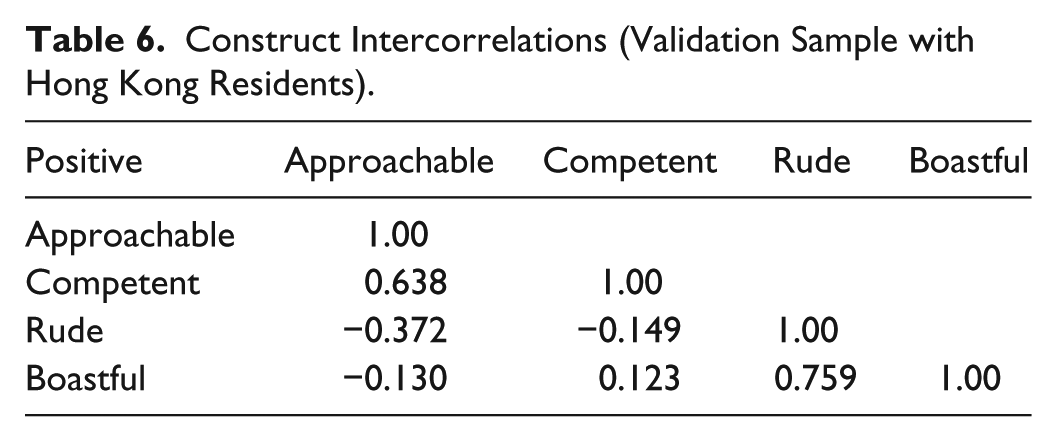
The validation sample results showed good model fit with maximum degrees of freedom (χ2/df = 97.8/48 = 2.04, CFI = 0.969, NNFI = 0.942, and RMSEA= 0.072). Tables 5 and 6 show the standardized factor loadings (>0.5), composite reliabilities and AVE, as well as the intercorrelations, between the two factors (Hair et al. 2010). The results provided support for both convergent and discriminant validity.
Confirmatory Factor Analysis Results (Validation Sample with Hong Kong Residents).

Construct Intercorrelations (Validation Sample with Hong Kong Residents).
Invariance tests were conducted to further examine the validity of the scale, using both validation and calibration samples. Failure to achieve configural invariance could suggest the existence of different constructs. The same number of factors and patterns of the free and fixed loadings should be consistent across the samples. The results showed good model fit (χ2 = 224.2, df = 108, CFI = 0.953, and RMSEA = 0.045 (Cheung and Rensvold 2002). To assess whether the factor loadings were identical across samples, one-unit change of an item score should reflect an equal unit change of the factor score across groups (Wu, Li, and Zumbo 2007). The results supported the invariance model (χ2 = 188.2, df = 96, CFI = 0.963, and RMSEA = 0.049).
Brief discussion of study 1
Study 1 provided initial evidence on the measures of positive and negative stereotypes against Chinese tourists, and established the representative indicators that measure each dimension. The four dimensions that were identified are highly likely to affect individuals’ views of Chinese tourists; for example, competence has been regarded as an important characteristic of Chinese, and views on approachability have been suggested to be fundamental to host–tourist relations (Zhu 2016). Nevertheless, Chinese tourists were also stereotyped as rude and boastful, which reflected resident views of inappropriate tourist behaviors, including shouting, spitting, and eating in forbidden public areas (Qiu Zhang et al. 2017).
Study 2
Study 2 seeks to provide further validation of the tourist stereotype measurement model, and highlight the connection between tourist stereotypes and self-stereotypes with a new sample of Mainland Chinese residents.
Data collection
An online questionnaire was distributed to residents in Mainland China via convenience sampling and snowball sampling through WeChat. The questionnaire (N = 248; 55.0% female, 43.8% male; mean age = 28.9) covered residents across a large number of provincial-level administrative regions in Mainland China (Sichuan 33.5%; Guangdong 12.4%; Shanghai 5.2%; Beijing 4.0%; Chongqing, Fujian, Hebei, Jiangsu, and Hubei each 2.4%) (see Table 7). Nevertheless, the size of this sample was relatively small and cannot be regarded as representative of the general population in Mainland China.
Sample Characteristics (Validation Sample with Residents from Mainland China).

Note: Percentages may not add to 100% because of undisclosed demographics by some respondents; only the top five occupations are listed based on occupational titles provided by respondents.
Assessment of tourist stereotype measurement model for evaluating self-stereotypes
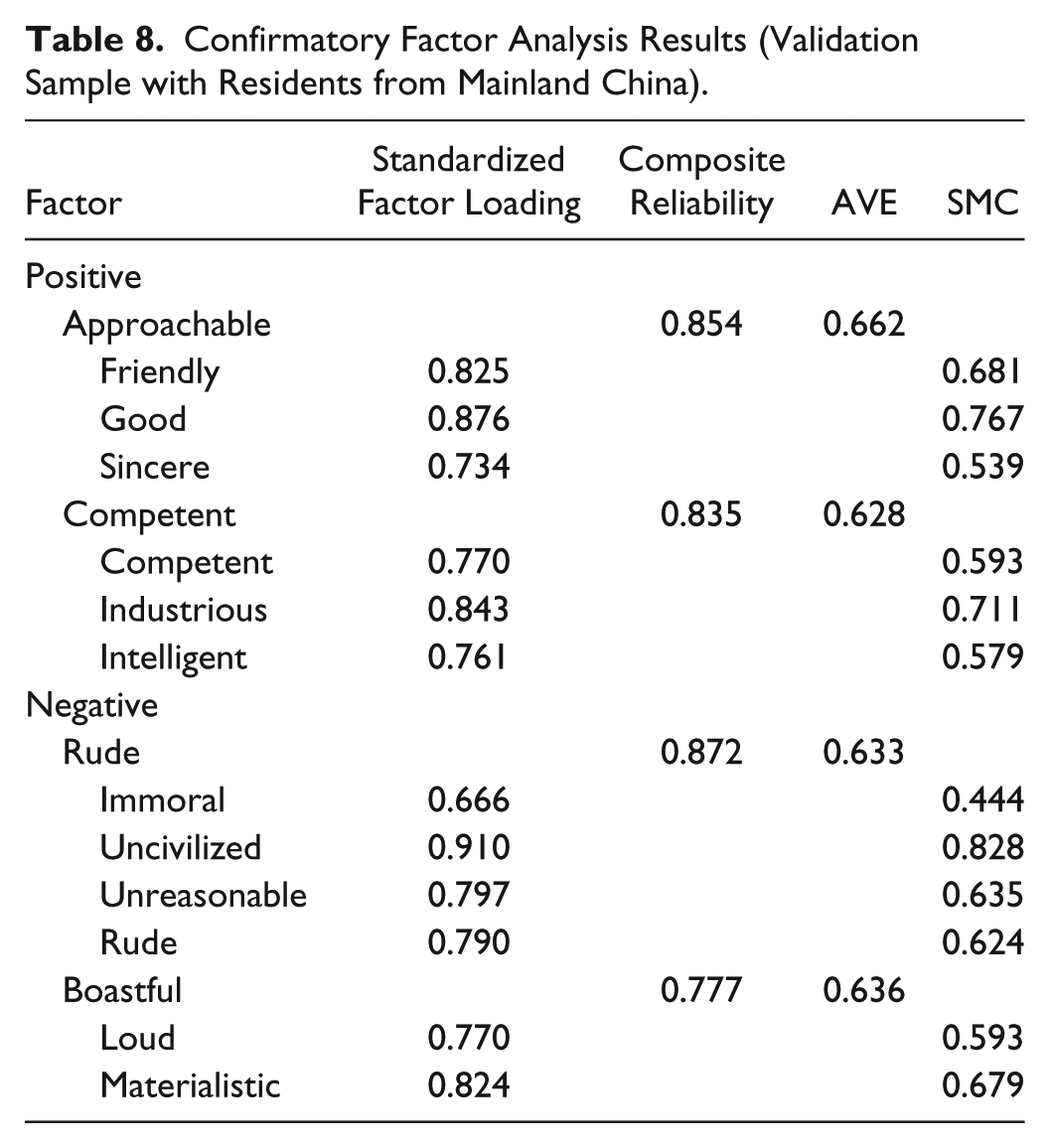
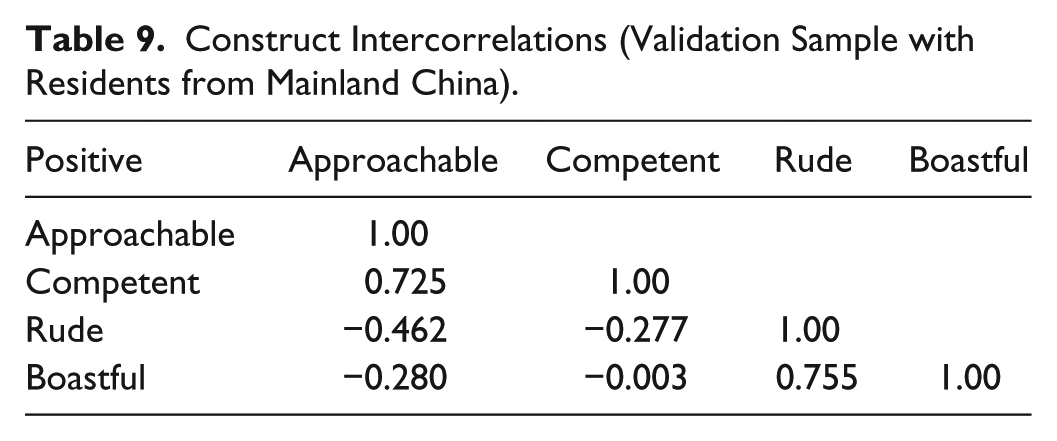
The results showed good model fit with maximum degrees of freedom (χ2/df = 90.9/48 = 1.89, CFI = 0.973, NNFI = 0.945, and RMSEA= 0.060). Tables 8 and 9 show the standardized factor loadings, composite reliabilities and AVE, as well as the intercorrelations, respectively. Again, the results provided support for both convergent and discriminant validity.
Confirmatory Factor Analysis Results (Validation Sample with Residents from Mainland China).
Construct Intercorrelations (Validation Sample with Residents from Mainland China).
Supplementary analysis
A supplementary analysis was conducted to assess the applicability of the scale by evaluating the extent to which Mainland Chinese residents would embrace (or refute) positive and negative self-stereotypes. Composite scores for each of the four dimensions were compared to the midpoint value of four (i.e., denoting neither agree nor disagree to each dimension). The results indicated significant differences across all dimensions: PS–approachable, t(250) = 13.933, p < .001; PS–competent, t(250) = 17.431, p < .001; NS–rude, t(250) = −4.003, p < .001; NS–boastful, t(250) = 14.104, p < .001). Furthermore, the difference scores between the midpoint and the composite rating of each dimension suggested Mainland Chinese residents could be willing to endorse self-stereotypes of approachable (mean = .933), competent (mean = 1.152), and boastful (mean = 1.092) to a larger extent than refute biases of being rude (mean = −0.317) (see Figure 1).
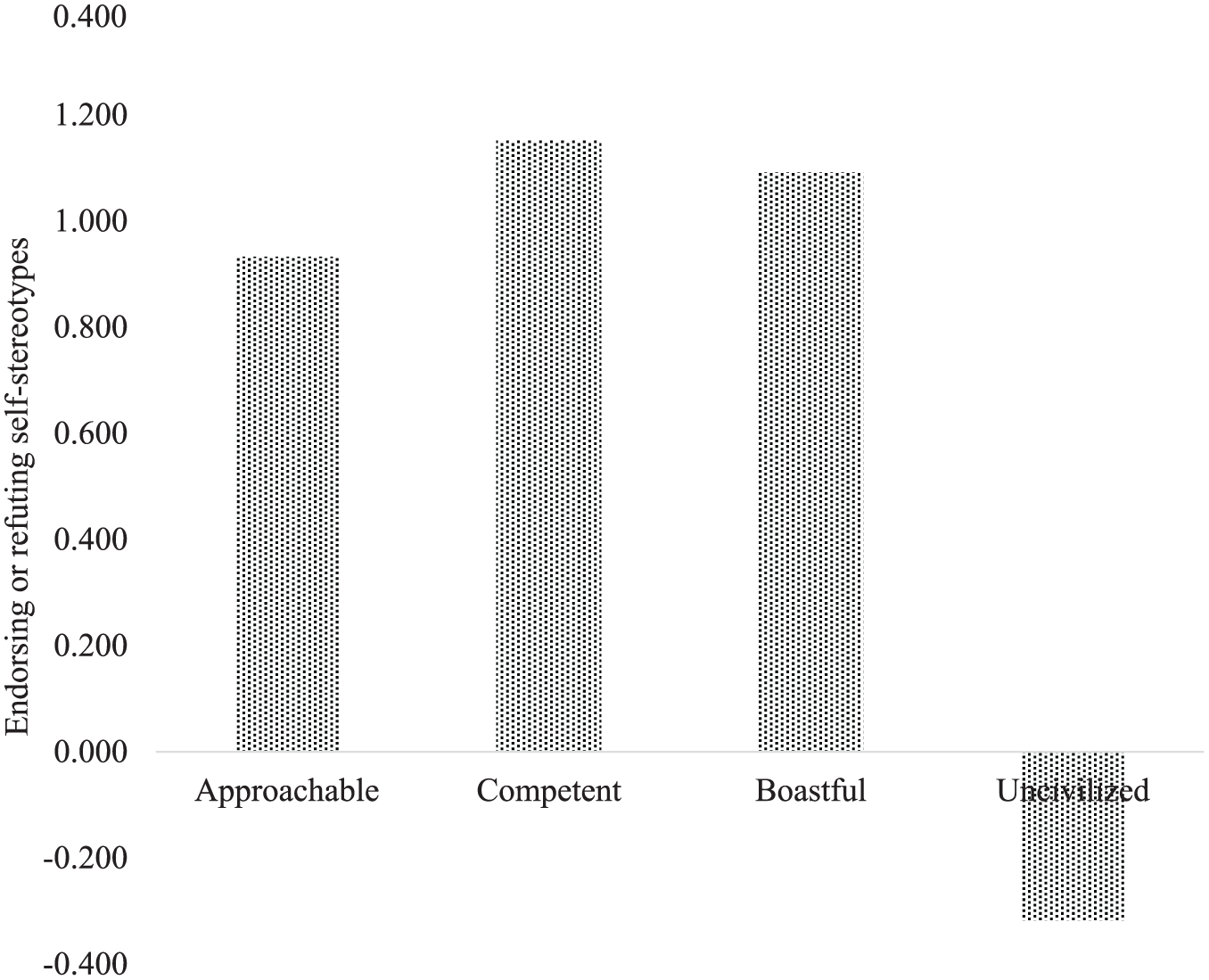
Difference score between midpoint and self-stereotype rating across each positive and negative stereotype dimension.
Brief discussion of study 2
Study 2 provided further support for the tourist stereotype measurement model. The model fit indices and results of the invariance tests suggested that the scale was viable and had construct validity. The supplementary analysis corroborated with research on the relevance of self-stereotyping as Mainland Chinese residents endorsed positive (i.e., approachable and competent) and even certain negative tourist stereotypes (i.e., loud and materialistic).
General Discussion
The two studies that make up the present research highlighted the connection between tourist stereotypes and self-stereotypes. Study 1 developed a scale to measure dimensions of positive and negative tourist stereotypes, and four dimensions were identified: competent, approachable, rude, and boastful. Study 2 delved deeper, and investigated Mainland Chinese residents’ self-stereotyping. The results provided further support for the tourist stereotype measurement model and highlighted the endorsement of positive and even negative self-stereotypes.
In this tourist stereotype model, a number of positive and negative items were excluded. For example, the word “virtuous” was mentioned in previous Chinese stereotype research, but it was dropped because residents provided feedback that it was difficult to consider whether tourists were “virtuous.” In other words, it was difficult to understand “virtue” in a tourist stereotype context. Additionally, other items were excluded as they were perceived to be overlapping; for example, “pushy” was viewed as overlapping with “rude” while “warm” was considered to be represented by “friendly” and “sincere.” Items in boastful (i.e., loud and materialistic) and rude (i.e., uncivilized, immoral, rude, and unreasonable), as well as items in approachable (i.e., sincere, friendly, and good) and competence (i.e., industrious), were worded exactly as the free response results and offered the prospect of best representing the perception of residents.
It is also important to note that tourism environments may facilitate stereotypes about visitors that differ from general stereotypes. For instance, Mainland Chinese tourists were not viewed as crude and lazy in the present research (Lin et al. 2005). Yet, they were biased as rude and loud, despite also being perceived as competent and industrious. Collectively, while residents may distinguish between tourist and general stereotypes, there are nevertheless potentially overlapping perceptions since their views are not necessarily mutually exclusive and may change over time.
Theoretical Contributions
It is believed the research findings contributed to the tourism literature by developing and measuring dimensions of tourist stereotypes. From the exploratory free recall and data collection processes in study 1 and study 2, participants were able to express biases that they considered relevant to outbound Chinese tourists.
This research also connected the tourism literature with studies on stereotype endorsement (Bell and Burkley 2014; Levy et al. 2002). For example, previous studies have shown that women may perceive themselves as inferior in mathematics (Burkley et al. 2013; Burkley and Blanton 2008), and black students may perceive themselves as weak academically (Okeke et al. 2009). The present research found that Mainland Chinese residents themselves could potentially internalize patterns of tourist stereotypes by endorsing negative and detrimental beliefs about their ingroup. This observation lends support to research on optimal distinctiveness theory, since it is likely that Mainland Chinese residents endorsed self-stereotypes to both assimilate and differentiate (Pickett, Bonner, and Coleman 2002). They may have supported positive stereotypes about competence and approachability to fulfill their need for assimilation to beneficial characteristics and, thus, feel closer to their ingroup. Nevertheless, they also acknowledged negative self-stereotypes (i.e., loud and materialistic), thereby differentiating themselves despite negative conations.
Additionally, the preceding investigation contributed to extending the research undertaken into the refutation of self-stereotypes. If negative self-stereotypes are harmful and unflattering, why did Mainland Chinese residents not reject the bias of boastfulness (i.e., loud and materialistic)? A possible explanation for this effect is the pervasiveness of negativity bias on self-stereotyping. Information in the media often report on the inappropriate and disruptive behaviors of Chinese tourists (J. J. Zhang and Shelton 2015). This information could reinforce the negative views of the Chinese public toward fellow Chinese tourists, projecting the behaviors and characteristics of certain tourists across the wider national context. This reflects the self-validating tendency of stereotypes, which could potentially perpetuate misperceptions to justify existing social views (Jost, Banaji, and Nosek 2004).
Social Implications
An enhanced understanding of tourist stereotyping and self-stereotyping has potentially far-reaching social implications. Negative stereotypes could underpin prejudice in cross-cultural relations and lead individuals to fear and anticipate hostile intergroup interactions (Stephan, Diaz-Loving, and Duran 2000). Recent work suggests that being the target of a positive stereotype could still be a negative interpersonal experience (Siy and Cheryan 2013). For example, African Americans who overheard a white male declare that African Americans are unbelievable natural athletes concluded that he was more prejudiced and less likeable (Czopp 2008). Asian Americans who heard “Asians are good at math” and women who heard “women are nurturing” in an intergroup interaction experienced greater negative emotions than those who heard no positive stereotypes (Siy and Cheryan 2013).
The present researchers have noted that participants readily associated Mainland Chinese tourists as competent, intelligent, and industrious. Yet a potential problem is that tourists who are seen as “smart” could also be seen as “acting too smart” (Lin et al. 2005, p. 37) if positive stereotypes turn into negative attitudes in the minds of residents (i.e., perceivers). For example, it is possible that residents who view tourists as competent and intelligent may not offer equivalent assistance to tourists when attentiveness is required, if residents feel that “these tourists are so smart they can handle it themselves.” In this case, positive stereotypes could be used to downplay implicit discrimination, and DMOs may need to proactively encourage residents to exhibit prosocial behaviors toward tourists (Tung 2019).
Another social implication of tourist stereotyping is that the endorsement of the stereotype, “competent,” could be associated with the absence of “civility.” This reflects the dilemma that certain positive stereotypes could suggest an absence of other valued traits (Judd et al. 2005) if individuals feel threatened by the positive preconceptions of the outgroup (Maddux et al. 2008). Conversely, negative stereotypes could be used to justify biases against tourists (Barreto and Ellemers 2005). For example, there have been reports of a rail firm launching separate trains for “loud” and “rude” Chinese tourists (Kitching 2015; Shao 2016).
Self-stereotyping also has social implications. System justification theory suggests that individuals may use negative self-stereotypes to justify societal injustices and make them less likely to question or challenge existing social inequities in an effort to see the current social system as fair, legitimate, and stable (Jost and Hamilton 2005). The present research findings suggest that Mainland Chinese residents could internalize negative biases of fellow Chinese tourists as loud and materialistic. In this regard, if they internalize negative self-stereotypes, they could be deterred from challenging covert social inequities, such as toilets only for non-Chinese tourists (Payton 2015) and segregated hotel floors only for Chinese tourists (Sritama 2016). In turn, these same inequities and behaviors may serve to justify and perpetuate existing discrimination in society.
Management and Public Policy Implications
Given these social consequences, what are the implications for DMOs and public policy makers involved in managing tourist stereotypes and self-stereotypes? In practice, the capacity of DMOs to influence the wider societal aspects of tourism may be rather limited because of their typical mandate on marketing and promotions (Pike and Page 2014). This could be fueled by the intense competition between tourist destinations that place the emphasis for DMOs on key performance indicators (KPIs) on shorter-run results rather than on longer-term social issues. In such settings, the marketing concept is typically externally motivated rather than internally focused, and directed at tourists rather than at locally based stakeholders such as residents (Gretzel, Yuan, and Fesenmaier 2000).
Yet recent work suggests that stereotypes may affect tourists’ posttravel evaluations of a destination. For example, Liu and Tung (2017) provided a sequential model of Chinese tourists’ pretravel stereotypes, on-site experiences, and posttravel evaluations of the destination. Their findings suggest that stereotypes influence tourist desires to interact with locals through the course of the experience. However, it is possible that tourists may have reconstructed details of their experiences to make it more memorable to the listener (e.g., the researcher in that study) because of the capitalization of travel memories (Tung, Cheung, and Law 2017). Nevertheless, while Liu and Tung (2017) investigated tourists’ biases toward local residents, the present research has measured tourist stereotypes from the resident perspective. The present research considers the importance of managing stereotypes, and suggests that DMOs and public policymakers may encounter challenges when confronting tourist stereotypes and self-stereotypes, thereby undermining long-term destination competitiveness.
In response to the above, DMOs should consider more internal marketing communication that address the prevalence of stereotypes in society, as it has been suggested the holistic aspect of destination management requires a delicate balance between the views of tourists and residents (Ritchie and Crouch 2003). Thus, tensions should be managed, as it is possible they could intensify negative relationships between individuals, which could further undermine interactions and increase misunderstandings (Nyaupane, Teye, and Paris 2008). For example, Maruyama and Woosnam (2015) investigated the perceptions of Japanese residents living in a Brazilian neighborhood in Gunma, Japan, toward ethnic stereotyping. The results indicated that those who had positive attitudes toward Brazilians perceived ethnic neighborhood tourism as an opportunity to employ, involve, and interact with Brazilian neighbors in town. The authors suggested that to address stereotypes associated with ethnic tourism, tourism planners should invite older and longer-term residents to participate in meetings and opinion-expressing forums in an effort to uncover reasons behind Brazilian stereotyping and to potentially educate residents about the benefits of ethnic tourism.
In a similar manner, the present research suggests that DMOs (and occasionally policy makers) can periodically organize events such as “tourism weeks” to provide a forum to raise community awareness and to mobilize support against tourist stereotyping. Counter-stereotyping messages and education could be incorporated with a view to enhancing the reception of visitors (Duguid and Thomas-Hunt 2015). The presence of such a forum to enhance host–tourist interactions could potentially decrease stereotypes, negative attitudes, and dissatisfaction (Pizam, Uriely, and Reichel 2000). Increased interactions among and between host and tourists may also elicit positive emotions that not only reduce stereotypical perceptions but also mediate the prospect of resident support for future tourism development (Maruyama and Woosnam 2015; Woosnam et al. 2018). Stakeholders across society are increasingly demanding evidence of social relevance and impact from publically funded programs directed by DMOs and policymakers; in this regard, the measurement model from the present research could be used to assess the efficacy of these internal marketing programs on long-term changes in tourist stereotypes and self-stereotypes.
The interrelationship between stereotypes and self-stereotypes that has been demonstrated in this research could prompt the development of relationships between the tourist origin market and destination communities. DMOs and public policymakers could foster initiatives that may have more longer-term and broader social policy implications than immediate economic rewards. Contact theory suggests that stereotypes, biases, and prejudice could be potentially reduced by organizing contact cooperatively, increasing interpersonal contacts among members of different social groups (Allport 1979). Contact situations could thus increase individuals’ sense of affection when the situation serves as a decategorization and as a learning process that allows one to view another as an individual rather than just as another member of a social group (Bornstein and Masters 1989). For example, the development of student exchange programs could provide direct, face-to-face interactions that enhance understandings and appreciation of the differences between individuals.
The student travel market could also potentially engage students-as-ambassadors of their originating country. Current research on intergroup contact is broad and dynamic, involving the nature of contact as well as the temporal continuum of contact points (i.e., from nervous initial encounters to the comfort of repeated encounters over time) (Dovidio et al. 2017). Such exchanges would allow students to experience the impact of tourist stereotyping and self-stereotyping (i.e., at the early stage when they regard themselves as tourists to the later stage when they assimilate to their new roles as temporary “hosts” of the destination to visiting friends and relatives). It may also allow students to reflect more deeply on how such settings may influence peer perceptions toward their future career aspirations, particularly for students in tourism and hospitality (Tung, Tang, and King 2018).
Finally, in the case of the outbound China market, DMOs and policymakers in nonlocal destinations might be aware of the China government’s directives on “bad behaviors.” Chinese tourists are reminded by tour guides to observe public order, protect the environment, and respect local customs, cultural traditions, and religious beliefs (Luan 2015). The goal is to promote outbound Chinese tourists as ambassadors to indicate that change is underway. Nevertheless, the success of this strategy could depend on the capacity of policy makers to manage tourist impressions, drawing on how others stereotype Chinese tourists, how Chinese tourists see themselves (i.e., self-stereotypes), and how these differences in perceptions could be reconciled.
Limitations and Future Research
The present study has limitations and opportunities for future research. The size of the samples were relatively small compared with the Hong Kong and Mainland China populations. Participants were recruited via convenience and snowball sampling and cannot be viewed as being representative of the general population. Also, a much larger number of females than males participated in this research, and gender biases may exist given the subject matter on stereotypes. Similarly, views from those older than 80 years and children under 18 were not captured, despite the proportions of this population within Hong Kong and Mainland China (National Bureau of Statistics of China 2016; Hong Kong Census and Statistics Department 2018). Data also were not collected from either the Tibet Autonomous Region or the Xinjiang Autonomous Region, among others, which limits the geographical representation of the Mainland Chinese sample. The research team forwarded the survey to residents in their network (e.g., colleagues, students, relatives, and friends) and then asked them to share the survey with their contacts. Responses were collected via this approach instead of distributing a set number of surveys to a mailing list that could have allowed for a calculated response rate.
Study 1 was conducted in Hong Kong. Although the city has welcomed large numbers of visitors and the use of the city as the host location to develop a valid and reliability measurement tool has been applied in previous research (Qiu Zhang et al. 2017), the scale developed may only represent the stereotypes of Hong Kong residents toward Mainland Chinese tourists. However, residents in other regions could be developing similar stereotypes as they welcome subsequent waves of Chinese visitors. In this regard, insights from Hong Kong residents could potentially provide DMOs in other regions with an indication of potential tourist stereotypes that they may need to address in order to better manage host–tourist relations. Future research could address this limitation by collecting data from other destinations within and beyond Asia. Samples from other contexts would provide additional empirical measurements for the model of positive and negative tourist stereotypes. Nevertheless, the measures of tourist stereotypes developed in this study are not definitive.
Future research could also investigate the moderating effects of gender and race on perceptions of tourist stereotypes, as well as their influences on experiences from the perspective of the stereotyped (i.e., the receiver). Previous research has suggested that individuals could perceive another as less likeable despite hearing positive stereotypes (Czopp 2008; Siy and Cheryan 2013). In this regard, future studies could assess whether Chinese tourists, or tourists from another ethnicity, would perceive residents as less likeable despite hearing positive preconceptions.
Future research could investigate the influence of prior travel experience on tourist self-stereotypes. For example, Chinese tourists, such as those in the senior travel market, may have traveled extensively in guided tours with their compatriots. These individuals have extensive travel memories and experiences (Tung et al. 2017; Tung and Ritchie 2011), and thus, may perceive self-stereotypes differently. In a similar manner, many individuals are motivated domestic tourists that are searching for different experiences within China. Those who mainly travel domestically may report different self-stereotypes than others who have traveled internationally.
Future researchers may further assess the antecedents to, and outcomes from, the scale that was developed. Future studies might examine residents’ previous interactions with tourists as well as their exposure to media coverage. These elements could potentially act as antecedents that shape their stereotypes toward tourists. The assessment of residents’ prosocial behaviors, such as willingness to help tourists, as possible outcomes that could be influenced by their positive or negative stereotypes of tourists is also an area for further research.
Footnotes
Declaration of Conflicting Interests
The author(s) declared no potential conflicts of interest with respect to the research, authorship, and/or publication of this article.
Funding
The author(s) disclosed receipt of the following financial support for the research, authorship, and/or publication of this article: The work described in this article was fully supported by a grant from the Research Grants Council of the Hong Kong Special Administrative Region, China (Project No. PolyU255017/16B).
