



Abstract
The helpfulness of online reviews greatly facilitates travelers’ information searches, and helpful reviews can popularize travel service providers within a virtual environment. This study examines how the helpfulness of travel reviews is influenced by customized management responses from a linguistic perspective. Based on TripAdvisor data for 946 hotels in the state of Texas, we apply an econometric model to understand which management response style most effectively promotes customers’ perceived helpfulness of the corresponding review. Empirical results show that a matched linguistic style and low similarity in management responses can motivate consumers to leave a “helpfulness” vote to the corresponding review; the review rating, hotel class, and respondent’s job title are found to significantly moderate these effects. Lastly, pertinent managerial implications are provided.
Keywords
Introduction
Over the last decade, online reviews have become an increasingly valuable source of product information that can inform consumers’ attitudes and behavior (J. Lee, Park, and Han 2008; Karimi and Wang 2017). Prospective consumers turn to relevant online reviews to alleviate the uncertainty associated with a given purchase (Dellarocas 2003), especially for travel service products that are inherently intangible. The literature has documented the sizeable influence of online reviews on consumers’ purchase intentions (Chevalier and Mayzlin 2006; Park, Lee, and Han 2007; Gupta and Harris 2010). However, as fraudulent and useless reviews permeate various online platforms, not all online reviews are necessarily valuable to readers. More specifically, quantity is not analogous to quality; an excessive number of reviews for a product or service can induce information overload, which may easily overwhelm review readers (Jones, Ravid, and Rafaeli 2004). Consumers, therefore, seek trustful information to facilitate decision making. To improve consumers’ experiences, online review platforms have begun to highlight the reviews consumers deem most helpful (Mudambi and Schuff 2010). For example, consumers can cast a “helpfulness” vote for a review containing useful content that guides their shopping process or contributes to product evaluation (Cao, Duan, and Gan 2011; Karimi and Wang 2017). As a spontaneous and valid diagnostic symbol, helpfulness votes benefit consumers and businesses in an e-commerce environment. Therefore, academia and industry are each interested in the factors driving online review helpfulness.
Empirical evidence has identified an array of review-specific factors (e.g., review length, review ratings, and review content) and reviewer-specific factors (e.g., reviewer’s identity or profile) that determine review helpfulness (Ngo-Ye and Sinha 2014; Pan and Zhang 2011; Qazi et al. 2016). While scholars have examined the importance of management responses (MRs) on consumer behavior (Gu and Ye 2014; Sparks and Bradley 2017; Li, Cui, and Peng 2017), the linkage between MRs and online review helpfulness has been largely overlooked. At present, many online review platforms (e.g., TripAdvisor.com and Yelp.com) allow businesses to submit MRs to address consumer reviews (W. Chen et al. 2019). Reviews receiving high-quality MRs demonstrate a service provider’s (e.g., hotel’s) professionalism as well as the quality of communication between consumers and businesses. Researchers have investigated particular response strategies including offering an apology, explanation, acknowledgment, problem resolution, or other form of facilitation to pacify dissatisfied consumers (Liao 2007; Leung et al. 2013; Sparks and Bradley 2017). Studies have further unveiled the positive effects of reasonable responses on future customers’ satisfaction (X. Zhang et al. 2020; Li, Cui, and Peng 2018). Nevertheless, such work has generally focused on review content and seldom addressed the linguistic style of MRs and how it matches the initial consumer review. Recent literature in social psychology has pointed out that a review’s linguistic style can shape readers’ perceptions of the information contained therein (Ireland and Pennebaker 2010; Yin, Bond, and Zhang 2014). An adaptive linguistic style and coordinated communication can promote social approval and agreement among interactants (Baxter 1987; Niederhoffer and Pennebaker 2002). The MR literature has also referred to the “response template” effect, which describes whether a manager simply copied and pasted a standardized response for ease of communication (Z. Zhang et al. 2019). In general, distinctive and tailored MRs make each response unique, which ultimately causes individual consumers to sense a business’s sincerity. To the best of our knowledge, however, no study has yet explored linguistic style and the response template effect in tandem.
To bridge this gap in the tourism literature, we collected a sample of 50,024 TripAdvisor hotel reviews with spontaneous MRs posted within 1 day. After text mining all selected MRs and reviews, we obtained measures of MRs’ linguistic style and within-hotel similarity (i.e., the response template effect). Econometric analysis was then conducted to clarify the relationship between MRs and reviews’ helpfulness votes. Through this analytic process, we sought to offer theoretical and managerial guidance around the best practices when service providers post customized MRs. In particular, we aimed to make the following contributions to the literature. First, our study represents a pioneering effort to adopt linguistic style matching (LSM) to assess the extent to which linguistic styles match between consumer reviews and MRs. Linguistic synchronization in conversation has been found to enhance rapport and credibility in social environments (Ireland and Pennebaker 2010), and we systematically investigated this novel topic in an online context. Second, content and linguistic style are naturally inseparable (Chaiken and Maheswaran 1994), and their collective impact deserves more rigorous empirical examination (Ludwig et al. 2013). In this study, by further examining the response template effect and its interaction with linguistic style, we can provide specific recommendations regarding online reputation management for tourism and travel services.
Literature Review and Hypotheses
Literature Review
Review helpfulness and factors
In the literature, review helpfulness is commonly defined as the perceived value of a review for potential readers’ decision making (Mudambi and Schuff 2010; Karimi and Wang 2017). An increasing number of online business platforms have embraced the function of review helpfulness, which enables consumers to vote on whether they found a review useful (Chua and Banerjee 2016). For example, the TripAdvisor website graphically indicates the number of helpfulness votes per review. This design can facilitate consumers’ information searches by presenting a more intuitive way to identify potentially useful information and boost consumers’ confidence in their purchase decisions (Gupta and Harris 2010; Huang et al. 2015). For service providers, trustworthy feedback from past consumers offers a unique competitive advantage by enhancing information exposure among potential consumers (Z. Liu and Park 2015). Moreover, useful reviews often persuade consumers to linger on a webpage (Kumar and Benbasat 2006) and are highly correlated with sales of an associated product or service (Chevalier and Mayzlin 2006; Clemons, Gao, and Hitt 2006; Z. Liu and Park 2015). The functionality of helpfulness votes has thus attracted substantial scholarly interest in recent years (Pavlou and Dimoka 2006; Chua and Banerjee 2016).
The extant literature generally classifies review-related factors into two categories: review-specific features and reviewer-specific features. Early studies mainly focused on the former, especially review attributes such as review ratings (Pan and Zhang 2011) and review length (Mudambi and Schuff 2010; Cao, Duan, and Gan 2011). Later, scholars began to explore review content characteristics via text-mining methods to better understand review semantics (Forman, Ghose, and Wiesenfeld 2008; Y. Liu et al. 2008). As a critical component of textual content, semantics are directly recognized and diagnosed by readers. For instance, consumers have difficulty obtaining diagnostic information from equivocal reviews (Racherla and Friske 2012). Several aspects of textual content have been investigated, including descriptions of usage situations, claimed expertise, listed product features, and references to other brands or reviews (Weathers, Swain, and Grover 2015). Beyond semantics analysis, writing style is a similarly vital factor that renders reviews appealing to consumers (Schindler and Bickart 2012). Accordingly, part-of-speech usage (Krishnamoorthy 2015) and text readability (Ghose and Ipeirotis 2010) have been found to predict review helpfulness.
Studies have also underscored the importance of a reviewer’s identity disclosure in developing consumer confidence in a review (Z. Liu and Park 2015). One’s online identity is generally defined as an individual’s social “status” in an online community or platform and symbolizes their ability to contribute to the community. Based on the “source effect” of persuasive communication (Janis 1959), the reliability of information sources dictates how readers perceive and process information. Therefore, indicators signaling a reviewer’s expertise, such as a reviewer’s reputation, ranking, and accumulated experience, may significantly affect readers’ judgments of the usefulness of reviewer feedback (Baek, Ahn, and Choi 2012; Racherla and Friske 2012). For example, Baek, Ahn, and Choi (2012) noted that a reviewer using a real name conveyed greater reliability to consumers, while Karimi and Wang (2017) indicated that reviewers’ profile images (i.e., personal or family photos) can greatly enhance consumers’ evaluations of review helpfulness.
Interaction in managerial responses
Research has documented the significant influence of MRs on sales, satisfaction, and consumer behavior in the context of tourism and travel services (Mattila and Cranage 2005; Xie, So, and Wang 2017; Li, Cui, and Peng 2018). As an online consumer relationship management tool, MRs represent a vital channel through which operators can interact with and engage consumers both online and offline (Gu and Ye 2014). When other consumers read MRs, they are not only reading the content of a response but also observing an interaction between service providers and consumers. Recent studies have shown that MRs can soothe and retain current reviewers (Ye, Law, and Gu 2009) while reinforcing a positive provider reputation for future consumers (C. H. Lee and Cranage 2014; X. Zhang et al. 2020). Amid growing competition, many businesses have come to realize the importance of response quality and now implement specific MR strategies, such as an apology, explanation, acknowledgment, or redress (Davidow 2003; Liao 2007; Leung et al. 2013; Sparks and Bradley 2017).
Notably, however, not all service providers engage in appropriate and successful MR strategies. Wei, Miao, and Huang (2013) divided MRs into generic and specific responses. A generic response includes standardized content irrespective of the actual issues raised in a consumer’s review. By contrast, a specific response is a personalized answer that addresses the problems mentioned in a review. Generic responses often fail to address a customer’s unique needs, leading to a response template effect that diminishes communication quality. Specific responses, in which a more tailored message is used to respond to a consumer’s concerns, provide better interaction and contribute to a higher level of consumer trust and perceived communication quality (Z. Zhang et al. 2019). In other words, the degree to which the topic matches between MRs and the original review matters. In another study, C. H. Lee and Cranage (2014) recognized that attitudinal consensus in online communication between managers and consumers played a central role in subsequent consumers’ evaluations on product quality.
Text Mining in Online Reviews
While early studies primarily addressed the relationship between ready-to-use website variables (e.g., review valence/volume) and consumer behavior (Cao, Duan, and Gan 2011), some researchers have identified detailed information from textual data via text-mining methods. In recent years, latent semantic analysis has risen to prominence as a means of uncovering text-embedded intellectual knowledge (Sidorova et al. 2008). In tourism and hospitality management, researchers are particularly interested in two review aspects: contained issues and attitudes. Advances in machine learning (e.g., support vector machines and deep learning) and the lexicon-based approach (e.g., General Inquirer and WordNet) facilitate the assessment of opinions embedded in textual data (Medhat, Hassan, and Korashy 2014). For example, topic mining is a common text-mining tool used to discover abstract topics or issues within a piece of text (Blei 2012). Sentiment analysis aims to extract and analyze opinions from review texts as well as to identify positive, neutral, and negative opinions (Ma, Cheng, and Hsiao 2018).
Review helpfulness is closely tied to the detailed textual information contained in reviews. Cao, Duan, and Gan (2011) categorized online review characteristics into three types and pointed out that semantic features leading to more meaningful comments were associated with a larger number of helpfulness votes. Ludwig et al. (2013) stated that a consistent linguistic style among reviews could promote consumers’ purchase behavior. Furthermore, scholars have begun focusing on text mining for MRs to explore the relationships between online reviews in terms of topic matching (X. Zhang et al. 2020), text similarity (Z. Zhang et al. 2019), and topic distraction (Xie, So, and Wang 2017).
Hypothesis Development
According to social psychology and communication theories, a person’s communication style showcases personality and reflects perceptions about the relationship with the communication partner (Pennebaker 2011). For example, in a face-to-face conversation, similar gestures and vocal inflection across participants convey a shared social identity and elicit a stronger sense of trust and group belongingness (Pickering and Garrod 2004). Even in virtual settings, approximative linguistic styles can more easily engender agreement compared to linguistic content (Ireland and Pennebaker 2010). In online reviews of travel services and products, reviewers are likely to read others’ discussions with MRs to search for useful decision-related information and then assign a “helpfulness” vote if MRs are perceived as trustful and diagnostic. On this basis, readers observe prior communication between online reviews and MRs as implicit participants, and readers’ judgment of reviews’ helpfulness will be partially influenced by MR contents. One aspect that readers may consider is the similarity in linguistic style and content between MRs and corresponding reviews. If MRs address concerns expressed in the original review, then readers are more likely to perceive the original review as diagnostic and deem it helpful. In human communication theory, reviewers’ adjustments to group-specific linguistic styles should elicit perceptions of a shared identity and rapport among the reading collective (Giles 2016). This perceived harmonious relationship elicits clearer diagnostic value and directly influences consumers’ behavior and judgments (Jones, Ravid, and Rafaeli 2004). Thus, MRs with a high level of LSM with the corresponding review can reinforce readers’ trust in the communication process, thereby enhancing reviews’ diagnosticity; that is, a higher level of LSM of MRs positively influences review helpfulness. Therefore, we propose the following hypothesis:
Hypothesisi 1: Customization of MRs with a linguistic style that matches the corresponding review has a positive impact on review helpfulness.
Another feature of customized MRs is the uniqueness of the response text, reflecting content distinctiveness from other MRs posted by the same service provider. If respondents use a response template for all reviews, this content difference should be minimal. In general, a standardized response template makes readers feel perfunctory and distrustful (X. Zhang et al. 2020). In particular, when MRs are not customized, they may not be considered credible and scarcely engage consumers (Mauri and Minazzi 2013). Wei, Miao, and Huang (2013) found that more customized MRs were associated with higher consumer trust and perceived communication quality. Z. Zhang et al. (2019) further demonstrated that the perceived similarity of MRs can hamper consumers’ purchase decisions. Thus, review respondents should provide content specific to corresponding online reviews (Y. Chen and Xie 2008). The following hypothesis is proposed:
Hypothesis 2: Customization of MRs with a lower level of content similarity from other responses by the same hotel has a positive impact on review helpfulness.
Because of the negativity bias, the psychological effect of negative information is greater than that of positive information in shaping people’s attitudes and perceptions (Wu 2013). Many studies have confirmed a perceptual bias wherein perceived negative information carries more weight and has a more significant effect on individuals’ impressions than positive information (Rozin and Royzman 2001). Negative and critical information usually contains more distinctive details and is perceived as more diagnostic in guiding readers’ decisions (Skowronski and Carlston 1989). When consumers search for information via social media, negative reviews tend to contain more specific, personalized information that may reduce the uncertainty associated with a purchase (Kim, Ferrin, and Rao 2008). Therefore, consumers are likely to perceive negative reviews as more helpful than positive ones. In addition, MRs are often used to explain, make a claim about, or acknowledge negative review content to assuage subsequent consumers’ concerns (Gu and Ye 2014; Sparks and Bradley 2017; X. Zhang et al. 2020). Accordingly, consumers may also pay more attention to a hotel’s corresponding response content when focusing on negative hotel reviews to obtain more useful information for decision making. The effect of customized MRs on review helpfulness should thus be stronger for consumers reading reviews with lower ratings. We propose the following hypotheses:
Hypothesis 3a: Review ratings negatively moderate the effect of linguistic style matching on review helpfulness, such that the positive effect is stronger for lower review ratings.
Hypotheis 3b: Review ratings negatively moderate the effect of within-hotel content similarity on review helpfulness, such that the negative effect is stronger for lower review ratings.
Hotel class refers to a hotel’s marketing position in the hotel hierarchy and can be classified into low- to high-class groups based on overall service quality (Israeli 2002; Wang, Fong, and Law 2020). High-class hotels usually provide better-quality accommodations and services compared to lower-class hotels. Consumers also possess distinct expectations and requirements for different hotel classes. Consumers who intend to choose low-class hotels are most interested in the value-for-money experience because of their limited budget. Conversely, consumers seeking high-class hotels are more concerned about quality and service details that justify the price (Rajaguru and Hassanli 2018). In this study, customized MRs including a harmonious linguistic style and tailored content are assumed to reflect a hotel’s sincere attitude toward consumers’ reviews, which can also be seen as a value-adding service for customers (Wei, Miao, and Huang 2013). According to the elaboration likelihood model, people are more motivated to process information relevant to their expenses and effort (Guo and Zhou 2017). Therefore, considering the higher price associated with certain accommodations, consumers staying in high-class hotels should weigh customized MRs more heavily as indicated by the following hypotheses:
Hypothesis 4a: Hotel class positively moderates the effect of linguistic style matching on review helpfulness, such that its positive effect is stronger for higher-class hotels.
Hypothesis 4b: Hotel class positively moderates the effect of within-hotel content similarity on review helpfulness, such that its negative effect is stronger for higher-class hotels.
Some online travel agencies (e.g., TripAdvisor) list the respondent’s job title in MRs. An employee’s job title represents their occupation and social identity in the enterprise (Smith et al. 1989). Respondents with high-ranking job titles are thought to possess rich experience, concrete professional skills, and instructive knowledge (e.g., hotel expert guidance in our case). As such, compared to low-level employee respondents, MRs from high-ranking employees will likely be perceived as more useful and indicate more proactive relationship management. Overall, consumers are likely to appreciate customized MRs from high-ranking respondents as suggested below:
Hypothesis 5a: Job title rank positively moderates the effect of linguistic style matching on review helpfulness, such that its positive effect is stronger for MRs from higher-ranking employees.
Hypothesis 5b: Job title rank positively moderates the effect of within-hotel content similarity on review helpfulness, such that its negative effect is stronger for MRs from higher-ranking employees.
Based on the preceding discussion and research hypotheses, we propose the following research framework (see Figure 1).
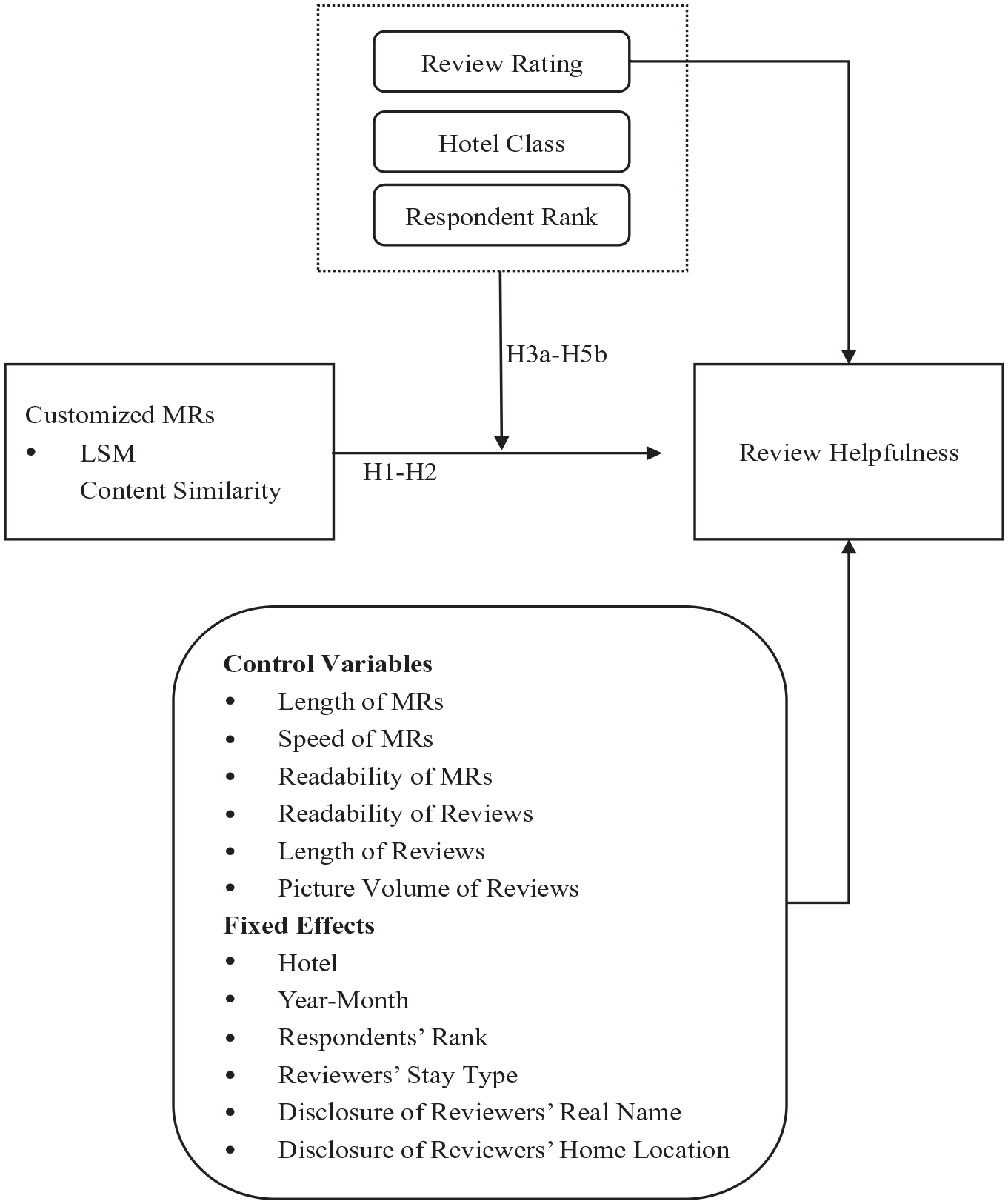
Research framework.
Methodology
Data Collection
We gathered data for this study using automated Java crawlers to access and parse HTML and XML pages with hotel reviews on TripAdvisor.com, the leading online travel agency worldwide. By the end of Q3 2019, TripAdvisor covered over 8.6 million accommodations with more than 859 million reviews and posts (TripAdvisor 2019). We chose TripAdvisor also because of the traceability features associated with peer customer review information: all webpage information is publicly accessible and updated continuously to provide a large volume of consumer-generated content. In addition to textual information from consumer reviews and MRs, we could collect and control other relevant information, such as online rating, review time, response time, stay type, and the respondent’s identity, which may each affect the perceived helpfulness of reviews. Figure 2 presents a screenshot of a hotel webpage on TripAdvisor.

A screenshot of a hotel webpage on TripAdvisor.
As the second-largest state in the United States, Texas is home to an array of representative hotels and an extensive set of consumer reviews on TripAdvisor. We focused on 946 unique hotels across different classes and sizes, all of which had received at least one consumer review with MRs during the observation period between March 2009 and May 2018. We omitted observations with no MR or with a response interval exceeding one day to ensure that other consumers had read the MR when they deemed a review helpful. Our initial sample included 47,705 general consumer reviews with MRs. We also collected hotel characteristics (i.e., hotel class) based on information obtained from Smith Travel Research (STR), the leading hotel data vendor in the industry. As illustrated in Figure 3, most reviews were obtained from hotels in major Texas cities: Houston, Dallas, Fort Worth, San Antonio, Austin, and El Paso. Usually, hotels with a large number of reviews received more frequent MRs.
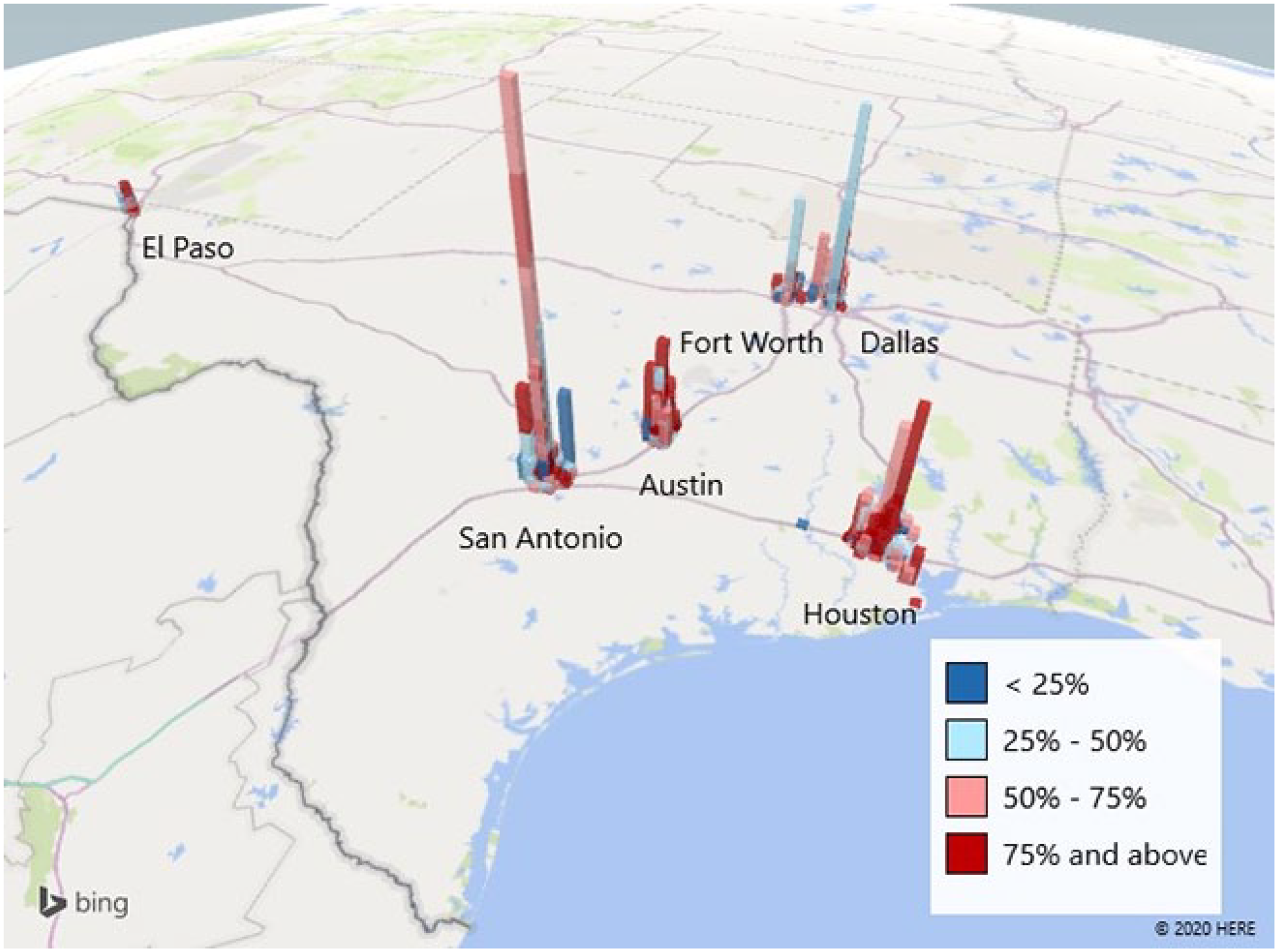
Location of hotels in the data set.
Text Analysis
We used two primary text-mining methods to extract additional insights from textual information. The first was linguistic style analysis, a word count–based linguistic analytics approach that enables calculation of the LSM degree between consumer reviews and MRs. The second method was based on cosine similarity, a cosine coefficient of the angle between two vectors in a vector space, which we used to measure the content-based similarity between a given MR and all other MRs from the same hotel.
LSM
Linguistic inquiry and word count (LIWC) dictionaries offer reliable and robust functions suitable to content ratings; these dictionaries can be used to calculate the proportion of words that match predefined dictionaries (Ludwig et al. 2013). To acquire LSM scores, the text of customer reviews and MRs was operationalized in steps using the LIWC program (Pennebaker, Booth, and Francis 2007). The first step involved measuring the degree to which each text contained nine types of function words: auxiliary verbs, articles, adverbs, personal pronouns, indefinite pronouns, prepositions, negations, conjunctions, and quantifiers (examples for each category are listed in Table 1). In this study, the percentage of total words among each of the nine cateogories was automatically calculated for the text of each review. For example, “but” appears in the conjunctions dictionary and would be counted as 1 in terms of the total number of conjunction words in the text. If the word “and,” which also belongs to the conjunctions dictionary, appeared in the same review, the total score for conjunctions words would be 2. If the selected text contained no other conjunctions, and the total word count was 10, then the percentage (PC) of conjunctions in this text would be 20%.
Examples of Word Categories.
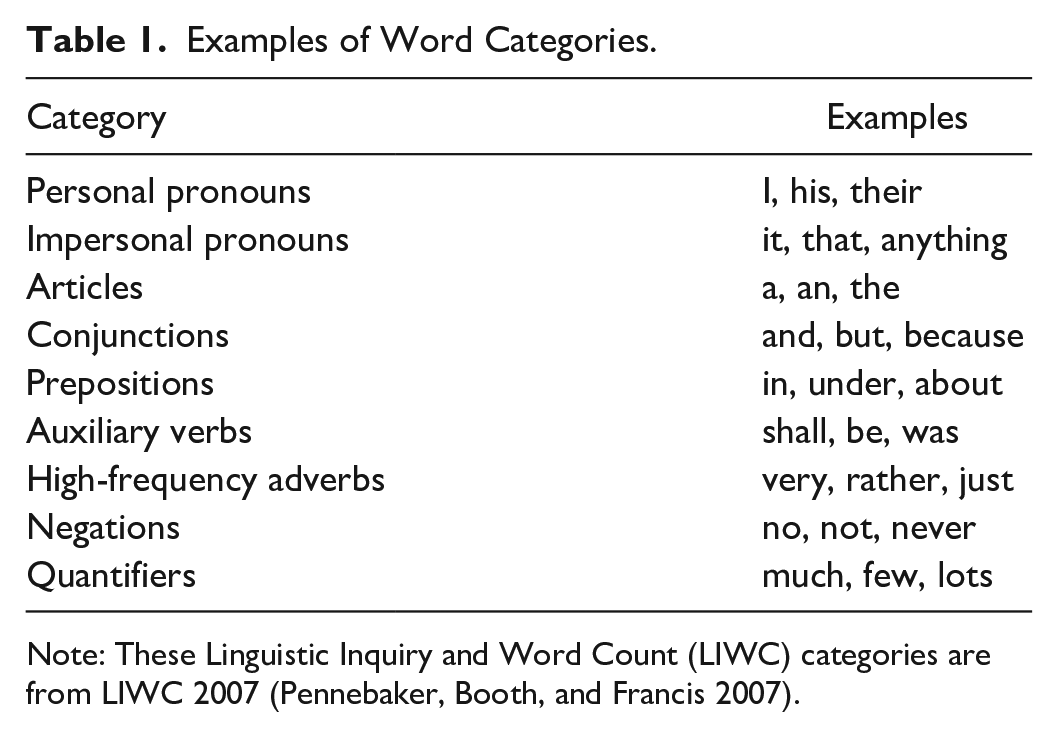
Note: These Linguistic Inquiry and Word Count (LIWC) categories are from LIWC 2007 (Pennebaker, Booth, and Francis 2007).
After establishing the usage degree of each function word in a given text, we calculated separate LSM scores for each function word. The following equation was adopted to derive the difference in usage degree for a particular word type (conjunctions are used in this example) between a consumer review and its corresponding MR:

where
Text similarity
Cosine similarity is a measure of the individual similarity between two nonzero vectors of an inner product space that measures the cosine of the angle between them (Maas et al. 2011). A larger cosine coefficient indicates a smaller angle between two vectors, representing the smaller difference among them (Z. Zhang et al. 2019). We used the cosine similarity coefficient to calculate content similarity across MRs by creating vectors describing MR content. Initially, we segmented any two MRs (e.g., X and Y) by the Stanford tokenizer (Manning et al. 2014) and placed all words into a unique collection list for numbering. Then, each MR text was represented by word frequency vectors that could be applied using the cosine function; for demonstration purposes, the cosine similarity between MRs X and Y (
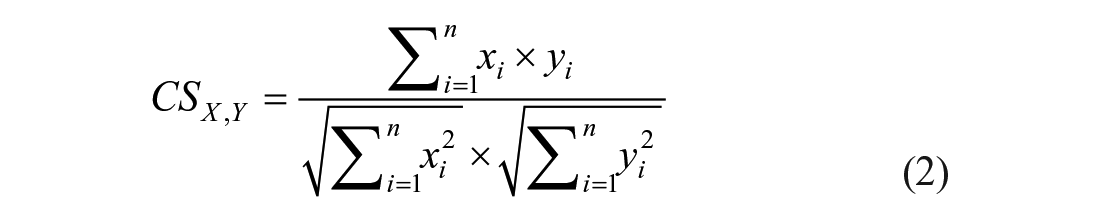
where
Econometric Analysis
Variable Definitions and Descriptions
The dependent variable (RH), online review helpfulness, was measured by counting the number of helpfulness votes from online review readers (Ghose and Ipeirotis 2010; Z. Liu and Park 2015).
We specified the following major variables for customized MRs:
Resp_LSM: The LSM score indicates the degree of LSM between an MR and the corresponding review; a larger value indicates a closer match between the two.
Resp_CS: The cosine similarity score indicates the overall text similarity of a given MR to all MRs for the same hotel; a larger score indicates greater similarity across different MRs.
We also focused on the following variables of interest:
Resp_Interval: The post duration (in days) between the review and its MR. Because we deleted MRs posted more than one day after a review, only same-day and one-day observations were included in the sample.
LnResp_Len: The length of the MR (in log).
Resp_Readability: The Dale–Chall readability score of the MR, reflecting the readability test for English writing. This score provides a numeric gauge of the comprehension difficulty readers encounter when reading a text. A higher value indicates a higher level of English writing (Klare 1952). The index was calculated using the “ReadabilityCalculator” package in Python (Palotti, Zuccon, and Hanbury 2015).
Resp_Rank: The job title rank of the review respondent for a hotel: 1 = general staff, 2 = director-level staff, and 3 = manager-level staff.
Rev_Rating: A five-point TripAdvisor rating assigned by consumers, indicating their satisfaction with their experience.
Rev_Readability: The Dale-Chall readability score of the online review.
LnRev_Len: The length of the online review (in log).
LnRev_Pic: One plus the number of photos in the review (in log).
Stay_Type: The consumer’s type of hotel stay: 1 = solo, 2 = with family, 3 = on business, 4 = as a couple, and 5 = with friends.
Rev_Realname: Disclosure of a consumer’s real name: 1 = disclosure of real name, 0 = other. As all reviewers’ names in the data set were written in English, names were first divided into first, middle (missing allowed), and last names. We then judged names’ authenticity by referring to English name libraries in the “names” Python package (Hunner 2013).
Rev_Homelocation: Disclosure of a consumer’s home location: 1 = disclosure of home location, 0 = other.
Hotel_Class: The hotel level as evaluated by STR based on price segments: 1 = economy, 2 = midscale, 3 = upper-midscale, 4 = upscale, 5 = upper-upscale, and 6 = luxury.
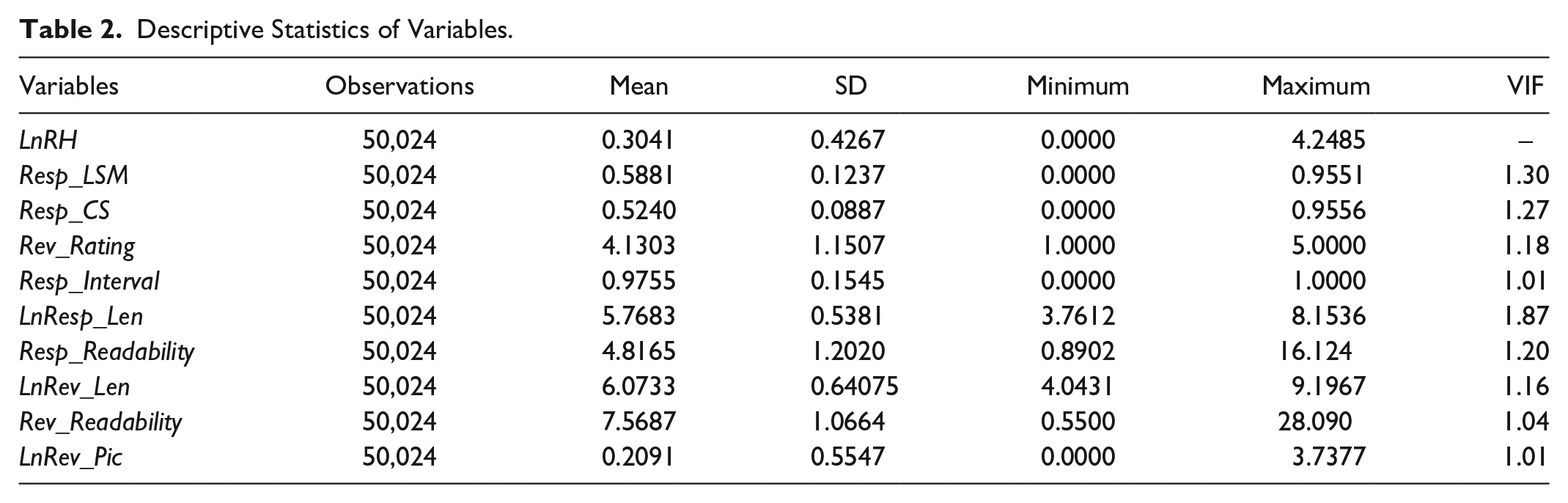
Table 2 presents the descriptive statistics of variables included in our econometric analysis and the results of collinearity diagnostics. The variance inflation factor of each variable was below 2.0, indicating the absence of multicollinearity issues.
Descriptive Statistics of Variables.
Empirical Model
We used a multidimensional fixed effects linear model to understand the effects of customized MRs on review helpfulness (in log) as follows:
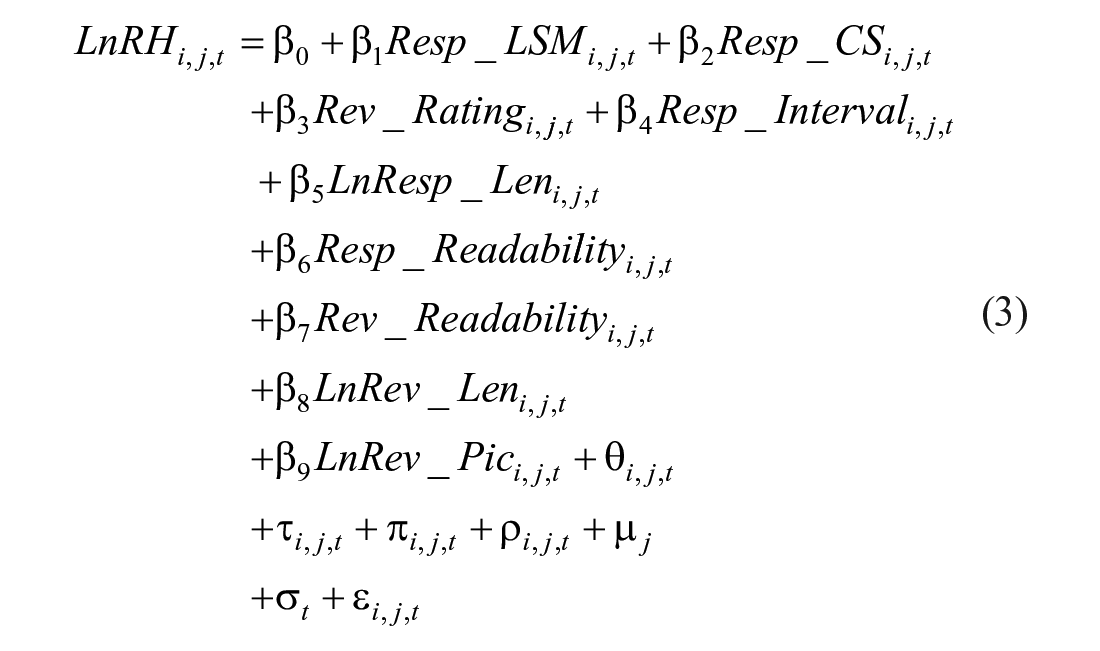
where i denotes a review, j denotes the hotel where the consumer stayed, and t denotes the year–month of accommodation. Six fixed effects (i.e.,
We also assessed the moderating effects of review rating, respondent’s job title rank, and hotel class on customized MRs. The equation with interaction terms can be written as follows:
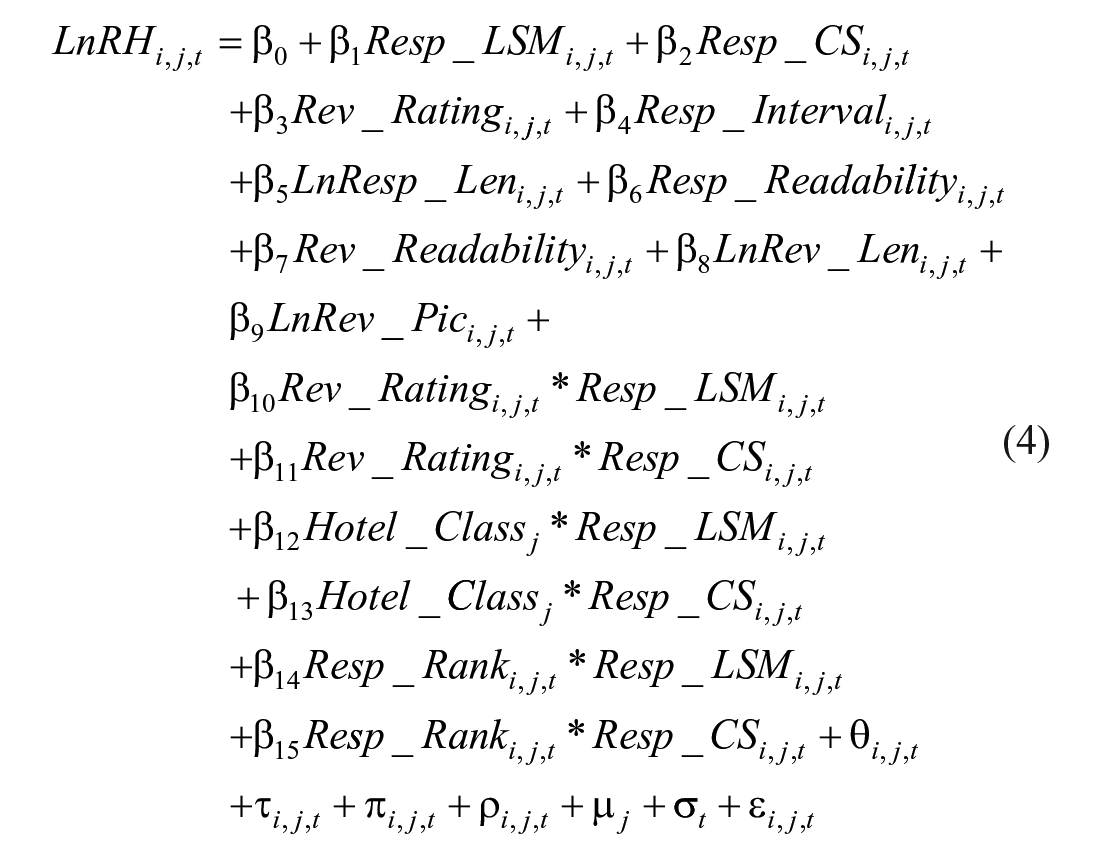
Specifically, in equation 4, negative and significant estimates of
The proposed research design offered several improvements over existing models pertaining to review helpfulness (Ngo-Ye and Sinha 2014; Qazi et al. 2016). First, in addition to common factors (e.g., review features and reviewer characteristics), we added unique attributes from the novel perspective of MRs and investigated their respective influences on review helpfulness. Second, we applied in-depth text analysis methods to explore the text features of MRs and reviews (e.g., LSM scores) rather than simply calculating text length. Moreover, to control for the impact of heterogeneity as much as possible, we adopted a multidimensional fixed-effects linear model to control for hotel fixed effects, year–month fixed effects, and so on to mitigate potential bias from omitted variables and to ensure more rigorous results.
Empirical Findings
Results
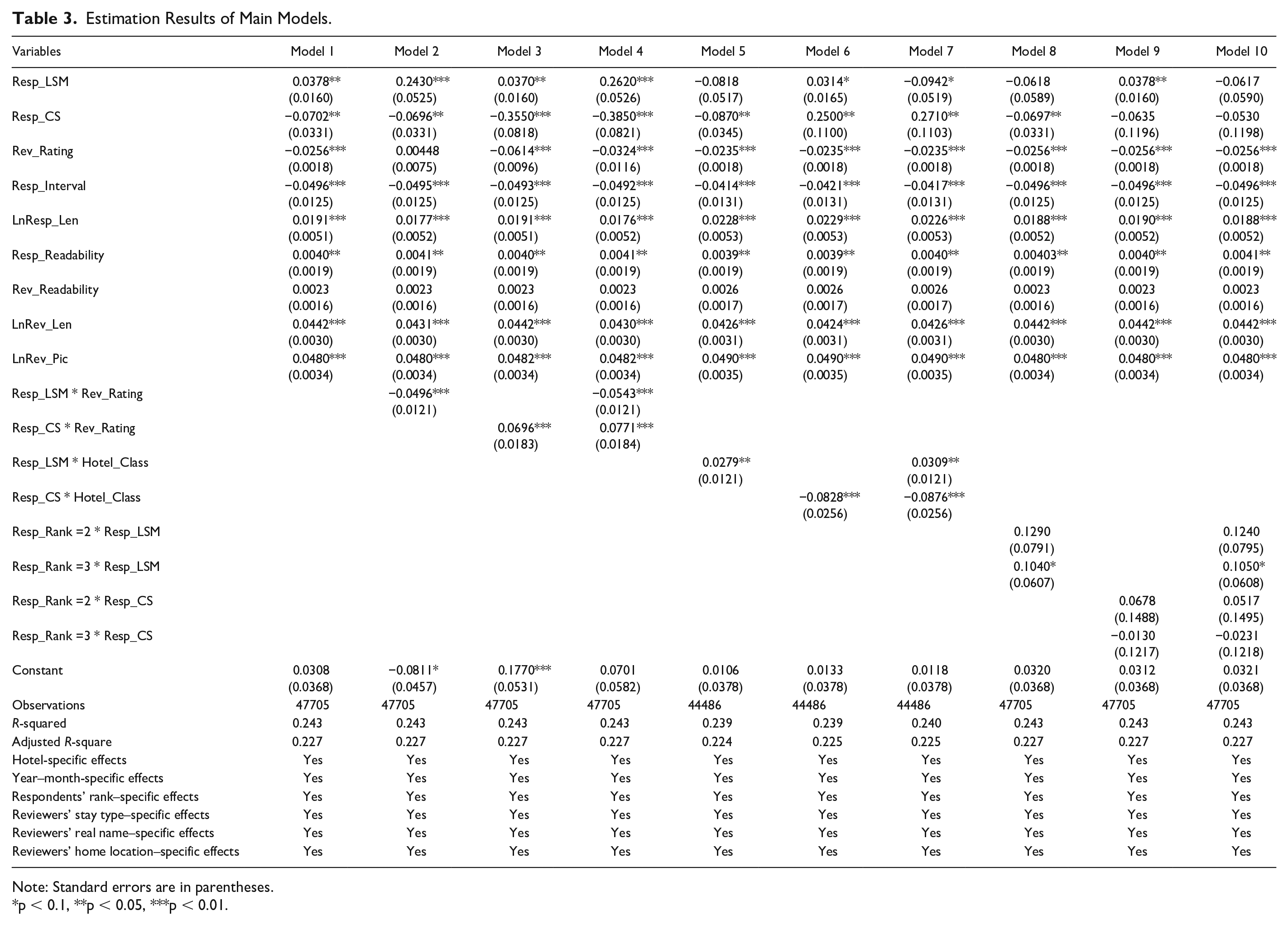
Table 3 displayed the estimation results of our empirical models. As the baseline model, model 1 included a sample size of 47,705 with an R2 value of 0.243 and an adjusted R2 value of 0.227. The coefficient of Resp_LSM was estimated to be positive and significant (coeff. = 0.0378, p < 0.05), suggesting that consumers became more aware of review helpfulness as MRs became more consistent with the original review in terms of linguistic style. Meanwhile, the coefficient for Resp_CS was negative and significant (coeff. = −0.0702, p < 0.05). Consumers therefore appeared more willing to assign a “helpfulness” vote to reviews with customized MRs. Hypotheses 1 and 2 were empirically supported. Regarding review-related control variables, Rev_Rating was negative and significant, implying that consumers were inclined to obtain more diagnostic information from negative reviews. The coefficients of LnRev_Len and LnRev_Pic were each positive and significant; that is, online reviews containing longer text and more pictures were deemed more useful. Regarding other control variables, the positive and significant coefficients of Resp_Len and Resp_Readability showed that longer and more sophisticated responses (with respect to linguistic properties) could strike consumers as more helpful.
Estimation Results of Main Models.
Note: Standard errors are in parentheses.
p < 0.1, **p < 0.05, ***p < 0.01.
To better understand the effects of customized MRs on consumers’ perceived review helpfulness, in models 2 to 10, we added three groups of interaction terms to model 1. The results of models 2 to 4 revealed that the moderating effects of Rev_Rating with Resp_LSM (coeff. = −0.0496, p < 0.01) and Resp_CS (coeff. = 0.0696, p < 0.01) were significant. The effects of customized MRs were stronger for reviews with lower ratings, and hypotheses 3a and 3b thus could not be rejected. For models 5 to 7, Hotel_Class significantly and positively moderated the effect of Resp_LSM (coeff. = 0.0279, p < 0.05) and negatively moderated the effect of Resp_CS (coeff. = −0.0828, p < 0.01). The impacts of customized MRs were therefore stronger among higher-class hotels, and hypotheses 4a and 4b were empirically supported. In models 8 to 10, compared to general staff members, we observed positive and significant moderating effects for managers (coeff. = 0.1040, p < 0.1) as respondents. Specifically, respondents’ higher rank could enhance the effect of LSM (Resp_LSM) but had no effect on content similarity (Resp_CS). As such, hypothesis 5a was supported whereas hypothesis 5b was not.
We further visualized the marginal effects of Hotel_Class and Resp_Rank on customized MRs. Figure 4 demonstrated that the coefficients of hotel classes above upscale on Resp_LSM and Resp_CS were all significant, as in models 5 to 7. Meanwhile, the significant effects of Resp_LSM and Resp_CS for manager-rank respondents were also shown, which elucidated the unstable moderating effect of Resp_Rank on Resp_CS. These findings further confirmed that our main model was better suited to higher-class hotels or higher-ranking respondents based on marginal effects.
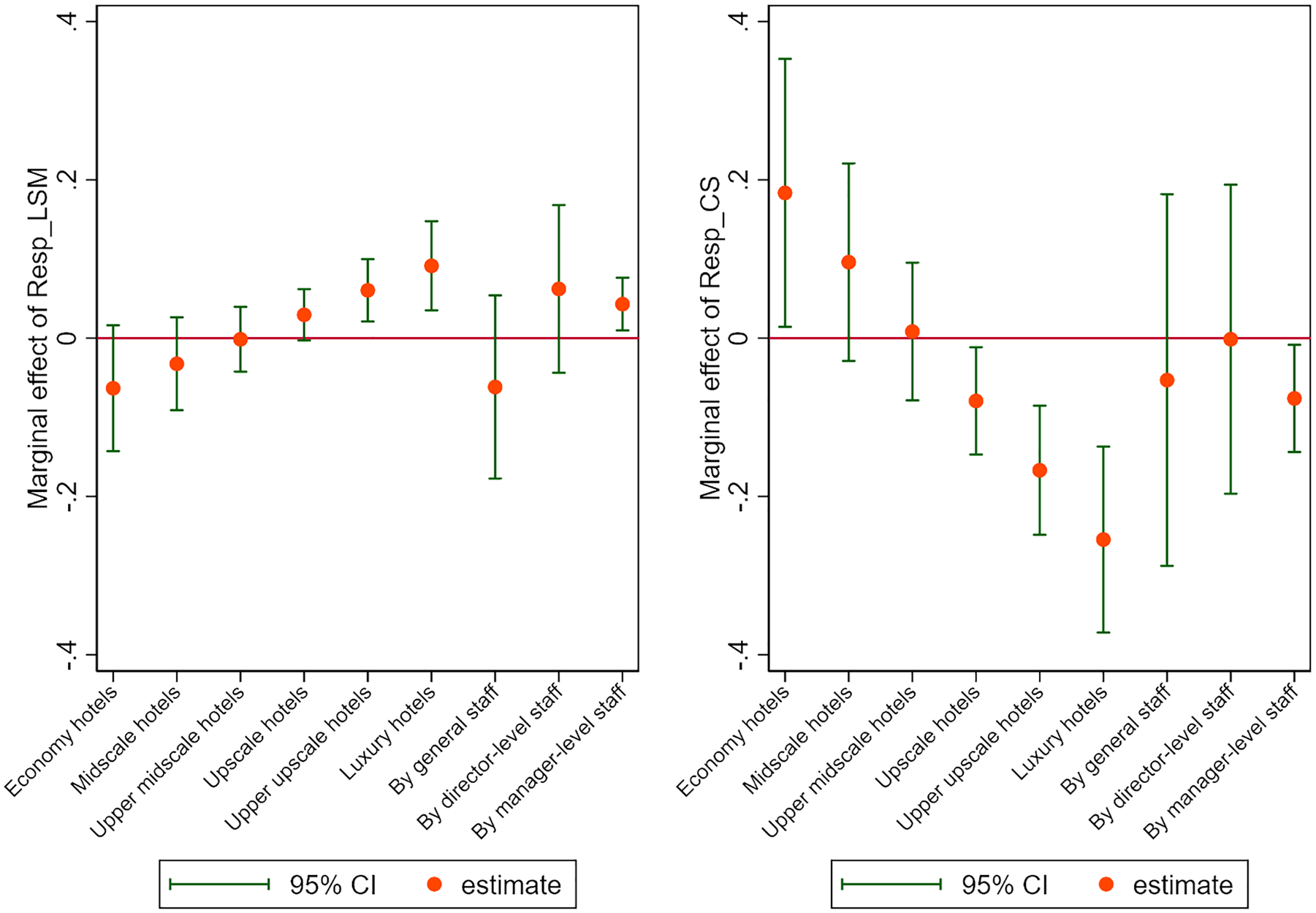
Marginal effects over different types of reviews.
Robustness Checks
To determine the robustness of our empirical results, we conducted a series of robustness checks. Findings appear in the supplementary materials. First, the main empirical results presented above were based on review data with response intervals of less than one day. To avoid an arbitrary choice in the interval unit, we checked the robustness of our results based on different two-day intervals. We re-estimated the empirical models using the same methods and equations as in models 1 to 10. Our empirical results were generally similar in terms of our main conclusions. Second, given that the dependent variable was a count variable and its variance was larger than expected, we re-estimated our models using a negative binomial regression model. Most results were similar; the primary difference was that our robustness check revealed no support for hypotheses 5a and 5b. After plotting the marginal effects for different ranks by MR job title, we found that overall, the effect remained significant for manager-level staff in all cases and was insignificant for general staff members in all cases.
Conclusions and Implications
Conclusions
As a growing number of travel service providers embrace proactive online reputation management practices, the question of how to craft appropriate MRs has become a popular topic in academia and industry. In this article, we proposed a novel approach to investigate which types of customized MRs are more effective in improving the perceived usefulness of corresponding reviews. We first proposed a research framework with several hypotheses to depict the relationships between MR strategies and consumers’ information perceptions. In our framework, the direct effects of LSM and content similarity (with other MRs from the same hotel) were underscored along with several moderators, such as the review rating, hotel class, and respondent’s job title rank. Next, we empirically tested the framework using TripAdvisor data from Texas hotels. As shown in this study, customized MRs, which were characterized by close alignment with the original review’s linguistic style and lower similarity to other MRs, can significantly enhance consumers’ perceived helpfulness of an online review.
Our results highlighted the importance of two aspects of successful MRs, LSM and content customization, to make each response unique. Adopting a similar linguistic and communication style as a corresponding review can elicit positive perceptions among consumers, corroborating the argument that LSM serves as a fair predictor of consumers’ attitudes and behavior (Pornpitakpan 2004; Ireland and Pennebaker 2010). The content uniqueness of MRs can also provide more tailored information and improve the credibility and persuasiveness of such information (Y. Chen and Xie 2008). This result echoes the established positive relationship between decent communication quality and consumers’ perceived service trustworthiness (X. Zhang et al. 2020).
Moreover, we found that three sets of variables moderated the relationship between customized MRs and review helpfulness. First, in terms of the review aspect, review ratings demonstrated a negative moderation effect. This finding indicated that customized MRs could be useful in addressing these negative reviews properly. The communication process between a hotel and a negative review was more appealing to customers when identifying the usefulness of negative information (Salehi-Esfahani et al. 2016). Second, hotel-related variables were found to moderate customized MRs and review helpfulness. Our results revealed that consumers in higher-class hotels were more likely to leverage the information premium associated with customized MRs because of their higher expectations tied to a higher price compared to lower-class hotels. Interestingly, the respondent’s job title also moderated customized MRs and review helpfulness to some extent; the effect of customized MRs from lower-ranking respondents was especially limited. Conversely, consumers expressed greater confidence in MRs from higher-ranking respondents, such as manager-level staff. In other words, consumers believed that higher-ranking respondents possessed a stronger social identity with professional service skills and experience. This finding coincides with earlier research indicating that an information source’s credibility corresponds to perceived information usefulness (Salehi-Esfahani et al. 2016).
Implications
This study contributes to the literature on review helpfulness in several ways. First, we provided a unique perspective to connect consumer reviews with MRs when exploring review helpfulness rather than exclusively analyzing reviews themselves. Although extensive research has considered many influential aspects of online reviews, MRs should not be overlooked as a useful channel through which hoteliers can engage consumers and manage hotels’ online reputation (Xie, Zhang, and Zhang 2014; X. Zhang et al. 2020). Accordingly, our study represents the first to empirically evaluate types of MRs that may influence review helpfulness, offering an essential theoretical complement to prior literature. Second, we applied big data analytics by combining text mining and econometric analyses. Compared to traditional semantic analysis, we extracted LSM in a virtual communication environment and applied relevant text analytical tools to convert unstructured data into data suitable for econometric analysis. Third, earlier research assessing the effects of respondents’ job titles returned inconsistent findings; for instance, Sparks, So, and Bradley (2016) indicated no difference regarding the impacts of respondents’ identities. Our study demonstrated that higher-ranking respondents could enhance the effectiveness of customized MRs, thereby improving our understanding of respondents’ customized MR identities.
Our findings also provide practical implications for tourism and hospitality management. First and foremost, hotel managers can formulate a set of customized MR strategies to improve the matching level of the linguistic style and uniqueness of content. Hotel respondents should pay greater attention when applying related MR skills, especially when encountering negative reviews. These strategies can be even more effective if higher-ranking employees respond to consumers’ concerns. By doing so, hotels enable staff in leadership positions to understand consumer reviews and thus offer an effective channel to engage with consumers more effectively. Next, our findings verified the importance of LSM in the communication process. This aspect is also applicable to offline communication with consumers, such as front desk staff, customer call centers, and so on. If possible, hotels should train their employees to communicate appropriately with customers from a linguistic style perspective. Third, after unveiling the effects of customized MRs on review helpfulness, we recommend that hotels implement an intelligent response system to assist hotel respondents in determining content similarity and using a matched linguistic style in response drafts.
Due to various travel restrictions, the COVID-19 pandemic has greatly affected the tourism industry. This crisis also colors the implications of this study: the resultant drastic decline in travel demand is bound to reduce hotel revenue, and many hotels may reduce their marketing and consumer relationship management budget as a result. Use of customized MRs is a cost-efficient promotional channel that may come to play a more important role in hotel operations during the pandemic. Moreover, looking ahead to the post-COVID-19 era, tourists will likely pay increasing attention to hotels’ cleanliness and disinfection measures. To fully evaluate the effects of customized MRs, it is important to consider various hygiene- and health-related topics while researching the text characteristics of tourist reviews and MRs.
Limitations and Future Research
This study has several limitations that offer possible directions for future research. First, besides the matching of functional words, other interesting linguistic styles (e.g., playful, gentle, or serious tones) may influence review perceptions. Future studies could reexamine the matching effects of linguistic styles. Second, we controlled for most helpfulness-related variables, but other potential determinants were not included. Variables of interest could include the effects of internal corporate culture on MRs, consumers’ experiences referring to online reviews, consumers’ personal accommodation preferences, and consumers’ cultural backgrounds. These factors can be considered through surveys and experiments in subsequent studies. Third, our sample was drawn from Texas, but results from one area may not be generalizable to other hotel markets. This study could thus be replicated in diverse geographic settings. Fourth, some major variables related to customized MRs were missing; our study did not cover reviews without MRs, which may exaggerate the effects of customized MR variables. In other words, the research methods and significance of this study focused on online reviews with MRs rather than online reviews in general.
Supplemental Material
sj-pdf-1-jtr-10.1177_0047287520971046 – Supplemental material for Responsive and Responsible: Customizing Management Responses to Online Traveler Reviews
Supplemental material, sj-pdf-1-jtr-10.1177_0047287520971046 for Responsive and Responsible: Customizing Management Responses to Online Traveler Reviews by Xiaowei Zhang, Yang Yang, Shuchen Qiao and Ziqiong Zhang in Journal of Travel Research
Footnotes
Declaration of Conflicting Interests
The author(s) declared no potential conflicts of interest with respect to the research, authorship, and/or publication of this article.
Funding
The author(s) disclosed receipt of the following financial support for the research, authorship, and/or publication of this article: This research is partially supported by NSFC (71671049, 71772053 and 91846301) and National Key R&D Program of China (2017YFC1601903).

Supplemental Material
Supplemental material for this article is available online.
Author Biographies
References
Supplementary Material
Please find the following supplemental material available below.
For Open Access articles published under a Creative Commons License, all supplemental material carries the same license as the article it is associated with.
For non-Open Access articles published, all supplemental material carries a non-exclusive license, and permission requests for re-use of supplemental material or any part of supplemental material shall be sent directly to the copyright owner as specified in the copyright notice associated with the article.
