



Abstract
Combining conceptual perspectives from emerging research on COVID-19, safety-seeking motivations, and extremeness aversion in choice (i.e., compromise effects), we examine how and why the perceived threat of COVID-19 affects consumers’ choice and decision making in the hotel and restaurant domains. Across seven studies (two studies from secondary data sets and five experimental studies), we provide novel evidence that the perceived threat or threat salience of COVID-19 amplifies the general tendency to select compromise options, avoiding extreme ones, within a choice set. We highlight the role of safety-seeking motivations as the underlying mechanism in the relationship between perceived threat and extremeness aversion in choice. We further document a boundary condition that the extremeness aversion effect is stronger for leisure travelers than for business travelers.
Introduction
The tourism industry plays a crucial role in the economic development and growth of many countries by creating jobs, increasing income, and improving local infrastructure (Isik, Dogru, and Turk 2018). In 2019, the tourism industry experienced a 3.5% growth rate, surpassing the overall growth rate of the global economy for the ninth consecutive year (World Travel and Tourism Council 2020). Unexpectedly, COVID-19 caused unprecedented economic damage to the global tourism industry in 2020 (OECD 2020).
The adverse impact of COVID-19 on tourism has been substantially greater than that of other diseases, such as SARS, the bird flu, Ebola, African swine fever, and other microbial pathogens. The escalated health and safety concerns due to COVID-19 significantly decreased the demand for travel and tourism services (X. Huang, Dai, and Xu 2020) and changed consumers’ travel preferences. For example, tourists increasingly prefer less crowded rural areas and domestic destinations over international destinations (OECD 2020). More fundamentally, research suggests that infectious disease-related information cues, such as the readily available news about the number of new infections and deaths due to COVID-19, motivate consumers to heighten the general proclivity to avoid risk and seek safety (Neuberg, Kenrick, and Schaller 2011; J. Kim and Lee 2020). Although such motivations can entirely reshape individuals’ choice sets and decision-making processes, there is limited empirical evidence investigating this phenomenon, especially in the tourism domain.
Drawing on prior research, we propose that the perceived threat of COVID-19 among consumers amplifies extremeness aversion in decision making for travel. Extremeness aversion refers to the tendency of individuals to avoid extreme options, choosing instead intermediate alternatives within a choice set (Simonson 1989). By combining secondary data analysis and multiple experiments, we provide convergent evidence that consumers’ likelihood of avoiding extreme options is heightened when the perceived threat of the virus is high or when threat-related disease cues become salient.
The research reported here offers a clear theoretical contribution to the existing body of literature. Previous research has documented that environmental threats or risks—such as infectious diseases, natural disasters, geopolitical terror, or crime—lead travelers to avoid dangerous destinations or adopt precautionary behavior (Karl 2018; Kozak, Crotts, and Law 2007; Kuo et al. 2009; Otoo, Badu-Baiden, and Kim 2019). Because of COVID-19, an emergent body of research has examined the impacts of disease threats on travelers’ behavior, such as preferences for private (vs. public) facilities (S. Kim et al. 2021), robot (vs. human) staffed hotels (J. Kim and Lee 2020), and virtual reality–based (vs. in-person) tours (Itani and Hollebeek 2021). Nevertheless, empirical investigation regarding the impact of the COVID-19 pandemic is in its infancy and has mostly focused on behaviors related to the threat of contagion. Thus, there still lacks research on how disease cues impact individuals’ deep-seated motivations, cognitions, and behaviors.
Extremeness aversion has been well established as a robust phenomenon in the literature (Lichters et al. 2016; Neumann, Böckenholt, and Sinha 2016). Prior research has shown various individual, product, and contextual factors affecting extremeness aversions, such as self-confidence (Chuang et al. 2013), need for uniqueness (Simonson and Nowlis 2000), maximization tendencies (Mao 2016), product complexity (Neumann, Böckenholt, and Sinha 2016), ease-of-justification (Simonson 1989), and time pressure (Dhar, Nowlis, and Sherman 2000). Although prior research examines risks related to product options (e.g., complexity) or individual factors (e.g., self-confidence), there is a paucity of research examining the effect of threats or risks posed by environmental forces on extremeness aversion.
The present research bridges two areas of research by demonstrating the impact of disease threats on fundamental decision tendencies in the context of tourism, where disease threats pose significant influences. By doing so, the present research not only deepens our understanding of disease threats and related risks on travelers’ behavior but also demonstrates the important role of environmental factors in explaining extremeness aversion, extending the literature on extremeness aversion. Practitioners in tourism will benefit from our findings. The COVID-19 pandemic is an unprecedented global crisis. To recover during and after the pandemic, practitioners should employ adaptive strategies by better understanding how consumers react to external threats. In online platforms, consumers can easily compare the price and features of options within and across service providers (Yang and Leung 2018). We show that the position of brands within a choice set significantly affects preferences, particularly when the purpose of travel is leisure rather than business; hence, practitioners should closely monitor the position of their offerings compared with competitors. Practitioners should also endeavor to customize their offerings to satisfy consumers’ need for safety.
Literature Review
COVID-19 and Psychological and Behavioral Research
Countries are adopting different crisis and risk communication strategies as a response to the COVID-19 crisis, the benefits of which include building trust, credibility, honesty, transparency, and accountability. In this regard, studies in the field of psychology and consumer behavior are focused on identifying influential factors and their roles in effective communications in order to reduce the spread of COVID-19.
M. Lee and You (2020) investigated psychological and behavioral responses during the early stages of COVID-19. Results show that practicing precautionary behaviors are highly associated with the perceived risk and response efficacy of the behavior. These findings confirm the significance of psychological responses to public health emergency interventions designed to influence behavioral responses in a situation such as the COVID-19 pandemic. Wolf et al. (2020) highlight the role of preexisting values in consumer responses to public health measures introduced by governments to stop the spread of the virus. Their findings suggest that people who hold socially oriented values of self-transcendence and conservation would be likely to comply with public health guidelines and regulations and to engage in greater levels of prosocial behavior. Conversely, those who hold more personally focused values of self-enhancement and openness would be less likely to comply and to engage in prosocial behaviors. More importantly, Wolf et al. (2020) argue that it is crucial to shape communications in such a way as to encourage people to see how the majority are abiding by the guidelines, rather than to draw attention to a minority who may be flouting them. Of note, Stolow et al. (2020) suggest that fear appeals may be counterproductive in COVID-19 health communication because unintended negative outcomes can result from the approach. The authors recommend using evidence-based health communication to help people understand what they are being asked to do, explain how to undertake preventive behaviors, and consider external factors needed to support the uptake of behaviors.
Another research stream has focused on investigating the relationship between COVID-19 and specific consumer phenomena. For example, Sheth (2020) offers a critical evaluation arguing that consumers are adopting new shopping habits due to constraints imposed by the pandemic, such as increased online shopping, some of which will persist post-pandemic. In addition, J. Kim (2020) suggests that consumers will seek a higher level of variety in their purchases as a response to COVID-19 restrictions in an effort to regain their consumption freedoms while boosting their self-esteem as a means to overcome thoughts of mortality. It should be noted that most of the aforementioned studies are conceptual in nature (e.g., Sheth 2020), and only a few studies feature empirical data (e.g., J. Kim 2020). These initial works offer a foundation for further exploration of consumer-related topics in a COVID-19 context. Overall, the knowledge to date in the marketing domain suggests that crises such as the COVID-19 pandemic are important drivers of business practices as well as consumer behaviors. These behaviors may transit into a variety of additional goods and services contexts. Therefore, it is integral to further explore such phenomena empirically, as well as conceptually, in other domains in order to better understand the extent to which the pandemic has affected the global marketplace.
COVID-19 and Traveler Decision Making
Extant studies have investigated the impact of perceived risk on tourism businesses, with a diverse cross section of risks influencing travelers, tourist host communities and countries, as well as international destinations. Such risks refer to the likelihood of dangers, damage, loss, and hazards affecting tourists’ safety or health (X. Huang, Dai, and Xu 2020; Otoo and Kim 2018). Risks can manifest at both the individual tourist and destination level. Individual-level risks include their own physical safety or welfare, harassment, crime, or risk of financial loss (Karl 2018; Otoo, Badu-Baiden, and Kim 2019). These risks can be attenuated by travelers’ efforts to avoid dangerous places or adopting precautionary behaviors. Conversely, destination-level risks are associated with an event or circumstance that cannot be manipulated or controlled by travelers’ efforts or capabilities. These risks include political or social instability, natural disasters, terrorism, and disease (Prideaux and Kim 2018; Yang, Zhang, and Chen 2020). When diseases are prevalent within a region, the demand for travel and tourism services experiences a temporary decline, although a characterization as temporary (or seasonal) may suggest a reasonably swift recovery. However, in terms of transmission speed, efficacy, persistence, and the number of infections and deaths, COVID-19 differs from previous contagious diseases, such as SARS, the bird flu, Ebola, and other microbial pathogens (Wilder-Smith, Chiew, and Lee 2020).
Given that the pandemic has led to dramatic shifts in consumer choice behavior, empirical insights are becoming increasingly available as researchers begin to understand the direct and indirect effect of COVID-19 on various types of travel and hospitality consumption. Specifically, one recent theme explores the effect of firm-to-customer communication and traveler’s perceived risk on the intention to visit. For example, Hang, Aroean, and Chen (2020) find that crisis communication on shared emotions establishes emotional attachment, which, in turn, increases tourists’ intentions to visit. Jang et al. (2021) show that although the pandemic disrupted Airbnb bookings across destinations, the negative effect was weaker for business (vs. leisure) travelers.
Another research theme relates to traveler response to product and price offerings. For instance, Zhang, Hou, and Li (2020) suggest that the presence of infectious disease increases the negative responses to unfair price practices in travel due to the mediating role of risk aversion. Y. Li, Yao, and Chen (2021) argue that the negative effect of scarcity cues on purchase intentions, derived from low occupancy rates, is attenuated by more popularity-related information and low safety concerns. However, Itani and Hollebeek (2021) find that as perceived threat severity raises social distancing behavior, visitors are more willing to use virtual reality tours than in-person tours. Overall, these studies suggest that COVID-19 can have a substantial impact on the travel domain. Table 1 summarizes the recent literature related to traveler decision making during the COVID-19 pandemic.
Exemplary Literature on Traveler Decision Making during COVID-19.

Despite recent efforts, empirical investigation regarding the impact of the COVID-19 pandemic is in its infancy because of several reasons. First, most studies have mainly focused on the impact of travelers’ perceived risk of travel intentions, placing less attention to its impact on preferences for travel options within a choice set. Second, researchers rely heavily on experimental data to examine traveler decision making during the pandemic. Although Jang et al. (2021) used both secondary (i.e., spatial) and experimental data to examine the effect of the pandemic-driven perceived risk on Airbnb consumption, their study does not cover travelers’ choice behavior among multiple travel options. Finally, while some studies uncover underlying mechanisms between perceived risk and traveler decision making (e.g., Zhang, Hou, and Li 2020), a comprehensive understanding of mediating and moderating factors in choice behaviors is still lacking in the travel literature. Hence, in the present research, we attempt to understand consumers’ choice behavior under high perceived threat, especially during COVID-19. Specifically, we aim to offer insights regarding a travelers’ tendency to choose a middle, compromise option instead of an extreme option within a choice set.
Extremeness Aversion and the Compromise Effect
Extremeness aversion refers to a consumer’s tendency to avoid an extreme option and select an intermediate option in a choice set where a range of alternatives differs across attributes (Simonson 1989). Extremeness aversion can arise in two forms. The compromise effect (Simonson 1989) is the avoidance of both low- and high-end extremes within a choice set. By contrast, polarization is an asymmetric type of extremeness aversion wherein people may prefer only one extreme in a certain choice. Researchers have uncovered various factors, such as uncertainty or ease-of-justification (Simonson 1989), that increase extremeness aversion (for a meta-analysis, see Neumann, Böckenholt, and Sinha 2016).
Several factors have been shown to influence extremeness aversion. First, individual characteristics or contexts can influence extremeness aversion. For example, extremeness aversion increases for people with a high (vs. low) need for justification to others (Simonson 1989). Moreover, extremeness aversion increases among consumers who are prevention- (vs. promotion-) oriented consumers (Mourali, Böckenholt, and Laroche 2007). People with a high (vs. low) maximizing tendency also show a higher tendency to avoid extreme options because they attempt to consider all attributes and make compensatory trade-offs (Mao 2016). In contrast, extremeness aversion decreases among consumers with a low need for uniqueness (Simonson and Nowlis 2000) and when consumers’ brain serotonin decreases (Lichters et al. 2016).
Second, various situational factors decrease extremeness aversion. For example, extremeness aversion decreases when consumers are more self-aware (Goukens, Dewitte, and Warlop 2009) and when there is time pressure in making decisions (Dhar, Nowlis, and Sherman 2000). In addition, extremeness aversion decreases with resource depletion, which limits consumer’s ability to carefully compare trade-offs (Pocheptsova et al. 2009). Similarly, extremeness aversion is reduced by a high (vs. low) construal level (Khan, Zhu, and Kalra 2011). In contrast, option familiarity increases extremeness aversion, with consumers exhibiting higher extremeness aversion when they are more familiar with the compromise options than extreme options (Sinn et al. 2007).
Third, extremeness aversion tendencies are observed in consumers’ decision making related to travel. Stronger extremeness aversion is observed when consumers evaluate utilitarian (vs. hedonic) products in the decision making of travel packages because evaluating utilitarian products facilitates value calculation (S. A. Kim and Kim 2016). In addition, the use of graphical (vs. numerical) presentation style increases extremeness aversion in consumers’ decision making of vacation spots (J. Kim 2017). Further research has compared the extremeness aversion effect in two contrasting decision tasks: choice versus rejection. Previous research finds that extremeness aversion increases in a rejection (vs. choice) task when deciding travel destinations, whereas the decoy effect is stronger in a choice (vs. rejection) task (J. Kim et al. 2019). Moreover, extremeness aversion decreases when the time frame within which the purchase can be used is moved back (Jeong, Crompton, and Hyun 2020).
Main Predictions
COVID-19 poses various risks to consumers when it comes to their economic and social activities as well as personal health. Such risks unnerve consumer confidence and thus trigger a feeling of insecurity (Campbell et al. 2020). When feeling insecure, consumers are generally motivated to increase the sense of safety in their lives. Consistent with this notion, terror management theory (Greenberg, Solomon, and Pyszczynski 1997) suggests that when consumers are reminded of their mortality, anxiety leads them to engage in self-protective responses. For example, when mortality is salient, consumers form strong connections with their brands as a means of reasserting their sense of safety (Rindfleisch, Burroughs, and Wong 2009). Similarly, mortality salience leads consumers to donate possessions that are closely connected to the self, so that the self-relevant possessions serve as symbolic immortality, allowing for a sense of personal continuity (Dunn, White, and Dahl 2020). Additionally, mortality salience increases a preference for domestic brands, mediated by patriotic sentiment (Liu and Smeesters 2010), serving as an important source of safety and comfort (Bader 2006).
The COVID-19 pandemic has resulted in high levels of perceived risk, which are directly associated with desires for safety (Rettie and Daniels 2020). Zhang, Hou, and Li (2020) show that an infectious disease outbreak such as the COVID-19 pandemic increases a strong negative emotional reaction, and such a negative reaction is mediated by a safety-seeking motive. Consistently, research suggests that exposure to disease-related cues activates a safety-seeking motive and triggers psychological avoidance (Y. Huang and Sengupta 2020; Y. Li, Yao, and Chen 2021). For example, Galoni, Carpenter, and Rao (2020) demonstrate that the threat of contagious disease increases preferences for familiar and comforting products, which are considered relatively predictable and thus safe to choose. Additionally, J. Kim and Lee (2020) demonstrate that consumers increase their physical distance from others by choosing a private table in a restaurant setting to protect themselves, especially when the COVID-19 threat is perceived as high. Furthermore, it is well known that consumers hoard items that they believe will be scarce amid the COVID-19 pandemic. Product scarcity poses threats to personal control and freedom for choice (Gupta and Gentry 2019). Thus, hoarding products can restore a sense of safety and comfort during the pandemic (for a review, see Kirk and Rifkin 2020). Taken together, it is reasonable to predict that the COVID-19 pandemic induces a desire for safety in consumers.
In the present research, we combine conceptual perspectives from emerging research on COVID-19, compromise effects, and safety-seeking motivations in the context of travel choice. Specifically, we propose that consumers increase their preferences for middle rather than extreme options under the perceived threat of COVID-19. When it comes to the choice of compromise options, people are more sensitive to losses than gains under risky prospects (Tversky and Kahneman 1991) and thus choose a compromise (vs. extreme) option to minimize perceived risk (Sheng, Parker, and Nakamoto 2005; Simonson and Tversky 1992). Similarly, people prefer a compromise option over extreme options when they feel uncertain about situations (Chuang et al. 2013) because the compromise option is perceived as safe during uncertainty (Simonson 1989). Thus, we contend that COVID-19, which is characterized as being uncertain (Prentice, Quach, and Thaichon 2020) and risky (Campbell et al. 2020), will motivate consumers to choose a compromise rather than an extreme option. Accordingly, we formally state our hypothesis as follows:
Hypothesis 1: High threat perception (or high threat salience) will generate a greater tendency to avoid extreme options within a choice set, relative to low threat perceptions (or low threat salience).
An explanation for our main prediction is that the perceived threat of COVID-19 induces safety-seeking motives. Infectious diseases such as COVID-19 pose a threat to survival (Griskevicius and Kenrick 2013) and thus activate a psychological immune system, which buffers against sources of threat (Y. Huang and Sengupta 2020). When such a psychological system is activated, people increase their desire for safety (Y. Huang and Sengupta 2020; Zhang, Hou, and Li 2020). Thus, we contend that in response to the perceived threat of COVID-19, people heighten their sense of safety (Rettie and Daniels 2020), which may be manifested through their choice of compromise options. We formally hypothesize:
Hypothesis 2: The effect hypothesized in hypothesis 1 will be mediated by safety-seeking motivation.
Additionally, we identify an important boundary condition—the purpose of travel—for the effect of the perceived threat on the compromise choice. Travel can be leisure or business (Kashyap and Bojanic 2000). Relative to leisure travel, business travel can be considered more of a necessity; thus, it becomes less price-sensitive (Nagle and Müller 2018). Because choosing options with an intermediate price point is a means to minimize one’s perceived risk in decision making (e.g., not too cheap and not too expensive), the effect of the perceived threat of COVID-19 on extremeness aversion (choosing the middle option) will be accentuated for leisure (vs. business) travelers, who are more price-sensitive. Thus, we hypothesize:
Hypothesis 3: The purpose of travel will moderate the relationship between perceived threat and extremeness aversion such that extremeness aversion will be more pronounced for leisure travelers relative to business travelers.
Overview of Empirical Studies
To test our hypotheses, we mainly used controlled experimental studies (studies 2-6). In addition, we used secondary data (studies 1A and 1B) from Hong Kong and the USA in order to extend the external validity of the experimental findings. The multiple studies, five experiments and two secondary data analyses, provide convergent validity to our findings. The experiments were conducted during June and July 2020 (studies 2-5) as well as in November 2020 (study 6 and post-test), when the COVID-19 pandemic was prevalent. All participants in the experimental studies were US residents recruited from an online panel (Amazon Mechanical Turk) for a nominal payment. A summary table of three hypotheses, five experimental studies, and the hypothesis testing results is provided in Table 2.
Summary of Five Experimental Studies and Hypothesis Testing Results.

Note: IV = independent variable; DV = dependent variable.
Study 1A (Hotel Performance Data in Hong Kong)
In this secondary data analysis, the focus is on the hotel occupancy rates across different hotels in terms of quality and price. We mainly expected that the relative occupancy rate would be higher for nonextreme hotels rather than extreme hotels in terms of price and quality. We collected the actual performance data for Hong Kong hotels from February 2019 to September 2020. Based on the Hong Kong Tourism Board classification system, the Hong Kong hotels and related accommodation options are categorized into (1) High Tariff A, composite score between 3.00 and 3.99; (2) High Tariff B, composite score between 2.00 and 2.99; (3) Medium Tariff, composite score between 1.00 and 1.99; and (4) Tourist Guesthouse, composite score between 0.00 and 0.99). The first case of COVID-19 in Hong Kong occurred on 23 January 2020. We categorized the observation period between February 2020 and September 2020 as a period of a high threat, whereas the period between February 2019 and September 2019 was categorized as a low threat. We selected the same range of the months one year apart to control for any seasonal differences.
The results indicate that, not surprisingly, there was a significant decrease in hotel occupancy rates after the outbreak of COVID-19: overall absolute change of occupancy rate [before COVID-19 – after COVID-19] = −40.6% and overall relative change ([before COVID-19 – after COVID-19] / before COVID-19] = −51.0%). However, the decrease in occupancy rate was much smaller for the nonextreme hotel options (i.e., High Tariff B and Medium Tariff: −35.6% for an absolute change and −42.4% for a relative change ) compared with the extreme hotel options (i.e., High Tariff A and Tourist Guesthouse: −45.7% for an absolute change and −59.7% for a relative change), as shown in Figure 1.
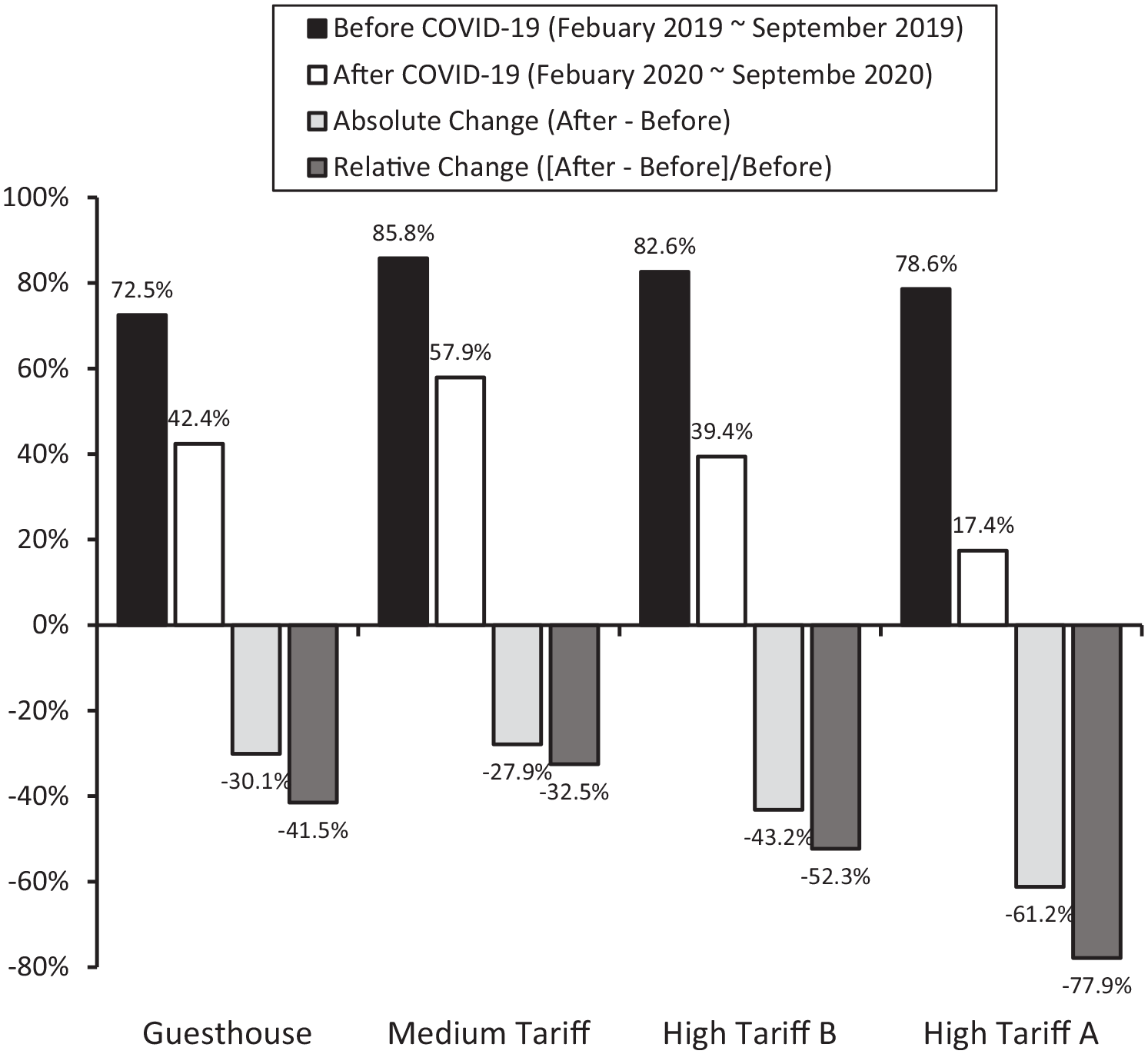
Results from study 1A: Hong Kong Hotel Room Occupancy Rate.
Study 1B (Google Trends Data)
We collected a set of secondary data from Google Trends (https://trends.google.com/), which shows how public interest in web searches changes over time. We collected public interest data on hotel web search using the five-level star rating, which is considered one of the most common hotel rating standards: five-star hotel, four-star hotel, three-star hotel, two-star hotel, and one-star hotel (https://www.starratings.com.au/). To control for seasonality and situational effects, we used the average search interest of selected samples in 2019 (i.e., before COVID-19) and 2020 (i.e., observation period after COVID-19) with year-over-year comparisons, as in study 1A. To be consistent with our experiments that follow in studies 2 to 6, we focus on the hotel search interest in the US. The US public web search for COVID-19 has been active since March 2020. Therefore, we considered the period of March 1 to November 8 in 2020 as high-threat times (i.e., after COVID-19). For the matching samples, we set the period of March 3 to November 10 in 2019 as low threat times (i.e., before COVID-19).
Google Trends represents the magnitude of search interest relative to the highest point (i.e., percentage) for the given region and time. The results indicated that there was a significant decrease in Google search after the outbreak (i.e., overall absolute change [before COVID-19 – after COVID-19] = −13.8% and overall relative change ([before COVID-19 – after COVID-19] / before COVID-19] = −23.3%). However, the decrease was much smaller for the nonextreme hotel option (i.e., three-star hotel: −5.7% for an absolute change and –11.9% for a relative change) compared with the extreme hotel options (i.e., one-star, two-star, four-star, and five-star hotels: −15.8% for an absolute change and −26.2% for a relative change). The results were similar when we compared all three nonextreme hotel options (i.e., two-star, three-star, and four-star hotels: −11.8% for an absolute change and −19.8% for a relative change) with the two extreme hotel options (i.e., one-star and five-star hotels: −16.8% for an absolute change and −28.5% for a relative change), as shown in Figure 2.
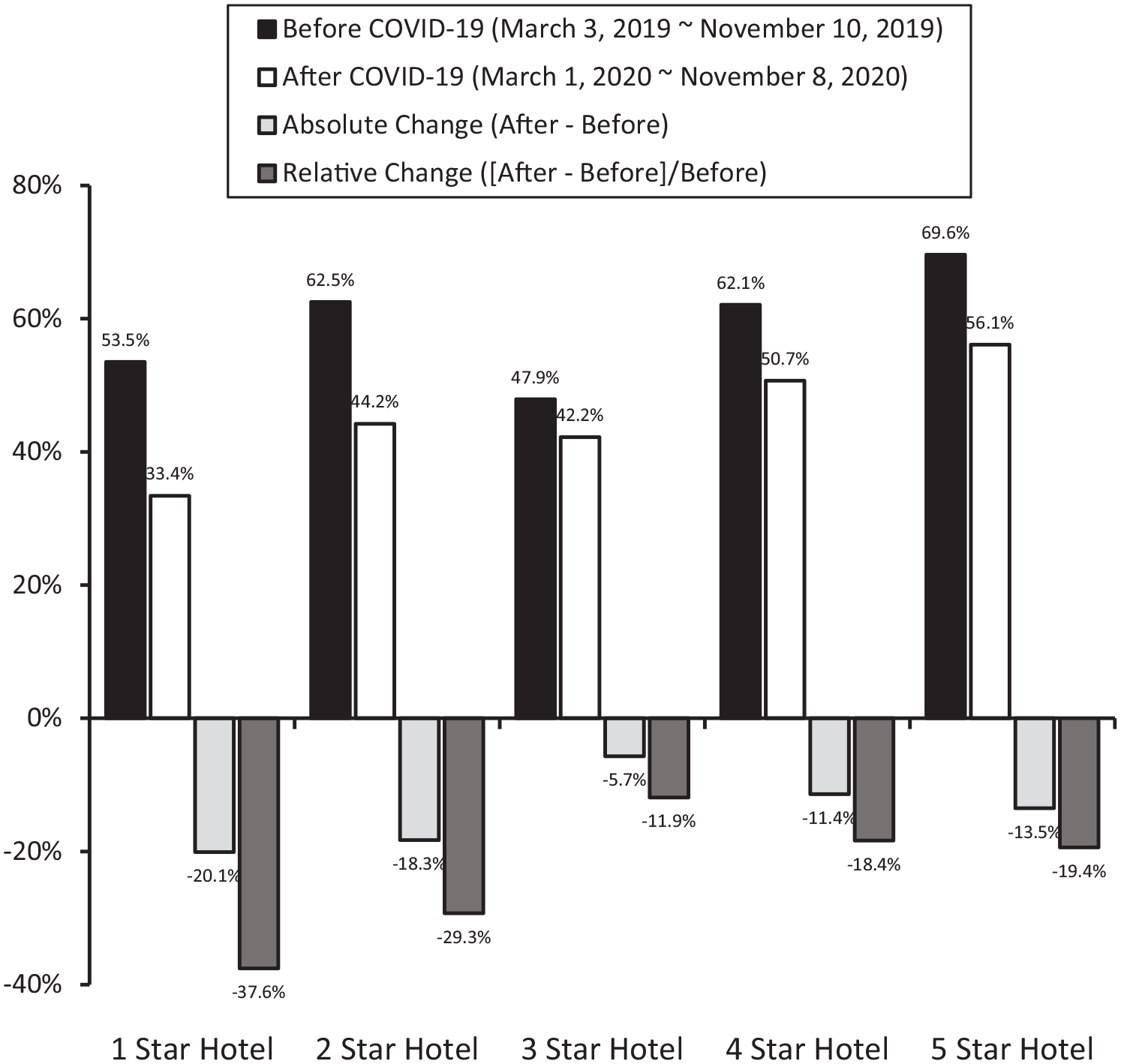
Results from study 1B—Google Search Data.
Study 2: Showing the Main Prediction (Hypothesis 1)
Study 2 provides the initial experimental evidence of the impact of the perceived threat on the extremeness aversion tendency. To reiterate, we expected that travelers amid a high perceived threat would show a higher tendency to avoid the option with extreme attribute(s).
Method: Participants, Design, and Process
Participants were 175 US adults (41.7% female, Mage = 39.94, SD = 13.00) from an online panel (Amazon Mechanical Turk) and were incentivized with a nominal payment. First, participants were provided with the basic COVID-19 information and asked to rate the perceived threat of the virus with two scaled-response questions (i.e., “In your opinion, how life-threatening is coronavirus?” [1 = not at all life-threatening, to 7 = very life-threatening] and “In your opinion, is coronavirus a serious threat?” [1 = not at all serious, to 7 = very serious]; J. Kim, Giroux, et al. 2020). These items were averaged to create a composite measure (Cronbach’s α = .849). Participants were then asked to imagine taking a vacation for a week. They were presented with three options (Figure 3), differing on quality of hotel and price per day. Based on the attribute information, 1 options A and C were the extreme options, whereas option B was the nonextreme option. In this task, participants were asked to choose one option. At the conclusion of these questions, participants were asked to provide their demographic information.
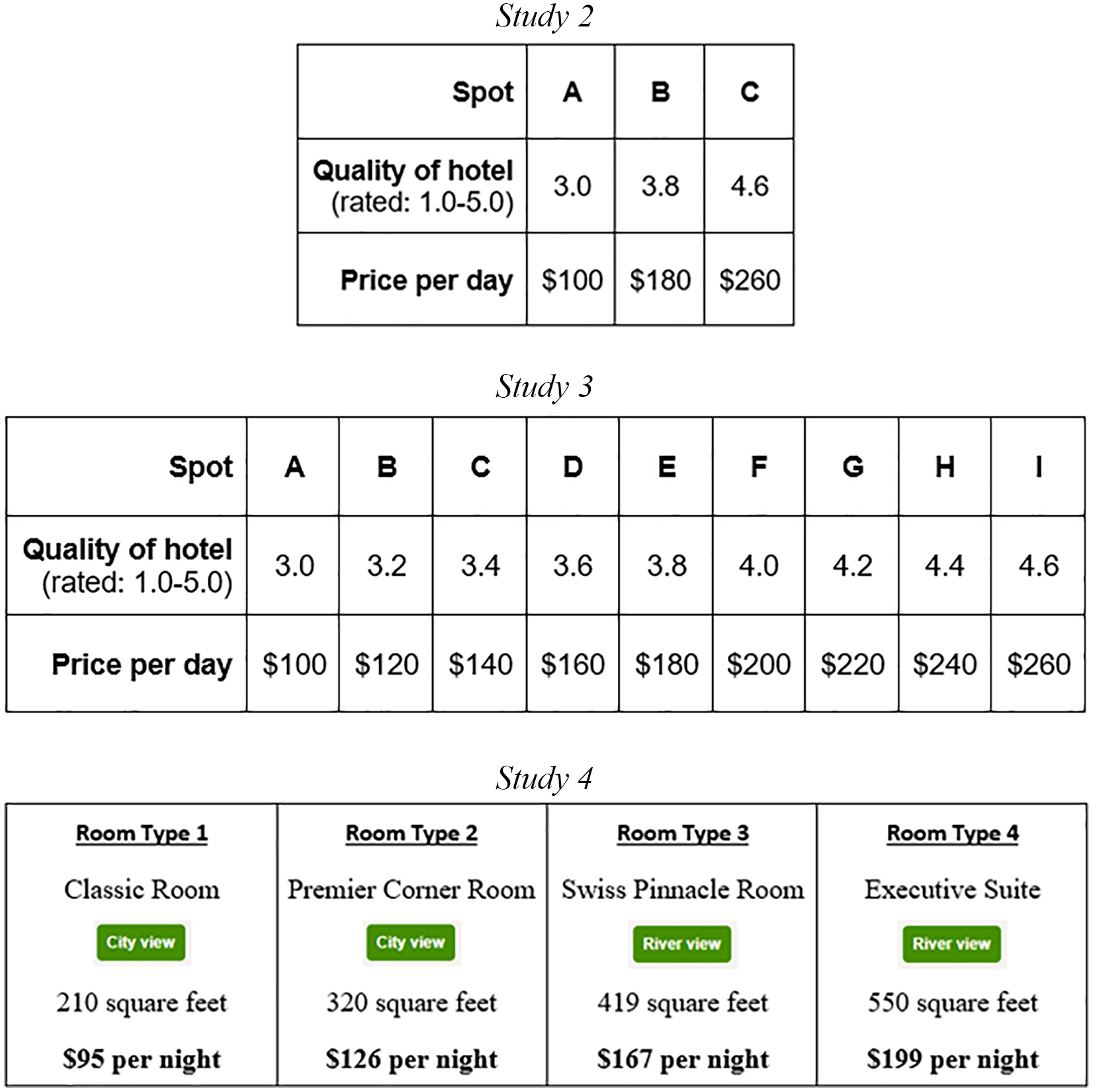
Stimuli of studies 2, 3, and 4—Decision options.
Results and Discussion
We conducted a bi–logistic regression analysis: IV = self-rated perceived threat, DV = choice [1= extreme options (A & C), 2 = nonextreme option (B)]. The results indicated that the perceived threat positively increased choice for the nonextreme option (–2 log likelihood = 237.59, b = .23, SE = .11, Wald = 4.49, p = .034). Put differently, participants with higher (vs. lower) perceived threat were more likely to choose the middle option (option B). This finding remained consistent when the models contained age and gender as control variables (–2 log likelihood = 235.38, b = .23, SE = .11, Wald = 4.25, p = .039). In sum, this study provides the initial empirical evidence of a relationship between perceived threat and extreme option aversion, supporting hypothesis 1. In the next study, we extend the number of options to nine.
Study 3: Showing the Main Prediction (Hypothesis 1) with Different Measurement
Study 3 aims to replicate the findings of study 2 with the following modifications. First, rather than considering perceived threat (J. Kim, Giroux, et al. 2020), we adopt a fear of the COVID-19 scale (Ahorsu et al. 2020). Second, we extend the number of options to nine, rather than three.
Method: Participants, Design, and Process
Participants were 167 US adults (42.5% female, Mage = 40.22, SD =13.30) from MTurk. First, participants were asked to rate their fear of COVID-19 using seven scaled response questions (e.g., “I am most afraid of COVID-19” [1 = strongly disagree, to 7 = strongly agree]; Ahorsu et al. 2020). The items were averaged to create a composite measure (Cronbach’s α = .913). Participants were then asked to imagine taking a vacation for a week and presented with nine options differing on quality of hotel and price per day (Figure 3). After reading the scenario, participants indicated their choice, followed by their demographic information.
Results and Discussion
In the main analysis, we recategorized options A–C and G–I as the extreme option, whereas options D–F as the nonextreme option. A bi–logistic regression analysis was then run: IV = fear of COVID-19, DV = choice [1 = extreme option, 2 = nonextreme option]. The results showed that the perceived threat positively increased choice for the nonextreme option (–2 log likelihood = 225.32, b = .30, SE = .15, Wald = 3.93, p = .047). Thus, participants with higher (vs. lower) perceived threat were more likely to choose one of three options (options D, E, and F) than did those with lower perceptions of threat. This finding remained significant when the models included age and gender as control variables (–2 log likelihood = 225.228, b = .30, SE = .15, Wald = 3.97, p = .046).
We conducted a similar analysis using a different categorization of the options. We recategorized options A–B and H–I as the extreme option, whereas options C-G were categorized as the nonextreme option. The results were consistent with those in the main results above (–2 log likelihood = 198.14, b = .32, SE = .16, Wald = 3.88, p = .049). In sum, study 3 replicated the results of study 2, using different measurements and research stimulus. Findings again lend support for hypothesis 1.
Study 4: Showing the Mediation Prediction (Hypothesis 2)
The purpose of study 4 was to test the proposed mediating mechanism, safety seeking. In this study, four options were presented to participants. More realistic stimuli were adopted to offer additional face validity.
Method: Participants, Design, and Process
Participants were 179 US adults (43.6% female, Mage = 37.40, SD = 12.35) from MTurk. First, participants were provided with basic information about COVID-19 and asked to rate the perceived threat of the virus using three scaled response questions (i.e., two items from study 1 plus “What are the chances of you [an average person] getting infected with the coronavirus?” [1 = extremely low, to 7 = extremely high]; Cronbach’s α = .817). Participants were then asked to imagine taking a vacation for a week and asked to choose one hotel room type out of four options (Figure 3). Each option differs on room name (e.g., classic room vs. executive suite), room size (in square feet), and price per day (e.g., $95–$199). To measure safety-seeking tendency, participants were asked to report their risk propensity (Meertens and Lion 2008) along a seven-item scale (e.g., “I prefer to avoid risks” [1 = totally disagree, to 7 = totally agree]; Cronbach’s α = .802). Finally, to control for any effects associated with participants’ wealth, participants were asked to report their family income along a 15-point categorical scale (1 = $0–$10,000, to 15 = $140,001 or above; Lee, Hall, and Wood 2018).
Results and Discussion
In the main analysis, we recategorized room options A and D as the extreme option, whereas options B and C were the nonextreme option. A bi–logistic regression analysis was then run: IV = perceived threat, DV = choice [1= extreme option, 2 = nonextreme option]. The results indicated that the perceived threat positively increases choice for the nonextreme option (–2 log likelihood = 231.37, b = .24, SE = .12, Wald = 4.203, p = .040). This result remained significant when the model contained family income (b = .09, SE = .05, Wald = 4.34, p = .037), age, and gender as control variables (–2 log likelihood = 225.14, b = .23, SE = .12, Wald = 3.81, p = .051).
We conducted a regression analysis between the IV (i.e., perceived threat) and mediator (i.e., safety seeking). The results indicated that the perceived threat positively influenced safety seeking (b = .12, SE = .06, t = 1.94, p = .054). We conducted a mediation analysis (i.e., the perceived threat → safety seeking → choosing nonextreme option) with Hayes (2017) macro #4 with 10,000 bootstrapped samples. The results demonstrated a significant indirect effect (95% confidence intervals: [–0.111, –0.001]), thus supporting the mediation hypothesis (hypothesis 2).
Study 5: Manipulating the Threat and Testing the Compromise Effect
So far, we used a self-reported measurement of the perceived threat in our previous experiments. In this study, we directly manipulate the threat to establish a strong causal relationship (J. Kim et al. 2018). In addition, this study uses two choice sets to calculate the compromise effect.
Method: Participants, Design, and Process
Participants were 163 US adults (42.3% female, Mage = 36.4, SD = 11.47) from MTurk. Participants were randomly assigned to experimental conditions in a 2 (COVID-19 threat manipulation: high vs. low) × 2 (Choice set: ABC option vs. BCD option) between-subjects design. We first manipulated the threat by using a similar priming method as that of previous research (Y. Huang and Sengupta 2020; see also J. Kim and Lee 2020). Specifically, participants were asked to read a newspaper article that focused on either brain damage due to COVID-19 (high threat condition—a newspaper article titled “Can Covid Damage the Brain?”) or a golf tournament persisting in spite of COVID-19 (low threat condition—a newspaper article titled “A Nerve-Racking Final Round Adds Drama to Golf’s Fan-Free Return.”) as shown in Figure 4. We anticipated that participants who read the high-threat newspaper article experienced a higher level of temporary perceived threat than did those reading the golf-related article. As an attention check, participants were asked to identify the topic of the newspaper articles. Seven participants were excluded from further analysis because of failing this attention check.
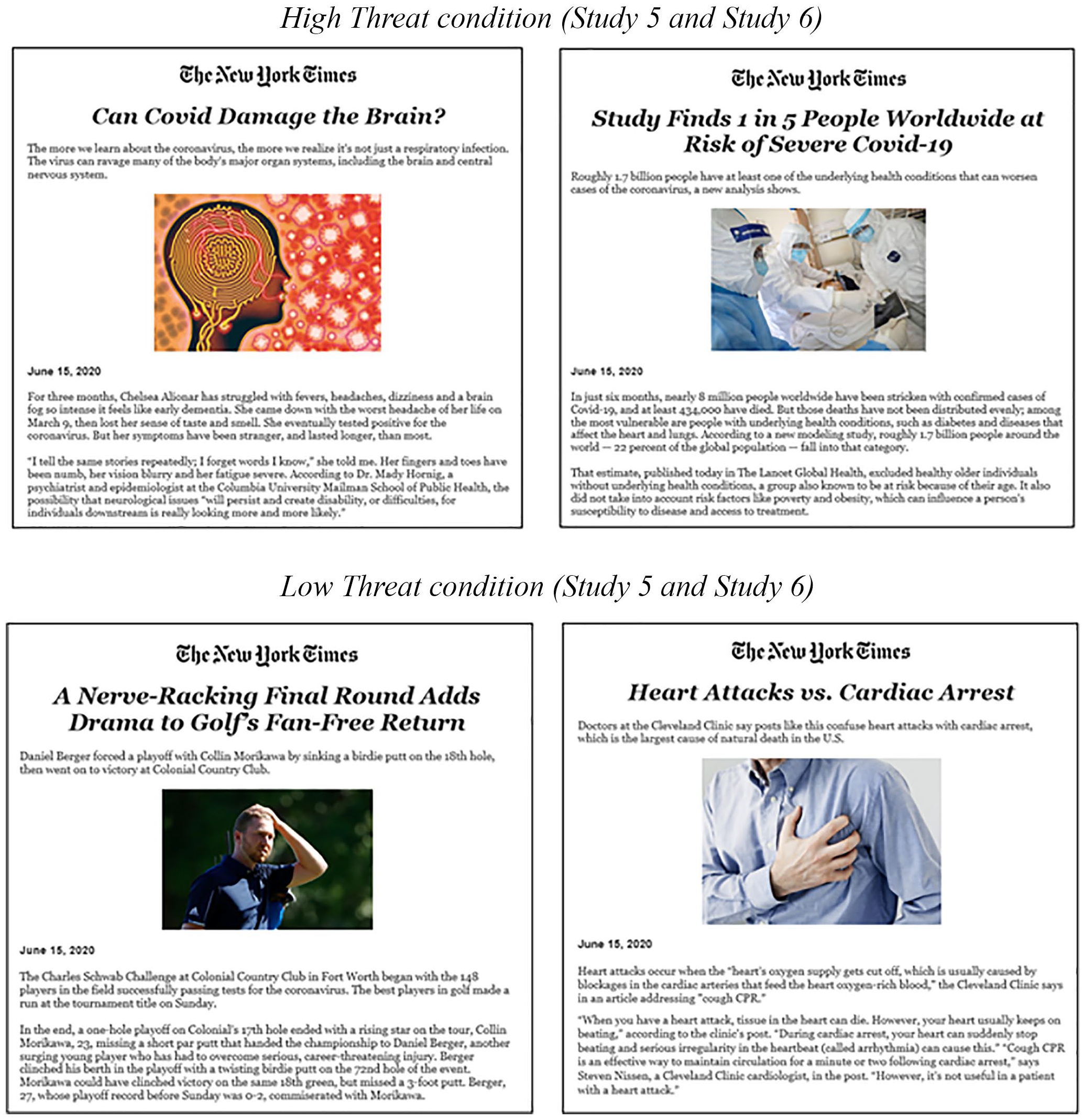
Stimuli for studies 5 and 6—newspaper.
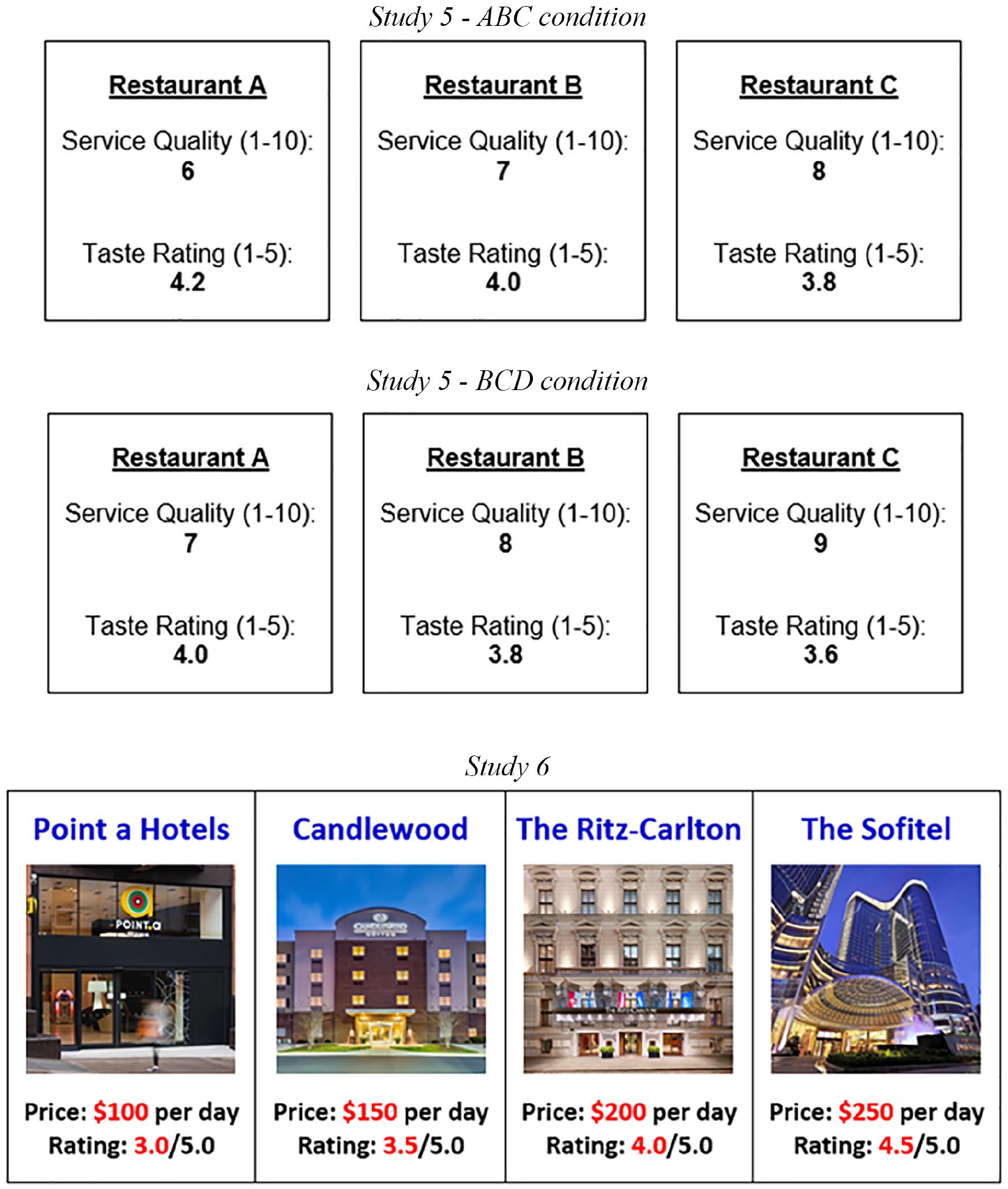
Subsequently, participants were asked to imagine that they were traveling to a city and found three potential restaurants in which to dine. Participants were asked to choose one restaurant (as shown in Figure 5) from the two decision sets (e.g., ABC vs. BCD options). The restaurant options were different in terms of the service quality and taste ratings.
Stimuli for studies 5 and 6—decision options.
Results and Discussion
First, we replicated the option categorization of study 2 in that restaurants A and C are considered extreme, whereas restaurant B is considered nonextreme. As expected, the choice share of the middle option was higher in the high- (vs. low-) threat condition: Mhigh = 59.8% (52/87) versus Mlow = 42.1% (32/76), χ2(1) = 5.07, p = .024. In sum, this study supports a strong causal relationship between the threat of COVID-19 and preference for the nonextreme option.
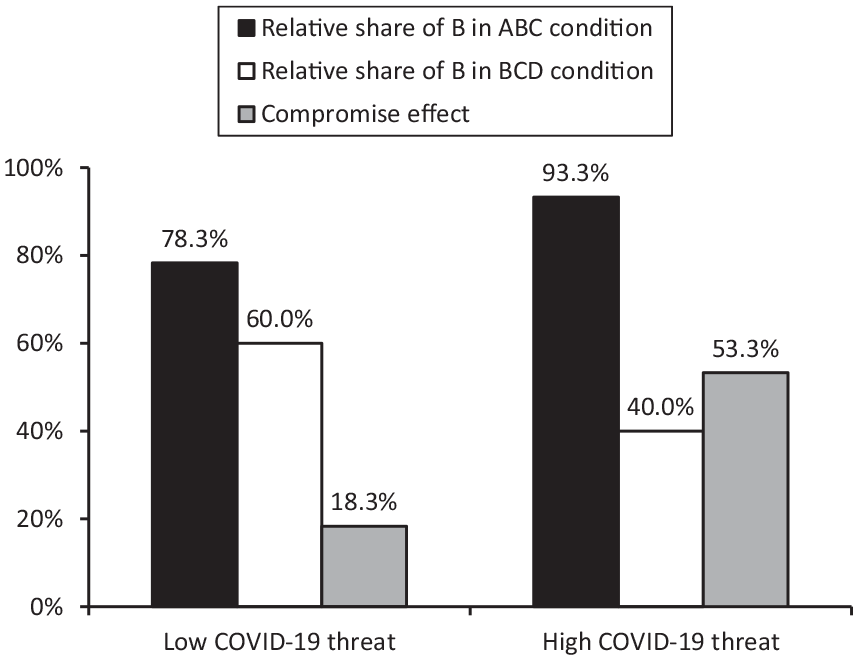
Second, we calculated the compromise effect (i.e., the relative share of choosing B between the two choice set conditions), following previous research (J. Kim et al. 2019): compromise effect = Prob.{B; BC}_ABC—Prob.{B; BC}_BCD. The bi–logistic analysis (i.e., IV = choice set ABC vs. BCD, Moderator: high vs. low threat, DV = choice [1 = extreme option, 2 = nonextreme option]) showed a significant interaction effect of two experimental variables (−2 log likelihood = 139.73, b = 2.17, SE = 1.01, Wald = 4.64, p = .031). Specifically, the compromise effect emerged only in the high-threat condition (compromise effect = 93.3% – 40.0% = 53.3%), χ2(1) = 20.89, p < .001, whereas the compromise effect was not significant for the low-threat condition (compromise effect = 78.3% – 60.0% = 18.3%), χ2(1) = 2.10, p = .147, as shown in Figure 6. These results again support our hypothesis (hypothesis 1), but this time using an experimental methodology to manipulate the perceived threat of COVID-19.
Results from study 5.
Study 6: Comparing Different Purposes for Travel (hypothesis 3)
In this study, we further extend study 5 by varying the purpose of travel. Specifically, we incorporate two different purposes for travel: leisure travel and business travel (Kashyap and Bojanic 2000). Since business travel is considered more of a necessity to ensure business continuity and buyers are typically less price-sensitive, we expect that the extremeness aversion under the high (vs. low) COVID-19 threat condition will be higher for the leisure (vs. business) travel. In addition, we extend the means of manipulating the threat. One may question whether the threat effects that we found would emerge with any type of threat (rather than the contagious disease threat like COVID-19). To answer this question, we directly compare the threat from COVID-19 and that of a general health threat. Finally, to increase external validity, we include the actual hotel brand names in this study.
Method: Participants, Design, and Process
Participants were 221 US adults (53.8% female, Mage = 38.6, SD = 11.92) from MTurk compensated with a nominal payment. Participants were randomly assigned to one of 2 (COVID-19 threat manipulation: high vs. low) × 2 (travel purpose: leisure vs. business) conditions in a between-subjects design. First, we manipulated the temporary threat level by using a similar priming method as in that of study 5. Specifically, participants were asked to read a newspaper article that focused on either the danger of COVID-19 (high threat condition—a newspaper article titled “Study Finds 1 in 5 People Worldwide at Risk of Severe Covid-19.”) or the danger of a noncontagious disease such as heart attack (low-threat condition—a newspaper article titled “Heart Attacks vs. Cardiac Arrest,” see Figure 4).
Subsequently, all participants were asked to imagine that they were traveling to a city and wanted to book a hotel. We manipulated the purpose of travel in which participants in the leisure travel condition were asked to imagine that they visited the city for a vacation by themselves, whereas those in the business condition were instructed that they visited the city on a business trip by themselves. Then, participants were asked to choose one hotel out of four real hotel brands (i.e., Point a Hotels, The Sofitel, Candlewood, and The Ritz-Carlton), which were different in terms of price and quality rating (Figure 5). We compared the choice share between two extreme-attribute options (i.e., Point a Hotels and The Sofitel) and two nonextreme-attribute options (i.e., Candlewood and The Ritz-Carlton).
Results and Discussion
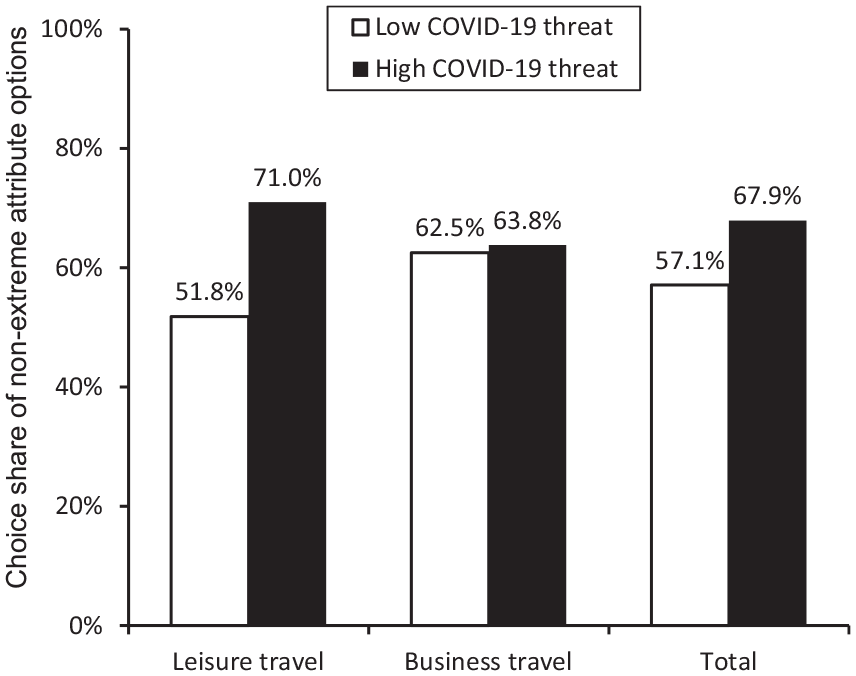
We expected that the high (vs. low) COVID-19 threat would increase the choice share of the two nonextreme options. The results confirmed this prediction. Specifically, the choice share of the middle attribute options is marginally higher in the high- (vs. low-) threat condition—Mhigh = 67.9% (74/109) vs. Mlow = 57.1% (64/112), χ2(1) = 2.72, p = .099—replicating the previous studies’ results. This pattern was more pronounced for the leisure traveler rather than the business traveler, as predicted by hypothesis 3. In the leisure travel condition, the choice share of the middle attribute options was significantly higher in the high- (vs. low-) threat condition—Mhigh = 71.0% (44/62) vs. Mlow = 51.8% (29/56), χ2(1) = 4.59, p = .032—whereas the choice share was not different for the business travel condition, Mhigh = 63.8% (30/47) vs. Mlow = 62.5% (35/56), χ2(1) = .02, p = .889, as shown in Figure 7. In sum, this study provides additional evidence for the causal relationship between the threat of COVID-19 and preference for the nonextreme options with real hotel brand choice.
Results of study 6.
General Discussion
Summary of Studies
Much research has provided evidence and advanced reasons for consumers having a tendency to choose the compromise, middle option within a choice set (c.f., Chuang et al. 2013; Sheng, Parker, and Nakamoto 2005; Simonson 1989). Here, we provide evidence that the threat of COVID-19 amplifies this tendency. Specifically, we predicted that when the perceived threat of COVID-19 is high, travelers are likely to seek safety by increasing their proclivity to choose intermediate, nonextreme options in travel planning. Two sets of secondary data and a series of five experimental studies were conducted to test three hypotheses: perceived threat or threat salience heightens the tendency to avoid extreme options within a choice set (hypothesis 1); the effect of perceived threat on one’s choice is mediated by a safety-seeking motivation (hypothesis 2); and the purpose of travel (leisure vs. business) moderates the perceived threat → extremeness aversion relationship (hypothesis 3).
The results of study 2 and study 3 demonstrated consistent results, regardless of the number of decision options (3 vs. 9) presented to participants. We found that travelers with a high perceived threat or the fear of COVID-19 would show a higher tendency to avoid the option with extreme hotel attributes. The results are in line with the extremeness aversion tendency (Simonson 1989), in that individuals select an intermediate option in a choice set where a range of alternatives differ across price and quality attributes. Furthermore, our findings confirm such extremeness aversion mechanisms are more pronounced in the threat of the COVID-19 pandemic. Study 4 further shows that safety seeking has a significant mediating role between perceived threat and the choice of nonextreme options. This finding is consistent with a previous biobehavioral study (Neuberg, Kenrick, and Schaller 2011) suggesting that the pandemic is likely to trigger travelers’ risk-averse tendencies both cognitively and affectively. It implies that traveler’s reactions, coping, and adaptive behaviors during the pandemic (Kirk and Rifkin 2020) should be considered in designing travel product and service offerings, especially in an online setting. The results of study 5 demonstrate the causal relationship between the pandemic threat and the preference of nonextreme options, quantifying the compromise effect between two conditions (high-threat vs. low-threat). Specifically, the compromise effect is more pronounced for the high threat condition (53.3%) than for the low threat condition (18.3%). Finally, study 6 revealed that the purpose of travel (leisure vs. business) had a moderating effect. Based on the results of our research, we propose that avoiding the extreme option(s) and choosing the nonextreme option is strongly associated with the safety-seeking motivation in traveler decision making during the pandemic, and particularly for those undertaking leisure travel.
Theoretical Perspective
Prior research in the travel and tourism domain has shown that disease threats, natural disasters, geopolitical terrorism, or crimes motivate travelers to avoid dangerous destinations and adopt precautionary behaviors (Karl 2018; Kozak, Crotts, and Law 2007; Kuo et al. 2009; Otoo, Badu-Baiden, and Kim 2019). Considering the dramatic changes that the COVID-19 has brought, increasing research has examined the impacts of disease threats on travelers’ behaviors (S. Kim et al. 2021; J. Kim and Lee 2020). For example, research shows that disease threats increase travelers’ intentions to visit hotels/restaurants that use robots to lower viral transmission (Wan, Chan, and Luo 2021) and use VR tours to reduce social contact (Itani and Hollebeek 2021). However, this prior work focused mostly on behaviors to avoid infection and neglected fundamental changes in individuals’ motivations, cognitions, and behaviors. Only a few studies have examined the impacts of disease threats on individuals’ fundamental choice or decision-making tendencies, such as price inequality (Zhang, Hou, and Li 2020) or scarcity (Y. Li, Yao, and Chen 2021). The current research extends the latter line of research by examining the impacts of disease threats on extremeness aversion, one of the fundamental choice tendencies.
Also, whereas research on extremeness aversion or compromise effects has shown various individual, product, and contextual factors driving extremeness aversions (Chuang et al. 2013; Dhar, Nowlis, and Sherman 2000; Mao 2016; Neumann, Böckenholt, and Sinha 2016; Simonson and Nowlis 2000), research overlooked environmental factors, particularly disease threats. To our knowledge, our research is the first to demonstrate that preferences for compromise options manifest strongly amid the COVID-19 pandemic. In this sense, the present research extends the literature on extremeness aversion by introducing an important environmental factor to explain extremeness aversion.
To demonstrate the mechanism underlying the impact of disease threats on extremeness aversion, we empirically tested the impact of disease threats on individuals’ safety-seeking motivation. This finding aligns with previous research findings. For example, Galoni, Carpenter, and Rao (2020) found that a high level of negative emotions (e.g., fear and disgust) from a contagious disease increased a preference for a familiar (vs. less familiar) brand. However, different from this prior work, the present research offers direct empirical evidence of the underlying mechanism of safety-seeking motivations.
Practical Implications
This research offers several practical implications for travel and tourism managers. First, while the pandemic is affecting travel and tourism markets (aggregate demand is down significantly), consumers that are traveling are likely to seek options that satisfy their need for safety. Accordingly, consumers tend to avoid extreme options in a choice set when choosing between travel options. To cater to that tendency, travel agents could strategically increase the sales of focal travel services by designing various levels of attribute extremeness. For example, when posting travel offers on online portals, hotel managers can include options into a choice-set that becomes one of the middle options relative to those of their competitors. Such an approach can increase their product’s attractiveness. Alternatively, managers can increase the salience of safety perceptions among travelers. Such messages may support their travel offers as they may increase their attractiveness in a choice set in line with travelers’ safety-seeking motivation. Similarly, adopting branding strategies that induce familiarity with their travel services would help potential travelers feel more comfortable and safe. This desire for safety may be more pronounced in tourism markets with high COVID-19 incidence rates because of the perceived threat of the virus. However, an inverse effect may exist in tourism markets that are represented by high levels of information about COVID-19. This inverse effect may, in fact, drive variety-seeking behavior (J. Kim 2020) in an effort to move away from an otherwise preferred option. In a relatively informed market where consumers are actively seeking COVID-19 information as part of their decision-making criteria, this may offer a potentially fruitful segmentation variable for tourism managers to consider.
Second, the results show a significant mediating role of safety-seeking motivation in between threat perceptions and the choice of nonextreme options. In particular, study 4 included information about room types, prices, and size. The findings suggest that attributes of a travel product or service may also be relevant in inducing safety perceptions in a choice set scenario. Therefore, tourism managers could highlight associations between their facilities and safety to better satisfy travelers’ needs for safety (J. Kim and Lee 2020). For instance, hotels can promote travelers to enjoy private facilities (e.g., private beach and spa facilities) at their disposal that facilitate social distancing. Moreover, safe check-in and check-out zones and processes to reduce agglomerations, as well as enhanced room services instead of crowded restaurant areas, could also fulfill their safety seeking.
Third, practitioners can apply the findings in compromise effects to multiple option choice sets. Most previous research features three choice sets in their work, whereas this research adopted a 4-options set (study 4) and 9-options set (study 3). Since most consumers are presented with multiple travel options to consider at once (especially in an online travel agency context, e.g., J. Kim, Franklin, et al. 2020), the present research offers managers confidence in considering the presentation of larger choice sets to consumers, without sacrificing the effects of middle option tendency. For instance, managers could thus offer a larger variety of customized service packages that may attract a more diverse set of travelers. It should be noted that as evidenced in study 6, the findings are particularly applicable to leisure travelers rather than business travelers. Hence, providers of flight or hotel services should indeed avoid nonextreme options when targeting leisure travelers but may have more flexibility in the case of business travelers.
Limitations and Future Studies
The limitations of this study shed light on future research directions. First, while two different secondary data sets and five experiments provide converging evidence for the compromise choice in the pandemic situation, future research may investigate traveler choice behaviors in real situations rather than hypothetical scenarios. Measuring actual choice as a function of perceived threats will further increase the external validity and generalizability of our findings. Second, the empirical findings of the two secondary data studies could be explained by various other factors such as economic status rather than the threat of COVID-19. Even though our additional experimental data supported our original argument, further study needs to use more precise secondary data to reduce this weakness.
Third, in most of our studies, the option was arranged in terms of price or quality. The option presentation order, or the specific way of display, could influence the invoking of the extreme aversion; future study needs to investigate this additional effect.
Fourth, this research offers several directions to test the boundary conditions of our findings. We examined the compromise effect in the context of low- and mid-priced hotels. However, researchers argue that more expensive product categories draw more attention to reference prices (Mazumdar and Papatla 2000). Hence, it is worthwhile to examine whether the compromise effect is strengthened or attenuated in expensive travel settings, such as airline services and luxury hotels. From another aspect, although the present research controlled for sociodemographic profiles, such as age, gender, and income level, travelers may perceive product attribute information differently because of psychological (e.g., brand loyalty) and behavioral (e.g., hotel membership) factors. Therefore, future studies should consider how heterogeneous travelers’ individual characteristics influence their choice under perceived threat (e.g., COVID-19).
Last, although this research demonstrates that disease threats trigger safety-seeking motivation, prior research has shown another route of decision making in response to disease threats. J. Kim (2020) found that the COVID-19 threat increased variety seeking, which may be related to moving away from a preferred option, especially in a multiple-choice setting. A possible reason for the finding may stem from freedom seeking that helps to cope with social disruptions (e.g., lockdowns, social distancing). These two seemingly different routes (safety seeking and freedom seeking) may offer some insights into consumer decision making. For example, when uncertainty is perceived to be high during the pandemic, consumers may engage in safety-seeking behavior (e.g., hoarding), whereas they may engage in freedom-seeking behavior (e.g., trying new attributes) when perceived uncertainty is relatively low. The relative effect could be determined by the specific situation or decision-making context. Future research needs to investigate these moderating variables to better determine the impact of COVID-19.
Footnotes
Acknowledgements
Our research team would like to dedicate this work to one of the co-authors, Professor Roger Marshall. We acknowledge his impactful contribution to the marketing field and his untiring work as an active researcher, educator, leader, mentor, and role model in the Australasian region over the last 40 years. We are delighted that this work features as his final, co-authored publication before his upcoming retirement. As he moves into a new chapter of life, we appreciate his insights that appear in his work.
Declaration of Conflicting Interests
The author(s) declared no potential conflicts of interest with respect to the research, authorship, and/or publication of this article.
Funding
The author(s) received no financial support for the research, authorship, and/or publication of this article.

1
In order to verify the extreme vs. nonextreme options in the various choice sets, we conducted a post-test. Participants (178 US adult, 49.4% female, Mage = 39.10, SD = 13.04) were randomly exposed to two of six different decision tasks (i.e., studies 2–6) and were asked to evaluate each option in terms of the overall extremity of the attributes along a 7-point scale (1 = not at all extreme, 7 = very extreme). The results indicate that the perceived extremity of the extreme options is higher than that of the nonextreme option(s): e.g., study 2: Mextreme = 4.46, SD = 1.32, vs. Mnonextreme = 4.16, SD = 1.37, t(60) = 2.15, p =.035; similar results were found for all other studies—all p’s < .05, details of which are available from the authors on request.