



Abstract
The major purpose of place branding is to attract tourists and investors by enhancing the value proposition of a place through its unique regional identity. We undertake two studies to test the impact of regional identity on destination brand loyalty, and thereby on investment attractiveness. Study 1 involves identifying the dimensions of customer-based place brand equity (CBPBE) from a regional identity perspective. Data were collected from the state of West Bengal in India. Results of exploratory factor analysis show a four-dimensional structure of CBPBE consisting of brand salience, brand meaning, perceived quality, and brand attachment. Based on 290 responses collected from Thailand, we use these CBPBE dimensions in study 2 to develop and validate the psychometrically robust CBPBE-RI instrument. Finally, we test for the impact of CBPBE-RI dimensions on destination brand loyalty and investment attractiveness. The results have managerial and theoretical implications.
Keywords
Introduction
In recent years, the branding of regions and nations has gained popularity among practitioners and academics to attract domestic and international audiences (Anholt 2010). Geographies compete for trade, students, exports, tourists (both domestic and international), and investments, among other things. Such rivalry among regional entities has resulted in the growth of place branding (Castañeda-García et al. 2020; Dinnie 2004). Place branding extends the corporate branding theory to generate opportunities for trade, tourism, inward investments, and economic development of a place (Cleave, Arku, and Chatwin 2019). It is argued that place can act as a brand to its customers akin to that of a product brand, and place brand is subject to its own form of brand image and equity (Rainisto 2003). One of the prominent aims of place branding is to attract target audience (trade, tourist, investors, immigrants, and students) by enhancing the value proposition of the place through its unique identity. This identity is a set of unique associations rooted to the people of that place and is comparable to the concept of brand identity (Paasi 2013). These unique associations are aspirational and enduring to the target customers that the place marketer tries to leverage (Aaker 1996).
The emphasis of existing place branding is primarily on creating an offering that enhances the image of the place to the target audience (Foroudi et al. 2016; Hafeez et al. 2016), and harvesting the place brand equity (Florek 2015; Bose et al. 2020). Likewise, place image is primarily sourced from the place attachment (Prayag and Ryan 2012; Stylos et al. 2017) and place reputation (Foroudi et al. 2016; Braun et al. 2018) theories, particularly in the tourism context (Chen and Dwyer 2018; Patwardhan et al. 2020; Nelson 2015). Place brand equity literature is influenced heavily by customer-based brand equity (CBBE) (Aaker 1996; Keller 1993).
Place attachment is deeply embedded in the concept of regional identity. Paasi (2013) explained regional identity as uniqueness of regions and/or identification of people with them (p. 1206). Attachment of locals toward a place and their way of life creates a unique identity for that place. This unique regional identity creates positive brand equity, including brand image and reputation for the place (Bose 2014). Extant place branding and tourism marketing literature has acknowledged that exploiting regional identity is a key element of destination branding. The place marketer uses such unique identity to build a tourism destination brand (Andéhn and L’Espoir Decosta 2020; Bose et al. 2019), to bring inward investment to the place (Elliot, Papadopoulos, and Kim 2011; Bose, Roy, and Nguyen 2017). Place attachment hence connects the apparently distinct perspectives of place brand equity, regional identity, destination branding, and investment attractiveness. Existing CBPBE studies (Florek 2015; Bose, Roy, and Tiwari 2016; Bose et al. 2020) consider place image as a manifestation of place brand equity. Place attachment results in unique place image and brand equity of the place, considering its regional identity, which consequently attracts tourists and/or investments. Thus, the primary objective of this study is to unify the varied perspectives of place branding, namely, regional identity, destination branding, and investment attractiveness from a place brand equity point of view, and to create an instrument (CBPBE-RI) to measure the same. We undertake two studies to test for the generalizability of our findings, given the context specificity of places (Bose et al. 2020). In the first study, we identify the dimensions of place brand equity. In study 2, we validate the instrument by testing the impact of place attachment on loyalty toward the place as a tourist destination. Finally, we tested for the nomological validity of the scale by testing the impact of place brand attachment on loyalty toward the place as an investment destination.
The main aim of place branding is to enhance the marketability of the place for inward investment, and thus economic development (Dinnie 2004; Andéhn and L’Espoir Decosta 2020). This study attempts to complete the rationale of place branding by tying up the variables related to regional identity, destination branding, and investment attractiveness in a single relationship. In the process, the CBPBE-RI instrument is developed that would enable marketers to operationalize unique regional identity of the place as a brand equity measure. Notwithstanding the existing place brand equity instruments (Bose, Roy, and Tiwari 2016; Bose et al. 2020), including destination branding (Boo, Busser, and Baloglu 2009; Gartner and Konecnik Ruzzier 2010), CBPBE-RI is unique. It focuses on place brand equity from the perspective of the people of the place and not the tourism perspectives of the place (Boo, Busser, and Baloglu 2009; Gartner and Konecnik Ruzzier 2010), or place promotion by the government (Bose et al. 2020), or its capacity to attract investments (Bose, Roy, and Tiwari 2016). Thus, we respond to the calls by Bose and colleagues (Bose 2014; Bose et al. 2016; Bose et al. 2020) and examine brand equity of a place from the “people” perspective.
The article is divided into six major sections. We elaborate on the construct definitions and extant literature in the next section. Subsequently, the scale development and model testing process is discussed. The fourth section discusses inferences and conclusions from our study. Next, we explain the contributions that our study makes to theory, policy makers, and marketing practitioners. The final section discusses the limitations and future research directions.
Construct Definitions and Literature Review
Customer-Based Brand Equity
The concept of CBBE is well established in literature (Aaker 1996; Keller 2003). According to Aaker (1992), “strong brand equity is based on awareness, association, perceived quality and brand loyalty” (p. 58). Keller (1993) argues that brand equity “occurs when the consumer is familiar with the brand and holds some favourable, strong, and unique brand associations in memory” (p. 1). CBBE dimensions include brand awareness, brand associations, perceived quality, brand loyalty, and other proprietary brand assets (Aaker 1992). There is a consensus on a four-dimensional CBBE instrument comprising awareness, associations, quality, and loyalty. CBBE is a set of all assets and liabilities that can be attached to a brand that gives additional value to the customer consuming the product or service (Aaker 1996). This value added in product or service, results in price premium and/or customer loyalty toward the brand (Keller 1993; Aaker 1996). Keller (1993) defined CBBE as the differential effect of “brand knowledge on consumer response to the marketing of the brand” (p. 2), which occurs when the consumer has familiarity and positive association with the brand. CBBE improves customer satisfaction and trust, which helps build customer loyalty (Sürücü et al. 2019). The fundamental tenet of CBBE is that the power of a brand lies in the minds of customers. Customer perception consequently affects brand equity and, finally, purchase intention (Prasad and Dev 2000; Konecnik and Gartner 2007; Huang and Cai 2015).
Customer-Based Place Brand Equity
Anholt (2005, pp. 118–19) argues that “cities and regions can be promoted, they certainly do have brands, and those brands certainly do affect the views, decisions and behavior of their friends, enemies, allies, visitors, investors and consumers.” This lays the premise of place brand equity. Customer-based place brand equity (CBPBE) is defined as “the customer based brand equity of a ‘place’” (Bose et al. 2020, p. 736). This is based on the original CBBE conceptualization by Aaker (1996) and Keller (1993). According to Bose et al. (Bose 2020; Bose et al. 2016), place is the manifestation of any geographical region that may extend from a locality to nations and supra-national regions. It is argued that CBPBE consists of five independent perspectives, namely, country of origin effects (Andéhn, Nordin, and Nilsson 2016), destination branding (Dimitrovski et al. 2019; Kotler and Gertner 2002; Lai, Khoo-Lattimore, and Wang 2019), public diplomacy (Adler-Nissen, and Tsinovoi 2019; Bose et al. 2020), regional identity (Bose 2014; Bose et al. 2019), and investment attractiveness (Papadopoulos, Hamzaoui-Essoussi, and Banna 2016; Helmi, Bridson, and Casidy 2020). Though these perspectives might interrelate contextually at the fundamental level, they are mutually exclusive of one another.
Regional identity and place branding
Regional identity is the extent to which “people identify themselves with the region as the whole of institutionalized practices, discourses and symbol” (Messely, Dessien, and Lauwers 2009). At a very basic level, a region is nothing but the manifestation of a place. Passi (2002) opines that regional identity comprises cultural, physical, and historical entities that distinguish one particular region from the others. Such identities tend to remain strong across several generations (Galyapina, Lebedeva, and Van de Vijver 2018; Shiratori 2019). Regional identity does not possess any dedicated instrument for its measurement. However, research in regional studies, human geography, and anthropology have identified constructs that relate to the sense of regional identity of an individual or a community as a whole. In the context of regional identity, an interesting stream of studies is set on regions that transcend national borders. Here, “place” is a supranational entity having a common identity. Houtum and Lagendijk (2001) examined the cases of the Ruhr region of Germany and the Basque Country as polycentric urban regions (PURs) to link the strategic interpretations of PURs with regional identity. Andersson (2007) examined the possibilities of branding the Ten Baltic States and observed that it was difficult to build a unifying Baltic Sea Region (BSR) brand owing to the outlook of the governmental authorities of these states. However, most of the research on place branding and regional identity focuses on a region or subnational entity as the place brand. In the context of the Pilbara region of Western Australia, Singleton and Mckenzie (2008) argue that the region has to move away from the longstanding “British, frontier and mining industry company town” (p. 8) values to take advantage of having a competitive identity.
In consumer products with tangible attributes, image is based on facts and measurable information. For experiential products such as tourism, products are produced and consumed simultaneously. Destinations are evaluated not on the basis of real or imagined attributes but on the basis of the place brand (Konecnik and Gartner 2007) and image. When a destination gains popularity, image cedes into brand dimensions, and is obliterated by the brand/destination name. Extant literature on place branding and place brand equity focuses on destination branding that sees ‘place’ as a tourist destination (Im et al. 2012; Kladou and Kehagias 2014), or from the angle of a destination marketing organization (Pike 2009). Destination branding is the application of branding and brand management strategies to create a unique destination (tourist) brand and manage and enhance the power of that destination brand (Castañeda-García et al. 2020; Jago et al. 2003; Boo, Busser, and Baloglu 2009). Defining place branding from a geographic perspective (Ashworth 2009) helps construct the image to benefit locals, visitors, and businesses (Boisen et al. 2018). The global integration of economy, culture, and politics has turned cultural spaces into highly competitive businesses (Grenni, Horlings, and Soini 2020). Place-branding considers this to be value creation for a place.
Destination branding
Research on place-branding and place-brand equity primarily focuses on destination branding, which positions place as a tourist destination (Im et al. 2012; Kladou and Kehagias 2014; Pike 2009). Destination branding is considered to be an outcome of the collaboration between stakeholders of any tourism destination (Prideaux and Cooper 2003), which leads to positive destination brand equity (Konecnik and Gartner 2007). It helps in communicating a destination’s unique identity by differentiating the destination from its competitors (Morrison and Anderson 2002). Destination branding has two major functions: identification and differentiation. Identification explains source of product to the consumers. Place as a “product” comprises several material and nonmaterial elements. It may have tangible attributes such as forts, palaces, museums, or beaches and intangible characteristics such as customs, history, and culture. Complexity of a destination makes it difficult to generalize the offering, and destination branding helps explain/manage the perception by target markets (Fan 2006). A destination brand helps in differentiating a place on the basis of the meaning given by consumers. Tourism destinations have a lot of common factors, in the form of restaurants, accommodations, and public spaces (Baker 2007, p. 101), and they differentiate themselves in terms of brand associations (Keller 2008, p. 107). Destinations use logos (Blain, Levy, and Ritchie 2005; Van Riel and van den Ban 2001) and slogans (Pike 2005) to differentiate themselves, though only in an ephemeral sense (Gold and Ward 1994). Destination branding is a brand management strategy that helps to create a unique destination brand, to manage and enhance the power of the destination brand (Castañeda-García et al. 2020; Jago et al. 2003; Boo, Busser, and Baloglu 2009), and create destination brand equity (DBE) for that place (Boo, Busser, and Baloglu 2009).
Investment attractiveness
Traditionally, a place’s ability to garner investment has been considered from the point of view of international or foreign direct investments (FDIs) (Demirbag, Tatoglu, and Gleister 2007; Bose et al. 2019). However, extant literature suggests that a place can also attract investment from domestic investors, thus competing with other places within the same region, or nation (Pal and Ghosh 2007; Matlovicova 2010). Therefore, we consider both FDI and domestic investments as the bases for investment attractiveness (Bose et al. 2016). We use the working definition of investment attractiveness, which is a place’s ability to attract investments—both foreign and domestic (Bose et al. 2016).
Regional identity and tourism
Research on regional identity and tourism has examined the efficacy of place identity and place attachment of communities; and how such regional identity and regional attachment affects tourism for the particular place (Messely, Dessien, and Lauwers 2009; Dredge and Jenkins 2003). Studies in place-branding focus on a place as either offering something (Bose, Roy, and Nguyen 2017) or harvesting place-brand equity (Bose et al. 2020), or both. For instance, culture (Warren and Dinnie 2018), city brand (Kavaratzis 2017), and food tourism (Everett and Aitchison 2008) play a role in the retention and development of regional identity of a particular place. Theoretically, place attachment is deeply connected to the concepts of regional identity, as the attachment of locals to a place as well as to their lifestyle, creates a unique identity for that place. Regional identity enhances the image and reputation of the destination among tourists and investors (Elliot, Papadopoulos, and Kim 2011; Bose et al. 2017).
Regional identity and investment attractiveness
Reputation is one of the major factors that attract investments (Head and Mayer 2004). Countries are evaluated on the basis of environmental factors (e.g., growth rate and state of the digital economy) as leading countries (countries with high rates of digital development and innovation leaders), countries with slower growth rates (prior steady growth but currently low pace of development), promising countries (currently at a relatively low level of digitalization, with steady growth rates), and problem countries (low levels of digital development and slow growth) (Ziyadin et al. 2019). Place brand also plays a significant role in attracting investments. Perhaps the biggest ulterior motive for creation of regional identity is to attract investments. Bose et al. (2017) suggest that regional identity impacts the COO effects for a nation through its product country image (PCI) or its geographical indication (GI) for a particular region. Similarly, regional identity impacts the tourism image and thereby tourism loyalty for a place or destination. The same observation was succinctly elaborated by Dinnie (2008, p. 25) in his analysis of Scotland as a place brand: “In Scotland, the organization ‘Scotland the Brand,’ was set up in 1994 in order to promote Scottish tourism, culture and trade.” He stated that in establishing Scotland the Brand, the Scottish authority had made conscious efforts to promote the “distinctive brand values of Scotland” (p. 25) to harness the region’s trade and tourism potential.
It is the processes of innovation and investment that determines the competitiveness and attractiveness of a region/country. Traditionally, a place’s ability to garner investment has been considered from the point of view of international or FDIs (Demirbag, Tatoglu, and Gleister 2007; Bose et al. 2019). Literature suggests that a place can also attract investment from domestic investors, thus competing with other places within the same region, or nation (Pal and Ghosh 2007; Matlovicova 2010). Therefore, we consider both FDI and domestic investments as the bases for investment attractiveness (Bose et al. 2016). For this study, we use the working definition of investment attractiveness as suggested by Bose et al. (2016) and focus on a place’s ability to attract investments—both foreign and domestic.
Scale Development and Model Testing
Instrument Development and Hypothesis Testing
This section reports studies that were conducted sequentially for the purpose of instrument development (Churchill 1979) and hypothesis testing. Study 1 relates to the identification of dimensions of CBPBE from the perspective of regional identity. Contextually rooted in place attachment theory (Lewicka 2011; Raymond, Brown, and Robinson 2011), and based on qualitative and quantitative inquiries, we identify the dimensions of place brand equity owing to the unique identity (Williams and Vaske 2003) of the place. Study 2 tests for validity of the proposed instrument by using destination based brand equity (DBBE) construct as the outcome variable. Using the conceptual setting of consumer–brand relationships paradigm (Fournier 1998; Fetscherin and Heinrich 2015), we test for the impact of attachment on the loyalty toward the place as a tourist destination. We posit that a key outcome of a place’s unique identity is to attract tourists toward the place (Bose et al. 2017; Kavaratzis 2017; Warren and Dinnie 2018). The study checks for the underlying relationship between a place’s brand equity owing to its (unique) identity and its ability to attract investment interests due to its ability to attract tourists. The “eclectic paradigm” of Dunning (1980, 1998) has been used as the theoretical premise to argue that loyalty toward the place among tourists (owing to their attachment toward the place) will garner loyalty among potential investors to invest in that place. Developing the place as a tourist destination through its unique identity (Everett and Aitchison 2008) will in turn enhance the growth and development potential of the place through inward investment (Dinnie 2008; Pasquinelli 2010; Andéhn and L’Espoir Decosta 2020).
Study 1
West Bengal as the Place Brand
The state of West Bengal (in India) is considered as the place brand for this study as West Bengal and Bengalis are said to have a unique identity. Bengalis are seen to be culturally well endowed, Kolkata (capital of the state) being considered the “cultural capital of India” (Noble, Costa, and Dutt 1990). Additionally, there is a critical distinction between the practices of Bengalis who belonged to West Bengal before the partition of India in 1947 (referred to as “Ghoti”) and those of Bengalis who came from erstwhile East Pakistan (Bangladesh) as refugees to West Bengal, the “Bangal” (Mookherjee 2008).
Bose et al. (2019) observe that the state has great tourism potential as it has resources including cultural and historical to address diverse tourism needs. However, the state does not feature among the top five tourist destinations in India. The 2017 government report (Ministry of Tourism 2017) stated that West Bengal was in the eighth position among all states in the number or domestic tourists and overall sixth in number of international tourists. Therefore, the state (place) acts as a good a reference point for this study as its brand equity is neither very high nor very low (Bose et al., 2019).
Exploratory Research and Item Generation
Exploratory research started with a review of literature to identify items that measure place brand equity or that can be adapted for measuring place brand equity. The major sources for item generation (refer to Table 1) are prior national identity studies (Keillor and Hult 1999; Ashmore, Deaux, and McLaughlin-Volpe 2004; Brown and Raymond 2007), place attachment studies (Kyle et al. 2005; Budruk 2010; Lewicka 2010; Raymond et al. 2010), studies on regional identities (Paasi 2009, 2010), and studies on predictors of place dimensions (Yoo and Donthu 2001; Kotler and Gertner 2002; Jorgensen and Stedman 2006; Bose 2014).
Items Adapted from Literature.

We conducted focused group discussions (FGDs) and in- depth interviews (DIs) to generate cues that relate to identities of any place in general and, subsequently, West Bengal in particular. Two FGDs were conducted with six members in each that ran for about thirty minutes. Each group had members belonging to different professions, such as artists, social scientists, businessmen, social workers, and students, with participants aged between 17 and 73 years. The heterogeneity of the group was preconceived so that the groups represent members connected to different sociocultural and economic strata of the state. The FGDs generated a few major themes, such as culture, history, outlook, and approach toward life in the context of a place, and more so for West Bengal (refer to Table 2). DIs were taken of a senior executive of a local chamber of commerce, a couple of anthropologists who primarily focus on the study of ethnicity among residents of West Bengal, and a professional singer. This exploratory stage resulted in an initial pool of 21 items.
Themes from Focus Group Discussion (FGD).

Content Validity
Content validity is the extent to which measures are relevant and representative of the construct (Haynes, Richard, and Kubany 1995). The initial pool of items measuring CBPE was assessed by a panel of 10 subject matter experts for content and face validity (Netemeyer, Bearden, and Sharma 2003). Of 10 experts, 5 were academics from different universities and 5 were working professionals from leading tour agencies. Based on the suggestions of Netemeyer, Boles, and McMurrian (1996), experts were given the definition and the list of items measuring each subconstruct. The panel of experts evaluated each item in the three categories of completely representative, somewhat representative, and not representative (Lin and Hsieh 2011). Following the recommendations made by the panel, two irrelevant and repetitive items were removed, and some confusing items were reworded. Therefore, it can be concluded that content validity of the measures was established (Gebhardt et al. 2020).
Pilot Test
A 19-item questionnaire was sent for pilot testing. The pilot test was conducted on 118 respondents (aged between 23 years and 52 years) across five major Indian states. The Cronbach α value for the questionnaires stood at .86. This signified strong internal consistencies and reliability of the questionnaire for measuring CBPBE from the perspective of regional identity. Hence, we proceeded to data collection.
Sample for Exploratory Factor Analysis
Seven-point Likert-type scales anchored at strongly disagree and strongly agree were used to collect the responses. The sample frame for regional identity relates to inhabitants of West Bengal who are either Bengali by ethnicity or from other parts of the country or wider world who have naturalized into West Bengal’s milieu, and people from other parts of India and rest of the world who have knowledge of and/or interest in West Bengal and its identity (including tourists). The sample included Bengalis and members of other communities currently living in West Bengal or who had lived in West Bengal for at least two generations. We also included temporary settlers in West Bengal and people making visits for short durations for various purposes. There were respondents from various parts of the state to account for the diversity in practices, habits, and values of the people residing across the varied geographical regions of the state.
The data for exploratory factor analysis were collected by means of face-to-face mall intercept method (Bush and Hair 1985) from January 2019 to March 2019. Surveys were conducted at malls and commercial centers, across Siliguri and Darjeeling in northern West Bengal; Asansol, Burdwan and Shanti Niketan in central West Bengal; and Kalyani, Haldia, and Kolkata in southern West Bengal. To ensure that the sample was free from any bias, researchers collected data from all the entrances of the shopping mall because using only one entrance might well distort the sample. However, during the mall intercept survey, we noticed that the entrances do not receive an equal flow of people and, therefore, entrances were sampled in proportion to the fraction of customers attracted (Sudman 1980; Bruwer, Haydam, and Lin 1996). People who agreed to participate in the self-administered survey were thanked and offered a token of appreciation. A total of 218 responses were collected, of which 200 responses were found to be usable and consisted of 118 male and 82 female respondents (refer to Table 3).
Sample for EFA CBPE from the Perspective of Regional Identity.

Note: EFA = exploratory factor analysis; CBPE = customer-based place brand equity.
Exploratory Factor Analysis
The analysis is run on the sample of 200 responses (refer to Table 3) using varimax rotation. Any item having cross loadings or with factor loadings <0.60 was omitted. This led to the omission of one item. The Kaiser–Meyer–Olkin value of 0.83 suggests that the sample is adequate for running the analysis. The analysis suggests 18 items and four factors solution (refer to Table 4) with 85 percent of total variance explained. High factor loadings (0.84 to 0.99) suggest that the items provide strong contributions to their respective factors and Cronbach alpha of 0.87 suggests that factor structure is reliable. The present structure suggests that the model thematically fits CBBE dimensions of Aaker (1996). The first three items (RI01, RI02, and RI03) together reflect the salience effect of the place, and hence are named as brand salience (Alba and Chattopadhyay 1986; Romaniuk and Sharp 2004; Daniels, Kunkel, and Karg 2019), RI04 to RI13 are related to brand meaning and fit conceptualization of the same by Blackston (1995) and Ligas and Cotte (1999). RI14 to RI16 measure perceived quality (Aaker 1996) of the brand, and lastly RI17, RI18, and RI19 measure phenomena that is best described as attachment to the place brand (Thomson, MacInnis, and Whan 2005; Whan et al. 2010). In this study, we name this as brand attachment.
EFA Output.

Note: EFA = exploratory factor analysis.
Study 2
Thailand as the Place Brand
We considered Thailand as the place brand for the study for two reasons. First, it enables us to generalize the dimensions of CBPBE instrument. Second, we test the generalizability of the Bose et al. (2016) instrument in different cultural and geospatial contexts. Thailand is an example of regional identity (Denes 2012), national identity, and supranational identity at work. Jory (1999, p. 337) states that “for the last hundred years Thai governments have consistently stressed the homogeneity of the peoples of Thailand. The predominant government policy towards cultural diversity has been one of assimilation, stemming from a desire to integrate minority groups into a cohesive nation-state.” Interestingly, the country being the founding member of ASEAN also wanted to be a part of the distinct supranational identity and had urged its citizens to embrace the East Asian identity (Terada 2003; Jones 2004). Thailand is also a good brand considering destination branding. The country was ranked 9th in 2016 and 10th in 2017 in global inbound tourism and 2nd in Asia for both years (UNWTO 2018).
Data Collection
The data for study 2 was collected through a structured questionnaire using a 7-point Likert-type scale anchored at strongly disagree and strongly agree using a web-based survey. The initial respondents for this study were trade and industry representatives from Thailand. We used nonprobability snowball sampling technique to recruit respondents. Snowball sampling provides flexibility to the researchers in selecting respondents with similar characteristics about the subject (Brady, Voorhees, and Brusco 2012). The questionnaire was sent to around 1,000 respondents from April 2019 to August 2019. We received back 408 responses, of which 90 questionnaires were found unsuitable to use because they neither had invested in Thailand nor were they serious prospective investors. Furthermore, the data cleaning process resulted in the deletion of 28 response. Finally, 290 responses were used for the final study (refer to Table 5).
Sample for Measuring CBPBE from the Regional Identity Perspective.

Note: CBPE = customer-based place brand equity.
Around 54% of the respondents were males and 46% were females. The primary screening criterion for selecting respondents was that the individual must have invested or be interested in investing in Thailand in sectors related to tourism, and be aware of Thailand’s offerings as a destination brand. This resulted in 187 domestic (Thai) respondents and 103 foreign respondents. The sample is used for the confirmatory factor analysis (CFA) and to test hypothesis 2 (refer to Figure 1).
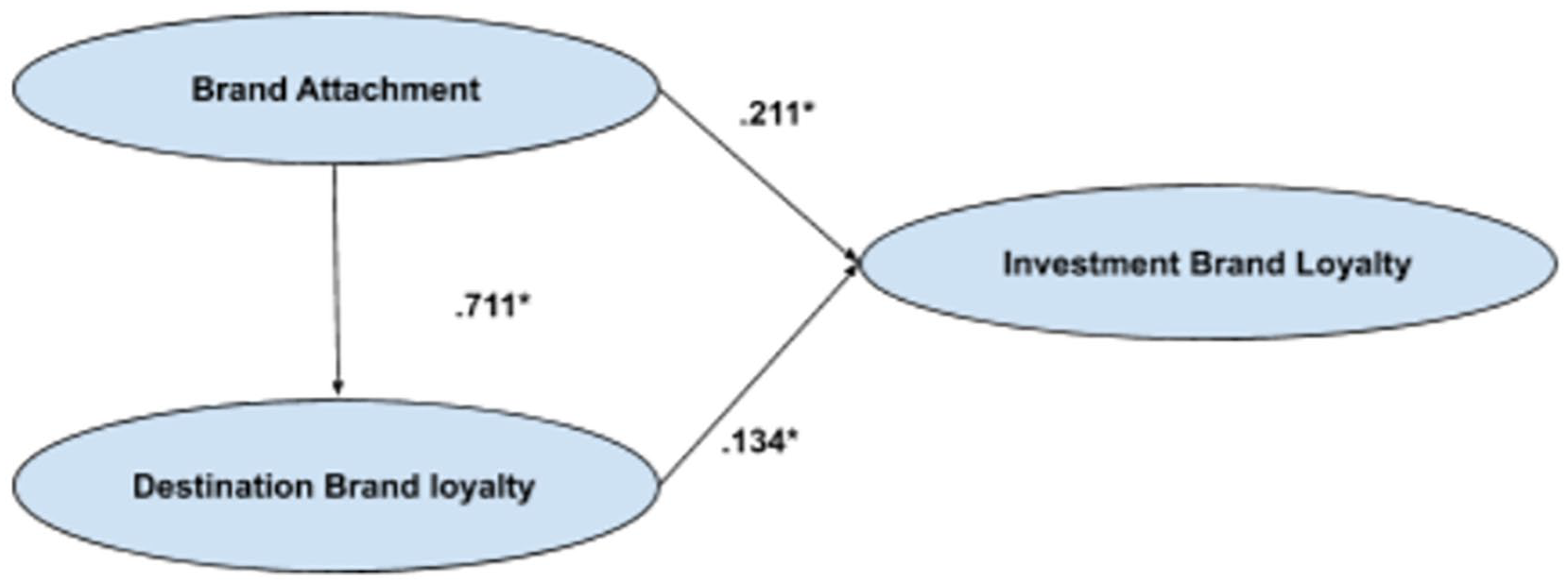
Path model.
Confirmatory Factor Analysis
To ensure univariate normality, skewness, and kurtosis of all the variables were measured. The skewness values of all the measures were within the prescribed limits of −2 to +2 and the kurtoses were within the recommended range of −7 to +7, highlighting the univariate normality of the data (Curran, West, and Finch 1996). We conducted a measurement invariance test to ensure that the factor structure is equivalent across the data sets (Milfont and Fischer 2010; Wang et al. 2018). χ2/DF = 1.92 and PCLOSE = .97 suggested generalizability of the factor structure across West Bengal and Thailand. Maximum likelihood method was used to conduct confirmatory factor analysis using Amos 20 (refer to Figure 2). Results show acceptable model fit indices: χ2/DF = 1.78, p = 0.00; goodness of fit index (GFI) = 0.92; comparative fit index (CFI) = 0.98; normed fit index (NFI) = 0.95; root mean square error of approximation (RMSEA) is at 0.05 (Joreskog 1993; Hair et al. 2013).
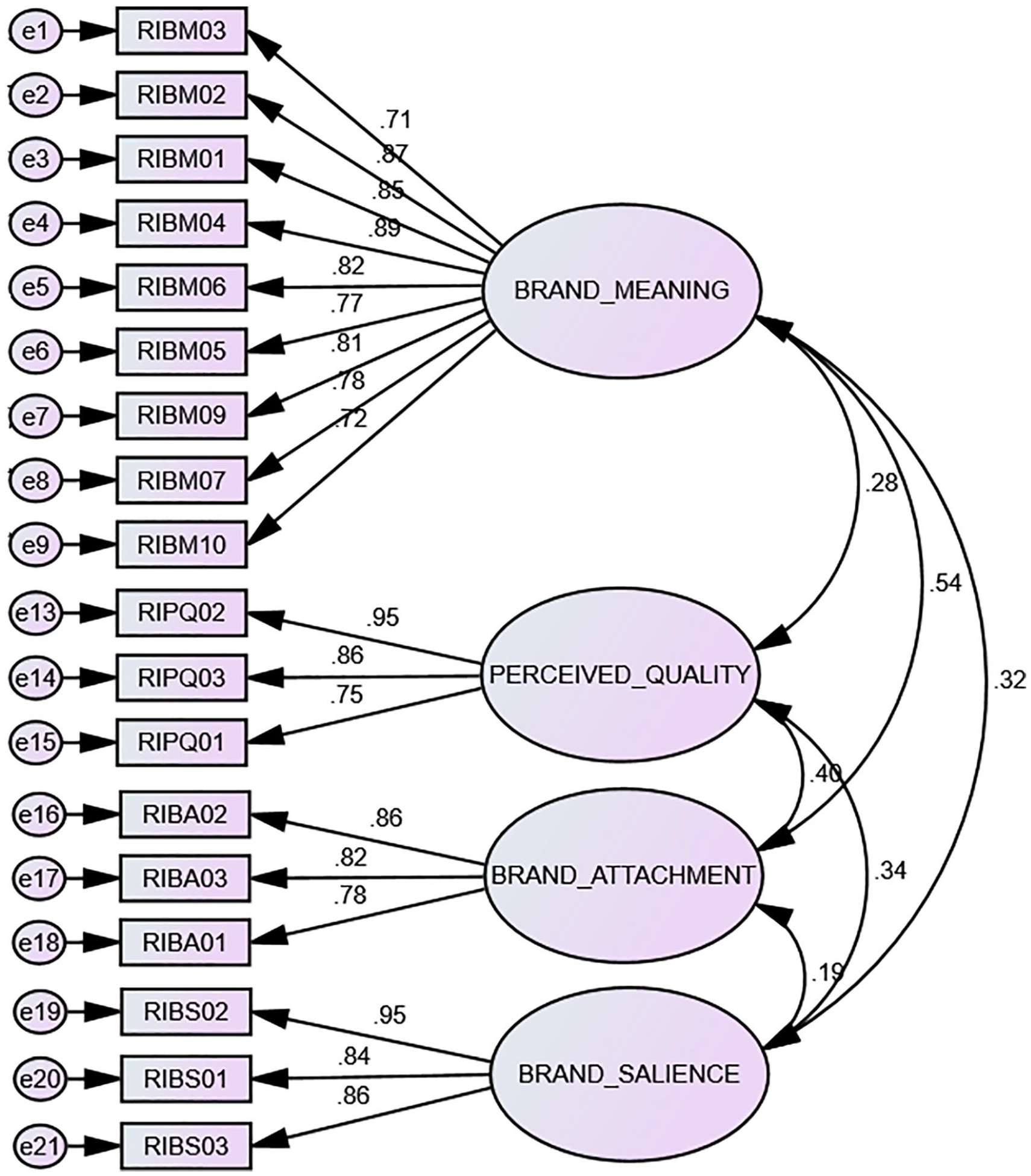
CFA structure.
Construct Validity
Table 6 shows that the average variance extracted (AVE) for each of the dimensions is greater than 0.5, which indicates convergent validity. The composite reliability for each of the dimensions lies between .92 and .97, suggesting good internal consistencies. The squared inter-factor correlation (SIC) values lie between .10 and .28 and are less than the AVEs thus, discriminant validity criterion holds (Fornell and Larcker 1981). Therefore, the instrument has acceptable reliability and validity.
Scale Reliability and Validity (CFA): CBPBE from the Perspective of Regional Identity.

Note: CFA = confirmatory factor analysis; CBPE = customer-based place brand equity; AVE = average variance extracted.
Nomological Validity and Hypotheses Testing
We argue that CBPBE antecedents will impact tourism brand loyalty through the consequences of CBPBE (i.e., brand attachment) (Bose 2014). Unique identity of a place is important for inbound tourism (Jorgensen and Stedman 2006; Chen and Chou 2019). Place attachment theory (Lewicka 2011; Raymond, Brown, and Robinson 2011) states that attachment toward a place is a consequence of the meaning that the place has in the individual’s cognition, the awareness of the place’s idiosyncrasies, and offerings that the place can make. Research on consumer–brand relationships indicate that brand attachment results in consumer brand loyalty (Fournier 1998; Fetscherin and Heinrich 2015). Destination branding literature indicate that place attachment leads to destination loyalty (Andéhn and L’Espoir Decosta 2020; Patwardhan et al. 2020; Prayag and Ryan 2012). Based on the theoretical and empirical evidence, we advance the following hypothesis:
Hypothesis 1: Brand attachment mediates the relationships between brand salience, brand meaning and perceived quality, and destination brand loyalty.
For the purpose of testing the nomological validity (refer to Figure 3), we operationalized destination brand loyalty measures suggested by Boo, Busser, and Baloglu (2009) (refer to Appendix A). The working definitions of the constructs used in study 1 and study 2 are shown in Table 7.
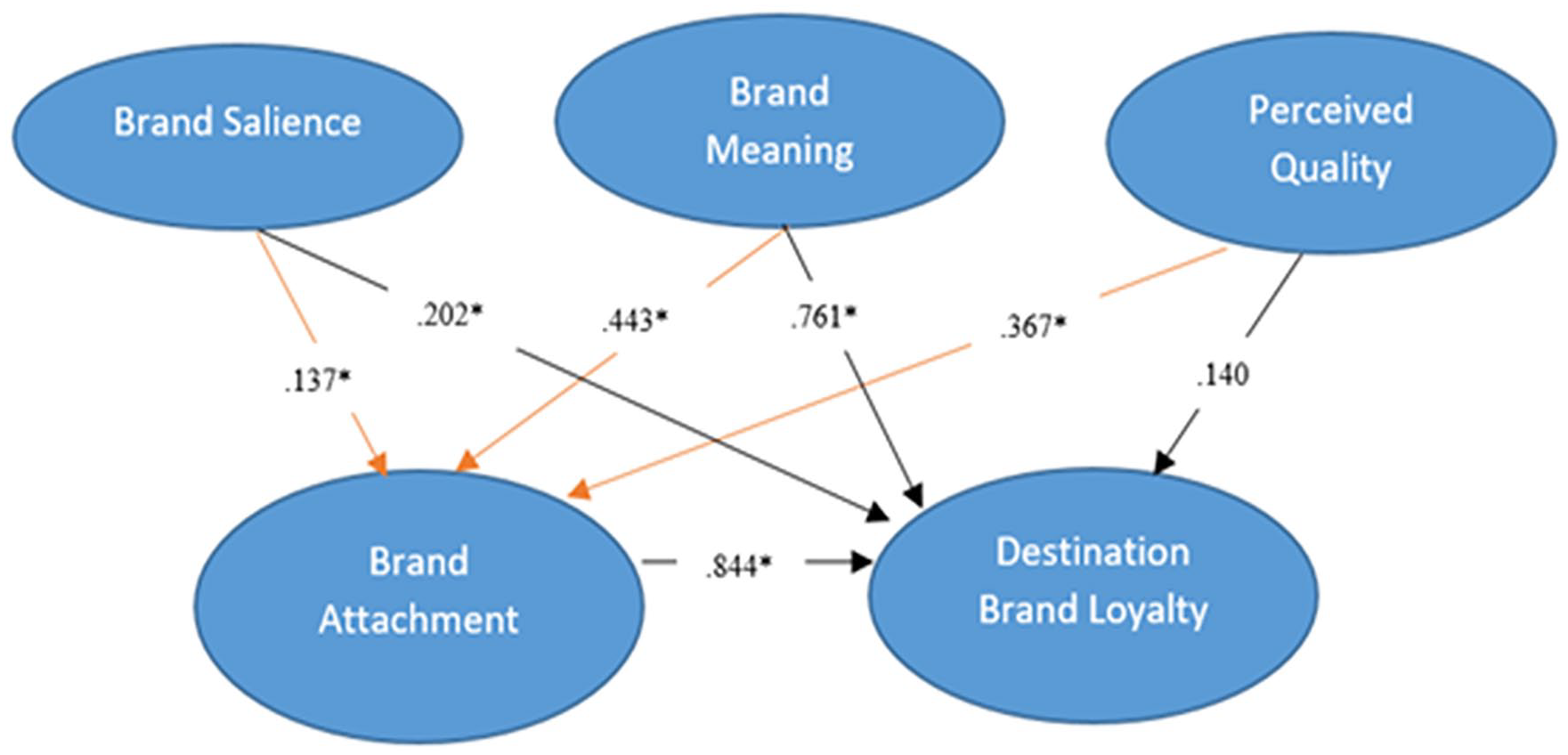
Nomological model.
Operationalization and Working Definitions of the Constructs.

Mediation Model – Reliability and Validity.

Note: RIBA = Brand Attachment; DBBL = Destination Brand Loyalty; IABL = Investment Loyalty; DF = degree of freedom; GFI = goodness of fit index; AGFI = adjusted goodness of fit index; CFI = confirmatory fit index; RMSEA = root mean square error of approximation.
p = 0.01.
Nomological Validity and Hypothesis Testing.

Note: DF = degree of freedom; GFI = goodness of fit index; AGFI = adjusted goodness of fit index; CFI = confirmatory fit index; RMSEA = root mean square error of approximation.
It is found that in the cases of brand salience and brand meaning partial mediation takes place (see Table 8). However, brand attachment fully mediates the relationship between perceived quality and destination brand loyalty. Therefore, we conclude that hypothesis 1 is accepted. This entails that antecedents of CBPBE considering regional identity have an impact on destination brand loyalty. We therefore conclude that the CBPBE-RI instrument possess nomological validity (see Table 9).
Extant literature suggests that place-branding focuses on regional identity to create attachment and to attract inward investments. Destination loyalty shown by tourists encourages inflow of investments (Andéhn and L’Espoir Decosta 2020; Everett and Aitchison 2008). The eclectic paradigm (Dunning 1980, 1998) explains that business enterprises enter geographies to do business where market and/or production resources are present. Therefore, one of the reasons for a place to be attractive for investments is its tourism potential (Dinnie 2008; Pasquinelli 2010; Andéhn and L’Espoir Decosta 2020). We use the eclectic paradigm to draw the relationship between regional identity, destination branding, and investment attractiveness. We hereby hypothesize that:
Hypothesis 2: Destination brand loyalty acts as a mediator between brand attachment and place brand loyalty considering investment.
We used brand loyalty–investment attractiveness measures as suggested by Bose et al. (2016) (Refer to Appendix A).
The results show that mediation relationships and direct relationships between the constructs are significant. We thus conclude that destination brand loyalty partially mediates the relationship between brand attachment considering regional identity and brand loyalty considering investment attractiveness. Therefore, hypothesis 2 is accepted.
Discussion and Conclusion
Extant literature states that regional identity has very strong links with destination branding perspective (Palmer 2005; Nunkoo and Gursoy 2012). The other focus area of destination branding has been the impact of tourism on inward investments (Willem teVelde and Nair 2006; Kim 2012). Therefore, we venture to connect the isolated perspectives of place branding (Bose 2014) and study the interrelations among these from the CBPBE point of view.
There is dearth of instruments to measure CBPBE, considering a place’s unique identity. Therefore, given this limitation, we first venture to develop an instrument to measure CBPBE of a place considering its regional identity. We validate the CBPBE scale using diverse samples from India and Thailand. The scale development process suggested by Churchill (1979) is used as the basis for developing the proposed instrument.
The test of nomological validity also serves as one of objectives of the study. Hypothesis 1 was accepted, which suggests that brand attachment mediates the relationship between brand salience, brand meaning and perceived quality, and destination brand loyalty. These findings corroborate the findings of Palmer (2005) and Nunkoo and Gursoy (2012) that the unique identity of a place contributes to its tourism potential (here from a place-brand equity point of view). We call this instrument CBPBE-RI. The current study reinforces the relationship between regional identity and tourism from the CBPBE point of view.
We posited that (prospective) customers’ “brand attachment” (loyalty) toward the “place” given its unique identity will drive them to consider the place as their tourism destination. This, in turn, will encourage (prospective) investors to show loyalty toward the place. Results of study 2 suggest that destination brand loyalty partially mediates the relationship between brand attachment (regional identity) and brand loyalty (investment attractiveness). This is quite intuitive as it suggests that (prospective) investors might be interested in investing in a place given its unique identity, though not necessarily in tourism. It may be inferred that investors may consider specific attributes of regional identity (e.g., positive outlook of people or presence of intellectual class) that do not necessarily relate to tourism for choosing the “place” as the investment destination.
Contributions and Implications
Our study contributes to the extant theory across three broad disciplines, namely, (a) tourism marketing; (b) studies on regional identity; and (c) branding theories. In addition, the study integrates three isolated perspectives of place branding, namely, regional identity, destination branding, and investment attractiveness. There is a dearth of instruments to measure the identities of a region. Given the limitations in literature, an instrument to measure CBPBE considering regional identity is developed. This instrument (CBPBE-RI) would enable theorists, practitioners, and regional authorities to study the interrelationships of regional identity with tourism (Palmer 2005; Nunkoo and Gursoy 2012), investments, and economic development (Demirbag, Tatoglu, and Gleister 2007; Huggins and Thompson 2015). Therefore, our work enables policy makers to approach regional identity not merely as a contributor to product(s), service(s), and tourism in the economy but also to place marketing and place development. This also enables marketers and branding experts to bring in their knowledge into the place development domain.
Theoretical Contributions
The scale development was a part of the objective to study the impact of a place’s identity on the place’s brand equity as a tourism destination. The study adds on to the extant works on relationships between place attachment and destination brand equity dimensions (Prayag and Ryan 2012; Chen and Dwyer 2018; Patwardhan et al. 2020). It further suggests that place attachment is a part of place brand equity from a regional identity perspective. This study responds to Bose’s (2014) call for research on the interrelationships among CBPBE perspectives and contributes to the extant literature on place-branding theory and tourism destination marketing theory.
The second study integrates the relationships between CBPBE across perspectives of regional identity, destination branding, and investment attractiveness. The results thus complete and underpin the logic behind the findings of extant studies that showed regional identity as a basis for economic development and progress (Demirbag, Tatoglu, and Gleister 2007; Huggins and Thompson 2015). Given the fact that study 2 responds to Bose’s (2014) observations, it serves as a starting point for development of an integrated framework of CBPBE. The study enables the contextual generalizability of Bose, Roy, and Tiwari’s (2016) CBPBE instrument, thus validating its robustness.
CBPBE-RI contributes to the required set of CBPBE measurement instruments as suggested by Bose (2014). This instrument would therefore contribute to the development of an integrated theory of place-brand equity as it enables CBPBE measurement from the perspective of regional identity.
Policy Implications
India is a multicultural, multilingual, and multiethnic nation (Dutt 1998; Mukherji 2010; Linz et al. 2011). West Bengal is a state situated in the eastern part of the country, along the Bay of Bengal, with its own distinct regional identity, just like most of the other regions of the country. Table 4 shows that West Bengal’s brand equity from a regional identity perspective ranges between 3.8 and 4.2 of 7 across all dimensions. This signifies that respondents consider West Bengal’s people-oriented brand equity to be just above average (54%–60%) across all dimensions. Given West Bengal’s reputation as culturally well-endowed yet distinct among the locals (Noble, Costa, and Dutt 1990; Mookherjee 2008), the state has failed to communicate this cultural richness to the wider population. Consequently, the region has fared average in tourism and inward investment among the Indian states (Bose et al. 2016; 2019). Therefore, the immediate requirement for the regional government is to engage locals, migrants, and even visitors in building uniform and localized identities of the region. These identities will then have to be communicated to prospective tourists and investors, focusing on the uniqueness of the region, and thus enhancing its overall brand equity. This would help enhance the region’s competitiveness within India and the with rest of the world.
Thailand is a case of assimilation of diverse groups into one national identity (Jory 1999) and of expanding this identity into a supranational identity of an ASEAN nation (Terada 2003; Jones 2004). In this regard, our study suggests that Thailand has been very successful in communicating a national identity within a supranational identity. The average CBPBE score across all measures lies between 4.91 and 5.94 of 7. Among these scores, the perceived quality measures have received higher scores than the remaining measures. Therefore, it may be deduced that the brand equity of Thailand has a lot to do with the perception of quality and capability of the locals as human resources. This perception of quality of the locals might actually explain why Thailand receives high scores as an investment destination. Therefore, one key responsibility for the Thai administration is to further enhance the quality of human lives in the country and communicate the same to the world. This in turn would definitely maintain and enhance Thailand’s brand equity. Thailand’s national identity distinguishes the country from its ASEAN neighbors. This distinctiveness is the basis for competitiveness among countries and regions. Interestingly, Thailand’s brand equity was found to the lower in the context of destination brand loyalty. This is a contradiction to its success as a tourism destination (UNWTO 2018). Therefore, it may be deduced that the investment attractiveness of Thailand need not necessarily be due to its tourism potential. This view may be supported by the fact that potential investors look at the human capital of Thailand that goes beyond the tourism industry. This gives the Thai administration the ability to make the country more appealing to potential investors in the tourism sector, among others.
Managerial Implications
The instrument enables managers and practitioners to effectively measure the brand equity of a place due to its identity. This makes it possible for a place to take advantage of its unique identity. The place attachment of locals and their distinct regional identity can serve as the basis for tourism development, as shown by Everett and Aitchison (2008). This instrument can be used by place marketers as a basis for deciding whether the place’s regional identity can be leveraged for tourism development. This instrument can be further integrated with various destination branding instruments (Boo, Busser, and Baloglu 2009; Gartner and Konecnik Ruzzier 2010). This instrument can also be used by the place marketer for promotion of the place as an investment destination. On the other hand, the economic and business culture of a place can give a prospective investor an idea about the place as an investment destination option. Therefore, this instrument can be integrated with the CBPBE instrument of Bose et al. (2016). Interestingly, the recent development in CBPBE measurement in the context of public diplomacy (Bose et al. 2020) enables policy makers to leverage regional identity. Policy makers in international relations and place marketers can take advantage of the place’s unique identity while promoting the place. This helps in creating desired opinions about the place among its targeted global and domestic audience.
Limitations and Future Research Directions
The findings of this study must be seen in the light of its limitations. Sampling procedures followed are not uniform across the two studies. Study 1 employed a mix of mall intercept method and web surveys. Study 2 was done using web surveys. Thus, the samples used are not totally probabilistic. Therefore, future research may replicate the findings of this study using probabilistic sampling. The other major limitation of the research lies in the items generated. While considering West Bengal, these items are found to be the determinants of CBPBE. However, for any other place, this instrument might need to be modified to suit the context owing to its own culture, identities, and idiosyncrasies. Our study 2 does provide some generalizability of the instruments. Future research is also needed for testing this instrument in different cultural and geographical contexts. In addition, future research may focus on integrating this instrument with other place brand equity instruments (Boo, Busser, and Baloglu 2009; Gartner and Konecnik Ruzzier 2010; Bose et al. 2016; 2020).
Footnotes
Appendix
Items Used for Nomological Validity Assessment.

| Construct | Items | Source |
|---|---|---|
| Destination Brand Loyalty | I enjoy visiting this destination | Boo, Busser, and Baloglu (2009) |
| The destination would be my preferred choice for a vacation | ||
| I would advise other people to visit this destination | ||
| Brand loyalty–investment attractiveness | I would like to invest or do business in this place. | Bose, Roy, and Tiwari (2016) |
| I would suggest this place as a good investment option. |
Declaration of Conflicting Interests
The author(s) declared no potential conflicts of interest with respect to the research, authorship, and/or publication of this article.
Funding
The author(s) received no financial support for the research, authorship, and/or publication of this article.
