




Abstract
This study explores one of the biggest social issues in South Korea, that is, sex tourism, which is illegal but remains in high demand. The study recruited a total of 1,003 respondents, whose responses were analyzed to understand their intentions for sex tourism. Study 1 revealed that sex tourism intention was largely influenced by subjective norms and moderated by ethical awareness and knowledge of illegality. In Study 2, sex tourism intention non-significantly differed across three scenarios of traveling, namely, to a general destination; to an area where prostitution is legal by local law; and with companions with positive opinions about sex tourism. However, Studies 3 and 4 found that the extent to which reminders and warnings about ethics and illegality reduced sex tourism intention differed according to the scenario. The results suggest that sex tourism intention is conditional and controllable, and, thus, government interventions are justified.
Introduction
According to Havocscope (2021), South Koreans (hereafter, Koreans) spent 12 billion USD on prostitution as of 2015, which is the sixth highest in the world. Given that the countries that ranked first to fifth (i.e., China, Spain, Japan, Germany, and the United States, respectively), except for Spain, have much larger populations than that of Korea, Koreans’ demand for commercial sex is at a serious level. Although the Korean government introduced the Special Act on Prostitution in 2004 and has strongly regulated it, Korean sex buyers continue to exist and travel abroad to obtain sex to avoid domestic crackdown. The number of Koreans caught in overseas sex tourism was reported to have increased from 274 in 2012 to 599 in 2015, and the unofficial figures were estimated to be much larger, which is growing at a fast rate (Chosun Media 2016). Accordingly, the Global Report on Trafficking in Persons, released by the United Nations Office on Drugs and Crime (2020), stipulated that Koreans are major clients of commercial sex overseas. The Trafficking in Persons Report of The United States Department of State (2020) also pointed out the severity of human trafficking in response to the demand of Koreans for prostitution abroad.
Many countries have outlawed prostitution due to numerous social problems. Indeed, the absolute shortage of sex suppliers compared with sex demands can lead to kidnapping and human trafficking (Wen et al. 2020). Voluntary prostitutes are also in vulnerable positions; they often refrain from reporting incidents of abuse or coercion due to the nature of their profession to avoid detention or deportation to unwanted countries (Chimienti and Lieber 2018). However, despite these social problems, several individuals, groups, and countries advocate the legalization of prostitution. The rationale behind this argument stems from the premise that men’s desire and intention for sex is inevitable and uncontrollable (Bhattacharya 2016; Butler 2015). Advocates argue that commercial sex should be legalized as a form of paid work similar to any profession to minimize its side effects (Benoit et al. 2019; Coy, Smiley, and Tyler 2019). In line with their views, the Netherlands, Germany, Mexico, and Nevada in the United States officially recognize prostitution as a profession and impose a tax.
Whether legally permitted, many societies negatively perceive prostitution because the legitimacy of sex tends to be evaluated from the ethical point of view instead of the law (Döring, Mohseni, and Walter 2020; Fennell 2015). For example, Fennell (2006) adopted the five normative theories presented by Schumann (2001), namely, utilitarianism, rights, distributive justice ethics, virtue ethics, and ethics of care, to explain why sex tourism is ethically wrong. Interestingly, even ethical tourists can be vulnerable to the lure of prostitution since tourism destinations are viewed as places where freedom and indulgence are expected and permitted (Allen and Brennan 2004). In this regard, Fennell (2015) attributed sex tourism to a state of akrasia, that is, the weakening of the will, in situations where temptation is extremely strong, or the ability of the individual to judge is poor. As such, the person may be unable to make rational decisions in accordance with the ethics.
Kock (2021) compared sex tourism in humans to the behaviors of animals, which instinctively move in search of sex. However, this behavioral ecology perspective has several critical limitations. To explain the motivations of sex tourism, the author first cited animal research on male-based natal dispersal, that is, the tendency of males to leave their groups and territories to reduce the risk of inbreeding (i.e., Johnson 1988; Perrin and Mazalov 1999). However, this aspect does not account for the increasing number of female sex tourists (Bauer 2014). Furthermore, in light of the results that the behaviors of female sex travelers do not significantly different from those of men (Bauer 2014; Jacobs 2016), the limitations in explaining the current phenomenon in sex tourism are clear. Second, Kock’s (2021) argument is based on the premise that men seek sex tourism to increase reproductive success. However, to the best of our knowledge, no studies have reported about tourists testifying that the motivation for commercial sex is reproduction. This response suggests that sex tourism may fundamentally differ from the behaviors of male animals seeking a mate. Third, and importantly, humans differ from animals in that humans typically act on reason in accordance with laws and ethics instead of instinct.
This study aims to empirically identify the existing claims related to sex tourism. Specifically, it first explores the antecedent variables that influence sex tourism intention by applying the extended theory of planned behavior (ETPB). In contrast to the claim that sex tourism is instinct-related and, therefore, difficult to control (Kock 2021), this study intends to elucidate that sex tourism is driven by a controllable decision-making process. Second, it investigates the roles of ethical awareness and knowledge of illegality in sex tourism intention. Third, it tests for the impacts of akrasia by comparing sex tourism intention across tempting situations using a scenario-based experiment. Notably, this study does not argue on the justification or illegalization of sex tourism, which is beyond the scope of this study. Instead, it focuses on investigating the decision-making process related to sex tourism; here, this study regards commercial sex as one of the tourist activities.
Sex is topic worthy of research in the context of tourism because it has been recognized as a critical motivation for travel (Berdychevsky, Gibson, and Poria 2013). Moreover, its market is undeniably large (Ying and Wen 2019). Nevertheless, finding articles on sex tourism is relatively difficult because it is perceived unacceptable from the social, ethical, and moral perspectives. The majority of people are unwilling to externally discuss this issue (Carr 2016; Ying and Wen 2019). We hope that the current findings will help establish appropriate policies for sex tourism according to the culture and ideology of each country.
Literature Review
Sex Tourism
Oppermann (1999) argued that travel motivation is critical to the definition of sex tourism, where some scholars have defined sex tourism on the basis of this perspective. For example, Blackburn, Taylor, and Davis (2010) defined sex tourism as travel with the motive of obtaining sex. Similarly, Kibicho (2016) argued that the main motivation of sex tourists for traveling is to obtain commercial sexual services. In contrast, the other scholars have argued that sex tourists may not explicitly be motivated by or plan to engage in sex; instead, they may situationally obtain the opportunity for involvement as they travel. For example, Jeffreys (2003) and Kempadoo (2004) argued that any travel during which tourists experience local sexual encounters involving monetary exchange can be defined as sex tourism.
The research on sex tourism traditionally holds a postcolonial viewpoint that male tourists from developed countries exploit females in developing countries (Blackburn, Taylor, and Davis 2010; Carr 2016). The initial image of sex tourism was related to the travel of white men seeking exotic deviances. As a result, these studies mainly focused on western male tourists in Asian countries. Recently, however, such a traditional viewpoint has been changed with the increase in outbound tourism in Asia (Carr 2016; Ying and Wen 2019). Furthermore, the claim that only men are sex buyers has been criticized for its basis on gender bias. Indeed, several scholars argue that female tourists are romance tourists rather than sex tourists because, in contrast to male tourists, they seek emotional and long-term relationships with local men (Pruitt and LaFont 1995; Stončikaitė 2020). However, women can be sexually aggressive and exploitative in tourism destinations (Taylor 2001; Weichselbaumer 2012). In this regard, Jacobs (2016) and Bauer (2014) confirmed that attitudes and behaviors related to sex tourism are significantly less gender-specific than that assumed by several scholars and the public.
Extended Theory of Planned Behavior and Desire
The existing studies on sex buyers have mainly focused on their characteristics, motives, and constraints (Farley et al. 2017; Ying and Wen 2019; Ying et al. 2021). Notably, the conclusions and findings of such studies are premised on the assumption that sex tourism intention involves a rational judgment process according to circumstances. Kleiber and Wilke (1995) stated that sex tourism pertains to the planned behavior of individuals seeking physical and emotional relationship with prostitutes abroad. Therefore, the current study explores the decision-making processes involved in sex tourism by adopting ETPB, which posits that the behavioral intentions of individuals are related to reasoned acts.
The theory of planned behavior (TPB) is one of the most widely used model in predicting human behaviors, whose explanatory power has been verified in various tourism contexts (Park, Hsieh, and Lee 2017). Ajzen (1991) proposed the use of the TPB to generalize a series of decision-making processes regarding individual behavior in a socio-psychological context. According to the TPB, three factors, namely, attitude toward the behavior, subjective norms, and perceived behavior control, form human behavioral intention and behavior. Attitude denotes an individual’s response to a specific behavior based on an overall evaluation of beliefs. Subjective norms refer to perceptions of opinions or social pressure. Subjective norms are likely to influence behavioral intentions given that people tend to respond to the surrounding circumstances and expectations. Perceived behavioral control pertains to the perceived effectiveness of an individual’s decision-making in the surrounding environment. It is related to the resources necessary to perform a behavior and to the self-confidence and ability of an individual to lead a situation.
The model of goal-directed behavior (MGB) posits that attitude, subjective norms, and perceived behavioral control influence desire, which leads to behavioral intention (Bagozzi 1992; Perugini and Bagozzi 2001; Prestwich, Perugini, and Hurling 2008). Desire is defined as a state of mind, wherein one is motivated to perform a specific action or to achieve a goal (Perugini and Bagozzi 2001). Numerous studies empirically demonstrated that desire is a strong predictor of intention as a critical motivator in the context of decision-making in tourism (e.g., Kim et al. 2020; Meng and Choi 2016; Song et al. 2014). Interestingly, Belk, Ger, and Askegaard (2003) proposed that desire may involve inaccessible and dangerous immoral conduct.
The ETPB, which adds other factors into the original model of the TPB, was widely used to enhance the explanatory power of proposed models. Combining the TPB and MGB, the current study hypothesizes that attitudes, subjective norms, perceived behavioral control, and desire are major drivers of sex tourism intention. Hence it is postulated:
Sex Tourism and Ethics
Moen (2014) argued that sex tourism may not be harmful if the persons directly involved (e.g., a sex buyer and a prostitute) agree with the casual relationship. However, the problem is not that simple. That is because a fundamental issue of commercial sex is on whether it is ethically acceptable (Miriam 2005). Implicit standards exist for socially acceptable sex in the name of ethics, and furthermore they are intricately intertwined with religious doctrine, ontological claims, and social norms, among others (Fennell 2015; Westin 2014).
In his pioneering work, Fennell (2006) cited the five normative theories presented by Schumann (2001) to propose reasons for why sex tourism is unacceptable from the ethical point of view. First, the social costs of sex tourism, such as severing family ties and loss of human dignity, outweigh its social benefits. Thus, sex tourism is unethical in terms of the utilitarianism principle. Second, sex tourism is wrong from the rights-ethical standpoint because it cannot assume reversibility, universalization, respect, and free consent. Many scholars have argued that prostitution is related to the stratification of human values, such as patriarchy, racism, and capitalism (Benoit et al. 2019; Coy, Smiley, and Tyler 2019). Tetlock et al. (2000) stated that commercial sex places a monetary value on human beings, which results in them being viewed as objects of control and exploitation without a moral identity. Third, sex tourism does not fairly distribute the benefits and costs to all individuals involved; thus, it fails in terms of distributive just ethics. Fourth, virtue ethics posits that morally correct conduct should not represent vice; however, sex tourism displays a bad vice. For example, the Christian doctrine instills shame and negative perceptions of sex in the public by emphasizing the purity of sex (Inglis 2005); people with sexual freedom are considered immoral based on religious beliefs (Westin 2014). Fifth, sex tourism based on short-term relationships is unacceptable from the ethical point of view of caring, that is, human beings should be nurtured in relationships of mutual respect and intrinsic value. It is consistent with the view of the White Knight that men who engage in sex with an unspecified number of women are morally criticized because women’s sexuality is a subject to be protected (Shrage 1994).
Based on these arguments in the literature, the current study assumed that awareness of ethics influences decision-making about sex tourism. Thus, the following hypothesis is presented.
Sex Tourism and the Law
Many countries legally regulate prostitution not only to protect the rights of prostitutes as humans but also to prevent related crimes, such as human trafficking, violence, and drugs (Benoit et al. 2019; Huschke 2017). On the other hand, some countries legalize prostitution. For example, prostitution is fully legal in countries such as Germany and Greece, and selling sex is not illegal in Sweden.
One of the main issues in outlawing or legalizing prostitution is whether men’s desire for prostitution is inevitable and uncontrollable (Bhattacharya 2016; Butler 2015). Indeed, overseas sex tourism has increased in Korea due to the enforcement of the Special Act on Prostitution and the strong crackdown on prostitution (Park and Park 2012). Nevertheless, the fact remains that domestic prostitution has significantly decreased after legal regulation in Korea, which suggests that the law can influence the intention for prostitution. Furthermore, sex tourists are likely unaware that prostitution abroad is illegal. According to Park and Park (2012), 77.7% of Korean respondents answered that they are unaware that prostitution is punishable by domestic law despite being legal under the local law of the tourist destination.
Based on the specificity that sex tourism is illegal in Korea, this study hypothesized that knowledge of illegality will moderate the relationships with sex tourism intention.
Influence of Travel Areas and Companions
Participating in tourism activities at a tourist destination is related to limited experience; they are only temporarily achieved and satisfied during a trip. Berdychevsky, Gibson, and Poria (2013) proposed that tourism is a liminal phenomenon that refers to a period of a temporary experience of a socially limited fantasy. As a temporary escape from daily life, tourist destinations tend to be perceived as areas that lie beyond the limits of ethical and moral behavior and discipline for tourists. In other words, tourists are likely to easily fall into the temptation of deviant behavior (Berdychevsky et al. 2013; Carr 2016). In psychology, this phenomenon is called “social contagion,” which can neutralize an individual’s existing sense of ethics and morality (Taylor et al. 2000). For example, sex tourists are frequently observed in such regions as Thailand, where prostitution is active (Bishop and Robinson 1998). In this regard, Fennell (2015) pointed out that sex tourism is the result of akrasia, a state in which tourists’ will to make rational decisions is weakened at tourist destinations.
If the majority of people at a tourism destination accepted prostitution as legal or had a positive view, it was expected that tourists would be more likely to rationalize and engage in it. Thus, it was hypothesized that temporary external factors at a tourist destination will influence sex tourism.
Figure 1 presents the hypotheses and model proposed in this research.
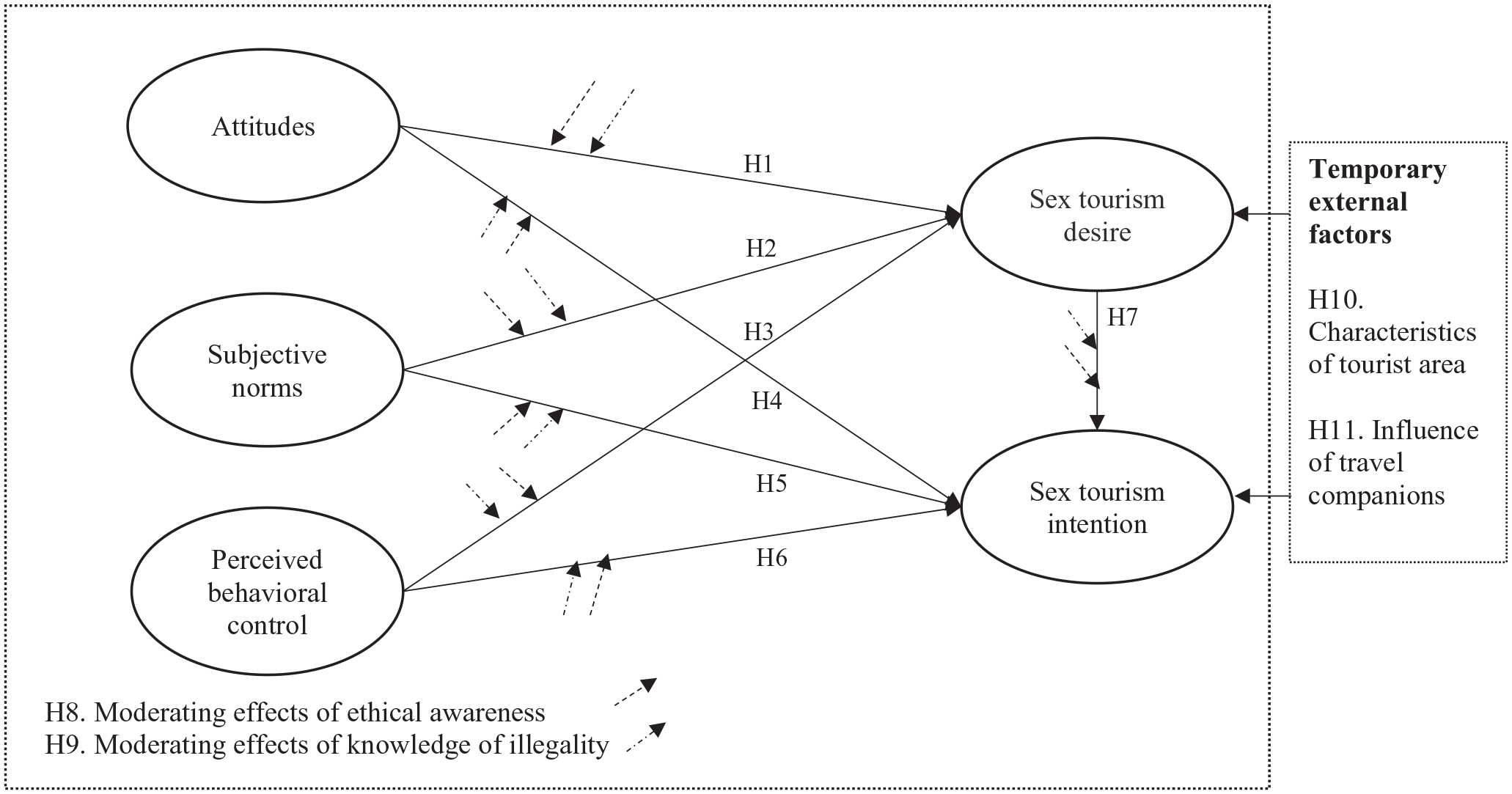
Proposed research model.
Experimental Overview
Four studies were conducted to examine how and what factors influence the behavioral intention of sex tourism. Study 1 identified confirmatory evidence that attitudes, subjective norms, perceived behavioral control, and desire exert significant impacts on sex tourism intention, and identified the moderating effects of ethical awareness and knowledge of illegality. Studies 2, 3, and 4 were scenario-based experiments. Study 2 compared differences in sex tourism intention across three scenarios, namely, traveling to a general destination, to a prostitution-legal destination, and with companions with a positive attitude about sex tourism. Studies 3 and 4 compared sex tourism intention given additional scenarios, where positive and negative factors coexisted. Specifically, Study 3 investigated the priming effects of ethics by comparing sex tourism intention before and after presenting a reminder of ethics across the three scenarios. Similarly, Study 4 presented a reminder of the illegality of sex tourism and compared sex tourism intention before and after the reminder. In these experiments, the reminders for ethics and illegality were adopted from the actual warning message sent by the Korean embassy to Koreans traveling abroad. Participants in Korea were recruited using convenience sampling from December 11, 2020 to March 10, 2021 for Study 1, and from April 1, 2020 to June 15, 2020 for Study 2. Participants in Study 2 were again used in Studies 3 or 4. Table 1 provides a list of the demographic profile of the respondents. Based on the findings and arguments of previous studies, the current research defined sex tourism in a broad sense; that is any travel during which tourists situationally experience local sexual encounters involving monetary exchange (Jeffreys 2003; Kempadoo 2004). And both male and female tourists were identified as potential sex tourists and, thus, as research subjects.
Demographics of the Sample.

Note: 1 USD = 1,105.5 Korean Won.
Study 1
The main objective of Study 1 was to explore the relationships between the variables, including attitude, subjective norms, perceived behavioral control, desire, and sex tourism intention, and to confirm the moderating effects of ethics and illegality.
Methods
The questionnaires were distributed using the Survey Monkey platform, which recruited the participants for the self-report survey using online panels. Prior to starting the survey, confidentiality was reconfirmed to alleviate potential concerns regarding social desirability. The participants were assured of anonymity and protection through Article 33 of the Statistical Act (protection of confidentiality) and that their information would only be used for the current research. Out of 308 questionnaires distributed, four were invalid, which led to a total of 304 responses for analysis (female = 55.9%; mean age = 35.8 years).
This study adopted validated measurement items from existing studies. The measurements for the TPB constructs (i.e., attitudes, subjective norms, perceived behavioral control, and sex tourism intention) were derived from Ajzen (1991) and Park, Hsieh, and Lee (2017) with multiple items. Sex tourism desire was measured using three items from Ying and Wen (2019). Items were rated using a five-point Likert-type scale ranging from 1 (strongly disagree) to 5 (strongly agree).
The study confirmed the validity of the latent variables by confirmatory factor analysis (CFA) and examined the relationship between the research variables by structural equation modeling (SEM). Invariance tests for the measurement were then conducted to analyze the moderating effects of ethics and illegality.
Results and Discussion
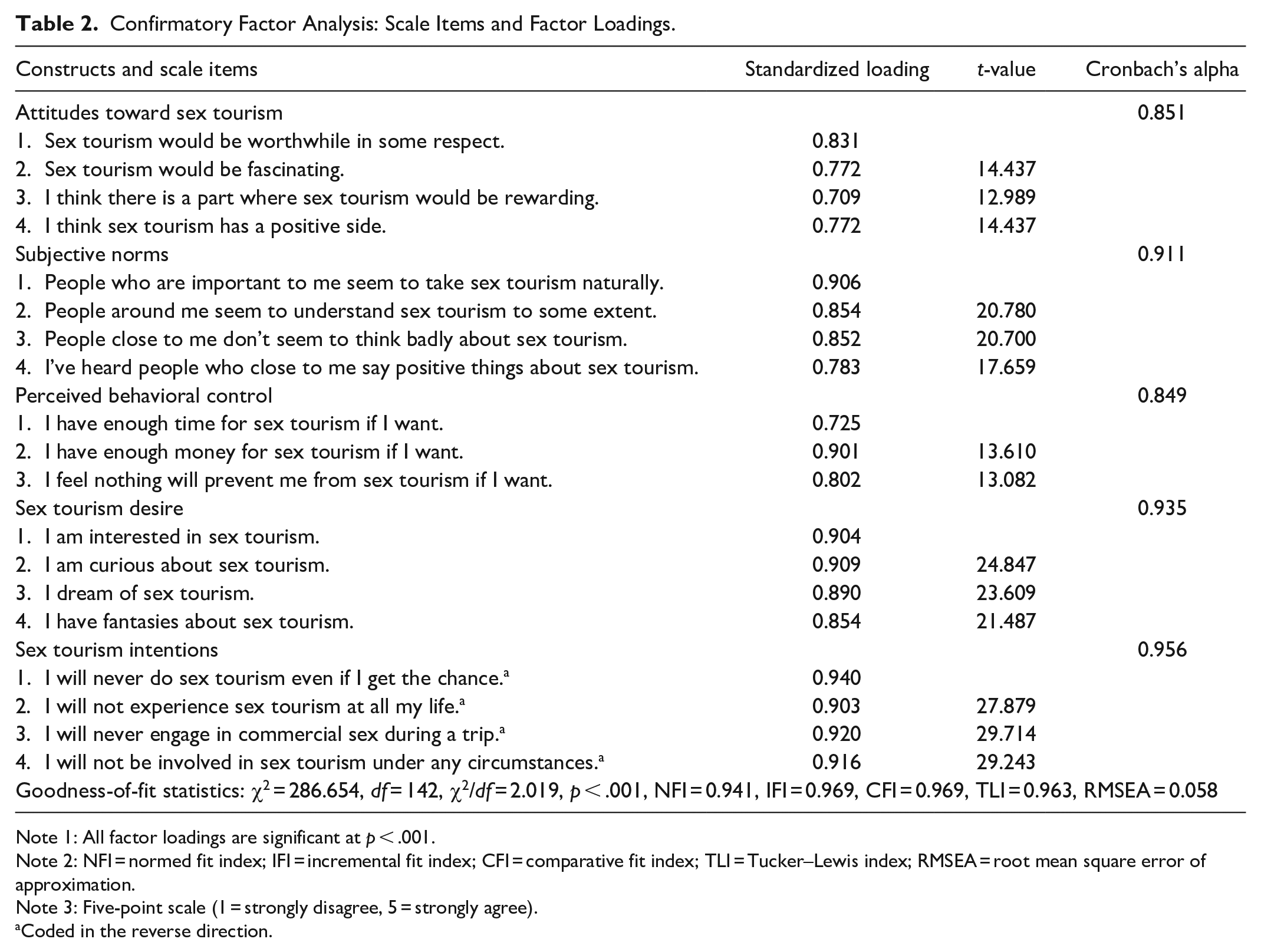
CFA verified that the proposed measurement model was suitable for the data (χ2 = 286.654, df = 142, χ2/df = 2.019, p < .001, NFI = 0.941, IFI = 0.969, CFI = 0.969, TLI = 0.963, RMSEA = 0.058; Table 2). All factor loadings were greater than or equal to 0.709, which was higher than the standard point.
Confirmatory Factor Analysis: Scale Items and Factor Loadings.
Note 1: All factor loadings are significant at p < .001.
Note 2: NFI = normed fit index; IFI = incremental fit index; CFI = comparative fit index; TLI = Tucker–Lewis index; RMSEA = root mean square error of approximation.
Note 3: Five-point scale (1 = strongly disagree, 5 = strongly agree).
Coded in the reverse direction.
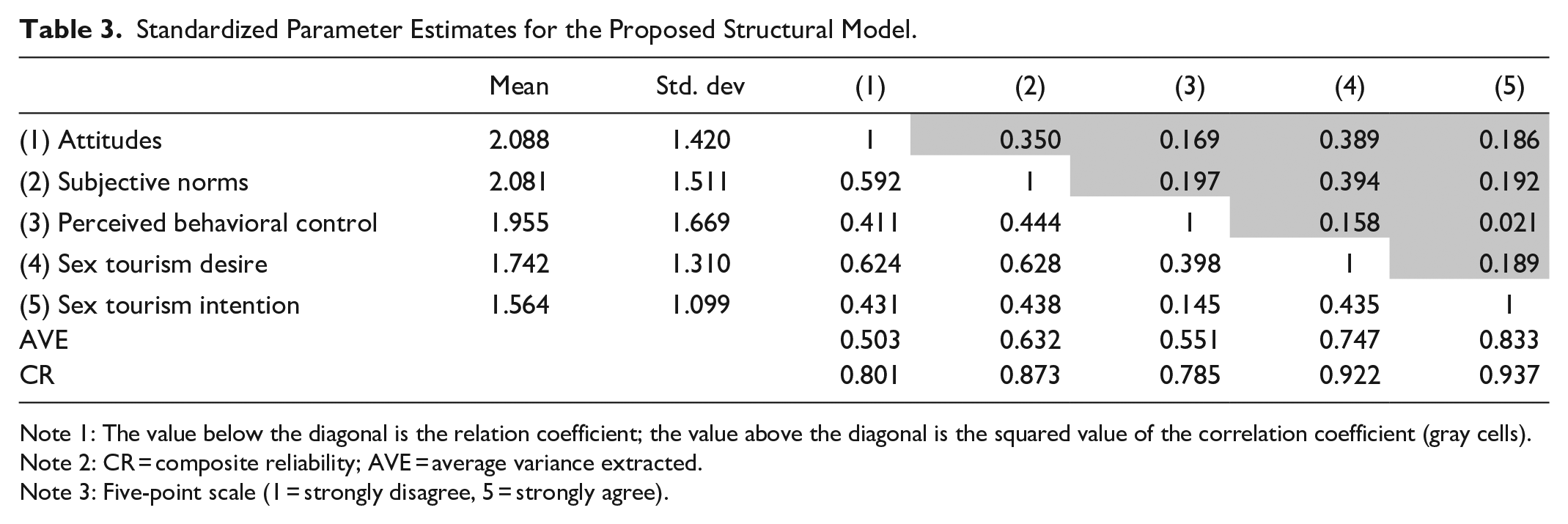
Table 3 indicates that average variance extracted (AVE) values for each construct exceeded a threshold of 0.5, which confirmed the convergent validity of the measurement model. Moreover, AVE values were higher than the squared correlation (R2) between pairs of items, which further confirmed the discriminant validity of the scales (Anderson and Gerbing 1988).
Standardized Parameter Estimates for the Proposed Structural Model.
Note 1: The value below the diagonal is the relation coefficient; the value above the diagonal is the squared value of the correlation coefficient (gray cells).
Note 2: CR = composite reliability; AVE = average variance extracted.
Note 3: Five-point scale (1 = strongly disagree, 5 = strongly agree).
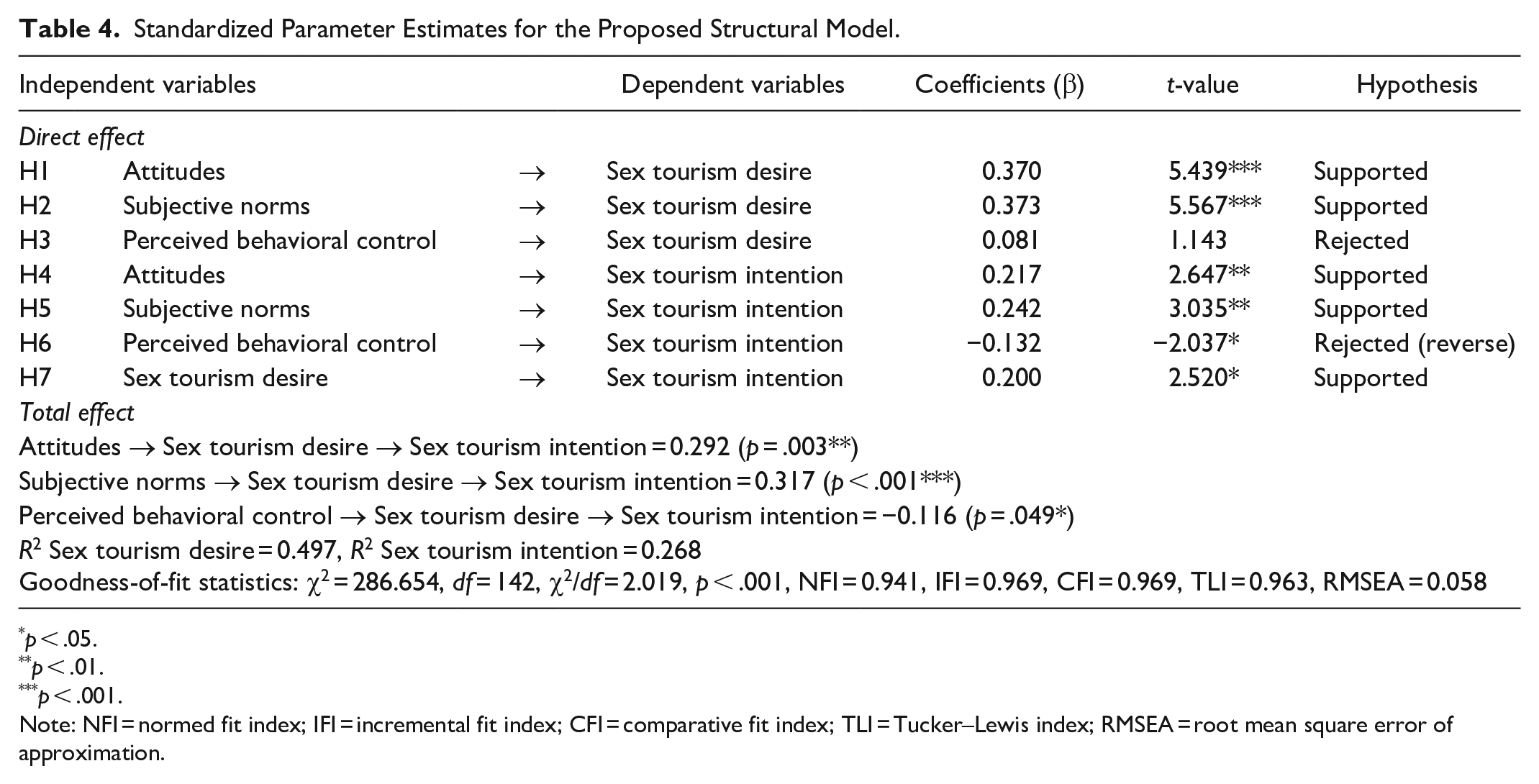
Table 4 depicts the results of SEM analyses. The model fit index was acceptable (χ2 = 286.654, df = 142, χ2/df = 2.019, p < .001, NFI = 0.941, IFI = 0.969, CFI = 0.969, TLI = 0.963, RMSEA = 0.058). The variance explained by the impacts of sex tourism desire and sex tourism intention were 49.7% and 26.8%, respectively.
Standardized Parameter Estimates for the Proposed Structural Model.
p < .05.
p < .01.
p < .001.
Note: NFI = normed fit index; IFI = incremental fit index; CFI = comparative fit index; TLI = Tucker–Lewis index; RMSEA = root mean square error of approximation.
Attitudes (β = 0.370, p < .001) and subjective norms (β = 0.373, p < .001) exerted positive impacts on desire, which supports H1 and H2. However, perceived behavioral control did not exert a significant impact on sex tourism desire, which rejects H3 (β = 0.081, p > .05). Attitudes (β = 0.217, p < .01) and subjective norms (β = 0.242, p < .01) exerted positive impacts on sex tourism intention, which supported H4 and H5. However, perceived behavioral control exerted a negative impact on sex tourism intention; thus, H6 was rejected (β = −0.132, p < .05). A positive relationship was noted between sex tourism desire and sex tourism intention (β = 0.200, p < .05), which supported H7. In terms of the total effects, subjective norms exerted the largest impact on sex tourism intention (β = 0.317, p < .001), which pointed to the critical role of other people and society in sex tourism intention.
As suggested by Byrne (2001), multi-group analyses were conducted to test the moderating effects of ethics and illegality. Table 5 presents the results of a multi-group analysis. Ethical awareness was measured using four items (e.g., sex tourism is ethically unacceptable). The sample was then divided into low- (N = 139) and high- (N = 165) ethics groups based on the median score. The median overall score for ethics was 4.6. Respondents with an ethical score of less than 4.6 were classified into the low ethics group while those with an ethical score of 4.6 or higher were classified into the high ethics group. As a result of comparing the Chi-square of the two groups, only the path from subjective norms to sex tourism desire was significant at the 0.05 level (χ2 (1) = 4.787, p = .029), which partially supported H8. In other words, individuals were less influenced by their surroundings if their level of ethical awareness was high. The finding suggested that increasing ethical awareness would be effective in reducing the demand for sex tourism. Thus, Study 3 further investigated the effectiveness of ethics using the scenario-based method.
Invariance Tests for the Measurement and Structural Models Between Low- and High-Ethics Groups.

p < .05.
p < .01.
p < .001.
Note: NFI = normed fit index; IFI = incremental fit index; CFI = comparative fit index; TLI = Tucker–Lewis index; RMSEA = root mean square error of approximation.
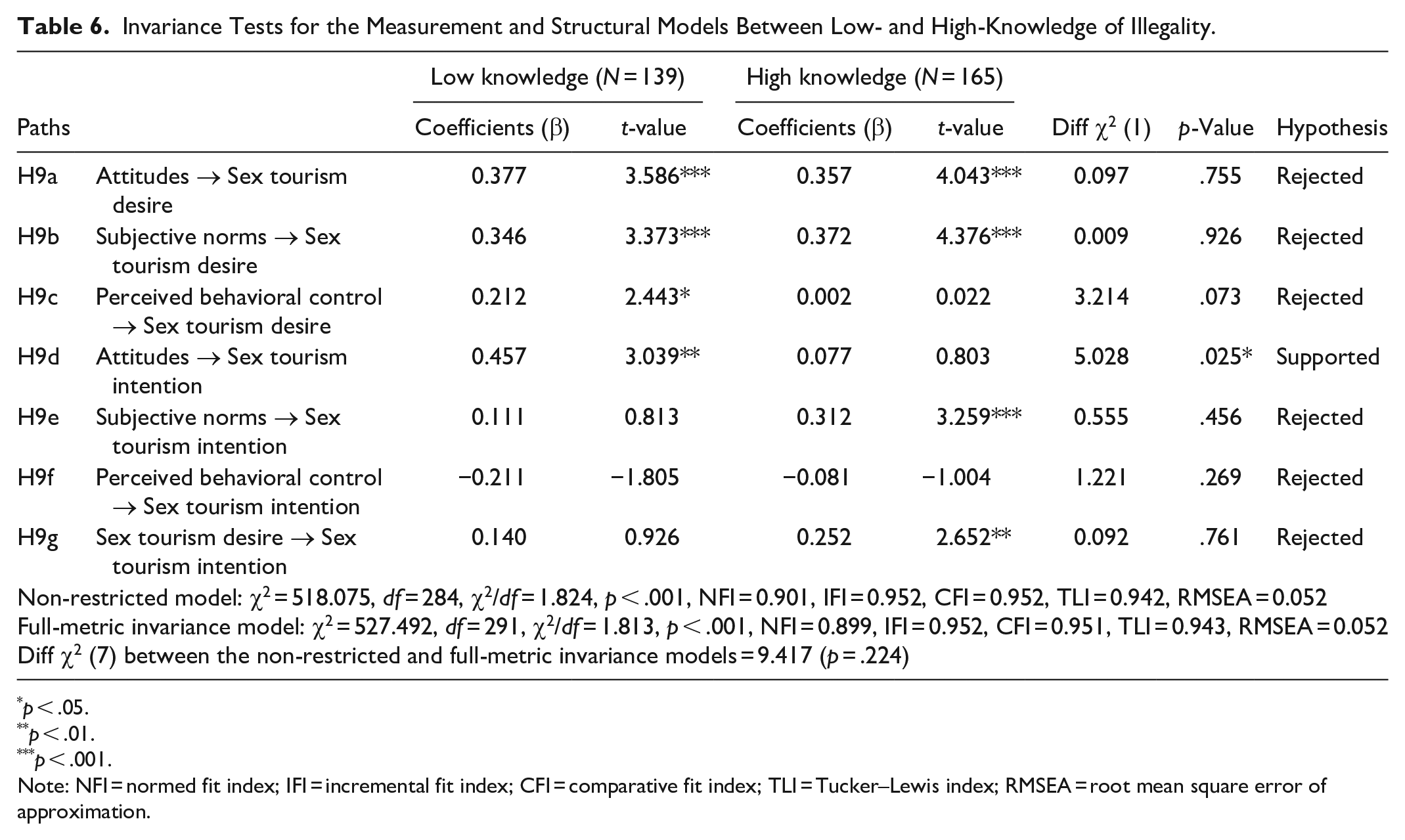
Table 6 illustrates the results of a multi-group analysis of the moderating effect of knowledge of illegality, which was measured using three items (e.g., I know sex tourism is illegal). Likewise, the sample was divided into low- (N = 139) and high- (N = 165) knowledge groups. The Chi-square difference between two groups was significant only for the path from attitudes to sex tourism intention (χ2 (1) = 5.028, p = .025). Thus, H9 was partially supported. The results suggested that informing tourists about the illegality of sex tourism may reduce the influence of positive attitudes about sex tourism on behavioral intention. Therefore, Study 4 further explored the effectiveness of the law using the scenario-based method.
Invariance Tests for the Measurement and Structural Models Between Low- and High-Knowledge of Illegality.
p < .05.
p < .01.
p < .001.
Note: NFI = normed fit index; IFI = incremental fit index; CFI = comparative fit index; TLI = Tucker–Lewis index; RMSEA = root mean square error of approximation.
Study 2
Sex tourism intention may be influenced not only by relatively persistent internal factors, such as attitudes and subjective norms, but also by temporary external factors in the tourism destination. Thus, Study 2 aimed to determine whether sex tourism intention and desire increase when an individual travels to an area where prostitution is legal (H10) or has a travel companion with a positive attitude toward sex tourism (H11). In Study 2, sex tourism intention was compared across the three scenarios.
Methods
As indicated in Table 1, 699 participants were recruited and were assigned one of three scenarios (control vs. legal area vs. positive companions).
Figure 2 depicts that Scenario 1 is related to a general tourism destination, whereas Scenarios 2 and 3 are related to a red-light district. In addition, prostitution is legal in Scenario 2, whereas travel companions exhibit a positive attitude toward prostitution in Scenario 3. The participants were instructed to read the provided scenario, visualize the situation, and write the keyword of the scenario to ensure that they fully understood the presented conditions. All data satisfied an instructional manipulation check (IMC). Even in the experimental design, measuring actual engagement in sex tourism is impossible, such that the latent variables of sex tourism desire and intention (Study 1) were used again in Study 2. Items were rated using seven-point Likert scale (1 = strongly disagree; 7 = strongly agree).
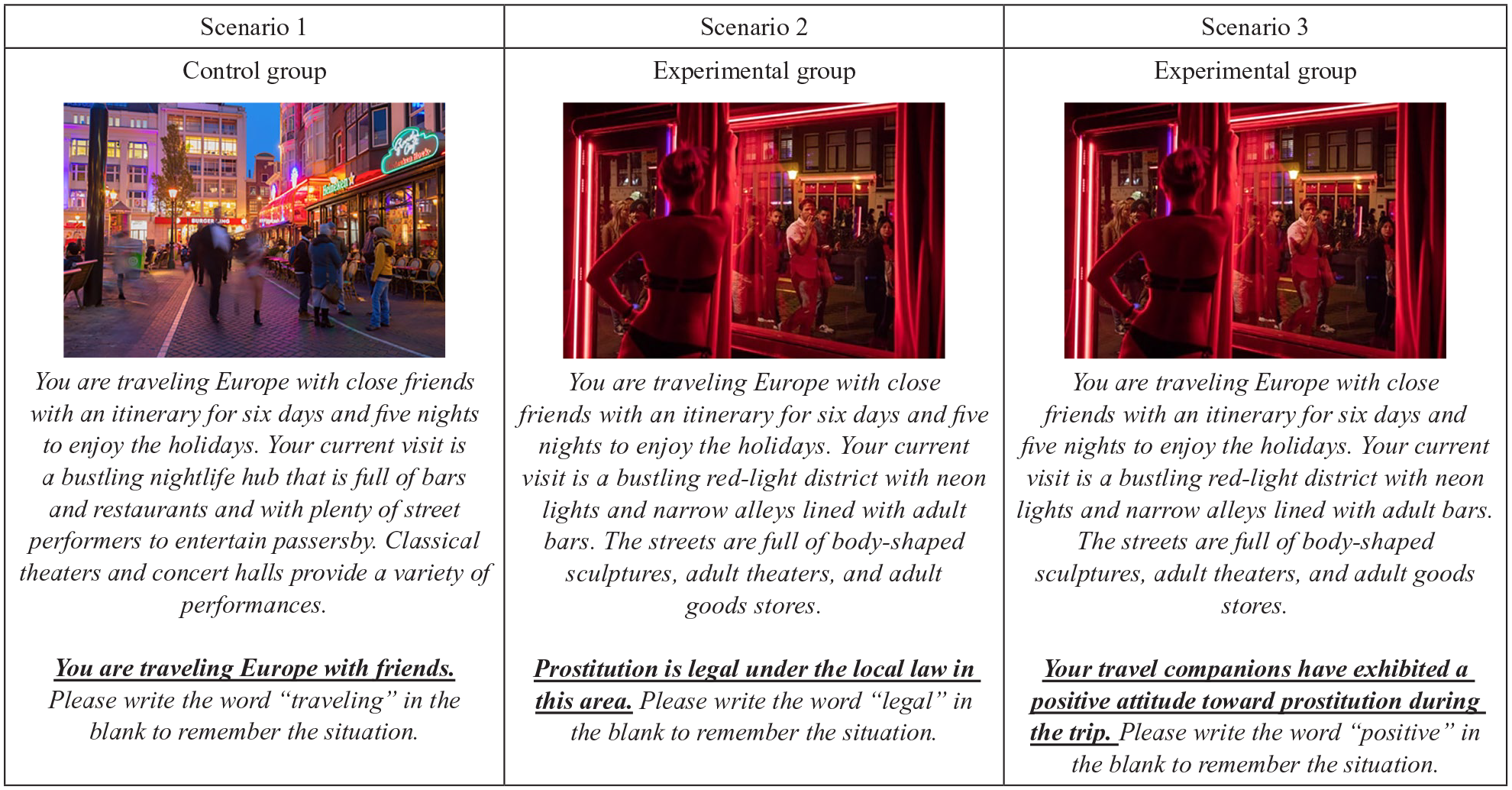
Three scenarios for the control and experimental groups.
Results and Discussion
Analysis of covariance (ANCOVA) was used to compare the mean values of desire and sex tourism intention across the three scenarios and, at the same time, to control for the effects of five other covariates, namely, gender, age, marital status, level of education, and income. The values for desire were 2.492, 2.720, and 2.761 for Scenarios 1, 2, and 3, respectively; however, the main effect was non-significant [F (2, 691) = 1.689, p = .186, η2 = 0.005]. Similarly, values for sex tourism intention were non-significantly different [F (2, 691) = 0.064, p = .938, η2 < 0.001] between scenarios (2.186, 2.182, and 2.233 for Scenarios 1, 2, and 3, respectively).
The findings implied that neither temptation at an area where prostitution was legal nor travel companions with a positive attitude about sex tourism increased sex tourism desire and intention. Instead, sex tourism desire and intention were likely dependent on an individual’s pre-existing tendencies, such as attitude or subjective norms (see Study 1).
Study 3
Study 3 intended to verify the effects of ethics through an experimental test. Study 1 demonstrated the moderating effects of ethics using ethical awareness inherent to an individual. In contrast, Study 3 used a message about ethics as a reminder and explores its immediate effectiveness across the abovementioned scenarios.
Methods
Out of the participants who completed the survey for Study 2, 368 were instructed to read an ethical reminder regarding sex tourism (n = 143, 118, and 107 for Scenarios 1, 2, and 3, respectively).
During the trip, the following text arrives from the embassy.
“Hello. We hope that overseas travel will give you an opportunity to get away from your everyday life and recharge. In particular, please be aware that sex tourism undermines your ethical character and dignity. Please do not engage in unethical activities while traveling.”
To help ensure that participants fully understood the message, they were instructed to write “unethical” as an IMC. Afterward, they rated the extent to which they agreed with the statements about sex tourism desire and intention using a seven-point Likert-type scale (1 = very strongly disagree; 7 = very strongly agree).
Results and Discussion
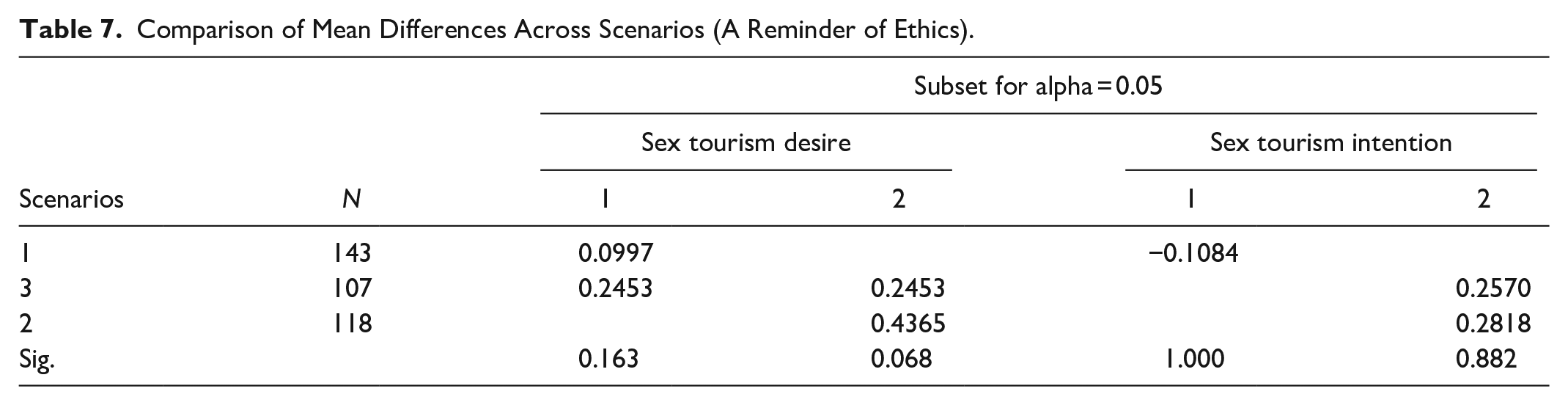
A paired t-test indicated that mean values of desire significantly differ before and after the ethical reminder for all scenarios (Scenario 1: Mbefore = 2.53; SD = 1.65 vs. Mafter = 2.43 SD = 1.54; p = .029; Scenario 2: Mbefore = 2.66; SD = 1.77 vs. Mafter = 2.22; SD = 1.45; p < .000; Scenario 3: Mbefore = 2.67; SD = 1.79 vs. Mafter = 2.42; SD = 1.71; p = .001; Figure 3). In addition, one-way ANOVA revealed that the values of differences differ between scenarios [F (2, 365) = 5.578, p = .004]. Thus, the Duncan post-hoc test was conducted. The result indicated that Scenario 2 exhibited the largest decrease (Table 7).
Comparison of Mean Differences Across Scenarios (A Reminder of Ethics).
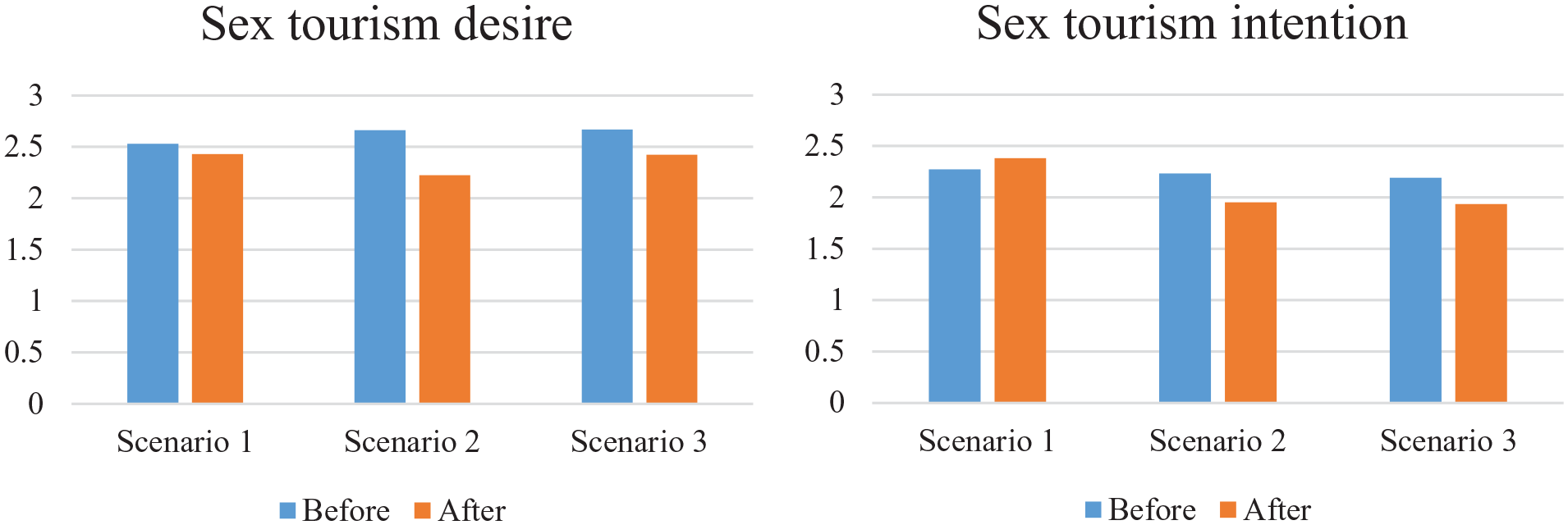
Sex tourism desire and intention before and after a reminder of ethics.
In terms of sex tourism intention, a paired t-test confirmed that the differences in the mean values before and after the ethical reminder were significant for Scenarios 2 and 3 (Scenario 2: Mbefore = 2.23; SD = 1.74 vs. Mafter = 1.95; SD = 1.59; p = .037; Scenario 3: Mbefore = 2.19; SD = 1.73 vs. Mafter = 1.93; SD = 1.52; p = .011) but not for Scenario 1 (Mbefore = 2.27; SD = 1.83 vs. Mafter = 2.38; SD = 2.01; p = .337; Figure 3). In addition, one-way ANOVA revealed that the values of differences differed between scenarios [F (2, 365) = 6.276, p = .025]. The Duncan post-hoc test indicated that Scenarios 2 and 3 exhibited decreases larger than that for Scenario 1 (Table 7). Therefore, H8 was partially supported. The findings suggested that ethical reminders are effective in reducing sex tourism intention. Therefore, the government’s intervention using text messages is justified.
Study 4
This study focused on the effects of the knowledge of illegality. Study 1 used prior knowledge of the illegality of sex tourism to demonstrate its moderating effects. Study 4 provided a reminder of illegality and explored its effectiveness in the abovementioned scenarios.
Methods
The 331 respondents who completed Study 2 but did not participate in Study 3, were asked to read a reminder about the illegality of sex tourism for Study 4 (n = 104, 117, and 110 for Scenarios 1, 2, and 3, respectively).
During the trip, the following text arrives from the embassy.
Hello. We hope that overseas travel will give you an opportunity to get away from your everyday life and recharge. Please be aware that prostitution abroad is illegal and can be punished under domestic law. Please do not engage in
The participants were instructed to write the keyword illegal after reading the message to ensure that they fully understood and memorized the message. Afterward, they rated the extent to which they agreed with the given statements about sex tourism desire and intention using a seven-point Likert-type scale (1 = very strongly disagree; 7 = very strongly agree).
Results and Discussion
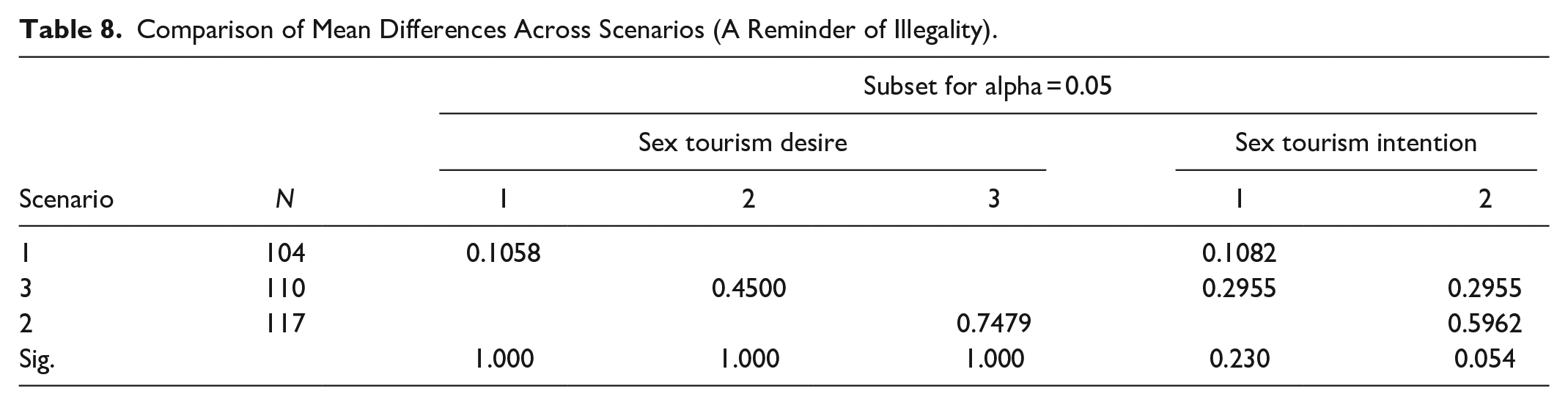
In terms of desire, a paired t-test indicated that the mean values significantly decreased after the ethical reminder for the three scenarios (Scenario 1: Mbefore = 2.40; SD = 1.71 vs. Mafter = 2.29; SD = 1.70; p = .017; Scenario 2: Mbefore = 2.89; SD = 1.90 vs. Mafter = 2.14; SD = 1.45; p < .000; Scenario 3: Mbefore = 2.77; SD = 1.80 vs. Mafter = 2.32; SD = 1.51; p = .001; Figure 4). In addition, one-way ANOVA revealed that the values of differences differed between scenarios [F (2, 328) = 9.425, p < .000], and the Duncan post-hoc test found that Scenario 2 displayed the largest decrease followed by Scenarios 3 and 1 at the 0.05 level of significance (Table 8).
Comparison of Mean Differences Across Scenarios (A Reminder of Illegality).

Sex tourism desire and intention before and after a reminder of illegality.
The paired t-test confirmed that the mean values for sex tourism intention were significantly different before and after the reminder for Scenarios 2 (Mbefore = 2.36; SD = 1.84 vs. Mafter = 1.77; SD = 1.40; p = .037) and Scenario 3 (Mbefore = 2.16; SD = 1.72 vs. Mafter = 1.87; SD = 1.50; p = .025) but not for Scenario 1 (Mbefore = 1.93; SD = 1.62 vs. Mafter = 1.82; SD = 1.52; p = .054; Figure 4). One-way ANOVA revealed that the values of differences differed between scenarios [F (2, 328) = 5.050, p = .007], whereas the Duncan post-hoc test indicated that Scenario 2 exhibited the largest decrease (Table 8). This study demonstrated that the illegality reminder is effective in decreasing sex tourism desire and intention under tempting situations. Thus, the current Korean policies that prohibits sex tourism by law and actively provides information in this regard is considered appropriate.
The results of Studies 2, 3, and 4 suggest that traveling to an area where prostitution is legal and traveling with companions with a positive attitude about sex tourism did not increase sex tourism intention. However, the reminders on ethics and illegality decreased sex tourism intention at varying levels according to the scenarios. Therefore, H10 and H11 were partially supported.
General Discussion and Implications
At the beginning, authors posed this question: Is sex tourism intention uncontrollable? In response, this study explored the antecedent variables influencing sex tourism intention, the impacts of ethical awareness and knowledge of illegality on sex tourism, and differences in responses across tempting situations. Study 1 revealed that attitudes toward sex tourism and subjective norms exerted a positive influence on sex tourism desire and sex tourism intention. However, perceived behavioral control neither influenced sex tourism desire nor sex tourism intent. Additionally, sex tourism desire exerted a positive influence on sex tourism intention. Moreover, ethical awareness moderated the influence of subjective norms on sex tourism desire, whereas knowledge of illegality exerted a significant influence on the path from attitudes to sex tourism intention. Studies 2, 3, and 4 indicated that traveling to an area where prostitution is legal or traveling with companions with a positive attitude about sex tourism did not increase sex tourism intention. However, the reminders on ethics and illegality decreased sex tourism intention in varying extent across scenarios.
Across the outcomes of the three scenarios and the two experiments with conditional messages, the findings contribute to the enhanced knowledge about sex tourism intention, which was found to be mostly influenced by personal subjective norms as well as attitudes about sex tourism. However, the receipt of alarming messages related to ethical awareness and knowledge of illegality can control such an intention.
Theoretical Implications
First, the theoretical originality of the current study lies in its exploratory attempt to conceptualize the decision-making process of sex tourism intention as well as its controllability through the issuance of warning messages regarding ethics or illegality using serial scenario-based experiments. Importantly, the current study confirmed the use of the TPB to investigate the intention to engage in sex tourism and extended the theory by including desire. To the best of our knowledge, this study is the first to contextualize the ETPB in a predictive model, which provides a complete theoretical basis for the elucidation of the formation of behavioral intention toward sex tourism. The previous research mainly focused on the motivation, perceptions, or feelings of tourists regarding commercial sex (Berdychevsky, Gibson, and Poria 2013; Kosuri and Jeglic 2017; Ying and Wen 2019). The current study filled the research gap in the literature by understanding individual decision-making and by highlighting the subjective norms that most significantly influenced sex tourism intention. The proposed model explained 49.7% of variance in desire and 26.8% of variance in intention to engage in sex tourism, which suggested that integrating the ETPB into the research on sex tourism was appropriate.
Second, the current research empirically demonstrated the moderating effects of ethical awareness and knowledge of illegality on sex tourism intention not only through SEM but also through the scenario-based experiments. In Study 1, multi-group analyses were conducted to compare the paths using the ETPB. The outcomes indicated that high levels of ethical awareness decreased the impact of subjective norms on desire, whereas high levels of knowledge of illegality mitigated the impact of attitudes on sex tourism intention. Studies 3 and 4 informed travelers of ethics or illegality regarding sex tourism, which significantly reduced sex tourism desire and intention. The result was in accordance with that of Mazar, Amir, and Ariely (2008), who reminded participants of the standards for morality (the Ten Commandments) to eliminate cheating. Given that the nature of sex tourism in which the effectiveness of ethics and legality is concealed, the results of current research are pioneering.
Third, this study is one of the early ones that empirically tested the roles of tourist destination and travel companions in sex tourism intention using an experimental research method. The results indicated that neither area where prostitution is legal nor travel companions influenced sex tourism intention compared with the control group. The findings were inconsistent with those of Ying and Wen (2019), that is, friends and the characteristics of a tourism destination are critical motivators for tourists in becoming involved in sex tourism. This inconsistency may be related to social desirability bias, that is, sex tourists likely attribute the cause of sex tourism to external factors instead of themselves to avoid guilt and accusation. When applied to self-perception theory, the internal reward system (i.e., ethics is part of one’s internal reward system) influences control over behavior (Bem 1972). Although the impact of unethical behavior on self-concept differs according to particular actions, socio-psychologists concur that individuals typically intend to maintain their positive self-concept (Mazar, Amir, and Ariely 2008). According to a study conducted by the Ministry of Gender Equality and Family in Korea in 2019, 70 out of 2,300 respondents (4.7%) stated that they experienced sex tourism, whereas 576 (25%), which is approximately five times higher, confirmed that their acquaintances had experienced sex tourism. In other words, providing honest answers is likely difficult for respondents because prostitution is socially condemned as an illegal and immoral act. Another possible explanation for this inconsistency may be the different research methods and samples used. Although Ying and Wen (2019) conducted a questionnaire survey on male Chinese with previous engagement in sex tourism, the current study extended the test subjects into the general public and used a scenario-based experiment.
Fourth, less documentation exists on sex tourism among the Asian population. The current study is believed to be the first quantitative study that used hypothetical scenarios in the context of Asian sex tourism. Although a few scholars attempted to investigate Asian motivation for sex tourism through quantitative studies (Ying and Wen 2019; Ying et al. 2021), a dearth exists in research that empirically tests the decision-making framework for sex tourism among Asian consumers. In addition, the majority of studies on sex tourism have adopted a qualitative research method that are likely to involve the ideological prejudice of the researchers, undermining the potential for objective exploration and analysis (Benoit et al. 2018).
Managerial Implications
This study has several managerial implications for policy makers. First, this study can contribute to the implementation of effective preventive strategies in terms of how the government issues warning messages to individuals traveling overseas regarding the ban on sex tourism. The results revealed the positive impact of the messages on ethical awareness and knowledge of illegality on the controllability of sex tourism. In particular, the level of the effectiveness of the reminder was high in the scenario where traveling to an area where prostitution is legal. Therefore, texting businessmen who are visiting these potential sex transpirable locations, such as the Netherlands, Germany, Mexico, and Nevada in the United States (where prostitution is officially recognized as a profession; Benoit et al. 2019), will likely to be the most effective means of achieving the goal of the Korean government to reduce sex tourism. Business trips to Asian countries, where prostitution is mainly illegal and socially unacceptable, should also be monitored. As Kosuri and Jeglic (2017) asserted, crimes committed in developing countries tend to be perceived as less serious than those in developed countries. Thus, sending text messages that indicate that sex tourism is unethical and illegal to all outbound travelers can prevent sex tourism intention, which may lead to actual action.
Second, the present study acknowledged the importance of individual attitudes and subjective norms about sex tourism, which, thereby, implies that the implementation of education and campaigns to influence attitudes and norms at the community, school, and the broader societal level will be effective in reducing the demand for sex tourism. According to Aristotle, the performance of appropriate moral training provides individuals with the ability to apply the knowledge necessary to make well informed moral judgments (Henry 2002). Various tools, such as the UNWTO Global Code of Ethics and guidebooks of Tourism Concern (i.e., the Ethical Travel Guide) may assist in educating tourists. Moreover, Elia and Eliason (2009) argued that sex education programs can reduce the tendency of sexual risk-taking and lead to proper decision-making among the young generation. According to Hawke and Raphael (2016), the search and preparation for sex tourism are mainly conducted online prior to actual trips. Therefore, tracking online sex business sites should be consistently supervised using a strong regulatory policy.
Third, the current study contributes to the establishment of appropriate sex tourism policies according to the culture and ideology of each country. The results of Study 2 suggest that only legalizing prostitution may neither increase the sex tourism intention of general tourists nor revitalize the tourism industry. Thus, the sex tourism market should be regarded as a niche market for special-interest tourism (SIT). Several countries use prostitution to promote the tourism industry and the local economy (Kibicho 2016). However, general tourists are less likely to respond to the immediate lure of the tourist destination, such that these strategies should be very carefully implemented.
Limitations and Future Research
This study has its limitations. First, the probability sampling for all Koreans is realistically impossible; thus, a convenience sample was used. As such, caution should be exercised in generalizing the results. Second, this research used a self-reported online survey; thus, there was little control over the accuracy and quality of the responses. Third, the study is limited in creating akrasia. The current study is a scenario-based research. Therefore, future studies should consider the difference between the imaginary and the actual situation, which would likely presents temptations and engenders the external stimulus at the destination. Fourth, this study recruited Korean adults, which indicates a limitation in generalizing the result to other cultures. Future studies may conduct a cross-cultural comparison between eastern and western countries, which presents a more insightful understanding of sex tourism. Finally, IMC was identified to minimize bias response behavior. However, responses to the questionnaire regarding sex tourism de facto have their limits.
Footnotes
Author Contribution
Dr. Ji Youn Jeong contributed to the conceptualization, research design, data collection, data analysis, and writing; and Dr. Kyung-Yur Lee contributed to the research design, data collection, and writing.
Declaration of Conflicting Interests
The author(s) declared no potential conflicts of interest with respect to the research, authorship, and/or publication of this article.
Funding
The author(s) received no financial support for the research, authorship, and/or publication of this article.
