



Abstract
The emergence of the Internet of Things (IoT) has the potential to reframe interactions among tourists, destinations, and service providers in multiple ways. Yet, there is scant empirical evidence on how individuals develop their relationships with IoT devices and how this technology can serve tourists in planning and deciding on particular destinations or services. Drawing on the assemblage theory, we investigated tourists’ interactive experiences when planning trips with and without smart speakers. Methodologically, we employed an interactionist/performative approach that included three qualitative studies to examine tourists’ information production, expressive roles, and information processing styles during interactions with smart speakers in the pre-visit stage. The analysis was driven by grounded theory and utilized computerized psycholinguistic techniques to enrich our research implications for theory, methodology, and tourism management.
Keywords
Introduction
The Internet of Things (IoT) comprises billions of devices that can communicate via the internet with consumers and with other systems, services, and devices. Among the many IoT devices currently available, the so-called smart speakers with voice assistants have achieved the highest rates of consumer acceptance worldwide (Kowalczuk 2018). Nearly 40% of U.S. households owned at least one smart speaker in 2020, and the entire smart speaker industry is expanding, with market revenues estimated at 19.6 billion U.S. dollars by the end of 2021 and market revenue projections of 35.5 billion by 2025 (Statista 2020). Major technological companies offer a wide array of mainstream smart speakers, including Alexa (Amazon), Siri (Apple), and Google Assistant (Google). These devices allow users to pose questions, ask a task to be performed, and engage in simulated human-to-human conversation through voice interactions (e.g., “Hey, Siri, do you love me?”).
The influence of IoT technology and smart speakers with voice assistants on consumers is expected to challenge traditional understandings of individuals’ relationships with objects (Novak and Hoffman 2019). While prior research has focused exclusively on the capability of objects to affect individuals’ perceptions (a subject-centric approach), new research perspectives aim to explore how individuals and smart objects affect each other and generate positive/negative outcomes through their interaction (an interaction-centric approach). This interest in developing new approaches to understanding human interactions with smart objects has stemmed from the challenges associated with the subject-centric approach, which considers individuals to be as mere receptors of stimuli during encounters with the technological touchpoints of companies (Hoffman and Novak 2018). Recent studies adopting an interaction-centric approach have highlighted the need to consider consumers as creators of stimuli and to understand their motivations and active roles in interactions with new technologies (Bolton et al. 2018; Jiménez-Barreto, Rubio, and Molinillo 2021).
The IoT divides an individual’s life into two frames: one formed by the physical use of everyday objects, and the other formed by the behavioral and virtual tracking that these objects convey about their users (McKinsey Group 2015). From a tourism marketing perspective, this panoptic view of a new, interconnected tech reality gives organizations a staggering amount of data on virtual tourists. Using such data, organizations can anticipate tourists’ needs and provide them with an individualized and enjoyable consumption experience with regard to planning trips and visiting a destination or help them to recall memories after a trip. We are particularly interested in exploring how individuals generate and process information when planning their trip in the presence of a highly adopted IoT device, such as a smart speaker.
As individuals make intensive use of information while planning trips, tourism has become a focal context in which they can interact with smart technology (Buhalis et al. 2019; Jeong and Shin 2020; Tussyadiah and Miller 2019). The use of the IoT to foster tourism consumption is currently framed through the lens of what has been called smart tourism design. Smart tourism design represents an academic and managerially holistic effort aimed at developing better digital artifacts that support new and innovative processes, systems, and experiences that can be used to reshape tourism (Xiang, Stienmetz, and Fesenmaier 2021). Here, the tourism and marketing literature aligns with the mutual goal of exploring how smart technology influences individuals’ trip planning. Additionally, the proliferation of new communication channels, such as smart speakers, may help tourists reduce risk by enabling them to use real-time information about the structural effect of the COVID-19 pandemic on destinations and service providers before they travel (Kim et al. 2022).
Existing studies on smart tourism have described the IoT as a feasible way of promoting destinations through sensors that collect data and actuators that transmit data through devices such as smartphones and smart speakers with voice assistants (Gretzel et al. 2015; Xiang, Stienmetz, and Fesenmaier 2021). Furthermore, following the subject-centric approach, some tourism and hospitality studies (e.g., Huang et al. 2017; Loureiro et al. 2021; Tussyadiah and Miller 2019) have explored how smart devices influence tourists’ attitudinal and behavioral responses. However, in the current academic tourism literature, tourists’ interactions with IoT devices, such as smart speakers, remain an unexplored phenomenon (Loureiro et al. 2021). Additionally, there are multiple calls from IoT developers to make smart speakers more attractive and valuable for direct purchases (eMarketer 2020) and address customers’ perceived loss of privacy while interacting with them (Ioannou, Tussyadiah, and Miller 2021; Novak and Hoffman 2019).
The present research introduces a new approach to the tourism literature—the interaction-centric approach—to respond to the following research questions: How do tourists interact with smart speakers through their expressed roles and information created in the pre-visit stage? In what ways must smart speakers improve to become more relevant for planning tourism consumption?
Using the interaction-centric approach, we aim to establish new connections between the individual and tourism destinations through the mediation of smart speakers. In addition, we extend the understanding about tourists’ encounters with smart speakers during their information searches about a destination. We analyze this interaction as a mechanism to observe whether smart speakers enhance the creation of more objective and analytical information about destinations and tourism and hospitality companies (e.g., distances, transportation costs, and tourist ratings of an attraction). Overall, we explore how the objective information created during interactions with smart speakers affects individuals’ processing, expectations, and relationships with tourism destinations.
We began our research program by analyzing the interactive experience with smart speakers in the pre-visit phase as part of trip planning. Our goal is not to elaborate a new linear or hierarchical model of tourists’ behavior when planning a trip; instead, our main goal is to explore and understand, with an experiential/relational motivation (Novak and Hoffman 2019), the triad formed by (a) the information generated, (b) individuals’ expressed roles, and (c) individuals’ processing of the information produced during the interaction between the tourist and the smart speaker. Collectively, these three main elements of the study are conceptualized as tourists’ interactive experiences with smart speakers while planning a trip.
Tourists’ interactive experiences with smart speakers are evaluated through a multimethod approach using focus groups and online storyboard elicitation techniques to examine tourists’ interactions while planning a trip with and without a smart speaker. As a result, we offer an original conceptual reflection on tourists’ interactive experiences with IoT devices when planning tourism consumption. Particularly, our theoretical discussion integrates a multidisciplinary range of conceptual approaches, including the assemblage theory (DeLanda 2016), consumer-object assemblage experiences (Hoffman and Novak 2018), information-processing styles (Nisbett et al. 2001), and the construal level theory (Liberman and Trope 1998). For destination managers and hospitality/attraction service providers, we provide a cohesive overview of the marketing potential of smart speakers with voice assistants.
Consumer Experiences With the IoT
Research on consumer behavior has traditionally focused on how individuals develop relationships with objects through interactions. Within these interactions, objects can facilitate consumers’ creation of new meanings, beliefs, and the discovery of the utilitarian and symbolic value of objects (Belk 1988; Fournier 1998). However, when objects are also responsive to consumers’ actions, such as IoT devices, there is a need to better understand how consumers and smart objects contribute to these interactions (Novak and Hoffman 2019).
In the theoretical transition of recognizing that smart objects can have their own agency, prior studies on consumer–object interaction have focused on individuals’ response to the stimuli and symbolic meanings of objects (subject-centric approach). Examples of this include perceptions of the attractiveness, security, credibility, or quality of the smart objects and the influence of these perceptions on individuals’ satisfaction with the technological device and intention to reuse (Hoyer et al. 2020). From the perspective of the philosophy of technology, this means that the research focus has been centered on a device paradigm, that is, whether the device is competent in the production of stimuli and whether such stimuli enhance consumers’ attitudinal and behavioral responses (Borgmann 2007).
In contrast to the subject-oriented approach, current theoretical developments have called for an interaction-oriented perspective when seeking to understand individuals’ experiences with smart objects (Bolton et al. 2018). Thus, researchers are exploring what the consumer and the smart object bring to the interaction and the types of outcomes that result from such assemblages (Novak and Hoffman 2019). Philosophically, this means that the current research focuses on how both parts of the interaction generate things and practices, as an assemblage, that are (in)capable of effectively solving a problem/task (Borgmann 2007).
Therefore, in prior studies on individuals’ use of the IoT, there is a contra-positioned duality between two lines of research: one that sees consumers as receptors and processors of the stimuli of smart objects (subject-centric) and another that seeks to delimit which components are contributed by the consumer and the smart object and the overall result of this combination (interaction-centric). In Table 1, we present examples of empirical studies on smart speakers and voice assistants in the tourism and hospitality literature.
Empirical Research in Tourism and Hospitality Literature About Voice Assistants.
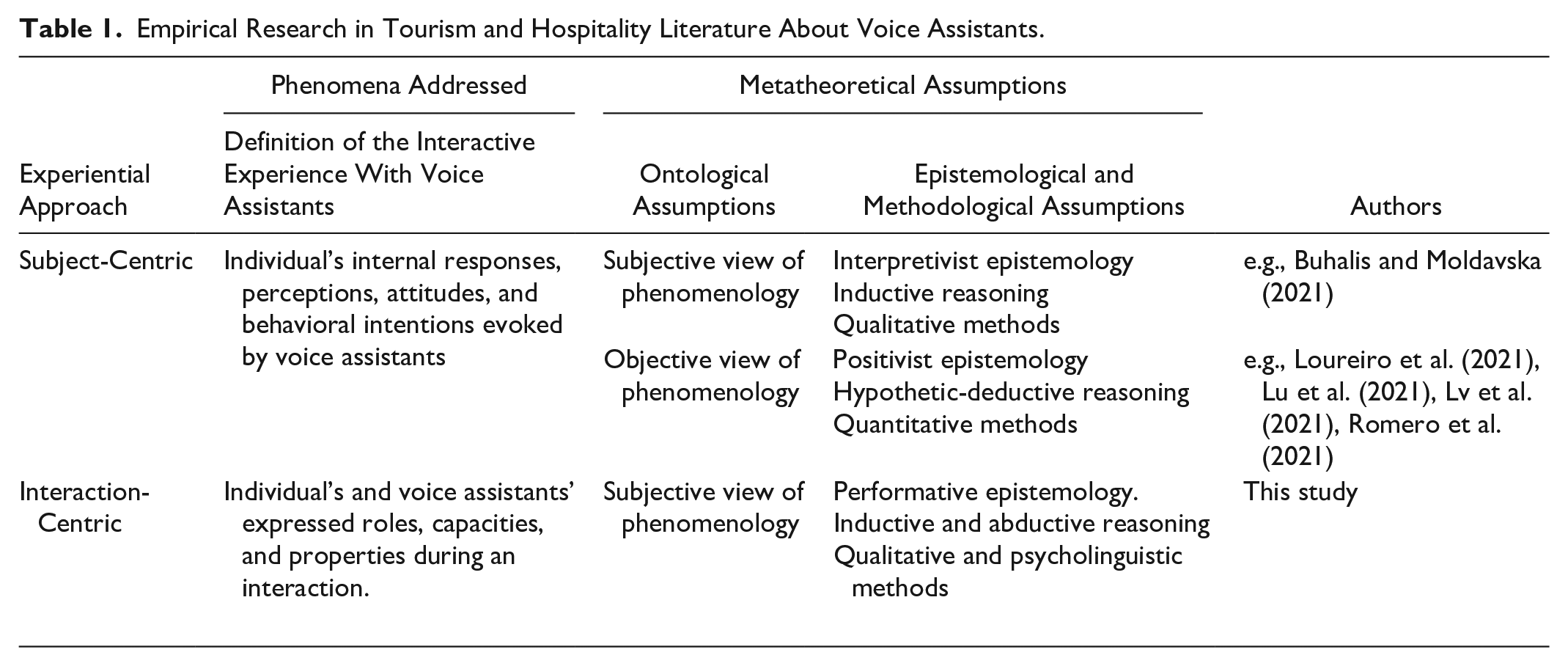
From a subject-oriented perspective, we identified two main lines of research that are aimed at understanding consumer–IoT device interactions. The first examines factors contributing to the dissemination and intention to use smart speakers (e.g., Kowalczuk 2018; Park et al. 2018) and the measurement of perceived value, tolerance of service failure, credibility, and the quality of the relationships with voice assistants (e.g., Loureiro et al. 2021; Lu, Zhang, and Zhang 2021; Lv et al. 2021; Romero et al. 2021). The second line of research examines the negative aspects of IoT devices, for example, when consumers perceive potentially deliberate, malicious behaviors on the part of IoT providers in relation to consumer privacy (e.g., De Cremer, Nguyen, and Simkin 2017; Kim et al. 2019).
From an interaction-oriented perspective, a third line of research seeks to conceptualize and explain the consumer–smart object experience (Hoffman and Novak 2018) as an assemblage phenomenon. Interpretations from the assemblage perspective suggest that the communicating parties (i.e., individuals and smart speakers) can affect and be affected by each other when a particular piece of information is sought in a consumption context. Hoffman and Novak’s approach, influenced by the assemblage theory (DeLanda 2016) and neo-Heideggerian schools of thought (Bogost 2012), posits that consumer–smart object interaction establishes a flat ontology with regard to the potential of humans and smart objects to affect the overall value produced during the interactive experience. This means that consumers and smart speakers are considered at the same horizontal level of agency, where both are potential contributors to the interaction. Thus, what is observable from this perspective is whether both parts of the interaction are contributors and not simply whether the device influences (either positively or negatively) consumers’ attitudinal and behavioral responses. These arguments are in line with Heidegger’s critique that contemporary technological practice (the device paradigm) distracts us from the “great embodiments of meaning” (a focus on things and practices derived from interactions with technology; Borgmann 2007).
Conversations With IoT Devices in Tourism: The Interaction-Centric Perspective
Tourists can engage with IoT devices to obtain information, evaluate other people’s opinions, and develop a two-way conversation with a smart device while deciding on a destination (Buhalis et al. 2019; Xiang, Stienmetz, and Fesenmaier 2021). Although smart speakers have not yet become a mainstream medium for shopping (eMarketer 2020), understanding the potential of IoT for destinations and tourist service providers is essential for the development of better smart devices (Pappas et al. 2021). As voice/smart assistants are proposed as an interrelated technology in individuals’ everyday life (through their presence on smartphones or as part of the household equipment), these devices can play an important role in the post-COVID-19 era. For example, tourists can reduce risk by using a smart speaker to know in real time whether the situation in a particular destination is favorable for travel.
One question regarding the use of smart speakers in tourism consumption planning is how the smart object modulates tourists’ perceptions of physical destinations and the direction in which this occurs. For example, in direct interaction with smart speakers, the information produced by the device tends to be expressed as objective indicators extracted from the internet, such as distances, the modes of transportation available, or tourists’ numerical ratings regarding their satisfaction with hotels or tourism attractions (according to Google Assistant, “there are more than 20 hotels with five-stars ratings in Paris”). Thus, tourists’ interpretation of destinations through the mediation of IoT devices can be regarded as a way of objectivizing the physical world in terms of processing representations of distance, costs, and time, among other indicators.
The presence of a smart speaker while planning a trip ran theoretically parallel to prior research on individuals’ distinct ways of describing experiences and situations with an abstract or concrete focus. Building on the construal level theory (Liberman and Trope 1998), events (e.g., a tourism consumption) can be represented at distinct levels of construal (lower or higher construal levels) depending on the perceived psychological distance between the self and the event. A lower-level construal is a concrete, relatively unstructured, and contextualized representation that includes the subordinate and incidental features of an event. A higher-level construal is an abstract, schematic, and decontextualized representation that extracts the gist of the event from the information available. Hence, the presence of a smart speaker while planning trips may drive tourists to express low construal levels regarding the information they gathered through interaction. This is because the focus of the interaction may be based on objective indicators focused on determining how to go to the destination (transportation mode available) or how to obtain the maximum value from a tourism or hospitality company (price comparison of tourism attractions) rather than reflecting on what to do at the destination (Clark and Semin 2008; Smith and Semin 2004).
The objectivization of destinations through the use of smart speakers reinforces the theoretical idea that the interaction between tourists and smart objects reveals an instrumentalization mechanism in the construction of expectations of physical space (Thrift 2008). Here, we observe that the academic tourism literature lacks contributions regarding the challenge of explaining whether the intensive use of smart objects in tourism consumption planning necessarily results in a more cognitive objectivization of spaces in terms of tourists’ interpretations of reality.
Exploring Tourists’ Interactive Experiences With Smart Speakers
Following an interaction-centric approach, we aim to better understand tourists’ and smart speakers’ contributions to the interaction and whether these contributions influence the objectivization of the destination through the smart speaker when planning a trip. We reflect on the latest theoretical developments of Hoffman and Novak (2018) regarding the consumer–object experience, which adopt the assemblage theory (DeLanda 2016) and the object-oriented perspective (Bogost 2012).
From a philosophical point of view, the assemblage theory explains how the interaction of entities as components of an assemblage generates specific properties and capacities, emphasizing the importance of interaction in its own right over the sum of its parts (DeLanda 2016). Properties are defined as the measured characteristics of the conformed assemblage, while capacities are described as what entities in the assemblage can do. Novak and Hoffman (2019) ground consumer-smart object interaction in the assemblage theory, arguing that “both consumers and objects are viewed has having some kind of experience and are able to express agentic and/or communal roles in their interactions as parts of an assemblage” (p. 219). Additionally, the authors’ conception of the consumer-smart object experience (Hoffman and Novak 2018; Novak and Hoffman 2019) adopts an object-oriented approach rather than a human-centric (anthropocentric) approach. They assume that, in an interaction, smart objects have the capacity to affect and be affected. For example, when considering the properties of the consumer experience, one can measure the behavioral property of how a consumer is affected by a smart speaker as well as the behavioral property of how the consumer affects the smart speaker. Therefore, the traditional subject-centric approach, which conceptualizes the consumer experience only from the consumer’s point of view, provides a limited understanding of the consumer-smart object experience. These authors argue that both the smart speaker and consumers can affect and be affected by what is created at the informational/relational level during an interaction (in which the object has its own agency), and what matters for a positive interactional experience is not whether the object is perceived as a human but whether it shares the user’s goals (Tegmark 2017).
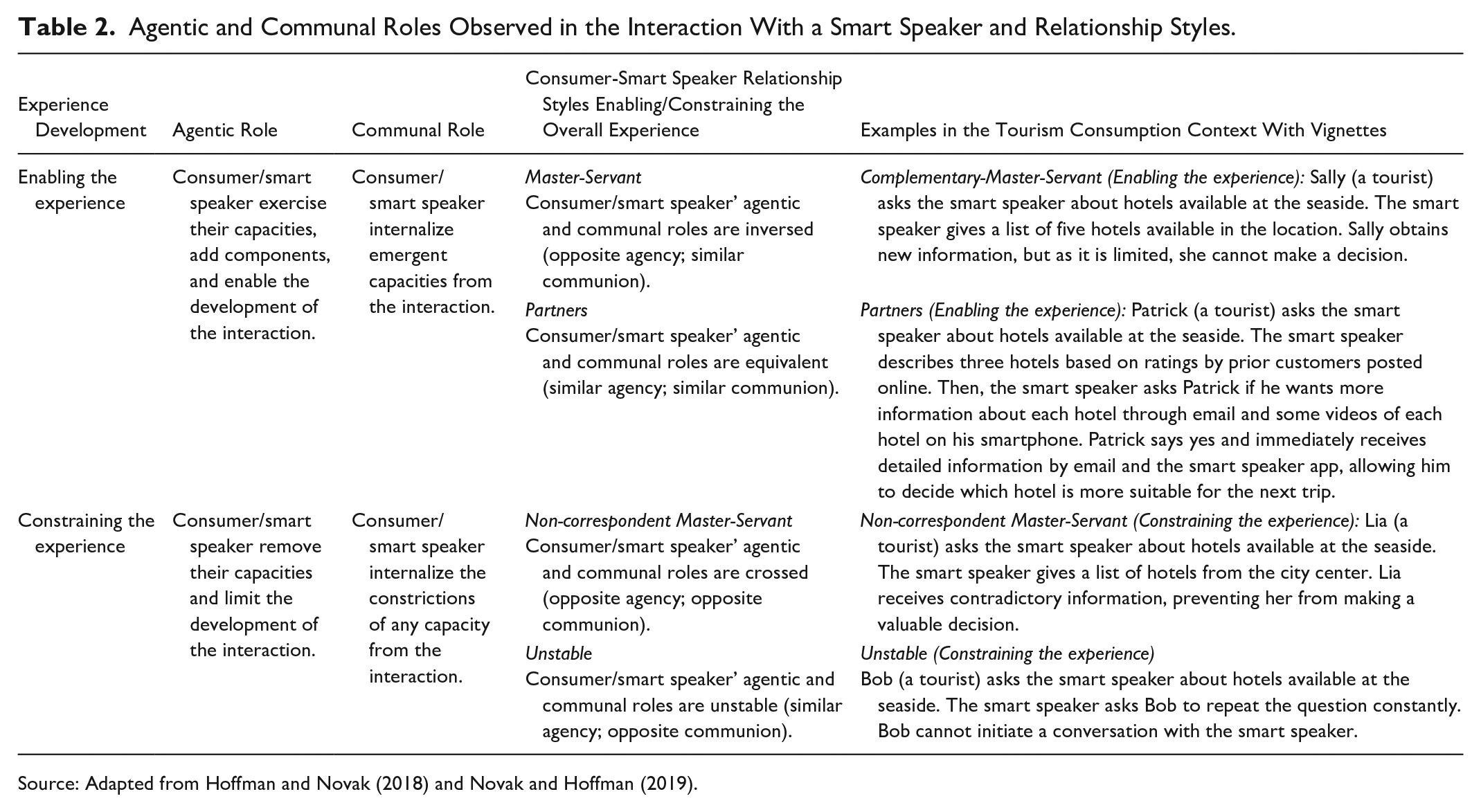
Hoffman and Novak (2018) detect two main expressed roles of consumers (namely, their agentic and communal roles), which are central to consumer-smart object interactions. The agentic role refers to the individual’s and smart speaker’s ability to affect the whole interaction, while the communal role refers to how the interaction as a whole can affect the individual and the smart speaker. Through two possible but antithetical scenarios—an enabling experience and a constraining experience—Hoffman and Novak analyze consumers’ agentic and communal expressive roles during consumer interactions with IoT devices (see Table 2).
Agentic and Communal Roles Observed in the Interaction With a Smart Speaker and Relationship Styles.
Source: Adapted from Hoffman and Novak (2018) and Novak and Hoffman (2019).
In an enabling interactive experience with a smart object, according to Hoffman and Novak (2018), the agentic role encompasses an assemblage of consumer capacities and enables the proper smart object functionality that enables individuals’ self-extension through the use of IoT devices. In this context, self-extension implies that, during an interaction, the sum of the user’s and object’s capacities are fully acknowledged and combined to carry out a particular task/functionality. In contrast, the agentic role in the constrained experience is based on users’ perceptions of an imbalance between the capacities of the parties involved in the interaction (self-restriction). Self-restriction occurs when the user exhibits only a limited number of the features of the assemblage, thereby diminishing the overall potential value of the interactive experience.
Meanwhile, the communal role in an enabling experience represents consumers’ reflective understanding of their augmented capacity through the use of a smart object when they need to accomplish a particular functional task (self-expansion). Self-expansion with a smart speaker may occur when the individual is enhanced by the interaction while performing a particular task or acquiring new knowledge. Finally, the communal role in a constraining experience is characterized by consumers’ diminished perception of their own capacity to accomplish an action as a result of the interaction with the smart object (self-reduction). Self-reduction refers to when the individual is constrained when doing something due to the interaction with the smart speaker.
Method
To explore the information production, role relations, and information processing style in tourists’ interactive experiences while planning a trip with and without a smart speaker, we designed a sequence of three qualitative studies. The first study was based on focus-group sessions with European students (Study 1), and the other two studies were based on online visual elicitation techniques using a storyboard approach combined with open-ended questions for tourists of two nationalities (U.S. tourists in Study 2 and British tourists in Study 3). This multimethod procedure and the use of participants of different nationalities will enhance the triangulation of our conclusions (Decrop 1999).
Our analysis of tourists’ interactive experience with and without smart speakers is based on an interactionist/performative perspective that combines real and metaphorical interactions with smart speakers while planning a trip (Dirksmeier and Helbrecht 2008). Real experiences refer to tourists’ direct interactions with smart speakers (Study 1). Metaphorical experiences refer to tourists’ interactions with images as part of a storyboard that represents the conversations with a smart speaker (Studies 2 and 3). Here, the idea of performance through storyboarding captures the motivation to “unlock and animate new (human and non-human) potentialities” (Thrift and Dewsbury 2000, 411). The aim of this methodological approach is to determine whether we can observe the same expected interactional elements (information production, individuals’ expressive roles, and information processing) in the contexts of physical and metaphorical reality.
Additionally, our conceptual and empirical analyses were designed to incorporate scenarios of groups of individuals collectively interacting with technology and to prioritize relationships rather than develop an individualistic analysis of the relationship between one individual and a smart device. Selecting a scenario with groups of tourists in our three studies facilitates an interactionist/performative approach while analyzing how the participants understand behaviors and create meaning through social interactions (Aldiabat and Le Navenec 2011). Another reason for including more than one person in the interaction with the smart speaker is to challenge the emergence of mechanisms of objectivization during the production of information about the destination. This means that participants of a group can also talk to other participants and not exclusively focus on the smart speaker.
Therefore, to holistically interpret tourist interactions with smart devices, we included the following elements as part of the comparative tourist group interactions with and without a smart speaker: (a) the information generated through conversations about planning a trip (Choi et al. 2012; Hyde 2008; Pan and Fesenmaier 2006; (b) tourists’ expressive role in the interaction with the smart device (agentic/communal) (Hoffman and Novak 2018); and (c) tourists’ cognitive information-processing style when requesting and responding to smart speakers and others individuals in the conversations among the group of tourists (Nisbett et al. 2001).
Study 1
The objective of Study 1 was to examine tourists’ information production, expressed roles, and information processing in interactions with and without a smart speaker while planning a trip in a group. In particular, using the focus group technique, we compared two distinct tourist groups’ conversational interactions while they discussed and exchanged information with (group 1) and without (group 2) smart speakers. These scenarios were designed to observe which elements of the tourists’ interactive experiences emerged when planning a trip in the presence or absence of a smart speaker. The focus group technique is considered valid in situations in which the goal of the research is to obtain explorative data and when the existing literature does not yet offer a deep understanding of the phenomenon under study (Calvin and Lewis 2005).
Following this line of thought, we conducted two focus groups with tourists. One group (group 1) was centered on a conversation meant to gather and discuss information about a destination, with a smart speaker as part of the group (“Google Assistant”). The control group (group 2) comprised participants who also interacted and discussed information related to planning a trip to a destination but, in this case, without the smart speaker. Both focus groups were conducted at one of the foremost universities in Europe (between the last week of November 2019 and the first week of December 2019). Participants with prior experience using smart speakers were recruited from a marketing course for extra credits. The first focus group comprised five students (six participants including the smart speaker) (female 80%; Mage = 23). The second focus group consisted of five other students (female 60%; Mage = 23).
The participants were instructed to imagine being in a group of friends who had to jointly choose a travel destination for their next vacation. We told them that the session’s goal was to plan a trip with the members of the group. In group 1, all the individuals had the opportunity to freely interrogate the smart speaker and discuss with other members of the group their knowledge about a realistic destination to visit together. In group 2, the instructions given were the same as those given in group 1, with the only difference being that the smart speaker was not included. The focus-group sessions were carried out separately on the same day at the aforementioned university’s marketing laboratory and featured conversations of a similar length (nearly 20 minutes per session, including the recording test and the time required to deliver the instructions to the participants). Audio recordings of the sessions were made for later transcription of the comments. During the sessions, one of the researchers explained the activity and instructions to the participants. For group 1, the researcher moderated the interactions only when some of the participants expressed confusion about the use of the smart speaker during the session.
Data analysis
The analysis of the collected data occurred in two phases for both groups. In the first phase, using the grounded theory approach (Glaser and Strauss 1967), we coded each participant’s testimony line by line, allowing us to theoretically define the central informational elements in the interactive experience with smart speakers while planning a group trip. For group 1, we included all lines in which the participants expressed their roles in the interaction assemblage with the smart speaker. A grounded theory approach is a qualitative research method that employs a systematic set of processes to inductively develop a theory about a phenomenon (Strauss and Corbin 1990). First, we examined the collected data to develop an in-depth understanding of it. Second, we analyzed the participants’ narratives and categorized the central informational elements and the participants’ expressive roles when interacting with the smart speaker. Finally, we manually performed open, axial, and selective coding. Based on Saldaña (2013), the research team discussed the outputs of each step using a dialogical intersubjectivity method until consensus on the coding results was reached.
In the second phase, we conducted a computerized text analysis using the Linguistic Inquiry and Word Count (LIWC) software. The computerized text analysis provided evidence of emotional, cognitive, and structural components contained in the conversations on a word-by-word basis (Pennebaker et al. 2015). This procedure can complement coding results and enrich interpretations from the grounded theory approach. The participants’ information-processing style in each group was evaluated according to the four main types of linguistic characteristics of discourse represented by LIWC’s language summary variables (i.e., analytical thinking, clout/status, authenticity, and emotional tone). The analytical thinking variable allowed us to distinguishing between words in the individuals’ comments that are categorically linked to objective information processing and, in contrast, those that are related to interpersonal or subjective information processing (Pennebaker et al. 2014). The clout/status variable detected whether an individual’s process is associated with a higher or lower status in the social hierarchy. It is expected that participants with a higher status will use fewer first-person singular pronouns, more first-person plural pronouns, and more second-person pronouns than those with a lower status (Kacewicz et al. 2014). The authenticity variable determined whether individuals’ statements are more deceptive or truthful according to whether the words used are more/less descriptive, close/distant from the self, or positive/negative (Newman et al. 2003). Finally, the emotional-tone variable distinguished between the use of positive and negative emotional words in individuals’ statements (Cohn, Mehl, and Pennebaker 2004).
Based on the findings of these two phases of analysis (the grounded theory approach and the computerized psycholinguistic technique), we offer a cohesive view on the central informational elements of the interactive experience, the tourists’ expressed roles, and the tourists’ processing of the information generated in the conversation while planning a trip.
Finding and discussion of Study 1
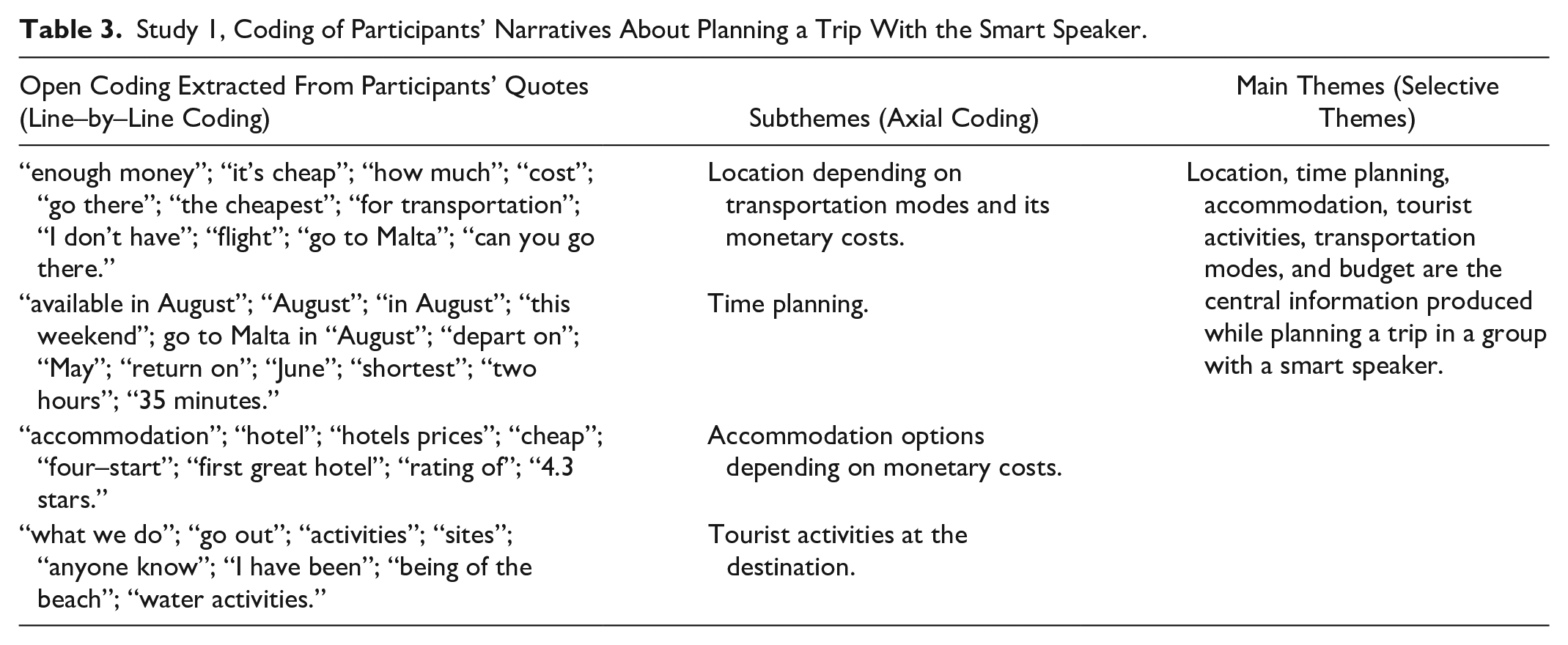
The coding results of focus group 1 enabled us to preliminarily identify six central information structures in the interactive experiences of a group of tourists when planning a trip in the presence of a smart speaker: which destination to visit, mode of transportation, accommodation, budget, time planning, and activities at the destination. These elements are directly linked to what the traditional tourism information and decision-making literature has defined as informational goals/decisions while planning a trip (see Decrop and Snelders 2004; Grigolon, Kemperman, and Timmermans 2013; Moutinho 1987; Pan and Fesenmaier 2006). Additionally, all six central informational elements are linked to what prior literature has described as micro-level processing of information while researching and planning a trip to any destination (Pan and Fesenmaier 2006). The micro-level processing of information is related to the pathway that tourists create to evaluate and choose, in an interconnected way, various services that are part of the tourist experience, such as deciding the mode of transportation, the accommodation, and activities at the destination. We observed that the tourists’ discussion of which destination to choose in the presence of a smart speaker was related to the combination of transportation modes and associated monetary costs (budget). The rest of the central informational elements emerged in a more isolated manner (time planning, accommodation, and activities), but they also appeared to be linked to monetary costs; see Table 3).
Study 1, Coding of Participants’ Narratives About Planning a Trip With the Smart Speaker.
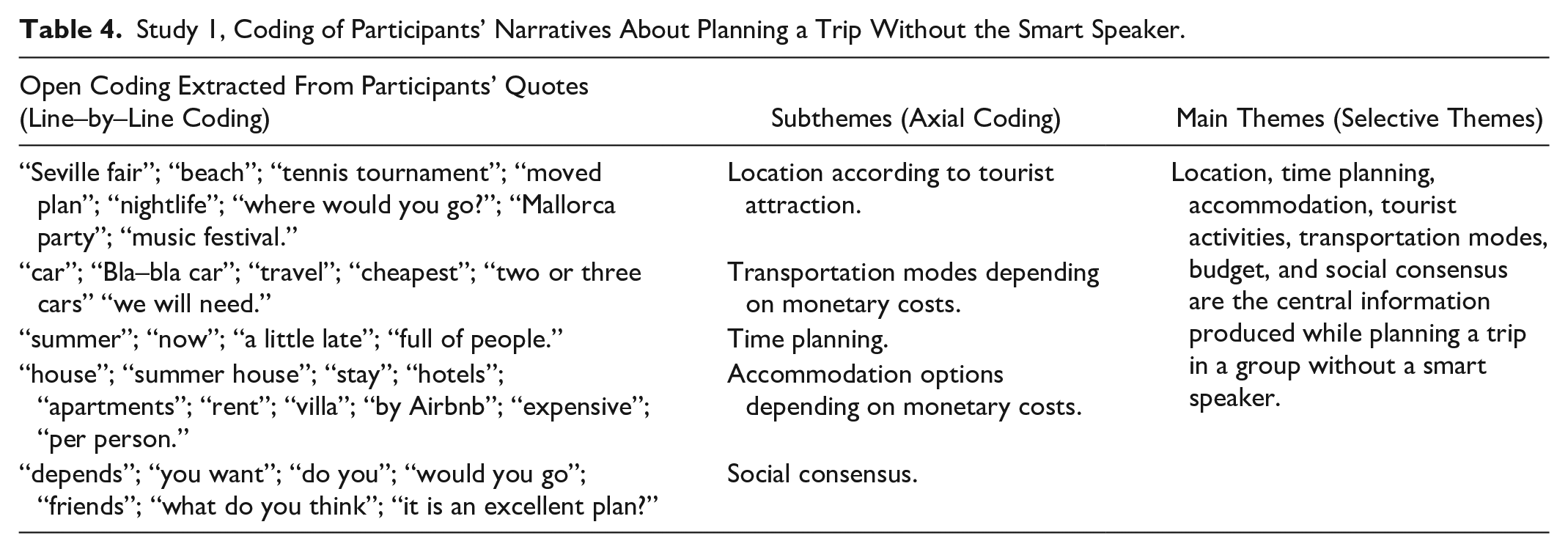
In group 2, we detected a different pattern for how the participants narratively described and understood the central informational components that were created during the interaction (see Table 4). In the absence of a smart speaker, group 2’′s participants associated the decision regarding which destination to visit with the activities that they could enjoy at the location. In this regard, the central element of the destination reflects a combination of destination and activities (what to do), whereas, in group 1 the destination was proposed as a result of deciding on transportation and monetary costs (how to do). These findings are in line with our theoretical expectation that tourists operate on a low construal level while processing information in the presence of a smart speaker (the interaction focused on how to do; Clark and Semin 2008). In addition, and in contrast to group 1, the comments of the participants in group 2 included the aim of seeking consensus among the members when choosing a destination, indicating that the participants without the smart speaker tended, to a greater degree, to accommodate other members’ opinions, feelings, and interests during the interaction. We defined this differing informational element between the groups as social consensus (i.e., the participants’ aiming to reach group agreement according to others’ preferences and goals while planning a trip).
Study 1, Coding of Participants’ Narratives About Planning a Trip Without the Smart Speaker.
Regarding the individuals’ expressive roles in the interaction with the smart speaker (group 1), the coding process allowed us to describe the predominantly high agentic role of the participants and the low agentic role of the smart speaker. According to Novak and Hoffman (2019), this combination of agentic roles implies a poor communal dynamic during the tourists–smart-speaker assemblage (low communal role of the smart speaker). Overall, this means that the participants exhibited a non-correspondent complementary master-servant interaction with the smart object during the focus group session. The non-correspondent master-servant relationship is based on interactions that are meant to obtain specific information from the smart speaker without the possibility of assigning a broader capability to the Google Assistant (Hoffman and Novak 2018). In some cases, these interactions resulted in a mismatch between what the participants asked and the Google Assistant’s responses: “He [the smart speaker with Google Assistant] has not understood you” (participant 4).
Apart from these differences in how the main components of an interactive experience emerge when planning a trip to a destination (with or without a smart speaker), the data show that the participants with the smart speaker were more inclined to visit an international destination, assuming the availability of a higher travel budget, and to look for flights as the preferred mode of transportation. In contrast, participants without the smart speaker discussed a domestic destination, offered personal resources, shared the accommodation and transportation costs, and opted to use shared transportation and accommodations for the trip.
Complementary to our data analysis, we conducted a computerized text analysis using the LIWC 2015 software. LIWC sequentially counts words in the text file and compares them with built-in dictionaries or a custom dictionary. Using its built-in dictionaries, LIWC can detect four summary language variables related to psychological constructs: analytical thinking, clout/status (confidence), authenticity (honesty vs. hedging), and emotional tone (affect). These four dimensions are scored as the percentage of words used in the text as compared to a dictionary of words in categories and subcategories. For our exploratory analysis, we considered the four summary dimensions offered by LIWC 2015 to be sufficient as a primary structure for the psycholinguistic analysis of the tourist narrative obtained from each group (with and without the smart speaker). The software generates a quantitative output score range for each language dimension (0 = minimum; 100 = maximum), and we compared the scores obtained from the discussions of each group of tourists. The Mann-Whitney U test revealed a significant difference between groups regarding the dimension of analytical thinking (Mediangroup1 = 80.05; Mgroup1 = 79.06; SD = 7.89 vs. Mediangroup2 = 62.04; Mgroup2 = 51.93; SD = 11.06; Mann-Whitney U = 2.00; z = −2.37; p < .05), which was higher for the group with the smart speaker. To verify the consistency of these results when adding or excluding the smart speaker’s responses to the group, we ran an additional Mann-Whitney U test that excluded the Google Assistant’s comments from the analysis of group 1. The results remained significant, with a slight change in the p-value associated with the difference in the analytical thinking dimension (Mediangroup1 = 79.81; Mgroup1 = 77.06; SD = 7.41 vs. Mediangroup2 = 62.04; Mgroup2 = 51.93; SD = 11.06; Mann-Whitney U = 2.00; z = −2.19; p < .05). Among the other dimensions (clout, authenticity, and emotional tone), we did not observe significant differences between the groups’ scores.
The summary language variable, which reflects the analytical thinking of tourists by group, indicates that those in the group that interacted with the smart speaker exhibited greater analytical thinking than those in the group without it. According to Pennebaker (2011) and Nisbett et al. (2001), a predominance of analytical thinking indicates an information-processing style in which people focus mainly on objects, elements, and their categorization in a particular experience. The results in this case can be understood to mean that the participants using a smart speaker were more focused on the specific details that distinguish the central informational elements of a trip to a destination (the proper destination to choose, the required transportation, accommodation options, time planning, entertainment activities at the destination, and budget).
Conversely, tourists who interacted by jointly planning a trip without the smart speaker incorporated more holistic information processing. In this case, the tourists’ trip-planning conversation without the smart speaker developed more as an assemblage of interpersonal subjectivities among individuals (Pennebaker et al. 2014). It was characterized by the consideration of other group members’ narratives and stories about activities done previously at the proposed destination and by incorporating the prospect of sharing the cost of transportation or resources related to personal options/accommodations. The openness of group 2’s comments directed more attention to other (human) individuals’ opinions and verbal information, demonstrating a kind of interaction that seemed to foster more holistic information processing on the part of the participants who did not interact with a smart speaker.
Study 2
In Study 2, we sought to understand how the interactive experience of planning a trip with friends (with/without a smart speaker) would be processed by tourists of a different nationality (U.S. tourists) than the participants of Study 1. In contrast to Study 1, Study 2 was developed using an online projective technique (elicitation through an online storyboard). For this study, the recruited participants were randomly exposed, in a metaphorical way, to visual conversational scenarios about planning a trip with friends (one scenario included the presence of a smart speaker; the other did not). For Study 2, the visual conversational scenarios were used as a projective stimulus and were designed as a storyboard for each case. The storyboard served as a pictorial stimulus to encourage the participants to consider the situations and context of discussing and planning a trip with a group of friends (Hart 1999).
The first scenario (Figure 1) was created to simulate a conversation with a group of friends who, in the presence of a smart speaker, are debating where to travel for their next vacation. Accordingly, the participants in this online scenario were asked to imagine that they were part of this friend group. They were then asked to view the images of a pre-designed storyboard in which we simulated the group conversation with a smart speaker based on the questions and comments obtained in Study 1. We made slight changes to the storyboard’s text regarding the city of departure and the explicit prices mentioned during the conversation (converting them from euros to dollars). The narrative sequence starts when one of the characters poses a question to the smart speaker and obtains a response from it. The story follows the same line as it develops, showing other individuals (characters) in the group asking questions, the smart speaker responding, and the interactions between individuals. After reading the storyboard, the participants were asked to explain what questions they would pose to the smart speaker and the other individuals in the group in the context of looking for a tourist destination with friends. They were also asked for their opinions on the idea of using a smart speaker in a meeting with friends to decide where to travel together.
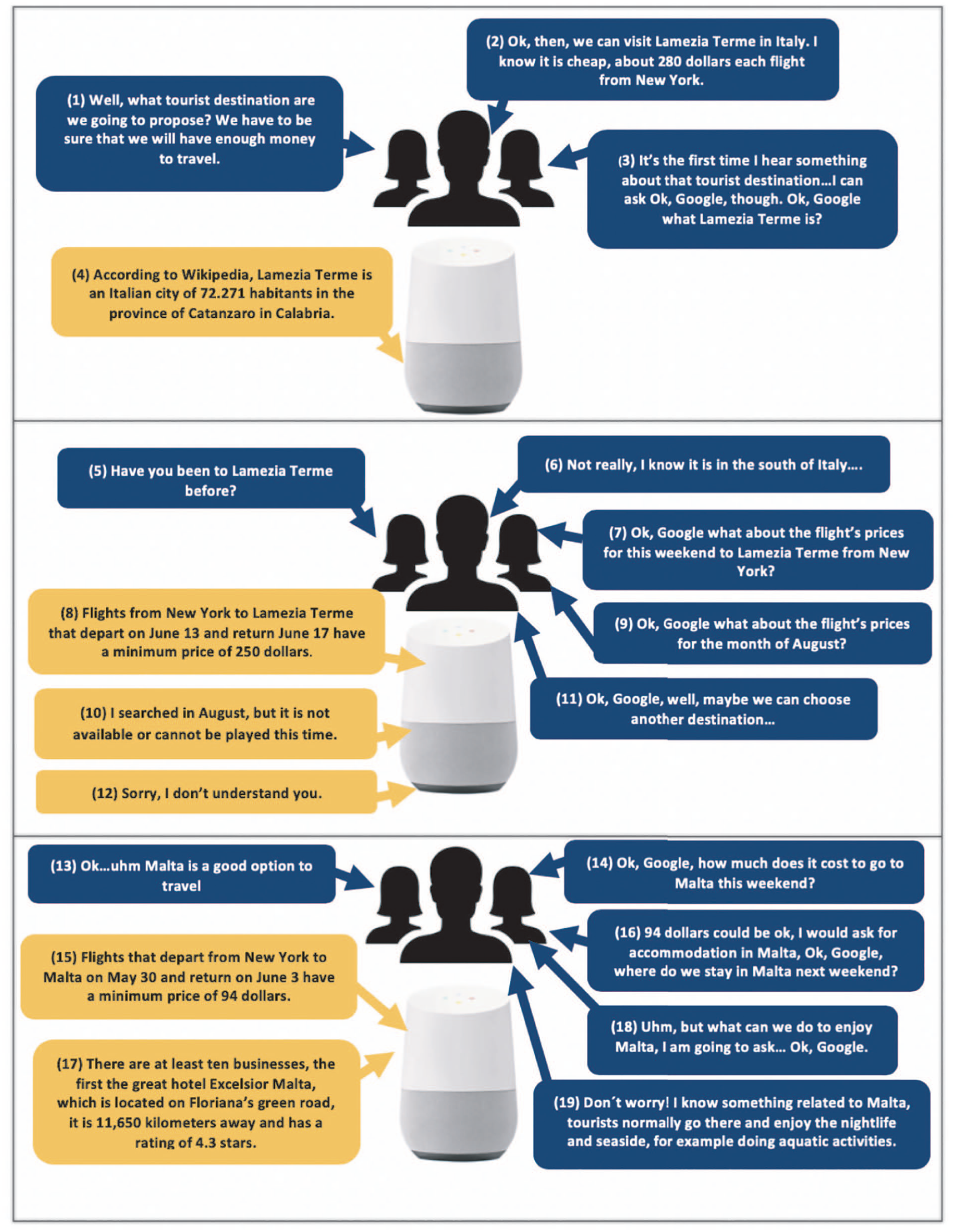
Storyboard used as visual-elicitation with the smart speaker.
The second online scenario (Figure 2) mimicked the conditions of the first simulated group discussion; but in this case, the storyboard did not include a smart speaker in the conversation among the characters who were deciding where to travel. In each storyboard situation, the story’s characters ask questions and propose information gaps that must be solved to determine a proposed travel destination. All the questions and responses between individuals in the group were taken directly from the data gathered in Study 1, specifically from the conversation of the group without a smart speaker (group 2 of Study 1). After reading all the conversations, the participants were asked to write down what questions they would pose to the group as well as their opinions about the idea of discussing a future travel destination with friends.
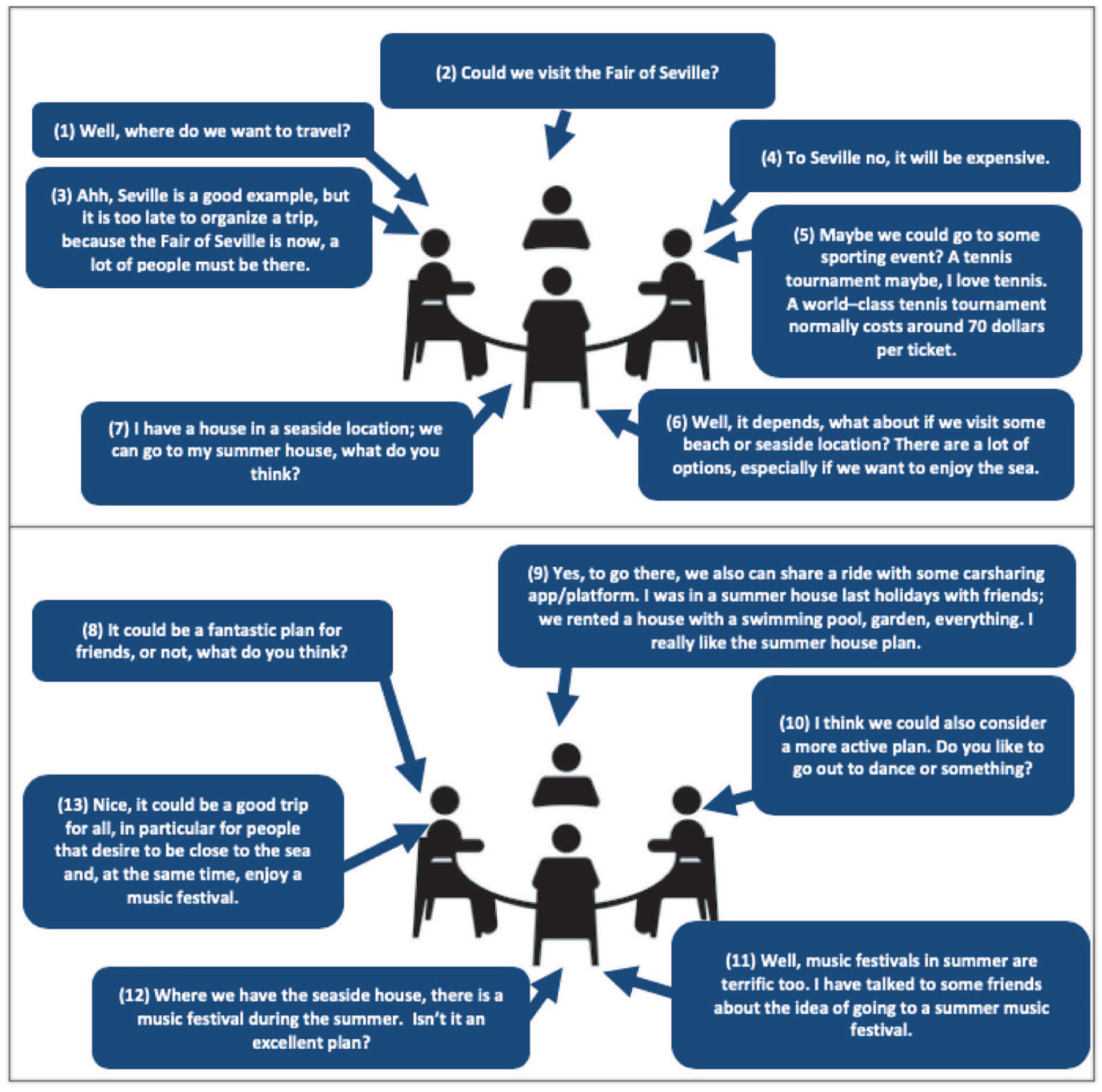
Storyboard used as visual-elicitation without the smart speaker.
Forty individuals located in the U.S. and enrolled on Amazon Mechanical Turk (MTurk) were recruited for Study 2 (the data were collected between December 2019 and January 2020). We developed a quota sampling recruitment procedure so that the study group showed a similar distribution to a representative sample of U.S. travelers (66% of the participants had to be between 21 and 54 years old; Wex and Mastercard 2019). We ensured the high-quality of participants’ narratives through a pre-pay data screening analysis of each response. To gather data and present visual scenarios and open-ended questions, we redirected participants from MTurk to the research platform Qualtrics, where we performed the analysis. During the process, the participants were randomly assigned to one of the two online scenarios (i.e., elicitation through storyboards of interaction with a smart speaker and storyboards of interaction without a smart speaker). For Study 2, the fee per participant was $1.05. The participants were aged between 23 and 70 years, with an average age of 41 years. In total, 55% of the participants were females, 56% had studied at a university, and 85% had interacted with a smart speaker before.
Data analysis
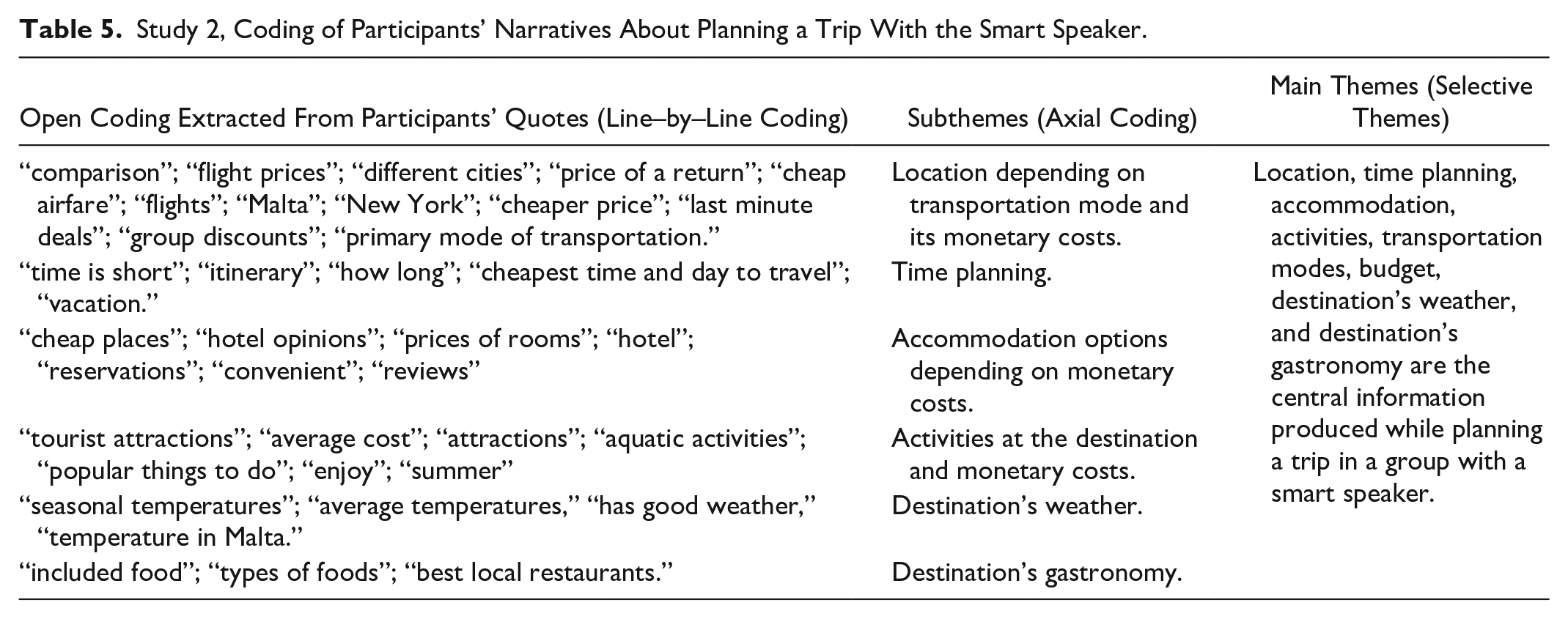
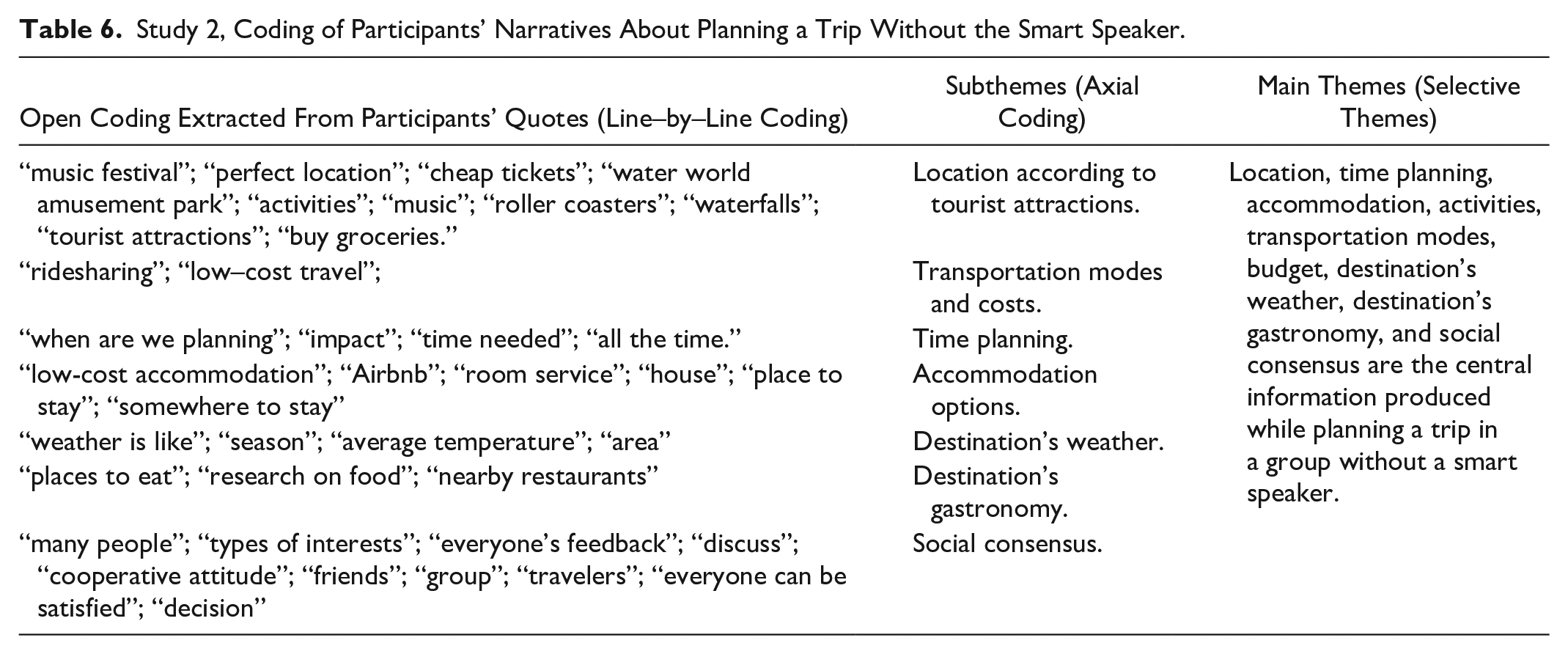
Even though we employed a storyboard elicitation technique in Study 2, the data analysis procedure was the same as that developed in Study 1. The analysis was structured in two phases for both scenarios (storyboards with/without a smart speaker). In the first phase, using the grounded theory approach, we coded, line by line, each of the participants’ comments that theoretically reflected central informational elements in the interactive experience with a smart speaker while planning a trip with friends (Table 5 for group 1 and Table 6 for group 2). For scenario 1, we included the coded lines in which the participants expressed their roles in the interaction assemblage with the smart speaker. In the second phase, using the computerized text analysis approach, we extracted four psycholinguistic categories through which the participants’ information processing related to each scenario’s interactive experience could be evaluated (Supplemental Appendix A).
Study 2, Coding of Participants’ Narratives About Planning a Trip With the Smart Speaker.
Study 2, Coding of Participants’ Narratives About Planning a Trip Without the Smart Speaker.
Findings and discussion of Study 2
The coding developed in Study 2 followed the informational structure patterns observed in Study 1 for each simulated scenario, with and without the smart speaker. The only difference found was that the participants’ comments in Study 2 revealed two further central informational elements while planning a trip (the destination’s weather and gastronomic appeal). The participants in group 1 offered a narrative in which each central informational goal of the vacation planning session was deliberately presented as a separate and sequential informational unit (i.e., selection of the destination, determination of an affordable mode of transportation, setting of the budget, and discussions of the accommodation, activities, time planning, typical weather of the destination, and the appeal of the destination’s gastronomy). However, in the presence of the smart speaker, the participants subordinated the choice of destination to the factor of the monetary costs of transportation. In group 2, we observed that, when the participants considered a destination, they linked the informational elements to what activities they could do, therefore expressing a higher construal level compared to participants from group 1 (more focused on how to do, thus expressing a low-construal level). In congruence with Study 1, the participants in the situation without the smart speaker displayed a higher sensitivity to social consensus while planning a trip. In contrast, the participants who processed the storyboard with the presence of the smart speaker were more focused on developing an individual interaction with the device instead of generating plausible questions for other human members of the group. Apart from this evidence, the other informational structures that emerged in both simulations (the destinations’ weather and gastronomy) were coded in a similar narrative structure because we did not observe differences in their coding treatment.
Among the participants’ comments in the scenario with a smart speaker, a new role in the interaction assemblage emerged: “Maybe Google could tell us some interesting facts about the place we were thinking about going, like little-known sites or tips from people who have been there before” (participant 4); “It is super personable and very attentive. I like that you greet it with the OK Google. It makes it fun to use, and it makes you look sophisticated” (participant 34). Some of the participants described the smart speaker as an authoritative source of information that was able to contribute to the task of trip planning in a number of ways, ranging from saving on travel costs to providing instantaneous information and giving individuals an air of being more sophisticated. All these references can be linked to what Novak and Hoffman (2019) defined as a complementary master-servant relationship—where an individual expresses a high agentic role and the smart speaker a low agentic role but both exhibit a high communal role in the interactional assemblage. In consequence, the assemblage leads to the self-extension and self-expansion of the individual due to the ability to extract from the smart speaker an augmented capacity to implement the planning process, recognize new identities, and obtain a highly informational set of resources to facilitate the achievement of the informational goals in the generated situation (Hoffman and Novak 2018).
However, as in Study 1, some participants also reported a non-correspondent master-servant relationship with the smart speaker because the smart speaker was also recognized as a limited part of the interaction. According to participant 6, the “Assistant will be extremely confusing. Most times, the Google Assistant will reply with ‘Sorry, I do not know that one,’ which just adds to the frustration and confusion.” In line with expressing a self-restriction in the interaction with the smart speaker, some participants highlighted the limitation created by the absence of a complementary visual stimulus that could suggest mental imagery of the destination. This visual capacity was indicated in the interactions with screen-mediated devices: “I am not a particular fan of smart speakers. I do not have one and prefer to use the internet. If considering somewhere to stay or visit, I would rather look online so that I can see pictures and more information” (participant 40). Additionally, some participants reported skepticism regarding how the device would treat individuals’ conversations in terms of providing unbiased information and violating privacy: “I also do not trust smart speakers. Smart speakers take information from conversations and use it to manipulate customized advertisements when you browse the internet” (participant 2). The moderate level of skepticism in participants’ narratives is in line with prior studies that argued that the ability of IoT devices to monitor actions can enhance users’ perception of potentially malicious behaviors on the part of IoT providers related to privacy and the generation of biased information (Kim et al. 2019; Lau, Zimmerman, and Schaub 2018).
Regarding the psycholinguistic analysis, the Mann-Whitney U test revealed significant differences in the scores between scenarios for the dimension of analytical thinking (Medianscenario1 = 56.73; Mscenario1 = 60.58; SD = 17.48 vs. Medianscenario2 = 46.91; Mscenario2 = 47.92; SD = 21.07; Mann-Whitney U = 119; z = −2.19; p < .05). Consistent with Study 1, the participants’ analytical thinking score was higher in the scenario in which the smart speaker was present.
Study 3
In the interest of triangulating the evidence obtained in Study 1 and Study 2, we mimicked the visual projective scenarios of Study 2, this time with British tourists. The only changes made to adjust the storyboard’s narrative for this sample in comparison with the stimuli used in Study 2 involved replacing New York with London as the place of departure in the friends’ planning conversation and changing the explicit prices from dollars to pounds. Thirty-nine individuals located in the United Kingdom and enrolled on MTurk were recruited for Study 3 between December 2019 and January 2020. We focus our sampling procedure by establishing a quota with 43% of the participants being between 18 and 29 years old, which is similar to a representative sample of British people that always book flights online (Statista 2017). The fee for each participant was $1.05. The participants were aged 22–55 years, with an average age of 31 years. In total, 79% of the sample were males, 46% had studied at a university, and 60% had interacted with a smart speaker before. As the data analysis mimicked the procedures of Study 2, we discuss the results of Study 3 in the next section.
Findings and discussion of Study 3
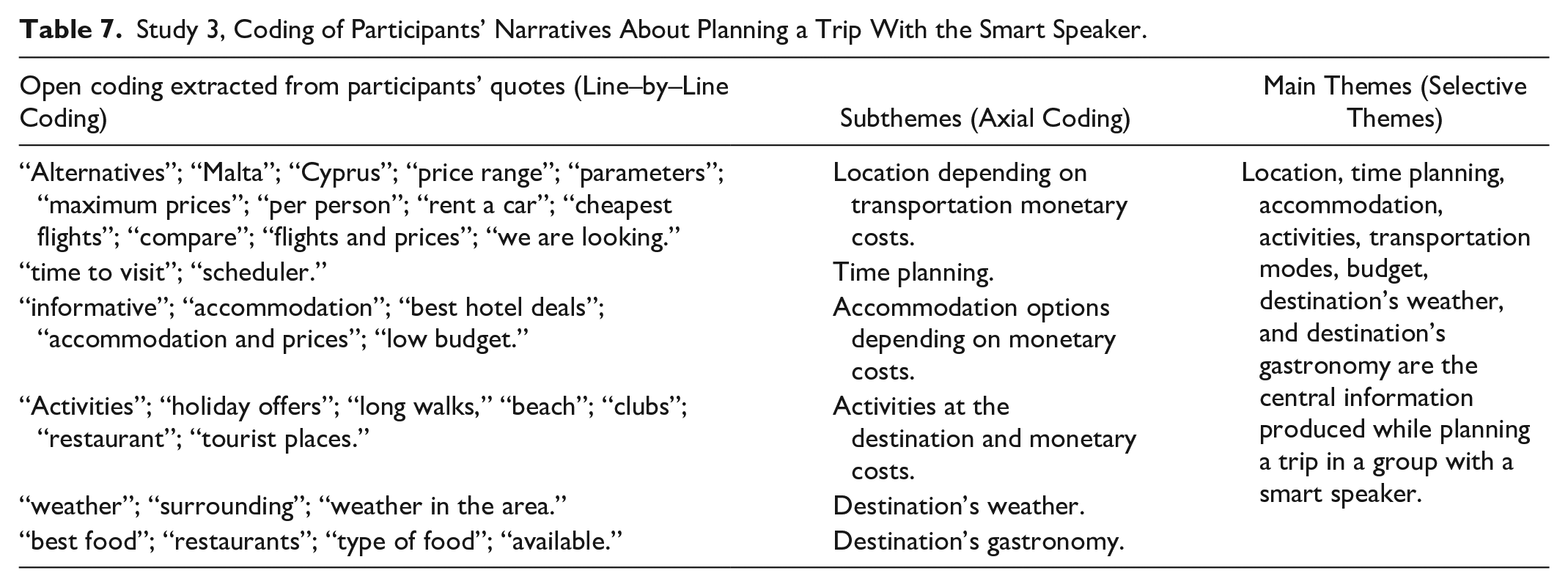
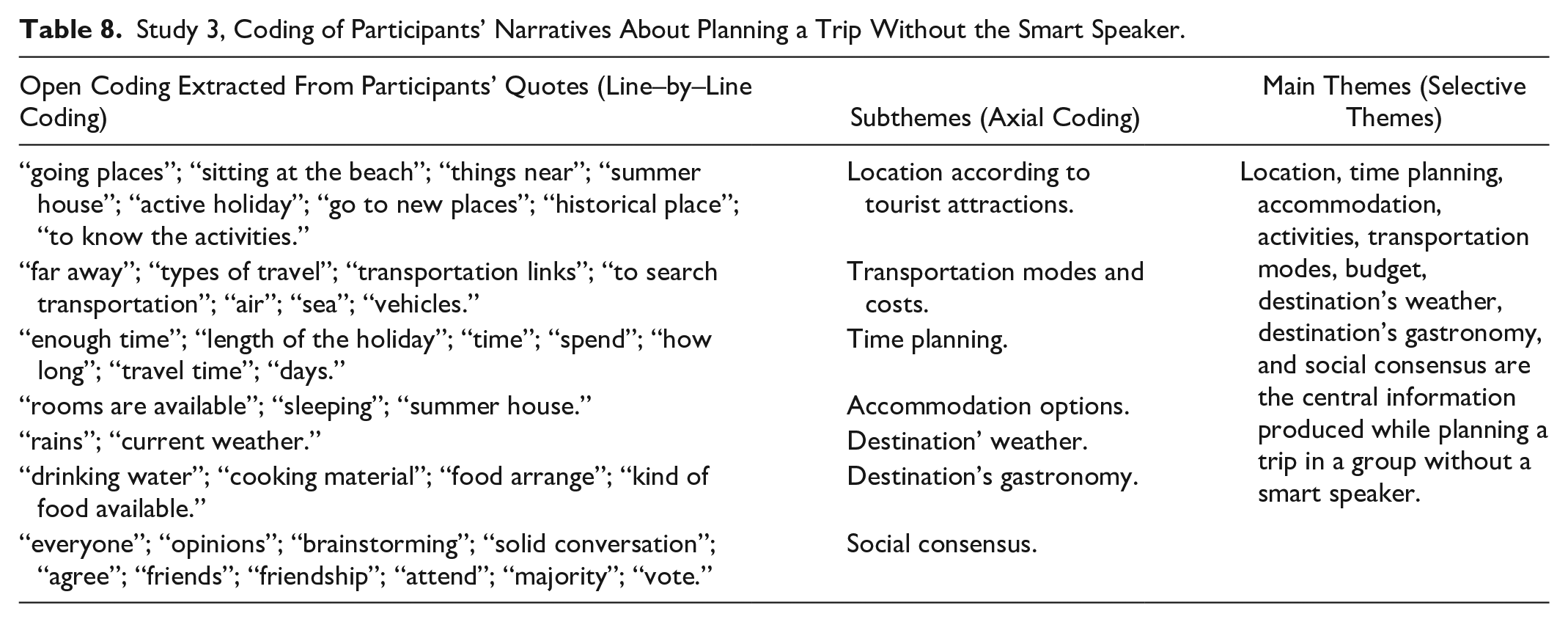
The coding of Study 3 reinforces the evidence obtained in Studies 1 and 2 with regard to the occurrence of the same eight central informational elements while planning a trip in the scenario with a smart speaker and the same nine elements that emerged during the interactions without a smart speaker (see Tables 7 and 8). The emergence of these central informational elements from the tourist comments of each group confirms that, for tourist interactions with the smart speaker, the discussion on selecting a destination was framed by its association with transportation costs and, therefore, on a low construal level based on how to do things. For tourists in the scenario without the smart speaker, again, the discussion on selecting a destination was connected to the activities that they could enjoy at the destination (high construal level). In addition, in the scenario without the smart speaker, informational structures for achieving social consensus were observed.
Study 3, Coding of Participants’ Narratives About Planning a Trip With the Smart Speaker.
Study 3, Coding of Participants’ Narratives About Planning a Trip Without the Smart Speaker.
Regarding the participants’ expressive roles in the interactions in each scenario, Study 3 revealed the same two roles of individuals in the interactive assemblage that were obtained in Study 2. The first was the non-correspondent master-servant relationship with the smart speaker. According to participant 18, “The speaker doesn’t have personal opinions, and all of them are just based on facts on the internet, so it can be different from people’s minds.” The second was the complementary master-servant relationship with the smart speaker. According to one of the participants, “The smart speaker should be able to leverage its connection to the vast resources of the internet and give the friends a limited set of suitable options in a reliable way” (participant 14).
Finally, in the psycholinguistic analysis, we only observed a significant difference in the scores for the dimension of analytical thinking (Medianscenario1 = 72.58; Mscenario1 = 66.27; SD = 21.47 vs. Medianscenario2 = 56.66; Mscenario2 = 50.79; SD = 17.78; Mann-Whitney U = 109.50; z = −2.26; p < .05), which were higher for the scenario with the smart speaker.
General Conclusions
Inspired by the theoretical developments of Hoffman and Novak (2018) regarding the consumer-object experience in the era of the IoT, this study analyzed the interactional phenomenon of tourists’ trip planning in the presence of smart speakers. This empirical effort represents a pioneering contribution to the tourism literature, as it is a response to recent calls for more research that utilizes a non-linear approach to understanding trip planning and the tourist decision-making process in relation to the IoT and smart technology (Jiménez-Barreto, Rubio, and Molinillo 2021; Pappas et al. 2021).
This contribution relies on the informational and relational elements produced and processed during tourists’ interactions with and without a smart speaker as well as on identifying individuals’ expressive roles in the interaction assemblage when the smart speaker is used for planning a trip. Additionally, we explored whether tourists’ interactions with smart speakers while searching for information about destinations produce a mechanism of objectivization (i.e., the production of information about distances, transportation costs, and tourist ratings of an attraction at a destination), through which smart speakers drive tourists to form expectations and relationships with destinations.
Theoretical Implications
This study introduced a new interaction-centric approach to analyzing tourists’ interactions with smart technology for the tourism-related literature. This effort expanded upon the contributions of recent tourism studies that followed a conceptual and empirical subject-centric approach focused on how smart technology influences tourists’ attitudinal and behavioral responses (e.g., Buhalis and Moldavska 2021; Buhalis et al. 2019; Loureiro et al. 2021; Lu, Zhang, and Zhang 2021; Lv et al. 2021; Romero et al. 2021; Tung and Au 2018; Tussyadiah and Miller 2019). The theoretical contributions of this investigation are related to the informational and relational elements observed in the qualitative studies.
In the first case, we identified explicit differences in how the participants produced information in the presence and absence of smart speakers. When tourists were exposed to trip planning interactions with smart speakers, eight informational goals emerged (location, transportation, accommodation, time planning, budget, activities, weather, and gastronomy). In contrast, when tourists were exposed to trip planning interactions without smart speakers, an additional informational goal emerged: social consensus. This result suggests that, in the presence of a smart speaker, individuals tended to focus their interactions on the smart speaker to fulfill their personal information needs. Meanwhile, in the absence of a smart speaker, the participants’ interactions were more sensitive to accommodating other tourists’ travel preferences.
We also identified differences in how central informational elements emerged in the interactions of different groups of tourists. For tourists who chose their destinations with a smart speaker, the informational elements were specifically linked to monetary transportation costs. Conversely, tourists without smart speakers were more focused on choosing their destinations based on the activities they could enjoy at each location. Following Clark and Semin (2008), we were interested in how tourists’ construal levels may be modeled as a function of conversations with smart speakers anticipating a future event. The results indicated that participants accompanied by a smart speaker were more focused on how to get to their destinations, control their budgets, and establish separation between transportation methods and accommodations, activities, and other elements. Consequently, tourists who planned trips in the presence of a smart speaker were more prone to express low construal levels regarding the information they gathered through the interaction. However, tourists who conversed among themselves in the absence of a smart speaker demonstrated a sharper informational focus on what they could enjoy at a given destination. This focus could be interpreted as a tendency to exhibit high construal levels while planning a trip. In conclusion, the use of smart speakers in tourists’ conversations about future trips is likely to bias their information production in terms of their ability to objectively describe the central goals of each trip in detail, such as the goals associated with location, transportation methods, time planning, accommodations, activities, the destination’s weather, and the appeal of the destination’s gastronomy. Furthermore, the majority of these goals were narratively constrained by the trip’s expected budget.
In the second case, we investigated interactional scenarios to observe which expressive roles were present in the assemblage relationships between tourists and smart speakers. The findings pointed in the direction predicted by Novak and Hoffman (2019): “complementary master-servant relationships are the styles most likely to emerge in the near term” (p. 233). In our study, participants in the presence of a smart speaker adopted a high-agency role, whereas the smart speaker adopted a low-agency role. The roles assigned to the smart speaker varied from a highly communal role (complementary master-servant relationship) to a non-communal role (non-correspondent master-servant relationship), meaning that tourists could use the smart speaker as an authoritative source of information that is capable of lending a sophisticated air to the interaction. At the same time, tourists can also process smart speaker interactions with disillusionment, distrust, and skepticism regarding the device’s ability to generate useful information in the interactive context of planning a group trip. The self-restriction experience derived from the non-correspondent master-servant role can be linked to what prior studies on the IoT have described as a lack of control over smart speakers in terms of user privacy, exposure to biased marketing information, and the capacity to record conversations (Lau, Zimmerman, and Schaub 2018).
Finally, we detected several differences concerning how tourists process the information produced during interactions with and without smart speakers. More evidence of analytical thinking was found in the comments of tourists in the presence of a smart speaker than in the comments of those who did not use a smart speaker. In the context of trip planning, this analytical processing style interprets the smart speaker as a medium for the objectivization of consumption. In this case, political, geographical, and (more often) financial data are provided by the smart speaker through the interaction assemblage. We argue that the effects of the objectivization of the trip planning task are linked to what prior studies (Lefebvre 1991) have described as the representation of the space. The representation of the space implicates the production of factual, objective, and measurable elements, while individuals interpret spatial (destination) consumption rather than interpreting representational space and spatial practices, through which more subjective information emerges regarding how tourists emotionally or socially narrate and process cultural practices at destinations. From this perspective, the comments of tourists exposed to interactions without smart speakers revealed a greater degree of interest in how their destinations were socially and culturally constructed and how they could be part of those representations of their destinations rather than focusing on the quantification of trip costs, flight times, or geographical distances.
Implications for Methodological Developments in the Academic Tourism Literature
Through our interactionist/performative research, it was possible to re-configure thinking about the information produced by tourists in the presence or absence of smart speakers during a trip planning conversation. As a methodological contribution to the metaphorical and elicitation techniques used in the field of tourism (e.g., Jiménez-Barreto et al. 2019; Sofield and Marafa 2019), we included (as an element of visual elicitation) a storyboard stimulus that generated two versions of interactive trip planning experiences with smart speakers. One version was represented by the focus group, in which participants experienced a physical conversation with other individuals and a smart speaker. The other version, a simulated conversation (i.e., storyboard) about planning a trip, was a metaphor for a physical encounter with other tourists (characterized as friends) and a smart speaker.
The use of elicitation techniques to understand a research phenomenon can be interpreted in light of Baudrillard’s (1983) definition of real: “that of which it is possible to give an equivalent reproduction” (p. 146). Combining physical and metaphorical realities allowed us to obtain comments from both bodily (physical) and reflective (metaphorical) interactions with IoT technologies. The value and direction of findings in each case (physical and metaphorical) were consistent, which ensured the triangulation of the present research.
Managerial Implications
This work provides tourism managers with evidence showing how to best exploit and understand tourists’ interactive experiences with smart speakers. The participants’ comments indicated that smart speakers have the potential to not only serve as useful and enjoyable sources of information for tourism purposes but also lend a particular air of sophistication that has been interpreted as high-tech sensuality (Haraway 1990). Hence, the use of smart speakers represents a way to obtain information and project a self-identity of an adopter of high-tech/smart devices. At the same time, tourists reported negative perceptions regarding the smart speaker’s ability to violate their privacy, provide biased marketing information, or deliberately constrain travel information.
In this study, we observed that forced, marketing-biased content generated by smart speakers is readily detected by tourists and, consequently, perceived negatively. In this sense, whether a tourist destination brand or a hospitality/attraction service provider appears as part of a smart speaker’s conversational outcomes, these outcomes must be part of a coherent, logical, and natural result of a conversation with tourists. Additionally, due to the limited capacity attributed to a smart speaker while planning a trip, as observed in our data, tourism managers should consider dynamic complementary strategies. For example, a smart speaker can be connected to other communication channels, such as tourists’ email or social media accounts, through which the smart speaker can provide more detailed information after responding to tourists’ questions with objective and preliminary information about destinations or tourism and hospitality companies. Accordingly, we recommend that tourism managers evaluate IoT devices as marketing channels while considering the tourist–smart speaker interaction assemblage (Novak and Hoffman 2019). Identifying how tourists express their roles in an interaction when promoted content regarding a destination or service emerges in the conversation could be a useful starting point to maximize the capacity of IoT technology as a direct, bidirectional marketing channel for tourists.
The present results also provide tourism managers with a new perspective for analyzing how tourists process information about a promoted destination or service using smart speakers. In the presence of a smart speaker, tourists tended to process information analytically, with a focus on obtaining information concerning how they could accomplish the vacation/trip planning process. Hence, smart speakers’ capability to provide clear information about the destination/service provider and maintain a coherent conversation based on tourists’ queries will determine the overall value of the interactive experience in the trip planning process.
Limitations and Future Research
Despite the contributions of this study, several limitations must be taken into consideration for future research. First, this study followed a qualitative interactionist/performative approach that stimulates reflection on what can be expected during tourists’ interactions with smart speakers in the trip planning process; however, we cannot guarantee the generalizability of the results. Thus, we encourage future studies to examine more specific phenomena of tourism consumption, for example, by analyzing the interactive assemblage of a conversation focused on specific information about a destination brand or tourist service provider to find evidence that may challenge our findings. Additionally, although we focus our research on smart speakers, the theoretical and methodological ideas we developed here could be used in future research with other IoT devices and artificial intelligence-based technologies.
Second, we did not observe differences between European or U.S. participants or gender-based variations regarding the information generated, roles expressed, and information processed during the interactions with smart speakers. Nevertheless, future studies should use more balanced samples that combine both Eastern and Western cultures to explore whether the associated individual factors could have had an influence in the context of our study (McLean and Osei-Frimpong 2019).
Finally, future studies should investigate whether the latest developments in smart speakers, such as the inclusion of more interactive and responsive screens, affect tourists’ and smart speakers’ roles and capacities during interactions. The combination of voice, images, videos, and responsive interaction with smart speakers’ screens may better blend the production of objective (e.g., distances, transportation costs, and hotel ratings) and subjective information (e.g., dances, performances, textiles, and sounds) about a destination.
Supplemental Material
sj-docx-1-jtr-10.1177_00472875221094073 – Supplemental material for “Ask Google Assistant Where to Travel” Tourists’ Interactive Experiences With Smart Speakers: An Assemblage Theory Approach
Supplemental material, sj-docx-1-jtr-10.1177_00472875221094073 for “Ask Google Assistant Where to Travel” Tourists’ Interactive Experiences With Smart Speakers: An Assemblage Theory Approach by Jano Jiménez-Barreto, Natalia Rubio, Paolo Mura, Erose Sthapit and Sara Campo in Journal of Travel Research
Footnotes
Acknowledgements
The first author is grateful to several professors that motivated this research journey: Robin Coulter (UConn) for her inspirational PhD sessions about conducting qualitative research, Carmen Marina Barreto Vargas (University of La Laguna) for her theoretical lessons on post-structuralism and social theory, and Donna Hoffman (GWU) for the encouragement given in an early stage of this research project. We also thank Giampaolo Viglia (University of Portsmouth) and Szilvia Gymothy (Copenhagen Business School) for their careful reading, recommendations, and suggestions on this manuscript.
Declaration of Conflicting Interests
The author(s) declared no potential conflicts of interest with respect to the research, authorship, and/or publication of this article.
Funding
The author(s) disclosed receipt of the following financial support for the research, authorship, and/or publication of this article: This research was supported by the Spanish Ministry of Science and Innovation, grant numbers PID2020-113561RB-I00 and PID2020-114788RB-I00.

Supplemental Material
Supplemental material for this article is available online.
Author Biographies
References
Supplementary Material
Please find the following supplemental material available below.
For Open Access articles published under a Creative Commons License, all supplemental material carries the same license as the article it is associated with.
For non-Open Access articles published, all supplemental material carries a non-exclusive license, and permission requests for re-use of supplemental material or any part of supplemental material shall be sent directly to the copyright owner as specified in the copyright notice associated with the article.
