



Abstract
Emotional reactions and transmissions are crucial to host-tourist interaction yet lacking in research, particularly from the host viewpoint. To deepen understanding of host-tourist interaction, this study took a host perspective to examine emotional contagion from tourists to hosts. By adopting video-vignette based interaction scenarios and cutting-edge techniques (e.g., FaceReader), a real-time multi-modal investigation was undertaken to reveal mechanism underlying emotional contagion of Hong Kong residents from Mainland Chinese tourists. Results theoretically consolidated the dual-process mechanism underpinning automatic emotional contagion and empirically verified an Emotional Contagion Model (ECM) from tourists to hosts. The compelling effects of mimicry, interaction context and stereotypes explained the emotional convergence and divergence between hosts and tourists. The study extended the knowledge boundary of host-tourist interaction to micro-level interpersonal emotional connection. Moreover, the verified ECM theoretically advances emotional contagion mechanism in the social psychology literature. Practical guidelines for host-tourist relation management and sustainable destination development were provided.
Keywords
Introduction
Understanding host-tourist interaction is central to tourism development since it determines host-tourist relations and sustainable growth (Aleshinloye et al. 2020). However, existing research on host-tourist interactions has largely depended on post-hoc cognitive evaluations (e.g., attitudes) due to a long-standing cognitive preeminence in social science (Zheng et al. 2019). This cognitive approach not only separated “host-tourist interaction” from its real-time happening but also ignored the fruitful emotional interaction (Sharpley 2014; Wang and Pfister 2008). Nevertheless, in the past two decades, social psychologists have re-emphasized the crucial role of emotional interaction in intergroup contacts (Mackie and Hamilton 1993), with no exception to host-tourist interactions. Emotional reactions and transmissions between hosts and tourists have been identified as no less important than cognitive evaluations in understanding both parties’ experiences, attitudes, and behaviors (Wang, Berbekova, and Uysal 2021). Emotional contagion, the typical emotional interaction process in interpersonal contacts, has thus attracted increasing attention in tourism milieu yet remains scarce (Schoner-Schatz, Hofmann, and Stokburger-Sauer 2021). The overall aim of this study is thus to examine emotional contagion in a host-tourist interaction context to advance knowledge and practices in this important area, as well as contribute to the broader social psychology literature.
Emotional contagion research has witnessed an upward trend over the last decade in tourism and hospitality. However, the majority of research focuses on a customer perspective for a better customer management, despite emotional interaction and contagion are bidirectional (Palagi et al. 2020). For example, Woo and Chan (2020) examined the effects of hotel employees’ smiles on customers’ emotional experience and satisfaction. Some recent studies concerned travelers’ emotional contagion from online reviews (Schoner-Schatz, Hofmann, and Stokburger-Sauer 2021) or destination atmosphere for marketing purposes (Kucukergin and Dedeoglu 2020). While customers’/tourists’ emotional experiences are essential for tourism growth, hosts’ sentiments and emotions are equally important for creating a hospitable destination (Chen, Hsu, and Li 2021; Wang, Berbekova, and Uysal 2021). Examining hosts’ emotional contagion from tourists bears similar importance for stimulating socially sustainable tourism development yet the research has lagged behind. Therefore, this study adopts a host perspective as a timely attempt for complementary insights in this domain. Further, extant literature in tourism and hospitality centered on antecedents or outcomes of emotional contagion, such as cultural differences (Li, Canziani, and Barbieri 2018), customer satisfaction (Ustrov, Valverde, and Ryan 2016) or tourist visit intention (Schoner-Schatz, Hofmann, and Stokburger-Sauer 2021); few has looked into the mechanism of emotional contagion per se. Understanding the process of emotional contagion between hosts and tourists represents a step further into the nature of host-tourist interactions and intergroup contacts. To this end, the first objective of the study is to examine the mechanism underlying hosts’ emotional contagion from tourists.
In social psychology, emotional contagion mechanism has been subject to theoretical disputes between automatic mimicry and cognitive appraisal for decades (Herrando and Constantinides 2021). Compared to mimicry that has been widely accepted as a basic mechanism of emotional contagion, the role of cognitive appraisal in emotional contagion is arguable (Palagi et al. 2020). Despite increasing theorists concerned the role of social context, whether and how cognitive appraisal of contextual factors affects emotional mimicry and contagion remains unclear (Hatfield et al. 2014). A more recent line of research proposed a dual-process theory-based hypothesis (hereafter as the dual-process mechanism) which assumes direct and moderating effects of social appraisal on emotional mimicry and contagion (van Kleef, Heerdink, and Homan 2017; Wróbel and Imbir 2019). This hypothesis is comprehensive to incorporate both mimicry and cognitive appraisal yet lacking empirical evidence. Therefore, the second objective of the study is to empirically test the dual-process mechanism in a host-tourist context. Moreover, cognitive efforts in extant studies mainly concerned external social factors, such as cultural differences and power relations (Hatfield et al. 2014). This study, other than including interaction context as a general social context variable, adds stereotype as an internal cognitive factor because it has been widely recognized as influential in intergroup contacts and emotional acts (Kunda and Oleson 1995; Schneider 2005) yet lacking attention in emotional contagion research (Hess and Fischer 2013). Examining stereotypes in emotional contagion process can enrich the dual-process mechanism in intergroup contacts, thus offering insights for intergroup relation improvements.
Disputes on emotional contagion mechanism are partly due to limitations in methodology. First, emotional contagion is an automatic and instantaneous process that can be short-lived (Gump and Kulik 1997; Nummenmaa et al. 2012). Self-report methods on which the majority of emotional contagion research relied are post-hoc summaries or evaluations of experiences (Hadinejad et al. 2019). The time lag between contagion occurrences and verbal reports may lead to suspectable results because memory-recalled data ran the risk of taking emotional regulation results as the outcomes of emotional contagion (Juslin and Västfjäll 2008). Second, emotional mimicry was defined as synchronizing others’ emotions from various expressive modalities like facial expressions, vocalizations, and postures (Hatfield, Cacioppo, and Rapson 1994; Prochazkova and Kret 2017). However, extant emotional contagion research investigated mimicry mainly from facial expressions which may lead to limited conclusions (e.g., Palagi et al. 2020). Third, emotion display-based experiments, which deviated from actual interacting context, were the main approach to investigate emotional contagion (Olszanowski, Wróbel, and Hess 2020; van der Schalk et al. 2011). This study, instead, uses actual interaction-based videos as experimental vignettes to improve the ecological validity, as well as respond to calls for examining emotional contagion in its dynamic process (van Kleef, Heerdink, and Homan 2017). In addition, cutting-edge psychophysiological techniques (e.g., FaceReader and artificial intelligence-based tools) are applied to capture emotion senders’ multi-modal expressions and receivers’ real-time emotional responses to mitigate limitations of self-report methods and single modal-based measurement.
Summing up, this study aims to examine the emotional contagion mechanism from tourists to hosts using real-time multi-modal investigations so as to advance host-tourist interaction research with an emotion perspective and theoretically consolidate emotional contagion literature. Interactions between Hong Kong (HK) residents and Mainland Chinese tourists (MCTs) were selected as the study context because of their interdependent relations and ambivalent feelings toward each other; and important roles MCTs play in global tourism markets can provide insights to other international tourism contexts (Chen, Hsu, and Li 2018). To achieve the research aim, emotional contagion from MCTs to HK residents was investigated following two guiding questions: (1) how do hosts mimic emotions from tourists’ emotional expressions? (2) how do interaction contexts and stereotypes influence residents’ emotional mimicry and contagion from tourists? Question one emphasizes the automatic mimicry while question two concerns the role of cognitive appraisal in emotional contagion. By answering these two overarching questions, this study can enrich emotional contagion literature by testing the dual-process mechanism, specifying the influence of internal cognitive factors such as stereotypes, and adding a host perspective to host-tourist emotional interaction. Moreover, the multi-modal and video-vignettes based investigation with advanced psychophysiological techniques provide innovative attempts in moving emotional contagion and interaction research forward. In addition, the nuanced emotional contagion process revealed in this study is practically insightful for host-tourist relation improvement and sustainable tourism development.
Literature Review
Emotional Contagion: A Largely Automatic Emotional Interaction Process
Emotional contagion was initially proposed by McDougall in 1923 but popularized by (Hatfield, Cacioppo, and Rapson 1994) to describe the process by which individuals “catch” the emotions of others around them (Olszanowski, Wróbel, and Hess 2020; Sullins 1991). The research latency was due to the long-standing cognitive preeminence in social science (Steenbeek and van Geert 2007). It is not until the 1990s when social psychologists re-emphasized the crucial role of emotions in interactive processes (Mackie and Hamilton 1993) that emotional contagion regained its academic attention. On account of human’s tendency to mimic others for survival, emotional contagion was recognized as important in maintaining adaptive social interactions (Hatfield, Cacioppo, and Rapson 1992). Inconsistences in defining emotional contagion as unconsciously- or consciously-relied led to differentiations between primitive emotional contagion and conscious emotional contagion (Elfenbein 2014). The former regards emotional contagion as a pure unconscious process (Dallimore, Sparks, and Butcher 2007; Johnson 2009), while the latter emphasized the significant role of conscious efforts in emotional transmission (Barger and Grandey 2006; Lin and Liang 2011). This study adopted neither but the original and well accepted definition proposed by Hatfield et al. (1994) who characterized emotional contagion as the “tendency to automatically mimic and synchronize facial expressions, vocalizations, postures, and movements with those of another person and, consequently, to converge emotionally” (p. 5). This definition is adopted because when Hatfield, Cacioppo, and Rapson (1992), Hatfield et al. (1994) initially proposed primitive emotional contagion, they did not deny the role of conscious efforts. Through emphasizing emotional contagion as an automatic and spontaneous emotional interaction process, the definition highlights emotional contagion as a moment-to-moment process that could be mostly out of but not excluding conscious awareness. Conscious efforts could also react automatically to affect immediate responses (Wróbel and Imbir 2019).
Given emotional contagion defined as largely automatic, it has been challenging to unravel the whole process. Hence in social psychology, paralleled with distinct emotional contagion definitions were theoretical disputes on the mechanisms behind (Wróbel and Imbir 2019). Mimicry and cognitive appraisal were the two main threads. Mimicry was defined as a three-step mimicry-feedback process between senders and receivers (Hatfield, Cacioppo, and Rapson 1994). Specifically, the receiver can spontaneously mimic the sender’s facial expressions (Hess and Blairy 2001), body movements (Woo and Chan 2020), and/or vocal tones (Gump and Kulik 1997). The afferent feedback from such facial or postural mimicry can then create a corresponding feeling of the emotion (Neves et al. 2018), thus enabling the final interpersonal emotion transfer. This mimicry-feedback process has been well recognized as a basic mechanism of emotional contagion and experimented in various contexts (Hatfield et al. 2014; Olszanowski, Wróbel, and Hess 2020). However, most empirical studies concerned mimicry of facial expressions only due to convenience of observation (Dallimore, Sparks, and Butcher 2007; Palagi et al. 2020). It is not until recently that advancements of techniques in multi-modal emotional recognition (Chen and Jin 2015) made measurements of mimicry from other modalities feasible.
Aside from mimicry, cognitive appraisal was argued as a prerequisite mechanism because emotional contagion was found to be selective rather than blind (Wróbel and Imbir 2019). For instance, fake smiles were less contagious than sincere smiles due to lower emotional authenticity (Neves et al. 2018). This means the receiver’s catch of sender’s emotions is subjective to some influential factors. Extant social psychological research has discussed individual (Verbeke 1997), contextual (Elfenbein 2014), and interpersonal (van der Schalk et al. 2011) factors in emotional contagion. However, the majority of research focused on whether these factors ensued differences in receivers’ emotional responses (Hatfield et al. 2014; Juslin and Västfjäll 2008). How cognitive appraisal of different factors affects receiver’s emotional mimicry and contagion are still for to investigations (Banerjee and Srivastava 2019).
A more recent trend posited a comprehensive dual-process mechanism that incorporates both mimicry and cognitive appraisal in automatic emotional contagion (van Kleef, Heerdink, and Homan 2017; Wróbel and Imbir 2019). This dual-process mechanism is proposed based on the dual-process theory that postulates mental processes as the interplay of two modes: impulsive and reflective (Kahneman 2003; Tversky and Kahneman 1981). The impulsive processing is usually activated automatically through an associative network of human’s born-needs or previous experiences while the reflective processing is relatively controlled by propositional knowledge or logical thinking (Wróbel and Imbir 2019). Although emotional contagion is a largely automatic process, the dual-process mechanism hypothesized the interplay of two modes underpinning emotional contagion. Emotional mimicry as an impulsive processing can be inhibited or corrected by cognitive appraisal of propositional knowledge activated through reflective processing (Wróbel and Imbir 2019). It means other than the direct influence of mimicry and cognitive appraisal in emotional contagion, cognitive appraisal also has potential moderating effects on mimicry. Though being comprehensive, the dual-process mechanism is hypothesized based on reviews of previous research (e.g., Wang and Hamilton 2012). This study, therefore, empirically tested the dual-process mechanism in a host-tourist context. Moreover, a multi-modal examination with specific social factors was performed to enrich the mechanism for both theoretical and practical insights.
Multi-Modal-Based Emotional Contagion of Hosts From Tourists: The Dual-Process Mechanism
Host-tourist interaction is full of emotions (Tasci and Severt 2017). However, extant host-tourist interaction research mainly relied on post-hoc attitudinal evaluations that leveraged more on cognitive appraisals (e.g., Shen, Luo, and Zhao 2017; Zhang, Wong, and Lai 2018). Fruitful emotional interactions between hosts and tourists that are influential to both parties’ experience, their intergroup relations, and sustainable tourism development have mostly been neglected (Kucukergin and Dedeoglu 2020). Only recently have some studies introduced emotional contagion concepts and theories from social psychology to shed light on emotional interaction in tourism and hospitality. For instance, smiles and positive emotion displays of employees have been identified to promote pleasant emotional experiences of hotel customers and facilitate re-purchase behaviors (Chu, Baker, and Murrmann 2012; Li, Canziani, and Barbieri 2018). These studies are insightful to push the knowledge boundary of host-tourist interactions toward an emotional facet from a cognitive domain. However, emotional contagion research in tourism and hospitality is still in its infancy in perspective, theoretical, and methodological scopes.
First, similar to that in consumer behaviors and marketing, emotional contagion research in tourism and hospitality has been focused on the demand side. Recognizing customers’ affect accounted for “almost as much variance in satisfaction judgments as do the cognitive/semantic belief variables” (Westbrook 1987, pp. 265–266). Emotional contagion became a crucial strategy in communication and advertising, thus accelerating research on emotional contagion from employees to customers (Herrando and Constantinides 2021). “Service with a smile” and “emotional labor” were largely promoted to improve customers’ experience and satisfaction (Barger and Grandey 2006), especially for hospitality businesses (Woo and Chan 2020). Some pioneering research concerned emotional contagion of tourists. For instance, Podoshen (2013) identified emotional contagion as the main motivation for dark tourism. Kucukergin and Dedeoglu (2020) proposed a conceptual framework that portrayed relations between tourists’ emotional contagion and their behavioral intentions. Schoner-Schatz, Hofmann, and Stokburger-Sauer (2021) examined ways to improve tourists’ visit intentions through their emotional contagion from social media posts. Despite a rising trend in this realm, hosts’ emotional contagion from tourists, another important dimension of host-tourist interaction (Cohen and Cohen 2019), has not been included.
Second, current emotional contagion research in the tourism and hospitality field concerned mainly outcomes and antecedents of emotional contagion. The majority of research used emotional contagion to explain “service with a smile” and its corresponding outcomes, including customers’/tourists’ behavioral intentions and employees’ work performances (Hofmann and Stokburger-Sauer 2017; Schoner-Schatz, Hofmann, and Stokburger-Sauer 2021). Some examined contextual antecedents of emotional contagion such as encounter durations (Shani et al. 2014) and cultural differences (Li, Canziani, and Barbieri 2018). These factors provided certain explanations for the emotional contagion phenomenon, while the underlying mechanism of emotional contagion was left under-examined. According to the wider research in social psychology, understanding the process of emotional contagion can benefit intergroup communication and facilitate business performances (Wróbel and Imbir 2019). To this end, this study intends to examine the mechanism of emotional contagion from a host perspective to bridge the gaps in this promising area, and in the meantime validate the dual-process mechanism proposed in social psychology.
Moreover, affected by early research in social psychology, extant emotional contagion studies in tourism and hospitality have been dominated by verbal reports using measurements such as Emotional Contagion Scale (Koku and Savas 2016) and Emotional Empathy Scale (Chu, Baker, and Murrmann 2012). These traditional self-reporting methods are not only subject to cognitive biases but also limited in capturing the automatic and moment-to-moment emotional contagion process and mechanism (Palagi et al. 2020). With substantial cutting-edge techniques being introduced from psychology, increasing social psychology and tourism studies have used tools, including Facial Action Coding System (Schoner-Schatz, Hofmann, and Stokburger-Sauer 2021) and facial electromyograph (Olszanowski, Wróbel, and Hess 2020), to measure real-time facial mimicry. However, emotional mimicry, as defined, can occur via various expressive modalities. Even though most theorists assumed face is the “mirror of the soul,” other researchers have argued that other sources are no less important and powerful than facial displays (Hatfield et al. 2014). For instance, vocal expressions (Kappas, Hess, and Scherer 1991), semantic expressions (words) (D’Mello and Kory 2012), and bodily responses (Chen and Jin 2015) have been identified as similarly informative and stimulating in emotional interactions. Technological advancements, including FaceReader and other artificial intelligence-based emotion recognition tools (detailed in methodology) (Herrando and Constantinides 2021), have further driven emotion research toward a multi-modal approach. Aside from some pioneering work in psychology (Chen and Jin 2015), multi-modal emotion recognition still represents a vacuum in emotional contagion research. This study intends to make an initial attempt by hypothesizing a multi-modal-based emotional mimicry from tourists to hosts to advance research in this field.
H1: Tourists’ emotions expressed through facial, vocal, semantic, and bodily expressions positively influence hosts’ real-time emotional responses.
Other than mimicry, cognitive appraisal of various social factors has been argued as a crucial mechanism underlying the emotional contagion process. Compared to individual factors (e.g., people’s ability to transmit or catch emotions) (Laird et al. 1994) which are less fluid (Hatfield, Cacioppo, and Rapson 1994), the changing contextual and interpersonal factors are more insightful for improving intergroup contacts including host-tourist interactions (Shani et al. 2014). First, the nature of interaction (favorableness; be favorable or not) is assumed as an influential contextual factor for hosts’ emotional contagion from tourists because affiliative social contexts have been advised to produce congruent emotional reactions, while otherwise, incongruent reactions (Wróbel and Imbir 2019). For instance, contextual factors like hotel category and training quality have been identified to influence customers’ emotional contagion from employees (Ustrov, Valverde, and Ryan 2016). Empirical evidence that tourists’ inappropriate behaviors such as jumping queues, talking loudly, or squatting in public elicited hosts’ negative feelings also partially supported this argument (Chen, Hsu, and Li 2018; Zhang, Wong, and Lai 2018). Hence, interaction context is hypothesized as an influential factor in determining hosts’ real-time emotional responses as illustrated by H2a.
Besides, social interactions vary with the interpersonal relations (Barsade 2002). People from opposing groups may experience more emotional divergence than convergence in interactions (van der Schalk et al. 2011). Group membership (van Kleef, Heerdink, and Homan 2017) and shared identity (Parkinson 2020) have been examined as influential interpersonal factors in emotional contagion, whilst stereotype, a typical construct illustrating intergroup perception and feelings, is surprisingly absent from the investigations. Defined as beliefs or pre-existing ideas that individuals attribute to a specific social group (Nelson, Acker, and Manis 1996), stereotype has been assumed as an influential factor in emotional interpretation and intergroup interactions (Hess, Adams, and Kleck 2009). For instance, Zhang, Chen, and Hsu (2021) proposed ingrained stereotypes as a potential determinant in eliciting HK residents’ emotional responses toward MCTs’ behaviors through comparing residents’ automatically revealed and self-reported emotions. Worthwhile new lines of inquiry on whether and how hosts’ ingrained stereotypes of tourists exerted influences on emotional interactions could be initiated by looking closer into the role of hosts’ stereotypes in their emotional contagion from tourists. Thus, H2b is proposed, together with H2a, to support the role of cognitive appraisal mechanism in emotional contagion between hosts and tourists.
H2a: Favorable/unfavorable interaction context positively/negatively influences hosts’ real-time emotional responses.
H2b: Hosts’ positive/negative stereotypes of tourists positively/negatively influences hosts’ real-time emotional responses.
Additionally, according to the dual-process mechanism, cognitive appraisal of social factors may have moderating effects on emotional mimicry and contagion (Wróbel and Imbir 2019). First of all, favorable interaction context is hypothesized to positively moderate hosts’ mimicry from tourists (H3a) because mimicry has been assumed to depend on affiliative social contexts (Hess and Fischer 2013). For instance, humans tend to perform counter-mimicry of opponents and reduce mimicry to out-groups (Palagi et al. 2020). Second, considering stereotypes’ influences on people’s interpretation of emotions in intergroup communication (Hess, Adams, and Kleck 2009), hosts’ stereotypes of tourists can be hypothesized as moderating their automatic mimicry from tourists (H3b). The stronger the positive/negative stereotypes hosts hold of tourists, the more/less likely they may automatically mimic emotions from tourists. Furthermore, in intergroup contacts, stereotype has been identified to moderate the process of emotion generation relating to external stimuli (Mackie and Hamilton 1993). When people held positive/negative stereotypes of the other group, their contextual emotional responses to the group can be strengthen/weakened. In this case, people may act according to how they view the group instead of what the group does (Kunda and Oleson 1995). This implies the potential moderating role of hosts’ stereotypes of tourists in the effects of interaction context on hosts’ emotional responses, as H3c illustrates.
H3a: Hosts in a favorable/unfavorable interaction context are more/less likely to mimic tourists’ emotions.
H3b: Hosts with positive/negative stereotypes of tourists are more/less likely to mimic tourists’ emotions.
H3c: For hosts with positive/negative stereotypes of tourists, their real-time emotional responses are more/less likely to be influenced by the interaction context.
Figure 1 presents the proposed Emotional Contagion Model (ECM) from tourists to hosts based on the dual-process mechanism, including mimicry on a multi-modal basis, cognitive appraisal relating to interaction context and stereotypes, and their moderating roles in the emotional contagion process. By investigating the underlying mechanism of real-time host-tourist emotional transmissions, this study is expected to shed light on the process of host-tourist interactions from an emotional interaction perspective and advance emotional contagion research theoretically and empirically.
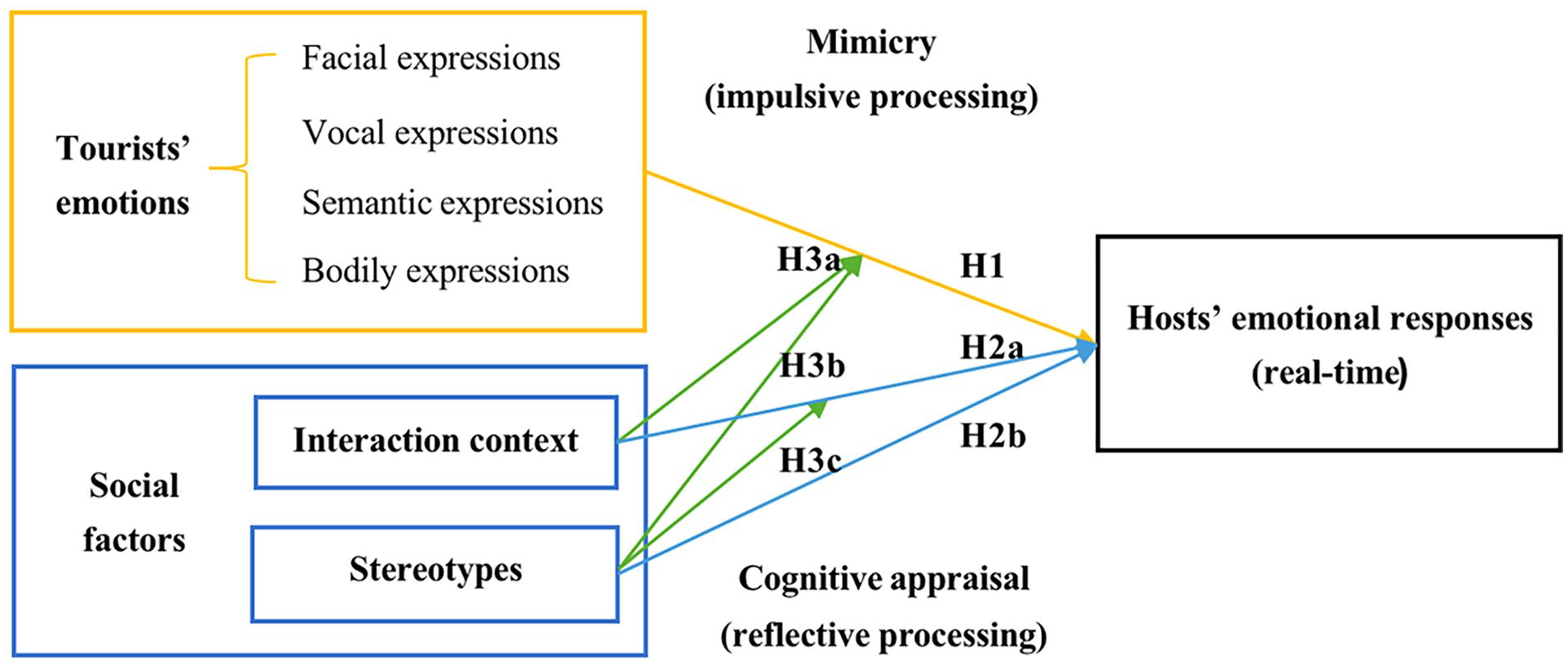
A dual-process mechanism based model of emotional contagion from tourists to hosts.
Methodology
This study primarily adopted a quantitative approach to answer the research questions and test the hypotheses (Rod 2009). A complementary qualitative approach was employed to facilitate contextual interpretation of the results (Johnson, Onwuegbuzie, and Turner 2007), particularly in understanding the roles of interaction context and stereotypes. Combining both approaches can provide less-biased insights and a more complete picture of emotional contagion in query (Johnson, Onwuegbuzie, and Turner 2007). Besides, it is challenging to capture moment-to-moment emotional interactions in natural contexts. In extant research, experiments with emotions displayed in pictures was the main approach in investigating emotional contagion, which has been questioned as context-free and lacking ecological validity (Woo and Chan 2020). Hence, this study used a role-playing and video vignette-based quasi-experiment (Chen, Hsu, and Pearce 2021) to examine hosts’ emotional contagion in its proxy-context and dynamic process. Hosts were presented with video vignettes illustrating MCTs’ real interaction episodes with HK residents to stimulate their genuine on-site emotional reactions, thus enabling reliable conclusions to be drawn (Chen et al. 2021).
Moreover, in responding to the methodological limitations of self-reporting methods in capturing real-time emotional contagion, this study employed multiple advanced technological tools throughout data collection and analysis. For instance, facial expressions of hosts and tourists were videotaped and analyzed by FaceReader, a software marketed by Noldus (https://www.noldus.com) for facial emotion recognition at milliseconds with an accuracy higher than 89% (Lewinski, Den Uyl, and Butler 2014). Artificial intelligence-based sentiment analytics were also used to capture tourists’ moment-to-moment emotions in vocal and semantic expressions. More details are presented in the following sections.
Data Collection
To collect data of emotional contagion from tourists to hosts, this role-playing and scenario-based investigation includes two main steps: video vignettes production and video viewing.
Video vignettes production
Ten video vignettes (1–2 minutes each) reflecting typical MCTs’ interactions with locals were produced as stimuli following a rigorous protocol (see more details in Chen et al. 2021). On the basis of preliminary interviews with 20 HK permanent residents, 10 typical interaction scenarios were derived from 57 personal stories provided by the informants. Of which, 72% were unfavorable (e.g., jumping queues, children urinating or defecating in public) and others were favorable (e.g., asking direction politely). Thus, among the 10 videos produced (see notes of Table 1), seven showed unfavorable behaviors of MCTs during interactions while three demonstrated favorable behaviors (i.e., V2, V5, and V9). The videos made tourists as the focal point performing behaviors and interacting with residents to stimulate local respondents’ reactions. The videos were re-verified by residents as favorable or unfavorable, and highly reflecting real host-tourist encounters before experiments to ensure validity and reliability of results.
Participant Profile.

Note: aV1—a boy urinating in public, V2—politely asking for direction to a shopping mall, V3—trying on cosmetic samples in an unhygienic way, V4—jumping the queue, V5—asking for smoking area patiently, V6—asking for additional toiletries in a hotel room, V7—chatting loudly with doors open in a hotel, V8—drinking and speaking loudly in public transport, V9—a mother providing civil behavior guidance to her son in public transport, V10—packing suitcase on the street and blocking pedestrian way.
Video viewing
A panel of 14 HK permanent residents (hereafter as “participants”) were invited in 2019 through purposive and snowball sampling approaches to view one to three videos in a quiet room. A video camera was used to record facial expressions of these participants while viewing the video vignettes upon their consent. The number of videos assigned to each participant was determined by the viewer’s available time and attention span. Videos were assigned to each participant randomly to avoid stimuli bias (Denzin and Lincoln 2008). In total, 29 video-viewing facial records were obtained (see Table 1); they were then coded as 29 cases by combining the participant number (P1–P14) and video clip number (V1–V10) for anonymity purpose. Each of the 10 videos received at least two views.
After watching each video, in-depth individual interviews were conducted to explore participants’ perceptions and feelings. The main interview questions include “How do you feel about the scenarios depicted in the video you just watched?,” “Why do you feel that way?” and “Would you feel the same way if they were from a country/region other than Mainland China?”. Each interview following the 29 cases lasted about 40 minutes. Based on interviews, stereotypes that HK residents held of MCTs were generally negative, which is consistent with the literature (Chen, Hsu, and Li 2018). The 14 participants were labeled by two interview analysts as biased or unbiased. Specifically, participants who clearly made negative references about MCTs, but not tourists from other origins were labeled as biased. For instance, P2 was labeled as biased owing to his recognition that “maybe unconsciously, I feel these (uncivilized) behaviors can only be observed from MCTs but rarely among tourists from other countries.” By contrast, participants who believed that tourists’ uncivilized behavior is irrespective of nationality were labeled as unbiased. For instance, P1 was labeled as unbiased because she repeatedly stressed that “it does not have to be a Mainland tourist to behave in this way; tourists from other countries may do the same.”
Tourists’ expressions in the 10 video vignettes and participants’ 29 video-viewing facial records (about 37 minutes in total) served as the main sources for analyzing residents’ emotional contagion from tourists. The sample size, though relatively small, is common and reasonable in emotion studies using computer-based experiments, which can have a sample size below 30 (e.g., Hadinejad et al. 2019; Kim and Fesenmaier 2015). Moreover, real-time emotion recognition generated results in milliseconds, thus producing large volume of data for robust statistical analysis.
Data Analysis Procedure
Data analyses in this study include four steps (see Table 2). First is to identify emotions of residents from the 29 video-viewing facial records. Reports of FaceReader include both dimensional (i.e., valence and arousal) and basic emotion results (i.e., anger, happiness, surprise, disgust, sadness, and scare) at every 33 msec along the time span. This study mainly conducted analyses using the valence dimension (positive to negative; between “1” and “−1”) because this is the most widely used measurement in emotion research (Hadinejad et al. 2019) and to corroborate results from other expressive modalities, which can only demonstrate valence. Moreover, to facilitate analysis, the results of emotions are averaged on a second basis, resulting in 2,223 (≈37 minutes *60) observations in total.
Data Analysis Procedure.
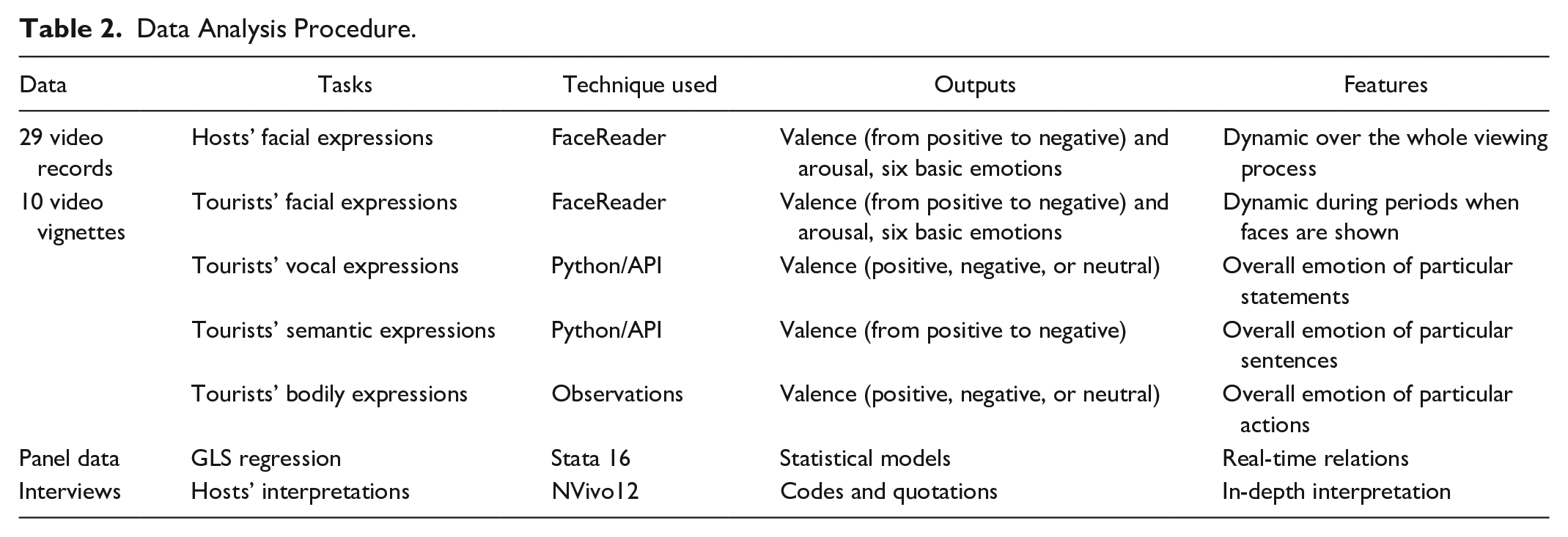
Second, tourists’ emotions in different expressive modalities were captured separately by analyzing the 10 video vignettes (see Table 2). Same as hosts, tourists’ facial expressions shown in the videos were analyzed by FaceReader and the results were averaged by second. In addition, online open resources of artificial intelligence-based tools (i.e., application programming interfaces; APIs)—Aliyun (https://market.aliyun.com) and NeuHub (https://neuhub.jd.com/ai/api/nlp/sentiment)—were used for vocal and semantic emotion recognition through Python with accuracy rates of 79% and 70%, respectively. Emotional valence of vocal expressions was derived for each statement (positive as “1,” negative as “−1,” and neutral as “0”) and that of semantic expressions for each sentence (results between “−1” and “1”). For bodily expressions, the emotional valence was manually coded and triangulated by two researchers using cues summarized in Raja and Sigg (2016). When tourists performed positive actions (e.g., giving seats to the elderly on public transport), emotion for that timeframe of action was coded as positive (“1”). Emotions for negative actions (e.g., grasping one resident’s arm) were −1 and neutral actions as 0. Notably, tourists’ expressions were not continuously present in the video vignettes. Emotions in the timeframes with no corresponding expressions were valued at “0.”
Third, hosts’ emotional responses and tourists’ emotional expressions were paired according to the video timeline on a second basis. The dataset includes time series data nested within the 29 participants’ video-viewing cases, thus constituting a panel data with time-invariant factors such as video favorableness (VF) and hosts’ bias (HB) levels. Table 3 summarizes the measures and descriptive statistics of different variables. To reduce the influence of missing values, observations with multiple “0” values across tourists’ four expressive modalities were deleted. Hence, the initial 2,223 observations were reduced to 1,460.
Variable Definitions and Summary Statistics.
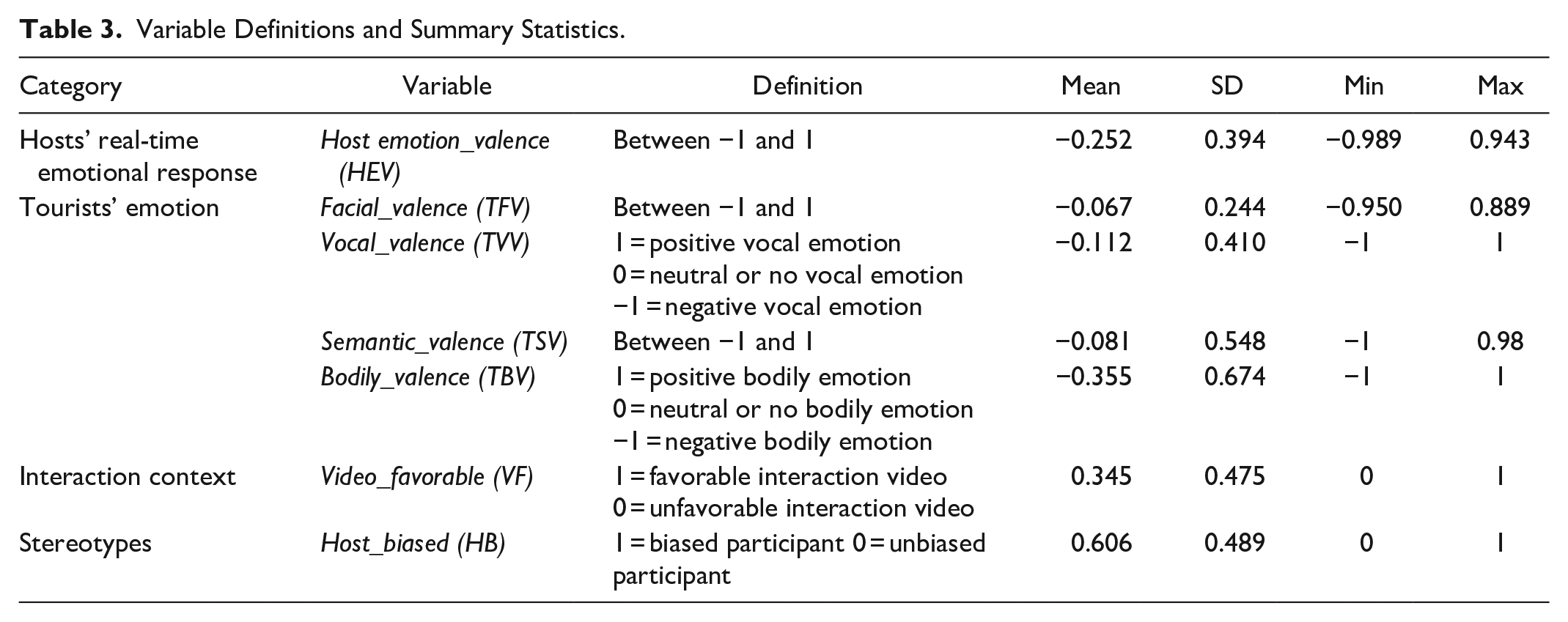
Generalized least squares (GLS) regression-based panel models were used to explore the hypothesized relations among tourists’ emotion, hosts’ emotional responses, and contextual and interpersonal factors. Compared with traditional cross-sectional data models, GLS regression-based panel models can identify time-variant associations between dependent and independent variables, as well as minimizing the problems caused by estimation biases, multi-collinearity and individual heterogeneity (Semykina and Wooldridge 2010). The models employed to test the hypotheses take the following panel forms:
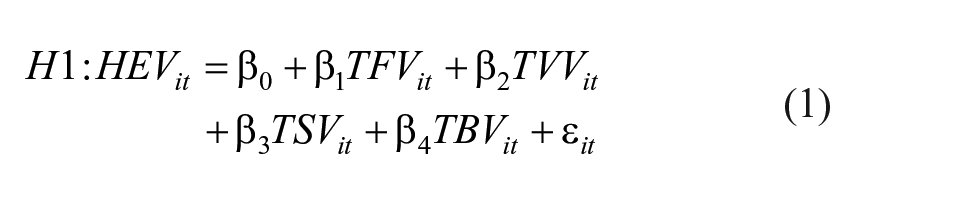
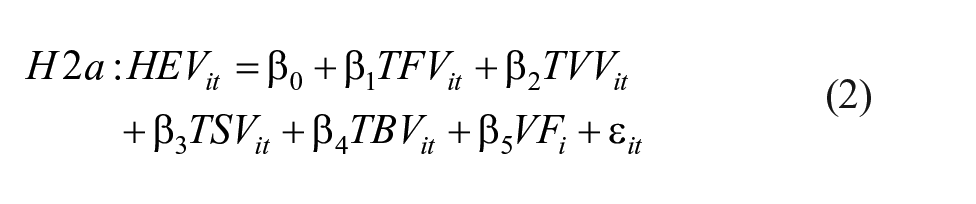
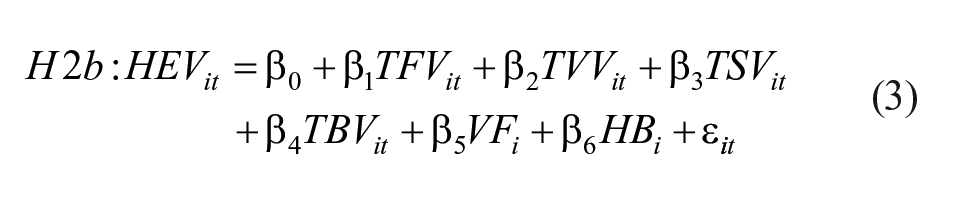

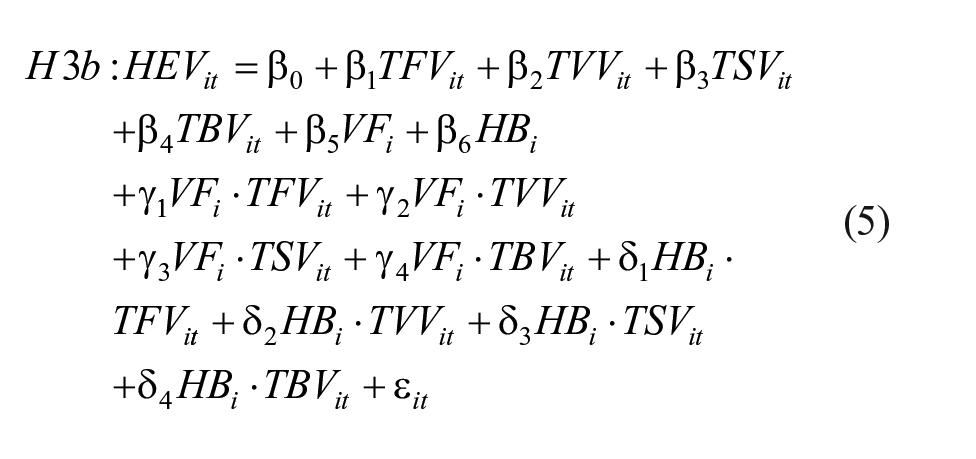
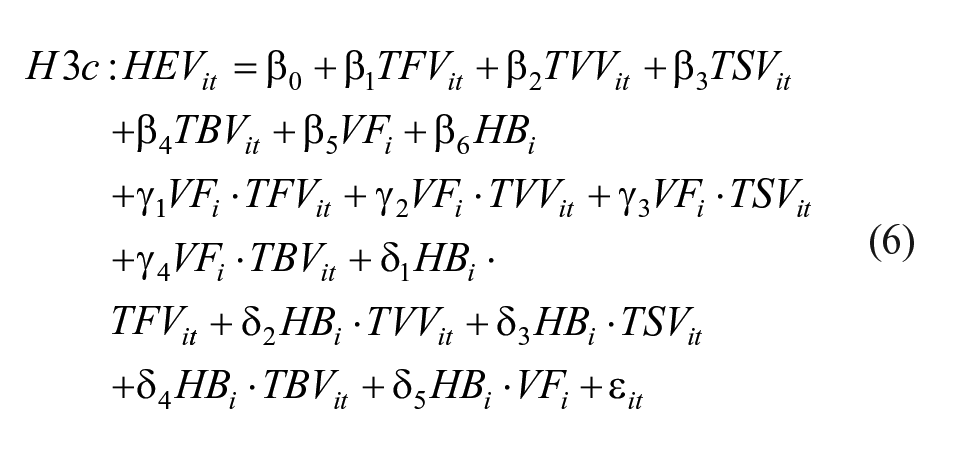
In the above models, i and t represent each video viewing case and performing record respectively. The dependent variables are hosts’ emotional valences (HEV). The independent variables include tourists’ multi-modal emotion valences (i.e., TFV, TVV, TSV and TBV), video favorableness (VF), hosts’ bias (HB), and their possible interaction factors. The εit represents errors. These models were conducted using Stata 16.
Finally, interviews were analyzed following a standard procedure of “open coding—creating categories—abstraction” in NVivo (Denzin and Lincoln 2008) to cross-validate and confirm the above quantitative analysis results.
Findings and Discussion
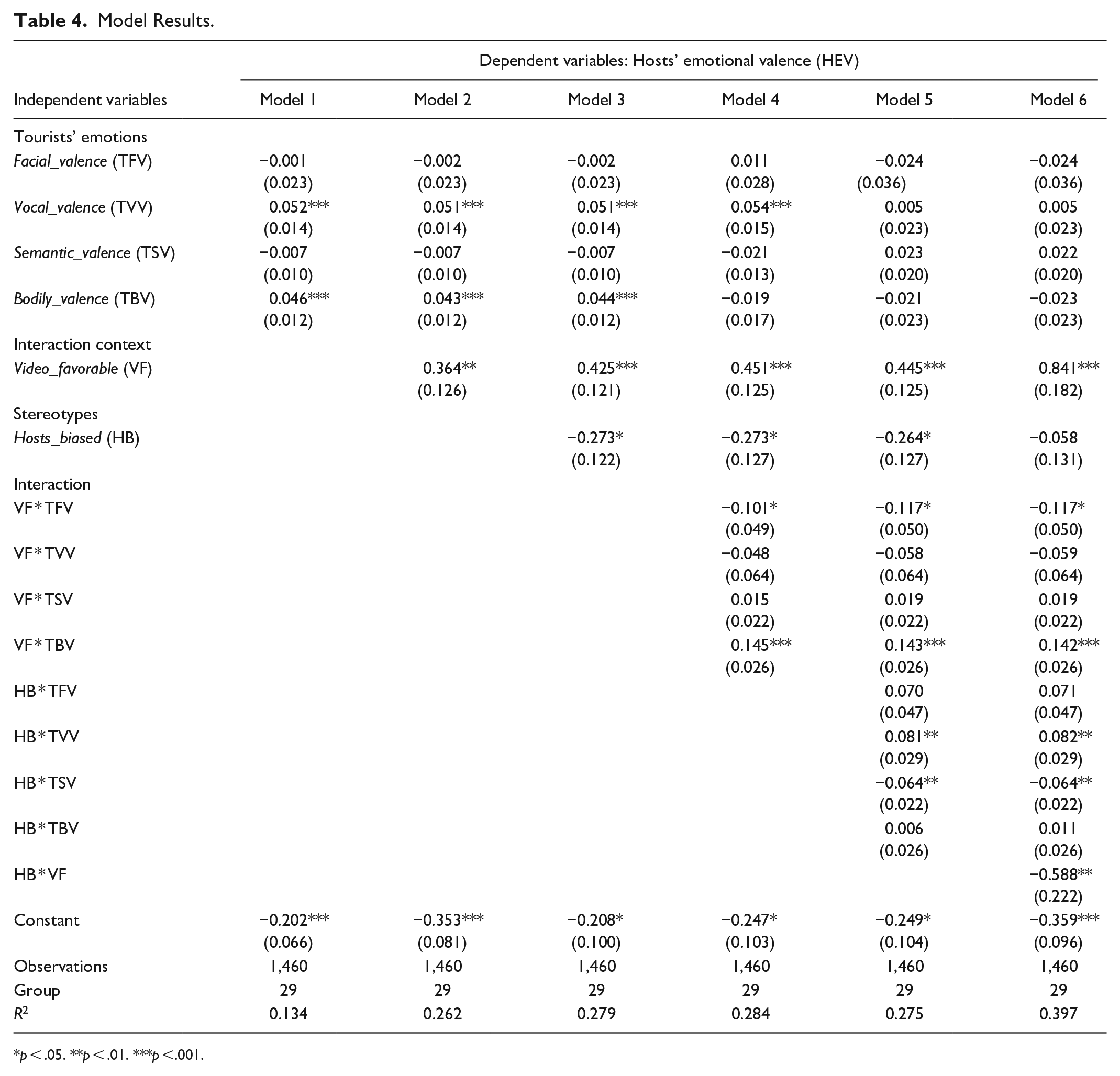
Results of the regression-based panel models are summarized in Table 4. All the Wald Chi2 tests showed p-values less than .05, illustrating validity of the models. The random effects estimation was adopted due to its greater flexibility, generalizability, and better performances in dealing with time-invariant variables compared to fixed effects modeling (Bell and Jones 2015). Moreover, Hausman tests, which compare results of random effects and fixed effects panel regression estimates, are insignificant (Hahn, Ham, and Moon 2011), indicating that the random effects estimation is appropriate and preferable for testing the main and interaction effects of tourists’ emotions, and contextual and interpersonal factors.
Model Results.
p < .05.
p < .01.
p <.001.
As shown in Table 4, the six models illustrate significant estimates in different predictors with R2 values increased from 0.134 in model 1 to 0.397 in model 6. Results demonstrated that emotional contagion from tourists to hosts is multifaceted on a real-time and dynamic basis. Mimicry, cognitive appraisal, and their interacting effects have all played significant roles in the process. Detailed results are presented and discussed in the following sub-sections.
Hosts’ Mimicry on a Multi-Modal Basis
Model 1 in Table 4 provided evidence for the multi-modal-based emotional mimicry of hosts from tourists, supporting H1. According to R2 values, 13.4% variance of participants’ synchronized emotion valence can be explained by MCTs’ emotions expressed in multiple modalities. Specifically, MCTs’ vocal and bodily expressions showed positive effects on participants’ real-time emotional responses. Positive vocal expressions of MCTs could arouse positive emotions in HK residents (b = 0.052, p < .000), reminding tourists of the importance of using pleasant voice during interactions with hosts. Likewise, significant emotional mimicry effect was observed from MCTs’ bodily expressions (b = 0.046, p < .000). Amiable body gestures of MCTs in the videos were positively related to positive emotions of respondents. However, MCTs’ facial and semantic expressions were insignificant in predicting residents’ moment-to-moment emotional responses.
This multi-modal-based emotional mimicry identified between hosts and tourists deserves further discussions. First, compared with the widely examined facial mimicry, emotional mimicry through vocal and bodily expressions illustrated higher explanatory power in emotional contagion from tourists to hosts. Emotional messages conveyed in voice have been recognized for decades. As Darwin (1872/1965) postulated, “with many kinds of animals, man included, the vocal organs are efficient in the highest degree as a means of expression” (p. 83). Emotions identified in voice are based on acoustic features like pitch, intonation, or prosodic (Kappas, Hess, and Scherer 1991). For instance, low prosodic voices have been related to emotions of boredom and sadness (Lugger and Yang 2008). Although it is out of the scope of this study to figure out connections between these vocal features and concrete emotions, the findings implied that tourists’ voice can be emotional and transferrable to hosts directly. Comparatively, body movements received recognition on its potential for human emotion detection in recent years (Chen and Jin 2015). For instance, fast and open body movements can be related to emotions of happiness (Raja and Sigg 2016). Even though this study simply differentiated bodily expressions as positive or negative, the significant mimicry effect from tourists to hosts through bodily expressions validated the effectiveness and importance of recognizing body gestures in understanding host-tourist interactions. In certain cases, bodily expressions can be even more powerful than widely discussed facial and semantic expressions in intergroup contacts (de Gelder 2009). In the current study, it may be easier for hosts to capture tourists’ body movements than faces and words which were relatively more subtle or faster (Raja and Sigg 2016). Thus, by validating emotional mimicry from vocal and bodily expressions on a real-time basis, this study necessitates a new line of multi-modal interpretation of host-tourist interaction, particularly regarding specific cues of vocal and gesture communications to improve host-tourist interactions and relations.
Second, the verified automatic emotional mimicry on a multi-modal basis highlighted emotional convergence in host-tourist interactions, even for HK residents who have been identified to hold a certain level of hostile attitudes toward MCTs (Chen, Hsu, and Li 2018). Specifically, according to this real-time examination, hosts’ feelings and perceptions of interactions can be determined by factors beyond cognitive evaluations of tourists’ performances as rude or well-mannered. Emotional messages conveyed in tourists’ voices and body postures were automatically experienced and mimicked by hosts. This consistent emotional transfer from MTCs to HK residents through automatic mimicry demonstrated emotional convergence between hosts and tourists in intergroup contacts (Parkinson 2020; van der Schalk et al. 2011). Such kind of emotional convergence held promises to produce genuinely collective emotions and strengthen both parties’ sense of solidarity, ultimately leading to shared social identity (Parkinson 2020). New insights can thus be generated that positive emotional expression is crucial for improving hosts’ interaction experiences with and attitudes toward tourists, thereby optimizing host-tourist interactions and relations. Notably, this study captured hosts’ emotions mainly from their facial expressions. The real-time emotional synchronization between HK residents’ facial expressions and MCTs’ non-facial modalities (i.e., voices and body gestures) highlighted cross-channel emotional mimicry (Hatfield et al. 2014). In line with the definition of emotional contagion that mimicry of others’ expressions consequently converged emotionally (Hatfield, Cacioppo, and Rapson 1994), the result reminds future researchers to broaden emotional mimicry across modalities.
Hosts’ Cognitive Appraisal: Interaction Context and Stereotypes
Models 2 and 3 in Table 4 show statistically significant impacts of the favorableness of interaction context (i.e., VF) and hosts’ stereotypes (i.e., HB), thus supporting the role of cognitive appraisal in emotional contagion from tourists to hosts. Specifically, H2a is supported because in Model 2, the favorableness of video vignette was significantly related to respondents’ emotion valence (b = 0.364, p < .01). Over the process of viewing a video presenting favorable behaviors of MCTs, respondents were inclined to respond with pleasantness. Meanwhile, elicitation of respondents’ positive emotions was negatively associated with their negative stereotypes of MCTs (b = −0.273, p < .05), as illustrated in Model 3. H2b is thus supported. Biased participants tended to be less positive toward MCTs compared to those who were unbiased.
It is not surprising that the interaction context is influential to respondents’ emotions, as people usually react according to the interaction context therein (Elfenbein 2014; Shani et al. 2014). Positive relations between video favorableness and respondents’ emotions are encouraging for the relationship between HK residents and MCTs, because previous research revealed prevailing negative views of HK residents toward MCTs (Chen, Hsu, and Li 2018). While positive emotional experiences are facilitators of prosocial attitudes and behaviors in intergroup contacts (van Kleef, Heerdink, and Homan 2017), the current finding based on real-time measurements indicates the possibility of modifying hosts’ negative attitudes toward MCTs through favorable on-site interactions. The core area hereafter is to identify favorable interactions from both hosts’ and tourists’ perspectives, as well as the barriers to achieve them, thus soliciting ways to improve mutual attitudes or behaviors between the two parties.
Moreover, results illustrated the significant role of stereotypes in hosts’ automatic emotional responses. As a typical cognitive construct, stereotypes have been widely recognized as influential to hosts’ evaluations of tourists after interactions (Chen, Hsu, and Li 2021; Tse and Tung 2022), which induced more intentional responses. Yet the instantaneous effects of stereotypes on hosts’ emotional responses identified here highlighted its instinctive feature beyond its intentional nature (Mackie and Hamilton 1993). It confirms the assumption of Zhang, Chen, and Hsu (2021) that when stereotypes were repeatedly enforced and internalized, they can be activated automatically at the first instance in a host-tourist interaction context and may exert top-down control on the receiver’s reactions to the sender’s emotional displays by correcting the mimicry (Wróbel and Imbir 2019). Specifically, the ingrained negative stereotypes of MCTs held by biased HK participants were activated by their first sight of MCTs in the video, which led to a negative prediction/judgment of subsequent behaviors. For instance, participant P14 stated:
“I can recognize them from the dress, many Mainlanders wear countrified clothes, such as flyaway or unbecoming clothes with bright color like red from head to toe. Generally, they have a bad taste in clothing. Their dress styles are rarely seen in HK – I mean, have been outdated.” (P14_V1)
The automatically activated pre-existing stereotypes can then affect respondents’ emotional responses regardless of the context and expressions of MCTs throughout the interaction process. For instance, when P3 and P12 watched V9, they experienced negative (i.e., disgust) or neutral (i.e., surprise) emotions against MCTs’ polite behaviors owing to their deeply ingrained negative stereotypes of MCTs:
“The Mainlanders in V9 are inconsistent with my impressions of Mainlanders. I had seen a similar scene with my own eyes – a kid defecated directly on a bus in Mainland. My feeling at that moment was that, not to mention on a bus, this is not acceptable even on the street.” (P3_V9)
“I heard from news that many parents from Mainland would allow their kids urinate anywhere – in the dustbin or on the mall floor. So, this video is totally out of my expectation.” (P12_V9)
In this regard, hosts’ real-time emotions can be determined by their pre-existing stereotypes irrespective of the video context or tourist behavior. This finding signifies an intervening mechanism, from the message receiver side, underlying automatic emotional contagion. Tourists’ emotional expressions and the favorableness of interaction context that affect hosts’ emotional contagion are both message sender-related (Siu, Lee, and Leung 2013), while hosts’ stereotypes of tourists are purely receivers’ inner beliefs about the other group. The significant role of hosts’ pre-existing stereotypes in their emotional contagion from tourists identified in this study implies necessary efforts from hosts to improve their own emotional experiences and responses, as well as the mutual relations between the two parties. In other words, reducing hosts’ negative stereotypes toward tourists is vital to improve hosts’ emotional experiences and responses in host-tourist interaction.
By and large, the overarching influence of hosts’ ingrained stereotypes, as well as that of the favorableness of interaction context, confirms the direct role of cognitive appraisal in automatic emotional contagion (Banerjee and Srivastava 2019). While hosts might mimic tourists’ emotions via various modalities, cognitive appraisal mechanism also plays a non-negligible role in the emotional contagion process from tourists to hosts. Contextual and interpersonal factors exerted influences on hosts’ emotions independent of tourists’ emotional expressions. For instance, in unfavorable interaction scenarios such as MCTs packing a suitcase on the street and blocking the pedestrian way (i.e., V10) or in situations that HK residents holding negative stereotypes toward MCTs, respondents illustrated negative emotions even when tourists in the videos showed positive emotional expressions. This emotional inconsistency between hosts and tourists caused by cognitive appraisal of social factors demonstrated emotional divergence in intergroup interactions (Parkinson 2020), thus requiring efforts in addressing interaction context and stereotypes for improving host-tourist interactions and relations.
The Moderating Effects of Interaction Context and Stereotypes
By incorporating interaction effects into the modeling (Models 4, 5, and 6 in Table 4), moderating roles of interaction context and stereotypes in predicting residents’ emotional reactions were empirically identified. Model 4 validated the moderating effects of interaction context (VF) on emotion contagion (H3a supported). Estimate of moderation between VF and facial expressions (bVF*TFV = −0.101, p < .05) was statistically significant. Given the main effect of facial mimicry as insignificant (see Model 1), the significant moderation effect between VF and TFV implies that facial mimicry affects host’s emotional contagion from tourists mainly via this moderating route. Facial mimicry was reversed by the favorableness of interaction context. As shown in Figure 2a, participants who watched favorable videos were likely to counter-mimic facially expressed emotions of MCTs, while those watching unfavorable videos showed constant negative expressions. Psychology research has suggested that spontaneous facial mimicry can be attenuated or even reversed by disaffiliated social relations (Palagi et al. 2020). Consistent negative emotions in unfavorable and counter-mimicry in favorable situations here implied unfavorable relations between HK residents and MCTs as a potential inhibitor of emotional convergence between the two parties and deserve further research attention.
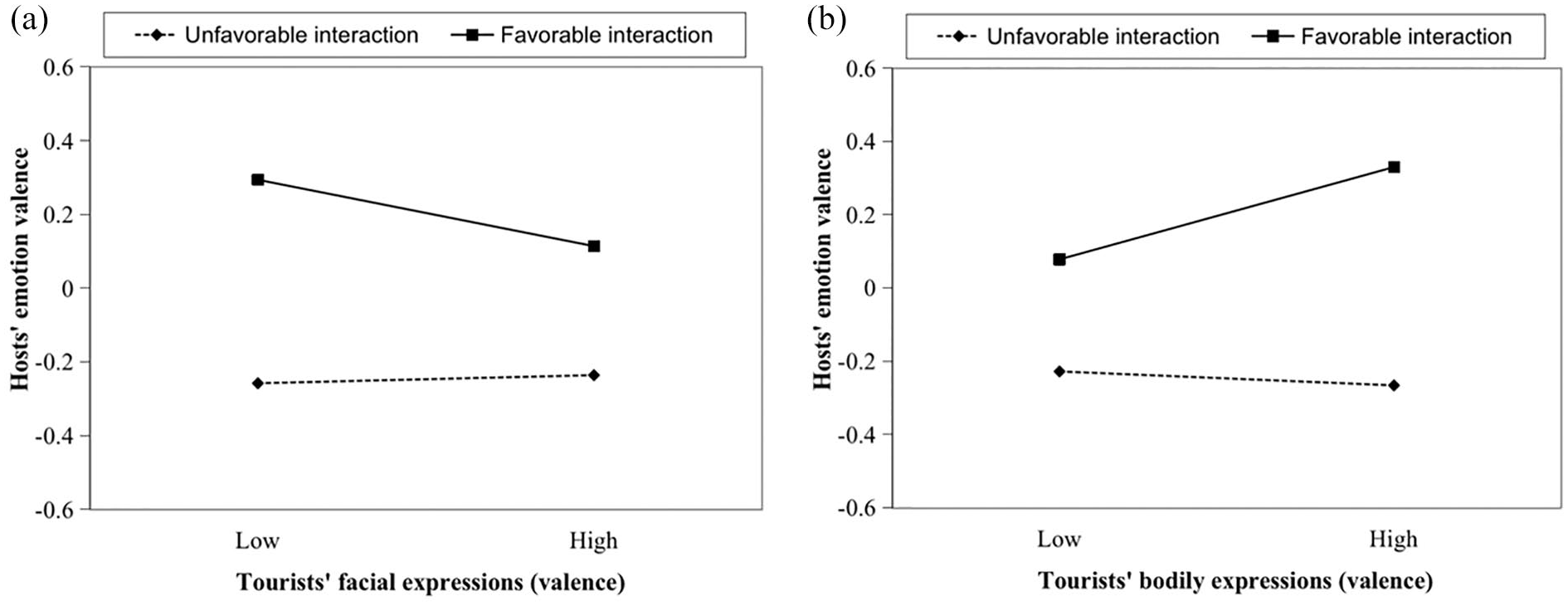
Moderating effects of interaction context on emotional mimicry. (a) facial expressions. (b) bodily expressions.
On the contrary, emotional mimicry from bodily expressions of MCTs was positively moderated by the interaction context (b VF*TBV = 0.145, p < .000). When viewing favorable interactions with MCTs, HK residents showed a significantly higher tendency to mimic tourists’ bodily expressed emotions than in watching unfavorable interactions (Figure 2b). Although body gesture mimicry has been identified as affected by intergroup relations as well (Chartrand and Lakin 2013), the different moderating effects suggested that mimicry from bodily expressions may be less sensitive to unfavorable relations than that from facial expressions, yet further validations are needed. Moreover, regardless of counter-mimicry from facial expressions or enhanced mimicry from bodily expressions, HK residents were emotionally positive toward MCTs in watching favorable videos. For unfavorable encounters (see Figure 2), respondents’ emotions were consistently negative irrespective of MCTs’ facial and bodily emotions expressed. These results reemphasized the importance of promoting favorable interactions and reducing unfavorable encounters in enhancing hosts’ positive emotional experiences and host-tourist relations.
Model 5 illustrated the moderating effects of hosts’ stereotypes (HB) on emotional contagion to support H3b. Contrary to the interaction context, stereotypes moderated emotional contagion via vocal (b HB*TVV = 0.081, p < .01) and semantic (b HB*TSV = −0.064, p < .01) modalities. Emotional mimicry through vocal expressions was positively stimulated by hosts’ stereotypes; that is, biased participants presented a higher tendency to mimic MCTs’ vocal emotions compared to their unbiased counterparts (see Figure 3a). For semantic expressions, emotional mimicry was negatively moderated by stereotypes, with biased participants less likely to mimic emotions expressed by MCTs in words (see Figure 3b).

Interacting effects of stereotypes on emotional mimicry. (a) vocal expressions. (b) semantic expressions.
Stereotypes have been suggested to affect recognition of emotion from voices (Kappas, Hess, and Scherer 1991) and words (Zhang, Chen, and Hsu 2021), however how stereotypes affect emotional mimicry from voices and words, to the best knowledge of the authors, has been underexplored in psychology. Under the premise that biased participants were consistently more negative toward MCTs than their unbiased counterparts (see Figure 3a and b), stereotype’s different moderating roles in these two forms of expression were likely caused by humans’ distinct abilities of recognizing vocal and semantic emotions. Simply put, emotional recognition from voice is more of human intuition (Darwin 1872/1965), thus being less associated with cognitive constructs including stereotypes. Hence, negative emotions of biased participants could be mitigated by automatic mimcry of tourists’ positive vocal expressions. By contrast, recognizing semantic emotion is socially learnt (Paulmann and Pell 2011), thus being more stereotypical. Biased participants may recognize MCTs’ semantic emotions and counter mimic such emotions, thus leading to further emotional divergence. These preliminary explanations need future explorations and validations.
In addition, hosts’ pre-existing stereotypes negatively moderated the impact of interaction context on participant responses in Model 6 (bHB * VF = −0.588, p < .01), thus supporting H3c. Compared to unbiased participants, biased respondents were less inclined to feel delightful when viewing favorable interactions (see Figure 4). After adding interaction effect with the interaction context, the main effect of stereotypes became insignificant, which means stereotypes exerted influences on respondents’ emotional responses mainly through moderating roles: intervening the emotional mimicry and influencing cognitive processing of the context. Even though people have the natural tendency to mimic others and derive positive feelings based on friendly interactions, hosts’ ingrained negative stereotypes may amplify negative responses and inhibit positive reactions to MCTs. For instance, P5 emphasized his surprise rather than happiness after watching V5, which dipicted a MCT’s friendly interactions with residents, due to pre-existing negative impressions of MCTs as rule-breaking.
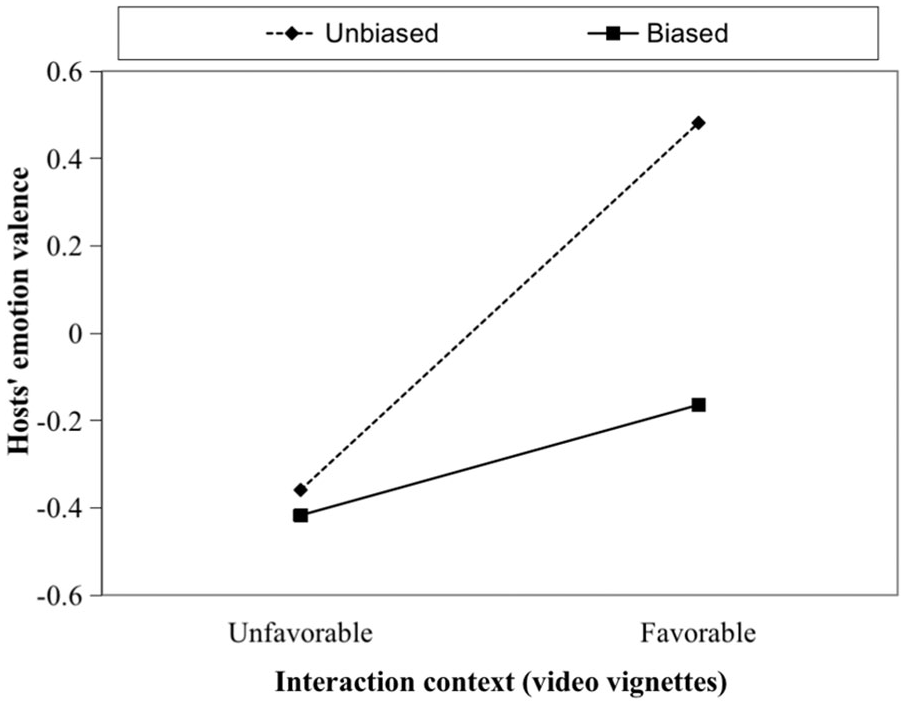
Interacting effect of stereotypes on interaction context.
“I had never thought that he would ask where the smoking area is, and after asking one local without getting a definite answer, he asked another passerby; I feel very surprised.” (P5_V5)
To summarize, modeling results of HK residents’ real-time emotional responses toward MCTs empirically demonstrated the dual-process mechanism underlying the emotional contagion process. Figure 5 illustrates the verified Emotional Contagion Model (ECM) of hosts from tourists based on verified hypotheses. Hosts’ real-time emotional responses were underpinned by emotional mimicry from tourists, as well as cognitive appraisal in relation to specific interaction context and hosts’ pre-existing stereotypes of tourists. On one hand, hosts’ emotions were influenced by emotional mimicry from tourists via vocal and bodily expressions. On the other hand, cognitive appraisal relating to social factors (i.e., interaction context and stereotypes) predicted hosts’ immediate emotional responses. Moreover, cognitive appraisal modified hosts’ automatic emotional responses by moderating the mimicry mechanism via different modalities; the interaction context moderates facial and bodily expressions while stereotypes intervene mimicry from voices and words. In addition, stereotypes moderate the relation between cognitive appraisal of interaction context and hosts’ emotions.
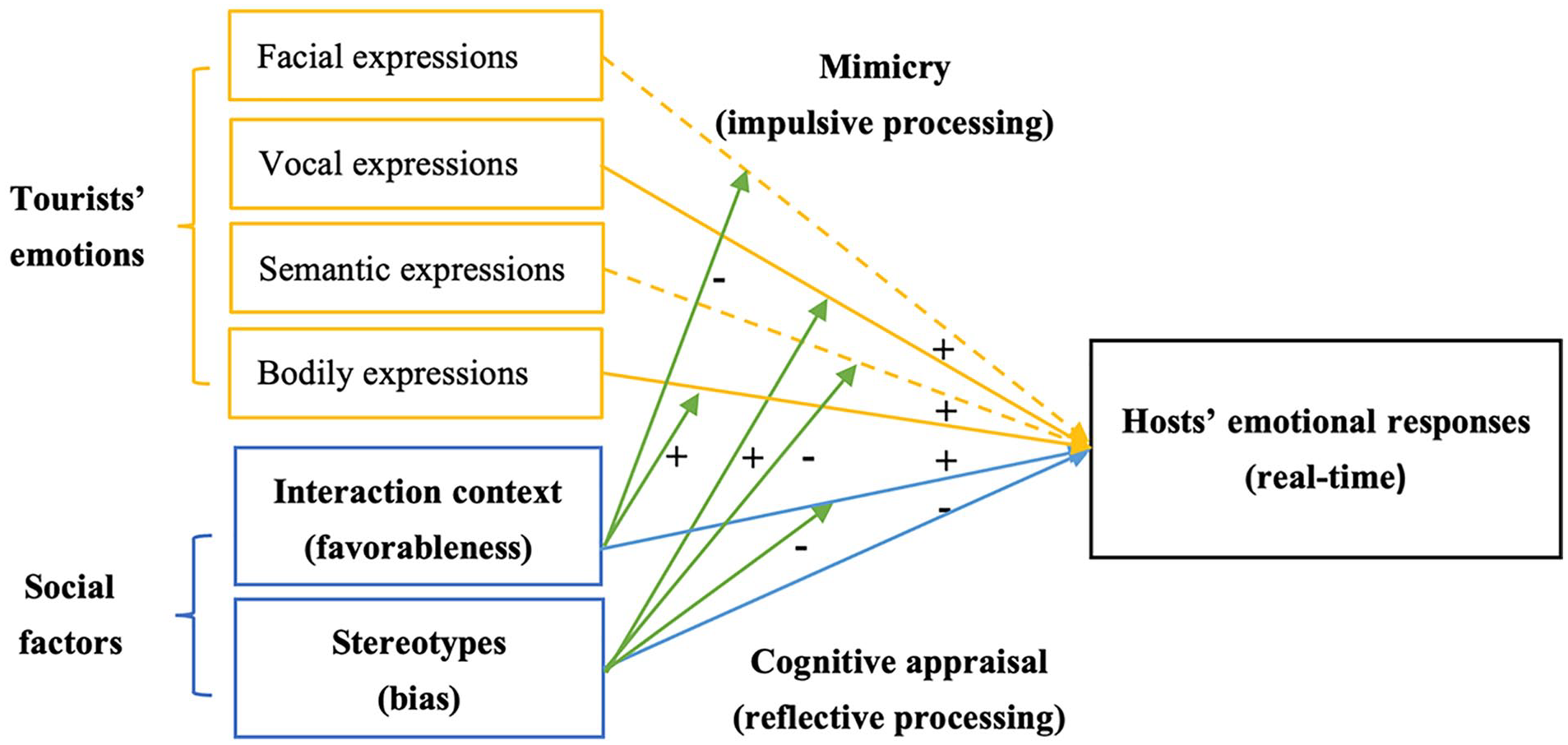
Emotional contagion model of hosts from tourists.
The ECM reveals the hidden process of host-tourist interaction, which is not only cognitive-based, but also emotional laden (Cohen and Cohen 2019). Moment-to-moment emotional interaction, though short-lived, has a solid psychological interpretation in transferring information (Keltner et al. 2019) and determining human’s approach and avoidance behaviors in evolutionary history (Ekman 1970). The automatic emotional contagion process from tourists to hosts and its underlying mechanism inform ways to optimize host-tourist interactions and relations. Specifically, the existence of multi-modal-based emotional mimicry highlights the necessity for tourists to be “emotionally appropriate,” beyond “behaving appropriately” from the traditional cognitive perspective. In other words, in addition to behaving appropriately, by showing positive emotions, tourists could cast positive impacts on hosts’ emotions. The results highlighted the direct and moderating effects of cognitive appraisal relating to interaction context. Favorable interactions can stimulate hosts’ pleasantness directly or through moderating the mimicry effects by limiting negative facial expression or increasing positive bodily communication. Notably, hosts’ cognitive impression is also important for constructive interaction because hosts’ automatic emotional responses were largely determined by their pre-existing stereotypes. Moreover, negative stereotypes can arouse counter-mimicry of semantic emotions and reduce positive effects of amiable interaction context.
In a broad sense, findings in this study empirically validated the dual-process mechanism of automatic emotional contagion (Wróbel and Imbir 2019). As Wróbel and Imbir (2019) proposed, emotional contagion is not only about impulsive processing like mimicry, but also modified by reflective processing related to logical thinking. Wróbel and Imbir (2019) hypothesized that some information can be internalized in people’s associative network, thereby being activated in the reflective mode and influencing impulsive actions out of consciousness (Gawronski and Bodenhausen 2014). On a real-time basis, this study validated the dual-process hypothesis by identifying the compelling effects of mimicry and cognitive appraisal processes underlying automatic emotional contagion from tourists to hosts. The empirically verified ECM specified and validated the interaction context and hosts’ stereotypes as the associated information that can be automatically activated for reflective control on emotional mimicry, thus contributing to theorization of the emotional contagion process and host-tourist interaction.
Conclusion and Implications
This study investigated real-time emotional contagion of HK residents from MCTs using video scenario-based investigation and cutting-edge techniques (e.g., FaceReader and artificial intelligence-based tools) to unravel the hidden process of host-tourist interaction from a fruitful yet neglected emotional interaction perspective. A dual-process mechanism-based model underpinning emotional contagion—ECM—was proposed and tested. First, hosts tended to mimic emotions of tourists on a multi-modal basis, particularly from vocal and bodily expressions. Second, cognitive appraisal relating to interaction context and hosts’ stereotypes were identified to influence hosts’ automatic emotional responses. Moreover, hosts’ emotional mimicry from different modalities was moderated by cognitive appraisal of interaction context and stereotypes. In addition, stereotypes moderated the effects of interaction context on hosts’ automatic emotional responses. The existence of the dual-process and multiple moderating effects leads to emotional convergence and divergence between HK residents and MCTs. MCTs’ positive and negative emotions can be consistently transmitted to residents through mimicry. However, cognitive appraisal associated with interaction context and hosts’ pre-existing stereotypes may modify the automatic responses directly or indirectly through moderating effects, thus leading to inconsistences between residents’ emotional responses and tourists’ emotional expressions. The results are theoretically meaningful for understanding host-tourist interaction and emotional contagion, and further provide practical insights regarding friendly host-tourist relations and socially sustainable destination development.
Theoretical Implications
The proposed and empirically tested ECM, which illustrates the host-tourist emotional contagion process, pushes the knowledge boundary of host-tourist interaction from a post-hoc cognitive evaluation tradition toward a real-time affective-cognitive perspective. How tourists express themselves emotionally is significantly influential to hosts’ emotional experience and reactions (Lerner et al. 2015). Compared to previous studies that highlighted “emotional labor” with a focus on employees’ efforts in service delivery settings (Lee and Madera 2019), the concept of tourists’ being “emotionally appropriate” implies the importance of “emotional consumption,” which focuses on tourists’ efforts in tourism experience settings. This broadens the scope of host-tourist relation studies and emotional contagion research in tourism and hospitality.
Findings of this study contribute to the emotional contagion literature by providing empirical evidence for the dual-process mechanism (Wróbel and Imbir 2019), thus clarifying the prevailing theoretical disputes between mimicry and cognitive appraisal in the social psychology literature (Herrando and Constantinides 2021). Emotional contagion, as an automatic emotional transmission process among people, relies on primitive mimicry (Prochazkova and Kret 2017) as well as cognitive appraisal (Neves et al. 2018) that may be automatically activated by associative information such as interaction context and receivers’ (hosts’) stereotypes. In this regard, this study enriches emotional contagion research by adding stereotypes to ECM as an interpersonal factor that has been widely discussed in intergroup contact literature (Parkinson 2020). The verified ECM thus represents a valuable attempt of theorizing emotional contagion in an intergroup context. Pre-conceived stereotypes, particularly negative ones, deserve more attention in intergroup contact research owing to their newly confirmed effects in the automatic emotional contagion process.
In addition, this study presented a breakthrough in the methodological limitations of post-hoc self-reporting methods and single-modal measurement in tracking the moment-to-moment emotional contagion process (Herrando and Constantinides 2021). Through applying video-vignettes and cutting-edge emotional recognition techniques, this study made effective attempts to achieve a real-time, multi-modal investigation of emotional contagion between hosts and tourists. Such efforts advanced emotional contagion as well as emotion research by getting closer to the spontaneous emotional occurrence process, which still warrants further endeavors.
Practical Implications
Practical insights for tourism management and marketing can be generated through the emotional contagion process revealed by this study. First, the results extended previous recommendations on service with a smile from employees (Woo and Chan 2020) to delightful expressions from tourists. Hosts’ emotional responses are crucial for socially sustainable destination development (Wang, Berbekova, and Uysal 2021). On account of the mimicry effect, tourists are encouraged to present pleasantness during interaction with locals through multiple expressive modalities, especially vocal and bodily expressions, so as to promote mutual positive emotions and harmonious relations. Marketing organizations are encouraged to use friendly images of MCTs and other tourists in mass and social media by emphasizing their positive emotions to arouse positive feedback and perception among residents.
Second, despite previous studies highlighted HK residents’ prevalent negative feeling about MCTs (Shen, Luo, and Zhao 2017; Siu, Lee, and Leung 2013), this study advocates positive expressions of MCTs because the interaction context was identified to significantly facilitate hosts’ positive emotional responses. Civilized behaviors of MCTs enhanced HK residents’ bodily mimicry. Despite facial mimicry being negatively moderated by favorable interactions, facial expressions of tourists still arouse positive emotions among hosts (see Figure 2a). Tourists’ positive facial expressions and actions, including friendly and pleasant body postures, are encouraged in both actual interactions and media platforms to promote positive feedback of HK residents.
Furthermore, the widely recognized negative stereotypes held by HK residents toward MCTs deteriorated interactions directly by suppressing respondents’ positive emotions and intensifying their negative emotions, and indirectly through negatively moderating the effects of interaction context on mimicry. Reducing negative stereotypes is thus essential for creating enjoyable host-tourist interactions and improving their relations. Community communication campaigns can be launched to increase hosts’ awareness of the damaging influence of their stereotypes so that they may be motivated to gradually modify their cognitive assessment of MCTs. Destination management organizations are suggested to develop stereotype reduction campaigns to reduce residents’ negative stereotypes and encourage unbiased host-tourist interactions.
Limitations and Future Directions
While unveiling the emotional contagion process in host-tourist interaction, this study is subject to several limitations. First, techniques used to measure real-time emotional expressions in different modalities may not be 100% accurate. Future research adopting even more advanced techniques, such as Observer (Palagi et al. 2020) to detect behaviors, for more accurate measurements is encouraged to derive robust results on emotional contagion through multiple modalities. Second, this study differentiated participants as biased and unbiased based on interview results. A quantitative measurement scale of stereotypes can be employed in future studies to numerically specify the influences of both positive and negative stereotypes. Moreover, this study examined emotional contagion in a HK resident-MCT interaction context, which has its own specialty and historical background (Tse and Tung 2022). Future research can test the model identified in this study in other host-tourist encounters to further confirm findings. In addition, though challenging, future study to combine tourists’ emotional contagion from hosts is encouraged to further discover the bidirectional emotional contagion process. Although this study was conducted before the COVID-19, research findings are expected to be robust because the study concerned psychological mechanisms and factors that are not related to the pandemic.
Footnotes
Declaration of Conflicting Interests
The author(s) declared no potential conflicts of interest with respect to the research, authorship, and/or publication of this article.
Funding
The author(s) disclosed receipt of the following financial support for the research, authorship, and/or publication of this article: The work described in this paper was partially supported by a grant from the Research Grants Council of the Hong Kong Special Administrative Region, China (Project No. PolyU 15500618), the Hospitality and Tourism Research Centre, SHTM, PolyU, and a grant from the National Natural Science Foundation of China (Project No. 71974010).
