



Abstract
Shared symbolism and ideology at dark heritage sites construct the narrative of a collective national destiny. Visitors’ experiences with such sites necessarily involve decoding signs and symbols. The commonality in interpretative practices is rooted in “collateral knowledge” and forms the identity of place. Yet, cultural materiality, collective identities, and semiotics have been overlooked by dark tourism academia. In broader tourism studies, semiotic attempts lack methodological homogeneity and congruence and efforts to transpose Charles Peirce’s semiotic theory into practical experiential methodologies are scarce. This study introduces a practical, systematic, and replicable semiotic methodology for reading the identity of dark heritage sites. This methodology revolves around three interconnected Peircean concepts: the sign, the collateral knowledge, and the sign’s relationship to its dynamical object. It is proposed that reading the indexical, iconical, and symbolical functions of signs through the filter of collateral knowledge can ensure a systematic meaning-making process and reveal subtle influences.
Introduction
“The past is never dead, it’s not even past” (Faulkner, 1951). Adding a spatial perspective to this temporal existential construct, semiotician Charles Peirce explains that “the entire universe [. . .] is perfused with signs, if it is not composed exclusively of signs” (cited in Kruse, 1990, p. 219), which births the epistemological conclusion that “the whole of human experience, without exception, is an interpretive structure mediated and sustained by signs” (Deely, 1990, p. 5). This mirrors the tourism microcosm, where “[a]ll over the world the unsung armies of semiotics, the tourists, [. . .] are engaged in semiotic projects, reading cities, landscapes, and cultures as sign systems” (Culler, 1981, p. 127). Nowhere is the echo of these synergetic statements heard louder than within the experiential boundaries of dark tourism, defined as the phenomenon of people traveling to sites associated with suffering and death (Lennon & Foley, 2000). The past is ever-so-present in places of national heritage and fratricide death (Chronis, 2005), where memories of conflict remain strong across generations (V. L. Smith, 1998). Such sites are imbued with symbolism (MacCarthy, 2017), which makes the visiting experience an interpretive exercise in semiotics (MacCannell, 1999; Urry, 1995). They are also entrenched in political ideology (Stone, 2006) and strong emotions (Nawijn et al., 2016). These features develop intense identitarian bonds between individuals and places (Light, 2017; Martini & Buda, 2020), by creating the narrative of a communal national destiny (A. Smith, 1996). A site’s collective, public, and symbolic nature forms its identity of place (Relph, 1976). The emotionality and commonality in interpretive practices revolve around what Charles Peirce called “collateral knowledge” (Knudsen et al., 2016). Aspects of Peircean semiotics have been advanced and debated by MacCannell (1999, 2014), Metro-Roland (2009, 2011), or Lau (2011, 2014). Although these studies are fundamental in deciphering Peirce’s intricate philosophy, they are mostly conceptual and efforts to transpose Peircean semiotics from discretionarily applied philosophical concepts into systematic and replicable methodologies for tourism experiential research remain scarce. One rare practical contribution is Soica’s (2016) framework for investigating how meanings are attached to objects by different actors in the ecotourism practice, but it presents a one-way meaning-making process: from actors to objects. Another commendable attempt is X. Zhang and Sheng’s (2017) interpretation of Mama Moon as a social sign. Still, it has one important shortcoming. X. Zhang and Sheng (2017) recognize that “localness” may ensure an interpretative “familiarity” among people living in a particular community and advise that tourism semiotic studies should seek “to understand tourism phenomena in the context of their social reality” (pp. 171–172) since “the sociocultural operation mechanism [. . .] is behind the entire semiotic function” (p. 165). However, they propose a Peircean framework for interpreting social signs which completely overlooks the Peircean concept which explains the socially-influenced commonality behind individualistic meanings: “collateral knowledge.”
Despite a considerable increase in experiential dark tourism studies, many still analyze the visitor experience from a demand perspective usually linked to motivations (Iliev, 2021; Light, 2017). A richer understanding can be obtained by linking it to the cultural, social, political, and historical context in which it takes place (Light, 2017; Martini & Buda, 2020; Podoshen et al., 2018; Stone et al., 2018). Dark tourism academia should also continue to investigate the politics of interpretation by involving interdisciplinary theories of memory, culture, identity, and death (Iliev, 2021; Light, 2017; Martini & Buda, 2020; Prayag et al., 2021; Stone et al., 2018). Especially collective identities and visitors’ perception of and response to the meaning-infused physical materiality at dark tourism sites require fuller scrutiny (Light, 2017). Here, semiotic theories are valuable as they suggest that “the whole of culture should be studied as a communicative phenomenon based on signification systems” (Eco, 1979, p. 22). Virtually nonexistent in dark tourism academia, semiotic attempts in broader tourism studies have preponderantly focused on marketing, branding, and motivations (e.g., Hunter, 2013, 2022; Lourenção et al., 2020; Sang, 2021), and chosen Saussurian approaches based on the symbolic nature of linguistic signs (e.g., Culler, 1981; Tresidder, 2011; Urry, 1990). de Saussure’s (1959) “sign” results from the connection between “signifier” and “signified.” This model is rigid (Metro-Roland, 2009), entirely arbitrary (Ogden & Richards, 1923), and detached from social context (Gardiner, 1992). Instead, Peirce’s sign theory is preferable for analyzing the relationship between the world and people’s understanding of it, and interpreting the meanings of non-linguistic signs like memorial landscapes (Knudsen et al., 2007; MacCannell, 1999; Metro-Roland, 2009), as it “accounts for both the mental and the physical, the material and the spiritual, which constitutes the tourist experience giving order and meaning to the world around” (Metro-Roland, 2011, p. 36). Still, visitors’ interpretations of heritage attractions as signs based on their cultural identity, particularly through Peircean semiotics, remain empirically understudied (Paraskevaidis & Weidenfeld, 2021).
The above gaps may stem from dark tourism scholars’ continued reliance on qualitative praxis entrenched in positivist underpinnings (Light, 2017). Such approaches lead to methodological incoherence and an overreliance on questionnaires and other obtrusive methods (Korstanje, 2018). Besides remembering a moral tragedy, dark tourism sites propagate a code entrenched in politics, so “[t]he role of ethnologist consists in deciphering that code by writing and describing the context. The written word (text) is of paramount importance to understand the allegory of” such sites, and the output should “not examine the death but how it is interpreted by local cultures or story tellers” (Korstanje, 2018, p. 90). Yet, very few dark tourism endeavors have adopted formal analytical techniques such as semiotic analysis (Light, 2017). In broader tourism research, “semiotics” has been a popular topic “often regarded as both a subject and a methodology” (X. Zhang & Sheng, 2017, p. 164). Despite this abundance of semiotic studies, there is limited methodological homogeneity and congruence among them. Simply put, there seem to be as many semiotic approaches as published semiotic studies. Most of these approaches either use the generic terms “semiotics” or “semiotic analysis” with little to no methodological argumentation or confusingly employ philosophical interpretations as pseudo-practical methods.
This study attempts to fill these gaps by pioneering a methodology for exploring the identity of dark heritage sites. More precisely, it develops a methodology for reading signs through the lens of “collateral knowledge”—understood as a set of values and beliefs forming the shared identitarian core for most individuals in an investigated cultural group—which enables researchers to draw critical and educated conclusions about a two-way process: actors attributing meanings to heritage items which, in turn, influence the visiting experience. The methodology is based on three interlinked Peircean concepts: the “sign,” the “collateral knowledge,” and the “indexical/ iconical/ symbolical” relationship of the sign to its object. Previous studies may have introduced and discussed them philosophically, but this article innovatively links these concepts into a practical, systematic, and replicable framework of experiential inquiry exemplified in a semiotic reading of the Nanjing Memorial Museum (hereinafter NMM).
Study Context
One of the “Four Great Ancient Capitals” of China, Nanjing was occupied by the Imperial Japanese Army on 13 December 1937. Over 6 weeks, Chinese soldiers and civilians were subjected to mass killings, torture, rape, arson, and theft (Chang, 1997). At the peak of the 1982 Japanese Textbook Controversy, Deng Xiaoping said: “[China] should erect memorials to engrave the fact of Japanese invasion in response to attempts by Japanese politicians to cover up Japan’s war crimes in China” (Fengqi, 2009, p. 22). The Nanjing Massacre and its transfiguration, the NMM, were selected as key means to confirm past aggression by others, foster anti-Japanese narratives, shape Chinese national identity, and “leverage moral ground in national and international politics” (Zhu, 2022, p. 36). Since its opening in 1985, the NMM’s victim-focused interpretation has been revamped three times (1995–1996, 2005–2007, 2017) to meet the authorities’ socio-political needs of the times, such as the internationalization and legitimation of the Chinese official line and the enforcement of China’s image as a rising global power (Zhu, 2022).
Observing China under the COVID-19 pandemic reveals the ubiquitous interrelatedness among memory, identity, culture, politics, and death. Strengthening patriotic education under the pandemic challenge has been a major undertaking of the Chinese authorities aimed at bolstering identification with China’s “socialist cause” and instilling confidence in the Chinese Communist Party (CCP) leadership (Guo, 2022; Huang, 2022; F. Zhang & Song, 2020). CCP-promoted “red tourism” has rocketed during the pandemic, with tourists to patriotic education bases like the NMM exceeding 100 million in 2020 (Wong & Zhang, 2021). Such measures transformed affirmative into assertive patriots (Zhao, 2021) and triggered a wave of antiforeigner sentiment (Huang, 2022; Schneider, 2021). To understand such subtleties and implications and prepare accordingly, the post-COVID tourism world needs exploratory tools like the semiotic methodology developed herein.
Conceptual Underpinnings
Dark Heritage as Narrative Texts, Signs and Symbols
Part of a phenomenon labeled dark tourism (Lennon & Foley, 2000), recent decades have witnessed a sustained increase in the consumption, provision, and research of sites and topics associated with death and suffering (Light, 2017; Sharpley & Stone, 2009). Adhering to scholars’ calls for integrated experiential perspectives, this study employs the following definition: “Dark tourism is concerned with encountering spaces of death or calamity that have political or historical significance, and that continue to impact upon the living” (Stone, 2016, p. 23). It portrays the visiting experience as an active exchange of meaning between visitor and site materiality while emphasizing the politics of heritage interpretation.
A deeper understanding of experiences at dark tourism sites can be obtained from heritage-related literature (Biran et al., 2011). Part of a “symbolic system” (Park, 2010, p. 119), heritage is a “unifying sign [. . .] an identity marker [. . .] directly related to a collective social memory” (Bessiere, 1998, p. 26). As heritage sites are rich in narrativity, symbols, and meanings, tourism experiences at heritage sites are interpretive exercises in semiotics (MacCannell, 1999; Metro-Roland, 2009) where the physical installation can be read as narrative texts laid out along storylines (Brockmeier, 2002). A narrative is every text that tells a story, while a text is every meaningfully organized sign system (Brockmeier, 2002). Texts are organic manifestations and constituents of the semiotic reality and cultural tradition of a social sphere (Randviir, 2002). Cultural narratives bind individuals to each other by allowing for a continuous flow of transgenerational shared memory which deliniates the coordinates for defining past, present, and future and integrates them into the symbolic space of a culture (Brockmeier, 2001, 2002).
Identity of Heritage Sites as Cultural-Semiotic Materiality
Sites of national heritage are particularly powerful transgenerational repositories of collective memory and meanings (Sidaway & Mayell, 2007). Regarding shared meanings and symbolism constructing the generally agreed upon character of a place, Tuan (1979) theorizes “public symbols,” Suvantola (2002) articulates the public character of place, Houston (1978) discusses the horizontality of place, while Norberg-Schultz (1980) and Stedman (2003) adopt the notion of “genius loci.” This article adopts Relph’s (1976, Figure 1) conceptualization of identity of place as a “persistent sameness” (p. 45) stemming from “three interrelated components, each irreducible to the other—physical features or appearance, observable activities and functions, and meaning or symbols” (p. 61). The identity of a place may result from individuals being taught to search for certain aspects of place emphasized by their cultural groups (Relph, 1976).
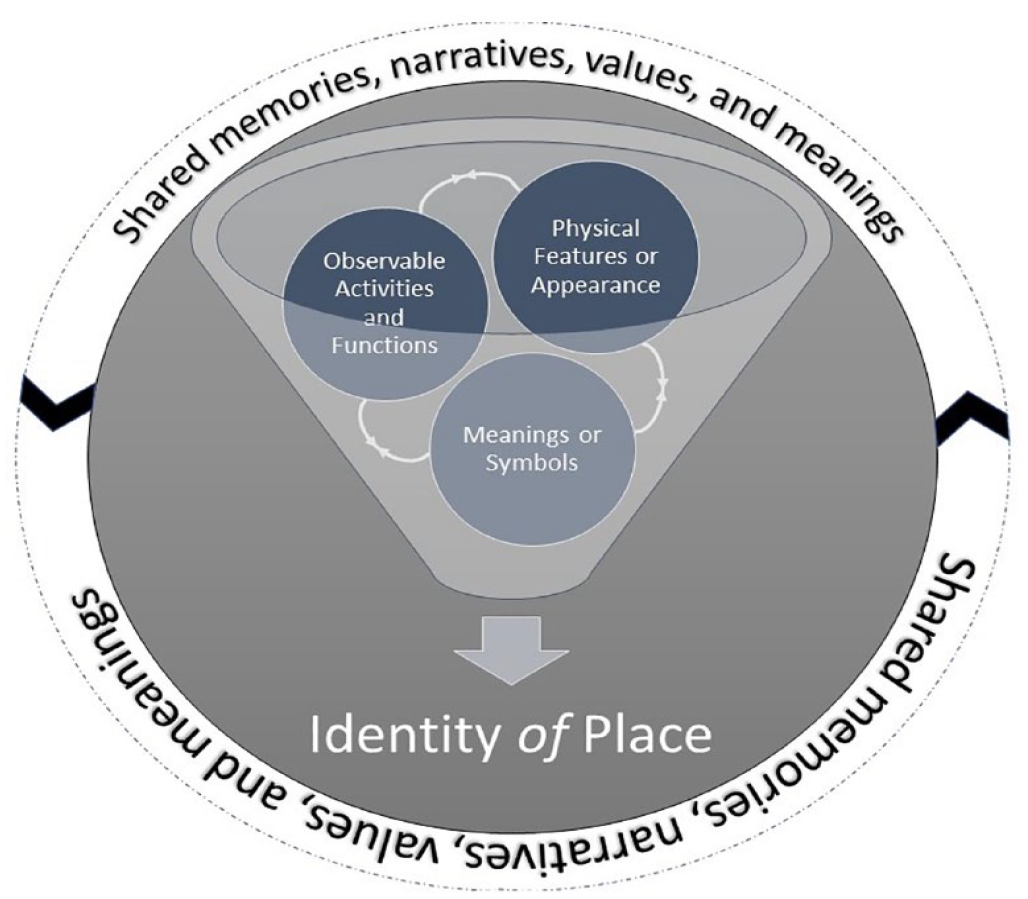
A tripartite framework for identity of place (adapted from Relph, 1976).
Individual meanings and levels of identitarian bonding are shaped by the transgenerational meanings and values of the cultural place (Q. Wang & Brockmeier, 2002). Based on a symbolic web of memory that connects minds into culture, an identitarian sense of belonging emerges (Brockmeier, 2001). Individuals gain “membership of a symbolic textual community” (Skultans, 1997, p. 761) as they symbolically “suture themselves” into the socio-cultural order of meaning and narrative program of the community they are members of (Brockmeier, 2001, p. 221). Tourism places are primarily visited “to be woven into the webs of stories and narratives people produce when they sustain and construct their social identities” (Bærenholdt et al., 2004, p. 10). They are semiospheres (Kostogriz, 2006), or spatial structures which support cultural-semiotic activity which fosters meaningful semiotic structures like statehood, nationhood, and cultural identity (Randviir, 2002). Strong bonds between people and place result from the continuous feedback loop between the physical attributes of a landscape and the meanings shared within a group about those attributes (Nessauer, 1995). Physical features of places soaked in local culture and symbolism and clearly legible “provide visitors with the raw materials (experiences) to construct a sense of identity, meaning, attachment, and stability” (Bruner, 1994, p. 411) by exerting “a subtle power over people, eliciting a broad range of emotions and meanings that may be difficult to specify” (Mitchell 2002, p. vii). Hereby, cultural landscapes become semiotic collections of symbols to be deciphered (Knudsen et al., 2007), while the visitors’ engagement with them connects personal memories to metanarratives and meaningfully shapes the visiting experience (Rickly-Boyd, 2010).
The Semiotic Experience at Dark Heritage Sites
The essential character of tourism place “is its combination of the material and the metaphorical” rooted in meanings and signs (Crouch, 2002, p. 208). For semioticians, any meaningful symbolism, any sign system is a text to be read (Brockmeier, 2001). In tourism academia, such an approach stems from Urry’s (1990, 1995) understanding of the tourist experience as a “signposted experience” built around the production of symbols to be gazed upon. This understanding depicts the tourist as a passive receiver of signs and the meaning-making process as static and random (Metro-Roland, 2009), and creates an artificial dualism between culture and materiality (Haldrup & Larsen, 2006). This article proposes such criticisms are closely connected to tourism semiotic writings’ explicit or implicit adoption of Saussurean approaches which lead to arbitrary associations of meaning between signified and signifier. Rather, MacCannell’s (1999) understanding of experiences as external representations arising when meaning-infused material entities (e.g., museums or memorials) change individuals’ emotions or thoughts is preferable. This definition understands that tourism academia can no longer evade the “inescapable hybridity of ‘human’ and ‘nonhuman’ worlds” and the significance of materiality for the tourist experience (Haldrup & Larsen, 2006, p. 276).
The Philosophy: Charles Peirce’s Theory of Signs
Semiotic Theory is a philosophical theory which studies “the life of signs within society” (de Saussure, 1959, p. 16), and “is concerned with anything that can be taken as a sign” (Eco, 1979, p. 7). Charles Peirce’s Theory of Signs or semiotic is “the doctrine of the essential nature and fundamental varieties of possible semiosis [. . .] By semiosis I mean an action, an influence, which is, or involves, a cooperation of three subjects, such as a sign, its object and its interpretant, this tri-relative influence not being anyway resolvable into actions between parts” (cited in Eco, 1979, p. 15). Three concepts from Peirce’s arboresque philosophy lay the foundation for the methodology advanced in this article. Clarifyingly, the customary practice for citing Peirce’s writings is: EP (Essential Peirce) and CP (Collected Papers) followed by volume and page number; SS (Semiotic and Significs) followed by page number.
The Peircean “Sign”
The first concept is Peirce’s “sign” as a tripartite system composed of an object, a representamen, and an interpretant (Figure 2). A Representamen is “anything which is so determined by something else, called its Object, and so determines an effect upon a person, which effect is called its Interpretant, that the latter is thereby mediately determined by the former” (EP 2.478). Tourism research has mostly used semiotics in the context of marketing and branding. Such approaches usually consider a tripartite system which mirrors the Peircean sign (Figure 3): an advertisement of a tourism product (the object), symbols and myths attached to the respective product (the representamen), the consumption of the tourism product (the interpretant).
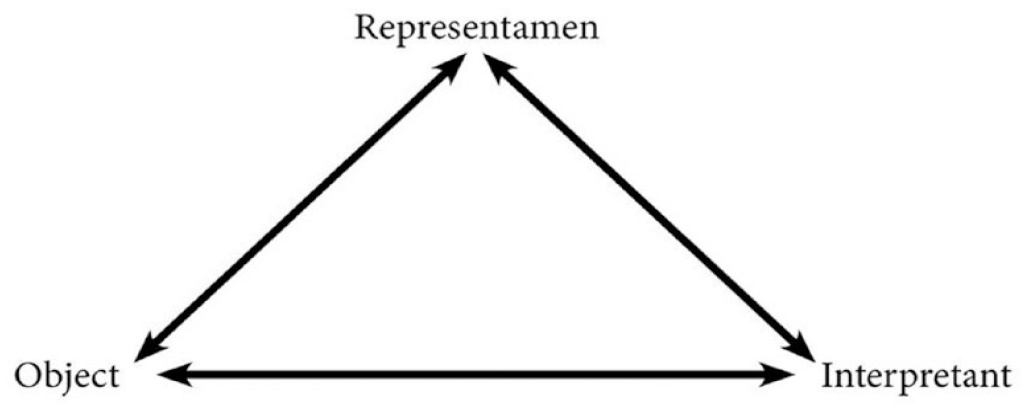
The Peircean sign.

The Peircean sign in tourism marketing research.
This article proposes Peircean semiotics’ utility in reading heritage sites and drawing critical and educated assumptions about visitors’ behavior (Figure 4). For example, at the NMM, the Peircean sign enables observers to understand Chinese visitors’ gesture of bowing: monuments of familial/fratricide suffering (the object), the Confucian protocol of kòu tóu (叩头) inviting to pay respects (the representamen), the action of bowing (the interpretant).
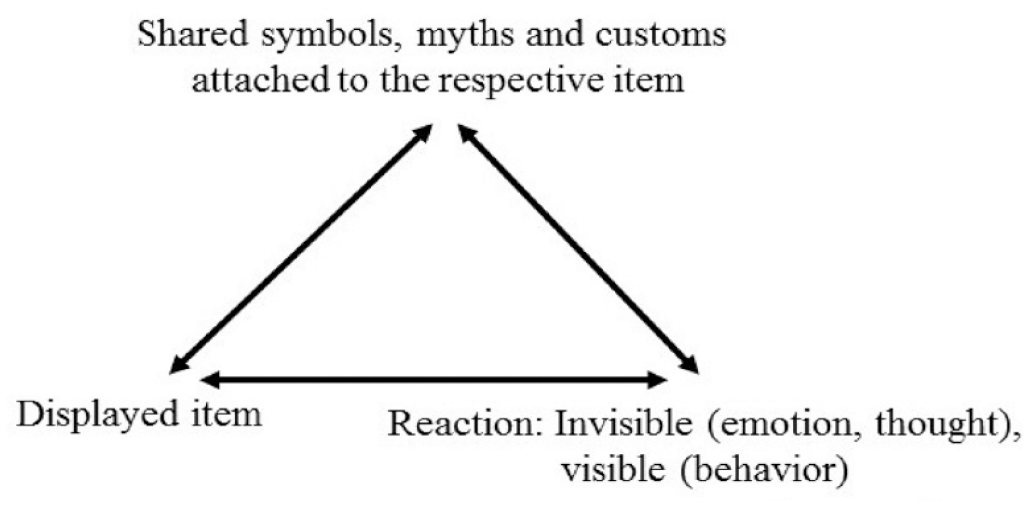
The Peircean sign in interpretivist experiential research.
The Object is divided between immediate object (what is put into play in semiosis) and dynamical object (what it is). For example, the representation of the Nanjing Ancient Wall in a photo in the NMM is the immediate object while the actual wall is the dynamical object. The interpretant is the meaning given to the representamen and takes the form of another thought or action, such as the bowing act described above. Dependent upon the cross-generational community of enquirers, the interpretant does not consist in how any mind does act but in how every mind would act. “That is, it consists in a truth which might be expressed in a conditional proposition of this type: ‘If so and so were to happen to any mind, this sign would determine that mind to such and such conduct’” (EP 2.499). Thus, an essential idea behind Pericean semiotics is that individuals apprehend the world through interpreting signs and nothing is a sign unless it is interpreted as a sign. These arguments herald the main assumption of this article: all semiotic acts depend upon the interpreter’s collateral knowledge.
Collateral Knowledge
The second concept is the relationship between collateral knowledge, habit, and beliefs. Within any act of semiosis, interpretation depends on the outside knowledge and beliefs brought to fill in the details (EP 2.493–6). Peirce defines collateral knowledge as “previous acquaintance with what the sign denotes” (EP 2.494). It is the storehouse of cummulated knowledge gained from previous semiotic acts and accessed consciously or not when encountering a sign. Thus, the more collateral knowledge exercised on the process of interpretation, the closer one can get to the dynamical object of the sign. Individuals’ beliefs about the world shape their actions and interpretations. As Peirce writes: “The essence of belief is the establishment of habit” (CP 5: 398). Fundamentally, Peirce insisted on commens or the communal nature of knowledge. Although each visitor brings to a heritage site a different collateral information which opens it to multiple interpretations, there are certain unspoken institutionalized commonalities in landscape readings among those commonly socialized by family, culture, and history (Knudsen et al., 2007). When entered into narrative discourse, these commonalities are shaped by power relations to further homogenize meaning (Knudsen et al., 2007).
The contribution of this article lies in its focus on socio-cultural interpretive commonalities, as the indexical, iconical and symbolical functions of signs are read through the filter of collateral knowledge. The new methodology proposes that collateral knowledge performs as the meaning-infusing bridge (i.e., representamen) between the object and the interpretant (Figure 5).

The Peircean sign—collateral knowledge as representamen.
Index, Icon, Symbol
The third concept is the tridirectional relationship of the sign to its dynamical object. An “icon” is a sign related to its object through resemblance or shared quality (CP 8.335; EP 1.226; EP 2.5). Examples in the NMM include maps of conflict between China and Japan. An “index” relates to its object by actual or physical connection to it, or by being in “a real relation to it” (CP 2.304; CP 4.447; EP 2.163; EP 2.274). Examples in the NMM include in situ human remains of victims, an original defense bunker, or historical photographs. A “symbol” bears no resemblance to its object, but is linked to it through a “habit, disposition or rule” which is a convention among the members of a community (CP 4.447). As Gadamer (2004) argues, individuals understand the surrounding world through a horizon of meaning which is socially and culturally shaped by the linguistic community they belong to. Examples in the NMM include the cross, the bell, or the dove (Figure 6).

Examples of symbols at the NMM.
Peirce proposes that very few signs are pure icons, indexes, or symbols, so, rather than focusing on sings’ ontological status, what matters is how they function iconically, indexically, and/or symbolically (EP 2.10). Metro-Roland (2011) argues, albeit conceptually, that this elasticity makes Peircean semiotics useful toward understanding the connection between cultural landscape and tourist experiences. As mentioned, there is a scarcity of practical semiotic applications to substantiate this claim.
The Practice
Methodological Considerations
The proposed approach employs an interpretivist paradigm, a relativist ontology, and a semiotic epistemology. The reading of the NMM below is deep-rooted in these underpinnings and focuses on the iconical, indexical, and symbolical functions of the Peircean sign. This study’s novelty lies in interpreting these functions through the filter of “collateral knowledge” understood as the set of cultural, social, and political features shared by most individuals of the investigated group. Therefore, a fundamental first step in implementing this methodology is adopting, adapting, or developing the framework of collateral knowledge representing the interpretative filter for the investigated site, topic, or group. Herein, this framework is called Chineseness and conceptualized in the upcoming section. Since its purpose is to present the methodology, this article only includes the reading of the entrance area.
To explore whether a cultural outsider using this methodology can obtain a similar interpretative understanding to a cultural insider, the semiotic reading of the NMM was conducted and written by the principal investigator (hereinafter PI) who is not and does not speak Chinese. Building on F. Li (2008), a Chinese gaze based on a thorough familiarization with the subject by means of relevant secondary sources was attempted. Here, “collateral knowledge” includes concepts shared by millions of Chinese which form the backbone of the Chinese society. Such concepts are available to non-native researchers from an abundance of secondary materials. The correctness in spelling and reliability of meanings attributed to Chinese concepts have been verified by a native Chinese co-investigator.
A transparent reflexive process and disclosure of researchers’ socio-politically influenced positionality toward their work reduces partisanship and increases credibility (Bryman, 2016; Sultana, 2007). The two co-investigators share meaningful similarities and differences to have a common interpretive ground which is neither overly critical nor inherently sympathetic to the investigated site and context. The PI was born under a totalitarian Communist regime in Europe and transitioned to democratic governance in early childhood, while the co-investigator was born under the Chinese Communist regime and transitioned to democratic lifestyle as a young adult. Both lived in Mainland China at different life stages: one as native, the other as resident. They have an “intimate knowledge with the group being researched” based on lived familiarity (Griffith, 1998, p. 362). Their partly overlapping backgrounds ensure a complementary insider/outsider positioning which allows them to attempt a coherent, cohesive, ethical, holistic, and balanced interpretive investigation.
The method used for conducting the semiotic reading is participant observation. It allows the researcher to gain an understanding from the inside while retaining an outsider’s empirical attention to detail (Evans, 1988). To ensure a thorough reflective process and reduce the chances of imposing biases when performing the investigation, daily visits to the NMM were conducted over a 2-week period in 2018 guided by Spradley’s (2016) degrees of participation.
Over the initial 3 days, the PI assumed the role of complete participant in the visiting experience to identify preconceived notions and emotional biases about the respective context and site. This approach understands bracketing as “a specific strategy for separating impressions, feelings, and early interpretations from descriptions during qualitative data collection” (Hatch, 2002, p. 86). Researchers engaging with interpretive methodologies should not seek to suspend but understand how their taken-for-granted assumptions and subjectivities about the topic might influence their approaches. Callary et al. (2015) label this process “bracketing in biases.” The first visit revealed emotional biases caused by the engagement with a site of dark history. The second visit exposed mostly cognitive biases, as the PI focused more on narrative details. The third visit was conducted with some emotional detachment, and biases identified during previous visits could be (dis)confirmed. During each visit, reflections and reactions were recorded in raw notes and stored in research journals, then consulted as the analysis progressed since “the information helps with field note interpretation and provides a means of accounting for personal biases and feelings” (Hatch, 2002, p. 88). For the subsequent visits, the PI chose moderate participation to record broad, analytic, and interpretive field notes. A variety of additional data (e.g., photography, brochures, leaflets) were collected to facilitate and enrich the ensuing analysis.
Influenced by Rickly-Boyd (2010), the writing of the semiotic reading was done as a full narrative text. A map of the museum master narrative ensured coherent interpretative and writing processes, while the hermeneutic circle allowed the PI to write the analysis on different levels of interpretation.
Collateral Knowledge: Chineseness and Chinese Common Knowledge (中华文化)
The commonality characterizing Chinese visitors’ interpretation of cultural sites in China originates in Chineseness and its tripartite conceptualization as: a bridge between a self-evident natural identity and a political articulation; an expectation for someone perceived as Chinese to perform socio-cultural practices according to certain “cultural semantics”; and having the capacity to access Chinese Common Knowledge (中华文化) or a common transgenerational heritage of Chinese philosophies, religious concepts, history, literature, art, caligraphy, famous people, places, rituals, and events shared by hundreds of millions of Chinese (F. Li, 2008). From a semiotic perspective, a Chinese heritage site is created when its Chinese Common Knowledge is read through Chinese eyes (F. Li, 2008). Therefore, Urry’s Western-oriented gaze “may not be directly ‘translatable’ in constructing a Chinese reality,” and a “Chinese tourist gaze” should be adopted for meaningful readings of Chinese landscapes (F. Li, 2008, p. 508). Confucianism, Daoism, and Buddhism are the fundamental paradigms of Chineseness and Chinese Common Knowledge (F. Li, 2008), to which this article adds a necessary contemporary extension: the “Patriotic Education Campaign.”
Example: The Semiotic Reading of the Nanjing Memorial Museum (Entrance Area)
At the entrance there is a large rectangular square called the Sculpture Square where a long wall of gray stone stands as the background for a series of sculptures looking out into a water-filled channel. Officially aiming to “tug at visitors’ heartstrings”, these sculptures are the first point of contact between visitors and the NMM’s narrative trajectory. Upon arrival, visitors are greeted by the eye-catching sculpture A Ruined Family (家破人亡; Figure 7), 12.13 m high, which dominates the landscape in its size and meaning. It depicts a heartbroken mother grievingly holding her murdered child’s body. Its height indexically signifies the date of Nanjing’s fall to the Japanese Army: 13.12.1937. Between this sculpture and the entrance lies a set of bronze sculptures entitled The Refugees (难民), portraying different typologies of victims: a grief-stricken civilian, an orphan crying beside his dead mother, a grandfather carrying his slain 3-month old grandson, a middle-aged man helping his octogenarian mother escape, a 13-year old carrying his deceased grandmother (Figure 8), terrified orphans taking shelter from bombings, a woman gone mad after being raped, an intellectual joining his wife in death (Figure 9), and a monk closing the eyes of the departed.
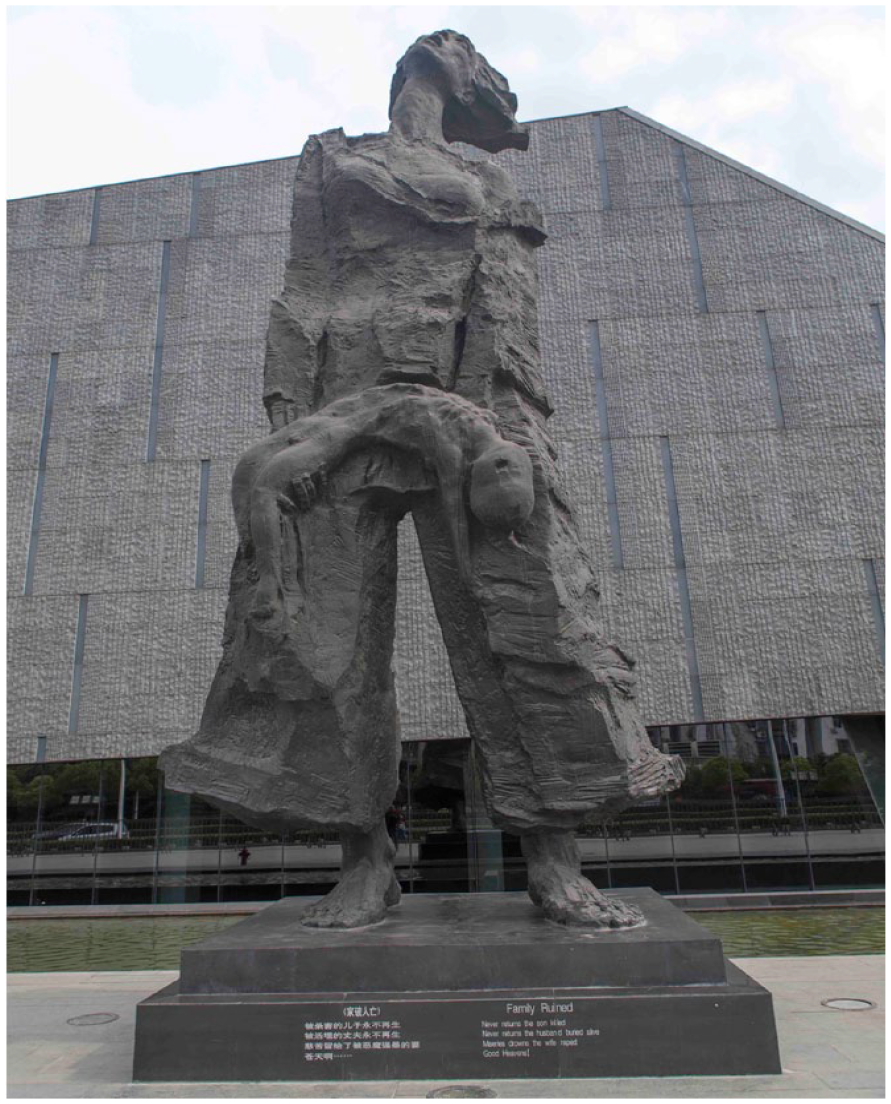
“A ruined family.”
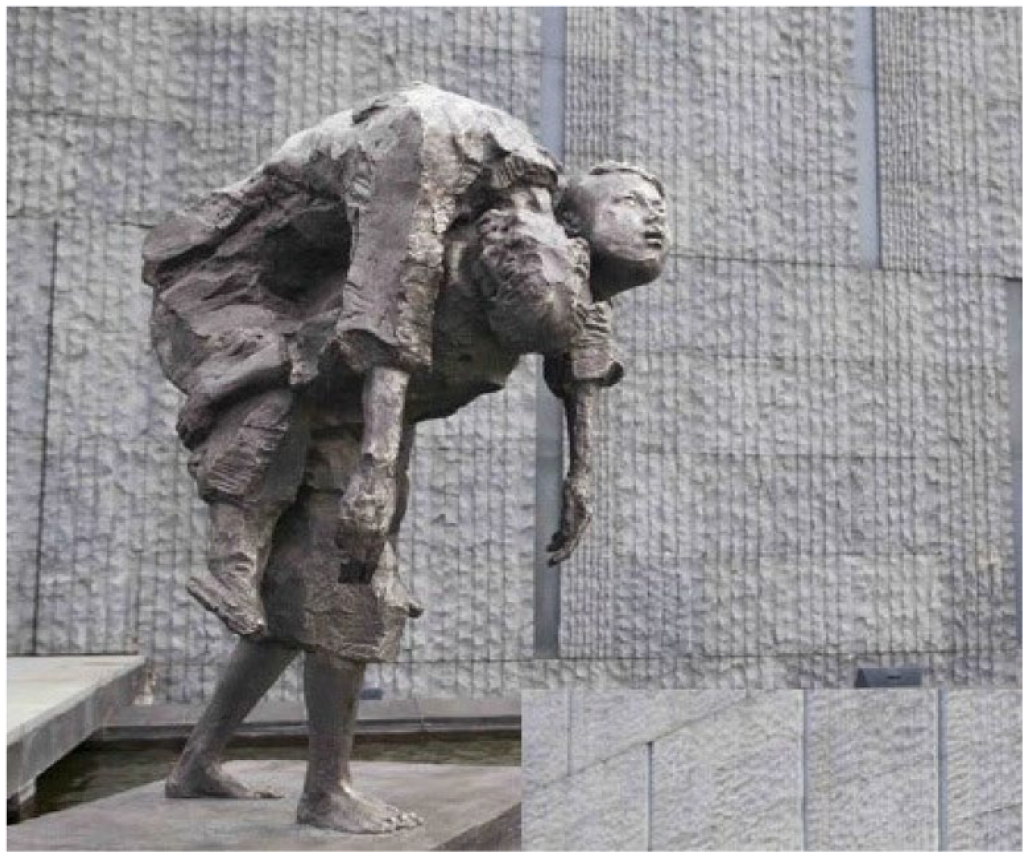
A 13-year-old carrying his deceased grandmother.

An intellectual joining his wife in death.
These sculptures iconically signify the suffering of Chinese civilians, while being symbolically connected to meanings and cultural habits universally accepted by millions of Chinese across generations. Throughout history, family has been perceived as the backbone of Chinese society, and childcare as the mother’s main role. The elderly are honored while the young children are the focus of the family. These familial values are strongly rooted in Confucianism, which defines individuals through their belonging to a family while the family is the prototype of all social organizations (Bond, 1986). Confucianism also assumes that human nature is good, and man exists in harmony with others (Bond, 1986). In Confucianism, Taoism, and Buddhism, death is a natural part of life where descendants have the moral responsibility to ensure the deceased’s appropriate commemoration. Among the Confucian virtues, propriety or ritual (礼) includes the rules of proper ceremonial conduct among people according to their familial or societal status, and guides people’s treatment of spirits (Hsu et al., 2009). Filial piety (孝) denotes the children’s absolute duty to respect and obey their parents, take the best possible care of them as they age, and venerate them with proper rituals upon their demise (Hsu et al., 2009). This moral obligation stems from the concepts of rightneousness (义), and ancestor worship (敬祖) according to which the spirits of the dead remain on earth, and the continuous bond with the deceased influences survivors’ and descendants’ lives (Hsu et al., 2009). The equivalent of filial piety in the relation between ruler and subordinate is loyalty (忠). By displaying a virtuous behavior toward others, an individual’s ultimate goal is obtaining humaneness, benevolence, or rén (仁), which is “the broad, deep, and core virtue of Confucian ethics from which other virtues can be said to be derived and founded” (Cheng, 2007, p. 321). The pursuit of rén requires the essential practice of self-reflection (自省), which enables the accumulation of the great learning (大学) (Q. Wang, 2013). Having achieved rén means the individual has become a superior person (君子), whose knowledge and experience can better the world (Hang, 2011). In Confucianism, immortality is achieved through being a superior person and the continued existence of descendants, while funerals and death ceremonies must include ritualized norms of proper commemorative conduct to ensure the quality of the deceased’s afterlife (S. Li, 1993). Descendants must also offer gifts to their ancestors in heaven to show respect (孝敬).
Statues, water, and poems are important elements of traditional Chinese gardens usually used to symbolize life, beauty, and harmony and to positively manipulate the site’s Qì (气), the centerpiece of the Taoist Feng-Shui Theory (风水). This theory has long been used in architecture and landscape design (Han, 2001). Its suggests the fate of ocupants of space can be positively or negatively influenced by manipulating the Qì, the universal energy that permeates the life of every living being. Another important Taoist concept is reversion according to which “all things ultimately revert to their primordial, original tranquil state of equilibrium, the Tao itself” (Hsu et al., 2009, p. 157). Death is a natural aspect of one’s lifespan, where ensuring a good Qì of burial places pleases the ancestors and ensures the descendants’ goodfortune. By portraying the harsh antithesis between these shared identitarian values and the atrocities committed by the Japanese Army in Nanjing, the sculptures symbolically signify the brutal disruption of physical and metaphysical Chinese tradition. In its size, A Ruined Family dwarfs the other sculptures as it symbolically signifies not the anguish of individuals or families but the profound suffering and humiliation of the Chinese nation. Each sculpture is accompanied by a poem which further depicts the Japanese atrocities in Chinese and English. The most frequent linguistic symbol, 死 meaning “to die” or “death,” sets the grim and dramatic tone for the subsequent visiting experience. When referring to the Japanese invaders, the symbol used is 魔 meaning “devil” or “evil spirit.” Another recurrent symbol is 辱 meaning “humiliation,” “disgrace,” “dishonor.” These concepts iconically draw upon and reinforce two idioms which have been framing the contemporary Chinese thought and historiography on all levels: “a 100 year of national humiliation” (百年国耻), and Nanjing-related “never forget the national humiliation” (勿忘国耻). Understood semiotically, these statements have become indexes invoked by the Chinese authorites to justify territorial claims, gain national unity in international incidents (Z. Wang, 2008, 2012), deflect foreign criticism of human and animal rights abuses, maintain the socio-political status quo, and shift domestic attention from issues of corruption and adoption of capitalist practices (Denton, 2007). During the COVID-19 pandemic, they have been used to wage a “people’s war” against the pandemic, direct divisive resentments toward an external other, deflect criticisms about the virus’ origins, and portray the CCP as a national savior (Schneider, 2021). The narrative of national humiliation is quintessential to the “Patriotic Education Campaign” (爱国主义教育) whose main objectives are “to boost the nation’s spirit, enhance cohesion, foster national self-esteem and pride, consolidate and develop a patriotic united front to the broadest extent possible, and direct and rally the masses’ patriotic passions to the great cause of building Socialism with Chinese characteristics” (Z. Wang, 2008, p. 790). Class struggle was replaced with a patriotic narrative aimed at presenting the Chinese youth with detailed information about the nation’s traumatic and humiliating experiences during the Japanese and Western invasions, and depicting the CCP as the national savior (Zhao, 1998). One method was establishing “patriotic education bases”: “museums, memorial halls, buildings in memory of martyrs, sites of important battles in revolutionary wars, protected historic relics, and scenic sites are important places for conducting patriotic education. [. . .] Schools should incorporate this kind of educational activities into the curriculum of moral education” (Z. Wang, 2008, pp. 794–795). By 2009, 353 such sites had been designated, a popular topic being the 1937 to 1945 anti-Japanese War (Liu & Ma, 2018). Combined with the officially-supported “Red Tourism” program (Z. Wang, 2008), the result is that new generations “are far less willing to criticize the party because to do so would be seen, somehow, as being unpatriotic” (SCMP, 1994). But this narrative of national humiliation has deeper roots, being symbolically connected to the Confucian concept of “face” (面子) meaning “honor,” “reputation” or “prestige.” The humiliation narrative of the NMM is a symbolic reflection of a collective feeling of “losing face” (失面子).
One particularly symbolic poem is inscribed beneath the sculpture of an infant mourning his murdered mother (Figure 10). Its English translation reads: “Frigidity and horror have frozen this crying baby!/Poor thing/Not knowing mum has been killed/Blood, milk and tears/Have frozen, never melting.” The concepts of 血 meaning “blood,” 乳 meaning “breast milk,” 泪 meaning “tears,” are internationally shared symbols for pain and death, motherhood, respectively suffering and mourning. The character 水 meaning “liquid” accompanies these three notions to iconically signify their natural state, which, in turn, symbolically signifies the Chinese undisturbed tradition. This has been violently disrupted beyond the point of no return by the Japanese invasion, as symbolized by the last line of the poem: 已结成永不融化的冰 (“Have frozen, never melting”).
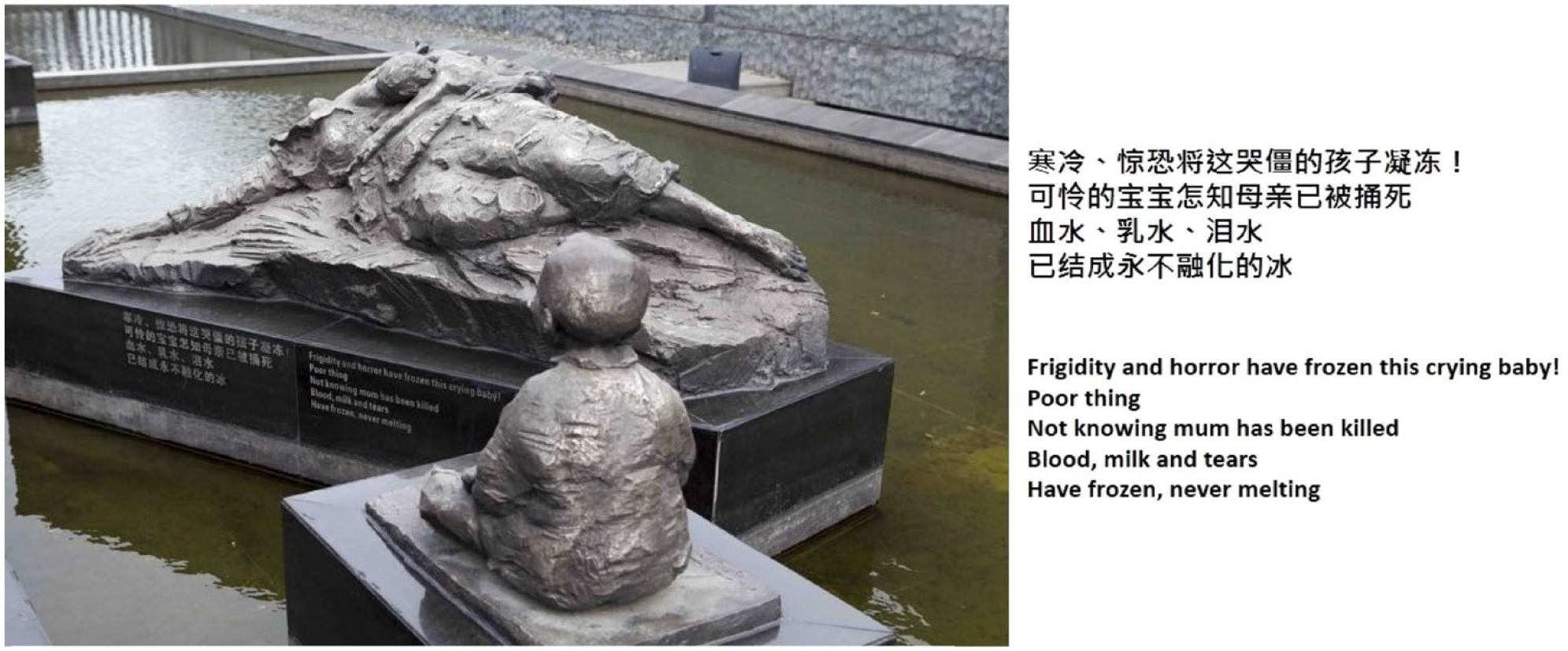
An infant mourning his murdered mother.
The official museum booklet describes the Sculpture Square as “a moving and overwhelming microcosm of thousands of ruined families, embodying the theme of human nature, human instincts and human emotions.” These words gain meaning is their indexical reflection of the humanistic and anthropocentric core of Confucianism which still strongly influences the modern Chinese society. Imbued in cultural, social, and ideological values and beliefs shared by most Chinese, the displayed narrative is assumed to trigger strong emotional reactions of self-identification with the victims of the Japanese occupation within Chinese visitors. Their bowing before the sculptures—altered version of the Confucian protocol of kòu tóu—symbolically signifies respect and grief for the dead, while iconically signifying that the Memorial stirs the reactions intended by its developers.
Conclusion
Discussion: A Peircean Methodology for Reading the Identity of Dark Heritage Sites
This article integrated three Peircean concepts into a practical semiotic methodology for reading the identity of dark heritage sites in response to calls from Light (2017) for engagement with broader theories of collective memory to explore relations between people, identities, and dark tourism sites, and Haldrup and Larsen (2006, p. 278) for a “material semiotics” to landscape “in which material, social and cultural aspects of place sedimentation are integrated.” Therefore, this research has focused on collective experiential features, drawing upon socio-political aspects shared by most individuals in an investigated group. It shows how using Peirce’s concept of “collateral knowledge” as the representamen in the semiotic interpretative process is valuable for exploring visitors’ experience with the cultural materiality and socio-political fabrics of heritage sites. Unlike previous semiotic endeavors, the methodology developed herein proposes the visitor as active in a synergistic exchange of meaning with the site’s cultural materiality. Reading heritage through the filtering framework of transgenerational culture conceptualized as “collateral knowledge” forms an interpretive habit which ensures a fluid and systematic attribution of meaning. This allows the researcher to draw critical, logical, and educated conclusions about how actors attribute meanings to heritage items and how these meanings may influence the visiting experience by triggering visible or invisible reactions. Thus, it is ideally positioned to investigate identity of place as a “persistent sameness” (Relph, 1976, p. 45) and its interconnected components: physical features or appearance, observable activities and functions, and meaning or symbols.
Regarding the physical features and appearance, the methodology advanced herein opposes Saussurean semiotic approaches and acknowledges the organic synergy between culture and materiality, and between the “human” and “nonhuman” which stems from values and beliefs which form the shared identitarian core for most individuals in an investigated group and comprise the filtering “collateral knowledge” through which materiality is attributed meaning at heritage sites. Importantly, it is the concept of “collateral knowledge” which makes this methodology replicable to other contexts, sites, and groups. Similar frames of collective memories exist, such as Britishness (Jacobson, 1997), Italianness (Ardizzoni, 2005), or Japaneseness (Donahue, 2002). Although exemplified in the context of dark heritage, this Peircean methodology can be effectively extrapolated to other categories of heritage considering it perceives all heritage as an amalgam of narrative texts, signs, and symbols to be read and interpreted.
The new methodology reveals the physical features of the NMM are imbued in Chinese Common Knowledge and an intense feeling of collective suffering. Uzzell and Bellantyne’s (1998) concept of “hot interpretation” is, thus, confirmed as specific to dark heritage sites. Instances of unjust fratricide death are omnipresent, culminating in exhibited in situ remains of victims. Being developed in situ makes the NMM a site of death (Miles, 2002), and positions it at the darkest end of Stone’s (2006) dark tourism spectrum. Such sites “are devastating in their impact - not just for what they remember but because they compel the visitor to accept the horrible fact that what they show is ‘real’” (Young, 1989, p. 64). Considering the collectivist Chinese society, the socio-cultural death taboos (Hsu et al., 2009), and the societal beliefs about soul (灵魂) and ancestral veneration (敬祖), it is critically assumed that visitors’ ability to identify with compatriots by (un)consciously attributing symbolic meaning to in situ remains in a place of national dark heritage triggers strong identitarian emotions within and among Chinese visitors.
The politicization of heritage is strongly visible when reading the identity of the NMM through the proposed Peircean methodology. Mandatory school visits under the Patriotic Education Campaign turn the NMM into what Ingrao (2009) labeled “weapons of mass instruction.” The collateral knowledge acquired in developmentally early stages within a narrative environment fundamentally influences one’s emotional, cognitive, and behavioral processes (Brockmeier, 2002; Metro-Roland, 2011; Q. Wang & Brockmeier, 2002). In China, children are educated into virtues and practices which form the backbone of the Chinese society: collectivism, relationships, ritual, filial piety, loyalty, reciprocity, face, rightneousness, or ancestor worship. Actually, “absolute loyalty” to the Party has become a leitmotif under Xi Jinping (Gore, 2020; Lams, 2018), where “[t]he theoretical framework of Xi Thought combines the Confucian governance model of family and loyalty with the Leninist principle of one-party rule. Thus, Xi Thought is principally a tool to ensure the authority of the core leader over the Party and Chinese society” (Poirier, 2021, p. 5). Consequently, in designating the NMM as a patriotic education base, the authorities are capitalizing on readily available and emotionally charged cultural scripts and memories of collective suffering at the hands of foreign forces transposed into an omnipresent narrative of national humiliation and China’s “road to revival” to turn people into loyal citizens and instill a common socio-political identity which legitimizes the CCP (Schneider, 2021).
Concerning observable activities and functions, the semiotic reading of the Memorial confirms that symbolic behavior is constituted within frames of social, cultural, and political memory which shape collective activity. From the Sculpture Square, visitors follow a clearly marked narrative trajectory which rarely gives opportunities for independent wandering. This reflects the authorities’ intent of constructing a master narrative by selecting, arranging, and connecting suitable means and events in a certain narrative sequence which supports the official historiography. Visitors’ acceptance to dutifully follow this narrative route and, thus, to legitimize the governmental version of events, is grounded in the previously discussed Confucian concept of loyalty, and in centuries of Confucianist and Communist collectivism. The semiotic reading reveals commonalities in Chinese visitors’ behavior as features of transgenerational memory materialize in “bodily automatisms and ritual performances” (Connerton, 1989, pp. 4–5). Bowing, burning incense and joss paper, praying, meditating, or laying wreaths are recurring ritual gestures ingrained in Chinese Common Knowledge which reinforce Chineseness. However, the memorialization practices in China are highly politicized under the guidelines of the Patriotic Education Campaign. It is critically assumed that visitors’ ability to connect to the master narrative by collectively enacting what is socially, culturally, and politically appropriate in a specific place elicits geopiety (Tuan, 1976) and identitarian bonding. For example, gaining knowledge, paying respects to the dead, pleasing spirits, and performing self-reflection are culture-bound motivations rooted in Confucianism and Taoism, while being patriotic, keeping the humiliation memory alive, and being a good citizen are rooted in the Patriotic Education Campaign. These confirm that visitations to dark heritage sites are driven by more than just thanatouristic reasons (Light, 2017). However, unlike Slade’s (2003) depiction of Australians’ and New Zealanders’ natural and free-willed patriotic motivations for visiting Gallipoli, this study shows that collective patriotism and geopious reactions in China are clearly influenced and cultivated according to a governmental agenda.
Regarding meanings and symbols, this article shows how dark heritage sites are soaked in rich cultural values and political ideologies. The semiotic reading of the NMM reveals that, although traditional elements of Chinese Common Knowledge have been altered to meet contemporaneous politico-ideological needs, aspects of Buddhism, Taoism, and Confucianism are ever-so-present in Chinese thought and behavior. Several studies linked Confucianism and Taoism to tourism, but focused on business aspects or Chinese outbound tourists’ experience with non-Chinese sites (e.g., Fu et al., 2017; Kwek & Lee, 2010; J. Wang & Stringer, 2000). Rather, this article has gained deeper insights into the significance of Chineseness and Chinese Common Knowledge in contemporary China by employing an experiential approach in an iconic national site. The NMM is imbued in symbolism deeply rooted in Chinese Common Knowledge. Therefore, adopting a “Chinese tourist gaze” (F. Li, 2008) when engaging a Chinese heritage site is fundamental. For Chinese visitors, engaging the exhibits along the narrative trajectory triggers subconscious elements of institutionalized transgenerational memory which infuses their visiting experience with meaning and leads to identitarian bonds. These subtle connections may be lost on visitors who engage non-Western sites with solely Western mindsets and viewpoints, positivist and quantitative researchers, and semioticians who adopt the Saussurean arbitrary semiotic model. This study argues that a more meaningful reading can be obtained by employing a Peircean approach which considers collateral knowledge as the meaning-infused representamen bridging between the object and the interpretant.
Limitations
Peirce’s work is terse, convoluted, ungraceful, obscure, confusing, digressive, as his ideas evolved across interpretivism, nominalism, realism, idealism, and pragmatism (Freadman, 2004; Liszka, 1996; Metro-Roland, 2011). Additionally, Peirce did not study the social use of signs. The lack of a unified code of understanding Peirce’s semiotic philosophy makes its specific and practical use harder and “helps to explain the absence of Peircean semiotic theory from most tourism work which undertakes sign theory” (Metro-Roland, 2011, p. 12). Rather than perceiving Peircean semiotics as a challenge, this article suggests tourism academia can greatly benefit from encompassing his arboresque philosophy, particularly by including Peircean semiotics in mixed-methods approaches aimed at exploring experiential granularity and idiosyncrasies with dark heritage in their specific socio-political context.
Interpretivist approaches have been criticized for their subjectivity and irreplicability. Indeed, the indexical, iconical, and symbolical functions of the Peircean sign may depend on the researcher’s interpretive skill and familiarity with the “collateral knowledge” about the investigated context. Yet, this article argues such approaches cannot be considered inappropriate granted paradigmatic features are painstakingly explained and implemented. Using the Peircean semiotic methodology developed herein can ensure a more systematic and replicable interpretive process than alternative tools as it reaches meaning by logically linking heritage to specific frameworks of thought and behavior. Had meanings not been attributed through the filter of “collateral knowledge,” meaning allocation would have been as random as with Saussurean approaches.
Some may argue such a methodology is mostly suitable for analyzing collective experiential aspects. Indeed, the developed methodology explicitly revolves around shared features, but this becomes a valuable starting point for in-depth investigations of individual experiences. Here, Peircean semiotics are not meant to replace but to complement other experiential undertakings. Others may argue that native speakers can access deeper meanings which may remain invisible to the non-native eye. However, the article shows how non-natives can also generate rich and educated semiotic readings of heritage sites since “collateral knowledge” is comprised of general values and beliefs shared by a large majority of an investigated group which are widely accessible from secondary sources.
Practical Implications
By understanding the strong political aspect of dark heritage sites, usually camouflaged in subtle symbolism and selective narrativity, visitors can avoid being manipulated into believing the information presented is the ultimate and undisputed version of truth. Especially for foreign visitors, acknowledging a memorial is more than meets the eye should encourage them to gain enough information pre-visit to ensure a profound and balanced visiting experience. For the tourism industry, recognizing the influence of culture and ideology on interpretative and consumption behaviors and applying a systematic approach to logically adopt the collective gaze of targeted groups can support them in tailoring more appropriate tours and securing increased business post-COVID. Finally, the article reveals the effect of transgenerational culture on modern society, irrefutably confirming William Faulkner’s words: “The past is never dead, it’s not even past.”
Footnotes
Declaration of Conflicting Interests
The author(s) declared no potential conflicts of interest with respect to the research, authorship, and/or publication of this article.
Funding
The author(s) received no financial support for the research, authorship, and/or publication of this article.
