



Abstract
Souvenir shopping has always been a subject of significant tourism research, but the impact of different purchase channels, including the Internet, on tourists’ souvenir purchase behavior has been largely ignored. This study proposes that the dual channel of souvenir purchase positively affects tourists’ purchase intention through the serial mediation of perceived convenience and perceived usefulness, and the offline single channel positively affects tourists’ purchase intention through the serial mediation of perceived scarcity and perceived value. The results also revealed that when the authenticity of souvenirs is low, only the dual-channel path plays a role in the model, it has a positive effect on purchasing intention through perceived convenience and perceived usefulness. Conversely when the authenticity of souvenirs is high only the offline single-channel path works, and perceived convenience and perceived usefulness play a sequential mediating role. Important theoretical contributions and practical implications are offered for souvenir merchants’ marketing and decision-making.
Keywords
Introduction
Souvenirs, the “messenger of the extraordinary,” are concrete objects that invoke memories of travel (Gordon, 1986). Tourists usually consider souvenirs to be physical evidence of their traveling experience (Swanson, 2004), and as reminders of extraordinary moments and events in their lives (Dresler, 2022; Masset & Decrop, 2021). Studies of tourists show they consider the purchase of souvenirs as an important part of the travel experience (Dresler, 2022; Dumbrovská & Fialová, 2020; F. Li & Ryan, 2018), without which their trips would be incomplete (Swanson & Horridge, 2006). Souvenir shopping satisfies specific psychological needs (Shtudiner et al., 2019). It is thus widespread and for some tourists a significant travel motivation (Kong & Chang, 2016). Likewise many retailers in tourist destinations rely on tourists’ souvenir shopping (Swanson, 2004). Therefore, it is vital to understand how aspects of the souvenir shopping experience, including different purchasing channels (e.g., online vs. offline), affect tourists’ behaviors.
China’s retail businesses sold 13.1 trillion yuan’s worth of goods to 842 million online shoppers in December 2021, and many traditional stores now sell souvenirs online (Yuan et al., 2022). The resulting convenience and accessibility for consumers has been successful in that some tourists who regret not buying souvenirs while traveling can assuage their regret by making the purchase after returning home (Abendroth, 2011), and people can even buy souvenirs without going to the destination, increasing retailers’ market (Paraskevaidis & Andriotis, 2015). Yet it also constitutes a change, and the success of adding online channels has been uneven (Yuan et al., 2022). Buying tourism souvenirs is regarded as an interactive experience between tourists and local sellers (Masset & Decrop, 2021), and tourists formerly purchased souvenirs only in physical stores (Abendroth, 2011). While significant research addresses the factors affecting souvenir shopping in physical stores (Swanson, 2004; Wilkins, 2011; Xie et al., 2012), to the best of our knowledge researchers have not compared online souvenir shopping with the traditional channel and its impact on tourists’ purchasing behaviors.
The mode of shopping channels retailers offer can influence consumers’ attitudes and behaviors (Kluge & Fassnacht, 2015; Rossolov et al., 2021), including in the context of souvenir purchases (Abendroth, 2011; Yuan et al., 2022). Brick-and-mortar stores offer tourists a more authentic travel experience (Littrell et al., 1993), instant gratification, and other benefits (Gilly & Wolfinbarger, 2000). But the opportunities to buy authentic souvenirs could be limited, so tourists tend to form the perception of scarcity to some extent (Abendroth & Diehl, 2006). According to commodity theory (Brock, 1968), the scarcity of products can increase their perceived value and, in turn, enhance people’s purchase intention (T. Z. Chang & Wildt, 1994; Dodds et al., 1991; Eisend, 2008). On the other hand, adding online shopping channels has many significant advantages, and perceived convenience is one of them (Jiang et al., 2013). Previous studies have confirmed that perceived convenience can arouse people’s perceived usefulness of channels, thus ultimately increasing people’s behavioral intention (C. C. Chang et al., 2012; Cho & Sagynov, 2015; S. Li et al., 2023). However, online availability may undermine the sense of authenticity and scarcity the traditional experience provides (Lee et al., 2022). This raises questions about how tourists choose between the two channels, how the two different channels affect tourists’ willingness to buy souvenirs, and what mechanism and what process drive these effects. The existing research had not addressed these questions, which this paper approaches by expanding the application of commodity theory and technology acceptance model (TAM) in the tourism field.
Authenticity has always been a significant topic in the tourism field (Anastasiadou & Vettese, 2021; Dumbrovská & Fialová, 2020; Rickly, 2022; Zhou et al., 2023). There is also increasing recognition of the importance of authenticity to souvenirs, and tourists often take authenticity into consideration in their souvenir purchases (Fu et al., 2018). Authenticity comes in part from the fact that souvenirs can be bought only at the destination (Love & Sheldon, 1998), and the core of authenticity is just scarcity (Anastasiadou & Vettese, 2021). Souvenirs with high authenticity can seem more valuable to tourists (Fu et al., 2018; Lee et al., 2022; Masset & Decrop, 2021), as their purchasing decisions suggest (Asplet & Cooper, 2000). However, tourists who are not pursuing authenticity may choose online purchasing because of the convenience of the channel or the portability or utility of the souvenir (Yuan et al., 2022), and thus dual channels can increase purchase intention. When buying souvenirs that are heavy or fragile (S. Kim & Littrell, 2001) tourists perceive online channels as convenient (Yuan et al., 2022), and therefore feel online options improve shopping performance or efficiency (Cho & Sagynov, 2015). Although scholars have acknowledged the significance of the authenticity of souvenirs, no study directly compares the influence of souvenir purchase channels on tourists’ purchase intention under different levels of authenticity.
To address the knowledge gap, this study seeks to explore the relationship between souvenir purchase channels (offline single channel vs. dual channel) and tourists’ purchase intention when on a trip. The research objectives of this study are fourfold. First, we aim to explore the impact of the traditional offline channels and the added online channels on tourists’ psychological perception and behavioral intention. Second, this study investigates the serial mediation effect of perceived convenience and perceived usefulness. Third, we examine the serial mediation effect of perceived scarcity and perceived value on the interaction between souvenir purchasing channels and tourists’ purchase intentions. Fourth, this study probes the moderating role of authenticity (low vs. high) on the effect of souvenir purchasing channel types in determining tourists’ purchasing intentions. Findings broaden the tourism literature on souvenir purchasing channels, enrich our understanding of the nature of souvenir purchasing channels under different levels of authenticity, and provide destination marketing organizations with evidence-based guidance on crafting effective marketing strategies to manage souvenir purchasing channels.
Literature Review
Tourism Souvenirs
“Souvenir” comes from the French word for the act of remembering. In English it came to refer to an actual object, which can remind people of special moments or events that happened in the course of an extraordinary experience (Gordon, 1986). Souvenirs are usually associated with tourism as commercial objects (Swanson & Horridge, 2006), tangible objects purchased during travel that preserve tourists’ intangible trip memories (Kong & Chang, 2016; Wilkins, 2011), which identify the place and depict a unique travel experience (Swanson & Timothy, 2012). With the commodification and globalization of souvenirs, the definition and attributes of souvenirs are constantly being enriched (Paraskevaidis & Andriotis, 2015; Soukhathammavong & Park, 2019). Some tourism literature views souvenirs from the perspective of merchants or suppliers, defining tourism souvenirs as any kind of merchandise that are available in souvenir shops and other in-destination retail establishments (Harris & Magrizos, 2023; Masset & Decrop, 2021; Wilkins, 2011). Such items have exchange value in the market, and there may be little emotional attachment to their production, distribution, and consumption (Swanson & Timothy, 2012). As a form of “fun gazing” for tourists (Ooi, 2002, p. 87), souvenir purchasing encourages the acceptance of kitsch, commercialism, and cultural inauthenticity, supporting the purchase of cheap, homogeneous, and inauthentic souvenirs (Anastasiadou & Vettese, 2021; Paraskevaidis & Andriotis, 2015; Yuan et al., 2022).
Tourism Souvenirs Purchasing Channels
Marketing channels are a series of interdependent organizations that participate in making products or services available for use or consumption (Watson et al., 2015). The Internet offers a new purchase channel. Many studies distinguish between retailers that sell their products through one channel (single channel) and those that sell their products through two or more (multi-channel; Jebarajakirthy et al., 2021; Rahman et al., 2022). Single-channel and dual-channel each have different advantages. While offline single channel (e.g., brick-and-mortar stores) offer great opportunities for on-the-spot experience, instant gratification, and more (Wallace et al., 2004), dual-channel with both online and offline outlets provides more accessibility and more convenience (Hernant & Rosengren, 2017).
In the tourism literature, most studies have focused on souvenirs in the context of brick-and-mortar stores (Swanson, 2004; Wilkins, 2011; Xie et al., 2012), and tourists traditionally purchase souvenirs during travel (Gordon, 1986). But it does show that the limited time tourists spend in the destination and consequently limited number of stores they can visit can be vexing (Abendroth, 2011). Online channels address these limitations (Abendroth, 2011; Yuan et al., 2022), and online souvenir buying is increasing, sometimes occurring after tourists leave the destination (Swanson & Timothy, 2012). Some tourists want to keep souvenirs as tangible evidence of their travel experience, but some tourists want to evoke a memory of that journey through souvenirs after leaving the destination, and some may purchase souvenirs as gifts for others (Wilkins, 2011). Marketing studies exploring the characteristics of single and dual channels and the choice of consumers between channels have not addressed souvenirs specifically (Hernant & Rosengren, 2017; Kushwaha & Shankar, 2013; Zhang et al., 2017).
Souvenir Authenticity
Authenticity refers to something real, not fake (Cohen, 1988). In the tourism context, the question of authenticity originally played the biggest role in appraisals of items displayed in museums, but people now apply the idea of authenticity to a wide variety of aspects of a tourism experience (Anastasiadou & Vettese, 2021; Fu et al., 2018; Lee et al., 2022; Skandalis et al., 2023; Zhou et al., 2023). Wang (1999) argued that authenticity can be divided into the authenticity of tourism experience and authenticity of tourism objects, which expresses tourists’ perception of tourism products or experiences (Brida et al., 2013; Rickly, 2022).
According to some scholars, authenticity is one of the most important attributes of products, including souvenirs (Dumbrovská & Fialová, 2020; Ramkissoon & Uysal, 2018; Zhou et al., 2023). Souvenir authenticity can affect how tourists feel and behave (Asplet & Cooper, 2000; Lin & Wang, 2012). Tourists who value authenticity desire to encounter indigenous cultures through souvenirs (Torabian & Arai, 2016; Zhou et al., 2023). However, what confers authenticity can vary (Masset & Decrop, 2021; Ramkissoon & Uysal, 2018). For example, tourists traveling in New Zealand prefer to purchase clothing with a local design (e.g., a Māori cultural design) that they consider authentic (Asplet & Cooper, 2000). Tourists in Taiwan considered a souvenir displaying indigenous culture markers associated with the Paiwan tribe with modern design to be authentic (Xie et al., 2012). These studies suggest the need for additional research into tourists’ perception of the authenticity of tourism souvenirs in different contexts.
Research Framework and Hypotheses Development
Tourism Souvenirs Purchasing Channels’ Impact on Perceived Scarcity and Perceived Convenience
Sources of scarcity in marketing include restrictions in the number of suppliers (Brock, 1968), the possession of commodities (Brock, 1968), and the availability of products (Lynn, 1991). When the offline channel is the only way to buy souvenirs the tourists’ shopping behaviors are limited to a certain time window, and perceptions of scarcity in souvenir buying are common (Abendroth & Diehl, 2006). Dual channels with both online and offline outlets may undermine this perception.
The number and mode of purchase channels can affect consumer satisfaction and loyalty as well as consumers’ perceptions of product accessibility (Kluge & Fassnacht, 2015; Rahman et al., 2022; van Birgelen et al., 2006; Wallace et al., 2004) and the convenience of the shopping experience (Jiang et al., 2013; Rahman et al., 2022). Brown (1989) describes five dimensions of convenience: time, place, acquisition, use, and execution dimension. Perceived convenience depends on the customer’s understanding of the objective time and energy spent on purchasing products or services; the less time and energy they spent, the higher convenience they perceive (Brown, 1989). By removing geographical restrictions, online channels offer convenience as well as providing tourists with more purchasing opportunities (Hernant & Rosengren, 2017; Yuan et al., 2022). Based on the previous studies, the following hypotheses are proposed:
The Serial Mediation Effect of Perceived Convenience and Perceived Usefulness
Davis (1989) proposed the TAM to explain the extent to which new information technologies are accepted or used based on the theory of reasoned action in which users adopt technologies they feel improve their performance or efficiency (see also Yoon & Kim, 2007). Monsuwe et al. (2004) illustrated that online shopping channels clearly pass this test. According to the traditional TAM (Davis, 1989), perceived usefulness refers to users’ perception that a certain technology or system can improve their performance or efficiency, and this perception affects users’ shopping behaviors (S. Li et al., 2023). In the context of online shopping, perceived usefulness is the customer’s perception of the degree to which the Internet improves the efficiency of customers’ shopping tasks (Koufaris & Hampton-Sosa, 2004). Online shopping requires less time than offline shopping, provides a platform for customers to compare products (Cho & Sagynov, 2015), extends the limited opportunities to purchase (Abendroth, 2011), relieves the pressure of carrying goods (Yuan et al., 2022), and overcomes geographical limitations (Yuan et al., 2022), thus these advantages may help customers to make better decisions and make them more efficiently (E. Kim et al., 2022).
TAM proposed that some external variables affect the perceived usefulness of a system and that this in turn affects people’s intention to use it (Davis, 1989). When proposing and testing the TAM for ubiquitous computing technologies, Yoon and Kim (2007) introduced a new factor, “perceived convenience.” They suggested that the anytime and anywhere availability of computing technologies can make users perceive them as convenient. They found that perceived convenience does not directly affect users’ willingness to use, but is an important determinant of perceived usefulness, which has a positive impact on users’ behavioral intention to use. Research shows that the convenience factors of online shopping make people feel that online stores are useful, and that this has a strong positive impact on their willingness to shop online (C. C. Chang et al., 2012; Cho & Sagynov, 2015). Consumers’ perception of the convenience of using the Internet directly affects their perception of the usefulness of online stores and plays a specific role in influencing the purchase intention. In this paper, we suggest that tourists in the dual channel shopping scenario can enjoy the advantages of online shopping while maintaining the alternative option of the offline channel. We predict that perceived convenience and perceived usefulness has a serial mediating effect between shopping channels and purchase intention, and develop the following hypothesis:
The Serial Mediation Effect of Perceived Scarcity and Perceived Value
Commodity theory (Brock, 1968) concerns the psychological effect of scarcity (Lynn, 1991). The more scarcity consumers perceive, the more valued the products become (Gupta et al., 2023; Suri et al., 2007). Scarcity can be created by marketing practices such as selling goods in exclusive outlets and prestige pricing of products (Lynn, 1991). Prior marketing research has stated that scarcity (including temporal scarcity, e.g., souvenir purchases) is related to increasing the souvenir’s perceived value (Gupta et al., 2023; Suri et al., 2007).
Research shows perceived scarcity and perceived value have a serial mediation effect. For example, Eisend (2008) demonstrated that consumers’ perception of scarcity has a direct positive effect on the perceived value of the products, which in turn, increases the intention to buy. With respect to tourism souvenir buying, Lin and Wang (2012) mentioned that the limited purchasing opportunities have resulted in scarcity, which in turn may increase souvenirs’ perceived value, while the perceived value of products will further increase consumers’ willingness to buy (Gupta et al., 2023; Lin & Wang, 2012). Thus, we reasonably predict perceived scarcity and perceived value in shopping channels has a serial mediating effect on purchasing intention, and develop the following hypothesis:
Authenticity as a Moderator
Authenticity has been one of the most controversial topics in tourism research (Rickly, 2022). People may have their own perceptions of authenticity (Ramkissoon & Uysal, 2018). For example, tourists may define the authenticity of craft souvenirs based on uniqueness, originality, workmanship, esthetics and use, cultural and historical integrity, and genuineness (Littrell et al., 1993). They search for products with uniqueness and novelty they cannot readily find elsewhere (Littrell et al., 1993). According to Shen (2011), a high level of authenticity highlights traditional features, an intermediate level of authenticity often refers to artificial products purposely decorated to look real, and a low level is often related to entertainment and relaxation., Dumbrovská and Fialová (2020) concluded that objects with the high level of authenticity are always associated with attributes like tradition, originality, uniqueness, and something locally specific.
Previous studies have found that authenticity perception influences tourists’ attitudes and behavioral intention (Anastasiadou & Vettese, 2021; Torabian & Arai, 2016). Asplet and Cooper (2000) found that when buying clothing souvenirs with local cultural themes, tourists considered the authenticity of the motifs used in clothes to be significant, and that higher authenticity made tourists more inclined to buy such products. Xie et al. (2012) suggested that markers, designs, and materials that emphasize authenticity in souvenirs may be more successful in attracting tourists and promoting their purchase intentions than those that do not emphasize authenticity. The authenticity of a souvenir has a positive impact on the value tourists attribute to it (Fu et al., 2018; Lin & Wang, 2012). We propose that souvenirs with high authenticity are more likely to arouse tourists’ perception of scarcity and value, but perceptions of scarcity and value will not affect purchasing of souvenirs with low authenticity souvenirs.
Tourists believe that souvenirs represent both the image of the destination and the tourist’s experience (Horodyski & Gândara, 2016, p. 884). They want to purchase souvenirs “on the spot” to make their travel experience more touchable. Purchasing in physical stores also offers instant gratification, ambiance, product assurance, and so on (Gilly & Wolfinbarger, 2000). Different types of products lead to different levels of desire for instant gratification (O'Donoghue & Rabin, 2000). Loewenstein (1996) proposed that a vivid appearance enriches the mental image of a product generated by consumers, which will increase their desire for the instant gratification of obtaining it. Therefore, we believe that when tourists are exposed to high authenticity souvenirs in offline physical stores, they are more likely to want to own the goods and more likely to satisfy their desires immediately. As a result, they will choose to purchase the souvenirs on the spot through the offline channel in physical stores.
However, many factors determine souvenir purchasing behavior (Dresler, 2022). They value convenience, portability, and other utility factors (Anastasiadou & Vettese, 2021; Dresler, 2022; Masset & Decrop, 2021). For example, a food souvenir is often difficult or inconvenient to handle and tourists may not be willing to take it home themselves, and online souvenir purchases may appeal as a way to relieve them of the inconvenience of carrying souvenirs (Yuan et al., 2022). Some products have low authenticity, and some tourists do not seek authenticity in their souvenirs (Cohen, 1988). In such cases the influence mechanism of dual channels on tourists’ purchase intention will play a role in purchases.
Mass-produced low-cost souvenirs are often condemned as plastic “kitsch” (Lasusa, 2007) because they do not have the inherent history of the original objects they represent, or do not prove the humanism of traditional producers (Anastasiadou & Vettese, 2021), making it difficult to evoke tourists’ sense of scarcity. The emergence of dual channels may promote purchasing of such souvenirs. Yuan et al. (2022) pointed out that when products are sold on national shopping platforms (such as Tmall.com), their cultural significance may be lost, and they find that consumers are more likely to emphasize the utility of souvenirs they purchase from such platforms. Some scholars believe that mass-produced souvenirs have limited value (Lasusa, 2007), but research suggests they may still satisfy tourists’ desires to some extent (Paraskevaidis & Andriotis, 2015).
Based on the above, we develop the following hypotheses:
Based on H2a-b and H3a-b, we propose a conceptual model, as shown in Figure 1, which consists of the key concepts affecting the differential impact of the dual and single channel. We conducted four studies to test all of the hypotheses. In Study 1 and Study 2, we tested the serial mediating effect of perceived scarcity and perceived value and another serial mediation of perceived convenience and perceived usefulness between souvenir purchase channels and intention to purchase (H1a; H1b; H2a; H2b). In Study 3, we tested the moderating role of the authenticity of a souvenir on the two paths that were tested in Study 1, that is, testing Hypotheses H3a and H3b. Using a new sample of real tourists, Study 4 replicated Study 3 to enhance the generalizability and external validity of our findings. In addition, Study 4 investigated the interaction effects of tourism souvenir purchasing channels and souvenir authenticity on the tourists’ purchase intention (H3a; H3b) and verified the moderated mediation model. To enhance the generalizability of this study, different types of souvenirs were used in the experimental materials (Wilkins, 2011).

The conceptual model.
Study 1
Pretest
Participants and Procedure
In order to verify that the participants could correctly identify the souvenir purchasing channels as manipulated, we first conducted a pretest before the main experiment. Two versions of the souvenir purchasing channels description (offline single channel vs. dual channel) were developed (see Supplemental Appendix).
The 60 participants (Mage = 29.8, Male = 31.7%) were randomly assigned to two groups (offline channel vs. dual channel). We used a convenience sample from an online survey panel (i.e., Credamo) (Su, Yang, & Huang, 2022). To avoid prejudice against existing souvenir brands, the experimental stimuli adopted a fictitious souvenir store in the narratives. Participants scored the store’s souvenir purchasing channels on a 7-point Likert scale (1 = Strongly disagree, 7 = Strongly agree). Last, participants were asked to answer some questions about demographic characteristics.
Results and Discussions
To check the manipulation effectiveness, independent-sample t-tests were used. The finding showed that participants could differentiate between offline single channel and dual channel based on the given stimuli. In other words, our experiment stimuli were effective and could be adopted in the main experiment [Moffline single-channel = 6.67, SDoffline single-channel = 0.479vs. Mdual-channel = 1.60, SDdual-channel = 0.621; t = 35.356, p < .001].
Main Experiment
Methodology
It is possible to improve internal validity (Su, Yang, & Swanson, 2022; Su, Pan, & Huang, 2023; Viglia & Dolnicar, 2020) by controlling for potential interference factors in the experimental design method. Study 1’s test of the impact of tourism souvenirs shopping channels on purchase intention has this advantage.
In May 2022, 93 workers from an online survey panel (i.e., Credamo) took part in this study (36.6% men, 63.4% women) for nominal compensation (roughly $ 0.30). Among them, 23.7% were 19 to 24 years old, 71.0% were 25 to 40, and 5.3% were 41 to 60. After giving their consent to the study, the participants were randomly assigned to one of two experimental conditions. Among different types of souvenirs, jewelry such as a ring or necklace is considered as a good choice for tourists because it is wearable in everyday life and can be appreciate over time (Masset & Decrop, 2021; Shtudiner et al., 2019; Wilkins, 2011). Therefore, Study 1 used a ring as the souvenir in the experimental materials (see Supplemental Appendix). We obtained pricing references of ring prices from a shopping platform (Jingdong, one of the largest national online shopping enterprises in China) to determine the price.
Both groups of participants read a lead-in that began with “Please imagine you are a tourist experiencing the following scenario. During a long vacation, I go to a famous tourist destination. While shopping for souvenirs, I find a ring priced at 156 yuan.” The participants assigned to the offline single channel group then read: “At that time, I learn that this ring is only sold in local offline stores, and online purchase is not supported at the moment. In other words, there will be no opportunity to shop for this item after this store.” In the dual-channel scenario, the respondents read instead, “I learn that this souvenir can be bought at the local offline physical store and the souvenir shop’s website. After I place an order online, the product will be sent directly to the location I designate, saving me from having to store or carry it home.” After reading the assigned scenario, subjects were asked to complete a questionnaire.
First, following Yi et al. (2013), we measured scenario authenticity by asking each respondent to indicate if they thought that “In real life such a scene could happen” and “I had no difficulty imagining myself in the situation” (1 = Strongly disagree, 7 = Strongly agree). The majority of the participants indicated that the received scenario was realistic (M = 6.00, SD = 0.78), and that they could imagine themselves in it (M = 6.33, SD = 0.82). Second, participants were asked to rate their perceived convenience, perceived usefulness, perceived scarcity, perceived value, and purchase intention. Perceived convenience (Berry et al., 2002) was measured with three items on a 7-point Likert scale (1 = Strongly disagree, 7 = Strongly agree). Perceived usefulness (Devaraj et al., 2002) was measured with four items on a 7-point Likert scale (1 = Strongly disagree, 7 = Strongly agree). Perceived scarcity (Chen & Sun, 2014) was measured with five items on a 7-point Likert scale (1 = Strongly disagree, 7 = Strongly agree). Perceived value (Dodds et al., 1991; W. Y. Wu et al., 2012) was measured with four items on a 7-point Likert scale (1 = Strongly disagree, 7 = Strongly agree). The dependent variable, intention to purchase, was measured by a three-item scale (Dodds et al., 1991). All of the scales were found to be reliable (αperceived convenience = .952; αperceived usefulness = .866; αperceived scarcity = .877; αperceived value = .768; αpurchase intention = .777). The mean score of each scale was utilized in subsequent analysis. Third, a manipulation check was included, asking participants to evaluate if “the tourism souvenir can only be purchased through the offline single channel” as indicated in the provided scenario (1 = Strongly disagree, 7 = Strongly agree). The score allowed us to assess whether participants perceived each type of purchase channel as intended. Last, we asked all respondents to answer some demographic questions. In addition, the consumer purchase literature showed that gender and preference for products could affect consumers’ souvenir purchase behaviors (Charton-Vachet et al., 2020; Fugate & Phillips, 2010; Sohail, 2015; Su et al., 2021; Wilkins, 2011). Therefore, we included gender and preference for products as control variables in our study. The results showed no significant difference in gender (χ2 = 1.879, p > .05) or consumer preference for products (F = −0.036, p > .05) between participants in the two experiment scenarios, indicating that the process of survey random assignment has controlled for the possible influence of gender and consumer preference for products (Su, Tang, & Nawijn, 2023).
Manipulation Check
Findings indicated that participants responded accurately to the manipulation of the shopping channel (offline single-channel vs. dual-channel) [Moffline single-channel = 6.47, SDoffline single-channel = 0.654vs. Mdual-channel = 1.39, SDdual-channel = 0.537; t = 40.860, p < .01].
Main Effect Analysis
A one-way ANOVA was conducted to test H1a and H1b. The ANOVA analysis revealed a significant difference in perceived convenience between the groups under the different conditions of souvenir purchasing channels (F = 701.42, p < .001; ηp2 = 0.885; see Figure 2). Participants in the dual-channel condition felt the purchasing was more convenient (Mdual-channel = 6.15, SDdual-channel = 0.54) than those in the offline single-channel condition (Moffline single-channel = 2.34, SDoffline single-channel = 0.82). Further, the two groups showed a significant difference in perceived scarcity (F = 129.88, p < .001; ηp2 = 0.588; see Figure 2). the results aligned with expectations in that they indicated that participants in the offline single-channel group had a higher level of perceived scarcity (Moffline single-channel = 5.53, SDoffline single-channel = 0.79) than those in the dual-channel group (Mdual-channel = 3.46, SDdual-channel = 0.96). These results confirmed H1a and H1b.
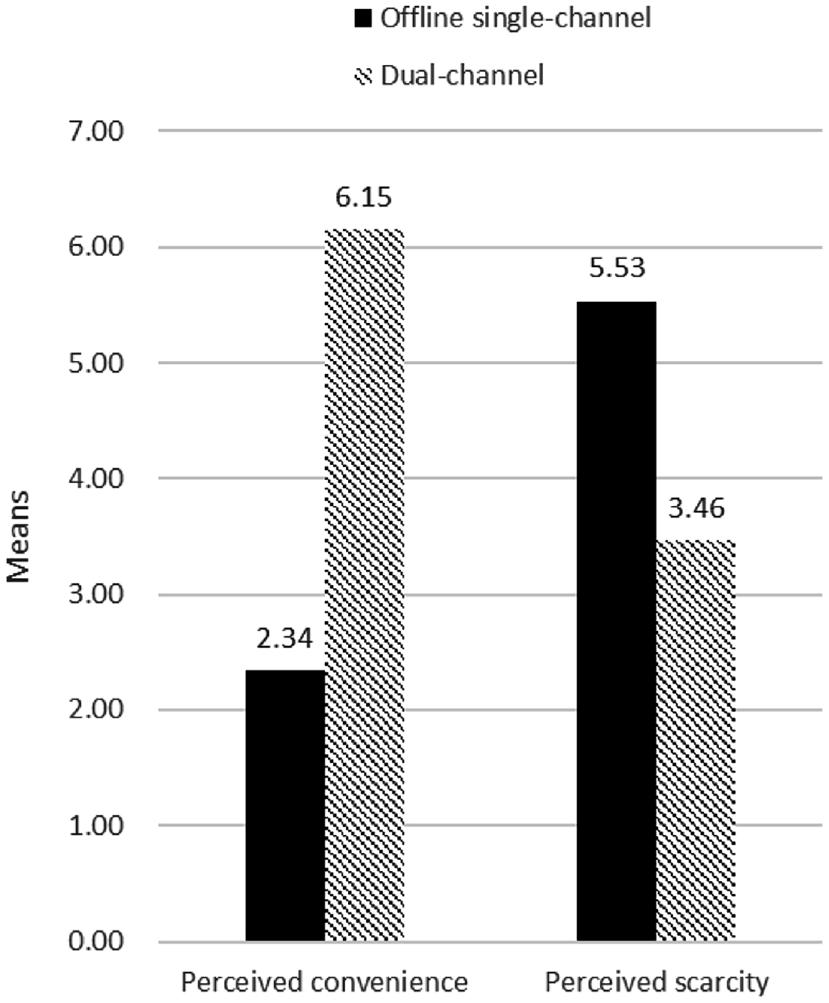
The impact of purchasing channels on tourists’ perceived convenience and perceived scarcity.
Serial Mediation Effect Analysis
We conducted a serial mediation analysis using the bootstrapping approach with 5,000 redraws (Model 82, Hayes, 2013), with tourism souvenir buying channels (offline single-channel vs. dual-channel) as the independent variable, perceived convenience, perceived usefulness, perceived scarcity, and perceived value as mediators, and purchase intention as the dependent variable.
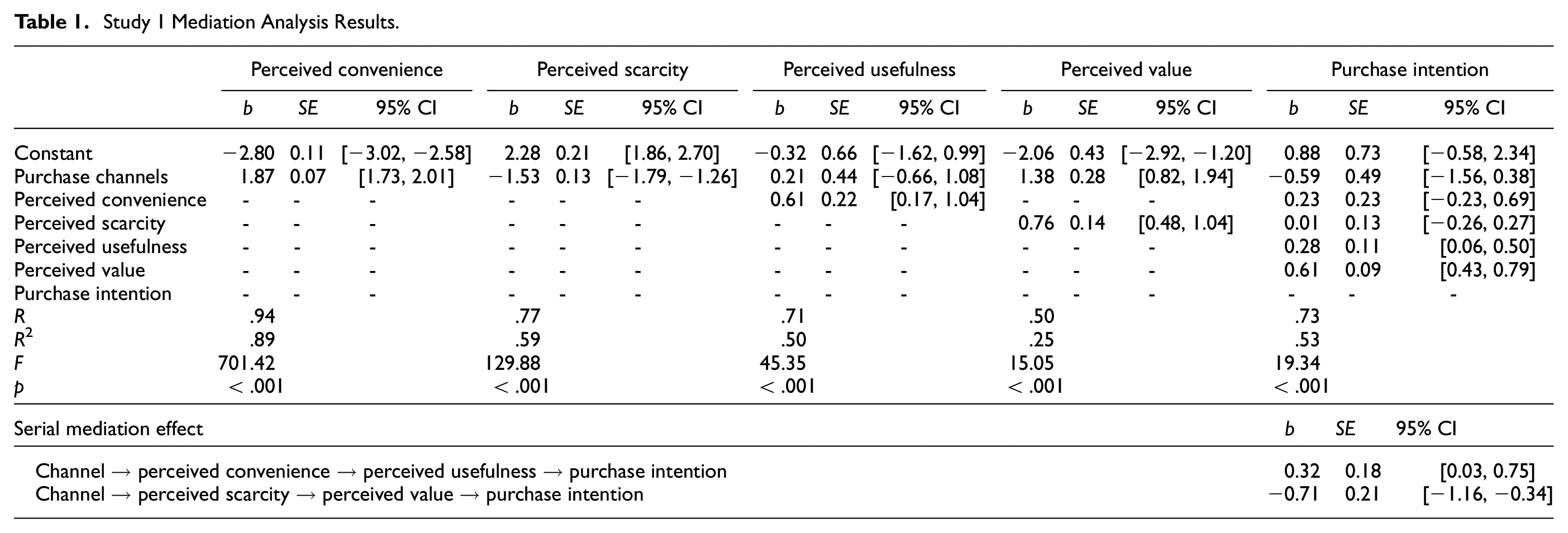
Results showed that the direct effect of purchase channels on purchase intention was not significant (direct effect = −0.5919, SE = 0.4889; 95% CI [−1.5635, 0.3798]), but the two serial mediation paths were both significant. The pathway (channel → perceived convenience → perceived usefulness → purchase intention) was significant (indirect effect = 0.3220, SE = 0.1828; 95% CI [0.0332, 0.7477]). The other pathway (channel → perceived scarcity → perceived value → purchase intention) was also significant (indirect effect = −0.7086, SE = 0.2081; 95% CI [−1.1638, −0.3363]). Thus, the proposed serial mediation model best explained our data, supporting H2a and H2b. Figure 3 and Table 1 provide additional information regarding the mediation.

The impact of tourism souvenirs purchasing channels on purchase intention.
Study 1 Mediation Analysis Results.
Study 2
To verify the findings of Study 1, Study 2 used a sample of real tourists and a different souvenir item (i.e., a craft souvenir) in the stimulus material. The craft souvenir was selected because crafts are one of the common souvenir types (Shtudiner et al., 2019; Wilkins, 2011). The experimental procedure was similar to Study 1, and H1a through H2b were tested again.
Data Collection
Study 2 was conducted at the Yuelu Mountain, Changsha, a well-known scenic spot in China. Real tourists were invited to participate in the study and 98 valid questionnaires were collected. Table 2 shows their demographic characteristics. The subjects were randomly assigned to two souvenir purchasing channel types: offline single channel (n = 49) and dual channel (n = 49). The experimental procedures of Study 2 were the same as in Study 1. We also controlled the two variables of gender and consumer preference for products. The results show no significant difference in gender (χ2 = 2.000, p > .05) or consumer preference for products (F = 0.840, p > .05) between participants in the two experiment scenarios.
Sample Characteristics.

The questionnaire (see Supplemental Appendix) adopted the same scales for key constructs in Study 1, and these scales also demonstrated good validity in Study 2 (Perceived convenience: Cronbach’s α = .915; Perceived scarcity: Cronbach’s α = .880; Perceived usefulness: Cronbach’s α = .906; Perceived value: Cronbach’s α = .906; Intention to purchase: Cronbach’s α = .869).
Results
Main Effect Analysis
A one-way ANOVA was used to test H1a and H1b. The results show that there were significant differences in the perceived convenience (F = 90.471, p < .001; ηp2 = 0.485) and perceived scarcity (F = 91.980, p < .001; ηp2 = 0.489; see Figure 4) of tourists according to the type of souvenir purchasing channel.
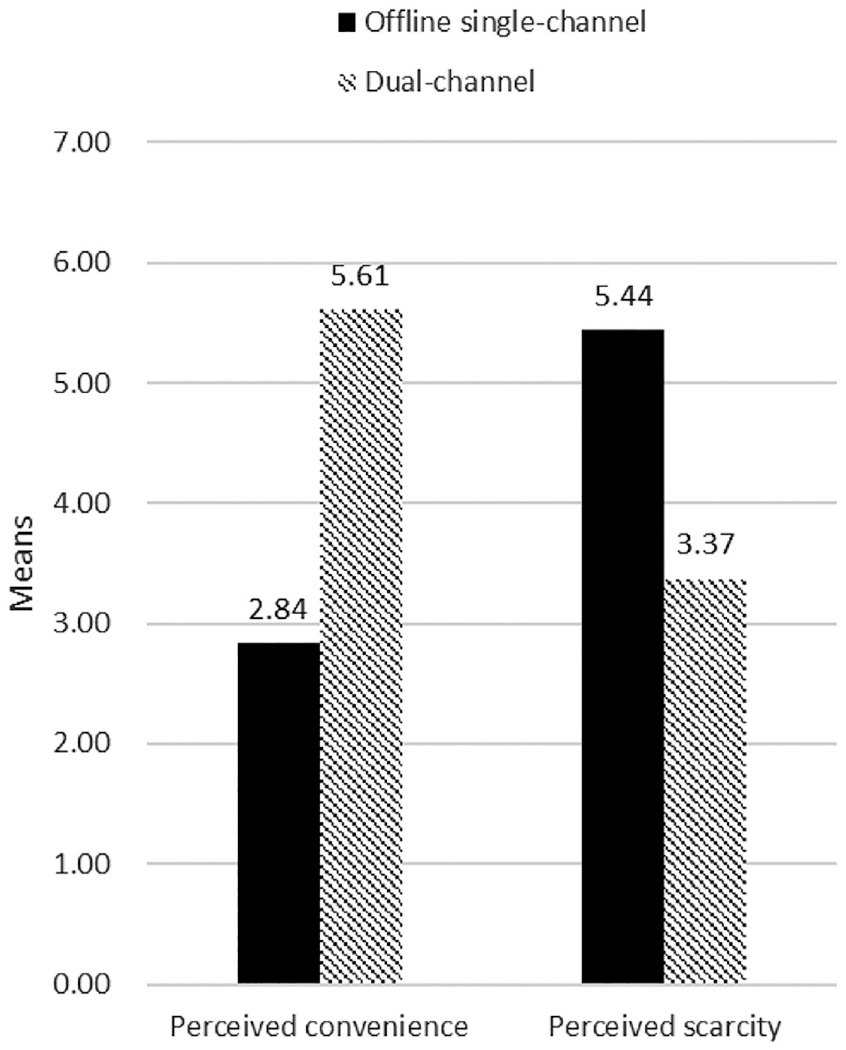
The impact of purchasing channels on tourists’ perceived convenience and perceived scarcity.
Perceived convenience was higher in the dual channel condition (Mdual-channel = 5.61, SDdual-channel = 1.04) than in the offline single channel condition (Moffline single-channel = 2.84, SDoffline single-channel = 1.75). The offline single-channel condition elicited greater perceived scarcity than the dual-channel condition (Moffline single-channel = 5.44, SDoffline single-channel = 1.09; Mdual-channel = 3.37, SDdual-channel = 1.06). These results further supported H1a and H1b.
Serial Mediation Effect Analysis
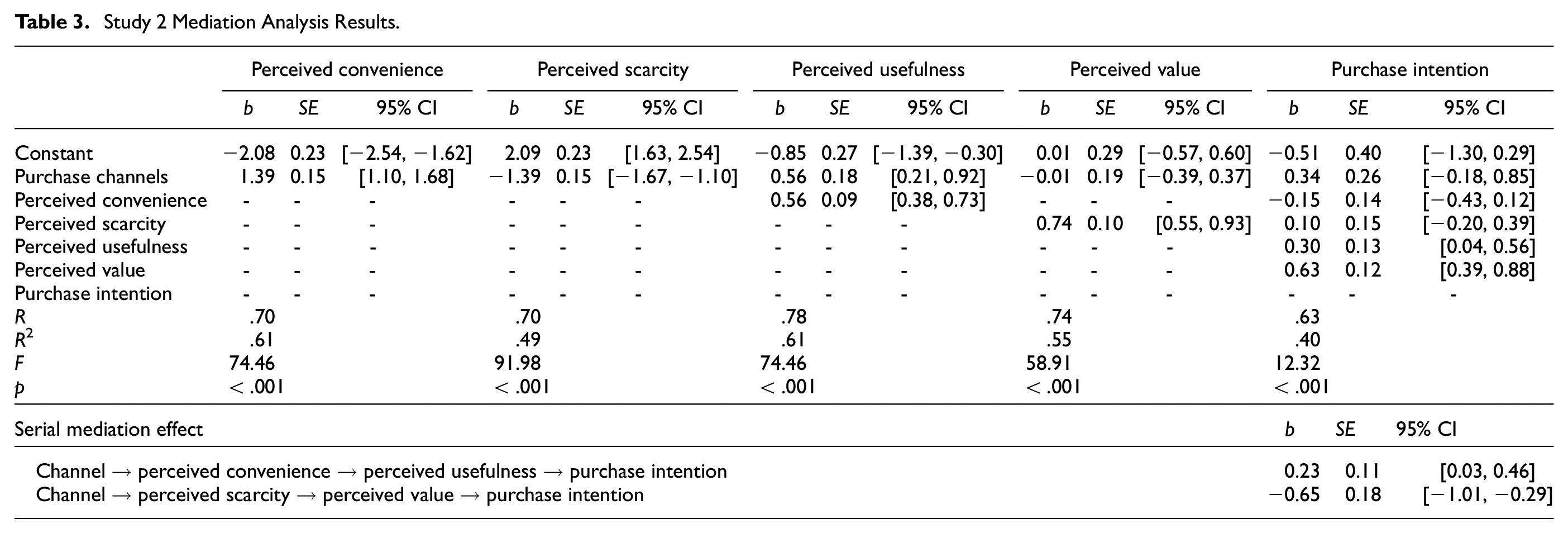
The procedure for testing serial mediation is similar to Study 1 and produced similar results. Perceived convenience and perceived usefulness (indirect effect = 0.2301, SE = 0.1050; 95% CI [0.0323, 0.4589]) played a serial mediating role between souvenir purchasing channel and tourist purchase intention. Another serial mediation effect of perceived scarcity and perceived value was also significant (indirect effect = −0.6538, SE = 0.1829; 95% CI [−1.0063, −0.2941]). Much as in Study 1, the direct effect of purchase channels on purchase intention was not significant (direct effect = 0.3369, SE = 0.2603; 95% CI [−0.1802, 0.8539]). Therefore, the results of Study 2 (see Table 3 and Figure 5) were consistent with Study 1. The impacts of tourism souvenir purchasing channel types on tourists’ perception and purchase intention were confirmed.
Study 2 Mediation Analysis Results.
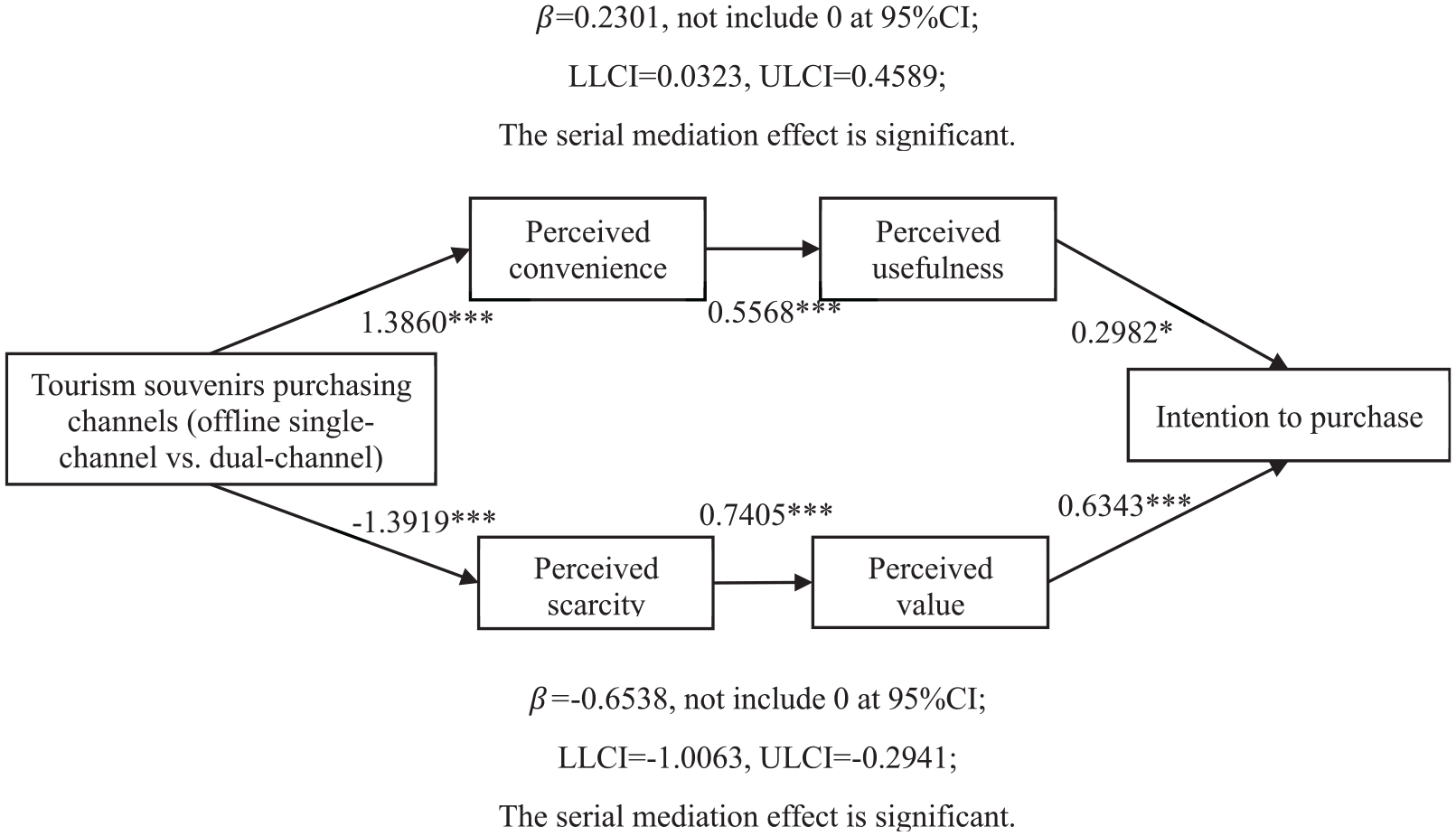
The impact of tourism souvenir purchasing channels on purchase intention.
Study 3
While Study 1 and Study 2 showed the two serial mediation effects (channel → perceived convenience → perceived usefulness → purchase intention; channel → perceived scarcity → perceived value → purchase intention), Study 3 examined the moderating effect of souvenir authenticity on these relationships. Specifically, we proposed that participants show purchase intention for the low-authenticity souvenir through the serial mediation of perceived convenience of the dual channel and perceived usefulness (H2a), while participants show purchase intention for the high authenticity souvenir through the serial mediation of perceived scarcity and perceived value (H2b).
Pretest
Methodology
Before the main experiment, we first carried out a pretest to evaluate manipulation effectiveness of our experimental stimuli. We recruited 60 participants on Credamo (51.70% female, Mage = 28.97). Then we further tested our stimuli by assigning participants to one of the experimental stimuli (authenticity: high vs. low). After reading the given scenario, all the participants evaluated the authenticity of the souvenir with four items on a 7-point Likert scale (1 = Strongly disagree, 7 = Strongly agree) that were used by Xie et al. (2012). And as in Study 1 and Study 2, we also controlled the two variables of gender and consumer preference for products. The results show no significant difference in gender (χ2 = 3.708, p > .05) or consumer preference for products (F = 0.605, p > .05) between participants in the two experiment scenarios (see Supplemental Appendix).
Results
The results revealed that the Cronbach’s α of the authenticity was .984, indicating a good internal consistency of the scale. Then, we conducted an independent-sample t-test to assess the manipulation effectiveness of the authenticity. We found that the two groups reported significant difference in their perceived authenticity of the souvenirs (t = 25.621, p < .001). The group exposed to the condition of high authenticity (M = 6.35) had a higher value than the median score 4, but the group exposed to the condition of low authenticity had a lower score (M = 2.06) than the median 4. This indicates that the manipulation of the souvenir authenticity in our pretest was effective.
Main Experiment
Methodology
Study 3 used a 2 (shopping channel: offline single-channel vs. dual-channel) ×2 (authenticity: high vs. low) between-participants design. We manipulated souvenir authenticity as the pretest. For the main study, we recruited 99 participants on Credamo for the high-authenticity group (47 males and 52 females), and 103 participants on Credamo for the low-authenticity group (39 males and 64 females). Among them, 26.7% were 19 to 24 years old, 64.4% were 25 to 40, and 8.9% were 41 to 60. Participants were randomly assigned to one of four scenarios (see Supplemental Appendix) through the survey panel: facing high authenticity souvenir in the offline single channel (n = 51), facing high authenticity souvenir in the dual channel (n = 48), facing low authenticity souvenir in the offline single channel (n = 52), and facing low authenticity souvenir in the dual channel (n = 51). To improve the generalizability of this study, we adopted a new souvenir item “a mug” in the experimental material. We selected it because mugs are a typical utilitarian product for tourists to buy (Masset & Decrop, 2021; Su et al., 2024; Wilkins, 2011). To determine the price of the product, we used prices of 2,400 different mugs from Jingdong for reference. Participants in the high authenticity souvenir condition read, “While shopping for souvenirs, I find a local-style mug that costs 40 yuan. The shape of the mug was inspired by the unique history and legend of the local area, and was handmade by local craftsmen using traditional techniques and materials from the local area.” Participants in the low-authenticity souvenir condition read, “While shopping for souvenirs, I find a generic mug priced at 40 yuan. At that time, I learn that this mug is completely made by machine, without any special shape, and the materials used are all common materials.”
All participants scored the souvenir authenticity on a 7-point Likert scale (1 = Strongly disagree, 7 = Strongly agree) with four items (Sthapit, 2018; Xie et al., 2012), and then rated their perceived convenience (α = .959), perceived usefulness (α = .918), perceived scarcity (α = .897), perceived value (α = .948) and purchase intention (α = .959) using the same measures as in Study 1 and Study 2. As in Study 1, we used gender (χ2 = 3.751, p > .05) and consumer preference for products (F = 0.465, p > .05) as control variables.
Results and Discussions
The findings indicate that the participants could correctly identify the shopping channel (Moffline single-channel = 6.76vs. Mdual-channel = 1.41; t = 66.048, p < .001), and there were significant differences in their judgment of the authenticity of souvenirs (Mhigh authenticity = 6.25 vs. Mlow authenticity = 3.11; t = −20.149, p < .001). Thus, the manipulation of the shopping channel and the authenticity of souvenirs was successful.
Additionally, a two-way ANOVA revealed a marginally significant interaction between souvenir purchasing channels and souvenir authenticity on perceived convenience (F = 1.908, p = .070; ηp2 = 0.017). Analysis showed significant differences in perceived scarcity (F = 7.113, p = .008; ηp2 = 0.035), perceived usefulness (F = 18.362, p < .001; ηp2 = 0.085) and perceived value (F = 26.796, p < .001; ηp2 = 0.119) between the two types of souvenir purchasing channels under the conditions of souvenir authenticity. The results (see Figure 6) demonstrated that under the situation of the low level of souvenir authenticity, the participants will attribute higher perceived convenience (Moffline single-channel = 2.36vs. Mdual-channel = 6.20, F = 145.194, p <.001; ηp2=0.967) and higher perceived usefulness (Moffline single-channel = 3.75vs. Mdual-channel = 5.74, F = 3.254, p <.001; ηp2=0.458) to the dual channel than to the offline single channel. On the other hand, under the situation of the high level of souvenir authenticity, the “offline single-channel” subgroup had a significantly higher perceived scarcity (Moffline single-channel = 6.18vs. Mdual-channel = 3.82, F = 199.751, p <.001; ηp2=0.673) and perceived value (Moffline single-channel = 6.15vs. Mdual-channel = 5.64, F = 11.326, p =.001; ηp2=0.105) than the “dual-channel” subgroup.

Interactive effect of souvenir purchasing channels and souvenir authenticity on perceived convenience, perceived scarcity, perceived usefulness, and perceived value.
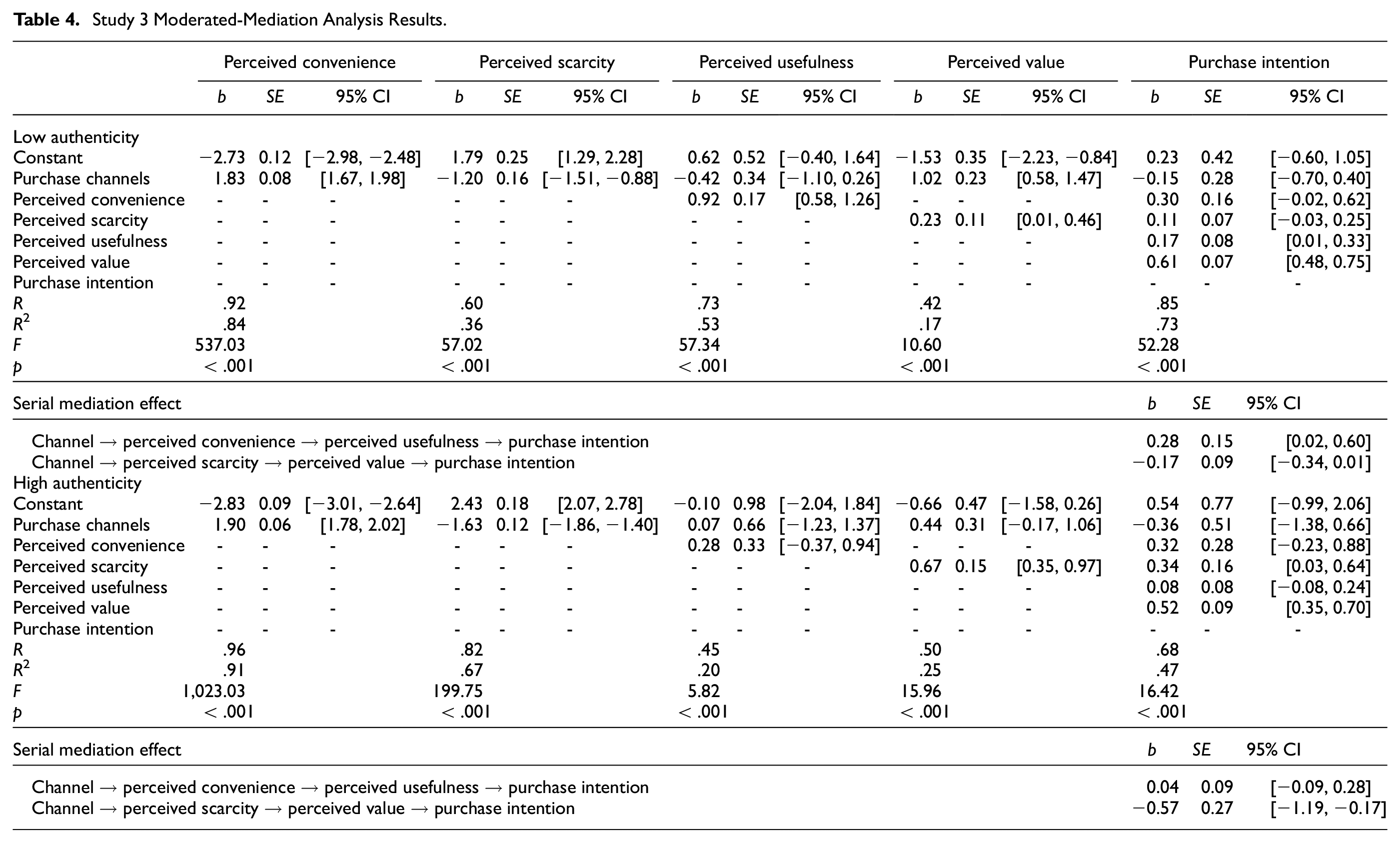
To test the hypothesized pathway for high authenticity souvenirs (channel → perceived scarcity → perceived value → purchase intention), we conducted a serial mediation analysis using the bootstrapping approach with 5,000 redraws (Model 82, Hayes, 2013; Ramkissoon & Mavondo, 2015). Results indicated that the sequential mediation was significant (indirect effect = −0.5710, SE = 0.2679; 95% CI [−1.1903, −0.1689]). Moreover, the alternative pathway (channel → perceived convenience → perceived usefulness → purchase intention) was not significant (indirect effect = 0.0415, SE = 0.0905; 95% CI [0.0900,−0.2768]). Thus, the proposed serial mediation model best explained our data, supporting H3b.
For the low-authenticity souvenir condition, we hypothesized the serial mediation of perceived convenience and perceived usefulness in the relationship between shopping channels and purchase intention. Results of the analysis (Model 82, Hayes, 2013) showed that the serial mediation effect of perceived convenience and perceived usefulness was significant (indirect effect = 0.2821, SE = 0.1484; 95% CI [0.0186, 0.6018]). In addition, the alternative pathway (channel → perceived scarcity → perceived value → purchase intention) was not significant (indirect effect = −0.1713, SE = 0.0871; 95% CI [−0.3401, 0.0070]). These mediation results supported H3a and the results of the two conditions are shown in Figure 7 and Table 4. Overall, these findings indicated that souvenir authenticity moderated the effect of souvenir purchase channels on intention to purchase.
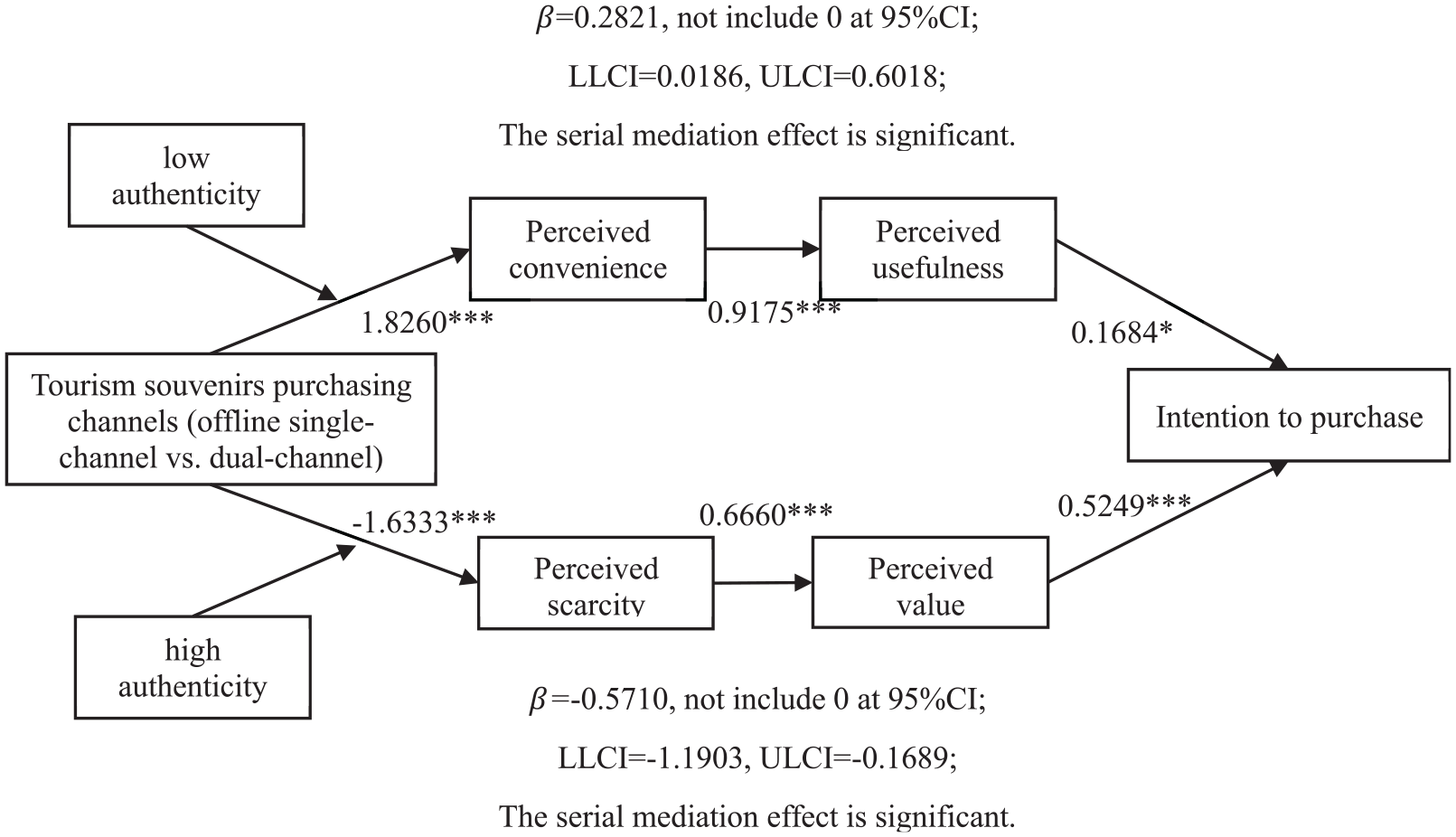
The moderated mediation effects of authenticity and purchasing channel.
Study 3 Moderated-Mediation Analysis Results.
Study 4
Study 4 replicated Study 3 using a new sample of real tourists. This allows us to overcome the online sample limitations in Study 3 by diversifying the data sources of our research. We changed the souvenir type to another common item “food souvenir” in the stimulus material to enhance the generalizability of the research findings (Yuan et al., 2022).
Sample Characteristics
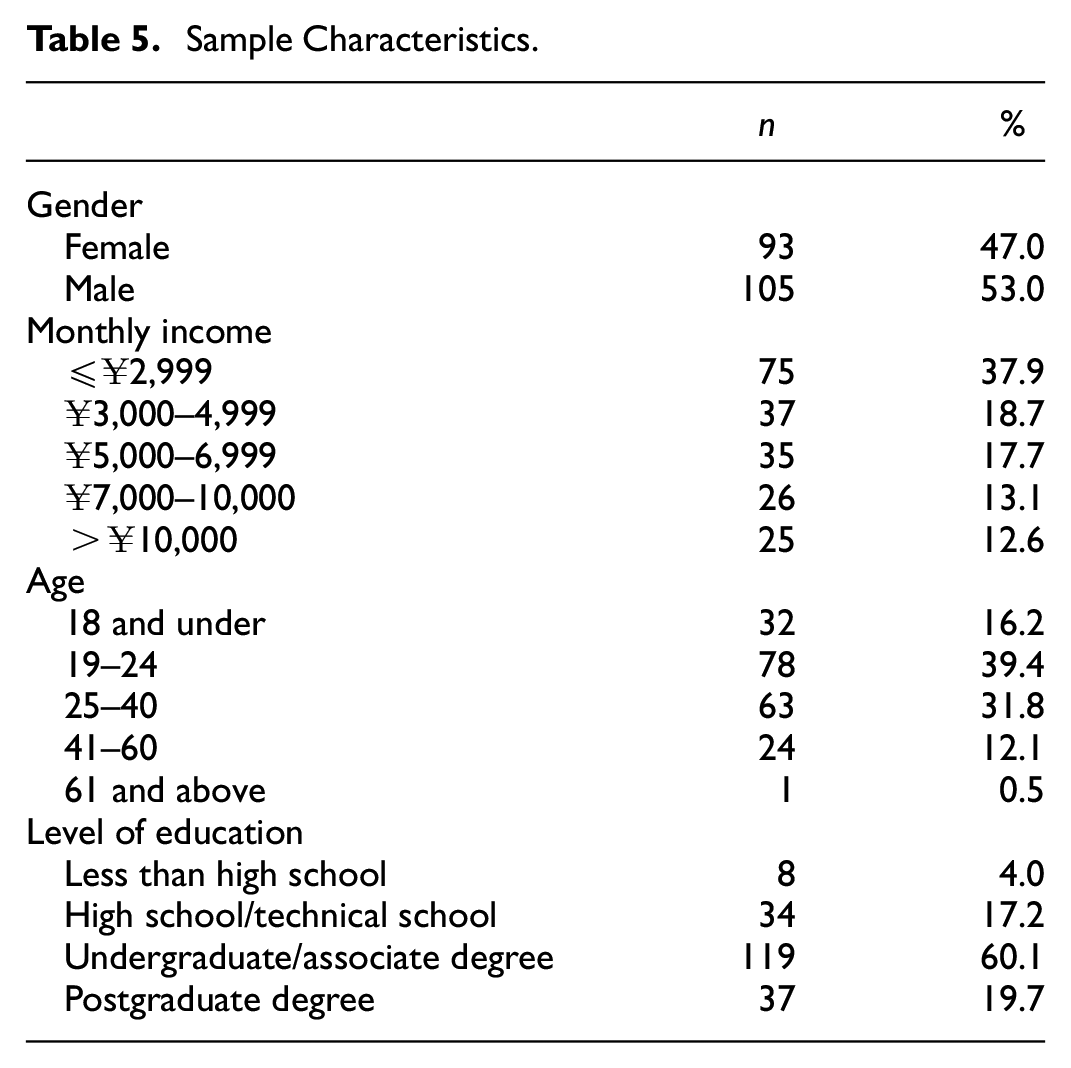
Study 4 was conducted at Yuelu Mountain, Changsha, China. A total of 198 tourists participated in this 2 × 2 between-subjects experiment. Among these participants, 53.0% were men, and 71.2% reported that they were between the ages of 19 and 40 years. Table 5 provides a more complete description of the characteristics of the participants.
Sample Characteristics.
Research Design and Procedure
To avoid interference from participants guessing our research goals, they were assigned to different scenarios: facing a low authenticity souvenir in the offline single channel (n = 49), facing a low authenticity souvenir in the dual channel (n = 51), facing a high authenticity souvenir in the offline single channel (n = 49), and facing a high authenticity souvenir in the dual channel (n = 49). The experimental design of Study 4 was similar to Study 3, but to improve the external validity of this experiment, we replaced the souvenirs in the stimulus material with food souvenirs (see Supplemental Appendix). We asked participants to read the stimuli materials of souvenir purchasing channels and authenticity of souvenirs descriptions first. Given that some endogenous and exogenous variables might confound the research results, we controlled the two variables of tourists’ gender (χ2 = 0.387, p > .05) and preference for products (F = 0.292, p > .05). The measurements of other variables remained the same as those in Study 3.
Results
Moderating Effect of Souvenir Authenticity
The results of a two-way ANOVA revealed a significant interaction between souvenir purchasing channels and souvenir authenticity in predicting tourists’ perceived convenience (F = 4.516, p = .035; ηp2 = 0.023), perceived scarcity (F = 6.503, p = .012; ηp2 = 0.032), perceived usefulness (F = 7.448, p = .007; ηp2 = 0.037), and perceived value (F = 12.627, p < .001; ηp2 = 0.061). Further simple effect analysis revealed significant differences in these four variables between the two purchasing channels under the different conditions of souvenir authenticity. In particular, the participants reported higher levels of perceived convenience (Moffline single-channel = 2.93vs. Mdual-channel = 5.45, F = 159.365, p <.001; ηp2=0.619) and perceived usefulness (Moffline single-channel = 3.14vs. Mdual-channel = 5.35, F = 92.421, p <.001; ηp2 = 0.485) with a low authenticity souvenir when they faced dual channel (vs. offline single channel). By contrast, in the condition of high authenticity, the participants demonstrated higher levels of perceived scarcity (Moffline single-channel = 5.64vs. Mdual-channel = 3.44, F = 159.067, p <.001; ηp2 = 0.624) and perceived value (Moffline single-channel = 5.56vs. Mdual-channel = 3.65, F = 96.583, p <.001; ηp2=0.502) when they were exposed to an offline single-channel (vs. dual-channel). Overall, these findings showed that souvenir authenticity moderated this effect of souvenir authenticity on the above four variables (see Figure 8). H3a and H3b were again tested and supported.
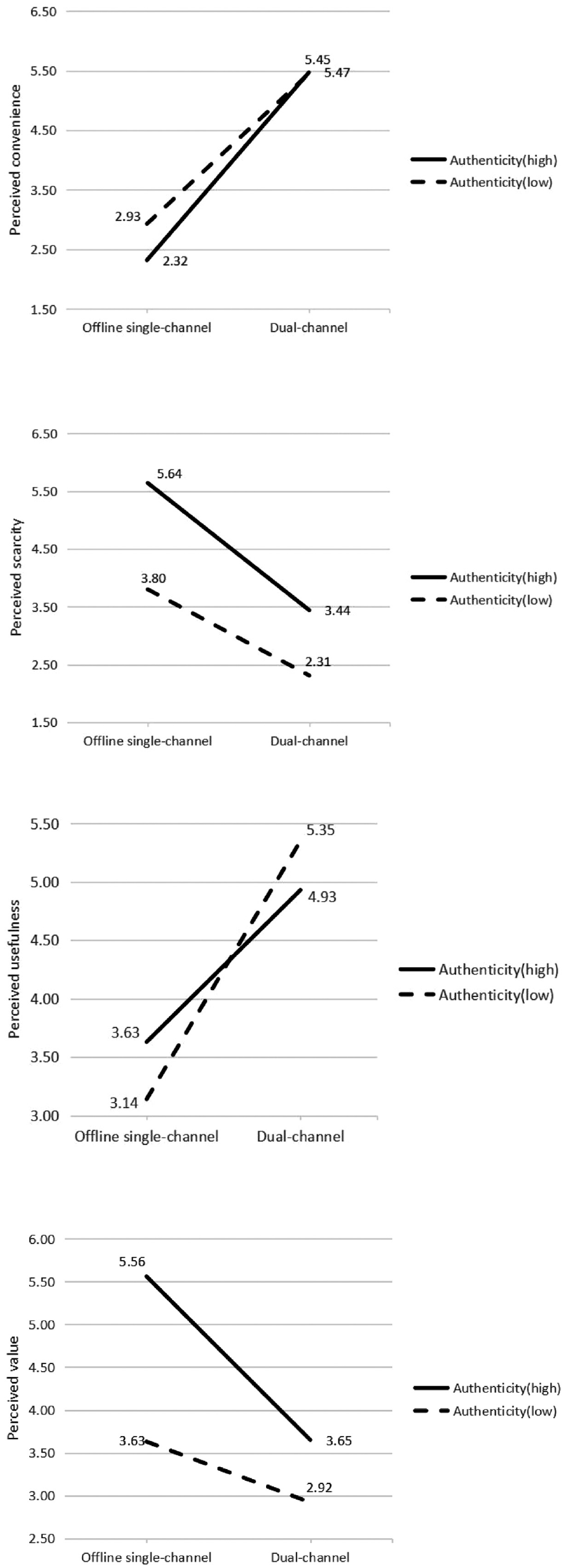
Interactive effect of souvenir purchasing channels and souvenir authenticity on perceived convenience, perceived scarcity, perceived usefulness, and perceived value.
Moderated Mediation Effect
We conducted a moderated mediation analysis using bootstrapping mediation tests with 5,000 replications and a 95% CI (Hayes, 2013). In PROCESS Model 82, souvenir authenticity served as the moderator, and tourists’ perceived convenience, perceived usefulness, perceived scarcity, and perceived value served as the mediator.
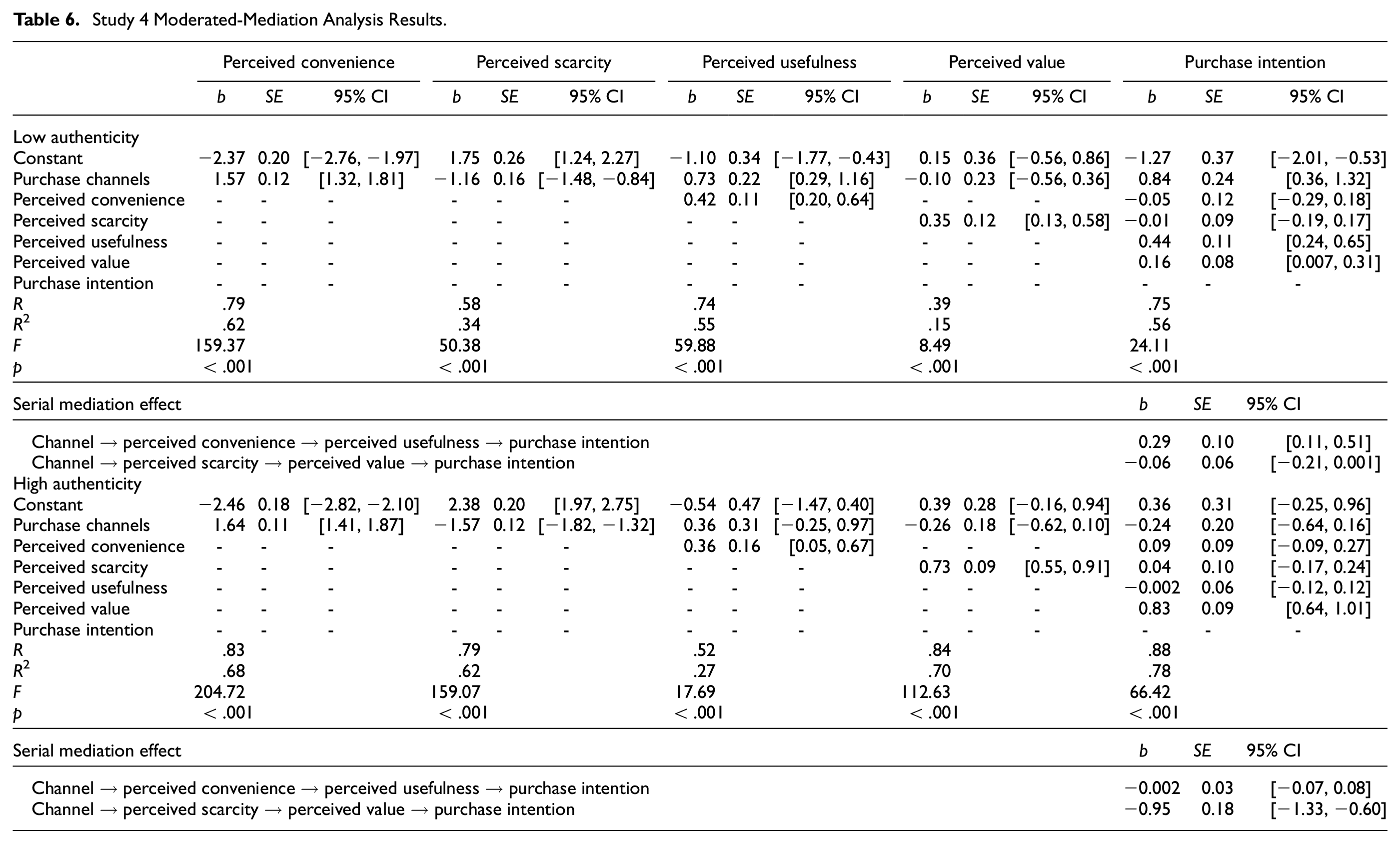
The moderated mediation analysis results supported the moderating role of souvenir authenticity on the relationships which were examined in Study 1 and Study 2. Specifically, in the low-authenticity condition, the dual channel has a positive impact on tourists’ intention to purchase through the serial mediation of perceived convenience and perceived usefulness (indirect effect = 0.2923, SE = 0.1037; 95% CI [0.1063, 0.5129]). On the contrary, when participants faced an offline single channel, the indirect effect of channels on purchase intention through the serial mediation of perceived scarcity and perceived value was not significant (indirect effect = −0.0645, SE = 0.0568; 95% CI [−0.2086, 0.0013]). This result confirmed Hypothesis 3a. However, in the high-authenticity condition, offline single-channel has a positive impact on tourists’ intention to purchase through the serial mediation of perceived scarcity and perceived value (indirect effect = −0.9506, SE = 0.1847; 95% CI [−1.3324, −0.6035]). When participants faced the dual channel, the indirect effect of souvenir purchasing channels on intention to purchase through the serial mediation of perceived convenience and perceived usefulness was not significant (indirect effect = −0.0015, SE = 0.0345; 95% CI [−0.0657, 0.0773]). Therefore, H3b was confirmed (see Table 6 and Figure 9).
Study 4 Moderated-Mediation Analysis Results.
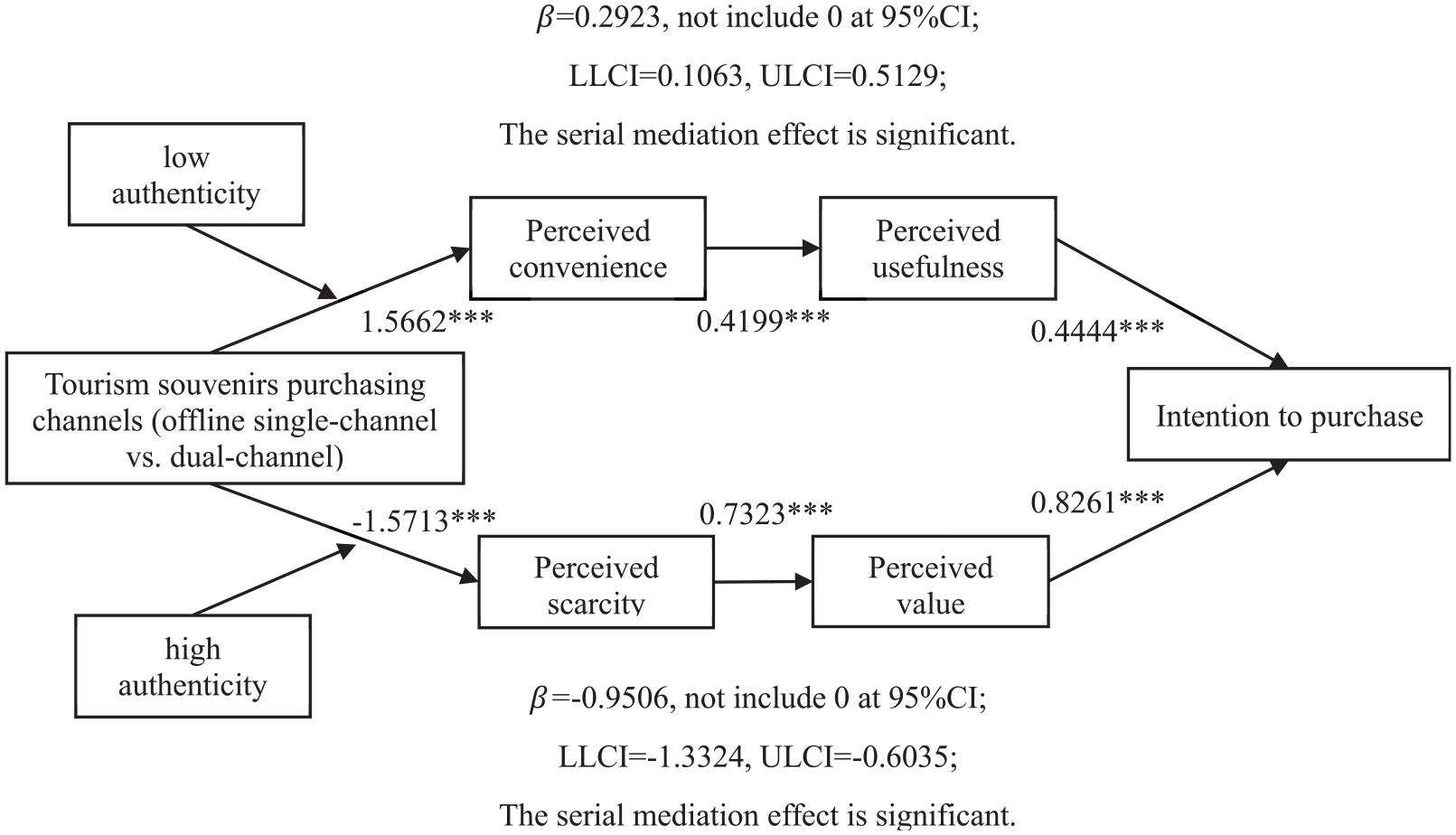
The moderated mediation effects of authenticity and purchasing channels.
Conclusion and Implications
Conclusion
The present study proposed and tested a conceptual model to investigate how souvenir purchasing channels influence intention to purchase. Specifically, Studies 1 and 2 indicated that the availability of two channels for shopping led tourists to develop stronger perceived convenience and thus generated stronger perceived usefulness, thereby increasing intention to purchase; when the shopping channel was a single offline channel, they developed stronger perceived scarcity and stronger perceived value, thus increasing intention to purchase. Studies 3 and 4 explored the moderating role of souvenir authenticity on the relationship between souvenir purchasing channels and tourist intention to purchase, revealed the specific action paths of purchase channels to purchase intention, and found boundary conditions of the effects under different levels of authenticity. Studies 3 and 4 indicated that under the condition of low authenticity, dual channel (vs. offline single channel) can evoke greater intention through tourists’ perceived convenience and perceived usefulness. When the authenticity level is high, tourists show greater intention to purchase through the serial mediation of perceived scarcity and perceived value with the offline single channel. The following section provides more discussions on the contributions and limitations of this study.
Theoretical Contributions
This study makes three main contributions to the literature. First, it echoes the calls for exploring the consequences of different tourism souvenir purchasing channels (Kushwaha & Shankar, 2013; Schoenbachle & Gordon, 2002; Wang, 2023) by constructing a two-pathway theoretical model describing the impact of souvenir purchasing channels on tourists’ intention to purchase from the perspective of tourist souvenirs. Previous studies on the consequences of souvenir purchasing channels address either online (Abendroth, 2011; Swanson & Timothy, 2012) or offline outlets (Fu et al., 2018; Lin & Wang, 2012; Sthapit, 2018; M. Y. Wu et al., 2014). The very few that include both types do not address their influence on tourists’ psychology and behavior. This study analyzes the different results of having a single channel—perceived scarcity—and two channels—perceived convenience. The findings of this study expand the research on tourism souvenirs, provide a deeper insight into tourists’ psychology when buying tourism souvenirs, deepen our understanding of tourists’ souvenir purchase behavior, and provide an effective reference for subsequent research on tourism souvenirs in the digital world.
The paper’s second theoretical contribution lies in revealing the perception mechanism of souvenir purchase channels on tourists’ purchase intention. In so doing, this research expands the field of research on perceived scarcity, perceived value, perceived convenience, and perceived usefulness. Previous studies show consumer perception can affect their behavior (Park et al., 2005). As the majority of the previous studies explored the mediation mechanism of shopping channels, such as negative attitude (Wang, 2023), perceived service quality (Herhausen et al., 2015), or products’ vividness and instant gratification (Huyghe et al., 2017), no research has explored the two serial mediation mechanism of purchase channels on purchase intention or integrated the two serial mediation paths into one framework. In addressing that research gap, this study expands the TAM model and enriches the application of the TAM model and commodity theory in the field of tourism souvenir consumption. The recognition of two different serial mediation processes affecting purchase intention creates a new research framework. Future research on the relationship between purchase channels and purchase intention and of behavior in general consumption scenarios can build on that framework.
The study’s third theoretical contribution to the tourism souvenir literature lies in revealing how the authenticity of the tourism souvenir moderates the two serial intermediary processes. Previous studies on the authenticity of souvenirs have explored the influence of authenticity as an antecedent or intermediary factor of tourist behaviors (Fu et al., 2018; Torabian & Arai, 2016; Xie et al., 2012). By contrast, scant research combines the level of authenticity of souvenirs and purchase channels. In examining these variables this study provides new theoretical insights. It also empirically reveals the difference between influence paths in two authenticity situations and the boundary effect of souvenir authenticity among souvenir purchasing channel and tourists’ response. These results enrich our understanding of the relationship between souvenir authenticity and souvenir purchase behavior and enriches the research on the attributes of tourism souvenirs that tourists value.
Practical Implications
This study offers several important practical implications as well. First, the model shows that souvenir purchase channels will affect consumers’ perception through different perception paths, and then affect their willingness to buy. Therefore, souvenir merchants who intend to increase online channels should pay attention to the purchasing tendency of historical and target customers, and can use techniques such as big data to analyze the historical consumption behavior of shop customers in order to judge whether souvenir online shops would enhance their business. Souvenir merchants with different types of purchase channels can make use of offline physical stores to “attract traffic” to online channels to optimize the relationship between offline stores and online stores. However, while online stores expand the scope of the sale, businesses should also prevent online stores from eroding the customer flow and product sales of offline physical stores.
Second, considering the positive effects of perceived scarcity, perceived value, perceived convenience, and perceived usefulness on tourists’ willingness to buy, we suggest that souvenir merchants should take measures that align with their situation. Single-channel merchants can emphasize perceived scarcity in marketing, in line with the theoretical basis for merchants to design scarcity marketing plans for souvenirs offered here. They can effectively spread scarcity marketing concepts and enhance the scarcity marketing effect. Dual-channel merchants can focus on advertising to make consumers more aware of the increase in consumption opportunities and the convenience of channel use.
Third, this research verifies the role of souvenir authenticity in the adjustment between souvenir purchase channels and consumer perception, suggesting souvenir retailers should pay attention to the importance of souvenir authenticity. When the authenticity of the souvenirs sold by the merchants is low, merchants can choose to open online shopping channels to provide consumers with higher convenience. Merchants should also emphasize the advantages of dual channels in their ad campaigns. When merchants sell souvenirs of high authenticity, they can maintain the offline single channel and emphasize the scarcity of souvenirs in the marketing process. Further, they can continue to enhance the authenticity of the souvenirs (such as through the use of local materials and traditional production methods, etc.), improve consumers’ perception of the authenticity of souvenirs, highlight the authenticity of souvenirs in their marketing, and emphasize the traditional characteristics and local production of souvenirs. Merchants can avoid selling homogenized products to achieve the purpose of promoting souvenir consumption. Relevant here, Timothy (2005) noted that perhaps the most influential factor that determines authenticity is the meaning that tourists attach to souvenirs. Other literature has noted the importance of interaction between tourists and residents and destination employees (Su, Yang, & Swanson, 2022; Su, Chen, Huang, & Chen, 2023), and many researchers have considered experiential consumption in the context of tourism shopping (Fu et al., 2018; Meng & Xu, 2012). Fu et al. (2018) pointed out that in the context of experiential consumption, the authenticity of souvenirs will have a stronger effect on the purchase intention of tourists. Based on this and the current findings, experience-oriented activities (e.g., making pottery, tasting events, picking tea leaves, etc.) might enhance souvenir shops. Inviting tourists to participate in feeling or making souvenirs will enhance their willingness to purchase souvenirs and increase the commemorative significance they attach to them (Masset & Decrop, 2021).
Research Limitations and Directions for Future Research
There are some limitations in our study that offer directions for future research. First, the present study adopted a fictitious tourism store in our experimental stimuli in order to control for the potential interference of the tourist-souvenir store relationship, which could affect the external validity of our study. Field experiments in collaboration with real tourism souvenir stores would enhance the external validity of our study. Moreover, we encourage researchers to consider additional potential confounding variables beyond gender and product preference, which will enable more robust control of confounding effects in future studies.
Second, the present study focused on perceived convenience, perceived usefulness, perceived scarcity, perceived value, and purchase intention as outcome variables of souvenir purchase channels. To develop a more comprehensive understanding of tourist responses to souvenir shopping channels, future research may examine other outcome variables (e.g., consumer loyalty, satisfaction), and further investigate the interactive effects of souvenir shopping channels and other factors.
Third, this study does not take other factors beyond souvenir authenticity into account. We recommend future studies incorporate other moderating variables in the mediation model to further examine the effects of souvenir shopping channels on tourist responses. For instance, L. Wu and Lee (2016) found that in the online retailing context, consumption target (i.e., for self vs. for others) is an important contextual variable that determines the relative effectiveness of scarcity versus popularity cues. Therefore, considering the special nature of souvenirs, it is also worth exploring whether souvenirs bought for oneself or others have a moderating effect between souvenir purchase channels and intention to buy.
Finally, it is worth noting that the advent of the Internet has provided consumers with new ways to buy souvenirs. Huang et al. (2009) proposed an innovative business model that uses e-commerce to deliver food souvenir orders from destinations to home, even if the ordering person has never been to the destination. Thus, souvenirs can be disconnected from tourism activities (Paraskevaidis & Andriotis, 2015). Can such “tourism souvenirs” still have the memory value related to the destination and the experience? When people buy souvenirs online, they may regard these souvenirs as ordinary goods or local products related to a specific destination. Therefore, we propose that when online souvenir shopping becomes widely accepted, the meaning of “tourism souvenirs” itself will change, and tourists’ emotional attachment to souvenirs will also change. This study has explored the relationship between souvenirs and the Internet; many more such explorations will be needed in the future.
Supplemental Material
sj-docx-1-jtr-10.1177_00472875231195062 – Supplemental material for How do Tourism Souvenir Purchasing Channels Impact Tourists’ Intention to Purchase? The Moderating Role of Souvenir Authenticity
Supplemental material, sj-docx-1-jtr-10.1177_00472875231195062 for How do Tourism Souvenir Purchasing Channels Impact Tourists’ Intention to Purchase? The Moderating Role of Souvenir Authenticity by Lujun Su, Zeyue Lai and Yinghua Huang in Journal of Travel Research
Footnotes
Declaration of Conflicting Interests
The author(s) declared no potential conflicts of interest with respect to the research, authorship, and/or publication of this article.
Funding
The author(s) disclosed receipt of the following financial support for the research, authorship, and/or publication of this article: This research was supported by the National Natural Science Foundation of China (No. 72174213; 71974206; 71774176).

Supplemental Material
Supplemental material for this article is available online.
Author Biographies
References
Supplementary Material
Please find the following supplemental material available below.
For Open Access articles published under a Creative Commons License, all supplemental material carries the same license as the article it is associated with.
For non-Open Access articles published, all supplemental material carries a non-exclusive license, and permission requests for re-use of supplemental material or any part of supplemental material shall be sent directly to the copyright owner as specified in the copyright notice associated with the article.
