




Abstract
Efforts to promote inclusivity of marginalized groups in tourism have mainly focused on people with disabilities, seniors, and ethnic minorities. However, other marginalized groups such as plus-size travelers have been neglected. The Plus-Size Travel Movement draws attention to travel restrictions and ostracization from the market due to body size and intersectional identities. This study is the first of its kind to address this phenomenon. It aims to unpack the plus-size travel movement through a netnographic analysis of four major online movement platforms. The analysis reveals how community leaders mobilize with different discourses to politicize travel for plus-sized individuals and empower the community. This research seeks to stimulate further scholarly discussion about expanding theoretical approaches that examine consumer marginalization in tourism consumption beyond its current scope. It also provides recommendations for the industry, including engaging with plus-size travel influencers to establish more inclusive practices and policies and following the movement on social media closely to identify ways to enhance the experience of plus-size travelers.
Keywords
Introduction
The World Tourism Organization (WTO) recently published a report on accessibility and inclusive tourism, stating that tourism is a basic social right for everyone (WTO, 2021). The report highlights the importance of making the tourism industry more inclusive for disabled and elderly tourists. This aligns with emerging research that has focused on the issue of accessibility and inclusivity in tourism. However, while much of the existing research has focused on disability and age, it has overlooked other important factors such as inter alia, body size and shape, race, gender, nationality, sexuality, ethnicity, and socioeconomic status. This has resulted in certain tourist segments, including plus-size travelers, being excluded, and overlooked in the industry. Plus-size travelers face unique challenges due to their above-average body size, which limits their access to tourism products.
Media coverage of plus-size travelers highlights various structural constraints, stigmatizations, and accessibility issues that plus-size individuals face, such as being kicked off planes because of their size (Coffey, 2021; Kim, 2013) or being subjected to in-flight “fat-shaming” (Oliver, 2019; Wootson, 2019). In 2010, film director Kevin Smith was reportedly forced to leave a Southwest flight, a high-profile incident that sparked further debate about the travel rights of plus-size people (Jones, 2010). Mainly, this incident highlights the vulnerability of tourists whose body size is above average.
A study by Small and Harris (2012) examined the experiences of travelers labeled as “obese” and the “size policies” of major airlines. The authors discovered that the airline industry still disadvantages the right of obese travelers to comfortable seating. Unfortunately, there has been little follow-up research in this area. Even after a decade since its publication, scholarly research, and industry still excluded plus-size travelers from the conversation. While Poria and his colleagues have published a few papers on the subject, such as on obese airline passengers (Poria & Beal, 2017), obese guests in hotels (Poria et al., 2021), and obese guests in restaurants (Poria et al., 2019), they focused predominantly on the experiences and stigma of “obese” travelers. There is limited discussion on the nexus between size and travel from a more sociological perspective. Small and Harris (2012) attribute the lack of scholarly attention to a lack of consumer activism and the negative connotation of plus-size.
In light of the protracted ostracization from the market, recently, plus-size consumers have taken their frustration and dissatisfaction with what is available in the marketplace as an opportunity to initiate social movements to draw attention to themselves and gain more options in the market. In related fields of fashion and marketing, Scaraboto and Fischer (2013), for example, show how frustrated “Fatshionista” collectively challenge fashion industry practices to achieve greater inclusion for plus-size consumers (see also Zanette & Pereira Zamith Brito, 2019). In the tourism context, such consumer mobilization can also be seen in movements that are beginning to permeate social media platforms, such as “#plussizetravelstoo,” “#fatgirlstraveling,” and “#travelinclusivity,” to name a few. Underpinning such activism by plus-size travelers is the lack of inclusivity in the tourism industry. Issues related to seatbelt extensions, stigmatization, plus-size unfriendly accommodations, and weight restrictions on tourism activities are some of the critical issues faced by plus-size travelers (Plussizetraveltoo, 2022; Small & Harris, 2012). Broadly, the plus-size travel movement accentuates the issues related to traveling to push for greater inclusion.
The purpose of this paper is to delve into the plus-size travel movement, building on the suggestion made by Small and Harris (2012) for more research on body size and tourism. With the growing presence of plus-size travelers on social media, it is vital to understand the extent of their marginalization in the market. This study would also aid in comprehending the link between political consumer behavior and tourism and contribute to the literature on inclusive tourism by presenting a new perspective that highlights marginalization beyond socioeconomic status or physical ability.
This paper aims to address the main research question: how do plus-size travel movement leaders achieve legitimacy for the movement? Specifically, addressing this question entails unraveling the central discourses of the plus-size travel movement and how these discourses are used to shape the social movement. To this end, a netnographic approach is used to analyze four key plus-size travel websites. This consumer-generated online content is critical to understanding the documented experiences of plus-size travelers and facilitates further theorization of plus-size travel. Such an initiative is also essential because the World Obesity Federation (WOF) reports a continued rise in global obesity, with one in five women and one in seven men living with obesity by 2030 (World Obesity Federation, 2022). This paper is organized as follows: first, the theoretical foundations underlying this research, including the premise of inclusive tourism and the ontological gap in tourism research, plus-size consumer politics, and political consumerism in tourism; second, the methodological design of the paper; third, the findings; and finally, the discussions, implications, and opportunities for further research.
Theoretical Foundations
Inclusivity Versus Accessibility Tourism: Two Peas in a Pod?
The discourse of “inclusivity” has been studied in tourism literature from the perspective of inclusive and accessible tourism. On the one hand, inclusive tourism is generally understood as “transformative tourism in which marginalized groups are included in the ethical production or consumption of tourism and participation in its benefits.” (Scheyvens & Biddulph, 2018, p. 593). This is in line with the United Nations Initiative for Inclusive Development, which aims to expand the circle of beneficiaries of global development. Scheyvens and Biddulph propose six elements of inclusive tourism that are used to determine the extent to which a tourism development is “inclusive” (Scheyvens & Biddulph, 2018, p. 594):
Overcoming barriers to disadvantaged groups to access tourism as producers or consumers;
Facilitating self-representations by those who are marginalized or oppressed, so their stories can be told, and their culture represented in ways that are meaningful to them;
Challenging dominant power relations;
Widening the range of people who contribute to decision-making about the development of tourism;
Providing opportunities for new places to be on the tourism map; and
Encouraging learning, exchange, and mutually beneficial relationships which promote understanding and respect between “hosts” and “guests.”
As Scheyvens (2011) points out, most tourism developments are rooted in a neoliberal ideology that exploits differences by juxtaposing rich and poor, disabled, able-bodied, and normal-weight and overweight people in the context of plus-size travel. Efforts to increase inclusion include shining a light on the invisibility of marginalized groups and initiating institutional change.
Accessible tourism, on the other hand, is defined as “a form of tourism that involves collaborative processes between stakeholders that enables people with access requirements, including mobility, vision, hearing, and cognitive dimensions of access, to function independently and with equity and dignity through the delivery of universally designed tourism products, services, and environments” (Darcy & Dickson, 2009, p. 34). As Darcy and Dickson (2009) argue, the goal of accessible tourism focuses on “people with permanent and temporary disabilities, seniors, obese, families with young children, and those working in safer and more socially sustainably designed environments” (Darcy & Dickson, 2009, p. 34). The crux of accessible tourism, therefore, is to understand the accessibility issues of the above tourist groups and improve their access to tourism consumption. Existing research shows how disability and age struggle with accessibility issues, and this scholarly effort has helped to challenge and change industry practices.
Scheyvens and Biddulph (2018) consider accessible tourism to be a subset of inclusive tourism, although pioneers of accessible tourism are not entirely open to the term (see, e.g., Darcy et al., 2020; Gillovic & McIntosh, 2020). Darcy and Dickson (2009) also argue that access is not synonymous with inclusivity, as the former has to do with the constraints associated with consuming tourism, while the latter has to do with tourists’ marginalized and intersectional identities (Darcy et al., 2020).
Regardless of their differences, the agenda of inclusive and accessible tourism is to extend the benefits of tourism—both production and consumption—to more communities (Oviedo-García et al., 2019). Current research, however, has a seemingly one-sided focus on the lived experiences of tourists with disabilities and senior tourism led by the global aging population (Gillovic et al., 2018). This lack of “inclusivity” further marginalizes and highlights the ontological gap in tourism research. Ideally, the tourism industry and research community should focus their efforts on “addressing inequality, overcoming the segregation of different groups living in different places, challenging stereotypes or generalized histories, and opening people up to understanding the situation of minorities” (Scheyvens & Biddulph, 2018, p. 593). In light of this ontological gap, Gillovic and McIntosh (2020) argue that academia should re-examine “how our academic inquiry can be more participatory and inclusive” (p. 10).
Specifically, the scholarly conversation around travel has largely overlooked plus-size travelers. Recent media reports and social media trends have brought attention to the challenges they face, such as seat belt length, inadequate hotel facilities, lack of information for plus-size travelers on airline websites, and weight restrictions on tourism activities. This highlights their vulnerability within the industry, specifically their agency to consume tourism products and services, and to have meaningful experiences (I. C. M. Yang & Kirillova, 2023). It is important to recognize that tourism is an embodied experience—our physical bodies influence the way we consume and experience products and services. As argued by Pritchard et al. (2007), the embodiment turn in tourism research shifts the focus from viewing the body as a bio-medical entity to a “complexly constructed object of social discourse.” Despite the embodiment turn, interests and discussions of body politics in tourism remain negligible.
While plus-size travelers may not be overtly excluded from the tourism market, it is important to acknowledge the subtle forms of exclusion and discrimination they often face. These struggles are often invisible to tourism scholars and managers. This is aligned with Scheyvens and Biddulph’s (2018) argument that establishing criteria for determining whether someone is marginalized remains challenging in the context of inclusive tourism. As a general rule, individuals or groups who “lack power and voice” should generally be considered marginalized (p. 593). The case of plus-size travelers, vulnerable to sizeism in the tourism industry (Chrisler & Barney, 2017), should be considered to improve the epistemological depth of inclusivity in tourism.
Plus-Size Consumer Politics
Popular discourse on obesity, supported by biomedical advocates, has pathologized plus-size individuals as inferior “others” to healthy, average-sized individuals (Lloyd, 2014). Obesity (or fat ) is seen as socially irresponsible, and its struggles should not be acknowledged or entertained, as this could provide support for undesirable behaviors. As Farrell (2011) writes, the American society became increasingly “fat conscious” when it was introduced to the discourse of the “obesity epidemic” through media portrayal and public discourse. Being fat in the modern world is increasingly associated with irresponsibility, selfishness, and a sense of entitlement, contributing to the nation’s “fat crisis” (Farrell, 2011; Harjunen, 2021; LeBesco, 2004). Featherstone (2007) argues that in modern consumer culture, “the body is portrayed as the central vehicle for living the good life in consumer culture” (p. xxi), where the media’s portrayal of the ideal body has led consumers to undergo strict maintenance measures and conform to the body image that society views as beneficial. The market, including the travel industry, has consciously adapted to this popular consciousness in the development of products and services (LeBesco, 2004).
Such a consciousness is contested by obese individuals who capitalize on their struggles with sizeism to find comfort in others and to push for social change. Crossley (2004) highlights that the emergence of “fat politics” and “fat pride” is sparking worldwide resistance to the dominant discourse of sizeism. This movement originated in the United States and aimed to challenge the social norms and values that lead to sizeism (LeBesco, 2004). Consequently, the movement has extended its influence to fashion, media, and academic research. For example, the post-disciplinary field of fat studies is dedicated to exploring the “fat body and the lived experience of fat people” (Pausé & Taylor, 2021, p. 1) and how they challenge the dominant discourse of sizeism. Within this framework, discourses of bodies and stigma were examined in relation to plus-size fashion, sociocultural contexts, and media representations, among others. The context of plus-size fashion is a well-researched area that focuses on how marginalized consumers in the fashion industry are mobilized to challenge industry practices and achieve greater inclusion.
To illustrate, Scaraboto and Fischer (2013) draw on institutional theory as a theoretical lens to understand how marginalized consumers influence market dynamics in the fashion industry. Specifically, plus-size consumers who wish to be included in the mainstream fashion market develop and negotiate a collective “Fatshionista” identity in a fashion system governed by the institutional logics of art and commerce that traditionally exclude plus-size individuals. Similarly, Zanette and Pereira Zamith Brito (2019) conceptualize fashion as biopower, in which institutions actively dictate how individuals should look. Consumers become subjects who are “personally governable to meet external expectations” (Zanette & Pereira Zamith Brito, 2019, p. 364). Nonetheless, consumers are becoming more vocal about challenging the fashion industry’s practices, especially in body politics. They do so by advocating for the controllability of the self, democratizing clothing choices, and redefining “fatness” as fashionable rather than undesirable. In a similar vein, travel industry practices operate similarly to biopower, where tourists are categorized as “normal-size” and “plus-size.”
In the case of travel, much of the industry practices are based on the politicization of the human body, as can be seen in the size of airline seats, the formulation of policies such as “customer of size,” hotel beds, and weight restrictions on tourist activities. The tourism industry is guilty of inadvertently controlling tourists based on body discourse by constantly juxtaposing the “plus-size” with “normal-size.” These protracted practices become contested in the present day, assisted by technology. Mainly, studies on plus-size consumption show that consumers are increasingly politicized to initiate and make visible changes at the industry and sometimes societal level. The following section turns to the political nature of the plus-size travel movement.
Political Consumerism in Plus-Size Travel
Although the plus-size travel movement has only emerged in recent years, the struggles of tourists whose body size does not fit the travel industry’s ideal norm are certainly not novel (e.g., Jones, 2010; Kim, 2013). Due to the rise of social media platforms, a variety of social movements have developed in the online sphere, including plus-size travel. Activists have relied on modern technologies to raise public awareness and discussion about the struggles and rights of plus-size travelers. Broadly, the movement can be characterized as a new social movement because it focuses on instigating social change at non-systematic levels, such as corporations or market practices (Barker & Jane, 2016; Diani, 1992). Social movement theory assumes that individuals with limited power and resources come together as a collective to initiate and implement social change (Melucci, 1995). For marginalized plus-size travelers, air travel becomes a politicized realm of consumption in which their agency to engage in travel or have fulfilling travel experiences becomes contestable (I. C. M. Yang & Kirillova, 2023).
This study anchors on the principles of political consumerism as its theoretical foundation. Political consumerism has its roots in the premise of New Social Movements, and the theory coalesced consumption and politics to understand social movements and consumer mobilization in politicized aspects of consumption. According to Micheletti (2003), political consumption is a social movement in which consumers mobilize their power “to change objectionable institutional or market practices. It is based on attitudes and values related to justice, fairness, or non-economic issues that affect personal and family well-being, as well as ethical or political evaluations of favorable and unfavorable business and government practices” (Micheletti et al., 2003, pp. xiv–xv). The theory assumes that consumption goes beyond its hedonistic characteristics to understand how consumers become politically motivated and consumption becomes politicized (Zorell, 2018). Political consumption departs from the traditional view of political participation as a top-down process in which structural forces influence citizen-consumers to participate through voting or other government-initiated activities (Copeland & Boulianne, 2022) to focus on how consumers are mobilized through decision-making to propagate drastic changes in an industry (Zorell, 2018).
In the context of tourism consumption, political consumption has been examined in terms of overtourism (Milano et al., 2019), tourism development (Bowen et al., 2017), animal welfare (Lawton, 2009; Mkono, 2018), environmental protection (Weaver, 2013), local businesses (McGehee et al., 2014), and more recently, the Black Travel Movement (Benjamin & Dillette, 2021). The Black Travel Movement focuses on the marginalization and systematic discrimination faced by African American ethnic groups in tourism consumption. A body of work by Dillette and colleagues finds that racism and microaggressions continue to influence Black travelers’ experiences (Benjamin & Dillette, 2021; Dillette et al., 2019). The “Whiteness” prevalent in American society has shaped how tourism products and services are produced, managed, and marketed. When examining the plus-size travel movement, we can draw parallels from Black travelers’ marginalization and lived experiences to the case of plus-size travelers.
In a recent extension of their work, Dillette and Benjamin (2022) examine how Black Travel Movement leaders mobilized their influence to bring about change. Specifically, the experience of being stigmatized while traveling as a Black person forms a collective trauma shared by others and serves as a catalyst for further change and action in the industry. The shared experience elevates individual consciousness to a collective level. Their works show how marginalized travelers are increasingly frustrated and mobilized to share their experiences online (Dillette et al., 2019). Similar to the systematic racism in the industry, systematic sizeism limits the agency of travelers who do not fit the industry’s body norm, as evidenced by the growing awareness of the plight of plus-size travelers (I. C. M. Yang & Kirillova, 2023).
Huff (2009) points out that plus-size travelers are constantly portrayed as “special,” belonging to a size category outside the norm. This social categorization is generally supported by non-plus-size travelers who oppose greater inclusivity for plus-size travelers. Among the main arguments is that the majority of the traveling population is of average size. Therefore, it is unnecessary to cater to the needs of plus-size travelers who do not compete in terms of population size. More importantly, a seat is automatically treated as a commodity in the airline industry. Industry players universalize and define a misrepresented ideal travel body by commoditizing space. When airlines like Southwest require travelers to purchase additional seats to accommodate their bodies, travelers are put on the vulnerable spot to pay more money in order to travel like their normal-sized counterparts. In the reality of plus-size travelers, airlines manipulate the common ideology of stigma to shame them and make them feel unworthy of attention and respect (Huff, 2009).
However, the tourism scholarship has paid scant attention to this marginalization. The epistemological tradition in the scholarship generally disregards how body shape and size influence travel decisions or experiences of tourism. This lack of attention to and understanding of plus-size travel is another example of myopia that still exists in tourism scholarship despite efforts to make tourism more inclusive. This paper argues that it is crucial to conceptualize how plus-size travel is politicized in order to improve our understanding of the marginalization of different tourists. To this end, the premise of political consumerism is used as an analytical framework for conceptualizing the plus-size travel movement. Previous research in tourism has examined the political aspects of the industry, but there has been little examination of tourist marginalization through the lens of political consumerism. While it is known that tourists advocate for causes such as animal welfare through political actions (Mkono, 2018), there is a lack of understanding of how consumer activism affects discussions on size and travel, how marginalized consumers become empowered to overcome travel barriers and how they foster a community based on marginalization. Using political consumerism as a lens can help scholars understand the link between tourism and politics (M. I. C. Yang, 2023).
Research Methodology
This study uses netnography (Kozinets, 2006, 2015) as the research methodology to guide the research process. According to Kozinets (2006), netnography is an online variation of ethnography that “adapts the open-ended practice of ethnography to the contingencies of the online environment” (Kozinets, 2006, p. 281). Over the past two decades, Kozinets has developed and refined netnography, which helps researchers better understand online communities. One of the main features of netnography is that it allows researchers to obtain an emic “understanding and representation of a cultural or communal phenomenon” (Kozinets, 2010, p. 60). Online platforms are crucial to initiating and implementing change in a social movement, such as the plus-size travel movement (Carty, 2015). Contemporary social movements, such as the Arab Spring, emerge through online mobilizations. In the case of the plus-size travel movement, plus-size travelers struggling with unsatisfactory experiences in the tourism industry used the Internet to express their feelings and mobilize tourists with similar experiences to form a community. To understand the emergence and nature of the plus-size movement, netnography is an appropriate approach to gain “cultural understandings of human experience from online social interaction and content” (Kozinets, 2015, p. 18).
This study focuses on the websites created to advocate for the movement. The websites were identified through a keyword search (see Table 1). Identifying the keywords follows a process consistent with the guidelines provided by Kozinets (2015). The keywords used in the search are identified through an extensive review of online articles, social media posts, and published research on fat studies. After an extended period of “deep surfing,” four criteria were identified (Kozinets, 2019):
(1) Their dedication to the Plus-Size Travel Movement;
(2) English is the primary language of the content on the websites;
(3) The number of posts available for analysis is more than 10, and
(4) The number of followers on their respective social media platforms is more than1,000.
Keywords Used to Identify Websites.

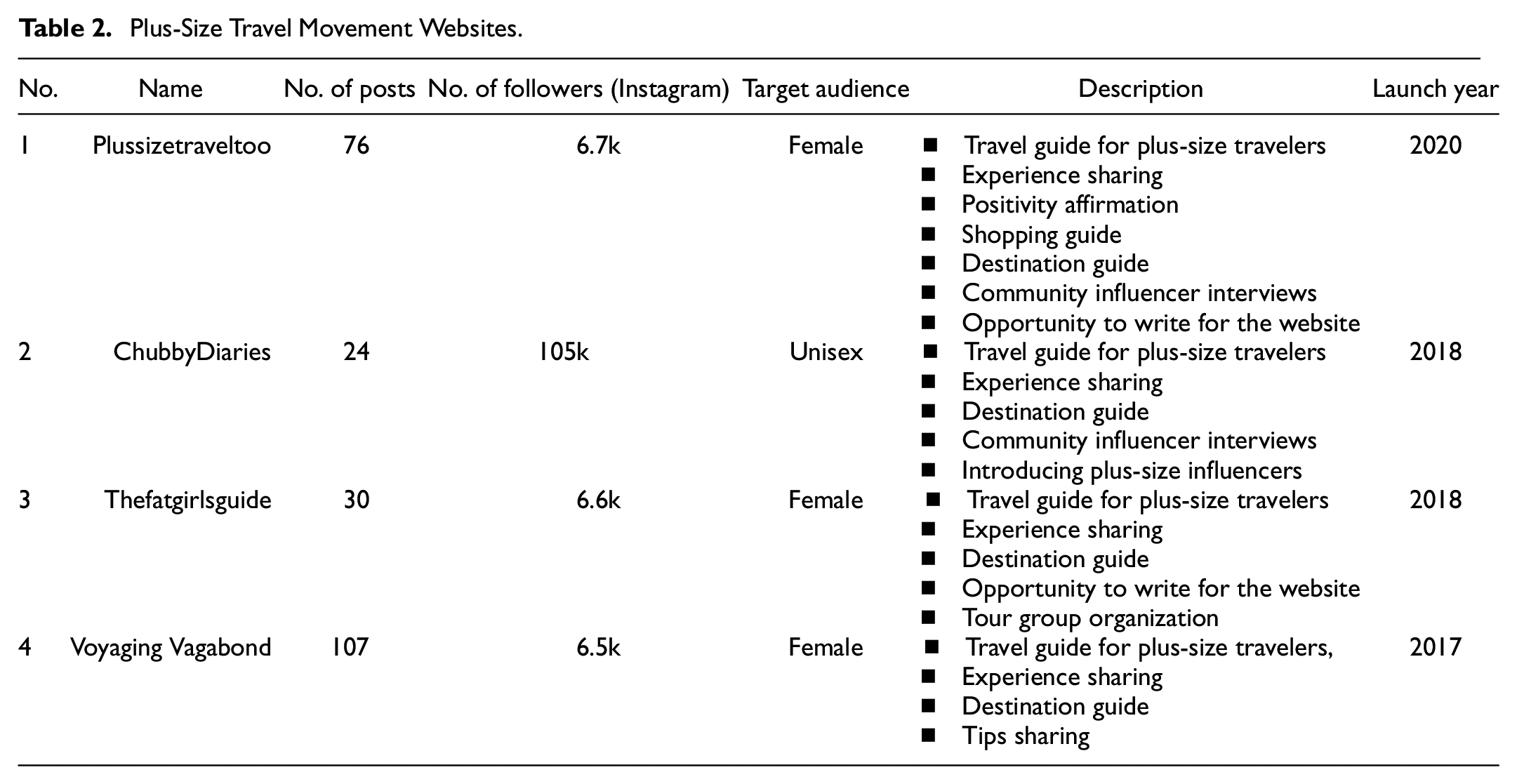
Based on the established criteria, four websites were selected through purposive sampling (Table 2), in line with the tradition of netnography (Costello et al., 2017; Kozinets, 2010). Once the sites were identified, the author immersed in the platforms (Kozinets, 2019) by reviewing the posts and observing the social media interactions. Throughout this process, the author kept an immersion memo detailing her findings and identified various posts. Nevertheless, a pitfall of netnography is the immense amount of data. For example, sometimes companies sponsor these platforms to promote specific products and services that may not be relevant to the study. Recognizing that not all posts are related to the movement, a “data condensation” process proposed by Miles et al. (2014) was performed. The posts were “selected, simplified, abstracted, and transformed into a smaller, more focused dataset that is theoretically relevant to the movement” (Miles et al., 2014, p. 12). This process of data condensation is necessary because it allows the data analysis to focus on the plus-size travel discourse. Three criteria were established to determine the relevance of posts and final selection:
(1) The post is related to the plus-size travel movement;
(2) The post is related to the lived experience of plus-size travelers and
(3) The post is related to providing information to plus-size travelers.
All selected posts were downloaded manually, resulting in 130 posts with 112,719 words. In addition, the websites identified also use a variety of social media platforms, most notably Instagram and TikTok, to increase their reach. Therefore, for meaningful netnographic research, the dataset is supplemented with posts and observations of user interactions on Instagram and TikTok. Data collection began in December 2021 and continued until September 2022, including the immersion phase.
The data analysis of this study is guided by thematic analysis, which is used to “identify, analyze and report patterns within a data” (Braun & Clarke, 2006, p. 79) to identify the main themes characterizing the movement. Braun and Clarke (2006) propose six steps to conduct thematic analysis, which include: (1) familiarizing with the data; (2) generating initial codes; (3) searching for themes; (4) reviewing the themes; (5) defining and naming the themes; and (6) producing the report. A two-cycle coding was conducted, with the first cycle involving In Vivo coding. This code is based on the language extracted from the transcripts (Miles et al., 2014). The verbatim evidence corresponding to the research issue is highlighted as In Vivo codes.
Consequently, the second cycle involves pattern coding, in which in vivo codes are grouped into pattern codes based on similarities (Saldaña, 2009, p. 152). Pattern codes are explanatory or inferential, allowing the researcher to identify emergent themes. The In-Vivo codes are primarily condensed into smaller logical units (Miles et al., 2014). The generated codes are merged in the third step to identify potential themes that are theoretically defined. The definition of themes is theoretically relevant to the discourse on plus-size travel and consumer movements.
Unpacking the Plus-Size Travel Movement
The analysis reveals two main themes that allow us to unpack the plus-size travel movement. Specifically, movement leaders crystalize the movement through (1) politicizing travel for plus-size individuals, where travelers become attuned to their unique experiences and marginalization, and (2) empowering a community in which plus-size travelers engage in collective empowerment to carve out an alternative discourse to “obesity.” More importantly, the analysis shows that leaders of the movement engage with various discourses of size, including obesity, sizeism, and inclusivity (or lack thereof), to propagate and surface the issues surrounding plus-size travel, further contributing to the movement’s emergence.
Plus-Size Travel Movement Websites.
Politicizing Travel for Plus-Size Individuals
The analysis first finds that the plus-size travel movement leaders employ critical discourses of “sizeism in the travel industry” and “obesity as an endemic” to politicize travel. By politicizing travel, plus-size travelers become systematically defined and spotlight their experiences as a result of sizeism. The analysis of the four websites shows that movement leaders and members collaboratively politicize travel through a three-step process: (1) creating community platforms, (2) surfacing the common plus-size traveling experience, and (3) evoking collective emotion.
Creating Community Platforms
In today’s consumer society, the emergence of a social movement begins on the Internet. Social media platforms, in particular, create a haven for people with the same struggle and experience to find solace and companionship online. Creating community websites and social media channels encourages the development of a community and building shared identity—being plus-size.
The mission statement of plussizetraveltoo.com, for instance, states that: With very little information available to plus-size people looking to travel, it was clear that the industry was lacking a go-to resource. From the average seat sizes on theme park rides to the weight limits for popular excursions, until now, there hasn’t been a place for plus-size people to visit if they want to know how to travel with confidence (excerpt from Plussizetraveltoo).
The platform positions itself as a “go-to” haven for plus-size travelers who struggle to find information and lack the confidence to take a trip. As a go-to haven, they strive to provide all necessary information for their readers, including an avenue to post questions related to travel: If you’ve ever told yourself that you can only travel once you have lost weight, then don’t worry; you’re definitely in the right place. Whether you’re ready to start facing your travel-related fears or you’re having to travel and want to ease any anxiety you may be feeling, we are here to answer all of your questions, no matter how big or small (excerpt from Plussizetraveltoo).
ChubbyDiaries.com, on the other hand, positions itself as a “community” where plus-size travelers can obtain information about plus-size-friendly travels. Jeff Jenkins, an online influencer with 106k followers on Instagram, created the website and described himself as an “award-winning travel/food blogger” committed to sharing travel tips and resources for plus-size travelers. As seen in the following mission statement: ChubbyDiaries.com is an online community for plus-size travelers who are passionate about seeing the world, experiencing new foods, and learning clever hacks along the way (excerpt from ChubbyDiaries).
Differentiating from the three other platforms, Thefatgirlsguide identifies as a blogging platform for different plus-size travelers to share their experiences—“telling fat stories.” Underscoring the lack of representation of plus-size travelers, the platform’s ability to share travel tales allows struggling and marginalized travelers to find a community of their own and relatable stories.
The Fat Girls Guide is the official blog for the Fat Girls Traveling movement. This fat-positive platform is dedicated to telling fat stories, highlighting fat bodies, and changing the landscape of travel, fashion, and lifestyle brands. The Fat Girls Guide is a collaborative effort spotlighting content from new and known voices in fat fashion, travel, politics, dating, and more. Representation matters and fat women deserve to see women in similar bodies following their dreams of travel and fashion fabulousness (excerpt from Thefatgirlsguide).
Although the four platforms occupy different positions, they are identified as essential players in the plus-size travel movement, facilitating the formation of plus-size travel as a marginalized segment and providing the platform for building such a community. Melucci (1995) asserts that a shared identity facilitates the formation of a network within society and allows members to “interact, communicate, influence each other, negotiate, and make decisions” (p. 45). Such interaction and communication among members of a collective unit would promote unity and give it greater legitimacy.
Surfacing the Common Plus-Size Traveling Experience
Building a website becomes a vital endeavor to allow plus-size travelers to gain recognition for their everyday experience. A key aspect of the movement involves surfacing a shared travel experience—or struggle. The focus of the politicization of consumption is on a collective trauma (Dillette et al., 2019) that requires social change; thus, highlighting struggles and everyday experiences is central to the politicization of plus-size travel. As a writer at Plussizetraveltoo writes: I was on a plane to Dublin, going home for the winter to see some family. Normally, I would bring my own seatbelt extender for the plane because I know that the ones provided just aren’t going to make the cut, but this time I’d forgotten it and was rendered lonely and belt-less. I’d paid extra for my plane ticket so I could have some legroom- being plus-size AND nearly 6 feet makes traveling hell so I like to make it as easy as I can. Having forgotten my belt extender, my anxiety was already beginning to bubble and gurgle in the pit of my stomach, making its way up to my chest. I flagged down a stewardess and asked for a seatbelt extender. The one already attached to the seat wouldn’t fit even if it wanted to (excerpt from Plussizetraveltoo).
The excerpt above highlights a common structural constraint faced by plus-size travelers—seatbelt extenders. As airlines have different standards for seatbelts, some plus-size travelers find it tedious to navigate the different seatbelt rules. Nevertheless, requesting an extender from the flight attendant is often described as a daunting endeavor. A similar experience is also described on Thefatgirlsguide: One of the most frequently asked questions we get in the @Fat Girls Traveling group is about seatbelt extenders when flying. It is one of the top fears people have when flying fat. That we won’t fit in the seat, or the seatbelt won’t fit (excerpt from Thefatgirlsguide).
The issue related to seatbelt extenders highlights the sizeism imposed by the airline industry and the plus-size-specific leisure constraints faced by plus-size travelers. Jackson (2005) defines leisure constraints as “factors that inhibit people’s ability to participate in leisure activities, to spend more time doing so, to take advantage of leisure services or to achieve a desired level of satisfaction” (p. 203). Leisure constraint theory essentially views constraints as a potential hindrance to an individual’s desire to engage in leisure activities. The collective struggle faced by plus-size travelers is fundamental to crafting a shared identity. Identifying unique leisure constraints to the community is essential to juxtapose plus-size travelers, highlighting their struggles and experiences as unique to other tourist segments. Other constraints related to the availability of information also surface in such platforms: When I first looked to help with backpacking, I often found that the content available didn’t always suit me. I would laugh when I would watch packing videos where straight-sized women would tell me I could pack as many bathing suits as I wanted. All while looking at my one bikini top that is already nearly bigger than my face. There were tips on how to backpack but what was missing was how to backpack as a plus-size woman’s body (excerpt from plussizetraveltoo.com). In 2017, after a particularly horrible fat-shaming experience at a dive shop in Vancouver, I decided I had had enough and opened up publicly about my experiences. I wrote my story for a couple of different outlets and was flooded with messages from other women who had all experienced the same. This wasn’t just a “me” problem. It’s a common problem for many women of various shapes and sizes who struggle to fit in wetsuits designed for slim, male bodies (excerpt from thefatgirlsguide.com)
Similarly, travelers seeking alternative tourist activities, such as hiking and surfing, have described their struggles in acquiring suitable equipment. Different guest editors on Plussizetraveltoo and Thefatgirlsguide share their struggles in the excerpts below.
As a plus-size traveler, it can be incredibly hard to find the correct gear in your size, especially when it comes to things like ski wear and snow clothing. To most brands, plus-size options don’t seem like a priority because they do not believe that plus-size people want to be active, just like their straight-sized counterparts. It’s a negative stereotype that honestly, needs to be changed (excerpt from Plussizetraveltoo). The problem with wetsuits is that they are traditionally designed for men. This means they expect those to wear them to have a fairly straight frame. Wetsuit designers do not account for boobs, thighs, and hips. On top of that, like with every other adventure sport, it’s assumed that all divers must be slim and trim. Which means that nearly every time I walk into a dive shop my curvy, size 18 body is given that up-and-down look followed with a “we’ll see if we have something that will fit you” (excerpt from Thefatgirlsguide).
These statements illustrate the systematic sizeism that prevails in the tourism industry, including small-scale tour operators. More importantly, in writing about everyday struggles, these websites provide an avenue for plus-size travelers to establish a communal understanding. Scaraboto and Fischer’s (2013) work shows how frustrated individuals negotiate their collective identities as plus-size consumers under constraints by establishing a shared desire for fashionable clothing and shared difficulty in finding their desired clothing. More importantly, a shared identity forged by protracted exclusion from the market has motivated them to legitimize an alternative fashion system for plus-size consumers. Particularly for travelers with limited experiences with the movement, these websites provide the necessary resources to find their community.
The shared experience also juxtaposes plus-size travelers with other travelers who do not face the same struggle. The juxtaposition further groups plus-size travelers as a community, crafting a shared identity. The analysis also reveals some boundary works involved in the movement. Boundary work refers to discursive practices that establish “physical, temporal, emotional, cognitive, and relational limits that define entities as separate from one another” (Ashforth et al., 2000, p. 474). More importantly, the analysis finds that plus-size movement activists engage in competitive boundary work “to construct, defend or extend boundaries to distinguish themselves from others, by defining an exclusive territory (e.g., such as a profession) that appears to confer some kind of advantage” (Langley et al., 2019, p. 8). In creating a boundary—plus-size versus non-plus-size—traveling becomes a politicized consumption where body size matters and becomes contested.
Evoking Collective Emotion
As plus-size travelers, we know exactly what it’s like not to feel welcome in an industry. From small seatbelts on planes to plastic chairs, there are a lot of aspects that repeatedly make us feel as though we shouldn’t be there. (excerpt from Plussizetraveltoo).
The third part of the process of politicizing travel entails evoking a collective emotion, which refers to a shared emotional experience generated from different “shared experiences, sense-making, and emotional contagion amongst members of a collective” (Y. Yang et al., 2019, p. 752). Apart from providing a cognitive understanding, the collective experiences surfacing on these websites highlight the affective aspect of travel movements and evoke a shared emotional attachment to the community.
These movement websites provide a safe space for plus-size travelers to connect with their emotional experiences. To materialize the emotions felt by plus-size travelers on key websites further serves as an acknowledgment of their lived experience.
Living in a predominantly fat-shaming society that considers being bigger than average a mark of disgrace means, sadly enough, that most chubby folks will be self-conscious about their body and the attention it receives. And as most introverts will know, one of the worst things that happen to the self-conscious is being the centre of attention. This is why the fear of looking bad or being judged by strangers is considered the top apprehension fat people might have about traveling: we know people will look at us, mock us and shame us for being fat and daring to—gasp!—have fun (excerpt from ChubbyDiaries).
The emotions experienced by plus-size travelers are often negative, such as shame, embarrassment, and unwanted. In the following excerpt, a writer shares her experience in requesting for seatbelt extender: … To make matters worse, the sigh-laden stewardess then paraded up and down the aisle asking other passengers if they could switch seats because, and I quote, “a larger traveler can’t fit into her chair.” She didn’t say this quietly either. Once she had found a willing passenger, I was forced into a walk of shame down the aisle, my hips brushing against the seats either side of me until I made it to my new space, 5B, squashed between two older men who looked at me pitifully. Just before the plane took off, the stewardess returned and pushed a grimy, frayed seatbelt extender into my hand and without saying another word, walked off (excerpt from Plussizetraveltoo).
Negative in-flight service experiences are a common experience for many plus-size travelers. Poria and Beal’s (2017) work on flight experiences of obese travelers found that flight attendants aware of the need for a seatbelt extension often provide it discreetly to spare plus-size passengers the embarrassment. In contrast, the excerpt above shows that interaction with flight attendants who do not display an empathetic or welcoming attitude can lead to unpleasant flight experiences and elicit negative emotions.
Apart from service encounters, the very act of traveling is associated with different levels of anxiety and worries.
Having had ALL of these worries and more, I know how daunting it can be to step off the plane knowing you’re about to join a group of people you don’t know for a couple of weeks of traveling. I worried whether I would be singled out for being fat, whether I would fall behind when we were on group tours and whether I would have to miss out on a lot of the activities due to weight limits and restrictions. I spent MONTHS worrying about whether or not my experience would be ruined and at times, I even thought about canceling and traveling alone instead (excerpt from Plussizetraveltoo).
In the above excerpt, the emotional distress experienced by many plus-size travelers often comes from other travelers due to a lack of empathy and belief in the popular discourse that being plus-size is irresponsible. This finding is consistent with Poria et al.’s (2021) study of obese hotel guests. They found that stares from other guests and seemingly judgmental looks can evoke negative emotions and ultimately affect satisfaction.
In a similar vein, another writer relates her lack of confidence to an experience of “imposter syndrome” that made her self-conscious and “cringe”: My lack of confidence and acceptance of myself has kept me vacationing in the same places. April 2019 was my fifth time to Jamaica. While I love the country and think it’s one of the most beautiful places I’ve ever been, it took my fifth time to realize why I keep going back, when there is so much more of the world to see. It’s because I am afraid and insecure to be in spaces where the majority of the population doesn’t look like me. I feel as if I don’t belong there. Some people would call it “imposter syndrome.” I did a trip to Poland and Germany a few years ago, and felt self-conscious the entire time; so much so that I was barely able to enjoy the trip. It was a group trip, and I was the only Black person in the group. When we arrived in Europe, not only was I the only Black person I saw, but I was also the only fat person I saw the entire time that we were there. It made me want to cringe (excerpt from Plussizetraveltoo).
Worries and anxieties due to a lack of self-confidence is a common emotional experience of plus-size travelers that can affect travel decisions and influence travel outcomes (positive or negative travel experiences). Plus-size people have long been subjected to harsh and stressful social discourse about size and beauty standards. Media representations, including social media, have become contested spaces where unfavorable body sizes and shapes are discriminated against. This long-term interaction with harmful self-images and social norms has often impacted the self-esteem of plus-size individuals (Harjunen, 2021), inducing different levels of worries associated with traveling.
More specifically, Skowron and Rank (2014) offer a succinct definition of collective emotion in online communities as an “affective-cognitive communication process mediated by information and communication technologies with the following characteristics from the perspective of the individual user: similar emotions are shared by a large number of individuals belonging to a particular group, regardless of their physical location, accompanied with the awareness of sharing these emotions with that group” (p. 409). The emotional ground is a common unity indispensable to successful social movements. As illuminated by Moscovici (1981), collective action is not entirely cognitive, such as following a strict cost-benefit evaluation. Instead, the affective component is often mobilized and constituted as a part of collective experience.
Empowering the Community
The second theme is empowering the community, which entails (1) identifying unique resources, (2) sharing travel-related tips, and (3) recognizing the plus-size travel movement champions. Under this theme, plus-size travel movement leaders engage with the discourse of inclusivity to frame the movement. Specifically, the discourse of inclusivity works to remind plus-size individuals of their rights and capabilities to engage in travel. Through empowerment, these movement websites provide the necessary resources for plus-size travelers to gain confidence and allay their worries to motivate them and, at the same time, give recognition to online personalities as champions of the movement.
Identifying Unique Resources
An essential practice that plus-size travel activists employ to legitimize the movement is identifying the resources unique to the plus-size travel community. Examples of resources include recommendations from airlines and travel equipment companies. A common characteristic of the four websites is the availability of information on plus-size-friendly travel companies. ChubbyDiaries, for instance, has an exhaustive list of companies deemed suitable for avoiding plus-size travel constraints.
Trying to decide which companies to book your trip with? Over the last fifteen years of travel, I’ve used hundreds of companies. Some have been great, some have been awful. Below is a list of the companies I come back to time and time again. They are the exact ones I use when I am booking my travel. I’m a firm believer in them and that’s why they are listed. They are the best out there and continually offer the best deals. Use them to book your trip!
Essential resources, such as tour companies, travel insurance, and accommodations, are provided on these platforms. Plussizetraveltoo, for instance, provides extensive up-to-date information on the specific “customer of size” policies on different airlines (see Figure 1).

Customer of size guide (adapted from Plussizetraveltoo).
Activists also actively identify community allies, providing recommendations for plus-size-friendly companies. For example, Southwest Airlines “customer of size” policy is considered a plus-size-friend.
If you’re a plus-size traveler, then you might have heard that Southwest Airlines have a policy designed to help plus-size travelers fly comfortably, and it’s called the Southwest Airlines Customer of Size Policy. The airline believes that no matter what your weight or size, you have every right to be able to travel in comfort, which is why this policy exists (excerpt from Plussizetraveltoo).
For plus-size travelers, the social discourse on plus-size has also shaped airline practices. Specifically, seat size, seat purchase guidelines, and even seat belt length are tailored to average-sized travelers. Difficulties with airline practices have been cited as one of the main reasons that keep plus-size individuals from traveling (Huff, 2009). For example, plus-size individuals frequently share their unpleasant experiences with various airlines on social media. The availability of informative resources highlights the lack of inclusivity in the travel industry and, at the same time, empowers plus-size travelers.
Movement websites also provide resources for plus-size travelers to overcome travel constraints by offering alternative resources for plus-size travelers in planning trips. Plussizetraveltoo too, for example, features brands that are considered “inclusive”: As a plus-size traveler, it can be incredibly hard to find the correct gear in your size, especially when it comes to things like ski wear and snow clothing. To most brands, plus-size options don’t seem like a priority because they do not believe that plus-size people want to be active, just like their straight-sized counterparts. It’s a negative stereotype that honestly, needs to be changed. Thankfully, there are a number of businesses out there that understand that plus-size people want the opportunity to ski and snowboard too (excerpt from Plussizetraveltoo).
More importantly, the lack of adequate gear for plus-size travelers would mean they are not provided with the same level of safety assurance as their non-plus-size counterparts. In the following example, Plussizetraveltoo focuses on providing information on life jackets for plus-size individuals (Figure 2).
There are lots of things to think about when you’re planning a holiday. What outfits you want to bring, the activities you’re going to do, where you’re going to stay; but being plus-size means having, even more, to think about, as you’re trying to navigate in a world that might not have space for you. One area where plus-sizes might not be taken into consideration is safety – in fact, many activities would rather that you abstain from joining in than find safety solutions to fit larger bodies. A basic way to be inclusive about safety is for companies to provide life jackets that are going to cater to plus-size people. While this remains a pipe dream, for now, we’ve put together a list of life jackets that you can get yourself and bring along to advocate for your own safety (excerpt from Plussizetraveltoo).
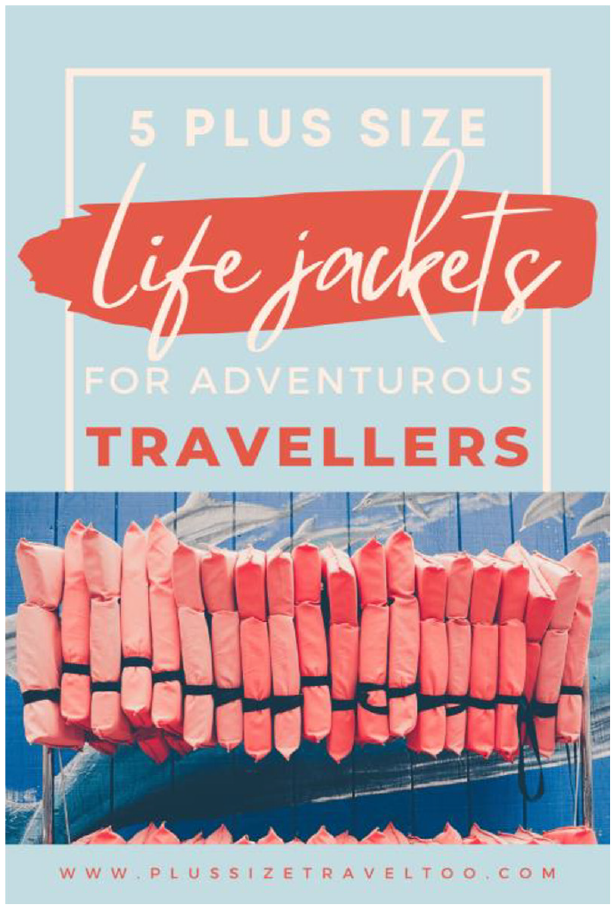
Five plus-size life jackets (adapted from Plussizetraveltoo).
Often, safety equipment such as life jackets are important items that ensure the safety of travelers during certain activities. Unfortunately, safety equipment was often designed for average body sizes rather than plus-sizes. The lack of such safety equipment directly limits the range of activities in which plus-size travelers can participate, and thus their travel experience.
At the same time, these platforms also identify the companies that are deemed unfriendly to plus-size travelers. Activists share their experiences with different companies and caution fellow travelers to avoid, such as “airlines to avoid” (see Figure 3).
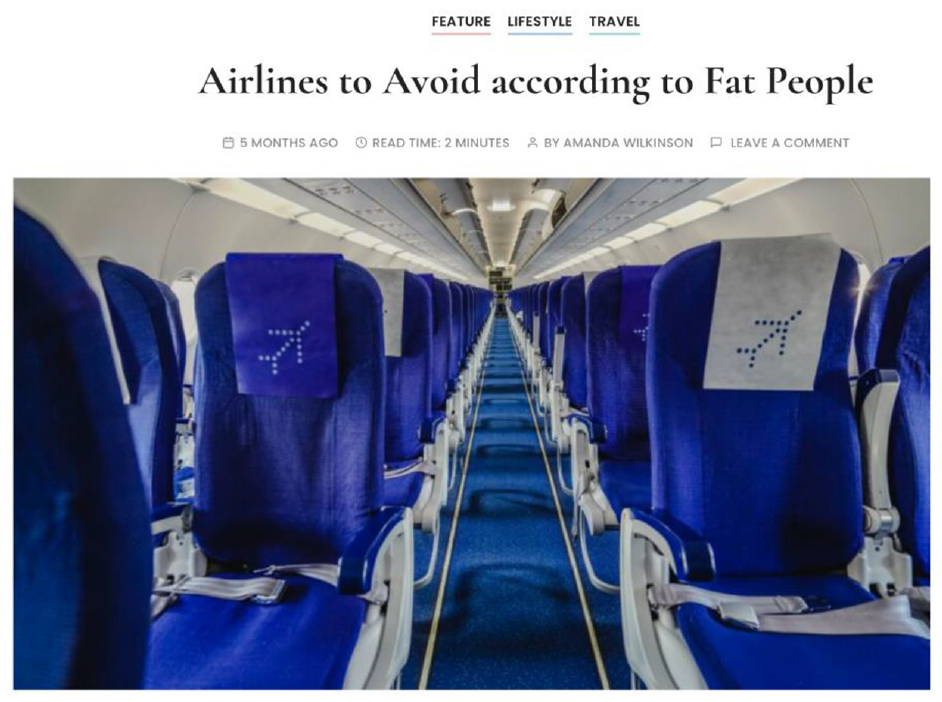
Airlines to avoid (adapted from Thefatgirlsguide).
Sharing Plus-Size Travel Tips
While plus-size travel activists have politicized travel for plus-size people by bringing shared experiences to light, as described in the previous section, they use these shared experiences (or struggles) to empower plus-size travelers by sharing plus-size travel tips. By sharing tips, the activists draw attention to their platforms as they provide important and comprehensible information to alleviate the travel fears of many plus-size people.
As Voyaging Vagabond reports (Figure 4), packing luggage is more challenging for plus-size women than for average-size women. Often, plus-size clothing is larger, and more materials are used to make it, which means plus-size clothing takes up more space. Blogger Chantel is aware of this inherent problem and uses her platform to share various tips with her readers. Lack of information is often cited as the main reason that discourages travel. In travel risk research, access to information has been cited as an important means of reducing risk perception and promoting actual travel behavior. Lo et al. (2011) state that tourists seek information before travel to reduce uncertainty or increase tourist confidence. For plus-size travelers, accessing information can be challenging because the information available online is typically written from the perspective of average-sized travelers who may not have the exact needs and constraints as a plus-size person.
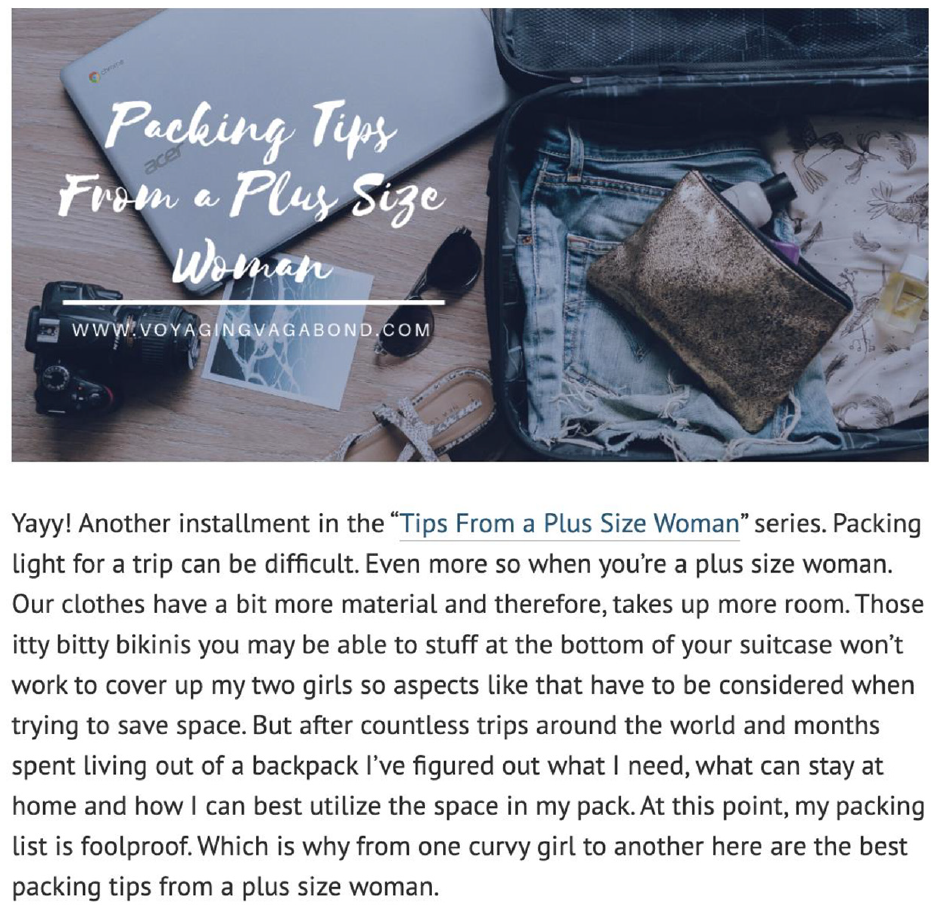
Packing tips from a plus-size woman (adapted from Voyage Vagabond).
The following Figure 5 provides an example of how followers respond to such tips. In the comment, a plus-size traveler shares that she “was so nervous to travel” due to her lack of confidence due to her size. “If an amazing post like this had existed then, maybe I would have gotten out there and explored way sooner” further illustrates the importance of relatable tips on these platforms.

Response on Voyaging Vagabond (adapted from Voyaging Vagabond).
Recognizing Movement Champions
Movement websites are also vital to recognizing movement champions—those who are the living embodiment of the movement, those with the voice to express the everyday struggles online, and those who can legitimize the movement. These movement platforms showcase advocates who bravely fight for the rights of plus-size travelers. For instance, Figure 6 illustrates The Fat Girls Guide, which presents various plus-size travelers who create content on TikTok to share their experiences. The website aims to empower community members to overcome travel-related challenges by featuring social media influencers. The tips and experiences these advocates share encourage fellow community members to travel and explore the world.
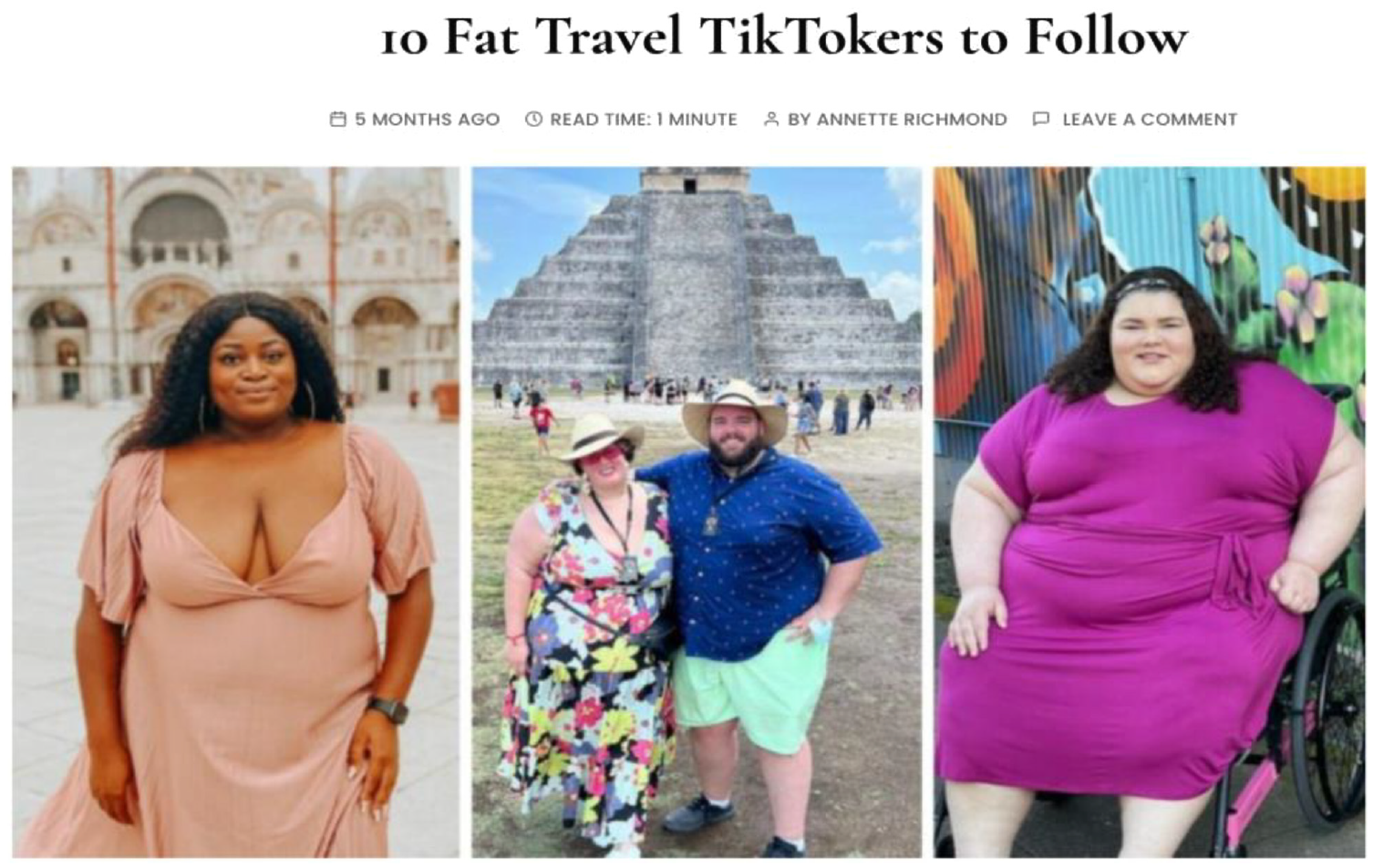
Ten fat travel Tiktokers to follow (adapted from Thefatgirlsguide).
In an interview with a fellow community leader, Kaila Walton, the founder of Fat Wanders Babes (an emerging platform that focuses on plus-size women and their hikes), Plussizetraveltoo illustrates the purpose of the interview as such: As plus-size travelers, we know exactly what it’s like not to feel welcome in an industry. From small seatbelts on planes to plastic chairs, there are a lot of aspects that repeatedly make us feel as though we shouldn’t be there. For those that love to hike while traveling, the reminders don’t stop once you’ve grabbed your hiking boots and backpack. In a world where we feel like we don’t belong, Kaila Walton has created Fat Wander Babes as a reminder that plus-size people hike too (excerpt from Plussizetraveltoo).
These champions are community leaders who “inspire commitment, mobilize resources, create, recognize opportunities, devise strategies, frame demands, and influence outcomes” (Morris & Staggenborg, 2004, p. 171). Recognizing champions is an essential aspect of empowering plus-size travelers as it allows them to see the bravery of others in advocating for the cause. Having individuals who put themselves in the spotlight reminds marginalized travelers that their right to travel should not be denied. More importantly, as the movement is still taking shape, most individuals go online to create plus-size travel content. Recognizing various individuals as champions is crucial in uniting the voices of different community members and strengthening the legitimacy of the movement.
Discussion
This paper introduces the plus-size travel movement to tourism scholarship and aims to explore this emerging phenomenon. Defining what it means to be a “plus-size traveler” is a difficult task, but generally, it refers to tourists whose body measurements are larger than average, and their body size limits their access to tourism products and services and meaningful experiences.
Specifically, this study examines how consumers at the micro- and meso-levels use the internet to establish a community for plus-size travelers and change the discourse around size and traveling. By adopting the concept of political consumerism, the study highlights how this movement is taking shape. The analysis of four key websites reveals two strategies used by movement leaders: politicizing travel for plus-size individuals and empowering the community. The study pays close attention to the way different discourses are used to frame this activism.
Firstly, the politicization of travel is done through (1) creating community platforms, (2) surfacing the common plus-size traveling experience, and (3) evoking collective emotion. The analysis shows that it is vital to create community platforms that raise awareness about the political nature of travel, particularly the issues related to sizeism and industry practices. These discussions help plus-size travelers feel understood and connected to a community beyond themselves. Additionally, the emotional stories shared on these platforms highlight these travelers’ negative experiences due to their size, making them more relatable and powerful. This emotional connection is crucial in building a social movement and legitimizing a cause based on shared experiences.
Secondly, empowering the community entails (1) identifying unique resources, (2) sharing travel-related tips, and (3) recognizing the plus-size travel movement champions. Plus-size travel activists frame their content in the discourse of inclusivity to highlight the plus-size individuals’ rights and capabilities to travel. Advocates and their platforms that empower plus-size travelers play a crucial role in promoting recognition of the plus-size travel community. Despite industry standards discouraging travel for plus-size individuals, these websites offer an alternative narrative that empowers consumers and increases visibility for the community. This helps push boundaries and promote positive change.
Theoretical Contributions
This work makes two essential contributions to tourism research. Firstly, it challenges our understanding of inclusivity and marginalization within tourism. The Scheyvens and Biddulph model of inclusive tourism has been instrumental in developing practical strategies to make tourism more accessible to diverse consumers. However, their focus on expanding tourism products and services to marginalized consumers lacks clarity on what marginalization actually entails. Previous tourism research has mainly associated marginalization with socioeconomic factors and physical ability. Yet, the plus-size travel movement illustrates that marginalization can take different forms. Plus-size travelers often face discrimination in accessing services, emotional distress, and limited resources or market offerings. The meaning of marginalization requires further discussion to refine the theoretical foundations of inclusive tourism and consider broader practical measures to enhance inclusivity.
It is worth noting that the current discourse on plus-size travel in tourism research focuses on the “obesity as disability” viewpoint. While Poria and colleagues’ work has offered valuable insights into the challenges faced by plus-size customers, including social discrimination, their perspective aligns with the general societal belief that obesity equals disability. An examination of plus-size travel websites demonstrates that advocates of the movement, who are themselves, plus-size travelers, use particular language to describe themselves (such as plus-size, curvy, and fat) and explain how they experience marginalization.
This paper argues that we should shift our perspective on obesity away from the medical connotation that often uses a person’s BMI to assess their physical abilities. The discourse on “obesity as disability” perpetuates the idea that individuals who are larger than average are physically disabled. If tourism scholars associate being overweight with obesity and disability, discussions of inclusivity would be limited to accessibility constraints. As the analysis shows, overweight travelers are active and often engage in various activities such as hiking and surfing, as demonstrated by these websites. In moving away from this approach, we can rethink the relationship between size and travel and discover different aspects of plus-size travel that we may not have considered before, as well as how we examine embodiment in tourism experiences.
Tourism scholars, especially those concerned with inclusivity and sustainability, must be at the forefront of change. The perpetual sizeism in the industry has led to travel constraints that exclude travelers who do not fit into societal body ideals from having a fulfilling experience and, in some cases, prevent them from traveling altogether. The onus is then on tourism scholars to initiate a different and more critical discussion about the relationship between size and travel and the diversity of plus-size travelers. Importantly, this article is not intended to undermine the development of inclusive and accessible tourism. Instead, it aims to spark a more critical discussion about the inclusion of marginalized consumers. As Fat Studies activist and scholar Kath Read points out: When our voices are dismissed in favor of academics or professionals with thin privilege, it further stigmatizes us as human beings, yet even further damage is done when those academics or professionals dismiss us themselves, ignore their privilege and treat our lives and realities as case studies or mere data… It is important for academics and professionals to acknowledge that they are also often in a position of power when working with fat activists. They usually have the decision as to what is published, the ability to choose which media outlets they engage with, and resources that grassroots fat activists do not have access to (Read, 2021, p. 197).
The second contribution of this paper points to a different approach to viewing the politics of tourism. While tourism research has been fruitful in demonstrating the relationship between tourism and politics, the focus is often on issues such as the political economy of the tourism industry (Bianchi, 2018), fair trade in tourism (Li et al., 2022), and environmental politics (Lamers et al., 2019). More specifically, political behavior is studied through (1) the micro level of political behaviors in tourism, such as tourist boycotts (Yu et al., 2020) and (2) the macro, structural forces that shape tourism policies and patterns (Bhandari, 2019). This paper shows how, from the meso-level of the plus-size travel community, activists politicize the group as being excluded from traveling due to their size. By adopting the emerging political consumerism theory, this paper offers an alternative conceptualization and understanding of politics, tourism, and tourists’ political behaviors.
These movement websites use different discourses and their discursive forces to politicize plus-size travel. When consumers are marginalized by market practices and the varying discourses of the body, they engage in various ways to highlight their disadvantaged position and show the lack of inclusivity in the market. For example, they become entrepreneurs and produce offerings for plus-size people (Scaraboto & Fischer, 2013). In the tourism context, Benjamin and Dillette (2021) show how black travelers become entrepreneurs in the travel industry to serve black travelers.
The analysis reveals that meso-level actors shape public opinion on travel inclusivity and empower more individuals to travel. Rather than focusing on entrepreneurship to address the market gap, plus-size travel activists focus on influencing public discourse and highlighting the marginalization experienced by plus-size people. The case of plus-size travel highlights how online media, including social media networks, functions as a tool for shaping public opinion and influencing consumption patterns. Zorell (2018) argues that the Internet is a crucial platform for politicizing consumption and mobilizing political action. In this regard, the Internet provides a platform to initiate conversations about plus-size travel rights and to empower the community to demand visibility.
Practical Contributions
This study offers two main practical contributions to the tourism industry: marketplace actors, such as tourism intermediaries, marketers, and managers. As the plus-size travel movement takes shape, we can already see an increase in discussion and interest in the issue. Increasingly, there are travel intermediaries, mainly small-medium enterprises, that have come forth to provide tourism products for plus-size travelers—such as plus-size friendly tourism activities. However, more is to be done to increase the inclusivity for plus-size travelers. The insights available on these plus-size travel movement platforms could help tourism producers understand the plights of plus-size travelers, such as their travel constraints, to provide products and services that can improve the experience of plus-size travelers.
In addition, tourism marketers could use the insights to alter marketing practices. Similar to the lack of representation of Black travelers (Dillette et al., 2019), tourism marketing materials often exclude travelers of different sizes and shapes (Burton & Klemm, 2011). Research in the field of communications has shown that media representations have a lasting impact on how plus-size individuals build self-esteem. The negative and often reductionist portrayal of plus-size individuals as funny and annoying influences how they view their social positions and ability to engage in different activities. In tourism marketing and promotion, there is a conspicuous lack of representation of plus-size individuals in marketing materials. Tourism marketers could use these insights to re-examine how their campaigns and marketing materials could help enhance inclusivity.
In terms of service, tourism managers, particularly airlines and accommodations, need to pay more attention to service interactions. Often, plus-size travelers identify discriminatory behaviors from service providers, such as flight attendants. Professional training in interaction and communication with plus-size travelers is needed. For example, even though some plus-size travelers require seat-belt extensions, they often report negative interactions with flight attendants. Training could include understanding the specific needs of plus-size travelers and using the correct language to communicate.
Conclusion and Future Research
This paper shows how travel becomes a politicized consumption through consumers-turned-activists’ actions. The plus-size travel movement brings to light the constraints travelers face and focuses on empowering plus-size individuals to travel. While this work has made theoretical and practical contributions, it is not without limitations. Importantly, this research analyzed websites rather than obtaining the voices of plus-size travel advocates. Without the inclusion of their voices and experiences, a comprehensive view of the movement would not be possible. Future research could tap into this limitation by engaging directly with these advocates and understanding how their lived experiences have motivated their activism.
In addition, three of the four analyzed websites show that the movement’s target audience is female plus-size travelers. The nature of this research limits a further exploration of this rationale and trend. Gleaning from I. C. M. Yang and Kirillova’s (2023) work, a tourist’s agentic capacity to engage in tourism activities and/or produce meaningful tourism outcomes is influenced by the intersectionality of different social identities. Future research could engage further with intersectional perspectives in understanding plus-size travels. It would be interesting to see how socio-cultural and institutional factors influence the agency of different plus-size travelers.
Finally, it is often argued that the emergence of the sharing economy is helping to expand market options for consumers and enabling more people to travel (Kadi et al., 2022). An important direction for future research would be understanding how sharing economy companies, including Airbnb, enable plus-size people to travel with greater market options. Instead of worrying about the hotel bed or bathroom size, travelers can contact their hosts directly on platforms like Airbnb to get the necessary information before making plans. This can also allay the uncertainties and anxieties that plus-size travelers experience prior to their trips.
Footnotes
Declaration of Conflicting Interests
The author declared no potential conflicts of interest with respect to the research, authorship, and/or publication of this article.
Funding
The author received no financial support for the research, authorship, and/or publication of this article.
