




Abstract
Using the Sustainable Livelihood Framework (SLF), this study traces the livelihood conditions of a coastal community located in Kanniyakumari district in south India. From a vulnerable, pre-modern phase, this fishing group, by adapting to technologically advanced craft and gears moved into a more dynamic phase of modernisation with diverse livelihood opportunities. Unfortunately later, this fishing community began to suffer economically as the use of harmful gears in their boats resulted in the decimation of marine resources and subsequently a reduction in their income. In the absence of any institutional support mechanism to sustain them, fishing households have begun looking outside their home environs for economic opportunities to better their living conditions. One of the more significant ways through which the fishing community has been able to cope with its strained circumstances is to migrate to the Gulf countries.
Introduction
The tragic memory of Cyclone Ockhi that hit the Arabian Sea along the southern coast of Tamil Nadu and Kerala on 30 November 2017 still remains in the minds of its victims. Besides the huge loss to the fishing industry, 203 fishermen from Tamil Nadu died, 149 from Kanniyakumari district itself. During the rescue operations carried out by the Indian navy and coast guard, sailors were astonished to find that numerous fishermen had been stranded in the high seas, about 200–400 nautical miles away from the shoreline. It was not that cyclonic winds had pushed their flimsy fishing craft into the distant waters: these were regular fishing areas that had been used by fishermen for more than three decades, indicating that the fishery resources in safer inshore areas were so depleted that the fishermen were compelled to go further and further into the deep-seas in search of a better catch. Even with limited communication equipment and the virtual absence of search and rescue operations, these fishermen were routinely placing their lives at risk, at the mercy of sudden adverse weather conditions (Suresh et al., 2018).
This empirical research seeks to take a close look at the livelihood assets of these fragile fishing communities which have evolved over time, focussing on how they minimise their susceptibility to natural risks by adopting different survival strategies. The study is significant inasmuch as it analyses the reasons why a sizeable proportion of the fishing population move out of their native land to distant countries in the Middle East in the hope of getting jobs in the fishery sector there. Of course, such relocations do bring in much needed remittances to migrants’ households, contributing handsomely to the nation’s foreign exchange reserves and providing a welcome boost to the Indian economy, but on the negative side, such movements, we argue, harm local employment, which is dependent on the fishery economy and negatively impact the consumption–supply chain and affiliated subsidiary industries, and, ultimately the Gross Domestic Product. These then are important reasons to see to that effective management policies are in place in order to ensure the long-term sustainability of sea resources and the wellbeing of fisherfolk dependent on them.
Material and Methods
Forty-five fishing hamlets lie along the 71.5-km-long coastline of the Kanniyakumari district, from Arockiapuram in the east extending to Neerody in the west. It is a coastline that is geographically blessed, located as it is at the convergence of three seas—to the east is the Bay of Bengal, to the south, the Indian Ocean and to the west the Arabian Sea. According to our estimate based on the General Household Survey data of coastal hamlets, there are approximately 42,913 households here with a population of 154,158 and a sex ratio of 1,000 males for every 955 females.
The General Household Survey is a truncated version of the Kerala Migration Survey module (Rajan & Zachariah, 2019). It has been used to collect data from 1,304 households located in the 45 fishing hamlets. These units all have members working overseas, particularly in the Gulf countries, and mostly in fishing-related activities. The Catholic church, the chief administrator of the coastal villages, has organised these homes into Basic Christian Community (BCC) units for administrative reasons. A unit is composed of 35–50 households with five selected office bearers who work in collaboration with the parish priest, the chief functionary of the village. The data regarding the distribution of both fishing and non-fishing migrants has been collated with the help of BCC office bearers from their respective units by using a questionnaire developed by the authors. Collected for the period between July 2019 and January 2020, the data contain the following information: the number of households, the number of their inhabitants, the number of people engaged in fishing and non-fishing activities in their homeland and the number of migrants employed overseas, both in the fishing and non-fishing sectors and the sex ratio. It also includes any arrests, if any, of members, the reasons behind them and the number of accidents and deaths of fishermen that have occurred, particularly overseas. In addition to the household survey, some in-depth interviews have been conducted with both returnee migrants and emigrants working in the Gulf. The research seeks to get an understanding about the impact of migration on the material wellbeing of migrants’ households.
Conceptual Framework
The present study has adopted the Sustainable Livelihood Framework (SLF) followed by the British Department for International Development (DFID), one of the most widely used livelihood frameworks in development practice (DFID, 2000). The DFID adapts a version of Chambers and Conway’s (1992) definition of livelihoods:
A livelihood comprises the capabilities, assets and activities required for a means of living. A livelihood is sustainable when it can cope with and recover from stresses and shocks and maintain or enhance its capabilities and assets both now and in the future, while not undermining the natural resource base. (Chambers & Conway, 1992)
Based on this definition, the DFID framework has conceptualised that people may face vulnerability due to different factors, such as current trends, shocks and seasonality. These are external factors that threaten various aspects of people’s livelihoods by eroding or otherwise compromising their natural, physical, financial, human and social assets. In the pursuit of initially reducing and eventually coping with these different factors and thereby mitigating their vulnerability, different types of assets have been used in different combinations. A range of institutions and processes have been brought into play. People also develop a range of strategies to try to achieve the desired livelihood outcome (Allison & Ellis, 2001; Ashely & Carney, 1999).
The SLF assesses a range of indicators—assets, vulnerabilities, policies, livelihood strategies and outcomes—seen in these fishing communities. The main focus of this conceptual framework is how certain aspects of livelihood indices continue to underpin the vulnerability of this group. In the context of vulnerability, trade fluctuations may play a minimal role as there is still a great demand for seafood, both in local and international markets. While a depleted seabed, yielding diminishing resources, will adversely affect the fishing community (Meynen, 1989), seasonality has a positive aspect as does tropical diversity and the all-important replenishing capacity of the marine ecosystem that requires time. Seen negatively also is the disappearance of the seasonal varieties of fish and erratic catches that affect livelihoods. The landing of high volumes of young fish species has been increasing (Nair, 2019) which is not a good sign for the long-term sustainability of the resource. An aggregate of all the factors mentioned above forms the overall context of vulnerability.
The interplay between various aspects of assets and their susceptibility to fluctuations has been assessed in this framework (Figure 1). The constant use of non-eco-friendly, non-sustainable methods of fishing with craft and gears, that is physical capital, inevitably adds to the destruction of valuable sea resources, that is natural capital which is the main constituent element of livelihood sustainability of any natural-resource-dependent community (Vivekanandan, 2003). The use of these kinds of physical capital, especially in inshore areas, damages the social cohesion of coastal dwellers by causing inter-village tensions and conflicts, most of which are simmering below the surface. The mechanised sector of the fishing industry and the motorised fishermen perceive each other as rivals where one infringes upon the other in terms of access and use of limited fishing grounds (Klausen, 1964). This indicates an existential and ever-increasing erosion of goodwill between the two sectors of fishermen detrimental to their traditional bonding within the community. The church, which manages the day-to-day affairs of the coastal people, mediates between the sectoral divides to maintain a peaceful coexistence. Fishermen’s unions also collaborate with government machineries in pursuits of unity, that is social capital (Subramanian, 2009). The amount of investment has increased exorbitantly in the procurement of production units. In the absence of support from formal financial intuitions, the fishing community raises capital from informal sources to augment an even greater harvest. In spite of their continuous hard work by the fishermen they are faced with many days of low returns and are unable to withstand the necessary operational costs resulting in growing indebtedness, that is economical capital (Sivanesan, 2014).
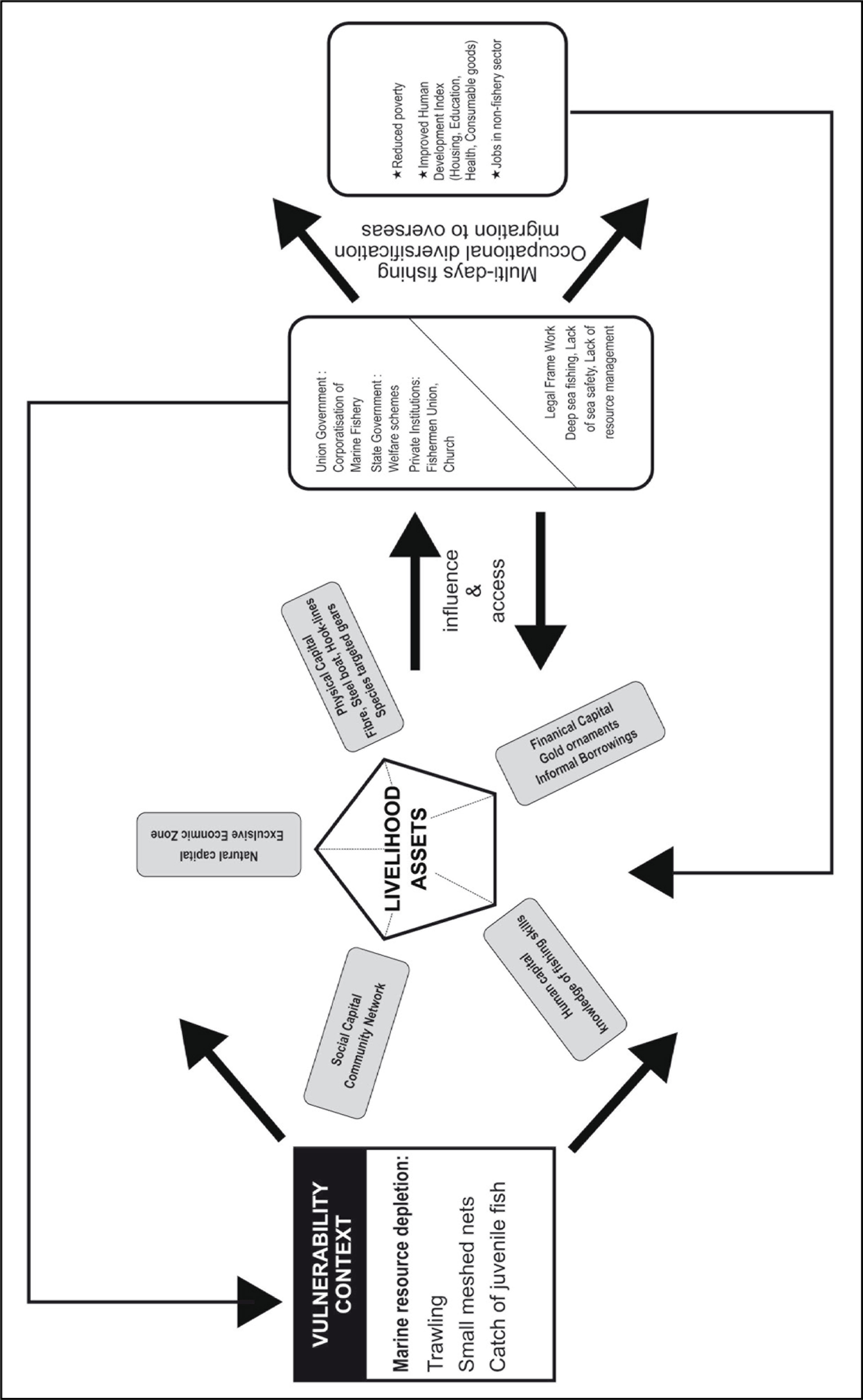
Source: Adopted and Modified by authors based on the Sustainable Livelihood Framework
The SLF also assesses the role of legitimate institutions in safeguarding access to fishing grounds and ensuring the sustainable use of marine resources through their policies and processes. Over time, a series of development interventions, coupled with some welfare measures have been introduced into the fishing economy which in turn have initiated change in the socio-economic status of coastal communities. The short-term goal of amassing foreign exchange though seafood exports has persuaded policymakers to align with foreign industrial operators through chartered agreements and joint ventures over the past three decades. Resultantly, poor fishermen have had to share their scarce livelihood resources with new fishing entrepreneurs. This misplaced emphasis has resulted in unsustainable management practices thus increasing the vulnerability of marine-resource-dependent communities (Koriya, 2007).
Against this background of growing vulnerability, how fishing communities cope with instability in their asset base by adjusting their livelihood options has been examined. Some fisherfolk have adopted strategies to minimise risks by using their assets to improve their living conditions and their reduced circumstances. With their traditional knowledge of the marine ecosystem and through the skilful use of modern devices such as the Global Positioning System (GPS), echo sounder and finder, that is human capital, fishermen have taken to fishing for many days in waters that dangerously stretch beyond territorial sea boundaries. Such expeditions into the deep seas may add to an economic advantage, but they are a treacherous option because the fishermen are at the mercy of treacherous weather conditions. Another mitigating strategy is the diversification to non-fishery-related sectors by the more educated youth from some fishing households. However, here we are focussing on the migration of fishermen to the Middle East countries in the hope of finding work in the fishing sector for bettering their.
Mobility from Homeland to Foreign Countries for Survival and Sustainability
The livelihood indices of the coastal people are analysed in three different stages of development as a prelude to our field survey results: first, the pre-modernisation phase, that is, the period before 1950 which had a limited scope of livelihood; second, the modernisation phase, that is, the period from 1950 to 1990, when a wide range of livelihood opportunities emerged helped by modern technologies and infrastructural facilities; and third, the post-modernisation phase, the period from 1990 onwards, characterised by crisis and distress in assets (Venkatesh & Thaddeus, 2008).
In the first stage, the pre-modernisation phase, fishing was the only source of income with the entire community dependent on it. Wooden craft and handmade gears indigenously developed over many decades, even centuries, were being used and indeed are still in use today. Manually operated with oars and sails, the craft were typically owned by a few individual households from among the local community and the crew were recruited from kinship networks and close social contacts (Sathiadhas & Panikkar, 1989). The catch was mainly marketed locally for cash, but it was also quite often exchanged for consumable goods with the people living in inland areas (Selvaraj, 1988). The community structure was single-layered with minimal economic stratification. A joint, well-integrated family system existed and the size of the family unit tended to be large (Ram, 1992; Sundar, 2012). No economic, social and health policies of any note had been implemented as the country, stepping from colonial rule into the era of Independence, was yet to establish institutional infrastructures. Coastal communities were generally vulnerable with limited access to other livelihood assets, which unfavourably affected their overall wellbeing.
The second, modernisation phase was a period marked with a series of policy-framed development interventions. With the intention of developing and improving the socio-economic conditions of coastal dwellers, an Indo-Norwegian project was conceived during the post-Independence era to provide inbuilt engine gillnetters to fishermen. This was done through the state-government-managed Fishermen Cooperatives Societies which was under the joint ownership of seven members (Klausen, 1970; Korakandy, 2008). This new technology unburdened fisherfolk from manually operating their traditional craft and replacing easily damaged handloom cotton gears with more robust nylon ones (Venkatesh & Thaddeus, 2008). Two decades later, another technological innovation, the bottom trawler, was introduced into the fishery industry. This newly designed trawler with a high-horse-power inbuilt engine and a net winch with imported trawl nets became the standard production unit (Boopendranath & Pravin, 2005). The situation in the coastal region of Kanniyakumari district was so distinctive that a large majority of fisherfolk were opposed to the implementation of the new trawling technology leading to a technology gap.
By the 1980s, another significant development took place in the coastal belt of Kanniyakumari district. Outboard motorised technology was introduced in the artisanal sector by a team of technocrats—Pierre Gillet, a Belgian clergyman qualified in engineering, with the support of Jeremy Herklots and Colin Palmer, naval architects from the United Kingdom. They introduced appropriate technology to help the fisherfolk, replacing traditional fishing craft with boats equipped with outboard motors. (Gillet, 1985)
The collective impact of both mechanisation and motorisation offered new livelihood opportunities to the community, not only increasing prosperity levels in villages but also paving the way for the disintegration of the traditional structure of the local economy (Pazhani & Nadarajan, 2007). With enhanced earnings, the younger generation received better education, allowing them to opt for diverse occupations. These new inputs also improved consumption levels, lowered infant and child mortality rates and changed the nature of households: the number of nuclear households increased as compared to the number of traditional joint families (Senthilathiban & Rajakumar, 2007). On the social side too, there was a change. Fishermen using motorised and mechanised craft began sharing dwindling fishery sources leading to acrimonious relations and social unrest within the community, endangering amiable social networks and relations (Bavinck, 1997). The Catholic church, which governs the coastal villages, started mediating between the government system and various sectoral divides to encourage peaceful negotiations and coexistence (Subramanian, 2009).
An overall assessment of the post-modernisation period suggests that it saw an improved status of the livelihood indices of the fisherfolk, influenced by the General Agreement on Trade and Tariffs (GATT) which facilitated a greater inflow of foreign exchange through exporti of fish and some new deep-sea policies that were developed by the union government in 1981. The regulation of fishing by the Foreign Vessels Act, (1981) granted licences to Indian citizens to charter foreign vessels for deep-sea fishing in Indian waters. Further, the Act required 60 per cent of equity share by Indian citizens in joint venture companies with an obligation to train Indian fishermen. However, in 1986, a newer deep-sea policy was developed by incorporating a legal framework for the acquisition of vessels by Indian companies through the means of import or manufacturing in India or a joint venture between Indian and foreign corporates. The revision in 1991, had many points of disputes such as permission for processing, marketing and transfer of catch in the high seas (Salagrama, 2004). Such guidelines privatised and commercialised marine resources, forcing local fisheries to enter a globalised economy. The inevitable consequence was severe competition and a direct conflict between the subsistence fishing practised traditionally by local fisherfolk and the fishing-for-profit agenda followed by giant industrial fishing corporations (Yadava, 2003).
Based on the recommendations of the Murari committees in 2004, the union government rescinded all earlier licences granted to industrial vessels and scrapped the deep-sea fishing policy (Shajahan, 1996). Nevertheless, some residual consequences of the post-modernisation phase remained. The use of certain gears by the big craft damaged the seabed and affected the natural habitat of the ecosystems of the corals reefs, precipitating a rapid decline in fish species (Kurien, 2005). The trend of catching large quantities of fish with nets that had a fine mesh resulted in young fish being caught, not allowing them to grow to their natural size which affected the numbers of the species (Ayyappan & Srinath, 2005; Kumar & Deepthi, 2006). Such destructive fishing techniques not only caused an economic loss in the short-term but also jeopardised the long-term livelihood prospects of fishing communities.
Recommendations proposed by different committees, in 2004, again in 2014 and most recently in 2020, have been completely undermined by the deep-sea policies implemented by the union government which have failed to address the interface between a sustainable resource base and the socio-economic stability of coastal communities (Deepshi, 2015). The first task of any fishery policy should be to incorporate fisherfolk as people working together with officials to develop a method for sustainable utilisation of fisheries (Kurien, 2019).
Today, more than ever, fishermen’s struggle to earn a decent livelihood has become acute. Coastal communities face the basic question of finding the best survival strategy. In this quest, they have resorted to not one but a combination of strategies.
A few strategies being followed are:
As marine fishery resources in inshore areas become over-exploited, both artisanal and mechanised fishermen venture further into the deep seas to fish. This deep-sea fishing takes place in an uncoordinated fashion as fishermen have no support from any policy-driven intervention being implemented by the government. Fishermen from the west coast of the Thoothoor zone in Kanniyakumari district have gone right up to the continental shelf by modifying the size, that is the length, breath and width of their existing boats, so that they can access distant waters (Vigneshwaran et al., 2018). The number of fishing days has also considerably increased, stretching from 25 to 45 days on the high seas of the Exclusive Economic Zone (Mathew, 2015).
With lengthy stays in turbulent conditions, overall costs have increased proportionately. In the motorised sector, FRP Vallams, that is fibre-reinforced plastic boats using double outboard engines, allow fishermen to venture out to the deep seas with hooks, long lines or multiple gears targetting different species of fish (Venkatesh & Thaddeus, 2008). Although these activities contribute to a higher Human Development Index (HDI) of the coastal people, dealing with squally weather conditions can result in the loss of property and human life, as was seen in the aftermath of Cyclone Ockhi. Occupational diversification is also another growing trend among the youth who, because of improved social conditions, have become better educated than what was possible a few years ago and have been able to find jobs in the non-fishery sector, outside the periphery of their traditional community. Employed in better-paying jobs, young men are able to send their earnings back home, alleviating the financial burden of their households.
Migration as a Livelihood Strategy
Tamil Nadu state has a long history of overseas migration, leading to many accounts of these movements. In pre-Independent India, large-scale labour migration to Ceylon, Burma, Malaysia, Mauritius, South Africa and the West Indies was quite common. The migrants mainly worked as unskilled labourers in the tea plantation estates of wealthy colonisers. It is only in the twenty-first century that a systematic and comprehensive study on labour migration from Tamil Nadu has been undertaken, replicating the model of the Kerala Migration Survey conducted in Kerala state with the highest overseas migration and remittances in India in 1998 (Zachariah & Rajan, 2014).
Popularly known as the Tamil Nadu Migration Survey (TMS) 2015, the survey compiled data from 20,000 sample households, selected on the basis of stratified random sampling, showed the index of inflow of migrants’ remittances to the economy of the state and its significant contribution to the overall wellbeing of migrant households. The TMS 2015 has estimated that the number of migrant labourers in Tamil Nadu was at around 2.2 million ( Table 1 ). Among all the districts, Chennai has the largest share of migrants (320,000), followed by Coimbatore (190,000), Ramanathapuram (140,000), Tiruchirappalli (130,000) and Kanniyakumari (110,000). The hilly district of the Nilgiris, located along the stretch of the Western Ghats, has the lowest number of migrants (5,868).
Number of Overseas Migrants and Remittances Made to Tamil Nadu Districts, 2015
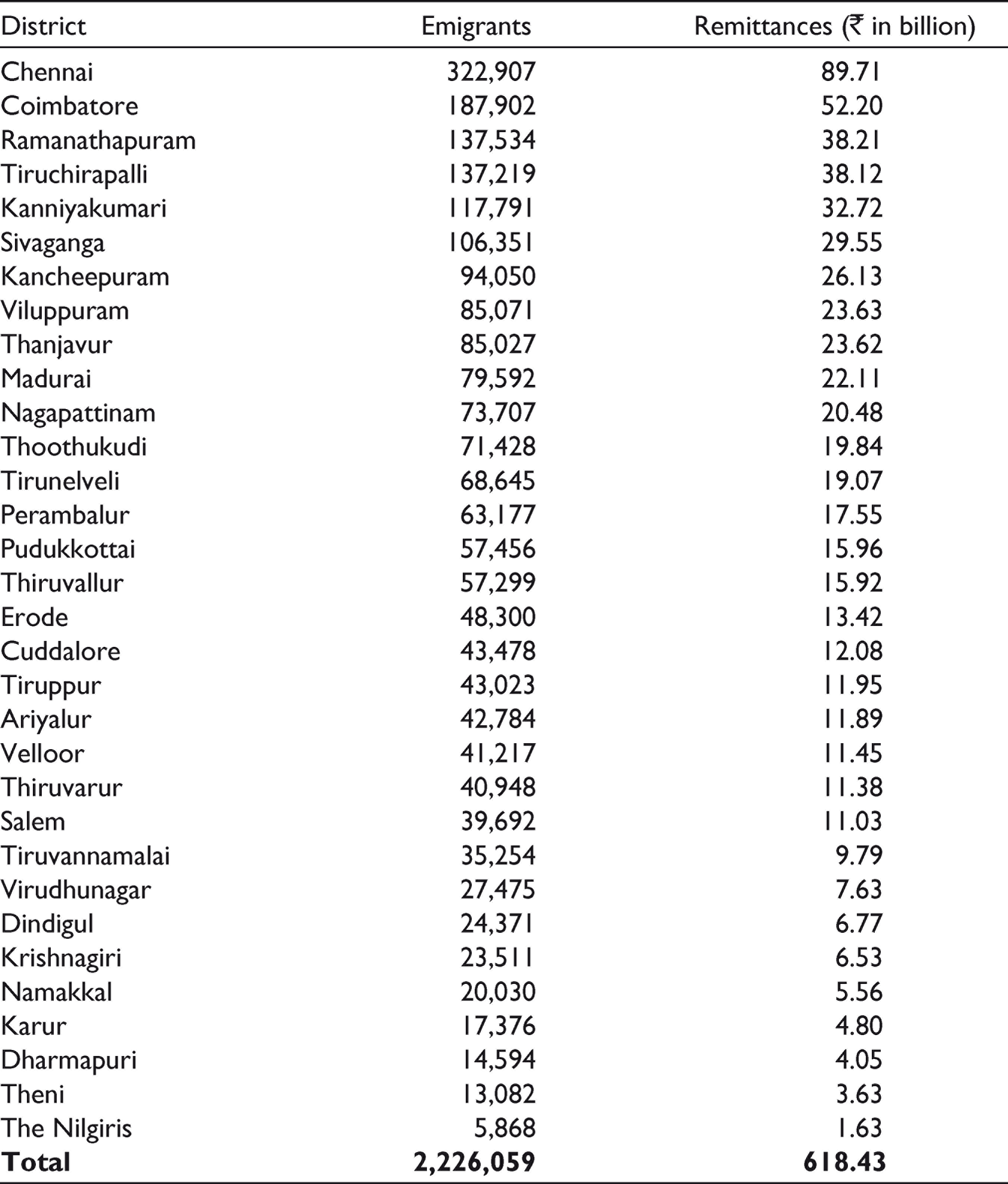
Source: Rajan et al. (2017b).
An analysis of remittance inflows into Tamil Nadu indicates that a sum of ₹618.43 billion came from overseas migrants in 2015. As the survey states, these remittances to the exchequer is 6.8 times more than what the state has received from the union government for various welfare programmes and formed 14 per cent of the state domestic product in 2015. Among the districts, Chennai contributed the highest amount—14.5 per cent of the total remittances that received by the state. In order of amounts, the next largest contributing districts are Coimbatore (8.4 per cent), Ramanathapuram (6.2 per cent) and Tiruchirappalli (6.2 per cent) (Rajan et al., 2017a, 2017b; Rajan et al., 2020).
The study method that has been used in the Tamil Nadu Migration Survey 2015 has remained largely at the macro-level and has offered an overall picture of the status of migration from the state. However, it has not taken a closer look at more localised issues; for example, it has not given much attention to the rising phenomenon of migration among fisherfolk, even though its inception can be traced back to the end of the tewentieth century. Our new research on migration among fisherfolk, with its innovative survey, hopes to fill this gap.
As a result of local pressures, the scarcity of fish, a depleted seabed, rising operational costs, increased dangers at sea and the resultant loss of income, more fishermen have thought it prudent to migrate to foreign shores, in particular to the Gulf countries. Such migration has now become one of the most important ways by which local fishing communities are coping with their strained conditions. Those fishermen who are fully engaged with long days of fishing in the deep seas continue to remain in their native land. However, crew members and also owners of craft mainly used for single-day forays opt for migration. Leaving their homes and families in the care of their spouses, they migrate to the Gulf regions with more culturally constrained living conditions.
The after-effects of the horrendous tsunami that hit the coastal regions of Kanniyakumari district in December 2004 became the catalyst for an increasing number of fishermen leaving their craft and homes in search of a more stable livelihood in Gulf countries. Media reports of the violent killing of Indian fishermen by pirates in the Gulf waters and the incarceration of fishermen on charges of illegally crossing into international maritime boundaries brought under the spotlight the sheer numbers of migrating fishermen and their disastrous plight in the Middle East. Tamil Nadu’s Kanniyakumari district reportedly had the largest number of fishermen working in the Gulf countries on fishing boats (Narendren, 2016). Though it can be an individual fishing household’s decision to migrate (and there is nothing wrong in that), the sheer number of fishermen undertaking this step suggests that this can be seen as a sort of collective coping strategy followed by the fishing community faced with falling incomes back home.
Migration Scenario in the Fishing Community
Village-wise migration data has shown that out of 9,326 emigrants, 5,071 belong to the fishing category, that is well over 50 per cent. A typical psycho-social characteristic of fishermen from Kanniyakumari district indicates that this community does not easily diversify to the non-fishery sector, preferring to migrate in large numbers to the Gulf region, determined to continue as fishermen, not wanting to adapt to other forms of labour. The number of men who migrated overseas to work in the non-fishing sector was estimated to be 3,985, while the number of women was 270 ( Table 2 ).
Total Migrants in Villages of the Coastal Region, 2020
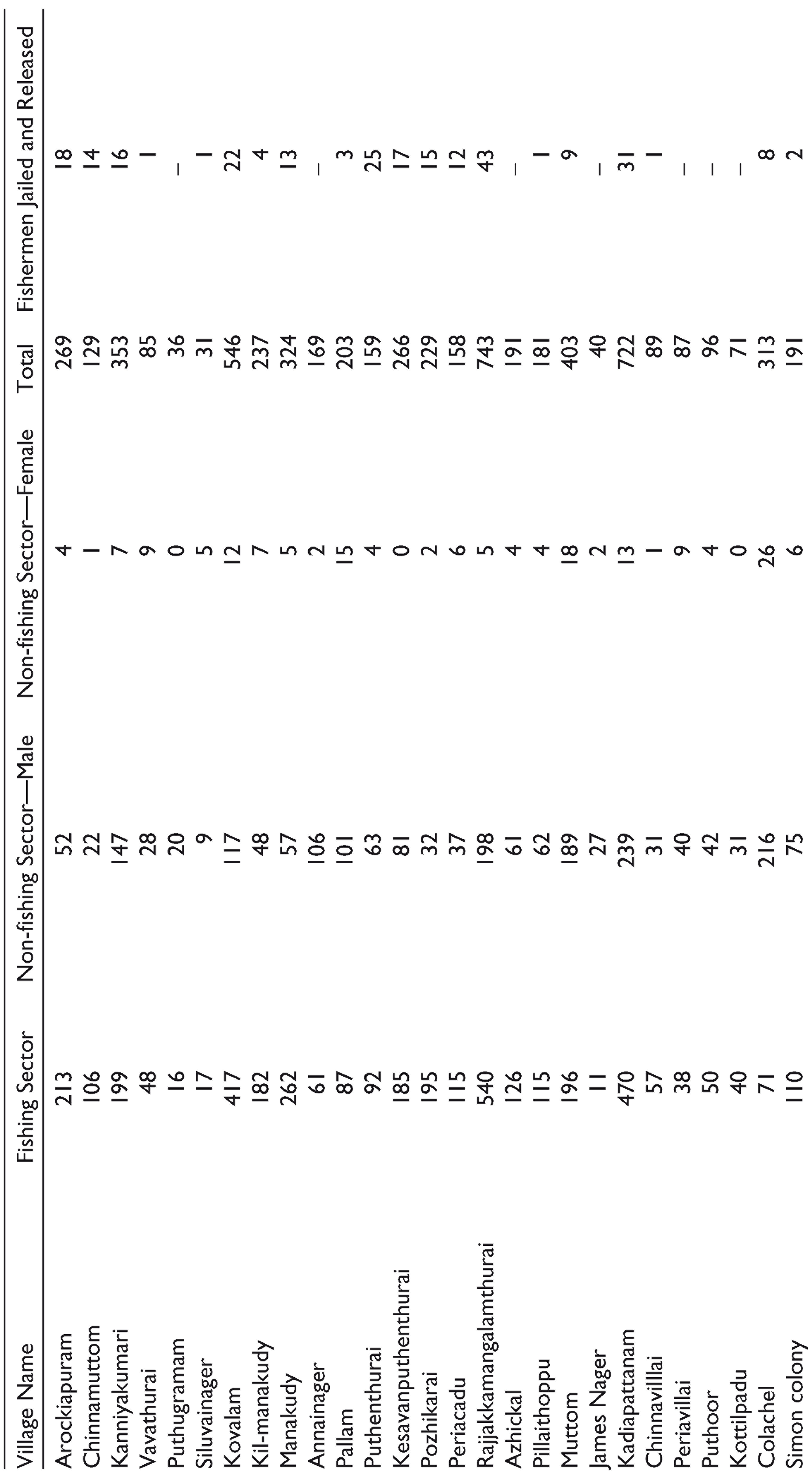

Source: Primary data collected by the authors.
Out of 282 fishermen who were arrested and released after a short period of incarceration, 164 were retained under charges of crossing over an international maritime boundary. Their being uneducated and unable to understand maritime demarcations or multiple adjacent maritime boundaries of the Gulf countries and their drifting across borders due to technical snags in their boats collectively confused these fishermen, resulting in their arrest and the impounding of their boats by various Gulf coast guards and naval authorities. The early release of fishermen has been possible through the prompt response of the Indian missions and the respective state governments, but 11 migrants still remain in jail for other crimes. Among them, five are under arrest for dealing in narcotics ( Table 3 ). The drug mafia, which is active in the maritime area of Iran, lures the fishermen, often by coercion, to transfer tiny camouflaged containers of narcotics to unidentified persons at the landing ports. Often caught, they are handed over to strict investigating law enforcement agencies.
Reasons of Incarceration
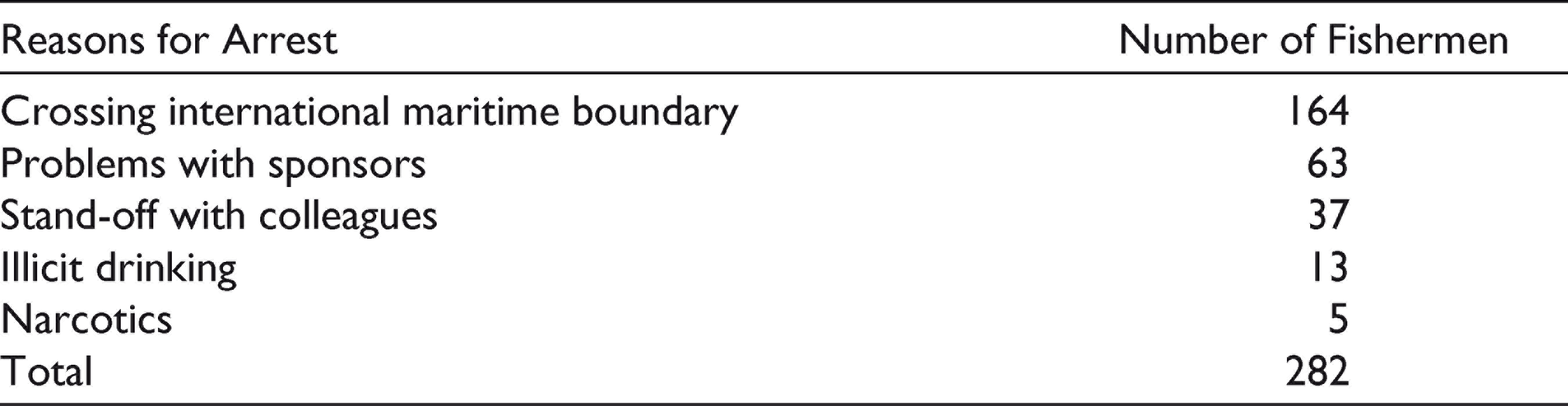
Source: Primary data collected by the authors.
Migration Trends in the Coastal Region
Villages in Kanniyakumari district are categorised according to the number of migrants shown in
Table 4
. The categories are as follows:
Up to 100 migrants 100–200 migrants 200–300 migrants Above 300 migrants
Overall Migration: Sector-wise in Kanniyakumari District

Source: Primary data collected by the authors.
On analysing the overall migration trends in the coastal region, in the fishing sector the category of migrants from 100–200 forms the highest proportion with 38.63 per cent followed by 28.14 per cent in the category of migrants above 300; 23.86 per cent in the category of migrants up to 100; and 9.36 per cent in the category of migrants between 200–300 respectively. In the non-fishing sector, the category between 100–200 records the highest 39.85 per cent followed by 31.75 per cent under the migrant category up to 100; 21.24 per cent under migrants between 200–300; while above 300 registered the lowest 7.14 per cent respectively. These figures indicate that migration plays an important role in the survival strategies of the coastal communities of Kanniyakumari district and that there is a strong correlation between the two.
Distribution of Migrant Fishermen in the Middle East Countries
Assessing the spread of migrant fishermen in the Middle East countries, Table 5 shows clearly that Saudi Arabia is the preferred destination country for migrant fishermen (46.30 per cent), followed by Qatar (24.27 per cent) and Iran (10.09 per cent), while the least preferred destination for fishing by the migrant fishermen is Oman.
Distribution Migrant Fishermen in Gulf Region, 2020

Source: Primary data collected by the authors.
Out of the 5,071 migrant fishermen in the Gulf, only 59 (1.16 per cent) are engaged in fishing in the Sultanate of Oman, most probably because it has the smallest marine zone for fishing. The marine fishery industry there is managed and dominated by the Oman Fisheries Company under the supervision of the Omani government. Hostile territorial problems with the neighbouring Yemen is possibly another reason for migrant fishermen not preferring Oman. In comparison with other Gulf countries, Oman also lags behind in various spheres of infrastructural development.
Intensity of Migration
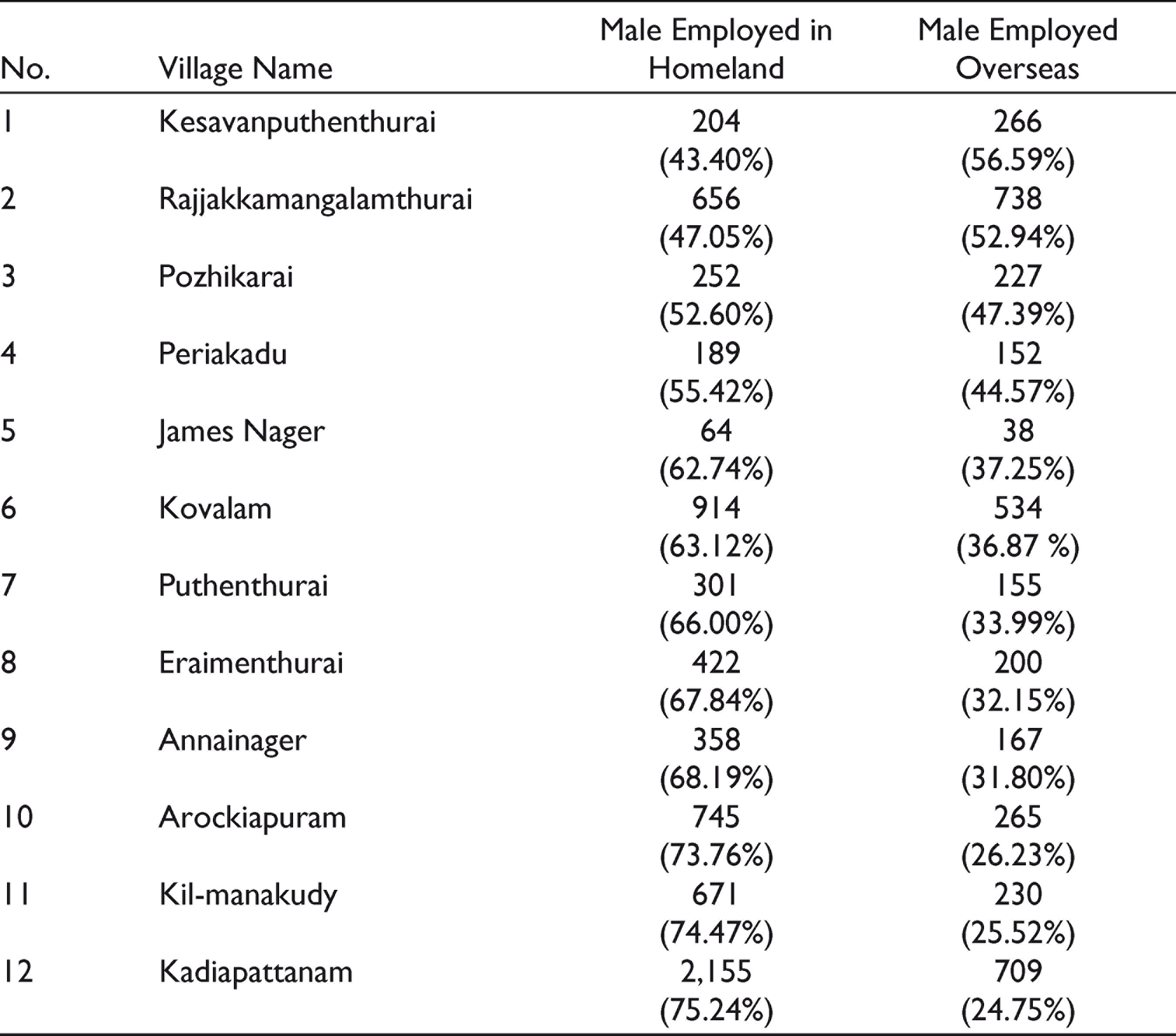
Table 6 shows that male members in households are employed both in the home fishing industry and overseas. Out of the 45 coastal hamlets, two villages (Sl. Nos. 1 and 2) have a significant number of migrants working overseas, clearly outstripping the number of those having jobs in the homeland. Two other villages (Sl. Nos. 3 and 4) have an average of above 45 per cent migrants working overseas, and five hamlets (Sl. Nos. 5–9) have an average of 35 per cent, with three villages (Sl. Nos. 10–12) having an average of 25 per cent.
The Highest Villages with Males Employed in Homeland and Abroad, 2020
Source: Primary data collected by the authors.
Sea Safety
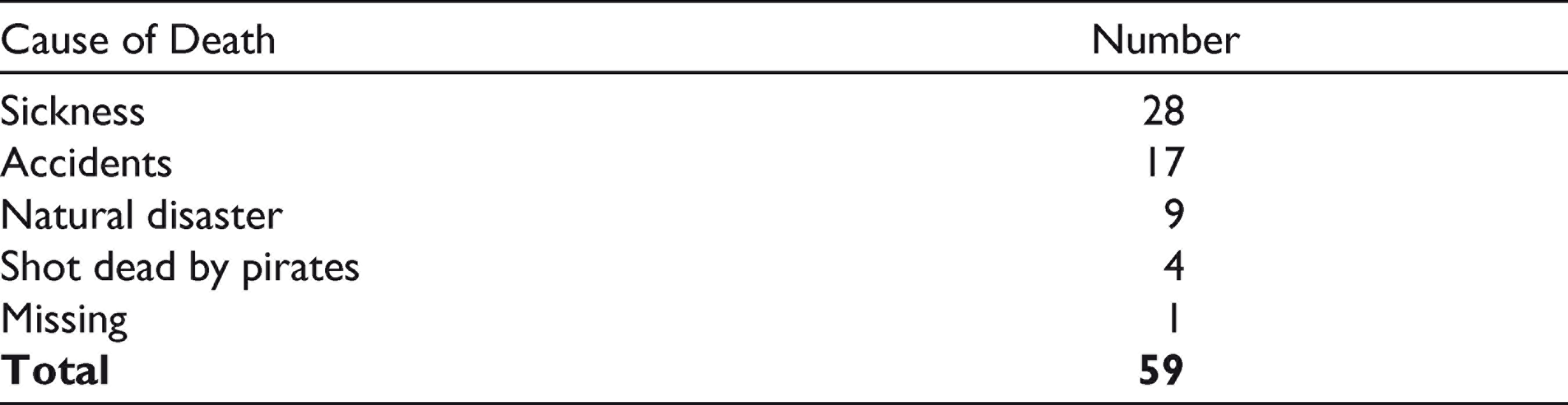
Fishing in the high seas is certainly a dangerous occupation, if not one of the most dangerous occupations in the world. Fishermen are at the mercy of nature with all its vagaries, but for migrant fishermen the situation is even more bleak. At sea, there is a lack of any appropriate mechanism in these countries for their safety. On land too, the fishermen seem deprived of medical and healthcare facilities should they become sick. With no comprehensive medical insurance, they need to bear medical expenses for any treatment of their illnesses. Tables 7 and 8 indicate that out of 59 recorded deaths of fishermen, 28 died from sickness, 17 from accidents and 9 due to cyclones and rough weather.
No of Deaths in Gulf, 1990–2020

Source: Primary data collected by the authors.
Cause of Death in Gulf Countries, 1990–2020
Source: Primary data collected by the authors.
Impact of Migration
A relevant question one can ask in this context is what has been the effect of the fishermen’s migration on the socio-economic conditions of their households. Fishing households may not keep a record of the remittances accrued annually, but it is evident that standards of living have improved. This can only be due to a substantial inflow of income from abroad and is a testament to the positive role of migration in reducing the vulnerability of these fishing households.
This is also evidenced by the mass movement of fishermen to Gulf countries for fishing which may be seen as a collective coping strategy in the face of falling incomes gathered from fishing in the homeland. Some fishermen who initially entered the Gulf regions in the mid-1990s have earned better incomes. Their unique knowledge, skills, tools and techniques, which they took with them and which they employed in their new fishing habitat, enabled them to extract maximum returns from the untapped marine resource base of the Gulf region. This gave them a better opportunity to earn higher incomes, thus enhancing their livelihood and helping them diversify into different areas. The interviewees said that they were able to send the income that they earned from fishing over a period of three months as a lump sum to their respective families. Most of these remittances have been used for the higher education of children, maintenance and construction of houses and marriage of daughters. There is quite a drastic drop in household expenses in the absence of the male member which helps to improve the economic lot of the family and cater to the needs of the other members also. A household in which there is more than one earning member overseas sees a dramatic improvement in family income. These findings are also correlated with earlier outcomes of several rounds of the Kerala Migration Survey and the Tamil Nadu Migration Survey.
Migrant Fishermen and the COVID-19 Pandemic
The global outbreak of the COVID-19 pandemic has seriously affected people’s mobility, both within nations as well as across borders. Almost all the countries in the Persian Gulf have stopped accepting migrants from India. Nearly 700 fishermen, mostly from Kanniyakumari district, are stuck on the COVID-19-hit Kish Island in Iran, asking the Government of India to assist in repatriation (Rajan & Arokkiaraj, 2020). The dire situation of the migrant fishermen did not emerge as an immediate issue during the initial phase of the lockdown. It was only when the fishermen themselves posted the details of their plight on social media platforms, which were subsequently taken up and echoed in the national media, that it became an issue (Kuttappan, 2020). They spoke about their lack of access to basic amenities and how they could not contact family members back home. On a war footing, fishery officials in Tamil Nadu collected data about these migrant fishermen stranded in Kish Island in Iran from each coastal hamlet. In response to pressure from family members, both the state and union governments intervened and provided eatables. After about 3 months, 651 fishermen stranded in Iran were repatriated to their homeland by an Indian navy ship (Deccan Chronicle, 2020). At the time of writing, no further action has been taken to rehabilitate the returnees. From available emails and texts, it is clear that some fishermen are yet to be repatriated and a situation of panic is building among the hundreds of fishermen still remaining in the Gulf. They need to be returned to their respective native villages as soon as possible and included in the ‘Vande Bharat Mission’. For the most disadvantaged migrant fishermen, deprived of fishing days because of the continuous lockdown and with little or no money, a waiver of the airfare would provide much-needed relief. As a further necessary response to this crisis of resettlement, financially supporting these migrant fishermen who are returning home empty-handed would be the arrangement of some state-subsidised economic packages. This would allow them to procure technologically improved fishing units to restart their local fishing enterprises and especially enable them to undertake deep-sea expeditions.
Conclusion and Further Research
Historically, fishing has been the only source of income for millions of coastal dwellers in this area. They are, and always have been, living on what the sea offers them for their survival and livelihood. A sustainable sea resource, which has its own natural capacity for renewal and regeneration, is a basic advantage for them. The demand for fresh fish in local and international markets is the basis of their economy and offers good and constantly improving returns in the future. Seasonality brings about biodiversity as this allows replenishing of the stock and enables various species to flourish. This has been, and remains, their natural capital, which the fisherfolk manage for their lifetime and pass on to the next generation. It is therefore fitting to state that sea resources as property are primarily and collectively owned by the traditional fishing community. It follows therefore that any fisheries policy must always affirm the inalienable right of the fisherfolk and seek to ensure their easy access to this marine resource for the purposes of livelihood sustainability. Instead of restricting fishermen, it should rather encourage and promote them to enter into the potentially resource-rich areas of the Exclusive Economic Zone. However, this should be done in a proper and controlled manner by helping them avail of modern technology both for their personal safety and to enable sustainable, increased catches.
The effort towards introducing further technological development must be balanced by excluding any kind of fishing device that will encourage destructive fishing practices which have devastating effects on the marine environment. There must be adequate and proper consultation which must begin at the village level. It can then go on to the district state and even to the national level, taking into account all regional variations and capturing each and every voice from the grassroots level upwards.
The damage that has been done to the stock of resources can be recovered sustainably in due course with the involvement of fishermen in management and conservation practices. If the current destruction of the seabed and unsustainable fishing practices are not controlled not only will the long-term economy suffer, but it will also affect the local micro-level economy and people in the secondary and tertiary sectors because of growing migration by fishing labourers. In the face of many challenges in the Indian fisheries industry, which may pull institutional set-ups in different directions, the waning of natural capital is a vital concern. This will impede the procurement of a secure livelihood for coastal communities and must be considered as being of paramount importance in policy formulations.
Door-to-door studies and collection of data is necessary in assessing the effects of transnational migration on the socio-economic status of the coastal community and the impact of inward remittances in improving the HDI. Migrant fishermen contribute greatly to the nation’s foreign exchange reserves through their remittances, but this contribution is poorly documented, if at all. This could be the basis of a crucial prospectus for future scientific research. The method of data collection used in the present study for reliability and predictability is apt for replication in further studies as well.
Footnotes
Declaration of Conflicting Interests
The authors declared no potential conflicts of interest with respect to the research, authorship and/or publication of this article.
Funding
The authors received no financial support for the research, authorship and/or publication of this article.