



Abstract
This study aims to understand the environmental aspects of energy transitions and clean cooking in informal settlements by focusing on domestic practices, gender roles, and employment status in Mukuru, Nairobi. Adopting a mixed-method approach, household surveys and focus group discussions (FGDs), the research asks: What drives the adoption of clean cooking in informal settlements? How are economic conditions and cultural norms intertwined in women’s energy choices and use? Findings reveal a significant shift towards liquefied petroleum gas (LPG), primarily motivated by health concerns. However, while higher-income households show a clear preference for clean fuels, female-headed, single, and unemployed households remain reliant on polluting fuels, showing how social norms and employment status mediate access to clean fuels and appliance ownership. Government investment in the provision of domestic LPG could substantially improve the living conditions of vulnerable groups. Crucially, the study shows that energy transitions do not occur through economic change alone, and cultural norms must be addressed.
Introduction
The Nairobi Declaration of the Africa Climate Summit 2023 (Assembly of the African Union, 2023) made a clear commitment to climate action and finance mechanisms in the African continent. Point 11 of the Nairobi Declaration notes that 600 million people in Africa lack access to electricity and 970 million to clean cooking. The UN (2023) reports that progress in clean cooking access has lagged behind electrification over the past 10 years, and fundamentally new approaches need to be developed and implemented. Despite robust evidence on their positive environmental and health impacts, the global progress on clean cooking has been limited, with gains concentrated on few countries like China, India, and Indonesia, while in Africa, the population without access to clean cooking continues to grow (IEA, 2023).
Energy transition pathways need to be inclusive to achieve the desired decarbonisation goals. Gender dimensions in the pathway are often interpreted through empowerment approaches. In the policy space, economic empowerment of the underrepresented gender is often the most chosen option. Policies like cash transfer support, clean energy benefit entitlements or subsidies are often seen as a means for economic empowerment through which the energy transition is aspired to be achieved. However, in many countries, gender empowerment is as much a cultural discourse as an economic debate (Manhas, 2025; Munyangeyo, 2015). Cultural empowerment can be defined as the procedures through which a group of people develop a belief system in their capabilities—that is, their ability to achieve. While economic empowerment is assumed to have a linear relationship with cultural empowerment, this is often mediated through contextual social practices and norms, which may sometimes hinder the linearity. Through this study, we aim to explore how economic and cultural empowerment are intertwined and how energy transition happens as a result of the coupled process. The transition to clean energy may not actually happen if one is prioritised over the other—that is, if economic empowerment is decoupled from cultural empowerment.
If energy transition is envisioned as a ladder, then the first step is enhancing economic ability through policy instruments like subsidies, cash transfer, or entitlements. This should be followed by community empowerment, which can translate to cultural empowerment, which in turn will provide agency to women to have the belief to achieve, irrespective of their socio-economic status. Community empowerment can strengthen the ties between economic and cultural empowerment. An example of this is microcredit. Community empowerment comes from responding to community acceptability, which then trickles down to empowering people irrespective of gender.
According to UN-Habitat (2025), 62 per cent of urban dwellings in Africa are informal. The development discourse has been criticised for viewing informal settlements as communities with relatively homogeneous populations, failing to recognise the diversity of needs and aspirations in the community (Rigon, 2022). There is a specific gap in understanding the role of social equity in energy transitions in informal settlements, particularly from a gendered perspective (Ngum & Kim, 2023). Research by Puzzolo et al. (2011, 2013) shows that enabling or limiting factors for clean cooking adoption are deeply shaped by social norms, gender roles, and intra-household decision-making. However, while previous studies have shown that household characteristics influence fuel choices, there is still limited evidence on gender of the household members, marital status of the primary earner, or types of employment affect energy use in informal settlements (Shrestra et al., 2021).
Sustainable energy policies have traditionally centred on environmental outcomes and emissions reduction. However, there is a growing need for a paradigm shift towards more inclusive frameworks that reflect societal roles and their inherent asymmetries. Castán Broto et al. (2018) advocate for energy to be delivered as an emancipatory and intersectional project, challenging often oversimplified assumptions of energy policies. Castán Broto (2024) calls for urgency in adopting an intersectional perspective in energy transitions across the Global South. They argue that recognising multiple, intersecting identities and disadvantages (beyond simplistic categories such as gender) enables a radical rethinking of the technological, political, social, and institutional dimensions of energy systems. This builds on Crenshaw’s (1991) foundational concept of intersectionality, which has been applied across diverse empirical contexts. For example, it is often assumed that female-headed households are more responsive to clean cooking practices and more likely to adopt improved cooking stoves (Lewis & Pattanayak, 2012). However, it is worth asking what Matsuda (1991) termed ‘the other question’: where is class in this? Even within the same informal settlement, women and female-led households may differ significantly in their needs and constraints.
This study uses the Mukuru informal settlement in Nairobi as a case study. Mukuru was selected as a case study by local NGO researchers with longstanding engagement in the community, based on its representative characteristics of location, size, income levels, and demographic and economic structure. Mukuru is an inner-city informal settlement with a transitional population and active informal economy but without formal energy infrastructure. The findings from Mukuru have relevance beyond the Kenyan context, offering insights applicable to other rapidly urbanising regions where informal settlements rely heavily on polluting fuels and fuel stacking practices. The study focuses on both environmental and cultural factors influencing energy use, underlying the need to understand energy transitions through the lens of everyday practices and cultural norms. It explores two central questions: What drives the adoption of clean cooking in informal settlements? And how are economic conditions and cultural norms intertwined in women’s energy choices?
Data collection involved an energy survey and focus group discussions (FGDs). A local NGO acted as an equal research partner throughout the project. Validation of findings was a key component of the research process, emphasised by the NGO and carried out through two community workshops. These sessions included visual material summarising key findings, presented in an accessible way by the NGO. The FGD participants were invited to comment on the findings, ensuring that the research remained grounded in community experiences. Of six researchers in this project, five were women, including two academics and three local NGO-researchers, who had personal experience of gender-related issues of energy use, helping to foster trust among female participants and visibly positioning young women in roles of authority and leadership in the research process.
In this paper, energy transitions are defined as long-term transformation processes where households shift to more sustainable modes of energy consumption that reduce air pollution risks and have lower environmental impact (Sung & Park, 2018). Clean cooking refers to fuels and technologies that meet recommended guidelines for particulate matter (PM2.5) and carbon monoxide emissions (WHO, 2021), including electricity, liquefied petroleum gas (LPG), solar, ethanol, biogas, and natural gas. This includes new technologies like KOKO, a Kenyan brand offering bioethanol-based fuel designed for urban low-income contexts, and M-Gas, a Kenyan pay-as-you-go system that allows households to purchase gas in small instalments using a mobile phone network. Fuel stacking refers to the practice of households using multiple fuels simultaneously rather than transitioning entirely to a single clean fuel. It has been shown that energy transitions in African countries align with the fuel stacking model rather than the linear ‘energy ladder’ hypothesis and that households in informal settlements often rely on a mix of traditional and modern fuels due to affordability, availability, and cultural preferences (Akrofi, 2021; Saligari, 2024).
The article is structured as follows. The second section presents a literature review. Methodology is described in the third section. The fourth section reports the findings. The fifth section concludes.
Literature Review
The concept of intersectionality, first coined by Kimberlé Crenshaw in 1989 and elaborated in her 1991 paper, emerged as a critical framework to understand how overlapping systems of oppression, such as race, gender, and class, interact to produce experiences of marginalisation. Crenshaw’s work was initially focused on the legal invisibility of Black women in cases of domestic violence and employment discrimination, arguing that single frameworks (e.g. ‘gender’ or ‘race’ alone) fail to capture the complexity of lived experiences. Cho et al. (2013) called for intersectionality to be understood as both a theoretical orientation and a methodological tool, applicable across disciplines. Early empirical applications focused on women of colour and issues such as violence (Crenshaw, 1991), leadership (Sanchez-Hucles & Davis, 2010), health (Price, 2011), and education (Mcmaster & Cook, 2019).
In energy research, Vanesa Castán Broto has been instrumental in applying intersectionality to the study of community energy systems in the Global South. Her work argues that energy transitions must be understood not only through technical and economic lenses but also through the social dynamics of community diversity. Castán Broto (2024) advocates for an intersectional approach that foregrounds gender, race, class, and other forms of inequality in the design and implementation of energy projects. She argues that without such a lens, energy transitions risk reproducing existing inequalities rather than dismantling them. Injustices in low-carbon energy transitions are often seen to benefit groups that are already in a privileged position (Johnson et al., 2020). Andrews and Nwapi (2020) explored how the intersectionality of energy infrastructure, institutions, political power, and national development has impacted the development of Africa’s energy sector. A study on the electrification of cooking in Mathare informal settlements, Nairobi, showed how women-led households faced compounded barriers to accessing modern energy services, including unreliable grid connections, unsafe wiring, and limited financial resources (Nayema et al., 2023).
As Castán Broto and others argue, an intersectional energy transition is not only about expanding access to energy technologies; it is fundamentally about reshaping power relations and ensuring that the benefits are equitably distributed across diverse social groups. This requires an understanding of how energy systems intersect with structural inequalities and how these intersections shape exclusion. It also resonates with the International Energy Agency (2023) definition of equitable energy access, which moves beyond simplistic metrics of availability and affordability. According to the IEA (2023), true energy equity must also account for flexibility, reliability, and the capacity of energy services to meet basic human needs. Our study argues that this should be implemented in ways that are responsive to the lived realities of all communities, including those marginalised by gender, class, or ethnicity. In this sense, intersectionality offers a framework for designing energy transitions that are socially just and inclusive.
Because of the time spent at home, women’s health is negatively disproportionally impacted by cooking with dirty fuels like kerosene and charcoal. Cooking with biomass has been shown to increase the risk of pneumonia by 80 per cent, compared to cooking with improved stoves (Dherani et al., 2008). In the study by Mberu et al. (2015) in two informal settlements in Nairobi in 2003–2012, 30 per cent of the women’s injury-related deaths were caused by exposure to smoke, fire, or flame, compared to 12 per cent of the men’s injury-related deaths in the same neighbourhoods. Small children who are very close to their mothers when they are cooking are equally affected by health risks associated with overcrowded shacks with inadequate ventilation, water, and energy provision (Mwau et al., 2020). A large volume of research has already documented barriers to clean cooking, suggesting that the affordability and availability of clean cooking technology alone are not sufficient to achieve the transition, and a more nuanced understanding of the cultural context is needed (see e.g. Vigolo et al., 2018; The World Bank, 2010). Lewis and Pattanayak’s (2012) review of 32 research studies on improved fuels and cooking stoves concluded that the literature on the adoption of improved cooking stoves remains scattered, often limited to single case studies. Several rely on macro-scale statistical analysis and aim at the identification of key determinants for fuel choice, but do not address deeper motivations behind fuel choices (Mohapatra & Simon, 2017). In quantitative studies on clean cooking, household income and education level have been the most studied variants, and the positive correlation with the level of women’s education has been identified (Muneer & Mohamed, 2003).
Fuel switching from dirty to cleaner fuels is generally considered a ladder preference for development, but is deeply rooted in geography and social behaviours. Although households tend to move from wood to kerosene and electricity as their economic status improves, it has been known for decades that a large number of other factors, in addition to income, are equally important in determining household fuel choice (Hosier & Dowd, 1987). Several studies have discussed the multifaceted nature of energy access in informal settlements, underscoring the complex dynamics beyond simplistic indicators of income and education. Improved education levels and income increase are generally expected to correlate with the transition to clean cooking fuels, but the energy ladder concept has been questioned both in academic and in practice (see e.g. Van der Kroon et al., 2013). Fuel use in informal settlements is characterised by fuel mixes, conforming more to the fuel stacking concept than the energy ladder hypothesis (Bisu et al., 2016). Similarly, in her ethnographical study in Langas community, Eldoret, Saligari (2024) showed that while Kenyan households have integrated LPG into their cooking practices, these new technologies continue to be used mainly as part of fuel stacking, the flexibility of stacking taking precedence over making healthy and environmental energy choices.
Energy institutions have a history of limited success in service delivery in informal settlements. For example, in Kibera, Nairobi, the provision of formal electricity has been problematic due to conflicting rationalities between the utility providers, the donors, and the residents (Guma et al., 2022). In her the work in Kibera, Christley (2021) identified the impact of electricity and LPG access on local residents: although LPG was recognised as a clean fuel by residents, reservations remain due to supply shortages and high upfront costs, whereas charcoal is often preferred for its affordability (residents typically purchase fuel in small quantities on a day-to-day basis), availability and ‘delivering the right taste’. Formal electricity connection cost is high, exceeding multiple times the average monthly income of Kibera residents.
Informal settlements have their specific physical characteristics: houses often have poor ventilation, and there is no private outdoor space that could be used for cooking outdoors, washing, and drying clothes. In a longitudinal study focusing on Mukuru, Shupler et al. (2021) examined the joint effects of the COVID-19 lockdown on household energy and food security. Their study reports that nearly all households in Mukuru cook inside the home in a single room, with minimal ventilation levels. They also show how a quarter of the households using LPG switched their cooking fuel to wood or kerosene during the lockdown. The supply of LPG and its ability to prepare the local cuisine were less important barriers than the affordability and convenience of obtaining cylinder refill, confirming the findings by Saligari (2024) in Eldoret, Kenya.
In energy studies, it is often presumed that women are more likely to choose clean cooking fuels and improved cooking stoves compared to men. Studies conducted in rural India (Bhojvaid et al., 2014) and Kenya (Wang & Corson, 2015) have shown that women choose clean cooking fuels more often than men. Female-led households have also been shown to choose clean fuels and improved stoves more often than male-led households (Brooks et al., 2016; Mamuye et al., 2018). However, not all female-led households have similar resources and constraints in fuel choice, even inside one community. It is also often underestimated or misunderstood, from a North American and European perspective, that gendered practices in the Global South are deeply anchored in family, extended family, and kin relations (Wilhite, 2016).
Women generally have less power than men to make decisions about energy and appliances wonership, mirrored in their position in the socio-material contexts. Employing the empowerment framework in their study of three rural contexts in the Global South, Winther et al. (2020) argue that the choice of appliances is gendered within households, with a higher occurrence of ‘male’ compared to ‘female’ appliances. Winther et al. (2020) argue that an enabling factor for women’s empowerment, electricity can only be expected to contribute to, rather than radically change, gender relations.
Building on the IEA (2020) characterisation of energy access, this research will examine energy transitions in the informal settlement of Mukuru, with a specific focus on how gender and employment status shape access to and use of clean cooking technologies.
Methods
Mukuru as a Case Study
The reliance on firewood and charcoal is a major contributor to Kenya’s 0.3 per cent annual deforestation rate and is responsible for 40 per cent of the country’s total GHG emissions. It has been estimated that switching from charcoal to clean cooking fuels could save up to 30 trees and reduce 3–5 tonnes of GHG emissions per Kenyan household (Dalberg, 2018). Informal settlements have high populations, and energy transitions even in one community can significantly reduce GHG emissions. This survey focuses on Mukuru, Nairobi. Mukuru has around 105,000 households and 400,000 residents. It is located 7 km south-east of Nairobi’s CBD, surrounded by an industrial zone of manufacturing and distribution centres. It covers an area of 689 acres (279 hectares), accounting for approximately 0.5 per cent of the total area of Nairobi city’s developable land.
Mukuru is characterised by high population density, limited access to basic services, and substandard housing conditions. It comprises three neighbourhoods: Viwandani, Mukuru Kwa Reuben, and Mukuru Kwa Njenga. The three settlements are separated by the Kenya railway line, running along the border between Mukuru Kwa Njenga and Kwa Reuben and the Ngong’ river, which crosses the settlement dividing the neighbourhood between Mukuru Kwa Reuben and Viwandani. Mukuru can be accessed through Falcon road (from Enterprise, Sasio, Lunga road, or Catherine Dereba road). Housing is characterised by one-room shacks, usually built with corrugated metal, including one opening (door) to a side alley.
Energy infrastructure in Mukuru mostly consists of informal provisions, including grid-connected electricity, off-grid solutions, and alternative sources such as biomass or kerosene. Mukuru is not officially connected to the formal electricity network run by Kenya Power. Yet nearly all households have limited electricity access, purchased from brokers, informal energy providers or ‘cartels’ run by locals (e.g., one broker is known as ‘Mukuru Power’). Connections can be unreliable and unsafe. In her study of formal and informal energy and sanitation service interactions in Mukuru, Sverdlik (2017) argues that informal energy brokers operate in a continuum that involves bribery and occasional clashes with state actors but are nevertheless able to provide electricity to households that would be unable to access it through the formal grid due to high connection fees and regular energy bills. The brokers’ household connections are intended for lighting, using energy-saving light bulbs. Despite this, there are regular electricity blackouts and voltage fluctuations, especially during peak hours (6.30–10 PM) when most people return home from work. As can be seen from the household survey, electricity constitutes a significant household expenditure, disproportionately higher for poorer families.
Commonly used cooking fuels in Mukuru include LPG, charcoal, briquettes, kerosene, KOKO, M-Gas, sawdust, firewood, and electricity. The market cost of all fuels has significantly increased since the previous Mukuru energy survey in 2017. For example, according to the household survey, the price for a 6 kg LPG cylinder has risen from Ksh 600–800 ($4.65–6.20) in 2017 to Ksh 1,300–1,500 ($10.08–11.63) in 2023. The cost of a bag of charcoal has increased from Ksh 1,200–1,300 ($9.30–10.08) to Ksh 2,200–2,700 ($17.05–20.93). The cost of unmetered electricity connections has increased from Ksh 300 ($2.33) to Ksh 500 ($3.88) per month.
Data Collection and Analysis
Mixed methods were used in the data collection. First, an on-site household energy survey was conducted by the local NGO researchers to collect quantitative data in three neighbourhoods (Viwandani, Kwa Njenga, and Kwa Reuben). The survey was conducted in-person, and it explored a range of household variables, including patterns of energy consumption, fuel choices, cooking practices, appliance ownership, awareness of renewable energy sources, household income, marital status, and other demographic indicators. The survey was quantitatively analysed, with simple correlations. Among the 120 respondents, 90 were household representatives, and 30 were local entrepreneurs, including fuel vendors operating within the neighborhood. To understand the determinants of cooking fuel choices, the survey incorporated multiple-choice questions that asked participants to identify their primary considerations in fuel choice. These included accessibility (the ability to purchase fuel within the neighborhood), efficiency, affordability, convenience, safety, and flexibility, following the IEA (2020) framework for energy access, which emphasises that energy services must be not only physically available and affordable but also convenient, reliable, and safe to meet basic human needs. In the survey, convenience refers to the ease with which energy services can be accessed and used in daily life: specifically, the local availability of fuel or electricity, the time and effort required for use, and compatibility with flexible cooking practices.
Qualitative data to understand households’ motivations and practices were collected through FGDs and two validation workshops in the community. The FGDs were organised and facilitated by the NGO that has been working in Mukuru for over 20 years. The focus groups were guided by a set of open-ended questions or prompts, allowing participants to share their opinions, beliefs, and experiences related to energy practices. FGD participants were identified by the NGO, with 25–30 participants in each session, consisting of male and female, different age groups, income levels, and household configurations. The sessions were designed to elicit motivations, contextual factors, and perceptions surrounding energy use and decision-making. They provided a platform for participants to articulate their lived experiences and opinions regarding everyday energy practices. Notes were taken and thematically analysed. Questions were developed by the NGO researchers to explore community energy use. Key questions included: What are the primary cooking energy sources used within the community? What factors influence fuel selection? How do the different cooking technologies impact health? What barriers exist in adopting cleaner cooking and more sustainable energy alternatives? What coping mechanisms are being applied? While the survey had included questions on employment, income, and marital status, it was considered inappropriate to publicly inquire about these aspects during the focus group discussions. Instead, background information on FGD participants was provided by the NGO researchers, drawing on their prior engagement and familiarity with the community. Five FGDs were conducted in May–July 2023, including in Mukuru Kwa Reuben (Reuben Centre), Mukuru Kwa Rueben (Hope Centre), Viwandani (Mukuru Skills), and Mukuru Kwa Njenga.
We recognise and fully acknowledge our positionality as researchers, along with the power asymmetries embedded within the research process. These asymmetries inevitably shape interactions, interpretations, and outcomes—there is no such thing as a totally objective observation. Throughout the study, we remained critically aware of our own positioning and the limitations it may have imposed. The NGO researchers, three of them female, contributed their dual expertise as both researchers and embedded community actors, helping to mediate these dynamics. The project received ethical approval, and all participants were provided with information sheets outlining the purpose of the study, their rights, and the voluntary nature of participation. Participants were informed of their right to withdraw at any time without consequence. To ensure transparency and community engagement, the survey findings were presented in two validation workshops held in September 2023 in Mukuru Kwa Rueben and Viwandani. During these sessions, it was observed that the participants affirmed the survey findings, indicating alignment with their lived experiences.
Findings
The household survey shows that there is significant variation in household income in Mukuru. Some households in the 2023 survey reported a monthly income of Ksh 20,000–30,000 ($155.04–232.56), while the poorest households reported a monthly income of Ksh 400–700 ($3.10–5.43). This disparity means some households earn around 75 times more than the poorest households in the same informal settlement. Consequently, their energy procurement and cooking practices differ substantially.
Higher-earning households reported using LPG, cooking two or three times per day at home, and purchasing their cooking fuel weekly or monthly. They prioritise convenience, efficiency, and safety in their fuel choice and can afford to pay over Ksh 2,000 ($15.50) per month for electricity, which is still less than 10 per cent of their monthly income.
In contrast, lower-income households reported cooking once or twice per day and adopting coping mechanisms such as going to sleep hungry due to increased living costs. They use kerosene and purchase fuel as per use, prioritising affordability, availability, and the ability to buy in small quantities. The high upfront cost of LPG is a significant barrier to its adoption. For instance, a household will need to have Ksh 1,300 ($10.08) to buy a full 6 kg cylinder of LPG, whereas they can purchase a tin of charcoal for Ksh 100 ($0.78), at one-tenth of the price needed. Lower-income households more frequently reported health issues related to their eyes, nose, and chest. They buy electricity from brokers, paying Ksh 300–500 ($2.33–3.88) per month, which is disproportionate compared to their monthly income.
A comparison of the data from the 2023 energy survey with the previous survey conducted in 2017 indicates a notable increase in the use of gas (both LPG and pay-as-you-go M-Gas) for cooking, alongside a significant reduction in the use of kerosene. LPG has become the preferred fuel choice (35 per cent of the households named it as their first choice) due to its convenience, health benefits, and accessibility. Charcoal remains popular, with 43 per cent of the households naming it as their first choice. The use of kerosene has drastically declined compared to 2017; it is now mostly kept as a reserve. Only 1 per cent of the households preferred kerosene as a cooking fuel in 2023, compared to 29 per cent in 2017.
All the surveyed households use a mix of fuels for cooking. In the analysis, the fuels were grouped into categories: clean, mixed clean, dirty, mixed dirty, and mixed fuel. Specifically, each group included: (a) clean fuel: households who use only one of the following fuels: LPG, KOKO, M-Gas, or electricity; (b) dirty fuel: households who use only one of the following fuels: charcoal, kerosene, sawdust, or briquettes; (c) mixed fuel: households who use more than one fuel and have a 50:50 mix of clean or dirty fuels; (e) mixed clean: households who use more than one fuel and use more than 50 per cent clean fuels; and mixed-dirty dirty fuel: households who use more than one fuel and use more than 50 per cent dirty fuels.
Figure 1 shows motivations for cooking fuel choices in relation to fuel types and household demographics, as a percentage of the surveyed households. Employment status was broadly categorised into three groups: employed (receiving a salary), unemployed, and business owners. This simplified classification was determined by local NGO researchers to reflect the realities of informal settlement economies as something participants could identify with and respond to. The survey was conducted in-person, and the researchers were able to clarify these terms to respondents when needed. It is acknowledged that in informal settlements, formal employment is rare, and income-generating activities often fall outside contractual or taxable frameworks. It is important to note that nearly all respondents identified as employed or business owners were engaged in informal, paid work (such as casual labour, domestic services, or small-scale trading) without formal contracts.
Reasons for Choosing Cooking Fuel Across Different Household Compositions.
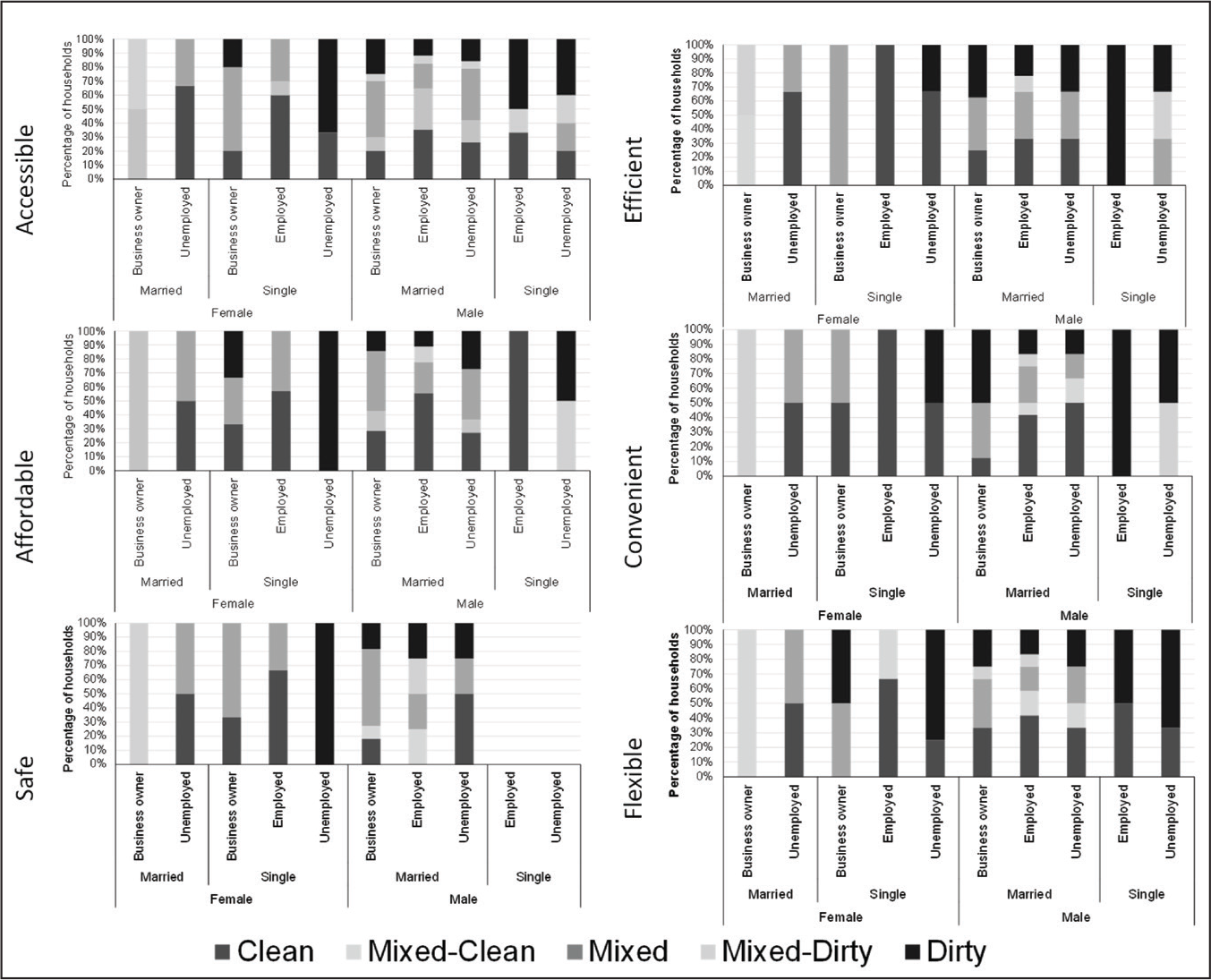
Figure 1 reveals diverse motivations behind cooking fuel choices across different household compositions. Notably, even polluting fuels, such as charcoal and kerosene, are often selected because they are perceived as safe, convenient, and efficient. In contrast, LPG and KOKO stoves are associated with affordability and accessibility. However, different household types have different reasons for choosing cooking fuel. Single unemployed women and men in the survey who use dirty fuels said they do so because it is affordable. By contrast, single employed females in the survey said they choose clean fuel because it is efficient, convenient, and flexible. It is notable that affordability was not the sole determinant for fuel choice. Health awareness emerged as a contributing factor to the adoption of LPG and KOKO stoves. Nevertheless, nearly half of the survey respondents still reported health problems (e.g., chest and eyes) related to their fuel use.
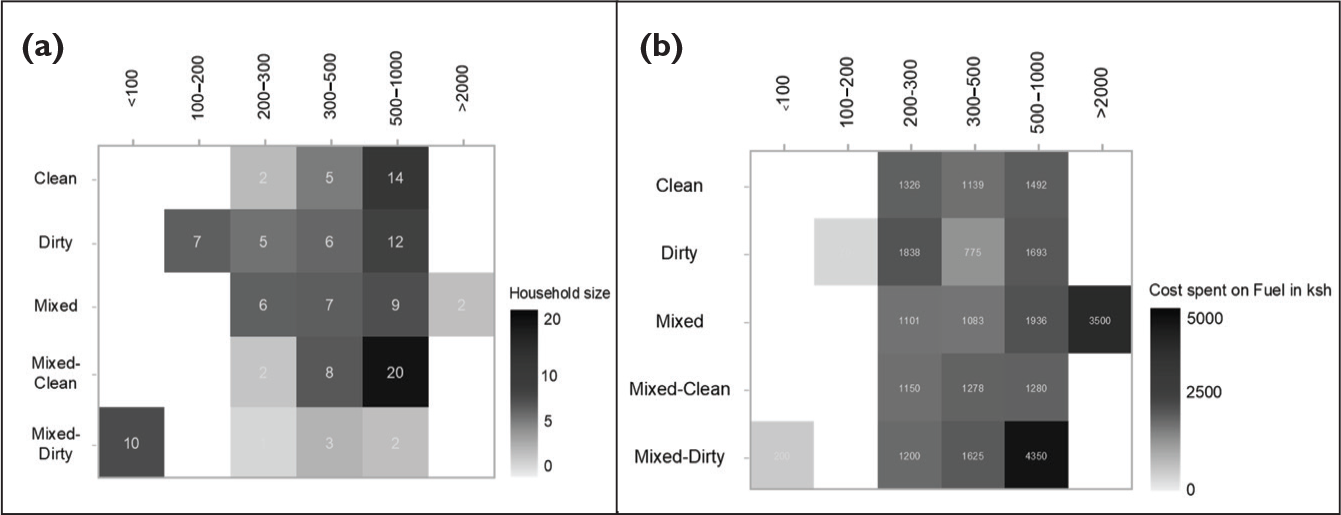
Figure 2 shows the amount spent on electricity per month (Ksh) by household size (a) and total fuel expenditure, including cooking (b), using the same grouping of fuels as in Figure 3 (clean/dirty/mix/mixed-clean/mixed-dirty).
Monthly Expenditure on Fuel Related to: (a) Household Size; and (b) Expenditure on Fuel (Ksh).
Monthly Electricity Expenditure Across Different Household Configurations (Ksh).
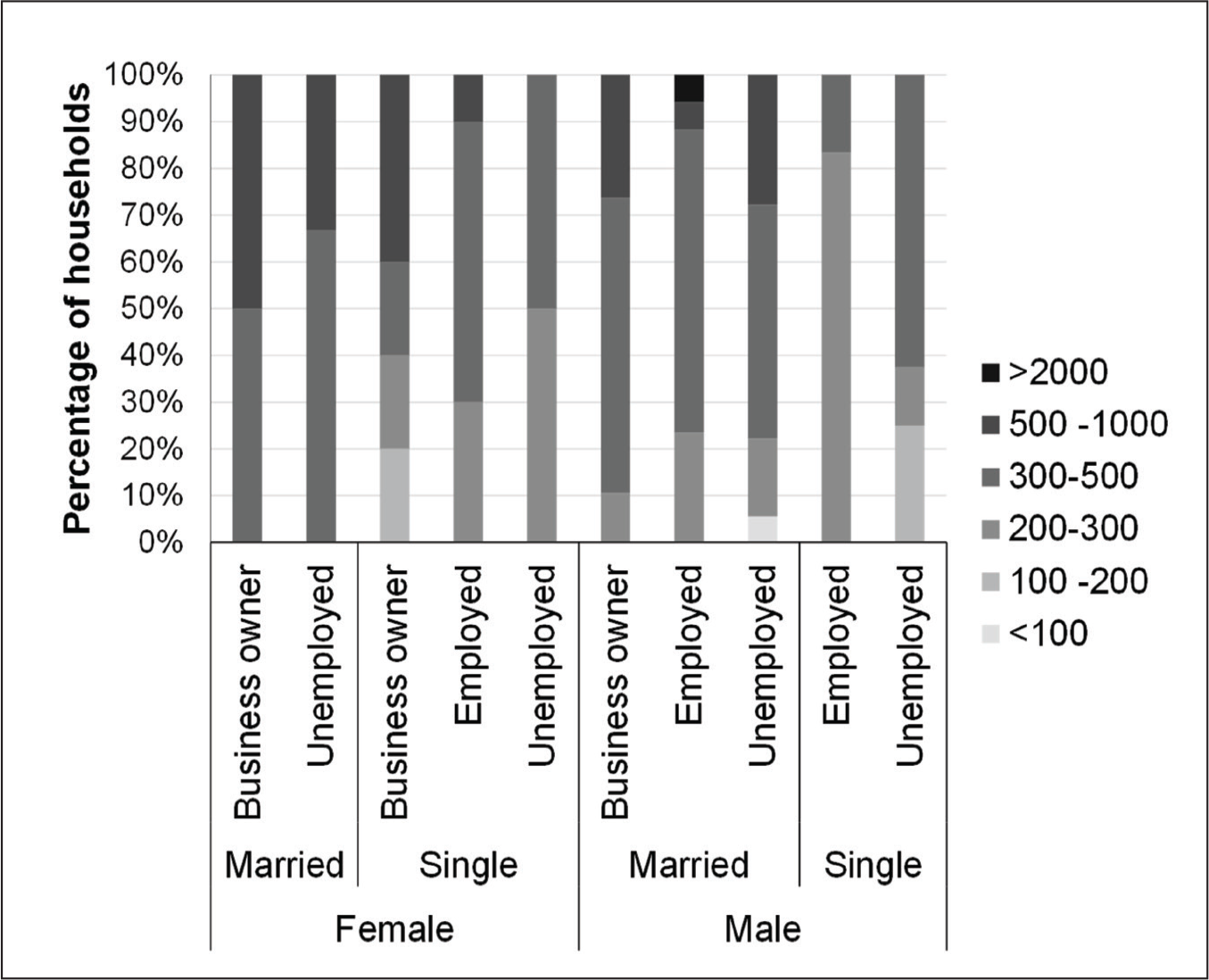
Figure 2 shows that spending on electricity does not necessarily depend on household size: small households can spend as much on electricity as larger households. Furthermore, those households that spend a lot on cooking fuels also have the highest monthly spending on electricity.
Figure 3 shows the monthly expenditure on electricity in specific household configurations related to employment status. It indicates that single households tend to use less electricity, although there are high users among all household groups.
Figure 4 shows the choice of fuel (clean/mixed-clean/mixed/mixed-dirty/dirty) in relation to household configurations and their employment status, as a percentage of surveyed households.
Figure 4 shows how married and employment status influence households’ fuel choices. 65 per cent of the married women, even if unemployed, cook with clean fuels. 60 per cent of the working female-led single households cook with clean fuels only. However, 65 per cent of the unemployed female-led households cook with dirty fuels. Marginalised groups have been shown to be less likely to adopt clean cooking technologies (Lewis & Pattanayak, 2012), and a direct negative effect of female headship on clean cooking adoption has been identified (Mohapatra & Simon, 2017). In this context, intersectional factors of being female, single, and unemployed significantly affect women’s ability to use to clean cooking fuels, thus placing them in a category of disadvantage not equally experienced by their male counterparts. Marital status appears to mitigate this effect, with married unemployed women being in a comparatively advantageous position, resulting in the utilisation of a higher proportion of clean cooking fuels. These results align with observations from Pakistan by Nasir et al. (2015), where the ability of the women to make decisions and their asset ownership significantly impacted the use of less dirty fuels for cooking.
Choice of Fuel in Relation to Household Configurations in the Surveyed Households.

Following the household survey, community-led FGDs explored the underlying motivations shaping household energy use and cooking fuel choices. In the FGDs, health was identified as one main reason to change to clean fuel, ‘I do not need to go to hospital so often since I swapped to gas’ (FGD, female, May 2023) and ‘My neighbour uses kerosene and charcoal but it makes their children get ill and I advised them to get KOKO’ (FGD, male, May 2023).
Charcoal is still kept as a backup. Even if gas is available in the neighbourhood, M-gas requires topping up through a mobile phone network that is not always available: ‘I have asthma and because of my health I have moved to M-Gas but the problem is that the top up network can be unreliable to activate. Alternative is charcoal’ (FGD, female, 5 May 2023)
The choice of fuel is influenced by the time of day. Nearly half (47 per cent) of the respondents said they use charcoal to prepare ugali in the evening when the whole family is at home or to boil cereals. LPG and KOKO are used to prepare quick meals during the day. Gas is used in the morning by 51 per cent of the surveyed households (LPG/M-Gas). 14 per cent use electricity and 17 per cent use KOKO in the morning. The advantage of dirty fuels like firewood, charcoal and sawdust is that once set up, it cooks the food quickly and burns very long (up to 3 hours) so several meals can be cooked, and the rest can be used to warm up the home: ‘Firewood is the cheapest and once it fires up it cooks quickly, after that we use rest as charcoal or put it into a stove’ (FGD, May 2023). Dirty fuels can also be mixed for efficiency.
I use sawdust and mix it with charcoal. It is very slow but economic. Using firewood is quick but it burns quickly especially when it is windy. Also I put charcoal dust on the top of the charcoal to heat up the house during the cold season. (FGD, female, May 2023)
KOKO stoves have been designed for informal settlements, and they can be topped up using small bottles bought at a local vendor. In Mukuru, KOKO stoves are used mainly in smaller households. In FGD, a single male commented:
I use KOKO and charcoal to cook and it usually costs me 60 per month. I use KOKO to cook chai(tea) for breakfast. KOKO refill costs 198 and lasts me for 3 weeks. (FGD, male, May 2023)
In comparison, a participant from a family of seven said that for them KOKO canister usually lasts about one week, and large families commented that the KOKO refill only lasts for few days: ‘I use KOKO but a canister usually lasts 4–5 days’. This limits the use in large families.
Despite recently increased fuel prices, the demand for cooking fuel remains relatively inelastic, leading to self-rationing practices. Due to high costs, some households have been forced to adopt coping strategies such as cooking less frequently or buying ready-made food instead of cooking it: ‘I cook breakfast but eat dinner out, it is cheaper to buy something than to buy ingredients and cook it’ (FGD, female, May 2023).
The possibility to access Kenya Power grid was discussed in focus groups, but there was little enthusiasm for formal electricity connections in the community, regardless of the acknowledgment of potentially dangerous connections (e.g. naked wires, fire risk) because brokers are seen to provide flexible payment conditions and reliability. As one FGD participant concluded, if there is a problem with Kenya Power connections or meters are stolen, Kenya Power is unresponsive or ‘will just cut disconnect from the grid’.
Focus groups revealed an interest among participants in alternative energy solutions, including biogas, solar energy, and communal kitchens. Yet 72 per cent of the survey participants had said they lack knowledge and understanding about clean energy, and only one household had installed a solar system. This disconnect suggests a missed policy opportunity: if current interventions tend focus on clean cooking, they may overlook the broader potential for sustainable energy transitions in informal settlements. This could include decentralised renewable energy systems, community-based infrastructure, and targeted education, which could support inclusive energy access.
Notably, FGDs revealed that fuel procurement is typically managed by men, with some preferring to contact vendors directly to arrange purchases. In households where both partners are employed, women may contribute financially to fuel expenses. However, there was a shared perception among both men and women that a man’s role in the family ‘is to pay’ while a woman’s role ‘is to cook’. This gendered division of responsibilities suggests that even when women have preferences regarding fuel type, they are not necessarily the primary decision-makers in energy-related matters. The survey data show that the majority of households in Mukuru, across all income groups, own a television, an electric kettle, and a mobile phone. This indicates that entertainment and communication technologies can be prioritised over investments in thermal comfort or clean cooking, with the exception of the electric kettle, which serves both practical and comfort-related functions. The findings suggest that economic improvements do not automatically lead to household upgrades that enhance women’s health and well-being. Instead, purchases tend to favour items with broader social or recreational appeal. As women’s participation in formal employment increases, time-saving becomes a more significant factor, potentially influencing household energy use and appliance ownership, particularly in areas such as refrigeration and communication. Also, the definition of adequate energy services in this context is dynamic and evolves with socio-economic conditions.
Conclusions
This study explored the complex interplay between gender and cultural dimensions of energy transitions in informal settlements in Mukuru, Nairobi. Using an intersectional lens in energy access, a household survey and focus groups explored how clean cooking and energy services are distributed across diverse social groups, and how energy systems intersect with structural inequalities to shape patterns of exclusion, particularly for those marginalised by gender.
The findings confirm LPG as widely recognised as the preferred cooking fuel in, reinforcing existing research findings in informal settlements in urban Kenya (e.g. Christley et al., 2021; Saligari, 2024). LPG use is embedded within fuel stacking practices, charcoal remaining prevalent due to its affordability and availability in small quantities, and charcoal is often used in evening cooking, whereas gas or KOKO is preferred in mornings and during the day. New technologies such as KOKO stoves work in single-person households, but are less effective for larger families due to limited fuel capacity.
A key finding is the extreme income disparity in Mukuru, where wealthier households report incomes up to 75 times higher than those of the lowest-income groups. While higher-earning households and married women show a clear preference for clean fuels, female-led, single, and unemployed households remain disproportionately reliant on polluting fuels. Given that one-third of Kenyan households are female-led, an intersectional approach and targeted policy interventions are essential to ensure they are not excluded from energy transitions that are otherwise taking place, also in informal settlements. Aligning with the argument by Winther et al. (2020) that electricity access and clean cooking technologies alone may contribute to, but not fundamentally transform, gender relations within households, our study also observes the gendered nature of appliance ownership, with ‘male’ appliances (e.g. TVs, mobile phones) more commonly found in Mukuru than cooking appliances or fans.
The research has several policy implications. First, barriers to LPG access were not limited only to availability or affordability. FGDs revealed issues such as partially filled cylinders and fuel mixes, raising concerns about the safety and regulation of LPG sold in informal settlements. Although the Kenyan Energy and Petroleum Regulatory Authority (EPRA) is mandated to oversee LPG quality under several legislative frameworks (e.g. 2019 Energy Act, 2009, LPG Regulations), enforcement is still weak in informal contexts. Second, drawing lessons from India’s Pradhan Mantri Ujjwala Yojana (PMUY, 2016) policy, which has successfully scaled up LPG access among low-income women in India through subsidies and zero-interest loans, we argue that Kenya could benefit from a similar targeted policy that could remove upfront costs, stabilise prices, and ensure quality control, potentially through state-owned ration shops or formalised LPG distribution channels for marginalised households. Finally, legal recognition of informal settlement addresses or GPS locations may be required as a prerequisite for formal electricity access—and qualifying for state-subsidised LPG or other clean fuel. Past failures to extend the electricity grid to the neighbouring informal settlement of Kibera highlight the need for inclusive planning and community engagement. Without addressing these foundational issues, energy transitions risk reinforcing existing inequalities rather than dismantling them.
Footnotes
Declaration of Conflicting Interests
The authors declared no potential conflicts of interest with respect to the research, authorship, and/or publication of this article.
Funding
The authors disclosed receipt of the following financial support for the research, authorship, and/or publication of this article: This research was funded by the UK Arts and Humanities Research Council (AHRC) through Impact Acceleration Account (IAA).