



Abstract
This article presents an adaptation of an arts-based research method usually reserved for child-focused research to examine organizational processes. We developed Draw, Write, Reflect (DWR), advancing a known method, Draw and Write, for investigating phenomena relating to child participants, to explore a new context: adults engaging in academic careers. This article reports on the rationale behind the novel use of this research method, outlines a DWR procedure for future research, and contains reflections of both the researchers and the respondents regarding their experiences participating in DWR. Offering participants a combination of visual and oral methods allowed the researchers to obtain data in a more individualized approach steered by participants’ preferences. The multidimensional insights obtained through DWR would not have been attainable through each method on its own. Furthermore, we argue arts-based research can serve as a vehicle for disseminating academic work beyond conventional academe to a growing, nonacademic audience.
In-depth semistructured interviews are a prevalent research method for qualitative studies in the social sciences (Campbell et al. 2013), and as a result, language appears to have become the conventional medium through which knowledge is created and communicated. Our world experience, however, is multifaceted and multidimensional and language is just one facet of a broad range of possible representations. Limiting ourselves to verbal communication may constrain research efforts (Jongeward 2009). Similarly, Barone and Eisner (2011) propose that researchers should extend themselves beyond the limits of the spoken word and the authors argue arts-based research can create substantial new knowledge. As a method, arts-based research offers researchers the tools to include nonverbal dimensions in their studies by allowing scholars to access, retrieve, and communicate a more diverse range of experiences (Bagnoli 2009). E. W. Eisner (1997:259) predicted a movement toward nontraditional research methods 30 years ago and referred to art-based methods as the “new frontier,” while Geertz (1980:5) described the movement as “blurred genres.”
Inspired by the potential of arts-based research in an organizational setting this article presents the application of an arts-based research method to a study at a tertiary education institution in Australia examining the career progression of female academics. Adapted from arts-based health science studies with children, we developed an adult-centered research method, “Draw, Write, Reflect” (DWR), to obtain findings that can extend current contemporary knowledge about careers. Additionally, a pragmatic aim of the current study was to ascertain data suitable for “audience blending” (Barone 2002:255) in order to communicate findings to a wide range of audiences. Nash (2004:2) has referred to this aspect as the “liberation” of scholarly writing aimed at disseminating research findings beyond traditional academic channels.
To gain an appreciation for the background of the study, this article commences with a short introduction of the research problem, namely the disparate gender distribution among academics in Tertiary Education in Australia. The impetus behind this research was 3 fold: contributing to contemporary knowledge about the careers of female academics, introducing DWR as a qualitative research method for adults, and creating a richer understanding of the perspectives of female academics that can be utilized to open dialogue. To this end, a DWR procedure was developed for the purposes of this research. To assess the reliability and validity of the developed DWR procedure, reflections from both the participants and the researchers were obtained and will be presented. A five-question survey was distributed to participants six weeks after the DWR sessions to explore their experiences participating in this novel method. The article will conclude with a weighing of the strengths and limitations of the DWR approach followed by the procedure’s application to policy makers, human resource managers, and the higher education sector as a whole.
Research Setting—Gender in Academia
The worldwide continued gender-segregated nature of employment has been widely acknowledged and researched (Glass and Cook 2016). Women remain underrepresented in leadership positions and concentrated in lower classifications (Sharafizad et al. 2018). Expressions such as “the sticky floor,” “bottlenecks” (Yap and Konrad 2009:593), “hurdles” (Toren and Moore 1998:267), and “the glass ceiling” (Bain and Cummings 2000:493; Cotter et al. 2001; Eagly 2004; Ezzedeen, Budworth, and Baker 2015) have been utilized to describe the career trajectory of women. Similarly, in academia, it has been documented that male and female academics experience significantly different career trajectories (Fotaki 2013; Marchant and Wallace 2013; Nielsen 2017; Strachan et al. 2016; Zemon and Bahr 2005). Continuing the metaphor first introduced by Bedeian (1996:4) comparing an academic career to a train journey he states, “This is not to say that all successful careers necessarily follow the same timetable…. Some trains are obviously slower than others, but nevertheless reach their intended destinations.” In Australia, female academics as a demographic group travel significantly slower than their male colleagues and do not always reach their intended destination. It is imperative to explore why this is the case. The focus of the majority of research has been the inequity at senior academic classifications (Fotaki 2013; Harris, Ravenswood, and Myers 2013; Todd and Bird 2000; Winchester and Browning 2015). Australian Higher Education Statistics from the Department of Education and Training (2017), however, indicate that the divergence in the career development of male and female academics commences in early phases of their careers.
An area of particular concern over the last two decades has been the low representation of women in science, technology, engineering, mathematics, and medicine (STEMM), not just in Australia (Chapman and Vivian 2017) but also internationally (Cheryan et al. 2017; Wang and Degol 2017).
A typical Australian academic career structure is built on a five-level scale: level A (associate lecturer), level B (Lecturer), level C (Senior Lecturer), level D (Associate Professor), and level E (Professor). Current statistics indicate that the development of the careers of male and female academics diverges from level B onward as indicated in Figure 1. This distribution is mirrored in STEMM, but the decline is significantly sharper than that of the overall academic career distribution of female academics.
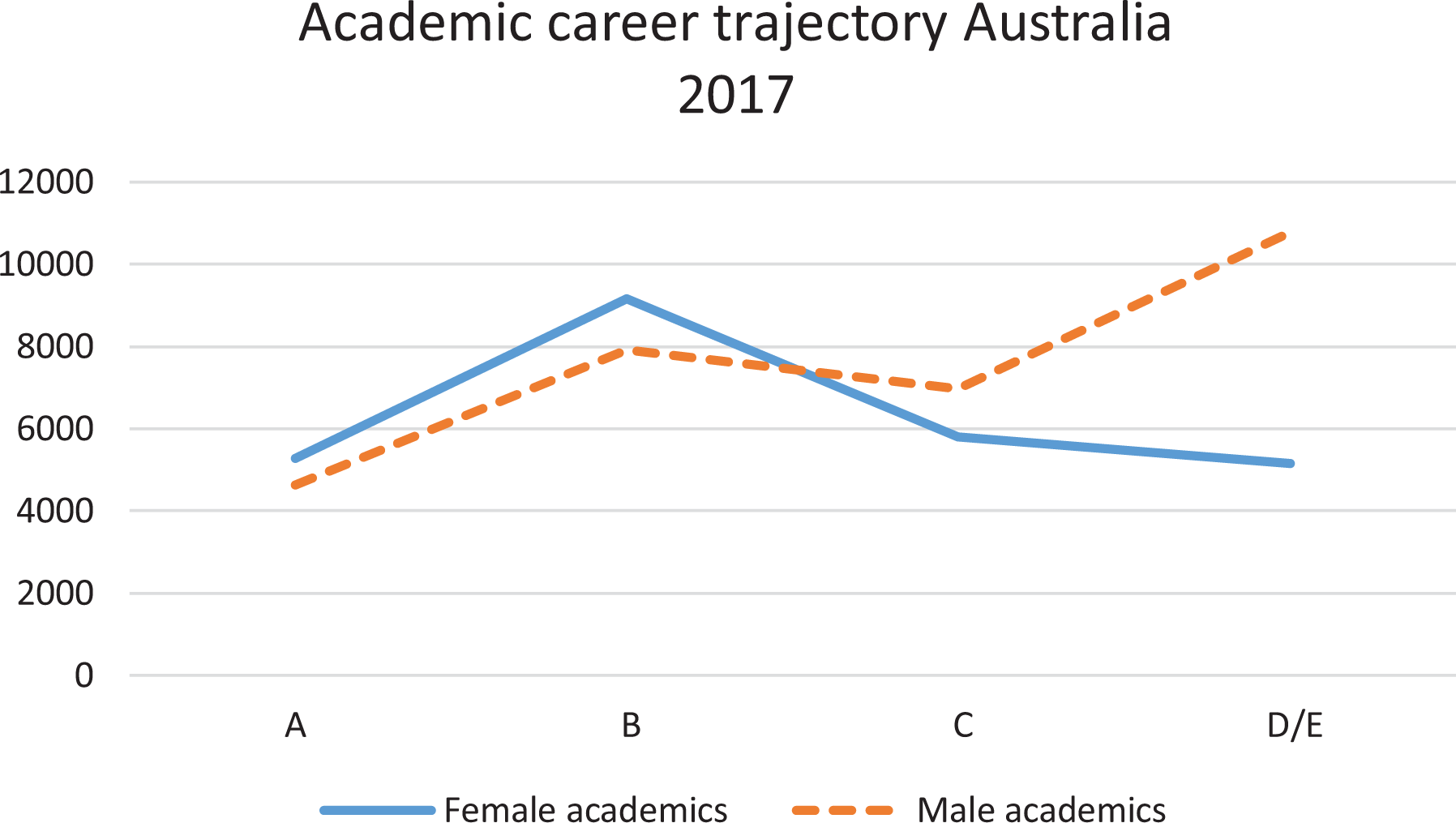
The careers of male and female academics in Australia 2017. Source: Australian Department of Education and Training (2017).
The existing literature has pointed out that the cause of the academic gender gap is “complex and multi-faceted” (Aiston and Jung 2015:205) and “inter-related” (Peetz, Strachan, and Troup 2014:2). Inhibitors to the careers of female academics identified through an extensive review of the existing literature can be categorized as societal, organizational, and individual inhibitors. While a comprehensive presentation of the barriers recognized in the literature is beyond the scope of this article, we have presented the barriers identified in Table 1.
Barriers to the Career Progression of Female Academics as Identified in the Literature.
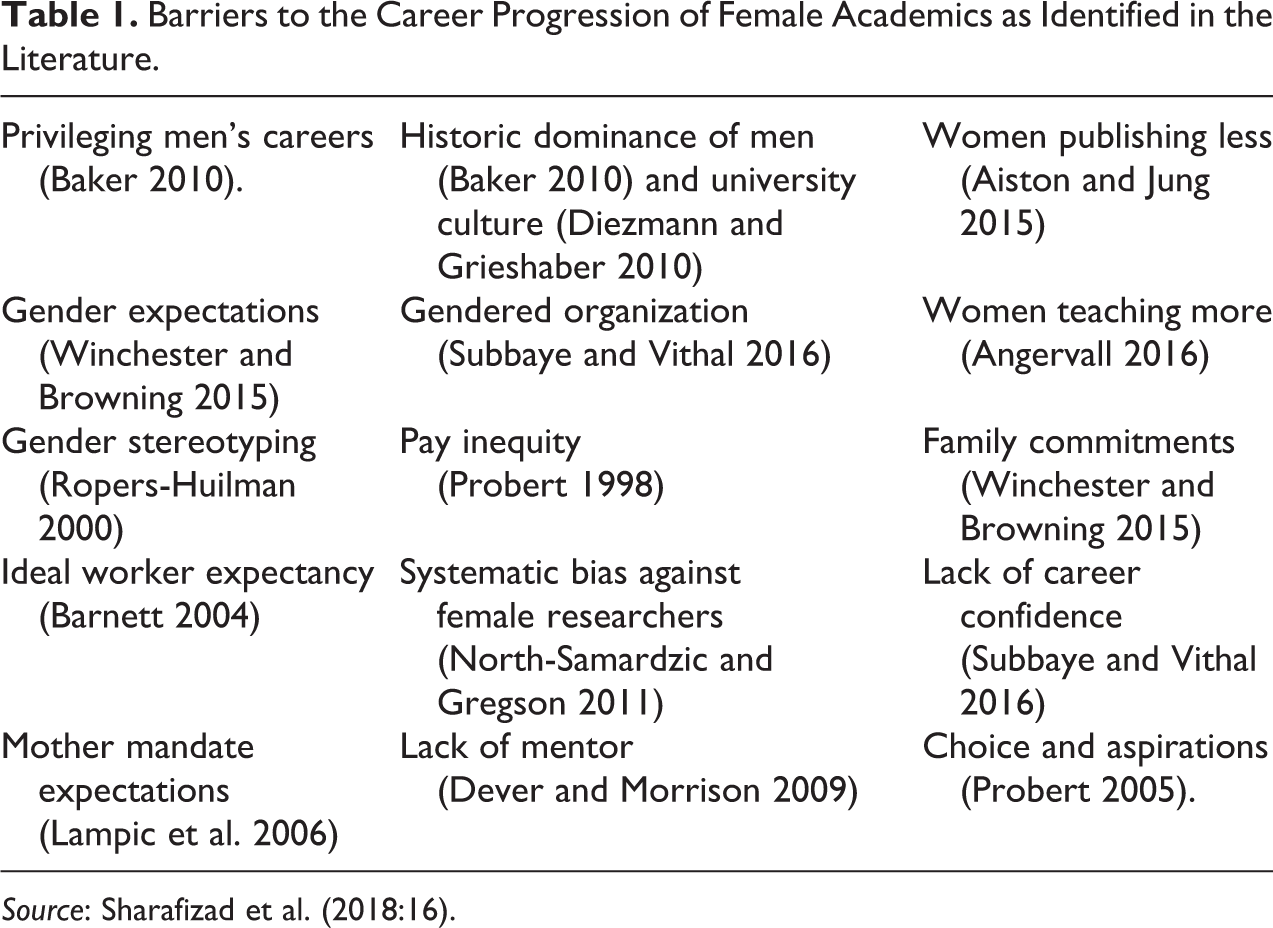
Source: Sharafizad et al. (2018:16).
As indicated in Table 1, societal barriers refer to societal norms and include the continuing dominance of the male breadwinner model (Lappegård, Goldscheider, and Bernhardt 2017) and gender role expectations (Winchester and Browning 2015), while organizational inhibitors are proposed to consist of factors such as the gendered nature of academia (Subbaye and Vithal 2016) and “a chilly climate” for female academics (Maranto and Griffin 2011:139). Various individual inhibitors have also been identified and include choice and aspirations (Probert 2005), academic housework (Heijstra et al. 2017), and nontraditional career trajectories (Burke et al. 2005). While there is no shortage of research exploring the underrepresentation of female academics at senior classifications, there is a lack of research exploring the factors that contribute to the different career outcomes from level B (Lecturer) to level C (Senior Lecturer), and level C to level D/E (Associate Professor/Professor). The aim of the current study was to explore the career experiences of male and female academics in both STEMM and non-STEMM in order to gain an understanding of the factors affecting the career progression of female academics at the identified bottlenecks.
Arts-based Research
The early twenty-first century has experienced increasingly expanding qualitative methodological boundaries (Kara 2015). The recognition that, while verbal methods have traditionally been favored our world experience is multisensory (Taylor and Coffrey 2009), has stimulated the development and adoption of increasingly unconventional research methods. As stated by Sullivan and Arthur (2006), attempts to segregate human behavior into words did not convey the meaning of what it entails to know something. Conversational inquiry has been suggested to suffer from limitations through an inability to express certain meanings (Barone and Eisner 2011) leading to other, nonverbal, methods of research enquiry. Arts-based research has been defined by McNiff (2008:29) as: …the systematic use of artistic process, the actual making of artistic expression in all of the different forms of the arts as a primary way of understanding and examining experience by both researchers and the people that they involve in their studies.
A concern associated with arts-based research is that, in most instances, it requires an extensive time commitment (Knowles and Promislow 2008) and researchers are only likely to pursue this approach if they feel it adds sufficient merit to a research project. Finley (2008:73) proposes “arts-based inquiry is uniquely positioned as a methodology for radical, ethical and revolutionary research that is futuristic, socially responsible, and useful in addressing social inequities.” Arts-based research can create awareness and raise consciousness through voicing the subjugated perspectives of those individuals that have been ostracized due to, among other factors, ethnicity, nationality, religion, or gender in order to promote discussions (Leavy 2015), making it the ideal approach for the current study examining the inequitable careers of female academics. As highlighted by Cole and Knowles (2008:60), Art-informed research is part of a broader commitment to shift the dominant paradigmatic view that keeps the academy and community separated: to acknowledge the multiple dimensions that constitute and form the human condition—physical, emotional, spiritual, social, cultural—and the myriad ways of engaging in the world—oral, literal, visual, embodied. That is, to connect the work of the academy with the life and lives of communities through research that is accessible, evocative, embodied, empathetic, and provocative.
Arts-based research challenges the traditional, dominant way of knowing. Various researchers have urged fellow scholars to adopt arts-based research methods in order to disperse their research to an everexpanding, nonacademic audience (Finley 2008) rather than traditional academic channels. Barone (2008) proposes that academics’ career aspirations result in a focus on academic writing, while Leavy (2015:264) suggests the pressure to publish in top journals is preventing scholars from exploring “cutting-edge methodology.” To this end, various scholars have called for a blending of audiences (Barone 2002) and a freeing of scholarly writing (Nash 2004). To create a place for arts research in pedagogy, Denzin (1997:568) appeals for qualitative researchers to engage in ground-level “guerrilla warfare” against the everyday suppressive structures. To develop the potential of arts-based research to address and alter social relations, it needs to connect with the lives of real people. Arts-based research offers scholars the tools to extend methodological techniques to explore aspects of everyday life that have thus far remained inaccessible. While arts-based research remains underutilized in organizational studies, Darsø and Brearley (2008) propose that these methods can assist in developing insights in business studies through encouraging individuals to feel more deeply, see more clearly, and express themselves in several different ways. Similarly, Zald (1993) proposes that organizational studies can benefit from including the humanities in their studies to gain a richer and better understanding of personal and organizational behavior. Individuals in organizations, according to Meyer (2001), have a more multifarious and informative cognitive map of their organization than they can verbally express and this knowledge can be tapped into through the adoption of nonverbal research methods.
Drawings as Data
The research method of drawing is infrequently adopted with researchers appearing to favor more “high tech (and sometimes more abstract) approaches” (Mitchell et al. 2011:34). E. Eisner (2006:9) referred to this predicament as the “oxymoron” of arts-based research, highlighting the sharp contrast between the guidance of the arts by feelings and the rational nature of the scientific realm. He argues, however, that the aim of research is to widen human experience and foster understanding and that the arts provide an opportunity to retrieve human experiences that may otherwise prove difficult to obtain (E. Eisner 2006). Images, in particular, are, in the last decades of the twentieth century, considered a more prominent enhancement of our understanding of the human condition (Prosser 2005).
There are several qualitative research methods that incorporate drawing. These methods include “Draw and Write” (DW; Wetton 1999), “Draw, Write, Tell” (DWT; Angell, Alexander, and Hunt 2015), and “Write, Draw, Show, Tell” (WDST; Noonan et al. 2016). Drawing as a qualitative data collection method has traditionally been utilized in social and health-related studies (Angell et al. 2015) investigating the perceptions of children (Knighting et al. 2011) as they are less likely to be able to express themselves adequately verbally. When investigating DW, DWT, and WDST as research methods, they are often presented as data collection methods exclusively intended for research with children, disregarding their potential application to research with adults. Drawing as data collection has been employed in studies with adults, albeit sporadically (Huss and Cwikel 2005; Kearney and Hyle 2004; Nossiter and Biberman 1990). Scholars appear to have recognized the advantages of the method. Ideas such as the circumvention of the linear mode of language (Gauntlett 2007), the accessibility of memories, feelings, and thoughts (Mitchell et al. 2011), a “change in the voice of research” and the finding that visual data can widen the “experience, understanding and representation” of the researcher and the participant (Frith et al. 2005:189) are part of the visual repertoire. These elements are just as valuable in research involving adults as they are in studies involving children. Guillemin (2004) concurs and suggests that the use of drawings can offer social researchers a theoretically invaluable source, while Marshal and D’Adamo (2011:12) propose that art can transform research: Notably, it highlights and extends the research process, and opens up these processes to include creative, non-verbal ways of understanding a subject. Moreover, art practice introduces ambiguity, complexity, emotion, intuition, lived experience and the celebration of personal interpretation or subjectivity into a realm that often strives for clarity and objectivity.
Ten Good Reasons to Use Arts-based Visual Images in Research.
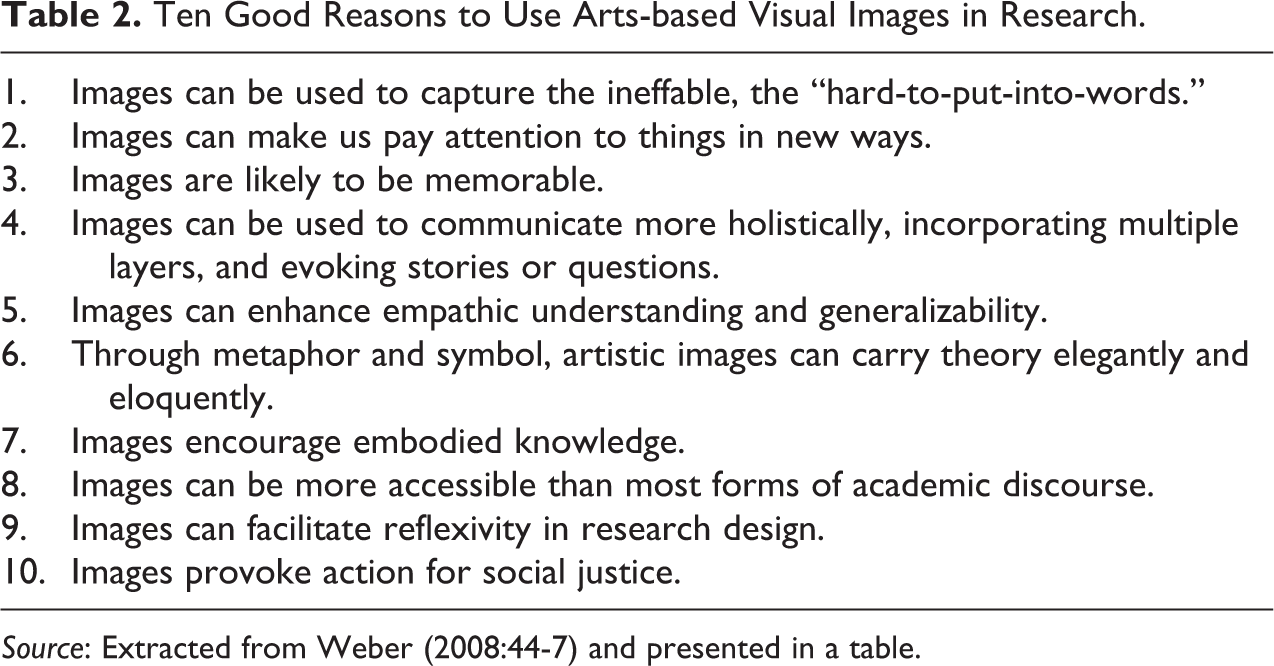
Source: Extracted from Weber (2008:44-7) and presented in a table.
Criticism Around Draw and Write
Like most other types of data collection methods, arts-based research is not without its critics and DW research has been criticized for a variety of reasons. The original DW (Draw and Write) approach introduced by Wetton (1999) in 1972 was found to be open to interpretation problems. Guillemin (2004) acknowledges that the validity of visual methodologies has been questioned due to the subjective nature of the interpretation of drawings but argues that this problem can be resolved by requesting that participants discuss the drawings as a part of the data collection process. For this reason, Angell et al. (2015) added the “Tell” (T) component to the existing DW approach. The amended method ensures both the drawing and the participant’s explanation of the drawing are analyzed (Guillemin 2004). It should be noted that the DWT procedure as outlined by Angell et al. (2015) is specifically designed and prescribed as suitable for use with children between the ages of 5 and 11 years. Specifically, the “Tell” facet of DWT and WDST suggests a childlike, one-way mode of conversation, rather than a more reflective, contemplative form of communication distinctive of verbal exchanges among teenagers and adults and may therefore be considered unsuitable terminology. As a result, the designation and outline of the DWT process suggest that this method is not particularly suitable for research with adults and this is a major disadvantage and drawback for its use in a wider variety of studies. Specifically, DWT developed by Angell, Alexander, and Hunt (2011) and utilized in subsequent studies (Angell and Angell 2013; Angell et al. 2015) was developed to equalize power disparity (Angell et al. 2015) and ensure ethical compliance in work with children (Morrow and Richards 1996). Similarly, Prosser (2012) states that drawing has been utilized as a data collection method with disabled people where verbal skills may be limited. Sewell (2011) has objected to the notion of imbalanced power, supporting Waksler (2003) who proposed that research with children should not be based on a deficiency model, but rather the recognition of differences.
The inbuilt notion of DWT to presume an inequity exists does not promote an ideal foundation for research with adults particularly in light of the qualitative inquiry tradition of minimizing the separateness and distance of the relationship between the researcher(s) and the participant (Karnieli-Miller, Strier, and Pessach 2009). Nor does DWT promote the level of reflection and discussion required to obtain data from the academics who were participants in the current study. Considering, however, the rich and novel insights this research method offers researchers we propose that DWR is introduced as an alternative qualitative method for studies involving adults. DWR offers researchers the opportunity to utilize the “Reflect” facet of the method for clarification of the produced image and for further unstructured or semistructured interview questions. While it has been recognized that defining what compromises a new method is difficult (Travers 2009), the authors surmise that, to encourage researchers to explore arts-based research in an effort to take advantage of what this method has to offer, it would be beneficial to utilize the DWR approach. This rebranding would allow researchers to draw on a distinct and tried arts-based research technique for studies involving adults rather than modifying a technique designed for research with children.
There is debate around the necessary level of artistic skills required of the researcher when conducting arts-based research (Kara 2015; Piirto 2002). Piirto (2002) suggests a researcher wanting to undertake arts-based research should be a professional artist or, at a minimum, have studied that particular art at an undergraduate level. Kara (2015), conversely, proposes that any researcher can employ arts-based research when this is suitable for that study and its context. We contend DWR recognizes these conflicting stances but ensures that the participants who create the images also verbally explain their work to the researcher thereby circumventing any ambiguity regarding the interpretation of the picture. Second, the contribution of the drawings to the depth and exploration of the topic under investigation can be argued to outweigh the disadvantage presented by the researcher not being a professional artist. We propose that an understanding of the issues represented in the drawings prevails over any education in the arts. This stance is corroborated by Weber (2008) who proposes that images produced by nonprofessionals can bring an authenticity and credibility that cannot always be achieved through more accomplished and polished pieces of art. Furthermore, the image created by the respondent can serve as a cue to obtain responses in the subsequent discussions (Bagnoli 2009). Kearney and Hyle (2004), investigating the impact of local level change on students at a rural campus of technology training school through drawings and interviews, found that some drawings could only be interpreted by the participant emphasizing the advantage of combining DW with a “Reflect” aspect. E. W. Eisner (1981:9) referred to the combination of the artistic and scientific research methods as “binocular vision,” highlighting that looking through one eye does not provide as much depth of the domain.
The Combination of Visual and Verbal
Zweifela and Van Wezemaela (2012) suggest that the introduction of drawing in qualitative research, in combination with language, facilitates an escape from the rectilinear or limited nature of the written or spoken word, allowing for a more multifaceted understanding of a real-life situation. Drawing requires respondents to utilize different cognitive processes, thereby providing insights that are not accessible through more text-based methods (Kearney and Hyle 2004). A combination of visual and verbal methods recognizes the powerful way that the arts allow researchers to access private experiences (Brady and Brown 2013), while providing participants with the opportunity to verbally elucidate their images.
A significant strength of arts-based research is the recognition that certain individuals may prefer to express themselves visually rather than in words (Guillemin 2004). DWR is therefore designed to be a flexible data collection method driven by participants’ preferences for either visual and verbal or merely verbal. In addition, the creation of the drawings provides participants time to reflect on the topic being investigated, which besides the creation of visual images, may result in a more discerning and reliable interaction (Harper 2002).
Drawing-based Studies With Adults
The interest in arts-based research has grown exponentially in recent times (Cahnmann-Taylor 2017). Weber (2008:10) predicted that an increasing volume of research in the social sciences and humanities would be image-based “exploiting the power of images and imagery to communicate both theoretical and empirical meaning effectively.” Despite this, drawing-based research involving adults appears markedly limited. The vast majority of DW studies focus on issues relating to children, such as the recognition of different abilities that must be considered, ethical considerations, and consent (Angell and Angell 2013; Knighting et al. 2011; Noonan et al. 2016; Sewell 2011; Wetton 1999), and these studies were therefore less informative in the pursuit of an adult-centered DW approach. Three studies were identified to be of specific interest in light of the current research.
Guillemin (2004) presented a methodology paper based on two studies in the health sciences. The research focused on women’s experiences regarding heart health and menopause. Guillemin conducted an interview and then asked respondents to draw their experiences at the end of the session in order to build rapport with the women. Since the study explored art therapy through arts-based research, the fact that the drawing was completed at the end of the session would not have affected the validity and reliability of the drawings. In studies such as ours, however, where the image is intended to be a part of the data, we would propose that collecting the data at the commencement of the session is more likely to result in an authentic representation of the topic under investigation. Conducting the drawing activity at the beginning ensures that the image contains the raw, initial thoughts of the respondent uninfluenced by further dialogue between the researcher and the respondent. While Guillemin (2004) provides valuable feedback regarding her positive experience with drawing as a research method in the health sciences, the study did not include participants’ feedback. Gaining an understanding of the respondents’ experiences participating in the DW process would have added depth and credibility to the paper and contributed valuable data for scholars wishing to pursue this type of data collection.
The limited number of organizational studies the authors were able to obtain that utilized drawing as a data collection method have primarily explored organizational culture (Nossiter and Biberman 1990) and organizational change (Kearney and Hyle 2004; Vince and Broussine 1996). Kearney and Hyle (2004) conducted a study of participant-produced drawings to explore the emotional impact of continuing local-level change at a technology training school in the United States. The study consisted of nine respondents who were each asked to create two images on blank sheets of paper with colored crayons. Kearney and Hyle (2004) determined that participant-produced drawings created an opportunity for more honest and meaningful verbal conversations as well as powerful validations of the verbal narrative. A majority of respondents indicated an initial concern regarding their artistic ability, highlighting the importance of reassuring participants that it is not the quality of the drawing that they are interested in, but rather the contents. Upon reflection, participants indicated that the drawing activity resulted in a more condensed presentation of experiences and that the images represented the key components of their change experiences (Kearney and Hyle 2004). A key finding of this study was that the images created required additional verbal elucidation by the respondents for accuracy (Kearney and Hyle 2004). Recognizing their study was limited by the small number of respondents (nine), Kearney and Hyle (2004) conclude with an appeal for a study with a larger sample size to verify their findings as well as the best way in which to use the methodology.
The last study that was of specific interest to the current study was conducted by Nyquist et al. (1999). This study explored the experiences of graduate students working toward their professional goals through drawings, sometimes accompanied by text. While the drawings were part of a longitudinal investigation, they were published as stand-alone with previously collected narratives serving to set the scene. The drawings were impromptu, which indicate that they were created in response to an instruction from the researcher (Driessnack and Furukawa 2012). The research questions guiding the study by Nyquist et al. (1999:18) related to exploring the experiences of graduates on their journey to becoming teachers. For this reason, the drawing instruction to the respondents was as follows: Take a few minutes to think about your personal journey as a graduate student on your way to your professional goals as a teaching scholar. How would you describe the process you’ve been through? You may want to capture this visually or with words—whichever is helpful for you.
Each study presented in this section identified areas that required further exploration when adopting drawing as a data collection method and none of the presented methods was appropriate for the research aims in exploring the careers of female academics. For the purposes of the current study, the strengths and weaknesses identified through each study presented were utilized to develop the research procedure for DWR as presented in the next section.
Development of DWR Procedure
The aim of the current research was not merely a review of the existing DW, DWT, and WDST literature but also an opportunity to introduce DWR as a suitable arts-based research method for studies with adults. While this study explored career development, we propose DWR would be an appropriate research method for a wide range of disciplines and a variety of research topics. Silverman (2003) proposed that in the twenty-first century, due to the increasing prominence of visual signals in our environment, images are becoming more prominent in people’s minds than words. In fact, it has been suggested that our current society is increasingly focused on visual cues and images (Golon 2017). As academics, it is important to recognize this shifting paradigm and take advantage of the possibilities that this offers scholars in terms of obtaining novel, previously unexplored data. Furthermore, recognizing that visual data facilitates the sharing of academic findings with the nonacademic community emphasizes the suitability of a combined visual and verbal research approach. The aim of this study is in line with Saldaña and Walcott (2001:5) who propose that research should, through any of a myriad of forms, communicate an understanding and insight into “human social life,” not only to academics but also to a “lay” audience that includes nonacademics (Denzin 1997:101).
A challenge acknowledged by Fraser and al Sayah (2011) undertaking arts-based research was that there was not much written about how these methods can be incorporated into health research, while Literat (2013) suggests the lack of documentation on drawing as a research method is a lingering limitation for its application in the social sciences. An extensive exploration of suitable methodologies for the current study highlighted a lack of documented guidance for studies involving drawing as an arts-based research method for adults for the social sciences. In order to increase the validity and reliability of the proposed DWR method, it was important to examine the existing literature around DW, DWT, and WDST as applied across disciplines to identify possible limitations and shortcomings of these methods as identified by other scholars. A thorough awareness of these evaluations allowed the researchers to create strategies to forestall and minimize the identified limitations throughout the research process and create a strict research protocol. The importance of a clear method has been emphasized by McNiff (2008) who indicated that this allows the process to be easily described, systematically implemented, and facilitates the reporting of outcomes. A framework for the process further allows replication and utilization by other researchers (McNiff 2008). The limitations identified through a comprehensive review of the literature, as well as the strategies employed in this study, for the development of the DWR procedure are presented in Table 3. Through the identification of the limitations of DW, DWT, and WDST research methods as presented in the literature, the DWR procedure was developed drawing on the methods’ strengths while minimizing the potential limitations.
Limitations of DW, DWT, and WDST as Identified in the Literature and Strategies to Minimize These in DWR.

Note: DWR = Draw, Write, Reflect.
Method
The total number of respondents who participated in DWR was 47. The sample consisted of male and female academics employed at all academic levels and across STEMM and non-STEMM faculties. The human resources department provided the researchers with a list of all academics employed at the university. Random sampling was utilized to identify a number of academics employed at various classifications and faculties who were then individually emailed a letter requesting their participation in the study. Participation was voluntary and no incentives were offered for participation. Individuals who responded and indicated they were willing to participate in the study were then emailed an information letter and asked to propose a date and time for the DWR session. Both the invitation to participate and the information letter were clear about the fact that the study was arts-based and would involve drawing to ensure participants were not surprised by this unusual request at the time of data collection. The distribution of respondents is presented in Table 4.
Respondent Distribution.

Note: STEMM = science, technology, engineering, mathematics, and medicine.
The site of each DWR session was either the participant’s individual office or a room in the university’s library. The choice of location was left to the respondent to ensure they were comfortable in the research environment. It has been proposed that in arts-based research “there is an organic and lively relationship where the researcher and the research are part of an intricate dance that is always evolving” (Cole and Knowles 2008:215). In such research, it is important for the presence of the researcher(s) to be felt and for the connections between the researcher’s life with that of those being investigated to be made known (Cole and Knowles 2008). To this end, it is important to note that the research team consisted of three female academics, as well as one female PhD candidate. Each of the researchers has their own academic career experiences and narratives, which have galvanized their interest in the continuing pursuit of gender equity in academia. To this end, we have pursued research that matters to us as well as to others (Chambers 2004).
In line with “shared authority” introduced by Frisch (1990:180) for oral history studies, data collection was designed to be a collaboration between the researcher and the participant. This democratic approach to research permits researchers to speak with their respondents, rather than for them (Hesse-Biber and Leavy 2010:151) and can play an important role in movement building (Kerr 2003), particularly to “challenge, dislodge, and transform outdates beliefs and stereotypes” (Leavy 2015:216). According to Hesse-Biber and Leavy (2010), making participants feel valued and included is likely to empower them. To this end, the current researchers made an exerted effort to create an atmosphere of power quality between the researcher and the participants as proposed by Karnieli-Miller et al. (2009) through the creation of a nonthreatening and welcoming environment decided upon by the respondent. Arts-based research by Burge et al. (2016), similarly conducted among academics at a tertiary institution, found that academics, with their own research background, had certain assumptions about what is appropriate and expressed fears about losing their authority and dignity. In recognizing the established hierarchy in academia, data collection for this study was conducted by the most junior member, rather than the most senior members, of the research team to ensure that participants did not feel intimated or uncomfortable sharing their experiences with an individual who had successfully navigated the academic career hierarchy under investigation. Each DWR session commenced with a short introduction of the research project after which the researcher ensured the respondent that the content of the drawing was of interest and not the quality of the artwork. The participant was subsequently provided with a few sheets of A4 white paper and multiple black fine liner pens with the following instructions Adapted from Nyquist et al. (1999: 18): Take a few minutes to think about your career as an academic. From your first position at a University to your current position as well as a future career aspirations. How would you visualize your career progression? What factors have hindered or facilitated your career progression? What are important influences/determinants of your current position? Think about how you may want to capture this visually or with words, whichever is helpful to you.
It was particularly important for the researchers to adhere to this strict DWR procedure to ensure that, as proposed by McNiff (2008:33), the researchers did not become “lost and ineffective when inquiries become overly personal and lose focus of a larger purpose.” Ensuring that the drawing was the first activity upon commencement of the session guaranteed the drawing remained authentic and reliable, unbiased by any communication conducted prior. It has been suggested that a lack of intense interaction between the researcher and the participant may add to the initial apprehensiveness surrounding the request to draw (Kearney and Hyle 2004). In the current study, the researchers ensured that the initial interaction was pleasant and relaxed while reiterating the quality of the image was of no interest to the research in an effort to minimize the participants’ apprehensiveness. At no point was the option of delaying the drawing activity considered due to the impact this change would have had on the reliability of the data collected.
Kamberidou (2010) proposed that innovative approaches were required to get gender back onto the agenda and change gender fatigue to gender energy. Incorporating the arts to explore the career progression of female academics constitutes a novel method to investigate gender inequity in academia. To this end, the researchers developed DWR. An overview of its application in the current study is presented in Figure 2.

Draw, Write, Reflect process as implemented in the current study. Source: Adapted from Angell and Angell (2013: 24).
Validity and Reliability of DWR
Barone and Eisner (2011) have emphasized that there is no ultimate set of criteria to appraise the worth of arts-based research. In some research, the drawing component may serve as a discussion point or an ice-breaker with no analysis of the art (Angell et al. 2015). For the purposes of this research, the drawings were important in gaining a multifaceted understanding of the career experiences of female academics and the images were therefore considered data and thematically analyzed as such. As a result, these DWR sessions created two, sometimes three, streams of data and it was important to analyze the verbal data in conjunction with the visual material. As proposed by Bagnoli (2009), it was imperative to view the visual data as significantly contributing to the sense-making at all levels of the analytical process. While two or three, streams of data have been identified as a limitation (Angell et al. 2011) in terms of validity and reliability, it can be considered a strength as the methods can triangulate one another (Huss and Cwikel 2005). Leavy (2015:258) refers to this as “an integrated approach” where each method adds dimension, depth, and texture shaping the data as a whole.
To appraise arts-based research, Barone and Eisner (2011) propose one needs to determine whether it succeeds in persuading a viewer or reader to take another look at aspects of the social world that have generally become accepted. This aim can be achieved through incisiveness or getting to the core of a social issue; generativity, where viewers are able to see a phenomena through the representation of one participant, and social significance which is measured by the impact the research can make on the lives of people in a society (Barone and Eisner 2011). A good piece of arts-based research should coax its reader, or viewer, into rethinking the “conventionally ‘real’ world” around them (Barone and Eisner 2011:21).
In addition, the drawings proved to be another way of knowing and offered real potential for this knowledge to be diffused to a blend of audiences. The DWR sessions conducted, following the procedure outlined in the previous section, resulted in drawings, writings, and/or verbal narratives that reinforced the findings of the study as a whole through the creation of a more complete picture, thereby increasing the study’s validity and reliability. For scholars exploring arts-based research, it is imperative to acknowledge these different validity and reliability approaches and recognize that the value of qualitative research lies in its social impact and pragmatic contribution to the way in which we view the world.
Data and Reflection
The majority of studies utilizing drawing as a research method have evaluated the method’s efficacy from the researcher’s perspective and from inferences made through participants’ responses throughout the drawing process (Guillemin 2004; Huss and Cwikel 2005; Nossiter and Biberman 1990; Vince 1995; Vince and Broussine 1996). Research by Kearney and Hyle (2004) is one of the few studies that has explored drawing as a research method from the participants’ perspective. The lack of data regarding respondents’ experiences with this data collection method is surprising since it can be considered an indication of the perceived usefulness of the method in addressing research problems. While the empirical study by Kearney and Hyle (2004) only consisted of feedback from nine participants, the initial feedback regarding participant-produced drawings as research data was positive and promising. It is our aim to contribute and build on this knowledge through feedback from a significantly larger number of participants. Hesse-Biber and Leavy (2010) propose that research projects may be placed along a continuum in terms of shared authority. To obtain participant views and increase the level of participant influence in the current study, feedback from participants was sought after each DWR session to obtain their views around the accuracy of their DWR image. For this purpose, the current study included an optional “Review” component, as presented in Figure 3, which aimed to explore the experiences of the DWR respondents. A five-question survey was distributed to participants six weeks after their DWR session. Three of the questions were adapted from Kearney and Hyle (2004), while the other two questions were inspired by Keast (2015). The response rate for this follow-up survey was 32/47 or 68 percent.
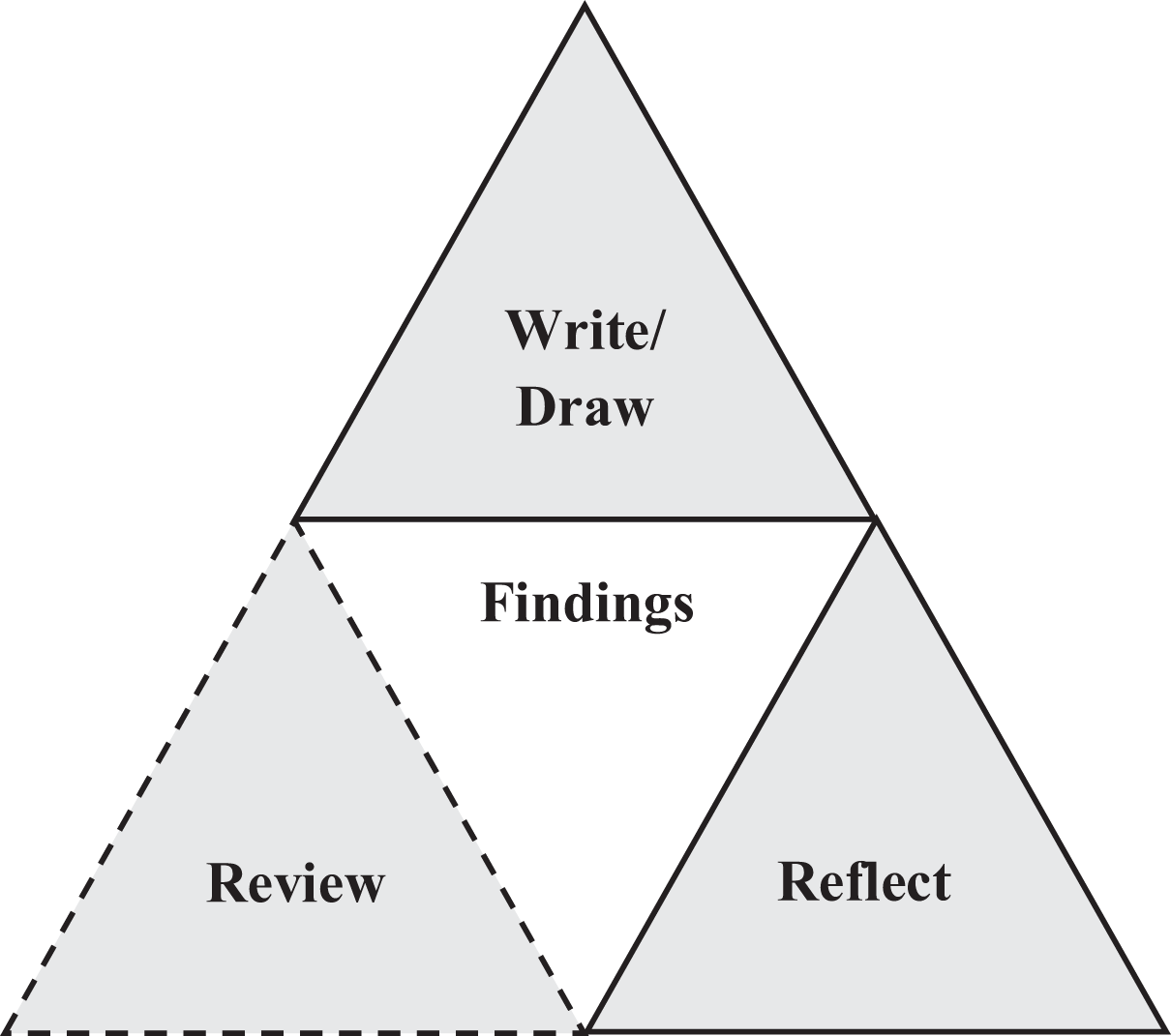
Review component included in current study. Source: Authors’ own work.
Respondents’ Experiences
Of specific interest was the respondents’ initial sentiment regarding the request to draw their careers as a part of the research process. The majority of respondents indicated they were intrigued by the method and some suggested this was the reason they elected to take part in the research. Nonetheless, these same respondents reported feeling “challenged” and “apprehensive” at the commencement of the DWR session. Three of the 47 respondents chose not to complete a drawing and instead requested to reflect on their career experiences with the researcher. In the feedback provided, these respondents indicated they felt that their drawing ability would not have been able to adequately convey their experiences and their careers. The rate of individuals declining to draw was 6.4 percent, higher than that of other studies (Bagnoli 2009; Kearney and Hyle 2004). We surmise that the fact that this research was conducted at a university among academics may be a factor in this result. As indicated by one of the respondents: I think because it was a request to draw that I hesitated as we tend to write, especially as academics. Once it was established that one didn’t have to be competent then it was fine. A bit weird ☺ I’m not a naturally creative person, and even though I am a predominantly qualitative researcher, this felt a little uncomfortable.
Participants were then asked whether they felt the drawing they created, which was emailed to them along with the survey for review, on its own reflects the core of their career experience. The responses to this question also legitimized the inclusion of the “Reflect” component in the DWR data collection method. While most participants felt their drawing represented the core of their careers, they also indicated that this would not be directly clear to someone from the wider community when viewing their image and therefore felt the “Reflect” was very important in clarifying and explaining. As encapsulated by respondents: “The interview was important. I don’t think the drawing would have stood up on its own” and “reflecting on the drawing was interesting as it showed the shortcomings of visuals only.” Multiple respondents indicated that the drawing displayed emotive aspects rather than career facts. One participant, a female employed at level A in a non-STEMM area who created Figure 4 indicated,
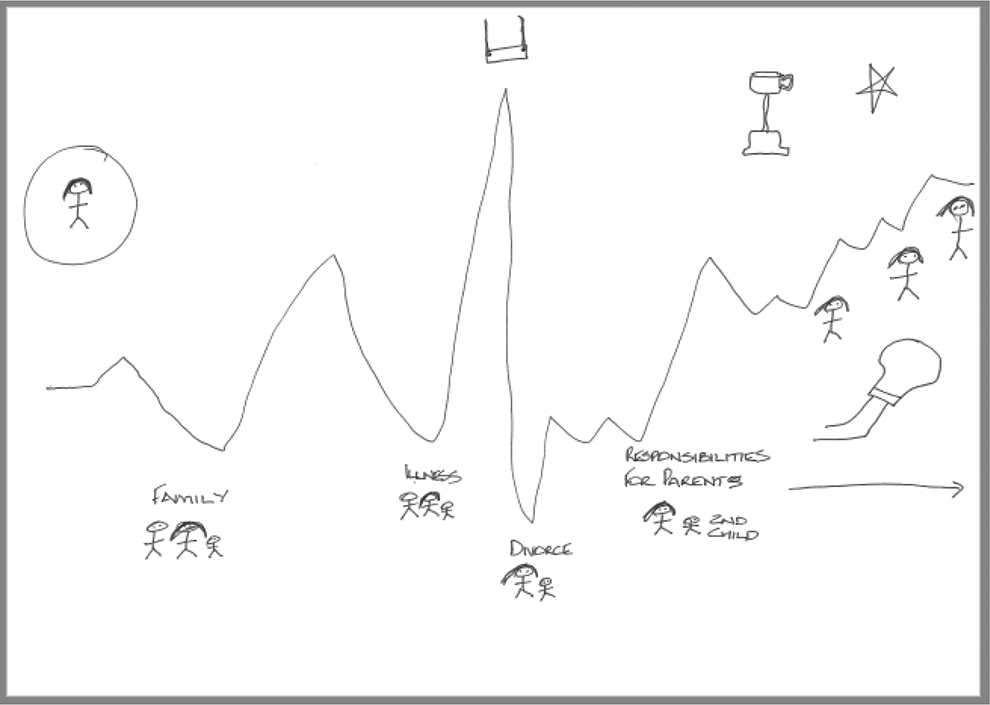
Career as drawn by a female academic, level A, non–science, technology, engineering, mathematics, and medicine.
I was surprised how I was able to visually articulate what I hadn’t been able to understand mentally, and therefore articulate verbally, until I had this opportunity. While my drawing was not detailed, I feel I was able to capture some really important elements of my experiences and then felt more able to discuss them.
Another respondent, a male Professor, created Figure 5 and indicated that:
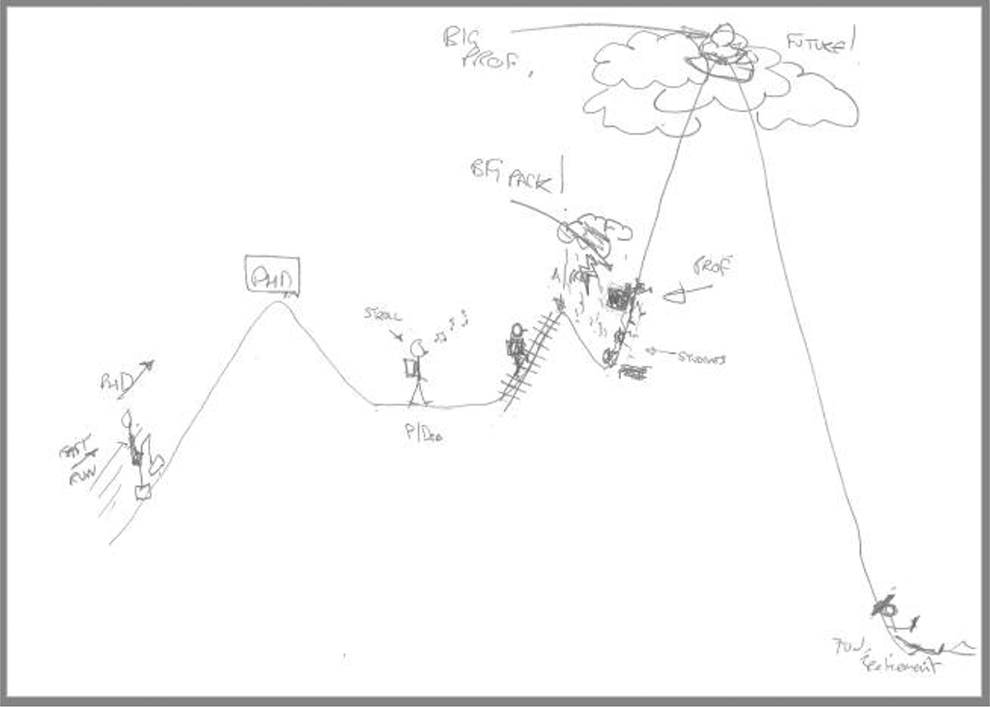
Career as drawn by a male academic, level E, science, technology, engineering, mathematics, and medicine.
It captures the emotional aspect of my career. Primarily abstract concepts which cannot be easily quantified (e.g., happiness, success, stress, trauma). So at that level it is accurate, but for details of specific examples and key events I think a verbal interview is better.
When asked whether the creation of the drawing led to a rethink of their career or a plan to change their current career approach, most respondents indicated that this was not the case. Through the 47 DWR sessions, it became clear that most academics had reflected and deliberated on their career path and future aspirations and this finding is therefore not surprising. Some respondents did indicate that the creating of the image “encapsulated” the direction of their career and “galvanized my sense that the context I am working in currently is probably pretty close to as favorable as it gets and confirmed to me that the grass is pretty green where I am.” Another respondent felt that the drawing made “the rising pressure from the university more obvious and I am mindful how I should best manage this and maintain a work life balance as the subtleties of pressure are often challenging to recognize over time.” The majority of participants felt that both drawing and writing resulted in the same level of honesty. Only one of the participants felt that the drawing may have been more honest. He said, Although not comfortable/natural to visualize things, it helped with reinforcing the discussion without having to focus on the topic at hand. This may have made the discussion more natural and unreserved.
Some Additional Respondent Comments Regarding Their Experience Participating in DWR.

Note: DWR = Draw, Write, Reflect.
Researchers’ Experiences
The researchers found that, as suggested by Zweifela and Van Wezemaela (2012:10), the drawing component made it “easier to explain relationships and processes.” Similarly, this study confirmed the finding by Nossiter and Biberman (1990) that drawing as a research methodology focused a person’s response and resulted in honesty and parsimony. Issues related to career progression were, in some instances, found to be too interrelated and intricate to accurately convey in words without getting side tracked; a drawing allowed respondents to present all relevant and related matters in one image. This was highlighted by a female academic, currently employed at level C in STEMM, who stated, The discussion helped to further elucidate details of my experiences. The drawing provided a good visual aid to reference. I was more honest in my reflections by using the drawing component.
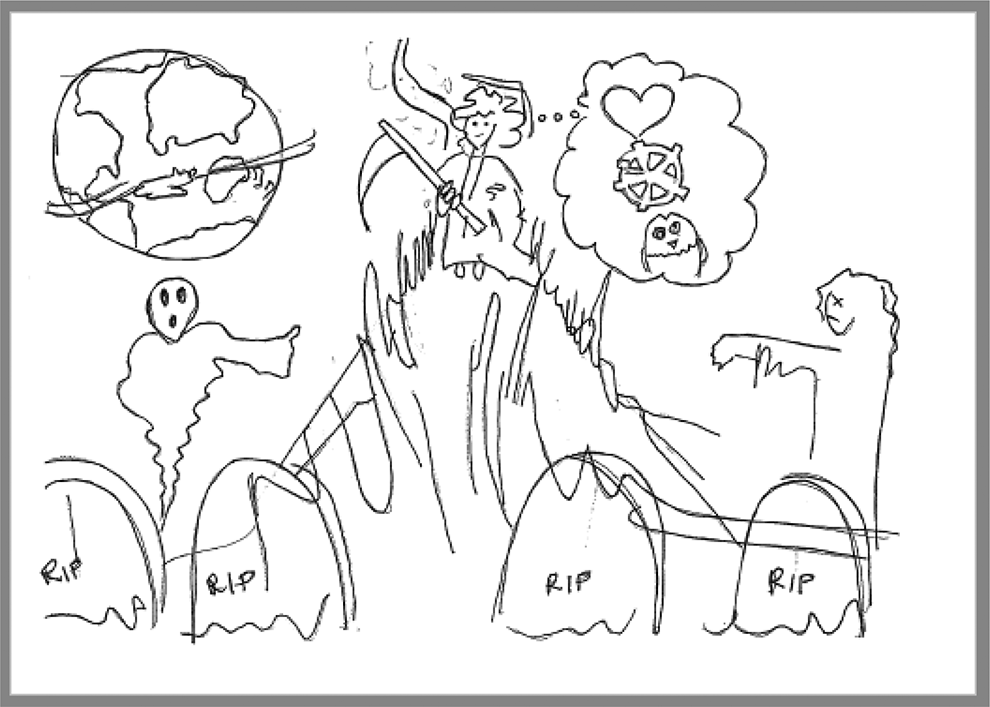
Career as drawn by a female academic, level C, non–science, technology, engineering, mathematics, and medicine.
The female academic was easy to speak to, quite light hearted and self-deprecating. Her image, however, belied the positivity of her verbal account and spoke volumes about the struggles she has had and continues to have in academia. This strain was not immediately obvious through her reflection. With the drawing as a guide for the semistructured interview questions, she revealed that her husband is seeking a divorce over, among other things, her working hours. The scythe, an instrument utilized to cut away grass and quite tiring to operate, was, in her experience, required for progression through all the weeds in front of her in her image, which she explained as: Sure, so, that’s me, I’m wearing my robes as you can see and behind me is a path and in front of me is a path and there is all these weeds and whatever and in my hand I have a scythe because as I am going I am going like this: Whish, whish (making a hacking motion) which is part of the problem that I encounter is that I tend to do things other people don’t do and so it’s hard work just getting a little bit of progress.
From the researchers’ perspectives, some of the drawings served as powerful representations of the experiences of female academics as presented in contemporary literature. Of particular interest was the finding by Heijstra et al. (2017:203) that women carry “the main responsibility for domestic and caring tasks” and these “follow women into their work environment.” While a comprehensive discussion around the study’s findings is beyond the scope of this article, the following sections will highlight some of the contributions to knowledge obtained through DWR. To illustrate, 2 of the 44 images are presented below. The first drawing (Figure 7) was created by a female academic, and the last image (Figure 8) was drawn by a male academic.
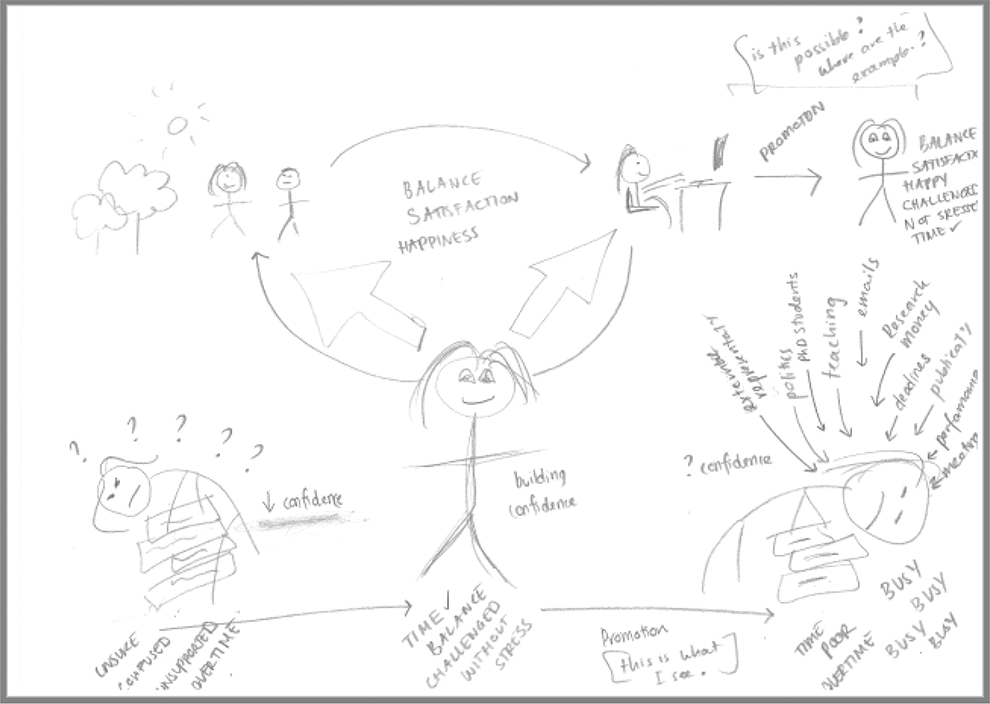
Career as drawn by a female academic, level B, science, technology, engineering, mathematics, and medicine.
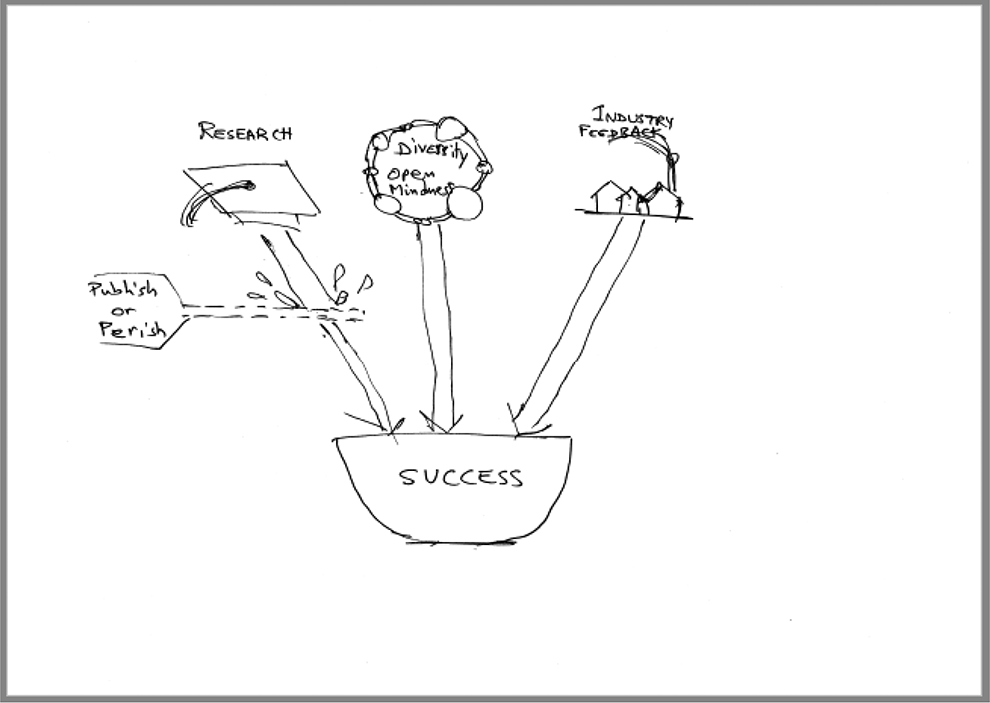
Career as drawn by a male academic, level D, science, technology, engineering, mathematics, and medicine.
While these two images merely serve as examples, overall analysis of the images revealed the majority of female academics with a family drew their children in their image, while male academics with children were significantly less likely to include them in their drawings. The images clearly indicate that the same drawing prompt resulted in dissimilar reactions. It appears that the careers of female academics are intricately linked with their family life while the male academics appeared to view their career as an entity of its own, separate from their personal lives. The variances in the careers of men and women due to family responsibilities is not a novel finding (Burke et al. 2005; Mason, Wolfinger, and Goulden 2013; Wolfinger, Mason, and Goulden 2009). The career development of women has also been explored by Burke et al. (2005) through interviews with 60 women. The inclusion of both male and female academics in the current study, however, facilitated a direct comparison between the career narratives of individuals from these two distinct demographic groups. The extent to which female academics carry family responsibilities into the workplace, and the effects of this additional commitment, has been advanced in this study. The proposed “second shift” has been described as the home/family workload that women are expected to undertake upon their return home from work (Dugan and Barnes-Farrell 2018:1; Frejka, Goldscheider, and Lappegård 2018; Hochschild and Machung 2012). Our research proposes that the second shift does not adequately express the combination of work and family responsibilities in the lives of female academics. Rather than two separate shifts, the powerful DWR images clearly indicate that female academics rather undertake these shifts concurrently and that there is no clear boundary between these two important facets of a female academic’s life as reported on widely in management literature over the past decades (Hall 1972a; Mubeen and Karim 2018). Male academics compartmentalized their work and nonwork lives resulting in a more single-minded career approach. While these competing responsibilities may be verbally discussed in an interview, the visual presentation of the competing demands emphasizes the extent to which women bring domestic responsibilities into their work environment. The DWR data highlight the significant impact nonemployment-related work tasks have on the career decisions of female academics. Referring to the combined responsibilities of family and work as separate, consecutive shifts therefore belies the lived experiences of female academics who, through their images and reflections, revealed that there is no separation between these two aspects of their lives. Managing the role of caregiver and employee simultaneously can create role conflict for female academics. Role conflict was first described by Kahn et al. (1964) who identified it as the conflict that occurs when complying with one role makes it more difficult to comply with another role (Kahn et al. 1964). The responsibilities for their families, mental or physical, were a constant presence in the lives of the female academics, be it at work or at home, and played a part in every career decision they made.
Figure 8 was created by a female academic, employed at level B in STEMM who was married and did not have any children. She was preemptively apprehensive of combining her career with a family and was not intending to apply for a promotion in fear of ending up like her supervisors and superiors of whom she said, “I don’t understand how they have time for family and friends and the associate professors just look stressed all the time.” These distinct different perceptions of their careers and the interlocked nature of work and family for female academics were not something that was clearly identifiable in the additional “Reflect” sessions. These elements were only identified through the thematic analysis of the images and may be a powerful indication as to the disparate career paths of male and female academics. The drawing instructions were identical for each participant so the fact that males and females have created such different types of images is a significant finding in relation to the careers of women. The identification of these different career experiences through DWR supports findings by Knowles and Thomas (2002) who found that arts-based research allowed them a greater understanding than an interview would have provided. Another powerful image drawn by a female participant is presented in Figure 9. This image speaks volumes about the way in which this female academic viewed her career aspirations after the birth of her child. This female academic is currently employed at level B. She explained her reevaluated career aspirations and associated career frustrations as,
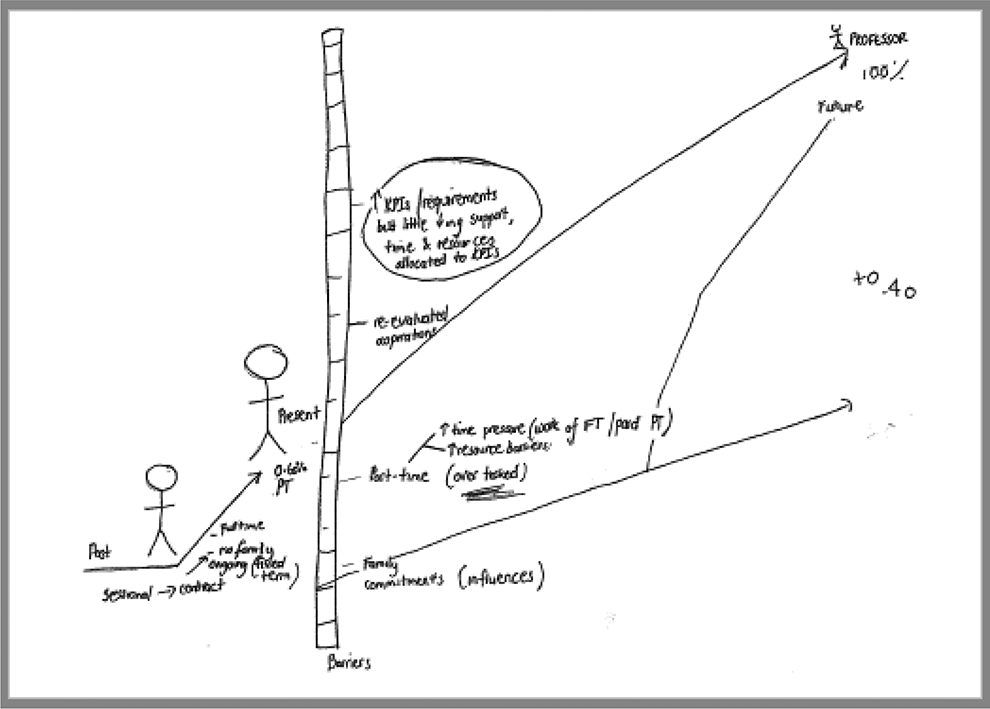
Career as drawn by a female academic, level B, non–science, technology, engineering, mathematics, and medicine.
I mean it is annoying when you think about…you compare yourself against another academic who has been here the same time who is a male and who can fast track though they have got a family but that duty falls on their [wife]…but that’s more of a societal thing as well, which I think is changing a little bit.
This female respondent indicated that her career aspirations used to be to unequivocally achieve professorship. When she started her family, however, and due to caring responsibilities as her partner continues to work full time, she changed her employment from full time to fractional (.6). The drastic “reevaluated career aspirations” portrayed in the image, as well as subsequent discussions, reiterated that the career changes that female academics experience due to family commitments are significant. Not only do family commitments slow down their personal career progression due to a lack of time, but other academics, who remain in academia during this time, continue to progress their career thereby amplifying the career disparity. A significant associated finding of this research was that work–life conflict (WLC) does not need to be experienced to affect the career decisions of female academics. The female academics in the sample all feared WLC in such a way that they were more likely to be hesitant and cautious in career decisions for fear of “taking on too much” or as one of the respondents, a female at level A in the Social Sciences, stated, That scares me a little bit. To aim too high…because then you think: could I do it, could I do it? Could I maintain it? And I don’t…. I wouldn’t want to start something I wouldn’t finish.
The inclusion of both male and female academics in STEMM and in the Social Sciences furthermore meant that we were able to compare and contrast the images and experiences of academics across several demographics. This study did not find any evidence of the chilly climate in STEMM (Maranto and Griffin 2011) or “academe’s glass ceiling” (Bain and Cummings 2000:493) as presented in the literature. None of the DWR images created by female academics included organizational policies or structures that were perceived as career inhibitors by these women. Furthermore, a lack of self-efficacy has been suggested to play a role in the lack of women in STEMM (Busch 1995; Ellis, Fosdick, and Rasmussen 2016; Jordan and Carden 2017; Rosson, Carroll, and Sinha 2011). In the current study, however, DWR unearthed a similar lack of confidence among female academics in the Social Sciences with women in both STEMM and non-STEMM including confidence as a barrier in their DWR images. This finding proposes that self-efficacy alone cannot be held accountable for the unacceptably low number of women in STEMM and that further research is required.
In conclusion, the researchers’ experiences with DWR correspond to and extend insights presented by Kearney and Hyle (2004) who proposed that images at the minimum can add a dimension to any research if only through providing affirmation of the respondents’ verbal narrative. In the current study, however, the benefits of this method experienced by the researchers went far beyond merely the provision of visual affirmations through the focus it provided the respondents, the researchers, and subsequently, the conversations that followed serving as a map for the verbal reflections. Specifically, the emotive aspects included in the DWR images provided a level of honestly from the commencement of the DWR session that is difficult to achieve through a verbal interview alone. The images provided comprehensive and focused snapshots of the career experiences of academics, facilitating a comparison between key components of the career narratives of male and female academics. The identified benefits are likely to assist any study in obtaining richer, deeper, and more insightful data. Lastly, our society’s increasing focus on images facilitates the distribution of visual academic research such as this to an audience beyond the traditional channels and contribute to social change (Leavy 2015).
Concluding Comments
The vast majority of organizational research has been conducted through quantitative methods, qualitative methods, or a combination of both. Despite its potential, as well as appeals for the use of more visual methods in organizational studies (Ray and Smith 2012), arts-based research has, as yet, not been fully explored in this discipline. The purpose of this article was to review arts-based methods that involve drawing and introduce an adult-centered research method that draws on the strengths of these almost exclusively child-centered methods. The proposed DWR process has been utilized to explore the careers of female academics. The experiences of both the participants and the researchers with this method have been presented. Rather than a dichotomy of methods, we propose the combination of drawing with the more traditional qualitative “Reflect” facet adds a richness to the data that cannot be obtained through either method on its own. Furthermore, as not every participant is comfortable with the drawing activity, DWR offers participants the opportunity to verbally address the question rather than excluding them from the research.
In summary, arts-based research offers organizational studies the opportunity to access data that has been inaccessible through traditional methods. Respondents indicated that the created images were more likely to include emotive aspects and abstract concepts that were difficult to express with words, contributing new and deeper findings. This study confirmed that women’s shifts are undertaken concurrently (Mubeen and Karim 2018) rather than sequentially as proposed by the concept of the second shift (Hochschild and Machung 2012). The female academics in the sample perceived there to be no barrier between the work and nonwork aspects of their lives. Furthermore, the DWR images offered significant insights into the career decisions of female academics highlighting the multifarious nature of their career considerations. These considerations were found to be intensified in the images created by female academics employed at the identified career bottlenecks. Novel and rich data can provide policy makers and human resource managers with valuable and pragmatic input regarding the career experiences of female academics, thereby aiding the design and implementation of policies aimed at accelerating gender equity efforts. We extend a call to other organizational scholars to discuss and explore arts-based methods in organizational studies as well as in other disciplines. In order to advance contemporary knowledge and research potential, further dialogue is required. While traditional research methods are useful and provide consistency of approach, the pursuit of new knowledge can also be attained through the pursuit of the unknown.
Footnotes
Declaration of Conflicting Interests
The author(s) declared no potential conflicts of interest with respect to the research, authorship, and/or publication of this article.
Funding
The author(s) received no financial support for the research, authorship, and/or publication of this article.
