



Abstract

Introduction
Fournier’s gangrene was first described by the venereologist Jean Alfred Fournier in 1883 as fulminant necrosis of the scrotum and penis following urogenital infection. It is a necrotising fasciitis of external genitalia. 1 Predominantly seen in elderly men, diabetics and immunodeficient patients, it is a polymicrobial infection caused mainly by Escherichia coli, Klebsiella, Staphylococcus aureus, Streptococcus species and anaerobes. 1 Fournier’s gangrene spreads extensively to the surrounding tissue and frequently results in septic shock and multi-organ failure. Active treatment includes broad spectrum intravenous antibiotics and radical surgical debridement of necrotic tissue. 1
Chikungunya fever is caused by Chikungunya virus (family togaviridae, genus alphavirus) which is transmitted by the bite of infected Aedes aegypti and Aedes albopicus mosquitoes. 2 Constitutional symptoms are high grade fever, a petechial or maculopapular rash of the trunk and occasionally limbs, and marked polyarthritis/arthralgia,2,3 and intense headache, insomnia and extreme prostration. This disease is usually self-limiting but is associated with significant morbidity related to persistent arthritis and long-term anti-inflammatory therapy. Treatment is supportive. 1 Mucocutaneous manifestations include facial flush, fine discrete morbilliform exanthema, pigmentary changes, apthous ulcers, desquamation, scrotal dermatitis and purpura.3,4 Though scrotal dermatitis or scrotal ulcers are rare manifestations, necrotising fasciitis may present in the form of Fournier’s gangrene.3–5 We hereby present such a case.
Case report
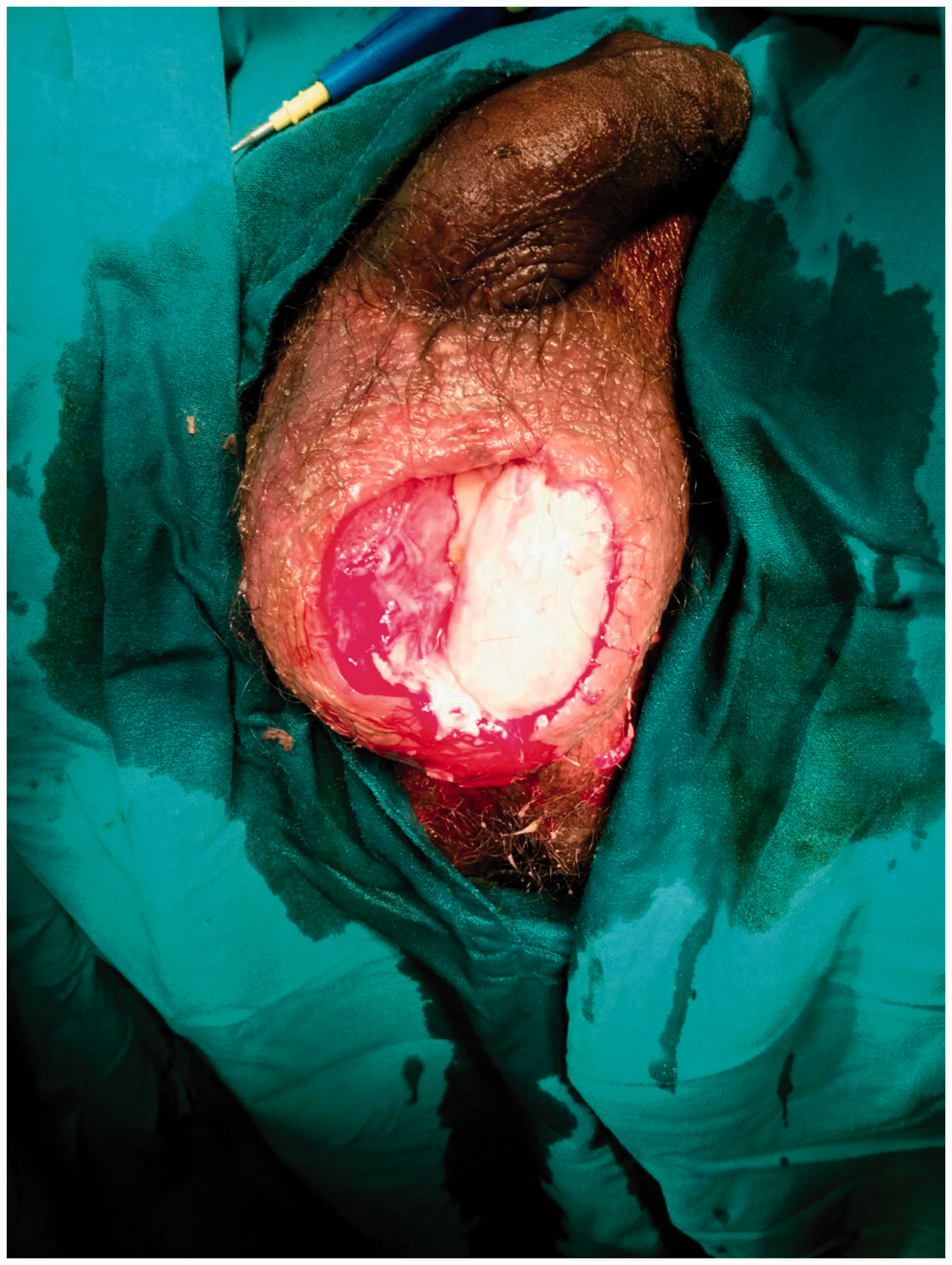
A 60-year-old man with no known co-morbidity, no urological or lower gastro-intestinal complaints and no traumatic entry wounds presented with complaints of high grade fever with a rash and arthralgia of three days’ duration, followed by pain, swelling and a reddish discolouration of the scrotum. On examination, pyrexia of 38.4℃, tachycardia of 110 beats/min and normal blood pressure were found. There was a large painful tender scrotal swelling occupying the majority of its left-sided surface with erythaema with desquamation of the overlying skin (Figure 1). Purulent discharge was issuing from the swelling. Investigations revealed: Hb 123 g/L, white blood cell count 19.4 × 10⁹ cells/L, platelet count 85/mL, random blood sugar 6.9 mmol/l, IgM for Chikungunya positive, IgM for Dengue and malaria antigen and HIV (by ELISA) all negative. Renal and liver function tests were within the normal range. He was not a known diabetic and there was no history of chronic steroid intake or other immunotherapy. A scrotal debridement under spinal anaesthesia was undertaken. Necrotising fasciitis of the left half of the scrotum, with sparing of the left testicle, was found with pus extending to the left groin and perineum (Figure 2). The right scrotal half and right testicle were essentially normal. Broad spectrum intravenous antibiotics were commenced and an uneventful postoperative period ensued. Secondary closure was achieved after two weeks and the patient was discharged with a healthy wound.
Fournier’s gangrene of the left half of the scrotum. Intraoperative findings showing necrosis of scrotal skin and subcutaneous tissue.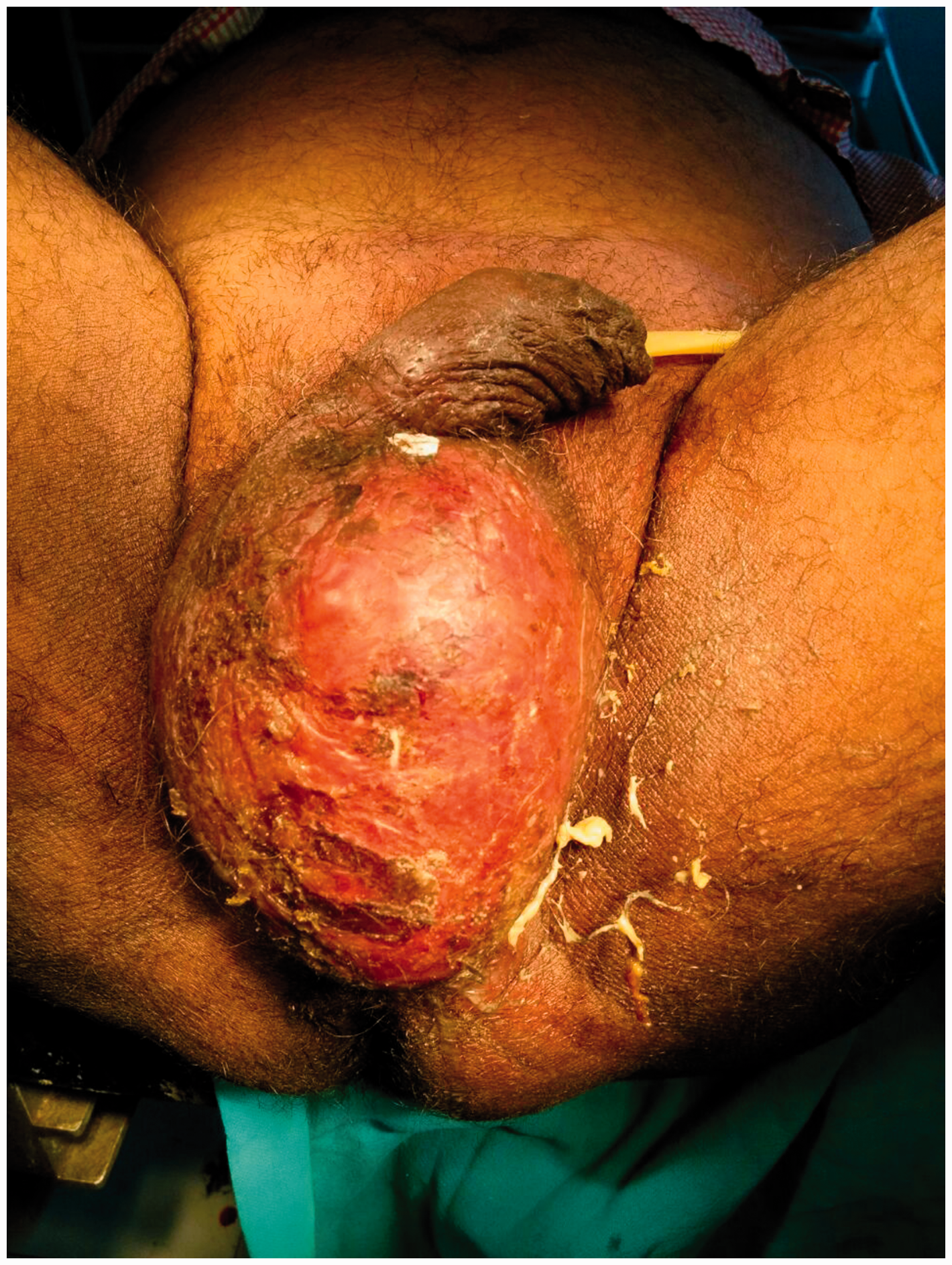
Discussion
Fournier’s gangrene is defined as necrotising soft tissue infection of external genitalia and perineum. 1 It is caused by obliterative endarteriritis of subcutaneous arteries leading to gangrene of the overlying skin and subcutaneous tissue. While many mucocutaneous manifestaions have been reported in association with Chikungunya fever, it is very unusual to develop Fournier’s gangrene from such lesions. Although Fournier’s gangrene may occur in young immunocompetent individuals, 1 the advent of Chikungunya fever may have been sufficient to depress this patient’s immunity and render him liable. Prompt surgical debridement of necrotised tissue and broad spectrum antibiotics nonetheless remain mandatory.1,5