




Abstract
Extraction of teeth is one of the most commonly performed minor oral surgical procedures. However, some clinical situations render routine extractions challenging. Here we report such a situation and a simple and innovative technique that involves the use of braided stainless steel wire to remove an unfavorable palatally inclined left upper lateral incisor with least damage to adjacent structures.
Introduction
Dental extractions are the most common oral surgical procedures performed in the dental office. In situations where a forceps removal of the tooth is not possible, the transalveolar method of tooth removal is employed. In this method, tooth structure and adjacent bone are removed in a planned fashion to permit the extraction of the tooth with either forceps or elevators. The transalveolar method is sometimes fraught with danger of inadvertent damage to adjacent vital structures. Such situations may require the innovative use of commonly available armamentarium in the dental office. 1 Here, we report a scenario in which a braided stainless steel wire was used to remove a fractured palatally inclined root.
Technical modification
A 25-year-old female reported with a painful upper left lateral incisor. She had undergone root canal treatment for this tooth a few years before. Intraoral examination revealed a crown fracture of this tooth at the cervical level. The root remnant was inclined palatally owing to crowding and pathological migration of the adjacent teeth (Figure 1). A forceps extraction was deemed impossible given the inadequate tooth structure and obstructed path of removal. A transalveolar method carried a significant risk of inadvertent iatrogenic damage to the adjacent tooth structure.
Fractured palatally inclined root of the maxillary lateral incisor.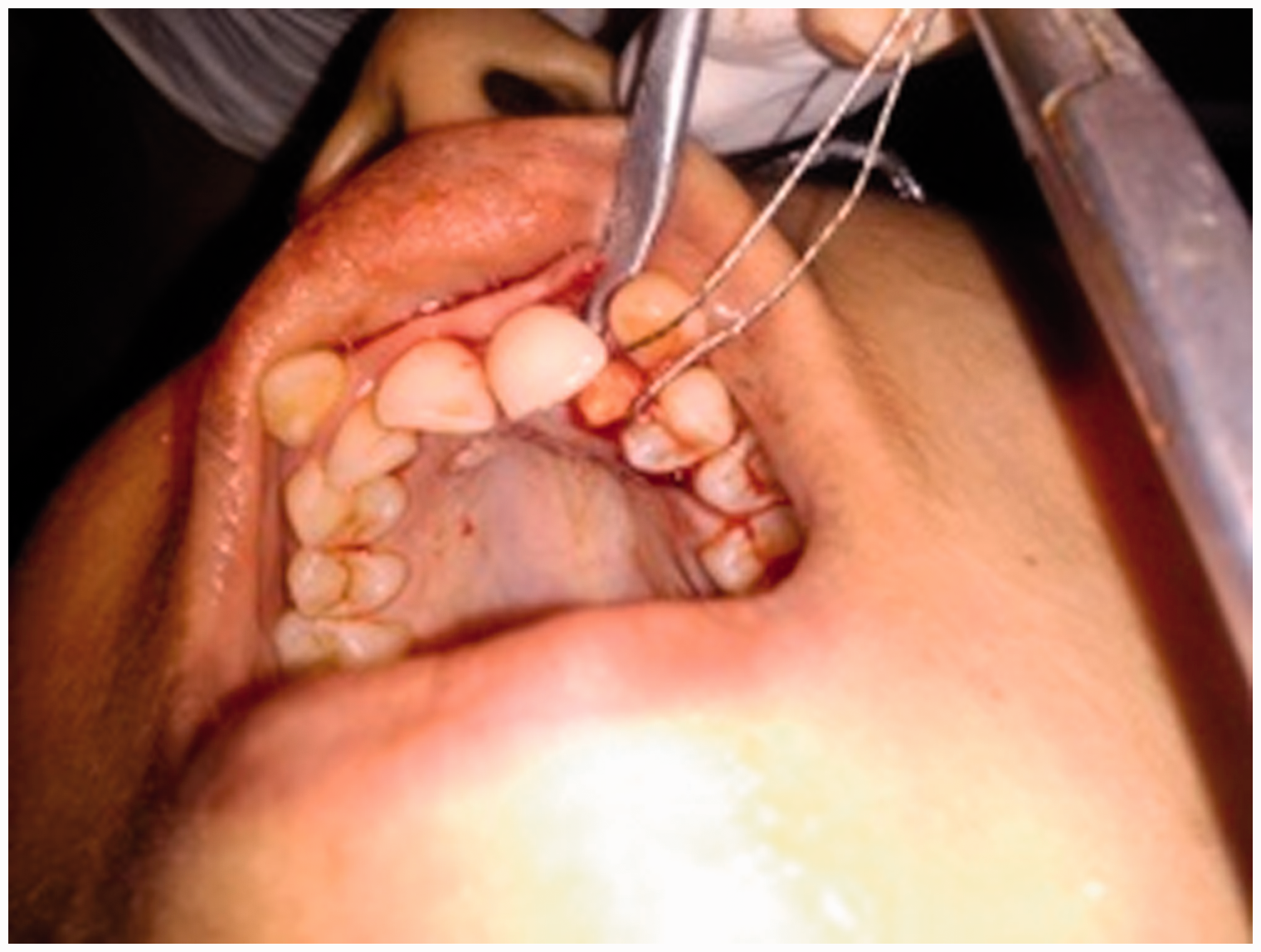
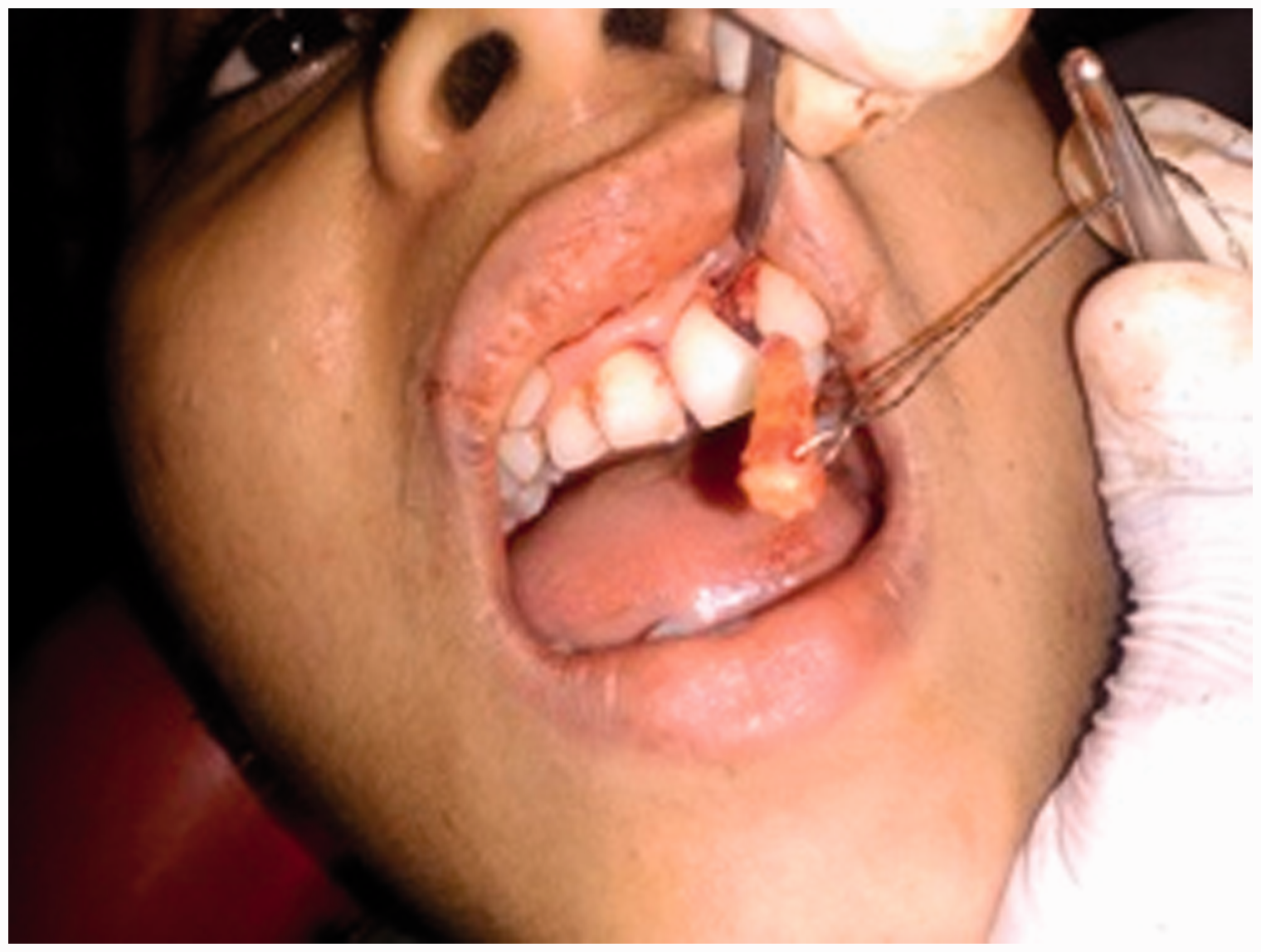
To overcome this clinical situation, a hole was drilled through the root bucco-palatally with a 701 Tungsten Carbide burr under copious saline irrigation, taking care to avoid damage to adjacent teeth and soft tissues. A 10-cm long 28-gauge stainless-steel braided wire was gently inserted through the hole in the root remnant and then twisted. The root was now gently luxated using a periotome and a slow and steady traction force was applied using the wire. The root was delivered in toto with no damage to the adjacent teeth and soft tissues (Figures 2 and 3). This method of extraction can be employed in situations where neither a forceps nor transalveolar exodontia is possible.
Schematic illustration of the insertion of braided stainless-steel wire. Delivery of the root remnant.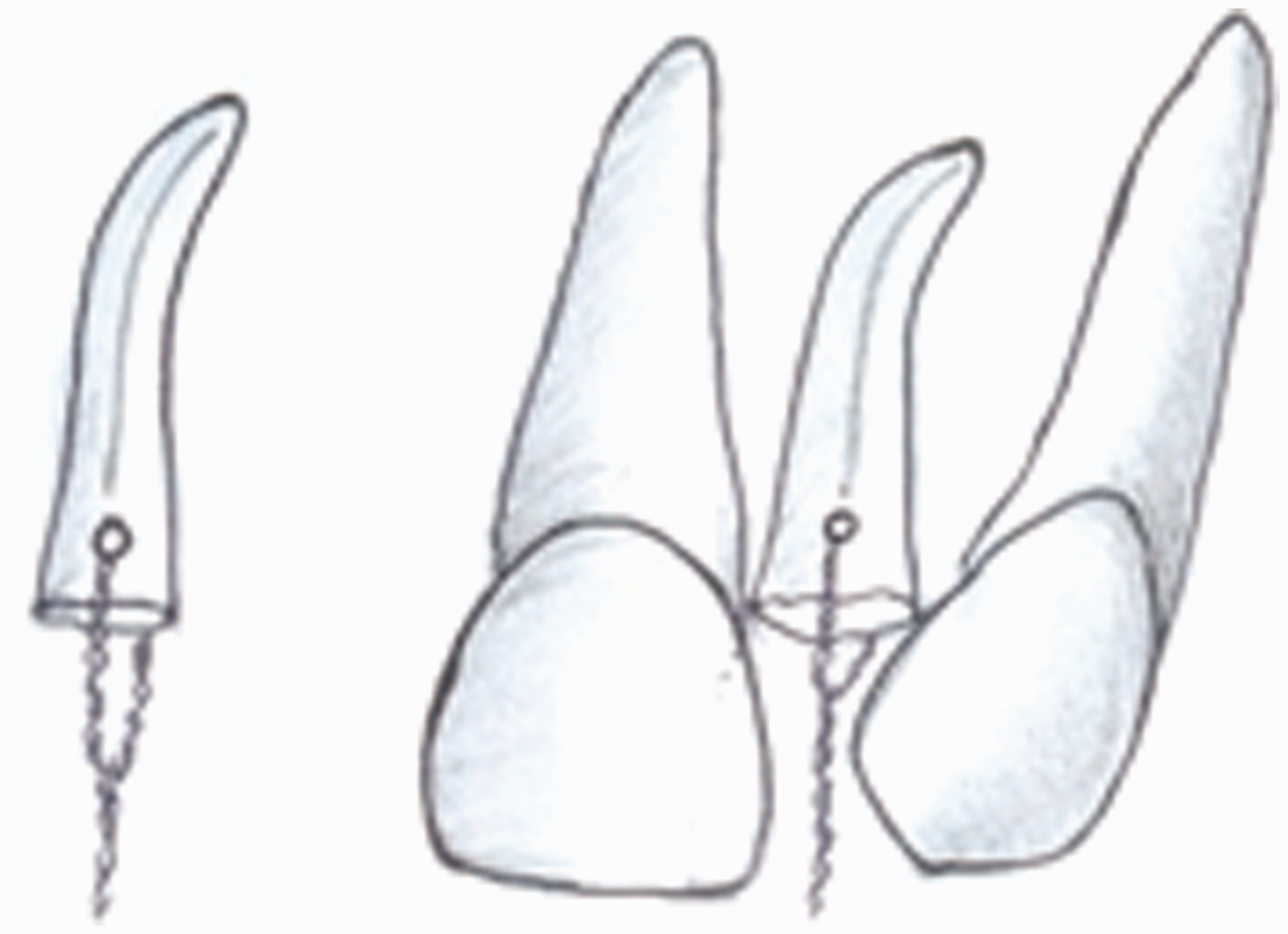
Discussion
Unimpeded access and visualisation of the surgical site are the sine qua non for success in challenging dental extractions. Particular care should be taken during transalveolar dental surgery to minimise injury to adjacent teeth and soft tissues. Occasionally, unusual clinical situations may be encountered and will require customised treatment plans. Krishnan described the use of a 40- or 50-sized endodontic reamer to remove the fractured palatal root of an upper molar tooth. 2 The use of an endodontic H-file luted with resin-modified glass ionomer cement to remove fractured palatal roots of small size has also been described. 3 However, while these techniques employed on smaller tooth root remnants require minimal force, an unhindered path of removal is critical for successful extraction. In our case, the larger root and restricted path of removal necessitated the innovative use of the 28-gauge stainless-steel wire.
Conclusion
Dental surgeons may consider the use of the above described stainless-steel wire technique in situations where other options are precluded by restricted access and visibility. A careful and judicious technique will ensure minimal damage to adjacent normal and vital structures.
Footnotes
Acknowledgements
The authors thank Dr. B. Krishnan, Additional Professor, Department of Dentistry, JIPMER for his assistance in the preparation of this manuscript.
Declaration of conflicting interests
The author(s) declared no potential conflicts of interest with respect to the research, authorship, and/or publication of this article.
Funding
The author(s) received no financial support for the research, authorship, and/or publication of this article.