



Abstract
Some surgeons use a Malecot catheter for drainage of intra-abdominal or mediastinal collections. These tubes are usually removed after 2–3 weeks. If left later, they may become entrapped due to the ingrowing of tissue, and fibrosis within the flower-like tip of the Malecot’s catheter. Its removal then needs careful manipulation to prevent organ damage. We present our experience in ensuring the safe removal of such entrapped Malecot's catheters in liver abscess patients.
Introduction
Existing literature describes the instillation of N-acetyl cysteine, a commonly available mucolytic, through the Malecot catheter, and clamping the tube for six hours, prior to its easy removal. 1 N-acetyl cysteine can break down disulfide bonds in mucoproteins results in decreased viscosity of mucoid secretions, as well as dissolving fibrinous adhesions of a liver abscess, for example.2,3
Results
Three cases of pyogenic liver abscess were managed with Malecot catheter insertion under ultrasound guidance. Four to six weeks after insertion, their drainage having reduced to <10ml/day for two consecutive days, catheter removal was planned. However, resistance and pain while attempting such removal were encountered. Instillation of N-acetyl cysteine was introduced and removal was attempted. However, the catheters remained entrapped in all cases (Figures 1,2).
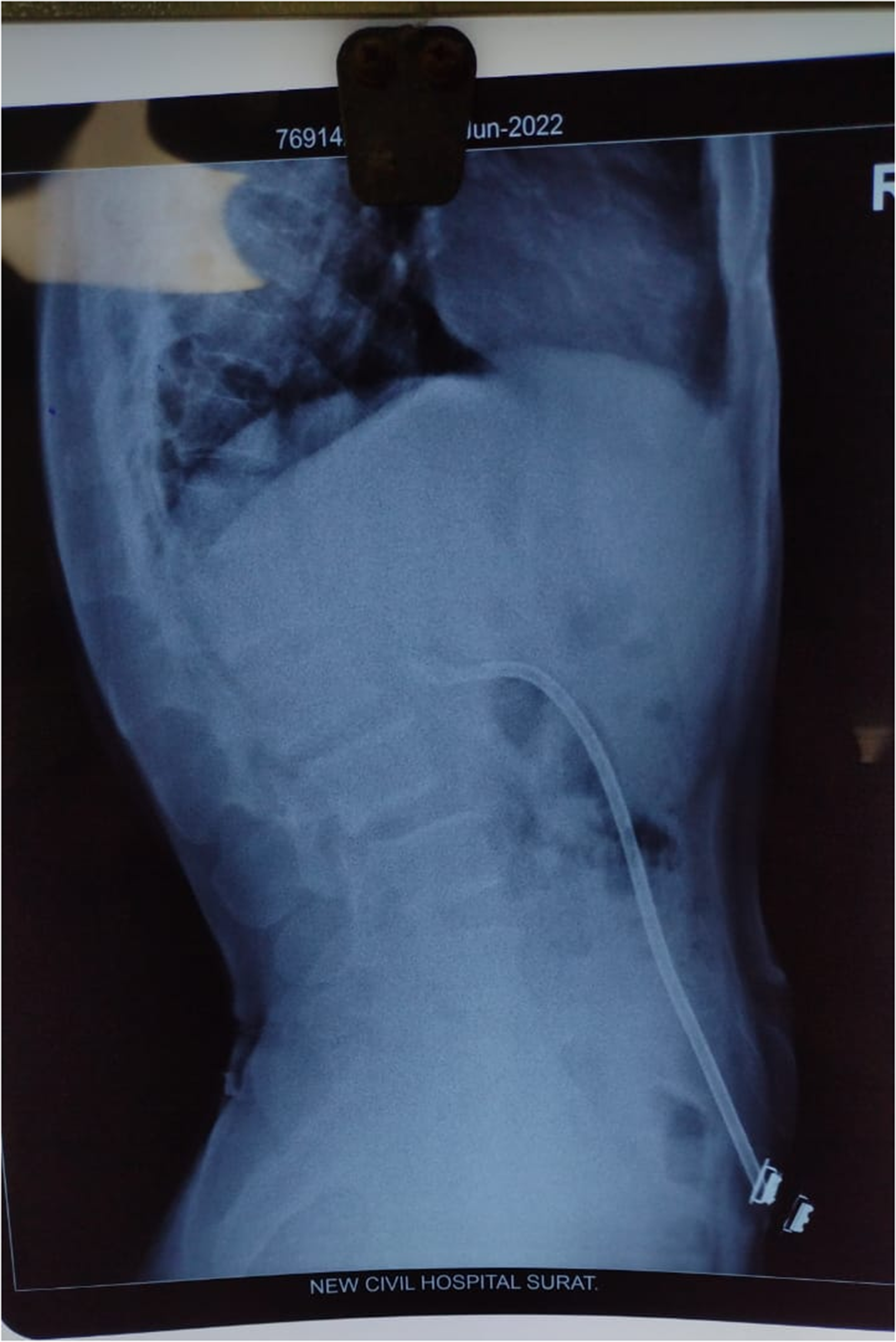
Lateral abdominal radiograph showing entrapped Malecot catheters.

AP abdominal radiograph showing entrapped Malecot catheters.
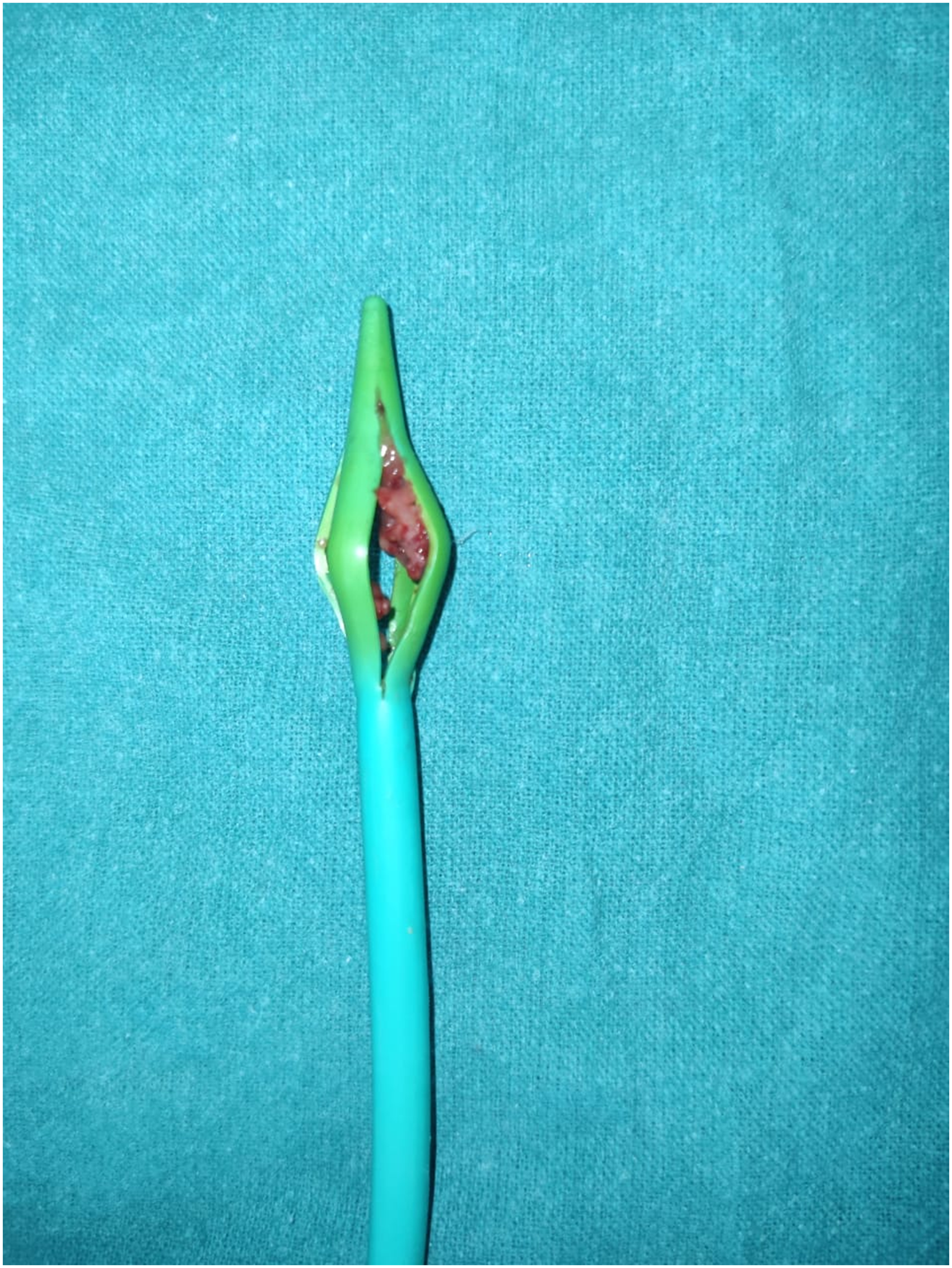
Malecot catheter after removal showing tissue within the flower-tip.
Malecot catheters are normally easily removed (Figure 3), but in the cases described, the catheters were finally successfully removed after waiting a full twelve hours after instilling N-acetyl cysteine, using traction only, without the use of a trocar or needle, as such instruments may enter surrounding liver tissue if the Malecot catheter had been inserted at an angle to the surface of liver (Figure 4).
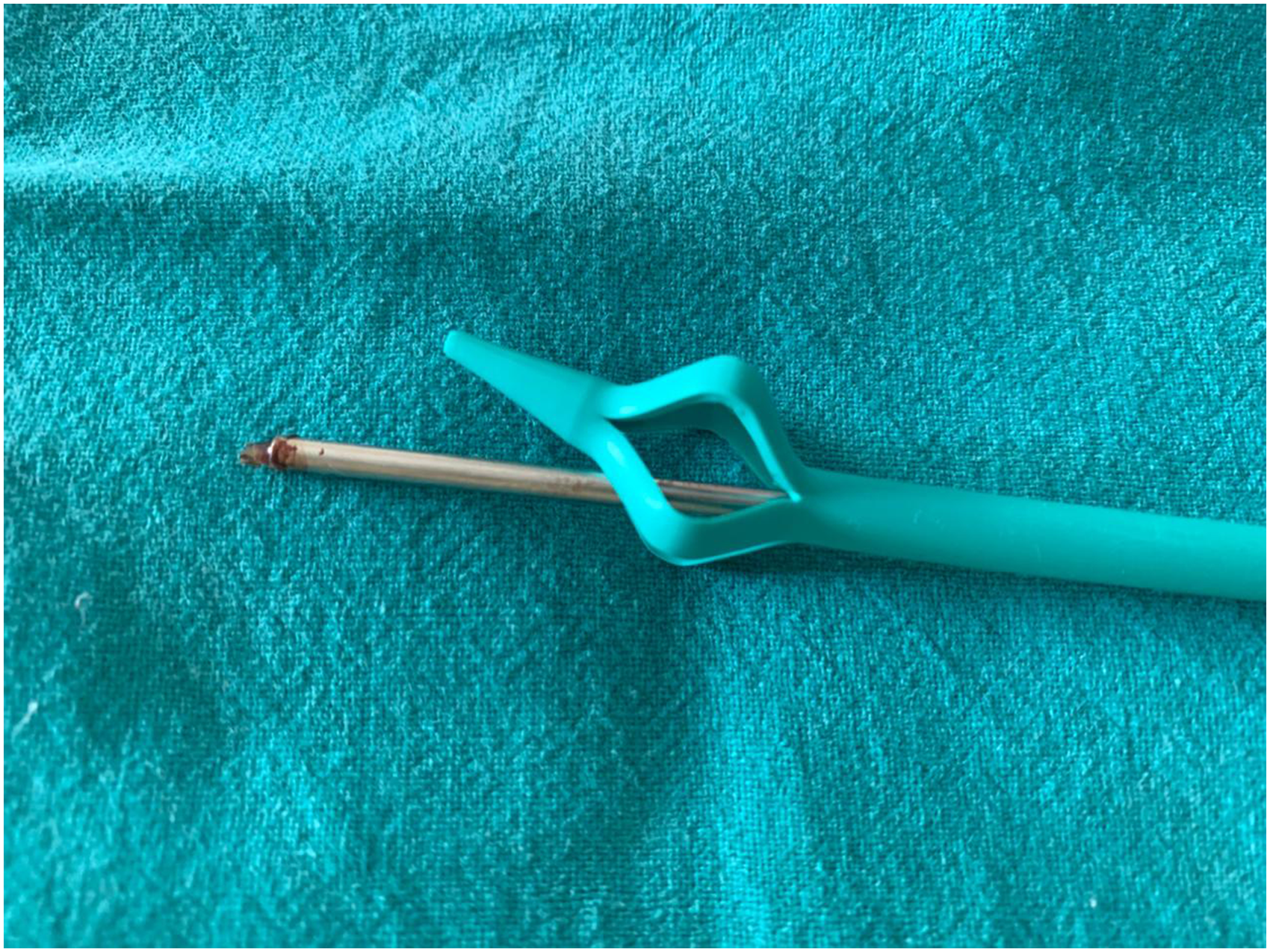
Overshooting of trocar beyond flower tip.
Footnotes
Acknowledgements
This research received no specific grant from any funding agency in the public, commercial, or not-for-profit sectors.
Declaration of conflicting interests
The author(s) declared no potential conflicts of interest with respect to the research, authorship, and/or publication of this article.
Funding
The author(s) received no financial support for the research, authorship, and/or publication of this article.
