



Abstract
We report a case of the appearance of dark pigmented skin on the plantar surface of the foot and toes in a young child, likely caused by the beetle Carabus impressus. Few such documented cases occur in the literature and none reported from our region. Identifying the cause is important to avoid unnecessary investigations and treatment, and to provide reassurance to patients.
Case presentation
A two-year old generally healthy child presented with a sudden, dark purple–black macule on the plantar aspect of the right foot and toes (toes 1–4). There was no pain, tenderness, swelling, itching or systemic involvement. The parents noted that the lesion had appeared rapidly and that an insect had been found in the child's shoe the day before. Physical examination revealed a well-demarcated pigmented area with no inflammatory signs. Attempts to remove the pigment mechanically (with soap and alcohol) were unsuccessful.
There were clear borders on the anterior distal plantar surface of the right foot, affecting toes 1–4, but no involvement of the toe folds, no swelling, no pain upon palpation, no localised temperature variation, and no inflammatory signs, nor changes in skin texture. The colour of the lesion transitioned from a deeper shade in the centre to a lighter hue at the edges (Fig. 1). Hyperpigmentation secondary to insect contact was suspected with the specific beetle species (Carabus impressus), a picture of which beetle, on being shown to the parents, matched the beetle they found in the child's shoe (Fig. 2).
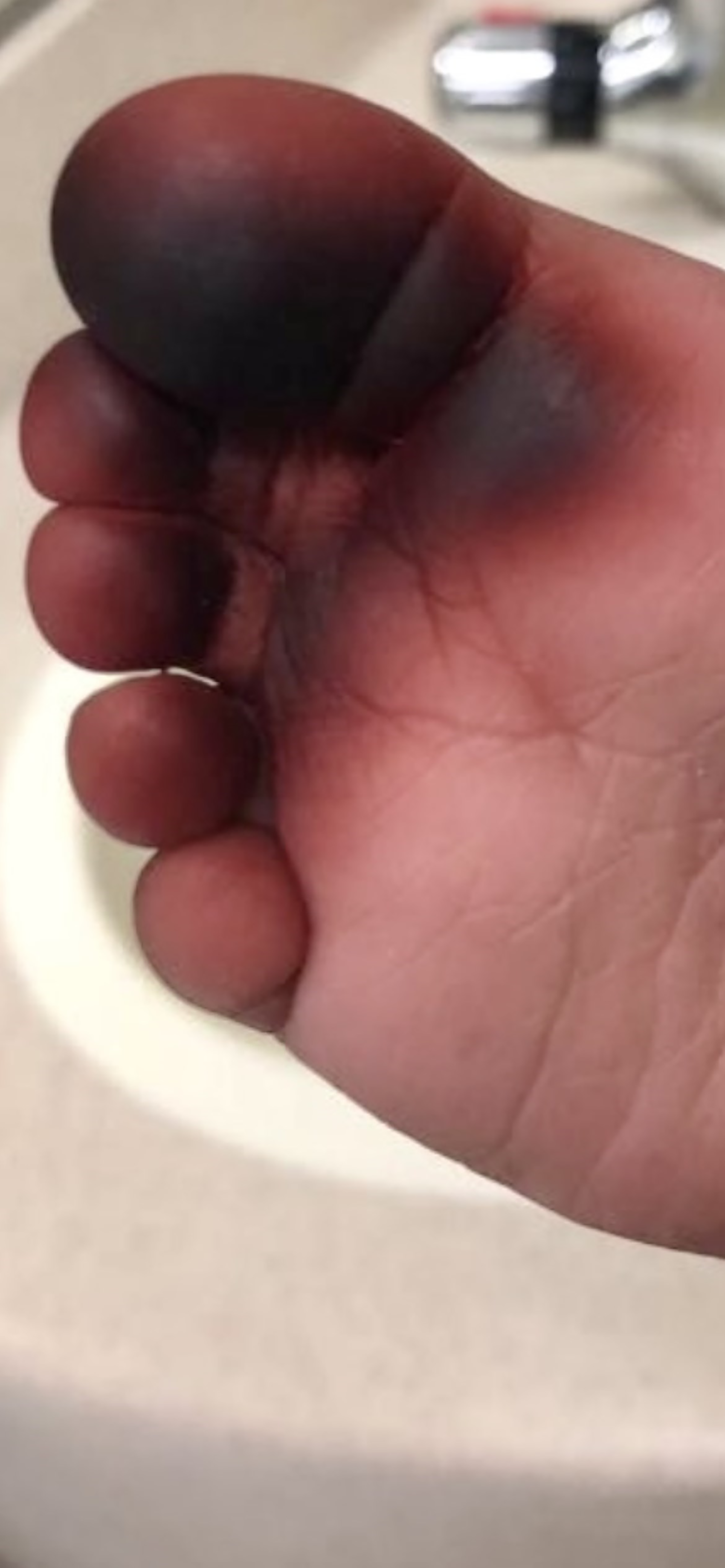
Acral pigmentation.
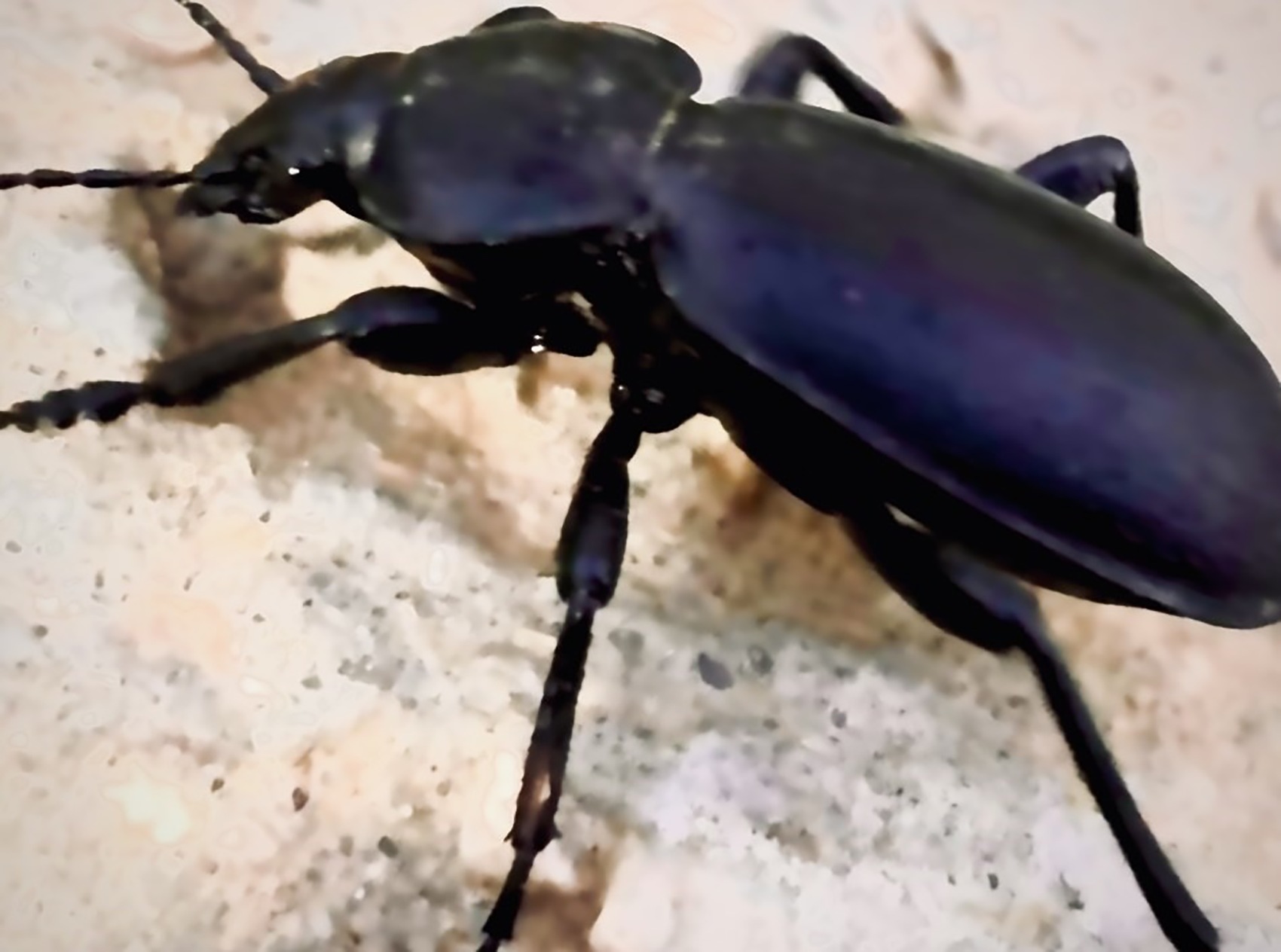
Carabus impressus.
The child was discharged with recommendations for close home monitoring and return for medical evaluation if the condition worsened. At a two-week follow-up call, the parents reported that the pigmentation had gradually faded over 72 h and resolved completely without residual changes.
Discussion
Hyperpigmentation due to certain insects, including beetles, has been documented, but is rare. Reported cases particularly involve millipedes (Diplopoda). 1 There have been few reported cases of Coleoptera species and in all cases the beetle-related hyperpigmentation has shown spontaneous resolution without intervention.2–4 The stain is thought to result from chemical secretions when the insect is disturbed.
C. impressus is a nocturnal black beetle from the ground beetle family. When threatened, it secretes a repellent exocrine compound that can stain human skin black, 5 with the discoloration gradually fading over several weeks.
Differential diagnosis includes acral melanocytic lesions, lesions due to increased melanin deposition, and nonmelanocytic pigmented lesions (such as haemorrhage, haematoma, haemangioma, and black heel); exposure to substances such as hair dyes or henna should be evaluated.
Recognising a thoroughly benign condition is important in order to reassure caregivers, prevent unnecessary tests, and guide appropriate management.
Footnotes
Declaration of conflicting interests
This research did not receive any specific grant from funding agencies in the public, commercial, or not-for-profit sectors.
Author contributions
Or Kaplan: concept and design of study, drafting the article, and final approval of the version to be published; Gidon Test: acquisition of data, and drafting the article and revising it critically for important intellectual content; Inbal Kestenbom: concept and design of study and acquisition of data or analysis and interpretation of data; Oren Tavor: concept and design of study, and final approval of the version to be published. All authors state that this manuscript has been read and approved by all the authors, that the requirements for authorship as stated earlier in this document have been met, and that each author believes that the manuscript represents honest work.
Funding
The authors received no financial support for the research, authorship, and/or publication of this article.
