



Abstract
Recent research indicated that flexible work arrangements cannot only bring benefits for individuals and organizations but also pose various challenges. This study examined the relationship between telework and employee turnover intention and the roles of institutional and managerial support in moderating the relationship. The results showed that turnover intentions of nonteleworkers are significantly different depending on one’s ability to choose. Nonteleworkers by barrier reported the highest level of turnover intention, whereas nonteleworkers by choice expressed the lowest, even lower than that of teleworkers. Managerial and institutional support for telework decreased the intention of teleworkers to leave the agency further.
Introduction
The use of flexible work arrangements have become a global trend. More organizations are offering remote working arrangements to meet employee demands for alternative work settings (Galinsky, Bond, & Sakai, 2008). The rapid advance of technology and increasing use of information technology (IT) have made it feasible for workers to fulfill their work obligations in unconventional settings remote from the offices and to utilize their own time flexibly (Baruch, 2001). The average proportion of employees involved in telework in 27 countries of the European Union has increased from about 5% in 2000 to 7% in 2005 (Eurofound, 2010, p. 20). The percentage of all American workers who work at home at least one day has increased from 7.0% in 1997 to 9.5% in 2010 across industries and occupations (U.S. Census Bureau, 2012). Meta-analysis of research revealed that flexible work settings were significantly associated with work attitudes and outcomes (Baruch, 2001).
The purpose of this research was twofold. First, it examined how the ability to telework could reduce the turnover intention of public employees. The estimated turnover cost of an individual is equivalent to approximately 150% of his or her annual salary, which is obviously higher than the cost of telework (Stavrou, 2005). Apparently, the estimated cost would be higher in public organizations due to hiring processes that are more highly restrictive and time-consuming than in private businesses. Second, perhaps more importantly, this research determined if institutional and managerial support enhances the benefits of telework, further reducing employee turnover intention. To do so, this study tested the relationship between telework status and turnover intention and the moderating effects of management analyzing the data from the federal workforce using the agency fixed-effects logistic regressions. Baruch (2001) reported the possible shortcomings of telework, which might require conscious effort from the management side to reduce them. Nevertheless, little research in public management has examined the critical roles of management. Some previous researchers have analyzed differences in the responses of teleworkers and nonteleworkers to the system of telework relying on measures of work attitudes (e.g., Caillier, 2012, 2013). Others addressed the role of leadership in managing nontraditional supervisor–subordinate relationships in teleworking environments in nongovernmental settings (e.g., Dahlstrom, 2013; Golden, 2006; Golden & Veiga, 2008). Golden (2006) tested the mediating role of leader–member exchange quality in the relationship between telecommuting and job satisfaction, while Golden and Veiga (2008) examined the moderating role of telework in the relationship between leader–member exchange and employee outcomes. Dahlstrom (2013) and Taylor and Kavanaugh (2005) did qualitative research on a leadership style for effective management of virtual workers. They, however, provided limited implications for effective management of the teleworking system in governmental settings. Given that, the important contribution of the present study is responding to a call for further investigation of the role of management in effectively implementing alternative ways of working in government.
First, a review of the literature on telework will be presented, followed by the theoretical arguments used for developing the hypotheses. Next, the data analysis used to test the hypotheses is described. Finally, the findings and their implications are discussed.
Literature Review
Previous Research on Telework
Telework refers to “a work arrangement that allows an employee to perform work, during any part of regular, paid hours, at an approved alternative worksite” (U.S. Office of Personnel Management [OPM], 2016). Quite a few studies have highlighted the potential benefits from telework (e.g., Stavrou, 2005; Stavrou & Kilaniotis, 2010). Telework might not only help workers balance their work and family life, but also reduce office costs, save costs associated with employee turnover, and attract and retain talented employees for organizations (Saltzstein, Ting, & Saltzstein, 2001; Stavrou, 2005). Others, however, have noted that telework can also pose various challenges to individuals and organizations (e.g., Baruch, 2001; Gajendran & Harrison, 2007; Greer & Payne, 2014). Teleworkers may experience psychological problems such as social isolation, insecure feelings about their job, and perceived deprivation of job opportunities due to their employment status (e.g., Baruch, 2001; Huws, 1993; Peiperl & Baruch, 1997). Scholars warned that such negative consequences should also be recognized and treated properly.
The more recent research has discussed effective strategies to implement telework successfully (Allen, Golden, & Shockley, 2015). Some studies indicated that support from the organization and supervisors plays a key role in the acceptance and administration of telework arrangements (e.g., Schmidt & Rosenberg, 2014; Shockley, Thompson, & Andreassi, 2013). Effective management of teleworkers (e.g., proper monitoring) and technical support that simulates face-to-face interactions are also important to telework effectiveness (Rein, 2014). In addition, others suggested that the moderate extent of telework, which balances face-to-face and virtual contact, will be most beneficial given that face-to-face interactions for knowledge sharing and social teleworking are as important to individuals as workplace flexibility and autonomy (Allen et al., 2015; Coenen & Kok, 2014; Gajendran, Harrison, & Delaney-Klinger, 2014).
Research on telework in public administration is relatively new. The common thread of the studies is that the family-friendly policies and programs that are designed to aid employees in balancing their work and family life may have positive associations with desirable work attitudes of employees (e.g., job satisfaction, organizational commitment; Caillier, 2012; Ezra & Deckman, 1996), but the relationship might vary across groups and programs (e.g., Kim & Wiggins, 2011; Saltzstein et al., 2001).
Telework in Public Management
There seem to be more concerns than promises about adopting the telework program in government. Despite presidential directives and legislative mandates over the past couple of decades, governmental organizations have made less progress on telework implementation than private industries (Green & Roberts, 2010). Scholars have been suspicious of the appropriateness of telework in public organizations, arguing that telework is more suitable for highly professional and flatter structures promoting autonomy and flexibility than for traditional bureaucratic organizations (Clear & Dickson, 2005; Cooper & Kurland, 2002). Indeed, U.S. OPM’s (2015) congressional report identified numerous barriers to telework in governmental agencies, for example, management resistance, technological challenge, and the nature of the work or position. Resistance by management is the most frequently reported obstacle to telework (U.S. OPM, 2015). Managers, from top to middle-level ranks, tend not to support telework or to have lack of understanding about how to organize, supervise, and control remote activities (Green & Roberts, 2010). In addition, lack of funding for constructing IT infrastructure, and the nature of jobs or positions that require face-to-face communication with clients or high levels of security and confidentiality were reported as the primary barriers to telework in government (U.S. OPM, 2015).
Nevertheless, Taskin and Edwards (2007), in their study of the Belgian public sector, have shown the possibility of successful adaptation of telework in public organizations. They argued that the sector might not be the critical factor that affects acceptance of telework if the following three contingencies hold. First, as in previous research, telework is more suitable for professional workers with higher discretion, performing complex tasks in flatter structures. Second, telework needs strategic support from management and transparent communication about the program to be adopted successfully. Finally, governmental agencies should significantly redesign their organizational rules so that the existing bureaucratic control rules, relying on the physical presence and visibility of workers, do not conflict with the new practices of control for telework arrangements (e.g., self-control, social control, proper use of electronic-based tools). More importantly, a trust relationship between teleworker and supervisor should be developed. If these conditions are met, telework in public organizations will enhance the advantages of traditional bureaucracy such as predictability, accountability, and control over workers (Taskin & Edwards, 2007).
The focus of this study centers on exploring the critical role of support from management in successfully implementing telework in public bureaucratic organizations. It tests the roles of managerial and institutional support in the relationship between telework and turnover intention of public employees. Previous research detected only a small gap between turnover intention of federal employees who telework and those who do not (Caillier, 2013). The finding may raise a question about the contribution of the program to the reduction of high costs associated with employee turnover. Some may argue that telework explains only a small portion of variance in employee turnover among numerous factors (Cotton & Tuttle, 1986). This research, however, was focused on the possibility that such seemingly minimal effect of telework may be because its costs offset part of its benefits. For instance, while telework might relieve its users of the double burden of family and work responsibilities, it also causes the negative psychological consequences to them, eventually reducing the positive effects of telework on their welfare. In this study, as Taskin and Edwards (2007) suggested, it was assumed that managerial and institutional support would preserve the benefits of telework by helping teleworkers avoid such negative feelings. This study adds to the literature by its empirical investigation of whether organizational and managerial support for teleworkers make a significant difference in the link between telework and turnover intention.
Theoretical Framework and Hypotheses
Telework and Turnover
Reports from previous research have indicated that telework can reduce turnover of employees (e.g., Konrad & Mangel, 2000; Perry-Smith & Blum, 2000; Stavrou, 2005). Employees benefit from greater flexibility and autonomy in managing their time and place to work and balancing their work and family responsibilities (Ezra & Deckman, 1996), which in turn contribute to lowering turnover of employees.
Social exchange theory is commonly adopted to theorize the relationship between telework and its individual-level outcomes. Social exchange theory explains the employee–employer relationship relying on the norm of reciprocity and social contracts (Rousseau, 1995). If employees perceive that their organization offers them preferable conditions or benefits, employees will reciprocate demonstrating higher loyalty and commitment to their organization (Guimaraes & Dallow, 1999). Teleworkers who were offered favorable benefits from their organization were likely to demonstrate higher satisfaction with their organization and lower intention to leave it. Conversely, employees who demand a flexible arrangement, but are not offered it, were likely to show higher intention to find an alternative job that provides the arrangement.
Much research has found evidence that supports social exchange theory. Telework was positively related to the reduction of turnover intention or actual employee turnover (e.g., Baltes, Briggs, Huff, Wright, & Neuman, 1999; Konrad & Mangel, 2000; Perry-Smith & Blum, 2000). Gajendran and Harrison (2007, p. 1528), from their meta-analysis of 46 studies, found that telework, which is perceived as “a positive signal” of trust and support for employees, increases the psychological attachment of employees to their organization, in turn lowering intention to leave (Rhoades & Eisenberger, 2002; Scandura & Lankau, 1997). In a similar vein, Caillier (2013) also found that although the difference was marginal, teleworkers tended to have lower intention to leave their organization than did nonteleworkers. McNall, Nicklin, and Masuda (2010) reported that the availability of flexible work arrangements was positively associated with lower turnover intention, mediated by greater enrichment from work to home. Kelliher and Anderson (2010) found evidence that employees who were allowed to telework showed a greater sense of commitment and obligation to their work and organization (Kelliher & Anderson, 2010). Grounded upon such theoretical perspective and empirical evidence, the following hypotheses were developed.
The Contextual Impacts: Organizational and Managerial Support
As Taskin and Edwards (2007) indicated, strategic support from management can contribute to the successful implementation of telework. In turn, the benefits from telework can influence the relationship between telework and turnover critically.
From an ecological perspective, some scholars (e.g., Bronfenbrenner & Ceci, 1994) argued that workplace flexibility is an attribute of an environment that promotes person–environment interactions that ultimately yield positive outcomes for employees, their families, and their organizations (Hill et al., 2008). Ecological systems theory explains that a flexible work arrangement is “a social and contextual attribute of workplaces constructed from both structural (the availability of policies and the basic nature of tasks performed, such as manufacturing vs. service) and interactional factors (supportive culture and leader-subordinate trust)” (Hill et al., 2008, p. 154). This suggests that contextual factors may play crucial roles in the relationship between flexible work arrangements and outcomes. Some research has shown that contextual factors including organizational size, industry, organizational sector, and union involvement significantly influence the relationship between flexible work arrangements and turnover (Stavrou & Kilaniotis, 2010). For instance, larger organizations, in general, are likely to have more resources for formal flexible work arrangements than smaller organizations; public organizations will be more committed to flexible work arrangements than private companies. Flexible work arrangements are more commonly found in the service industry than in the manufacturing industry, and unions are more supportive of flexible work arrangements for employee welfare (Bardoel, Tharenou, & Moss, 1998; Brewster, Mayrhofer, & Morley, 2004; Hogarth, Hasluck, Pierre, Winterbotham, & Vivian, 2000; Ingram & Simons, 1995; Morgan & Milliken, 1992).
This study focused on the potential impacts of managerial and institutional support on the relationship between telework and its outcomes. Organizational culture that encourages employees to utilize telework will prevent them from experiencing negative psychological stresses such as a feeling of isolation from their job and workplace, peer pressure, and lack of support from supervisors. In addition, managerial support from supervisors will help employees to take full advantage of telework. Employees may be afraid of negative repercussions, for example, being retaliated against for utilizing telework in terms of career advancement (e.g., lower visibility and less promotion opportunities), unless they perceive that their supervisors are supportive of such flexible work arrangements. Some scholars suggested developing a new model of leadership appropriate in teleworking environments (e.g., Dahlstrom, 2013; Taylor & Kavanaugh, 2005). Probably, the biggest challenge to teleworkers is being isolated from their peer groups and losing professional and social interactions with their colleagues (Taylor & Kavanaugh, 2005). They might also worry about their lower visibility to the manager, which could negatively affect their career advancement. Thus, the leadership style that develops support, communication, and trust in supervisor–subordinate relationships will be necessary for successful implementation of telework (Dahlstrom, 2013). Furthermore, such relationship-oriented leadership is needed more in government, given that the standardized and formalized processes typical in public bureaucracy could replace much task-oriented leadership behavior (Dahlstrom, 2013).
Saltzstein et al. (2001) emphasized that organizational understanding of employee-family demands was more likely to affect job satisfaction than was the availability of the policies themselves. Similarly, Ezra and Deckman (1996) also demonstrated that organizational understanding of family duties was positively related to employee satisfaction with work–family balance. Kim and Wiggins (2011) called for organizational culture that is supportive of work–family balance to better utilize work–family balance polices and take fuller advantage of the policies. Taskin and Edwards (2007) argued that managerial supports and cultural changes within organizations are especially important in public bureaucratic settings because these tend to have less favorable conditions for adopting telework, characterized by strict rules, hierarchical structures and decision making, and control and surveillance. Nonetheless, when individuals internalize collective norms and values, and build a trust relationship with management, telework arrangements will work well even in bureaucratic settings, reinforcing the “bureaucratic virtues” such as predictability, accountability, and control over workers (Taskin & Edwards, 2007, p. 204). Based on these arguments, employee perception of institutional and managerial support is assumed to decrease their intention to leave the organization. H3 and H4 examine the two-way interaction effects between organizational contexts and telework, while H5 tests the three-way interaction effect.
Various factors (e.g., social, organizational, job, and personal characteristics) are likely to affect the turnover intention of an individual (Cotton & Tuttle, 1986; Mobley, 1982) and these factors need to be controlled. In much research on turnover intention and turnover, minority status and gender have been controlled (Moynihan & Landuyt, 2008; Whitford & Lee, 2015). However, the findings regarding those relationships appear to be inconsistent. Some studies found minority employees more likely to leave their current organization than Whites due to some reasons (e.g., discrimination), but others revealed a negative (or no significant) relationship between minority status and voluntary turnover (Lee & Whitford, 2008; Shields & Price, 2002). The relationships between gender and turnover and turnover intention are also unclear. Whereas some research (e.g., Cotton & Tuttle, 1986; Kellough & Osuna, 1995) found that women are more likely to leave their organization than men, others found insignificant or even negative relationship between women and turnover (Stumpf & Dawley, 1981). The more recent study by Moynihan and Landuyt (2008) contended that the higher probability of female turnover may not be true any longer given the changing patterns of female employment and their preference for public employment. In regard to age and tenure, Cotton and Tuttle (1986), in their meta-analysis, found negative relationships between age and tenure, and turnover. Moynihan and Pandey (2008), however, argued that the relationship between age and turnover intention might vary depending on whether it is long-term (negative) or short-term (insignificant) turnover intention. Supervisory status and disability status might be related to access to alternative jobs (Cotton & Tuttle, 1986; Whitford & Lee, 2015). Individuals who hold a higher position in an organizational hierarchy are likely to have more chances to find alternative jobs due to their experience and ability. Conversely, people with disability may suffer from limited access to alternative jobs.
In addition, this study also controls for the perception of work involvement as a proxy measure of social isolation, as well as individual characteristics. If employees perceive a higher level of teamwork or cooperation in their work group, they are less likely to leave (Mobley, 1982). Figure 1 displays the hypothesized relationships.

The hypothesized model.
Data and Method
Sample and Data Sources
A sample from the federal workforce was analyzed. The federal government, the largest single employer in the United States, announced strong support for creating a new working environment by signing the Telework Enhancement Act in 2010 and has reported the status of telework in the federal government on a regular base (U.S. OPM, 2013a). Since enactment of this law in 2010, federal workplaces have been significantly transformed, for instance, the number of federal employees who are eligible and who participate in the program continues to grow (U.S. OPM, 2013a).
The sample data were drawn from two sources: the U.S. OPM 2013 congressional report, and the Federal Employee Viewpoint Survey (FEVS), collected in the same year. Since the 2010 Telework Enhancement Act, U.S. OPM provides annual reports to U.S. Congress, for which information on the status of telework programs of executive branch agencies is collected and summarized (U.S. OPM, 2013a). The 2013 FEVS was electronically conducted among federal employees including full-time and part-time, permanent, nonseasonal employees (U.S. OPM, 2013b). A total of 376,577 out of 781,047 employees from 81 federal agencies completed the survey, resulting in a response rate of 48.2% (U.S. OPM, 2013b). The survey includes questions regarding turnover intention, job satisfaction, supervisory support, and telework status of respondents, which were extracted and merged into the data for analysis.
Dependent Variable
Turnover intention
This variable was measured through responses to a survey question, “Are you considering leaving your organization within the next year?” The turnover intention variable was recorded as “1” when a respondent expressed the intention to leave his or her agency, or recorded as “0” when a respondent did not. Approximately 31% of the sample respondents reported intention to leave their agencies. When disaggregated by telework status, 34% of nonteleworkers by barrier reported turnover intention, which is higher than for the others—29% of teleworkers and 27% of nonteleworkers by choice. Table 2 displays the comparison of different characteristics between the groups with three kinds of telework status.
Independent Variables
Telework status
This variable was developed based on responses to the survey item inquiring of respondents’ telework status. 2 Three binary variables—teleworker, nonteleworker by barrier, nonteleworker by choice—were created to measure the telework status of employees. Employees who teleworked were coded “1” for telework (TW) and nonteleworkers were coded “0.” Those who could not telework due to obstacles were coded “1” for nonteleworker by barrier (NTWB); others were coded “0.” Those who choose not to telework were coded “1” for nonteleworker by choice (NTWC), while others were coded “0.” The nontelework by choice variable was omitted as the reference group in the analysis.
Institutional support
This variable was measured by calculating the participation rate in the telework program of each agency, 3 using the data from the OPM 2013 congressional reports. The data included the number of teleworkers and eligible employees, characteristics of teleworkers, and other related information (U.S. OPM, 2013a). The actual participation rates among employees eligible for telework were calculated by agency. A higher participation rate in telework was assumed to indicate that an agency encouraged eligible employees to utilize the program and created an organizational culture of understanding and supporting the demands of employees.
Managerial support
Supervisor support for telework was measured by combining responses to relevant survey questions. The survey items inquired about supervisor support for balancing work of employees, family life of employees, and respect for employee needs. The responses to these three items were averaged. The Cronbach’s alpha was .90, indicating high reliability of the variable. It should be acknowledged that the variable is not a direct measure of support for telework. The perception of managerial support among the groups of different telework status was compared. The analysis of variance (ANOVA) results show significant mean differences among groups. Teleworkers perceived the highest level of managerial support (M = 4.2), while nonteleworkers due to barrier, the lowest level of managerial support (M = 3.8). Nonteleworkers by choice reported a similar level of perception on managerial support to teleworkers (M = 4.16). Although the variable did not directly inquire of support for teleworkers, this finding evidently indicates that the measure is closely related to the perception of managerial support for teleworkers.
Control Variables
All the control variables in the models were measured using the responses to the relevant survey questions. The supervisory status variable was measured based on the responses to the question, “What is your supervisory status?” Supervisors, managers, and executives were coded “1”; nonsupervisors and team leaders, as “0.” Employees with disability were coded “1” and others were coded “0.” The survey question only asks if individuals had a disability; the types of disability were not reported. Tenure and age are categorical variables. Tenure was measured on a 3-point scale, ranging from “1” to “3.” Here, “1” indicates that the respondent’s tenure with the federal government was 5 or fewer years, “2” indicated 6 to 14 years, and “3” indicated 15 or more years. In a similar way, the age variable was coded on a 4-point scale: “1” indicated <40, “2” indicated 40 to 49, “3” indicated 50 to 59, and “4” indicated 60 years or older. Other demographic variables included gender and minority status. A female employee was coded “1,” while a male employee was coded “0.” A racial/ethnic minority employee was coded “1,” while a White employee was coded “0.” A work involvement variable was developed combining two survey items, which inquired of cooperation and knowledge sharing of the respondent with coworkers. The responses to the two questions were averaged. The Cronbach’s alpha was .89. Table 1 provides descriptive statistics of the variables.
Descriptive Statistics.
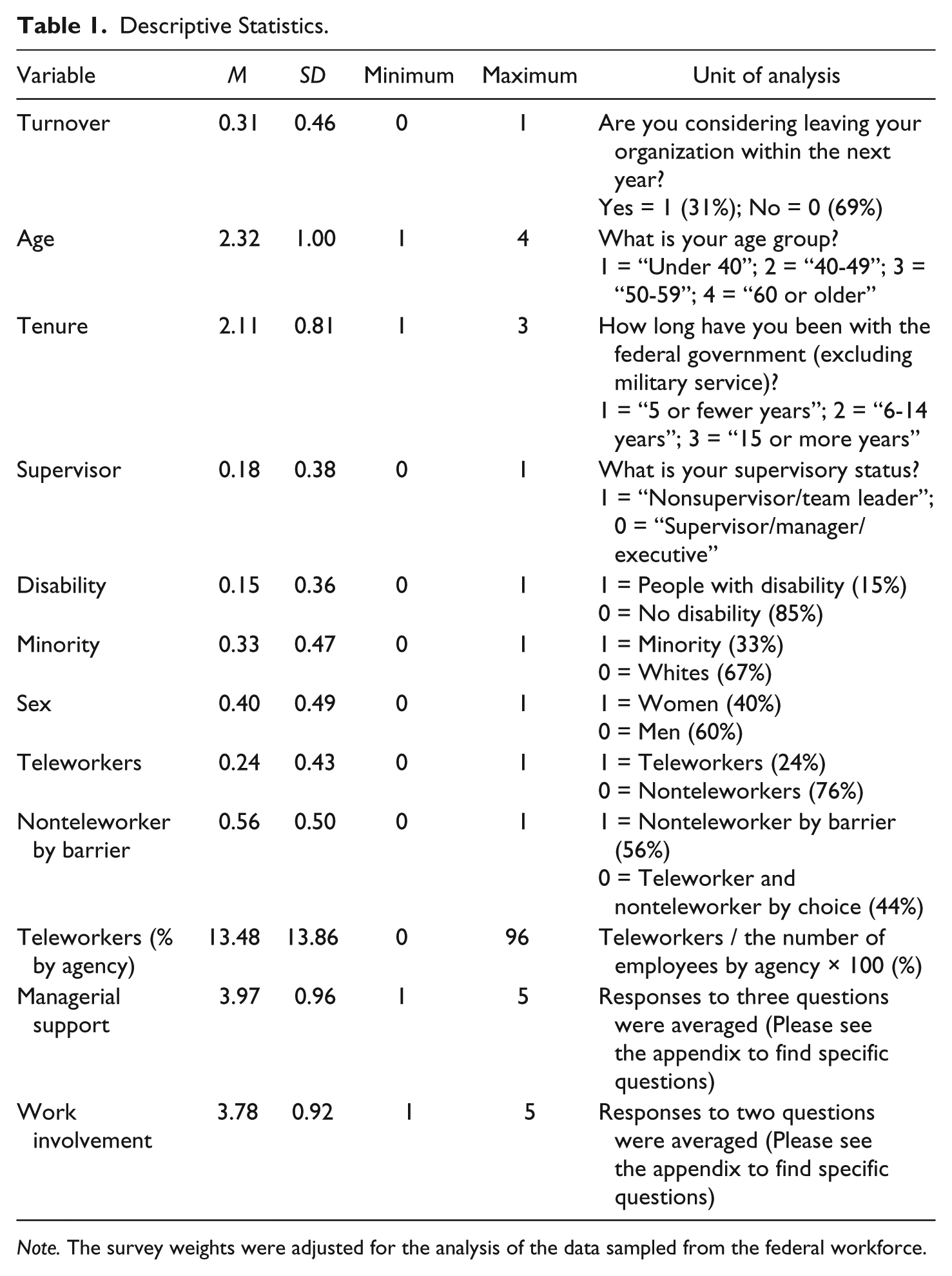
Note. The survey weights were adjusted for the analysis of the data sampled from the federal workforce.
Analytic Models and Methods
The research question was whether telework, along with managerial and institutional support for it, could reduce employee intention to leave. To better understand the characteristics of the sample, the data were grouped into three categories by telework status—teleworkers, nonteleworkers by barrier, and nonteleworkers by choice. Then, to compare group differences (including turnover intention), multivariate analysis of variance (MANOVA) tests were conducted. Table 2 displays the results. The three groups were significantly different in terms of turnover intention and demographic characteristics. Nonteleworkers due to barrier (M = 0.34) reported the highest turnover intention, while nonteleworkers by choice (M = 0.27) reported the lowest. Over half of the teleworkers (M = 0.53) were women and the proportion of women of the group who chose not to telework (M = 0.41) was lowest, suggesting that women are more likely to telework than men if they are allowed. The proportion of minority employees in the group of teleworkers (M = 0.31) was lower than that in other groups. Interestingly, the proportion of people with disability in the group of teleworkers (M = 0.09) was lower than that in the group of nonteleworkers by barrier (M = 0.16) and by choice (M = 0.11). This appears inconsistent with the common expectation that people with disability are more likely to telework. Given the nature of managerial duties, the highest proportion of supervisors (M = 0.23) among the three groups, was found in the group of those who chose not to telework. Older employees, and those with longer organizational tenure, were less likely to telework by choice, suggesting that they preferred traditional work settings.
MANOVA Testing for Differences in Means by Telework Status.
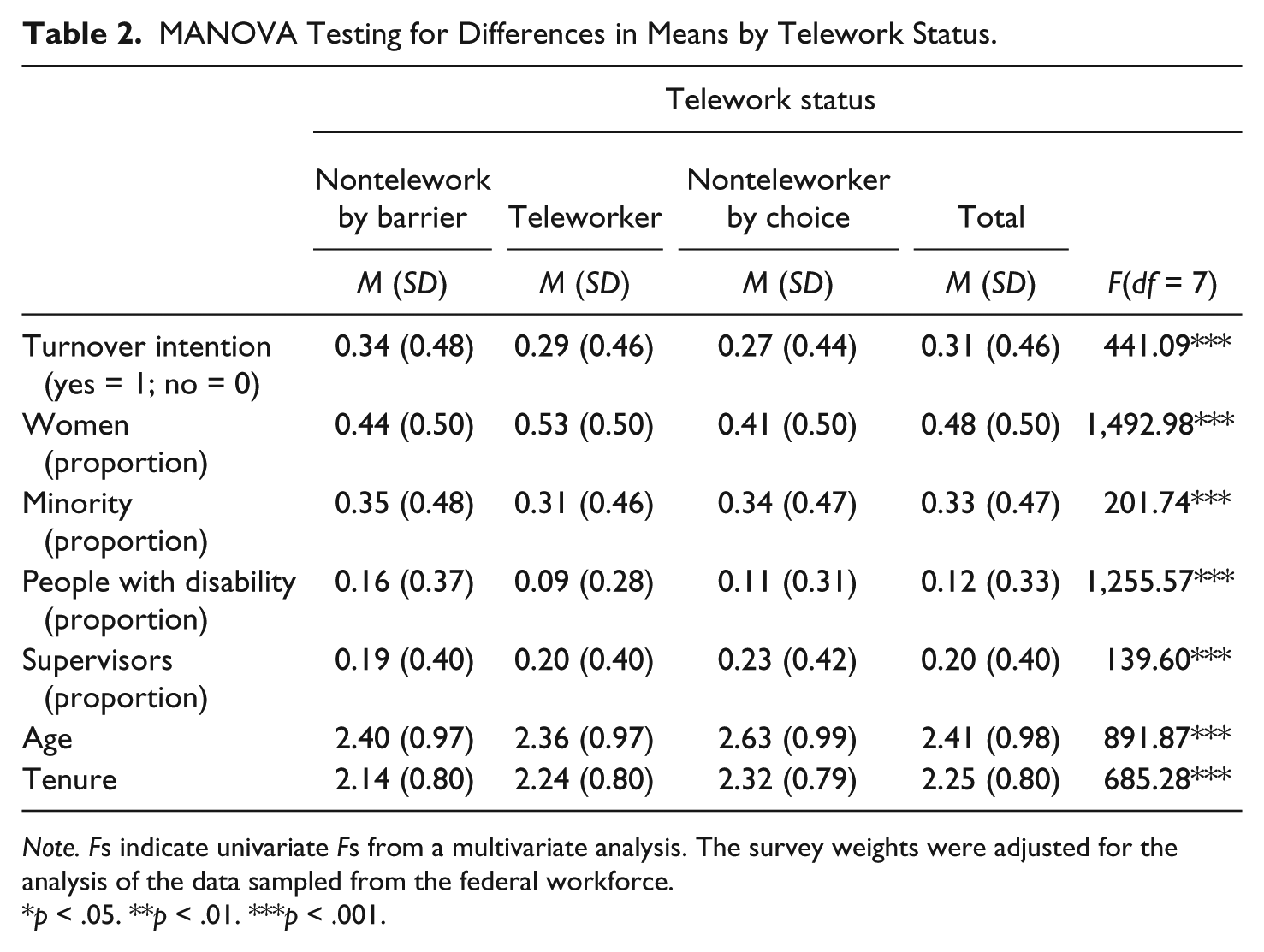
Note. Fs indicate univariate Fs from a multivariate analysis. The survey weights were adjusted for the analysis of the data sampled from the federal workforce.
p < .05. **p < .01. ***p < .001.
To test the hypotheses, the models were analyzed statistically. The agency fixed-effects logistic regressions were used to test the relationship between telework status and turnover intention. The turnover intention of a respondent was measured on a binary scale. To test the moderating effects of managerial and institutional support, multiplicative variables were generated. Multiplicative variables and their constituents are likely to be highly correlated, which may lead to multicollinearity. To address that concern, all independent variables and control variables were centered to their mean values before being entered in the models. The correlations between variables are reported in Table 3.
Bivariate Correlations.
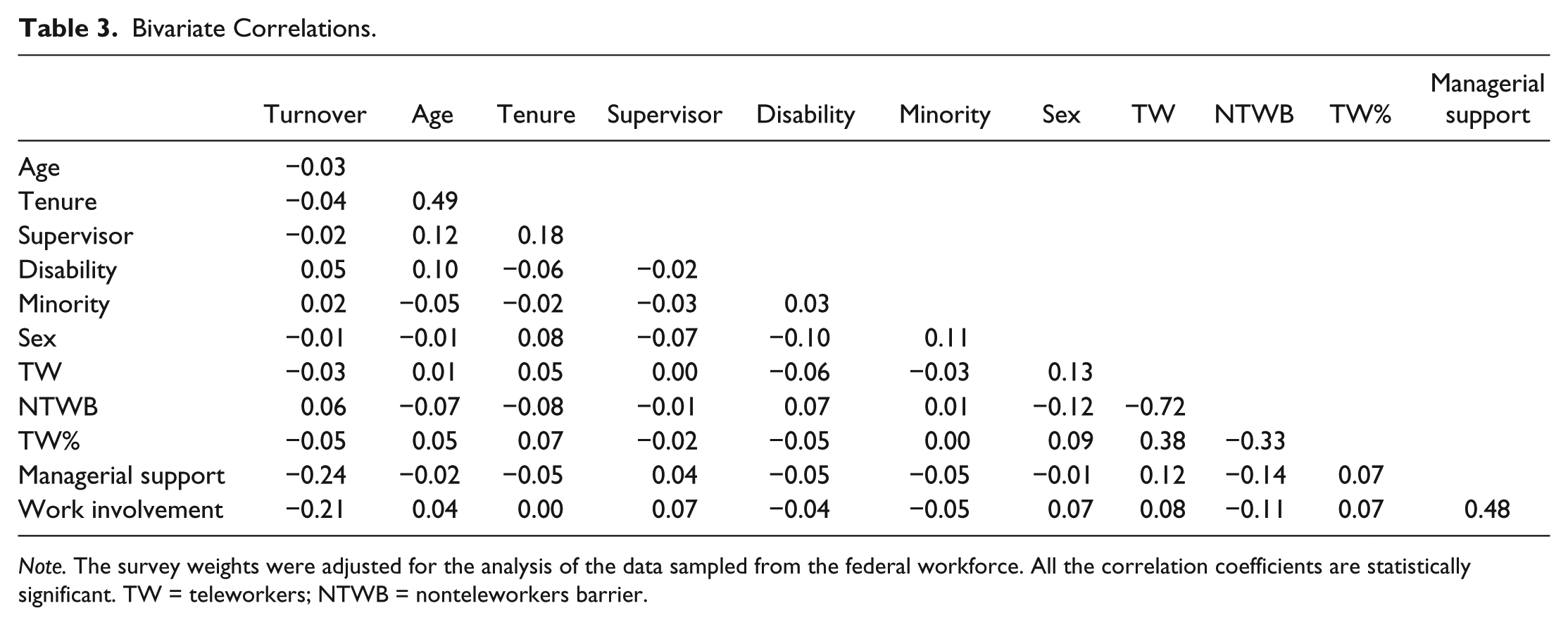
Note. The survey weights were adjusted for the analysis of the data sampled from the federal workforce. All the correlation coefficients are statistically significant. TW = teleworkers; NTWB = nonteleworkers barrier.
The sample weights of all estimates in this study were adjusted to reflect population characteristics properly. The sample was randomly selected, then stratified by supervisory status and organizational membership. The differing response rates among groups (e.g., different demographic groups and supervisory groups) may result in unequal representation of responses across groups. For example, supervisor responses were overrepresented and agency effects may affect the results due to a natural clustering effect by agency. 4 To avoid such errors and to ensure external validity of the findings, the data were weighted and analyzed.
The models include two different levels of variables. The main independent variable, the dependent variable, and demographic variables are individual-level variables, while institutional support, which is one of the moderating variables, is an agency-level variable. Because federal employees are clustered into agencies or programs that share policies and procedures, the agency effects were controlled by developing fixed-effect models. In general, multilevel models are used to test relationships among variables that apply at two or more levels (Rousseau, 1985, p. 16). However, multilevel modeling may be problematic in cases that the models include a small number of upper level units (number of agencies in this study; Mohring, 2012). In such cases, a fixed-effects model provides an effective alternative in analyzing the nested data (Huang, 2016; Mohring, 2012). Quite a few scholars have indicated that the fixed effects approach is a robust modeling strategy; therefore, it has often been used in social science research to explain clustering effects (Chaplin, 2003; Clarke, Crawford, Steele, & Vignoles, 2010; Huang, 2016; Murnane & Willett, 2011).
Results
Table 4 presents the model results. Model 1 assesses the relationship between telework status and turnover intention of employees. Model 2 examines the relationships between contextual variables and turnover intention of employees, focusing on institutional and managerial support. Model 3 and Model 4 test the moderating effects of institutional and managerial support on the relationship between telework status and turnover intention. Model 5 evaluates the effect of three-way interactions, which include three variables—telework, institutional support, and managerial support. In the models, the group of employees that chose not to be teleworkers was omitted as the reference group.
Logistic Regressions of Telework and Turnover With Agency Fixed-Effects.
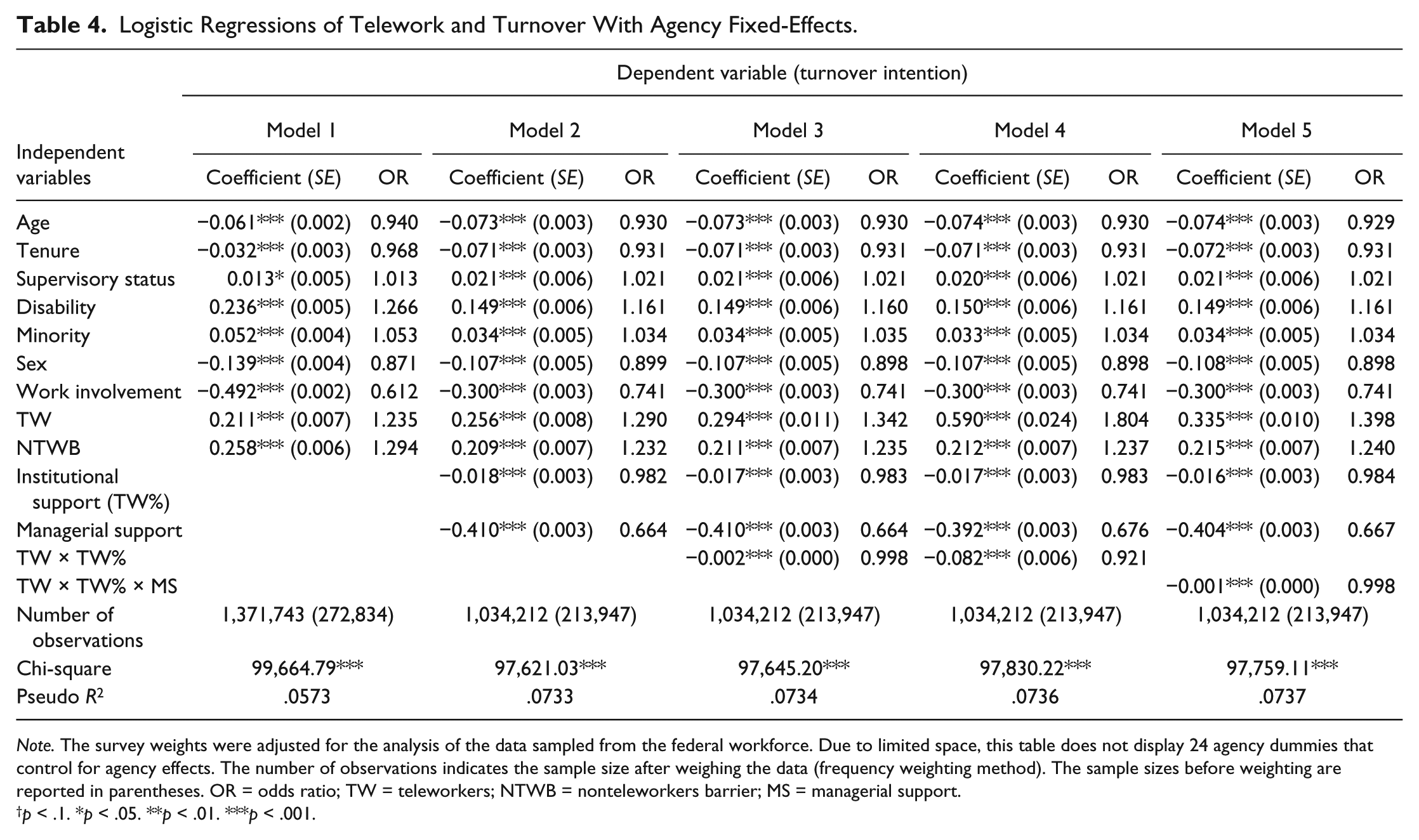
Note. The survey weights were adjusted for the analysis of the data sampled from the federal workforce. Due to limited space, this table does not display 24 agency dummies that control for agency effects. The number of observations indicates the sample size after weighing the data (frequency weighting method). The sample sizes before weighting are reported in parentheses. OR = odds ratio; TW = teleworkers; NTWB = nonteleworkers barrier; MS = managerial support.
p < .1. *p < .05. **p < .01. ***p < .001.
H1 and H2 examined how different telework conditions are associated with the turnover intention of employees. H1, which postulates that teleworkers are less likely to state turnover intention than nonteleworkers, was not fully supported. H2, which assumes that employees who do not telework because of barriers are more likely to express intention to leave than those who choose not to, was consistent with the findings. When the coefficients are converted to odd ratios, teleworkers are likely to show a 1.23 factor higher in the odds of turnover intention than nonteleworkers. Nonteleworkers due to barrier tend to show a 1.29 factor higher in the odds of turnover intention than nonteleworkers by choice. These results showed that teleworkers and nonteleworkers due to barrier expressed higher intention to leave their agencies than nonteleworkers by choice. As expected, employees who were not offered a flexible work arrangement reported the highest level of dissatisfaction, which is likely to be connected to higher intention to leave. The interesting finding here is that nonteleworkers who were eligible for telework but decide to self-opt out of the program showed the lowest turnover intention. This might suggest that this group of people is likely to have higher commitment to their job and organization, and to show stronger willingness to stay and interact with colleagues in traditional work settings. For example, MANOVA tests showed a group of supervisors with higher managerial responsibility in the organization and a group of people with disability, who might connect the option with less security in their job, tended to choose not to telework although they were eligible.
The relationship between telework and employee turnover intention may depend on organizational characteristics. H3 tests the negative moderating effect of institutional support on the relationship between telework status and employee turnover intention, while H4 examines the effect of managerial support negatively moderating the relationship between telework and turnover intention. Model 2 demonstrates that institutional support and managerial support are negatively related to the turnover intention of employees. For one unit increase in a measure of managerial support, the odds of turnover intention decreased by a 1.52 factor, while for one unit increase in institutional support the odds of turnover intention decreased by a 1.02 factor. This result implies that employees, who work in agencies that are perceived to be systematically and managerially supportive of flexible work arrangements, tend to be more strongly attached to their agency than are those in others. Model 3 and Model 4 tested the moderating effects of the contextual factors. Figure 2 and figure 3 show the moderating effects of managerial and institutional support, in respective. Teleworkers in agencies more supportive of telework are likely to experience a 1.01 factor further decrease in the odds of turnover intention, compared to those in other agencies. In a similar way, teleworkers who perceive higher managerial support tend to have a 1.08 factor further decrease in the odds of turnover intention, compared to others. The results revealed the negative moderating effects of institutional and managerial support for telework, on the relationship between telework and employee turnover intention. This suggests that teleworker turnover intention was further reduced when they worked in agencies that promoted telework and where managers were perceived to be supportive of teleworkers.
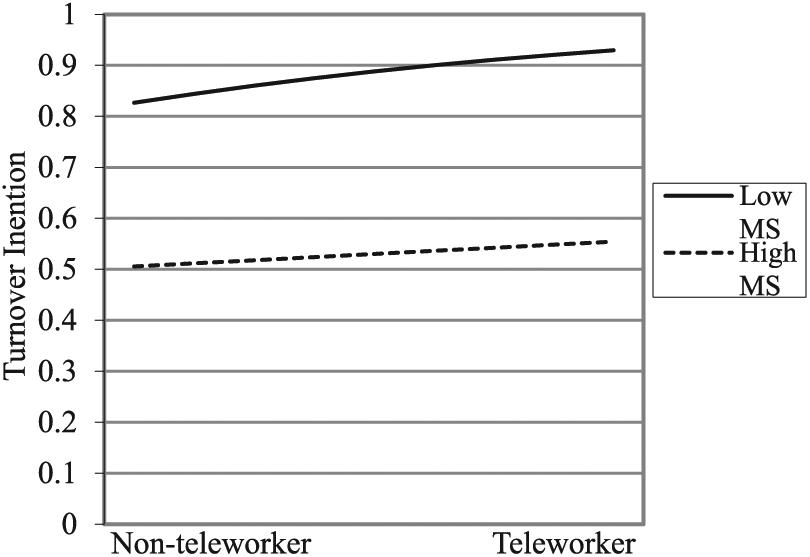
The moderating effect of managerial support.
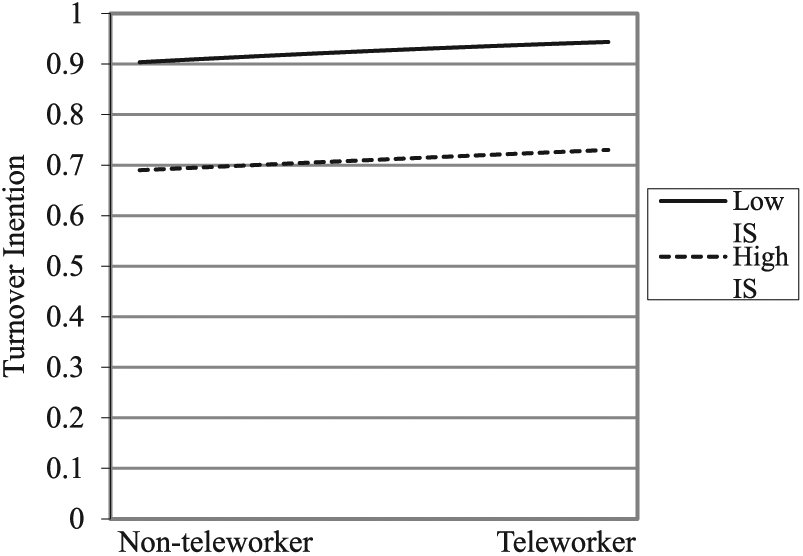
The moderating effect of institutional support.
H5 and Model 5 assessed the effects of the three-way interaction of institutional and managerial supports and telework on the relationship between telework and turnover intention. Figure 4 shows the results. Teleworkers who benefit from both institutional and managerial support are likely to have the further reduced odds of turnover intention by a 1.01 factor in comparison with those who did not. The effect was marginal, but consistent with expectation. In agencies exhibiting systematic and managerial support of telework, teleworker intention to leave was less.
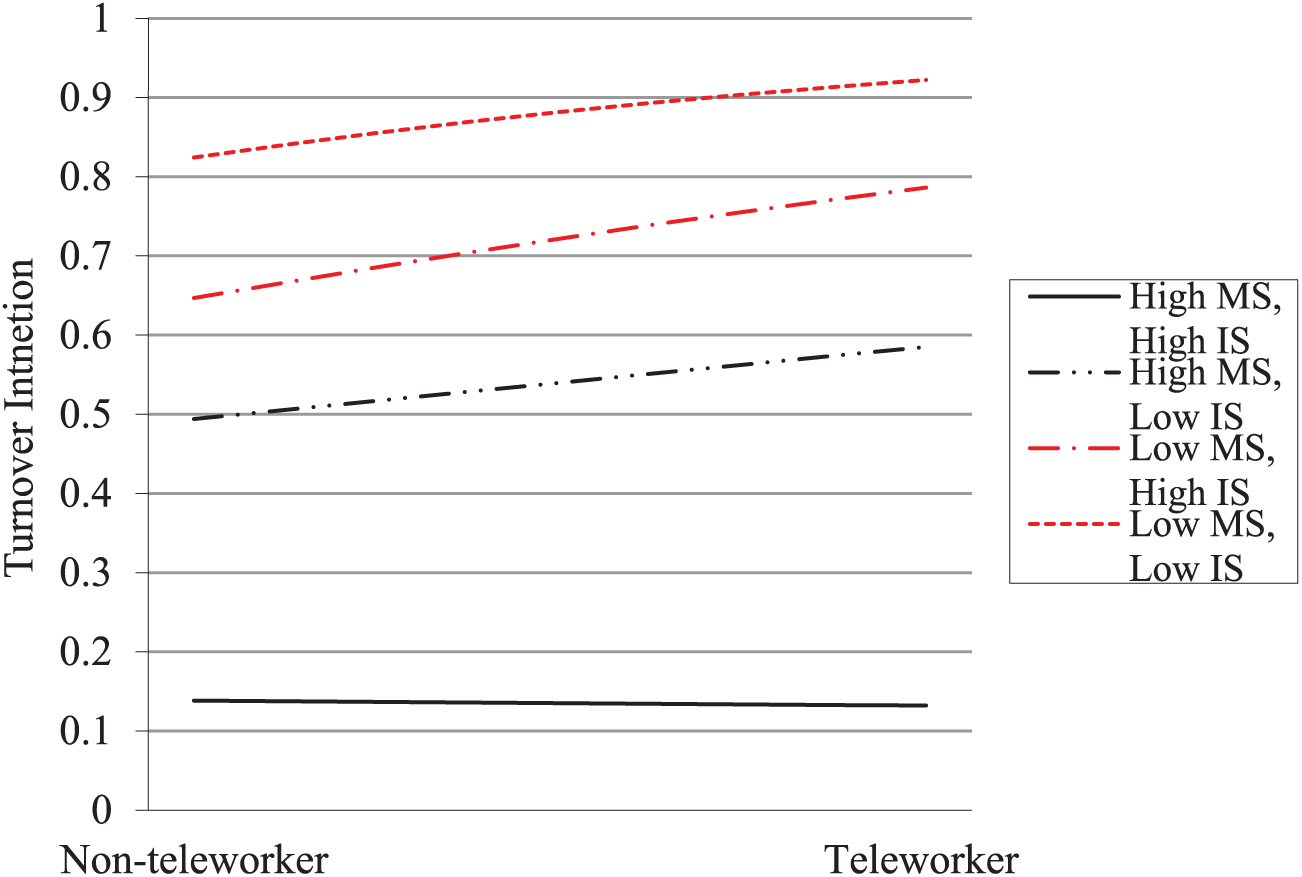
The moderating effect of managerial and institutional support.
This research also controlled for individual characteristics and work involvement. Minority employees reported higher turnover intention than Whites, whereas women stated lower turnover intention than men. Older employees and those with longer tenure reported lower turnover intention. However, supervisors and people with disability stated higher turnover intention. Finally, employees who tend to have more intensive interaction with their coworkers reported lower turnover intention.
Discussion and Conclusions
Telework has been perceived to have the potential to benefit employees and organizations (Baruch, 2001; Gajendran & Harrison, 2007; Greer & Payne, 2014). While meeting the demands of employees on more flexible work arrangements, telework could also save some of the cost for space and overhead of organizations (Baruch, 2001). Telework, however, is not free from shortcomings. Scholars have identified various pitfalls including social isolation of users, communication problems, less chance for career development, difficulty of supervisory control, and technical problems (Baruch, 2001; Gajendran & Harrison, 2007; Golden, Veiga, & Dino, 2008; Greer & Payne, 2014). The contribution of this research is that it extends our understanding of the roles of contextual factors in overcoming telework challenges and enhancing its utility for individual users and organizations. The results demonstrated that employees who telework still reported significantly higher turnover intention than those who voluntarily stay in traditional work settings, although less likely to leave the organization than those who cannot telework because of obstacles. Institutional and managerial support, thus, will be pivotal in whether individuals take advantage of the option, minimizing the cost of telework.
The results from this study suggest that teleworkers might not always be happier and more committed employees than nonteleworkers, which is not consistent with previous findings (e.g., Caillier, 2013; Gajendran & Harrison, 2007; Golden, 2006; Golden et al., 2008; McNall, Nicklin, & Masuda, 2010). Employees who choose not to telework showed stronger commitment to their organization than did teleworkers, and expressed lower level of intention to leave. As expected, nonteleworkers due to barrier reported the highest level of turnover intention. The difference in turnover intention between three groups—teleworkers, nonteleworkers by barrier, and nonteleworkers by choice—appeared to be substantial. This is in contrast with results from prior research, which found marginal difference in turnover intention between teleworkers and nonteleworkers in the federal government. The inconsistency might be explained by a different way of assessing turnover intention of nonteleworkers. This research disaggregated nonteleworkers into two groups by their ability to choose. The results revealed that a significant gap in turnover intention exists between these groups. Nonteleworkers by barrier stated the highest turnover intention, whereas nonteleworkers by choice expressed the lowest among the three groups. Thus, there is a possibility that the gap in turnover intention between two groups of nonteleworkers was moderated by combining them and averaging their turnover intentions, in consequence making the difference in turnover intention between teleworkers and nonteleworkers look smaller.
Given all this, what explains the higher level of turnover intention among teleworkers than those who chose not to telework? As stated earlier, teleworkers may struggle with the challenges that hinder them from fully enjoying the benefits of such flexible work arrangements. Although telework might not have direct detrimental effects on career advancement, employees might decide not to utilize it for fear of potentially adverse results from telework. If an employee could not avoid teleworking, he or she might have to sacrifice career advancement to some extent because of less visibility due to personal absence and to fewer interactions with supervisors and colleagues in the organization. Some empirical evidence (e.g., Luthans, Hodgetts, & Rosenkrantz, 1988; Seibert, Kraimer, & Liden, 2001) showed that social networking in workplaces that require intense interpersonal interactions between members influences career advancement (e.g., promotion, career satisfaction, salary increase) substantially. Furthermore, prior research reported various challenges from working remotely that teleworkers might have to overcome (e.g., Baruch, 2001). Researchers warned that social isolation is a major obstacle that prohibits teleworkers from continuing to adopt it, which might also substantially decrease employee commitment to their organization (e.g., Duffy, Ganster, & Pagon, 2002; Golden et al., 2008). The reduced sense of belonging (a basic human need) and diminished interpersonal relationships may lead to negative psychological conditions of teleworkers (e.g., frustration, depression, job dissatisfaction), eventually resulting in an increased desire to leave the organization (Golden et al., 2008). The physical absence of teleworkers can hinder informal networking with colleagues, flow of information, and face-to-face communication and cooperation with members of work groups, weakening ownership and commitment (Gajendran & Harrison, 2007).
Probably, the most critical implication from this study will be that institutional and managerial support for telework could enhance the benefits and reduce the costs of telework. The negative moderating effects of institutional and managerial support, although small, deserve greater attention for further research. The results demonstrated that teleworkers in agencies with higher participation rates of telework were less likely to express intention to leave their agency. The ecological systems theory suggests that structural and interactional factors will contribute to successful implementation of the alternative work environments (Hill et al., 2008). The findings of this study are supportive of the argument that some institutional arrangements (e.g., availability of policies and resources) will have positive influence over the beneficiaries of the policies and practices. Probably, agencies that promote participation in telework will be more willing to offer resources, including technological tools and aids, as well as investing in the development of more effective managerial skills and strategies of dealing with teleworkers. In such agencies, teleworkers will be less likely to face the deleterious effects of telework. Managerial support also negatively moderates the relationship between telework and turnover intention, suggesting that teleworkers who perceive greater support from supervisors tend to consider turnover less than others. As discussed earlier, telework could be successfully adopted in public organizational settings under the conditions of creating new norms of control associated with telework practices, superimposing them on the existing bureaucratic principles and, more importantly, developing trusting relationships between managers and teleworkers (Taskin & Edwards, 2007). The results of this study are consistent with this argument, shedding light on the critical roles of managerial and institutional support for successful adoption of telework.
Much research called for managerial support for teleworkers for better outcomes (e.g., Ezra & Deckman, 1996; Kim & Wiggins, 2011; Saltzstein et al., 2001). Researchers insisted that organizational understanding of employee-family demands would be more important in employee welfare than the availability of the policies themselves. Consistent with the argument, this study showed that in relation to the perception of teleworkers that their supervisors understood their family obligations better, their intention to leave decreased. Teleworkers could worry about negative consequences from working remote from their office (e.g., forms of retaliation for utilizing the flexible work arrangements), if they do not trust their supervisors to be supportive of them. Institutional and managerial support together might negatively moderate the relationship between telework and turnover intention, suggesting the possibility of further reducing teleworker consideration of leaving their jobs. However, given that this effect was marginal, further investigation will be necessary to determine its impact.
This research provides some practical implications for effective implementation of telework in government. Providing understanding of the possible adverse effects of telework would be the first step. Then, supervisors and teleworkers should work together to reduce these adverse effect by adopting strategies to overcome the negative outcomes of telework. Greer and Payne (2014, p. 102), based on analysis of interviews with teleworkers and supervisors, suggested that teleworkers could compensate for the decreased face-to-face communication and weakened interpersonal relationships with their coworkers and supervisors using certain strategies. In addition, employees could make efforts to utilize advanced technology to make them more accessible, preparing a specific work environment at home, scheduling telework, and being flexible as to location, if needed. From the management side, setting clear goals, planning tasks, and monitoring employee productivity closely would be helpful for successfully managing telework policies and practices.
Footnotes
Appendix
Declaration of Conflicting Interests
The author(s) declared no potential conflicts of interest with respect to the research, authorship, and/or publication of this article.
Funding
The author(s) disclosed receipt of the following financial support for the research, authorship, and/or publication of this article: This work was supported by a grant (KHU-2015855) from Kyung Hee University in 2015.