




Abstract
This study investigates the effects of optimal rule control on recruitment and selection practices in public organizations. Although rules are argued to constrain organizational practices and organizational performance, there is limited knowledge about the relationship of optimal rule control to recruitment and selection practices from a managerial perspective. By conducting a study with survey responses from 1,000 public frontline managers, combined with administrative data, this article investigates how optimal rule control is associated with the formation of recruitment objectives and selections based on values and cultural fit. Findings indicate a positive relationship between optimal rule control and the formation of recruitment objectives and selections based on fit. Unexpectedly, managerial tenure does not seem to moderate the association between optimal rule control and recruitment and selection practices. The study contributes to the public human resource management literature by focusing on the influence of organizational rules on human resource practices.
Keywords
Introduction
Recruitment of highly skilled employees to ensure efficient provision of public services is a key concern for public organizations. This concern is partly due to the increasing complexity of tasks (Andrews & Boyne, 2014), but also natural retirement of an aging workforce and a diminishing talent supply in some professional disciplines (OECD, 2021). Thus, recruiting talents, particularly to professional and service occupations, is a challenge for many public organizational managers (Asseburg et al., 2018; Ployhart, 2016).
Consequently, recruitment and selection processes in the public sector are more essential in human resource management (HRM) systems than ever (Leisink & Steijn, 2008). These processes are, however, often characterized by bureaucracy (Gravier & Roth, 2020), regulative pressures (Boon & Verhoest, 2018), and formalization and administrative burdens (Linos & Riesch, 2019; Sievert et al., 2020). Although these characteristics can work to promote accountability and equality (Villadsen & Wulff, 2018), they sometimes also harm the efficiency of the hiring process. Thus, rules can be perceived as both beneficial and harmful, depending on the level of control (DeHart-Davis et al., 2015). According to the literature, an optimal rule control is present if rules are not perceived as burdensome, excessive, and unnecessary, (DeHart-Davis, 2009) but rather support the work of the organization.
Until now, attention to rules and regulations and their significance for recruitment and selection has primarily been assessed from the perspective of job applicants (e.g., Linos & Riesch, 2019; Sievert et al., 2020). Hence, little research has empirically investigated how managers perceive rule control in the hiring process, and how it affects their recruitment and selection practices. Addressing this gap is important. First, managers play a vital role for the implementation of recruitment and selection practices, and thus whether public organizations succeed in recruiting highly qualified staff. For instance, in the recruitment process, managers are often first point of contact for applicants and are able to provide specific information about the job. Lacking other information, managers might be viewed as signals of how applicants may be treated if hired (cf. Breaugh & Starke, 2000). Second, although research indicates that managers’ general behavior is shaped by rule control, there is a call for further investigations of this association into specific managerial domains (Hattke et al., 2017), such as recruitment and selection, to build more detailed theoretical understandings of when rules are harmful or the opposite. Although research indicates that rules and regulations have an impact on the form, content, and impact of HRM in public sector workplaces (Blom et al., 2020; Boselie et al., 2019), research on the influence of optimal rule control on specific elements of HRM is much scarcer. Especially with regard to the recruitment and selection process, there is a call for more research, for instance, examining where in the recruitment process problematic rules have the largest impact (Linos & Riesch, 2019).
When considered as a single process of hiring, recruitment and selection is a HRM practice that unfolds in several phases, which all matter for the outcome of the process. Early phases are preparatory, while later phases focus on attracting and assessing job applicants. It can be argued that optimal rule control may play a role in all stages. To explore this assertion, the focus in this study is on two distinct stages of the hiring process, that is, forming recruitment objectives (Breaugh, 2008) and selecting employees, based on fit with the organization (Allen et al., 2013). These stages are relevant as they constitute the very beginning of a hiring process, as well as one of the ultimate phases. In this way, they are useful to gauge the comprehensiveness of how rules affect hiring.
Literature suggests that managers’ interpretations of the situation is influenced by their experiences, values, and personalities, and further that demographic personalities can be used as proxies for these cognitive frames (Hambrick, 2007; Hambrick & Mason, 1984). Particularly managerial experience seems to have an influence on the perception of organizational rules (Pandey et al., 2007). However, knowledge is limited about how different perceptions of optimal rule control manifest in the use of HR practices. For instance, if managers with a longer managerial tenure are less affected by optimal rule control in the recruitment process, because they know how to navigate regulations.
Based on the limitations above, this study aims to answer the following two research questions:
Answers to the research questions contribute to the public HRM literature in several ways. This study complements the few existing studies on the association between optimal rule control and recruitment and selection practices, and develops a more comprehensive understanding of the mechanisms and consequences of organizational rules from the managers’ perspective. This study focuses on the often underestimated role of managers as representatives of actual HR practices in organizations (Boselie et al., 2019; Wright & Nishii, 2013), as they play a significant role in successful hiring. Knowledge of how perceptions of rules is associated with recruitment and selection practices is important for understanding under which conditions public managers can develop and implement effective hiring processes.
Empirically, the study is based on survey data from 1,000 Danish managers within five public service areas, that is, schools, daycare, eldercare, psychiatry, and job centers. Findings indicate a positive relationship between optimal rule control and the formation of recruitment objectives and selection based on values and cultural fit. Contrary to the expectations, there is no evidence that managers’ tenure moderates the association between optimal rule control and hiring practices.
In what follows, a review of previous research on rules, recruitment and selection practices, and managerial tenure are provided. Based on this review, a number of hypotheses are developed. Next, the methods are introduced, including the empirical context. Thereafter, the results of the analyses are presented. Finally, the limitations of the study, as well as the implications are discussed.
Theory and Hypotheses
Recruitment and Selection in the Public Sector
Research on recruitment and selection in public organizations is relatively limited (cf. Løkke, 2021), and existing research often focuses on the job applicant’s perspective (e.g., Asseburg et al., 2018; Linos & Riesch, 2019; Ritz & Waldner, 2011; Sievert et al., 2020) rather than the managers, who are responsible for the recruitment and selection process. This is a limitation, especially as HRM activities have been decentralized by the implementation of the New Public Management reforms (see Boon & Verhoest, 2018), whereby public managers obtained more leeway with respect to recruitment and selection. It is also plausible that the burden which rules impose on job applicants is a function of the internal environment faced by recruiting managers. Thus, more controlling rules in an organization create a more bureaucratic application process for applicants. It is, therefore, important also to focus on the rules perceived by managers.
The hiring process consists of multiple stages (cf. Sievert et al., 2020); in this article, focus is on two stages of the process—the formation of recruitment objectives and the selection criteria used. These phases represent one of the earliest and one of the latest steps in a hiring process, and both have profound effect on recruitment success. For instance, evidence shows a positive association between recruitment activities and performance in public organizations (Messersmith et al., 2011), as well as between selections based on cultural fit and organizational performance (Allen et al., 2013; McClean & Collins, 2011). First, Breaugh (2008) argues that the first stage of the recruitment process should be to establish a number of recruitment objectives. These recruitment objectives include certainty about the number of positions to fill, type of applicants to attract in terms of qualifications and competencies, time frame for filling the positions, and requirements concerning academic results (Breaugh, 2008; Breaugh & Starke, 2000). The formation of recruitment objectives enables the organization to make an informed decision concerning how to target the specific group of individuals relevant for the open position, and to increase the probability of achieving a fit between the candidate and the organization (Breaugh, 2008).
Furthermore, the recruitment objectives might influence a number of post-hire outcomes, such as job performance and retention rates (Breaugh & Starke, 2000). Although the literature recognizes the importance of establishing recruitment objectives, little research has dealt with how organizational characteristics influence the formation of recruitment objectives. In a public sector context, research related to this topic has mainly focused on workforce planning (Choudhury, 2007; Jacobson, 2010; Pynes, 2004; Selden et al., 2001), that is, a strategic awareness of both current and future staffing needs, and of the available skills and competencies in the labor market. As such, workforce planning includes the formation of recruitment objectives.
Second, turning to the selection of the candidate. The traditional view of public employment systems in the Western world builds on Weberian norms of bureaucracy. Positions are specialized and filled based on objectivity and merit (Lavigna & Hays, 2004; Wilson, 1989). In this system, a manager would look for candidates with certain experiences and well-defined skills which match the job requirements. However, in modern public workplaces, many positions are complex and require skills that can be harder to define, as employees navigate complex requirements from stakeholders inside and outside the organization. Even for jobs that are more well-defined, like a teacher or a nurse, considerable discretion is often awarded the individual employees, making it important to find candidates with the right values, who will work in the best interest of organizational objectives. In this situation, a manager may often look for a person with the “right fit” with the organization, rather than a difficult-to-define set of skills (Gould-Williams et al., 2015).
On this basis, this study focuses on selection based on cultural and value fit with the organization, rather than specific job requirements (Allen et al., 2013). A person-organization (P-O) fit represents the congruence between an applicant’s values and the organization’s culture (Cable & Edwards, 2004; Kristof-Brown et al., 2005). By focusing on how candidates fit an organization’s values and culture, the assumption is that organizations thereby create long-term relationships between the employee and the organization (Leisink & Steijn, 2008). Therefore, an increasing focus on recruitment based on organizational fit will enhance employees’ willingness to share their capabilities, and in return increase performance (Allen et al., 2013) and organizational citizenship behaviors, as well as decrease turnover (cf. Hoffman & Woehr, 2006).
In the public management literature, studies on P-O fit are focusing on application intentions and attractions (Asseburg et al., 2018; Ritz & Waldner, 2011). Yet another study investigates whether increases in potential applicants’ perceived P-O fit reduces the negative effects of formalization and administrative burden on their intention to apply; this was however not supported (Sievert et al., 2020). These studies support the importance of P-O fit in the public recruitment process. Yet studies on how a public context influences selection based on organizational fit are still limited (Leisink & Steijn, 2008), particularly when focusing on optimal rule control, as well as from a managerial perspective.
Rules in the Public Sector
Organizational rules are an inevitable part of the public sector as they structure the way work is performed, as well as predetermining much of what is going on (DeHart-Davis et al., 2015). As such, rules serve the purpose of supporting organizations to achieve their goals as they, for instance, provide predictability, consistency, and efficiency.
According to the theory of green tape, the probability of having effective organizational rules largely depends on the presence of optimal rule control (DeHart-Davis, 2009). Thus, control above the optimum is not efficient because it reduces discretion more than is necessary to achieve rule objectives, whereas rule control below the optimum is ineffective, as it imposes less constraint (and more discretion) than needed (DeHart-Davis et al., 2015). Thus, the green tape theory suggests that there exists an optimal level of control, leading to job satisfaction (DeHart-Davis et al., 2015) and higher performance (DeHart-Davis, 2009).
However, it is not always possible to reach an optimal rule control. Borrowing from the red tape literature, rules may often lead to a compliance burden with a lack of functionality, rather than advancing the legitimate purposes the rules were intended to serve (Bozeman, 2000; Van Loon, 2017). A meta-analysis confirms that red tape has a negative impact on performance across most public contexts (George et al., 2021). This negative influence of burdensome rules on performance happens through its effect on the human resources system; these systemic influences can, for instance, harm recruitment of qualified staff and make it difficult for managers to obtain useful and timely performance information (George et al., 2021).
To obtain a more comprehensive understanding of how rules affect different organizational processes, attention has moved to specific management subsystems (Coursey & Pandey, 2007), such as subsystems of personnel (see Hattke et al., 2017; Stazyk, 2012). As personnel red tape may be detrimental to the effectiveness of HRM practices (cf., Blom et al., 2020), this study focuses on managers’ perceptions of optimal rule control in the personnel sub-system of recruitment and selection. While a positive association of optimal rule control might be expected, the association is not straightforward, as will be explained in the following.
How Rules Can Shape Recruitment and Selection
The literature of green tape and red tape provides several arguments supporting that burdensome and unnecessary rules can be negatively associated with hiring practices. In this study, a distinction is made between two theoretical mechanisms that explain how negatively perceived rules influence recruitment. First, if rules and regulations are perceived as burdensome, excessive and unnecessary, they may constrain managers’ perceived opportunities to control recruitment processes. Second, research has pointed to psychological consequences of burdensome and unnecessary rules, which may also affect a manager’s likelihood of embracing a higher use of beneficial recruitment practices. Each of them are explained in turn.
Research indicates that managers who experience excessive rule control have lower discretion (DeHart-Davis et al., 2015). Consequently, managers are less able to pursue their own objectives in the hiring process, and therefore, they might feel constrained in their managerial practices by the burdensome rules (Blom et al., 2020; Rainey, 2009). Red tape’s negative relationship with leadership demonstrate that red tape harms managerial behavior aimed at supporting employees (Hattke et al., 2017). For instance, when managers are constrained by the rules and face reduced discretion, they may perceive a lack of authority and leadership to choose the usage of recruitment and selection practices they find appropriate. Furthermore, public managers might experience a lack of control in the process, as well as a number of unnecessary rules. For example, some public sectors have rules for advertising all positions publicly to secure that every qualified individual has the opportunity to become acquainted with the notice (Lavigna & Hays, 2004). Rather than being a tool to secure a large talent pool, this may be felt as a bureaucratic burden if the manager already has a qualified candidate in mind. Furthermore, various requirements for documenting the entire process might be perceived as an administrative burden. These rules might be experienced as pointless; besides taking up resources, such as time, the rules may also demotivate the managers and take time away from the core tasks of the organization (cf. Van Loon, 2017). The self-determination theory (Ryan & Deci, 2000) supports that constraining rules might reduce internal motivation and job satisfaction, because the managers perceive that they are no longer able to do what they aim for (cf. DeHart-Davis et al., 2015). In addition, managers might perceive obstacles and bureaucracy, when collecting information for the purpose of evaluating the recruitment result. This might limit what the managers should learn from the process, and thus reduce the likelihood of increasing effectiveness in the future (Breaugh, 2008).
The perception of burdensome and unnecessary rules are also related to a number of psychological costs, such as feelings of powerlessness, meaninglessness, loss of autonomy, and a general feeling of alienation (DeHart-Davis & Pandey, 2005). Thus, if managers find that the rules are hampering organizational functions, they become alienated. This alienation is detrimental to job satisfaction, involvement, and commitment to the organization (cf. George et al., 2021). Thus, it is it likely that managers’ alienation reflects in a lower involvement in securing an ideal recruitment process.
In addition, research suggests that red tape can be defined as a workplace stressor (Pandey, 2021), leading to negative emotional responses, such as confusion, frustration, and anger (Hattke et al., 2019), emotions that can have significant impacts on broader perceptions of one’s work role (Linos & Riesch, 2019). These negative emotions may furthermore cause misperceptions of functional bureaucratic rules as dysfunctional red tape, which increases the likelihood of decision bias (Hattke et al., 2019). Thus, managers who perceive the rules around the recruitment process as burdensome and unnecessary might experience frustration and confusion about how to tackle the rules, to maintain a satisfying process. As such, they might not have the emotional and cognitive strength to create and ensure an effective recruitment and selection practice, as they are coping with their negative feelings. Consequently, managers may not be dedicated and committed to the formation of recruitment objectives and to a selection of candidates based on fit. Taken together, this leads us to formulate hypothesis 1 and 2:
The Moderating Effect of Managers’ Tenure
Upper echelon theory suggests that managers’ experiences, values, and personalities influence their interpretations of their situation and the choices they make (Hambrick, 2007; Hambrick & Mason, 1984). Previous experiences shape how managers view different challenges and opportunities (Hambrick & Mason, 1984). As a manager gains more extensive experience from being in a given position, he or she builds organization-specific knowledge and relationships with managers and employees, which, arguably, is likely to affect how organizational rules are interpreted and used.
Public managers’ tenure has previously been investigated to be associated with managerial decision-making, including organizations’ hiring of management consultants (Esteve et al., 2012; Pemer et al., 2020), opportunistic accounting choices (Donatella & Tagesson, 2020), and organizational collaboration (Esteve et al., 2012). These studies suggest that job position tenure may be important for managers’ perceptions of red tape (Feeney, 2012; Kaufmann et al., 2019), but despite research suggesting that rules are affecting people differently at different career stages, knowledge is limited about how managerial tenure may mitigate the effects of burdensome and unnecessary rules on organizational processes, including recruitment and selection practices.
On one hand, it could be plausible that managers with less tenure are more interested in setting up recruitment objectives and selecting candidates based on fit because they may have dealt with it relatively recently when learning about agile recruitment methods. Furthermore, inexperienced managers are not constrained by previous experiences or habits built over time. Consequently, they may be more likely to use such “high performance” practices, no matter their perception of optimal rule control, compared to managers who are more experienced. On the other hand, literature suggests that more experienced managers possess a more complex set of knowledge, skills, and abilities required for the leadership role, which allows them to become more effective in their leadership role (cf. Kragt & Guenter, 2018). In addition, having experience from other managerial job positions, which often is the case when managerial tenure is high, provides the manager with opportunities to learn to adjust and to cope with different environments (Bettin & Kennedy, 1990). Thus, individuals might over time become more familiar with rules and regulations from other managerial positions, and thereby becoming more realistic about what to expect (Pandey et al., 2007). Therefore, it can be argued that highly tenured managers have a more profound knowledge of which levels of recruitment and selection practices are more effective, hence, they are less likely to let rules restrict themselves and their HRM. Furthermore, experienced managers have a better understanding of organizational rules, including when and how they can bend the rules and what consequences this might have; hence, the rules and restrictions have a weaker effect on their usage of recruitment and selection practice.
Based on the above, hypotheses 3 and 4 are formulated:
Methods
The hypotheses are tested using a new Danish data. Denmark is an attractive setting for this research. Most primary public services such as schooling, child care, eldercare, and social work are delivered by the municipalities (Houlberg & Ejersbo, 2020). Although the municipalities work under different central restrictions, they generally experience a high level of organizational autonomy and also have the right to levy their own taxes (Ladner et al., 2016). In particular, since a reform in 2007, amalgamating 270 municipalities into 98 larger units, decentralization has in many areas been extended to frontline organizations. While there is local variation, recruitment and selection of frontline employees is the responsibility of the local organization and not centralized to a central administration. As such, the primary responsibility of recruitment is in Denmark placed with the line managers (Bévort & Thorsen, 2022). Thus, frontline managers were chosen as respondents, as they are recognized as crucial actors in implementing and carrying out recruitment practices (Op de Beeck et al., 2016).
Data Collection
This study is based on survey data collected with the purpose of understanding recruitment practices among the managers working in five of the largest public service areas—schools, daycare, eldercare, psychiatry, and job centers. These areas were chosen as they represent some of the central welfare areas in the public sector; thus, recruitment to these areas has far-reaching implications for the quality of the service that can be provided.
Based on Municipal and Regional Wage Statistics (KRL), a list is created of all organizations in the five areas, coupled with register data on the number of employees. Manually, managers and their contact information are identified. Where this approach proved difficult, either because the manager was not stated with sufficient clarity or the contact information did not appear, job postings on municipal websites, online recruitment platforms, and LinkedIn profiles were cross-referenced. In some cases, the municipality in question was contacted. A research assistant was employed to assist in this process.
Selection criteria included that participants must be a frontline manager and be in charge of the recruitment within the organization. To ensure the participants had some recruitment experience, managers having staff responsibility for 10 or more employees were exclusively contacted. Furthermore, a screening question was to ask whether they have had responsibility for at least one recruitment process at their current workplace within the last 2 years. All managers in the study received personal invitations to participate in the study.
For practical reasons, the data collection took place in two rounds. School managers and daycare managers were approached in early October 2019, whereas managers in eldercare, psychiatric help and unemployment help were approached in late November 2019. For all groups, two reminders were sent out after one and three weeks, respectively. The questionnaire was administered via a web-based survey software available to researchers. The questionnaire was e-mailed to 3,155 managers, and a total of 1,000 managers participated with a complete answer of the questionnaire leading to a response rate of 31.7%.
Measures
Recruitment and selection practices are measured by two different scales. The first scale concerning early formation of recruitment objectives was developed inspired by Breaugh’s (2008) article. Frontline managers were asked to consider the most recently completed recruitment process they participated in at their workplace. The managers were asked to indicate their agreement (1 = strongly disagree, 5 = strongly agree) with the following statement: “Prior to the job announcement, the following recruitment targets were set and listed: The number of positions to be filled; the candidates’ qualifications and competencies; the time frame for filling the positions; and requirements for the candidates’ academic results” (Cronbach alpha = 0.69).
The second scale consists of the Commitment-Based HR Practices scale developed by Allen et al. (2013). Focus in this study is on items related to recruitment and selection, that is, whether selection is based on values and cultural fit. Specifically, the frontline managers were asked to consider their general perception of recruitment in the organization over the latest years. Due to the decentralization of the hiring process in the municipalities, frontline managers are perceived as key informants of what is going on in the organization within this field. The managers rated the extent to which they agreed (1 = strongly disagree, 5 = strongly agree) on the following items: “Our hiring practices focus on how well the individual fits with the culture of our organization”; “When interviewing applicants, we primarily assess their ability to work with our current employees”; and “When selecting new employees, we primarily assess their overall fit with the organization’s values” (Cronbach alpha = 0.62). For both scales summative indices are created.
Optimal rule control was measured using a validated scale developed by DeHart-Davis et al. (2015). The scale for optimal rule control was measured for a specific management subsystem (cf. Blom et al., 2020; Coursey & Pandey, 2007), in this case the recruiting subsystem. The following question is asked: “All workplaces have rules and bureaucracy. We would now like you to evaluate the rules in connection with recruitment and employment at your workplace on three items: whether rules are burdensome/not burdensome; excessive control/adequate control, and unnecessary/necessary with answers ranging from 1 (left) to 5 (right). In total, three items in the evaluation of optimal rule control are used (Cronbach alpha = 0.86). A summative index is created, where higher values indicate rules that are perceived to be less burdensome, more in adequate control, and more necessary.
Managerial tenure was measured by one item: “For how many years in total have you been a manager?.” The question was answered on a continuous response scale. Similar to other scholars (Kragt & Guenter, 2018), focus in this study is on formal tenure as an indication of experience because it is easier for respondents to recall, although it is recognized that experience may be acquired informally.
Control Variables
To control for possible confounding effects, the analysis included a number of control variables concerning gender, age of the manager, job position tenure, size of the organization, and service area (schools, daycare, eldercare, psychiatry, and job centers); these control variables have recently been included in studies of red tape (e.g., Kaufmann et al., 2019).
Because this study primarily relies on self-reported survey data to measure both the dependent and independent variables, common method bias might be an issue (Jakobsen & Jensen, 2014). Therefore, an attempt to control for common method variance (CMV) is made through the design of the study’s procedure (cf. Podsakoff et al., 2003). For instance, to reduce social desirability, the survey introduction ensured anonymity for the respondents (Podsakoff et al., 2003). Moreover, the academic purpose of the survey was not revealed to the respondents. Furthermore, as the independent variable is a perception-measure of optimal rule control, the two dependent variables are not perceptions, but questions about actual practices in the workplace, which, in principle, can be verified by other sources. The questions are also anchored with a reference to the most recent recruitment in the organization. Finally, the independent and dependent variables are measured in different places in a longer questionnaire (Podsakoff et al., 2003). Together, it is believed that these precautions make CMV less of a concern for this study.
Data Analysis Procedure
Ordinary least squares (OLS) regression was used for testing how optimal rule control is associated with recruitment and selection practices. The approach of this analysis procedure is based on the premise that linearity gives an adequate description of the relationship between the independent variable in the model, optimal rule control, and the dependent variable; the HR practices. Stepwise regressions with the control variables and managerial tenure as a moderating variable are conducted. This is a common approach when investigating the influence of rules and regulations on organizational performance.
Results
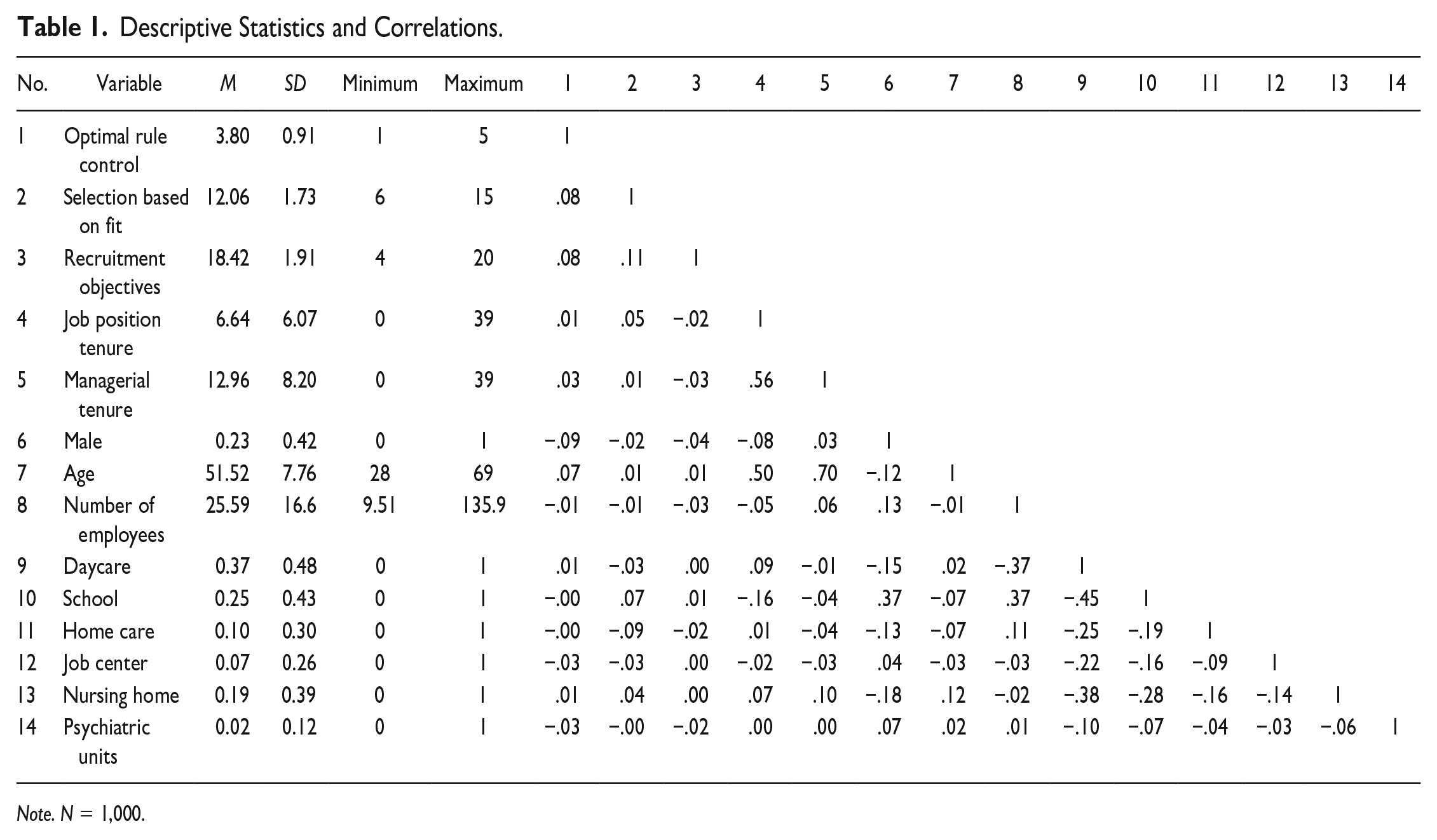
Descriptive statistics are presented in Table 1.
Descriptive Statistics and Correlations.
Note. N = 1,000.
The descriptive statistics reveal that most respondents perceive rules to be relatively positive. The mean of 3.8 is considerably higher than the midpoint of the scale. In total, 18 percent of the respondents score the scale maximum value. For both dependent variables, means are higher than the scale midpoints, indicating that public sector organizations in Denmark report use of recruitment objectives and a commitment-based selection to a relatively wide extent.
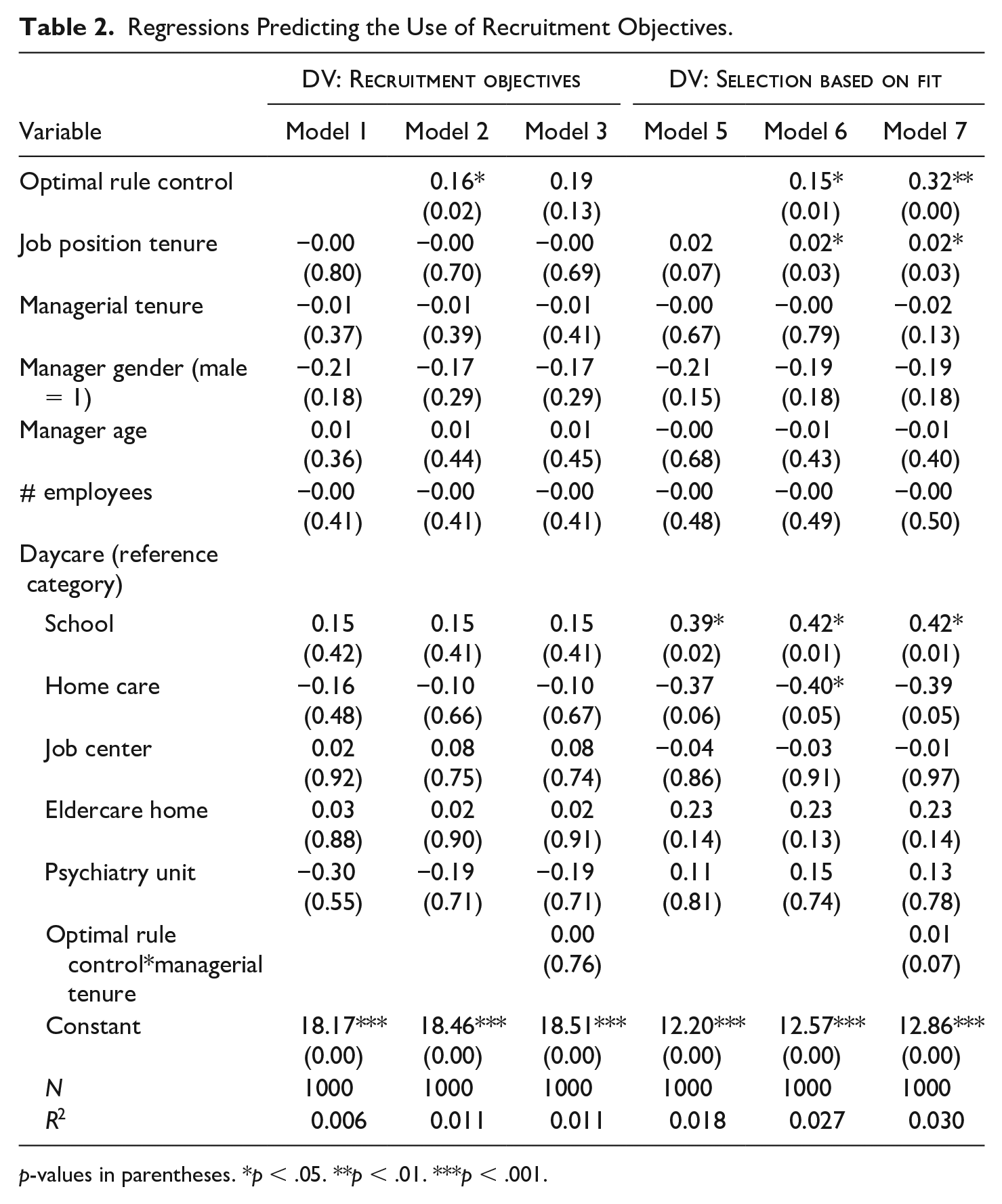
Table 2 includes analyses predicting the use of recruitment objectives (Models 1–3) and selection based on fit practices (Models 4–6). Focusing on recruitment objectives, Model 1 includes only the control variables, while Models 2 to 3 test the hypotheses. Model 1 indicates that the control variables included in this study do not contribute much to explaining variation in the use of recruitment objectives. Somewhat surprisingly, this study does not show any effect of, for instance, organization size and job position tenure. In Model 2, findings support Hypothesis 1. There is a positive and significant coefficient indicating that a higher optimal rule control affects the use of setting up recruitment objectives (–0.16; std. beta = −0.08; p = .18). It can also be noted that r-square almost doubles when including the measure of optimal rule control, albeit still at a low level. Model 3 includes the interactions between optimal rule control and manager tenure. Again, the coefficients are small and not statistically significant. This rejects the proposition in Hypothesis 3.
Regressions Predicting the Use of Recruitment Objectives.
p-values in parentheses. *p < .05. **p < .01. ***p < .001.
Next, focus is turned to the use of selection based on fit practices. In Model 5, a positive and significant relation is observed between optimal rule control and the use of selection practices based on fit (–0.15; std. beta = −0.08; p = .012). This supports Hypothesis 2 and indicates that in organizations where recruiting managers perceive more optimal rule control, selection practices based on fit are used to a higher extent. Again, in relative terms, a substantial increase in R2 is observed when including optimal rule control. In Model 6, an interaction between optimal rule control and managerial tenure is included. Again this interaction term fails to reach statistical significance indicating that the positive effect of optimal rule control on fit-based selection practices is consistent for managers with different tenure. The models fail to support Hypothesis 4.
In sum, the analyses support Hypotheses 1 and 2. While the effect sizes in substantive terms are not large, it should be remembered that multiple factors are involved in shaping recruitment practices in organizations. The results suggest that perceptions of optimal rule control play a significant role in this process.
Discussion
Public service organizations often face difficulties in recruiting and selecting qualified employees. The difficulties refer to both a large demand for competent staff, together with a shortage of employees within some professions. Furthermore, the hiring process is often characterized by rules and regulations, which might harm efficient recruitment and selection practices. To the best of our knowledge, this is the first study addressing how optimal rule control impacts the usage of recruitment and selection practices from the managers’ perspective.
The first two hypotheses argued that optimal rule control is positively associated with respectively the formation of recruitment objectives and a selection based on values and cultural fit. Both hypotheses were confirmed. Thus, when managers perceive rules as burdensome, excessive, and unnecessary, they implement the setting up of recruitment objectives and a selection based on fit to a lesser extent. The results indicate that optimal rule control plays a significant role in both stages of the recruitment process with a rather similar effect. However, the effect sizes in substantive terms are not large, pointing to the fact that several other factors are involved in shaping recruitment and selection practices in public organizations. These factors can among others be related to managers’ enactment of recruitment practices and their general leadership behavior- and style (Hattke et al., 2017); the managers’ experience with recruitment and completed training (Breaugh, 2008); and whether the organization relies on a “career-based” or “position-based” employment system (OECD, 2005). Furthermore, if managers often hire for the same job positions, they might find it redundant to formulate recruitment objectives, for instance. In addition, many selections of candidates are made even before the job announcements are compiled or the vacancies advertised (Hays & Sowa, 2010), which is why a multi-stage recruitment process might be skipped.
The confirmed positive relationship between optimal rule control and recruitment and selection can potentially be explained by an increased discretion where managers experience a larger freedom to do what they find most appropriate in the hiring process. Thus, if managers perceive a loss of authority they might feel constrained by the rules and regulations, leading to negative feelings, such as powerlessness, meaningfulness, and alienation as well as negative emotional responses, like anger and frustration (Blom et al., 2020; DeHart-Davis, 2005; Hattke et al., 2019). This may be associated with a lower usage of recruitment and selection practices.
In the third hypothesis, it was proposed that managers’ managerial tenure moderated the association between optimal rule control and the formation of recruitment objectives, such that for high levels of tenure, there would be a weaker association. Furthermore, it was argued in the fourth hypothesis that managers’ tenure moderated the association between optimal rule control and selection based on values and cultural fit, so that for a high tenure, the association would be weaker. Both hypotheses were not confirmed. Against expectations, highly tenured managers, in terms of managerial experience, did not have a weaker association between optimal rule control and hiring practices. Thus, the findings did not indicate that more experienced and skilled managers are less likely to let burdensome and unnecessary rules restrict themselves and their use of recruitment and selection practices. Nor do the findings support our assumption that experienced managers have a better understanding of organizational rules, including when and how they can bend the rules. Hence, organizations cannot advantageously appoint experienced managers as recruiters and thereby reduce the negative impact of burdensome rules on the use of recruitment and selection practices.
Theoretical and Practical Implications
This article contributes to the public human resource management literature on recruitment and selection practices, by focusing on how optimal rule control impacts the formation of recruitment objectives and a selection based on fit. Until now, research in this field has primarily been conducted from a job applicant perspective, and hence not a managerial perspective. As such, this study complements extant studies on the association between optimal rule control and the use of recruitment and selection practices, and develops a more comprehensive understanding from the managers’ perspective, that is, those who are responsible for the recruitment and selection practices. This study contributes by a more thorough understanding of the unintended impact of burdensome, excessive, and unnecessary rules on several stages of managers’ hiring process. By investigating a specific HR subsystem with a public cross-sector sample, this study contributes to the literature by making optimal rule control research more contextual. Thus, by combining burdensome and unnecessary rules, to which the public sector is often subject, with recruitment practices, which is a key concern in public organizations, this article contributes both theoretical and practical implications.
The practical implications include that HR managers and frontline managers must be aware that the burdensome rules can pose a challenge for using recruitment and selection practices. Thus, this study contributes with a more profound knowledge of the conditions under which public sector managers are developing and implementing recruitment and selection practices. Public sector organizations should invest efforts in reaching the optimum rule control to gain its positive associations with the use of recruitment and selection practices, which ultimately may affect overall performance. First of all, battling burdensome rules and red tape needs to be a priority of public managers, and it should be a strategic issue which requires continuous attention in public organizations (George et al., 2021). Thus, it is suggested that HR practitioners analyze the rules and regulations critically and consider whether these might induce perceptions of overly rule control among managers, and eventually how these rules can be made more functional and supportive (Sievert et al., 2020). Another suggestion is that HR managers make sure that frontline managers are aware of which recruiting and selection practices that are part of their responsibility, without eliminating their discretion (Op de Beeck et al., 2016). By jointly defining areas of responsibilities, the negative feelings from burdensome and unnecessary rules may be reduced as the frontline managers experience power over clearly defined HR practices. Based on previous research, municipality HR managers may also consider administrative assistants, who provide frontline managers with services, such as interpreting formal rules, and making it clear to frontline managers what they can and cannot do (Pandey et al., 2007). Again, ensuring clarity in regard to frontline managers’ responsibilities may reduce potential feelings of being constrained and alienated caused by burdensome rules and registrations. In this respect, it is important to consider that this study points out that managers’ managerial tenure has very little to say about the relationship between optimal rule control and the use of recruitment practices; this is particularly true for the preparatory stages of the hiring process. Although managers’ concrete experience with recruitment might show other effects (cf. Breaugh, 2008), our findings suggest that organizations cannot just give the responsibility for the recruitment and selection process to more tenured managers and then gain some benefits from this.
Strengths and Limitations
The findings and contributions of this study are related to its strengths and limitations. One strength of this survey study is that it is based on a relatively large sample from different service areas in the public sector. Thus, this study investigates a sample of 1,000 frontline managers within five service areas, that is, schools, daycare, eldercare, psychiatry, and job centers. This improves the external validity of the findings. However, since the data only covers the Danish municipal public sector, which might differ from the municipal public sector of other countries, for instance regarding the level of decentralization of the hiring process, the generalizability of the findings and implications must be looked upon with caution. Therefore, in the future, it could be relevant to replicate the study in other countries with different degrees of decentralization, but also in other service areas, such as the police, the military, or the transport sector as suggested (Boselie et al., 2019). For instance, public managers in other countries might have less managerial power to decide on the number of positions to be filled and the associated formal requirements, compared to Danish public managers.
Another limitation of this study is its cross-sectional design, which limits the ability to draw conclusions about the causal relationship between optimal rule control and recruitment and selection practices. Therefore, a future longitudinal study of the relationship would add to the explanatory power of the findings. However, this study relied on established green tape, red tape, and HRM theories to support the directions of the effects of optimal rule control on recruitment and selection practices.
Furthermore, this study measures optimal rule control and recruitment and selection practices by self-reported measures, which raises the issue of common-method bias (Jakobsen & Jensen, 2014), although this study combines survey responses with administrative data as control variables. Even though attempts have been made to control for common method variance through procedural remedies in the data collection (cf. Podsakoff et al., 2003), future research drawing on other data sources, such as employee or HR management responses, or even more objective measures, would strengthen the findings. Yet, the general critique of cross-sectional self-report studies has been found to be distorted and exaggerated (George & Pandey, 2017; Spector, 2006). Furthermore, as this study focuses on perceptions about Human Resource Management practices, survey data are a valid possibility (George & Pandey, 2017).
Somehow related, perceptual measures of optimal rule control are used. Optimal rule control is measured in the personnel sub-system of recruitment and selection with a validated scale (DeHart-Davis et al., 2015). The assumption behind the scale of optimal rule control is that both over-controlling and under-controlling rules are inefficient and that an optimum is to be found in between (DeHart-Davis, 2009). However, the measurement of the construct by a semantic differential scale does not quite reflect this optimum. For that reason, it might be relevant to include other red tape and green tape measures in future studies. Furthermore, managerial experience has been measured by time of experience as a proxy, which is common practice (Hambrick & Mason, 1984). However, in future, it could be relevant to include the manager’s level of experience as a function of what he or she has done, for instance, the types of previous leadership positions, and the nature of previous duties and responsibilities (Bettin & Kennedy, 1990), including the experience with recruitment; this to see if it has a significant moderating effect on the relationship between optimal rule control and recruitment and selection practices.
Finally, while seeking to theoretically derive different mechanisms linking perceptions of optimal rule control and recruitment and selection, the research design is not able to capture them. Hopefully, future research will empirically explore the mediators and thereby perhaps explain the link between managers’ optimal rule control perceptions and the implementation of HR practices.
Concluding Remark
This study contributes by the generic finding that optimal rule control is positively associated with the hiring practices among public sector frontline managers. More specifically, this study shows that the perception of optimal rule control positively associates with the use of formation of recruitment objectives, as well as the selection of new employees based on values and cultural fit. Furthermore, findings indicate that managers’ tenure does not moderate the relationship between optimal rule control and recruitment and selection practices.
Our conceptual reasoning suggests that the link between perceiving rules as burdensome, excessive, and unnecessary and a lower engagement in recruitment and selection might be a consequence of the managers having a reduced discretion, as well as a feeling of being constrained by the rules, leading to negative feelings, such as powerlessness, meaningfulness, and alienation together with negative responses, such as anger and frustration.
As burdensome rules and restrictions are common characteristics of the public sector, these findings may have far-reaching theoretical, but also practical, consequences in future public hiring processes. Our findings, furthermore, contribute to the public management literature by increasing knowledge on recruitment and selection practices in the public sector, and hopefully other scholars feel encouraged to examine these HR practices in other public contexts.
Footnotes
Declaration of Conflicting Interests
The author(s) declared no potential conflicts of interest with respect to the research, authorship, and/or publication of this article.
Funding
The author(s) received no financial support for the research, authorship, and/or publication of this article.
