



Abstract
This article reports a longitudinal study comparing religiosity among two cohorts of Indian older adults—those who age in the homeland of India (AIH cohort) and immigrants (to the USA) or diaspora older adults (DOA). Results indicated that AIH and DOA cohorts’ religiosity outcomes were comparable at baseline but there was a statistically significant increase in all outcomes of the DOA cohort at subsequent time points. Women and single older adults in both the cohorts had higher religiosity scores at baseline. Religiosity scores were higher among those in the DOA cohort who migrated following marital disruption (widowhood, divorce) or grandchild birth and lived with adult immigrant children and their families. The immigration process can have an impact on religious orientation of older adults and place is a significant variable impacting religiosity possibly for augmenting the sense of self, acquire social capital and preserve cultural identity in the foreign land.
Introduction
There is a steady increase in research on migration among older adults and aging in the diaspora contexts that is driven by family caregiving needs (Deneva, 2017), care receiving requirements (Naldemirci, 2013), and retirement migration (Olsson & O’Reilly, 2017). The prominent themes include diasporic belonging of the older adults, rootedness, and identity (Walsh & Näre, 2016).
Among the baby boomers worldwide, there are thus two cohorts of older adults—those who age in the homeland or their native country and the diaspora older adults. This is particularly so for Indians among whom there is a growing migrant population—both young and old, and a sizeable number of Indian older adults residing in the United Kingdom, Canada, and United States, having migrated to live with their adult children and families (Singh, 2013). Subjective experiences of adjustment, quality of life, changing cultural orientations, identities, and care needs have been explored (Alvi & Zaidi, 2017; Tiaynen-Qadir, 2020).
Religion and religiosity are important tropes to facilitate adaptation and adjustment among late-life immigrants (Kim & Kim-Godwin, 2019). There is an emphasis that religion facilitates improving quality of life in the foreign land (Lee et al., 2017). In general, there is well established evidence on the connection between religion and aging (Zimmer et al., 2016). Research has suggested that religiosity undergoes changes with the aging process and is contingent on factors such as health and functional status (Cohen-Mansfield et al., 2016). Positive religious orientation (seeking spiritual support, benevolent religious reappraisals) over a period of time is associated with better health of older adults (Pargament et al., 2004). Longitudinal studies have established causality between religion, subjective wellbeing, happiness, and life satisfaction (Headey et al., 2010; Lim & Putnam, 2009). Religiosity (both intrinsic or personal quest orientated and extrinsic or pertaining to religious participation and involvement in public/collective activities; Allport & Ross, 1967) has a positive correlation with improved cognitive function, stress/depression mitigation, fostering resilience and strengths (Emlet et al., 2018; Foong et al., 2018) and religious affiliation contributes to meaning-making among older adults globally (Abdollahi et al., 2018; Skirbekk et al., 2018).
Studies have found that worldwide, older adults are more likely to have religious affiliation and organizational religious involvement as compared to young adults (Hayward & Krause, 2015; Twenge et al., 2016), though some studies have also indicated that people may turn away from religion as they grow older possibly due to cohort differences (Branas-Garza et al., 2013).
Further, there are several socio-demographic factors influencing the association between religion and aging. Some studies have suggested that older women are more religious, report more religious involvement and gain from religious services and affiliation compared to men (Krause, 2008; Robinson et al., 2019; Trzebiatowska & Bruce, 2014, 2013). Yet others suggest that the intellectual involvement of older men in religious tasks and the social status they enjoy in several religious institutions gives them more health benefits (Keyes & Reitzes, 2007; Krause et al., 2002; Reitzes & Mutran, 2006). Some studies suggest that married older adults are more likely than unmarried ones to report high levels of institutional, non-institutional, and subjective religiosity (Levin et al., 1995; Levin & Chatters, 1998) and yet other suggest that widowhood and single status is a more potential condition for increased religious inclinations and quest (Bahr & Harvey, 1979; Neill & Kahn, 1999; Nelson-Becker & Gilbert, 2014). Denominational preferences and comfort with ideas of prayer, faith, religion, and spirituality are also predictive moderators of religious involvement (Dyer & Hagedorn, 2013; Stoneham, 2005). Socio-cultural environmental factors and majoritarian religious trends influence individual religious expression and engagements across nations and nationalities (see Fiddian-Qasmiyeh, 2011; Kurien, 2007).
Studies have also suggested that the impact of religiosity on wellbeing of older adults is higher for older adults from developing nations (Abolfathi Momtaz et al., 2014; Aghababaei et al., 2016; Diener et al., 2011). Other factors that influence a positive connect between older adults’ religiosity and wellbeing include cognitive and physical agility (Hood et al., 2009), overall health status (Kaplan et al., 2003), and psychological resources (including peer and social support) (Chokkanathan, 2013; Jackson & Bergeman, 2011).
For diaspora older adults, the immigration process per se can also have impact on religious orientation in terms of inclination, orientation, affiliation, and expression (Ivanescu, 2016; Padilla & Phan, 2014; Snyder, 2012). A newly emerging domain of work investigates the effect of place on religiosity of older adults. One strand of research indicates that higher level of religious engagement predicts greater life satisfaction of older immigrants (Roh, 2010) mediated by social support (Park et al., 2012) and it becomes a health-promoting resource (Stroope et al., 2022). Smith's (2003) theory of religious effects suggests that moral order, learned competencies, and social and organizational ties enable reinforcing the positive effects of religion. In line with the same, this strand of research suggests that religiosity has the potential to mitigate acculturation stress of older immigrants mediated by emotional social support. The immigration context or place is thus instrumental in intensifying religious quest towards meeting life-enhancing goals.
Two conceptual domains have emerged: religious identities and orientations while aging in the homeland (where religion is a determinant of wellbeing) (Kaneda et al., 2011; Ladusingh & Ngangbam, 2016) and intersectional and possibly transformed religious identities while aging in the diaspora or immigrant older adults (where religion is a resilience and strength endowing resource and religious identities are enmeshed with new/foreign cultural norms and immigrant status) (Kulis et al., 2016; Nijhawan, 2016; Saunders et al., 2016). This influences religious expression and religious culture is redefined through the home-making process in foreign land (Fluit et al., 2019). Scholars have since long emphasized that transnational migration processes and practices lead to increased religious fervor, puritanism, and orthodoxy based on scripturalism, done mainly for purposes of demonstrating status and acquiring social capital (Gardner, 1993, 1995; Parekh, 1994; Smart, 1999). Religious/spiritual organizations are the most common form of organizational affiliation for U.S. Indians (Kandula et al., 2018) and there is evidence that Indian minority religious groups also demonstrate high levels of communal and congregational forms of religious participation (Sciupac, 2017).
For this fast-growing Indian immigrant population, including immigrant older adults, what needs to be investigated is whether religiosity increases over time for diaspora older adults as compared to those who are aging in the homeland. In particular, the following questions arising from gaps in existing research need to be examined: Does place/geography have a significant impact on religious orientation of older adults? Are older adults in the diaspora more religious as compared to their counterparts who age in the homeland? Is there an increase in religiosity of diaspora older adults over time and if so, what are the moderators and mediators of such an increase? The present study is a seven-year longitudinal investigation, with data collected at four time points (years 2013, 2015, 2017, 2019), comparing two cohorts of Indian older adults—aging in homeland and diaspora Indian older adults, on their levels of religious orientation, intrinsic and extrinsic religiosity.
Based on existing research, the following hypotheses were developed: H1: It is hypothesized that the religious orientation of Indian adults aging in the homeland (AIH) and those who migrate to foreign countries to live with their adult children or Indian older adults aging in the diaspora (diaspora older adults or the DOA) would be comparable at baseline. H1a: It is expected that there would be a significant subsequent difference in religion orientation of Indian adults aging in the homeland (AIH) and those who migrate to foreign countries to live with their adult children or Indian older adults aging in the diaspora (diaspora older adults or the DOA). H1b: It is further expected that for Indian older adults, aging in the diaspora (diaspora older adults or DOA cohort) is associated with increase in intrinsic and extrinsic religiosity over a period of time as compared to their counterparts who age in the homeland (aging in homeland or AIH cohort). H2: It is hypothesized that the religious orientation of older adults in general is likely to vary by certain demographic characteristics (for instance age, gender, religion, class, education, occupation, marital status, living arrangement, self-rated health). H2a: It is anticipated that for the DOA cohort, immigration related variables (such as life-course event preceding immigration decision and living arrangement in destination country) would also have a significant effect on religious orientation. H3: It is further hypothesized that baseline and subsequent increase in religiosity and religious orientation of the DOA cohort could be predicted and mediated by certain participant demographics (for instance age, gender, religion, class, education, occupation, marital status, self-rated health) and immigration related variables (such as life-course event preceding immigration decision and living arrangement in destination country).
Method
Study Design and Participant Recruitment
For this longitudinal two-group comparison study, older adult participants were recruited in both the cohorts through convenience and snowball sampling at the initial stage. This was facilitated through contacts obtained from voluntary associations and citizens’ groups (including non-profit organizations, support groups) of older adults (aged 60 and above) in the study sites. The AIH cohort Indian older adults (in Mumbai, New Delhi, Chennai, and Bengaluru) were reached through email and flyers put up on the bulletin boards of the voluntary agencies explaining the study intent, details, and the request to respond to questionnaires at four intervals. The inclusion criteria were inclination to participate, basic functional self-reported knowledge of the English language, basic self-reported functional comfort with computers and/or smartphone, and mini-mental state examination (MMSE) scores≥22. The DOA cohort older adults were reached via email and flyers put up on the websites of associations/groups/networks of Indians living in four U.S. cities (Chicago, IL, New York, NY, Trenton, NJ, and San Francisco, CA) explaining the study details and request to respond to questionnaires on religiosity entailing a time commitment of 60–90 min once in two years approximately three-four times. The inclusion criteria were similar to the AIH cohort. The MMSE was administered by trained counselors in the respective cities through a combination of traditional face-to-face interface and through video call in instances of physical mobility issues (for 12% of AIH older adults in 2013 and subsequently for an estimated 8–10% in the later phases; for 11% of DOA older adults in 2013 and subsequently for an estimated 8–10% in the later phases). Initially, 279 older adults of the AIH cohort expressed interest of whom 232 finally responded to the first/baseline questionnaire. From the DOA cohort, initially 302 older adults expressed interest of whom 245 finally responded to the questionnaire at baseline (year 2013). Participant attrition at the three subsequent phases (years 2015, 2017, 2019) were duly recorded; engagement with the study entailed no risks or monetary expenses for the participants. Figure 1 explains the flow of participants through each stage of the study.
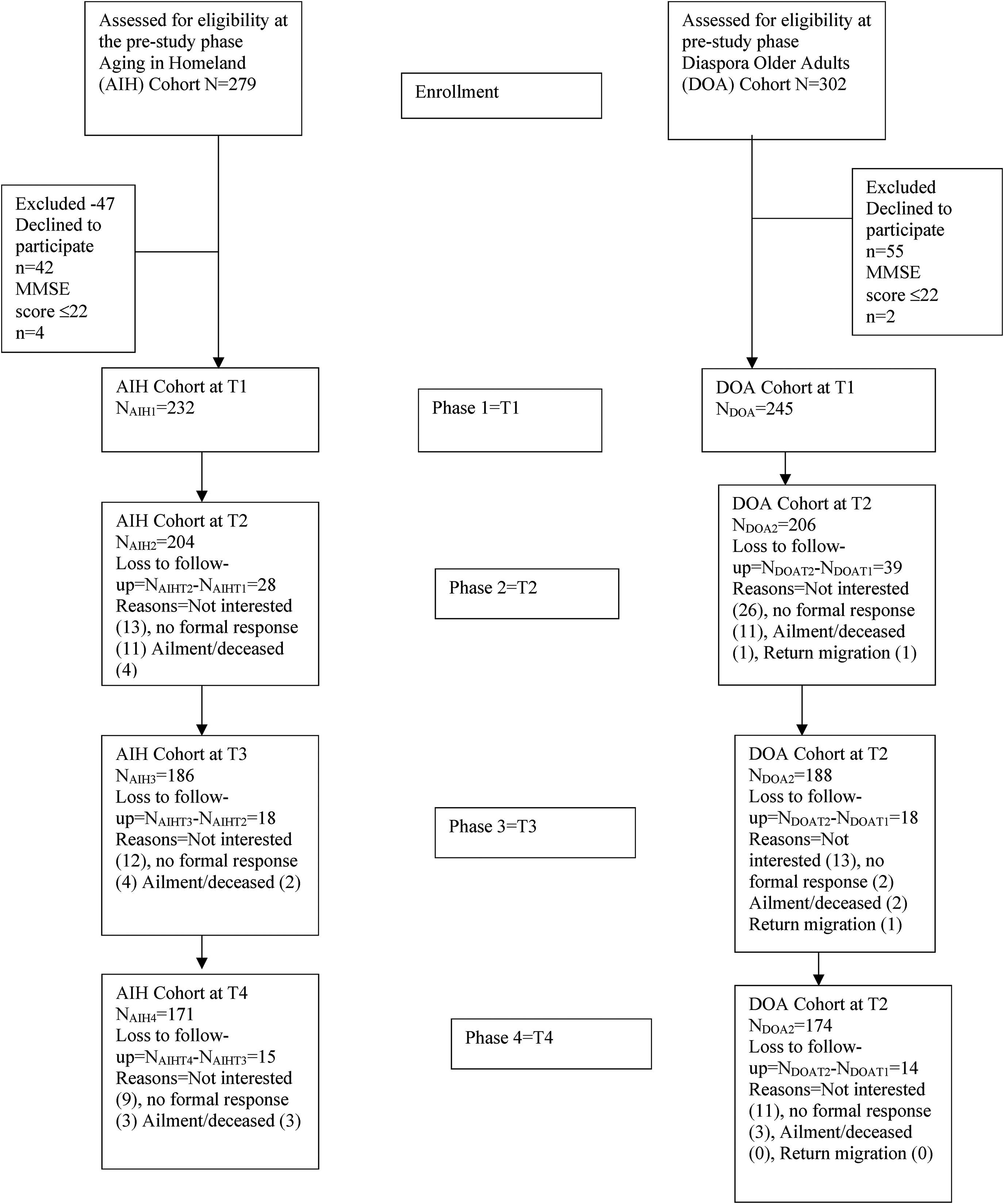
Flow of participants through each stage of the study.
Informed written consent was obtained from all the study participants. No risks resulting from taking part in the study, were identified. There is no registered funder to report for this submission. Participants were not offered any incentive. The trained counselors in the study sites (postgraduate students of counseling and applied psychology) who administered the MMSE were offered mementoes as a token of appreciation for their honorary services. The study conforms to the norms prescribed by the Declaration of Helsinki, 1975 as amended in 2000, and comparable ethical standards. There are no conflicts of interest to report for this submission.
Measures
Data were collected via online questionnaires using simple Google forms administered in English language and accessible through computers, tablet devices, and/or smartphone. Since the inclusion criteria were basic self-reported working proficiency in English language and ease with basics of digital technology, the said methods were used. The MMSE was used as a screening measure (MMSE cut-off ≥ 24: minimum high school educated with no cognitive impairment were eligible to participate). Developed by Folstein et al. (1975), the MMSE is a widely used and standard tool to assess mental status; it is a 11-question measure that tests five areas of cognitive function: orientation, registration, attention and calculation, recall and language. The maximum score is 30 and the score of 22 or lower is indicative of cognitive impairment. There is variation in cut-off scores based on education levels and for college and higher educational levels, the adjusted cut-off score is 24 or lower as indicative of impairment. MMSE has cross-cultural application and studies have validated the measure with older adults (McWilliam et al., 2018). For the present study: Cronbach α = .89; item scale intercorrelation = .88; Pearson's r = .86.
The self-report measure Revised Intrinsic/Extrinsic Religious Orientation Scale (R-I/EROS) was used to assess religiosity at the four time points. Based on Allport and Ross’s (1967) distinction between intrinsic and extrinsic religiosity, Gorsuch and McPherson (1989) developed the R-I/EROS. The original scale comprised 20 items in which the nine items assessing intrinsic religiosity were designed to detect the tendency to conceive religion as the master motive in own life and the 11 items to assess extrinsic religiosity were developed in order to capture the use of religion for security, sociability, and status (Voci et al., 2017). However, the original measure was criticized as the predicted correspondence between intrinsic and mature religiosity was not fully confirmed and extrinsic items were more utilitarian and self-serving rather than actually assessing the social dimension of religiosity and often turned out to be reverse measures of intrinsic orientation (Batson et al., 1993). The R-I/EROS contains 14-items, and addresses some of these concerns. Eight items assess intrinsic religiosity (It is important for me to spend time in private thought and prayer) and six items assess extrinsic religiosity (I go to religious service mainly because I enjoy seeing people I know there). Consistent with previous research, the word church (original) was replaced by religious services so as to be more encompassing of all religions (Vitell et al., 2007). Items are scored on a 5-point Likert-type rating (1 = strongly disagree to 5 = strongly agree). Three items on the intrinsic measure are reverse scored. The R-I/EROS yields two scores R-IROS for the intrinsic orientation with scores ranging from 8 to 40 and R-EROS for the extrinsic orientation with scores ranging from 6 to 30. Higher scores indicate greater intrinsic/extrinsic religious orientation. The R-I/EROS has been widely used, found to be valid and reliable and hence having good psychometrics (Isaak et al., 2018). For the present study: R-IROS Cronbach α = .86; item-scale intercorrelation range = .88–.92; and, R-EROS Cronbach α = .88; item-scale intercorrelation range = .87–92.
Statistical Methods
To investigate the first hypothesis (H1, H1a, and H1b), outcome measure scores of the control and intervention group older women were compared at baseline and subsequent time points (T2, T3, and T4). Group × Time interactions were assessed through one- and two-way repeated measures ANOVA and mixed design two-way ANOVA.
To examine the second hypothesis (H2 and H2a), post-hoc analyses using Tukey's HSD were used to examine the effects of significant respondent-related demographic and immigration-characteristic predictors on outcome scores. Significant main effects and predictors of change scores were further assessed through multivariate analyses of variance (MANOVA). Kruskal–Wallis non-parametric testing and Bonferroni adjusted alpha levels were used to investigate the independent, pairwise, and combined effects of significant predictors on changes in outcomes. Non-parametric tests were used as follow-ups of ANOVAs to confirm the time-wise changes in outcome measures, without assuming normality in sample distributions. The Kruskal–Wallis non-parametric tests also give room for the null hypothesis to be more open-ended. The multivariate test statistic Roy's largest root was used, to tests for mean differences on a single dependent measure while controlling for the other dependent measures.
To investigate H3, two longitudinal structural equation models were developed depicting path estimates and effects of predictors on initial and changed intrinsic and extrinsic religiosity scores of the DOA cohort and one model was developed to depict the mutual covariance between outcomes. To obtain a comprehensive model fit, the chi-square (χ2), goodness-of-fit index (GFI), normed fit index (NFI), and root mean square error of approximation (RMSEA) were used. GFI and NFI (>.95 indicating good model fit) allow for model fit assuming an open-ended null hypothesis comparing the current model with the baseline model assuming no variables are correlated and RMSEA allows for comparing the current model with the saturated model assuming that all variables are correlated.
Results
The analyses compare outcome scores of the AIH and DOA cohorts at baseline and subsequent time points (T2, T3, and T4), examine predictors of change scores, investigate paths determining longitudinal changes in outcomes and their mutual covariance.
Participant Profiles
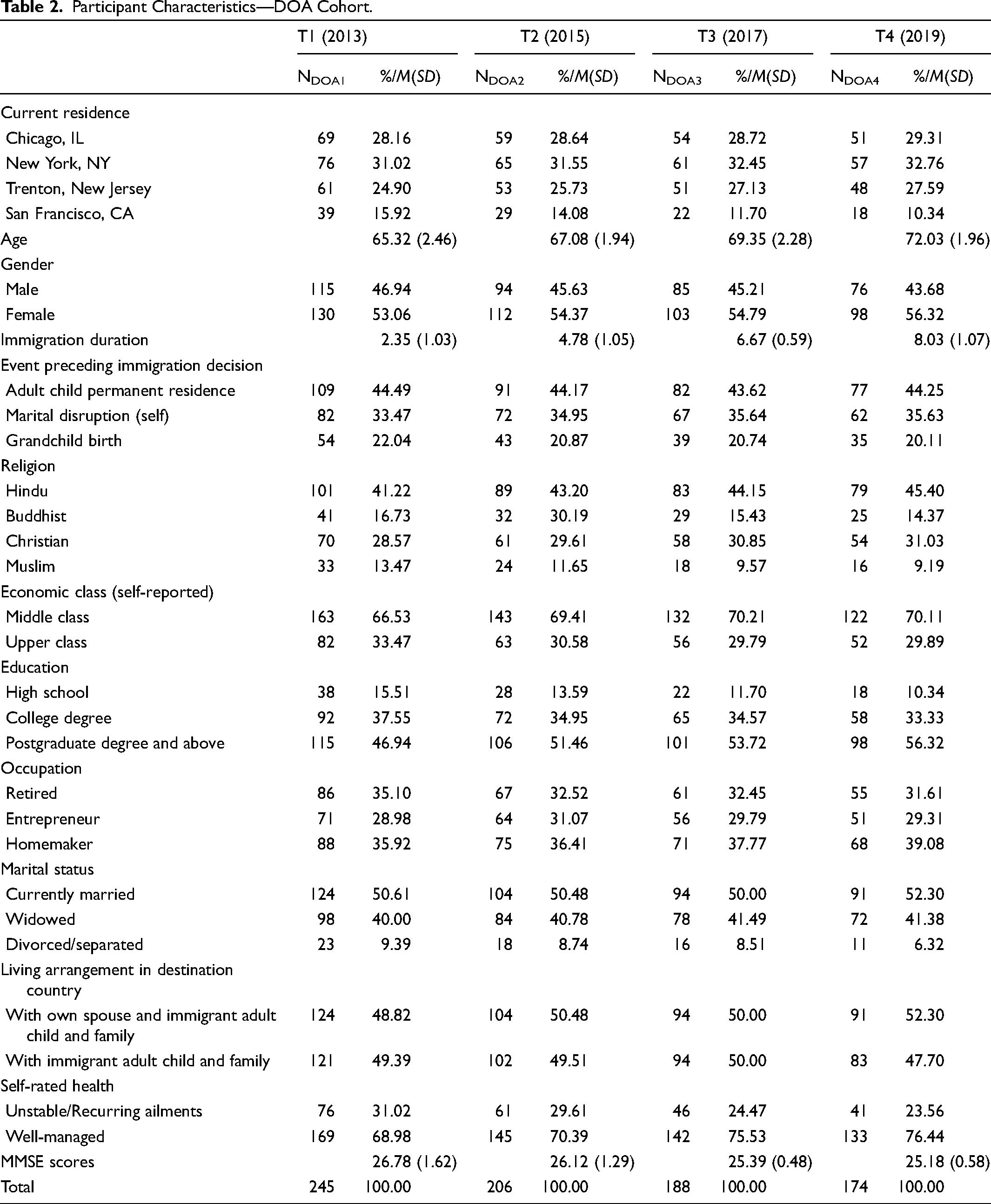
Tables 1 and 2 depict the AIH and DOA cohort characteristics respectively, at baseline and subsequent phases (T2, T3, and T4). Chi-squared tests indicated that there were no significant differences in the demographic characteristics (age, gender, religion, class, education, occupation, marital status, self-rated health, MMSE scores) at baseline and T2, T3, T4, for the AIH and DOA cohorts (p≥.23) and hence were comparable. Two immigration related variables were examined for the DOA cohort: life-course event preceding immigration decision and living arrangement in destination country.
Participant Characteristics—AIH Cohort.
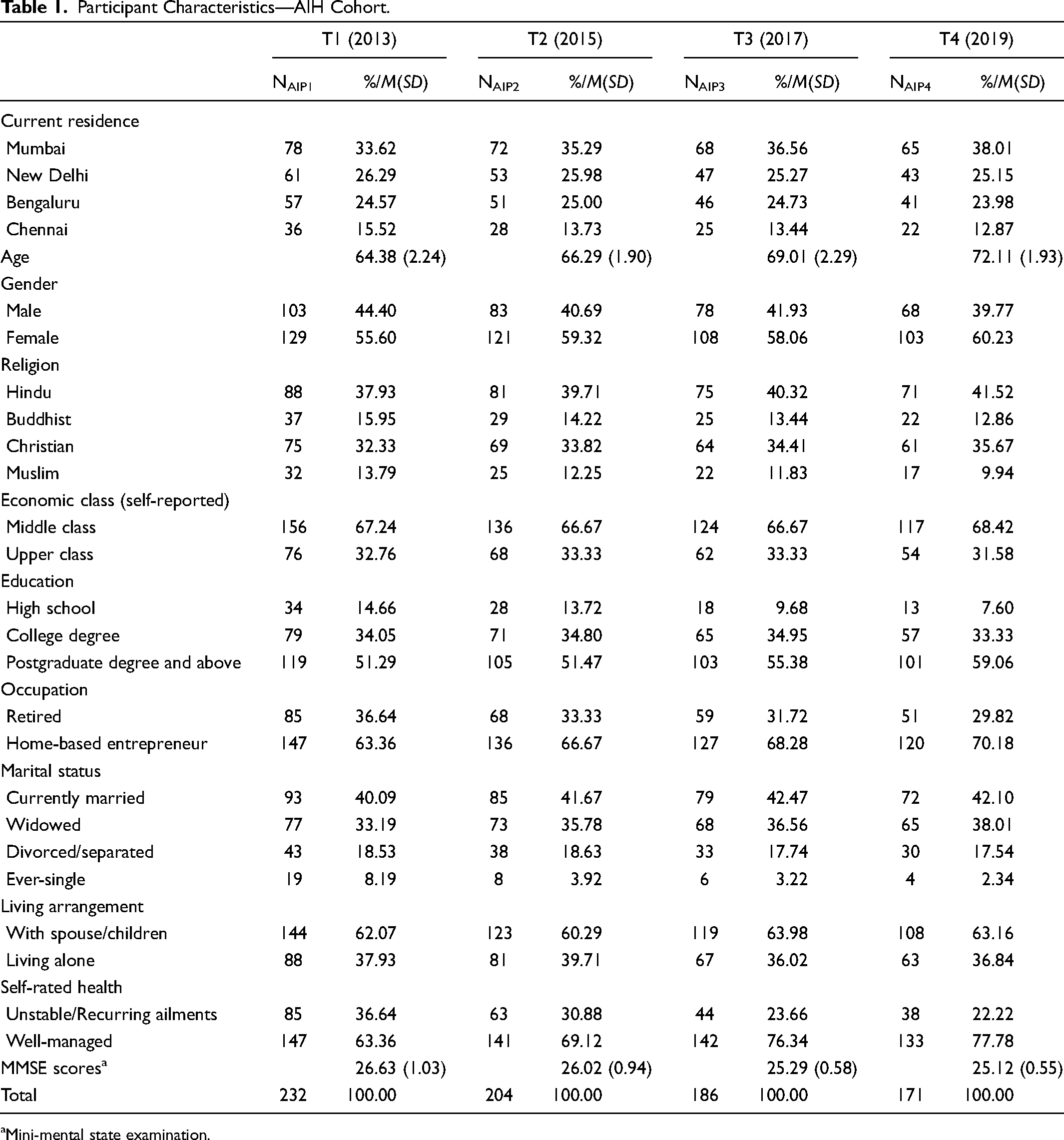
Mini-mental state examination.
Participant Characteristics—DOA Cohort.
AIH and DOA Cohorts: Baseline Religiosity Scores and Differences at T2, T3, and T4
Outcome scores of the AIH and DOA cohorts (Table 3) were equal at baseline, with no significant difference at T1 (p = .462–.853; d = 0.01–0.07). There was also no significant difference in the R-IROS and R-EROS outcomes scores of the AIH cohort at T2 →T3 (p = .221–.483; d = 0.07–0.12), T2→T4 (p = .101–.772; d = 0.03–0.17) and T3→T4 (p = .191–.342; d = 0.10–0.14). However, there were significant differences in the R-EROS scores of the AIH cohort from T1→T2 (t (434) = 2.73; p = .0066; d = 0.26), in the R-IROS scores of the AIH cohort from T1→T3 (t (416) = 2.07; p = .04; d = 0.20) and R-IROS (t (401) = 2.95; p = .0033; d = 0.29) and R-EROS scores (t (401) = 2.65; p = .0084; d = 0.26) from T1→T4. Hence for the AIH cohort intrinsic and extrinsic religiosity differed significantly from baseline to subsequent time points: at T2 there was a significant increase in extrinsic religious orientation, at T3 in intrinsic religious orientation; and, at T4 in both intrinsic and extrinsic religious orientation.
AIH and DOA Cohorts: Outcomes at Different Time Points.
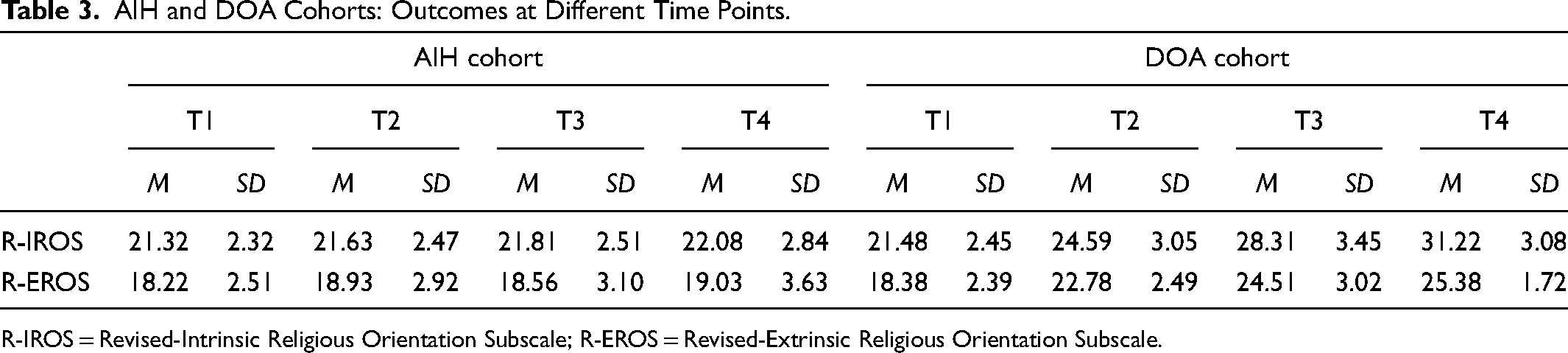
R-IROS = Revised-Intrinsic Religious Orientation Subscale; R-EROS = Revised-Extrinsic Religious Orientation Subscale.
T2 R-IROS scores of the DOA cohort were higher than the T2 R-IROS scores of the AIH cohort (t (408) = 13.21; p≤.001; d = 1.07) and their own T1 scores (t (449) = 12.01; p ≤ .001; d = 1.12). T2 R-EROS scores of the DOA cohort were higher than the T2 R-EROS scores of the AIH cohort (t (408) = 14.37; p ≤ .001; d = 1.42) and their own T1 scores (t (449) = 19.11; p ≤ .001; d = 1.80).
T3 R-IROS scores of the DOA cohort were higher than the T3 R-IROS scores of the AIH cohort (t (372) = 20.82; p ≤ .001; d = 2.15), their own T1 scores (t (431) = 24.07; p ≤ .001; d = 2.28), and T2 scores (t (392) = 11.36; p ≤ .001; d = 1.14). T3 R-EROS scores of the DOA cohort were higher than the T3 R-EROS scores of the AIH cohort (t (372) = 18.80; p ≤ .001; d = 1.94), their own T1 scores (t (431) = 23.58; p ≤ .001; d = 2.25), and T2 scores (t (392) = 6.22; p ≤ .001; d = 0.63).
T4 R-IROS scores of the DOA cohort were higher than the T4 R-IROS scores of the AIH cohort (t (343) = 28.64; p ≤ .001; d = 3.08), their own T1 scores (t (417) = 35.99; p ≤ .001; d = 3.50), T2 scores (t (378) = 27.67; p ≤ .001; d = 2.16), and T3 scores (t (360) = 8.44; p ≤ .001; d = 0.89). T4 R-EROS scores of the DOA cohort were higher than the T4 R-EROS scores of the AIH cohort (t (343) = 20.82; p ≤ .001; d = 2.24), their own T1 scores (t (417) = 33.03; p ≤ .001; d = 3.36), T2 scores (t (378) = 11.63; p ≤ .001; d = 1.21), and T3 scores (t (360) = 3.33; p ≤ .001; d = 0.35).
One-way repeated measures ANOVAs were conducted to compare outcome scores of both the cohorts at different time points viz. T2, T3, and T4. The Mauchly's tests were non-significant and hence the assumption of sphericity was met. There was a significant main effect of time with respect to the R-IROS scores F (3, 170) = 138.92, p ≤ .05and R-EROS scores F (3, 170) = 166.71, p ≤ .05 of the DOA cohort. There was also a significant main effect of time with respect to the R-IROS F (3, 167) = 109.22, p ≤ .05 and R-EROS F (3, 67) = 98.78, p ≤ .05 scores of the AIH cohort.
Bonferroni tests revealed significant differences in the DOA cohort's outcome scores between each of the time points, with T4 scores being the highest and T2 being the lowest. Except for a significant increase in R-IROS and R-EROS outcomes at T4, there were no other significant differences in the AIH cohort on outcomes at different time points. Hence time was consistently significant in impacting outcomes for the DOA cohort, and caused significant change in only intrinsic–extrinsic religiosity measures in the AIH cohort at T4.
Secondly, two-way repeated measures ANOVAs were conducted with group (DOA vs. AIH) as the first factor and time (T4 vs. T2) as the second factor to compare the outcomes. The assumptions of sphericity were met. There were significant main effects of group F (1, 163) = 127.89, p ≤ .05, time F (1, 163) = 132.44, p ≤ .05, and an interaction between Group × Time F (1, 163) = 134.55, p ≤ .023. Hence, the DOA cohort exhibited higher intrinsic and extrinsic religious orientation at T4 compared to the AIH cohort and their own scores at previous time points.
Further, a series of mixed-design two-way ANOVAs were conducted to further investigate Group × Time interactions on the outcome measures. Results indicated no significant interactions between T1 scores of the AIH and DOA cohorts on both outcomes (p≥.05, ηp2 ≤.001). However, there were significant interactions between T1 and T4 R-IROS and R-EROS scores of the AIH cohort (p ≤ .05, ηp2≥.49). There were significant interactions between T2, T3, and T4 scores of the AIH and DOA cohorts, between T1 and T2, T1 and T3, T1 and T4, T2 and T3, T2 and T4, and T3 and T4 outcome scores of the DOA cohort (p ≤ .05, ηp2 ≥.49).
Participant Characteristics and Religious Orientation of the AIH and DOA Cohorts
Analyses of variance indicated that at T1 and subsequently at T2, T3, and T4 for the AIH cohort and at T1 for the DOA cohort, the effects of gender and marital status were significant. Post-hoc analyses using Tukey's HSD indicated that within the AIH cohort at all time points, the outcome scores were higher for older women and the single (widowed, divorced/separated, ever-single) as compared to men and those currently married. T4 increase in the intrinsic and extrinsic religious orientation scores for the AIH cohort were also higher for older women and single older adults as compared to men and the currently married (p ≤ .05, ηp2 ≥.45). This was also so for the T1 outcome scores of the DOA cohort—older women and widowed/divorced/separated immigrant older adults were more religious at T1 compared to their counterparts. Living arrangement and life-course event preceding immigration at T1 for the DOA cohort also had a statistically significant effect on their baseline religiosity outcomes. Post-hoc analyses using Tukey's HSD indicated that older adults who lived with their adult immigrant child and their families, and whose migration decision followed their own marital disruption or grandchild birth were more religious compared to those who lived with their own spouse along with adult immigrant child and family or more specifically migrated as couples and whose migration decision was based on adult child permanent residence in destination land. All other main and interaction effects were non-significant (p≥.09, ηp2≤.01).
Religious Orientation and Demographic and Immigration-Related Characteristics of the DOA Cohort at T2, T3, and T4
At T2, T3, and T4, when the DOA and AIH cohorts had significant between-group differences on both outcomes, the main effects of gender and marital status continued to be significant. The main effects of living arrangements in destination country and life-course event preceding immigration were also consistently significant across time points for the DOA cohort. Additionally, the main effects of religion, education, and self-rated health, were significant. Post-hoc analyses using Tukey's HSD indicated that T2, T3, and T4 religiosity outcomes were higher or continued to increase for older women, who decided to immigrate because of their own marital disruption or grandchild birth, Hindus and Buddhists, with higher formal education, single (widowed or divorced/separated), who lived with their immigrant adult child and family, and who reported well-managed health condition. This was in comparison with older men, whose immigration decision was based on adult child's permanent residence in destination land, Christian and Muslims, moderately educated (high school or college degree), who lived with their own spouse and immigrant adult child's family, and who reported unstable health. All the other main effects were non-significant.
Predictors of Outcome Score Changes: Multivariate Analyses (MANOVA) and Non-Parametric Tests
Outcome scores of the ten groups with identified changes (T2 DOA and AIH cohort; T3 DOA and AIH cohort; T4 DOA and AIH cohort; T1 and T4 AIH cohort; T1 and T2 DOA cohort; T1 and T3 DOA cohort; T1 and T4 DOA cohort; T2 and T3 DOA cohort; T2 and T4 DOA cohort; and T3 and T4 DOA cohort) were further subjected to MANOVA, with seven variables: gender, life-course event preceding immigration decision, religion, education, marital status, living arrangement in destination country, and self-rated health. One of the main assumptions of MANOVA is the equality of variance/covariance matrices of the different groups analyzed. A Barlett's test was conducted investigating this assumption with all the ten groups and was found to be significant χ2 (54) = 49.32, p = .022. Upon further investigation, it was found that group of T1 and T4 changes in AIH cohort did not have equal variance/covariance with other subgroups. Hence, the Barlett's test was again conducted with only nine groups (to control for the T1→T4 outcome changes in AIH cohort) and was found to be significant χ2 (54) = 79.33, p = .29, n.s. This indicated that the said nine groups (difference between AIH and DOA cohorts at different time points and DOA cohort difference across time points) had roughly equal variances/covariances.
The seven significant main effects were further examined through Kruskal–Wallis non-parametric testing. The interaction effects between demographic characteristics (gender, religion, education, marital status, self-rated health) and immigration related variables (life-course event preceding immigration decision, living arrangement in destination country) were significant across the nine groups (Roy's largest root range = .0783–.0918, p ≤ .05, ηp2 range = .49–.78). Tests were further conducted using Bonferroni adjusted alpha levels of .0071 per test (.05/7). The independent and pairwise combinations of demographic characteristics and immigration related variables were significant. Further, their combined effects were also significant. Religious orientation and religiosity outcome scores consistently increased for older women, whose immigration decision was based on own marital disruption or grandchild birth, Hindus and Buddhists, with higher formal education, single (widowed or divorced/separated), who lived with their adult immigrant child's family, and with well-managed health.
Predictors and Mediators of Baseline and Subsequent Changes in Religious Orientation of the DOA Cohort: Path Estimates and Mutual Covariances
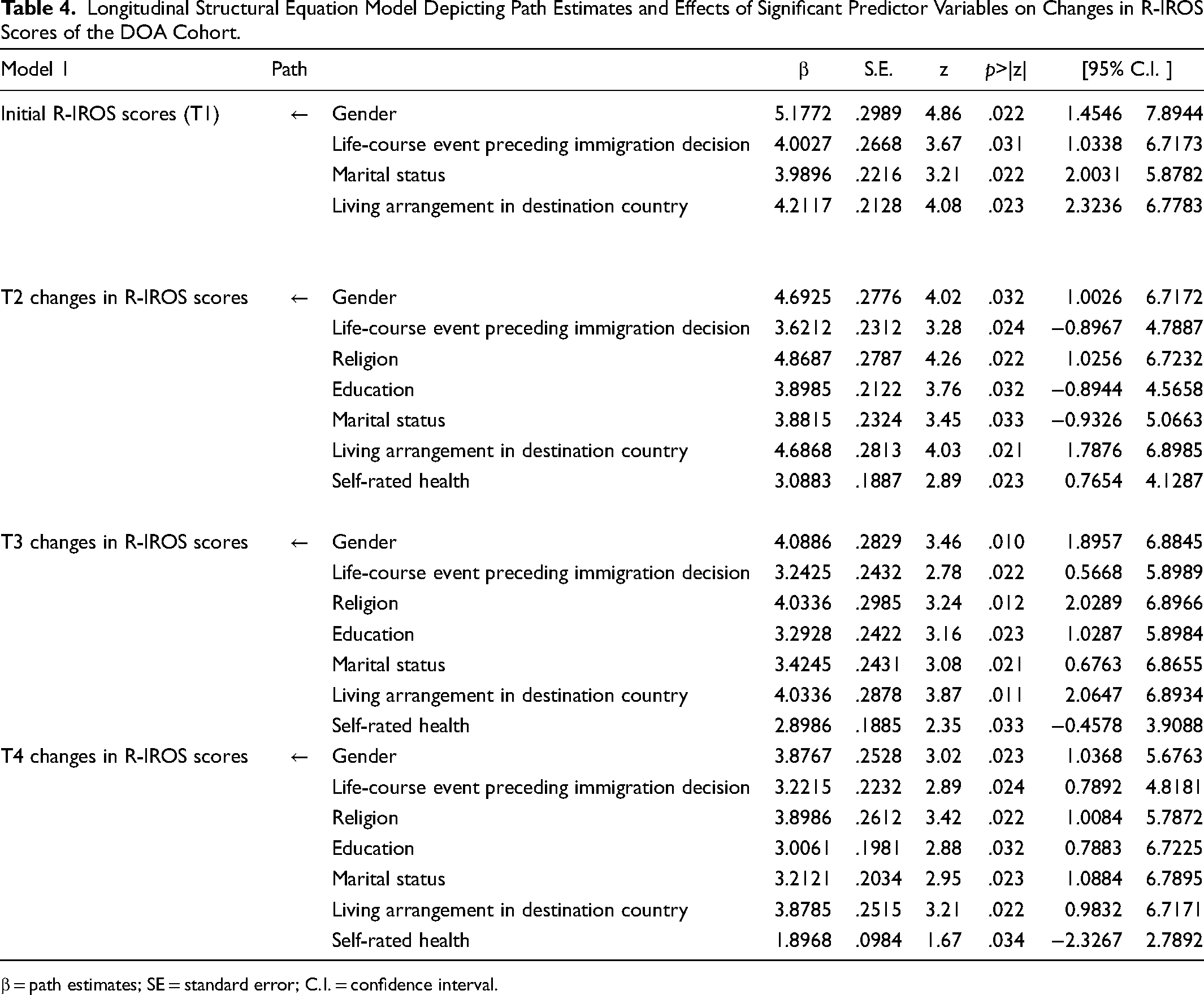
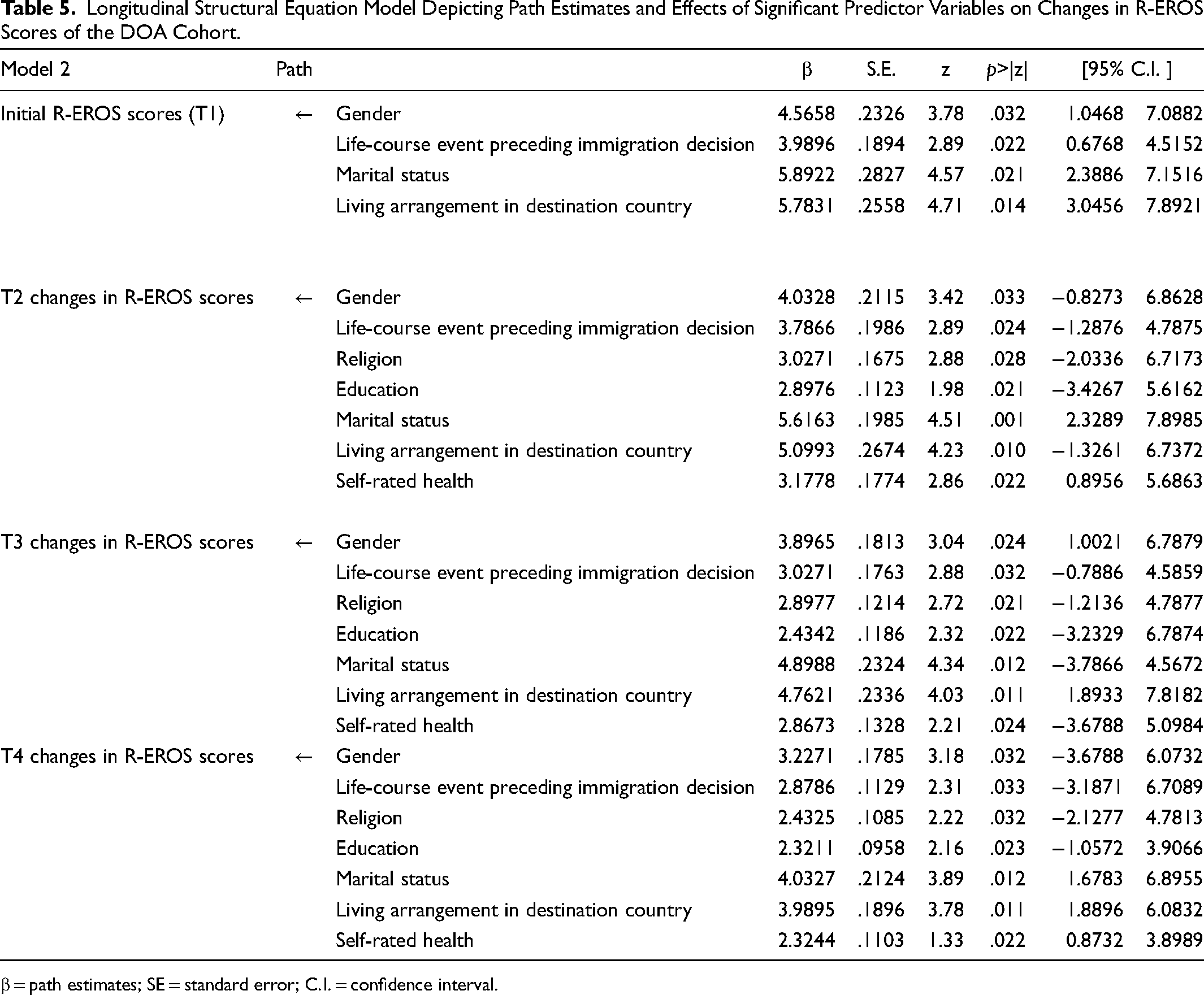
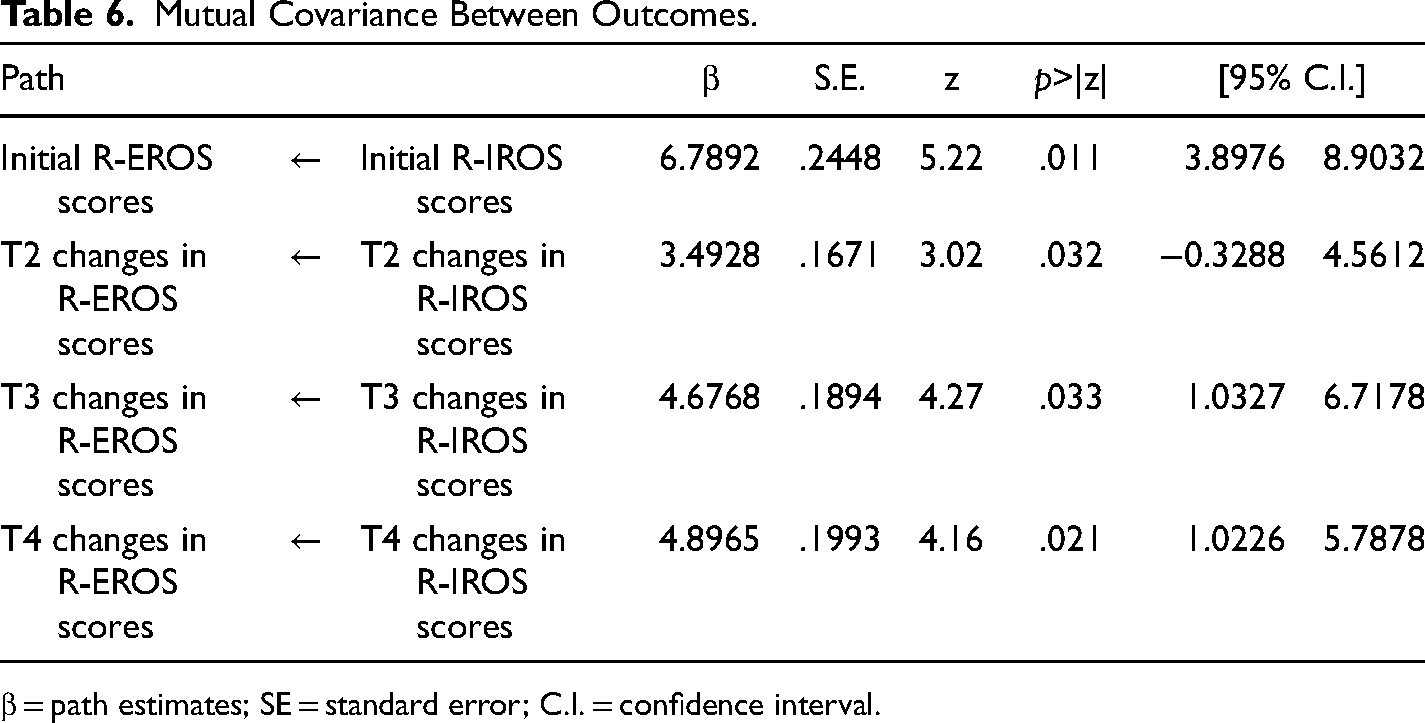
Tables 4 and 5 depict the longitudinal structural equation model depicting path estimates and effects of predictor variables on outcomes (R-IROS, R-EROS). Table 6 depicts the path estimates of mutual covariance between outcomes and changes in outcomes. The latent growth model of R-IROS and R-EROS scores with the influencing factors had the following fit indices: Table 4: Model 1: χ2(24) = 73.44, p ≤ .05; GFI = .95; NFI = .97; RMSEA = .05; Table 5: Model 2: χ2(24) = 78.36, p ≤ .05; GFI = .95; NFI = .96; RMSEA = .05.
Longitudinal Structural Equation Model Depicting Path Estimates and Effects of Significant Predictor Variables on Changes in R-IROS Scores of the DOA Cohort.
β = path estimates; SE = standard error; C.I. = confidence interval.
Longitudinal Structural Equation Model Depicting Path Estimates and Effects of Significant Predictor Variables on Changes in R-EROS Scores of the DOA Cohort.
β = path estimates; SE = standard error; C.I. = confidence interval.
Mutual Covariance Between Outcomes.
β = path estimates; SE = standard error; C.I. = confidence interval.
In both the models, baseline scores were significantly impacted by gender, life-course event preceding immigration decision, marital status, and living arrangement in destination country. In Table 4, the influential factors such as gender, life-course event preceding immigration decision, religion, education, marital status, living arrangement in destination country, and self-rated health explained 69.34% (±12.32%) changes in the T2, T3, and T4 R-IROS scores. In Table 5, the influential factors such as gender, life-course event preceding immigration decision, religion, education, marital status, living arrangement in destination country, and self-rated health explained 70.26% (±13.21%) changes in the T2, T3, and T4 R-EROS scores.
In all, 33 significant paths (p ≤ .05) were identified determining the influence of demographic characteristics and immigration related variables on the scores at the initial stage, subsequent changes, and covariance with other outcomes. Older women, whose immigration decision was based on marital disruption or grandchild birth, Hindus and Buddhists, with higher formal education, single, who lived with their adult child and family in the destination country and with well-managed health were more likely to have higher intrinsic and extrinsic religiosity at baseline, and subsequently also at T2, T3, and T4. Moreover, for this DOA cohort, baseline intrinsic–extrinsic religiosity as well as T2, T3, and T4 changes in intrinsic and extrinsic religiosity were significantly associated with each other.
Overall, both the outcome-based models, the model of mutual covariances, and the corresponding path estimates indicated that gender, life-course event preceding immigration decision, marital status, and living arrangement in destination country significantly predicted outcomes at baseline and outcomes had statistically significant mutual covariance at T1. T2, T3, and T4 changes in outcomes were further predicted by religion, education, marital status, and self-rated health and there was a statistically significant covariance between outcomes also at changes in subsequent changes.
Discussion and Conclusions
Results support the initial hypotheses. For the two cohorts, aging in homeland (AIH) and diaspora older adults (DOA), baseline religiosity outcomes scores were comparable. Whereas there was no subsequent significant increase in the homeland older adults’ religious salience scores, intrinsic religiosity scores increased at T3 and extrinsic at T2 and both intrinsic and extrinsic outcomes were higher for homeland older adults at T4. This possibly indicates that age is a factor impacting increase in religious orientation (Hayward & Krause, 2015; Twenge et al., 2016) driven by needs of meaning-making, health, subjective wellbeing, and happiness (Headey et al., 2010; Lim & Putnam, 2009; Pargament et al., 2004). Aging in place/homeland thus also creates identities that seek religious support as a determinant of wellbeing (Kaneda et al., 2011; Ladusingh & Ngangbam, 2016).
For the diaspora older adults, however, both religiosity outcomes consistently increased with time and were higher than the AIH cohort. This supports the argument that the immigration process per se can have an impact on religious orientation in terms of inclination, orientation, affiliation, and expression (Ivanescu, 2016; Padilla & Phan, 2014; Snyder, 2012). The postulate that “‘place/location’ as a variable” has a statistically significant impact on religiosity of older immigrants (Park et al., 2012; Roh, 2010; Stroope et al., 2022)and the ‘theory of religious effects’ (Smith, 2003) is also substantiated. The DOA cohorts’ relocation/transnational geographical location could possibly have made them turn more to religion for augmenting their sense of self, demonstrate social status and acquire social capital (Gardner, 1993, 1995; Parekh, 1994; Smart, 1999). The need to preserve one's own cultural identity in the foreign land and seek support in something culturally familiar may often prompt late-life immigrants to turn to religion (Tiaynen-Qadir, 2020; Walsh & Näre, 2016).
Further, AIH cohorts’ baseline scores and outcomes at subsequent time points were higher for older women and single older adults as compared to men and the currently married. For the DOA cohort, baseline religiosity scores were higher for older women, single older adults (widowed/divorced/separated), who lived with their adult immigrant child and their families and whose migration decision followed their own marital disruption or grandchild birth. For both the cohorts, this gender difference in religious orientation corroborates well-established existing research (Krause, 2008; Robinson et al., 2019; Trzebiatowska & Bruce, 2013, 2014). Single adults in both cohorts and those who migrated alone to live with their adult immigrant children prompted by their own marital disruption or grandchild birth were more religious and reported increased religiosity with time as compared to the married counterparts (Bahr & Harvey, 1979; Neill & Kahn, 1999; Nelson-Becker & Gilbert, 2014). One speculation for the DOA cohort could be that the unencumbered status accompanied by relocation for grandchild caregiving could signal a change in life orientation and quest for deeper meanings in life through religion as an important cultural trope. Research has also suggested that becoming single in late-life signals vulnerability and the need to receive care, which is a strong bolster for older adults’ relocation and drastic lifestyle changes, and is further prompted by grandchild caregiving (see Deneva, 2017; Naldemirci, 2013; Singh, 2013). Older men of the DOA cohort, currently married, couple migrants and those motivated to immigrate to improve standard of life prompted by adult child's permanent residency, reported comparatively lower baseline religiosity and lower subsequent increase. To explain this, some lessons can be drawn from research that suggests that religiosity-wellbeing connection is higher for older adults from developing nations as compared to the developed ones, as developed nations may have other factors to define wellbeing rather than religions alone (Abolfathi Momtaz et al., 2011; Aghababaei et al., 2016; Diener et al., 2011). It could be hence proposed that married older adults who migrate as couples to enjoy benefits of better lifestyle in late-life achieved through progeny's permanent foreign resident status, may be driven by other material things to define their wellness/satisfaction rather than religion.
In addition to gender, life-course event preceding immigration decision, marital status, and living arrangements in the destination land, religion, education, and self-rated health also had a significant impact on DOA cohorts’ subsequent increase in religiosity. Hindu and Buddhist Indian older immigrants, with higher formal education and with well-managed health reported higher increase in religiosity with time as compared to Indian Muslim and Christian older immigrants, moderately educated (high school/college degree) and with unstable health/recurring ailments. One explanation could be that Hindu and Buddhist Indian older immigrants may have alignments to transnational religious institutions that have a very popular presence in the diaspora (for instance International Society for Krishna Consciousness, Swaminarayan, Brahmakumaris, Vipassana, to name a few; see Kandula et al., 2018). This may make them more culturally comfortable with religious involvement overseas and engineer a more conducive socio-cultural environment that facilitates religious expression, a more acceptable hybrid religious culture and better adapted intersectional religious identities (see Fluit et al., 2019; Kurien, 2007; Kulis et al., 2016; Nijhawan, 2016).
In comparison, Indian Muslim and Christian older immigrants are likely to face some challenges in religious expression and identity formation due to socio-cultural environmental factors and majoritarian religious trends and related biases (see Fiddian-Qasmiyeh, 2011; Saunders et al., 2016), but there is evidence that they also have high levels of communal and congregational forms of religious participation (Sciupac, 2017), which explains to some extent the homeland older adults/diaspora older adults overall difference in religious orientation. Older immigrants with higher formal education and those in better health reported greater increase in religiosity compared to their counterparts. Better education and health are moderators likely to give a person better sense of personal control, functional efficacy, and psychological resources and these in turn are strong mediators of the impact of religiosity (see Chokkanathan, 2013; Jackson & Bergeman, 2011; Hood et al., 2009). Finally, from a longitudinal perspective, baseline scores and subsequent increase in outcomes were mutually associated: religious salience was analogous to extrinsic and intrinsic religiosity and vice versa. This also falls in line with research evidence, which suggests that religiosity facilitates adjustment of late-life immigrants and improves life quality (Kim & Kim-Godwin, 2019; Lee et al., 2017).
The study has some of the following limitations. Older adults in both the cohorts were recruited through convenience procedures and hence results may not have the validity/replicability available through strict randomization and random allotment. Though participant attrition is a reality in longitudinal studies, the reasons for dropout did not adequately capture the phenomenon of “unbelief,” which could posit some further nuances and interesting surprises in an investigation of religiosity among older adults in homeland and diaspora. The measures were self-report, which do not elicit the same rigor as possible through objectively measured and researcher assessed ones. Moreover, the inclusion criteria of optimum cognitive functioning (MMSE ≥ 22), knowledge of English language, and digital proficiency has limitations. Further research is needed with religiosity among cognitively impaired older adults in homeland and those who are relocated to foreign lands by kin for closer care. Also translated questionnaires for participants not familiar with the English language and finding ways of including the not so tech savvy older adults, is needed. The AIH cohort had a subclass of ever-single older adults that was subsumed under the subcategory “single” and this subclass was not present in the DOA cohort. So, whether the subsequent increase in intrinsic/extrinsic religiosity among the AIH cohort was impacted/skewed by ever-singles (who may have been more religious compared to those who became single after marital disruption) needs closer investigation.
Further, although religiosity was broadly construed as personal, organizational/institutional, and non-organizational, Indian older adults’ affiliation to religious institutions and the fast-growing transnationally popular new age guru (teacher) and spiritual movements was not explicitly examined. This aspect and related variables (type of engagement, duration of involvement, proximity to the charismatic teacher, perceived social and spiritual gains, the homeland/diaspora difference in such alignment) need to be investigated in future research. Religiosity and its manifestation and development over time is also intricately linked to identity and culture, which transforms through landscapes and locations. To completely understand how religiosity among diaspora older adults intensified over time, future research with qualitative narratives is required to capture the nuances. Though gender difference in religious orientation of the cohorts was similar to previous research, the variable of social status within religious institutions which supports greater benefits for men was not explored in the present study. Some other variables such as socio-cultural adaptation, social support of the older adults in the foreign land, social networks and friendships in late-life, bond and connectedness with children-in-laws and grandchildren, proximity of local centers of transnational religious organizations, which may impact religiosity, need to be explored in further research.
Results imply that religiosity is an important trope for Indian older adults aging in the diaspora and religious orientation intensifies over time, particularly in the foreign land. This religious inclination/orientation may be tapped to work with diaspora older adults, drawing from the religion-wellbeing link. Some modifications may be needed for immigrant older men, currently married, couple migrants, late-life immigrants motivated to migrate for lifestyle enhancement, Indian Christian and Muslim older migrants, with lower formal education, and in poorer health. Refinements could include viewing how religion for these subclasses is entwined or not with other sources of support/wellbeing, institutional affiliations and alternative pathways to quest for meaning in life.
Footnotes
Declaration of Conflicting Interests
The author declared no potential conflicts of interest with respect to the research, authorship, and/or publication of this article.
Funding
The author received no financial support for the research, authorship, and/or publication of this article.
