



Abstract
The effectiveness of a theology-focused marriage preparation program was tested for a group of Catholic couples (N=200). Each couple had been married for less than five years and participated in the same program. The program covered a variety of topics from communication enhancement to a Catholic theology of marriage, including marriage as a vocation and natural family planning. The study assessed the retrospective perceptions of change for relational and spiritual behaviors and attitudes, in light of these theological and relationship teachings. Couples reported increases in positive thinking about the relationship, deeper understanding of marriage as a vocation, and improved communication. However, the program produced less change in Mass attendance, and NFP practice. Results were moderated by cohabitation history, support of mentor couples and length of marriage. Views of marriage in terms of vocation and increased knowledge of NFP were indirectly linked to higher relationship satisfaction via improved communication.
Keywords
Given the negative effects of divorce on individuals’ emotional, physical, and fiscal well-being as well as children’s development (Hughes & Waite, 2009; Frisco et al., 2007; Shafer et al., 2017) and the continued high divorce rates of 40 to 50% (US Census Bureau, 2018), marriage preparation programs have received significant attention over the last few decades as a preventative measure against divorce and marital conflict, showing some effectiveness (Halford et al., 2003; Stanley et al., 2006). However, even though the majority of premarital education in the United States is currently done by clergy and in the context of religious organizations (Glenn, 2005; Schumm et al., 2010; Wilmoth & Blaney, 2016), the effectiveness of these types of programs has rarely been assessed. Some support has been found for greater effectiveness of marriage preparation programs delivered by clergy in a religious setting rather than non-clergy in university or clinical settings (Laurenceau et al., 2004). However, the program tested did not emphasize a theology of marriage, which focuses on marriage as a vocation and a unique covenantal relationship established by God. While religiousness and sacred cognitions regarding marriage have generally been linked to better marital outcomes (e.g. Mahoney et al., 2001), few studies have assessed the effects of premarital education programs that offer a theology of marriage and encouragement to live in accordance with the Christian faith as one of their main goals.
Couples who get married in the Catholic Church are usually required to participate in such a premarital education program. The focus of this study is to assess the effectiveness of the Unveiled premarital program, which is taught within the context of the Catholic Church and stresses a Catholic theology of marriage, including the importance of viewing marriage as a vocation and natural family planning. In the program, the foundation of this vocational view of marriage is that people are called by God to marriage. As part of this call, they share their spiritual lives and help one another to grow in holiness (Drummond & Whitehouse, 2014a). Reiterating the teaching of Lumen gentium, Unveiled stresses that Christian spouses “signify and partake of the mystery of that unity and fruitful love which exists between Christ and His Church [and] help each other to attain to holiness in their married life and in the rearing and education of their children” (Vatican II, 1975, section 11; Drummond & Whitehouse, 2014b, p. 65). The current study assessed whether individuals who participated in this type of premarital education would report changes in spiritual and relational behaviors based on their experiences in this program. In addition, the authors considered whether these reported changes can be linked to marital satisfaction.
Types of premarital programs
Couples participate in a variety of different types of premarital programs with different theoretical orientations (e.g., social exchange theory versus social learning theory or psycho-educational theories). From a meta-analysis by Carroll and Doherty (2003), most programs offer some form of communication skills and conflict resolution training. However, all programs teach these skills in different ways, with different levels of intensity, and in different settings, which makes the evaluation of effectiveness difficult. In addition, Duncan, Larson, and McAllister (2014) found that certain personality types and levels of emotional readiness for marriage affected what type of premarital program was most effective for each couple. Only some programs have been empirically verified in terms of their effectiveness for different types of couples, like the PREP program (Halford et al., 2003; Owen et al., 2012). This program has benefitted low-income, inmate, military, and other couples. (e.g. Allen et al., 2015; Einhorn et al., 2008). However, it appears that a majority of couples participate in premarital education programs in their churches, parishes, and other religious organizations, and these programs, for the most part, have not been tested empirically (Stanley et al., 2006). The current study focuses on such a program that is psychoeducational in orientation and prioritizes marriage as a vocation (God’s call for their lives), shared spiritual behaviors (e.g., prayer and Mass attendance), and natural family planning for couples preparing for marriage.
Premarital education and relational outcomes
Numerous studies over the last 25 years have demonstrated the positive effects of marriage preparation for better couple functioning and less couple distress and divorce (e.g., Carroll & Doherty, 2003; Hahlweg & Markman, 1988). Effectiveness has been found for various aspects of relational functioning. For example, couples who participated in marriage preparation programs reported higher levels of relationship satisfaction (Schumm et al., 1998; Stanley et al., 2006). Furthermore, participation in marriage preparation has been linked to decreased relational conflict and lower rates of divorce (e.g., Stanley et al., 2006) as well as increased help-seeking behavior for relationship maintenance (Williamson et al., 2018). Marriage preparation also appears to have positive effects on couple communication. Laurenceau et al. (2004) found that couples who participated in a marriage preparation program showed an increase in positive and a decrease in negative communication, especially when the marriage preparation program had been taught by clergy. Williams et al. (1999) found that two-thirds of the couples in their study indicated that they perceived the preparation program to be helpful. However, the perceived helpfulness of the program declined with length of marriage.
Not all studies have found only positive effects of marriage preparation programs. Markman et al. (2013) found that couples who had higher levels of negative communication and aggression in their relationship prior to the marriage education were actually more likely to divorce after participation in the program, while couples with more positive interaction patterns were more likely to stay together. Furthermore, women who greatly increased their positive communication and decreased their negative communication after the marriage preparation course were more likely to show signs of relational distress in the marriage (Baucom et al., 2006; Schilling et al., 2003).
Effectiveness of mentor couples in premarital education
Scott et al. (2013) found support for the notion that mentor couples might be helpful for marriage preparation and education. In their study, divorcees, looking back on their marriage experience, maintained that the practice of relational skills outside the marriage seminar setting would have been helpful. This finding might point to the helpfulness of additional support from mentor couples who could provide training in relationship skills outside of the marriage education setting. However, little is known about the effectiveness of working with a mentor couple for additional support in marriage preparation. The current study assesses the effectiveness of this additional support.
Cohabitation and marital outcomes
The age of first marriages has continued to rise in recent years making cohabitation a more prevalent lifestyle choice for young couples (US Census Bureau, 2018). Several studies have indicated that cohabitation prior to marriage is associated with an increased risk for divorce and marital struggle (Jose et al., 2010 for a meta-analytic review). While premarital cohabitation may have some short-term benefits in the first year of marriage, it seems to interfere with longer-term marital stability and quality (Rosenfeld & Roesler, 2019).
Negative effects of cohabitation have been found to be more prominent in couples who began cohabitating prior to making a mutual commitment to marriage (e.g. Kline et al. 2004; Stanley et al., 2010) and were at an earlier age when they first established coresidence (Kupferberg, 2014). Negative effects of cohabitation include lower marital satisfaction, higher levels of marital distress, increased chance of divorce, higher levels of interspousal aggression, and poorer communication (Kupferberg, 2014; Rhoades et al., 2015; Stanley et al. 2006; Stanley et al. 2010). Rhoades et al. (2015) found, however, that participation in a premarital education program was able to mitigate the negative effects of premarital cohabitation both in terms of relationship stability as well as in terms of communication and marital satisfaction. In the current study, we assessed cohabitation history as a factor associated with perceptions of effectiveness of marriage preparation.
Religiousness, spirituality, and marital outcomes
Relationship quality has been linked to spirituality and religious behaviors in several studies (e.g., Mahoney et al., 2001). Involvement in religious activities, for example, seems to predict marital satisfaction (Mahoney, 2010). In addition, Day and Acock (2013) found that religious activities indirectly affected couple well-being via relational virtues. In order to more specifically assess the link between spirituality and relational well-being, Mahoney et al. (1999) first introduced the idea of sacred cognitions related to marriage and their association to relationship functioning. Other studies have further supported the notion that spiritual cognitions related to marriage are associated with the quality of the relationship (e.g., Ellison et al., 2011). Furthermore, Pargament and Mahoney (2005) have proposed that a belief in the sanctity of marriage might motivate couples to invest more into the relationship. Considering these findings, the current study assessed if incorporating an understanding of marriage as a vocation and encouraging shared spiritual practices (e.g., Mass attendance) in marriage preparation increased spiritual behaviors and cognitions and their subsequent effect on marital satisfaction.
Natural family planning
Couples using natural family planning have associated the practice with improved communication, increased respect for one’s spouse, strengthening their marital bond, and increased satisfaction with sexual intimacy (VandeVusse et al., 2004). Natural family planning also has been associated with lower rates of divorce and abortion among practitioners when compared to the national averages (Wilson, 2002). Given these reported benefits of natural family planning, premarital education programs, as the one used in the current study, include information on the practice. This study measures if couples’ knowledge of NFP increases after the formation program as well as if their practice of NFP increases and whether the knowledge of NFP directly or indirectly predicted relationship satisfaction.
Premarital education in the Catholic Church
The current study considers the “Unveiled” program, which was developed by a large diocese in the Mid-Atlantic region of the United States. It is a video-based program that contains 7.5 hours of screen time; these videos are supplemented with group discussions, workbook activities, and discussion time between future spouses. While the program can be completed online, most couples take the course in a one-day format alongside other couples under the direction of a diocesan-trained facilitator. The program contains seven modules that cover topics including the covenant of marriage, the marital rite, communication and conflict, natural family planning, and spiritual life in marriage. The modules also contain sections on cohabitation, blending families, and military marriages.
While the general aim of the program is to prepare couples for marriage by deepening their understanding of the Catholic theology of marriage and by providing them with some practical skills to improve their communication and conflict resolution, the program also seeks to evangelize. The diocese explicitly states, “Unveiled was designed with evangelization in mind. . . As such, we wanted to create a space for couples to interact with one another and the Church in a meaningful way” (Unveiled-about, n.d.). Little is known about the effectiveness of such programs.
Current study
A majority of marital preparation is done in the context of religious organizations and led by clergy (Glenn, 2005). While many of these programs focus solely on relationship enhancement, programs used within the Catholic Church tend to teach a theology of marriage, to evangelize, and to provide relationship enhancement. As spirituality has predicted relationship well-being (e.g., Mahoney et al., 2001), encouragement in the area of spirituality might well be a component of premarital education that adds to the effectiveness of a program. The current study focuses on individuals’ retrospective perceptions of effectiveness of their marriage preparation in terms of reported changes in attitudes and behaviors regarding spirituality and marriage as well as concurrent relationship satisfaction.
The current study, therefore, has three main goals: (1) Assess the effectiveness of the marriage preparation program in terms of participants’ reports of increased Mass attendance, increased view of marriage in terms of vocation, increased knowledge and practice of natural family planning as well as in terms of improved relationship functioning; (2) Consider the moderating factors of cohabitation history, support of mentor couples, and length of marriage in the evaluation of effectiveness on spiritual and relational outcomes. The study examined a fairly homogenous sample of Catholic couples with similar educational and racial/ethnic backgrounds, who underwent the same marital preparation program, which presented a unique opportunity to assess the moderating factors of cohabitation history, support of mentor couples, and length of marriage in the evaluation of perceptions of effectiveness. (3) Explore links between perceived effects of participation in marriage preparation (increased view of marriage in terms of vocation and increased knowledge of NFP) on relationship satisfaction. Can a changed view of marriage in terms of vocation actually predict relationship satisfaction? Direct and indirect links via improved communication were assessed.
Methods
Participants and procedures
Couples who participated in the marriage preparation course, got married in the same diocese, and were in their first five years of marriage were sent an email invitation to participate in a survey via SurveyMonkey regarding relational well-being, parish involvement, and other indicators of their spiritual well-being. No identifying information on the couple was collected. Approval from the Internal Review Board of the institution was received and written consent was collected at the beginning of the survey. Participation was completely voluntary. Amongst the 222 participants from whom valid data were collected, 212 couples were represented in the study. For the majority of the sample (90.1%), only one spouse of the couple answered the survey. Participants in this sample were predominantly White (81%) and consisted of 140 women and 82 men. Participants ranged in age from 21 to 62 with an average age of 31 (SD=6.5). The majority of participants in this sample had received at least a BA degree (85.3% and had an annual income above $50,000 (84.9%). On average couples had been married 1.87 years ranging from less than a year to 5 years. Of the couples represented in the study, 94.2% were married, 3.4% were separated, and 2.4% were divorced. For the current study, only couples who were still married and living together were included in the analyses.
Measures
Demographic information
Demographic information of participants was assessed by asking questions about age, gender, educational background, number of children present in the home, race/ethnicity, annual household income, and number of children brought into the marriage by one of the spouses.
Self-reported religious behavior in response to marriage course
Perceptions of changes in religious behavior based on the marriage preparation course were assessed by asking the participants about the regularity of their Mass attendance and extent of parish involvement as well as changes in these two behaviors after the participation in the marriage preparation course. Both questions assessing change since marriage gave answers for “more parish involvement or Mass attendance,” “no change,” and “less parish involvement or Mass attendance.”
Perceptions of effects of marriage preparation
Participants’ perceptions of the effects of the marriage preparation course were assessed with Likert-type questions about the participants’ perception of change in communication with their spouse, more positive thinking about the relationship, viewing marriage in terms of vocation, and knowledge about natural family planning. Questions like “Did the marriage preparation course deepen your understanding of marriage as a vocation?,” “How did the course impact your communication with your spouse?,” and “Did the marriage preparation course increase your knowledge of Natural Family Planning?” were asked. The questions could be answered on a 3-point Likert scale (“not at all,” “somewhat,” “very much”). Retrospective perceptions of premarital education have been used in past studies (Scott et al., 2013) to assess the strengths and weaknesses of a premarital education program.
Relationship satisfaction
The Relationship Assessment Scale (Hendrick, 1988) was used in order to assess general relationship satisfaction. The RAS is a 7-item instrument in which participants are asked about aspects of their relationship. Questions like “How well does your partner meet your needs?” or “How much do you love your partner?” are rated on a 5-point Likert scale from “poorly/unsatisfied” to “extremely well/extremely satisfied.” The RAS has been found to have acceptable psychometric properties and has been used in numerous studies to assess relationship satisfaction. It also has been found to be correlated to other measures of love, relationship commitment, and relationship investment (Hendrick, 1988; Vaughn & Baier, 1999). Internal reliability of this instrument was high in the current study (Cronbach’s alpha = .91).
Analysis plan
IBM SPSS 25 Statistical Software package was used to perform analyses in the current study. Missing data was 2% or less for any given variable (0.5%–2%). For dealing with missing data listwise deletion was utilized, since 2% or less of data points were missing for any given variable.
Initially, descriptive statistics are presented in order to assess perceptions of effects of the premarital education program on increased views of marriage as vocation, increased regularity of Mass attendance, improved communication, changed thoughts on the marriage relationship, and increased knowledge of natural family planning.
In order to assess whether the effects of the premarital education were different for couples based on the involvement of mentor couples, cohabitation history, and whether they were still in the first couple years of marriage or longer married, chi-square tests of independence were performed testing for relationships between moderating variables and the outcome variables.
Finally, in order to explore pathways by which changes in attitude and behavior after participation in the marriage preparation are linked to relationship satisfaction, mediational models were performed using the PROCESS macro in SPSS (Hayes, 2018). Initially, correlations between predictor variables (perceptions of effect of marriage preparation) and relationship satisfaction were established, followed by mediational models.
Results
Perceptions of effectiveness for relational and spiritual outcomes
A majority of couples seemed to perceive that the premarital education course was helpful for their relationship. In terms of improving communication, 64% of participants reported that the preparation was helpful for improving their communication, while 34.5 % reported that participation in the program made no difference, and only 1% reported a negative effect on their communication. Similarly, a majority of the participants reported that the course helped them to think more positively about their relationship (72.5%). The majority of participants (89.5%) reported that the marriage preparation was “somewhat” to “very” helpful in developing a vocational view of marriage. Only 10.5% of participants did not find it helpful. Descriptive statistics of continuous variables are presented in Table 4.
There were fewer behavioral changes related to Mass attendance, parish involvement, and natural family planning after participation in marriage preparation. The majority of participants stated that their participation in the program had no effect on Mass attendance or parish involvement (79% and 78%, respectively). In terms of natural family planning, results indicated that although a majority of participants reported an increased knowledge about NFP after the program (74.9%), only 34.6% of participants reported actually using NFP in their married lives. These results indicate that an increase in knowledge concerning NFP does not translate necessarily into an increase in use of the practice.
Moderating effects of cohabitation history, mentor couple involvement, and length of marriage
In order to assess whether the effects of the premarital education were different for couples based on the involvement of mentor couples, cohabitation history, and length of marriage, chi-square tests of independence were performed testing for relationships between these variables and the outcome variables. Results of chi-square analyses can be found in Tables 1–3.
Differences in perceptions of effectiveness based on cohabitation history.

p <.001, **p<.01, *p<.05.
Differences in perceptions of effectiveness based on mentor couple involvement.
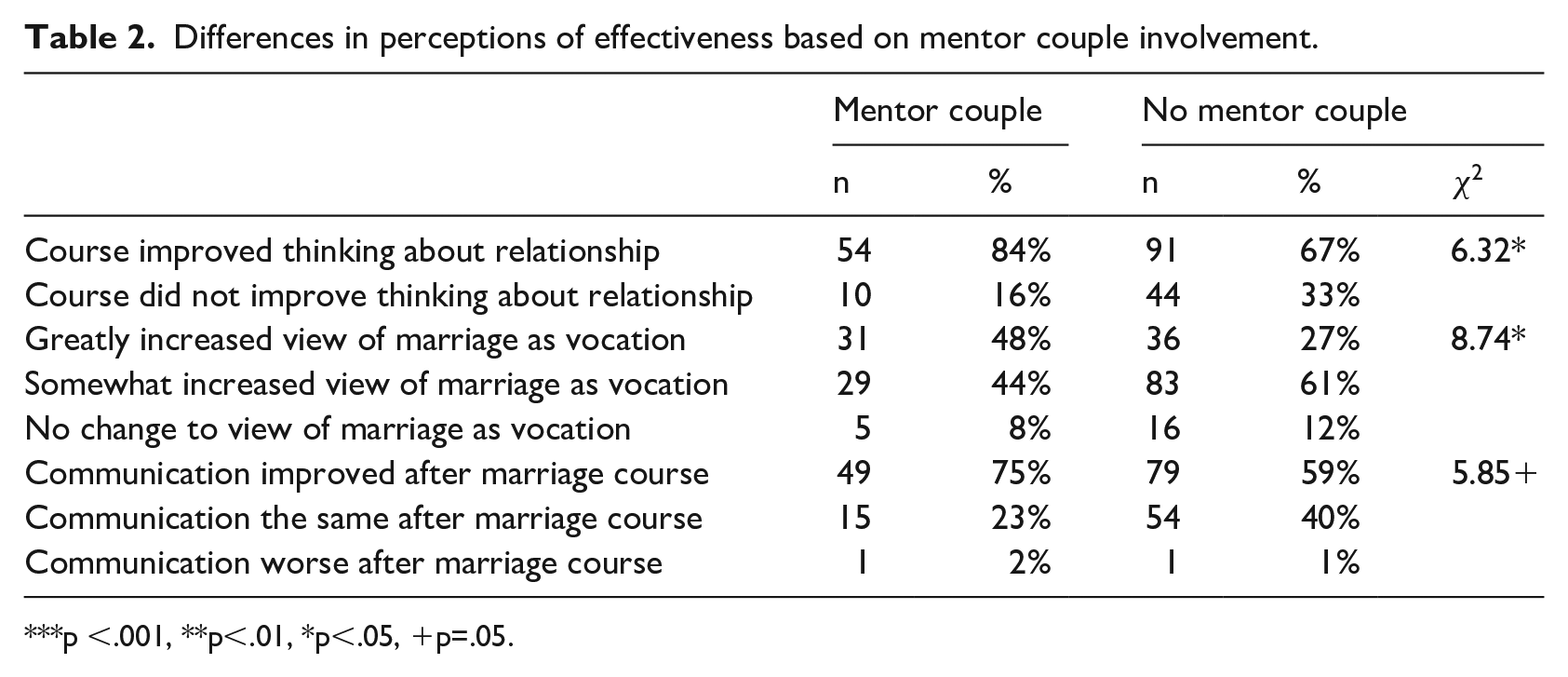
p <.001, **p<.01, *p<.05, +p=.05.
Differences in perceptions of effectiveness based on mentor couple involvement.
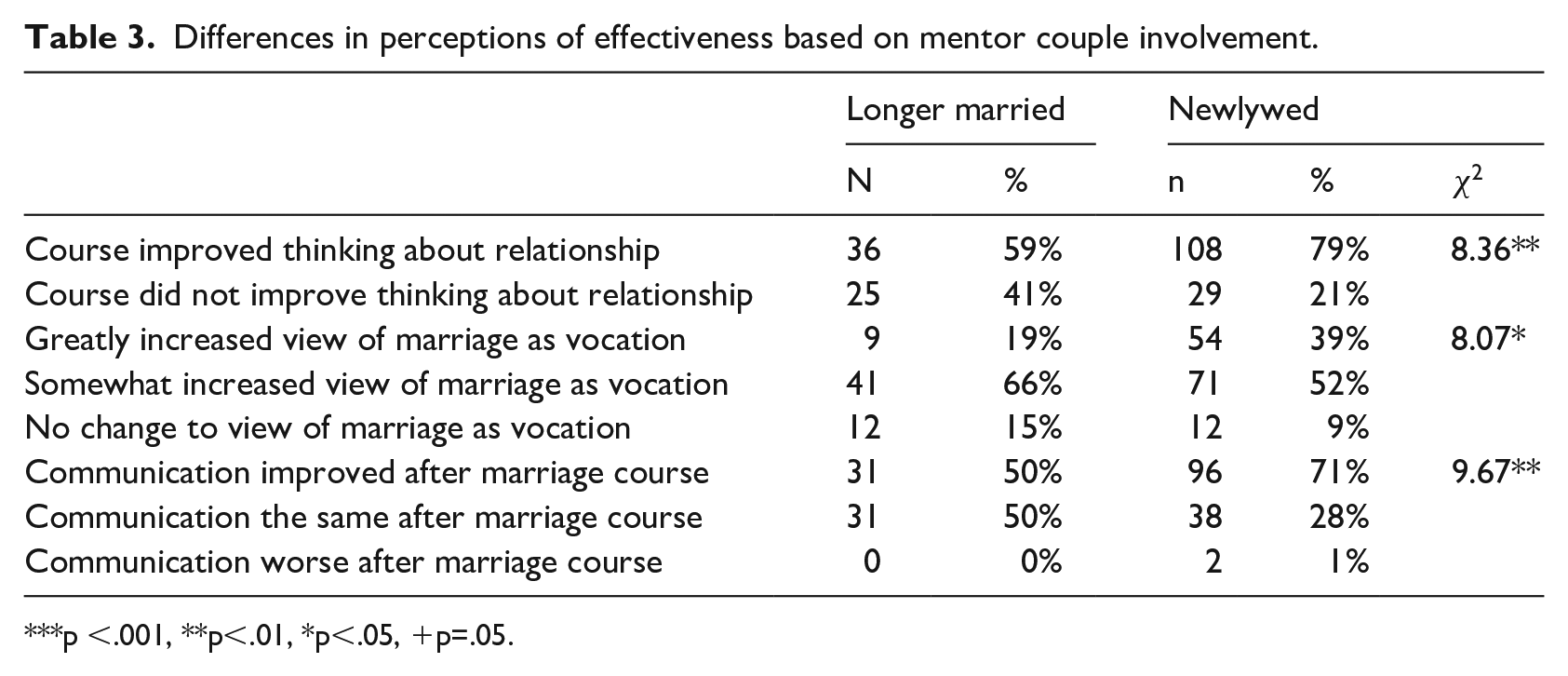
p <.001, **p<.01, *p<.05, +p=.05.
Cohabitation history
In the final sample, 64% of the participants reported having cohabited prior to marriage, and 13% of the participants reported having brought a child from a prior relationship into the marriage. Effects of marriage preparation on Mass attendance of the couple were related to cohabitation history X2 (2, N = 200; 12.39, p<.01). Couples with cohabitation history were more likely to increase their Mass attendance after participation in the marriage preparation program compared to couples with no cohabitation history. Interestingly, couples who cohabited prior to marriage reported having learned more about NFP than couples who did not cohabitate X2 (2, N = 200; 3.89, p<.05). In addition, a trend indicated that couples who cohabited may be less likely to report that they were thinking more positively about the relationship after the program (2, N = 200; 3.38, p=.066). No other significant relationships were found related to cohabitation history.
Mentor couples
Couples who experienced additional support from mentor couples reported an increased view of marriage as a vocation X2 (2, N = 200; 8.74; p< .05) compared to couples who did not work with mentor couples. Mentor couples also contributed to couples improving their thinking about the relationship after participation in the program X2 (2, N = 200; 6.32, p <.05). Finally, results indicated a trend in the relationship between the added support of mentor couples and improved communication for the couple X2 (2, N = 200; 5.85, p=.054). No significant relationships were found between working with mentor couples and use of natural family planning, Mass attendance, or parish involvement.
Length of marriage
Finally, newlywed couples (< 3 years married) were compared to couples who were married longer in terms of how they viewed the helpfulness of marriage preparation. In general, newlywed couples viewed marriage preparation as more effective than couples who have been married longer. Newlyweds were more likely to perceive marriage preparation as beneficial for communication X2 (2, N = 200; 9.67, p < .01), more positive thinking about the relationship X2 (2, N = 200; 8.36, p < .01), and an increased view of marriage as vocation X2 (2, N = 200; 8.07, p < .05). Results pointed to diminished views of effectiveness with length of marriage.
Pathways to relationship satisfaction
Results for correlation analyses as well as the means and standard deviations can be found in Table 4. Perceptions of effectiveness of participation in the program were generally positively related to relationship satisfaction. Participants who reported a deepened vocational view of marriage and improved communication tended to report higher levels of relationship satisfaction (p <.01 and p<.001, respectively). In addition, a trend indicated that couples who reported increased knowledge on NFP may tend to report higher levels of satisfaction (t = -1.74, p = .08). Increased Mass attendance and parish involvement were unrelated to relationship satisfaction in this sample.
Correlations between relationship satisfaction and perceptions of effectiveness.
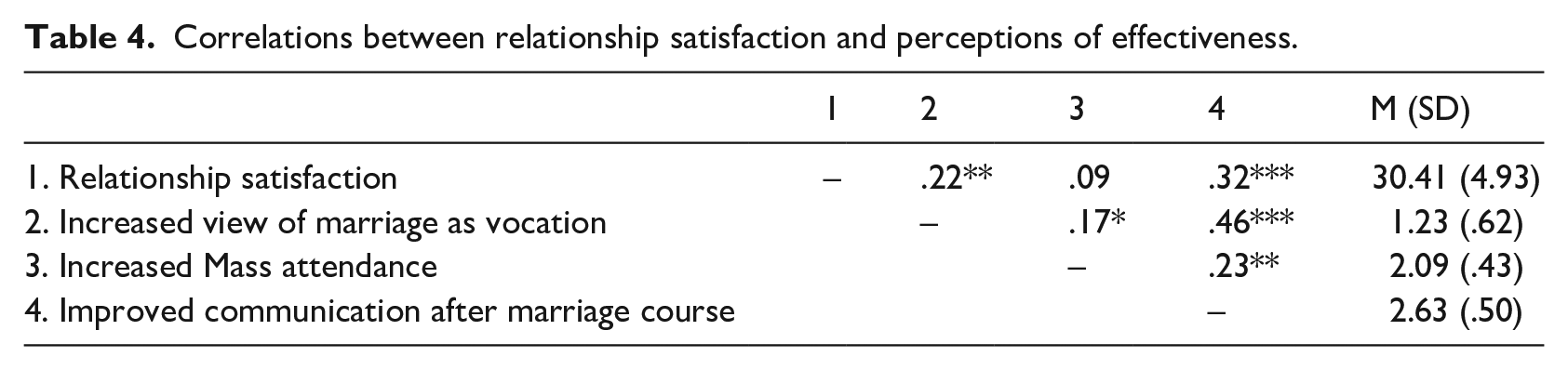
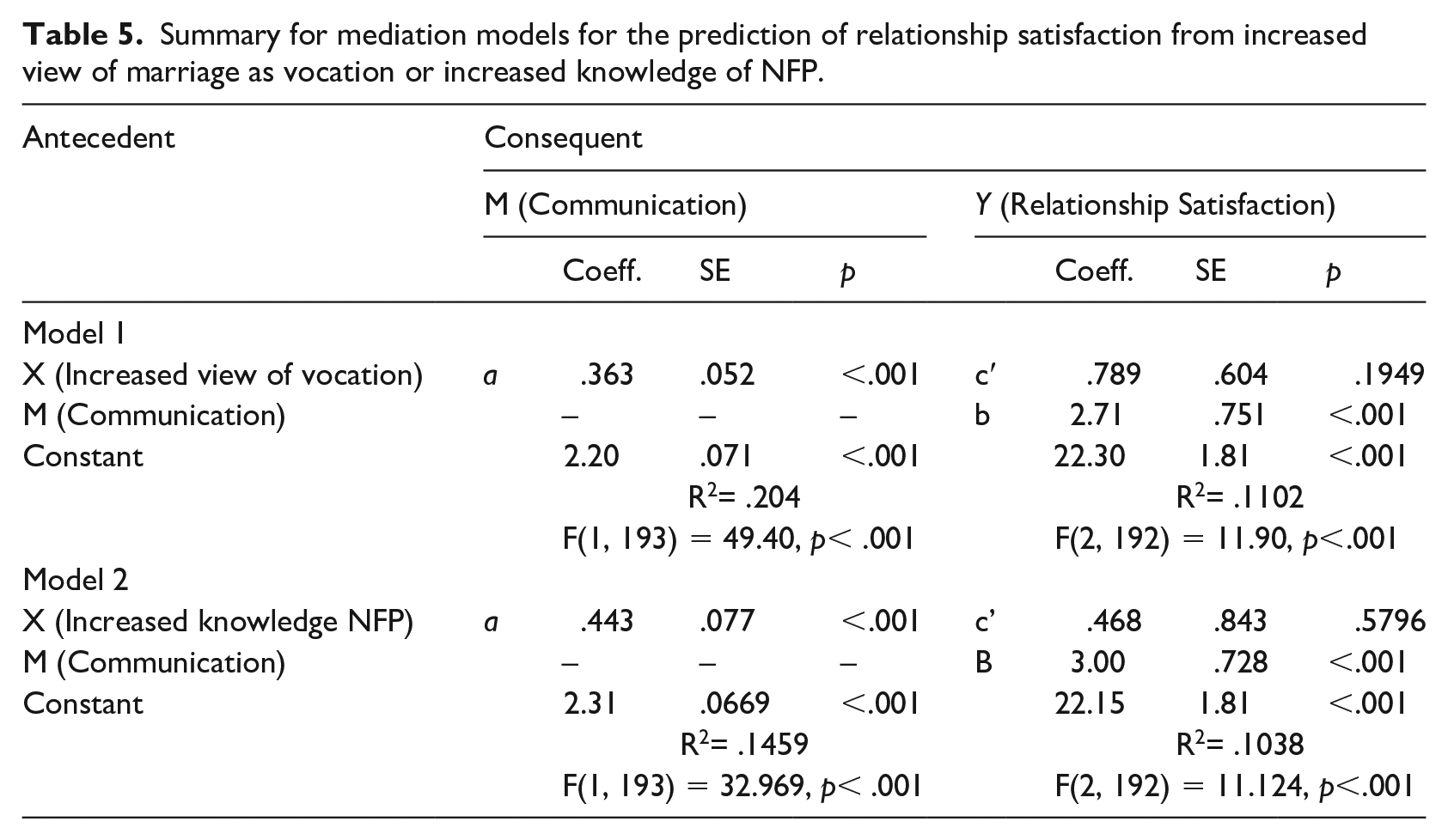
In order to explore pathways that might link an increased view of marriage as a vocation and increased knowledge of NFP (two main goals of the marriage preparation program) to relationship satisfaction, two mediational models were tested in which an increased view of marriage as a vocation or increased knowledge of NFP predict relationship satisfaction directly and/or indirectly via improved communication as the mediator (M). Results for the mediational models can be found in Table 5. Mediation analyses were performed using the PROCESS macro within SPSS (Hayes, 2018). The bootstrap confidence intervals for the indirect effects for the model based on 5,000 bootstrap samples were entirely above zero indicating indirect effects for both models. A changed view of marriage as a vocation as well as increased knowledge of NFP were fully mediated by improved communication in their prediction of relationship satisfaction.
Summary for mediation models for the prediction of relationship satisfaction from increased view of marriage as vocation or increased knowledge of NFP.
Discussion
Marriage preparation programs have been found to be helpful for couples in terms of relationship well-being and stability, decreased likelihood of divorce, and increased willingness to seek help (e.g. Rhoades et al., 2015; Stanley et al., 2006; Williamson et al., 2014). However, the majority of couples in the USA participate in marriage education programs in their religious communities, and these programs, for the most part, have not been assessed in terms of their effectiveness (Glenn, 2005). Furthermore, outcome studies mostly have evaluated programs in which relationship enhancement is the main focus. Results of the current study give tentative support for the effectiveness of programs used within the Catholic Church which tend to aim for both relationship enhancement as well as evangelization in terms of teaching a Catholic theology of marriage, including the importance of natural family planning (NFP).
In terms of perceptions of relationship functioning, couples had generally positive perceptions of the marriage preparation program as being helpful. Couples reported improved communication and increased positive thinking about the relationship as a benefit of marriage preparation, even though relationship functioning was only a secondary focus of the program. While most couples retrospectively perceived the marriage preparation as helpful for their communication and thinking about the relationship, couples who had additional support from mentor couples perceived a slightly greater improvement than couples without that additional support. Additional research is needed in order to explore how the use of mentor couples might increase the effectiveness of marriage preparation.
Reported increases in parish involvement and Mass attendance after the marriage preparation course were not as strong as might have been hoped for based on the stated goals of the program regarding evangelization. However, some differences were found for couples based on their cohabitation history. It appears that couples who cohabitated prior to marriage were more likely to alter their parish involvement or Mass attendance based on the experience of the marriage preparation course. It seems that the clear presentation of the Catholic theology of marriage was more likely to either be embraced and lead to higher Mass attendance (18%) or to be rejected and lead to less Mass attendance (11%) for couples who were likely not following the teaching of the Catholic Church prior to the course in terms of their relationship. Couples who may already have followed the Catholic teaching on marriage and did not cohabitate prior to marriage did not seem to alter their Mass attendance based on participation in the program. It appears that encouragement of spirituality directly related to the relationship (e.g., vocational view of marriage) is more likely to be embraced by participants than spiritual behaviors in general.
As suggested in the literature, marital preparation does not necessarily prevent the decline of satisfaction over time (Cobb & Sullivan, 2015). Similarly, the perception of positive effects of the marriage preparation program decreased over time pointing to the importance of continued support after marriage. Since longer-married couples did not continue to report improved communication, more positive thinking about their relationship, or more sacred cognitions, it seems important for parishes to offer ongoing marriage formation for couples, particularly those who have been married longer than two years.
Finally, the current study adds to the existing literature in exploring pathways through which a theology of a marriage-oriented program might positively affect marital satisfaction. Couples in the current study retrospectively perceived that their view of marriage as vocation (God-given) as well as their knowledge of NFP increased due to the participation in the program. Both variables were related to marital satisfaction directly and indirectly via improved communication. Spouses who hold to a sacramental view of marriage may have a deep sense that God has called them into the relationship. These results support the sanctification theory for marriages (Pargament & Mahoney, 2005) which suggests that couples who have a sacred view of their marriages might be more invested in the relationship. Results from the current study seem to support the findings of Sabey et al. (2014) who linked sacred qualities of marriage to marital satisfaction as well as the findings of Stafford (2016) who found links between sacred views of marriage and increased relationship maintenance behaviors.
Results from this study also seem to indicate that a sacred understanding of marriage may lead them to see communication as a shared effort to continue to respond to that call. In times of conflict, each spouse may be more aware of the dignity of the other, who also is created and called by God, and, therefore, communication may be less adversarial and less competitive. Our study seems to indicate that a marriage preparation program which is taught in a religious setting and focuses predominantly on teaching a theology of marriage can have positive effects on couple communication and relationship satisfaction.
Even though practicing NFP was unrelated to relationship satisfaction in this sample, perceptions of increased knowledge of NFP were indirectly related to marital satisfaction via improved communication. It appears that the increased knowledge on the topic helped couples communicate about sexual intimacy and procreation more effectively, which in turn led to increased satisfaction. VandeVusse et al. (2004) have noted similar findings, showing that couples who practiced NFP reported improved communication, increased respect for one’s spouse, a strengthened marital bond, and increased satisfaction with sexual intimacy.
At the same time, findings seem to indicate that teaching NFP in a premarital course alone does not necessarily motivate couples to embrace the practice in their relationships. Their reluctance to practice NFP may be related to a number of factors, including prior history with contraception and assumptions about NFP. The brief exposure to NFP in the course may not be enough to overcome that history and preconceived notions about NFP. The course does, however, seem to give them increased knowledge of the practice. In this study, almost 75% of couples report an increased knowledge of NFP as a result of the Unveiled program. Another study seems to indicate that this percentage might be even higher (above 90%) when couples were required to take a full course on NFP as part of their marriage preparation process (Manhart, 2012). However, further research is necessary to understand the processes that might link increased knowledge of NFP to an increase in practice as well as improvement of relationship functioning (Manhart, 2012).
Implications
Marriage preparation programs have received considerable attention over the last couple of decades as a means to prevent future divorce and relationship distress, showing some effectiveness (e.g., Stanley et al., 2006). The current study seems to indicate that marriage preparation programs that focus on spiritual topics in addition to relationship enhancement topics might also show some promise in terms of effectiveness, especially for religious-oriented couples. Priests and other clergy working with couples in order to prepare them for marriage will benefit from these findings in terms of including spiritual topics in the marriage preparation. Specifically, the teaching and encouragement of sacred cognition regarding marriage seem to motivate couples to think differently about their relationships. In addition, the results point to the importance for churches and parishes to invest in the continued support and formation of couples who have been married for a few years. Participation in the marriage preparation alone does not seem to be sufficient for ensuring long-term success for healthy and stable marriages.
Limitations and future research
Due to several limitations in the current study, results should be viewed with some caution. The data of the current study related to the evaluation of the marriage preparation program is both retrospective and cross-sectional in nature. Couples were sent the surveys after they had been married and indicated their experience of the marriage preparation according to what they remembered at that point. Future studies assessing the effectiveness of these types of marriage preparation programs would benefit from longitudinal and experimental study designs. Couples were contacted via email by the diocese and sent a link to SurveyMonkey in order to participate. The response rate was somewhat low with the majority of couples only having one spouse respond to the survey. Therefore, data points were done per participant and could not be nested within the couple or be analyzed from an actor-partner perspective. Couples in the current study were rather homogenous, in terms of income, educational background, race/ethnicity, and denominational background. It would be important, in future research, to assess whether a marriage preparation program which focuses on encouraging sacred cognitions of marriage in addition to relationship enhancement might be effective in more diverse populations, including race/ethnicity and SES as well as for couples with other denominational and faith backgrounds. Measures to assess shared spirituality were somewhat limited in the current study with a focus on shared parish involvement and shared Mass attendance. Future research should include other measures of shared spirituality and their link to relationship functioning. Finally, information collected on mentor couples was limited to a binary question on having received additional support from mentor couples. Future research should include more detailed information on the level and type of involvement of mentor couples.
In conclusion, although the study is exploratory in nature and cannot be generalized across populations, it gives initial insights on the possible effectiveness of marriage preparation courses that focus heavily on teaching a theology of marriage. It also points to the potential benefits of shared spiritual experiences and viewing marriage in terms of vocation for improved communication and relationship satisfaction. Encouraging religious-oriented couples in a sacramental and spiritually oriented view of marriage might motivate them to invest in the marriage relationship and lead to improved relationship functioning.
Footnotes
Funding
The author(s) received no financial support for the research, authorship, and/or publication of this article.
