



Abstract
Multiculturalism has emerged as a central focus in psychology and theology, although the field of integration has been slower to embrace it. In this article, we explore the literature at the intersection of multiculturalism, psychology, and theology using a content analysis. Multicultural article titles and abstracts from the Journal of Psychology and Theology (JPT) and the Journal of Psychology and Christianity (JPC) were examined from their first issues (1973 and 1982, respectively) through 2020 (N = 2,333). Multicultural content was identified in 18.0% of the articles (n = 395) with a growing trend across time (11.4% in the 1970s to 22.9% in the 2010s). Of the eight identity domains, gender/sex was the most represented (4.4% of all articles), followed by articles on age (children/adolescents or older adults, 4.2%), global/international (2.8%), non-evangelical religion/spirituality (2.8%), sexual orientation (2.7%), race/ethnicity (1.6%), physical and cognitive/neurological disability (1%), and social class (0.5%). The remaining articles (1%) included multicultural content more generally (e.g., training, multicultural competence, social justice). Results suggest that JPT and JPC have made advances in multiculturalism content, although it remains relatively lower than in mainstream psychology journals. Findings are discussed with a critical analysis and with implications for the future integration of psychology and theology.
Multiculturalism has emerged as a central focus in the research and practice of psychology (American Psychological Association [APA], 2017). Contemporary theologians and church historians have also advocated for greater considerations of cultural diversity and the reality of oppressions in deepening our Christian faith (Cone, 2011; Gutiérrez, 1973; Jun et al., 2018; Jenkins, 2008). Over the last two decades, integration scholars have called for greater multiculturalism scholarship at the intersection of psychology and theology (Canning et al., 2001; Stevenson et al., 2007). However, responses to this call have been “minimal at best” (Sandage & Brown, 2018, p. 164), in part due to important sources of tension between Christianity and psychology in areas of diversity (e.g., differing perspectives on race and racism, gender, and sexual orientation; APA, 2017; Hook & Davis, 2012). Yet, the extent to which multiculturalism and diversity have been covered in integration scholarship of psychology and Christianity remains less clear. In the present content analysis, we examine articles containing multiculturalism and diversity content published in two leading integration journals, Journal of Psychology and Theology (JPT) and the Journal of Psychology and Christianity (JPC). In the following section, a definition and historical overview of multiculturalism in psychology is outlined.
Multiculturalism: Definitions from Psychology
The definition of multiculturalism in psychology has undergone several iterations. Early definitions in the late 1960s (and following the Civil Rights Act) centered on racial and ethnic diversity, when psychologists of color formed professional organizations as a response to governance and representation within the APA 1 (Arredondo & Perez, 2006). A second major movement within multicultural psychology involved the study of racial and ethnic multicultural counseling competencies (Sue et al., 1982). This primary emphasis on “minority racial and ethnic groups” persisted into the early 2000s (APA, 2003). 2 Since then, the field of multicultural psychology has broadened its focus to multiple identities (i.e., age, generation, gender identity, ethnicity, race, religion, spirituality, language, sexual orientation, social class, ability status, national origin, and immigration status) and their intersectionality across social contexts and time (APA, 2017). This definition captures current population trends for marginalized groups in the United States. For example, in 2019, Black, Indigenous, and People of Color (BIPOC) made up 39.9% of the US population, which is up from 30.9% in 2000 (Frey, 2020). Individuals identifying as gay, lesbian, bisexual (GLB), or transgender have also increased from 3.5% in 2012 to 4.5% in 2017 (Newport, 2018). The immigrant population has also increased to 44.8 million in 2018 (up from 31.1 million in 2000; Budiman et al., 2020), with 23% being undocumented immigrants (although there has been a steady decline in undocumented immigrants between 2007 and 2017; Budiman, 2020). Finally, individuals with disabilities are estimated at 26% of the US population (Centers for Disease Control and Prevention, 2020).
A key feature of current understandings of multiculturalism is that human experiences of identity occur in context. This concept was first introduced as intersectionality by legal scholar Kimberlé Crenshaw (1989). Specifically, intersectionality understands social identities are mutually constructed and experienced at individual, interpersonal, and structural levels and are embedded within systems inequality (e.g., racism, ageism, classism) (Grzanka et al., 2017). For a Latina older adult woman, her experience of being a woman cannot be separated from her age (developmental and generational) and her Latinx ethnic identity. From an intersectionality perspective, some identities hold more social power (i.e., capacity and opportunity to fulfill personal, relational, and collective needs; Prilleltensky, 2008) and privilege (i.e., unearned, often invisible advantages; McIntosh, 1989) than others. Within the United States, intersections of upper-class, Christians, straight, White, male identities hold more power and privilege (Hays, 2008). A final aspect of intersectionality is its call to action. The purpose rests in social justice: a society in which members participate and which has equitable distribution of resources (Bell, 1997).
Multiculturalism in Scholarship on Faith Integration with Psychology
As an academic discipline, psychology has enjoyed a long, rich tradition in its integration with Christian faith and theology. The Christian Association of Psychological Studies is currently in its 65th year. Early frameworks for integration of psychology and theology (Carter & Narramore, 1979) have led to an active authorship and publication in JPT and JPC. Several edited volumes of integration models have offered diversity in levels of integration (Greggo & Sisemore, 2012; Johnson, 2010; Stevenson et al., 2007) drawing from updates in research and practice of psychology, theology, and pastoral counseling.
Despite this expansion, multicultural considerations are largely absent from major integration frameworks. In one review of integration works, Gingrich and Smith (2014) noted that multiculturalism and diversity are absent from most of the early foundational integration models (Carter & Narramore, 1979). An early call for more cultural considerations (Maloney, 1981) appears to have remained largely unanswered for nearly 25 years, given a similar call in a review of landmark works on integration (Stevenson et al., 2007). A major concern is a general lack of gender or ethnic diversity in authorship within the integration field. For instance, Sandage and Brown (2018) pointed out that of the 15 authors in two recent volumes of integration scholarship (Greggo & Sisemore, 2012; Johnson, 2010), all of them are White and only one is female. Similarly, a content analysis found that out of all the articles from JPT and JPC from 1988 to 1999, only 18.4% had a female primary author (Watson et al., 2001). No study systematically examined racial or ethnic diversity of authors, although it would likely reflect the proportion of faculty of color at Christian colleges and universities (which was only 8.7% in 2007; Rine & LoMaglio, 2012).
Over the last 15 years, however, some notable works have placed culture at the center of the dialogue of psychology and theology. In his chapter, McNeil (2005) argued for the centrality of culture within the psychology–theology dialogue. He references biblical passages on the Tower of Babel and Pentecost to illustrate the universality of the church while not minimizing cultural differences. Along these lines, Dueck and Reimer (2009) presented a critique to contemporary models of psychotherapy, suggesting that peace and considerations of ethnic and religious diversity are the heart of psychotherapy. In her textbook on cultural psychology, Ecklund (2016) offered an in-depth treatment of faith integration using diverse colleges and churches as case examples for principles of cultural identity and cultural competence. She also included invited chapters on multiculturalism in theology, church history, and higher education from an all-female and ethnically diverse authorship. Finally, in response to the “dearth of diversity” in integration literature, Sandage and Brown (2018) proposed a relational integration model of psychology and theology, with social justice and “critical hope” as biblical and theological middle grounds for integration. Of note, three of these works couch their views of integration from their specific cultural social locations and unique perspectives of theology (e.g., McNeil’s response to Anabaptist views on integration, Dueck & Reimer from a Mennonite perspective, Sandage & Brown across gender and psychology vs theological perspectives). This reflects an important shift in our scholarship: from “universal” models of integration to integration that explicitly engages social locations (Whitney & Dwiwardani, forthcoming).
Previous Content Analyses and Multiculturalism
Content analyses allow for the field to self-examine what has been published and valued by its professional community. They are useful for offering insight into the past or a “current state of affairs” (Leach & Sato, 2013) to inform future directions. For example, one study explored articles for multicultural content in the Journal of Counseling Psychology between 1954 and 2009 (Lee et al., 2013). These authors found that 32.3% of the articles focused on multicultural content. Moreover, the most common focus was gender (14% of all articles), race/ethnicity (6.1%), and age (3.6%), followed by sexual orientation, religion, disability, and social class (each <1%). Their content analysis found an increase in multicultural content generally (including identity domains of race/ethnicity and sexual orientation), while the focus on some identity domains have declined (e.g., gender, religion).
To date, only one study has systematically examined cultural identity groups in integration literature (Canning et al., 2001). Results from this study indicated that 19.5% (n = 61 out of 313) articles published in JPT and JPC between 1990 and 1995 focused on “underserved populations,” including 9.6% on age (children, adolescents, or older adults), 4.2% on serious mental illness, 3.5% on racial and ethnic minorities, and 0.6% on socioeconomic status and rural settings (no articles focused on homelessness). The authors also coded for article type (66% theoretical, 34% empirical), major themes (i.e., diagnostic and assessment issues, treatment, measurement, program evaluation, prevention), and which demographic categories were reported in empirical articles (i.e., 73% articles reported age, 21% race/ethnicity, 11% socioeconomic status). This review offers important insights into integration literature at a time when multicultural psychology was sparse. However, the study did not consider other aspects of identity (e.g., gender or sexual orientation). Moreover, the themes were reported in percentages across all categories, but an in-depth discussion within each identity domain was not depicted.
Two other review articles offer some explanation into integration literature. For example, one content analysis explored authorship gender and integration style (i.e., interdisciplinary, intradisciplinary–theoretical, intradisciplinary–clinical, faith–praxis, personal) in both JPT and JPC between 1989 and 1999 (Watson et al., 2001). Another review article explored themes in the literature on sexual orientation and gender identity (Yarhouse, 2012). This article explored previous themes in research and scholarship, including level of compassion (Bassett et al., 2002), sexual orientation change (Jones & Yarhouse, 2007), sexual identity development, multicultural competence, and role integration (e.g., Christians in the role of mental health professionals). Although these reviews offer insight into gender and sexual orientation within integration literature, each of these identities was explored in isolation.
Present Study
Multiculturalism is essential to understanding the full human experience as consisting of a multiplicity of identities within contexts (APA, 2017). Despite calls for greater multicultural considerations (Maloney, 1981; Stevenson et al., 2007), the field of psychology–theology integration has been criticized as falling behind mainstream psychology (Sandage & Brown, 2018), but the extent to which this is reflected in scholarship is less clear. To our knowledge, only one study systematically supported this critique (Canning et al., 2001). Moreover, recent conceptualizations in multiculturalism suggest that a systematic review of integration literature is overdue. For this study, multicultural content was analyzed from article titles and abstracts from JPT and JPC from their first issues (1973 and 1982, respectively) through 2020 using a content analysis procedure. JPT and JPC were selected as leading integration journals given their reputation for academic scholarship in psychology and theology. Along these lines (given that context matters), this study is framed within the evangelical Christian tradition and psychology. The following research questions guided the content analysis.
Research Question 1. In what number of articles and with what frequency have multicultural identity domains and multiculturalism been studied in JPT and JPC over the 48-year 3 period from 1973 to 2020?
Research Question 2. What important qualitative themes emerge from articles within each identity domain?
Research Question 3. What are trends in the domains and unique themes, and how can these trends guide future directions in the integration field?
Method
Raters
The coding process was completed across two semesters by nine undergraduate students and a faculty member from a midsized faith-based university in western United States. The team consisted of eight women and two men and had an age range of 18–23 years (the faculty member was 35 years old). Most members identified as Latinx or Hispanic, two as biracial (European and Hispanic; Hispanic and Asian), and one as bicultural (European and Latinx). Nine members identified as Christian (evangelical), one as Roman Catholic. All members identified as heterosexual. One member identified as having a disability and the remaining as able-bodied. At each step of the content analysis, members of the research team discussed identity and cultural backgrounds, including perspectives of multiculturalism and faith–psychology integration.
Procedures
The procedures used for content analyses often vary across studies according to the particular set of research questions (Weber, 1990). For this study, both deductive and inductive processes outlined in previous multicultural content analysis research were utilized (Lee et al., 2013). A deductive approach was used to sort the articles into their respective multicultural categories, and an inductive approach was used to explore themes within each of the categories. We defined “multicultural” articles to encompass eight identity domains based on previous work on multicultural psychology (APA, 2017; Hays, 2008; Lee et al., 2013:): (1) race/ethnicity; (2) age (children, adolescents, older adults); (3) gender/gender identity; (4) sexual orientation; (5) social class; (6) non-evangelical religion/spirituality; (7) physical/neurological disability; (8) global/international. We also included an “Other” category reserved for articles that discussed multiculturalism more generally (see Appendix 1 for coding criteria). In addition to the identity domains, we considered experiences of discrimination (e.g., racism, sexism), violence (e.g., gender-based violence), or issues related to power and oppression related to any category.
The definition and inclusion criteria of four of the domains were adjusted given multicultural considerations of representativeness and marginalization. First, we focused the age domain on children, adolescents, and older adults. Research on emerging adults and college students were excluded because these populations tend to be overrepresented in psychological literature. Second, we excluded articles focused only on protestant evangelical individuals or traditions from the religion/spirituality domain. We reasoned that a primary purpose of our study was to identify groups and topics underrepresented from JPC and JPT. However, articles that compared evangelical traditions to each other or to other religious or spiritual traditions (e.g., Christianity, Judaism, and Atheism) were included. Third, we excluded psychological disabilities and conceptualized this domain as physical and cognitive/neurological disabilities. Although we acknowledge definitions of disability involve physical, cognitive, and psychological disabilities (APA, 2012), mental health issues are of a primary concern in JPT and JPC, and therefore likely to be overrepresented in comparison to other dimensions. Finally, we excluded articles that focused on US- and Canadian-based cross-cultural workers (i.e., missionaries). While these articles offer important insights into cross-cultural issues (including stress, under-utilization of mental health resources, mental health stigma), the focus of this article is on historically marginalized populations within the US context. Finally, while we acknowledge the importance of intersectionality in multiculturalism, scholars have noted that most intersectionality research focuses on multiple identities without consideration of the multiple interlocking systems of oppression (Shin et al., 2017). As we only examine titles and abstracts of the articles (and not the full text), we determined that a meaningful examination of intersectionality (i.e., identifying “strong” intersectionality research) was beyond the scope of this study.
This content analysis followed three stages used by previous multicultural content analysis (Lee et al., 2013). First “multicultural” content across all abstracts and titles (culling) was identified. Second, articles were sorted into multicultural domains (race/ethnicity, age, gender/sex, sexual orientation, social class, religion/spirituality, disability, global/international). Third, each set of articles within each category was coded and categorized into themes. At each stage, multiple raters were used to ensure validity and reliability. Disagreements were discussed until reaching consensus.
Culling and sorting
The abstracts and titles of all JPT and JPC articles from their first issues (1973 and 1982, respectively) through December 2020 were examined. Article abstracts and titles were chosen for this study given that they contain a brief summary of the content of the article, and have been used in content analyses of a large number of articles (Lee et al., 2013; Woo et al., 2016). Excluded were book reviews, conference proceedings, abstracts, editorials or introductions to special issues, comments or responses, and errata.
The process of culling involved identifying which articles contain “multicultural” content (i.e., across eight categories). Prior to culling, six students were trained in the domain system (i.e., the eight identity categories) by independently reviewing a small subset of articles each meeting (n = 30). Results were discussed during team meetings. Minor modifications were made to the domain system, to clarify definitions and selection criteria.
After the training was completed, the faculty member and three student dyads completed the remaining articles. First, each member completed the coding independently, then would compare ratings in dyad meetings. The faculty member also completed the culling process independently. Interrater reliability between the dyad and faculty member was strong (kappa = .772). The sorting process involved categorizing each article into identity domains. This was conducted similar to the culling process (i.e., dyads discussed their sorting, any disagreements were discussed with the faculty member or the team at large).
Coding for themes
The final step involved coding within each of the identity categories or domains. This process was completed in a second semester by a new team of six undergraduate students and the faculty member (three of the original students remained). This process was conducted using an inductive process. For training and consistency, articles from one of the domain categories (i.e., race/ethnicity) were reviewed by all team members. Each member was instructed to develop three to eight themes independently and to code all articles. Each student’s themes were compared during meetings, retaining the themes that were included by multiple members, redefining other themes, until a new theme system was developed. Students then reviewed articles using the new system making any modifications as needed. This process was continued until reaching 100% of agreement on the coding system.
The next stage of coding involved student dyads that reviewed articles from two to three of the remaining domains. Students developed coding systems independently, discussed them with each other, and presented them to the faculty member. New coding systems were evaluated by each member of the dyad and faculty independently, then discussed together. Any disagreements or discussion about an article that belonged in a different domain was discussed with the whole team. This process was continued until each member of the dyad and the faculty member reached consensus over the coding system and coding of the articles.
Secondary coding
In addition to coding for themes, the faculty member coded multicultural articles according to article type (empirical–qualitative, empirical–quantitative, empirical–mixed-methods, theoretical, case study). A separate code system was also done for age (i.e., age groups), religion/spirituality (i.e., religion or denomination and article type). Authorship productivity was also calculated using a weighted system in which each article was awarded a total of 1 point, and then divided by number of authors (Howard et al., 1987). For an article with two authors, the first author received 0.6 points and the second author received 0.4 points. Articles with three authors would be awarded 0.47, 0.32, and 0.21 points; articles with four authors received 0.42, 0.28, 0.18, and 0.12 points; articles with five authors received 0.38, .0.26, 0.17, 0.11, and 0.08 points.
Results
The present content analysis focused on multicultural content in JPC and JPT over a 48-year span. Table 1 presents the cultural identity domains across five decades and journals. Across the time span investigated (between 1973 and 1982, respectively and through 2020), a total of 18.6% of the articles (435 out of 2,333 articles) contained substantial multicultural content. The data also indicated a progressive growth in multicultural content from 11.4% of the articles in the 1970s to 24.5% in the 2010s.
Frequencies and Percentages of Multicultural Articles Published in the Journal of Psychology and Theology and the Journal of Psychology and Christianity by Identity Domain across Decades (1973–2020).
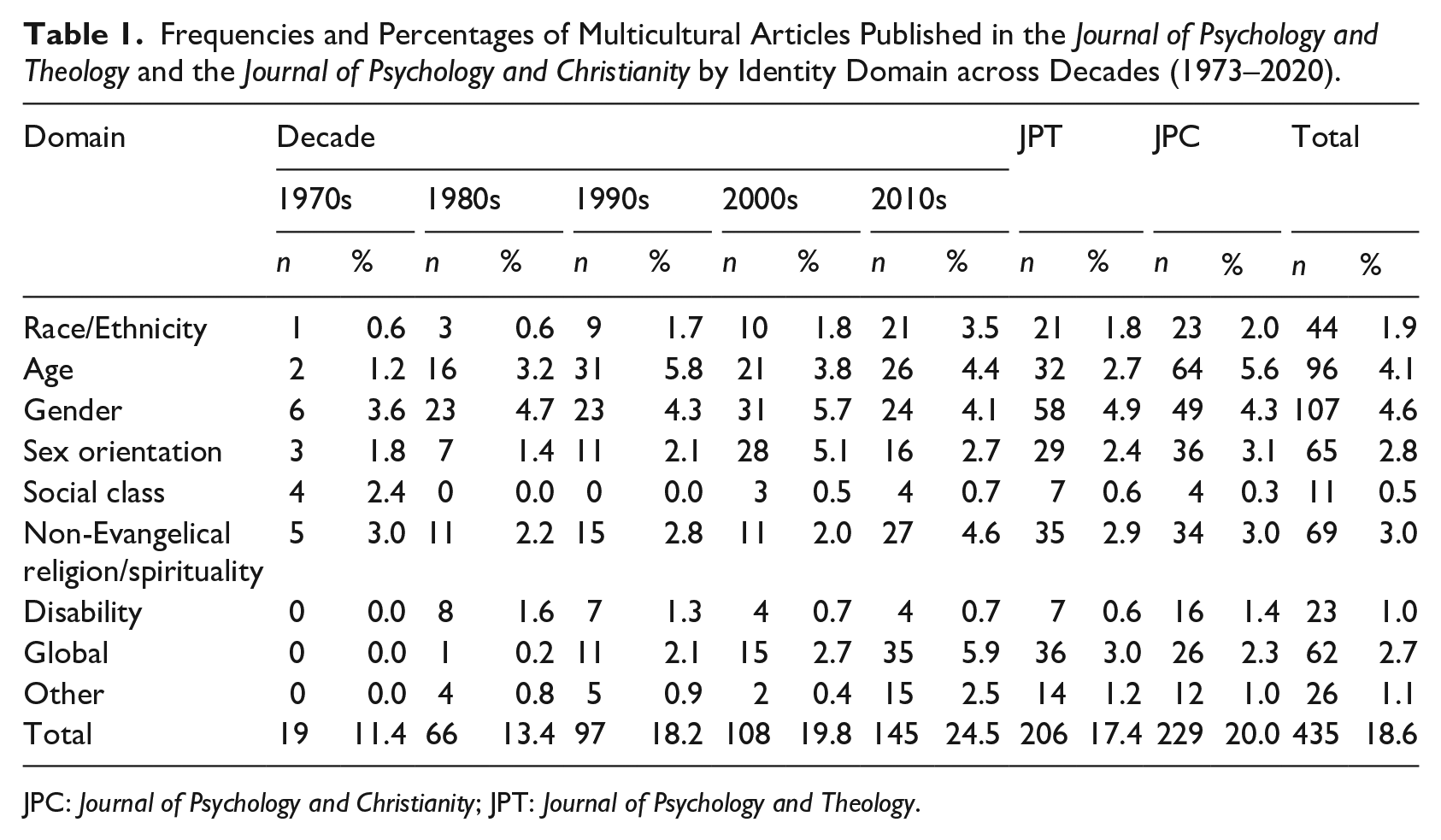
JPC: Journal of Psychology and Christianity; JPT: Journal of Psychology and Theology.
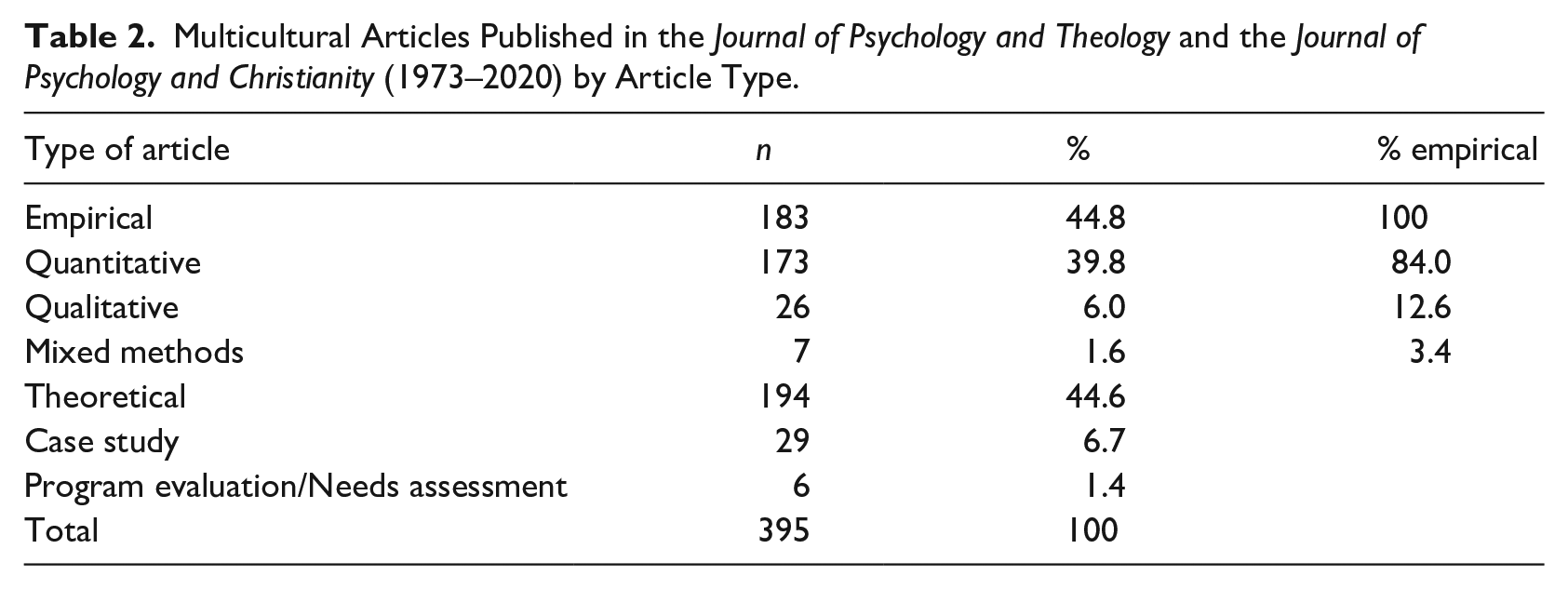
JPC generally had a greater percentage of multicultural content (20.0%) than JPT (17.4%). As indicated in Figure 1, multicultural content has grown steadily in JPT; for JPC, the 1990s demonstrated a sharp increase (from 14.5% to 21.7%) and then a slight decrease in the 2000s (19.7%). JPC had a greater percentage of articles compared to JPT on identity domains of age (5.6% vs 2.7%, respectively), sexual orientation (3.1% vs 2.4%), and disability (1.4% vs 0.6%). Conversely, JPT had relatively more articles than JPC on the domains of global (3.0% vs 2.3%), social class (0.6% vs 0.3%), and gender (4.9% vs 4.3%). Other identity domains had a similar focus between the two journals. Types of articles are presented in Table 2. There were slightly more empirical articles (44.8%) than theoretical articles (44.6%). Among the empirical articles, most were quantitative (39.8%), with fewer qualitative (6.0%), or mixed-methods design (1.6%). The remaining articles focused on case studies (6.7%) or program evaluations/needs assessments (1.4%).

Percentage of multicultural articles published in the Journal of Psychology and Theology and the Journal of Psychology and Christianity across decades (1973–2020).
Multicultural Articles Published in the Journal of Psychology and Theology and the Journal of Psychology and Christianity (1973–2020) by Article Type.
The productivity index and ranking of the most productive authors on multiculturalism and diversity are reported in Table 3. Of these, four are female and seven are male, and only one author of color is represented. The identity domains emphasized by the top five authors focused on sexual orientation (Yarhouse), children and spirituality (Ratcliff), gender and sex (Looy), women and gender (Hall), and sexual orientation (Rosik). Finally, all but one of the affiliation institutions (i.e., University of North Texas) for these authors are faith-based. We also explored any special issues across the articles (see Table 4). There were 13 special issues (5 in JPC, 8 in JPT). The most frequent special issue focused on multiculturalism generally, including cultural humility, valuing voices, and community psychology (n = 4). The remaining special issues focused on sexual orientation, children, and global domains, religious diversity, and gender.
Author Contributions and Ranks of Multicultural Articles Published in the Journal of Psychology and Theology and the Journal of Psychology and Christianity (1973–2020).
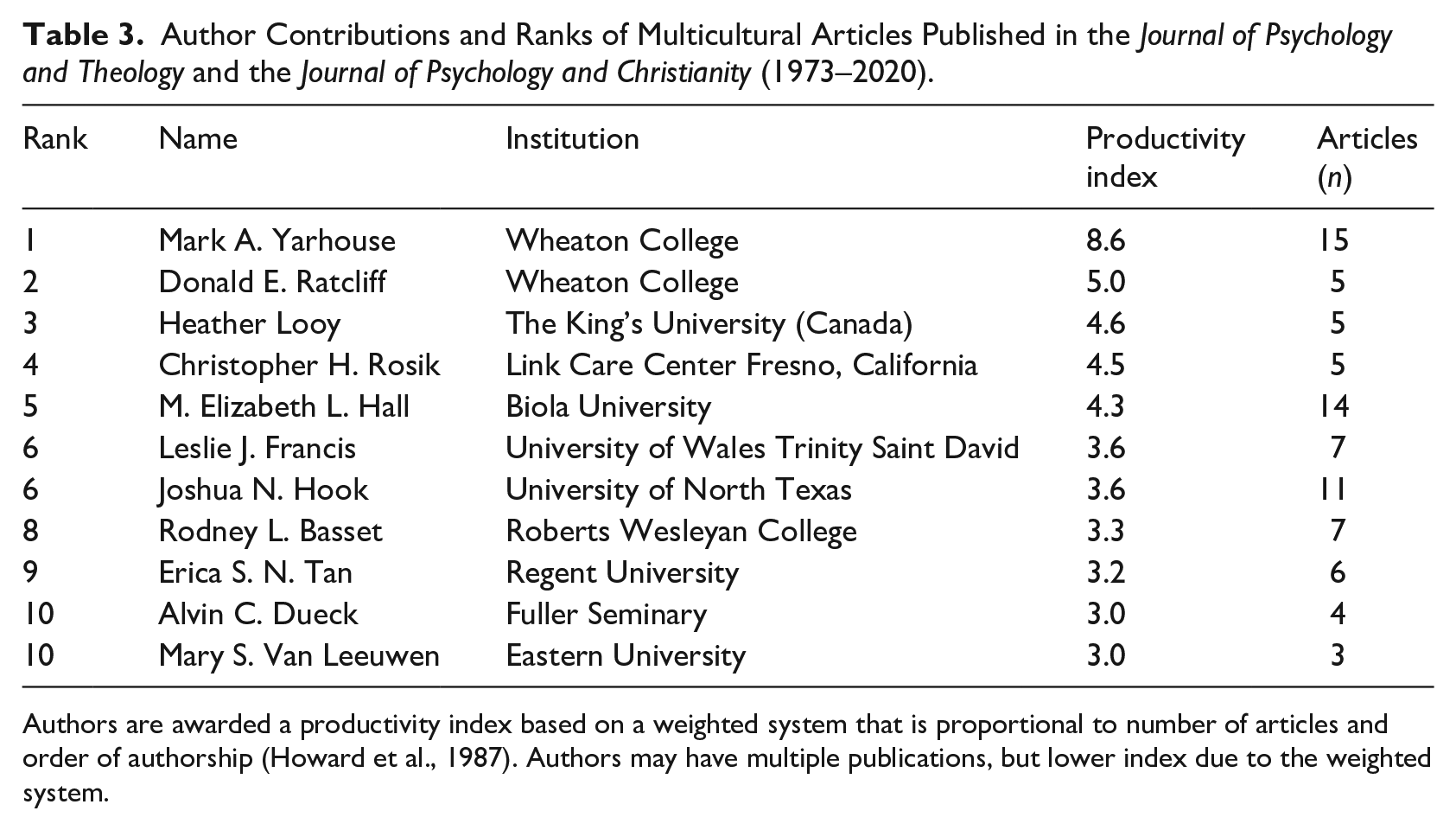
Authors are awarded a productivity index based on a weighted system that is proportional to number of articles and order of authorship (Howard et al., 1987). Authors may have multiple publications, but lower index due to the weighted system.
Special Issues with Multicultural Content in the Journal of Psychology and Theology and the Journal of Psychology and Christianity (1973–2020).
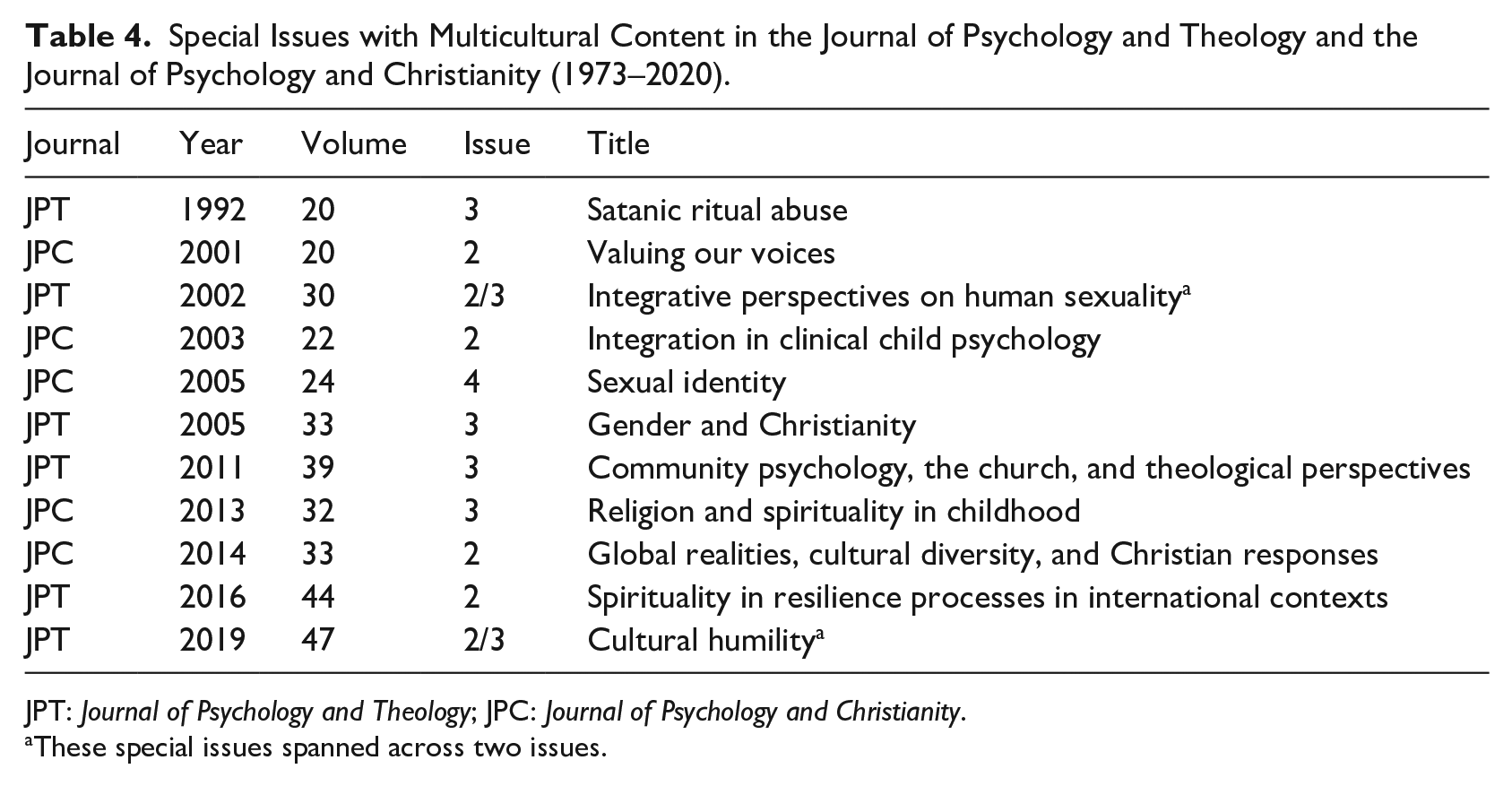
JPT: Journal of Psychology and Theology; JPC: Journal of Psychology and Christianity.
These special issues spanned across two issues.
Identity domains and themes
Within each identity domain, we examined different themes that emerged from the data. Each article was coded in at least one to three themes.
Gender and sex
Out of all the articles in JPT and JPC, 107 (4.6%) had substantial content of gender or sex. The 2000s contained the largest proportion of articles from this domain compared to other decades. The most common theme was on gender and sex roles (n = 26) and gender considerations in mental health and therapy (n = 23), followed by spirituality/religiosity and gender (n = 20), gender differences (n = 19), trauma, gender-based violence and sexual aggression (n = 19), career and calling for women (n = 13), and biblical/theological perspectives on gender (n = 11). Four articles discussed gender identity.
Age
Children, adolescents, and older adults were emphasized in 96 articles (4.1%) across JPT and JPC. The 1990s decade had the most articles on age relative to other decades. Most of the articles focused on adolescents (45%), followed by middle/older adults (22%). Only 11% of the articles specifically focused on early or middle childhood. Finally, 29% of the articles within this domain focused on “children” broadly defined. The most common theme in this domain was on religion/spirituality and psychological functioning (n = 43), followed by therapeutic interventions and practices (n = 21), psychosocial development across the lifespan (n = 16), abuse, traumatic stress, and adjustment (n = 15), developmental psychopathology (n = 14), and religion and mental health/behaviors (n = 13).
Non-evangelical religion and spirituality
A total of 69 articles (3.0%) in JPT and JPC focused on non-evangelical religion and spirituality. Religious diversity remained fairly consistent (i.e., 2% to 3%) until the 2010s, when it reached 4.6% of the articles. The type of religious diversity included 30 articles non-evangelical Christian denominations (i.e., Catholicism, Russian or Greek Orthodox, Armenian Apostolic, Anglicanism), 21 on comparisons of Christian and non-Christian religions (i.e., Atheism or Agnosticism, Islam, Judaism), 13 on comparisons of different Christian traditions (e.g., Baptism, Catholicism, Lutheranism), and 6 describing non-Christian religious or spiritual practices (satanism, cults, and New Age).
The most common themes within the religion and spirituality domains included religious or comparisons differences (n = 28) and religion, therapy, and mental health (n = 25). Other themes included religious attitudes, personality, and behaviors (n = 19), theological integration and views of persons (n = 13), and religion and abuse (n = 7).
Sexual orientation
Sexual orientation was the main focus of 65 articles (2.8% in JPT and JPC). As with gender, the 2000s contained the highest proportion of articles on sexual orientation compared to other decades. The most common theme within this domain was counseling with GLB populations (n = 21), attitudes, prejudice, stereotypes toward GLB (n = 19), psychosocial and biological factors/causes in development of GLB identity (n = 18), ecclesiastical, theological, and biblical perspectives on homosexuality (n = 17), and change orientation therapy and sexual confusion (n = 15). A more recent trend in this domain is a focus on GLB individuals and mental health (n = 4).
Global and international
Global or international topics were emphasized in 62 articles (2.7%) of JPT and JPC. The most frequent themes in this domain included indigenous and contextual models of healing (n = 15), clergy ministry and mental health (n = 14), spiritual wellness, religiosity, and psychological wellbeing (n = 14), disaster relief and trauma (n = 13), global integration practices (n = 9), global church and health (n = 6). This domain also contained five articles that focused on international or cross-national settings.
Race and ethnicity
Race, ethnicity, and culture had substantial content in 44 articles (1.9% of JPT and JPC). A trend in this domain seemingly increased in the 1990s (1.7%) and later in the 2010s (3.5%). There were five themes identified within this domain: religious/spiritual wellbeing and culture (n = 20), mental health and counseling with people of color (n = 19), racism and prejudice (n = 10), community and church engagement (n = 8), and ethnic/racial group comparisons (n = 5).
Disability
Physical and cognitive/neurological disability was a major focus of 23 articles (1.0% of JPT and JPC) that had substantial content on disability. The highest proportion of articles occurred in the 1980s and 1990s (at 1.6% and 1.3%, respectively). Fourteen articles focused on physical disabilities and nine articles focused on cognitive or neurological articles. The primary themes in this domain included ministry, treatment, and interventions with people with disabilities (n = 12), integration views on illness and disability (n = 5), and religion, spirituality, and coping among people with disabilities (n = 4).
Social class
Only 11 articles (0.5% of the total) in JPT and JPC focused on social class, poverty, or socioeconomic status. Given the small number of articles, no themes were developed. Four of the articles were published in the late 1978 and focused on “urban” or “inner-city” ministries. The remaining seven articles emerged in 2003, three of which focused on poverty in other countries (i.e., Mexico and Hong Kong). Only two of the articles focused on clinical work with individuals living in poverty.
Other
The culling process also resulted in 26 articles (1%) that included three or more domains of multicultural identity or focused on multiculturalism generally. For example, one content analysis examined social class, race/ethnicity, disabilities, and age (Canning et al., 2001); in another article, the authors described spiritual predictors of multicultural competence (Sandage et al., 2015), but did not mention a specific identity category. The primary themes within this domain were multicultural issues in counseling (n = 13), followed by multicultural training (n = 7), social justice integration (n = 5), and multicultural integration (n = 4).
Discussion
This study examined multiculturally focused articles in JPT and JPC over the 48-year period between 1973 and 2020. Our aims were to (a) identify the frequency and percentage of articles in multicultural identity domains; (b) identify qualitative themes within each domain; and (c) report trends across time, journal, article type, and author contributions. Results indicate that of the 2,333 articles in JPT and JPC, 18.6% of them had substantial multicultural content. This proportion is lower than the 19.5% found in a previous content analysis on the same journals from 1990 to 1995 (Canning et al., 2001). However, the authors included articles on serious mental illness and rural populations, both of which were excluded from this study. Moreover, JPC in particular had a surge in multicultural articles during the 1990s (see Figure 1).
Regarding a trend analysis across time, multicultural articles have more than doubled from the 1970s (11.4%) to the 2010s (24.5%). This suggests that faith integration journals of psychology have made advances in examining multiculturalism and diversity, particularly in the last decade. However, the percentage of multicultural content generally remains lower than in mainstream psychology. For example, the overall percentage of multicultural articles in the Journal of Counseling Psychology was over twice as large (37.7%) in a similar period (i.e., 1970–2009; Lee et al., 2013). Thus, while the integration literature has made progress with its multicultural content, it certainly has room to grow.
The most frequent identity domain emphasized gender and sex (4.6% of all articles from JPT and JPC), followed by age (4.1%), non-evangelical religion and spirituality (3%), sexual orientation (2.8%), global and international (2.7%), race/ethnicity (1.9%), physical and cognitive/neurological disability (1%), and social class (0.5%). Multicultural content was also discussed more generally in 1% of the articles (i.e., “other” domain). JPT and JPC seems to place a greater emphasis on gender/sex and children/adolescents than other marginalized identities.
When compared to the content analysis in a mainstream psychology journal (Lee et al., 2013), JPT and JPC have several areas of strength. For example, JPT and JPC had a higher proportion of articles compared to the Journal of Counseling Psychology in the identity domains of age (3.7% of all articles), sexual orientation (1.1%), religion (0.6%), disability (0.8%), and social class (0.3%). (Their content analysis also included an “intersectionality” identity domain, which also contains other identities, and would increase the rates described.) On the contrary, the identity domains of gender (16.1% of all the articles in Journal of Counseling Psychology) and race/ethnicity (8.1%) were emphasized at overwhelmingly greater rates than in JPT and JPC.
Limitations and future directions
The findings should be understood in light of several limitations. First, this study focused on the title and abstract as data. This allowed for a broad, historical overview of multicultural content. However, the study was limited in the content that was analyzed. For instance, we did not code for sample demographics (e.g., race/ethnicity), or details about research design, statistical or qualitative analyses. Another advantage to examining the full article content is to evaluate the quality of multicultural integration into faith or theology. Finally, this approach could assist in gathering information on intersectionality (i.e., multiple identities within interlocking systems of oppression). Future scholarship on Christian integration of intersectionality would benefit the field. Future content analyses could also explore the full article content more deeply within the most recent years of JPT and JPC, including greater details about demographics reported and author status or affiliation. This would also offer information on the quality of integration, multicultural considerations, and any intersectionality scholarship.
Another limitation to this study is that it focused on the frequencies that historically marginalized demographics were of focus in published JPC and JPT articles. We did not include an analysis of whether the studies presented affirming, neutral, stereotyping, or even pathologizing views of the marginalized identity variables. Future content analysis should include a report of the views presented, which would likely require a review of the full articles as well. Similarly, scholars presented in Table 3 are examples of authors who are particularly productive in JPT and JPC, although we did not explore the quality of integration in articles. Future research could incorporate an analysis of the qualities of the articles in terms of methodology, quality of integration scholarship, and cultural conceptualizations.
Implications
This study offers three implications for the intersections of multiculturalism, psychology, and theology. First, findings highlight a trend toward greater emphasis in multicultural content in integration literature. This is reflected in training programs both in mainstream and faith-based programs. Second, the field of psychology integration has some areas of strength, including greater emphasis than mainstream journals on children/adolescents, sexual orientation, and religious diversity, possibly suggesting that integration journals readership tend to value these topics. The finding for sexual orientation having a greater representation was unexpected, though we did not evaluate the nature of the articles (i.e., pathologizing, contextualizing, or affirming of GLB individuals). Conversely, JPC and JPT had substantially lower relative content of race/ethnicity and gender/sex. Finally, although JPT and JPC had a slightly greater percentage of disability and social class/poverty content (1% and 0.5%, respectively) than a mainstream psychology journal (0.8% and 0.3%, respectively; Lee et al., 2013), we believe these multicultural content areas are grossly understudied. We recommend greater emphasis in terms of special sections at conferences or special issues in JPT and JPC (including the current special issue) to foster this growth.
Third, this study found greater gender diversity among the top researchers compared to previously reported (Sandage & Brown, 2018; Watson et al., 2001). More opportunities for women and scholars of color would advance the field further, and the J. Derek McNeil Scholars Project (through Christian Association for Psychological Studies) is an excellent model for this vision. In addition, efforts should be invested into ensuring that more women and scholars of color are represented among JPC and JPT authors, reviewers, and editors. A possible explanation for the limited scholarship on multiculturalism is the short supply of theoretical literature available for why multiculturalism should be at the forefront in the integration of psychology and theology. Several scholars have been strong examples of this task (McNeil, 2005; Sandage & Brown, 2018). Each of these scholars presents their own unique theological and psychological perspectives, in terms of both scholarship rigor and explicit acknowledgment of their respective social locations, in engaging with faith–psychology integration. Based on our content analysis, we believe more efforts need to be invested into developing rich theoretical foundations for the centrality of cultural conceptualization in research and practice) drawing from both theological and psychological literature. Having greater diversity in authorship is critical for ensuring that the field of psychology–faith integration moves toward rigorous scholarship and rich dialogues on multiculturalism and diversity.
Conclusion
Findings from this study suggest that multiculturalism is increasingly being embraced in the faith–psychology literature. As a field, faith integration and psychology has made advances in identity domains that are particularly strong (i.e., children/adolescents, religious diversity). However, greater scholarship with specific marginalized groups within this area and by historically underrepresented authors would benefit the field in areas of race/ethnicity, disability, social class. Moreover, an approach to intersectionality, power, and privilege would inform practice that is informed by social justice from a uniquely Christian perspective.
Footnotes
Appendix 1
Acknowledgements
We would like to acknowledge the team of student raters that included Alyssa Ponce, Matthew Campos, Lizbeth Miranda-Torres, Ariana Garcia, Bryanna Orellana, Taiz Pineda, Cathaline Romero, Chloe Rodriguez, and Vereniz Delgado; and also, Tyneka Washington, Kayleigh Carras, and Alahnis Gurule, who assisted with an earlier version of this project.
Declaration of Conflicting Interests
The author(s) declared no potential conflicts of interest with respect to the research, authorship, and/or publication of this article.
Funding
The author(s) received no financial support for the research, authorship, and/or publication of this article.
