




Abstract
A three-condition (rejection, criticism, control) single-factor experiment (N = 78) reveals that even relatively minor face-threatening acts of rejection or criticism on a social-networking site similar to Facebook lead to increases in self-reported negative affect and retaliatory aggression, compared with a control. A mediation model demonstrates that face-threatening acts lead to direct effects on negative affect and an indirect affect on retaliatory aggression through negative affect. Findings are discussed in relations to face theory and politeness theory.
It is well established that aversive communication leads people to feel badly and, sometimes, to act out on those feelings. Face theory offers one framework for understanding these responses, positing that aversive communication may challenge people’s constructed identity, or face (Oetzel & Ting-Toomey, 2003). These so-called face-threatening acts may result in negative emotions or retaliation as people try to neutralize the threat and regain their sense of face (Brett et al., 2007) by undermining the face of their accuser (Oetzel & Ting-Toomey, 2003). However, what is less well understood is the path by which this takes place. As such, this current research aims to answer the following overarching questions: Do face threats directly or indirectly lead to negative emotion and retaliatory aggression? What is the order of these responses?
To answer these questions, this study used an experimental manipulation with two threats to positive face—rejection and criticism—on a mock social-networking site, similar to Facebook, which was created for this study. On this site, participants created profiles, attempted to join existing groups on the site, and received face-threatening acts by being criticized by the groups they joined or by being rejected from joining the groups. This mock social-networking site offered a fruitful venue to explore how strangers respond to computer-mediated positive face threats. However, the main contribution of this study was to propose and test a mediation model for these responses that posited that aversive communication indirectly leads to retaliatory aggression through negative emotion.
Earlier research has examined similar variables. However, prior research has not directly explored a mediation model involving rejection and criticism, and how they lead to negative emotion and retaliatory aggression. For example, Cupach and Carson (2002) used correlational data from a survey, which limits the ability to predict causality, and found that complaints were associated with face threats as well as negative reactions, such as embarrassment, defensiveness, and relational damage. Kennedy-Lightsey (2010) used an experimental design and found participants felt greater negative emotion and communicated more negatively when they failed to receive verbal recognition in a group setting. Although these studies examined similar concepts, they did not propose or test mediation. Dillard and Shen (2005) compared mediation models somewhat similar to the one in this current study. They found that being told to heed health advice threatens people’s face, and then leads to anger and counterarguing, which then makes people resistant to the recommendation. In addition, at least 20 studies examined interrelationships between face threats to negative emotion, anger, counterarguing, and behavior, according to a meta-analysis (Rains, 2013). Brett and colleagues (2007) found people were less likely to resolve disputes online if their sense of face was challenged.
However, none of these studies specifically examined how rejection and criticism lead to negative emotion and retaliatory aggression, as this current study did. As a result, this study offered a new extension of face theory by documenting how these specific affronts to face lead to negative emotion and retaliatory aggression. I will begin by explaining the concept of face and the related face and politeness theories. Then I will review literature relating to face-threatening acts in face-to-face and computer-mediated communication. Using this foundation, I will justify specific hypotheses and the proposed model.
The Concept of Face
Face is the “image of self delineated in terms of approved social attributes” (Goffman & Best, 2005, p. 5) or the positive way people want others to see them (Locher & Watts, 2005). Goffman (1955) developed these ideas into face work, which is verbal and nonverbal efforts people undertake to maintain face during conflict or challenge others’ face (Ting-Toomey & Kurogi, 1998). Locher and Watts (2005) argue persuasively that face work also might be termed relational work because it includes relationship maintenance. Under this view, the public face is socially constructed, exhibited during communication (Metts & Cupach, 2008), and acted out almost like theater (Goffman & Best, 2005). Therefore, having face means one is valued as a relational partner.
Politeness Rules in Computer-Mediated Communication
Brown and Levinson (1987) developed this idea further through politeness theory. Being polite is ingrained in Western society as a positive value (Papacharissi, 2004), so impoliteness is considered socially deviant online –even if computers are doing the communicating (Reeves & Nass, 1996). Regardless of whether people know other people on a social-networking site, they would expect polite communication with them, and face-threatening acts would violate these norms.
Politeness theory breaks threats to face that violate politeness into two categories. Threats to positive face such as criticism and insults challenge one’s relational value and desire for approval, but threats to negative face such as requests or demands question one’s competency and need for autonomy. This current study examined threats to positive face as subjects encounter rejection or criticism from a group they seek to join on a mock social-networking site of strangers. Under face theory, it would make sense that rejection and criticism could lead people to lose face, leading to negative emotion and attempts to repair face and neutralize the threat through retaliation (Brett et al., 2007).
This Current Study
The current research aimed to extend face theory by proposing and testing a model by which two threats to positive face—rejection and criticism—lead to negative emotion and retaliatory aggression. Both are affronts to positive face because they cast people as undesirable relational partners, threatening their desire for approval (Park, 2008). This study built on earlier research by proposing and testing a model of how positive face threats lead to negative emotion and retaliatory aggression. It is worth noting that earlier research on this topic has examined other types of face threats, such as lack of verbal recognition (Kennedy-Lightsey, 2010) or negative threats to face, which question or limit a person’s autonomy (Dillard & Shen, 2005; Rains, 2013). This study built on this foundation by examining rejection and criticism specifically as positive face threats and testing a mediation model to answer these core questions: Do threats to positive face directly or indirectly lead to negative emotion and retaliatory aggression? What is the order of these responses?
Criticism
Criticism has a long history of being conceptualized as a threat to positive face because it flouts people’s desire for social approval as well as suggests lessened relational value (e.g., Duthler, 2006; Park, 2008). In a more general sense, criticism is a form of social incivility (Andersson & Pearson, 1999) that violates social norms by failing to show regard for other people (Caza & Cortina, 2007). Criticism also is a form of verbal aggressiveness, which attacks another’s self-concept, character, or ability to do something, and it makes a person feel badly about the self (Rancer & Avtgis, 2006). As such, criticism would be a threat to positive face that would first prompt negative emotion and then lead to attempts to restore face through retaliation, compared with nonaversive comments. The order is meaningful. It relies on the well-established rationale that responses to emotional pain, such as retaliatory aggression, occur only after one is conscious of the pain (Dasborough, Sinclair, Russell-Bennett, & Tombs, 2008).
Rejection
Although not traditionally assumed to be a face threat, rejection threatens the relational value and social identity of a person in much the same way as criticism. The term rejection is used to mean many types of painful exclusion. I rely on its very literal meaning of being rebuffed after seeking a social connection with other people (Blackhart, Nelson, Knowles, & Baumeister, 2009). A meta-analysis of 192 studies of social exclusion shows all types of rejection cause a significant shift toward negative emotions, compared with controls (Blackhart et al., 2009). As a result, people experience hurt feelings or social pain (Vangelisti, 1994), when they feel their relational value is threatened (Williams, Forgas, & von Hippel, 2005), provoking a threat-defense response similar to what is wrought by physical injury (MacDonald & Leary, 2005), even if rejected by a stranger. Rejection also would clearly challenge one’s social identity. Under face theory, rejection is likely to lead first to negative emotion and then to efforts to restore face by diminishing the face of the offender through retaliation, compared with nonaversive comments.
Emotional Response Positive Face Threats
Face-threatening acts lead to negative emotions because they challenge people’s social self-identity in which they may be very emotionally invested (Wilson, Aleman, & Leatham, 1998). In fact, the act of face work, which is used to neutralize face threats, generates a range of emotions (Ting-Toomey & Kurogi, 1998). These internal emotional states, or affect, may be intense but are relatively short-lived and context-specific, compared with longer lasting moods that are not tied to a particular situation (Nabi, 2010). In this study, I focus on the dimensional aspect of affect, grounded in the idea that emotions can vary in valence (positive/negative) and intensity (Bolls, 2010). Positive affect reflects how enthusiastic, active, and alert a person is, compared with negative affect, which measures subjective distress (Watson, Clark, & Tellegen, 1988). Self-reports are often used to measure affect under an assumption that emotions are the result of mental processes of which people are aware (Dasborough et al., 2008).
Based on this foundation, I predicted threats to positive face would lead first to increases in negative affect, compared with nonaversive comments from the social-networking groups. It is possible outright rejection may lead to greater negative affect because it is overt rejection, although criticism is more similar to implied rejection. However, because criticism is an intrinsically aversive type of communication, there is also an argument to be made that criticism may increase negative affect to a greater extent than rejection. Therefore, I hypothesized the following:
Retaliatory Aggressive Response to Threats to Positive Face
Aggression is an external action intended to hurt another, and retaliatory aggression is a particular type of aggression that targets the person who caused the initial pain (Bushman & Huesmann, 2010). Face theory suggests people retaliate when they have been hurt, because social pain threatens people’s sense of face, so people may become aggressive through retaliation to restore their own face by harming an offender’s face (Brett et al., 2007; Ting-Toomey, 2005). In other words, people may lash out against their rejecter after being hurt, because it helps them feel they have reestablished their own value by diminishing the value of the other person. In essence, the drive to restore an internal sense of self outweighs a need to appear as a good relational partner. Therefore, I hypothesized that threats to positive face from rejection and criticism would lead to greater retaliatory aggression against the perpetrator than nonaversive comments. Whether criticism or rejection would lead to greater retaliation remains an open question.
Taken together, these hypotheses suggested the proposal mediation model where rejection and criticism lead people directly to an emotional response, or affect, and retaliatory aggression, and rejection and criticism lead indirectly to retaliatory aggression through affect.
Method
A between-subjects experiment with three conditions (rejection, criticism, and control) was conducted using a social-networking site called “The College Network” created using Ning, a customizable online platform. Figure 1 shows a screen shot of the site. Participants were told they were testing a social media site aimed at college-age students, so they could provide suggestions before market. The site was preloaded with mock profiles of 20 college-age students and 40 groups participants could join.
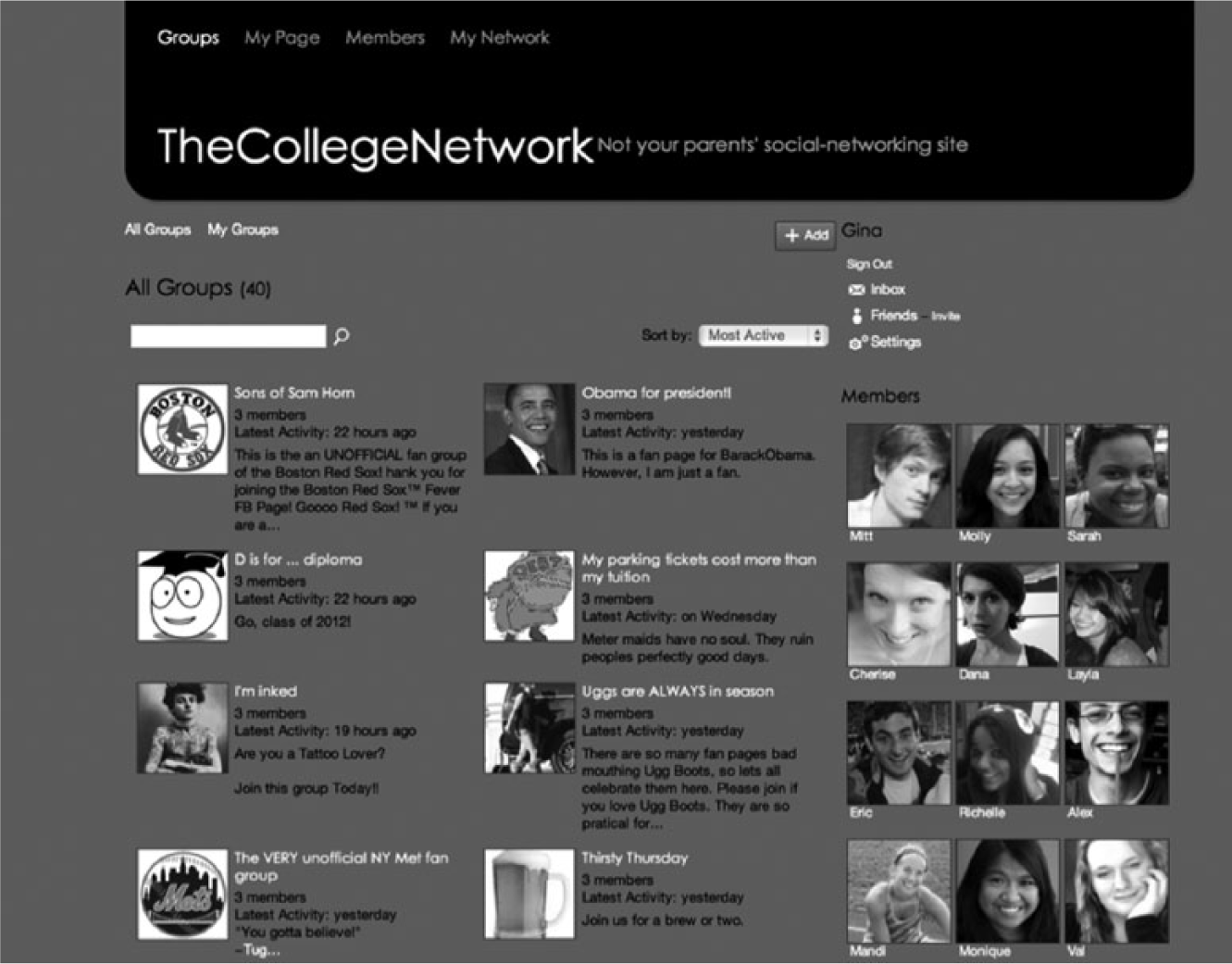
Screen shot of the college network, social-networking site.
Focus Group and Pre-Tests
Before the main experiment, a focus group and four pre-tests were conducted to create the site’s groups and fake student profiles and the rejecting, criticizing, and nonaversive messages that served as experimental stimuli. The aim was to create a realistic site and stimuli by using college-age students’ ideas.
Focus group
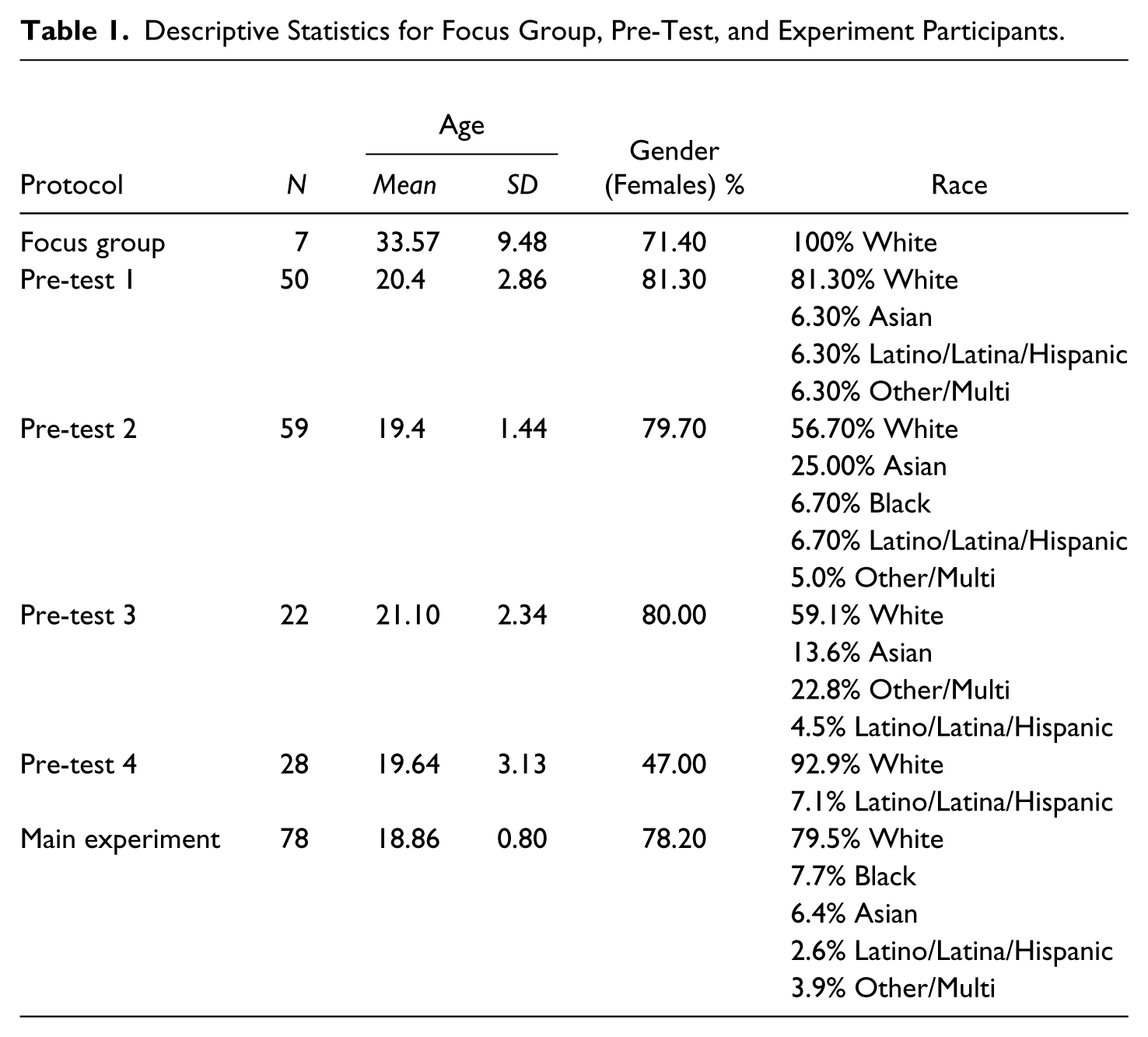
Seven graduate students at a major Northeastern university uninvolved in the main experiment participated in a focus group in exchange for US$10 each from a university grant. See Table 1 for descriptive statistics of focus group and pre-test participants. Participants came up with 79 groups they considered typical for a social-networking site targeted to college-age students, and 40 of those were selected once duplicates were removed. Some examples are, “I hate Uggs,” “Leggings Aren’t Pants,” “How Do They Expect Me to Learn at 8 a.m. When I’m Still Drunk,” and “I Can’t Live a Day Without Starbucks.” Focus group members also came up with two questions for site profiles: “The top 5 songs on my iPod are . . .” and “On the weekend, you’re most likely to find me . . . ”
Descriptive Statistics for Focus Group, Pre-Test, and Experiment Participants.
Then, I initiated the first step of an adaption of Graesser’s (1981) procedure that has been used in media research (Shapiro & Chock, 2004) to create stimuli for the project. Using a think-aloud procedure (Shapiro, 1994) focus group members brainstormed rejecting, criticizing, and nonaversive comments typical of what they would expect to receive if attempting to join groups on a social-networking site. In response to this request, focus group participants came up with nonaversive comments that accepted people into the groups for the control condition. This created a control condition more comparable with the other conditions, than a control without attempts to join any groups. In the end, the focus group came up with 48 comments, which were pared with 29 (11 rejecting, 9 criticizing, and 9 nonaversive) when duplicates were removed.
Pre-tests
Four pre-tests were conducted to categorize the statements generated by the focus groups and to select the photos for the fake site profiles. For all pre-tests, undergraduates participated in exchange for US$10 each from a university grant or extra course credit. Pre-test 1 comprised the next step in Graesser’s (1981) process, where participants rated agreement on a 1 (not at all) to 7 (very much) scale to the following statements in regard to each of the 29 comments focus group participants had generated: “If I received this message after I tried to join a social media group, I would feel I had been rejected by the group,” “If this message were posted on my social-medial site wall, I would feel as if I had been criticized,” “If I received this message, it would not bother me at all.” The Survey Gizmo questionnaire software randomized statements by subject to control for order effects (Krosnick, Judd, & Wittenbrink, 2005). Messages with a mean above 5 on the “I feel I had been rejected” scale were considered rejecting messages. Similarly, messages with a mean above 5 on the “I would feel as if I had been criticized” scale were considered criticizing, and messages with a mean greater than 5 on the “It would not bother me” scale were considered nonaversive. Using these criteria, 9 statements were considered nonaversive, 19 were considered criticizing, and 20 were considered rejecting. This showed an overlap between rejection and criticism on all but 1 aversive statement.
To further clarify whether a statement was rejecting or criticizing, Pre-Test 2 subjects rated on a dichotomous scale the statements the earlier pre-test participants had determined were either rejecting or criticizing. Subjects were told to imagine they received the messages after attempting to join groups on a social-networking site similar to Facebook. The question read: “We want to know whether you would feel REJECTED or CRITICIZED if you received the following messages in response to your request. We realize you may feel BOTH. But you must pick which BEST describes how you feel.” They could choose either “The statement would make me feel MAINLY CRITICIZED” OR “This statement would make me feel MAINLY REJECTED.” This step produced four statements for each condition, which serve as stimuli and are detailed in Table 2.
t Tests Comparing Means for Four Messages in Each of Three Conditions.
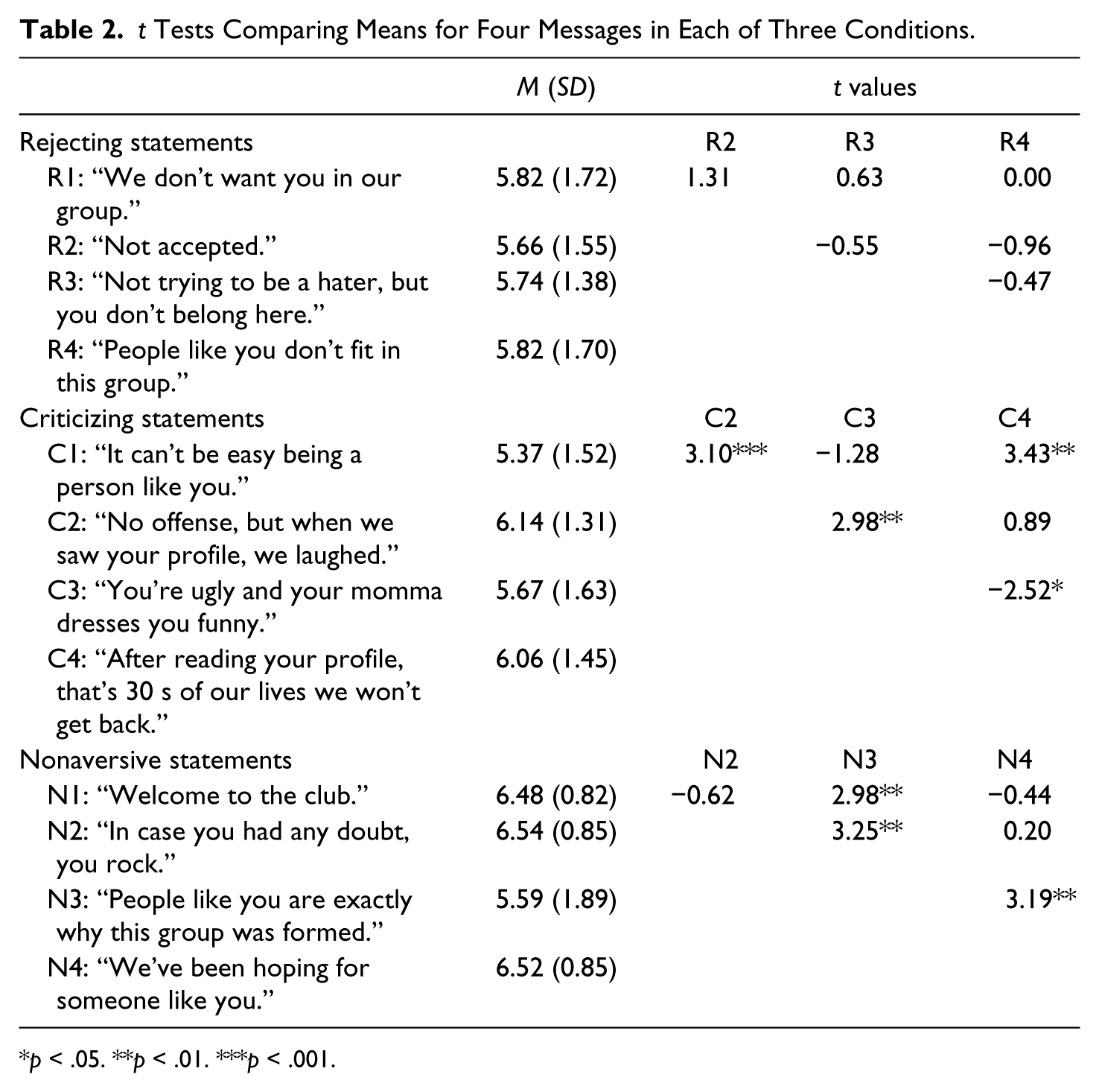
p < .05. **p < .01. ***p < .001.
Two additional pre-tests were conducted to assess the race and estimated age of the people shown in the fake profiles to be preloaded on the social-networking site. Pre-test participants also answered the two open-ended profile questions that focus group participants devised, so their answers could be used in the mock profiles. This was done to ensure profiles were realistic and had a racial makeup similar to the university where the study was conducted. In both pre-tests, subjects viewed photographs downloaded from Twitter or Facebook and rated on a 1 (strongly disagree) to 7 (strongly agree) scale whether the person in the picture “looks about my age” and indicated the race of the person pictured on a 1 (definitely a person of color) to 7 (definitely white) scale. Both pre-test groups followed the same procedures. Participants in each pre-test viewed roughly half of 51 total pictures. This was done to limit the time it took to finish a pre-test to 30 minutes in an effort to encourage completion. Based on ratings in both pre-tests, only photographs where participants on average rated a picture at the midpoint of 4 or greater for being “about their age” were considered to represent college-age students. The other photographs were excluded from the main experiment as not being age appropriate. For the race statements, those photographs that participants on average rated as a 5 or greater were considered White; ratings of less than 4 indicated people of color. Any photograph that received a mean score of 4 was considered racially ambiguous and excluded. Using these criteria, 20 pictures (13 females and 7 males; 7 people of color) were uploaded to the social-networking site, and answers to profile questions pre-test subjects came up with were added to the profiles. Each profile was randomly assigned to join four groups on the site, so all groups would have the same number of members.
Stimuli
Comments rated by participants in Pre-Tests 1 and 2 became stimuli for the main experiment. Table 2 shows the statements and the results of a series of paired t tests used to assess whether messages in each condition were equally intense. Results showed the rejecting messages were equivalent, although some criticizing and some nonaversive statements showed variability in intensity. As a result, statements were randomized by subject to neutralize any intensity differences in statements. Each subject received four messages, and dependent variables measured the cumulative effect of each of the four statements, not the individual effect of any particular statement.
Sample
Subjects uninvolved in the pre-tests or focus group were recruited from entry-level communication courses at the same university in exchange for US$10 from a university grant. Eighty-four students completed a 17-item questionnaire, which asked questions about demographics and trait self-esteem, rejection sensitivity, and personality variables. Several weeks later these students participated in the experiment. However, data for 5 were removed from analysis because the subjects were unaware they had been rejected or criticized, so they failed a manipulation check detailed below. Data from an additional participant were removed from analysis because of technical problems linking the participant’s questionnaire responses to experimental data. Descriptive statistics of the remaining subjects are detailed in Table 1.
Experiment Procedures
Subjects participated in the experiment individually, seated in a campus laboratory at a laptop, outfitted with MediaLab experimental software. Participants were randomly assigned to three conditions: rejection (n = 28), criticism (n = 23), or control (n = 27), counterbalanced by gender. Participants were shown how to navigate the social-networking site and given 5 minutes to create a profile, upload a photo, and browse site profiles, which they were told belonged to real students at their university. Subjects then had 10 minutes to browse blurbs about the 40 groups on the site. They were told to jot down 4 groups they wanted to join to emphasize any connection they may feel to the groups. Then they were shown the groups again and joined the 4 previously selected, one at a time. Four groups per condition were used because it was judged enough to produce an effect but not so many that subjects might become skeptical of the procedure. In addition, the manipulation was completed within a few minutes, giving subjects little time to reflect on the realism of the experience. Immediately after joining each group, participants received a message about whether they were accepted into that group, depending on condition. In the rejection condition, they received a message that read: “You have been rejected from this group” followed by one of the four rejecting messages. For the criticism condition and the control, they received a message that read: “You have been accepted into this group” followed by either one of four criticizing or one of four nonaversive messages, depending on condition. In each condition, each subject received a total of four messages, one from each of the 4 groups they attempted to join. All messages were sent privately. To control for order effects (Krosnick et al., 2005), all statements were randomized by subject.
Participants then completed a manipulation check. They also completed dependent measures detailed below and were permitted to indicate whether they would like to send virtual gifts—either a ticking bomb or a smiley face—to the groups they sought to join. The gifts served as dependent measures of retaliatory aggression and are detailed below. Questions about negative and positive affect were answered prior to those concerning retaliatory aggression. Lastly, subjects were debriefed following a procedure from prior research (Williams, Cheung, & Choi, 2000) that assured them messages received during the experiment were randomly assigned and not personal.
Manipulation Check
In the manipulation check, participants were asked to report which emotional experience “BEST describes how you felt during the experiment” on a 1 to 7 scale with 1 being mainly criticized, 4 being mainly accepted, and 7 being mainly rejected. The scale was designed so a lower score would indicate feeling criticized, a middle score would reveal acceptance, and a higher score would suggest feeling rejected. The aim was to prevent any potential overlap between feeling criticized and rejected, thereby forcing participants to choose between these feelings. Overall, the manipulation worked, F(2, 75) = 13.282, p < .001, η2 = .28. People in the control condition felt more accepted (M = 3.93, SD = .27) compared with those in other groups. Those in the rejection condition felt more rejected (M = 5.14, SD = 2.27), and those in the criticizing condition felt more criticized (M = 2.57, SD = 1.88). Post hoc Scheffe corrections showed significant differences between all groups at p < .05.
Dependent Measures
Self-reported affect
The Positive Affect Negative Affect Schedule (PANAS; Watson et al., 1988) was used because it is the most-widely used self-report of affect (Dasborough et al., 2008) and has been found to have high reliability and convergent and discriminant validity (Crawford & Henry, 2004). Participants rated on a 1 (very slightly or not at all) to 5 (extremely) scale how well the following adjectives described how they felt at that moment. Positive affect words were interested, excited, strong, enthusiastic, alert, inspired, determined, joyful, and active. Negative affect was indicated by upset, guilty, ashamed, depressed, jittery, angry, irritable, annoyed, aggravated, and frustrated. These were averaged into separate indices, with high reliability (negative affect: M = 5.09, SD = 0.83, Cronbach’s α = .89; positive affect: M = 2.56, SD = 0.75, Cronbach’s α = .85).
Retaliatory aggression
This concept was operationalized in two ways. First, a greater number of virtual ticking bombs sent to the groups participants wanted to join were considered a measure of retaliatory aggression because bombs mimic the real-world experience of causing pain. Second, a lower number of virtual smiley faces sent to groups they wanted to join was viewed as a reverse measure of retaliatory aggression, so a lower number would constitute more aggression. In essence, virtual smiley faces measured the absence of retaliatory aggression, as a smile is a common symbol of happiness. Virtual gifts were used because they are commonly sent to participants on social-networking sites and can be a means of showing relational closeness (Bakshy, Simmons, Huffaker, Teng, & Adamic, 2010). On average, subjects sent 0.81 ticking bombs (SD = 1.31) 1 and 3.54 virtual smiles (SD = 10.23) on the site. Logarithmic 10 transformation was used for smiles because of its high positive skewness, 7.98 (Tabachnick & Fidell, 2007).
Results
Before hypotheses were tested, Pearson’s r correlations were run to examine interrelations between variables (Table 3). To test the hypotheses and proposed model,
Pearson’s r Correlations Coefficients for Condition, Negative Affect, Positive Affect, Sending Virtual Bombs, and Sending Virtual Smiles (N = 78).
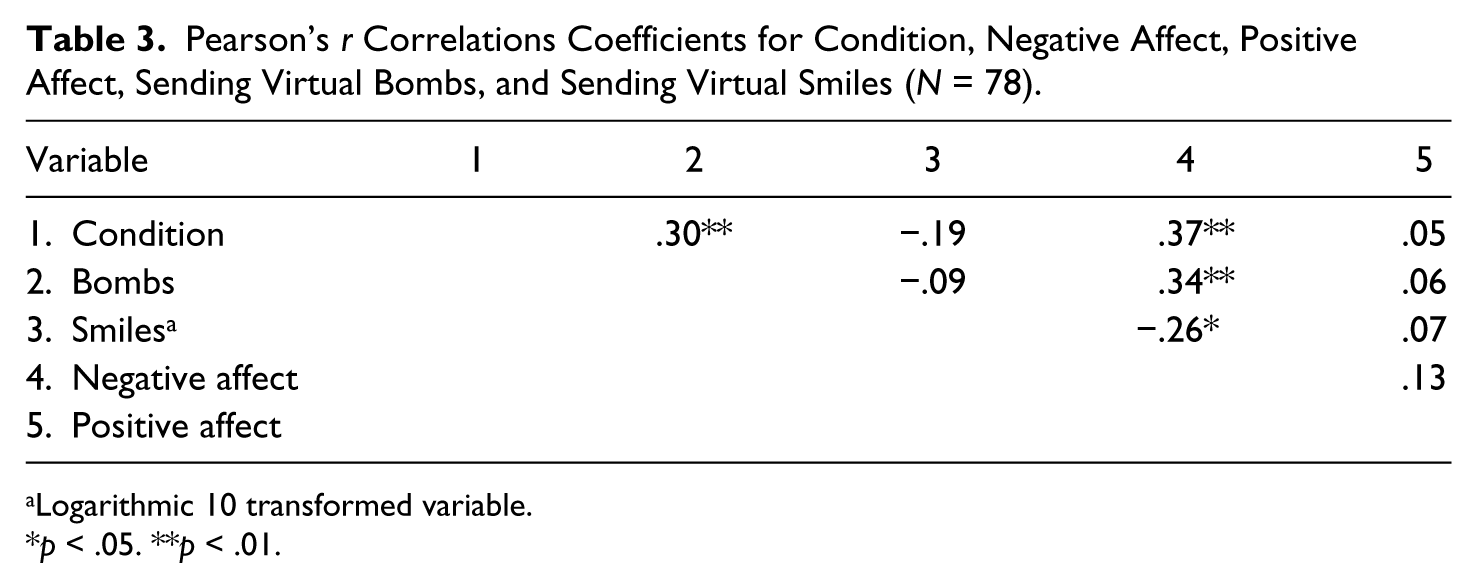
Logarithmic 10 transformed variable.
p < .05. **p < .01.
ANOVA and PROCESS (Hayes, 2013), a mediation and moderation modeling tool that estimates direct and indirect effects using unstandardized regression coefficients and a bootstrapping technique, were used.
H1 predicted threats to positive face from rejection and criticism on social media would elicit greater self-reported negative affect, compared with nonaversive comments. Partial support was found for this hypothesis, F(2, 75) = 7.37, p = .001, η2 = .16. 2 Using Scheffe post hoc corrections, results show people in the rejection condition (M = 2.11, SD = .70, p =.01) and criticism condition (M = 2.17, SD = .61, p = .01) felt significantly more self-reported negative affect than those in the control condition (M = 1.59, SD = .50). No statistically significant difference was found between rejection and criticism, answering RQ1. No significant differences were found between conditions for self-reported positive affect, where lower values would indicate increased negative affect, F(2, 75) = .21, p = .81, η2 = .01. These findings show partial support for H1 by offering evidence of an increase in self-reported negative affect in response to two types of threats to positive face, rejection and criticism, compared with the control.
H2 proposed that retaliation against groups on the site would be greater in response to threats to positive face from rejection and criticism, compared with the control. Support was found for this hypothesis, using both operational definitions of this concept. As hypothesized, people in the rejection and criticism conditions were significantly more likely to send virtual ticking bombs to the groups they had attempted to join on the site, F(2, 75) = 5.17, p = .01, η2 = .12. Subjects in the rejection (M = 1.14, SD = 1.48, p = .02) and criticism (M = 1.13, SD = 1.55, p = .03) conditions were significantly more likely to send virtual ticking bombs than those in the control (M = .19, SD = .40) condition. However, no significant difference was found between rejection and criticism, partially answering RQ2.
In addition, people in the control condition sent a significantly greater number of virtual smiley faces to the groups they had sought to join, compared with those in the rejection condition, F(2, 75) = 5.35, p = .01, η2 = .13. This also showed support for this hypothesis, as people in the control condition were expected to retaliate less, as demonstrated by sending more smiley faces. Using the log10 transformed variable, those in the control condition sent a mean of 0.59 virtual smiles (SD = 0.42), compared with those in the rejection condition (M = 0.27, SD = 0.33, p = .01). No significant differences were found between the control and the criticism conditions (M = 0.43, SD = 0.30, p = .27) or between the criticism and rejection (p = .33) conditions, partially answering RQ2.
PROCESS (Hayes, 2013) model 4 was used to test the proposed model, a parallel mediation model with the experimental manipulation proposed to directly lead to affect and retaliatory aggression as well as to lead indirectly to retaliatory aggression through affect. To test this, negative and positive affect were treated as parallel mediators in the model, and the two measures of retaliatory aggression were examined separately. Bias-corrected bootstrap confidence intervals based on 5,000 bootstrap samples were used to test indirect effects.
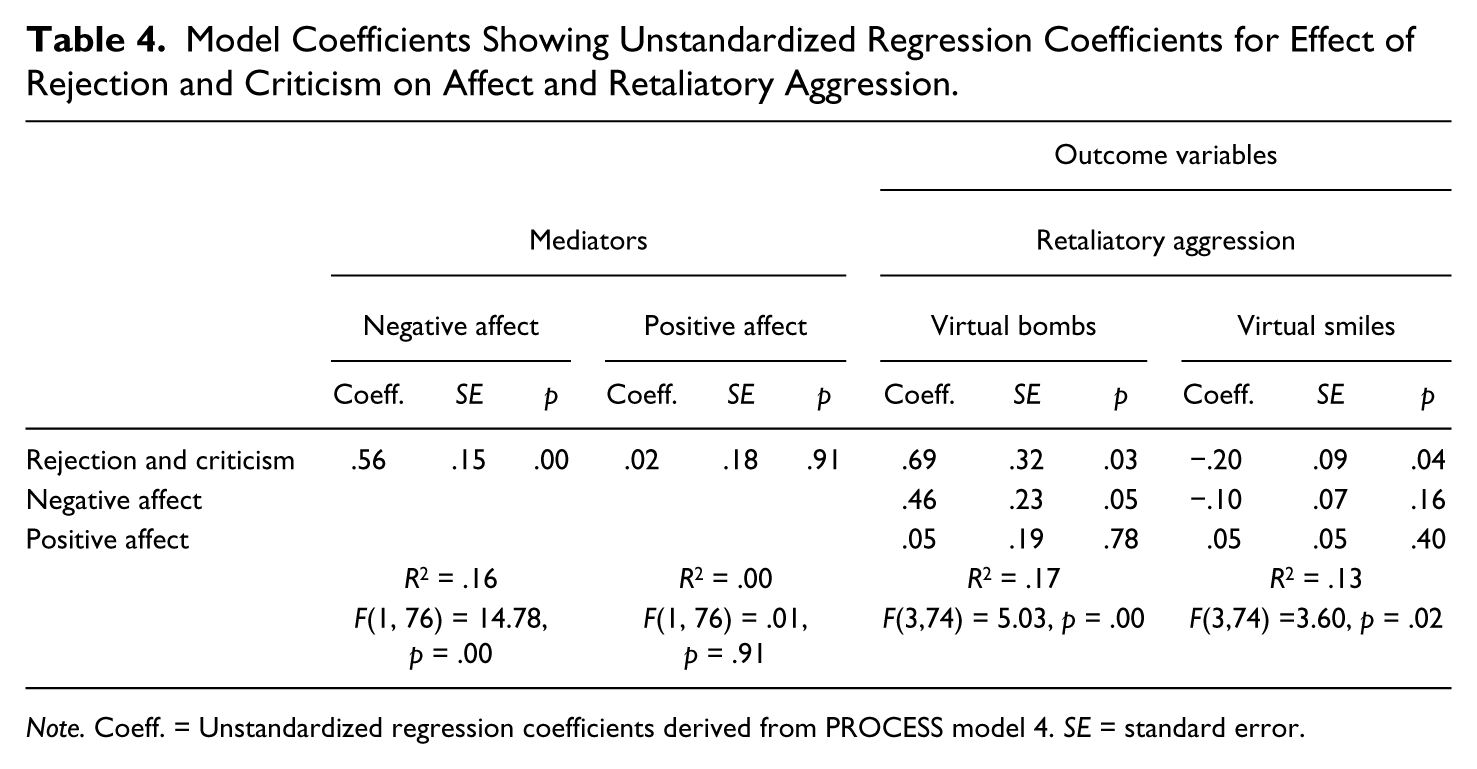
For this analysis, rejection and criticism were collapsed into one category, based on the earlier findings from the ANOVAs of no significant differences between these groups. Rejection and criticism groups were coded 1, and the control was coded 0. As shown in Table 4, partial support was found for the model. Subjects who were rejected or criticized had greater negative affect (.56, p < .001) and were more likely to send virtual bombs (.69, p = .03), a measure of retaliatory aggression, to those who had hurt them, compared with subjects in the control condition. However, the experimental treatment had no direct effect on positive affect. Furthermore, negative affect showed a direct effect on sending virtual bombs (.46, p = .05), but positive affect did not. In addition, rejection and criticism showed an indirect effect on retaliatory aggression, operating through negative affect (.26), as the bias-corrected bootstrap confidence interval for the indirect effect was entirely above zero (.01 to .68). No indirect effect was found operating through positive affect (−.05 to .08).
Model Coefficients Showing Unstandardized Regression Coefficients for Effect of Rejection and Criticism on Affect and Retaliatory Aggression.
Note. Coeff. = Unstandardized regression coefficients derived from PROCESS model 4. SE = standard error.
As shown in Table 4, subjects who were rejected or criticized were less likely to send virtual smiley faces (−.20, p = .04), compared with participants in the control condition. As a lower number of virtual smiley faces were viewed as a reverse measure of retaliatory aggression, constituting less aggression, this finding shows partial support for the proposed model. However, the proposed model was not fully supported. Neither negative nor positive affect showed a direct effect on retaliatory aggression. In addition, the bias-corrected bootstrap confidence intervals included zero for negative affect (−.15 to .01) and positive affect (−.02 to .05), showing no indirect effect.
Discussion
This study had two main aims. The first was to explore whether threats to positive face among virtual strangers on a social-networking site set up to encourage interaction leads directly or indirectly to negative emotion and retaliation against those who hurt them. The second was to test a mediation model to understand the order of these responses. I address the theoretical implications of my findings first, then offer limitations and suggestions for future research, before summing up the contribution of this research.
Online Threats to Positive Face
It is well established that aversive communication makes people feel emotional pain and may lead to retaliation. How this takes place is less well understood. This study used face theory to address this question, conceptualizing rejection and criticism as forms of threats to positive face. As such, this study provided an extension to face theory by proposing and testing a model of how positive face threats lead first to negative affect and then to retaliatory aggression, as people attempt to regain face by diminishing the face of those who hurt them. Results show that rejection and criticism lead directly to negative affect, but the effect on retaliation is indirect, operating through negative affect in a form of mediation. Prior research has examined a variety of face threats (e.g., Kennedy-Lightsey, 2010; Oetzel & Ting-Toomey, 2003) and proposed multiple models for how these threats lead to emotional responses and behavior (e.g., Brett et al., 2007; Dillard & Shen, 2005; Rains, 2013). However, prior research has not directly explored rejection and criticism as positive face threats and examined how these threats indirectly lead to retaliatory aggression operating through negative affect.
These findings offer an extension of face theory by showing that people retaliate only after reporting a shift toward feeling negative emotion, a viewpoint that leads to seeing affect as a conscious response (Dasborough et al., 2008), rather than an automatic or unconscious one as some have theorized (e.g., Zajonc, 1984 ). It also shows support for the notion that intensity of emotion fuels retaliatory aggression. Aggression has received great study. Why retaliation takes places is not fully understood, considering any form of retaliation lowers one’s relational value and, thereby, appears to go against human beings’ evolutionarily hardwired pre-disposition to maintain this value (Baumeister & Leary, 1995). Face theory suggests this happens because a person is attempting to defend and restore his or her own face by harming the face of an offender (Metts & Cupach, 2008). This current study provided a mediation model, offering the beginning of an explanation of how this takes place. In addition, these findings extend face theory by supporting the viewpoint that face work is a form of relational work (Locher & Watts, 2005) that aims to maintain relationships.
These findings are notable because the rejection and criticism in this study were very mild. People were rejected from joining groups or criticized by groups that they wanted to join on a social-networking site, but that they only became aware about 10 minutes before the rejection and criticism occurred. They had little time to become emotionally invested in that group. In a real-life setting, people join groups on social-networking sites frequently and are likely much more invested in those groups than subjects in this study. Perhaps, effects would be greater in a real-world setting, where people may join groups made up of real-life friends. In any case, these findings show even mild threats to positive face produce negative affect that leads indirectly to retaliation. It was hypothesized that rejection and criticism would lead to an increase in negative affect and a decrease in positive affect, following an assumption that as negative affect goes up, positive might decrease. However, only negative affect increased, and no effect on positive affect was found. This suggests that positive affect is not the mere absence of negative emotion, but, rather, a different experience. Bolstering this view is Watson and colleagues’ (1988) conceptualization of negative affect as subjective distress, not the absence of the enthusiasm, alertness, and activeness they say characterizes positive affect.
Furthermore, these findings provide an extension of face theory by offering early evidence of how different types of threats to positive face operate. For self-reported negative affect, no significant difference was found between rejection and criticism conditions, although both were more aversive than the control. This suggests that at least in leading to minor negative emotions, rejection and criticism operate similarly as threats to positive face. This offers evidence rejection can be a form of threat to positive face, as it operates similarly to criticism.
Limitations
A limitation of this study is that it was unable to parse out differences in responses to criticism versus rejection. No significant differences were found between rejection and criticism in its effect on either negative affect or retaliatory aggression. Similarly, hypothesized significant differences were found between rejection and the control in regard to the sending of virtual smiley faces, but no significant difference was found between either the control and criticism or rejection and criticism. The sample size (N = 78) fits established criteria for a three-condition experiment to detect larger effects (Cohen, 1992), but a G*Power 3.1 post hoc analysis shows power to detect medium effects was weak (Faul, Erdfelder, Lang, & Buchner, 2007). Therefore, statistical power may have been insufficient to detect medium or small effects. The lack of statistical power is also evident in the wide confidence interval (.01-.68) for the significant indirect effect of rejection and criticism on retaliatory aggression through negative affect. The confidence interval depends on the sample size and standard deviation of the group (Du Prel, Hommel, Rohrig, & Blettner, 2009), so such a wide confidence interval suggests less certainty of results. As a result, caution is advised, and further study with a larger sample is needed.
In addition, the threats to positive face that were used as stimuli had to be mild enough not to cause serious pain to participants for ethical reasons, but this, of course, limits the ability to detect effects. Clearly, nastier messages might produce different results, so these findings are limited to the messages used.
Another limitation is this study did not directly test whether subjects viewed the threats to face in the stimuli as positive face threats, which challenge one’s relational value and desire for approval, or negative face threats, which question one’s competency or need for autonomy (Brown & Levinson, 1987). Rather rejection and criticism were conceptualized as positive face threats. However, this flaw is not fatal because criticism has a long history of being viewed as a threat to positive face, and rejection and criticism decrease people’s desire for social approval and lessen their relational value (e.g., Duthler, 2006; Park, 2008; Williams et al., 2005), so both offer face validity as positive threats.
It is also worth noting that the design of this study left participants only a short time to interact on the site before they got rejected, criticized, or accepted. Perhaps spending a longer time would have made them more invested in the site and in the groups, bolstering effects. Also, it is plausible that some subjects could have detected the intent of the experiment after receiving four similar messages in a short time period, and future research should test the realism of the design. In addition, the control in this project was acceptance, so it would mirror typical social media interactions. However, it is possible, results would have differed if a control were used where subjects joined groups but did not receive any type of comment from the group.
Finally, it is important to note that the questions in this study were tested only on college-age American men and women, not a random sample of the general population. It is plausible people of different racial or ethnic groups, cultures, or other demographic groups might respond differently to online rejection, criticism, or acceptance than those in this study.
Future Research
Findings from this study offer several avenues for future research. First, it would be advisable to examine different levels of online rejection and criticism as forms of threats to positive face, rather than one level, as this study examined. Although this study found that rejection and criticism were equally aversive in most cases, differences between these constructs may be found at higher or lower levels of rejection and criticism. In addition, variations in the features of the message are worthy of study. Do different linguistic factors enhance or diminish the intensity of the results? Could certain features of computer-mediated communication, such as emoticons, which are tiny icons that depict facial expressions such as smiles (Hancock, Landrigan, & Silver, 2007), buffer the effects of positive face threats online?
Conclusion
Clearly, the results show that threats to positive face by rejection and criticism from strangers on a social-networking site caused negative emotion and lead to attempts to restore face through retaliatory aggression, mediated through that emotion. People who were rejected or criticized not only felt bad as demonstrated by an increase in negative affect but acted on those feelings by sending virtual ticking bombs to those who had hurt them and by being less likely to send virtual smiley faces. However, this study does not just show what happened. It also demonstrated how this happens, proposing and testing a mediation model that shows that the positive face threats of rejection and criticism lead to retaliation indirectly operating through negative affect, offering an extension of face theory.
Footnotes
Acknowledgements
This research was part of the author’s doctoral dissertation. An earlier version of this work was presented to the Human Communication Division of the National Communication Association in November 2012. The author thanks her advisor, T. Makana Chock, and her committee members, Frank Biocca, Richard Gramzow, Dennis Kinsey, Robert E. Lloyd, and Leonard Newman for their valuable suggestions on an earlier version of this work. The author also thanks Co-Editor Mike Roloff and two anonymous reviewers for their insightful comments that greatly improved this research.
Declaration of Conflicting Interests
The author declared no potential conflicts of interest with respect to the research, authorship, and/or publication of this article.
Funding
The author disclosed receipt of the following financial support for the research, authorship, and/or publication of this article: This research was funded by the S. I. Newhouse School of Public Communications at Syracuse University.