



Abstract
Despite doing their best to keep customers satisfied, organizations can upset their patrons when expectations go unmet. When these organizational failures occur, consumers sometimes complain directly to companies. This type of behavior may be considered adaptive insofar as it helps individuals rectify their problems and allows organizations to fix issues for others as well. However, not all consumers complain to companies when they experience dissatisfaction; instead, many people choose to engage in less adaptive behaviors such as spreading negative word of mouth or withholding their patronage. This study was conducted to examine how variables related to protection motivation theory (i.e., threat, coping, and cost) relate to consumers’ choices regarding complaint behaviors. Four hundred fifty-four participants were solicited online to respond to hypothetical scenarios regarding organizational failures. The data indicated participants’ perceptions of threat and cost interacted to predict complaining behavior. Results are discussed as they pertain to organizational practices.
Businesses, presumably, operate under the notion that keeping consumers satisfied is good for their bottom lines (Hallowell, 1996; Reichheld, 1993). Satisfied customers tend to be committed (Bolkan, Goodboy, & Bachman, 2012; Storbacka, Strandvik, & Gronroos, 1994) and loyal (Hallowell, 1996), and these types of individuals translate into higher profits through increased market share and the decreased costs associated with soliciting new patrons (Reichheld, 1993). Unfortunately, not all interactions between businesses and consumers are problem free (Hart, Heskett, & Sasser, 1990), and customer dissatisfaction may arise from a variety of sources (Trocchia & Luckett, 2013). Thus, ensuring customer satisfaction is not just a matter of performing well, but it is also a matter of keeping consumers happy in the face of broken expectations (Davidow, 2003; Kowalski, 1996), mistreatment, or discrimination (Trocchia & Luckett, 2013). Ultimately, this may be just as important as making customers happy in the first place. As Reichheld and Sasser (1990) noted, “customer defections have a surprisingly powerful impact on the bottom line” (p. 105) and can have more to do with a company’s revenues than other indices of profitability.
In order to fix consumers’ problems, organizations must first be able to identify which issues need addressing. In this sense, customers play a vital role in helping businesses perform their duties by alerting management to problems when they arise. On the other hand, if customers do not complain, companies may never know the true extent of their ability/inability to meet consumers’ expectations (Chebat, Davidow, & Codjovi, 2005; Richins, 1980). This is why, although it may seem counterintuitive, most business organizations want their customers to complain (Davidow & Dacin, 1997). In addition to alerting companies about problematic business practices, most companies should prefer for customers to speak up about failures because typical alternatives include exiting the relationship or spreading negative word of mouth (Hirschman, 1970; Singh, 1988). Thus, as several scholars have pointed out, complaining to organizations should be considered a positive outcome following organizational failures; consumer complaints give companies the opportunity to fix problems for aggrieved individuals and for future customers as well (Chebat et al., 2005; Davidow & Dacin, 1997; Richins & Verhage, 1985).
Unfortunately, most consumers who experience discontent do not complain (Andreassen, 2001). Considering that problems are more likely to be recognized and fixed when they are voiced compared with when they are not, it may seem odd to know that customers experiencing organizational failures do not speak up more often. However, researchers have discovered that there are a variety of logical reasons dissuading consumers from communicating their complaints. For example, upset customers may not communicate about their problems directly with businesses if they do not believe their efforts will lead to positive change or if they perceive the costs of complaining to be too great (Day & Ash, 1979; Landon, 1977; Richins, 1980, 1982; Susskind, 2000; Thogersen, Juhl, & Poulsen, 2009). Therefore, although complaining in the face of organizational failures may have the potential to be beneficial for both consumers and businesses, it makes sense that individuals often choose not to voice their discontent.
Communication between consumers and service providers is an understudied but important component of organizations’ relationships with customers (Susskind, 2005). Specifically, Garrett and Meyers (1996) noted that “relatively little research attention has concentrated specifically on communication in the consumer complaining process” (p. 445). This is regrettable because providing a better understanding of the communication between consumers and businesses, especially in the context of organizational failures, may benefit both the individuals experiencing problems and the organizations that caused them. That said, the current study examines consumer complaining behavior from the perspective of protection motivation theory (PMT; Rogers, 1975, 1983) to determine how situational variables present in organizational failure episodes interact to produce consumer complaints. Specifically, this study examines how the perceived threat, coping, and costs associated with complaining interact to influence consumers’ decisions to communicate complaints directly to the businesses that failed them.
Literature Review
According to some researchers, roughly two thirds of dissatisfied customers may fail to complain directly to the companies that caused them problems (Andreassen, 2001; Grainer, McEvoy, & King, 1979). Failure to register complaints may be troubling for customers who do not get their problems rectified. In addition, failure to register complaints may be troubling for organizations because they cannot address underlying issues relating to unmet expectations. The inability to work with aggrieved customers means that service recovery cannot take place and, as Andreassen (2001) noted, this is important because organizational recovery efforts can positively influence customers’ “perceptions of, and attitudes toward the company” (p. 46). Moreover, researchers have found that service recovery efforts can reduce consumers’ negative word of mouth behaviors (Bolkan et al., 2012; Davidow, 2003) while increasing their commitment to organizations (Bolkan et al., 2012) and their intent to do business with organizations in the future (Bolkan et al., 2012; Susskind & Viccari, 2011).
Considering that service recovery is important for both businesses and individuals, it seems peculiar that more people do not speak up when they experience dissatisfaction. However, the work of several researchers demonstrates that consumers’ decisions to withhold complaints may be reasoned. In particular, research indicates that people may not complain if they do not perceive the problem to be significant, if they do not believe that their complaints will make a difference, and if they perceive the costs of complaining to be high.
First, consumers tend not to complain when they perceive that an issue does not pose a significant threat to their well-being. For example, scholars have found that consumer complaining is related to the degree of severity or importance of the failure (Richins & Verhage, 1985) and to the level of experienced dissatisfaction with an organization (e.g., Davidow & Dacin, 1997; Day, 1984; Thogersen et al., 2009; Tronvoll, 2011). As Landon (1977) noted, the importance associated with consumers’ dissatisfaction (e.g., harm and ego involvement) ultimately influences complaint behavior; the more harm a consumer experiences, the more likely he or she is to complain to the organization. Oh’s (2004) work supports this conclusion. The researcher reports that consumers’ perceived severity of an organizational failure is one of the most influential antecedents to complaining.
In addition to the severity of the problem, scholars have discovered that some of the major reasons people report for withholding complaints from businesses are related to the notions of self-efficacy, response efficacy, and cost. Self-efficacy is defined as the belief that a person can “effectively voice a complaint” (Susskind, 2000, p. 355) and is considered to be an important predictor of consumer complaining (Bodey & Grace, 2007; Mukhtiar et al., 2013). This may be the case because having a sense of self-efficacy with complaints helps lead to the prediction that consumers’ efforts will result in positive outcomes (Susskind, 2000).
Pertaining to response efficacy, Day and Ash (1979) reported that roughly one third of the people they surveyed mentioned that they did not complain because they did not believe their complaint would be efficacious. Landon (1977) came to a similar conclusion and reported that consumer complaint behavior is a function of the expected benefit or utility of complaining. As Susskind (2000) noted, efficacy is important to complaining because it reflects the degree to which consumers believe that their complaints “will influence the behavior, actions, or outcomes of the service process” (p. 360). Research has borne this out insofar as consumers have been found to be more likely to make a complaint when they perceive that their actions will lead to desired outcomes (e.g., Huppertz, 2007).
As it relates to costs, Stephens and Gwinner (1998) noted that if people believe they will have a difficult time making complaints and getting their situations rectified, they may be less likely to actually do so. The difficulty in complaining may stem from a variety of sources, including the amount of money, time, effort, and hassle necessary to make a complaint (Huppertz, 2007; Thogersen et al., 2009). Several scholars agree with Stephens and Gwinner’s conclusion and note that consumers often follow a cost-benefit analysis when deciding whether or not to make complaints (e.g., Davidow & Dacin, 1997; Day, 1984; Huppertz, 2007; Richins, 1980, 1982). Specifically, this line of thinking maintains that consumers’ reactions to dissatisfaction will be reflected in the number of resources required to make complaints weighed against the potential payoffs (Day, 1984). As Richins (1982) explained, consumers tend to weigh these concerns together to ask the question “Is complaining worth the trouble?” (p. 504).
PMT
Although there are many reasons underlying consumers’ complaint choices, the current study focuses on the variables mentioned above for their relationship to Rogers’s (1975, 1983) PMT. Similar to the reasons people choose to withhold complaints noted above, Rogers’s theory asserts that the major variables predicting adaptive behavior (i.e., behavior designed to reduce a threat as opposed to maladaptive behavior such as avoidance or denial; Norman, Boer, & Seydel, 2005) in the face of personal difficulties are perceived threat, perceived coping, and perceived costs. To the extent that complaining to organizations after individuals experience problems represents an adaptive or problem-focused response to the threat incurred from a dissatisfying organizational experience (Stephens & Gwinner, 1998), examining consumer complaints from the perspective of PMT may help scholars understand the mechanisms underlying consumers’ choices to complain. This is particularly true considering that people’s perceptions of threat, coping, and costs associated with complaining are likely to vary as a function of the type of failure experienced and the organization involved in the failure.
The first variable of concern in PMT is threat. Threat is an integral part of PMT because a problem must first be perceived in order for motivation to arise (Floyd, Prentice-Dunn, & Rogers, 2000). Threat refers to the seriousness of an issue (Norman et al., 2005) and, according to Rogers (1983), is a function of the perceived severity of, and a person’s perceived vulnerability to, a problem. In the context of consumer complaining, the perceived threat experienced by consumers may be conceptualized as the severity and relevance of organizational failures. Theoretically, the connection makes sense: The more an organizational failure poses a problem for an individual, the more he or she may perceive it as a threat to his or her well-being. The notion that organizational failures can lead to a variety of negative emotions such as disappointment, frustration, and anger seems to support this conclusion (e.g., Bolkan & Goodboy, 2015; Mattila & Ro, 2008; Petzer, De Meyer, Svari, & Svensson, 2012). Moreover, like threat, the severity of an organizational failure and the level of dissatisfaction are often modeled to be the primary determinants of subsequent behavior (e.g., Oh, 2004; Stephens & Gwinner, 1998; Thogersen et al., 2009). As Milne, Sheeran, and Orbell (2000) mentioned, the greater the perceived threat, the more a person should be motivated to engage in protective behaviors—a finding that has been substantiated in research on consumer complaining (Bolkan & Goodboy, 2015; Thogersen et al., 2009).
The second variable of concern in PMT refers to an individual’s perceived ability to cope with the threat. That is, protection motivation theorists predict that after recognizing a problem, people will ascertain whether or not they can sufficiently address the underlying issue when deciding on a course of action. Coping is a function of self-efficacy and response efficacy (Rogers, 1983). According to Rogers (1983), self- efficacy and response efficacy work additively; when individuals believe there is an effective way to manage a threat, and that they can carry out the behaviors necessary to alleviate the threat, then adaptive responses are likely to occur.
Self-efficacy is defined as a person’s perceptions regarding “one’s capabilities to organize and execute the courses of action required to produce given levels of attainments” (Bandura, 1998, p. 624). Stated differently, it is the confidence/ease a person feels regarding the ability to perform a behavior (Azjen, 2002). According to Bandura (2004), self-efficacy plays a “central role in personal change” (p. 144) because without believing they can produce specific effects by their actions, people have little reason to perform a recommended behavior (Bandura, 1997). In organizational failure episodes, self-efficacy has been found to be an important predictor of consumer complaining. For instance, Day and Ash (1979) reported that individuals in their study stated that they did not complain because they did not know what to do about the problem or who to speak with regarding help. More recently, researchers have found self-efficacy to be an important predictor of consumer complaints as well (e.g., Bodey & Grace, 2007; Mukhtiar et al., 2013).
Response efficacy refers to the ability of a response to alleviate potential threats. In the case of consumer complaining, response efficacy may refer to individuals’ beliefs that their complaints will make a difference (Susskind, 2000). As mentioned above, several scholars note that consumers are concerned about their complaints making a difference in their outcomes and claim that many choose not to complain because they are afraid that their efforts will not lead to discernable change (Day & Ash, 1979; Landon, 1977; Richins, 1980, 1982). Conversely, when it seems that their complaints will make a difference in their outcomes, consumers are likely to voice their discontent directly to the organizations that failed them (Huppertz, 2007).
Finally, PMT also predicts that adaptive responses are a function of the costs associated with enacting a behavior (Rogers, 1983). According to Rogers, higher costs are associated with a decrease in adaptive responses. As mentioned earlier, the costs related to complaining typically include money, time, effort, or hassle involved in communicating discontent to organizations (Huppertz, 2007; Thogersen et al., 2009). These concerns have been found to be important predictors of consumer complaining decisions. For instance, Richins (1980) found that people’s decisions to complain were related negatively to their concerns with making a special trip to voice their discontent, the effort it takes to communicate a complaint (e.g., through websites or forms), having to hassle somebody to make the complaint, being treated rudely, and being seen in a negative light for complaining. The work of other researchers supports these findings; the higher the costs associated with communicating complaints to a company, the less likely people are to make them (Day & Ash, 1979; Huppertz, 2007; Richins, 1980, 1982).
Rationale and Hypothesis
Maddux and Rogers (1983) noted that “the basic components of protection motivation may be applicable to attitude-change attempts other than fear appeals” (p. 471), and Rogers (1983) claimed that the theory has moved beyond fear appeals and even the study of persuasion to include a variety of situations involving threat. In fact, PMT has been adopted as a general decision-making mode in a variety of contexts and can be incorporated to explain adaptive behaviors regarding “any threat for which there is an effective recommended response that can be carried out by the individual” (Floyd et al., 2000, p. 409). That said, it may be appropriate to consider organizational failures from the standpoint of PMT.
Admittedly, scholars have long known that the severity of an organizational failure, self-efficacy, response efficacy, and costs are associated with consumer complaining. However, to date, researchers have largely ignored how these variables interact to predict consumer behavior. Although researchers have looked at the additive effects of these variables on complaining, this project is unique in its focus on the interaction of these variables to study how the combination of factors work together to influence consumers’ complaint decisions. That said, a recent study focused on instructional communication has examined the combination of variables from PMT to study how students respond to classroom problems and the results of that study may help shed light on the current project (Bolkan & Goodboy, 2016).
Similar to consumers, students are known to complain to their instructors differentially. Specifically, research has shown that students tend to complain directly to their instructors (as opposed to other students or the chair of the department, etc.) when the threat from classroom problems is perceived to be high, their ability to cope with the problem is perceived to be high, and the perceived costs are low (Bolkan & Goodboy, 2013; Harrison, 2007; Lala & Priluck, 2011). However, these variables have been found to interact in specific ways. In a recent study, Bolkan and Goodboy (2016) found a three-way interaction between threat, coping, and costs as they predicted students’ complaining to their college instructors. Results indicated that students were more discriminating about their complaints when the costs of making them were perceived to be high compared with when they were perceived to be low. Specifically, when the costs of complaining were high, students were more likely to complain directly to their instructors when the perceived threat was high and when they perceived that their efforts would be successful in bringing about the desired change. When the costs of complaining were low, students tended to complain to instructors as the perceived threat of the problem increased; under low costs, the effect of threat on complaining was not conditioned on students’ perceived coping ability.
Based on their findings, Bolkan and Goodboy (2016) argued that students in their sample chose to complain to their instructors (or not) following a rational behavior model to maximize their gains and minimize their losses. This sentiment is echoed in the consumer complaint literature where several researchers argue that consumers use a cost/benefit analysis when making decisions about complaining (Davidow & Dacin, 1997; Day, 1984; Richins, 1980, 1982). Considering this is the case, we may expect consumers to complain in a pattern similar to the students in Bolkan and Goodboy’s sample. Thus, in the current study, it was hypothesized that perceived threat would be positively related to consumers’ complaint intentions. However, this relationship was hypothesized to be moderated by individuals’ perceived coping ability. Moreover, this relationship was posited to be conditional upon the perceived costs of complaining. Specifically, similar to what Bolkan and Goodboy found, it was hypothesized that under conditions of high costs, people would report being more willing to complain to the extent that they perceived a problem to be highly threatening and that they had a high ability to cope with the problem. The following hypothesis was offered to help guide the research (see Figure 1).

Proposed moderated moderation model for consumer complaining.
Method
Participants and Procedures
After gaining approval from the institutional review board, a total of 454 participants were recruited from Amazon’s Mechanical Turk (MTurk) to participate in this study. MTurk is an online marketplace where individuals and organizations create opportunities for others to complete human intelligence tasks (e.g., filling out surveys) for minimal compensation (Buhrmester, Kwang, & Gosling, 2011). MTurk has been shown to be a valuable platform for soliciting participants for social science research (Berinsky, Huber, & Lenz, 2012) and has been used in previous investigations of consumer complaining (e.g., Bolkan, Griffin, & Goodboy, 2014).
Participants were 223 men and 231 women with ages ranging from 18 to 75 (M = 35.97, SD = 12.82). In exchange for US$.20, participants were asked to read one of five scenarios taken from the literature (i.e., Smith, Bolton, & Wagner, 1999) and from examples of organizational failures collected from previous research (Bolkan & Goodboy, 2015) to represent a range of threatening circumstances (see the appendix). Participants were exposed randomly to one of these five scenarios and were told to imagine that the failure happened to them. A total of 91 participants were exposed to the first scenario, 91 were exposed to the second, 88 were exposed to the third, 92 were exposed to the fourth, and 92 were exposed to the fifth. A manipulation check revealed that participants thought of the scenarios as differing in threat as predicted (see Table 1). After reading one of the scenarios, participants responded to the measures below.
One-Way ANOVA With Duncan Post Hoc Multiple Comparisons for Threat.
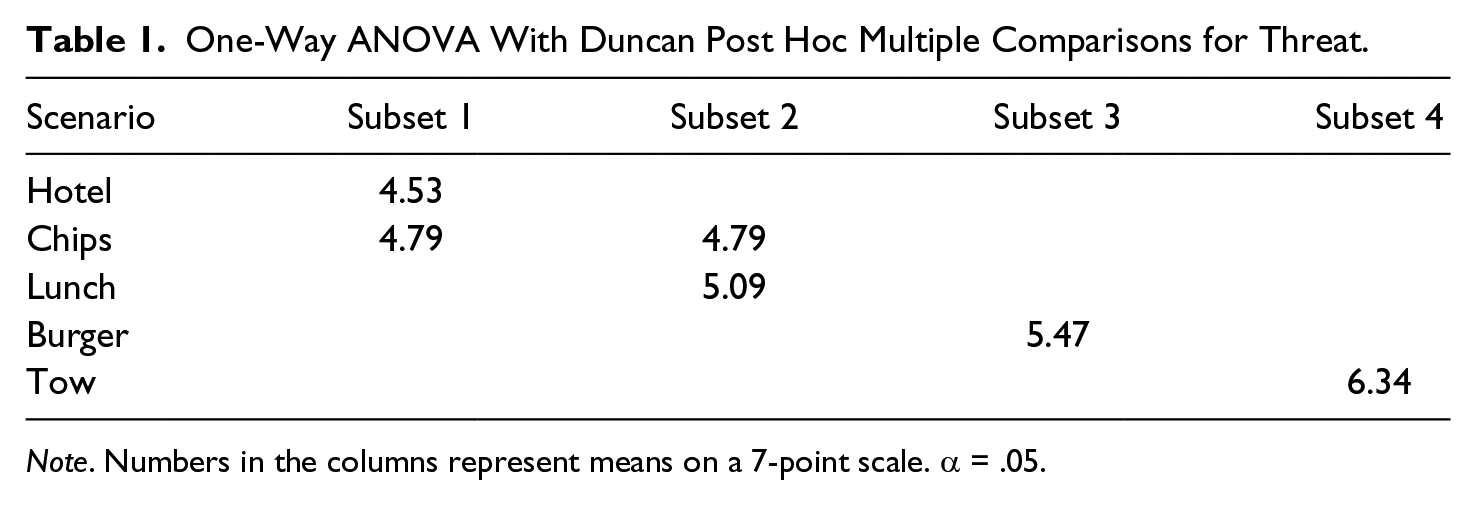
Note. Numbers in the columns represent means on a 7-point scale. α = .05.
Instrumentation
Based on Rogers’s (1983) conceptualization of PMT, threat was assessed as a function of participants’ perceived severity of the failure and the perceived personal relevance (e.g., Eagly & Chaiken, 1993) of the failure. Items used to assess perceived severity were borrowed from Bolkan and Goodboy (2016) and measured participants’ perceptions of how “severe,” “troublesome,” “problematic,” and “terrible” the event would be for them; responses could range from (1) completely disagree to (7) completely agree (α = .89, M = 5.04, SD = 1.48).
Items measuring personal relevance were adapted from Bolkan and Goodboy (2016) and had response options ranging from (1) not at all to (7) very much. The following statements were included in the scale: “How much does the problem affect you personally,” “To what extent does the issue interfere with your experience of the service/product,” “To what extent does the problem negatively impact your experience with the business,” “To what extent does the issue impact you personally,” and “How concerned are you with the problem.” The alpha reliability of this measure was .91 (M = 5.45, SD = 1.33).
Coping was assessed as a function of participants’ perceived self-efficacy and response efficacy. The measure of self-efficacy was created for this study based on the recommendations and definition forwarded by Bandura (1997). Self-efficacy was measured with four items containing response options ranging from (1) not at all certain/confident/able/sure to (7) very certain/confident/able/sure. Items in the measure included the following: “How certain are you that, if you wanted to, you could talk to the business about the problem”; “How confident are you that, if you wanted to, you could bring up the issue to the organization”; “If you wanted to, would you be able to complain to the company that failed you”; and “How sure are you that you could speak to someone at the company that failed you regarding this issue.” The alpha reliability for this scale was .91 (M = 5.58, SD = 1.35).
The measure of response efficacy was adapted from Bolkan and Goodboy (2016) for use in this study based on the concept of business responsiveness (e.g., Richins, 1982). This measure contained six items with response options ranging from (1) strongly disagree to (7) strongly agree. Items in this measure included the following: “Bringing up the problem to the organization would not do any good”; “Even if they knew about the issue, the people who work at this business would not fix it”; “Talking to the business about the problem would not make a difference”; “Talking to the business about the problem would be unlikely to lead to positive change”; “If I told the organization about the issue, the people who work there would be unlikely to fix it”; and “If I told somebody at the business about the problem, they would be unlikely to solve it.” The alpha reliability of this scale was .96 (M = 4.72, SD = 1.42). Participants’ scores on these items were reverse coded; therefore, higher numbers represented a greater likelihood of response efficacy.
The measure of costs associated with complaining was created for this study based on the work of Richins (1980). There were nine items in this measure with response options ranging from (1) strongly disagree to (7) strongly agree. Items in this measure included the following: “Complaining to the business would be a hassle”; “Complaining to the organization would take time”; “I would have to go out of my way to complain to the organization”; “Bringing up the problem to the company would involve a lot of effort”; “It would be inconvenient to bring the issue up to the business”; “If I brought up the problem to someone at this organization, I might be treated rudely”; “The experience of complaining to this organization would be unpleasant”; “If I brought the problem up to somebody at this business, I would really be hassling them”; and “If I brought up my complaint to this organization, I would be seen in a negative light.” The alpha reliability of this measure was .90 (M = 3.98, SD = 1.25).
Participants’ willingness to voice their complaints to organizations was measured with items adapted from Goodboy’s (2011) Instructional Dissent Scale. The scale was adapted for the current project by changing the target of the complaint message from an instructor to an organization. The scale used in this study was six items anchored with (1) not at all true to (7) very true. Items included the following: “I would speak to someone at the company about the problem so that it could get fixed”; “I would voice my concerns to someone at the organization to make sure my problem got resolved”; “I wanted the organization to remedy the failure, so I would complain to them”; “I would complain to the organization so that something could be done to fix the situation”; “I would bring up my issue to someone in the organization so that something could change for the better”; and “I would have no problem telling the organization about the problem.” The alpha reliability for this scale was .97 (M = 5.27, SD = 1.43).
Results
To test the hypothesis, consumer complaining was predicted by a three-way interaction between participants’ perceived threat which was predicted to vary systematically by their perceived coping ability and subsequently by the perceived costs associated with complaining. Perceived threat and coping were created by constructing unit-weighted composite variables. As modeled by Rogers (1983), threat included both perceived severity and personal relevance (M = 5.25, SD = 1.32), and coping included both self-efficacy and response efficacy (M = 5.15, SD = 1.17). A confirmatory factor analysis was conducted to examine model fit regarding the factor structure of the measures. The model was fit to the data with first-order latent variables predicting each of their respective observed variables; threat and coping were modeled as second-order variables. Results revealed that the model fit the data relatively well, χ2 = 1,945.415, df = 517, standardized root mean square residual (SRMR) = 0.085, comparative fit index (CFI) = 0.904, root mean square error of approximation (RMSEA) = 0.078.
To analyze the data, a hierarchical regression analysis was conducted with four blocks. Because consumers’ sociodemographic variables have been linked to their complaining behavior (e.g., Kowalski, 1996; Susskind, 2014; Thogersen et al., 2009), participants’ sex and age were entered as covariates into the first block of the model. Block 2 included the PMT variables of threat, coping, and cost (see Table 2 for correlations between variables). Block 3 included the two-way interactions between threat, coping, and cost. Finally, Block 4 included the three-way interaction.
Correlations Between Variables.
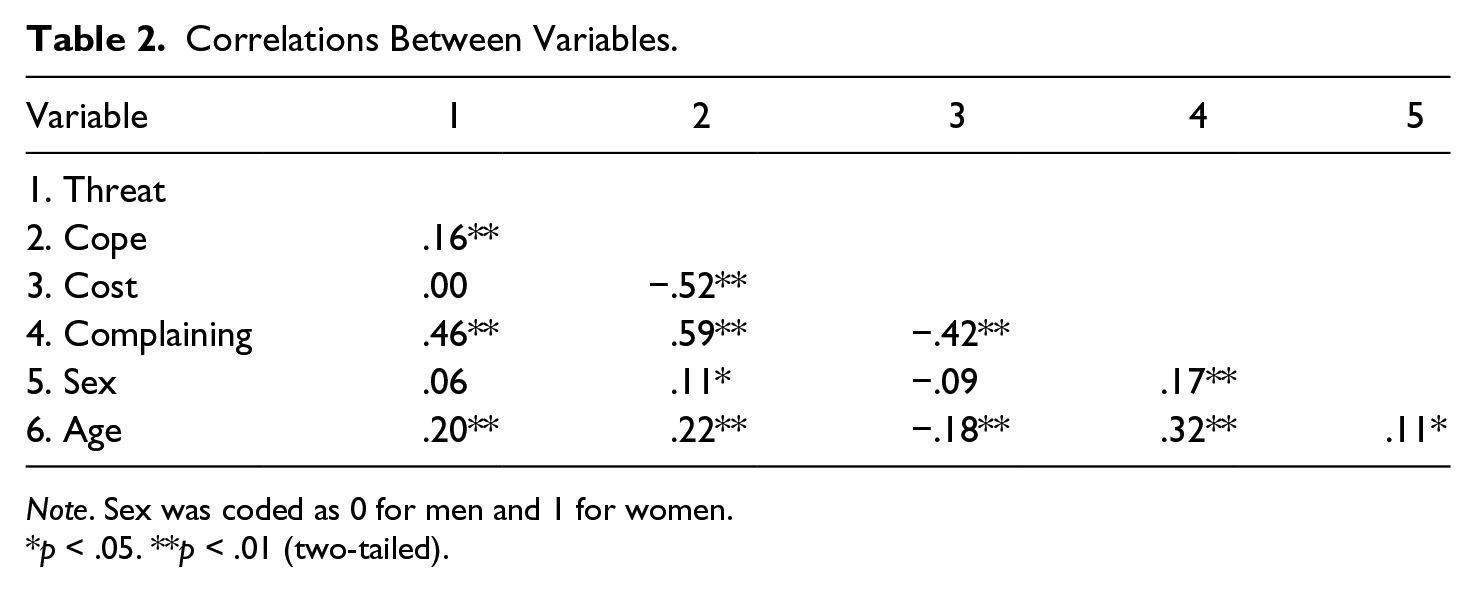
Note. Sex was coded as 0 for men and 1 for women.
p < .05. **p < .01 (two-tailed).
Results in Block 1 of the regression analysis indicated that participants’ sex and age were both significantly associated with their willingness to communicate a complaint (see Table 3). After controlling for the covariates, results in Block 2 revealed that the variables associated with PMT were significantly associated with participants’ willingness to lodge a complaint. In Block 3, results showed that the only significant two-way interaction occurred between threat and cost. Finally, counter to the hypothesis, results in Block 4 revealed that the three-way interaction was not significant.
Regression Analysis, Three-Way Interaction.
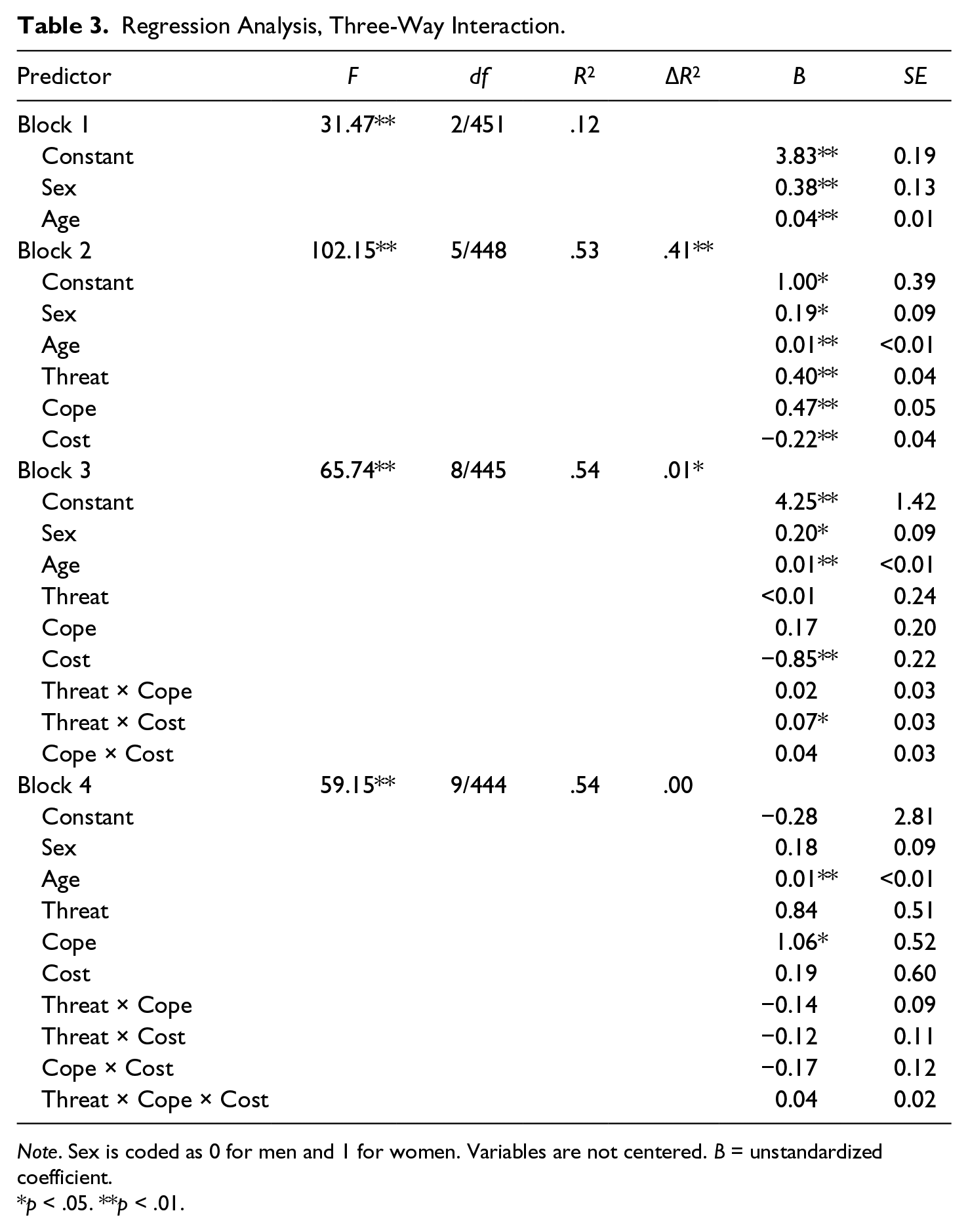
Note. Sex is coded as 0 for men and 1 for women. Variables are not centered. B = unstandardized coefficient.
p < .05. **p < .01.
Despite a lack of support for the hypothesis, the two-way interaction between participants’ perceptions of threat and cost in relation to their willingness to complain was probed to determine the nature of this conditional relationship while holding constant the influence of participants’ sex, age, and perceived coping ability (see Table 4). Results revealed that under conditions of relatively low costs, threat had a weaker relationship with participants’ willingness to make a complaint compared with conditions of relatively high costs (see Figure 2). An examination of the relationship between perceived threat and willingness to complain at varying levels of cost revealed that under relatively low costs (i.e., 10th percentile), the conditional effect of threat on complaint intentions was significant (θ = .29, t = 5.11, p < .01). The conditional effect of threat on complaint intentions was significant and became stronger at the 25th percentile (θ = .35, t = 8.14, p < .01), the 50th percentile (θ = .41, t = 11.30, p < .01), the 75th percentile (θ = .47, t = 10.38, p < .01), and the 90th percentile (θ = .51, t = 8.81, p < .01) of perceived costs.
Regression Analysis, Two-Way Interaction.
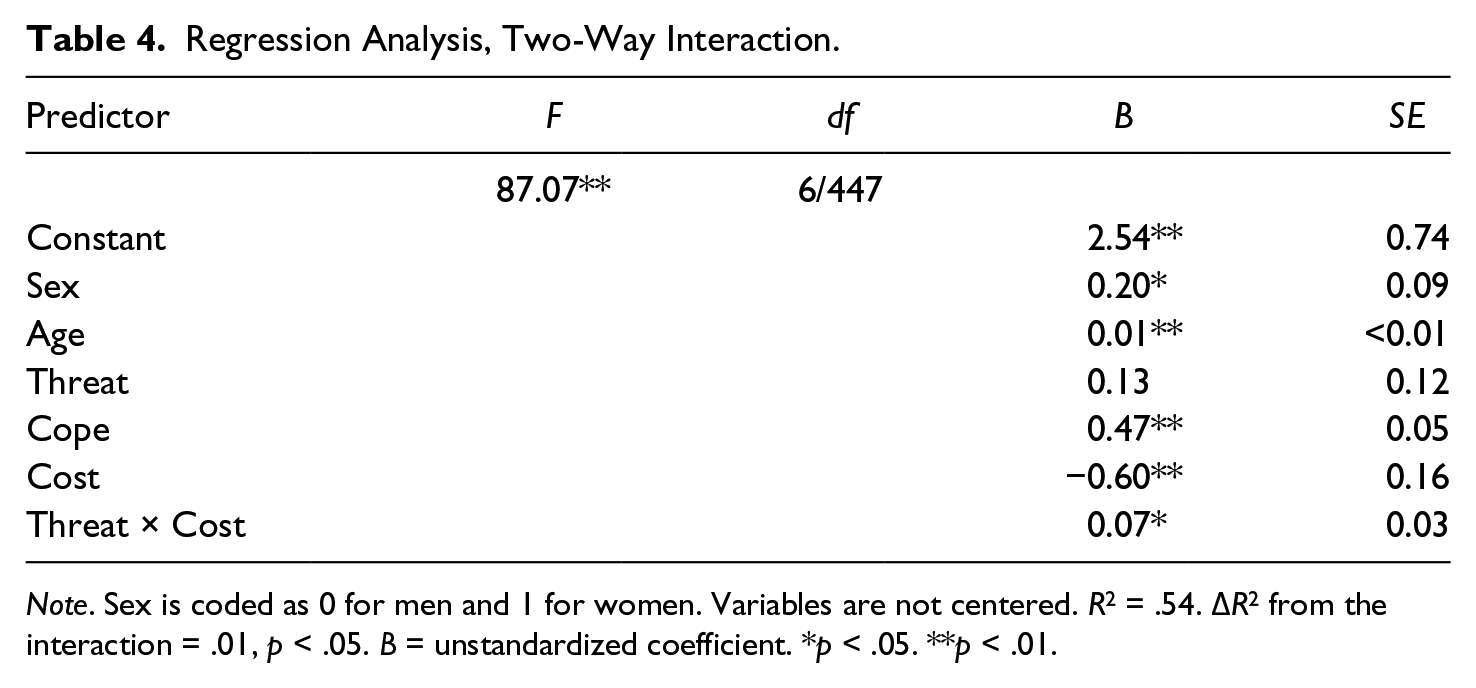
Note. Sex is coded as 0 for men and 1 for women. Variables are not centered. R2 = .54. ΔR2 from the interaction = .01, p < .05. B = unstandardized coefficient. *p < .05. **p < .01.
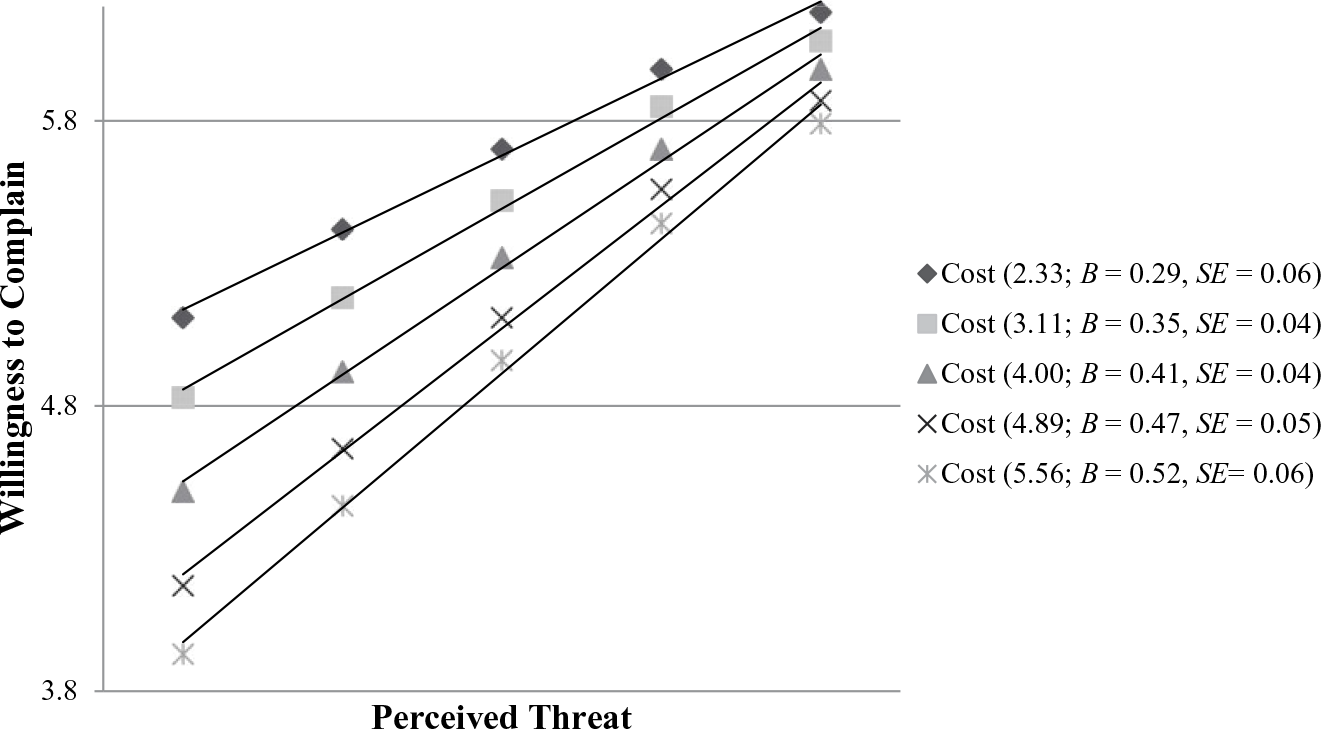
Participants’ willingness to complain, Threat × Cost.
Discussion
This study was conducted to ascertain how consumers’ perceptions of threat, coping, and costs interacted to determine their propensity to complain directly to an organization following a product or service failure. Although researchers had previously uncovered various reasons for withholding complaints, this project attempted to combine known predictors of complaining in a manner consistent with PMT to determine the conditions under which consumers consider these variables when making communication choices following an organizational failure. Contrary to what was predicted, results revealed that participants’ willingness to complain to an organization following a failure was not a function of a three-way interaction between threat, coping, and costs. On the other hand, a two-way interaction between participants’ perceived threat associated with the failure and their perceived costs associated with making a complaint was statistically significant.
Similar to other research projects (e.g., Kowalski, 1996; Thogersen et al., 2009), results from the first block of the hierarchical regression analysis revealed that individuals’ sociodemographic variables impacted their complaint intentions. Specifically, older participants and women reported being more likely to voice their discontent directly to organizations. There may be a variety of explanations for these findings. For example, researchers claim that women may be more likely than men to complain to organizations because they may be more likely to self-disclose negative information in general or because they may be less likely to think of complaining in a negative light (Kowalski, 1996). On the other hand, researchers note that older people may be more likely to complain to organizations because they have more resources relevant to lodging complaints (Thogersen et al., 2009) or because they may care less about the negative social consequences of complaining (Kowalski, 1996).
As can be seen from the results of the second block of the hierarchical regression analysis, after holding the covariates constant, all three of the protection motivation variables were significantly associated with participants’ complaint intentions as predicted by PMT. Specifically, participants reported that they were more likely to register a complaint to the extent that it was threatening to their well-being, they believed complaining would lead to positive outcomes, and they perceived the costs of complaining to be low. These results support the basic predictions from PMT. This is particularly true considering that the ability for these variables to predict complaint intentions was relatively robust. In the current analysis, threat, coping, and cost accounted for approximately 40% of the variance in participants’ willingness to register a complaint.
Importantly, analysis of the two-way interactions revealed that PMT variables work in concert to influence complaint behavior. Specifically, results revealed that after controlling for the covariates, perceived threat and costs interacted to influence participants’ willingness to complain to organizations. In other words, the relationship between threat and people’s willingness to register complaints varied as a function of the costs associated with doing so. Interpretation of the two-way interaction indicated that the relationship between the perceived threat associated with an organizational failure and consumers’ willingness to register complaints was consistently positive at all levels of perceived cost. However, this relationship was stronger when costs were perceived to be relatively high compared with when they were perceived to be relatively low. Stated differently, when it cost participants more to complain, the perceived threat associated with the organizational failure mattered more to their complaint decisions than when it cost participants less to complain. As can be seen in Figure 2, an alternative interpretation of this interaction is that when threat was low, cost had a stronger negative relationship with people’s willingness to complain compared with when threat was high.
Several scholars argue that consumer complaint decisions derive from a cost/benefit analysis regarding the problems and payoffs associated with registering complaints (Davidow & Dacin, 1997; Day, 1984; Richins, 1980, 1982). However, the results of the current study support a slightly different conclusion. Instead of a cost/benefit analysis, it seems that participants in this study followed a cost/threat analysis when making their complaint decisions. That is, results from the current study point to the notion that instead of weighing the costs of complaining against the potential benefits when deciding to complain or not, consumers facing organizational failures were more likely to weigh the threat of the failure against the costs of registering a complaint. In other words, consumers’ thoughts regarding complaining were less along the lines of “Are the potential benefits of registering a complaint worth the trouble?” and more along the lines of “Is the problem bad enough to warrant the hassle?”
It is important to note that the results from the current study are somewhat different from the study of PMT in academic complaint scenarios (Bolkan & Goodboy, 2016). In that study, Bolkan and Goodboy found that under conditions of high costs, the relationship between threat and students’ willingness to complain to their instructors was conditioned upon their coping abilities. Essentially, under conditions of high perceived costs, students were most likely to voice their discontent to their instructors if they believed their problems were egregious and if they thought they could obtain acceptable resolutions. In the current study, consumers’ willingness to complain was only a function of the interaction between perceived threat and cost; it was not contingent on the likelihood of a positive resolution. Thus, differences between the contexts of complaining seem to make a difference in people’s complaint decisions following perceived failures.
As it pertains to consumer versus student complaining, these differences may reside in the nature of the costs associated with registering a complaint. Specifically, costs for students may be more abhorrent considering the power instructors have over students, the interpersonal nature of students’ relationships with instructors, and the high exit barriers involved in student-teacher relationships (Su & Bao, 2001). Previous research seems to support this contention considering that when deciding whether or not to make a complaint, students factor in the potential for professors to hold a grudge, retaliate against them, or think less of them (Bolkan & Goodboy, 2013). Consumers, on the other hand, tend to worry about costs such as being treated rudely and having to take the time to register a complaint (Richins, 1980). Because the costs inherent in consumer complaining may not incur the same levels of personal risk as those associated with complaining in an academic context, compared with students, consumers facing highly threatening failures along with high costs for complaining may be more willing to register their dissatisfaction without this decision being conditioned upon the complaint making a difference in their outcomes. Ultimately, consumers might be less conservative complainers compared with students because the costs associated with complaining might simply not be detrimental enough to necessitate a more thoughtful decision. Moreover, unlike students, they may care less about the potential for a negative evaluation and they may have fewer barriers to exit should a negative interaction occur.
Practical Applications
Knowing the results of this study, it seems that if organizations can reduce the perceived costs associated with complaining, they may be able to reduce the influence of threat on complaining. Doing so may help consumers decide to offer feedback in a variety of circumstances—not just highly problematic ones. Managers may consider several ways to do this. For instance, if consumers fear the confrontation involved in complaining, they may be more likely to communicate their discontent if organizations can frame complaints as the provision of beneficial feedback. That is, if companies can communicate that they value the constructive feedback present in complaints, they may be more likely to receive this type of information. Alternatively, Davidow and Dacin (1997) noted that companies can take out the threat of fear or confrontation with complaints by making the interaction as pleasant as possible to reduce the experience of negativity. This is what Tax, Brown, and Chandrashekaran (1998) referred to as interpersonal justice, which includes being well mannered, courteous, and polite. In addition to being polite, organizations can make it possible to communicate complaints without the threat of conflict at all. To this point, Davidow and Dacin stated that the use of suggestion boxes may help produce a safe environment for complaints and may therefore facilitate their occurrence.
In addition, managers may want to focus on the ease of registering a complaint to determine what their businesses can do to reduce the costs of complaining. There are several ways to do this. For example, Davidow and Dacin (1997) noted that helping consumers determine how to contact the proper individuals is likely to lead to a lowered perception of the costs associated with complaining. Of course, this may help consumers build a sense of self-efficacy with complaints as well. Moreover, organizations might consider streamlining the process of complaining to make registering a complaint easy to do. If managers can determine how to make complaining less of a hassle, they may be more likely to receive feedback regarding consumers’ dissatisfaction. This may involve reducing the time and effort it takes to rectify a complaint by empowering employees to resolve consumers’ issues without having to speak with a variety of individuals (Huppertz, 2007; Tax et al., 1998).
Considering the positive effect of perceived coping on complaint intentions, organizations may also facilitate complaints if they can increase consumers’ beliefs that registering them will lead to positive outcomes. For instance, some companies have liberal return policies and their willingness to take products back and work with complaining consumers may make it more likely that they receive feedback regarding perceived failures (Huppertz, 2007). Another way to provide positive outcomes to customers is to demonstrate empathy and effort in solving a problem (Tax et al., 1998). When businesses act like they care about people’s problems, they may at least give the impression that they are doing all they can to properly address customers’ complaints. Finally, Tax et al. note that organizations may also consider following up on complaints to make sure that consumers are satisfied with the outcomes of the process. This is particularly noteworthy considering that research has found one third complaining consumers (Kau & Loh, 2006), or more (Andreassen, 2001), are dissatisfied with the resolutions offered by organizations.
Lastly, training consumers to communicate complaints in a more productive manner might provide for more effective organizational resolutions and boost perceptions of response efficacy as well. According to Bolkan et al. (2014), if consumers are direct and articulate what, exactly, they want when making complaints, they may be more likely to receive satisfying outcomes compared with consumers who simply provide information without suggesting an acceptable resolution or who communicate complaints in a hostile or indirect manner. In addition to facilitating response efficacy, training consumers to communicate effectively might also influence their perceptions of self-efficacy (Bandura, 1997).
Limitations and Future Directions
As with all studies, this one has its limitations. One of the limitations of the current study is its reliance on scenarios to elicit consumers’ responses. It may be the case that reading scenarios like the ones used in this study fails to approximate the nature of an actual organizational problem, the circumstances of an actual problem, or the reactions associated with an actual problem. That said, this methodology allowed for the collection of consumers’ perceptions across a range of complaint scenarios and care was taken to select hypothetical events that would approximate failures that people had actually encountered. Moreover, scenarios have the benefit of asking participants how they would act and avoid potential bias that exists in recall methods. Still, future researchers may consider asking consumers about their actual experiences with organizational failures to examine how protection motivation works in a different sample with a different methodology.
A second limitation of this study is based on the nature of the sample. Although MTurk has been shown to produce samples appropriate for social scientific research (Berinsky et al., 2012), it is, after all, a convenience sample of individuals on the Internet. Having said that, by using MTurk this project was able to solicit a wide range of consumers that might not have been available using other techniques. Moreover, researchers have demonstrated that individuals who use MTurk tend to respond to studies of customer complaining in ways that are similar to other consumer groups (e.g., Bolkan et al., 2014).
A third limitation of this study is that the current investigation only focused on whether or not consumers would complain as opposed to what they would say if they did complain. Future researchers may consider investigating how the variables related to PMT influence what people say. For example, compared with people who perceive low costs associated with complaining, it may be the case that people experiencing high costs are more likely to demand compensation for their troubles or may be more angry or aggressive in their complaints.
A fourth limitation lies in the cross-sectional nature of the data collection. Collecting data at a single point in time does not facilitate an investigation of the transactional nature of consumer complaining. For instance, consumers who entertained the hotel scenario in an actual interaction (as opposed to a thought experiment) may judge the potential efficacy of their complaints based on their contact with the customer service representative as much as the scenario itself. The same may be true for threat and perceived costs. Because the data in this project were collected at one point in time, it is impossible to tell how participants’ perceptions of threat, coping, and costs might change over time due to this interaction. Future researchers may consider examining complaint interactions as they unfold to determine how the interplay between organizations and consumers works to influence complaint behaviors. Using a variety of methods such as qualitative interviews or dyadic analysis may allow for a richer investigation of complaint phenomenon.
Finally, this study looked at variables related to PMT as its focus along with two sociodemographic variables as covariates. That said, this study did not examine a variety of other potential variables that may influence consumer complaint behavior. Future researchers may consider examining how the variables in PMT work with other predictors of complaining to take a more detailed look at the patterns related to people’s decisions to complain or not. For example, it may be that certain personality types complain no matter the circumstances, the costs, or the potential for a resolution. If this is the case, researchers may find boundary conditions regarding the ability for PMT to explain adaptive behavior in the face of organizational failures.
Conclusion
The results of this study demonstrate how the conditions of organizational failures interact to influence individuals’ likelihood of complaining. Although organizations may wish that consumers complain whenever they have problems, results from the current project help make sense of why they may not. The current study found that when the costs associated with an organizational failure were relatively low, the perceived threat associated with the failure had less of an impact on consumers’ choices to complain compared with when costs were relatively high. These results suggest that when it costs consumers much to complain, the severity and personal relevance of the perceived problem weigh more strongly into their complaint decisions. Conversely, when the costs associated with complaining were relatively low, the perceived threat associated with a failure mattered less in regard to consumers’ willingness to lodge a complaint. Thus, considering that organizations stand to gain from consumer complaints, businesses that wish to facilitate this type of communication may consider reducing the perceived costs of doing so as a particularly important method of increasing customer feedback. Reducing the costs of complaining may help consumers voice their discontent under a variety of circumstances, not just those that are perceived to be highly threatening.
Footnotes
Appendix
Scenarios used to solicit responses from participants. Scenario 1 was taken from Smith, Bolton, and Wagner (1999). Scenarios 2 to 5 were taken from consumers’ experiences based on the work of Bolkan and Goodboy (2015).
Declaration of Conflicting Interests
The author declared no potential conflicts of interest with respect to the research, authorship, and/or publication of this article.
Funding
The author received no financial support for the research, authorship, and/or publication of this article.