




Abstract
Little is known about the role of social bonds and criminal bonds in relation to probation supervision failure. This study examined probation supervision failure in a sample of 13,091 discharged adult probationers in the Netherlands. We examined the relationship between supervision failure and probationers’ demographic and criminal history factors, social bonds, and criminal bonds. As was hypothesized, probationers with weak conventional social bonds were more likely to fail their probation supervision program than probationers with strong social bonds. Probationers with strong criminal bonds or weak criminal bonds did not differ significantly with respect to their supervision outcome. However, probationers with weak involvement in conventional ties (e.g., work, school) and with strong criminal ties were particularly at risk of failing their supervision. These findings advance current knowledge on factors associated with probation supervision failure and may have important implications for probation practice.
Probation supervision is one of the most frequently used means to provide control, treatment, and rehabilitation of offenders (Petersilia, 1998). Many international studies have shown high failure rates in probation (for an overview, see Gill, 2010). Numbers vary between countries and programs; between 14% and 60% of offenders on probation are rearrested during their probation supervision or fail to meet the conditions of their sentence (Morgan, 1994). Because of this large variation and because probation supervision failure is a significant predictor of future reoffending among probationers, it is important to gain insight into factors that may affect probation supervision failure. Most existing studies on probation outcomes report either failure rates of probationers or examine the relationship between supervision outcome and demographic or crime-related characteristics (Olson & Lurigio, 2000). Only a few studies have examined the relationship between other factors than demographics and crime-related characteristics and probation failure or success (Morgan, 1994; Olson & Lurigio, 2000).
Several theories suggest that probation supervision can have a crime-reducing effect. From the perspective of deterrence and rational choice theories, probation supervision raises the costs of crime because probationers have to recalculate the possibility that their crimes can be detected and their sentence revoked (Piliavin, Thornton, Gartner, & Matsueda, 1986). Other studies indicate that probation supervision can increase and strengthen probationers’ bonds or ties to social institutions (MacKenzie & Li, 2004). As part of their probation supervision program, probationers may be required to work or search for a stable housing situation. Therefore, probation may act as a critical life event that initiates changes to more stable living conditions (Horney, Osgood, & Marshall, 1995). If probation results in an increase in conventional social bonds, these may act as informal social controls and may reduce criminal activity (MacKenzie & Li, 2004). Previous studies have shown that informal social controls such as attachment to work, school, or a partner are associated with reduced criminal activity (Horney et al., 1995; Sampson & Laub, 1990).
On the other hand, an increase in social bonds with criminal others might lead to increased criminal activities. During supervision, probationers possibly interact with other offenders and may create new criminal bonds (MacKenzie & Li, 2004). Therefore, it is important to study not only the effects of conventional social bonds but also the effects of criminal bonds on probation supervision failure, as well as possible interaction effects between conventional social bonds and criminal bonds.
In the current study, we examined the relationship between probation supervision failure and probationers’ characteristics, conventional social bonds, and criminal bonds. In the criminological literature, conventional social bonds in adulthood—especially attachment to school or work and romantic relationships—are thought to decrease deviancy from conventional society. We argue that the central idea of social bond theory (Hirschi, 1969)—that crime and deviancy are more likely when an individual’s bonds to society are weak or broken—can be applied to the likelihood of probation supervision failure. By using the term probation supervision, we refer to both probation supervision and post-release supervision (parole). The term parole is mostly used in the United States. Parole refers to serving the remainder of a sentence outside of prison, where probation is given instead of a prison sentence; both are common judicial practice in the Netherlands.
Previous Research
Studies on probation effectiveness often report probationers’ failure rates using data from official probation records. Probation failure is operationalized in different ways; measures such as rearrest, reconviction, and reincarceration of probationers are often provided. Studies examining probation supervision outcomes (i.e., Morgan, 1994; Petersilia, 1985; Sims & Jones, 1997) typically find that failure rates are high. A study that had great policy impact was the study of Petersilia (1985). She studied a sample of 1,672 probationers in California and concluded that 65% were rearrested within 40 months. In a review of 39 studies on probation failure, Taxman (2002) concluded that between 36% up to 70% of all probation programs were ended prematurely.
Characteristics of Probationers and Supervision Failure
Several background characteristics of probationers are associated with probation failure. Gender of the probationer is one of the most frequently examined factors. Results consistently show that men are more likely to fail their probation than women (Clarke, Lin, & Wallace, 1988; Gray, Fields, & Maxwell, 2001; Morgan, 1994). In a study of 266 probationers, Morgan (1994) found that the failure rate for females was 19% whereas the failure rate for males was 35%.
Another consistent finding is that younger offenders more often fail probation supervision than older probationers (Irish, 1989; Morgan, 1994; Sims & Jones, 1997; Taxman & Cherkos, 1995). For instance, in a large sample of 21,789 probationers, younger probationers were more likely to reoffend during probation (Clarke et al., 1988).
Probationers with lower levels of education are also more likely to fail their probation supervision compared to more highly educated counterparts (e.g., Irish, 1989; Landis, Mercer, & Wolff, 1969; Morgan, 1994; Roundtree, Edwards, & Parker, 1984; Sims & Jones, 1997).
Employment status also appears to be an important correlate of probation failure. Irish (1989) studied a random sample of 700 probationers and concluded that those without a form of employment were less likely to succeed on probation. The same outcome was found in other studies (Landis et al., 1969; Morgan, 1994; Sims & Jones, 1997).
Research is less consistent with respect to ethnicity. According to Morgan (1994), ethnicity was not associated with probation failure whereas other studies found race to be a significant predictor. The latter studies demonstrated that probationers from ethnic minorities were more likely to fail their probation supervision (Clarke et al., 1988; Irish, 1989; Sims & Jones, 1997).
With respect to the relationship between marital status and supervision failure, the results are ambiguous. Some research concludes that unmarried probationers are more likely to fail probation supervision compared with married probationers (Irish, 1989; Landis et al., 1969; Morgan, 1994; Petersilia, 1998; Sims & Jones, 1997). However, a study by Roundtree et al. (1984) showed no significant relationship between marital status and reoffending while on probation. Clarke et al. (1988) found that probationers who were divorced or separated were not more likely to fail their probation program compared to probationers who were never married. Petersilia (1985) showed that probationers without children at home more often ended their probation term unsuccessfully compared to probationers with children at home.
Variables considering the criminal history of probationers, such as prior criminal record and offense type (i.e., property, drugs, and assaults), have also been identified as significant factors in probation failure (Gray et al., 2001; Morgan, 1994; Sims & Jones, 1997; Whitehead, 1991). Research consistently shows that the likelihood of probation failure is greater for probationers with prior felonies, prior probation, and/or prior institutional commitments (Glaser & O’Leary, 1966; Irish, 1989; Morgan, 1994; Petersilia & Turner, 1990; Roundtree et al., 1984; Sims & Jones, 1997; Visher, Lattimore, & Linster, 1991). Some studies showed that offenders of certain types of crime were more likely to reoffend than others. Petersilia (1985) found that those charged for property crimes failed their supervision more often than probationers charged for other crimes. Other studies yielded similar findings (i.e., Landis et al., 1969; Morgan, 1994; Whitehead, 1991). Bork (1995) found that probationers convicted for robbery were more likely to violate the conditions of their sentence compared to probationers convicted for other types of crime.
Social Bonds and Supervision Failure
Social bond theory (Hirschi, 1969) proposes that people’s relationships, commitments, values, norms, and beliefs encourage them not to break the law. Furthermore, social bond theory emphasizes an absence of social attachments among delinquents. Hirschi (1969) described social bonds as follows: “Elements of social bonding include attachment to families, commitment to social norms and institutions (school, employment), involvement in activities, and the belief that these things are important” (p. 16). Based on social bond theory, education, employment, and marriage can therefore be regarded as indicators of conventional social bonds. The formation of a bond between an individual and conventional society consists of four major elements: attachment, commitment, involvement, and belief. These four elements are briefly discussed in the following.
Attachment refers to the affective ties that a person forms to important others, such as family members, a partner, or friends. Such ties can decrease chances of offending, as long as these ties do not deviate from the social norms of conventional society. Commitment refers to a person’s involvement in conventional versus deviant behavior. A person’s aspiration of going to school and attaining a job is believed to be an investment in conventional behavior. Someone is risking this investment, should he or she become delinquent. Involvement is closely related to commitment and refers to the actual participation in conventional activities, which will lead toward socially valued success and status objectives. In other words, involvement refers to the time someone invests in conventional activities such as school or work. Belief refers to the acceptance of the moral validity of the central social value system. Hirschi (1969) argued that there is one dominant set of values and that even delinquents may recognize the validity of those values, although they may not feel bound by them because of weakened ties to the conventional society. This variation in the acceptance of social rules is central to social bond theory because the less rule-bound people feel, the more likely they are to break rules. The stronger each of the four elements of the social bond theory is, the less likely it will be that people show deviant behavior (Hirschi, 1969).
Although social bond theory received a considerable degree of support in criminological literature, more recent studies questioned its applicability across time, place, and age (Savolainen, 2009). However, most criminologists still emphasize the importance of conventional relationships in deviant behavior (Lurigio, 1995). An important extension of social bond theory was outlined by Laub and Sampson (2001). They considered ties to conventional institutions as a principal source of restraint for criminal behavior. Several studies have found that criminal bonds can negatively impact probation outcome (Hindelang, 1973; Laub & Sampson, 2001; Longshore, Chang, Hsieh, & Messina, 2004). Laub and Sampson (2001) argued that strong bonds to adult social institutions have significant effects on future criminal involvement. Controlling for other factors, such as intelligence (IQ), family adversity, juvenile delinquency and other measures of criminal propensity, attachments to marriage, and the labor market, were inversely related to criminal behavior.
Most social bonds research focused on offending, but a few researchers have studied the effects of social bonds on probation supervision outcomes. The results are not clear-cut. Lindquist, Smusz, and Doerner (1985) studied the social bonds and probation outcomes of 328 probationers. They concluded that the greater a probationer’s involvement is in conventional activities and the stronger a probationer’s commitment is to conventional goals, the greater the chances of probation success were. Kruttschnitt, Uggen, and Shelton (2000) and Hepburn and Griffin (2004) both studied social bonds of sex offenders on probation and found limited support for the decreasing effects of social bonds on probationers’ reoffending and probation supervision failure. Kruttschnitt et al. studied a sample of 556 sex offenders on probation for a period of 5 years, focusing on job stability and marriage stability as indicators of social bonds. They found that neither being unmarried nor job instability increased supervision failure, but they did find that job stability was significantly related to a lower risk of reoffending during probation. Hepburn and Griffin yielded the same results for employment but also found that probationers with less support of family and friends were more likely to fail their probation supervision compared to probationers with positive support of family and friends.
Criminal Bonds and Supervision Failure
Current social bonds research emphasizes that it matters whether an individual has social bonds with deviant others or with nondeviant others (Laub & Sampson, 2001; Longshore et al., 2004). Family, friends, and other members of people’s social networks can be strong positive social ties to conventional society. On the other hand, if these ties are with criminal individuals, it is likely that deviancy increases. Hindelang (1973), for example, found that attachment to delinquent peers increased rather than restricted criminal behavior. He concluded that deviancy decreases among persons with ties to law-abiding others, and deviancy increases when ties exist to deviant others.
Based on two youth surveys, Agnew (1993) concluded that the relationship between social bonds and delinquency was indeed mediated by deviant peer association. This effect, however, was very small and only explained 1% to 2% of the variance in future delinquency. Agnew (1985, 1993) argued that (a) social bond variables can cause delinquency because they can lead to association with delinquent peers and (b) the motivation of an individual to commit delinquent acts can be influenced by other individuals. Social bond variables therefore only lead to delinquency among individuals who associate with delinquent peers. This interaction effect between social bonds and criminal bonds is undertheorized in probation outcome research (Agnew, 1993). Applying this idea to probation supervision failure, we expect that probationers who have not only weak conventional social bonds but also criminal bonds are more likely to fail their supervision program.
In short, we believe that the central idea of social bond theory—that crime and deviance are more likely when an individual’s bonds to society are weak or broken—can be applied to the likelihood of an individual’s chance of failing his or her probation supervision program. Weak conventional social bonds and criminal bonds are thus likely to increase an individual’s chances of probation supervision failure.
A central element in social bond theory is that social bonds in adulthood—especially attachment to work and romantic relationships—affect deviancy from the conventional society. Not fulfilling probation supervision program requirements can be viewed as deviant behavior. If probationers have strong social bonds with conventional society, these bonds will act as a restraint for defying the requirements of the supervision program. Not wanting to endanger their conventional social bonds, committed people will be more bound to conform. Probationers with weak social bonds or strong criminal bonds will have less to lose by failing their probation.
Research Questions
This study examines the relationships between offenders’ demographic and criminal history characteristics, conventional social bonds and criminal bonds, and probation supervision failure. This research focuses on the following four research questions:
Research Question 1: To what extent are probationers’ demographic and criminal history factors such as gender, age, and education associated with probation supervision failure?
Research Question 2: To what extent are probationers’ social bond characteristics associated with probation supervision failure?
Research Question 3: To what extent are probationers’ criminal bonds associated with probation supervision failure?
Research Question 4: Are there interaction effects between social bonds and criminal bonds and the effects on probation supervision failure?
Because crime and deviance are more likely when an individual’s bonds to conventional society are weak, we expect that probationers with weak social bonds or strong criminal bonds will be more likely to fail their probation supervision than probationers with strong social bonds. Furthermore, we expect an interaction effect between the four elements of social bonds and criminal bonds on whether criminal bonds are a risk factor for supervision failure. If probationers, for example, are strongly attached to or involved with criminal others, they could be more at risk for supervision failure compared to probationers with less attachment to or involvement with criminal others.
This research is innovative in several ways. First, while it advances current knowledge on the effects of demographic variables on probation supervision failure, we also look at probationers’ social bonds and criminal bonds. Prior research on probation failure directed much attention to demographic variables and criminal history, such as age, sex, ethnicity, educational level, prior criminal records, and type of offense (Morgan, 1994). Extending analyses to social bonds variables provides us with a more encompassing view of what underlies probation supervision failure.
Second, social bonds research was previously used as an explanation for crime and deviance (Sampson & Laub, 1990). We apply the central idea of social bond theory to the likelihood of an individual’s chance of fulfilling his or her probation supervision program. While we do not intend to test the social bond theory, we use this theory to understand more about probationers’ characteristics that affect probation failure. Furthermore, we take possible interaction effects between social bonds and criminal bonds and probation supervision failure into consideration.
Method
The Dutch Probation Services supervise and monitor offenders with a (partly) suspended sentence or a conditional suspension of pretrial detention. Probation in the Netherlands regards both to probation and post-release supervision (parole). The Probation Services in the Netherlands supervise about 16,000 cases in the Netherlands each year (Reclassering, 2012). The three aims of supervision are (a) client adherence to the probation requirements that are imposed, (b) preventing recidivism during and after supervision, and (c) helping the client with his or her resocialization (de Kogel & Nagtegaal, 2008).
Sample
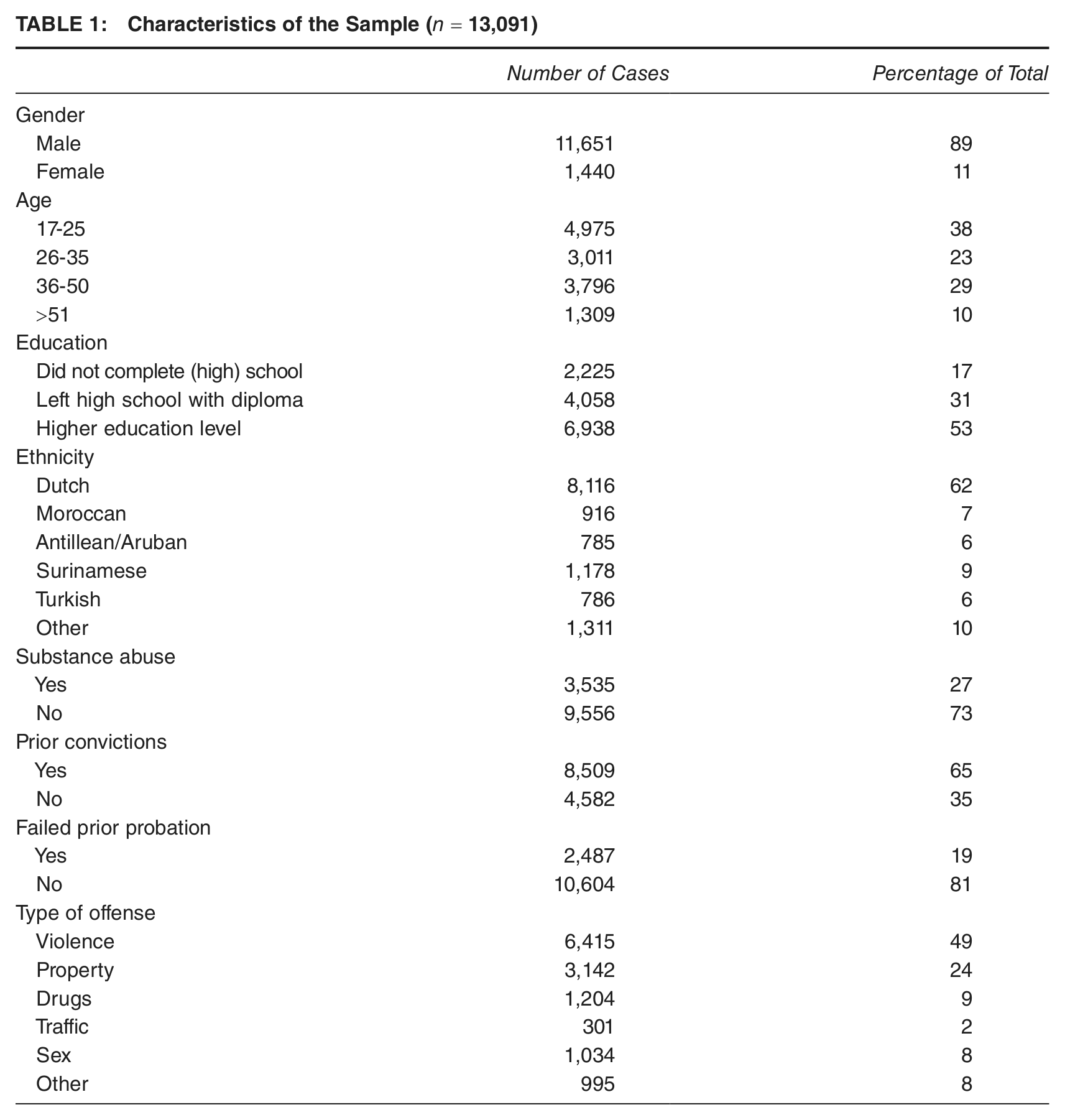
We used data from the adult client population of the Dutch Probation Services. We included all supervision clients who finished their probation supervision program from January 1, 2010 to December 31, 2010. We chose a 1-year time frame for selecting the sample; therefore, these data can be assumed to closely represent the characteristics of the general probation population. The sample consists of a total of 13,091 supervision clients, of whom 2,979 clients failed the supervision program, 23% of the total sample. The mean length of supervision was 15.8 months (SD = 10.8 months) and the median period was 15 months. A profile of the sample is presented in Table 1, which summarizes information about each of the demographic and criminal history factors used in the analysis. As is displayed in Table 1, the majority were male probationers (89%), completed high school (53%), had a Dutch ethnic background (62%), and was convicted for a violent offense (49%). The average age at the start of the supervision program was 32.4 years (SD = 12.4 years) with a median age of 29 years. Furthermore, 27% of probationers were classified as substance abusers, 64% were previously convicted, and 19% failed prior probation programs.
Characteristics of the Sample (n = 13,091)
Data
We used the information of risk assessments that were carried out by the Probation Services at the start of probation supervision programs. At time of the intake, the client’s risk of reoffending was assessed by an officer. The risk assessment tool of the Probation Services (RISc 1 ) comprised of 12 sections that assessed one of the following criminogenic factors: (a) offending history; (b) current offense; (c) accommodation; (d) education, work, and training; (e) financial management and income; (f) relationships with partner, family, and relatives; (g) relationships with friends and acquaintances; (h) drug use; (i) alcohol use; (j) emotional well-being; (k) thinking and behavior; and (l) attitudes. Each of the 12 aforementioned sections consisted of multiple items with a 3-point scale (with the value of 1 meaning not criminogenic, 2 meaning criminogenic problem, and 3 meaning serious criminogenic problem). Together, these sections formed the overall score indicating the estimated risk of reoffending.
The limitations with these data stem from the fact that our data are of a secondary nature. The data come from files maintained by the probation officers of the Dutch Probation Services. The item scores were based on subjective judgments on the part of the probation officer and were not primarily gathered for research purposes.
Measurement of The Independent Variables
We used the following independent variables: (a) demographic and criminal history factors, including gender, age, educational level, ethnicity, substance abuse, prior convictions, prior probation, type of offense; (b) social bond measures, divided into the four elements of social bond theory, namely, attachment, commitment, involvement, and belief; and 3) criminal bonds measures.
Demographics and Criminal History
We included several demographic variables in the analysis to investigate whether probation supervision failure varied by gender, age (measured in years at the start of probation), educational level (measured as whether or not the probationer had a high school diploma), and ethnic background (measured as whether the probationer or one of his or her parents had a non-Dutch ethnicity). We also included criminal history variables, namely, substance abuse, prior convictions, prior probation failure, and type of offense. All these variables have been identified in prior research as correlates of probation failure (e.g., MacKenzie & Li, 2004; Morgan, 1994; Olson & Lurigio, 2000; Petersilia, 1985). Each of the demographic and criminal history factors, except age at the start of the supervision program (measured in years), was dichotomized (with values of 0 assigned to the reference category and 1 assigned to the attribute identified).
Social Bonds
We constructed the social bond measures out of individual risk assessment item (RISc) scores. Scales in the present study were defined similar to Hirschi’s (1969) constructs and made applicable to an adult sample. While Hirschi relied primarily on social bonds such as school and relationships with parents, we expanded the analysis by including work and relationships with partners and other family members. Items in the RISc data set that appeared closely related to social bonds and criminal bonds were identified; brief descriptions of these items and their relation to social bonds are given in the following. The four scales each had a Cronbach’s α of between .56 and .64, modest correlations, but we decided to include all items on theoretical grounds. 2 Each of the items was dichotomized, with values of 0 assigned to the category not criminogenic and 1 assigned to the category criminogenic or serious criminogenic problem. 3 Therefore, scores close to 0 on each scale indicated strong social bonds and higher scores on each scale indicated weaker social bonds.
Attachment involved the relation of the probationer with partner, parents, work, and school. The attachment scale consisted of six dichotomous items, assessing whether or not probationers experienced problems in his or her: (a) housing situation, (b) school attendance history, (c) work history, (d) childhood history, (e) close relationships history, and (f) current close relationships. This resulted in a scale that could range from 0 to 6. The mean score for the six-item scale was 2.83 (SD = 1.65).
Commitment was represented by two items of the probationer’s occupational and educational aspirations, namely, how much school or work the probationer was committed to do and the commitment to parents and/or spouse (depending on the probationers’ living situation). The two items assessed the existence of probationers’ problems with: (a) current work or school situation and (b) current relationships with spouse/parents. This resulted in a scale ranging from 0 to 2. The mean score for the two-item commitment scale was 1.21 (SD = 0.81).
Involvement was represented by three items indicating to what extent the probationer was involved in work, school, and relationships, assessing whether or not probationers experienced problems with: (a) goal orientation, (b) perspectives on the future, and (c) strains for education and work. The involvement scale could range from 0 to 3; the mean score for this scale was 1.46 with a standard deviation of 1.14.
Belief was measured by three items that represented the probationers’ belief in society and the judicial system. The three items assessed problems in: (a) pro-criminal attitudes, (b) attitudes toward society, and (c) attitudes toward school, education, and work. This resulted in a scale that could range from 0 to 3. The mean score for the three-item scale was 1.68 (SD = 1.00).
According to Agnew (1985), it is important to study all social bonds measures together. From the attachment, commitment, involvement, and belief scales a general measure for social bonds was constructed by summing the scores of all four scales. This resulted in a scale that could range from 0 (no problems with/strong social bonds) to 14 (weak or no social bonds). The mean score for the social bond scale was 7.12 (SD = 3.54), with a Cronbach’s α of .74.
Criminal Bonds
Several studies have found that criminal bonds can negatively impact probation outcome (Hindelang, 1973; Laub & Sampson, 2001; Longshore et al., 2004). Criminal bonds were measured by three RISc items, assessing: (a) family member or relative with judicial record, (b) family violence, and (c) criminogenic influencing by friends and/or peers. This resulted in a scale that could range from 0 (no criminal bonds) to 3 (strong criminal bonds). The mean score for the three-item scale was 1.1 (SD = 1.06). The criminal bonds scale had a Cronbach’s α of .60.
Measurement of The Dependent Variable
The dependent variable for the present study was failure on probation. Information on the outcome of each probationer’s supervision program was derived from the official data records of the Probation Services. The official probation outcome was registered as not started, regularly ended, or terminated unsuccessfully. Probation supervision failure was defined as unsuccessful termination of the probation supervision program. Only probationers who actually started their probation supervision program were included in the analyses (N = 13,091). 4 The probation supervision failure measure was analyzed as a dichotomous measure, with a value of 0 assigned to the probationers who successfully ended their supervision program and a value of 1 assigned to the probationers who had their supervision program terminated unsuccessfully.
Data Analysis
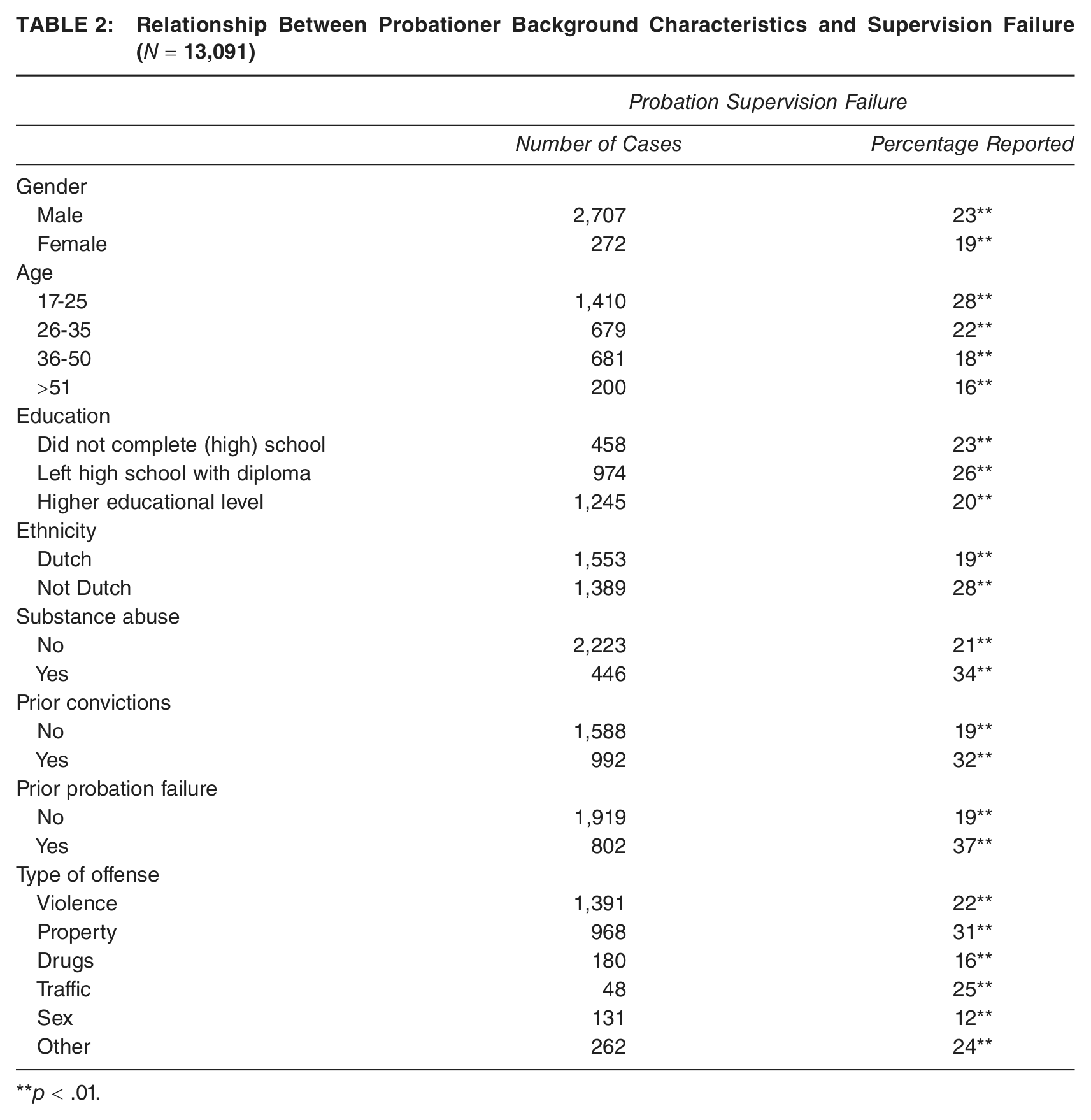
Chi-square tests were used to examine differences between probationers who failed their probation supervision and probationers who successfully ended their probation supervision (see Table 2).
Relationship Between Probationer Background Characteristics and Supervision Failure (N = 13,091)
p < .01.
Four logistic regression models were performed to determine to what extent probationers’ individual characteristics, their conventional social bonds, and their criminal bonds are associated with probation supervision failure. The independent variables used were gender, age, educational level, ethnicity, substance abuse, prior convictions, prior probation, type of offense, probation outcome, attachment, commitment, involvement, belief, and criminal bonds. Furthermore, we examined the four elements of social bonds variables together as one measure of social bonds. The odds ratios are presented to illustrate the increase or decrease in the probability of failing on probation supervision (see Table 3). As a final step in the analysis, we examined possible interaction effects of the four elements of social bonds by criminal bonds on probation supervision failure (see Figure 1).
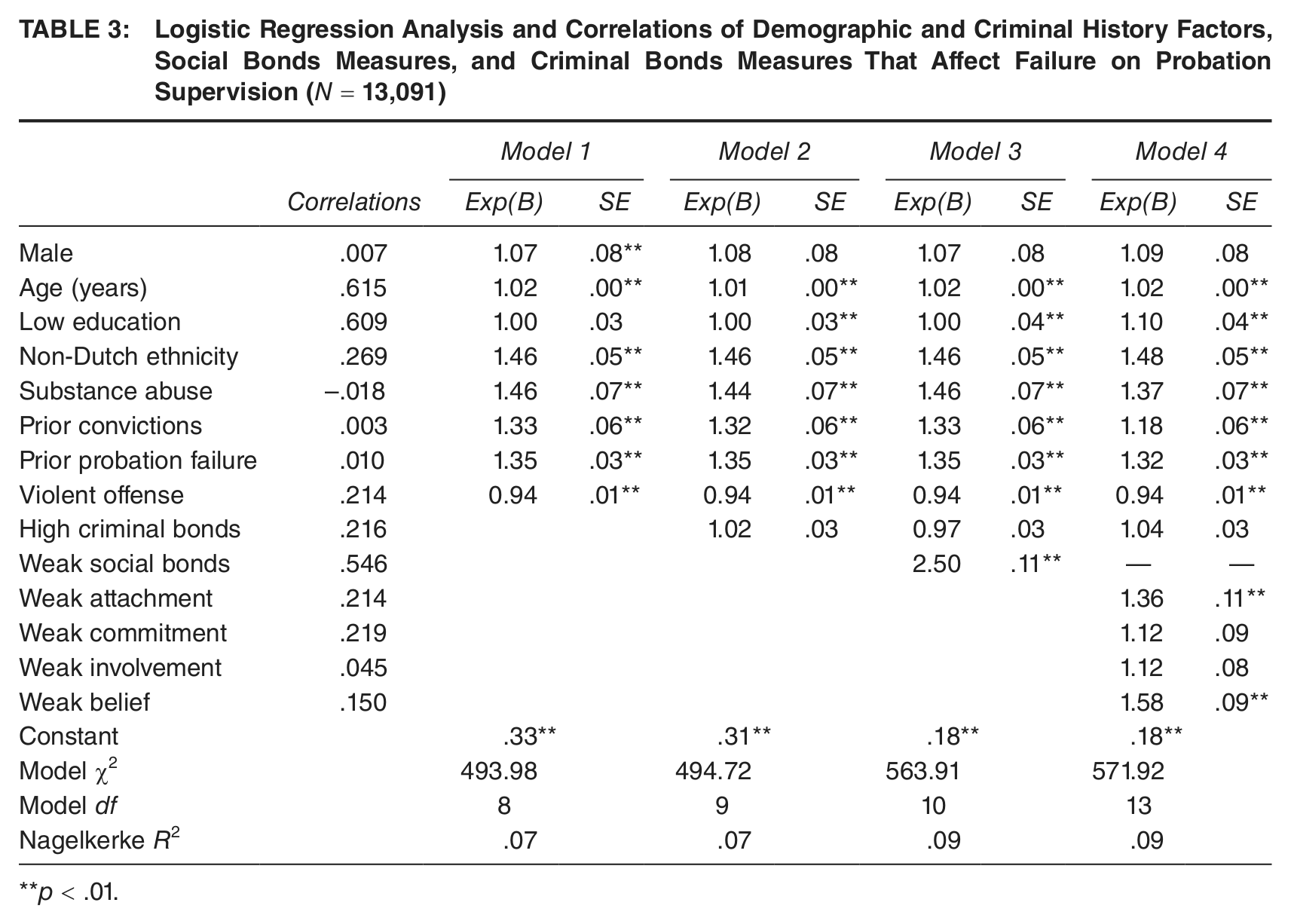
Logistic Regression Analysis and Correlations of Demographic and Criminal History Factors, Social Bonds Measures, and Criminal Bonds Measures That Affect Failure on Probation Supervision (N = 13,091)
p < .01.
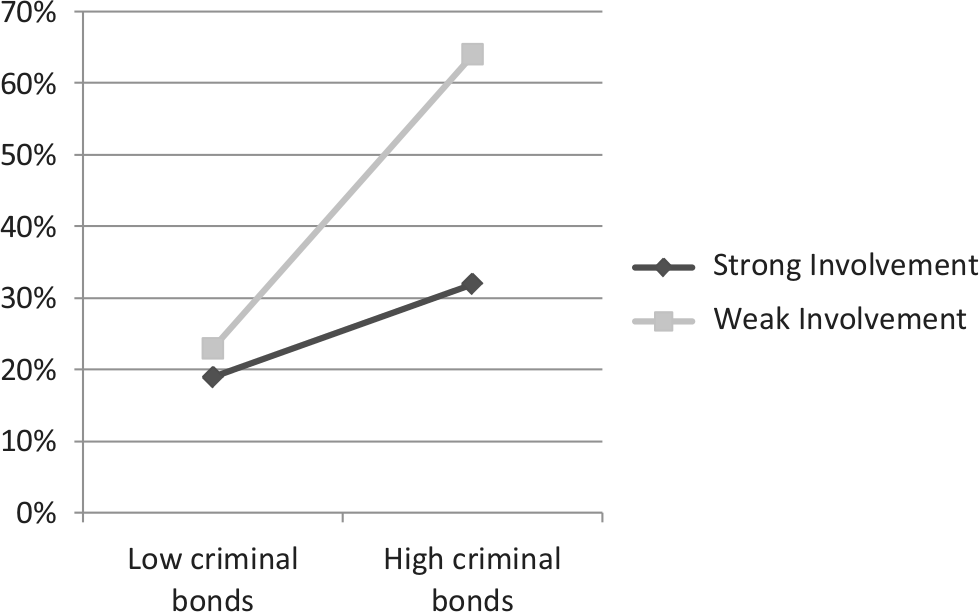
Interaction Effects of Involvement by Criminal Bonds on Probation Supervision Failure
Results
Demographics and Criminal History and Probation Supervision Failure
The percentages of probationers with different background characteristics who failed their supervision are listed in Table 2. Overall, 23% of probationers failed their supervision program in 2010. As Table 2 indicates, probationers who had previously failed their probation (37% failure), substance abusers (34% failure), those who were convicted before (32% failure), and those who were convicted for a property offense (31% failure) had the highest risk of probation supervision failure. Probationers who were under 25 years old (28% failure), had a non-Dutch ethnicity (28% failure), had only a high school diploma (26% failure), and were male (23% failure) also had a higher than average risk of probation supervision failure.
Logistic Regression Analyses
According to the results from the unconditional model, demographic and criminal history factors are significantly related to probation failure. A more rigorous examination of the degree of support for the hypotheses concerning demographic and criminal history factors and social bonds and criminal bonds measures was provided by the use of logistic regression analyses. The odds ratios and standard errors for all four models are displayed in Table 3.
Four logistic regression models were performed to determine to what extent probationers’ individual characteristics, their conventional social bonds, and their criminal bonds are associated with probation supervision failure.
The results of Model 1 largely supported the hypotheses on the relationship between demographic characteristics of probationers and supervision failure. Age and gender showed significant effects in the expected direction, but these were small effects (odds ratios 1.07 and 1.02, respectively). Ethnicity and substance abuse appeared to be the strongest predictor of failure (odds ratios both 1.46). Probationers who were convicted before and/or failed previous supervision programs were also more likely to fail their current supervision (odds ratios, 1.33 and 1.35, respectively). Violent offenders had a slightly decreased chance of probation failure compared to other offenders (odds ratio .94). This model explained 7% of the variance in probation supervision failure.
In Model 2, the measure for criminal bonds was added to the analysis. Contrary to the hypothesis, probationers with criminal bonds were not significantly more likely to fail their probation supervision than probationers without criminal bonds.
As displayed in Model 3, and in line with our hypothesis, probationers with weak social bonds had increased chances of supervision failure compared to probationers with stronger social bonds. Probationers with weak social bonds were 2.5 times more likely to fail their probation supervision. The added social bonds variables explained a further 2% of the variance in probation supervision failure.
The picture that emerges from Model 3 is that probationers with problems in their social bonds fail their supervision program more often. In order to examine this effect more closely, we analyzed the four elements of social bonds separately in Model 4. This model shows two statistically significant effects, for attachment and belief (odds ratios 1.36 and 1.58, respectively). This indicated that probationers with weak attachments and deviant beliefs failed their supervision program more often compared to probationers with stronger attachments and conventional beliefs. Commitment and involvement did not significantly improve the model.
As a final step in the analysis, we examined possible interaction effects of the four elements of social bonds by criminal bonds on probation supervision failure. Inclusion of the interaction terms did not yield statistically significant results, with the exception of the involvement by criminal bonds interaction term (p < .01). This interaction effect is displayed in Figure 1 and indicated a stronger relationship between criminal bonds and probation supervision failure for probationers with problems in involvement than for probationers without criminal bonds or with strong involvement. This finding means that probationers who have problems in involvement and have more criminal bonds are particularly likely to fail their probation.
Discussion
The aim of the present study was to examine the relationship between supervision failure and probationers’ demographic and criminal history factors, social bonds, and criminal bonds. As hypothesized, we found that demographic characteristics such as age, gender, and ethnicity were associated with probation supervision failure. In general, our findings support the results of previous studies of demographic characteristics and their relation to probation failure (i.e., Morgan, 1994; Petersilia, 1985; Sims & Jones, 1997; Visher et al., 1991).
Probationers who previously failed probation supervision, probationers with prior convictions, probationers with a non-Dutch ethnicity, and substance abusers had the highest risk of probation supervision failure. Non-Dutch ethnicity and substance abuse were the strongest predictors. Previous research is inconsistent regarding ethnicity as a predictor of probation failure (Clarke et al., 1988; Irish, 1989; Morgan, 1994; Sims & Jones, 1997). As Marshall (1997) appropriately suggested, outcomes regarding ethnic minorities should be considered different across countries because ethnic backgrounds vary accordingly. We found that non-Dutch probationers have an increased likelihood of probation supervision failure. A possible explanation for this finding involves factors that are not controlled for, such as socioeconomic status, an increased risk of rearrests by the police (and therefore supervision failure), or differential probation practices that target ethnic minorities.
One of the innovative aspects of the present study is that we also examined the relationship between social bonds and probation supervision failure. In line with our expectations, probationers with problems in social bonds failed their probation supervision more often than probationers with stronger social bonds. In particular, the social bond elements attachment and belief each had a significant effect on probation supervision failure. When the attachment of the probationer to partner, parents, work, and school was weak or problematic, the odds of probation supervision failure increased.
In this way, we were able to demonstrate that the central idea of Hirschi’s (1969) social bond theory—that crime and deviance are more likely when an individual’s bonds to society are weak or broken—can be applied to the likelihood of an individual’s chance of fulfilling his or her probation supervision program. Previous research also consistently showed that a lack of attachment to conventional others and conventional institutions was a predictor of deviant behavior (Anderson, Holmes, & Oshtresh, 1999). Probationers with little belief in conventional society were more likely to fail their probation supervision as well. This lends support to the idea that the less people feel rule-bound to conventional society, the more likely they are to break rules (Wiatrowski, Griswold, & Roberts, 1981).
Contrary to our hypothesis, probationers with criminal bonds were not statistically significantly more likely to fail their probation program, although prior studies have found that criminal bonds can negatively impact probation outcome (Hepburn & Griffin, 2004; Longshore et al., 2004). All other factors being equal, strong criminal bonds are no worse than weak criminal bonds. An explanation for this null effect could be our operationalization of criminal bonds, which may not have captured the underlying construct adequately. The criminal bonds measure was based on ties to family members with a criminal record and to criminal peers but did not measure the number of criminal bonds or the involvement and investment in these relationships.
Results from this study indicate that involvement determines whether criminal bonds are a risk factor for supervision failure. Probationers with criminal bonds failed their supervision more often if they had problems in their involvement in work, school, and relationships, compared to probationers with criminal bonds but no problems in involvement. Importantly, this finding shows that rather than focusing on criminal bonds of probationers, it would be important to assess how problematically involved the probationer is in other areas of social bonds such as school, work, and relationships in combination with his or her criminal bonds (Agnew, 1993).
Some limitations need to be addressed. Although our results largely support previous research, only about 7% of the variance in probation supervision failure was explained by demographic and criminal history variables in our model. In addition, and consistent with prior research (Agnew, 1993; Longshore et al., 2004), social bonds explained a further 2% of the variance in probation supervision failure. Most of the variance in this outcome was left unexplained. This means that other factors, such as probationers’ personality, self-control, the role of the probation officer, or supervision intensity, may be important in understanding probation supervision failure (Jones & Lynam, 2009).
Another limitation was the operationalization of social bonds. The measures were limited in that they did not encompass some important components of social bonds, such as the actual time probationers spent on their social bonds, namely, their work, school, partner, or friends. The involvement measure, for example, was based on stability of one’s employment and intimate relationship, if any. More elaborate measures including, for instance, the quality of one’s intimate relationship, job satisfaction, and participation in adult education or social activities may lead to different results and raise the explained variance (Sampson & Laub, 1990).
Due to the correlational design, it is not possible to make causal inferences about the relationships between variables. For example, weak social bonds early in life may undermine the development of adequate skills to adjust well to conventional society and therefore may affect the strength of social bonds measured later in life (Jones & Lynam, 2009). Other factors, such as self-control, generally regarded as an indicator for criminal propensity, may be the cause of both weak social bonds and probation supervision failure (Gottfredson & Hirschi, 1990; Jones & Lynam, 2009). If this is the case, the observed relationship between social bonds and probation supervision failure would be spurious. Studying longitudinal data sets or using experimental methods could provide more insight into causal effects of social bonds on probation supervision failure and other deviant behavior.
Notwithstanding these limitations, the present study has some important strengths. We extended previous research on probation supervision failure in different ways. First, prior research predominantly studied background variables of probationers (Gill, 2010), providing a rather limited view on factors that may affect supervision failure. By including different measures of social bonds, we were able to better understand the impact of conventional social bonds and criminal bonds. The study linked social bonds, criminal bonds, and background variables to probation supervision failure, which generates a more encompassing view of what underlies probation supervision failure.
Second, results of our study also extend previous research on social bonds and crime. Our results are applicable to young adults as well as older probationers. While Hirschi (1969) relied primarily on the relationship between school and delinquency, we expanded the analyses to include not only school but also work. Our measures of close relationships included parents and other family members as well as romantic partners, while Hirschi focused mainly on relationships with parents.
Because we focus on probationers’ characteristics rather than characteristics of the probation system, results are of interest for not only Dutch probation practice but international probation practice as well. Even though Dutch probation failure rates are relatively low from an international perspective (23%, while U.S. estimates range from 35% to 70%; see Taxman, 2002), probation supervision is highly associated with reoffending and should therefore be minimized as much as possible.
Given the effects of social bonds on probation supervision failure, these findings should be replicated in different international contexts and probation practices, such as other European countries or the United States. Almost all research has focused on the United States and Great Britain (Taxman, 2002); failure outcome measures and other variables may differ in the Dutch context.
Research into how social bonds affect probation supervision could contribute to knowledge of which interventions can be effective (Gray et al., 2001). Therefore, studying effects of different social bonds variables, how these variables influence each other, and their effects on probation outcomes and ultimately reoffending are important next steps for criminological research. In addition, attention should be directed to whether social bonds increase during and after probation (Horney et al., 1995). Increased social bonds might in their turn lead to an increase in social capital, namely, attaining a job, strengthened social network, marriage, and so on (Williams & Sickles, 2002).
Our findings have certain implications for probation policy makers and probation officers. Understanding social bond factors that are of importance in failing probation supervision can possibly add to a more risk- and needs-based supervision program (Taxman, 2002). By showing that probationers with weak social bonds are more at risk for probation supervision failure, efforts should be focused on probationers’ needs in improving different social bonds, such as ties to work or family. Another important finding is that probation officers should pay specific attention to probationers with criminal bonds and problems with their involvement in conventional social bonds. Importantly, probation officers are in a position to assist a probationer with strengthening his or her social bonds such as work, school, family, and peers, which in turn could have positive effects on successful probation supervision and preventing reoffending.