




Abstract
We examined whether police officer self-legitimacy moderates the effect of supervisor procedural injustice on organizational trust. Data from a sample of sheriff’s deputies (N = 510) were used to test this question. Results from multivariate models showed that (a) supervisor procedural injustice was associated with less organizational trust among deputies, (b) self-legitimacy was positively associated with trust in the agency, and (c) self-legitimacy conditioned the effect of procedural injustice on organizational trust. These findings advance the literature in several ways. First, this study provides one of the first empirical examinations of organizational trust—a concept widely studied in the business-related literature—in a police agency context. The findings suggested that supervisor procedural injustice and officer self-legitimacy are key correlates of trust in a police agency. Second, the results further underscore the importance of self-legitimacy by revealing that it can serve as a protective factor against negative experiences within the organization.
Keywords
The organizational behavior literature reveals that employees who perceive their supervisors as procedurally fair are more likely to trust their overall organization (Ambrose & Schminke, 2003; DeConinck, 2010; Hubbell & Chory-Assad, 2005; Searle et al., 2011). Organizational trust is important because research reveals that it leads to a wide range of beneficial work-related outcomes including, but not limited to, rule compliance, internalization of administrative goals, and extra effort (Aryee, Budhwar, & Chen, 2002; Cohen-Charash & Spector, 2001; Colquitt, Conlon, Wesson, Porter, & Ng, 2001; Dirks & Ferrin, 2002; Wat & Shaffer, 2005). This body of work has recently attracted attention from scholars interested in understanding the dynamics of fairness within criminal justice organizations (Lambert, Hogan, & Griffin, 2007; Wolfe & Piquero, 2011). Emerging evidence in this tradition demonstrates that police officers who view their agency or supervisors as procedurally fair more frequently engage in behaviors beneficial to their agency, such as using procedural justice when interacting with the public and committing fewer rule infractions (Tankebe, 2014a; Wolfe & Piquero, 2011). More generally, officers with such perceptions tend to have higher levels of trust in their organization (Haas, Van Craen, Skogan, & Fleitas, 2015; Van Craen, 2016). Findings such as these have important implications for police supervisors because officers who trust their agency are more likely to engage in organizational citizenship behaviors that likely result in better law enforcement outcomes for the communities they serve.
At the same time, however, negative work-related behaviors stem from perceived procedural injustice at the hands of police supervisors. For example, officers who believe their supervisors are procedurally unfair tend to lack trust in their overall agency, engage in more misconduct, and are less committed to organizational goals and policies (Haas et al., 2015; Wolfe & Piquero, 2011). The question that arises, however, is whether the perception of injustice harms all officers’ views of their agency to a similar degree. Or, can some officers be protected against the negative impact of procedural injustice? Criminological research centered on the concept of officer “self-legitimacy” offers one possibility. Self-legitimacy refers to confidence in one’s authority as a law enforcement officer and whether an officer believes she holds legitimate power in the eyes of the public (Bottoms & Tankebe, 2012). A growing body of empirical evidence has established that self-legitimacy is associated with a host of beneficial officer behaviors and attitudes ranging from greater organizational identification to greater willingness to work with community members (Tankebe, 2014b; Tankebe & Meško, 2015; Wolfe & Nix, 2016). We argue that the importance of self-legitimacy likely extends even further. In particular, self-legitimacy may help protect officers against procedural injustice from supervisors and minimize the harmful effects such perceptions may have on organizational citizenship behaviors. Specifically, supervisor procedural injustice may have a weaker effect on officers’ trust in their agency when they are more confident in their own authority.
Accordingly, the purpose of the present study was to address the following research question: Does officer self-legitimacy moderate the effect of supervisor procedural injustice on organizational trust? We focused our attention on agency trust as an important organizational citizenship outcome for two reasons. First, there has been relatively little empirical work on the predictors of police officer organizational trust. Second, and most important, the ramifications of organizational trust may be far reaching for police agencies as discussed above (i.e., trust leads to other officer citizenship behaviors). We used a sample of sheriff’s deputies from a mid-sized metropolitan jurisdiction in the southeastern United States to test this question. Specifically, we used a series of multivariate equations to explore the interaction effect between procedural injustice and self-legitimacy on trust. The overarching purpose of this study was to provide a better understanding of officers’ organizational trust and extend the self-legitimacy literature by uncovering new evidence of its importance.
Organizational Procedural Justice
The organizational behavior and management literatures have long recognized the importance of fairness within organizations. In fact, several meta-analyses have provided strong support for the notion that organizational justice is associated with numerous employee citizenship outcomes (Cohen-Charash & Spector, 2001; Colquitt et al., 2001). Organizational justice is comprised of three primary components—distributive, procedural, and interactional justice. Distributive justice is derived from equity theory and focuses on employee’s perceptions of outcome fairness within their organization (Adams, 1963). Research has shown that when supervisors distribute outcomes (e.g., pay and promotion decisions) fairly to all employees, they are more likely to receive increased work output and other citizenship behaviors from their subordinates (Cohen-Charash & Spector, 2001; Colquitt et al., 2001; Lind & Tyler, 1988). The second element of organizational justice is procedural fairness. When supervisors treat their employees in respectful, nonthreatening, and unbiased manners, and when they clearly explain the reasons for their actions and allow employees to have a voice in decision-making processes, they are more likely to elicit beneficial employee behaviors (Cohen-Charash & Spector, 2001; Colquitt et al., 2001; Lind & Tyler, 1988). Relatedly, the final component, interactional justice, centers on the extent to which supervisors treat their employees with politeness and honesty during interpersonal communication (Bies & Moag, 1986; Cohen-Charash & Spector, 2001).
Although each element of organizational justice is important, research shows that procedural justice has the strongest association with employee outcomes such as work performance and counterproductive behaviors (Cohen-Charash & Mueller, 2007; Cohen-Charash & Spector, 2001; Colquitt et al., 2001). For example, Lind and Tyler (1988) demonstrated that the perceived fairness of the process used by supervisors to reach an outcome (e.g., promotion decision) was more important to employees than the distributional fairness of the outcome (see also, Alexander & Ruderman, 1987).
Most importantly for the purposes of this study, a meta-analysis revealed that it is important to treat the components of organizational justice separately (Cohen-Charash & Spector, 2001). Each component of organizational justice, for example, was related to organizational trust but procedural justice had the strongest effect. A lengthy roster of studies over the past decade and a half has solidified support for this empirical observation—perceptions of procedural justice are tied to organizational trust (Ambrose & Schminke, 2003; DeConinck, 2010; Dirks & Ferrin, 2002; Hubbell & Chory-Assad, 2005; Searle et al., 2011). This line of research also reveals the importance of trust by showing that employees who trust their organization are more satisfied with their jobs and more committed to the organization’s goals (Aryee et al., 2002; Dirks & Ferrin, 2002; Wat & Shaffer, 2005). In fact, research reveals that organizational trust partially mediates the association between procedural justice and beneficial work-related outcomes (Aryee et al., 2002; Ertürk, 2007). Most of this literature focuses on the organizational behavior dynamics of business-related institutions. Recently, however, researchers have used the procedural justice framework to understand criminal justice practitioners’ attitudes toward their agencies and subsequent behavior.
Procedural Justice in Police Agencies
The role of procedural justice in explaining citizens’ attitudes concerning the legitimacy of criminal justice authority figures and subsequent behavioral outcomes has received considerable research attention in criminology over the past decade (McLean & Wolfe, 2016; Reisig et al., 2007; Tyler, 1990; Tyler & Huo, 2002; Wolfe, McLean, & Pratt, 2016; Wolfe, Nix, Kaminski, & Rojek, 2016). Although this line of inquiry is rooted in the social psychology of organizational behavior described earlier, research on organizational justice within police agencies has only emerged over the past few years.
A number of important contributions to our understanding of criminal justice supervisor–employee relations have emerged in this line of inquiry. Several studies, for instance, have shown that correctional officers who perceive greater organizational fairness from their supervisors are more committed to their agency, more satisfied with their job, and have lower levels of stress (Lambert et al., 2007; Taxman & Gordon, 2009). The majority of this research has used the framework to understand police officers’ perceptions of their agencies and supervisors (De Angelis & Kupchik, 2007; Farmer, Beehr, & Love, 2003). A key finding within this body of research is that officers who perceive organizational justice, particularly procedural fairness, at the hands of their supervisors are more likely to engage in organizational citizenship behaviors. For example, Wolfe and Piquero (2011) used survey data from a sample of Philadelphia police to show that officers were less likely to engage in misconduct (i.e., fewer citizen complaints, internal affairs investigations, and disciplinary code charges) when they believed their agency was more organizationally fair (see also, Bradford & Quinton, 2014; Myhill & Bradford, 2013; Tankebe, 2014a). In the Durham England Constabulary, Bradford, Quinton, Myhill, and Porter (2014) found that organizational justice was associated with greater attachment and loyalty to the force while supervisory procedural justice in particular was met with greater willingness to engage in extra effort. Officers who perceived their supervisors as procedurally fair also indicated more soft compliance (e.g., “I do what my supervisor asks me to do”) and hard compliance (e.g., “I follow my supervisor’s instructions even when I think they are wrong”). Overall, a recent meta-review of this research led to the general conclusion that internal procedural justice is positively associated with officers’ trust in their agency, organizational commitment, and job satisfaction (Donner, Maskaly, Fridell, & Jennings, 2015).
The evidence regarding the effects of organizational injustice is also clear—when officers feel that supervisors treat them unfairly, they are more likely to engage in negative work-related behaviors and hold unfavorable views of their department and the public (Bradford et al., 2014; Myhill & Bradford, 2013; Tankebe, 2014a). Wolfe and Nix (2016), for example, recently demonstrated that officers who believed their agency was unfair in terms of interpersonal treatment, promotion decisions, and the handling of citizen complaints were significantly less willing to work with community members to solve crime problems. In a related study, Nix and Wolfe (2015) showed that officers had lower levels of self-legitimacy when they believed their agency treats its employees unfairly. Organizational injustice appears to cultivate mistrust among officers and ultimately leads to fewer organizational citizenship behaviors.
Two important issues remain unresolved in this line of research to date. First, there is a sizable body of empirical work on the correlates of organizational trust in the broader literature dealing with business-related organizations. However, similar research on organizational trust within police agencies is nearly nonexistent. We simply do not have a solid understanding of what predicts officers’ trust in their agencies. This is an important gap in the literature given that trust may be associated with a host of beneficial outcomes for police departments. What is more, police agencies share many common characteristics with other organizations in terms of employee–supervisor relations, but they also differ in important ways (Wolfe & Piquero, 2011). For example, officer subculture oftentimes centers on suspicion of others. This suspicion not only is largely directed at citizens but also permeates into attitudes concerning supervisors and the larger department (Herbert, 1998; Paoline, 2003; Stroshine, Alpert, & Dunham, 2008). Therefore, exploring the correlates of officers’ trust in their agency will not only improve our understanding of police employee relations but also advance the broader literature on organizational behavior. Van Craen’s (2016) recent theoretical paper nicely outlines why supervisor procedural injustice should be associated with agency distrust. Like employees in other organizations, officers expect to be treated respectfully and in unbiased manners. They also expect their supervisors to listen to their opinions and provide explanations for agency decision making. When supervisors fail to engage in such procedural fairness, they undermine officers’ self-worth and social standing in the agency, which ultimately erodes trust in the organization.
Second, and most important for the present study, we know little about whether a sense of injustice at the hands of police supervisors has a similar harmful effect across all officers. Emerging empirical work on officer self-legitimacy reveals that this individual characteristic has widespread beneficial outcomes for officers, their agencies, and the communities they serve. As we discuss below, self-legitimacy may also help protect officers against the ill effects of supervisor procedural injustice.
Officer Self-Legitimacy
Bottoms and Tankebe’s (2012) dialogic model of legitimacy posits that police legitimacy is, in part, developed from an ongoing dialogue with community members. The police make a claim to legitimacy, the public responds by acknowledging or rejecting the legitimacy claim, and the police adjust behaviors accordingly to maintain or improve their legitimacy in the eyes of the public. Key to this framework is the concept of self-legitimacy—“power holders’ recognition of, or confidence in, their own individual entitlement to power” (Tankebe, 2014b, p. 3). Consistent with Bottoms and Tankebe’s argument, officers with greater self-legitimacy are expected to have greater confidence not only in their own authority but also in the authority and capability of law enforcement more broadly. It is imperative for officers to have confidence in their own authority for the public to view the police as a legitimate authority. Research has consistently demonstrated that perceived police legitimacy is associated with greater citizen cooperation (Jackson, Bradford, Stanko, & Hohl, 2012; Tyler, Schulhofer, & Huq, 2010), voluntary compliance with the law (Papachristos, Meares, & Fagan, 2012; Reisig, Tankebe, & Mesko, 2014), and decision acceptance both in the short term (Tyler & Huo, 2002) and long term (Tyler, Sherman, Strang, Barnes, & Woods, 2007).
A growing body of research has revealed that officer self-legitimacy is also positively associated with a number of beneficial outcomes for police agencies (Bottoms & Tankebe, 2012). Specifically, officers who are more confident in their authority are more likely to be committed to organizational goals (Tankebe, 2010), willing to use procedural fairness when interacting with citizens (Bradford & Quinton, 2014), willing to partner with community members to solve local problems (Wolfe & Nix, 2016), and display less intent to use force (Tankebe & Meško, 2015). The effect of self-legitimacy on organizational citizenship behaviors has been shown to be robust to the potential confounding influence of organizational justice, relationships with colleagues, and demographic characteristics.
We argue that the importance of self-legitimacy may extend beyond its direct effect on beneficial work-related outcomes. In particular, self-legitimacy may also help shield officers from negative experiences in their agency. Namely, it is likely that higher levels of self-legitimacy will act as a protective factor against the harmful effects of supervisor procedural injustice. Confidence in one’s own authority as a law enforcement officer may prevent officers who are treated unfairly by direct supervisors from allowing such procedural injustice to translate into an overall lack of trust in their organization. In other words, high levels of self-legitimacy may allow officers to better separate the actions of supervisors from the overall agency—“My supervisor treats me poorly, but that doesn’t necessarily mean I can’t trust my department.” After all, as Bradford and Quinton (2014) argued, greater self-legitimacy may make officers “calmer and more assured; more able to engage in difficult decisions in constructive ways . . . ” (p. 1027). In this way, the self-legitimate officer may be more likely to take procedural injustice in stride rather than extrapolating one supervisor’s actions to the entire agency. However, officers with lower self-legitimacy are more timid and lack coolness in difficult situations (Bradford & Quinton, 2014). This lack of confidence may inhibit their ability to have trust in their overall agency when faced with unfairness from a supervisor.
To be clear, we still expect that procedural injustice will result in less trust among officers—a relationship that has yet to be explored to date but would be anticipated based on prior research (Van Craen, 2016). However, we expect that supervisor procedural injustice will have a weaker effect on organizational trust among the most confident officers. The self-legitimate officer may be better equipped to simultaneously believe that immediate supervisors can sometimes be unfair but the overall agency can be trusted.
The Current Study
The purpose of the current study was to advance the procedural justice and self-legitimacy literatures in several important ways. First, researchers have only recently begun to apply the procedural justice framework to the study of police organizations. As such, this is one of the few studies we are aware of that explored the correlates of organizational trust within a police sample (Haas et al., 2015). Second, we addressed a gap in the literature by considering whether self-legitimacy was associated with trust in the organization upon accounting for perceptions of procedural injustice. Self-legitimacy is an emerging concept that has been shown to increase officer organizational citizenship behaviors (Bradford & Quinton, 2014; Tankebe & Meško, 2015). Here, we considered yet another potentially beneficial outcome that stems from officers with greater confidence in their authority—organizational trust. Finally, and most importantly, we explored whether self-legitimacy protects against the harmful effects of supervisor procedural injustice by moderating its effect on organizational trust. We see these issues as particularly germane given the current policing climate in the wake of several highly publicized deadly force incidents in recent years. Determining the factors that influence beneficial work-related outcomes among officers has practical implications that extend beyond the walls of an agency.
Method
Data
Data for the present study were drawn from a survey carried out in February 2015 at a sheriff’s department located in a metropolitan city in the southeastern United States that serves a population of approximately 393,000 residents. The questionnaire was administered online at a password-secure website and all employees were asked to participate. A total of 510 sworn deputies completed the survey, representing an 85.1% response rate. Completion of the survey was encouraged by informing the deputies that their identities would remain anonymous, analysis of the data only would be done in the aggregate by researchers at a local university, and the study was supported by the agency’s Deputy Advisory Council—a group of deputies who represent the interests of their colleagues and is highly respected throughout the department. As is common in survey research, some respondents did not answer every item in the questionnaire, resulting in a small amount of missing data (less than 2% of cells in the data set). Hotdeck imputation was used to handle missing data, which is available in Stata 14 (Andridge & Little, 2010; Fuller & Kim, 2005; Gmel, 2001).
Dependent Variable
The dependent variable was organizational trust. Respondents were asked to indicate the extent to which they agreed or disagreed with the following three statements: “As an organization, my agency can be trusted to do what is right for the community”; “I trust the direction that my department’s command staff is taking our agency”; and “I trust that command staff makes decisions that have the agency’s best interest in mind” (Haas et al., 2015; Mayer, Davis, & Schoorman, 1995). Responses were measured on a 5-point Likert-type scale (1 = strongly disagree, 2 = disagree, 3 = neutral, 4 = agree, 5 = strongly agree). Principal components analysis (PCA) with varimax rotation was used to determine the extent to which the items clustered together. Results indicated that the items loaded onto a single component (λ = 2.22, loadings > .82) and Cronbach’s alpha revealed strong internal consistency (α = .82). Accordingly, the items were summed into a scale ranging from 3 to 15, with higher scores indicating a greater amount of trust in the organization. Table 1 provides descriptive statistics for all variables used in this study.
Descriptive Statistics
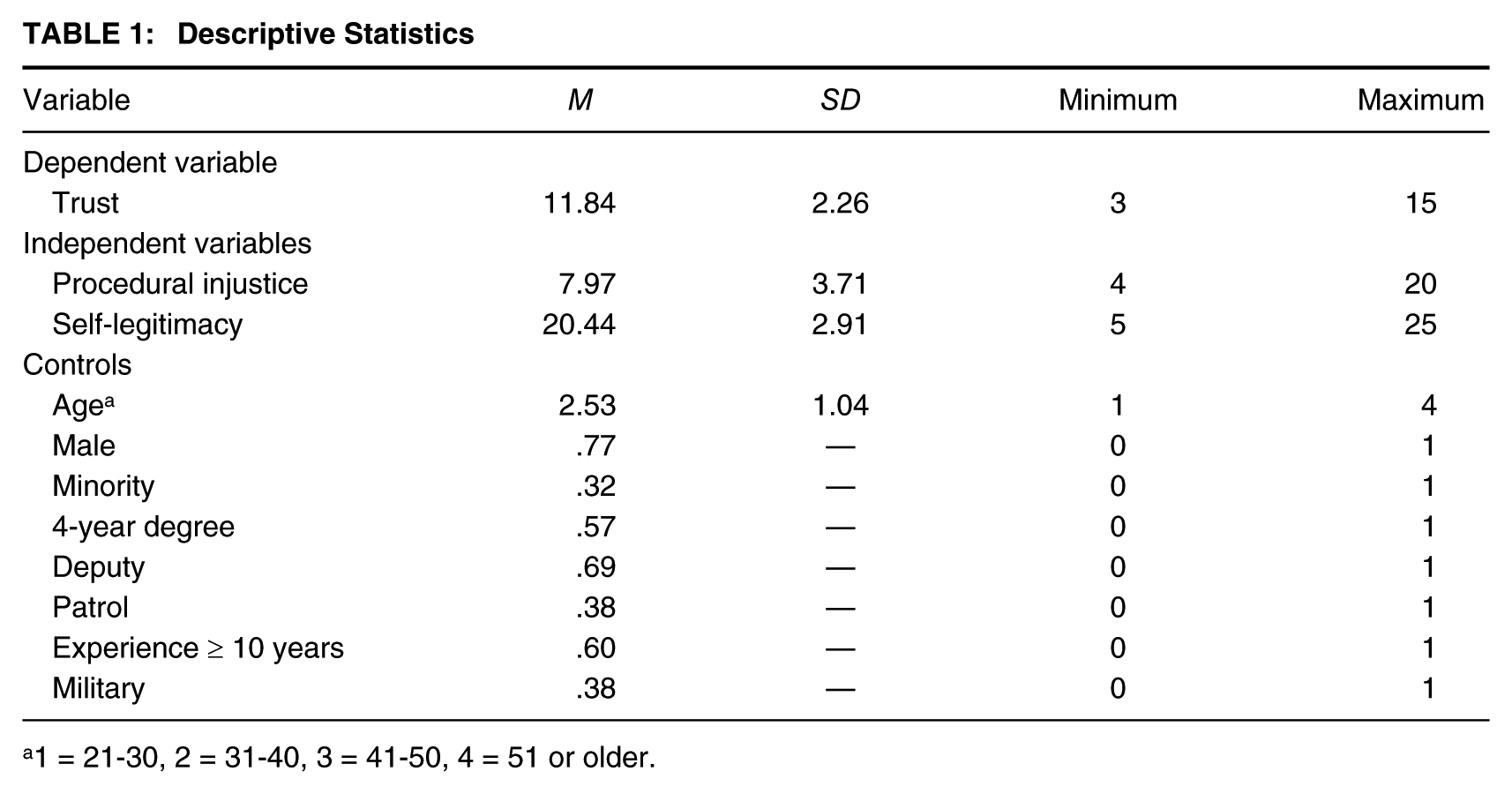
1 = 21-30, 2 = 31-40, 3 = 41-50, 4 = 51 or older.
Independent Variables
Procedural Injustice
Procedural injustice was measured by asking respondents to indicate the extent to which they agreed or disagreed (1 = strongly disagree to 5 = strongly agree) with four statements: “My immediate supervisor treats me with respect,” “I trust my immediate supervisor’s decisions,” “My immediate supervisor clearly explains the reasons for his/her decisions,” and “My immediate supervisor considers his/her subordinates’ viewpoints” (all items reverse coded; Cohen-Charash & Spector, 2001; Colquitt et al., 2001; Wolfe & Piquero, 2011). The items loaded onto a single component (λ = 3.54, loadings > .91) and demonstrated strong internal consistency (α = .96). Consequently, the items were summed into a scale ranging from 4 to 20, with higher scores reflecting greater supervisor procedural injustice.
Self-Legitimacy
To capture self-legitimacy, respondents were asked to indicate their level of agreement (1 = strongly disagree to 5 = strongly agree) with five statements: “I have confidence in the authority vested in me as a law enforcement officer”; “As a law enforcement officer, I believe I occupy a position of special importance in society”; “I believe people should always do what I tell them as long as my orders are lawful”; “I am confident I have enough authority to do my job well”; and “I believe law enforcement is capable of providing security for all citizens of this county” (Nix & Wolfe, 2015; Tankebe, 2014b). PCA indicated that the items loaded onto a single component (λ = 2.32, loadings > .56) and Cronbach’s alpha revealed adequate internal consistency (α = .71). As such, the items were summed into a scale ranging from 5 to 25, with higher scores indicating a greater sense of self-legitimacy. 1
Controls
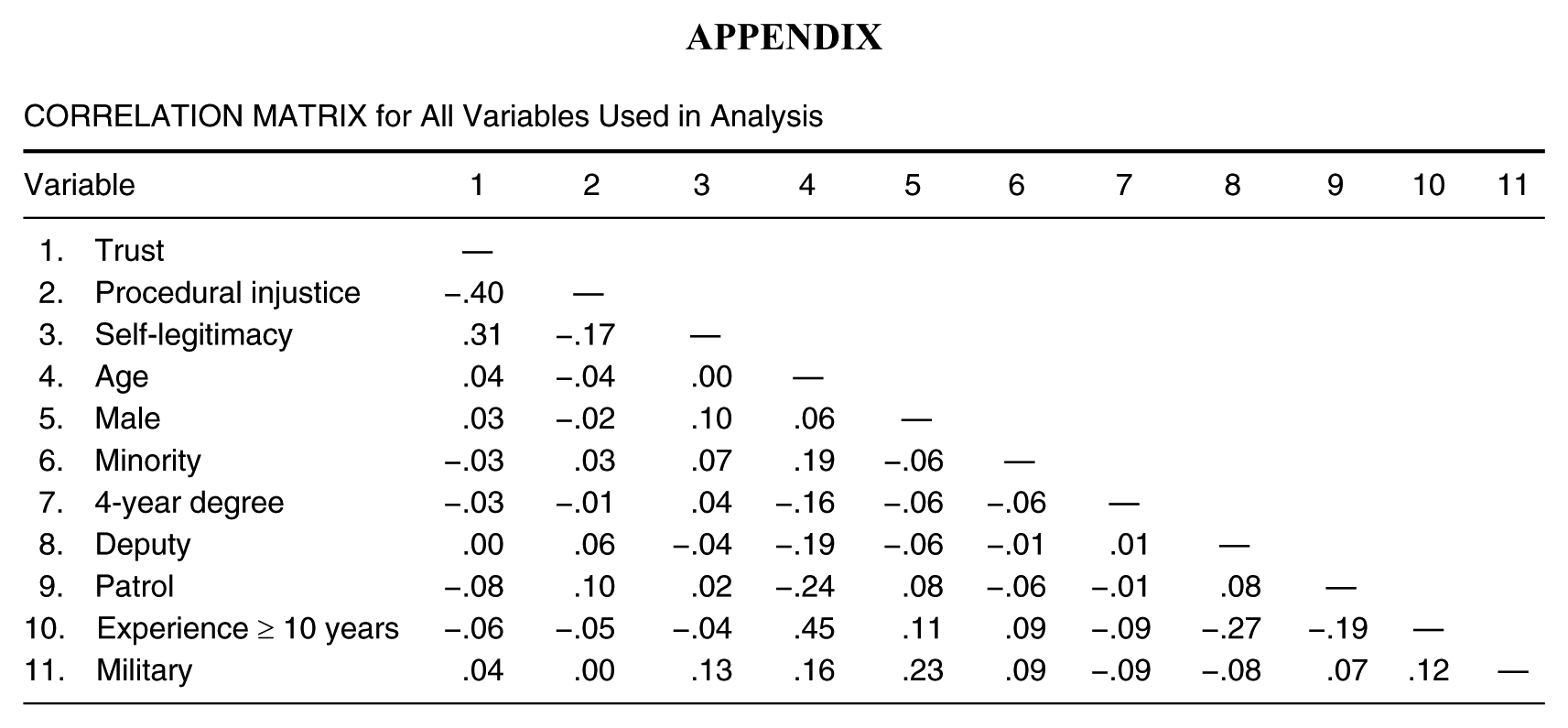
To help provide unbiased estimates of the effects of procedural injustice and self-legitimacy on organizational trust, we controlled for several demographic characteristics. To help maintain respondent anonymity, age was measured categorically (1 = 21-30, 2 = 31-40, 3 = 41-50, and 4 = 51 or older). Gender (1 = male, 0 = female), race (1 = minority, 0 = White), education (1 = 4-year degree or higher, 0 = less than a 4-year degree), rank (1 = deputy, 0 = mid-level supervisor), experience (1 = more than 10 years, 0 = less than 10 years), and military background (1 = yes, 0 = no) were accounted for with binary indicators. 2 The appendix provides a correlation matrix for all variables included in the analyses.
Analytic Strategy
The purpose of the present study was to determine whether procedural injustice and self-legitimacy were associated with agency trust, and whether self-legitimacy moderates the effect of procedural injustice on trust. To do so, we first examined the simultaneous effects of procedural injustice and self-legitimacy on organizational trust with an ordinary least squares (OLS) regression equation. OLS was used because the distribution of the trust scale approximated normality (skew = −1.10). The next step in the analysis tested the effect of procedural injustice on trust across levels of self-legitimacy. To do so, we created a mean-centered interaction term between procedural injustice and self-legitimacy (Aiken & West, 1991; Long & Freese, 2006). A statistically significant interaction effect in this analysis would suggest that the influence of procedural injustice on organizational trust was moderated by deputies’ sense of self-legitimacy. The margins command in Stata 14 was used to explore the interaction effect in greater detail.
Results
Model 1 in Table 2 presents the results of an OLS model that estimated the simultaneous effects of procedural injustice and self-legitimacy on organizational trust. The trust measure was regressed onto each of the key independent variables along with eight demographic controls. The model as a whole was statistically significant (F = 12.04, p < .01) and explained 22% of the variation in trust among deputies in this sample. As expected, procedural injustice had a significant inverse association with organizational trust (b = −.22, p < .01). Deputies who perceived their immediate supervisors to be procedurally unfair had less trust in their overall agency. However, self-legitimacy was significantly and positively associated with trust in the organization (b = .20, p < .01). Deputies who were more confident in their authority as law enforcement officers tended to have higher levels of trust in their agency. The standardized partial regression coefficients (β; not reported in the table) revealed that perceived procedural injustice (β = −.36) was associated with trust in the agency to a slightly greater extent than self-legitimacy (β = .25). These findings are consistent with the evidence garnered from the emerging body of research (Bradford & Quinton, 2014; Tankebe, 2010, 2014b; Tankebe & Meško, 2015; Wolfe & Nix, 2016). In short, this provided confidence in our data and analytic strategy.
Ordinary Least Squares Regression Equations Predicting Deputies’ Trust in the Organization

Note. Entries are unstandardized partial regression coefficients (b) and robust SEs in parentheses.
The next step of the analysis centered on determining whether self-legitimacy moderated the relationship between procedural injustice and organizational trust. Model 2 in Table 2 presents the results of this inquiry. The analysis suggested that the mean-centered interaction term (Procedural injustice × Self-legitimacy) was significantly and positively associated with trust in the organization (b = .03, p = .01). Thus, the strength of the procedural injustice effect on trust (i.e., the regression slope) depended on the extent to which a respondent had confidence in her authority (i.e., self-legitimacy). We estimated the effect of procedural injustice on trust along three values of self-legitimacy using the margins command in Stata. Figure 1 shows that the procedural injustice effect on trust was stronger for those deputies with the least confidence in their authority. However, the effect of procedural injustice on trust was weaker among deputies with greater self-legitimacy. In other words, officers’ sense of self-legitimacy diminished the effect that supervisor procedural injustice had on officers’ organizational trust.
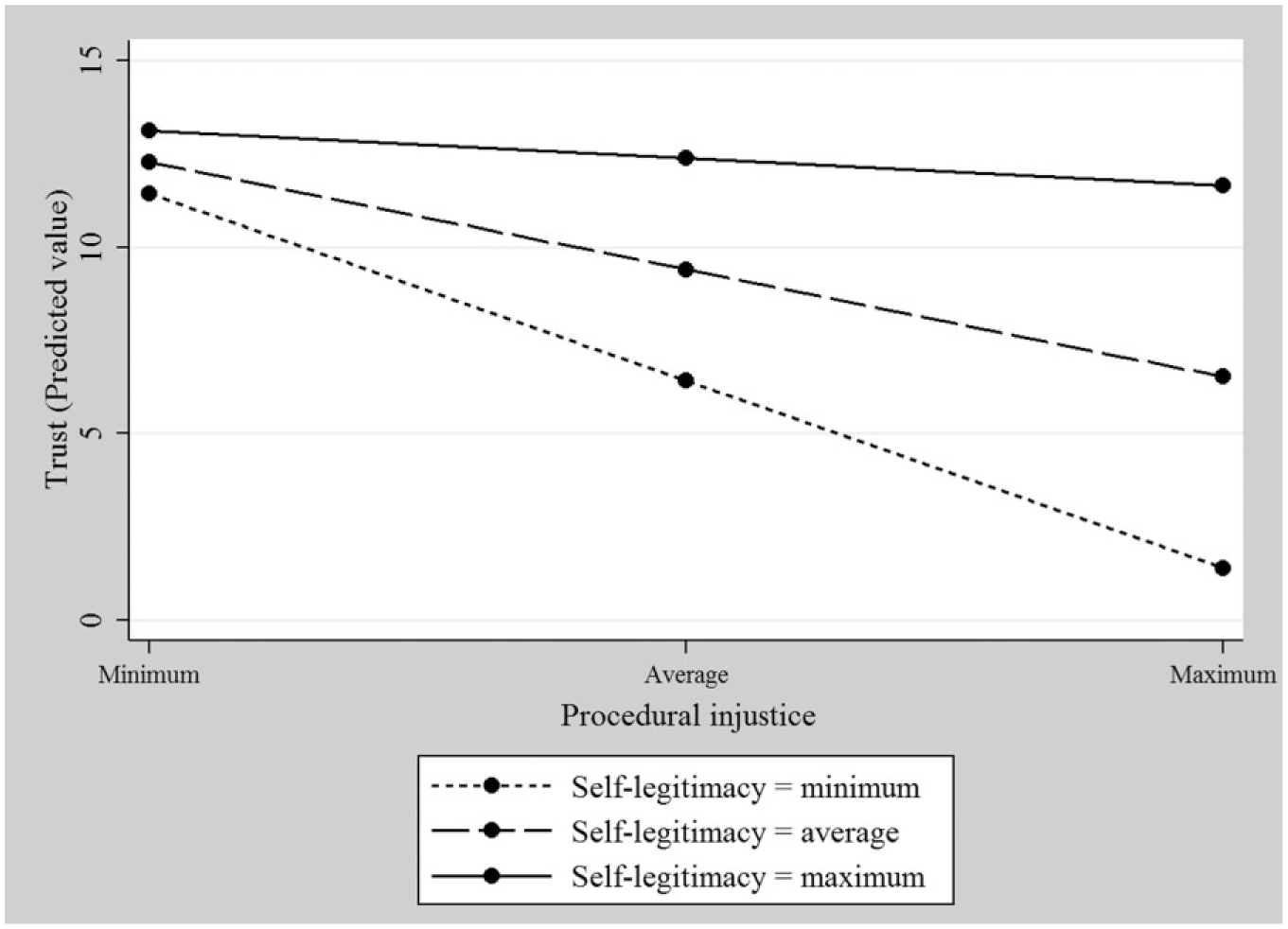
The Interaction Effect Between Procedural Injustice and Self-Legitimacy on Organizational Trust
Discussion
The success of an organization partially hinges on the extent to which employees trust the organization (Kramer, 1999; Kramer & Tyler, 1995; Mayer et al., 1995). Greater organizational trust is associated with numerous positive work-related outcomes such as commitment, policy adherence, job satisfaction, and acquiescence to organizational goals (Aryee et al., 2002; Dirks & Ferrin, 2002; Wat & Shaffer, 2005). In short, employees who trust their organization are more likely to engage in behaviors that advance its purpose. The same may be true of police agencies despite the limited amount of research attention devoted to the topic. Given the importance of organizational trust within police departments, the present study sought to provide a better understanding of the sources of trust and determine whether officer self-legitimacy protects officers against the perception of injustice. Using a survey of sheriff’s deputies, we demonstrated that (a) supervisor procedural injustice was negatively associated with organizational trust, (b) self-legitimacy was linked with greater trust in the agency, and most importantly, (c) self-legitimacy moderated the effect of procedural injustice on trust. With these results in mind, several issues deserve more detailed discussion.
For starters, there is an incredible amount of research centered on organizational trust within business settings. Yet, almost no research has examined what predicts police officers’ trust in their agency (Van Craen, 2016). This is an important gap in the literature because getting officers to buy into agency objectives such as procedural justice, intelligence-led, hot spot, or community-oriented policing (or any other policing tactic) is necessary for such strategies to be successful (Lurigio & Skogan, 1994; Skogan, Van Craen, & Hennessy, 2015). The roots of such buy-in may partially rest on the extent to which officers trust their agency. Our study advances this literature by revealing two key predictors of organizational trust in a law enforcement agency—procedural injustice and self-legitimacy. These results were expected given the growing body of work on procedural justice and self-legitimacy within police organizations (Bradford & Quinton, 2014; Tankebe, 2014a; Wolfe & Piquero, 2011). Wolfe and Nix (2016) recently showed that perceived organizational justice was associated with greater willingness to partner with community members. The current findings suggest that one reason this may be so is that officers are more inclined to trust their agency and the direction it is heading in terms of goals and strategies when they feel their supervisors treat them fairly. In other words, officers who experience procedural fairness from supervisors may be more likely to engage in beneficial work-related behaviors (e.g., working with community members) because it sends the signal that the overall agency can be trusted (i.e., it is doing the right thing for its employees and the citizens it serves). Organizational behavior research would anticipate this mediation effect (Aryee et al., 2002; Ertürk, 2007) but such empirical investigation needs to be conducted in a policing context. Does trust mediate the relationship between procedural justice and organizational citizenship behaviors among officers? We could not address this question with our data but our findings provide a good starting point for future inquiry.
Research should also continue to explore organizational trust in greater detail. The police are currently in a legitimacy crisis as a result of unprecedented levels of public scrutiny following several highly publicized deadly force incidents (Pyrooz, Decker, Wolfe, & Shjarback, 2016; Weitzer, 2015; Wolfe & Nix, 2016). Prior research indicates that negative publicity surrounding the police is linked to officers feeling less confident in their authority (Nix & Wolfe, 2015)—but importantly, this effect was not as strong as perceived organizational justice (i.e., organizational justice was more closely associated with such self-legitimacy). It is plausible then, that negative publicity coupled with perceived unfairness from supervisors might be detrimental to both an officer’s sense of self-legitimacy and the trust she has in her agency. If so, this could be bad news from a public safety standpoint. Indeed, many—including the directors of the FBI and Drug Enforcement Administration—have suggested that crime is going to rise as the police withdraw from aggressively performing their duties in response to public scrutiny. Is it possible that officers who are less trusting of their agency are more susceptible to the so-called “Ferguson effect” (Nix & Wolfe, 2016)?
With respect to the primary purpose of this study, we found that self-legitimacy is a particularly important concept. Officers who feel their supervisors treat them unfairly expressed lower levels of trust in the agency. Yet, for those officers with higher levels of self-legitimacy, procedural injustice was not as detrimental to their trust. This finding is important because it extends the literature on self-legitimacy (Bottoms & Tankebe, 2012; Tankebe, 2014b; Tankebe & Meško, 2015). Not only is this individual characteristic associated with beneficial work-related outcomes but it also appears to serve as a protective factor against negative experiences within an agency. This underscores the importance of recruiting officers with personality characteristics or prior experiences conducive to authority confidence. Given that the self-legitimacy literature is still in its infancy, it is difficult to determine exactly how this would be done. For now, however, personality inventories that are a routine part of many agencies’ hiring processes may benefit from incorporating measures that capture confidence and related characteristics. Also, recruiting some officers who come from backgrounds and work experiences that require high levels of confidence in vested authority (e.g., military experience) may be useful in hiring officers that are primed for higher levels of self-legitimacy.
Similar to many other organizations, employees within police agencies will encounter numerous direct supervisors throughout their careers. Some of these experiences will be viewed positively and others will be unpleasant. Although agencies typically strive to promote officers to supervisory positions who will deal with subordinates in a firm, but fair and evenhanded manner, supervisor quality exists on a continuum. The worst case scenario would be for an officer to experience one bad supervisor and have their entire perception of the agency spoiled. Our findings suggest that instilling self-legitimacy in officers is one avenue to help protect them from the (hopefully) momentary experience of procedural injustice from a specific direct supervisor. Cultivating self-legitimacy may take place through academy or in-service training programs. For example, officer training could incorporate discussions and exercises that focus on teaching officers to be confident in the authority vested upon them and how to use that authority in a fair manner and to their advantage. An important avenue for future inquiry will be the examination of valid recruitment and training strategies that aim to achieve self-legitimate police officers.
Furthermore, this suggests that we need to continue exploring the antecedents of self-legitimacy itself. We need to know more about what causes greater confidence in police officers. What role do variables such as previous experiences (e.g., prior military experience, training), personality characteristics (e.g., self-regulatory ability; see Wolfe, 2011), perceptions of the public or media, relationships with colleagues, and experiences with supervisors or command staff play in the development or maintenance of self-legitimacy? A related question is whether more officer self-legitimacy is always better. For example, it is possible that extremely high self-legitimacy is a sign of officer arrogance or other problematic personality traits (e.g., low self-control) that may lead to counterproductive work behaviors (see Donner, Fridell, & Jennings, 2016). Such questions are important to address as the self-legitimacy literature continues to grow.
The current study was able to advance the literature in several ways but there were some issues we could not address that provide opportunities for future research. For one, our results were based on a sample drawn from one sheriff’s department in the southeastern United States. Comparative research is necessary to uncover whether the same findings are observed in municipal agencies, across different regions of the United States, or, more broadly, within police agencies in different countries. Exploring differences across agency size and jurisdiction characteristics (e.g., crime rate, population composition) may also prove useful in this regard. Second, the results were based on cross-sectional data. This is a drawback of the broader literatures on both procedural justice and self-legitimacy. Currently, we simply do not have much longitudinal data on these issues within police organizations that can help address problems of causal order. One potential question that could be explored with longitudinal data is whether the relationship between self-legitimacy and organizational trust operates in a feedback process. That is, officers with greater self-legitimacy may be more likely to trust their organization but, over time, this trust may cultivate even higher levels of self-legitimacy in the officers. Finally, our study only examined the role of supervisor procedural injustice on organizational distrust. Future research may wish to examine whether other components of organizational justice, such as distributive fairness, are associated with officers’ trust in their agency (Bradford & Quinton, 2014). Such a relationship has been observed in the broader organizational behavior literature (e.g., Ambrose & Schminke, 2003; DeConinck, 2010). An interesting question that arises, therefore, is whether officer self-legitimacy can also protect against the negative impact of supervisor distributive injustice on organizational trust.
In the end, organizational trust, procedural justice, and self-legitimacy matter within police agencies. An agency full of officers who trust the organization and the direction it is going is undoubtedly better suited to serve the public than one which has many officers without such trust. It is, therefore, important for agencies to ensure they appoint mid-level supervisors who will treat their subordinates fairly, as this will promote trust in the organization along with other beneficial work outcomes. Of course, even if agencies take appropriate steps to do so, they may still find there are line-level officers who perceive certain supervisors as being unfair. Fortunately, officers with self-legitimacy appear to be better equipped to deal with unfairness from their supervisors. As such, agencies should strive to hire, train, and retain officers with greater confidence in their authority. Although empirical research pertaining to self-legitimacy is still emerging, early findings suggest that officers draw their legitimacy from at least four sources—supervisors, colleagues, the public, and the media (Nix & Wolfe, 2015; Tankebe, 2014b). Two of these sources—supervisors and colleagues—are directly influenced by organizational dynamics. By treating officers with procedural justice and placing them on shifts with co-workers whom they trust and feel supported by, agencies can instill greater confidence in their officers. This might seem idealistic but the group engagement model suggests that identification with one’s work shift influences one’s attitudes and behaviors (Tyler & Blader, 2000). Thus, it appears to be in the best interest of an agency to take steps to ensure that officers trust the organization. Finally, it is important to note that the President’s Task Force on 21st Century Policing (2015) recently suggested that establishing trust with community members should be a primary goal of U.S. law enforcement. A chief or sheriff who proclaims her agency is committed to fostering community trust also would be wise to ensure that her own officers trust the department and its leadership. It is our hope that we have shed light on some of these issues, and researchers will continue to explore avenues to promote organizational trust in the future.
Footnotes
Appendix
CORRELATION MATRIX for All Variables Used in Analysis
| Variable | 1 | 2 | 3 | 4 | 5 | 6 | 7 | 8 | 9 | 10 | 11 |
|---|---|---|---|---|---|---|---|---|---|---|---|
| 1. Trust | — | ||||||||||
| 2. Procedural injustice | −.40 | — | |||||||||
| 3. Self-legitimacy | .31 | −.17 | — | ||||||||
| 4. Age | .04 | −.04 | .00 | — | |||||||
| 5. Male | .03 | −.02 | .10 | .06 | — | ||||||
| 6. Minority | −.03 | .03 | .07 | .19 | −.06 | — | |||||
| 7. 4-year degree | −.03 | −.01 | .04 | −.16 | −.06 | −.06 | — | ||||
| 8. Deputy | .00 | .06 | −.04 | −.19 | −.06 | −.01 | .01 | — | |||
| 9. Patrol | −.08 | .10 | .02 | −.24 | .08 | −.06 | −.01 | .08 | — | ||
| 10. Experience ≥ 10 years | −.06 | −.05 | −.04 | .45 | .11 | .09 | −.09 | −.27 | −.19 | — | |
| 11. Military | .04 | .00 | .13 | .16 | .23 | .09 | −.09 | −.08 | .07 | .12 | — |
An earlier version of this article was presented at the 71st Annual Meeting of the American Society of Criminology in Washington, DC, on November 18, 2015.