



Abstract
In this study, we present findings that detail the criminal offending histories and typologies of suspected sexual offenders identified from an initiative to follow up on the testing of thousands of previously untested sexual assault kits (SAKs). This study advances our understanding of sexual offenders by incorporating data from criminal justice system records (“detected” criminal offending) with data from newly tested SAKs that were not previously adjudicated (“undetected” sexual offending). Our findings demonstrate that these offenders have extensive criminal histories, very frequently continued to offend after the SAK-associated sexual assault, and, more often than not, have criminal histories that do not include a prior arrest(s) for rape. A latent class analysis identified three classes of offenders based on their offending history, “High-Volume Generalists,” “Low-Volume Offenders,” and “Sexual Specialists.” Most were generalists, with a large proportion committing lots of serious crimes.
Keywords
Sexual assault is a serious social and public health problem impacting a significant portion of the population. Prevalence studies estimate that one in five women in the United States have experienced attempted or completed forced penetration in their lifetime, and one in 14 men have been forced to penetrate someone in their lifetime (Smith et al., 2015), with approximately 95% of all sexual offenders being male (Cortoni & Hanson, 2005; Sandler & Freeman, 2009). Estimates vary greatly as to how prevalent repeated sexual offending is and how it relates to other types of criminal offending. This variation primarily stems from the difficulty in measuring repeat offending, especially among sexual offenders, and depends upon (a) which population is under observation (e.g., convicted sexual offenders, college students, clinical samples of sexual offenders); (b) how offending and reoffending is known and measured (e.g., self-report, arrest, and/or conviction from criminal justice system records); and (c) the length of the follow-up period (e.g., 3–5 years postrelease, lifetime prevalence). In addition, our understanding of how sexual offenders differ by the types of crimes committed and the frequency with which they commit crimes is limited by these same factors.
In this study, we describe the criminal histories and explore the typologies of suspected sexual offenders identified through an initiative to test and follow up on the testing (via investigation and prosecution) of thousands of previously untested sexual assault kits (SAKs) in one urban jurisdiction. A SAK (also known as a rape kit) is a set of items used by medical professionals for collecting and preserving evidence from a victim of sexual assault for investigation and prosecution. The findings presented here improve our understanding of sexual offenders’ criminal offending patterns by employing a unique dataset that combines data from official criminal justice system records (“detected” criminal offending) with data from suspected sexual offenders who were identified as part of the SAK initiative, but had not been criminally adjudicated of the SAK-associated sexual assaults (e.g., did not result in being found guilty, found not guilty, or having pled guilty; “undetected” sexual offending).
Serial Criminality of Sexual Offenders
In most contexts, serial criminality is defined as committing two (Lovell et al., 2017; Slater et al., 2014) or sometimes three or more separate incidents at two points in time for a certain population of interest (Edelstein, 2016). Serial criminality most often implies adjudication in the criminal justice system (Deslauriers-Varin & Beauregard, 2013; Rebocho & GonÇalves, 2012), meaning that the offender is connected to two or more crimes via arrest and/or conviction.
Research shows that sexual offenders have high serial criminality rates, but the level and nature of the criminality matter—sexual recidivism (reoffending for a sexually based crime) and general recidivism (reoffending for any crime). The most recent recidivism rates of sexual offenders in the United States come from a large representative sample of incarcerated individuals released from 30 states in 2005 and followed for 9 years postrelease. Nonsexual offenders have higher rearrest rates for any crime (general recidivism) compared with sexual offenders (84% vs. 67%), but sexual offenders are 3 times as likely as nonsexual offenders (8% vs. 2%) to be arrested for rape or sexual assault (Alper & Durose, 2019). Recidivism rates increase as the follow-up period expands (Durose et al., 2014), and the longer sexual offenders go without getting rearrested for a sexually based offense, the less likely they are to get rearrested for another such offense (Harris & Hanson, 2004).
Sexual offenders frequently commit other types of crimes in addition to sexual offenses (general recidivism). In a study of prisoners released in 1994, in 15 U.S. states, 3 years after their release, 5% of sexual offenders were arrested for another sexually based crime and 43% for any crime (Langan et al., 2003). In addition, in an analysis of defendants from the 75 largest counties in the United States who were referred to prosecutors on rape charges, 37% had at least one prior felony conviction, and 10% had five or more felony convictions (Reaves, 2013).
However, most studies measure serial criminality by way of multiple convictions, which is challenging because of known issues with using official criminal justice system records. Given that rape is the most underreported violent crime (Remmison, 2001), “actual” sexual reoffending rates are likely much higher, as an estimated two thirds of all rapes are not reported to law enforcement (Morgan & Kena, 2018). Even if a sexual assault is reported, it is unlikely to lead to an offender being prosecuted (Lonsway & Archambault, 2012). The majority of reported sexual assaults never proceed beyond the investigative phase (Bouffard, 2000; Campbell, 2008), which has allowed offenders to remain free to reoffend (Lovell et al., 2017; Lovell, Luminais, et al., 2018). Thus, the criminal justice system’s inadequate response to sexual assault is a contributing factor in serial sexual perpetration (Human Rights Watch, 2013; Lovell et al., 2017). Data that rely only on official criminal justice system records are an undercount of reoffending, but especially in the case of sexually based reoffending. It is not known how great this undercount is. Thus, the observed lower general recidivism rate for sexual offenders might be an artifact of not having a conviction for a sexual offense and, therefore, not labeled as such.
Compared with serial criminality rates based on official criminal justice system records, self-reported sexual reoffending rates are much higher. Studies of self-reported sexual offending behavior among commuter college students and military recruits find that between 62% and 71% of men who ever sexually assaulted, attempted to sexually assault, or used coercion to sexually assault, did so more than once (Lisak & Miller, 2002; McWhorter et al., 2009). In addition, Lisak and Miller’s (2002) study of undetected sexual offending (i.e., had not been prosecuted) among commuter college students finds that sexual offenders are often associated with other types of violent crimes—10 times more likely to engage in domestic violence, child abuse, battery, or child sexual abuse than nonsexual offenders. However, self-reported sexual offending data are also limited in that offenders must be able to recall, admit, and self-define these offenses as nonconsensual (LeBeau, 1985).
Typologies of Sexual Offenders
Most research that compares sexual offenders with nonsexual offenders or examines reoffending rates of sexual offenders treats these perpetrators as a homogeneous class. Traditionally, they have been classified according to the age of the victim (e.g., rapists vs. child molesters; Simon, 1997a, 1997b) and by the victim’s relationship to the offender (e.g., stranger vs. nonstranger; Harris et al., 2009). Yet, heterogeneity is common among sexual offenders (Lovell et al., 2017).
Within the heterogeneity literature, there exists disagreement as to whether sexual offenders are generalists (Gottfredson & Hirschi, 1990) or specialists (Harris et al., 2009) in their offending patterns. The generalist perspective incorporates a more traditional theory of crime and holds that sexual offenders are more like all criminal offenders, displaying versatility in their offending—committing different types of crimes over time (Gottfredson & Hirschi, 1990). In comparison, the specialist perspective holds that sexual offenders primarily commit sexual offenses throughout their criminal careers (Simon, 1997a, 1997b). Several studies find greater support for the generalist perspective, with the exception of a small subgroup of specialized offenders, primary child molesters, who tend to display more specialization (Harris et al., 2009; Soothill et al., 2000). In Lussier’s (2005) review of the generalist versus specialist literature, he finds support for both hypotheses and argues that these are not necessarily contradictory within the prism of a developmental criminological framework that incorporates a life course perspective to the examination of criminal sexual behavior.
Studies show that as sexual offenders age, their rates of desisting from sexual offending increase (Farmer et al., 2015). When examined over the life course, sexual offenders tend to slow down and become more specialized until they no longer offend (LeBlanc & Fréchette, 1989). Using Markov Chain analyses, Stander et al. (1989) show support for two types of sexual offenders—one group is characterized by lower conviction rates, primarily for sexual offenses (i.e., specialists), and the other group consists of generalists that become more specialized over time. Using similar data as those presented in the current study, Campbell, Pierce, et al. (2019) examine “detected” sexual offending via criminal justice data and “undetected” sexual offending from offenders identified as a part of an initiative in Detroit to test thousands of previously untested SAKs. They find high rates of serial sexual criminality and a sizable amount of undetected sexual offending. They also identify four classes of sexual offenders who vary according to their volume of sexual offending and onset and/or desisting from sexual offending. Their findings suggest that given the significant underreporting rates for sexual assault, measuring desistance only through the use of official criminal justice records has the potential to overstate desisting among sexual offenders greatly.
Aim of This Study
Our current understanding of the offending and reoffending behavior of sexual offenders has been limited because of the available methods by which criminal offending is assessed, tracked, and identified. This study overcomes some of these limitations by combining criminal justice system records (“detected” offending) with data from suspected serial offenders who have been identified as part of a SAK initiative, but were not criminally adjudicated of the SAK-associated sexual assaults (“undetected” sexual offending). Data from previously untested SAKs provide a unique opportunity to explore offending histories of suspected sexual offenders without relying solely on self-report or criminal adjudication and allow for a historical perspective for observing criminal histories over extended periods of time.
However, it is important to note that the findings are based on individuals who have been identified as suspects in at least one SAK-associated sexual assault via a DNA hit and/or an investigation. Thus, these are not (yet) convicted sexual offenders (for the SAK-associated sexual assaults) but suspected sexual offenders, which is consistent with the nomenclature used in the criminal justice system to refer to sexual offenders who have been identified, arrested, or charged with a sexual offense (Savino & Tuvey, 2005) and in research from SAK initiatives (Campbell, Feeney, et al., 2019; Campbell, Pierce, et al., 2019; Lovell et al., 2017; Lovell, Luminais, et al., 2018).
Prior research using a subsample of the data presented in this study has explored differences between serial and nonserial suspected sexual offenders (Lovell, Flannery, & Luminais, 2018) and intimate partner sexual assaults (Lovell et al., 2019) of suspected sexual offenders identified as part of the SAK initiative in Cuyahoga County. In another study, with a subsample of these data, we explored differences in the modus operandi and victim preference (including crossover by age, gender, and relationship status) of suspected serial sexual offenders who have been linked to more than one SAK-associated sexual assault in our sample of coded cases from the SAK initiative (Lovell, Luminais, et al., 2018).
In this study, we present descriptive statistics exploring the types of offenses and the extent of the offenders’ criminal offending (general and sexual offending). We also present a latent class analysis (LCA) examining typologies of offenders based on detected crimes in the offenders’ criminal histories. The current study expands on our prior research by focusing on offenders’ criminal histories (general and sexual offending) and by exploring how these offenders can be classified according to the types and frequency of crimes in their criminal histories using an expanded sample of offenders. To the best of our knowledge, this is the first study to explore the general and sexual offending histories of suspected sexual perpetrators identified as part of a SAK initiative. We conclude with a discussion of what can be learned by examining the criminal offending of undetected suspected sexual offenders identified from testing SAKs, the implications regarding the amount of undetected and/or repeat sexual and general offending committed by sexual offenders, and the need for changes in how the system, specifically law enforcement, responds to sexual assault.
Method
Untested SAKs in Cuyahoga County (Cleveland, Ohio)
The Cuyahoga County SAK Task Force (Task Force) is currently about two thirds of the way through their initiative to follow up on the DNA testing of nearly 7,000 SAKs in the county for an almost 20-year span of time. Almost 5,000 of these were SAKs from 1993 through 2011 from Cuyahoga County that were never submitted for DNA testing and were “forklifted” (where all unsubmitted SAKs were tested and not triaged or prioritized prior to testing), and 1,867 additional SAKs from the Cleveland Police Department from the same time period that had some previous, but mostly outdated, testing. We use the term untested throughout this article to refer to both the nearly 5,000 previously unsubmitted SAKs and the “Cleveland 1,867” SAKs.
For any data from a “backlog” or large numbers of previously untested SAKs, there should be a mention of the jurisdiction’s policies and practices regarding which SAKs were submitted at the time of the initial investigation. In Cuyahoga County (especially in the case of the Cleveland Police Department, which contributed approximately 98% of all SAKs), very few kits were regularly submitted for forensic testing prior to the mid-2000s (Luminais et al., 2017) and even when some SAKs were being submitted for testing, there was no standard policy or practice around which SAKs were submitted or tested (Lovell, Luminais, et al., 2018). This stands in contrast to other jurisdictions that chipped away at their “backlog” of SAKs over time, and, therefore, did not have as many (or any) untested SAKs (Dissell, 2018). All of these factors impact what is contained in the “backlog.” In jurisdictions that did chip away over time, the “undetected” suspects would be a subset of all SAK-identified suspects. As this jurisdiction’s practice was not to submit almost any SAKs for testing during this time period, the “undetected” data described here include the vast majority of all SAKs collected in the jurisdiction during this time period.
The SAKs from this initiative were submitted for forensic testing to obtain DNA profiles of suspects. In cases where a suspect’s DNA profile could be obtained from the testing, the DNA profile was uploaded into the federal DNA database, the Combined DNA Index System (CODIS), to determine whether the DNA profile matched a DNA profile already in CODIS, thereby resulting in a DNA “hit.” This process allows for reported crimes to be linked to each other when DNA profiles can be obtained from the evidence collected from the crime scene, demonstrating that the same offender could have committed multiple crimes resulting in a “forensic hit” (Butler, 2015). This is of note in this context because reported crimes can be linked together via DNA, even if the offenders have not been arrested for or adjudicated of these crimes.
Practically, for the SAKs to hit to each other, several things had to happen. Each sexual assault (a) had to be reported, (b) had a SAK collected, (c) the SAK had to have enough DNA from the offender for testing, (d) the SAK had to be retained by law enforcement, (e) the SAK had to be submitted for testing, and (f) the SAK had to have enough DNA information to be eligible for entry into a DNA database. A breakdown at any of these steps means the DNA would not make it into the database, and the sexual assaults could not be linked (Lovell et al., 2019). Therefore, even statistics on the number of reported SAKs that hit to other SAKs likely represent an undercount of serial sexual offending.
Data
Data From SAKs
Data from previously untested SAKs provide a unique opportunity to explore sexual offending for a number of reasons. First, reported cases of sexual assault suffer from significant attrition as they proceed through the criminal justice system (Morabito et al., 2019). It is estimated that out of every 100 forcible rapes that are committed, between five and 20 will be reported, and 0.4 to 5.4 will be prosecuted (Lonsway & Archambault, 2012). Data from SAKs help mitigate this attrition because the link to potential suspects can be made earlier in the criminal justice process—when victims have SAKs collected (usually within 72 hr of the sexual assault). This is in contrast to examining only official criminal histories of offenders, which implies arrest or conviction. In the data presented here, 98% of all the victims reported the sexual assaults to police in addition to having a SAK collected, potentially constituting a more representative sample of sexual offenders. Second, these data represent a more objective means by which to connect suspects to the sexual assault(s)—DNA (Lovell et al., 2017). Finally, given that these data cover an extended period of time, we can examine the criminal histories of a cross section of suspected sexual offenders identified as part of the SAK initiative over decades in one jurisdiction.
SAK Case Files
Our research team was given access to the Task Force’s SAK case files. From the 7,000 previously untested SAKs mentioned above, the research team coded a sample of 721 SAK case files. All 721 SAKs include cases where the Task Force had completed an investigation, but the cases were not previously adjudicated. More specifically, we sampled cases that were either indicted (n = 480 of 721) or not indicted due to insufficient evidence (n = 241 of 721) by the Task Force. We focus on these cases because they have complete documentation in the case files and encompass the cases that could currently be prosecuted. The reasons why a case would not be prosecutable now include the case being previously disposed, outside of the statute of limitation, abated by the suspect’s death, or connected to a consensual partner (meaning the DNA hit from the SAK was determined to belong to the victim’s consensual partner and not the suspect). None of these nonprosecutable cases are included in this sample.
We coded in waves based on sequential grant awards. Wave 1 and 2 include all SAK cases that, as of August 2015, had either been indicted or closed due to insufficient evidence by the Task Force (n = 428). Wave 3 includes a random sample of SAK cases (n = 293) that, from September 2015 to September 2016, had either been indicted or closed due to insufficient evidence—capturing more currently investigated cases by the Task Force. The total N for all three waves is 721. This sample does not include all of the Task Force’s closed investigations as of September 2016 that resulted in an indictment or closed due to insufficient evidence. The majority of the sexual assaults occurred between 1993 and 1999 (72.5%), which reflects the prioritization of cases based on the state’s 20-year statute of limitations for these cases.
Criminal Histories
From these 721 SAK case files, a team of three researchers coded the administrative criminal histories of 418 (58.0%) suspected sexual offenders who were identified as part of the SAK initiative. The remaining were linked to SAKs, but had not yet been identified, so we do not have information on their criminal histories, as DNA testing and/or investigations do not always result in an identified offender. The vast majority of these suspects were identified because of the DNA testing—79% were linked to a SAK that had a “hit” in CODIS, indicating prior contact with the criminal justice system. The remaining 21% of cases were identified as a result of an investigation rather than through a CODIS hit.
We coded administrative, statewide criminal histories that interface with out-of-state databases. When possible, we also followed up with online county dockets to verify levels of crimes and conviction status. Juvenile criminal records were not coded, but when the juveniles were “bound over” to adult court, those offenses would appear in their criminal records and, therefore, were coded. We coded all felony-level arrests (Yes/No) and convictions (Yes/No) for eight index crimes (e.g., murder, rape, 1 robbery, felonious assault, burglary, motor vehicle theft, theft, and arson) and three additional crimes (i.e., kidnapping [often charged in connection with sexual assault in Ohio], felony drug, and domestic violence). We did not code if the offender had been arrested for other types of sex crimes (e.g., sexual battery, gross sexual imposition, unlawful conduct with a minor) in their criminal histories. Importantly, we have distinguished rape arrests and/or convictions for the SAK-associated sexual assault from non-SAK-associated sexual assaults for the purposes of defining a serial sexual offender. In these data, a suspected serial sexual offender is defined as having at least one arrest for rape in addition to the SAK-associated sexual assault(s).
Domestic violence was the only offense that we coded that could be a misdemeanor or a felony. We included this crime to examine the previously established connection between domestic violence and sexual assault (Lisak & Miller, 2002). We also included felony drug (not an index crime) because of the frequency with which this crime appeared in the criminal histories. Arrests or convictions for attempted crimes (e.g., attempted rape, attempted homicide) were not included. 2 The coding was based on the crime for which they were arrested, not convicted (e.g., arrested for rape, but convicted of gross sexual imposition). Dates for each arrest were also coded.
Of the 418 identified suspects, 10 did not have a criminal history report in their case file. So, our final analytic sample includes 408 suspected sexual offenders who were connected to the now-tested (but not previously adjudicated) SAKs, identified as part of this initiative, and had a criminal history in their case files. Of the 408, 21 did not have crimes that fit the above coding scheme. Thus, 94.9% of all identified offenders had at least one felony arrest for at least one of these 11 crimes. Because we are only capturing felony arrests for the 11 crimes mentioned above, the offending histories described in this study vastly underestimate the full extent of their criminal histories and, thus, should be interpreted as conservative estimates. 3
The historical aspect of these data allows us to explore offenders’ criminal histories for extended periods of time. The mean number of years of observation for the sample is 27.2 years (SD = 9.2), which is calculated by subtracting the date of the last observation (which could be based on their statewide administrative criminal history or the online docket) from age 18. Their offending histories span almost a decade and a half, where the average number of years from the first arrest to the last arrest is 14.1 years (SD = 10.3).
We use descriptive statistics to explore the offenders’ criminal histories and LCA (Collins & Lanza, 2010; Samuelsen & Dayton, 2010) to identify unobserved typologies (“classes”) based on categorical data not specified a priori. R package “poLCA” (Linzer & Lewis, 2011) was used to conduct LCA.
Results
Descriptive Statistics
Table 1 provides the descriptive statistics of the suspected sexual offenders’ criminal histories and shows that these suspects have extensive criminal histories for serious felonies. Each suspect has, on average, 7.4 arrests and 3.9 convictions according to our prescribed coding scheme. Felony drug possession is the most common type of offense—61.0% have at least one felony drug arrest, followed by felonious assault, domestic violence, robbery, and burglary. More than 7% have been arrested for murder. The overall average conviction rate is 52.9%. Felony drug possession has the highest conviction rate (82.0%). Conviction rates for most other crimes hover around the mid-50% to mid-40%. Rape has the fifth highest conviction rate (46.1%).
Descriptive Statistics of the Criminal Histories of Suspected Sexual Offenders Identified via the Sexual Assault Kit Initiative (n = 408)
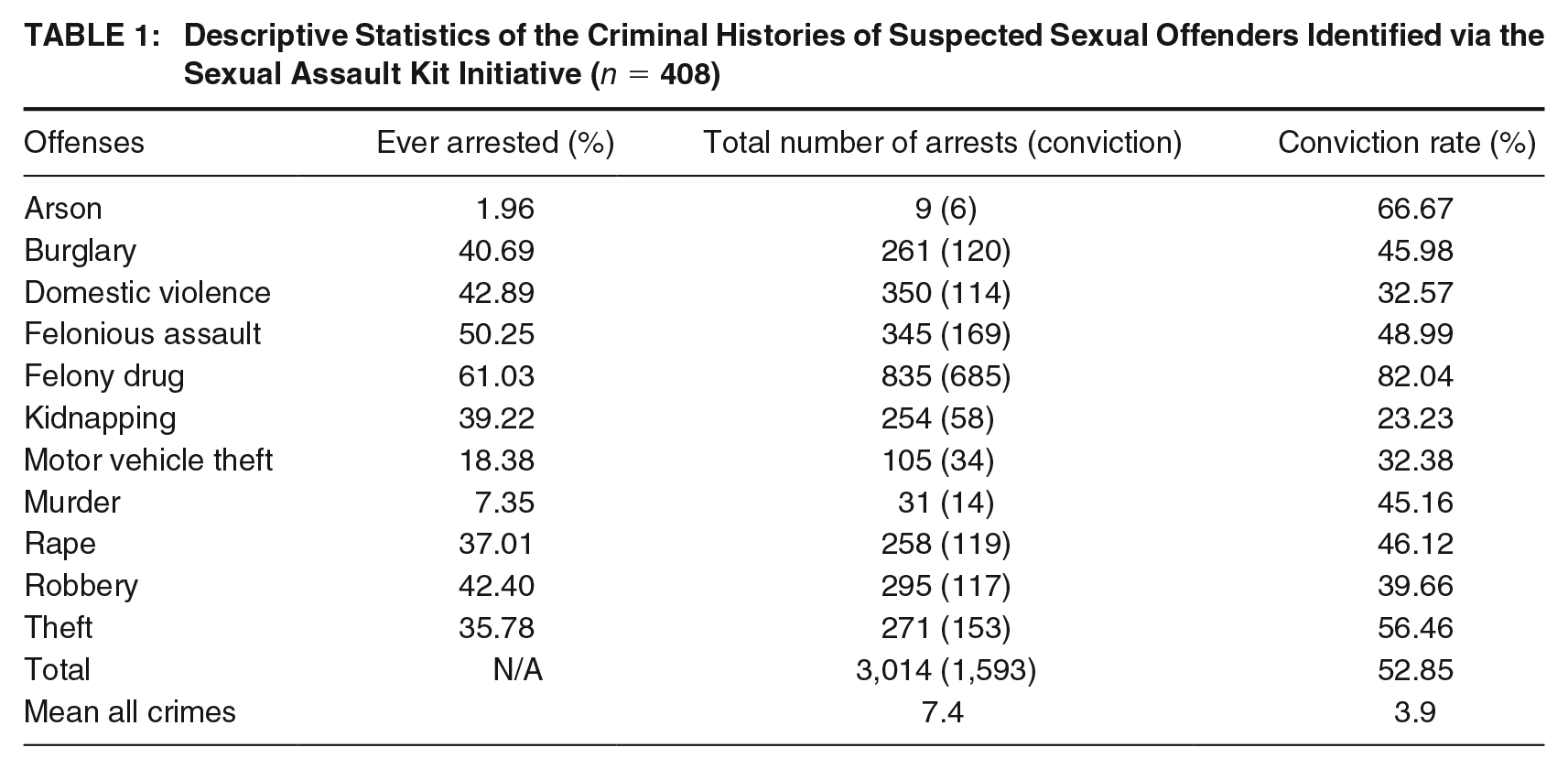
A bit more than a third of the offenders have at least one arrest for the index crime of rape, including SAK-associated and non-SAK-associated sexual assaults (37.0%). Out of these 258 rape arrests, 189 are not associated with the SAK, and 123 offenders are connected to these 189 rape arrests. Therefore, 30.2% of our sample are suspected sexual offenders.
We also examine arrests in reference to the SAK-associated sexual assault, according to whether the suspect has ever been arrested before, after, or both before and after the SAK. In instances where the offender is linked to more than one SAK, prior and post are in relation to the first linked SAK in our data. The majority of the offenders have arrests prior and post (56.1%). Approximately a third have only postarrests (31.1%). When combined, this implies that 87.2% of the offenders continued to be arrested for a variety of offenses after the SAK-associated sexual assault. The remaining 7.6% have prior only.
As a large number of untested SAKs were tested at one time, our data represent a historical perspective on the extent to which offenders are connected to more than one SAK in our sample. More than a fifth of these suspected sexual offenders (19.4%; n = 81 of 418) have two or more untested SAKs included in our sample. Of these, 67.9% have 2 SAKs, 16.0% have 3 SAKs, and 16.0% have 4+ SAKs (maximum = 7 SAKs). This is likely an underestimation of sexual reoffending in the jurisdiction for several reasons. First, this does not include all SAKs in the entire initiative—only those included in our sample. Second, 41% of all the SAKs tested as part of the initiative did not have enough DNA to be eligible for CODIS entry (Lovell, Luminais, et al., 2018) so offenders could not be linked via DNA to those SAKs. Third, this initiative is still in the process of investigating and prosecuting, so these statistics do not represent the final number of linked SAKs.
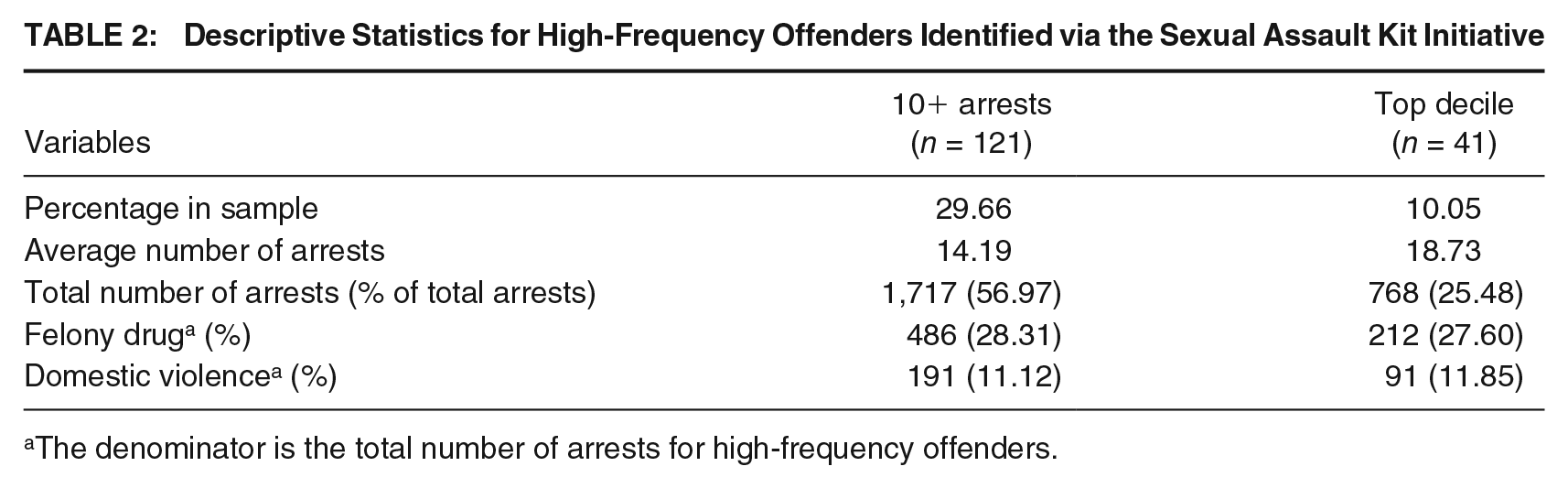
Given the extensive amount of offending, Table 2 explores high-frequency offenders, defined in two ways. First, we define as those with 10+ arrests, which represent 29.7% of our entire sample and 57.0% of all arrests (corresponding to 1,717 arrests). We also define proportionally—those in the 10% of the distribution for the total number of arrests. We find that 10.1% of offenders are in the top decile of the distribution, accounting for 25.5% of all arrests (corresponding to 768 arrests). The average number of arrests for those in the top decile is 18.7 arrests per offender. Felony drug is the most common offense in the top decile, with 212 of the 768 (27.6%), followed by domestic violence arrests (91 out of 768, 11.9%).
Descriptive Statistics for High-Frequency Offenders Identified via the Sexual Assault Kit Initiative
The denominator is the total number of arrests for high-frequency offenders.
LCA
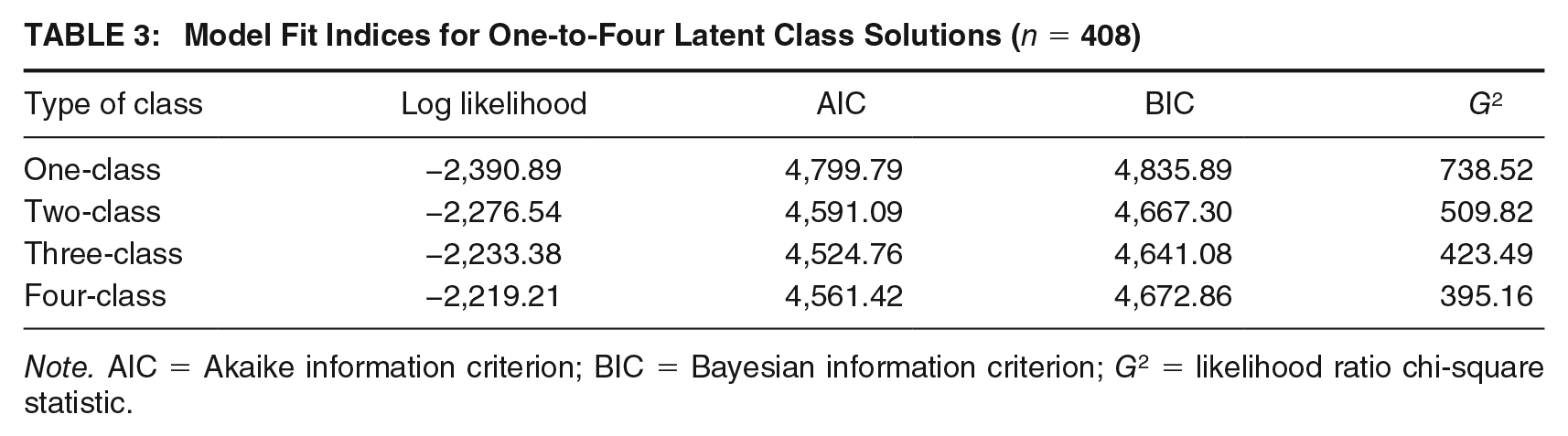
We began the LCA by creating a dummy variable to represent whether the suspect had ever been arrested for a type of crime (0 = never arrested for type of crime, 1 = ever arrested for type of crime). Because murder and arson are very low in prevalence, they have been excluded from LCA analysis, resulting in nine “ever arrested for type of crime” variables entered as indicators of class. Several goodness of fit indices were examined to identify the best fitting solution. Table 3 presents the model fit indices for a one- to four-class model. The three-class solution yields the smallest value for Bayesian information criterion (BIC). Although the values for Akaike information criterion (AIC) and likelihood ratio chi-square statistic (G2) drop in the four-class solution, the classes are not interpretable. The four-class solution divides Class 3-“Low-Volume Offenders” into two subclasses that do not provide substantive information for interpretation. Based on the estimates provided by these indices, a three-class solution best fits the data and provides the most meaningful classification.
Model Fit Indices for One-to-Four Latent Class Solutions (n = 408)
Note. AIC = Akaike information criterion; BIC = Bayesian information criterion; G2 = likelihood ratio chi-square statistic.
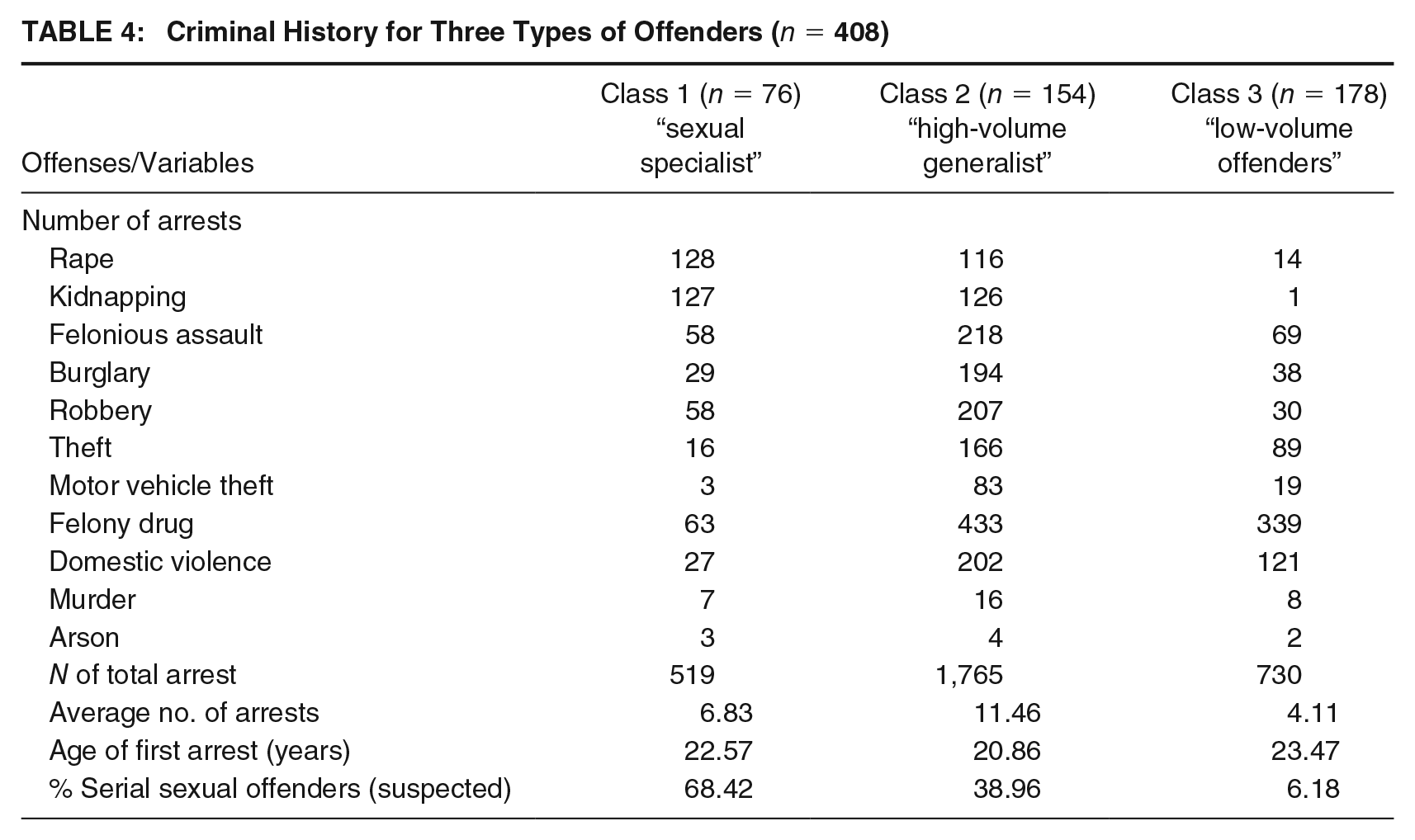
The LCA yields three qualitatively different typologies of sexual offenders according to the probability of having an arrest for each of the crimes. These probabilities are detailed in Table 4. Table 4 also provides descriptive statistics comparing the three classes based on the probability of arrest for each crime, the number of arrests and convictions for each crime, and other characteristics. The classes were named according to the types, combinations, and frequencies of crimes for which they are most likely to have been arrested. All classes have high probabilities for felony drug and domestic violence.
Class 1: “Sexual Specialists” (n = 76, 18.6%) are characterized by their high probability of sexually related crimes (i.e., rape, kidnapping, and felonious assault; see Table 4 and Figure 1). Out of 519 arrests in Class 1, 128 are for rape (24.7%), 127 are for kidnapping (24.5%), and 58 are for felonious assault (11.2%). Class 1 offenders’ average number of arrests is 6.8 (higher than Class 3 but lower than Class 2). The age of first arrest for Class 1 is 22.6 years. The majority of the offenders in Class 1 (68.4%) are suspected serial sexual offenders via being linked to a SAK-associated sexual assault and having a non-SAK-associated arrest for rape in their criminal history (Table 4).
Class 2: “High-Volume Generalists” (n = 154, 37.8%) are characterized by their high probability of committing all crimes. Class 2 offenders represent the vast majority of arrests in these data—1,765 arrests. They have an average of 11.5 arrests per offender—the highest number of the three classes. Their average age of first arrest is 20.9. About 40% of the Class 2 offenders are suspected serial sexual offenders.
Class 3: “Low-Volume Offenders” (n = 178, 43.6%) are characterized by their high probability of domestic violence and felony drug arrests (the two most frequent types of arrests in these data) and low(er) probability for almost all other crimes. Out of 730 arrests connected to Class 3 offenders, 339 are for felony drug (46.4%), and 121 are for domestic violence (16.6%). Class 3 offenders have an average of 4.1 arrests. The average age of first arrest for Class 3 offenders is 23.5 years, which is the highest age among the three classes. Approximately 6% of this class has been arrested for a non-SAK-associated sexual assault(s); yet, the amount of kit-to-kit serial sexual offending in these data indicate that they could have more sexual assaults that occurred during this time period.
Criminal History for Three Types of Offenders (n = 408)
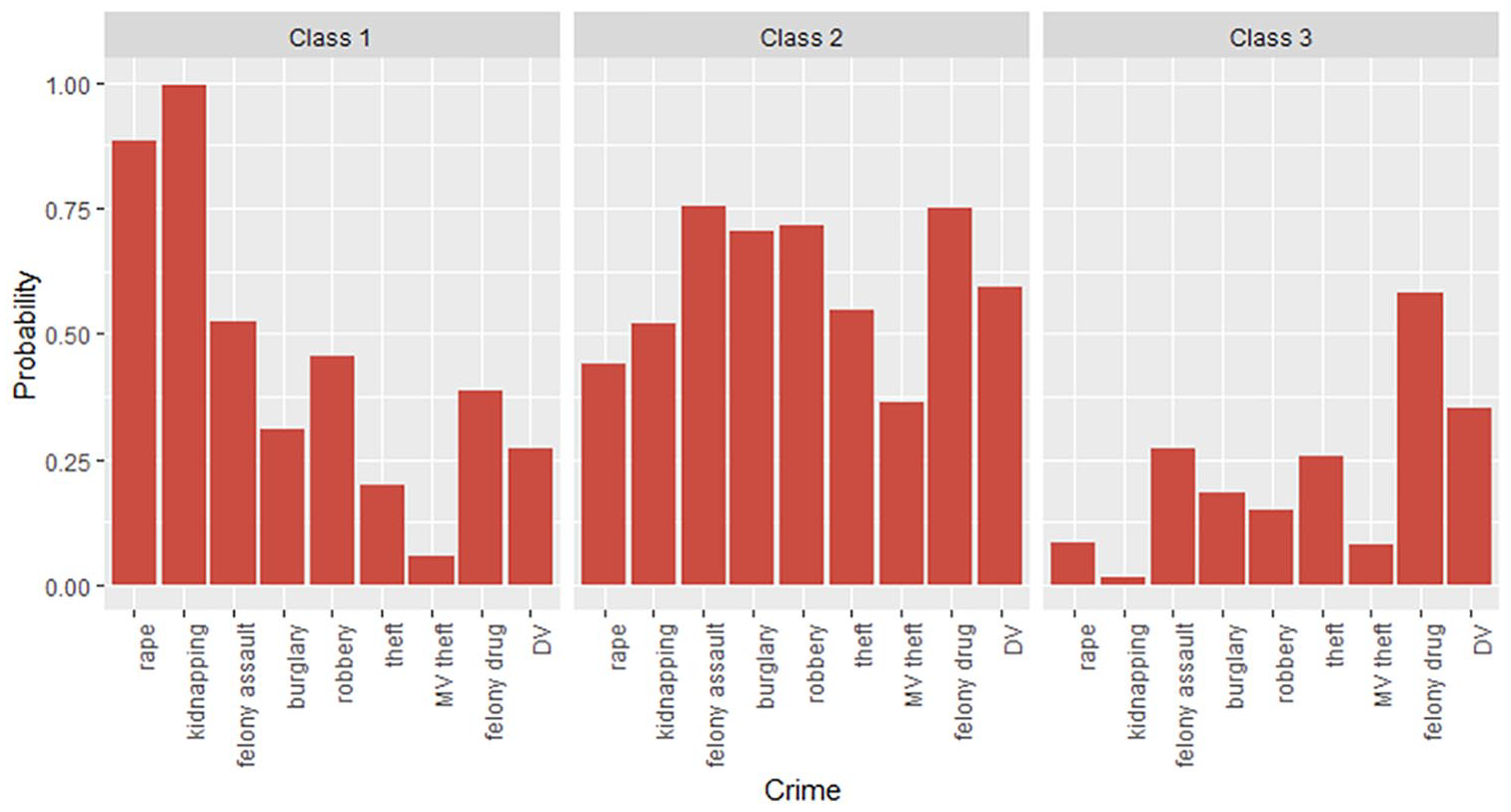
Probabilities of Arrest for All Included Crimes (Except Murder and Arson), by Class
Discussion
Most of what we know about sexual offenders’ criminal histories are based upon offenders who have been adjudicated of their crimes or based upon self-report. In the former, convicted sexual offenders represent a very small and skewed proportion of all sexual offenders, as convictions for sexual assault are the exception rather than the rule (Lonsway & Archambault, 2012). Self-reported offending has the inherent issue of relying on the perpetrators to recall, disclose, and self-define a sexual act as nonconsensual. This study advances our understanding of sexual offending by overcoming many of these challenges and provides a unique opportunity to explore offending patterns and typologies of suspected sexual offending. These data are derived from a large sample of sexual assaults with previously untested SAKs over an almost 20-year span of time in one jurisdiction and incorporates the results of the forensic DNA testing (“undetected” sexual offending not based on offender self-report) and official criminal offending histories (“detected” offending). The historical nature of our data allows for an extended period of time (on average, 27 years) to observe offending behavior. In addition, the undetected sexual offending is primarily based on more objective linkages made earlier in the criminal justice process (i.e., DNA collected when the victim reported the sexual assault).
Our results show very high rates of general criminal offending among these suspected sexual perpetrators. The vast majority continued to offend after the SAK-associated sexual assault and, more often than not, do not have an arrest for rape in their criminal histories. Consistent with other literature (Lussier, 2005), our findings support both the “generalist” and “specialist” hypotheses for these individuals. We identify two generalist classes—one with large numbers of arrests and one with low numbers of arrests. The low-frequency generalist class has a small probability of sexually reoffending (nonserial sexual offenders)—or, more accurately, not having multiple arrests for rape. Perhaps these are the “one-off” offenders. Perhaps their sexual offending remains undetected. The data presented here support the latter assumption. We also identify one sexual specialist class. Our findings are also likely an undercount of these offenders’ official criminal records and their actual offending, and yet, even with this undercount, our findings suggest that serial general offending and serial sexual offending are much higher than previously expected.
These findings complement prior work on suspected sexual offender typologies coming out of the SAK initiative, namely, Campbell, Pierce, et al. (2019). They model the trajectories of suspected serial sexual perpetrators identified from the SAK initiative in Detroit. This work varies from what we present here in that they examine serial sexual offending (not general offending and sexual offending), and they examine typologies via an age cohort, not a cross section. However, given the amount of undetected offending they find from a SAK initiative in a different city, this gives greater support for our findings that serial sexual offending is potentially much higher than previously expected and that sexual offenders are not a homogeneous group.
In the development of this action research project, our law enforcement collaborators spoke of wanting guidance on which suspected sexual offenders were the “worst,” which were most likely to be serial sexual offenders, and which should be prioritized for investigation and prosecution. The typologies of these sexual offenders, coupled with the amount of undetected sexual offending, instead, suggest that repeat sexual offending might be more (and maybe much more) common than previously known. Approximately 87% of these offenders had prior and subsequent arrests for serious crimes and more than 20% were linked to more than one undetected sexual assault in our “backlogged” sample. Prior research has found that convicted sexual offenders have lower recidivism rates than convicted nonsexual offenders (Langan et al., 2003), but perhaps this finding is a function of not knowing about all the undetected offending committed by sexual offenders (sexual and nonsexual crimes). Police department units that investigate sex crimes tend to be some of the most underresourced units, but these findings suggest that the opposite should be the case. Adequately resourced sex crimes units have the potential to refer a significant number of cases to prosecutors (especially in cases where victim advocacy is effectively provided [Police Executive Research Forum, 2018]) and if prosecutors are willing to prosecute a significant number of the referred cases, many crimes have the potential to be prevented, sexual and otherwise.
Limitations
Our sample comprises those identified as suspects as part of an initiative in one jurisdiction. The vast majority of suspected perpetrators were identified because they were in CODIS, indicating previous contact with the criminal justice system. This implies that it is possible that CODIS disproportionally contains marginalized groups (such as people of color, economically disadvantaged). Thus, our findings cannot be generalized to all suspected sexual offenders connected to SAKs or all sexual offenders (whether suspected or convicted sexual offenders). Finally, we do not have juvenile criminal justice records for these suspects, and our typologies are based on official criminal justice data, which, as we have noted, have significant limitations. These limitations suggest that we are likely capturing only a portion of the offenses committed by these sexual offenders, and as this project matures, we hope to be able to examine a greater diversity of sexual assaults.
Future Research
Although domestic violence (Lisak & Miller, 2002) and burglary (Warr, 1988) are often associated with sexual assault, we do not find having those offenses or felony drug offenses to be associated with being in one class versus another class. Domestic violence and felony drug are common offenses across all classes. In reference to burglary, this might be attributable to our inability to know the modus operandi and motives for the burglary in our data (Pedneault et al., 2012). Thus, this implies that a more comprehensive classification of sexual offenders that incorporates the type and frequency of other crimes is needed. Future analyses will continue to explore this issue.
The majority of the offenders show generality in their criminal offending, but the nature and level vary (“Low-Volume Offenders” and “High-Volume Generalists”), whereas the “Sexual Specialist” Class exhibits more specialization. However, given the cross-sectional nature of these data, a developmental criminological framework would suggest that these findings might be an artifact of assessing offenders at different stages in the life course. As this research continues, we intend to test this assumption by employing a developmental criminological framework.
Conclusion
The vast majority of the suspected sexual offenders (94.9%) connected to these “undetected” sexual assaults and identified as part of the SAK initiative have been arrested at least once for a serious offense. These suspects also have extensive criminal histories—averaging 7.4 arrests and 3.9 convictions for the 11 included crimes. The most frequent crime in their criminal history is felony drug. Approximately 30% are suspected serial sexual offenders (meaning they have at least one arrest for the index crime of “rape” and are linked to at least one SAK-associated sexual assault). The vast majority of all offenders (87.2%) continued to offend after the SAK-associated sexual assault, and again, this includes serious offenses, not just other sexual assaults. Our data also indicate that about a fifth of our sample is connected to more than one untested SAK in our sample. This indicates that the offenders are frequently committing these “undetected” sexual offenses because our sample only includes sexual assaults where victims reported, had SAKs collected, and the SAKs were not previously tested.
Our findings support prior research that indicates criminal offending is not evenly distributed so that some criminals offend with a high frequency (Lussier et al., 2010). Even in a sample of disproportionally criminogenic offenders, our analysis finds almost a third of the offenders have 10+ arrests in their criminal histories, and more than 10% are in the top decile of the distribution for number of arrests. Arrests for felony drug and domestic violence are the primary drivers of the large number of arrests.
Our LCA produced a three-class typology of sexual offenders based upon their offending histories, thereby supporting previous findings that sexual offenders are not a homogeneous group. We find that most of the suspected sexual offenders are generalists, with a smaller percentage being sexual specialists. “Sexual Specialists” have high probabilities of rape, kidnapping, and felonious assault. “High-Frequency Generalists” exhibit high probabilities for all the coded crimes, including rape, and are responsible for the majority of the arrests. “Low-Frequency Offenders” have domestic violence and felony drug arrests in their criminal histories but low(er) levels for almost all other types of crimes, including rape.
Footnotes
Authors’ Note:
This project was partially supported by Grant 2015-AK-BX-K009, 2016-AK-BX-K016, and 2018-AK-BX-0001 awarded by the Bureau of Justice Assistance. The Bureau of Justice Assistance is a component of the U.S. Department of Justice’s Office of Justice Programs, which also includes the Bureau of Justice Statistics, the National Institute of Justice, the Office of Juvenile Justice and Delinquency Prevention, the Office for Victims of Crime, and the SMART Office. Points of view or opinions in this document are those of the authors and do not necessarily represent the official position or policies of the U.S. Department of Justice. Pilot research was supported by a research grant from the Cuyahoga County (Ohio) Prosecutor’s Office.
