



Abstract
Community-based supervision is a key feature of contemporary correctional practice, and while it is often assumed that the supervising officer is the agent of change, few previous studies have considered the relative importance of the characteristics of either those under supervision or the supervising office. Hence, this study employed a three-level hierarchical linear model to determine how much of the variation in parole outcomes can be explained by the supervising officer, the organizational context in which supervision takes place, and the characteristics of those being supervised. The results showed that the context of supervision and the supervising officer is only associated with differences in parole outcomes for non-Indigenous people. Further research and consultation are required to understand the reasons the officer may be less influential in supervision outcomes for Indigenous people and to identify the ways in which service delivery may be adapted to improve the outcomes for this group.
Supervised community-based orders have become a common feature of contemporary correctional practice (e.g., Australian Bureau of Statistics, 2019; Georgiou, 2014), with some even suggesting that the era of “mass incarceration” is now giving way to an era of “mass supervision” (McNeill & Beyens, 2013). Although many reasons may drive this change, including a growing awareness of the human and financial costs associated with incarceration (e.g., McNeill & Dawson, 2014) and the continuing skepticism about the capacity of prisons to rehabilitate (e.g., Petersilia, 2000), the growth of community supervision has focused attention on the need to understand the factors associated with successful practice (see Schlager & Robbins, 2008; Vito et al., 2017; Wan et al., 2014). Hence, through this study, we report associations between three different types of factors that potentially influence the success of community supervision: those related to the person being supervised, to the supervising officer, and to the location where supervision takes place.
A Theoretical Model of Change
Attempts to understand the effectiveness of community supervision are often impeded by the absence of a theoretical framework that articulates the logic (or causal mechanisms) through which supervision may be expected to result in sustained behavioral change (Maruna et al., 2004; Taxman, 2002). For example, nearly 20 years ago, Cullen et al. (2002) suggested that the value of community supervision is often expressed in terms of the idea that it is somehow less criminogenic or less harmful than prison. Furthermore, Maloney et al. (2001) argued that supervision models were based on the “bizarre assumption that surveillance and some guidance can steer the offender straight” (p. 24). Since then, of course, knowledge has accumulated about the ways in which a supervising officer can actively intervene to ensure reductions in reoffending (see Bonta & Andrews, 2010; Bourgon, 2013; Bourgon & Gutierrez, 2012; Day et al., 2012). For example, the Maryland Proactive Community Supervision project in the United States was designed on the premise that face-to-face supervision contact between officers and people can reduce reoffending through the processes of positive engagement and the building of prosocial networks (Sachwald et al., 2006). Evaluation studies revealed that those who received this form of supervision were less likely to be rearrested (30%) than those who were managed as usual (42%).
Two key processes have been identified to be associated with improved outcomes. The first is the establishment of a relationship with the person under supervision that is characterized as high in trust, respect, and collaboration (Skeem et al., 2007), and where personal autonomy is valued (Bonta & Andrews, 2010) and authority is used effectively (Dowden & Andrews, 2004). Quality supervisory relationships are thought to facilitate successful outcomes by motivating the persons being supervised to adhere to supervision conditions and treatment recommendations (e.g., Chamberlain et al., 2018), as well as by encouraging them to seek assistance during periods of crisis or stress (e.g., Ireland & Berg, 2008). For example, Kennealy et al. (2012) revealed that the quality of the relationship between officers and people under supervision is associated with increased success on parole and longer time to rearrest. In addition, Labrecque et al. (2015) reported that people who were supervised by officers skilled in the use of motivational interviewing and cognitive behavioral techniques were also less likely to reoffend than those supervised by officers with less sophisticated relationship skills.
The second process leading to improved outcomes relates to the focus and purpose of supervision contact and is based on the idea that effective supervision involves the consistent use of specific skills, such as prosocial modeling, effective reinforcement, the use of disapproval, and the rehearsal of problem-solving strategies (see Bonta & Andrews, 2010; Bourgon et al., 2010; Dowden & Andrews, 2004; Trotter, 2012). In this regard, C. T. Lowenkamp et al. (2014) provided empirical support for these suggestions by showing that officer training in the delivery of structuring skills was associated with greater reductions in reoffending. Furthermore, Bonta and Andrews (2010) reported similar findings from an evaluation of the Canadian Strategic Training Initiative in Community Supervision. Their data showed that the recidivism rate among people supervised by officers who received training on utilizing the cognitive restructuring techniques that target antisocial attitudes was lower (25.3%) than that for officers assigned to the control group (40.5%).
This research supports the premise that it is the individual supervising officer who acts as the key agent of change. However, no previous investigations have considered the extent to which the organizational context in which supervision is offered and the characteristics of the individual being supervised may also influence supervision outcomes. At the organizational level, there is evidence that practice varies between different locations, with some offices more compliant with assessment and supervision policies than others, some offering more programs, and others having better staffing ratios (Callinan, 2013; Clear & Gallagher, 1985; Neithercutt & Gottfredson, 1975). Moreover, there are likely to be significant regional differences in the profiles of those being supervised in jurisdictions that cover large geographical areas. These differences may relate to organizational issues (e.g., the recruitment of staff or the availability of resources in the community) as well as to the characteristics of people. For example, a recent study reported that young people in a geographically remote part of Australia were, on average, at a lower risk of reoffending than those in the metropolitan area (Butcher et al., 2019). In considering the characteristics of people under supervision that are likely to be associated with effective community supervision outcomes, there is evidence that high-risk people who receive more intensive supervision benefit the most (i.e., adherence to the risk principle; see Bourgon et al., 2010), given that risk is associated with many personal characteristics, including age, type of offense, and criminal history.
One potentially important characteristic that has received less attention is the cultural background of the person receiving supervision. In settler-colonial societies, such as Australia, Indigenous 1 peoples are massively overrepresented relative to their presence in the wider community across all levels of the criminal justice system (Day et al., 2018). There is widespread acknowledgment that barriers may exist to forming effective supervisory relationships, both systemic and cultural. For example, Worrall (2000) has warned that “interventions which fail to take account of dispossession, loss of traditional culture, breakdown of kinships systems and customary law, entrenched poverty and racism, will find programme integrity to be but poor compensation” (p. 248). Therefore, it is important to establish not only whether the community supervision outcomes for this group are poorer than those for dominant cultural groups but also the extent to which cultural identification is an individual-level factor that is generally associated with supervision success.
The Present Study
To date, evidence concerning the utility of postrelease supervision has largely been drawn from studies that have utilized quasi-experimental designs comparing the outcomes of those who receive supervision with a matched group of those who do not (e.g., Schlager & Robbins, 2008; Vito et al., 2017; Wan et al., 2014). Although informative, this type of design does not allow direct assessment of the mechanisms of supervision that are assumed to be associated with improved outcomes and, specifically, the extent to which variations in outcomes can be attributed to the characteristics of the supervising officer, the location in which supervision occurs, or the supervisee. Therefore, we use multilevel modeling (or hierarchical linear modeling [HLM]) to examine the proportion of variance in community supervision outcomes that is explained by the supervising officer, the supervising office, and the person being supervised. A particular challenge in conducting this type of study is the inherent hierarchical, or nested, nature of the data on community corrections, in which groups of people under supervision are nested under the same supervising officer and supervising officers are nested under the same supervising office. This data structure means that the outcomes of people supervised by one officer or by one office tend to be more similar than those of people supervised by a different officer or office, making multilevel modeling a viable statistical solution. Thus, the use of this method may advance the current knowledge about the relative importance of the supervising officer, rather than assuming that this is the only influence on successful outcomes. Therefore, the overarching research question is as follows: How much of the variance in community supervision outcomes can be explained at the three levels: person under supervision (Level 1), supervising officer (Level 2), and supervising office (Level 3)?
Method
Data
This study used data for all individuals released from prison to supervised parole in 2015 in one Australian State, New South Wales (NSW). Data were extracted from the Corrective Services NSW Offender Integrated Management System, which electronically records information about people in custody or under community supervision, such as information on their demographic characteristics, offense, sentence details, and program attendance. This system was also used to collect outcome data for all individuals in the sample until March 31, 2018. These data were extracted following the approval of a university Human Research Ethics Committee (SHR 2018/016) and the management committee of the local department of corrections research.
Data were available for a total of 5,517 people supervised by 487 community corrections officers across 57 community corrections offices. For 200 of the people for whom data were collected, the parole period extended beyond this data, and hence, all data relating to these people were removed from the initial analysis, leaving a final sample size of 5,317. A further 219 people were removed from the multilevel analysis owing to missing data on key variables, leaving a final sample size of 5,098 for the multilevel analysis.
Outcome Variable
The outcome variable used in this study was reimprisonment within 12 months of release from custody to parole. In the jurisdiction in which the study was conducted, reimprisonment following release to parole can occur either because of the revocation of the parole order, 2 which requires the individual to return to custody to serve the balance of the parole order, or the imposition of a new custodial sentence for a new offense.
Person-Level Variables
The person-level predictors were the age of people at the commencement of parole (years); gender; the time spent in custody during the sentence episode prior to parole release (weeks); the index offense type (when an individual has multiple offenses for the same custodial episode, index offense is defined as the offense that attracts the longest sentence or lowest Australian and New Zealand Offence Code; Australian Bureau of Statistics, 2011a); the length of parole order imposed by the sentencing court or the State Parole Authority (weeks); the number of prior episodes of custodial sentences; the risk of reoffending, as measured by the Level of Service Inventory–Revised (LSI-R); automatic or conditional parole release, 3 the number of criminogenic program hours completed during the custodial episode immediately preceding release to parole; the number of supervising officers during the parole episode; and the number of supervising offices during the parole episode.
Supervising-Officer-Level Variables
A significant minority (18%) of people are supervised by more than one officer (for the current cohort, the number of supervising officers ranged from one to four), therefore all people were allocated a single primary supervising officer. This was defined as the officer who had supervised the person for the longest period during the supervision episode. No other officer-level variables were included in the modeling. The demographic characteristics of supervising officers were not considered relevant or informative, given the absence of previous evidence to suggest that these influence supervision outcomes. Although the Indigenous status of officers was considered relevant in light of concerns about the cultural responsivity of correctional service provision (see Day, 2003), the cultural identification of supervising staff is not routinely recorded, and thus, data were not available for inclusion in the analysis. Data were also not available for other officer-level variables of potential relevance, including competency in structuring skills and the quality of relationship formed with people under supervision.
Supervising-Office-Level Variables
Office-level variables were the Australian Bureau of Statistics (2011b) Socio-Economic Indices for Areas (SEIFA) Index of Relative Socio-Economic Disadvantage; the regional status (metro, regional or remote); the number of rehabilitation programs delivered at each office in the preceding 2 years; and the monthly average key performance indicator compliance scores. Compliance with local service standards for community operations is routinely monitored (Corrective Services, 2015), with key performance indicators measured monthly for every community corrections office. The level of performance measured against two of these indicators was included in this analysis: (a) compliance with assessment, a measure of how compliant each office is with the service standard requirement that all people be assessed using the LSI-R within 12 weeks of supervision commencement; and (b) compliance with supervision, a measure of how compliant each office is with the service standard stipulating the frequency with which the office must make contact with the person being supervised, which is based on their assessed risk of reoffending and the potential community effect of future reoffending. These variables are included as proxy measures of office compliance with the risk and need principles, as articulated in the Risk Need Responsivity model (Andrews & Dowden, 2006; Bonta & Andrews, 2010).
Furthermore, people may be supervised by more than one office. Among the current cohort, 5% were supervised by more than one office and the number of supervising offices ranged from one to three. For the purposes of this analysis, all people were allocated a single primary supervising office, which was defined as the office that had supervised the person for the longest period during the supervision episode.
Statistical Models and Analysis
Descriptive statistics for all variables of interest were reported and multilevel analyses were performed for data on reimprisonment following release. Multilevel modeling is appropriate for clustered data (Snijders & Bosker, 2003). In this study, the people were clustered according to their supervising parole officer, and more similar outcomes are expected for the same supervising officer. However, the supervising officers were also clustered according to their parole supervision office, and those based in the same office are expected to display more similar behavior.
Therefore, a three-level multilevel analysis (Bryk & Raudenbusch, 1992) was performed, in which variables associated with those under supervision were entered at the first level, with the primary supervising officer at the second level, and with the primary supervising office at the third level. This analysis allows for correlations, due to the nesting of Level 1 data at Levels 2 and 3. Important predictors for reimprisonment outcomes were available at Level 1 and Level 3, but not at Level 2.
Initially, the following random intercept model was fitted for the probability of reimprisonment within 1 year of release (φ ijk ), in which i denotes the ith person under supervision, j indicates the jth supervising officer, and k indicates the kth supervising office. Over-dispersed Bernoulli distributions were assumed for these binary outcome measures with a Level 1 variance of σ2. This model allows for more similar rates of reimprisonment for people with the same supervising officer and for supervising officers based at the same supervision office:


The variance attributed to people (Level 1) was defined as equal to σ2/(φ ijk [1 − [φ ijk ]), where σ2 denotes the variance between people with the same supervision officer in the same supervision office. The variance attributed to the main supervising officer (Level 2) was equal to Var(r0jk). The variance attributed to the main supervising office (Level 3) was equal to Var(µ00k). Thus, this model provides estimates for the proportion of variance in reimprisonment outcomes that are explained by the person under supervision, the main supervising officer, and the main supervision office.
The initial random intercept model was then modified to include the predictors of reimprisonment at Level 1 and Level 3. No predictors were available for Level 2. Equation 1 was modified to include significant Level 1 predictor variables, Xs, s = 1 to p. Equation 2 was modified to include significant supervision office (Level 3) predictor variables, Zt, t = 1 to q, as shown in Equation 3. In addition, Level 3 moderation effects were tested for each of the significant Level 1 predictors, allowing for the effect of Level 1 predictors of reimprisonment to vary based on supervision office predictors of reimprisonment. The centering of predictor variables facilitates interpretation and avoids multicollinearity problems. Dichotomous variables remained uncentered, but Level 1 metric variables were group centered (mean subtracted for each supervising officer) and Level 3 predictors were grand centered (overall mean subtracted):

Finally, odds ratios with 95% confidence intervals were used to evaluate the risk associated with each of the significant variables. Analyses were conducted using IBM SPSS version 25 and HLM version 7 software (SSI Central).
Results
Characteristics of People Under Supervision
The breakdown of demographic variables according to Indigeneity indicated significant differences in the profiles of the cohorts. As shown in Table 1, Indigenous people included a higher proportion of women, violent most serious offense, the revocation of the parole order, and medium-high or above risk on the LSI-R. The rate of reimprisonment among Indigenous people was also considerably higher compared with that of non-Indigenous people.
Breakdown of Categorical Variables of People Under Supervision According to Indigenous Status
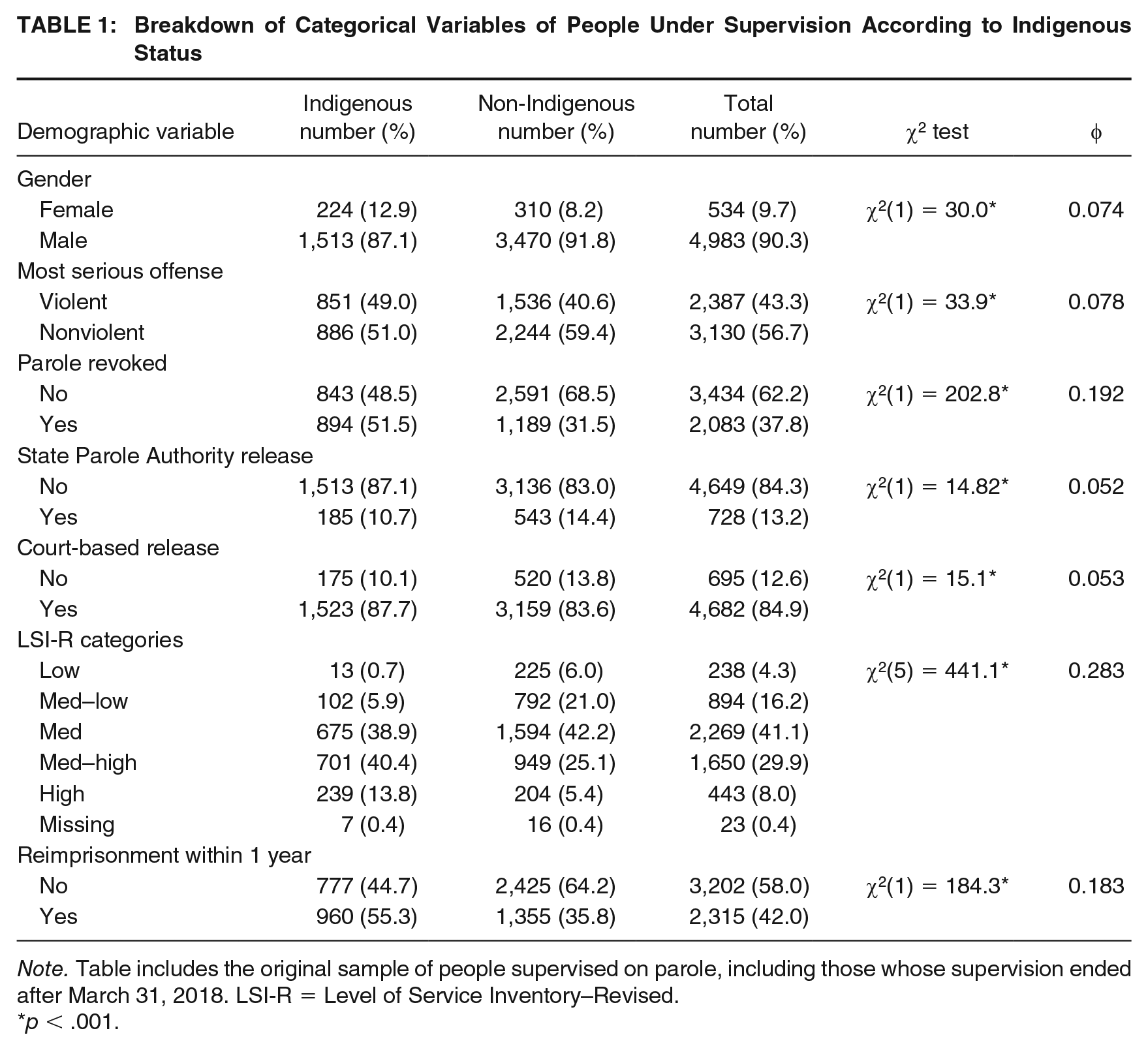
Note. Table includes the original sample of people supervised on parole, including those whose supervision ended after March 31, 2018. LSI-R = Level of Service Inventory–Revised.
p < .001.
Table 2 shows some relatively small, but significant differences between Indigenous and non-Indigenous people in terms of various other variables. Indigenous people were significantly younger than non-Indigenous people and tended to have shorter parole orders, a shorter time in custody before parole, more supervising officers, and a larger number of previous custodial sentences. These differences support the need for separate analyses of data relating to Indigenous and non-Indigenous people.
Continuous Variables of People Under Supervision by Indigenous Status

Note. Table includes original sample of people supervised on parole, including those whose supervision ended after March 31, 2018.
p < .001.
Supervising Office Characteristics
Of the 57 parole supervision offices, 42% were in major cities; 38% in inner regional areas; and 20% in outer regional, remote, or very remote areas. The characteristics of supervising offices are shown in Table 3. The mean compliance scores did not differ significantly between offices in major cities and those in inner and outer regional areas. However, as expected, there were significant differences in the number of supervising officers and treatment programs, and in SEIFA deciles. Offices in the major cities tended to have more supervising officers and more programs delivered. They also tended to be located in higher decile SEIFA regions, whereas outer regional offices had the fewest number of supervising officers and programs and were the most likely to be located in lower-SEIFA decile regions.
Supervising Office Characteristics
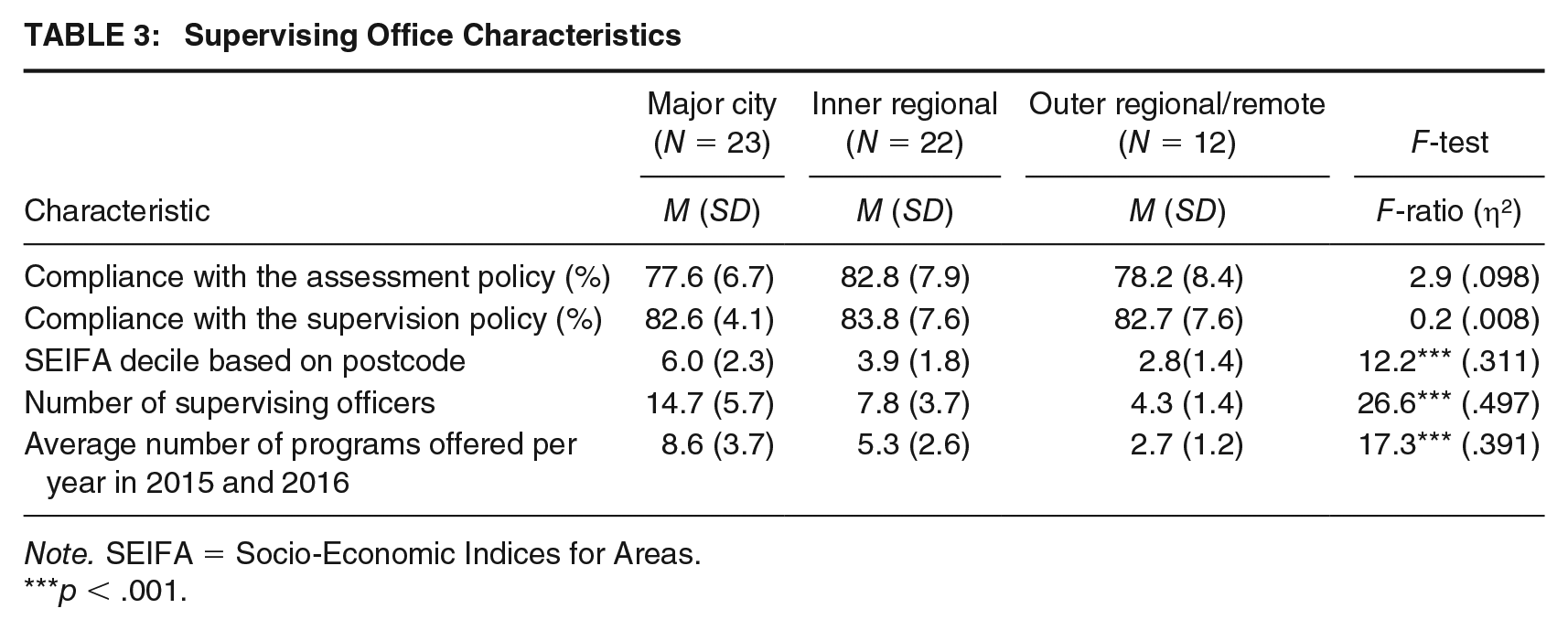
Note. SEIFA = Socio-Economic Indices for Areas.
p < .001.
Multilevel Analyses
Multilevel analyses were used to develop models for reimprisonment separately for Indigenous and non-Indigenous people. Tables 4 and 5 show the results for the unadjusted and the adjusted odds ratios, respectively. The results in these two tables are similar, and therefore, only Table 5 results are discussed in the next sections.
Odds Ratios for Reimprisonment With 95% Confidence Intervals (Not Adjusted)
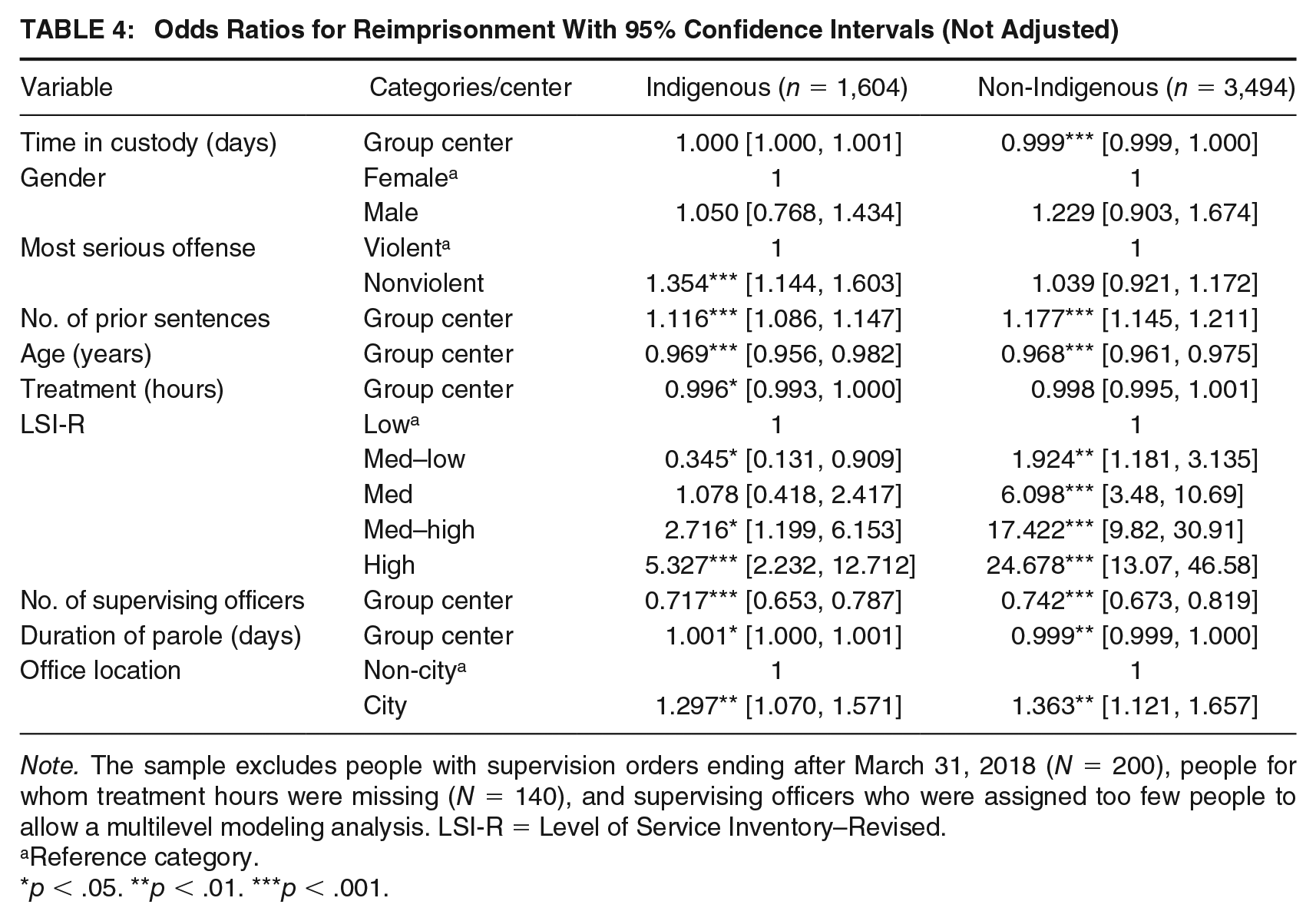
Note. The sample excludes people with supervision orders ending after March 31, 2018 (N = 200), people for whom treatment hours were missing (N = 140), and supervising officers who were assigned too few people to allow a multilevel modeling analysis. LSI-R = Level of Service Inventory–Revised.
Reference category.
p < .05. **p < .01. ***p < .001.
Adjusted Odds Ratios for Reimprisonment With 95% Confidence Intervals
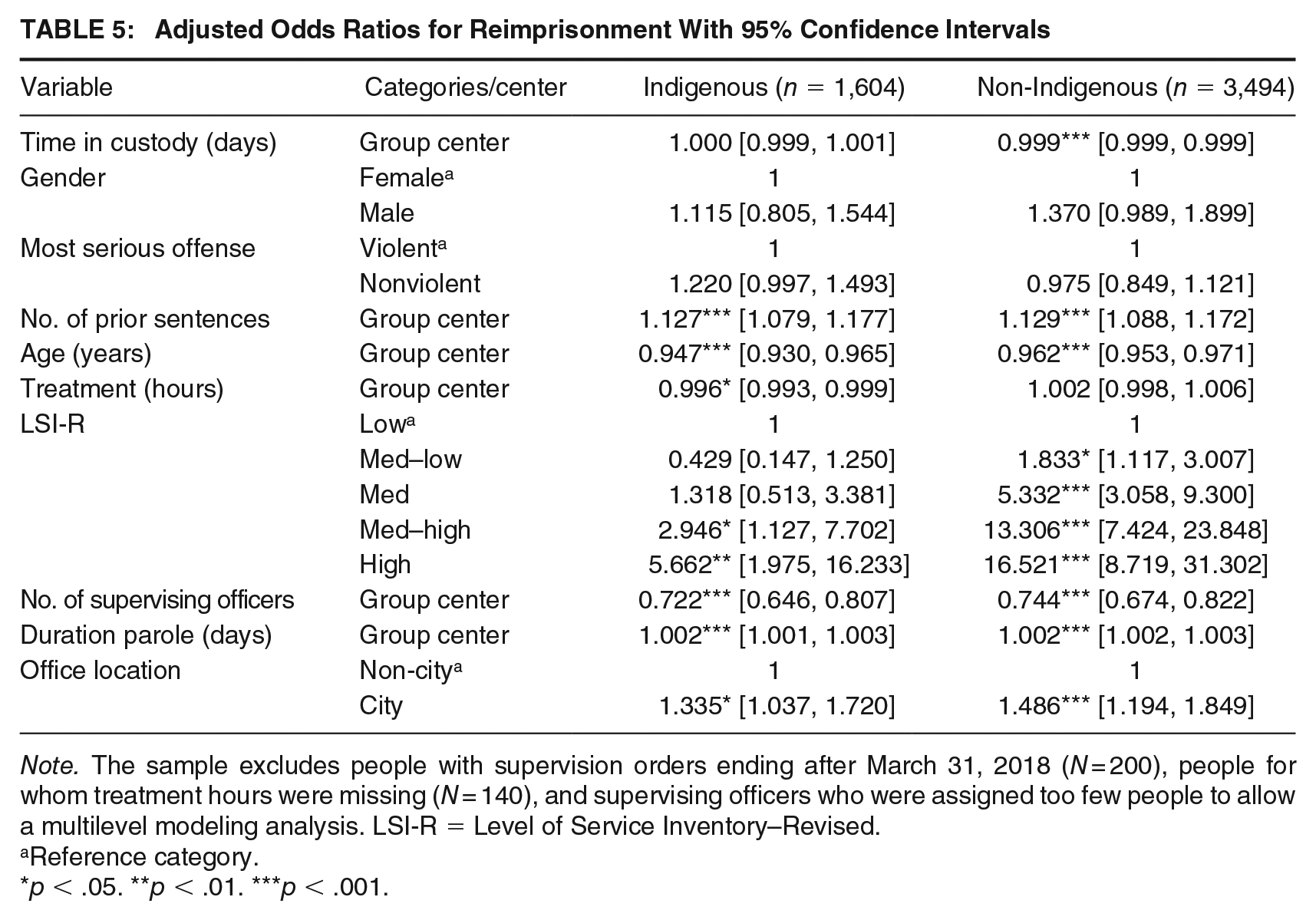
Note. The sample excludes people with supervision orders ending after March 31, 2018 (N = 200), people for whom treatment hours were missing (N = 140), and supervising officers who were assigned too few people to allow a multilevel modeling analysis. LSI-R = Level of Service Inventory–Revised.
Reference category.
p < .05. **p < .01. ***p < .001.
People Under Supervision (Level 1)
The investigation of Level 1 predictors, using adjusted odds ratios, suggests that there are several significant predictors of reimprisonment, although these results often differed for Indigenous and non-Indigenous people, as shown in Table 5.
Indigenous people
For Indigenous people, the odds were, on average, 22.0% higher when the most serious offense was nonviolent, as opposed to violent. The odds of reimprisonment increased by 12.7% for each additional previous custodial sentence. Odds generally declined by 5.3% for each additional year of age. Each additional hour of participation in a criminogenic program during the custodial sentence immediately preceding release to parole was associated with a 0.4% reduction in the odds of reimprisonment. As expected, the odds were higher for people with higher LSI-R risk classifications and with longer parole orders (see Olver et al., 2014). The odds of reimprisonment were reduced by 27.8% for each additional supervising officer.
Non-Indigenous people
The odds of reimprisonment for non-Indigenous people were, on average, 37.0% higher for males than for females. The odds of reimprisonment increased by 12.9%, on average, for each additional previous custodial sentence within 1 year of release. The odds of reimprisonment declined, on average, by 3.8% within 1 year of release for each additional year of age. The LSI-R rating was a more accurate predictor of reimprisonment for non-Indigenous people than for Indigenous people; a medium-to-low rating increased the odds of imprisonment within 1 year by 83% on average. The odds of reimprisonment declined on average by 25.6% for each additional supervising officer; however, as was the case for Indigenous people, the odds of imprisonment within 1 year of release were significantly higher for non-Indigenous people with longer parole orders.
Supervising Officer and Office (Levels 2 and 3)
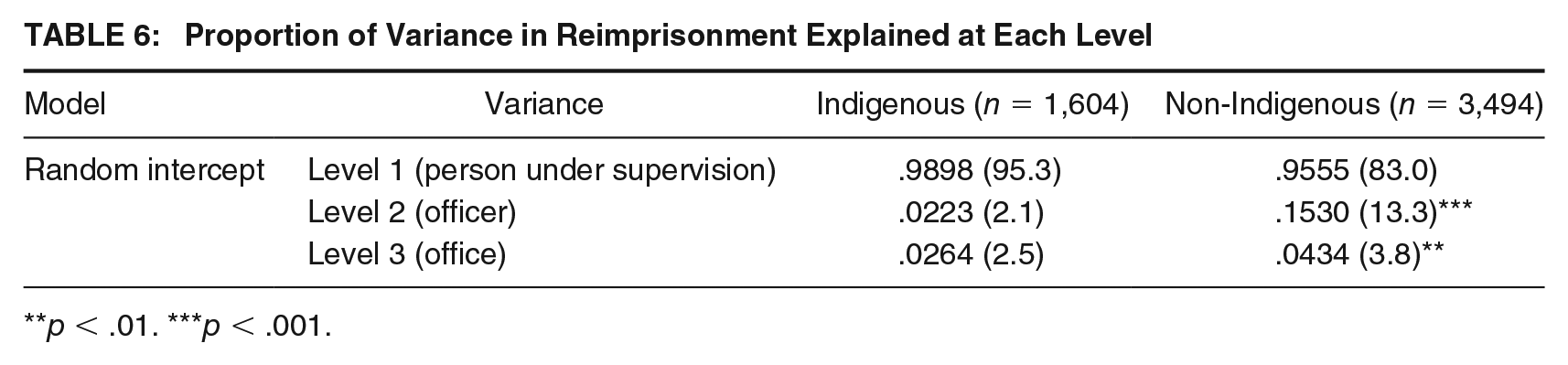
The primary supervising officer variable was more strongly associated with reimprisonment in the case of non-Indigenous people than of Indigenous people, as shown in Table 6. The variance explained by the primary supervising officer was not significant for Indigenous people. For non-Indigenous people, 11.7% of the variance in reimprisonment was explained by the primary supervising officer, 3.2% was explained by the primary supervising office, and the remaining 85% was accounted for by differences between individual people. For Indigenous people, only 2.1% of the variance in reimprisonment was explained by the primary supervising officer, 2.5% was explained by the primary supervising office, and the remaining 95% by the characteristics of the individual people.
Proportion of Variance in Reimprisonment Explained at Each Level
p < .01. ***p < .001.
The variance explained by the primary supervising office was only significant for non-Indigenous people and explained 3.2% of variance. As shown in Table 5, the odds of reimprisonment are 48.6% higher, on average, for non-Indigenous people dealing mostly with a supervising office in a metropolitan area, as opposed to one in a regional area. For Indigenous people, this percentage was only 33.5%. No other supervising office variables were found to be significant.
Discussion
Contemporary models of community supervision highlight the central role that supervising officers have to play as agents of change, with variations in their supervisory skills consistently associated with differences in outcomes among people who are supervised (e.g., Bonta & Andrews, 2010; Maruna et al., 2004). Hence, this study examined the relative associations between the supervising officer and reimprisonment in relation to the characteristics of the setting in which supervision was provided and the characteristics of the person being supervised. Overall, the findings provide evidence of an association between the supervising officer and supervision outcomes, even after the characteristics of the person under supervision and the supervising-office-level characteristics are considered. However, the association was relatively small, with most of the variance in parole outcomes driven by the characteristics of the people themselves.
Person-Level Associations
Consistent with the findings of previous research (e.g., Wan et al., 2014), younger age and more prior custodial sentences increased the likelihood of reimprisonment, although the finding that the likelihood of a person returning to prison was significantly reduced if they had more than one supervising officer during the parole period was unexpected. This was not a result of the person moving to another geographical location, and it seems to suggest that consistency and stability in the relationship between the officer and the person under supervision are associated with poorer outcomes. It is only possible to speculate on the way this finding should be interpreted, but perhaps, movement between officers was initiated by problems in the working relationships between officers and the people being supervised. This interpretation requires further investigation but holds potentially important policy implications because it indicates the importance of the fit between the person under supervision and the supervising officer, with current practices meaning that people are rarely allocated to officers on the basis of interpersonal alignment.
Supervising-Office-Level Associations
Also contrary to expectations was the finding that the only characteristic of the supervising office that explained parole outcomes was geographical location; people were more likely to be re-imprisoned if the primary supervising office was located in a metropolitan area. Although the metropolitan offices tended to have a lower level of socioeconomic disadvantage and a greater number of supervising officers and had delivered more criminogenic treatment programs compared with regional and remote offices, these characteristics did not explain a significant proportion of the variation in parole outcomes.
One possible explanation for this finding is that there is greater integration among relevant services in regional areas (e.g., police, housing, health, community-based rehabilitation services, and community corrections) than in metropolitan areas. Similarly, officers in regional areas may have more established better quality relationships with people and their support networks compared with those in metropolitan locations. Once again, these suggestions require further investigation, but an implication for correctional policy could be that agencies need to design service delivery models that are adaptable and responsive to the local socioeconomic and geographical environments in which they are delivered. Another obvious policy response to these findings could be to increase the level of support, training, and coaching provided to officers working within those geographical locations that have greater socio-structural challenges to enhance the skills of individual officers in the one-to-one delivery of parole supervision (see Dowden & Andrews, 2004; M. Lowenkamp et al., 2012).
Indigenous People
In settler-colonial Australia, Indigenous people are massively overrepresented in the criminal justice system, and thus, there are grounds to expect cultural differences to influence the quality and effectiveness of supervision. One of the most important findings of this study was that the association between the supervising officer and reimprisonment was only evident for non-Indigenous people. This finding suggests that the impact that supervising officers have as agents of change is evident mainly for those who do not identify as Indigenous. Rather, for the Indigenous people in this study, reimprisonment was largely associated with the risk factors associated with the individual under supervision.
The lack of any direct association between the primary supervising officer, the office, and subsequent reimprisonment for Indigenous people requires explanation. For instance, it may reflect a low level of responsivity (Bourgon & Gutierrez, 2012) in the way in which supervising officers work with this cohort. Although the quality of the supervision actually provided to Indigenous people was not assessed in this study, Australian researchers have consistently noted the barriers that Indigenous peoples experience in any effort to engage with public services (Taylor & Putt, 2007), the need for human service providers to demonstrate culturally aware and culturally safe practice (Healing Foundation et al., 2017), and for criminal justice professionals to engage with Indigenous people as both individuals, who have different experiences of—and identification with—Indigenous cultures, and as Indigenous, whose history and social context includes social disadvantage and disempowerment (Blagg, 2016; Mals et al., 2000). In addition, Spivakovsky (2008) has suggested that “responsivity needs to be move beyond the confines of rehabilitation to a multi-level, culturally appropriate institutional response to both Indigenous communities and offenders” (p. 660). Further investigation into the quality of delivery of supervision to Indigenous people would appear warranted.
A positive finding to emerge from this study is that participation in group-based treatment programs in custody was associated with improved parole outcomes for Indigenous people. While the design of this study precludes the inference of any causal effect of treatment, it may be that program participation signals a commitment to engage in the process of change (Bushway & Apel, 2012). If this is the case, the challenge for correctional agencies is to assist supervising officers to build on this outcome by reinforcing and supporting the benefits of program participation for Indigenous people. More generally, in the context of the continued overrepresentation of Indigenous people in the Australian criminal justice system, these findings highlight the need for a greater focus on, and examination of, how supervision models and relationships between officers and Indigenous people can be culturally responsive and effective in reducing rates of return to custody.
Limitations and Future Research
A limitation of this study is the absence of variables for the supervising-officer level, such as the quality of the supervisory relationships (Skeem et al., 2007) and the level of officer proficiency and fidelity in the use of structured skills (Bonta & Andrews, 2010; Bourgon et al., 2010; Dowden & Andrews, 2004; Trotter, 2012). This study’s finding that the supervising officer level is associated with variations in outcomes for non-Indigenous people makes an important contribution to the understanding of supervision. However, the absence of officer-level variables prevents insights into the specific supervision mechanisms associated with these differences. Improvements in the understanding of why the association between officer and outcomes is not significant for Indigenous people will also require more detailed information on the characteristics and skills of supervisors. The findings of this study highlight the need to develop both policy and practice within correctional services that would allow this type of data to be routinely collated. Replication of this study with the inclusion of these factors will increase the understanding of the mechanisms by which the supervising officer is associated with prosocial change among people released from prison.
Future research would also be enhanced by the inclusion of the cultural identification of supervising officers, specifically, if they identified as from an Aboriginal and/or Torres Strait Islander cultural background. An important policy area for correctional agencies is improving the understanding of the importance of interpersonal and cultural alliance between officers and those being supervised, particularly for Indigenous people.
Conclusion
This study sought to establish whether the presence of the supervising officer is associated with differences in the outcomes of the people who are supervised in the community. It suggests that individual officer effects are relatively small and only apply to non-Indigenous people. It can be concluded that community supervision makes a small, but significant, difference to the lives of non-Indigenous people following release from prison. However, more research investigating the mechanisms through which this effect occurs, and the lack of impact on Indigenous people is required. Future research should also seek to measure the quality of the supervisory relationships and the level of officer proficiency and fidelity in the use of structured skills, given that an important limitation of this study is the limited data set that was available for analysis. Nonetheless, the methodology employed in this study appears to have potential in allowing correctional agencies to develop the most effective practice and policy in community supervision.
Footnotes
Authors’ Note:
Swinburne University of Technology was paid by Justice NSW to engage Professor Denny Meyer as a statistical consultant to collaborate on this research project
