



Abstract
A great deal of research has revealed a link between corporal punishment and negative life outcomes, but the underlying mechanisms that explain how and why these associations exist are not well understood. The current study extends this line of research by analyzing a longitudinal sample of high-risk male and female youth drawn from the National Survey of Child and Adolescent Well-Being. The analyses revealed that the use of corporal punishment was differentially used depending on certain parental behavioral characteristics. Even after accounting for such attributes, our models generally demonstrated that corporal punishment was associated with later criminal involvement. The models also revealed that the corporal punishment-criminal involvement link was dependent upon the relationship of the parent to the child being spanked. Our analyses additionally address the importance of proper model specification when examining the association between corporal punishment and later life outcomes. We conclude by discussing implications for future research.
Corporal punishment, commonly referred to as “spanking,” is the most common form of physical punishment in the United States and is defined as “hitting a child on their buttocks or extremities using an open hand” (Gershoff & Grogan-Kaylor, 2016, p. 453). Around the world, an estimated 80% of children are spanked or otherwise physically punished by their parents (United Nations International Children’s Emergency Fund [UNICEF], 2014). Despite the widespread use of corporal punishment as a means of discipline, corporal punishment is frequently viewed as a violation “of children’s right to protection from harm” and having a “serious impact” on children and societies (Global Initiative to End All Corporal Punishment of Children, 2020, p. 2). Indeed, hundreds of studies have been conducted revealing that the practice of corporal punishment is detrimental to child development (e.g., Altschul et al., 2016; Gershoff & Grogan-Kaylor, 2016). These studies have linked the use of corporal punishment to a number of negative life outcomes, including impaired mental health (Afifi et al., 2017), social maladjustment (Altschul et al., 2016), and externalizing problem behaviors (Gershoff & Grogan-Kaylor, 2016).
Despite the mounds of research conducted on the negative consequences associated with corporal punishment, the evidence is far from conclusive regarding whether spanking is causally related to such outcomes and, if so, the magnitude of the effect sizes. Findings from existing studies, for example, are often difficult to interpret because of methodological shortcomings. Against this backdrop, the current study reexamines the link between spanking and criminal involvement, using a longitudinal sample of male and female adolescents from across the United States, by addressing certain methodological limitations that are pervasive across studies analyzing the potential effects of spanking on criminal involvement.
Corporal Punishment and Human Development
Corporal punishment as a means of disciplining children has been widely used and accepted as a natural aspect of parental behavior throughout history and across cultures (Altschul et al., 2016). Parents who spank their children often believe that corporal punishment is an effective way to promote desirable child behavior and there is some research to support this idea. To illustrate, Larzelere and Kuhn (2005) conducted a meta-analysis investigating differences in child outcomes based on comparisons between physical punishment and alternative disciplinary methods. Their analyses revealed that conditional spanking effectively reduced child noncompliance and antisocial behavior. Only overly severe methods of physical punishment, such as slapping the child in the face or hitting them with an object, were revealed to lead to comparatively worse child outcomes (Larzelere & Kuhn, 2005).
While there is some evidence that spanking has positive effects, there is reason to believe that these positive effects are limited to only certain outcomes or samples. There is a long line of research revealing that corporal punishment is ineffective at reducing misbehavior and promoting prosocial behavior, and that it is harmful to child development (e.g., Ferguson, 2013). For instance, research has consistently revealed that the use of spanking is associated with children exhibiting higher levels of externalizing problem behaviors, such as delinquency (e.g., Maguire-Jack et al., 2012). Maguire-Jack et al. (2012), for example, explored this potential association by examining whether spanking at ages 1 and 3 were associated with behavior problems at ages 3 and 5. Their analyses revealed that spanking was associated with higher levels of externalizing problem behaviors at both ages 3 and 5 (Maguire-Jack et al., 2012). These findings have since been replicated using a wide range of statistical techniques and samples (e.g., Ferguson, 2013) further verifying the link between corporal punishment and child problem behaviors.
Previous studies have also revealed that the consequences of receiving corporal punishment in childhood extend forward in the life course and have implications for adolescent outcomes (e.g., Sheehan & Watson, 2008). To illustrate, Gibson and Fagan (2018) examined the long-term effects of corporal punishment on children’s externalizing behaviors. Their multilevel models revealed that there was a positive association between spanking during childhood and externalizing behaviors during adolescence (Gibson & Fagan, 2018). More recently, researchers have replicated and expanded on this study while coming to similar conclusions (e.g., Fu et al., 2019).
A growing body of scholarship has also examined whether, and to what extent, being spanked in childhood is associated with negative adult outcomes, including antisocial behavior (e.g., Rebellon & Straus, 2017). Rebellon and Straus (2017), for instance, examined whether corporal punishment was associated with adult antisocial behavior. Their models revealed that antisocial behavior was higher among young adults who reported, retrospectively, having been spanked in childhood (Rebellon & Straus, 2017). Moreover, Gershoff and Grogan-Kaylor (2016) conducted a series of meta-analyses assessing whether spanking is significantly related to adult antisocial behavior, mental health problems, alcohol or substance abuse, and support for physical punishment. Their analyses demonstrated that experiencing corporal punishment in childhood was positively associated with adult antisocial behavior, mental health problems, and support for physical punishment (Gershoff & Grogan-Kaylor, 2016). Despite this consistent evidence, there is reason to question whether this is a causal association or whether corporal punishment and negative life outcomes are simply correlated.
Methodological Issues and Alternative Explanations
While there is an abundance of research tying corporal punishment to a wide array of maladaptive outcomes in childhood, adolescence, and adulthood, the question remains whether these associations are causal. Studies that have assessed the impact of corporal punishment are often limited in their ability to establish causality because of methodological shortcomings. To be specific, there are two main concerns of the corporal punishment literature that have yet to be fully resolved: (a) the lack of research accounting for the potential confounding effects of genetic influences and, relatedly, and (b) the lack of research that directly accounts for child-driven effects.
First, to understand how genetic factors could account for the covariance between corporal punishment and child and adolescent behavior, it is important to consult the findings of behavioral genetic research. Findings from this body of research have consistently revealed that genetic influences account for approximately 50% of the variance in most human traits and behaviors (Polderman et al., 2015). These findings also apply to antisocial and maladaptive outcomes, where research has shown that approximately half of the variance in antisocial behavior is attributable to genetic influences (Ferguson, 2010). For example, Ferguson (2010) conducted a meta-analytic review of behavioral genetic studies examining antisocial personality and behavior. This analysis revealed that 56% of the variance in antisocial personality and behavior was explained through genetic influences (Ferguson, 2010).
Moreover, parental discipline techniques have been revealed to be influenced by genetics (Oliver et al., 2014). For instance, Button and colleagues (2008) examined the extent to which parental punitive discipline techniques are influenced by genetics. Their analyses demonstrated that genes accounted for between 26% and 29% of the variance in parental discipline (Button et al., 2008). Similar results have been revealed in other samples examining parenting techniques (e.g., Oliver et al., 2014). Nevertheless, few studies have specifically examined the amount of genetic variance that influences spanking. Those that have, however, have revealed that genes moderately influence a parent’s use of spanking as a means of discipline (Jaffee et al., 2004). Barbaro and colleagues (2020), for example, decomposed the variance in spanking and revealed that 36% of the variation in spanking is due to genetic factors.
Although studies have demonstrated that variance in spanking and child outcomes has been shown to be explained, in part, by genetic influences, it does not necessarily mean that the covariance between the two is necessarily driven by genetic factors. Even so, these findings leave open the very real possibility that the covariance could be accounted for by genetic influences which when not taken into account produces upwardly biased results (Barnes et al., 2013). To illustrate, suppose that parents who spank their child have a genetic propensity toward violence. If this argument is correct, then these children would be at risk of antisocial behavior because of the genes they inherit from their parents, not because of spanking. Thus, by not accounting for genetic influences, researchers leave open the possibility that the association between corporal punishment and child outcomes may be confounded by unaccounted for genetic covariance.
Indeed, there is some evidence to support this idea as research has shown that part of the covariance between corporal punishment and antisocial behaviors is due to genetic factors (Barbaro et al., 2020). For example, Jaffee and colleagues (2004) examined the extent to which the association between corporal punishment and child antisocial behavior was genetically mediated. Their analyses revealed that the association between corporal punishment and child antisocial behavior was mediated in part by genetic influences. In addition, Jaffee and colleagues (2004) concluded that the genetic factors that influenced corporal punishment were largely the same as those genetic factors that influenced child antisocial behavior. Other studies have since found similar results as Jaffee and colleagues (2004) in other independent samples (e.g., Button et al., 2008).
The second key methodological issue affecting research examining the effects of corporal punishment is the issue of temporal ordering and child driven effects. Specifically, a majority of the research assessing the influence of corporal punishment have not tested the possibility that child behavioral problems existed prior to the use of physical punishment and that the child’s behavior may be driving the parent’s use of corporal punishment. By not directly examining these possibilities, it is quite possible that any association between corporal punishment and child problem behaviors is due to the latter causing the former rather than the former causing the latter. To illustrate, consider that the use of corporal punishment is often a “reactive” parenting strategy. Seen in this way, corporal punishment is a technique used to correct “bad” behavior after the fact rather than a proactive approach (Larzelere & Kuhn, 2005). Therefore, the idea that a child’s behavior may be driving the parent’s use of corporal punishment is not novel nor hard to imagine.
Moreover, there is a growing body of literature supporting the possibility that child behavior causes the use of corporal punishment rather than corporal punishment causing child outcomes (e.g., Sheehan & Watson, 2008). Raudino and colleagues (2012), for instance, examined the association between child conduct problems, or antisocial behaviors, and parenting outcomes. Their analyses revealed that child conduct problems were associated with increased use of child physical punishment and lower levels of parental warmth and sensitivity (Raudino et al., 2012). In addition, Sheehan and Watson (2008) revealed that not only did child aggression predict an increase in the later use of physical discipline but also that the use of physical discipline exacerbates the child’s antisocial behavior and leads to increases in aggression later. Therefore, the association between corporal punishment and child problem behaviors revealed in previous research could represent the cycle in which child misbehavior influences corporal punishment and then impacts future delinquency.
Current Study
Research has consistently revealed that there is a significant association between the use of corporal punishment and negative child outcomes (e.g., Gershoff & Grogan-Kaylor, 2016). Despite the overwhelming number of studies establishing an association between corporal punishment and child problem behaviors, there still remains much disagreement regarding whether this association is causal. The purpose of the current study, therefore, is to revisit the corporal punishment-child outcomes link by addressing some of the limitations of previous research. Specifically, our analyses unfold in four interlinked steps. We will begin by examining if spanking is differentially used based on certain parental characteristics, such as criminal behavior, alcohol dependency, or drug dependency, that have all been revealed in prior research to be influenced by genetic factors. If in fact, the use of corporal punishment is revealed to be dependent upon these factors, we can conclude that genetic factors may be influencing the corporal punishment-criminality link and must be controlled for in future analyses.
Next, building upon the results of the previous models, we will conduct a series of analyses examining if the increased use of corporal punishment is associated with higher levels of criminal involvement. These models will control for any underlying propensities revealed in the previous models to be associated with the use of corporal punishment in order to indirectly control for potential genetic influences. We will then test if that association is dependent on whether the biological or nonbiological parent administered the punishment. In doing so, we are further examining whether genetic factors may be influencing the association between corporal punishment and criminal involvement. If the interaction is revealed to be statistically significant and positive, we can conclude that some underlying factor, such as genetics, is likely driving the association. Lastly, we will address issues of child-driven effects by using structural equation modeling to uncover the directional influence corporal punishment and criminal involvement have on each other over time while controlling for corporal punishment and criminal involvement at previous waves.
Participants
This study 1 analyzed data from the National Survey of Child and Adolescent Well-Being I (NSCAW I). 2 The Department of Health and Human Services developed the NSCAW and began data collection in October of 1999, when the focal children ranged in age from 0 to 14 years old. The NSCAW I is a longitudinal study that gathered information on children from families living in the United States who were investigated for child abuse or neglect by Child Protective Services (CPS). The data include information on a broad range of topics including school achievement, peer association, cognitive development, parental discipline, and social-emotional development. A two-stage sampling design was employed. First, the United States was divided into nine sampling strata and primary sampling units were formed in each of the strata. Each primary sampling unit consisted of the geographic area served by a CPS agency. Second, the same number of children were selected from each sampling unit by implementing a random selection scheme (National Data Archive on Child Abuse and Neglect [NDACAN], 2002).
Five waves of data have been collected. Wave 1 was conducted from November 1999 to April 2001. During this wave of data collection, information was gathered about the focal child (N = 5,827), their current caregiver (N = 6,236), caseworker(s) (N = 7,456), and teacher (N = 1,508). The second wave of data was collected from October 2000 to April 2002. Wave 2 consists of only administrative information collected from the current caregiver (N = 5,175) and caseworker (N = 3,705). No information was gathered directly from the focal child during Wave 2 data collection. The third wave of data was collected from April 2001 to September 2002. In this wave, information was collected from the initial sample of children (N = 5,077) selected at Wave 1 as well as the child’s current caregiver (N = 5,298), caseworkers (N = 2,094), and the children’s current teachers (N = 1,630). Wave 4 data were collected from October 2002 to April 2004. Interviews for the fourth wave were conducted with the focal child (N = 5,123), their current caregiver (N = 5,253), caseworker (N = 2,094), and their teacher (N = 1,908). Last, Wave 5 data were collected from September 2005 to December 2006. Wave 5 data contained information about 4,137 of the focal children/young adults as well as their current caregivers (N = 3,380), caseworkers (N = 531), and teachers (N = 2,083; NDACAN, 2002).
Measures
Criminal Involvement
The parent report form of the Child Behavior Checklist (CBCL) was used to measure criminal involvement. Multiple studies, across disciplines, have used the CBCL to measure child behaviors and have demonstrated that the CBCL is reliable and valid measure of child behavior (Gomez et al., 2014). The criminal involvement measure contains eleven items. These items capture the extent to which the child engages in criminal activities including status offenses, such as threatening people, stealing outside the home, running away from home, or using drugs for nonmedical purposes as reported by the caregiver. The items were scored based on a 3-point Likert-type scale, in which 0 = not true, 1 = somewhat or sometimes true, and 2 = very true or often true. The scores across the eleven items were summed together so that higher scores on the scale indicate higher engagement in criminal acts (Wave 1 α = .808, Wave 3 α = .802, Wave 4 α = .805, and Wave 5 α = .795). 3 Table 1 includes descriptive statistics for the criminal involvement measure as well as the other variables and scales used in the analyses.
Descriptive Statistics for the Sample
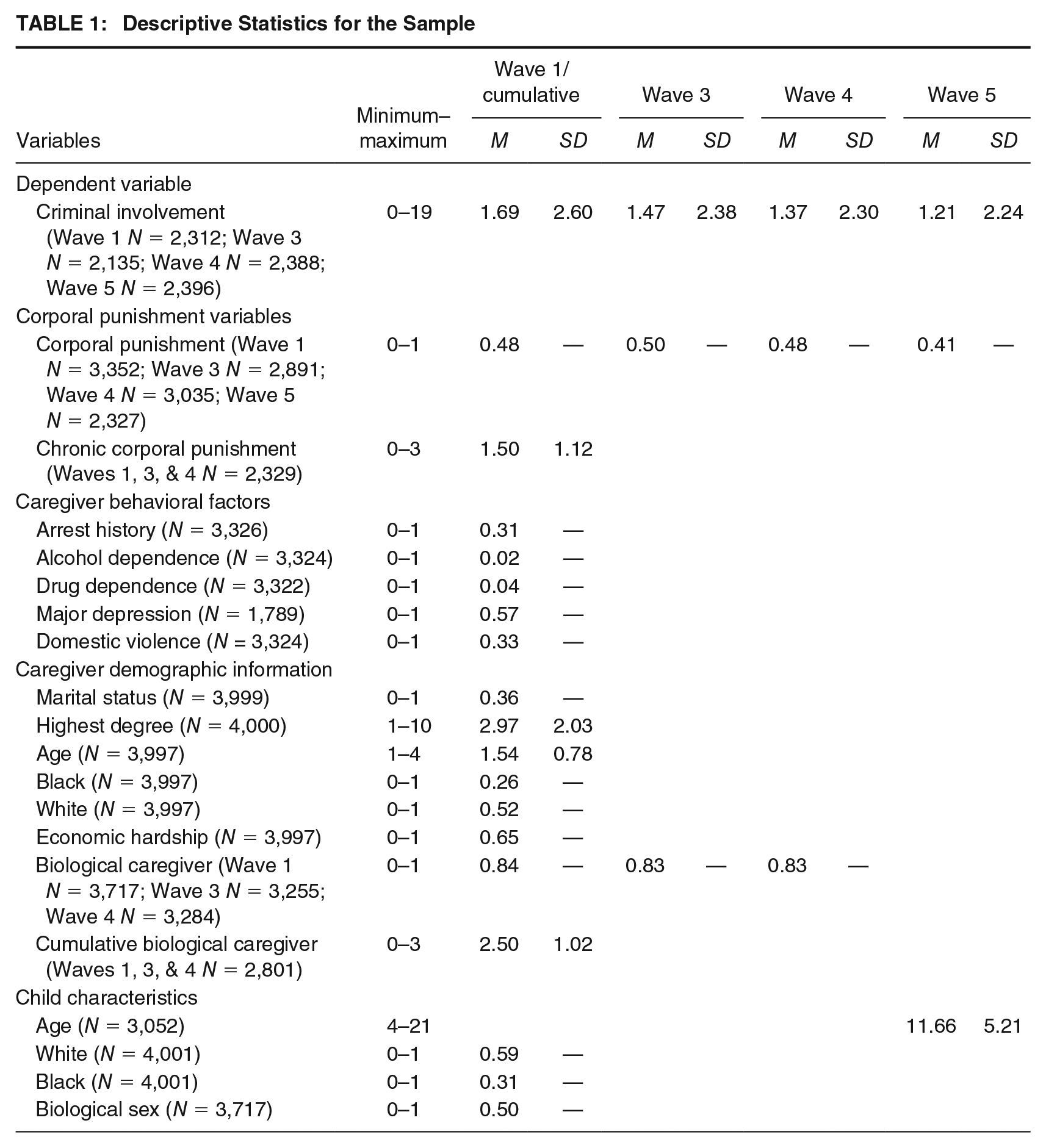
Corporal Punishment
The Parent-Child Conflict Tactics Scales (CTS-PC) was used to measure corporal punishment. The CTS-PC is a standardized checklist used to assess the use of physical “discipline” by a parent (Straus et al., 1998). There are two versions of the CTS-PC: one wherein the child reports experiencing the disciplinary tactics and the other wherein the caregiver reports the use of those disciplinary tactics. Corporal punishment was included as an index containing two items. Specifically, at each wave, both the child and caregiver were asked separately in the past 12 months how many times spanking on the bottom barehanded was used as a method of discipline. The corporal punishment variables were originally coded such that 1 = 1 time, 2 = 2 times, 3 = 3 to 5 times, 4 = 6 to 10 times, 5 = 11 to 20 times, 6 = more than 20 times, 7 = not in the past 12 months, but before, and 8 = never. The items were re-coded to be dichotomous measures, prior to creating the index, such that 0 = child was not spanked in the past 12 months, 1 = child was spanked in the past twelve months. Once the items were transformed, the items were summed together then converted so that anything equal to or over 1 was coded as 1 and all else was coded as 0. Corporal punishment has been measured dichotomously in previous studies (e.g., Afifi et al., 2017).
In addition, a measure of chronic, or cumulative, use of corporal punishment was included in the final two models of the study. To do so, a scale was created using the three measures of corporal punishment described above. The scores of the corporal punishment measures across Waves 1, 3, and 4 were summed together to create a chronic corporal punishment scale. Higher scores on the scale indicated longer use of corporal punishment as a means of discipline (α = .60).
Caregiver Behavioral Risk Factors
Five variables—all drawn from Wave 1—were included that measure the behavioral risk of the caregiver to use corporal punishment. First, the arrest history of the caregiver was coded as a dichotomous variable, such that 0 = never arrested and 1 = arrested at least once. Second, using the World Health Organization composite internal diagnostic interviewer short-form (Composite International Diagnostic Interview Short Form [CIDI-SF]), whether the caregiver was alcohol-dependent was also included in the models as a dichotomous variable where 0 = not alcohol dependent, 1 = alcohol dependent (Kessler et al., 1998). Third, whether the caregiver was drug dependent was included as a dichotomous variable where 0 = not drug dependent and 1 = drug dependent. Fourth, the CIDI-SF was used to measure whether the caregiver displayed symptoms of major depression. The measure was included as a dichotomous variable where 0 = not depressed, 1 = depressed. Fifth, the Physical Violence scale of the Revised Conflict Tactics Scale 2 was used to measure incidence of domestic violence against the caregiver the past year reported by the caregiver (Straus et al., 1996). Domestic violence was included as an index containing nine items. The measure was added together then coded dichotomously such that 0 = did not experience domestic violence in the past year, 1 = experienced domestic violence in the past year.
Caregiver Demographic and Background Characteristics
Five caregiver demographic and background characteristic variables drawn from Wave 1 were included in the models. First, the highest level of education of the caregiver was measured through self-reports and a three-category coding scheme wherein 0 = none, 1 = high school, and 2 = higher education. The measure was then included in the model through a series of dummy variables wherein “None” was the omitted, reference category. Second, the marital status of the caregiver was included in the model as a single item coded as 0 = not married, 1 = married as self-reported by the caregiver. Third, economic hardship was an index containing five items reported by the caregiver. These items measured whether a family member received benefits from Aid to Families with Dependent Children (AFDC), Women, Infants, and Children (WIC), food stamps, among other organizations. The items were summed together then coded dichotomously, such that 0 = does not receive and 1 = does receive financial support. Fourth, caregiver age was a single item that was self-reported and coded so that 1 = < 35 years, 2 = 35–44 years, 3 = 45–54 years, and 4 = > 54 years. Fifth, race of the caregiver was measured through a three-category coding scheme—White, Black, and Other. The measure was then added to the models through a series of dummy variables with “Other” race as the omitted, reference category.
In addition to the Wave 1 measures described above, two additional self-reported measures were included in the models to measure the relationship between the child and caregiver. First, the relationship of the caregiver to the child was drawn at Waves 1, 3, and 4 and was coded dichotomously, such that 0 = nonbiological parent and 1 = biological parent. Second, a cumulative measure of the caregiver relationship to the child was created for the final two models of the study. To do so, a scale was created using the three measures capturing the relationship of the caregiver to the child across Waves 1, 3, and 4 as described above. The scores of the relationship of the caregiver across Waves 1, 3, and 4 were summed together to create a cumulative measure of the caregiver relationship to the child. Higher scores on the scale indicated the longer the child was with the biological parent (α = .91).
Child Demographics
Three variables were included in the models that measured demographic information of the children. First, the age of the child was a continuous variable measured in years at Wave 5. Second, the biological sex of the child was included as a single item coded as 0 = female and 1 = male. The measure for biological sex was only extracted at Wave 1. Third, race of the child was measured through a three-category coding scheme—White, Black, and Other—drawn at Wave 1. The measure was then added to the models through a series of dummy variables with “Other” race as the omitted, reference category.
Plan of Analysis
The study progressed in a string of linked steps. 4 First, we examined the association between the five caregiver behavioral characteristic measures drawn at Wave 1 and corporal punishment measured at Waves 1, 3, and 4. All of these models were estimated while controlling for the caregiver’s age, race, economic hardship, marital status, education, and relationship to the child. Since the outcome of corporal punishment is dichotomous, the models were estimated using binary logistic regression.
Second, the association between corporal punishment at Waves 1, 3, and 4 and criminal involvement measured at Wave 5 was examined using ordinary least squares (OLS) regression. These models, and all other subsequent models, included controls for the caregiver characteristics, as well as the child’s age, biological sex, and race. In addition, we examined the potential association between chronic use of corporal punishment and criminal involvement at Wave 5.
Third, for each model, multiplicative interactions were estimated between corporal punishment and the variable measuring whether the caregiver is the biological or nonbiological parent. By including this interaction term, we were able to examine whether the association between corporal punishment and criminal involvement is dependent upon who administers the punishment. To illustrate, a positive interaction term would indicate that when a biological parent administers the corporal punishment, corporal punishment has a significantly greater association with criminal involvement than if a nonbiological parent administers the punishment. If a negative interaction term is revealed, the opposite is true.
Fourth, a cross-lagged path model was estimated to examine the interrelationships between corporal punishment and criminal involvement across all four waves of data. The path model was estimated with maximum likelihood estimation and robust standard errors using the sem command in Stata 16. The results of this model will show the stability of the measures between waves as well as the directional influence corporal punishment and criminal involvement have on each other over time while controlling for corporal punishment and criminal involvement at previous waves. In addition, the model will also reveal whether the error covariances between the terms are associated with one another. 5 If the terms are in fact significantly associated then the results will suggest that either the terms predict one another, are endogenous to one another, and/or are correlated due to shared methods variance.
Results
We began our analysis by examining the association between the five caregiver behavioral risk factors and corporal punishment across all three waves of data. Table 2 presents the results of these binary logistic regression models, with each column representing an equation predicting the wave at which corporal punishment occurred. In the first column—which contains the equation predicting Wave 1 corporal punishment—three caregiver behavioral characteristics predicted the use of corporal punishment: domestic violence, drug dependence, and arrest history. Interestingly, caregiver drug dependence was negatively associated with the use of corporal punishment. Across the next two equations, the only caregiver behavioral characteristic that was related to the use of corporal punishment was domestic violence. At all three waves, domestic violence was associated with higher odds of using corporal punishment.
Binary Logistic Regression Models Examining the Association between Caregiver Characteristics and Corporal Punishment at Waves 1, 3, and 4
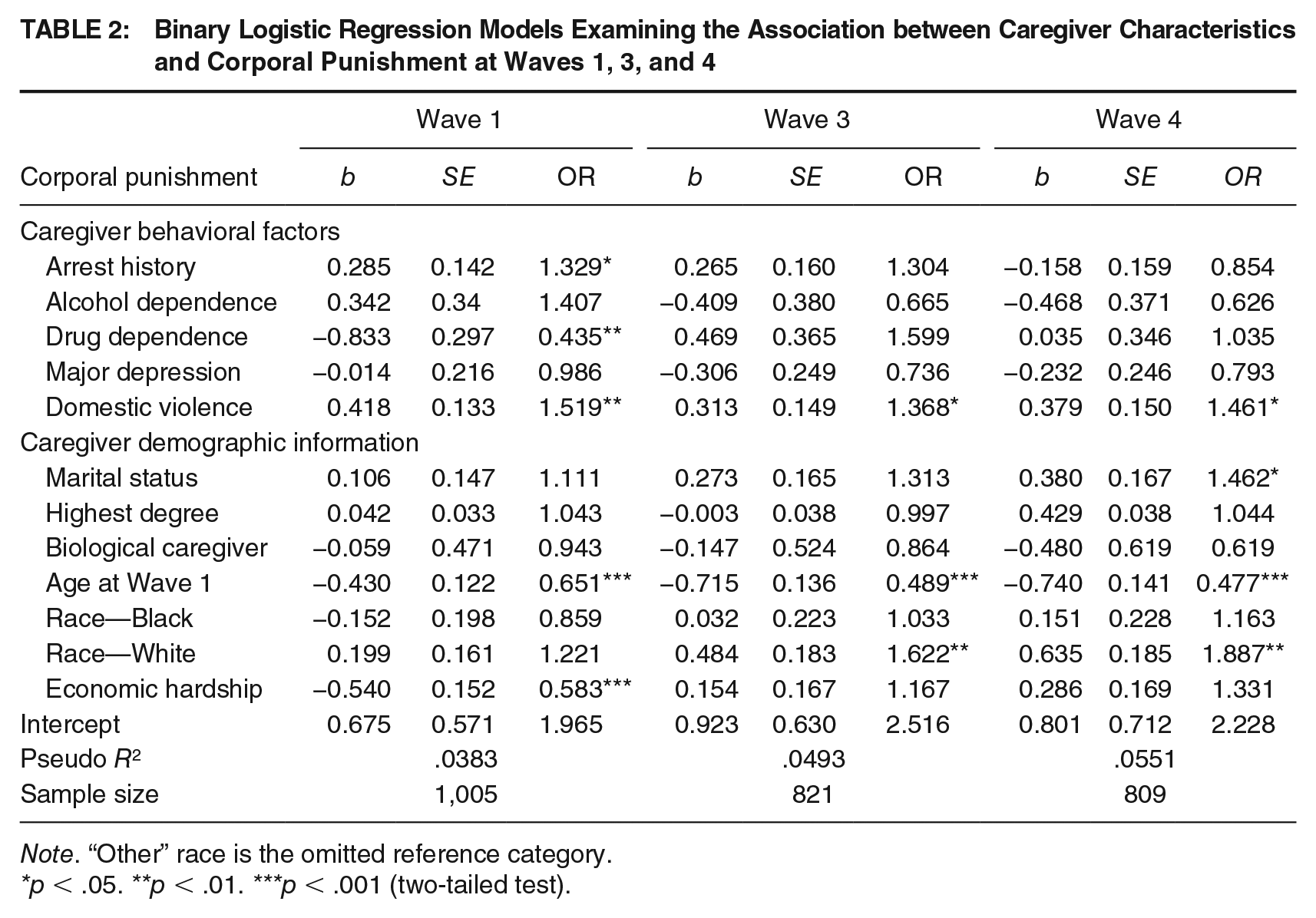
Note. “Other” race is the omitted reference category.
p < .05. **p < .01. ***p < .001 (two-tailed test).
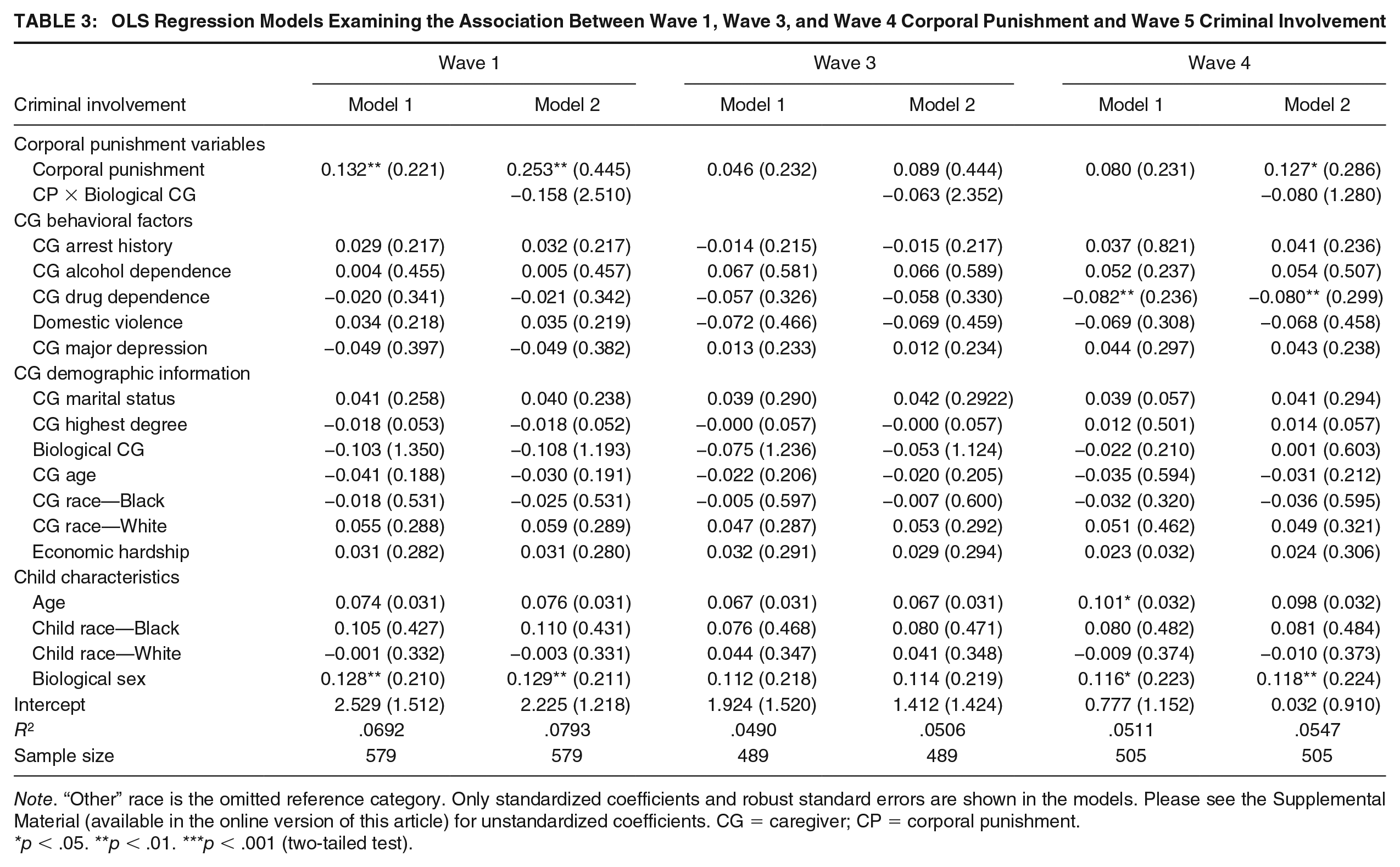
Next, we turn to the results examining the association between corporal punishment at Wave 1 and criminal involvement at Wave 5. Two models were estimated: a baseline model and an interactive model. The first two columns of Table 3, under Wave 1, present the results of these models. As can be seen in Model 1, there was a statistically significant association between corporal punishment and criminal involvement. Model 2 is a duplicate of Model 1 except that an interaction term between corporal punishment and being the biological caregiver was included. As can be seen in the last column of the table, the interaction term was not statistically significant.
OLS Regression Models Examining the Association Between Wave 1, Wave 3, and Wave 4 Corporal Punishment and Wave 5 Criminal Involvement
Note. “Other” race is the omitted reference category. Only standardized coefficients and robust standard errors are shown in the models. Please see the Supplemental Material (available in the online version of this article) for unstandardized coefficients. CG = caregiver; CP = corporal punishment.
p < .05. **p < .01. ***p < .001 (two-tailed test).
We next turn to the results for the OLS regression models examining the association between corporal punishment at Wave 3 and criminal involvement at Wave 5. The results of these models can also be found in Table 3 under the heading Wave 3. As can be seen in the subheading Model 1, there was no association detected between corporal punishment at Wave 3 and criminal involvement at Wave 5. Model 2 tests for an interaction term between corporal punishment and being the biological caregiver. As this model shows, no significant association was detected between the interaction term and criminal involvement.
Next, we turn to the results of the models examining the association between corporal punishment at Wave 4 and criminal involvement at Wave 5. As Table 3 shows under the heading Wave 4, the baseline association between corporal punishment and criminal involvement was not statistically significant. In addition, the interaction term between corporal punishment and being the biological caregiver was not statistically significant.
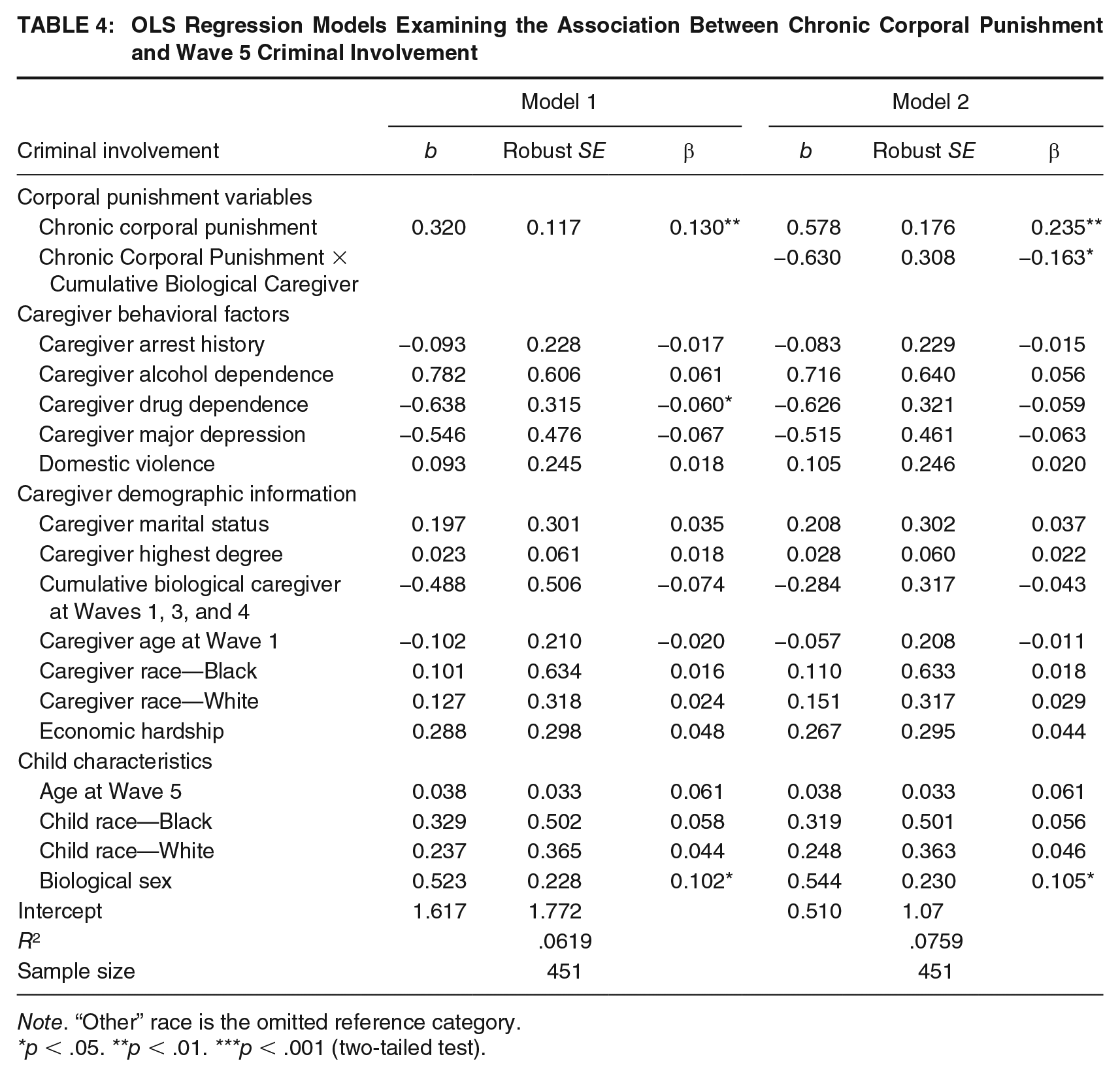
Table 4 presents the models examining the combined effect of corporal punishment at Waves 1, 3, and 4 on criminal involvement at Wave 5. As can be seen in Model 1, a significant association was detected between the combined measure of corporal punishment and Wave 5 criminal involvement. In addition, Model 2 revealed a negative significant association between the interaction term and criminal involvement.
OLS Regression Models Examining the Association Between Chronic Corporal Punishment and Wave 5 Criminal Involvement
Note. “Other” race is the omitted reference category.
p < .05. **p < .01. ***p < .001 (two-tailed test).
To aid in the presentation of this finding, Figure 1 displays the predicted mean values of criminal involvement for children who are chronically subject to corporal punishment by either their biological or nonbiological parent. As can be seen in the figure, in this sample, those with the highest predicted mean value of criminal involvement were those children who were chronically spanked by their nonbiological parent at all three waves of data. The effect of chronic use of corporal punishment by a biological parent, conversely, only slightly increased the predicted mean value of criminal involvement across the three waves of data.

Effect of Chronic Use of Corporal Punishment by Caregiver Relationship on Criminal Involvement
Last, Figure 2 presents the results of the cross-lagged path model. The wave-to-wave stability estimates for both corporal punishment and criminal involvement, unsurprisingly, were statistically significant and range from moderate to strong (β = 0.34–0.96). Of particular interest, are the estimated cross-lagged effects between corporal punishment and criminal involvement. As can be seen in the figure, the results of the cross-lagged effects revealed only one significant pathway. Wave 3 corporal punishment significantly predicted Wave 4 criminal involvement (β = 0.052).
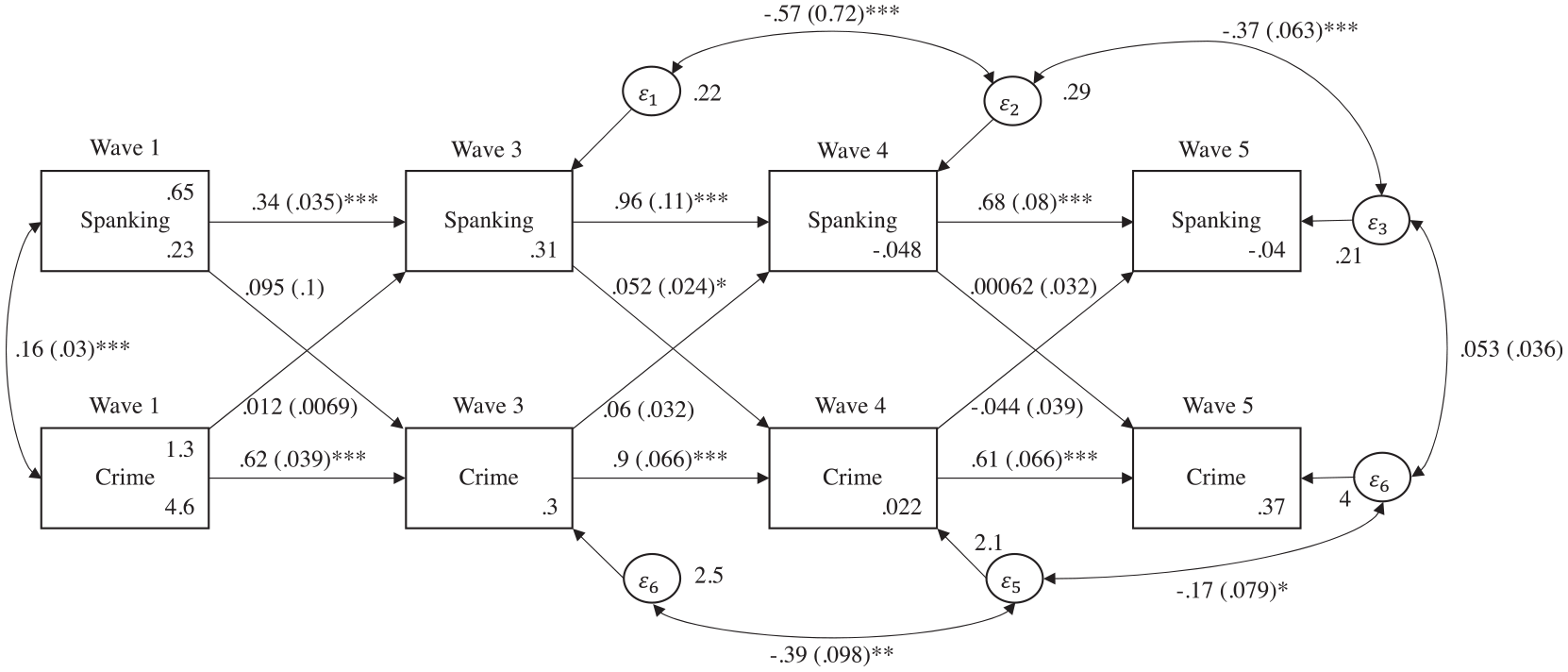
Cross-Lagged Path Model
Discussion
A long line of research has examined the importance of parenting, including parental styles of discipline, on virtually every aspect of child development (e.g., Gershoff & Grogan-Kaylor, 2016). Although findings from this body of research have consistently revealed a connection between parenting and a broad range of child outcomes (e.g., Gershoff & Grogan-Kaylor, 2016), during the past couple of decades criticisms have been lodged against these studies (Harris, 2006). Specifically, there have been concerns that the statistical models used to examine the connection between parenting and child outcomes are misspecified. These criticisms have application to the role that corporal punishment might play in human development as most studies examining corporal punishment have not fully ruled out the possibility that methodological limitations might be driving the association. The current study sought to address this possibility and the results revealed four main findings.
First, the models revealed that spanking is not a random occurrence, but rather is differentially used depending on certain parental characteristics in high-risk families. Parents who have been arrested, drug dependent, or engaged in domestic violence were at heightened risk for using corporal punishment. Although these findings are not necessarily novel (e.g., Cuartas et al., 2019), they demonstrate that selection effects are at play and, as a result, must be considered when attempting to estimate and isolate the potential link between corporal punishment and child outcomes. Without doing so, any association between spanking and child outcomes may be the result of selection effects as opposed to a causal effect.
Second, the models revealed mixed support for a statistically significant association between corporal punishment and criminal involvement even after accounting for parent behavioral characteristics. These results indicate that children who were spanked in this sample were significantly more likely to engage in criminal involvement later in life when compared to children who were not spanked. Of course, spanking is not necessarily a binary behavior and there are complexities and contingencies surrounding it that can make it difficult to study (Larzelere & Kuhn, 2005). We attempted to account for these subtleties by also examining the chronic use of corporal punishment. The results of these models revealed that the longer the child is spanked, the more likely the child is to engage in criminal activity. The analyses also revealed that the link between corporal punishment and criminal involvement is partially dependent on the age at which the child is spanked. Taken together, these results suggest that beginning to spank a child at a younger age and continuing to spank the child throughout childhood and adolescence has a more criminogenic influence than if a parent were to start spanking their child at an older age.
Third, we found mixed support that the association between corporal punishment and criminal involvement was dependent on whether a biological or nonbiological parent was administering the punishment. Interestingly, our models revealed that the effect of corporal punishment on criminal involvement was strongest for children spanked by their nonbiological parent when compared to children spanked by their biological parent. There are at least three possible explanations for this finding. First, perhaps by accounting for parental behavioral characteristics, at least some of the variance that was due to genetic propensities was also taken into account for children spanked by their biological parents. However, since nonbiological parents do not share genetic material with the child, the parental behavioral characteristics included in the models were not able to account for such variance for children spanked by their nonbiological parents. Therefore, the effect of corporal punishment may appear to be stronger for the children spanked by their nonbiologically related parents because we were not able to account for their genetic propensities in the model. We explored this possibility by removing the parent behavioral measures and re-estimating the models. The results revealed that the effect of spanking on criminal involvement did not significantly change for either the biological or nonbiological parents. Future research should more fully address this possibility by using measures and methodologies that can directly model genetic influences (see Barbaro et al., 2020; Jaffee et al., 2004).
A second possible explanation as to why nonbiological parents using corporal punishment had a greater criminogenic effect than biological parents using corporal punishment may be because nonbiological parents use harsher methods of discipline than do biological parents. Evolutionary theory suggests that parents are more likely to abuse or use harsher methods of punishment on their stepchildren than their own children (Daly & Wilson, 1999). Although there is a lack of research that has tested this claim, research has shown that stepparents do not experience the same child-specific attachment and emotional rewards from parental investment as biologically related parents (Daly & Wilson, 1999). For this reason, nonbiologically related parents are more likely to be violent and use harsher methods of punishment toward their nonbiological than biological children (Archer, 2013). This hypothesized increased aggression and harsher forms of punishment toward nonbiologically related children may explain why our analyses detected a differential effect between biological and nonbiological parents.
To test for this possibility, we conducted a series of bivariate models to examine whether nonbiological parents self-reported using corporal punishment more than biological parents at each wave of data. 6 The results generally revealed that there was not a significant difference in means of self-reported frequency of use of corporal punishment by biological and nonbiological parents. Unfortunately, the data analyzed in the current study did not ask specific questions about differences in severity or type of spanking, only in the frequency of use in the past 12 months. Further research is needed to say for certain why a differential effect was detected between biologically and nonbiologically related parents.
Another possible explanation as to why we found a significant interaction between corporal punishment and parent-type may lie in attachment theory. Attachment theory states that children internalize their interactions with their caregiver through the construction of an “internal working model.” This model then leads the child to arrive at a perceived self-image through the eyes of their caregiver (Bowlby, 1969). In a secure attachment, the child will build trust and security within the relationship with the caregiver as they are seen as sensitive, warm, and responsive (Ainsworth, 1979).
However, not all parent–child relationships become secure attachments. Rather, some relationships may result in a disconnect between the parent and child resulting. When an insecure attachment with their primary caregiver is made, children are more at risk for developing externalizing problem behaviors, such as aggression and delinquency (Fearon et al., 2010). All too frequently, children whose nonbiological parents are their primary caregivers tend develop insecure, rather than secure, attachments. This trend is particularly true in the case of the foster parent–child relationships, which the majority of our nonbiological parents fall into. Children in out-of-home care experience numerous risk factors related to their placement experiences, such as frequent placement disruptions and loyalty conflicts, which can result in insecure attachments with their nonbiological caregiver (Chesmore et al., 2017). These insecure attachments can result in distrust and resentment of the caregiver by the child which could be interacting with our measure of corporal punishment thus leading these children to greater levels of criminality. Unfortunately, we are unable at this time to investigate this line of reasoning due to data limitations. Future researchers should examine whether the link between corporal punishment and criminal involvement is dependent upon insecure attachments with the caregiver providing the punishment.
The fourth major finding of this paper suggests that corporal punishment may not have a long-term impact on criminal behavior. As previously noted, the majority of paths in the model were not statistically significant. Once the model accounted for the stability of the measures between waves as well as the error covariances between the terms, the directional influence of corporal punishment and criminal involvement on each other over time was no longer statistically significant. This result is particularly important as this finding is counter to the conclusions drawn by previous researchers examining the association between corporal punishment and antisocial behaviors (e.g., Gershoff & Grogan-Kaylor, 2016). If this finding is correct, many of the previous studies that have concluded that corporal punishment predicts later antisocial behaviors may have been upwardly biased as their models may not have been properly specified (e.g., Rebellon & Straus, 2017). Future research examining the effect of corporal punishment on child problem behaviors must be able to account for the previous behavior of the child as well as the stability of the measures between waves and the error covariances between the terms to accurately estimate the relationship.
With these findings in mind, it is important to note that there are a number of limitations of this study that need to be addressed in future research. First, the independent and dependent measures used in this study are based on self-reports which raises issues of validity and reliability of the measures (Krohn et al., 2010). Even so, prior research has demonstrated that the measures used in this study are reliable and valid (e.g., Gomez et al., 2014). Future research would benefit from examining the association between corporal punishment and official arrest histories. Second, and relatedly, the criminal involvement measure used within this study has yet to be tested in other research projects. Therefore, further research is needed to ensure the generalizability of these results to other studies examining corporal punishment and criminal involvement.
Third, all respondents drawn from the NSCAW I are considered at-risk youth which limits the generalizability of these findings. Although the data follow a large sample of male and female children and adolescents across the United States, the data were drawn from families of both substantiated and unsubstantiated reports of child neglect and abuse. Therefore, the findings of this study can only be generalized to those children who reside in similar families within the United States. Fourth, due to limitations within the dataset, there are certain parenting skills and contextual variables, such as maternal age at child’s birth, parenting stress, and maternal verbal ability, that could not be included in the models. Fifth, because the data follow families within the United States that have been investigated by CPS, it is possible that the supervision provided by CPS services may impact the criminal involvement of the child. Since we are not able to rule out this possibility, future research should examine the link between corporal punishment and criminal involvement in other, nationally representative, longitudinal samples. Sixth, as previously discussed, there is still a possibility that these analyses are upwardly biased due to unaccounted for genetic influences (Harris, 2006). Since we were not able to examine the association between corporal punishment and criminal involvement through traditional behavioral analyses via twin- or adoption-based data, the possibility remains that the presented association is potentially driven by genes. Future research should examine the association between corporal punishment and criminal involvement through genetically informed samples to account for this possibility.
There is an abundance of research demonstrating a link between the use of corporal punishment and a number of negative life outcomes (e.g., Gershoff & Grogan-Kaylor, 2016). For this reason, organizations such as the Global Initiative to End All Corporal Punishment of Children have made it their mission to end the use of corporal punishment worldwide. As of 2019, 58 countries have prohibited the use of corporal punishment against children (Global Initiative to End All Corporal Punishment of Children, 2020). Even so, the use of corporal punishment continues to be used by parents across the globe, and thus it is important to understand the negative effects associated with spanking. The current study sought to expand on the vast amount of research produced on the effects of corporal punishment by exploring the underlying mechanisms responsible for the association between corporal punishment and criminal involvement. Understanding how and why these associations exist will allow us to develop potential ways to impede the development of future problem behaviors.
Supplemental Material
sj-docx-1-cjb-10.1177_00938548221107874 – Supplemental material for Unpacking the Association between Corporal Punishment and Criminal Involvement
Supplemental material, sj-docx-1-cjb-10.1177_00938548221107874 for Unpacking the Association between Corporal Punishment and Criminal Involvement by Bridget Joyner and Kevin M. Beaver in Criminal Justice and Behavior
Footnotes
Authors’ Note:
The data and tabulations utilized in this publication were made available by the National Data Archive on Child Abuse and Neglect, Cornell University, Ithaca New York. The data from the Substantiation of Child Abuse and Neglect Reports Project were originally collected by John Doris and John Eckenrode. Funding support for preparing the data for public distribution was provided by a contract (90-CA-1370) between the National Center on Child Abuse and Neglect and Cornell University. Neither the collector of the original data, funding agency, nor the National Data Archive on Child Abuse and Neglect bears any responsibility for the analyses or interpretations presented here.

Notes
References
Supplementary Material
Please find the following supplemental material available below.
For Open Access articles published under a Creative Commons License, all supplemental material carries the same license as the article it is associated with.
For non-Open Access articles published, all supplemental material carries a non-exclusive license, and permission requests for re-use of supplemental material or any part of supplemental material shall be sent directly to the copyright owner as specified in the copyright notice associated with the article.
