




Abstract
Although racial and ethnic differences in offending are well-established, the processes associated with those relationships for U.S. Hispanic persons are less known. Using a nationally representative sample of U.S. Hispanic adults, the current study contributes to the literature by focusing on three factors thought to be particularly salient for understanding offending among U.S. Hispanic persons: acculturation, ethnic identity, and discrimination. We examine the association of each of these with offending, as well as the potential interactions between them. We found that acculturation and discrimination were positively associated with violent and nonviolent offending and ethnic identity was associated with nonviolent offending. For nonviolent offending, there was a positive interaction between acculturation and discrimination, such that experiences of discrimination intensified the relationship between acculturation and nonviolent offending. Findings are discussed in relation to both individual and contextual factors that are associated with health and behavioral outcomes, including offending, for U.S. Hispanic persons.
Introduction
Hispanic 1 persons in the United States—both foreign (first-generation) and native-born (second-generation and higher)—make up the largest ethnic group in the country, composing approximately 19% of the nation’s population (Flores, 2017; Noe-Bustamante et al., 2020). Hispanic-identifying individuals often trace their ancestry or heritage to Mexico, Puerto Rico, Cuba, Central and South America, and other Spanish-speaking countries (M. H. Lopez et al., 2022). As the number of Hispanic persons living in the United States has continued to increase, so have negative—and often unfounded—discussions of Hispanic persons’ involvement in criminal behavior (C. T. Harris & Gruenewald, 2020; K. Harris et al., 2020). With regard to criminological scholarship, little is known about individual correlates of Hispanic offending due to the lack of variability in race and ethnicity data, partially because of the intricacies of Hispanic identities (Schuck et al., 2004). Moreover, much of the discussions regarding Hispanic offending are situated in the context of crime and immigration (see Ousey & Kubrin, 2018), and although offending rates are often higher for Hispanic persons with longer tenure in the United States, it is still unclear how birth location plays a role in Hispanic crime (Eggers & Jennings, 2014).
These inquiries can be contextualized through acculturation, a process by which foreign group attitudes and beliefs change because of contact or exposure to the dominant culture (Cabassa, 2003; Sommers et al., 1994). Acculturation has been linked to an array of social, behavioral, and health-related outcomes, such as delinquency (Vaughn et al., 2017). It is important to note that even while Hispanic persons compose a heterogenous ethnic group, they often share salient cultural characteristics including—albeit not limited to—familismo (familism), respeto (respect), collectivism, and the use of the Spanish language (Calzada et al., 2020; Hill & Torres, 2010; Lopez-Tamayo et al., 2016; M. H. Lopez et al., 2022). Thus, assessing Hispanic persons’ acculturation levels—particularly through language use—can assist in contextualizing culturally relevant associations to criminal behavior. As Hispanic persons become more acculturated, they may move away from crime-insulating values provided by their ethnic heritage, associated with an increased likelihood of offending (Krohn et al., 2011; Trujillo & Vélez, 2018).
In relation to acculturation, discrimination and ethnic identity are two sociocultural processes that have been found to inform our understanding of Hispanic crime (Bersani et al., 2014; Lopez & Ventura Miller, 2011; Pérez et al., 2008; Isom-Scott, 2020). Ethnic identity is closely related to acculturation, as less acculturated Hispanic persons often have a stronger sense of their ethnic identity and are more closely tied to their Hispanic values (Cuéllar et al., 1997). Thus, as levels of acculturation change, ethnic identity may moderate the strength of the association between acculturation and offending. Even so, the multiplicative effects of these processes have not been thoroughly studied in criminological scholarship, with recent literature suggesting the exploration of these relationships as avenues for future research (Ibañez et al., 2017). The moderating effect of discrimination on the relationship between acculturation and offending is also relevant and may be distinctive for Hispanic persons (Cano, 2020; Viruell-Fuentes, 2007). Indeed, more acculturated Hispanic individuals may process discriminatory experiences differently when compared to their less acculturated counterparts, increasing their likelihood of engaging in antisocial behaviors, including offending (Viruell-Fuentes, 2007).
Taken together, the current study contributes to the limited literature on Hispanic offending by focusing on acculturation, ethnic identity, and discrimination, among a nationally representative sample of U.S. Hispanic persons, inclusive of those reporting ethnic heritage to Mexico, Puerto Rico, Cuba, and Central and South America. Although Hispanic persons comprise a dynamic ethnic subgroup, it is important to contextualize the relevance of these cultural processes more generally in efforts of encouraging large-scale, group-specific, and robust criminological research beyond adolescence and narrow discussions of immigration and crime. As such, we focus on these cultural processes due to their salience for Hispanic persons regarding behavioral outcomes (Acosta et al., 2015; Cano, 2020; Lui & Zamboanga, 2018; Schwartz et al., 2015). We first examine the relationships between acculturation, ethnic identity, and discrimination in both violent and nonviolent offending. Second, we examine the potential interaction between acculturation and ethnic identity in their relationship to offending. Finally, we examine whether discrimination contextualizes the respective associations of acculturation and ethnic identity on offending. To better understand these relationships, we begin by reviewing the literature on these processes as they pertain to offending among U.S. Hispanic persons.
Acculturation and Offending Among U.S. Hispanic Persons
Because proximity to Hispanic culture varies by nativity, it is unsurprising that generational status has been used as a proxy for acculturation in assessing its relationship to offending (e.g., Fridrich & Flannery, 1995; Lopez & Ventura Miller, 2011; Pérez et al., 2008). For example, Lopez and Ventura Miller (2011) noted that first-generation U.S. Hispanic persons were less likely to offend than second-generation or third-generation Hispanic persons. 2 Literature has contextualized this relationship by noting that first-generation U.S. Hispanic persons are more insulated from the criminogenic influences of American society (Piquero et al., 2016; Sabina et al., 2021; Vaughn et al., 2014). First-generation U.S. Hispanic persons have been found to have lower levels of legal cynicism, more positive views about the police, and higher social costs of punishment when compared to second-generation U.S. Hispanic persons (i.e., those who are born in the United States but have at least one Hispanic foreign-born parent) (Piquero et al., 2016). Conversely, second-and third-generation U.S. Hispanic persons are caught at a crossroads, attempting to find a balance between traditions instilled by their parents while interacting with, and facing pressure from, mainstream values held by their American peers and society (Vaughn et al., 2014, 2017). Although they function as separate mechanisms, the process of acculturation can lead to acculturative stress, in which Hispanic persons may uniquely encounter challenges in balancing expectations from each culture, evidenced by maladaptive coping mechanisms and negative outcomes (Capielo Rosario et al., 2015; Crockett et al., 2007; Driscoll & Torres, 2022; Olivera-Figueroa et al., 2022). These differences are said to stem from the emphasis on individualistic and achievement-oriented lifestyles in the United States (e.g., the need to obtain material success; see Messner & Rosenfeld, 2012), which are dissimilar from values centered in many Hispanic cultures (e.g., familismo and collectivism) (Knight et al., 2010).
Even while much of the acculturation scholarship supports this framework, some literature has found dissimilar results. Hunter and colleagues (2006) noted that less acculturated Hispanic persons were more likely to report repeat DUI convictions in comparison to their more acculturated counterparts. Here, measures of acculturation included country of origin, the year coming to the United States to work or live, citizenship, parental country of origin, languages spoken, self-reported English and Spanish language competency, and language preference. Hunter and colleagues (2006) explained that these findings may be related to greater efficacy by the criminal justice system for more acculturated individuals, thus avoiding re-conviction. Similarly, Lopez and Brummett (2003) also found that lower levels of acculturation were significantly associated with gang membership, albeit their sample focused solely on youth of Mexican descent.
Although Hispanic persons may acculturate at different rates (Schwartz et al., 2006), the use of the Spanish language remains integral to most Hispanic persons. Indeed, regardless of Hispanic heritage, 73% of Hispanic persons in the United States speak Spanish at home (Krogstad, 2015). Thus, the use and predominance of the Spanish language in daily life for Hispanic individuals may provide a better contextualization of acculturation levels beyond generational status, and therefore guide future research (Ventura Miller, 2011). Moreover, while generational status provides insight on the process of acculturation, language-based acculturation measures allow for the assessment of engagement with acculturative agents, including television and similar media (Li & Tsai, 2015; Miglietta & Tartaglia, 2009). Digital media has been noted as one of the most effective ways to disseminate cultural values, with Hispanic persons comprising a notable percentage of those who engage in their use (Li & Tsai, 2015).
The diffusion of mainstream values is perhaps more salient today than in prior decades due to the accessibility and portability of technology (Dey et al., 2020). These are often included with more robust measures of acculturation (e.g., versions of the Acculturation Rating Scale for Mexican Americans [ARSMA]). Using a subset of items from the ARSMA-I, Ventura Miller (2011) found that more acculturated individuals were more likely to self-report gang membership, yet acculturation did not predict drug use. This study provided a more nuanced measure of acculturation, yet these data were still limited to Mexican American youth, which may underestimate the importance of acculturation when considered more generally, particularly in terms of Hispanic American identities. More recently, Bersani and colleagues (2014) found that second-generation Mexican youth were more acculturated when compared to their first-generation counterparts, and as such, less likely to desist from crime. Although these findings contribute to a greater understanding of high-risk Mexican American juvenile offending and its relationship to the acculturation processes, the inclusivity of other Hispanic subgroups, as well as Hispanic adults, remains underexplored and necessary.
Ethnic Identity and Offending Among U.S. Hispanic Persons
Acculturation exists alongside other internal and external processes, such as ethnic identity. Less acculturated individuals have been found to have stronger connections to their ethnic identities (Balidemaj & Small, 2019). Ethnic identity is defined as one’s connection or sense of belonging to their ethnic group or culture (Williams et al., 2014). Individuals that have become more embedded with the dominant, mainstream culture may be less likely to identify with their culture of origin—in this case, Hispanic values—providing a sense of disconnection from their [Hispanic] native values or identity. Like the processes of acculturation or lack thereof, ethnic identity may insulate Hispanic persons from engaging in offending, serving as a protective factor from experiences such as discrimination (Martinez & Dukes, 1997). Hispanic persons with strong, positive ethnic identities are also more likely to have high self-regard and self-esteem (Smokowski et al., 2010) resulting in better behavioral and health outcomes (T. B. Smith & Silva, 2011), including lower levels of drug and alcohol use (Zapolski et al., 2017).
Even while the literature on the role of ethnic identity in health and behavioral outcomes is well established, the existing empirical work on the relationship between ethnic identity and offending among Hispanic persons is mixed. For example, using a sample of Mexican American male juveniles, Knight and colleagues (2012) noted complex differences across four trajectory groups varying in ethnic identity and level of offense. One of their groups was relatively high in offending and their ethnic identity increased over time. This initially suggests a potential criminogenic effect of ethnic identity, but these youth were also more likely to report gang affiliations. Therefore, it is possible that their ethnic identity developed through ethnically homogeneous gangs. The two groups that were lowest in offending had different levels and trajectories of ethnic identity through adolescence, which does not suggest a strong general relationship to offending. Also using a sample of juveniles, French and colleagues (2006) found that while ethnic identity was associated with delinquency for Black youth, it was unrelated for Hispanic youth. Recently, using a sample of Hispanic persons 12 to 25 years old, Isom and colleagues (2022) found that a positive ethnic identity was not protective against serious offending for Latinx respondents. Both French and colleagues (2006) and Isom and colleagues (2022) note that their findings may have been due to the measurement of their dependent variable (i.e., delinquency or serious offending).
Discrimination and Offending for U.S. Hispanic Persons
Experiences of discrimination have also been found to be notable in relation to offending for people of color, largely discussed for Black Americans (Isom-Scott & Grosholz, 2019; Unnever et al., 2017). Isom et al. (2021) found that there was a positive relationship between discrimination and serious offending for Latinx youth, noting that pathways to offending differed from Black Americans. Indeed, the effects of these experiences are likely to vary—both in magnitude and type—by race/ethnicity. Importantly, discriminatory experiences of Hispanic individuals are uniquely attributed to xenophobic rhetoric related to language and immigration status, as they are often blamed for a lack of employment opportunities and ostracized due to their English-speaking proficiency (Lopez et al., 2018; Viruell-Fuentes, 2007). About one in four Latino persons report discriminatory experiences related to speaking Spanish in public or being told to move back to their origin county (Lopez et al., 2018). Isom-Scott (2020) evidenced that microaggressions against Latinxs—including being discriminated against in one’s neighborhood or when wanting service—were independently related to offending. Indeed, these instances of discrimination also extend beyond public interactions, often occurring when seeking medical or social services (Findling et al., 2019; Rizo & Macy, 2011). In the same vein, interactions with law enforcement are also notable for Hispanic persons, particularly when considered alongside acculturation. Specifically, police may patrol in areas where the social and structural context may indicate residents are Hispanic (e.g., Spanish-speaking neighborhoods), and may have similar experiences of discrimination to other people of color as a function of perceived disorder (Sampson & Raudenbush, 2004).
Because of the political controversy in the recent Trump administration regarding Hispanic persons and foreign-born persons, Hispanic persons are more likely to fall victim to predatory “us” versus “them” rhetoric and othering language (Epps & Furman, 2016; Medel-Herrero et al., 2021). Thus, although experiences of othering have existed for some time in the United States for Hispanic persons, they are arguably particularly salient in today’s society given increased experiences of racism in recent years (Canizales & Vallejo, 2021). This has been proposed as the emergence of “the new Juan Crow,” paralleling the distinct experiences of Black persons during Jim Crow laws (Isom-Scott, 2020). In sum, while there is an emerging body of literature discussing discrimination and offending among Black Americans, limited research has explored the effect of these incidences of offending among Hispanic persons.
Multiplicative Effects of Cultural Processes
Neglecting to assess the interactions between acculturation, ethnic identity, and discrimination may result in biased findings or misrepresentations of results, failing to recognize the variability of Hispanic offending. Beyond model misspecification, neglecting to acknowledge these potential multiplicative effects provides an incomplete picture of the individual-level cultural processes related to offending. For example, situated largely in public health research, ethnic identity has been noted to moderate the association between acculturation and behavioral outcomes (Bettendorf & Fischer, 2009). Because acculturation and ethnic identity are closely related (Balidemaj & Small, 2019), ethnic identity may have a unique role in contextualizing the effects of acculturation on offending. Specifically, Hispanic persons may have doubts regarding their self-identification with Hispanic heritage as they become more influenced by the dominant culture (i.e., traditions of the United States). As such, they may become more likely to abandon ties to Hispanic culture altogether, bolstering the impact of the lack of protective factors centered in many Hispanic cultures regarding criminal behavior. The multiplicative effects of acculturation and ethnic identity may be more salient in contextualizing the role of culture and identity in offending; examining these processes both individually and in tandem may provide more clarity on their associations.
Furthermore, experiences with discrimination may interact with acculturation to contextualize patterns of offending (Greene et al., 2006), although much of the literature has focused on noncriminal antisocial behaviors, such as excessive drinking (Acosta et al., 2015; Cano, 2020; Salas-Wright, Clark, et al., 2015; Viruell-Fuentes, 2007). Notably, foreign-born Hispanic persons are less likely to perceive discrimination than native-born Hispanic persons (Arellano-Morales et al., 2015; Taylor et al., 2012). Indeed, as first-generation persons are less likely to be acculturated to the host society’s values and customs, they may experience an inadvertent resilience surrounding discriminatory experiences. Using a sample of first- and second-generation Mexican women, Viruell-Fuentes (2007) noted that first-generation Hispanic persons may be less likely to internalize messages of othering and related discriminatory messages because they attribute these experiences to living in America (i.e., group-level attributions). Other scholarship has also noted that the multiplicative effects of acculturation and discrimination may be responsible for negative outcomes (Abraído-Lanza et al., 2016). As discrimination is not a phenomenon unique to the United States, solely focusing on this process provides an incomplete picture. That is, discrimination may further contextualize the impact of acculturation in relation to offending in American society specifically, either exacerbating or diminishing its impact on negative outcomes and therefore facilitating a process that “may be particularly painful in the United States because it questions the very idea of America as the land of opportunity and equality” (Abraído-Lanza et al., 2016, p. 224).
In the same vein, ethnic identity has been cited as a crucial concept regarding experiences of marginalization, including discrimination (French & Chavez, 2010; Romero et al., 2014; Serrano-Villar & Calzada, 2016). That is, individuals who have stronger ethnic identities are frequently hypothesized to be insulated from the negative effects associated with discriminatory experiences because they harbor more positive attitudes about their ethnic group and are consequently less affected by othering messages or experiences (Martinez & Dukes, 1997). Conversely, Woo and colleagues (2019) found that high ethnic identity served as an identity-related stressor and intensified the relationship between discrimination and anxiety disorders for U.S. Hispanic persons. This literature not only highlights the complexity of ethnic identity contextualizing the role of other cultural processes on offending, but also the importance of measuring the impact of this cultural process on behavioral outcomes of Hispanic persons more generally.
Method
Data
Data came from the National Epidemiologic Survey on Alcohol and Related Conditions-III (NESARC-III), a nationally representative cross-sectional survey. A total of 36,309 noninstitutionalized adults in the United States were interviewed in 2012 to 2013. The data are well-suited for this study because the NESARC-III purposefully oversampled Hispanic persons (n = 7,034). The sample included Hispanic persons who identified with the following ethnic heritages: Mexican (53.01%), Puerto Rican (10.46%), Cuban (3.14%), Dominican (2.96%), Central American (including Belize, Costa Rica, El Salvador, Guatemala, Honduras, Nicaragua, and Panama) (9.36%), and South American (including Argentina, Bolivia, Brazil, Chile, Colombia, Ecuador, Guyana, Paraguay, Peru, Suriname, Uruguay, Venezuela) (6.90%). The interviews were offered in both English and Spanish which ensures that the sample is more representative compared to other large-scale surveys which are predicated on English proficiency. Likewise, the data include measures that were developed specifically to understand the experiences of U.S. Hispanic persons. These measures in the NESARC-III have been used to examine a variety of deleterious health behaviors and victimization experiences such as drug use, suicide ideation, and intimate partner violence (IPV) (Kimber et al., 2015; Perez-Rodriguez et al., 2014; Salas-Wright, Clark, et al., 2015). These data have also been used to examine offending among Hispanic adults, yet focused on nativity and other correlates, namely early childhood abuse and neglect (Powers et al., 2022). It is important to note that although these data have been used to examine acculturation, ethnic identity, and discrimination as it relates to other outcomes, as well as used to examine offending, they have not been used to examine the relationship between these key concepts and offending (Powers et al., 2022; Salas-Wright, Clark, et al., 2015; Vaughn et al., 2014; Woo et al., 2019).
Measures
Dependent Variables: Offending
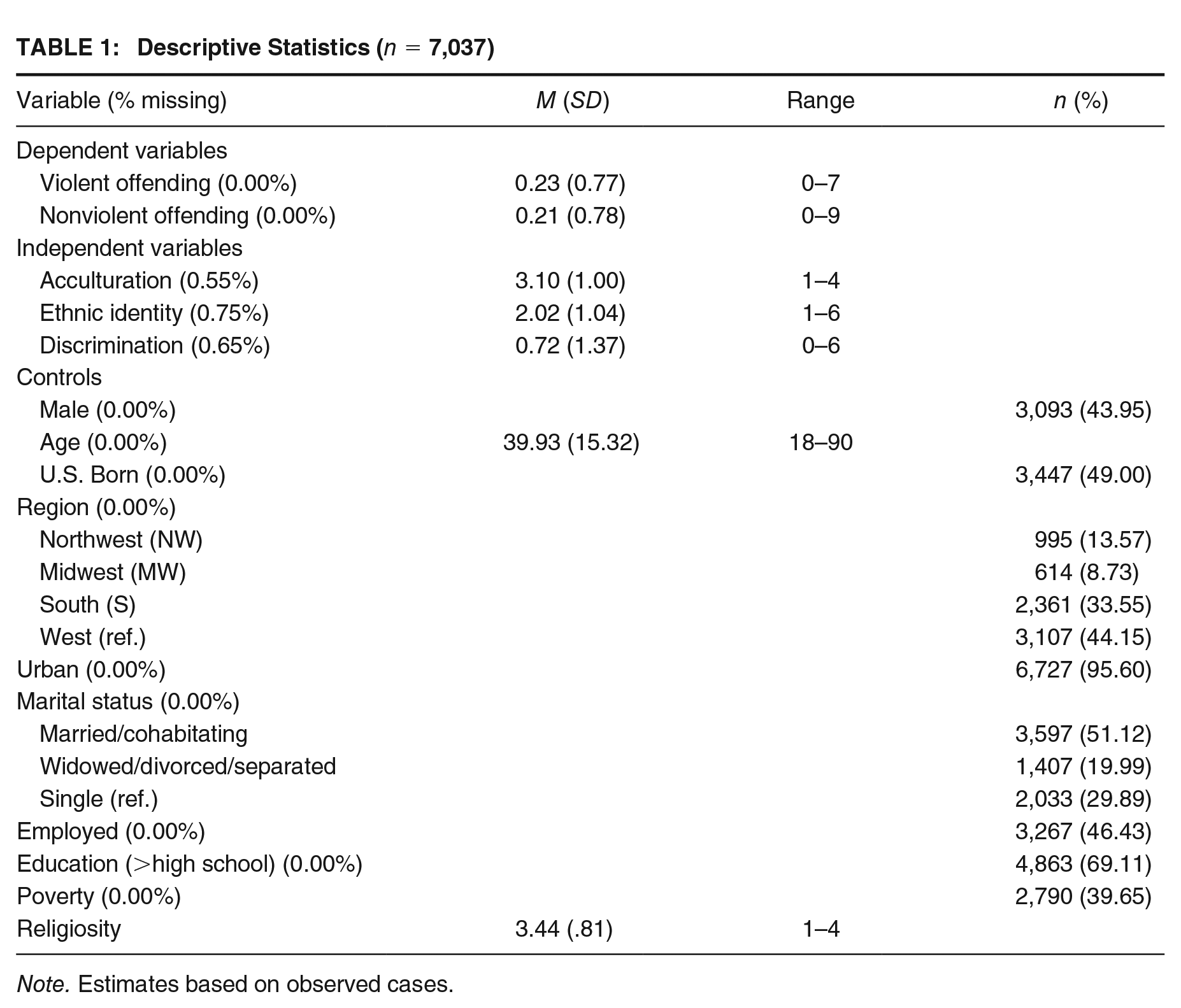
Offending behavior was measured as lifetime offenses committed after age 15. Variety scores were calculated separately for violent and nonviolent offenses. Variety scores are preferable over dichotomous and frequency measures because they address the potential bias in measures of offending when incidents considered lower in severity, but occur with greater frequency are included (Sweeten, 2012). Although relatively rare in this sample compared to prior research in this area (16% of the sample engaged in offending behavior), a strength of this study is that it is a general population sample rather than a sample of high-risk individuals or justice-involved juveniles. Table 1 displays the descriptive statistics for all variables in the study.
Descriptive Statistics (n = 7,037)
Note. Estimates based on observed cases.
The indicators that capture violent crime included: (a) stealing from someone directly: mugging or snatching a purse or wallet; (b) forcing someone to engage in any sexual activity with you against their will; (c) getting into a lot of fights that you started; (d) physically hurting another person in any other way on purpose; (e) harassing, threatening, or blackmailing someone; (f) getting into a fight that came to swapping blows with someone like a husband, wife, boyfriend, or girlfriend; (g) using a weapon like a stick, knife, or gun in a fight, (h) hitting someone so hard that you injured them or they had to see a doctor; and (i) hurting an animal or pet on purpose.
Nonviolent indicators included (a) scamming or coning someone for money, to avoid responsibility or just for fun, (b) forging a check or any other document, (c) using someone’s credit card without their permission, (d) stealing online or scamming over the phone, (e) destroying or damaging someone else’s property (car, home, etc.), (f) starting a fire on purpose to destroy someone else’s property or just to see it burn (g) stealing something from someone/someplace when no one was around, (h) breaking into someone else’s house, building or car, (i) shoplifting, and (j) making money illegally, like selling stolen property or selling drugs.
Independent Variables
Acculturation
In line with prior research on acculturation and health outcomes using the NESARC-III, acculturation was measured with a 12-item scale that focuses on the salience of the English language in daily life for respondents. Each item was measured as a 4-point Likert-type scale ranging from almost never to almost always. Higher values represent a greater degree of acculturation. The indicators include how often the respondent: (a) speaks English, (b) speaks English with friends, (c) thinks in English, (d) watches television in English, (e) listens to radio programs in English, (f) listens to music in English, (g) how well the respondent speaks English, (h) how well the respondent reads in English, (i) how well the respondent understands TV programs in English, (j) how well the respondent understands radio programs in English, (k) how well the respondent writes in English, and (l) how well the respondent understands music in English. This scale has high internal reliability (α = .98).
Ethnic identity
Ethnic identity was measured with a multifaceted scale composed of 8 items which is expanded from the 3-item Ethnic Identity Scale from the National Comorbidity Survey-Replication (NCSR) and National Latino and Asian American Study (NLAAS). In line with the original operationalization of the scale, each item was measured on a 6-point Likert-type scale ranging from strongly agree to strongly disagree. Thus, higher values indicate weaker ethnic identity. The items include: (a) a strong sense of self as a person of Hispanic or Latino origin, (b) identifies with other Hispanic persons, (c) most close friends are of Hispanic origin, (d) Hispanic heritage is important, (e) more comfortable in social situations where other Hispanic persons are present, (f) proud of Hispanic heritage, (g) Hispanic background plays a big part in interaction with others, and (h) values and behaviors are shared by people of Hispanic origin. The internal reliability of this scale for this sample is high (α = .92).
Discrimination
Discrimination in the NESARC-III was modeled after the Experiences of Discrimination (EOD) scale (Krieger et al., 2005), a widely used multiitem measure of discrimination with strong validity and reliability. Experiences of discrimination were measured with a 5-point Likert-type scale ranging from never to very often. The different experiences include (a) the ability to obtain health care, (b) being treated when receiving health care, (c) being in public, (d) being called a racist name, (e) being picked on, made fun of, threatened, and (f) other experiences of discrimination. While these items are aimed at the health care setting, the scale has been applied using the NESARC-III to understand offending behavior, such as IPV among Hispanic men (Maldonado et al., 2020) The survey includes 12 questions total, reflecting experiences that occurred in the last year (α = .83) and experiences that occurred more than 12-months prior to the interview (α = .85). These scales were highly correlated (r = .88). However, due to the skewed distribution of these scales, a binary indicator was created for each context, regardless of when it occurred, measuring discrimination as experiences of sometimes, fairly, or very often. These indicators were then summed to create an additive scale ranging from 0 to six with higher values indicating experiences with discrimination across more domains.
Control Variables
Control variables included well-known correlates of offending as well as subpopulation-specific predictors. Offenders’ gender (male, female) and age (continuous) were included as was the marital status of the respondent (single, married/cohabitating, widowed/divorced/separated). Other control variables included the region where they reside (Northwest, Midwest, South, West) and whether it is an urban area (yes, no), their employment status (yes, no), education (at least a high school diploma), and poverty (total household income less than US$24,999). 3 A well-established finding that nativity is associated with offending (Bersani et al., 2014; Jennings et al., 2013; Ousey & Kubrin, 2018), and therefore whether the respondent was born in the United States (yes, no) was included. Religiosity has been associated with both substance abuse and antisocial behavior (e.g., Salas-Wright, Vaughn, & Maynard, 2015). In the current study, religiosity was measured on a 4-point Likert-type scale. As shown in Table 1, the average age of the sample was 40 years old and approximately half of the sample was male (44%) and born in the United States (49%). The majority of the sample resided in the Western region (44%) and urban environments (96%). Overall, religion was important with an average of 3.44 (SD = 0.81) across respondents. Approximately half of the respondents were married (51%) and employed (46%). The majority had at least a high school diploma (70%) and 40% were considered impoverished.
Analytic Strategy
Given that offending is relatively rare in population-based samples, this study used negative binomial regression, which accounts for the overdispersion in the dependent variable. Likelihood ratio tests confirm that negative binomial regression, as opposed to zero-inflated negative binomial models, was appropriate (Allison, 2012; Swartout et al., 2015). To account for the complex sampling design of the NESARC, Taylor series linearization (TSL) was used for variance estimation using the weights provided in the data. Most indicators featured no missing data and the percentage of missing data on the other indicators was exceedingly low (Table 1), therefore no adjustments for missing data or imputation methods were used.
Models for violent and nonviolent offending were estimated separately. We first consider the main effects of acculturation, ethnic identity, and discrimination, followed by potential interactions of those variables on nonviolent and violent offending. Given the nonlinear nature of the dependent variables and discrimination, reliance on the product term to estimate the interaction is problematic (Mize, 2019). Therefore, interactions are discussed in terms of changes in the marginal effects. Due to the number of comparisons, a Bonferroni-adjusted p-value of .008 was used as the significance threshold for differences in the marginal effects.
Results
Overall, 16% of the sample self-reported violent and/or nonviolent offending (M = 0.23, SD = 0.77 and M = 0.21, SD = 0.78 respectively). As aforementioned, acculturation, ethnic identity, and discrimination were maintained in the same theoretical direction, in which higher scores would align with a higher likelihood of criminogenic behavior. Generally, respondents were on the higher end of acculturation with an average of 3.10 (SD = 1.00). With regard to ethnic identity, the sample averaged 2.02 (SD = 1.04) indicating relatively strong identity with Hispanic communities. Experiences with discrimination were relatively rare (M = 0.72, SD = 1.37).
The results of models where offending is regressed on the key concepts in this study, without controls, paralleled the results when controls are included. Acculturation and discrimination were associated with both violent and nonviolent offending and ethnic identity was only associated with nonviolent offending. Comparatively, the magnitude of the effects for acculturation were somewhat attenuated in the models with control variables.
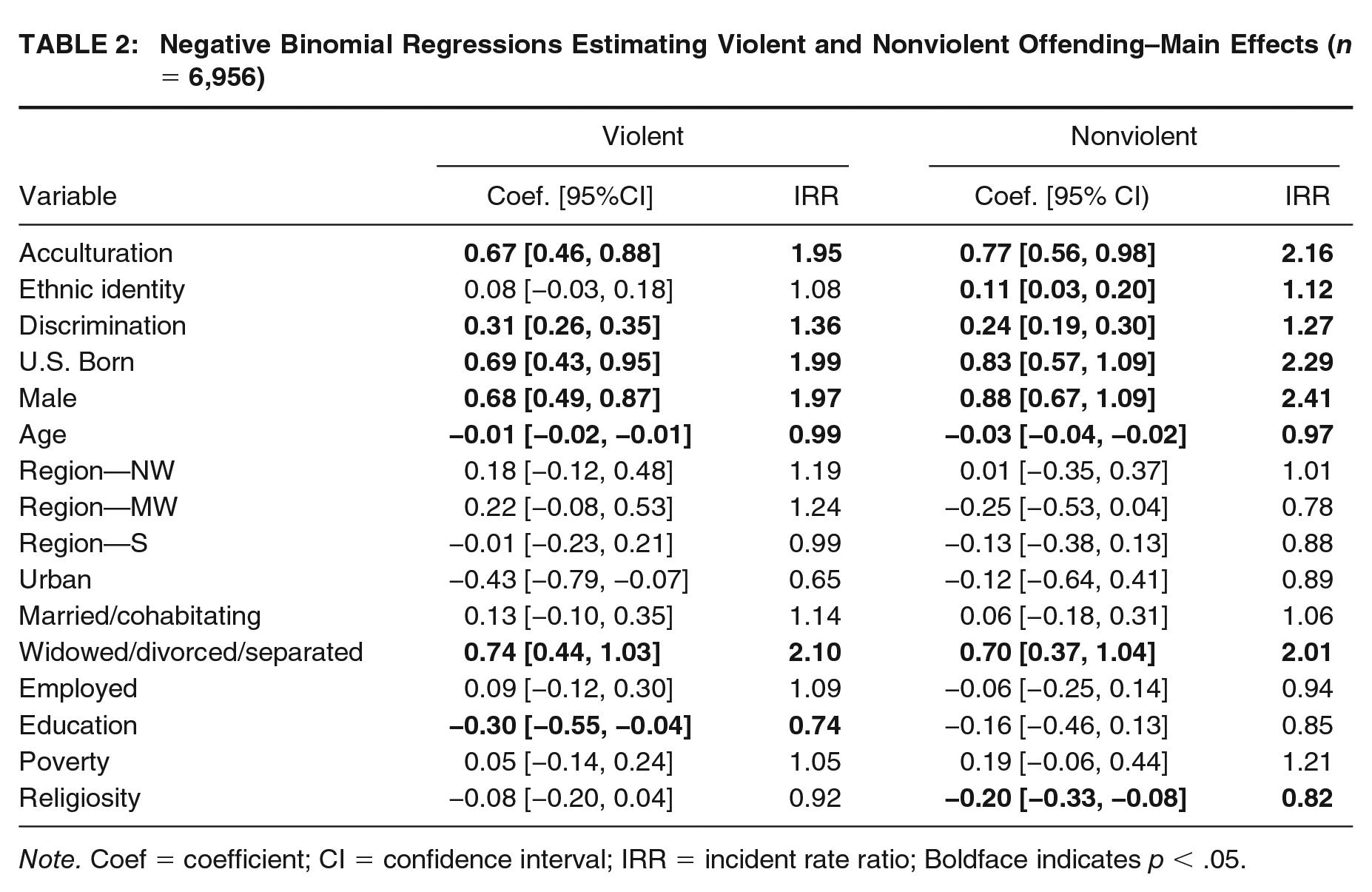
Table 2 displays the results of the negative binomial regression models for both violent and nonviolent offending. As shown, acculturation was associated with violent offending (IRR 4 = 1.95, p < .001). Discrimination was also positively associated with violent offending (IRR = 1.36, p < .001). 5 All three main independent variables were positively associated with nonviolent offending. The strongest of these associations was acculturation (IRR = 2.16, p < .001), and the weakest was ethnic identity (IRR = 1.12, p = .01).
Negative Binomial Regressions Estimating Violent and Nonviolent Offending–Main Effects (n = 6,956)
Note. Coef = coefficient; CI = confidence interval; IRR = incident rate ratio; Boldface indicates p < .05.
Several control variables were associated with both violent and nonviolent offending. Respondents born in the United States had higher rates of offending (IRR = 1.99, p < .001 violent and IRR = 2.29, p < .001 nonviolent). Likewise, male respondents had higher rates of offending (IRR = 1.97, p < .001 violent and IRR = 2.41, p < .001 nonviolent). Age was inversely associated with offending (IRR = 0.99, p = .001 violent and IRR = 0.97, p < .001 nonviolent). Compared to respondents who indicated they were single, widowed/separated/divorced respondents had higher rates of offending (IRR = 2.10, p < .001 violent and IRR = 2.01, p < .001 nonviolent). Education was inversely associated with violent offending (IRR = 0.74, p = .02) and religiosity was inversely associated with nonviolent offending (IRR = 0.82, p = .001).
In examining violent offending, we assessed the interaction effects of acculturation and discrimination, and ethnic identity and discrimination, respectively. Although the general trend indicated that the effect of acculturation increased with higher levels of discrimination, the changes in the marginal effects were not significant. This indicates that discrimination does not interact with acculturation to contextualize violent offending. Similarly, there was no interaction between ethnic identity and discrimination.
Our models also showed no evidence of a moderation effect between acculturation and ethnic identity for nonviolent offending. Next, we examined how discrimination may contextualize the effects of ethnic identity and acculturation for nonviolent offending, respectively. There was not an interaction between ethnic identity and discrimination, although there was a positive interaction between acculturation and discrimination, at least until the higher extremes of experiences of discrimination. This is shown in Figure 1. Specifically, the increased effects of acculturation across levels of discrimination were more pronounced and the effect of acculturation was significant across all levels of discrimination. At the low end of discrimination, the average marginal effect of acculturation was .12, however, at the upper end, the average marginal effect was 1.2. Differences in the marginal effects were also significant across most of the levels of discrimination. With each level of discrimination from values 0 to 4, the p = .01 and p = .03, respectively).
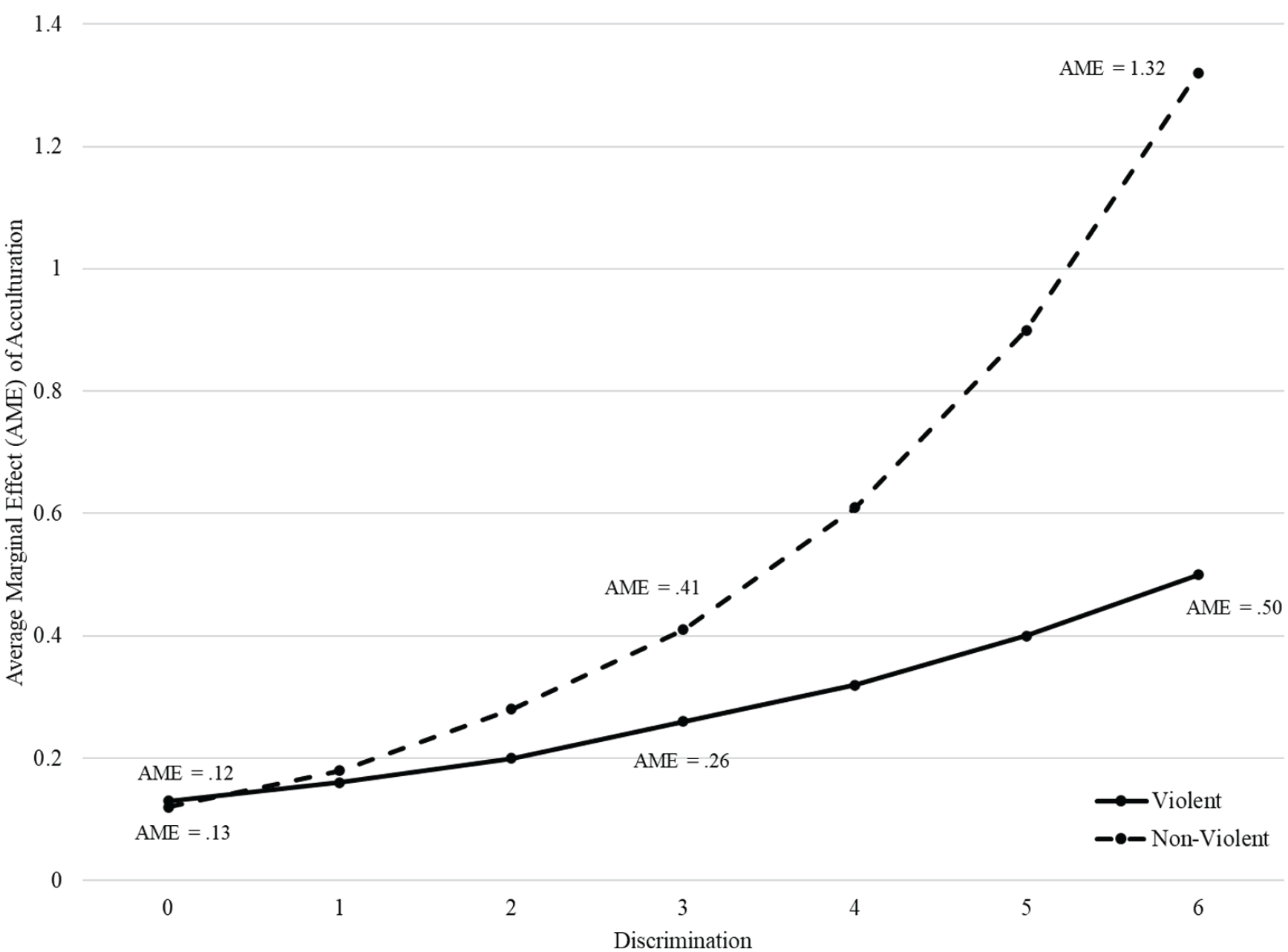
Average Marginal Effects of Acculturation Across Levels of Discrimination
Discussion
The current study contributes to the sparse extant scholarship regarding the correlates of offending for Hispanic persons. We expanded beyond prior measures of acculturation in criminological research, examining both internalized and externalized processes arguably unique to Hispanic experiences in the United States. Specifically, we used a diverse sample of Hispanic adults and examined the association of acculturation, ethnic identity, and discrimination with nonviolent and violent offending, as well as the potential interactions between them. We found that acculturation and discrimination were consistently related to violent and nonviolent offending. Higher acculturated individuals and those who experienced more discrimination were more likely to engage in offending behavior. Dissimilarly, ethnic identity, measured as weaker Hispanic identity, was only significantly associated with nonviolent offending, although to a lesser extent than acculturation. In examining the moderating effects of these respective processes on violent offending, we found that neither acculturation nor ethnic identity interacted with discrimination. Regarding nonviolent offending, we only find a significant interaction between acculturation and discrimination; there is no evidence of interactions between acculturation and ethnic identity, nor ethnic identity and discrimination. We unpack several broader points of discussion about our findings below.
When reviewing the effects of discrimination on acculturation, we consider two possibilities. First, we posit that more acculturated Hispanic persons may internalize experiences of explicit marginalization. That is, Hispanic persons who believe they are more embedded into the United States arguably experience more distress when encountering direct attacks from a group they understood themselves as a member of. Echoing the sentiments of Viruell-Fuentes (2007), we conclude that Hispanic persons who have a stronger attachment to their Hispanic culture may expect or feel more removed from these incidents, and therefore less affected by discriminatory behavior. These experiences may serve as a buffering agent for less acculturated individuals as they change their expectations of treatment and behavior, becoming further removed from American values. Conversely, as acculturation increases, Hispanic persons may experience discrimination more as “othering” than individualized attacks. We suggest that more acculturated individuals may be further affected by discriminatory experiences as they extend beyond just the individual; given the importance placed upon families in Hispanic cultures, second- or third-generation Hispanic persons have a greater stake regarding these isolating experiences and become frustrated with not only themselves being treated unfairly, but those in their interpersonal networks, as well.
Hispanic persons may feel more pressured to negate stereotypes of offending, holding beliefs that are largely consistent with law-abiding behavior. Nonetheless, those who encounter salient experiences of discrimination may inadvertently contribute to the stereotype of the criminal immigrant by internalizing xenophobic rhetoric that influences their behaviors, including criminal outcomes. Specifically, they adjust their behavior to in fact fit these antisocial tropes, as they have been continuously informally labeled as “offenders.” As Smith and colleagues (2022) noted, the “labeling “turns on” societal level awareness as well as personal endorsement of stereotypes, which may have otherwise been “off” had the person not been labeled” (p. 1850). Moreover, although scholarship has largely explored these discriminatory stressors through antiimmigrant stereotypes, it is important to consider these in the framework of daily interactions (K. Harris et al., 2020). Specifically, experiences of discrimination may range in severity because of factors extending beyond the status of their citizenship, assessing the “overall threat they pose to Americans and American values” (K. Harris et al., 2020, p. 130). Respectively, these sentiments parallel the assumptions proposed by strain and labeling theories (Agnew, 1992, 2006; Becker, 1963). Future criminological research examining the impact of culturally relevant variables such as acculturation, ethnic identity, and discrimination, should consider these frameworks in tandem, as they have substantive implications for future policy. That is, even while research has largely situated discrimination in stress or strain frameworks, expanding these theoretical assessments beyond maladaptive coping may help contextualize the importance of such processes.
In addition to discrimination, the current study highlights the importance of future work in understanding the process of acculturation as it relates to U.S. Hispanic persons, better discerning how their lived experiences are associated with offending. Nonetheless, the role of ethnic identity remains unclear. Although our measures of ethnic identity encompass belonging and attachment to Hispanic groups, these themes may remain too abstract, neglecting aspects related to informal social control and social support that may be more relevant. Familismo, a salient characteristic for many Hispanic families, may better contextualize the relevance of ethnic identity with regard to offending (Knight et al., 2010). Indeed, given the experiences of Hispanic persons in the United States, attachment to one’s ethnic identity may lie with interpersonal relationships established and retained. Similarly, ethnic identities may be too fluid across Hispanic ethnic subgroups to be considered at the aggregate, fostering the need for group-specific analyses.
Given these complexities, it may be beneficial to also consider ethnic identity in tandem with ethnic density. Ethnic density is calculated by the proportion of individuals who are from the same ethnic background and live in the same neighborhood (Jurcik et al., 2013). Indeed, identities largely vary “on several factors, including characteristics of immigrant groups and the places where they have settled” (Phinney et al., 2001, p. 496). As such, measures focusing on the influence of social ties with others from the same ethnic group may be more successful in providing a better understanding of the role ethnic identity that is relevant to individual dispositions. This allows for the evaluation of the processes of ethnic identity in whether it is the purposeful rejection of origin country values and networks.
In addition, while the current study established the importance of these relationships, how the effects of cultural processes vary by Hispanic populations should be explored in future research. As noted for ethnic identity, there is notable variation across Hispanic groups ranging from structural to individual-level characteristics (Ibañez et al., 2019). For example, most college degrees held by Hispanic persons are held by Colombians (32%); Salvadorians are the least likely to hold advanced degrees (7%); Hispanic subgroups are largely concentrated by region, with Cubans the most concentrated population (48%) in Miami, Florida (Motel & Patten, 2012).
Relatedly, cultural processes may operate differently for native U.S. Hispanic persons given their proximity to American culture. This is particularly notable for Puerto Rican and Tejano individuals, as they have complex ethnic identities and may have different cultural experiences than members from other Hispanic subgroups (Schwartz et al., 2012). Hispanic persons may also encounter additional challenges extending beyond ethnic hierarchies, with Black Hispanic persons more likely to feel the effects of colorism than non Black Hispanic persons (Noe-Bustamante et al., 2021). Taken together, there are a plethora of additional intersectional correlates that require examining when addressing Hispanic experiences in the criminal justice system. One way to understand such mechanisms is through rigorous qualitative work with various Hispanic subgroups (not just Mexican or Puerto Rican persons like much of the extant literature uses), to better assess these relationships and develop better measures quantitatively.
Limitations
Although the current findings provide several contributions to the literature involving Hispanic offending, it is important to note its limitations. First, we must address concerns of temporal ordering between offending and our independent variables, particularly acculturation and ethnic identity. The measures of offending only examine offenses after age 15, therefore, it is possible that experiences before age 15 contributed to the development of acculturation and ethnic identity. Even so, although acculturation and ethnic identity are not static (Phinney et al., 2001), they are unlikely to change dramatically. Existing research suggests that these are generational processes more than within-individual changes. Likewise, research suggests that ethnic identity is likely to develop during adolescence, before our measures of offending (Phinney, 1993). As Cullen and colleagues (2019) noted, criminological research is notably biased against cross-sectional data, but such designs are equipped to advance theoretical measurements and new and complex research. Thus, while the longitudinal exploration of cultural processes and Hispanic adults is necessary for future research, our measures of acculturation and ethnic identity help contextualize Hispanic experiences of these processes.
Next, it is important to discuss that our measure of acculturation is not exhaustive and is reflective of a unidimensional understanding of the process. A criticism of this understanding and consequent operationalization is that it fails to include “independent measures for the maintenance of the culture of origin and the adherence to the dominant culture” (Cabassa, 2003, p. 136). Even so, we note that our measure contributes to the literature by noting the importance of linguistic acculturation and how language assists in cultural maintenance. Relatedly, although acculturation is understood as a process in which beliefs and values are obtained, these are not directly measured in our analyses. As previously discussed, this is a complex process given the heterogeneity among Hispanic subgroups. Notwithstanding, our findings allow the understanding of the contextual impact of acculturation and the assumed values and beliefs present in the process.
In addition, we note that our measures of discrimination do not account for differences in implicit or explicit experiences of marginalization. That is, we do not have indicators of discrimination that indicate whether experiences were consistent with public harassment or institutionalized settings. Nonetheless, our measure encompasses an array of negative experiences of Hispanic persons in the United States which we believe contribute to a better understanding of discrimination for Hispanic adults associated with offending. Relatedly, specific mechanisms such as acculturative stress should be measured in predictive models of offending for Hispanic persons. That is, while we posit more acculturated individuals are likely to experience higher levels of acculturative stress (Isom et al., 2021), these are distinct concepts that are often used interchangeably (Driscoll & Torres, 2022). Robust datasets like the NESARC should be mindful in assessing these mechanisms, as they better situate the relevance of these processes.
Conclusion
This study sought to understand the processes by which the lived experiences of U.S. Hispanic persons are associated with offending. Although there are robust bodies of literature on these processes in the medical and public health fields, criminology has lagged in applying these same processes to offending. In this study, acculturation, discrimination, and to a lesser extent ethnic identity were associated with violent and nonviolent offending. Furthermore, discrimination contextualized acculturation, increasing the intensity of that relationship on offending. These processes are far from exhaustive, as there are other factors of offending Hispanic persons that may contextualize the Hispanic experience and may vary by Hispanic groups or other identities. Future research should thoroughly explore these processes within U.S. Hispanic populations, rather than focus on U.S. Hispanic persons as a comparison group.
Footnotes
AUTHORS’ NOTE:
The authors declare no potential conflicts of interest with respect to the research, authorship, and/or publication of this article. The authors received no financial support for the research, authorship, and/or publication of this article.
