




Abstract
Previous research suggests that youth sports participation is moderately associated with reduced delinquency. However, little is known about whether head injury dampens this protective role of sports involvement. This study analyzes data from a sample of juvenile justice involved youth to assess (a) the relationship between sports involvement and head injury, (b) whether groups of sports involved youth with and without a head injury report varying levels of general, violent, and/or nonviolent delinquency, and (c) potential sex differences across these group. Results suggest that sports participation is not associated with head injury. Nonsports involved youth with a head injury report higher levels of general and violent delinquency, compared to nonsports involved youth without a head injury. Sports involved females with a head injury report higher levels of general and violent delinquency, compared to sports involved males with a head injury. Implications and avenues for future research are discussed.
Physical activity is essential for healthy cognitive and mental health (Bouchard et al., 2012). Physical exercise is associated with a range of benefits, including an elevated mood (Strasser & Fuchs, 2015), longer attention span (Coe et al., 2006), and overall life satisfaction (Maher et al., 2015). Adolescents who exercise report lower levels of anxiety (McMahon et al., 2017), higher levels of self-efficacy (Dishman et al., 2005), and less depressive symptomatology (Kandola et al., 2020). Based on these positive life outcomes, it should not come as a surprise that physical education is a required component of middle and high school curriculum in the United States and worldwide. It is also theorized that involvement in organized sports may act as a form of structured socialization that protects against delinquent behavior by providing positive role modeling, good values about fair play and respect, and hard work and commitment. Existing research analyzing community samples of adolescents has found moderate support for this theoretical proposition suggesting that sports involvement is generally—albeit inconsistently—associated with reductions in delinquent behaviors (Jugl et al., 2021; Kreager, 2007).
While most studies report some support for a negative association between sports involvement and delinquency during adolescence, comparatively less is understood about whether this applies to samples of at-risk youth with a history of juvenile justice involvement. Juvenile justice involved youth may be qualitatively different than youth from the general population. For example, youth from disadvantaged backgrounds who are overrepresented in juvenile justice system may receive more benefits from well-implemented and organized sports programs because they are growing up in communities with a host of risk factors for delinquency. Indeed, sports-based intervention efforts for juvenile justice involved youth have been widely implemented by several local community agencies and institutions (Kelly, 2013; Nicholson, 2017) to reduce these pulls toward delinquency. Yet, empirical support for the effectiveness of these approaches remains mixed (Holt et al., 2017; Jones et al., 2017).
There may be a few reasons for the state of this research. First, very few studies have used quantitative research methodologies with data from juvenile justice involved youth to explore the role of sports involvement on different forms of delinquent offending (for an exception, see Spruit et al., 2018). While existing theory argues that sports involvement may protect against delinquency through structured social supervision (Purdy & Richard, 1983), there is also the possibility that youth may be at an elevated risk of sustaining serious injuries that impair cognitive functioning and increase behavioral problems, such as head injury (Veliz et al., 2017). Head injury has been shown to be associated with delinquent behavior in samples of urban (Connolly & McCormick, 2019) and justice involved youth (Schwartz et al., 2017). Sustaining a head injury from sports may therefore dampen the protective effect of organized sports for delinquent behavior.
Second, much is currently unknown about whether the strength of the relationship between sports involvement and delinquency varies across males and females, particularly among those with a history of juvenile justice involvement. Given that there are pronounced biological differences between males and females, males might benefit more from sports participation than females. One reason to expect this is based on two brain structures that differ between males and females—specifically the hippocampus and amygdala (Wierenga et al., 2014). These structures are involved in emotional processing and regulation (Yang & Wang, 2017)—including the regulation of physical aggression—and are generally larger and more active in males (Wierenga et al., 2014). Males involved in athletics may learn to better regulate their higher aggressive tendencies as they practice sport-related discipline, emotional control, and teamwork while being mentored by positive adult influences. Females, on the contrary, may also benefit in these respects; however, they might not be as pronounced as females are generally less aggressive than males. Even when sports involved adolescents sustain a head injury, it is possible that males may be less likely to engage in delinquent behavior compared with their female counterparts. Females generally report more symptoms of head injury than males (Mollayeva et al., 2018), including experiencing impaired decision-making skills, which are important for emotional and behavioral regulation. Therefore, sports involved males may be less likely to engage in delinquent behavior following a head injury as they experience fewer behavior-related side effects.
To date, these two empirical questions have yet to be examined with quantitative data. As such, much is currently unknown about the role of head injury on the relationship between sports involvement and different forms of delinquency among juvenile justice involved males and females. Existing evidence suggesting that sports participation may be beneficial for juvenile justice involved youth and, specifically, more so for males compared with females—or vice versa—may have important implications for juvenile justice prevention and intervention efforts. This study aims to begin to address these gaps in the current body of research.
Sports Participation and Delinquency
A great deal of research has found that sports involvement among community-based samples of adolescents is associated with slight reductions in delinquency. Evidence from a recent meta-analysis that included results from 13 previously published studies reported that sports programs for adolescents protect against criminal behavior (Jugl et al., 2021). Furthermore, Veliz and Shakib (2012) found that U.S. high schools with higher rates of students on athletic teams reported fewer violent (but not nonviolent) crimes on campus, relative to schools with lower percentages of students involved in athletics. However, there are several studies that report no association between sports participation and delinquency among community dwelling adolescents. Specifically, in an earlier meta-analysis of 51 studies, Spruit et al. (2016) reported that there was no overall relationship between sports participation and juvenile delinquency.
While much of the previous literature on sports, delinquency, and crime has been meta-analyzed, highlighted in both reviews are areas that have not been covered. Chiefly absent from this line of research is a multivariate quantitative examination of how sports involvement is associated with delinquent behavior in juvenile justice involved youth. Adolescents with previous justice involvement may benefit more from sports involvement as they might not have other prosocial influences in their lives to protect them from the pulls toward engaging in illegal activity. By engaging in sports, adolescents may not have as much time to socialize with peers in unstructured settings that could facilitate delinquency. Among the studies that have been conducted with juvenile justice involved youth, results suggest that athletic participation is associated with decreased delinquent recidivism (Collingwood & Engelsgjerd, 1977) and aggression (Williams et al., 2015). Although these findings shed some light on how sports can protect against delinquency in juvenile justice involved youth, the studies do not control for any covariates, potentially limiting the external reliability of the results.
Another consideration that has yet to be examined is the role of sustained physical injuries—such as head injuries—during sports participation that may weaken the benefits, render them nonexistent, or even increase the risk for delinquency. Past research shows that sustaining a head injury is associated with increased delinquency (Schwartz, 2021) partly due to the alteration of the structure and functionality of the brain which can negatively affect cognitive and emotional regulation (Li & Liu, 2013). While head injury might not completely negate the benefits of sports participation, adolescents who suffer a head injury often need to take a break from sports so that they can heal. During this time, injured youth are no longer receiving the daily social benefits of sports. In addition, sports involved adolescents who are recovering from a head injury might choose to spend extra time (which was previously occupied by sports) with new peers who may encourage them to participate in risky behavior. This may be especially true for previously juvenile justice involved youth who have higher rates of head injury occurrence than community-based youth (Farrer et al., 2013), which may require them to take more, or longer breaks from sports and allow them greater opportunities to engage in these types of behaviors. The combination of neuropsychological deficit stemming from a head injury, the absence of social and physical benefits from sports involvement, and possible introduction of delinquent minded peers may therefore increase the risk of delinquent offending.
Finally, sports participation may be differentially associated with specific forms of delinquency in males and females. As males tend to exhibit more aggression than females, specifically with respect to physical aggression involved in many delinquent acts (Björkqvist, 2018), it is possible that they may benefit more from the social aspects of athletics than females. Working on skills such as goal setting, strategic planning, and emotional control during tough competition might enable young males to translate these skills to other aspects of their lives. While females may benefit from practicing these skills, they tend to exhibit lower baseline levels of physical aggression so the focus of their translational skills may lie in other areas, such as improved communication. However, as juvenile justice involved males and females both generally have a history of aggression, these hypothesized sex differences may not be as pronounced, or even emerge.
Another reason why sports may have differential effects for delinquent behavior across males and females may be due to the different cultures that characterize male and female sports involvement. Male sports tend to center around ideas of winning, dominance, aggression, and physical strength (Chalabaev et al., 2013). In addition, males in sports tend to engage in “locker room talk” which promotes objectification and abuse of women (Breger et al., 2019). Female sports are generally more focused on skill development, keeping a positive mindset, and learning from mistakes, rather than on winning (Burtka, 2019). Given these differences, aggressive tendencies and behaviors are more likely to be developed and thrive on male sports teams. Such aggression may extend off the sports field and into other areas of these males’ lives which could give rise to delinquent behaviors.
There may also be differences in aggression between male and female athletes due to the type of sports that males and females tend to engage in. In general, males are more likely to play contact sports such as football and ice hockey, whereas females are more likely to play noncontact or individual sports such as volleyball and track and field (Slater & Tiggemann, 2011; USA Hockey, 2023). Of note, research has found that males who play contact sports engage in more physical fights than males who play noncontact sports (Kreager, 2007). However, males are much more likely to participate in sports than females regardless of the sport type (Eime et al., 2021). Therefore, it could be entirely possible that only females with aggressive or “masculine” tendencies choose to engage in sports, and thus, as a group, female athletes may be more aggressive and display delinquent behaviors at higher rates than male athletes.
There may also be differences in delinquent behavior among sports involved males and females with a head injury. Previous research has shown that sports involved adolescent females are more likely to sustain a head injury relative to adolescent males who play the same sport (Covassin et al., 2013). In addition, results from previous research suggest that females are also more likely than males to report a more symptoms of head injury (Mollayeva et al., 2018), such as experiencing impaired memory and decision-making skills (Broshek et al., 2005). Such skills are critical for emotional control, especially in stressful and risky situations (Heilman et al., 2010). Thus, females with a history of juvenile behavior may be more likely than males to engage in delinquency after sustaining a head injury because they find it more difficult to refrain from aggressive impulses and negative peer influences because of diminished cognitive control.
The Current Study
There is limited research examining if, and to what extent, associations between sports involvement, head injury, and forms of delinquency exist among juvenile justice involved youth and whether these associations vary across males and females. This study aims to answer the following three research questions with data from a sample of juvenile justice involved youth in the United States:
Violent and nonviolent delinquency were examined separately because past research has suggested that sports participation may have a stronger protective effect for violent than nonviolent delinquency (Veliz & Shakib, 2012). In addition, sustaining a head injury has been found to be more strongly related to violent offending (Schofield et al., 2015; Schwartz et al., 2017). If the answers to our RQs differ for violent and nonviolent delinquency, these differences should be considered when developing juvenile prevention/intervention policy.
Method
Data
This study uses data from the Northwestern Juvenile Project (NJP), a longitudinal data set of juvenile justice involved youths from Cook County, Illinois (Teplin, 2013). The original goals of data collection were to identify how patterns of risky behavior, substance use disorders, and mental illness develop over time. One thousand eight hundred twenty-nine (N = 1,829) juveniles entering the Cook County Correctional Facility were recruited for the study and interviewed during intake between 1995 and 1998. Over the course of the next 8 years, participants were interviewed six more times, with the first of these follow-up interviews occurring 3 years after the baseline interview. All participants were eligible for follow-up Wave 1, 4, 5, and 6 interviews, while a random sample of 997 respondents were selected for follow-up Wave 2 and 3 interviews. This study uses data from the baseline and follow-up Wave 1 interviews.
Measures
Predictor Measures
Sports involvement
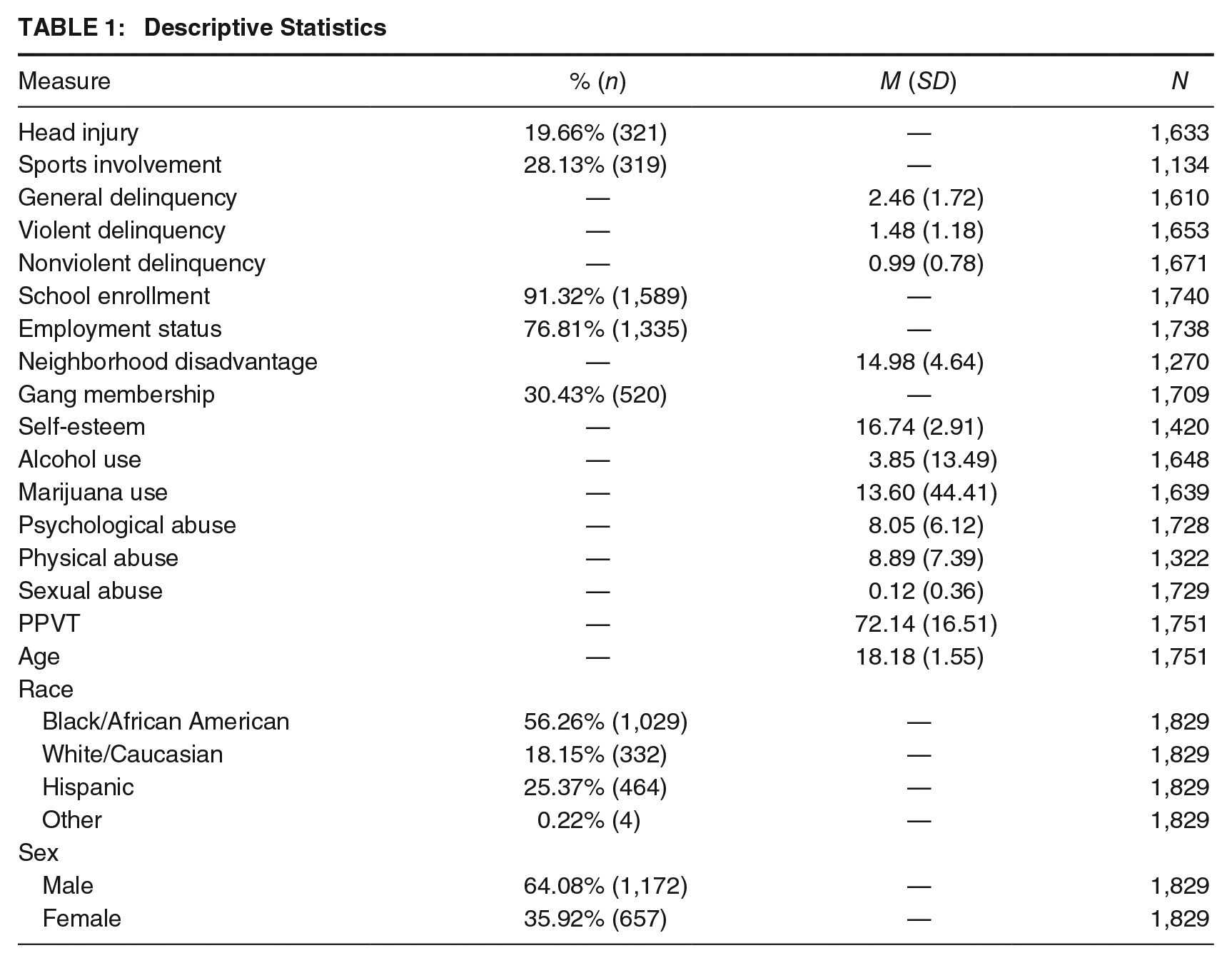
Sports involvement was assessed during Wave 1 by asking participants if they had been involved in any school or community athletic team in the past year. Responses were coded such that 0 = no participation on any athletic teams, and 1 = participated on at least one school and/or community athletic team. Descriptive statistics for sports participation is presented in Table 1. As can be seen in Table 1, close to 30% of respondents reported having participated on an athletic team in the past year.
Descriptive Statistics
Head injury
Head injury was assessed at Wave 1 by asking participants if they had sustained a head injury since the baseline interview. Responses were 0 = no and 1 = yes. As shown in Table 1, approximately 20% of respondents reported sustaining a head injury at Wave 1 after the baseline interview, which is similar to previous findings on juvenile justice involved youth (Moore et al., 2014). Males reported a higher prevalence of head injury compared with females (χ2 = 12.85, p < .001).
Theoretical and Demographic Covariates
Psychological abuse
Psychological abuse was measured at the baseline interview with four items capturing respondents’ history with psychological victimization from adults including how many times each respondent has been (a) put down or criticized; (b) made fun of or embarrassed in front of others; (c) made to feel like a bad person; and (d) yelled at. Each item was measured on a 7-point scale in which 0 = never; 1 = once; 2 = 2 to 5 times; 3 = 6 to 10 times; 4 = 11 to 25 times; 5 = 26 to 50 times; and 6 = 51+ times. The index demonstrated good reliability (α = .81). Responses to each item were summed to create an overall measure of psychological abuse whereby higher scores reflect higher levels of psychological abuse history.
Physical abuse
Physical abuse was measured at the baseline interview with six items capturing each respondent’s history of physical victimization from adults including (a) how many times they have been pushed, spanked, grabbed, slapped, or shoved; (b) how many times they have been hit very hard; (c) how many times they have been hit with an object; (d) how many times they have been beaten or kicked; (e) how many times they have been hurt so badly by an adult that they were bruised, had broken bones, or were severely injured; and (f) if they have ever been hurt so badly that they had to see a doctor or go to a hospital. The first five items were measured on a 7-point scale in which 0 = never; 1 = once; 2 = 2 to 5 times; 3 = 6 to 10 times; 4 = 11 to 25 times; 5 = 26 to 50 times; and 6 = 51+ times. The last item was measured dichotomously such that 0 = no and 1 = yes. The index demonstrated good reliability (α = .86). Responses to each item were summed to create an overall measure of physical abuse whereby higher scores reflect higher levels of physical abuse history.
Sexual abuse
Sexual abuse was measured at the baseline interview with five items tapping into each respondent’s history of unwanted sexual advances from adults. Participants were asked if they had ever been touched or kissed or made to touch or kiss, in a way that made them feel uncomfortable, any of the following (where 0 = no and 1 = yes): (a) A biological, adoptive, step, or foster father; (b) A male relative like a brother, grandfather, or uncle; (c) A biological, adoptive, step, or foster mother; (d) A female relative like a sister, grandmother, or aunt; and (e) Someone else. The index demonstrated poor reliability (Kuder–Richardson coefficient = .12), though this is not surprising, given that it is uncommon for victims of child sexual abuse to have more than one abuser (Snyder, 2000). All responses were summed together to create an overall measure of sexual abuse history.
School enrollment
School enrollment was measured dichotomously at Wave 1 and respondents were asked if they were currently enrolled in school where 0 = no and 1 = yes.
Employment status
Employment status was measured dichotomously at Wave 1 and respondents were asked if they were currently employed where 0 = no and 1 = yes.
Neighborhood disadvantage
Neighborhood disadvantage was measured at Wave 1 with eight items tapping into neighborhood-level problems. Specifically, respondents were asked, “how much of a problem is. . . in your neighborhood”: (a) high unemployment; (b) vandalism and/or property being broken and/or torn up; (c) abandoned houses; (d) burglaries and thefts; (e) run down and poorly kept buildings and yards; (f) assaults and muggings; (g) unsupervised children; and (h) being unsafe on the streets during the day. Each item was measured on a 3-point scale in which 1 = not a problem; 2 = somewhat of a problem; and 3 = big problem, and responses to all items were summed to create an overall measure of neighborhood disadvantage. The index demonstrated good reliability (α = .86). Higher scores for this measure correspond to higher levels of neighborhood disadvantage.
Gang membership
Gang membership was measured at Wave 1 with a dichotomous measure indicating whether a respondent reported being a member of a gang at Wave 1 (0 = no and 1 = yes).
Self-esteem
Self-esteem comprised four questions assessed at Wave 1 tapping into respondents’ views of their worth and abilities. Specifically, respondents were asked, “how often do you think . . : (a) you can’t do anything right; (b) you feel you don’t have much to be proud of; (c) sometimes you think you’re no good at all; and (d) you feel good about yourself.” Each item was measured on a 5-point scale in which 1 = almost never; 2 = not too often; 3 = about half the time; 4 = often; and 5 = almost always, and the first three items were reverse-coded so higher scores correspond to higher self-esteem (α = .38).
Alcohol use
Alcohol use was measured at Wave 1 in which respondents indicated how many times they used alcohol in the last 30 days.
Marijuana use
Marijuana use was measured at Wave 1 in which respondents indicated how many times they used marijuana in the last 30 days.
Verbal aptitude
Verbal aptitude was measured at the baseline interview by respondent scores on the Peabody Picture Vocabulary Test (PPVT), which is a valid and standardized assessment (Dunn & Dunn, 1965) that has been shown to correlate highly with intelligence (Hodapp & Gerken, 1999).
Age
Age indicates how old (in years) each participant was at Wave 1.
Race
Race is a single variable consisting of four mutually exclusive categories indicating if participants identified as Black/African American (= 1), White/Caucasian (= 2), Hispanic (= 3), or another racial category (= 4) during the baseline interview.
Sex
Sex is a binary measure, collected during the baseline interview, in which male = 0 and female = 1.
Outcome Measures
General delinquency
General delinquency was measured as a count variable by combining six self-report questions from Wave 1 which asked respondents to report how many times they had engaged in a range of delinquent behaviors since the baseline interview. These behaviors included (a) using a gun, (b) attacking someone with a weapon with the idea of seriously hurting them, (c) beating someone up with the idea of seriously injuring them, (d) stalking, kidnapping, and/or abducting someone, (e) stealing something, and (f) selling drugs. Responses to each behavior were dichotomized such that 0 = zero times and 1 = one or more times. The index demonstrated adequate reliability (Kuder–Richardson coefficient = .74). Values were summed together to create a variety index of general delinquent offending with higher scores representing higher levels of general delinquency.
Violent delinquency
Violent delinquency was measured as a count variable by combining four items from the variety index of general delinquency capturing aggressive and interpersonal offending including (a) using a gun, (b) attacking someone with a weapon with the idea of seriously hurting them, (c) beating someone up with the idea of seriously injuring them, and (d) stalking, kidnapping, and/or abducting someone. The index demonstrated adequate reliability (Kuder–Richardson coefficient = .78). Responses were summed together where higher values represent higher levels of offending.
Nonviolent delinquency
Nonviolent delinquency was measured as a count variable by combining two items from general delinquency index that captured nonviolent delinquent offending. These items captured stealing something and selling drugs. The index demonstrated adequate reliability (Kuder–Richardson coefficient = .69). Values for both items were summed together to create a measure of nonviolent delinquency where higher levels reflect higher level of nonviolent delinquent behavior.
Plan of Analysis
The analysis was conducted in a series of steps. First, a chi-square test was calculated to examine whether sports involvement was associated with head injury among juvenile justice involved youth. Second, a one-way analysis of variance (ANOVA) was calculated to assess mean levels of general, violent, and nonviolent delinquency across groups of sports involvement and head injury. The first group consisted of respondents who were not involved in sports and did not sustain a head injury (n = 616). The second group consisted of respondents who were not involved in sports but sustained a head injury (n = 147). The third group consisted of respondents who were involved in sports and did not sustain a head injury (n = 242), while the fourth and final group consisted of respondents who were involved in sports and reported sustaining a head injury (n = 56). Based on the results from the ANOVA analyses and the count nature of variables for delinquent offending, multivariate negative binomial regression equations were calculated to examine the relations between group membership and general and violent delinquent behavior, while controlling for all the covariates. To examine relations between group membership and nonviolent delinquent behavior, ordered logistic regression was used. After estimating these models, another series of regression models was then estimated that included interaction terms specified between group status and sex to examine whether and to what extent associations between group membership and delinquency varied across sex. All analyses were performed using Stata 17.1 (StataCorp, 2021) with regression models using robust standard errors.
Results
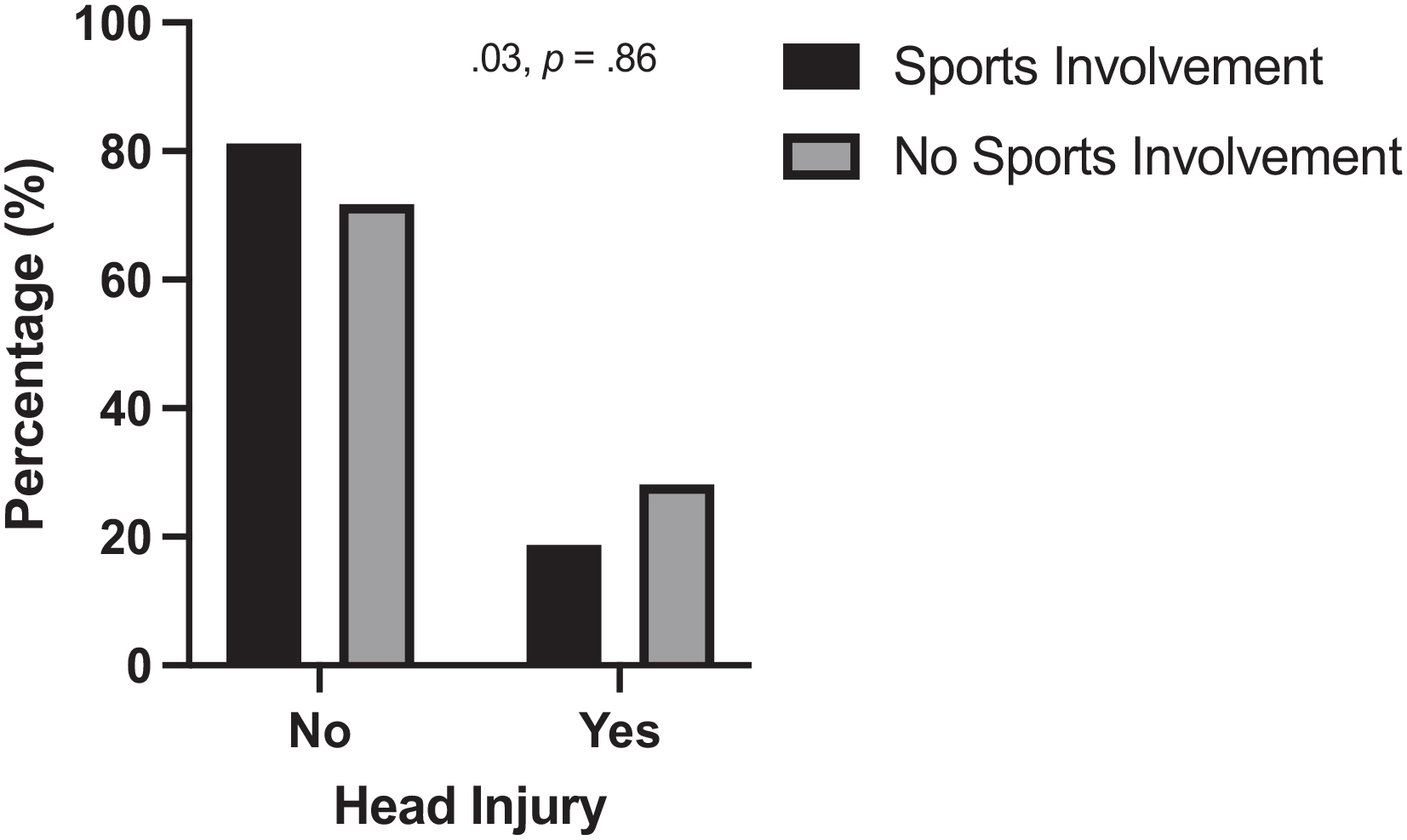
The analysis began by examining the bivariate relation between sports involvement and head injury in the sample. Figure 1 presents the results from a chi-square analysis and shows that rates of head injury did not vary across sports involvement status, suggesting that the prevalence of head injury did not vary across sports involved and nonsports involved respondents. Results from supplemental correlation analyses revealed that sports involvement was weakly correlated with general delinquency (r = .02, p = .062), violent delinquency (r = .03, p = .053), and nonviolent delinquency (r = .01, p = .071). Head injury was significantly and positively correlated with general delinquency (r = .16, p < .001), violent delinquency (r = .17, p < .001), and nonviolent delinquency (r = .09, p = .014).
Sports Involvement and Head Injury
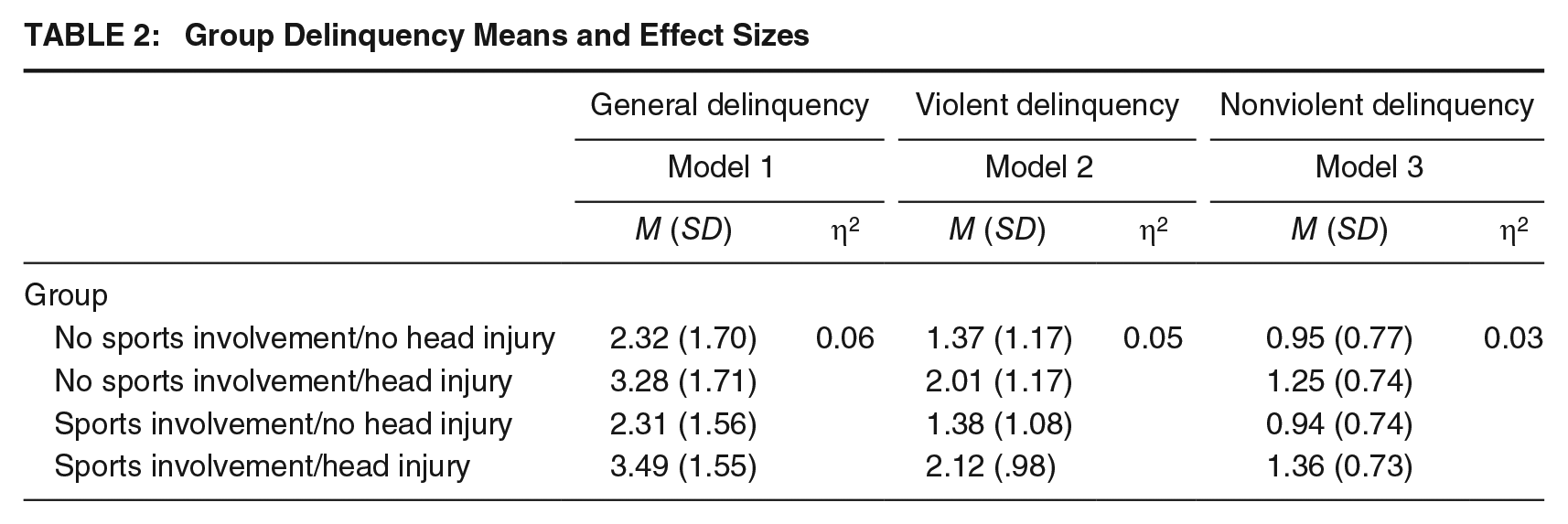
The results of ANOVA tests revealed that there was significant variation in general F(3, 980) = 19.10, p < .001, violent F(3, 1,002) = 17.09, p < .001, and nonviolent F(3, 1,020) = 10.77, p < .001 delinquent offending across all groups. This suggests that, without controlling for any covariates, there are mean differences in each type of delinquency across groups of (a) sports involved youth with a head injury; (b) sports involved youth without a head injury; (c) nonsports involved youth with a head injury; and (d) nonsports involved youth without a head injury. Table 2 presents the mean scores for general, violent, and nonviolent delinquent offending across the four groups and provides η2 values from the ANOVA tests which give the proportion of variance in offending explained by group membership. As can be seen, group membership only accounts for a small proportion of variance in all three types of delinquency, suggesting that other factors are much stronger driving factors for engagement in delinquent behaviors.
Group Delinquency Means and Effect Sizes
Having established that there were significant differences in levels of delinquency across groups, the next step in the analysis focused on estimating two multivariate negative binomial regression models for general and violent delinquency and one multivariate ordered logistic regression model for nonviolent delinquency to assess the independent relationship between group status and delinquency. The results from these models are presented in Tables 3 and 4, respectively. In Table 3, Model 1 for general delinquency shows that relative to respondents with no sports involvement and no head injury, participants with no sports involvement, but with a head injury, reported higher levels of general delinquent offending. Model 2 reveals similar results for violent delinquency. Respondents with no sports involvement and a head injury reported higher levels of violent offending compared with respondents with no sports involvement and no head injury. The results from Table 4 predicting nonviolent delinquency revealed that compared with respondents without a head injury who were involved in sports, none of the other three groups reported significantly higher levels of nonviolent behavior. For each model, high neighborhood disadvantage, gang membership, and sex were all associated with delinquency.
Negative Binomial Regressions Predicting General and Violent Delinquency
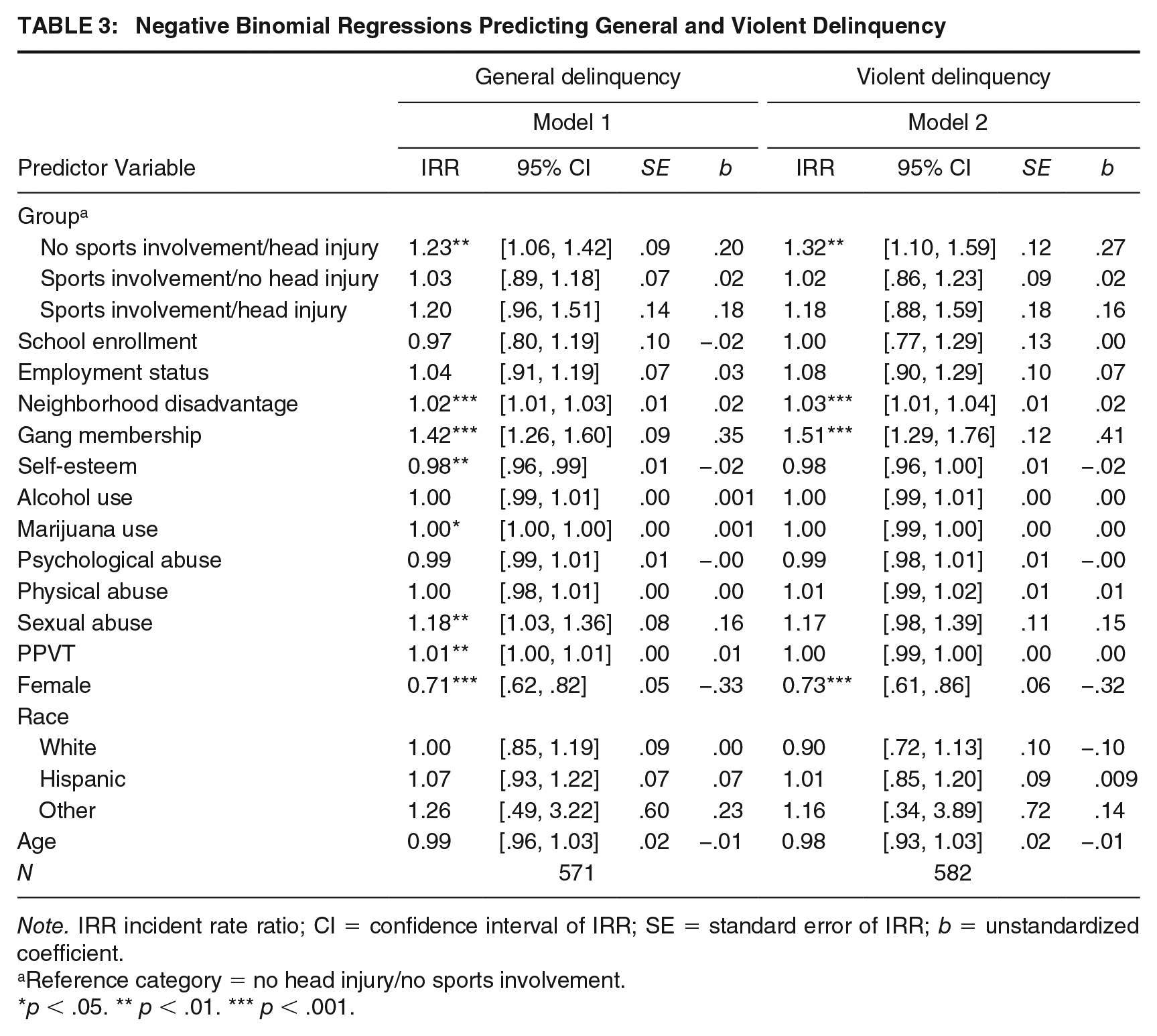
Note. IRR incident rate ratio; CI = confidence interval of IRR; SE = standard error of IRR; b = unstandardized coefficient.
Reference category = no head injury/no sports involvement.
p < .05. ** p < .01. *** p < .001.
Ordered Logistic Regression Predicting Nonviolent Delinquency
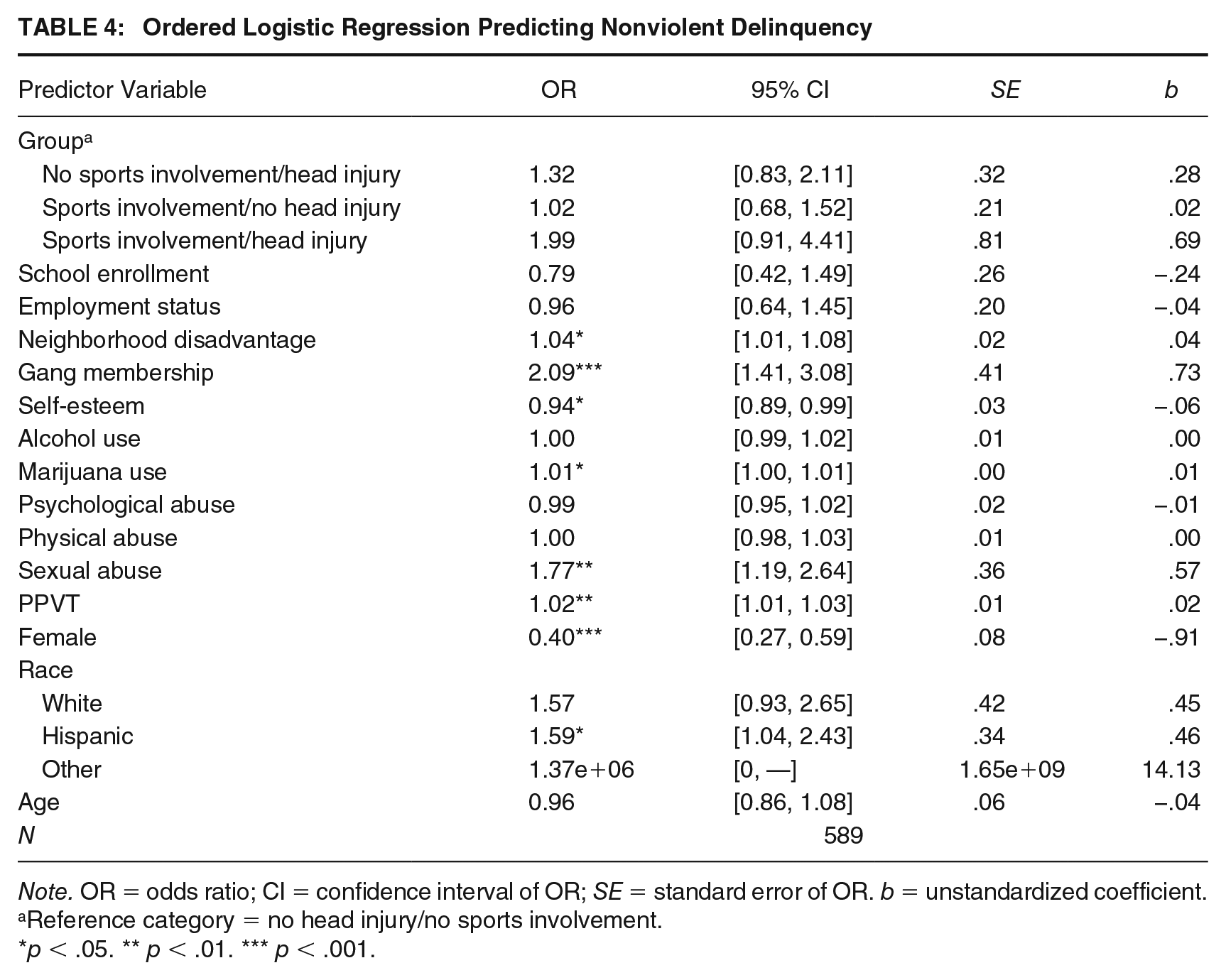
Note. OR = odds ratio; CI = confidence interval of OR; SE = standard error of OR. b = unstandardized coefficient.
Reference category = no head injury/no sports involvement.
p < .05. ** p < .01. *** p < .001.
Based on the results from the first series of multivariate regression models, two additional models predicting general and violent delinquency were estimated with interaction terms for group status by sex. These results are presented in Table 5 and indicate that female respondents with a history of head injury who were involved in sports reported higher levels of general and violent delinquency relative to male respondents with a head injury and involved in sports.
Negative Binomial Regressions Predicting General and Violent Delinquency With Interactions
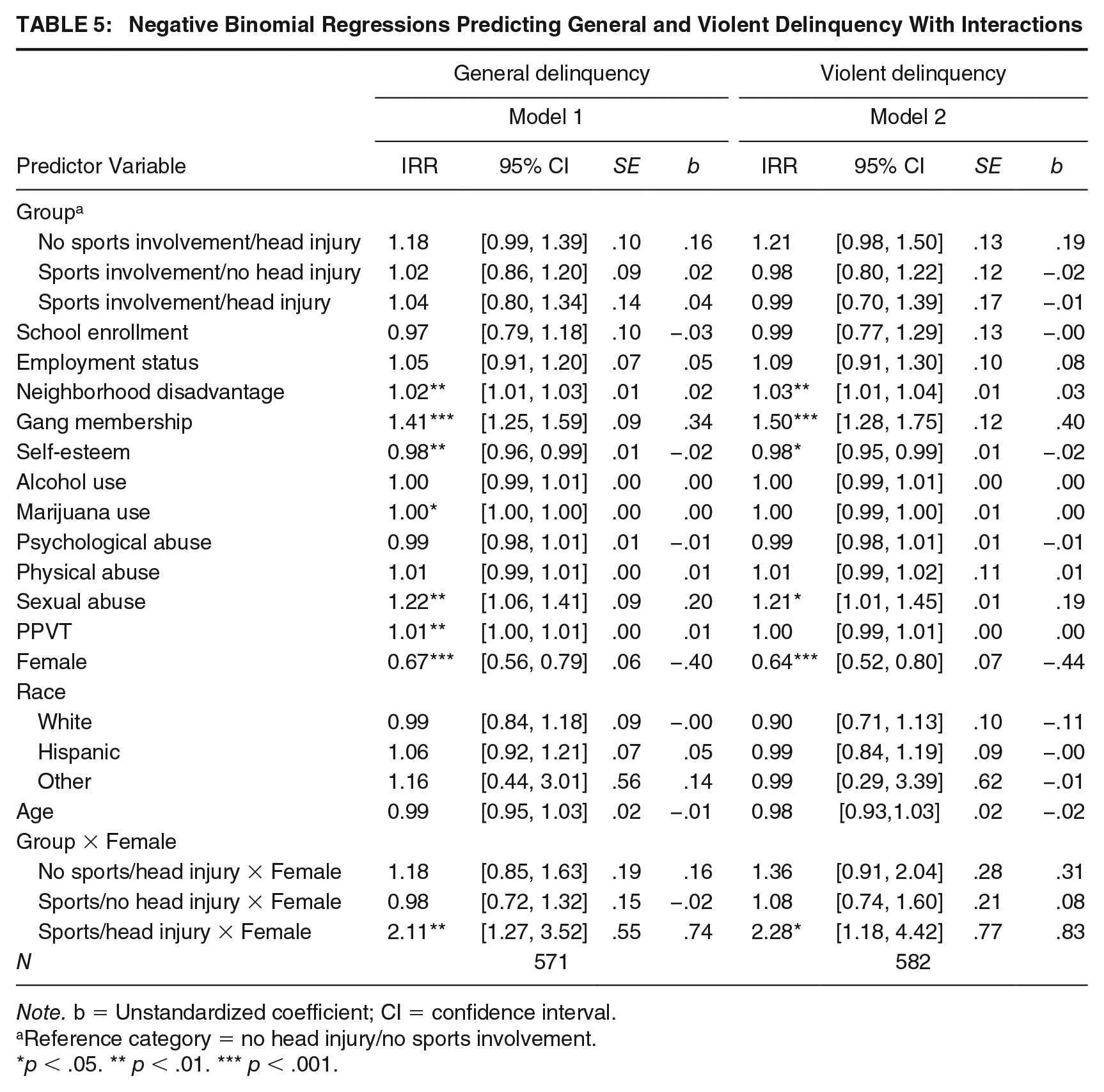
Note. b = Unstandardized coefficient; CI = confidence interval.
Reference category = no head injury/no sports involvement.
p < .05. ** p < .01. *** p < .001.
Discussion
Summary and Implications of Findings
A small body of previous research reports that sports involved youth are less likely to engage in delinquent behaviors compared with peers who are not involved in sports (Jugl et al., 2021). It is argued that sports provide a structured outlet for adolescents in which they can learn important lessons in teamwork, goal setting, coping with disappointment, and are kept busy so they do not engage in delinquent behavior outside of school hours (Kreager, 2007). Yet, sports participation also provides more opportunities for youth to sustain a head injury than other activities (Van Pelt et al., 2019), and head injury is a risk factor for aggression and delinquent behavior (Connolly & McCormick, 2019; Mongilio, 2022), and is more common among juvenile justice involved youth (Farrer et al., 2013). However, previous studies providing evidence of these associations have primarily analzyed community-based samples of adolescents, so it remains unknown if these patterns apply to at-risk youth with a history of juvenile justice involvement. This study sought to begin to address this gap by examining the following questions with self-report data from a sample of juvenile justice involved males and females: (a) are sports involved adolescents more likely to report a head injury compared to nonsports involved adolescents?; (b) are there differences in the level of delinquent offending across groups of sports involved adolescents with a history of head injury, sports involved adolescents without a head injury, nonsports involved adolescents with a head injury, and nonsports involved adolescents without a head injury?; and (c) are differences across group status and forms of delinquency conditioned by sex? The results revealed three key findings that warrant further discussion.
First, respondents who reported participating in sports were not more or less likely to suffer a head injury compared with respondents not involved in sports. This finding is contrary to previous research reporting that sports involvement is commonly associated with higher rates of head injury (Breck et al., 2019). However, past research has primarily analyzed data from community samples of youth, and it is possible that community youth and at-risk youth engage in different types of nonsport activities. More specifically, community youth might join school clubs or simply return home after school in which case the likelihood of sustaining a head injury is low. Juvenile justice involved youth, however, might engage in nonstructured activities that have an increased risk of head injury, such as gang activities or drug use. Future research should examine if samples of at-risk youth and samples of community youth who do not participate in sports report different levels of head injury and specifically, what other factors or activities contribute to the occurrence of head injury in these groups.
Second, nonsports involved youth with a head injury reported higher levels of general and violent delinquency than nonsports involved youth without a head injury. Yet respondents who participated in sports, both with and without a history of head injury, did not report significantly higher levels of general and violent delinquency than respondents in the no sports and no head injury group. One potential explanation for this finding is that nonsports involved youth may sustain head injuries that are more harmful (as they are likely not wearing a helmet) or are related to traumatic circumstances that could have additional criminogenic effects not found from sports participation.
Regardless of the reason, this finding has important implications for the prevention and treatment of head injuries among at-risk youth who are not athletes. For example, many high school athletes are required to take the ImPACT test, which captures baseline neurocognitive skills, prior to the start of their sports season, and again after they sustain a possible head injury, to assess for injury severity and determine if medical intervention, or a break from sports, is necessary (“Impact Concussion Management,” 2020). It may be beneficial for schools to require nonathletes to take this test each year and give them the option of retaking it if they believe that have sustained a head injury, so that they can better understand if they require medical treatment. Schools should also assist students with finding proper medical care for such injuries as schools have a duty to maintain the safety and wellbeing of their students.
Third, sport involved female respondents with a history of head injury reported higher levels of general and violent delinquency compared to sport involved male respondents with a head injury. This finding suggests that there could be a sex-specific effect of head injury on athletes, such that head injury adversely affects females more than males. In line with prior research, females generally experience more severe symptoms following a head injury than males (Mollayeva et al., 2018). One possible reason for this may be that male athletes have better access to proper recovery resources than female athletes. Although Title IX necessitates male and female athletes to have equitable access to sports participation and sports medicine (i.e., athletic trainers and team doctors), sports equipment and injury prevention and treatment protocols are tailored to male physiology (Anderson et al., 2023). This is because there remains a lack of knowledge on the female locomotor system—that includes bones, joints, and muscles—which appears to function differently than the male locomotor system (Anderson et al., 2023). There are also sex differences in psychological wellbeing in athletes whereby females are more likely to experience symptoms of internalizing disorders (Schaal et al., 2011). Given these sex differences and gaps in knowledge, it is possible that female athletes are not being treated adequately after they suffer an injury. Insufficient treatment may lead to feelings of frustration among female athletes, which could lead them to turn to engaging in delinquent behaviors in response to these negative feelings. However, as no studies have been conducted to test this hypothesis, we encourage future research to explore this issue further to unpack the reasons for this difference.
Another explanation for this finding is that males and females who participate in sports may be inherently different and have different inclinations for aggression and delinquency. Males participate in sports at much higher rates than females (Eime et al., 2021). As such, it is possible that females who participate in sports have particularly aggressive inclinations and use sports to release aggression. However, males who participate in sports may do so for a broader range of reasons (such as wanting to spend more time with friends who are involved in sports or wanting to increase muscle volume) and may not be more aggressive than males who do not participate in sports. Thus, male and female athletes may not be comparable, and sustaining a head injury could promote increased aggression among female athletes, enough to give way to the differences observed in our results.
Limitations of this Study
While the current study provides insight into the associations between sports involvement, head injury, and different forms of delinquency, there are some limitations that should be discussed. First, based on the cross-sectional nature of the data, it is not possible to untangle causal relationships that might exist between head injury/sports involvement and delinquency. Even though there are five additional waves of NJP data, Waves 2 and 3 consisted of an abbreviated version of data collection, which resulted in a small number of complete cases that could be used in the analysis. In addition, by the later waves, most of the participants are adults and are no longer involved in athletics and have desisted from many criminal activities.
Another limitation is that the data were collected in the late 1990s and early 2000s, several years before most mild/moderate head injuries, especially sports-related head injuries were reported and sufficiently treated (Graham et al., 2014). Therefore, there might be far more respondents in the head injury group than what is reflected in the data due to nonreporting of mild head injuries. Concussion protocols in sports have also improved tremendously since these data were collected. In 1994, head injuries were first acknowledged as being dangerous for football players, but it was not until the late 2000s that long-term consequences were connected to concussions among athletes (Petchesky, 2013). It took another decade for the Centers for Disease Control and Prevention (CDC) to establish guidelines for pediatric head injury diagnosis and management (Kim & Priefer, 2020). As of 2023, several physical therapy and pharmaceutical interventions have been shown to effectively treat the long-term symptoms of head injuries (Art et al., 2023; Kim & Priefer, 2020). Given the advances in head injury protocols since the NJP data were collected, it would be beneficial to explore how results of a replication study may differ using more recent data.
Third, because our sports involvement measure is a dichotomous measure of whether the respondents participated in any sports, we do not have information on the types of sport(s) they participated in, or if reported head injuries were a direct result of their participation. It is possible that head injury and delinquency are uniquely associated with certain sports—such as contact sports that encourage physicality and controlled fighting (e.g., football, hockey, and wrestling). While a limited body of research has investigated physical characteristics associated with skilled fighting in adolescent males (Beaver et al., 2015), future research should examine whether youth involved in certain sports sustain head injuries or engage in delinquent behaviors at higher rates than youth involved in other types of sports. Finally, the employed delinquency measures did not assess how many offenses respondents committed, but rather how many categories of offenses. This limits our ability to assess how sports participation and head injury are associated with the sheer number of delinquent acts committed by NJP participants.
Conclusion
The results of this study provide some of the first evidence demonstrating that sports programs, in general, may not reduce delinquency for juvenile justice involved youth, which is contrary to what previous research has found for samples of community youth (Jugl et al., 2021; Veliz & Shakib, 2012). The results suggest that suffering a head injury and not being involved in sports is related to higher levels of general and violent delinquency, potentially highlighting the protective effects of athletics found previously (Maher et al., 2015; Strasser & Fuchs, 2015). Moreover, the findings implicate a sex-specific effect of head injury among athletes, such that sustaining a head injury is associated with increased delinquency among female athletes. Moving forward, female sports programs should provide adequate resources focused on head injury prevention and treatment, especially as females are more likely to sustain a head injury than males who play the same sports (Kerr, 2014).
Footnotes
Authors’ Note:
The authors did not receive financial compensation for this project and have no conflicts of interest to disclose.
