




Abstract
Ray Bromley (1978), in his study of Cali, Colombia, distinguishes three types of street vendors: commission sellers, dependent workers, and the independent, truly self-employed. The latter deal mainly in uncooked or cooked foodstuffs, secondhand goods, or assorted small items; they buy from a variety of intermediaries or make their own merchandise. Traditional conceptualizations of the informal sector have, in error, considered them the prototype of street hawkers. In contrast, commission sellers and dependent workers have dependency linkages with suppliers, which may be large, medium-sized, or small firms in the formal sector, multinational businesses, or purveyors of illegal goods. Commission sellers sell goods for which they receive a commission for each item sold for their suppliers. Beach vendors selling sunglasses imported from China were among the few vendors who were commission sellers. Dependent workers often depend upon a supplier for credit to obtain merchandise but do not receive a fixed commission on each item. Resellers could also be conceived of as dependent workers, since they are dependent upon a wholesaler or retailer for their trade. Both commission sellers and dependent sellers are, in Bromley’s conceptualization, essentially “disguised wage laborers” working for their suppliers (Wilson, 1998).
The beach vendors and vendors on marinas that are ubiquitous in the sun-and-sea tourist resorts of Mexico are primarily dependent sellers, marketing the wares of national and sometimes transnational companies. For example, in eight tourism centers in Mexico, beach and marina vendors from 2002 to 2007 sold lengths of cloth, often dyed with Mexican themes such as portraits of Pancho Villa or Frida Kahlo, that are made in Indonesia and distributed by a Mexican importer who also advertises his wares on a web site. More recently a cheaper version of Indonesian cloth, usually cut into sundresses, has become ubiquitous.
The vendors’ activities are often curtailed by the government or overregulated, given the small amounts of income that they generate. Some attempt to evade this formalization in the form of acquiring licenses and paying taxes and may be arrested and fined for doing so. Most of the beach vendors in Los Cabos and Puerto Vallarta have migrated there from Guerrero, whose tourist center, Acapulco, is flooded with vendors. Some have tried a number of tourist centers in Mexico before establishing themselves, usually through network-mediated migration, in a final place (Wilson, n.d.). Very few now sell handicrafts that they themselves make, although lengths of cloth may be cut into miniskirts or sundresses and semi-precious stone beads are often assembled into necklaces by the vendor. Although many of these stones are of Mexican origin, some are imported from Asia and Eastern Europe (Cowen, 2005). Photos of some of beach and marina vendors follow (Figures 1–6).
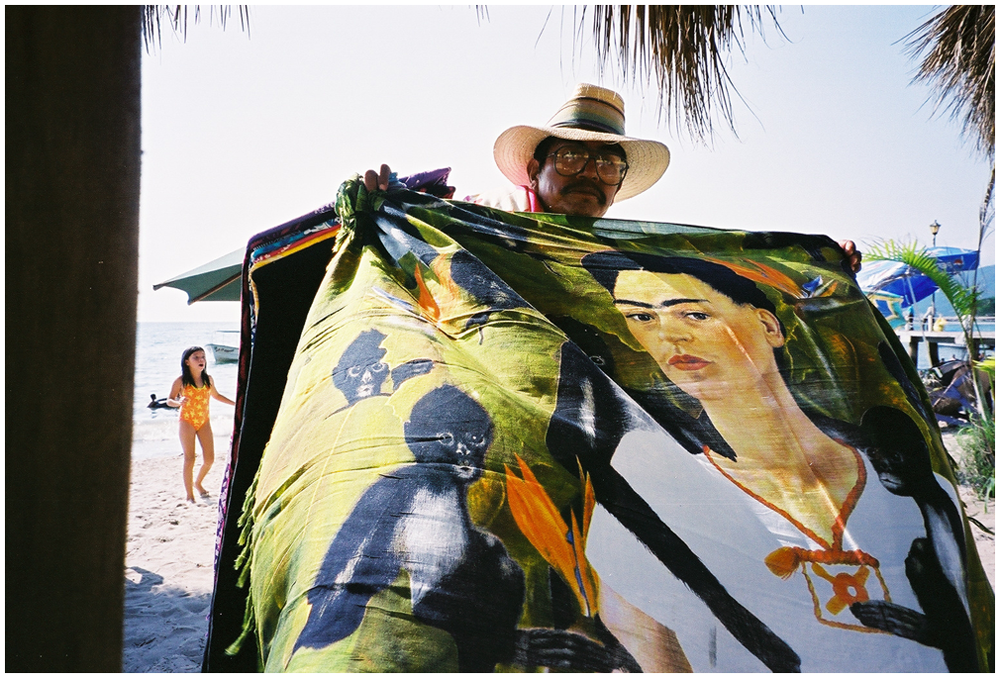
Beach vendor in Puerto Vallarta (2004) displaying a length of cloth manufactured in Indonesia and printed with a self-portrait by the Mexican artist Frida Kahlo.
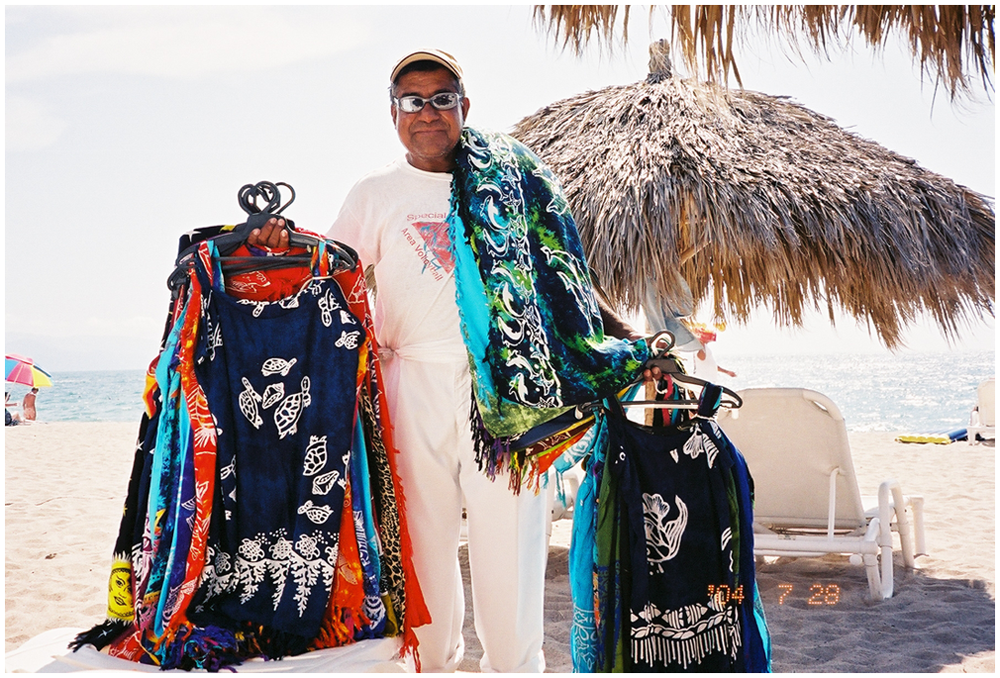
Another beach vendor in Puerto Vallarta (2004), whose wife provides value added by cutting the lengths of Indonesian cloth into dresses that he then sells on the beach.
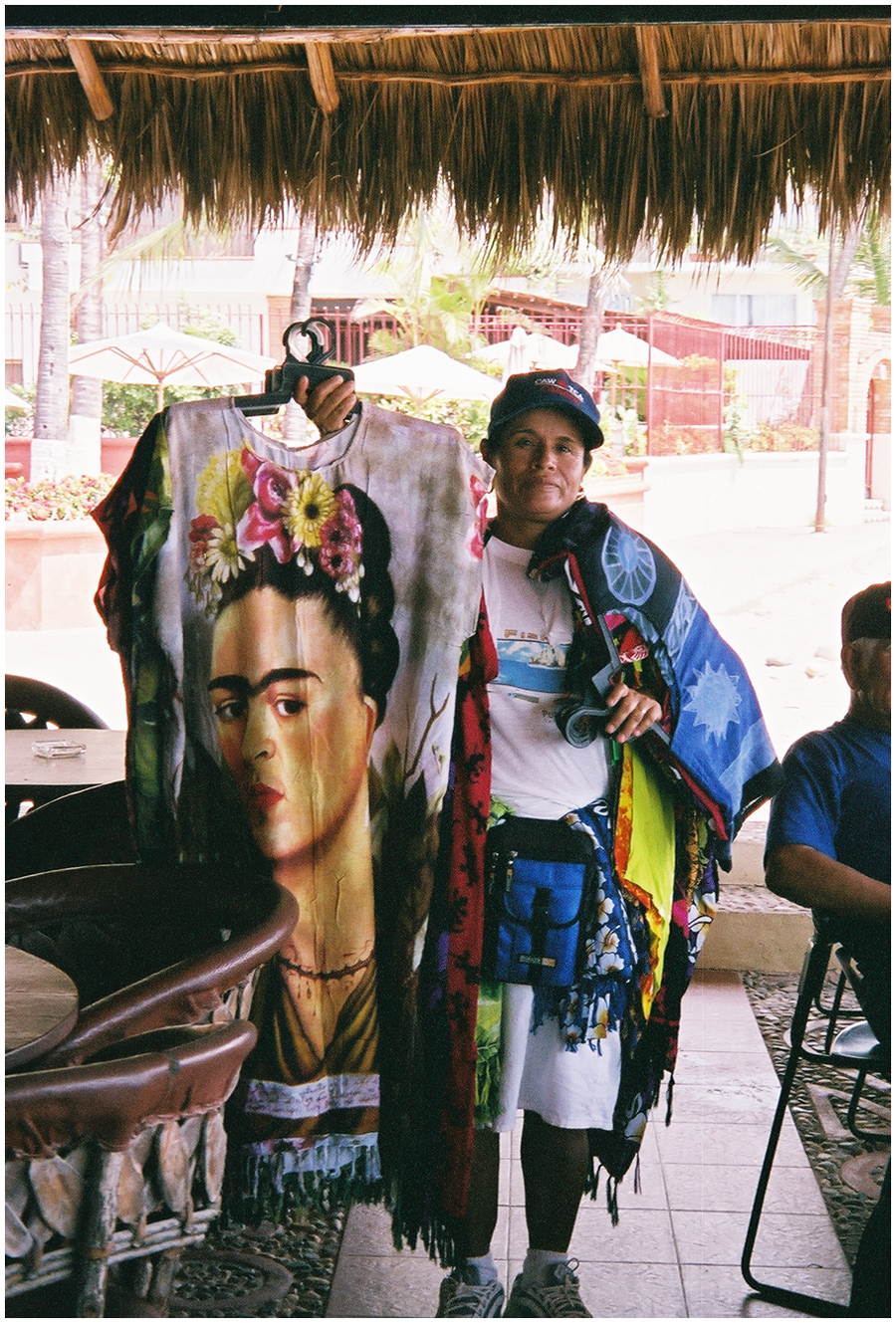
Beach vending as a family affair in Puerto Vallarta (2004). This woman sends out pieces of fabric manufactured in Indonesia to be sewn into ankle-length dresses and then sells them on the beach and in beach-front restaurants. Her husband (right) sells hand-made tablecloths on the beach.

A young woman selling hand-made sundresses made of Indonesian fabric bought from local stores on the marina in Cabo San Lucas (2009) with the help of her teen-aged sister. She pays 60 pesos (about US$5) for each length of cloth and makes two adult dresses, sold for 150 pesos apiece, and a child’s dress, sold for 70 pesos, out of each length.

Vendors on the marina in Cabo San Lucas (2009), where having a stable place to sell enables them to market more than one kind of product, including small ceramic plates and statues. Sometimes the ceramic pieces are bought before they have been decorated and are hand-painted by the vendor or his/her family.

Women beach vendor selling her wares on Medano Beach, Cabo San Lucas (2010). She buys the Indonesian cloth at wholesale prices in downtown stores and sews them into sundresses, which she and her husband—when he cannot find employment in construction— sell on the beach.
Footnotes
Tamar Diana Wilson is a research affiliate of the Department of Anthropology of the University of Missouri, St. Louis, and has lived in Mexico since 1988 and in Los Cabos since 1994. She is the author of the forthcoming book Economic Life of Mexican Beach Vendors: Acapulco, Puerto Vallarta, and Cabo San Lucas. The photographs included here are hers.