



Abstract
Recent studies on Chile agree that the country’s youth enjoy greater social mobility than previous generations. This has been attributed either to their greater access to higher education or to life-cycle effects on occupation. A test of these two hypotheses by estimating the socioeconomic positions of four generations of Chileans using a model of analysis based on the social reproduction paradigm shows that younger generations of Chileans have a lower level of social inheritance than the rest of the population only during their initial years in the labor market. Therefore, the greater social mobility observed in them is temporary and is explained by life-cycle effects on occupation.
Estudios recientes sobre Chile coinciden en que la actual juventud chilena goza de una mayor movilidad social que las generaciones anteriores. Esto se ha atribuido a su mayor acceso a la educación superior o a los efectos del ciclo de vida en la ocupación. Aquí se examinan estas dos hipótesis a partir de una aproximación en torno a las posiciones socioeconómicas de cuatro generaciones chilenas. Se utiliza un modelo analítico asentado en el paradigma de la reproducción social, el cual nos muestra que las generaciones más jóvenes tienen un grado de herencia social más bajo que el resto de la población tan sólo durante sus primeros años como participantes en el mercado laboral. Por lo tanto, su mayor movilidad social es temporal y se explica a partir de los efectos del ciclo de vida en la ocupación.
Various studies on Chile have shown that the income and therefore the socioeconomic status of a younger generation of workers are less determined by social characteristics such as social class of origin, gender, spatial position, and ethnicity than those of previous generations (Núñez and Miranda, 2007; Núñez and Risco, 2004; Rodrigo, 2015; Sapelli, 2009). This would suggest that we are at the onset of a period of greater social fluidity in a society that has historically been characterized by rigidity (Espinoza, Barozet, and Méndez, 2011; Espinoza and Núñez, 2014; Salazar and Pinto, 1999a; 1999b; 2002). However, so far there has been little clarity regarding the lower social determination of Chilean youth. Previous results have been explained in terms of either the human-capital (Núñez and Risco, 2004; Sapelli, 2009; 2016) or the life-cycle (Rodrigo, 2015) hypothesis. The human-capital hypothesis is that younger Chileans enjoy greater access to higher education, a condition that will not only facilitate greater intergenerational social mobility but also bring about a permanent change in the structure of opportunities within the country. The life-cycle hypothesis is that workers of all generations will be less affected by their social origin at the beginnings of their career paths than in the subsequent stages of each trajectory and therefore access to higher education has not resulted in a change in the structure of opportunities in Chile.
This article tests these two hypotheses in order to understand whether we are at an inflection point in terms of social fluidity in Chile. In order to do this, we estimate the socioeconomic positions of four generations 1 of Chileans through a set of socio-statistical models based on the social reproduction paradigm. The National Socioeconomic Characterization Survey (CASEN, 2015) is used to track the labor trajectories of four generations of workers over nine years (2006–2015). It is critical to understand how socioeconomic position is achieved in Chile and particularly to what extent it is inherited and to what extent socially determined. The prevailing belief of the population is in a meritocratic society with high levels of social mobility, this being one of the main pillars of the neoliberal model currently in place (Mayol, Azócar, and Azócar, 2013; Rodrigo, 2013). This academic discussion will therefore have obvious political repercussions, as it is difficult to justify a socioeconomic model characterized by inequality if social status is in fact inherited.
The article is divided into six sections. The first discusses our theoretical framework. The second covers the literature regarding social mobility between generations. The third reviews the literature on generational differences and the level of social determination in Chile. The fourth section presents our analytical model and reviews the databases and socio-statistical models. The fifth section shows the different levels of social determination for each generation and the effects of each of the social characteristics considered. The final section interprets our results.
The Theoretical Framework
The present work can be considered an extension of Rodrigo’s (2015) study for the case of Chile, in which a model of analysis based on the social reproduction paradigm and especially on the theories of Bourdieu (1998; 2001; 2003) was proposed. “Social position” is here understood as location in the social structures of domination, especially within socioeconomic (social class), sociocultural (gender, race/ethnicity), and spatial (center-periphery) relationships. Bourdieu (2001) understands “social class” as the amount of capital—economic, cultural, social, and symbolic—that a family has. Although one’s social class is affected by the whole of one’s social position of origin (the one that one had during childhood-adolescence), its principal determinant will be the social class of one’s parents.
For Bourdieu, the school system, by means of a series of operations, transforms part of a family’s capital into the educational capital of its children, thus reproducing social inequality among families (Bourdieu and Passeron, 1970). In this sense, school investment is one of the most important reproductive strategies in modern societies 2 and is a key factor in mediating the relationship between social position of origin and social class destination. The reproductive process can therefore be summarized as follows: social position of origin (parents’ social class, sex, phenotype, parents’ ethnicity, place of origin) will determine the school trajectory of an agent, and the interaction between social position of origin and school trajectory will determine career path and ultimately social class of destination. This summary assumes that social position of origin will affect social class of destination in three ways: (1) indirectly, through school trajectory (mediation relationship); 3 (2) directly, through the amount of capital of the family of origin, the resources derived from its spatial position, and the social effects 4 produced by the cultural characteristics of the agent; 5 and (3) by moderating the effect of school trajectory on occupation (interaction relationship). 6 Therefore, we consider social position of origin the principal explanatory factor of the process. Using this reproductive model (Figure 1), a generational analysis of the effect of social origin on the socioeconomic position of Chilean workers will be conducted in an attempt to understand whether younger generations are less socially determined.
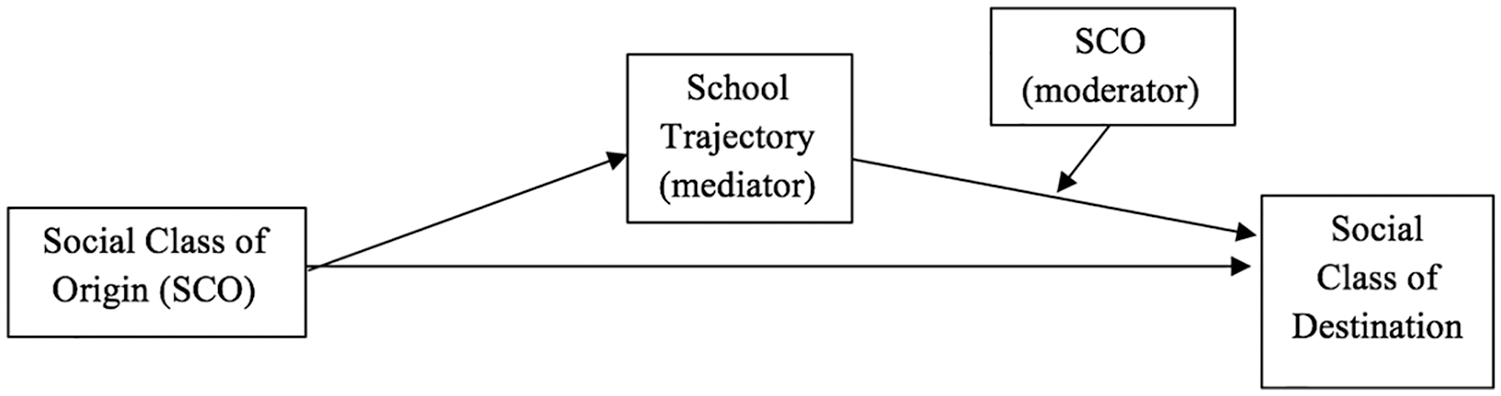
The reproductive model.
The proposed model provides new information regarding the reproductive process in Chile and allows us to overcome some of the limitations of previous work. Its main innovations are the following: (1) Whereas mobility studies typically only consider the effect of the class of origin, it measures the effect of social position of origin (class of origin, gender, ethnicity, and spatial position) on class of destination. In other words, it estimates the joint effect of ascriptive factors on socioeconomic position. (2) It empirically identifies which ascriptive factors are mediated by school trajectory. (3) It allows us to determine whether the effect of school trajectory on class of destination depends on the worker's position of origin. This analysis allows us to differentiate the generation effect from the life-cycle effect, and in addition the results are representative of the entire country.
The International Evidence
The international literature on the intergenerational evolution of social determinants has tended to focus on intergenerational social mobility, understood as the association between the parents' social class (or another indicator of socioeconomic status such as occupational status, income, or educational level) and that of the children, leaving aside other ascriptive factors of the socioeconomic position such as gender, ethnicity, and residence. 7 The importance of intergenerational social mobility is rooted in a strong association with social justice. It is difficult to consider societies fair if the social status of individuals is fully determined from birth. Additionally, intergenerational social mobility is directly related to poverty reduction and economic growth (Narayan et al., 2018) and inversely related to economic inequality (Corak, 2013); in other words, societies with greater intergenerational social mobility are richer, have less poverty, and are less unequal.
Until now, the literature on the historic evolution of intergenerational social mobility in different countries has shown no global tendency. In some countries it has increased (Breen and Luijkx, 2004; 2007; Härkönen and Bihagen, 2011) while in other countries it has declined (Beller, 2009; Blanden et al., 2004; Blanden, Gregg, and Macmillan, 2007; 2013) or remained the same (Pfeffer, 2008) during the period studied. However, a recent report by the World Bank (Narayan et al., 2018) that presents the results of the world’s largest database on intergenerational social mobility (covering over 95 percent of the world’s population) has enabled the identification of a number of global trends for the first time.
At the global level, intergenerational social mobility increased, both in core countries and those on the periphery, up to the cohort born in 1960s. From this point on, intergenerational social mobility stalled in peripheral countries and dropped significantly in core countries, where social heritability increased. The question is what happened at this historic moment. Although the report does not comment on this, the cohort born in the 1960s joined the labor market from 1980s on, coinciding with the international spread of the neoliberal project (Harvey, 2005), meaning that this generation and those that followed were subject to the effects of the reduction of public spending and the deregulation of the labor market. This political explanation for the global reduction in intergenerational social mobility in terms of the global economic shift to a neoliberal regime is consistent with the rest of the findings of the global database, which show that public spending is directly linked to levels of intergenerational social mobility and economic inequality is inversely correlated with intergenerational social mobility. In other words, the countries with higher intergenerational social mobility are those that have more robust welfare states and are economically more equal. In this regard, countries with highly developed welfare states such as Belgium, Denmark, Finland, and Norway show high levels of intergenerational social mobility and social equality, while countries such as Colombia, Ecuador, Guatemala, and Panama show the opposite.
In addition to the historical evolution of intergenerational social mobility, the literature has focused on understanding whether mobility is increasing or decreasing. Three possibilities have been studied: (1) change via generational replacement, in which the younger cohorts, which may be more or less mobile, replace the older ones (the cohort effect); (2) change during a historical period, in which economic, social, demographic, or institutional changes affect the entire working population at the same time (the period effect); and (3) change during the life cycle, in which the level of determination of the ascriptive factors, normally social class of origin, changes throughout one’s working life (the life-cycle effect). These studies indicate that the change in the level of intergenerational social mobility that occurs in the core countries is due to the replacement of the oldest cohorts by the youngest, with the historical period having no significant effect (Breen and Jonsson, 2007; Breen and Luijkx, 2007). However, Torche and Ribeiro (2010) found for Brazil that social mobility had increased during a certain historical period (1970–1990) and that it affected the entire working population, with no evidence of a cohort effect.
There is no consensus in the international literature regarding the relationship between social mobility and the life cycle. Sewell and Hauser (1980), summarizing the results obtained with the Wisconsin model during the 1970s in the United States, conclude that the effects of social origin on the achievement of status diminish over time as one progresses on one’s career path. Meanwhile, more recent studies for Sweden either do not find evidence that intergenerational social mobility changes during the life cycle (Breen and Jonsson, 2007) or conclude that it decreases as one ages (Härkönen and Bihagen, 2011). There does seem to be consensus on the hypothesis that maturity of occupational status is reached after 30 years of age (Bihagen, Nermo, and Erikson, 2010; Böhlmark and Lindquist, 2006; Breen and Jonsson, 2007; Härkönen and Bihagen, 2011; Jonsson, 2001), although status and income increase for descendants of the upper classes for a longer period of time (Härkönen and Bihagen, 2011; Jonsson and Erikson, 1997; Mayer and Carroll, 1987), up to 20 years.
Under the modernization thesis (Blau and Duncan, 1967; Treiman, 1970), educational expansion has been considered the principal way of increasing intergenerational social mobility. The process of modernization that began in the industrial countries is said to have weakened the effect of class of origin on educational attainment and on class of destination while increasing the effect of educational attainment on class of destination. In other words, social class is determined less by social inheritance and more by individual merit. Critics of the modernization thesis have been skeptical about this weakening of effect, arguing that the privileged classes have resources and strategies to ensure their social reproduction (Bourdieu and Passeron, 1970; Collins, 1971; Grusky, 1983). Various studies for European countries have shown a reduction in the effect of educational attainment on the social class of destination (Breen and Goldthorpe, 2001; Breen and Luijkx, 2004; Ganzeboom and Luijkx, 2004) since the second half of the twentieth century. This has been interpreted as a refutation of the modernization thesis, and critics argue that in a context of educational expansion the effect of social origin on class of destination could be increased by noneducational means such as the intergenerational transmission of social, cultural, or economic capital (Bourdieu, 2001; Jackson, Goldthorpe, and Mills, 2005). This view is supported by some studies from European countries (Blanden, Gregg, and Macmillan, 2007; Erola, 2009) and more recently by the World Bank’s Global Database on intergenerational social mobility, which shows that the richer the country, the less important education is in determining the income of children and the stronger the effect of noneducational pathways. Thus educational expansion does not guarantee an increase in intergenerational social mobility (Narayan et al., 2018).
The Chilean Evidence
Chilean society today is characterized by deep socioeconomic inequality 8 and a politically neoliberal model (Mayol, 2012; Mayol, Azócar, and Azócar, 2013; Moulian, 2002). During the military dictatorship (1973–1990) Chile suffered a drastic reduction in the size of the state and its areas of intervention, a process that has only partially been reversed (Rodrigo, 2015). The result of this neoliberal project, according to Harvey (2005: 16), following Duménil and Levin, was the restoration of class power. Therefore, the persistence of a high level of socioeconomic inequality during the current period of democratic rule has been the subject of international consideration. Sánchez-Ancochea (2017) identifies six possible factors: (1) the high proportion of capital versus salaries in the gross domestic product (GDP); (2) the high level of market concentration, in which a few economic groups account for the majority of sales; (3) the low rate of unionization, even lower than in 1990; (4) significant productivity gaps between sectors and by company size; (5) a low level of tax revenue, which although it has slightly increased since 1990 accounted for only 23 percent of GDP in 2012; and (6) the low tax burden applied to the highest income groups. In line with the above factors, a recent United Nations Development Program report on social inequality in Chile (UNDP, 2017) proposes three more causes: (7) the concentration of political power produced by the overrepresentation of the richest social groups in decision making; (8) a highly segmented educational system that generates high levels of social segregation; and (9) the wide acceptance of a meritocratic social discourse that justifies the existing social inequality, associating socioeconomic position with individual effort and obscuring the structural causes of inequality and poverty. The latter two causes are clearly interrelated, reinforcing each other through the creation of an education market. In 1980 the military dictatorship redesigned the Chilean educational system, until then administered by the state, into a decentralized and competitive system with a free-market logic (voucher-based). This liberalization of education led to the appearance of a large number of subsidized private schools, which gradually gained students from the public schools and in 2006 overtook them (Mayol, 2012; Rodrigo and Sánchez, 2013).
The first effect of the new market in education was stratification of students into educational establishments of different price/quality levels, leading to highly segregated schools (Rodrigo, 2015). Since both national testing (university entrance) and international evaluations (Program for International Student Assessment) show that the school performance of students depends on the stratum to which their school belongs (OECD, 2017), in terms of intergenerational social mobility the Chilean education system is highly reproductive (Bourdieu and Passeron, 1970). Another important effect of the market in education was a major expansion of higher education funded primarily by families, which made an unprecedented economic effort given that Chilean higher education had become, in relative terms, the most expensive in the world (Mayol, 2012). This family effort was encouraged by the advertising strategies of the education market itself, which generated high career expectations among young people and their families. These expectations were difficult to meet given that the increasing number of degrees awarded was leading to a significant economic devaluation of university degrees in the labor market (Sapelli, 2016). Therefore, school segregation, family indebtedness, and occupational frustration are distinct consequences of the educational liberalization of 1980. This explains why the main objective of the student movements that arose in Chile in 2006 and 2011 was to do away with “the education of Pinochet.” These movements marked the start of a gradual delegitimization of the neoliberal model, which then spread to other aspects, such as business collusion, the pension system, and protection of the environment (Mayol, 2012).
The development of the market in education was supported and reinforced by a distinctive characteristic of the Chilean cultural milieu its strong belief in meritocracy. Multiple studies have shown that the meritocratic discourse (in which social inequality is explained by the differences between individuals in terms of attitudes, capabilities, and effort) is widely reproduced in Chile, cutting across different social classes and ideological positions. These works have also pointed to the important adaptive function of meritocratic discourse in the reproduction of the neoliberal model (Mayol, Azócar, and Azócar, 2013; Rodrigo, 2013). Studies on how social position is achieved therefore directly question the role of this discourse. In this context, various researchers have found evidence that the salaries of younger generations are less determined by social indicators than those of older ones. The first to do so were Núñez and his collaborators. In their first work (Núñez and Risco, 2004), they used Solon’s (1992) method to measure the intergenerational mobility of income. The results indicated that Chile was one of the countries with the lowest income intergenerational mobility in that there was a high level of inheritance between parent’s and child’s positions. In fact, only Brazil had a similarly low level of intergenerational mobility.
Despite these results, the researchers found that the youngest generation studied (23–35 years of age) showed lower levels of socioeconomic inheritance than the population as a whole, especially when compared with the oldest generation (43–55 years).
In a subsequent study (Núñez and Miranda, 2007), the age range of the sample (23–65 years) was increased by adding a new age-cohort (55–65 years). The results were similar to those of the previous study; the sample as a whole continued to present a very low level of intergenerational income mobility compared with those of other countries. The younger generations also presented a lower level of socioeconomic inheritance, although the once- direct relationship now had an inverted-U shape, with the level of the oldest generation (55–65) less determined by parents’ income than that of the previous generation (45–54). In both studies the researchers explained that the younger generation’s lower socioeconomic inheritance was due to the sharp increase in schooling in Chile that began at the beginning of the 1990s. This meant that Chilean youth should have more and better-distributed human capital than previous generations, which would allow them greater socioeconomic mobility. The researchers supported this argument by showing that not only did younger generations have, on average, more years of schooling than previous ones but also it was better-distributed (lower variance). They also demonstrated that the youngest generation had a lower association with parents’ schooling, indicating greater intergenerational school mobility. Although they indicated in the second study that the younger generation’s lower socioeconomic inheritance might also be explained by a life-cycle effect on income, their subsequent analyses led them to discard this hypothesis in favor of the first.
Another researcher who has studied this phenomenon is Sapelli (2009; 2010), who proposed measuring intergenerational school mobility, since number of years of schooling is a suitable indicator of permanent income and socioeconomic mobility is therefore approximated via parent and child school mobility. Sapelli (2016) used the Social Protection Survey for 2002 and 2004 to estimate a correlation coefficient between parent’s and child’s schooling for all age-cohorts between 1931 and 1978. Two principal trends were observed in his results: There was a clear drop in school inheritance for those born between 1931 and 1957 (27 cohorts), and the level of school inheritance was stagnant for those born before 1978 (21 cohorts) with a correlation coefficient of 0.41. In other words, school mobility increased for those born through 1957 and then stagnated until 1978. Sapelli explained this second period of persistence (those born between 1957 and 1978) as a result of the difficulty for children of less educated parents in gaining access to higher education because of income stagnation for less educated families and the paralysis of vacancies in higher education, which mainly affected those children. Although he did not point this out, those born between 1957 and 1978 had reached 18 years of age (the end of secondary education) during the military dictatorship (1973–1990). Despite this, he was optimistic about the future evolution of intergenerational school mobility because beginning in the 1980s their access to higher education would have improved considerably.
Finally, Rodrigo (2015) found evidence of a lower social determination of wages among younger generations. Using the CASEN 2009 survey, he estimated salaries using a reproductive model 9 and obtained the following results: the reproductive model was more capable of estimating wage differences among Chileans than the neoclassical model (Mincer equations), and the level of social determination of wages was lower for the youngest (25–35 years) and oldest (56–65) generations. He suggested two possible explanations for these results: that the observed differences in the level of social inheritance between generations could be due to macroeconomic and/or institutional conditions experienced by each generation and that the generational differences might reveal life-cycle effects on the social inheritance of wages. The latter explanation meant that social inheritance had an reduced effect on income at the beginning and at the end of the labor trajectory. Unfortunately, the data used in this study did not allow the testing of these hypotheses.
In contrast to previous studies, that of Celhay, Sanhueza, and Zubizarreta (2010) did not find a lower level of social determination of income for younger generations. These researchers analyzed the evolution of intergenerational mobility, both educational and income, in Chile for the period between 1996 and 2006. To do this, they used the CASEN panel survey for the Metropolitan Region of Santiago, which allowed them, in contrast to previous researchers, to distinguish the effects of the age-cohort (born 1960–1970, 1971–1979, and 1980–1989), the period (1996–2006), and the life cycle (age of the children). Their results showed that Chile had low intergenerational mobility, in both education and income, compared with that of other countries and that it was lower in men than in women. The levels of intergenerational, educational, and income social mobility were similar for the three age-cohorts analyzed. The intergenerational mobility of income did not change during the period analyzed, while that of education increased slightly. Although this seems to be the most robust work, since it manages to differentiate the effects of historical period, 10 generation (age-cohort), and life cycle (worker's age), it is controlled only by the latter and therefore we cannot identify the differences that exist during the life cycle. Another limitation of this work is that it represents only the Metropolitan Region of Santiago and not the entire country. The work proposed here will attempt to overcome the limitations of these previous studies.
Methodology
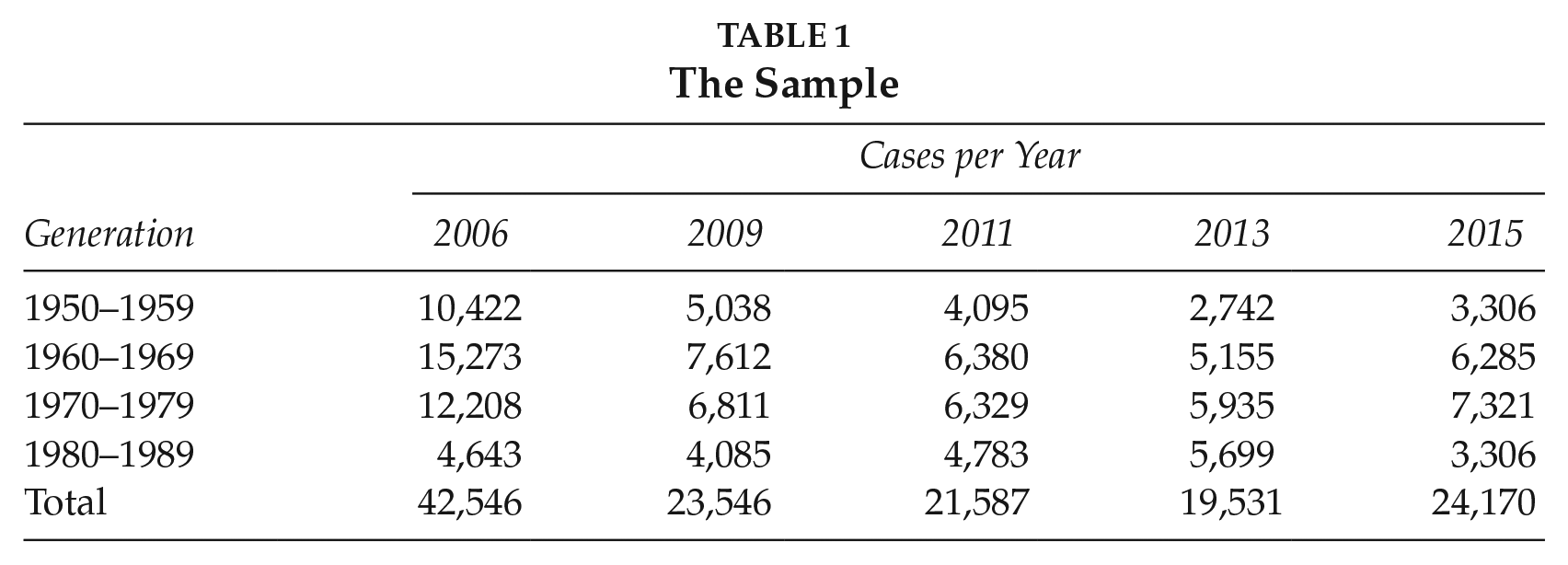
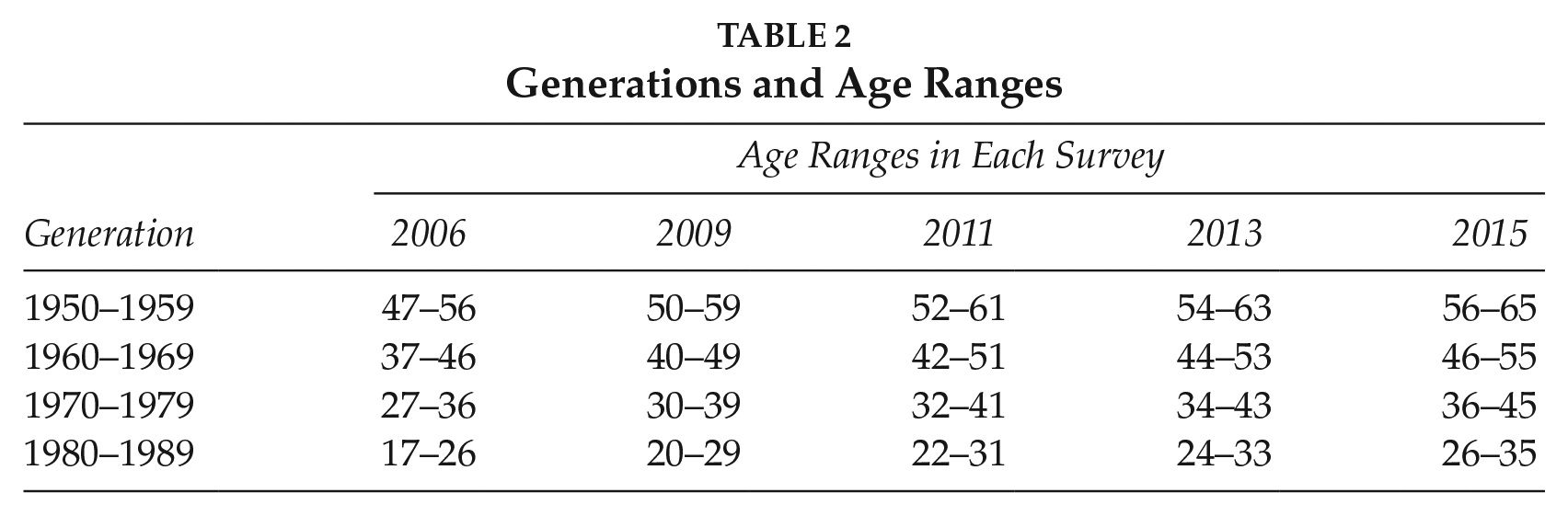
To conduct this study, the socioeconomic positions of four generations of Chileans (those born in the 1950s, 1960s, 1970s, and 1980s) were estimated. The data were obtained from the CASEN 11 surveys for 2006, 2009, 2011, 2013, and 2015 (Tables 1 and 2), 12 when the generation that was born in the 1980s was beginning its labor trajectory while the one born in the 1950s was ending it.
The Sample
Generations and Age Ranges
While the CASEN surveys include the most relevant characteristics of workers, they have some limitations (Table 3).
Indicators
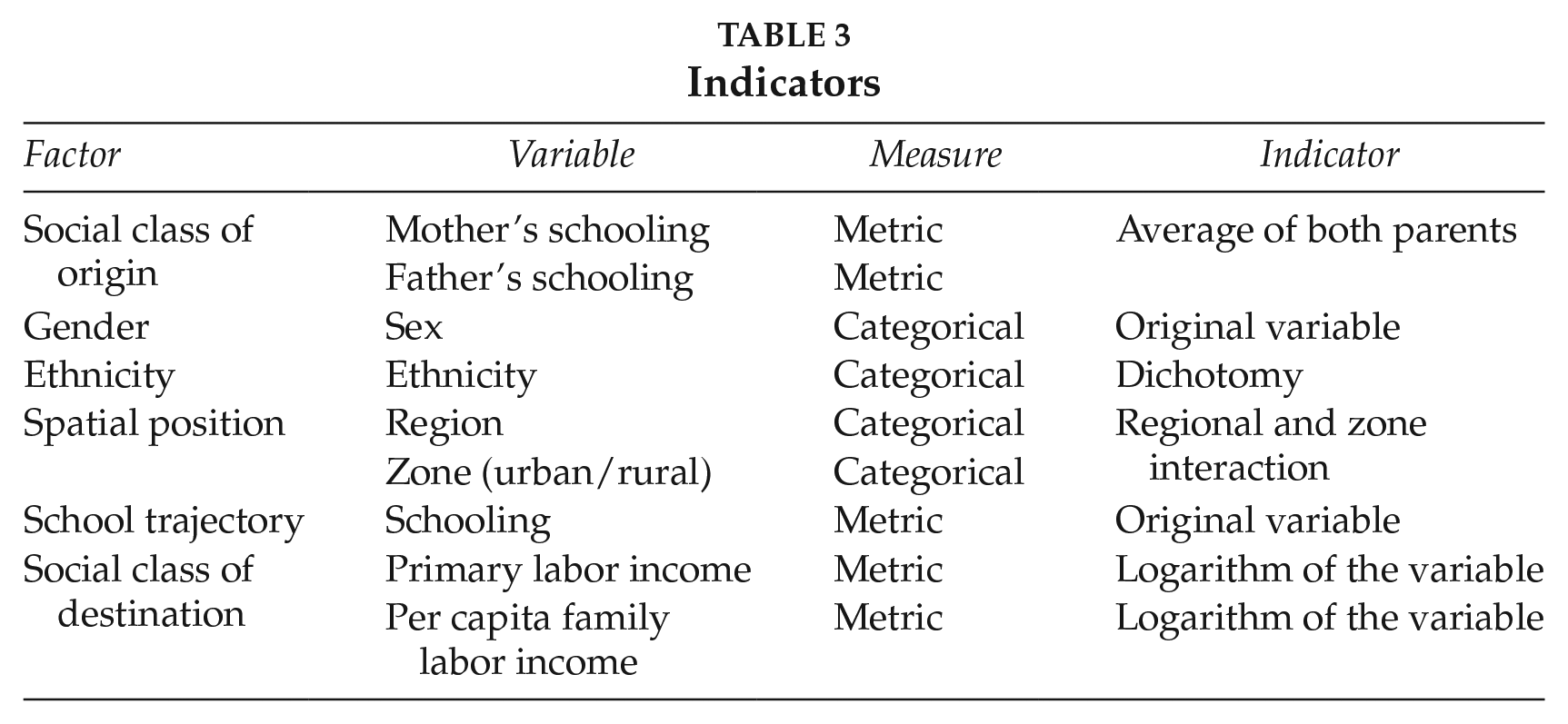
There is scant information regarding social class of origin, since the occupations (indicating ownership of means of production) and incomes (indicating economic capital) of the parents are unknown. Therefore, social class of origin was measured in terms of the average educational level of the two parents. In Bourdieu’s (2001) terms, this would indicate the institutionalized cultural capital of the family of origin. Another limitation is the absence of a racial variable that might capture the variability of the population’s phenotype, which may very well be a constituent element of Chilean social structure (as it is in the rest of Latin America). It is possible to know ethnic identity, although only 9 percent of the Chilean population identifies with an indigenous group (CASEN, 2015).
The amount of economic capital indicated by a worker’s salary (individual indicator) and per capita family income (family indicator) was used as an approximation for social class of destination. For Bourdieu (2001), the global capital volume of a family (its social class) includes also cultural, social, and symbolic capital, but each of these is essentially convertible to economic capital. Therefore, we considered economic capital a suitable indicator of class position. However, since this was a voluntary-participation survey, there was a subregistry of the richest households. Spatial position was measured by the interaction between the variables region (15 positions) and zone (urban/rural), which generated a multicategorical indicator with 30 positions. The analysis did not consider the effect of period, since in this case it was only nine years (2006–2015) and it did not seem plausible that in so short a period there would have been social changes (demographic, productive, or institutional) capable of influencing the configuration of the destination class. The procedure used was the univariate general linear model, which combines a multiple linear regression (OLS) with a variance analysis for the dependent variables and employs both metric and categorical independent variables. It also calculates the partial eta-squared (ηp2) for each independent variable, which allowed us to compare the sizes of the effects. Four socio-statistical models were generated using the reproductive framework in order to estimate the level of social inheritance of each generation (Figure 2).
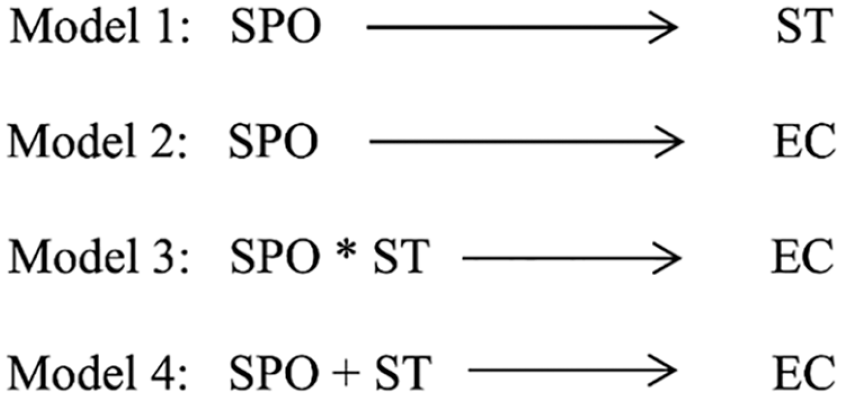
Estimated models. SPO, social position of origin; ST, school trajectory; EC, economic capital.
With the estimation of three of these models (1, 2, and 4) we were able not only to test whether the relationship between social position of origin and social class of destination was mediated by school trajectory but also to determine the degree of mediation. 13 For this purpose, the indirect effect was calculated as the difference between the total effect and the direct effect of social position of origin on economic capital. The Sobel test 14 was used to verify that the difference was statistically significant. In addition, the estimation of Model 3 allowed us to verify whether the relationship between school trajectory and social class of destination was moderated by social position of origin.
Results
The reproductive model affirms that social position of origin determines school trajectory. For Model 1 (Table 4), all the factors that make up social position of origin significantly affect school trajectory. The most important factor, based on the size of the effect, was social class of origin.
Social Position of Origin as a Determinant of Social Trajectory (β)
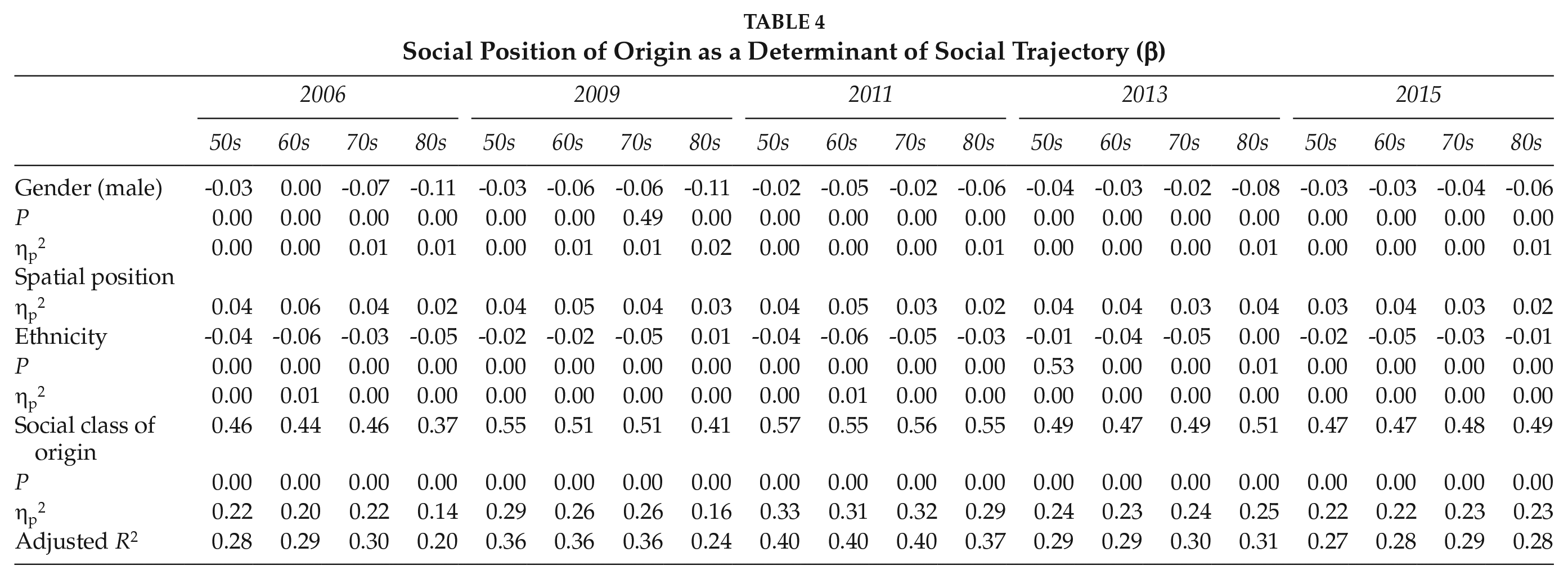
The other factors, in order of importance, were spatial position, gender, and ethnicity. That social class of the parents was directly related to the school trajectory of the children was to be expected, since the dominant classes have a greater capacity for school investment than the dominated classes. With regard to spatial position, 15 central positions such as the Metropolitan Region of Santiago and urban zones positively affected school trajectory. This relationship was also to be expected from a reproductive framework, since it assumes that social resources are concentrated in dominant spaces (cities and regions). In line with other studies on Chile, we also observed that women had longer school trajectories (González, Uribe, and González, 2005; Martínez, 2007; Rodrigo and Sánchez, 2013). This is essentially because of a parental strategy that attempts to compensate for the discrimination that females are exposed to in the labor market by making greater academic investments in their daughters and because females perform better at school, which could be an effect of gender socialization (Rodrigo and Sánchez, 2013). Ethnicity negatively affected school trajectory. Chileans who claim to belong to an indigenous group reach lower educational levels. Indigenous groups have been historically discriminated against in Chile, and these results suggest that this continues to the present day.
Once we had determined that social position of origin determined school trajectory, generational comparison of the results allowed us to begin to answer whether younger generations were less socially determined than older ones. Figure 3 presents the principal results of the reproductive model for each generation.
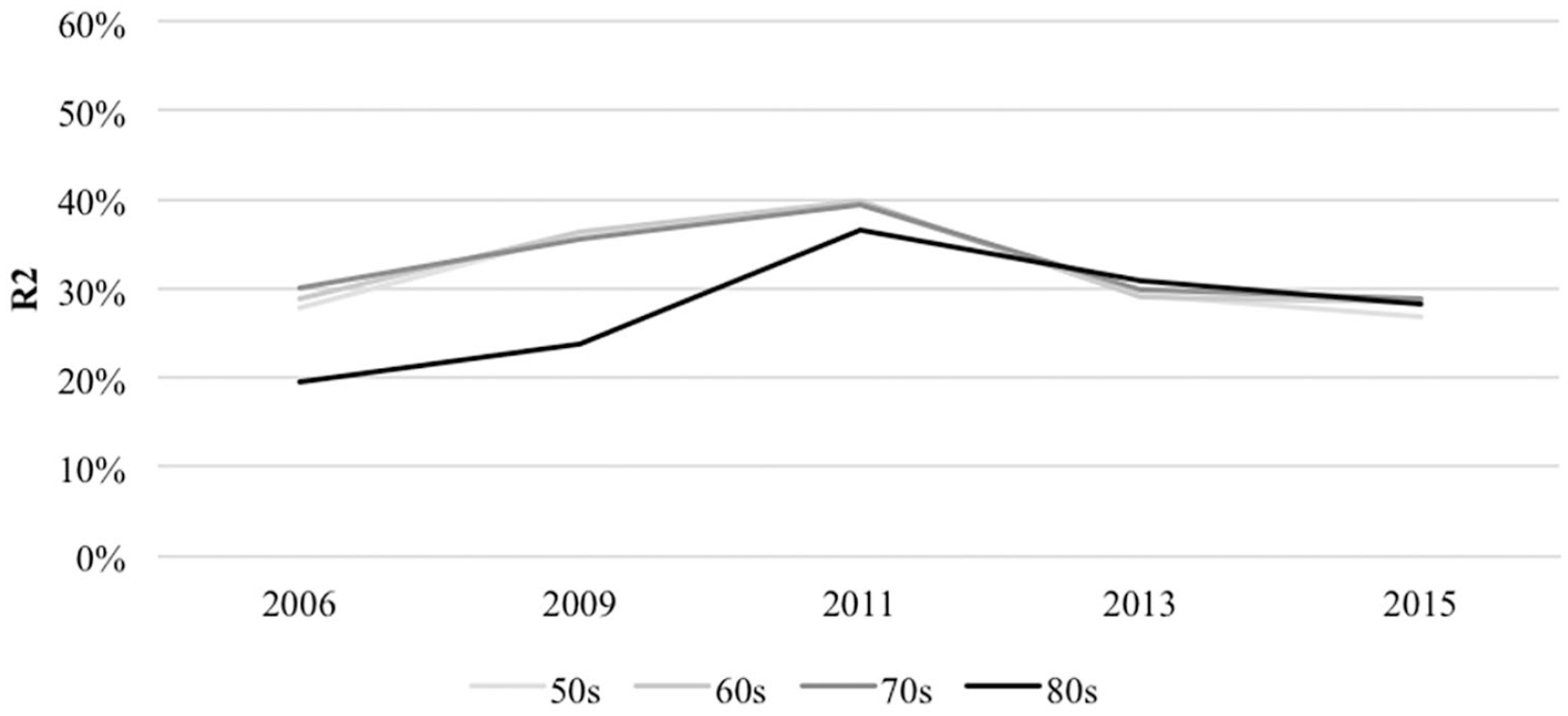
Social position of origin as a determinant of school trajectory (Model 1).
The vertical axis shows the explanatory capacity of the model, indicated by its adjusted coefficient of determination for each of the generations. The horizontal axis shows the year in which the survey was taken. Intergenerational differences were compared only for the same year, since interannual trend lines are likely to be affected by the characteristics of each sample (size, design, etc.) and by the macroeconomic situation (growth, employment, etc.). The youngest generation, born in the 1980s, had a significantly lower level of school inheritance at the beginning of its career (in 2006 they were between 17 and 26 years old) than the others, which showed similar levels of inheritance. However, the difference between the youngest generation and the others decreased rapidly and ended up converging only five years later (in 2011). Therefore, it cannot be said that the school trajectory of younger Chileans was less socially determined than that of older generations, since this only happened during a brief period between the end of their schooling and their reaching occupational maturity (17–31 years). Over the rest of their labor trajectory, the generation born in the 1980s showed levels of school inheritance similar to those of the other generations.
As for whether social position of origin determined the economic capital of Chileans, as in the previous model the most important factor was social class of origin, followed by (in order of importance) gender, 16 spatial position, and ethnicity (Table 5).
Social Position of Origin as a Determinant of Family Economic Capital (Per Capita Family Income) (β)
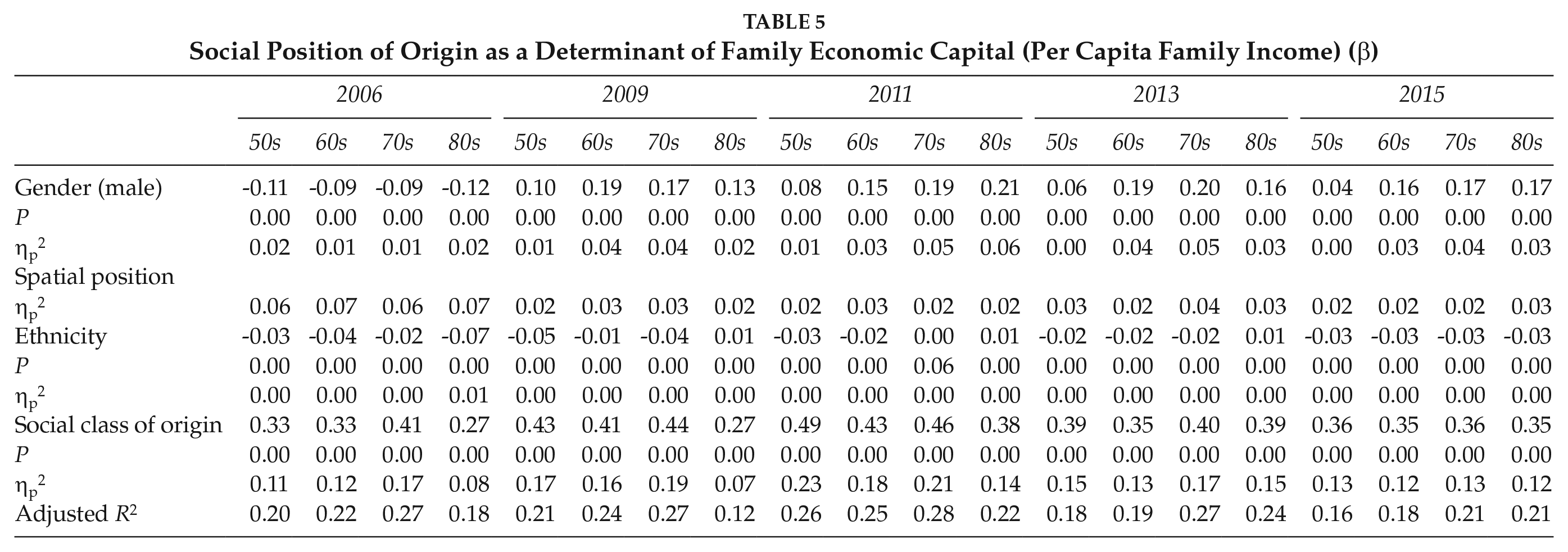
The direct relationship between class of origin and economic capital was maintained: the higher the social class of the parents, the higher the child’s salary and family income. Therefore, we confirm that in Chile the dominant classes succeed in transferring their economic advantage intergenerationally. There is gender discrimination against women, who obtain less economic capital than men, 17 although there is a greater disadvantage in wages. As argued above, this fact could help explain both the higher school investment directed toward daughters and their superior academic achievement. For spatial position, the effect was similar to that under the previous model. Central positions, both in regional (Metropolitan Region vs. other regions) and municipal (urban vs. rural) terms, generated significantly higher incomes than peripheral ones. Finally, the ethnic factor behaved as expected in the reproductive model; claiming indigenous heritage significantly reduced economic capital.
Once we had proved that social position of origin determined economic capital, we could analyze the differences between generations. In the case of family income inheritance, the convergence was faster and was completed between 2011 and 2013. In fact, starting in 2013, the two youngest generations (those born in the 1970s and the 1980s) appear to have had the highest level of inheritance of family income. Both graphs also show that the generation of the 1970s, the second-youngest, presented higher levels of economic inheritance for both individual and family incomes during the period analyzed. While it can be argued that the differences in the graphs may not be statistically significant, it is clear that the younger generations did not show a lower inheritance rate than the older ones (Figure 4).
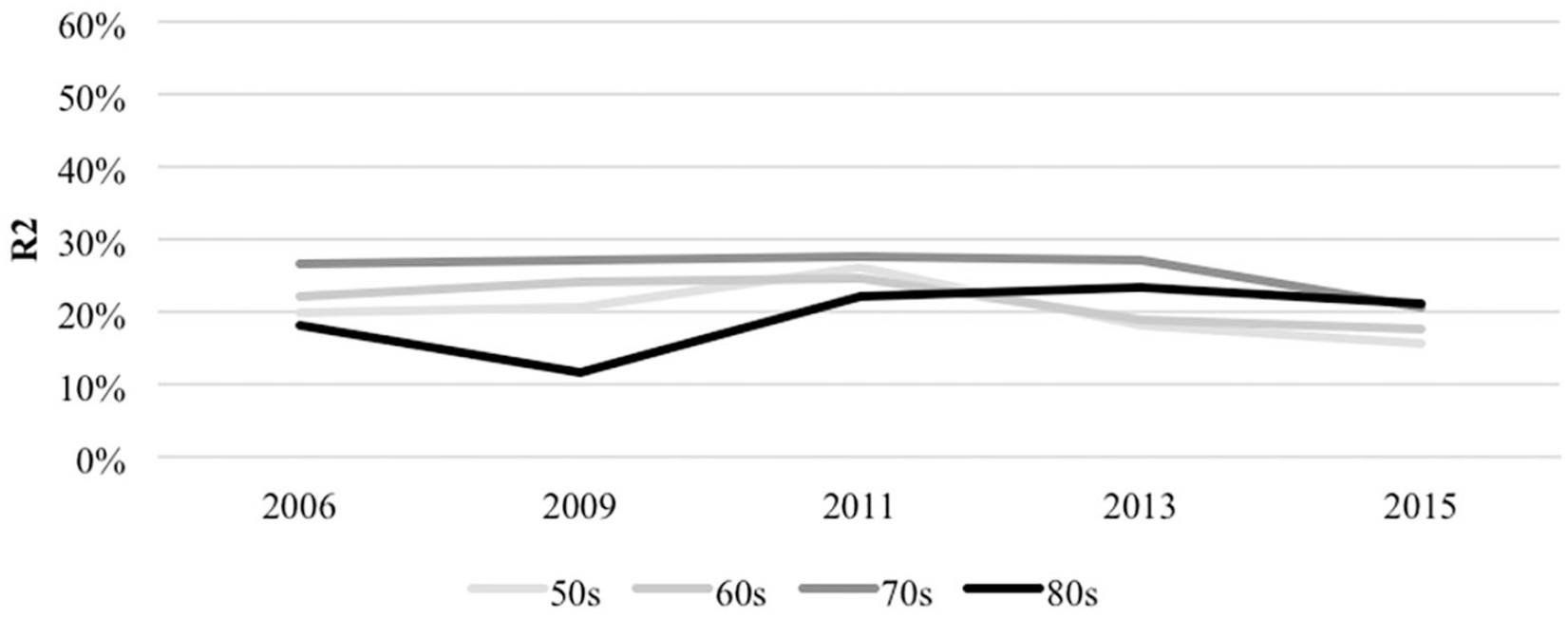
Social position of origin as a determinant of family economic capital (Model 2).
Until this point we had been using social position of origin as the sole determinant of social class of destination (school trajectory and economic capital, Models 1 and 2). However, the proposed reproductive model also assumed that the relationship between school trajectory and destination class would be moderated by the social position of origin. Model 3 attempted to verify the moderating relationship, and therefore we used it as an explanatory factor of economic capital, the product of social position of origin and school trajectory (SPO * ST). The interaction between school trajectory and social position of origin was significant for all factors (Table 6).
School Trajectory Moderated by Social Position of Origin as a Determinant of Family Economic Capital (Per Capita Family Income) (β)
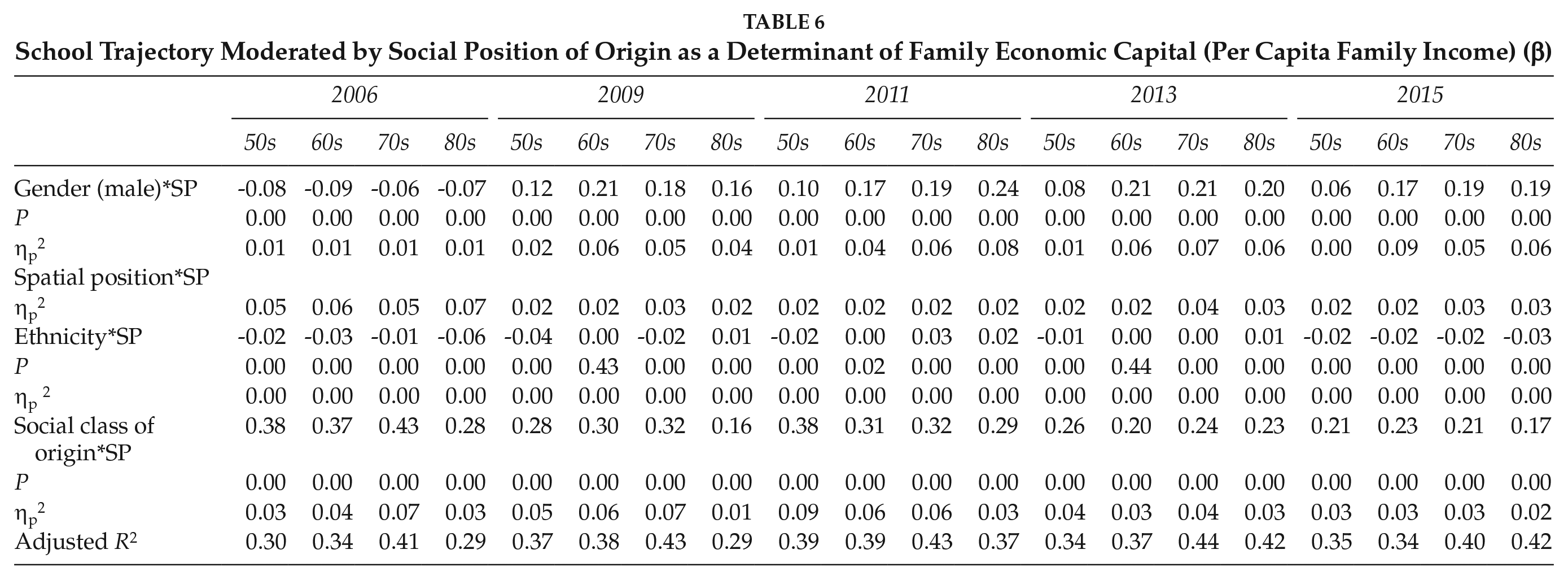
This result shows that the effect of school trajectory on family income is moderated by social position of origin as hypothesized by the proposed reproductive model. In other words, the economic benefit of a certain school trajectory depends on social position of origin. 18
The fact that Table 6 and Model 3 do not have any sign changes suggests that the interaction of assigned factors with school trajectory continues to affect economic capital in the same direction as in the previous models. The interaction with schooling only accentuates the effect of social origin; it does not correct it. The order of importance of each of the factors is also maintained: the interaction of school trajectory with social class of origin has the greatest predictive weight, followed by the interaction of school trajectory with gender, spatial position, and ethnicity. Using this model for generational comparisons (Figure 5), the situation was different for family economic capital, as the generation born in the 1980s quickly reached the same level of socioeconomic inheritance as the rest of the generations.

School trajectory moderated by social position of origin as a determinant of family economic capital (per capita family income).
In fact, the highest level of inheritance was identified in the last year studied (2015). In addition, this graph again suggests that the two youngest generations (those born in the 1970s and 1980s) were the ones that might be more socially determined. However, as we have already noted, the observed differences may not be statistically significant.
The results for the previous models (1, 2, and 3) showed that the youngest generation of Chileans (those born in the 1980s) had a similar level of social inheritance (school and economic) to that of previous generations, meaning that it did not enjoy a higher level of social mobility than the rest of the working population. Finally, Model 4, which estimates the direct effect of school trajectory on economic capital controlling for the social position of origin, allowed us to determine whether school trajectory was a mediating factor between social position of origin and the destination class as is hypothesized in the reproductive model. Social class of origin, spatial position, and ethnicity met the conditions necessary to consider that their effect on economic capital was mediated by school trajectory, since they affected school trajectory (Model 1), they affected economic capital (Model 2), and their effect on economic capital was reduced when school trajectory was considered (Model 4). These three factors therefore had an indirect effect on economic capital, and according to Sobel’s test it was statistically significant. Gender, in contrast, had no indirect effect on economic capital and therefore cannot be considered mediated by school trajectory. 19
Conclusions
The labor trajectories of four generations of Chileans between 2006 and 2015 have been examined in order to test whether the youngest of the generations considered (those born in the 1980s) had any greater social mobility. The first principal result is that the proposed reproductive model satisfactorily explains social class destination in Chile. This is because social position of origin determines the economic capital of Chileans in various ways (direct relationship, mediated by school trajectory, and moderating its effect). The second result is that the youngest generation does not enjoy any greater social mobility than any of the other generations considered.
Concerning the first result, the reproductive model based on Bourdieu’s framework seems particularly useful for explaining the high levels of intergenerational social inheritance found in Chile, probably because the neoliberal institutional redesign made during the dictatorship (1973–1990), which still remains, strengthened and enhanced various social reproduction mechanisms characteristic of capitalist systems, particularly the school and fiscal systems and the labor market.
As for the second result, the four socio-statistical models used show similar patterns; the youngest generation has a lower level of socioeconomic inheritance at the beginning of its career before converging with that of the other generations. This convergence is quite fast with regard to family economic capital and somewhat slower with regard to individual economic capital (not reported here but available on request), although the convergence is always reached before the age of 35. School achievement is also no more important for the younger generation than for the other generations.
These findings are consistent with the results obtained by Celhay, Sanhueza, and Zubizarreta (2010), since both studies show that the social mobility of the younger generations has not increased. They also partially coincide with those of previous studies on Chile (Núñez and Miranda, 2007; Núñez and Risco, 2004; Rodrigo, 2015; Sapelli, 2009) in showing that young people have a lower socioeconomic inheritance than the rest of the population. However, they differ in the way they are explained. The human-capital hypothesis—that the increase in schooling among young people and the reduction of gaps leads to greater social mobility (Núñez and Risco, 2004)—has traditionally had the most support. However, this hypothesis lends itself to the idea that there should then be a permanent change in the structure of opportunities for this more educated generation, which should then exhibit lower socioeconomic inheritance throughout its career. The results of this paper do not study this hypothesis, since the youngest generations do not exhibit lower socioeconomic inheritance. These results do, however, support the life-cycle hypothesis (Rodrigo, 2015)—that the level of socioeconomic inheritance depends on the specific moment in the labor trajectory, with workers being less affected by their social origin at the time of their initial employment than at later stages. Therefore, the lower socioeconomic inheritance of young Chileans is only temporary, since the effect of their social origins will increase as their careers progress.
The findings are also consistent with the hypothesis that maturity of occupational status is reached beginning at 30 years of age. This hypothesis has wide empirical support in different countries (Bihagen, Nermo, and Erikson, 2010; Böhlmark and Lindquist, 2006; Breen and Jonsson, 2007; Härkönen and Bihagen, 2011; Jonsson, 2001). The socioeconomic inheritance levels of the youngest generation converge with those of the other generations before the workers reach the age of 35. This may simply mean that workers under 35 have not yet attained occupational (or income) maturity and that we might be underestimating the significance of their social position of origin by considering them prematurely.
These results also coincide with what was expected by those critical of the modernization thesis (Bourdieu and Passeron, 1970; Collins, 1971; Grusky, 1983) who argued that educational expansion would not reduce intergenerational social reproduction. Here as in international studies, significant educational expansion does not lead to an increase in social mobility (Blanden, Gregg, and Macmillan, 2007). As a matter of fact, this is not the first time that this has occurred in the Chilean history. During the period 1930–1960 there was also an educational expansion in Chile, mainly due to an increase in coverage in primary and, to a lesser extent, secondary education. During this period, expenditures on education increased sharply, significantly increasing the average years of schooling of the Chilean population. However, the Chilean school system reinforced its pyramidal structure and accentuated its social segmentation. Enrollment in subsidized schools grew at an annual rate of 11 percent compared with the 3 percent of the public-school enrollment (Ponce de León, 2018). In the labor market, the abundance of workers and the low skill level required for most occupations because of the failure of the industrializing project prevented the expansion of education from increasing employment, productivity, and social mobility (Loyola, 2018).
Although the idea that the investment made by Chilean households in education will increase the intergenerational social mobility of their children lacks empirical support, it is the best slogan for boosting the market in education. This slogan is derived from meritocratic discourse (Mayol, Azócar, and Azócar, 2013; Rodrigo, 2013) and fulfills the same ideological functions—legitimizing the neoliberal model and obscuring the fact that inheritance continues to be the primary mechanism by which socioeconomic position is achieved.
Footnotes
Notes
Luis Miguel Rodrigo is a professor of sociology in the Department of Economics of the Universidad Católica del Norte in Antofagasta, Chile, and director of the Regional Observatory of Human Development. Mauricio Oyarzo is a professor of economics in the School of Business Administration of the Universidad de Concepción Campus Chillán and a research associate at the Instituto de Economía Aplicada Regional of the Universidad Católica del Norte. Funding provided by CONICYT FONDECYT No. 11150703 is acknowledged and appreciated.