



Abstract
The primary goal of this scoping review was to assess and summarize existing research on homelessness among female Veterans to understand their unique experiences. A total of 52 relevant studies were found and included. All identified studies had been conducted in the United States, with one in the United States and Puerto Rico. The findings provided important insight on services access/utilization, indicating that homeless female Veterans with substance abuse, physical health conditions, and mental health issues have high rates of accessing services; however, there is a lack of housing services available for female Veterans with children. Although the findings revealed many studies conducted in the United States, research investigating the issue needs to be conducted across the international community. In doing so, alternative methods and policies for supporting female Veterans experiencing homelessness can be identified and transferred. In particular, exploratory qualitative studies are needed to further understand the experience of homelessness for female Veterans.
Homelessness is a serious public policy concern. It can be defined as when an individual lacks a fixed, regular, and adequate nighttime residence (Perl, 2015). This definition includes those having a primary nighttime residence that is a public or private place not designed for or used as a regular sleeping accommodation for humans, or those living in a supervised publicly or privately operated shelter designed to provide temporary living accommodations (Perl, 2015). Homelessness has a significant impact on individuals, families, and communities (Hwang et al., 2009). According to Gaetz et al. (2013), many structural factors, service and system failure, as well as social and individual factors, such as lack of affordable housing and suitable support services, mental health and addictions issues, poverty, stigma, discrimination, violence, and trauma can lead to homelessness. More women, families, and youth are experiencing homelessness than in the past (Gaetz et al., 2016). In addition, certain populations experiencing homelessness such as families, women, seniors, youth, new newcomers, Veterans, people experiencing mental illness including substance use, and Indigenous peoples have unique needs requiring special solutions (Gaetz et al., 2012). A Veteran can be defined as all those who have served in the armed forces for any period of time although this period of time can vary between countries (Truusa & Castro, 2019). While some countries define Veterans as individuals who have served on operational missions, other specific definitions such as “combat Veterans” are reserved for those who have specifically served in combat (Truusa & Castro, 2019). Veterans are one of the populations who experience homelessness and need more attention due to their distinct housing, social, emotional, and health-related needs (Forchuk et al., 2016; Ray & Forchuk, 2011). But within this population, female Veterans experiencing homelessness have been found to have different needs compared to male Veterans. Homeless female Veterans have been found to be significantly more likely to have experienced military sexual trauma (MST), to be younger, non-White, and single, have a service-connected disability, and to have served in Iraq and Afghanistan compared to homeless male Veterans (Eichler & Smith-Evans, 2018). Female Veterans are also more likely to have children in their custody (Tsai et al., 2015). Female-specific health issues such as obstetric and gynecologic needs, contraceptive and reproductive services are also distinct and require attention for female Veterans (Katon et al., 2013).
The number of females serving in the military has increased significantly in the United States (Defense Advisory Committee on Women in the Services, 2020) and United Kingdom (Harding, 2021). A steady increase was reported from 15.1% to 16.5% between 2004 and 2018 (United States Government Accountability Office, 2020), matching the average percentage of servicewomen in Canada (Government of Canada, 2022). Female Veterans, who served in Iraq and Afghanistan, aged 26 to 35 years old, those with a diagnosis of posttraumatic stress disorder (PTSD), a 100% disability rating score, and based in the north-east of the United States were at an increased risk of Veteran’s Health Administration (VHA) Homeless Program usage compared to male Veterans (Blackstock et al., 2012).
At present, there have been few studies conducted internationally on the homeless Veteran population. The average in the United States among the homeless population for females is 29%, with eight states exceeding this average, ranging from 34% to 38% (National Alliance to End Homelessness, 2019). Most published studies of homeless Veterans are from the United States. Studies concluded that Veterans are overrepresented among the homeless population in the United States and are at greater risk than non-Veterans of becoming homeless (Fargo et al., 2012). The proportion of homeless Veterans who are female has also increased. Several previous government reports from the United States have shown that female Veterans are almost twice as likely to be homeless than female non-Veterans in the general population (Fargo et al., 2012). Among those in poverty, female Veterans are more than three times as likely to be homeless compared with their female non-Veteran counterparts, whereas male Veterans are at lower risk than their male non-Veteran counterparts (Fargo et al., 2012). Current point-in-time counts may also underestimate the number of female Veterans experiencing homelessness as precarious housing (also referred to as “Couch-surfing”) is not officially recognized by the federal U.S. government and those with children are less likely to stay in shelters or sleep outside (Casura, 2017). Underestimates of female homelessness within point-in-time counts and statistics have been reported internationally (Bretherton, 2017; Pleace, 2016; Sikich, 2008) with female Veterans potentially under-identified as homeless compared to male Veterans (Tsai et al., 2021). The issue of homelessness among female Veterans represents one of the most pressing of these new challenges, and meeting the health care and housing needs of homeless female Veterans will continue to be a challenge in coming years.
Women account for approximately 27% of the homeless population in Canada, similar to the United States (Employment and Social Development Canada [ESDC], 2016). Veterans are estimated to make up 2.2% of the homeless population (ESDC, 2016). A study of 60 emergency shelters higher revealed that half of all Veterans under 25 are female while less than one-quarter of Veterans over 25 are female. It was also reported that there was a particularly high rate of episodic homelessness among female Veterans (Segaert & Bauer, 2015). Ray and Forchuk (2011) identified that the Canadian Veteran population is distinct from the U.S. Veteran population. While in the United States, a large percentage of Veterans suffer from PTSD, but in Canada, alcohol addiction was a leading cause to Veteran homelessness.
Of those who are homeless in London, United Kingdom, Veterans who served in the British Armed Forces or as a military merchant mariner experiencing homelessness has decreased from 3% to 6% in 2014 to 2% in 2019 (Office for Veterans’ Affairs, 2020) but research specifically focused on female Veterans is lacking. A recent study from Australia reported that although female Veterans represent 0.8% of the nation’s population, they make up 2.6% of the homeless population (Wood et al., 2021). Although Wood et al. (2021) reported that 452 out of 8,027 respondents identified as Veterans, Hilferty et al. (2021) estimate that 5,800 Veterans experience homelessness in Australia over any 12-month period. It should be noted that accurate statistics and counts of women and Veterans, let alone female Veterans, can be difficult to obtain or calculate. Many countries in the European Union do not define women’s shelters and domestic violence refuges as homelessness services while other countries do not have data on women’s shelters (Busch-Geertsma et al., 2014). Point-in-time counts can miss individuals experiencing homelessness due to migration between communities or only targeting specific shelters (Agans et al., 2014; Gaetz et al., 2016).
Although previous systematic reviews of literature on women Veteran health identified several studies that included samples of homeless female Veterans (Byrne et al., 2013; Goldzweig et al., 2006), a review that includes research conducted in more recent years and focuses specifically on the issue of homelessness among female Veterans is much needed. The present review places a primary focus on homeless female Veterans’ unique needs and risk factors that predispose this population to become homeless. The scope of the current review was guided by these key questions: what is known about homeless female Veterans’ demographics? What services are aimed at and provided to this population? What are the risk factors predisposing them to homelessness? The objective of this review was to assess and summarize the body of knowledge on homelessness among female Veterans, to understand their unique experiences and identify what is needed to be done to tackle this problem.
Methods
Search Strategy and Data Sources
MEDLINE, Cumulative Index to Nursing and Allied Health Literature (CINAHL), PubMed, PsycINFO, Scopus, ScienceDirect, ProQuest Dissertation and Theses, the Homeless Hub databases, and the Journal of Military, Veteran, and Family Health were searched from August 2012 to June 2021 using the following terms: homeless Veteran, homeless female Veteran, and homeless women/woman Veteran, military, armed forces, army, and shelter. The August 2012 start date corresponds chronologically to the end date of Byrne and colleagues’ (2013) systematic review (July 2012), the most recent systematic review that has been done on homeless female Veterans. There was no inclusion or exclusion criteria specific to the identified study’s country of origin thereby articles from any country could be included. Two independent reviewers assessed the eligibility and methodological quality of each study. Consensus was reached after discussion. To identify additional articles, the bibliographies of relevant reviews and all articles meeting final selection criteria were searched. In addition, gray and unpublished literature was searched.
Study Selection
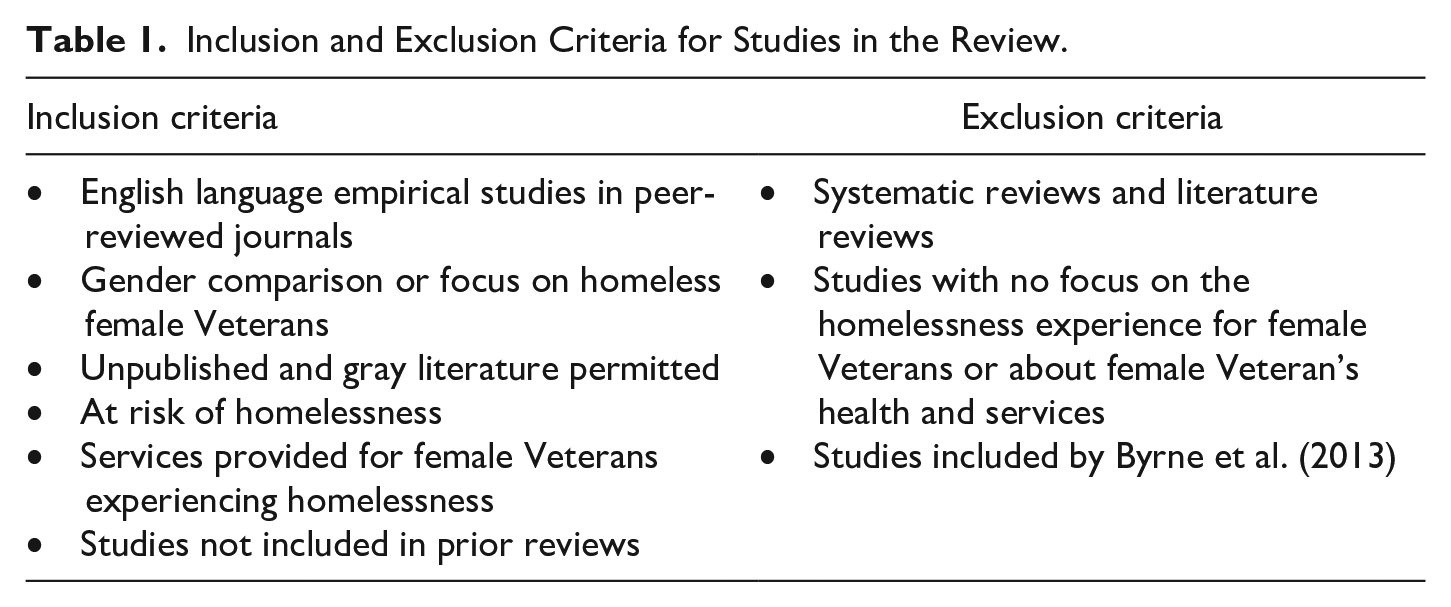
Studies were included if they pertained to female Veterans and their experience with homelessness. There were no strict requirements regarding particular experiences as this study sought to explore the state of the literature and the current contemporary knowledge base. Understanding the epidemiology of female Veterans experiencing homelessness, risk factors associated with homelessness, as well as services aimed at female Veterans experiencing homelessness were anticipated to be the focus of most studies. To supplement this scoping review, gray literature was considered an important strategy for identifying all potentially relevant studies especially when little is known about this topic. The present review differed from the prior reviews in that its focus was exclusively on the issue of homelessness among female Veterans. Inclusion criteria (see Table 1) were as follows: (a) English-language empirical studies in peer-reviewed journals, (b) gender comparison or a focus on homeless female Veterans, (c) unpublished and gray literature also permitted, (d) at risk of homelessness, (e) services provided for female Veterans experiencing homelessness, and (f) studies not included in prior reviews. The following types of research were included: experimental, observational, descriptive, and qualitative. Systematic reviews and literature reviews were not included in the present review. Studies were excluded if they did not focus on the homelessness experience for female Veterans or about female Veterans’ health and services in general. Also, all the studies included by Byrne et al. (2013) were excluded from the review. The search produced a total of 5,380 records, which were screened for inclusion based on their title and abstract. Of these, 5,237 were excluded because they did not meet the inclusion criteria (Figure 1). A further 40 duplicate records were excluded. Researchers retrieved the full text for the remaining 103 articles; upon review of these articles, 15 were excluded because they were included in Byrne et al.’s (2013) systematic review; and 36 did not meet the inclusion criteria. Ultimately, 52 articles were screened and met inclusion criteria for the review. Of these, 47 were from peer-reviewed journals, including one from a reference list and one published abstract, and five were dissertation theses.
Inclusion and Exclusion Criteria for Studies in the Review.

Flowchart of Search Strategy and Study Selection. CINAHL = cumulative index to nursing and allied health literature.
Data Extraction
The following variables were collected: study design, study population, sample size (female and total), whether the study was female-focused or included females as a subgroup, study aim, and summary of main findings. An evidence table was created with the above variables (Supplemental Appendix A). Studies were categorized into one of the following focus areas: epidemiology, health and services access/utilization, and service effectiveness. These categories were developed based on previous literature conducted by experts in the field of homelessness to capture contemporary concepts of homelessness (Byrne et al., 2013; Lee et al., 2010; Sommer, 2000). For the purpose of this review, an epidemiologic study was defined as any study that included estimates of the population size, characteristics, prevalence, and risk factors associated with the likelihood of homelessness, or other epidemiological information about homelessness among female Veterans. Studies assigned to the health and other services utilization category focused on the use of health treatment or barriers to such treatment among homeless female Veterans. Studies that described programs providing residential services or any related services were classified under service effectiveness.
Results
Description of Studies
All the reviewed studies were U.S. studies, including one conducted in the United States and Puerto Rico. Of the 52 included studies, 27 were observational, 13 were descriptive, six were qualitative studies, five were experimental, and one was an intervention protocol (see Table 2). Eighteen studies included females as a subgroup, 14 studies focused exclusively on females and 12 studies focused on gender differences and eight contained explicit information about homeless female Veterans. Twenty-five of the studies were epidemiological, 21 described health and other services utilization, and six were intervention articles. One study before 2013 that was not reviewed by Byrne et al. (2013) and found in a reference list had been added to the present review (Tessler et al., 2001). In regards to funding, 41 studies were federally funded by the U.S. Department of Veterans’ Affairs, seven were funded by Universities (five of which were PhD dissertation theses), and one was funded by a nonprofit organization (National Coalition for Homeless Veterans). The remaining three did not report any funding sources.
Characteristics of Homeless Female Veterans Research Studies Included in the Review (N = 52).

Epidemiological Studies
A total of 25 articles were identified for this review and met the criteria to be identified as an epidemiological study.
Characteristics of Homeless Female Veterans
Several studies descriptively analyzed general characteristics and demographics of homeless female Veterans. These characteristics were inherent to the homeless female Veteran(s) and were not related to environmental or any other external factors. Being in the middle age range (35–54), African American, and being unmarried were associated with higher odds of screening at risk of homelessness, whereas, only Black race and unmarried status were associated with higher odds of screening positive for homelessness (Montgomery et al., 2015; Tsai et al., 2013). When compared to their homeless male Veteran counterparts, homeless female Veterans were younger, less likely to be employed, and had lower rates of drug or alcohol dependence or abuse but higher rates of mental illness such as anxiety, depression, and PTSD (Felder & Delany, 2020; Kabarra, 2014; Montgomery et al., 2015; Tessler et al., 2001).
Risk Factors Associated With Homelessness Among Veterans by Gender/Sex Differences
This category examined risk factors associated with homelessness among studies that explored specific differences between male and female Veterans. Two studies (Brignone et al., 2016; Pavao et al., 2013) examined MST and its association with Veteran homelessness. The prevalence of MST among homeless Veterans was 39.7% among females and 3.3% among males (Pavao et al., 2013). Ethnic minorities, specifically Black females, were also more likely to be victims of MST compared to White women (Gawron et al., 2019; Montgomery et al., 2020). Homeless female Veterans who experienced MST were more likely to screen positively for depression, PTSD, substance use, anxiety, bipolar disorders, borderline personality disorders, schizophrenia, other psychotic disorders, suicide and intentional self-harm (Felder & Delany, 2020; Gawron et al., 2019). Both males and females reported emotional and verbal abuse more than any form of abuse but more females than males reported MST (Schaffer 2012). Another study (Finlay et al., 2015) examined the prevalence of mental health and substance use disorders diagnosis among female and male Veterans involved with the Justice System. Finlay et al. (2015) reported that female Veterans involved in the justice system have a high burden of mental health disorders (88%) and more than half have substance use disorders (58%). Males reported 76% and 72%, respectively. Females were less likely to be married or homeless compared with males (Tsai et al., 2021). In addition, women were more likely to cite the following as their main reason for homelessness: eviction, interpersonal conflict, and someone no longer able or willing to help (Tessler et al., 2001).
Risk Factors for Homelessness Among Female Veterans Only
Studies in this category examined risk factors associated with homelessness among studies that were specific to female Veterans only. Decker et al. (2013) compared homeless military sexual assault (MSA) and non-MSA Veterans in relation to PTSD, substance abuse, psychiatric symptoms, and victimization. The study compared clinical symptoms, premilitary experiences, and treatment preferences among 509 female Veterans with and without MSA who enrolled in 11 Veteran Affairs (VA) Homeless Women Veterans Programs (HWVP). Over one-third of participants (209, 41.1%) reported MSA, and those who reported MSA endorsed a greater severity of PTSD and other psychiatric symptoms. In a study by Dichter et al. (2017), 17% of the sample had experienced intimate partner violence (IPV) and their odds of housing instability increased two-fold. A similar finding was echoed by Yu et al. (2020) who reported that not only can IPV precipitate housing instability, but housing instability can increase vulnerability to IPV. Felder and Delany (2020) reported that 86% of homeless female Veterans experienced adverse childhood experiences (ACEs), and approximately the same amount reportedly experienced MST. Finally, two qualitative studies examined pathways to homelessness among female Veterans (Hamilton et al., 2014; Keene, 2012). Both studies identified violence, abuse, MST, substance abuse, medical issues, and unemployment. Keene (2012) also identified additional factors such as: loss of career/loss of purpose (i.e., unexpected discharge) with Veterans stating involuntary discharge, unplanned pregnancy as a result of MST, ineligibility to retire due to not completing 20 years active duty despite 20 years serving; and Broken Relationships due to an abusive marriage and family breakdown. Another theme found was “Broken Trust,” which included not being given retirement despite being told they would, MST from superiors, unable to transfer skills to civilian employment, and broken family relationships. Some other factors identified were bureaucracy, unemployment, and lack of transitional housing for female Veterans with children, lack of preparation postservice included lack of transferable skills, but there was positivity in finding social support from peers.
Health/Utilization Studies
Twenty-one studies that examined health and other services utilization among homeless female Veterans were identified. The focus areas of these studies were access to health and other services, barriers to accessing the services, and uptake of the services.
Uptake and Utilization/Barriers
Jones et al. (2019, 2018) examined a homeless patient aligned care team (H-PACT) which has been found to help with health service utilization. This study showed that specialized programs such as these can increase the utilization of health care services for Veterans. Ellison et al. (2016) investigated homeless female Veterans who had a history of homelessness and substance abuse enrolled in a supportive housing program met with full-time trained Veteran peer supporters (VPS). The intervention was designed to provide mental health and substance use recovery and community integration skills using a 50/50 mix of structured and unstructured meetings. However, only one-third of peer-led sessions were attended with older Veterans more likely to engage with VPS. One study provided information on services and care providers about access to health care and other services among homeless female Veterans (Tsai et al., 2015). They also found that homeless women were more likely to be single mothers and tend to struggle with major depression, PTSD, and substance abuse disorders. Findings indicated that there is a lack in housing services available for single women with children (Tsai et al., 2015). Tsai and colleagues (2015) reported that among literally homeless Veterans (defined as “living on the streets or in places not meant for human habitation”) referred to the VA homeless programs, 9% of men and 30% of women had children in their custody; whereas among unstably housed Veterans, 18% of men and 45% of women had children in their custody. Homeless female Veterans were more likely than men to be admitted to the program which indicated that particular focus should be directed at VA’s supported-housing program.
In addition, two studies examined access and entry to the homeless system services among homeless Veterans based on gender (Montgomery & Byrne, 2014; Tsai, Kasprow, et al., 2014). Male and female Veterans were equally as likely to use mainstream and VA homeless services. There were few differences between genders in inpatient services use following a homeless episode. Men used more substance abuse outpatient treatment and emergency services, whereas women used more outpatient medical treatment (Montgomery & Byrne, 2014). Veterans who sought non-VA homeless services were less likely to use outpatient services but more likely to access emergency services (Montgomery & Byrne, 2014). Tsai, Kasprow, and colleagues (2014) examined differences between homeless female and male Veterans in their service needs and the current provision of VA homeless services. This study used the Homeless Operations Management and Evaluation System (HOMES), an online VA data collection system linked to a comprehensive homeless registry. Of VA homeless service users in HOMES (calculated and compared with proportion of females among all U.S. Veterans) (n = 119,947), 8% were female. Of all female VA homeless service users (n = 9,583), 53.9% were literally homeless compared to 59.1% (n = 110,364) for males. Homeless female Veterans were 7 years younger than homeless male Veterans on average, 21% more had dependent children, 8% more were diagnosed with non-military-related PTSD, and 19% to 20% more were referred and admitted to VA’s supported-housing program than homeless male Veterans. Many studies indicated that homeless Veterans found VA services difficult to access (Acre, 2019; Brenner et al., 2017; Gawron et al., 2018; Gawron, Pettey, et al., 2017). Another two studies examined homelessness and risk for homelessness through a VA screening program, VHA (Montgomery et al., 2015, 2016). Montgomery and colleagues (2016) assessed the demographics and proportion of VHA patients who received homeless or social work services within 6 months of a positive screen for homelessness or risk of homelessness. The majority of patients (which were slightly more women than men) who screened positive for homelessness, and approximately half of those who screened positive for risk, received follow-up services within 6 months of screening. Montgomery et al. (2015) found that having access to compensation related to a service-connected disability, was associated with lower odds of homelessness and risk of homelessness.
Finally, Gawron et al. (2019) examined the uptake of long-acting reversible contraceptive (LARC) methods and prevalence of psychiatric and medical comorbidities among homeless (n = 42,197) versus housed (n = 46,768) female Veterans accessing care within the VHA. Uptake of an LARC method was 9.3% among homeless Veterans and 5.6% among housed Veterans. Prevalence of the following comorbidities was significantly higher among homeless versus housed Veterans: mental health disorders (84.5% versus 48.9%), substance abuse disorders (35.9% versus 8.6%) and one or more high-risk medical conditions (74.9% versus 56%). Homeless female Veterans seeking care in the VHA are a vulnerable population with an extremely high prevalence of comorbidities that increase risk of adverse pregnancy outcomes (Gawron et al., 2016). Gawron et al. (2018) also reported that female Veterans in Texas were 21.4 miles away on average from their nearest family planning clinic. Distance may be a significant barrier for many homeless female Veterans. Gawron, Pettey, et al. (2017) reported that 28.5% of female Veterans experiencing homelessness lived more than 40 miles away from VA Center with a mean distance of 94.7 miles.
Service Effectiveness
Five studies evaluated interventions for homeless Veterans and related outcomes, and one study proposed a new housing service protocol. Three studies assessed the outcomes of intervention treatment programs to address sexual trauma, including MST (Katz et al., 2014, 2015; Tsai et al., 2012). The first, an integrative treatment program (“Renew”) consisting of 210 hours of programming for female Veterans, found that graduates demonstrated significant reduction in PTSD, psychiatric symptoms, and posttraumatic negative cognitions as well as significant increases in self-esteem, optimism, and satisfaction with life (Katz et al., 2014). The second study examined the outcomes of the 12-week “Renew” program over the course of 1 year and reported posttraumatic symptoms decreased immediately after graduation with up to 70% demonstrating reliable clinical changes (Katz et al., 2015). Changes were sustained 12 months from baseline; positive factors of self-esteem and quality of life continued to increase over time. The third study examined lifetime exposure to traumatic events as reported by 581 homeless female Veterans enrolled in an HWVP and their association with housing, clinical outcomes, and psychosocial functioning over a 1-year treatment period (Tsai et al., 2012). Among the most common were having someone close experience a serious or life-threatening illness (82%) and rape (67%). Participants in this study demonstrated substantial improvements in housing stability following their entry into the HWVP. Weiss (2020) proposed a protocol for a new housing service for female Veterans experiencing homelessness with a maximum of two children. The intervention would consist of 10 prototype homes with on-site services to address mental health issues and unemployment using a Housing First approach. Housing First is a supportive housing model with a focus on social integration and inclusion without the need for sobriety, abstinence, or program adherence (Tsai & Byrne, 2019; Weiss, 2020). This could therefore result in underlying issues being addressed earlier and provide a long-term solution by equipping female Veterans with the tools needed to succeed. Future research and homeless interventions would be well-advised to explore Housing First principles for female Veterans as the current literature is lacking.
Discussion
This scoping review of literature regarding homelessness among female Veterans identified a relatively small number of studies conducted in the United States, despite broad inclusion criteria. There is an estimated 18 million Veterans who have served for the U.S. armed forces, including an estimated 1.7 million female Veterans (Vespa, 2020). There is a diverse range of Veterans within the United States as many have served in various conflicts such as World War II, Vietnam, the Korean War, the Gulf War, and post-9/11 arenas such as Afghanistan and Iraq (Vespa, 2020). It stands to reason why there would be a significant interest in research within the United States on this population and the unique groups of Veterans from each conflict. Previous systematic reviews focused on more universal issues of female Veteran health (Bean-Mayberry et al., 2011; Goldzweig et al., 2006) or homeless Veterans in general (Hoffberg et al., 2017). Only one peer-reviewed systematic review study (Byrne et al., 2013) focused on homelessness among female Veterans. A systematic review for a thesis on risk factors for homelessness among female Veterans (Graham, 2017) was also found in our search. The results of this prior review are important insofar as they provided a baseline understanding of the problem of homelessness among female Veterans. Byrne and colleagues (2013) indicated that there is a lack in research studying areas such as services access and utilization as well as interventional studies on homeless female Veterans.
The principal findings of our present scoping review of homeless female Veterans’ literature are that most studies are descriptive and observational in nature and echoing the work of Byrne et al.’s (2013) systematic review, although there is a noticeable increase in the number of experimental/interventional studies. Considerable amounts of research have been conducted on the characteristics of homeless female Veterans as well as risk factors associated with homelessness among female Veterans. Homeless female Veterans were characteristically different from their male counterparts, both with respect to demographic and clinical factors. Specifically, homeless female Veterans were younger than their male counterparts, had higher levels of unemployment, and had lower rates of drug or alcohol dependence or abuse but higher rates of mental health problems including MST, MSA, PTSDs, and IPV (Byrne et al. 2013). IPV can aggravate PTSD and substance abuse disorders, increasing the risk of homelessness (Gerber et al., 2014). This also echoes the work of Boyd and colleagues (2013) whose literature review on mental health issues of women deployed to Iraq and Afghanistan revealed, in addition to MST and PTSD, that ACEs, anxiety, relationships ending, post-service mental health substance use and/or medical problems, disability (physical or mental), and unemployment were additional risk factors for homelessness. Homeless female Veterans who suffer from MST are three times more likely to report PTSD, anxiety, and depression (Conard & Armstrong, 2018). They are also two times more likely to report substance abuse compared to civilian females (Conard & Armstrong, 2017, 2018). Dinnen et al. (2014) indicated that there is a lack of trauma-informed services for homeless Veterans and failure to recognize the association between trauma and homelessness. Furthermore, lack of routine screening for trauma is identified as a barrier to accessing appropriate care (Dinnen et al., 2014).
Findings from the present review demonstrated that the research to date on homelessness among female Veterans have been growing and touching new areas such as services access/utilization and intervention programs to evaluate the housing and social services introduced to homeless female Veterans. Services access/utilization studies found that homeless female Veterans with substance abuse, physical health conditions, and major mental health issues have high rates of accessing services. There is a remarkable lack of housing services available to single female Veterans with children. Findings from interventional studies indicated that homeless female Veterans have improvement on clinical outcomes, social support, employment, significant reduction in PTSD, psychiatric symptoms, and improvement in housing stability.
The implications of this scoping review are wide-reaching. First, there is still a lack of research conducted that specifically examines the female Veteran perspective in experiencing homelessness internationally. Experimental and qualitative perspectives from countries besides the United States at the present time is certainly merited. Future Veteran research would be recommended to explore this concept further to develop greater understandings as well as inform policy and decision-makers for new care plans and legislation in their respective countries. The majority of studies identified were federally funded by VA. Although encouraging, this also highlights a lack of studies from nonprofit, private and philanthropic agencies. Availability of resources may be an issue and so partnering with government agencies may be needed. It would be highly recommended for VA to continue their research funding, if not able to add further investment, in building more evidence to address and care for female Veterans experiencing homelessness. This should also speak to government funding agencies in other countries to provide funds and resources to explore and study female Veteran homelessness, particularly in countries with large militaries. Of the five dissertation theses identified, three were conducted in California. Further funding for and emphasis on dissertation studies into homelessness among female Veterans in other states, cities, or even countries would also be highly recommended and useful in identifying localized issues and concerns to be addressed. It is also important for future research to be wary when recruiting participants to ensure that numbers are accurate and meet the definition of homelessness. Multiple definitions may be used, including some that may be too broad or too narrow. This is to ensure that the population under study is accurately reflected and examined which may have future implications for policy and practice. Furthermore, barriers to Veteran services may also affect current homelessness counts. The United States in particular is a significantly vast country. Issues such as transportation, distance, and cost may prevent access to services, resulting in Veterans tending to prefer local emergency departments or primary-care services (Gale & Heady, 2013). Among female Veterans experiencing homelessness, there is a lack of gender-specific treatment options which may cause service under-utilization (Hamilton et al. 2012) and therefore an inaccurate number of female Veterans accessing services. Cultural and geographical aspects must be considered by future researchers to ensure appropriate conclusions and suggestions for policy are developed; particularly as the majority of studies are conducted in one country.
Overall, the identified studies largely called for greater development and an expansion of current services. Expansion to housing and homelessness prevention services was common, but there were also more targeted calls such as linkages to mental health services and interventions focusing on trauma-informed care. Implications for policymakers varied but largely called for sufficient funding, reduced discrimination, and to further understand the risk factors for homelessness among female Veterans. There were also some calls for greater financial support and access to financial resources such as pensions and disability support. Improvements to screening practices were also highlighted as key implications in some studies, particularly in regards to homelessness, MST, and IPV. A small number of studies noted that additional funding for services such as psychotherapy, talk therapy, and programs for MSA have since been granted after their respective studies. This highlights the importance of research in the field and how knowledge can be translated into meaningful change and support for interventions. Additional care and programs for MSA and trauma should also be adopted given the high prevalence rates revealed and successful housing stability upon completing treatment. There is the likelihood of MSA and trauma resulting in severe mental illness which can further exacerbate homelessness. Numerous studies reported a high prevalence of mental illness; therefore, increasing access to mental health care may be a crucial factor in maintaining housing stability. Furthermore, female Veterans are also more likely than male Veterans to have children in their custody (Tsai et al., 2015). Emphasis and considerations need to be placed on providing suitable and safe housing for those with dependents. Currently there is a lack of gender-specific housing accomodations and no established standards or safeguards for women in permanent supportive housing (Kim et al., 2019). When all factors are considered, this scoping review represents a targeted call for sweeping reforms in female Veteran and housing care that will need to be reviewed and implemented by policymakers. Access to such services must also be prioritized to cover this section of the homeless population.
The primary limitation of this review is applying these findings to an international context. There is a lack of research concerning homeless Veterans generally and whether or not they are homeless as a result of military service. There was also a lack of exploratory qualitative studies to understand the experience of homelessness among female Veterans. Understanding the perspectives of women who are Veterans and homeless could provide information on their trajectories into homelessness which could then be potentially used for prevention and intervention related to homelessness. Further research is certainly warranted, particularly from the international community outside of the United States. By encouraging research from other countries, new methods and practices of providing support to female Veterans experiencing homelessness can be shared and disseminated. New ideas for potential policy and decision-makers can also be informed and may be applicable to current findings. This could allow for a more proactive and developmental approach as opposed to a reflective one. However, the findings from this study can potentially be used to inform homelessness service in the United States with the majority of the identified studies conducted with U.S. Veterans.
Conclusion
In summary, there was a dearth of research found on homeless female Veterans outside of the United States. Furthermore, ethnographic studies are desirable to understand the experience of homelessness among female Veterans within the context of the Veteran culture and to identify challenges of this population when transitioning to civilian life. There is a distinct lack of experimental studies providing interventions for what can be considered a very vulnerable population. Research is also needed to understand similarities and differences among male and female homeless Veteran populations internationally. Overall, much research is needed to inform future directions to prevent and reduce homelessness among the female Veteran population.
Supplemental Material
sj-docx-1-afs-10.1177_0095327X221150819 – Supplemental material for The State of Knowledge on Female Veterans Experiencing Homelessness: A Scoping Review of the Literature
Supplemental material, sj-docx-1-afs-10.1177_0095327X221150819 for The State of Knowledge on Female Veterans Experiencing Homelessness: A Scoping Review of the Literature by Heba Hassan, Jonathan Serrato and Cheryl Forchuk in Armed Forces & Society
Footnotes
Acknowledgements
The authors would like to acknowledge the Homelessness Partnering Strategy, Employment, and Social Development Canada for their support in the development of this paper.
Declaration of Conflicting Interests
The authors declared no potential conflicts of interest with respect to the research, authorship, and/or publication of this article.
Funding
The authors disclosed receipt of the following financial support for the research, authorship, and/or publication of this article: This research was supported by the Homelessness Partnering Strategy, Employment and Social Development Canada.
Supplemental Material
Supplemental Material for this article is available online.
Author Biographies
References
Supplementary Material
Please find the following supplemental material available below.
For Open Access articles published under a Creative Commons License, all supplemental material carries the same license as the article it is associated with.
For non-Open Access articles published, all supplemental material carries a non-exclusive license, and permission requests for re-use of supplemental material or any part of supplemental material shall be sent directly to the copyright owner as specified in the copyright notice associated with the article.
