



Abstract
This study adopts the diffusion of innovations model as a research framework to examine adult learner perceptions related to workplace e-learning effectiveness. Recent training reform efforts focusing on e-learning in Taiwan provide an opportunity to explore e-learning effectiveness using questionnaires. The results show that the perceptions and attitudes of adult learners toward workplace e-learning are positive, and relevant factors that affect learner-perceived effectiveness and e-learning expected values are identified. The implications of analyzing e-learning innovation in public sector training and the recommendations for future e-learning research for staff development initiatives are addressed.
Introduction
Good human resource (HR) quality is the cornerstone for continuing better government services and efficiency. Government efficiency is an important indicator of the competitive advantage of nations according to reports by the World Economic Forum and the International Institute for Management Development (Balkytė & Tvaronavičienė, 2010). Hence, the workforce quality of civil agents is the key to sustainment. To strengthen government workforce quality and efficiency, the Central Personnel Administration (CPA) of the Executive Yuan in Taiwan has envisioned building a high-quality civil service team to provide the best service to the public. Among the six goals included in this vision, “to train a better workforce with excellent leadership” is considered the most essential. Well-trained government employees and officials build their experience to create and implement local sustainable policies and management practices that facilitate the democratization process.
A key player involved in accomplishing these goals, the Regional Civil Service Development Institute (RCSDI), was established in 1997 and, pertaining to the CPA, is responsible for the training and development of civil agents in local governments in Taiwan. The service scope of RCSDI covers more than 110,000 civil agents from 6,361 departments, ranging from areas of public administration, social affairs, personnel, education, tourism, agriculture, social welfare, and transportation in more than 23 local governments in Taiwan. The average number of people trained by the RCSDI is approximately 40,000 per year. Each local civil agent has the opportunity to participate in RCSDI training programs once every 3 years, which severely hampers civil agent development and their ability to propose better strategies and services. Consequently, this problem requires opening access to training and learning for civil agents of local governments to enhance their competence in providing better quality public service. To improve this problem, use of e-learning is proposed as a strategy to expand the opportunities of professional development and supplement the insufficient access to RCSDI training for civil agents of local governments.
In a knowledge and information society, e-learning has built on the extensive use of advanced information and communication technologies to deliver learning and instruction. It also facilitates lifelong learning (Shavkat, Feruza, & Furjhat, 2009). Governments worldwide prefer e-learning or online learning because they provide a cost-effective and timely learning vehicle to meet the various requirements of continuous education, and train civil agents working at different locations (Shinkareva & Benson, 2007). Numerous developed countries have established online learning portals specifically to train large numbers of civil agents, such as the Virtual School of the National School of Government in the United Kingdom, the Federal Government GoLearn program in the United States, the School of Public Service Campusdirect in Canada, and the Civil Service College Open Academy of Singapore. In Taiwan, the CPA has actively promoted e-learning for civil agents under a national framework for e-learning, called the National Science and Technology Program for e-Learning, which began in 2003 in connection with another 5-year national program called the Taiwan e-Learning and Digital Archives Program, initiated in 2008 (Tsai, Chen, & Chen, 2010). In November 2006, the RCSDI established the e-Learning Center, an e-learning platform for civil agents of local governments. The implementation of e-learning as an alternative to on-site training at RCSDI was also initiated along with the start-up of its e-learning center.
Driven by the demands to fulfill the requirements of resurgent lifelong learning, practitioners in the fields of training and education are striving for a more flexible and adaptable learning approach. E-learning has subsequently witnessed exponential global growth in recent years (Allen & Seaman, 2007; Gueverra, 2007; MacStravick, 2006; Rosenburg, 2001). A recent 2009 survey conducted in the United States of 80,000 member organizations has shown that approximately 90% of these investigated organizations either used e-training or planned to use it within the next 12 months (Association e-Learning: State of the Sector, 2009). Studies (Herrington, Reeves, & Oliver, 2009; O’Malley, 1999; Rosenburg, 2001; Smart & Cappel, 2006) have congruously confirmed that e-learning can effectively accommodate the variance in learner requirements, interests, and learning styles, and empower people to adapt and respond to change. The results from studies conducted within a university context confirm this and are commonly used in contrast with traditional face-to-face instructional methods (Gueverra, 2007; Hughes & Attwell, 2003; Sitzmann, Kraiger, Stewart, & Wisher, 2006). Although e-learning has been extensively used and proven to be effective for educational and training purposes, concerns related to its effectiveness in delivering instruction continue to challenge learners and instructors, necessitating further research and discussion on this topic within the education industry (Ally, 2008; Herrington et al., 2009; Phillips, Phillips, & Zuniga, 2000; Shirley, 2001; Smart & Cappel, 2006).
Although e-learning in the training world is often compared with structured on-site training, the context in which e-learning has strategically and pedagogically developed is different. Although e-learning is recognized to contribute to the gap in current training, learner perceptions are considered critical to its successful implementation. The emphasis on individual learners is important because professional development or e-learning programs do not themselves guarantee genuine learning of organizational members (Vince & Broussine, 2000). In the workplace context, e-learning investors reported that the incomplete rate of training through e-learning can be approximately 80%. Trainers have speculated whether e-learning is appropriate for workplace learning or training (Bonk, 2004; Moshinskie, 2001; Rossett & Schafer, 2003). The relevant influence of e-learning incorporated into professional development programs in contemporary workplaces, deriving from factors within a broader social context, has received little attention. These observations have raised concerns as to whether the suggestions obtained from these studies are applicable to broader sociocultural contexts other than institutionalized settings, and if these findings are sufficient to understand the learning traits of participants in a nonuniversity setting or vocational-training learning process (Hughes & Attwell, 2003). More endeavors are necessary to probe the contextual differences of individual learners to achieve a greater understanding of e-learning initiatives. This is particularly true for the RCSDI e-Learning Center because local government staff throughout Taiwan can use e-learning courses to meet the required “mandatory lifelong learning hours for professional development.” A 2008 stipulated governmental policy specifies that mandatory lifelong learning hours for each civil agent should be no less than 40 hr per year, among which at least 5 hr must be derived from e-learning. These factors have contributed to government staff participation in e-learning. All civil agents of local governments in Taiwan have e-learning experience either through the RCSDI e-Learning Center or through other qualified online courses following the implementation of this professional learning statute. Nearly all e-courses offered to civil agents either in the RCSDI e-Learning Center or elsewhere is self-directed learning. Thus, this study targets civil agents of local governments belonging to a group of nontraditional learners, to understand learner perceptions, and to explore the concerns on whether e-learning is an effective approach for training or professional development in a contemporary workplace.
Perceived expectations and outcomes of learning are unique for each learner. Based on expectancy-value theory, the more valued outcomes learners expect, the more likely they are to commit to a specific learning process (Hodges, 2004). Similarly, a learner’s adoption or participation in e-learning heavily relies on self-owned perceptions of what can be achieved through this type of innovative learning approach. To better understand factors related to adoption or participation in e-learning, an examination of learner perceptions on e-learning effectiveness is indispensable. This study determines which factors are significant in learner perceptions concerning e-learning effectiveness. Based on the diffusion of innovations (DOI) model (Figure 1; Rogers, 1995), this study examines the individual and contextual factors in learner perceptions of e-learning, and further analyzes which factors contribute to shaping learner perceptions related to e-learning effectiveness. Research purposes include (a) investigating learner perceptions on e-learning effectiveness within Taiwanese local government staff and (b) determining the extent to which a group of identified variables deriving from DOI can explain learner perceptions of e-learning effectiveness.
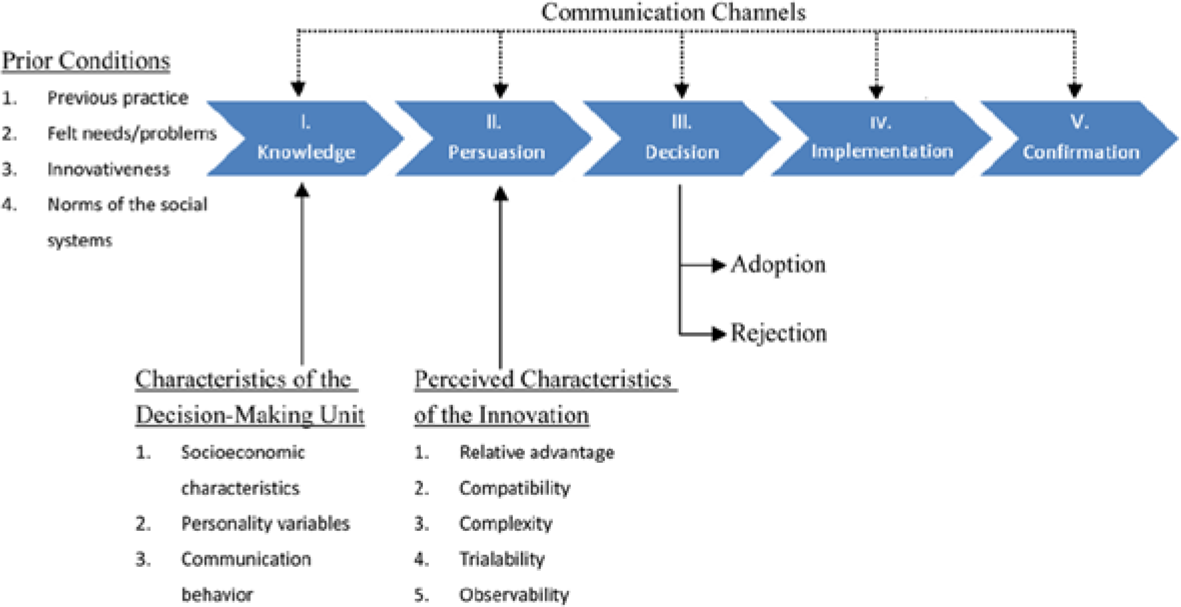
Conceptual framework of Rogers’ (1995) DOI model.
Conceptual Framework
We examine learner perceptions of e-learning effectiveness based on the DOI model, which has been widely applied to a range of disciplines, to describe how an innovation diffuses. Shea, Pickett, and Sau Li (2005) used the Rogers’ (1995) model to explore the adoption and diffusion of online teaching among 913 instructors in higher education. The DOI model has five stages, as shown in Figure 1, to illustrate the innovation decision process, including knowledge of the innovation, persuasion, decision, implementation, confirmation, and, in certain instances, reinvention (Rogers, 1995).
Before a potential user decides to adopt an innovation, which often occurs in the first two stages, the greater the perceived effectiveness (PE) of an innovation by a potential user, the more likely the user is to accept or adopt an innovation (Rogers, 1995). In the knowledge stage, Rogers (1995) suggested individual characteristics of the decision-making unit (DMU) and prior conditions (PCs) bear on whether an innovation continues to attract a potential adopter’s attention and interests, which leads to the next stage. Rogers stated that PCs may consist of previous practice, perceived requirements or problems, innovativeness, and the norms of the social systems experienced by the DMU; individual characteristics of the decision maker typically include socioeconomic characteristics, personality variables, and communication behaviors. In the persuasion stage, an individual forms a favorable or unfavorable attitude (AT) toward the innovation based on perceived innovation characteristics, such as relative advantages, compatibility, complexity, trialability, and observability (Rogers, 1995). The mental activities at the knowledge and persuasion stages further engage the decision maker to form a choice to adopt or reject the innovation primarily determined by the PE in his or her own situation, which moves the adoption process to the decision stage. Consequently, the PE of an innovation can be predicted from individual characteristics of DMUs, PCs, perceived characteristics of the innovation, and ATs toward the innovation based on the DOI model. This study applies these four constructs to examine their influences on learner perceptions of e-learning effectiveness.
When e-learning is considered the innovation, as in this case, the four variables affecting the perceived e-learning effectiveness include (a) prior contextual conditions related to e-learning development, such as the infrastructure, learning system (learning management system or courseware), Information and Communication Technology (ICT) literacy, incentives, learner supports, and reward systems (Anderson, 2002; Clark & Mayer, 2003; Hooper, 2008; Mudge, 1999; Rosenburg, 2001); (b) characteristics of e-learning, such as openness, flexibility, interactivity, learner-in-control, and alternative methods of knowledge sharing and skill acquisition (Ally, 2008; Burke & Gill, 2000; Clark & Mayer, 2003; Kapur & Stillman, 1997; Keller & Cernerud, 2002; Rosenburg, 2001; Scollin & Tello, 1999); (c) the potential adopters’ personal characteristics; and (d) their ATs toward e-learning innovation (Condie & Livingston, 2007; Keller & Cernerud, 2002; Newton, 2003; Wagner & Flannery, 2004; Wilson & Stacy, 2004). The dependent variable in our study is the construct of “perceived effectiveness of e-learning,” which is measured by probing e-learning effectiveness, satisfaction, and practical outcomes from the standpoint of learners targeted for the investigation. Based on the conceptual framework of DOI shown in Figure 1, this study formulates the following hypotheses:
Hypothesis 1: The learner perceptions of e-learning effectiveness are affected by perceived prior contextual conditions.
Hypothesis 2: The learner perceptions of e-learning effectiveness are affected by the perceived e-learning characteristics.
Hypothesis 3: The learner perceptions of e-learning effectiveness are affected by the learner’s AT toward e-learning.
Hypothesis 4: The learner perceptions of e-learning effectiveness are affected by the learner’s personal characteristics.
Method
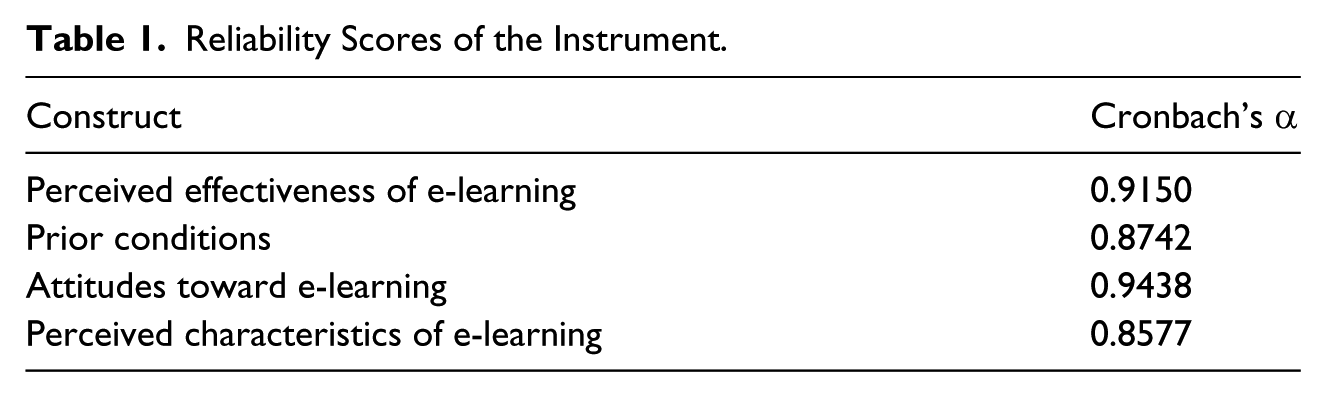
The operational definition of e-learning is any learning condition that uses Internet-based technologies as the primary instructional delivery mechanism or as supplements for other methods of instruction, such as classroom instruction. A purposive nonprobabilistic sampling method was used. Participants consisted of 220 Taiwanese civil agents attending training courses held by RCSDI who were asked to complete a self-administered, paper-based questionnaire. The questionnaire consisted of three sections. Section 1 included an assessment of learner perceptions of e-learning effectiveness and their ATs toward e-learning by using a semantic differential scale. In Section 2, respondents rated their opinions of PCs related to e-learning development and the perceived characteristics of e-learning by using a 6-point Likert-type scale. Section 3 collected demographic information, such as gender, age, marital status, educational level, and employment attributes. Five experts and practitioners from the fields of e-learning, human resource development (HRD), and civil training and development were invited to review the questionnaire items for content validity. Cronbach’s alpha values were also calculated to determine internal consistency and scale reliability. The results in Table 1 show that the alpha coefficients are considered high and satisfactory (all are above 0.85). This shows that items are homogeneous and reliably measure the construct dimensions (Hair, Anderson, Tatham, & Black, 1998).
Reliability Scores of the Instrument.
A total of 220 civil agents from different local government offices were included in our study. Following a review of the survey responses to ensure data correctness and completeness, an analysis was conducted using the Statistical Package for Social Sciences for Windows 15.0 (SPSS 15.0). The respondent profile represents men (58.5%) and women (41.5%). Marital status information shows that 84.9% of respondents were married at the time of the study. Respondents were grouped into the following age categories: 20 to 29 (4.5%), 30 to 39 (18.6%), 40 to 49 (41.8%), 50 to 59 (29.5%), and 60 to 69 years (5.5%). Educational level information indicates that 66.8% of respondents have a bachelor’s degree, 27.3% of respondents have a master’s degree, and 5.5% have a doctoral degree. Job titles indicate that 93% of respondents work as office staff, 4.2% work for public schools, and 2.8% work for government-owned institutions.
For further data analysis, descriptive statistics, nonparametric binominal tests, and different regression methods were used. The results of the nonparametric binominal test aid in understanding to what extent a prior contextual condition is advantageous to e-learning development and whether e-learning has a competitive advantage in innovative characteristics. A simple regression was performed to test each of the first three hypotheses and a multiple regression was conducted to examine Hypothesis 4. To include categorical variables, such as gender or job title, for analysis, a set of dummy variables was created (Hair et al., 1998). Multicollinearity among independent variables is considered problematic because it may reduce the predictive power of any single independent variable (Hair et al., 1998). To determine whether multicollinearity exists, tolerance values or variance inflation factors (VIFs) are frequently used. The presence of any of the following results indicates a serious multicollinearity problem of predictors: (a) if the largest VIF value exceeds 5 (Snee, 1973) or 10 (Neter, Wasserman, & Kutner, 1985) or (b) if the tolerance values are less than .20. The relevant checks returned VIFs below five (from 1 to 3.120) and a tolerance value above .20 (from 0.321 to 1.000), which showed no serious multicollinearity.
Results
Descriptive Analyses
Mean and standard deviation scores were calculated to determine learner perceptions of e-learning effectiveness and ATs toward e-learning. The results are shown in Table 2.
Descriptive Analyses of Perceived Effectiveness and Attitudes (N = 220).
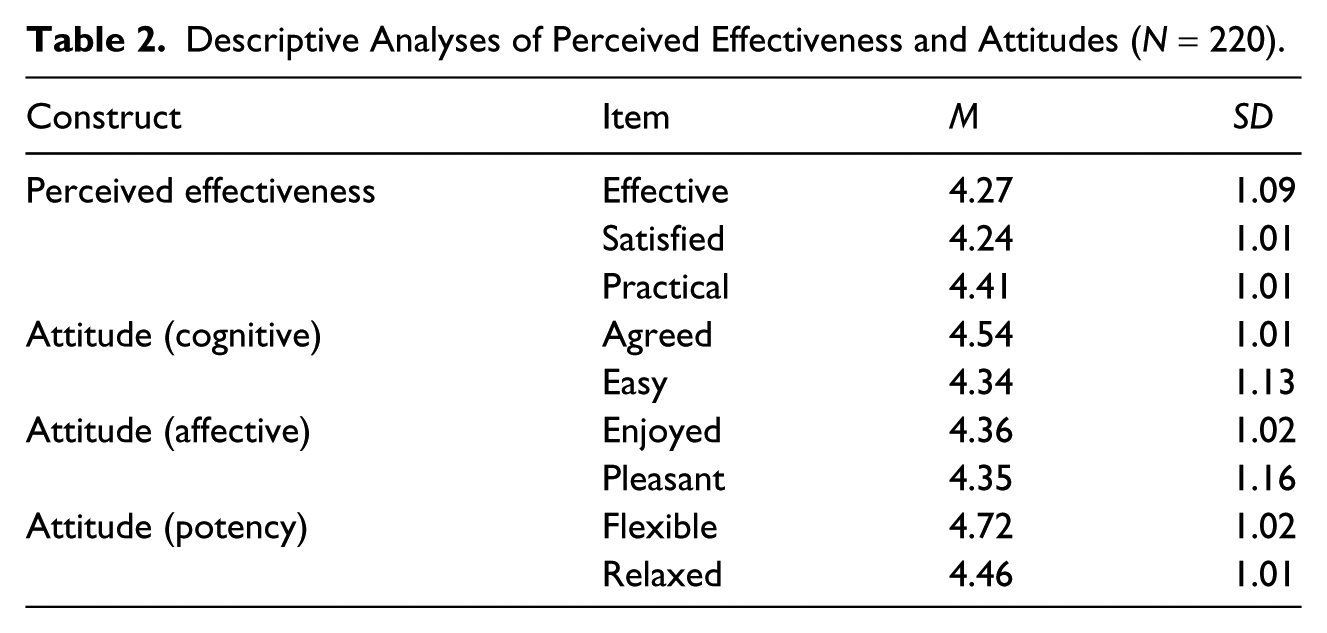
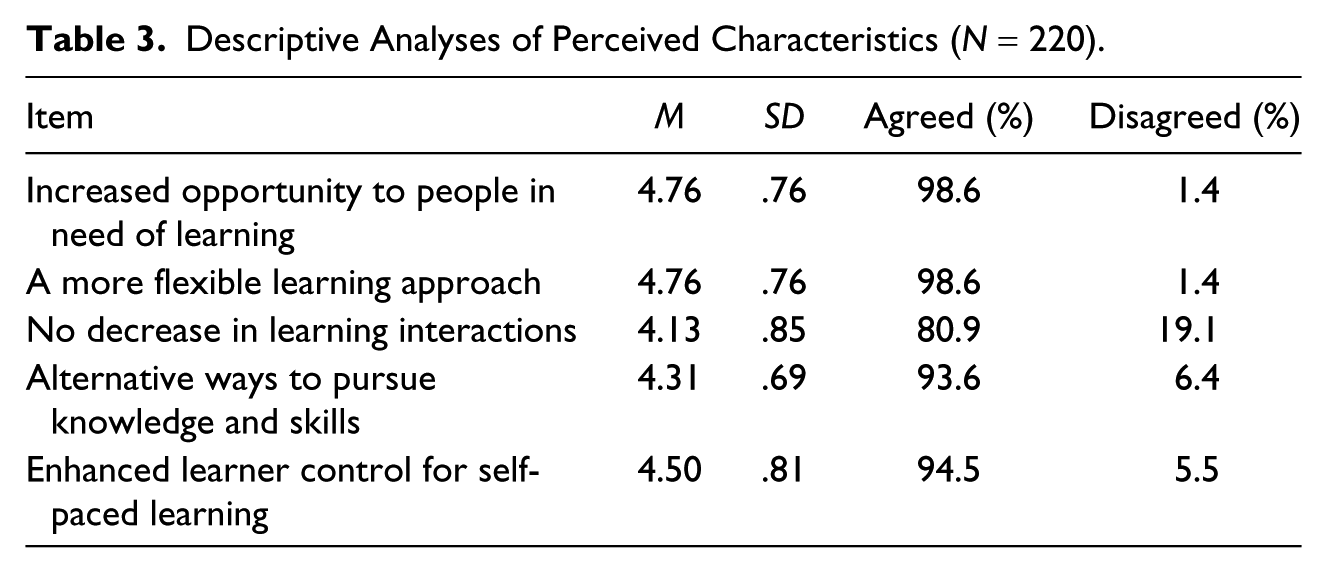
According to the average mean values in Table 2 (3.5 and higher), for each variable, respondents possess a positive viewpoint toward e-learning in PE and AT. A descriptive analysis of the perceived characteristics of e-learning and PCs within these two constructs is shown in Tables 3 and 4, respectively.
Descriptive Analyses of Perceived Characteristics (N = 220).
Descriptive Analyses of Prior Conditions (N = 220).
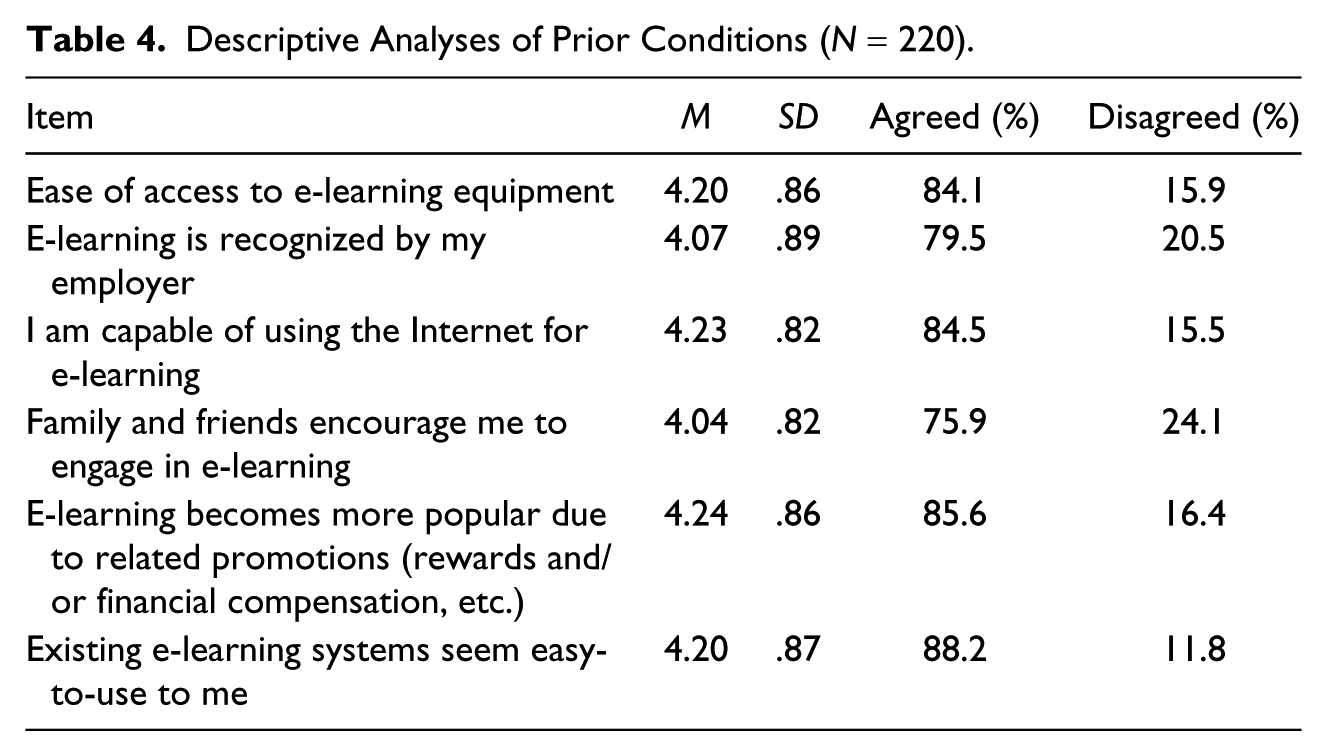
According to the analysis of perceived characteristics, respondents agree that innovative characteristics (ICs) are embedded in e-learning, such as relative advantages, compatibility, and observability, indicating that attributes of openness and flexibility unique to e-learning are perceived. Table 3 shows similar results to previous research on the advantages of e-learning in the workplace context (Benson, 2004; Lee, Hsieh, & Hsu, 2011; Newton, 2003). Specifically, the most recognized e-learning features by workplace adult learners consist of increased learning opportunities and flexible learning approaches resulting from the study analysis. In addition, PC analysis shows that the existence of contextual factors is beneficial to e-learning development. Staff viewed the incentives and personal capabilities of e-learning use as a critical precondition for its success in the workplace. The results from the binomial analyses further performed to examine the difference between groups with similar and differing opinions show that significant differences exist. This demonstrates that learners significantly agree with these ICs and conditions on e-learning.
Relationship Analyses
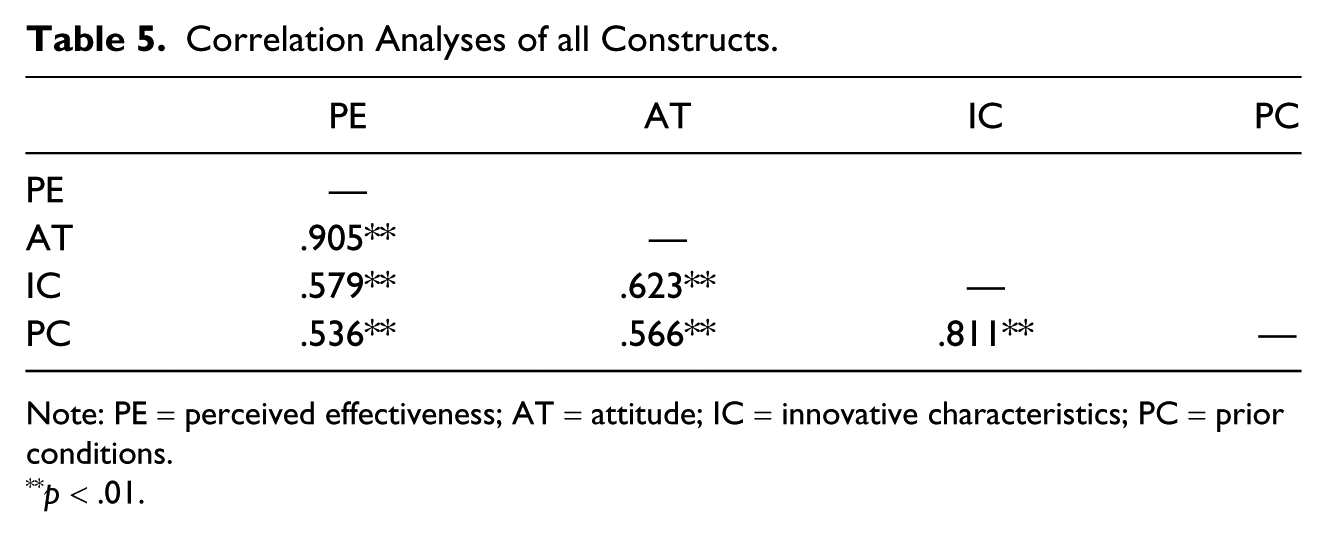
A Pearson correlation was conducted to examine the relationships among the constructs shown in Table 5.
Correlation Analyses of all Constructs.
Note: PE = perceived effectiveness; AT = attitude; IC = innovative characteristics; PC = prior conditions.
p < .01.
Statistical evidence shows that significant correlations exist between learner perceptions of e-learning effectiveness and the three construct variables, including ATs toward e-learning, perceived characteristics of e-learning, and PCs related to e-learning development. In particular, PE has the highest positive correlation to ATs (γ = .905). This confirms what Rogers (1995) contended, that both learner PE and ATs belong to a decision maker during the innovation adoption process. Although the construct of PE is more cognitive-oriented, the AT at the persuasion function is more affective-oriented.
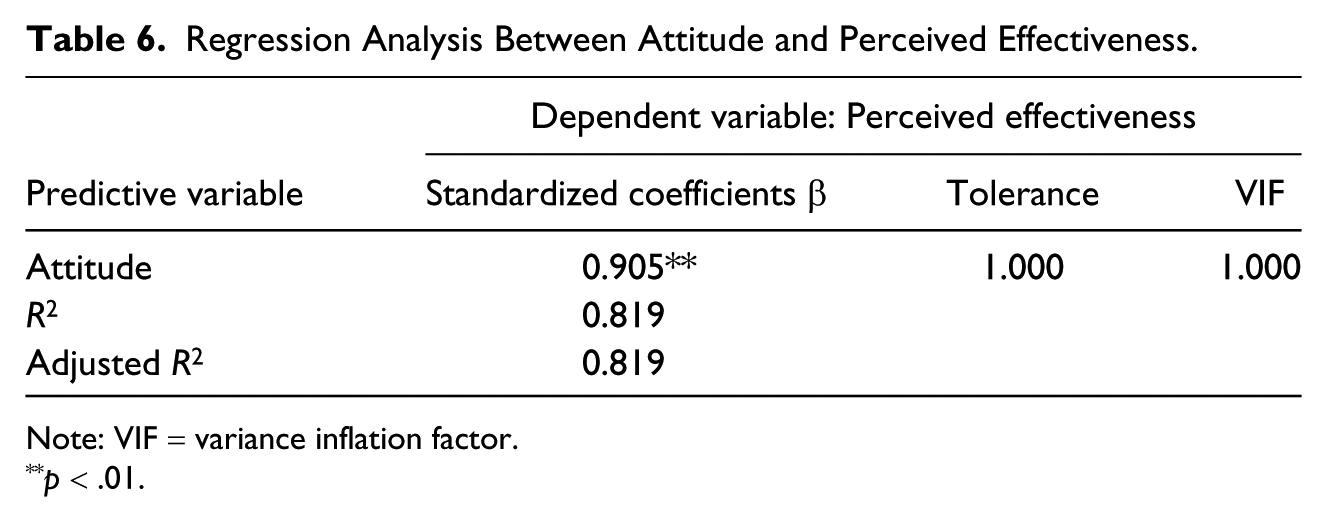
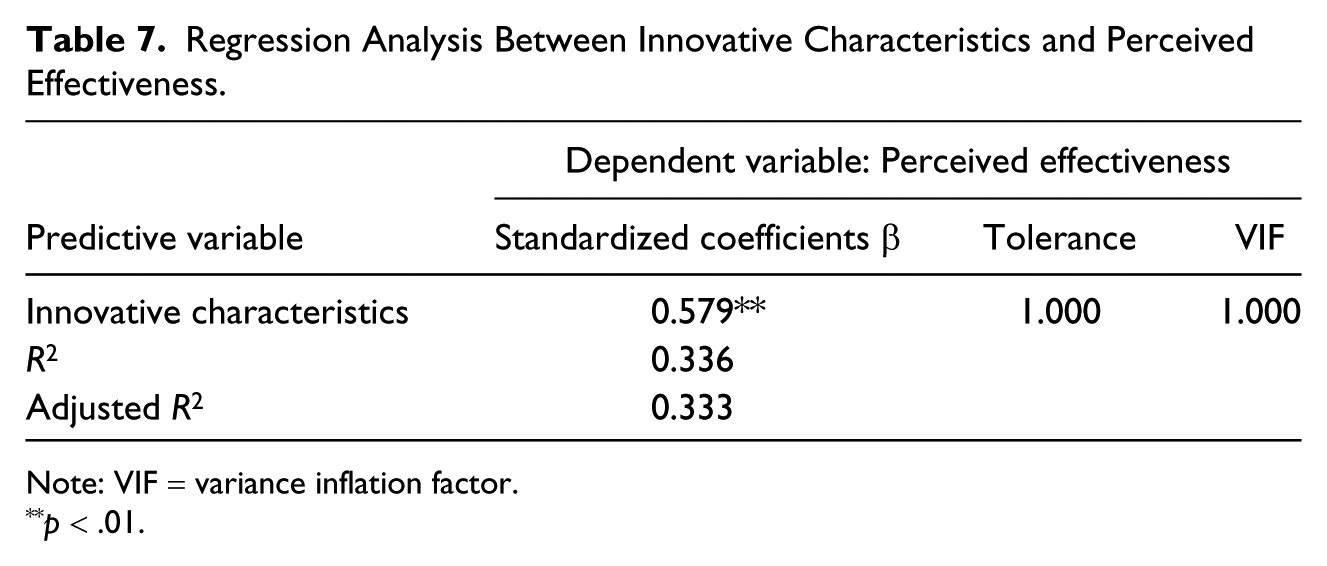
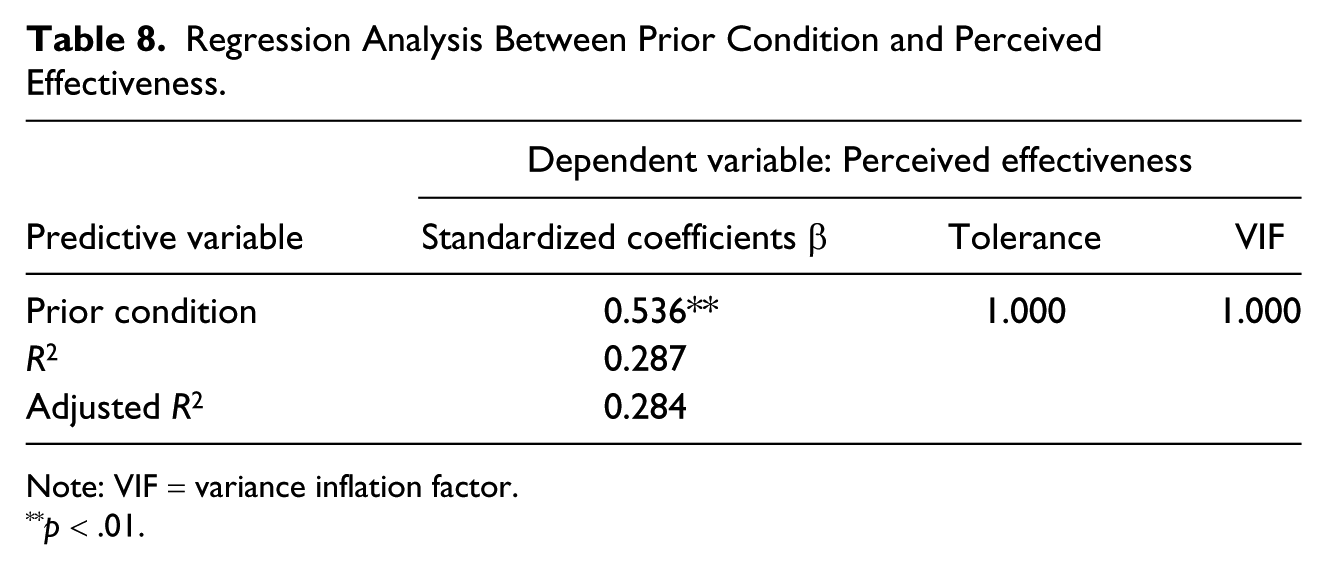
The results from simple regression analyses performed among the constructs of PE, ATs, ICs, and PCs are shown in Tables 6 to 8, respectively. The results show the confirmation of the interactions between PE of e-learning and prior contextual conditions, characteristics of e-learning, and ATs toward e-learning, signifying that all four hypotheses are supported.
Regression Analysis Between Attitude and Perceived Effectiveness.
Note: VIF = variance inflation factor.
p < .01.
Regression Analysis Between Innovative Characteristics and Perceived Effectiveness.
Note: VIF = variance inflation factor.
p < .01.
Regression Analysis Between Prior Condition and Perceived Effectiveness.
Note: VIF = variance inflation factor.
p < .01.
The results on Table 6 show that learner ATs toward e-learning contribute significantly to his or her perceptions of e-learning effectiveness, F(1, 218) = 988.875, p < .01, and predict 81.9% variation in learner PE of e-learning. Similarly, as shown in Tables 7 and 8, learner-perceived characteristics of e-learning contribute significantly to his or her perceptions of e-learning effectiveness, F(1, 218) = 110.206, p < .01, and predict 33.3% variation in learner perceptions of e-learning effectiveness. The construct of PCs related to e-learning development also contributes significantly to learner perceptions of e-learning effectiveness, F(1, 218) = 87.810, p < .01, and predicts 28.4% variation in learner perceptions of e-learning effectiveness.
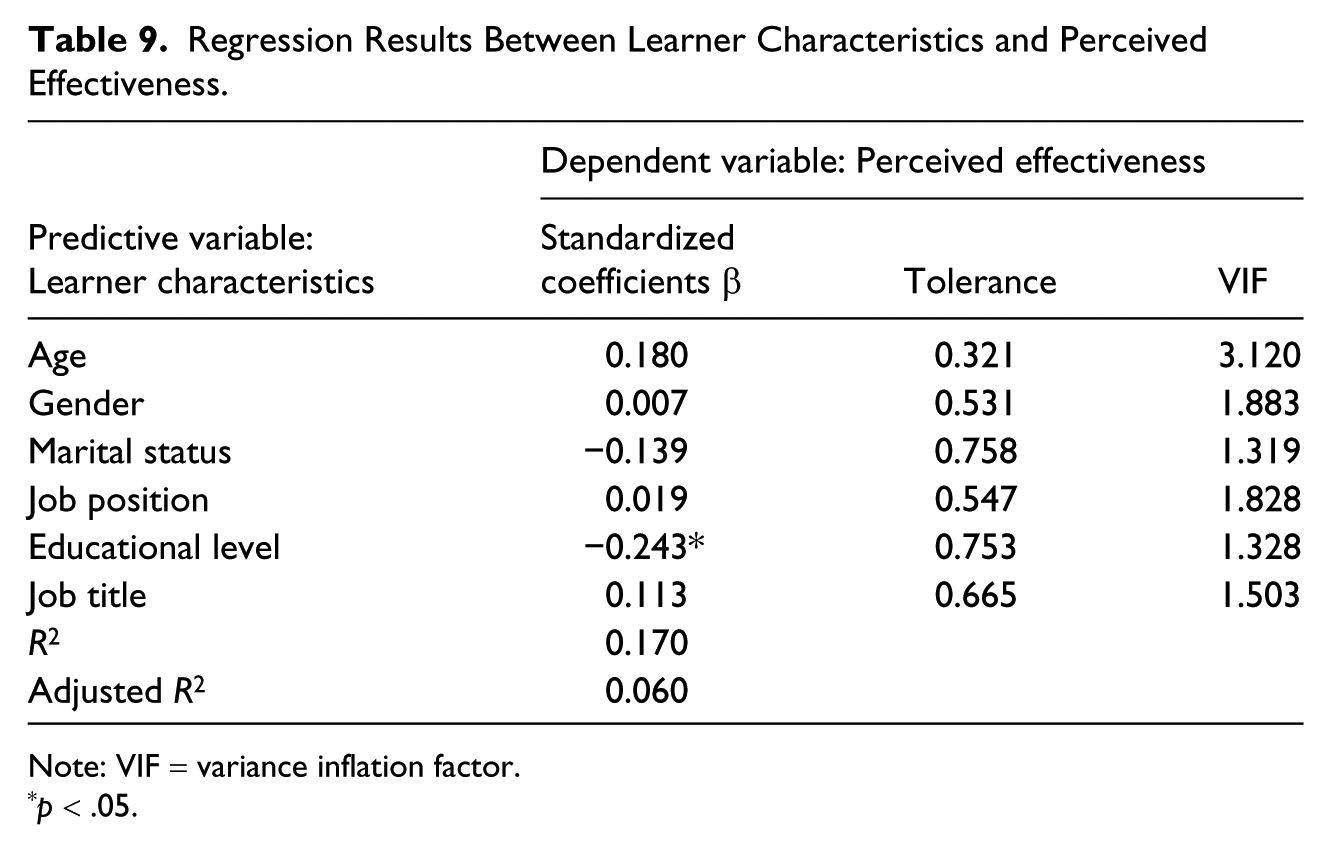
Table 9 shows a summary of the results of multiple regression analysis, which was conducted to evaluate the construct influences of learner characteristics on his or her perceptions of e-learning effectiveness.
Regression Results Between Learner Characteristics and Perceived Effectiveness.
Note: VIF = variance inflation factor.
p < .05.
The analysis shows that F(17, 128) = 1.547 is significant at p = .089 < .1, showing one significant predictor. An adjusted R2 value of 0.06 indicates that the model can explain approximately 6% of the variance in learner perceptions of e-learning effectiveness predicted by the construct of learner characteristics. The results show that educational level is a key factor influencing learner-perceived e-learning effectiveness. Adult learners employed in local governments with lower educational levels show a more positive perception of e-learning effectiveness. The degree of education has a significant effect on staff perceptions of e-learning effectiveness; as educational levels increase, perceived e-learning effectiveness decreases.
In conclusion, all the construct variables proposed by the DOI model have been confirmed as significant predictors influencing the perceived e-learning effectiveness of adult learners in a workplace context. This finding reinforces the theoretical explanation of DOI that effectiveness of RCSDI e-learning innovation can be systematically explained by the framework, in which factors pertaining to e-learning characteristics, the social system of RCSDI where e-learning is diffused, and ATs toward e-learning and personal attributes of trainees RCSDI targets are necessarily considered. Consequently, this study contributes to the broader results on e-learning innovation and diffusion by studying local government staff and analyzing learner perceptions.
Discussion and Conclusion
The primary goal of this study was to understand adult learner perceptions of e-learning effectiveness in a workplace context. Based on the DOI model, we also identified contributing factors that influence perceived e-learning effectiveness of adult learners. The survey results of 220 civil agents working in different local government offices indicate that learners perceive e-learning as effective, practical, and satisfying, regardless of variance in age, gender, marital status, and job attributes. The application of e-learning is considered effective as traditional face-to-face learning in studies primarily conducted within the context of higher education (Gueverra, 2007; Hughes & Attwell, 2003; Sitzmann et al., 2006). Our study further supports its effectiveness in the context of workplace learning based on an examination of adult learner perceptions and ATs toward e-learning. Local government staff had positive responses to e-learning when using it for professional development. Because of the large local government staff in Taiwan, e-learning enables greater access to training resources for certain civil agents. Consequently, the use of e-learning as a strategy by the RCSDI to improve the status quo of on-site training appears to be a correct attempt and is worthy of continual pursuit.
The highest agreement of e-learning characteristics among respondents includes an “increased learning opportunity to people in need” and a “more flexible learning approach.” When a government agent thinks that e-learning is a more flexible learning opportunity alternative to training and other professional development approaches in the workplace, it is critical for the RCSDI to effectively manage its e-Learning Center to ensure the quality of this type of learning experience and maintain the effectiveness of e-learning. Legal, managerial, and interface issues regarding use of e-learning to promote continuous professional development in either the RCSDI or the public sector in Taiwan will require further research. The results show that a lifelong learning government system and society is crucial in an era of the knowledge economy. Public continuous investment is therefore a required condition for enabling e-learning to promote governmental lifelong learning. The results corroborate the findings of similar research on perceived e-learning effectiveness of employees from public and private sectors (Lee et al., 2011). Considering that the present study is based on local government staff in Taiwan, it is necessary to conduct further significant studies beyond the scope of the public sector for extensive generalizations.
Although the evidence of this study confirms e-learning effectiveness in the workplace, further research on determining the proper position for e-learning within staff development is necessary. Local government staff consider this case of RCSDI e-learning as an alternative approach in professional development and consider it partly related to meeting the 40 mandatory lifelong learning hours required for every civil agent. Because training practitioners are keen to integrate e-learning in HRD programs (DeRouin, Fritzsche, & Salas, 2005), greater efforts are required to probe into how they can appropriately adjust and use it at the functional level, such as blended, synchronous, asynchronous, or community of practice, to groom employees for various jobs. Similarly, it is important to continue to study the effects of e-learning initiatives on professional development in organizations, to determine the extent to which staff can advance their competence or careers by participating in e-learning. The dearth of e-learning research at the behavioral level of training has resulted in insufficient conclusive evidence to support long-term effectiveness of e-learning initiatives in staff development. Learner perceptions may change over time when they gain more experience in e-learning use. Therefore, longitudinal studies are recommended to document and analyze the effects of specific types of e-learning on changing employee skills or knowledge acquisition. Longitudinal research is also beneficial in evaluating the validity of the DOI model and findings.
In examining the influence of ATs toward e-learning, perceived characteristics of e-learning, PCs related to e-learning development, and individual learner characteristics on perceived e-learning effectiveness, all four construct variables are positively related to PE, as shown by the DOI model (Rogers, 1995). Although the predictor variables are confirmed to affect learner PE of e-learning, the personal background variable appears to be the least influential relative to the other three variables in the study. In summary, whereas adult e-learners recognize e-learning as an effective approach to pursue professional development, its effectiveness relies more on user ATs, e-learning characteristics, and PCs of pursuing e-learning rather than personal attributes. The decision to implement e-learning in staff development should thus be made after considering all these issues. This is a challenge in HRD policy in the public sector. The outcome of this study can provide valuable information, as shown in the analyses of individual and contextual constructs, when developing strategies to diffuse e-learning innovations with specific consideration to learner perceptions. However, the present study target is limited to local government, and future research is required to determine which workplace context this particular type of self-directed e-learning system may suit best. Similar analyses are suggested to examine how these factors, deriving from the DOI model, can explain learner perceptions of e-learning effectiveness.
Footnotes
Declaration of Conflicting Interests
The author(s) declared no potential conflicts of interest with respect to the research, authorship, and/or publication of this article.
Funding
The author(s) received no financial support for the research, authorship, and/or publication of this article.