



Abstract
The purpose of this study was to examine the variables impacting on whistle-blowing intentions in the public services of two developing countries, South Africa and Mauritius. In particular, this study considers the barriers to whistle-blowing and the effect of demographic and cultural values on the perceptions of these barriers. The study finds major differences between South Africa and Mauritius with minor differences in regard to gender and education.
Introduction
First coined in the 1970s (Near & Miceli, 1985), the term whistle-blowing became accepted over the years by a range of authors (Dworkin & Near, 1997; Near & Miceli, 1985, 1996). Whistle-blowing is generally defined as “The disclosure by organisational members (ex- or current) of immoral, illegal and illegitimate practices under the control of their employers to persons and organisations that may be able to effect action” (Near & Miceli, 1985, p. 4). Whistle-blowing can therefore be considered a key tool for fighting corruption, thereby encouraging good governance, accountability, and transparency in the public sector. This imperative, for “principled disclosure of wrongdoing,” which is sometimes considered as an act of loyalty (Uys, 2004) to the organization and in the public interest, contributes to an effective whistle-blowing culture.
Mauritius and South Africa are interesting case studies for public service whistle-blowing due to their contextual factors. Both African countries are former British colonies and have inherited a similar administrative system, heavily influenced by the British colonial model. From a governance perspective, Mauritius stands out as a case of “model democracy.” South Africa, on the other hand, was able to move from one of the world’s most repressive societies into a democracy through a peaceful transition, which is one of the most remarkable success stories of the 20th century (Pillay, 2004, 2008; Samaratunge & Pillay, 2011). Yet South Africa still suffers from high levels of crime, with concerns about accountability, sustainable growth, and corruption (Lewis & Uys, 2007).
Objectives of the Study
Although there is a wealth of research suggesting that effective whistle-blowing combats corruption (De Maria, 2008; Hwang, Staley, Chen, & Lan, 2008; MacNab et al., 2007), there is a dearth of literature on factors moderating people’s intentions to blow the whistle, particularly in developing countries. The purpose of this study, therefore, was to examine barriers that influence people’s intention to blow the whistle in an African public service context. There is a dearth of studies dealing with whistle-blowing within African contexts (Pillay & Dorasamy, 2011; Pillay, Dorasamy, & Vranic, 2012; Uys, 2008); therefore, this study attempts to add further insights into the investigation of factors influencing whistle-blowing intentions. Responses for South Africa and Mauritius allow for the examination of certain factors which affect intentions, not previously attempted in African Studies.
The whistle-blowing literature makes reference to the probability that an individual will choose to blow the whistle under certain circumstances (Zhang, Chiu & Wei, 2009a), which then involves investigating to a large extent, the subject of ethics. An individual’s conception of ethics is a necessary precursor to one’s decision to whistle-blow or not. Therefore, a basic driving force to an individual’s intention to whistle-blow is an individual’s values and ethical standards (Elango, Paul, Kundu, & Paudel, 2010). A prominent theoretical tool investigating intentions and behavior is that of Ajzen’s (1991) Theory of Planned Behavior (TPB). Ajzen’s theory is widely accepted as a tool to examine the relationship between intention and behavior. According the TPB, intention to carry out behavior is influenced by three factors: attitude, beliefs, and perceived behavioral control (Park & Blenkinsopp, 2009). We were interested in exploring certain dynamics which we refer to as barriers that may shape employees’ intentions. These dynamics include attitude to whistle-blowing including morality and ethics, cultural reluctances to whistle-blowing, fear of retaliation, and confidence in the organization system, cultural values, and demographical influences. These dynamics are integral components to a person’s reasoning about their intention to blow the whistle or not. Given the relationship between attitude and intention, people who judge an action to be ethical are more likely to intend to perform that action. In fact, literature on ethical decision making models proposes that intention moderates the relationship between judgment and behavior. Therefore, intention will be an important antecedent in the decision-making process. However, given that intention comprised of many tension points, an individual’s intention will be influenced by many variables, as examined in this study. Research suggests that such variables described in this study have had similar effects in different countries, despite differences in cultural and social settings. This framework has been successfully trialed by Hwang et al. (2008).
To address the above objective, our study provides quantitative evidence of perceptual data on barriers to whistle-blowing in two developing countries. The only other study on whistle-blowing undertaken in South Africa (Uys, 2004, 2005, 2008, 2011) has confirmed that South African whistle-blowers risk significant retaliation. In narrative interviews, all 18 whistle-blower respondents in the Uys study reported having experienced various forms of victimization from their employer, including loss of work and inability to find new employment.
To date, the individual antecedents for whistle-blowing studied in the literature include role responsibility (Miceli & Near, 2002), status in organization (Brewer & Seiden, 1998), education (Mesmer-Magnus & Viswesvaran, 2005), gender (Sims & Keenan, 1998), age (Zhang, Chiu, & Wei, 2009a, 2009b), tenure (Dworkin & Baucus, 1998), attachment and satisfaction with job (Brewer & Seiden, 1998), personal morality (Keenan, 2000), emotions (Henik, 2008), locus of control (Miceli & Near, 1992), culture (Tavakoli, Keenan, & Crrijak-Karanovic, 2003), religion (Barnett, Bass, & Brown, 1996), and fear of retaliation (Keenan, 1995). The individual antecedents are supported by situational antecedents such as perceived support (King, 1997), organizational justice/climate (Goldman, 2001; Seifert, 2006), organizational values/culture (Rothwell & Baldwin, 2007; Zhang et al., 2009a), severity of wrongdoing (Lee, Heilmann, & Near, 2004), and ethics programs (Jackson, 2000). However, there has been a lack of empirical linkages with whistle-blowing intentions and situational and individual antecedents within the context of developing countries such as South Africa and Mauritius. Using an adapted version of the survey instrument developed by Hwang et al. (2008), we examine the perceptions of participants toward whistle-blowing. Although there is a rich body of literature on such individual and situational antecedents, there appears to be a dearth of empirical findings in contextually rich environments.
South Africa and Mauritius
The critical question for South Africa and Mauritius is how to manage and sustain good governance that translates into sustainable well-being for their people. Although both countries are rich in certain resources (natural and human resources), there appears no obvious technical solutions for their governance problems. Currently, Mauritius and South Africa are facing significant opportunities for sustained economic growth and poverty reduction. Both have a history of underachievement relative to their potential, so success is not guaranteed. The 2014 corruption perception index (CPI) states that Mauritius stands at 47 and South Africa at 67, with 1 being the least corrupt and 174 being the most corrupt (www.transparency.org/research/cpi/overview). But a comparison of the two countries reveals what needs to be done—strengthening the accountability of government officials—so that these two nations can seize opportunities and embark on a period of rapid economic growth and poverty reduction.
Economic and political developments in Mauritius have had some impact on practices within the public sector. As observed by Callikan (2007), there has been a rise in corruption since independence. Findings in a recent study (Callikan, 2007) on the perception of corruption in Mauritius, involving a representative sample of 500 people, revealed that the police services, customs department, and the National Transport Authority (NTA) are among the most corrupt organizations in Mauritius. These organizations are part of the public sector and, to remain competitive, the private sector has had to use corruption to overcome the administrative delays caused by these organizations.
Corruption, in the political, economic, social, and legal spheres is also evident in a post-apartheid South Africa (Pillay & Kluvers, 2014). Secrecy, collusion, lack of enforcement of disciplinary measures, lack of commitment to public service, and unethical behavior are commonly considered as contributory factors to corruption (Mafunisa, 2008, p. 16). This invariably involves loss of moral authority, increased opportunities for organized crime, higher taxpayer burdens, and weakened political decisions, which lead to inefficient use of public resources and poor service delivery (Caiden, 1979, p. 295, in Mafunisa, 2008, p. 16; Chene, 2009). Although democratization has made government less secretive, many argue that the present extent of corruption is largely inherited and certain former government departments, like those concerned with security and homelands, have a culture of corrupt activities which goes back to the apartheid years. However, new avenues for corruption, associated with new sources of public finance and political affiliations, have emerged in the post-apartheid years, including non-meritocratic processes of bureaucratic recruitment and promotion, unfair tendering processes and inadequate training (Dorasamy, 2010). South Africa’s susceptibility to corruption is exacerbated by administrative decentralization and the importation of results-oriented business principles into public administration (Dorasamy, 2010). In a post-apartheid South Africa, the real citadels of corruption are found in certain government departments such as the South African Police Service and the Department of Justice (Dorasamy, 2010; Pillay, 2004).
South Africa and Mauritius, both developing democracies, have been selected for examination because, first, they share a similar history. Through the influence of colonialism, these countries inherited legislation and practices, largely from the British. Second, the concepts of ethical practice and good governance are particularly important in these countries because corruption is still prevalent. The countries, both being Republics, are similar in that public administration bodies are well established and that governance bodies have codes of conduct based largely on the pronouncements of the constitution. The prevalence of corruption in the public sectors of both Mauritius and South Africa make the investigation of whistle-blowing intentions among public servants of particular interest and importance. Despite its importance, especially in the context of developing countries, very little attention has been paid to whistle-blowing intentions. In the case of South Africa, the South African government’s fight against corruption only commenced in 1997 (Pillay, 2014). An anti-corruption conference in 1998, and a subsequent anti-corruption summit in 1999, led to the establishment of practices of blacklisting, and protection of whistle-blowers through the introduction of legislation. Despite such attempts, capacity requirements to protect the whistle-blower were neglected. The national Anti-Corruption Forum lacked significant legal authority and was not allocated resources to operate effectively. In addition, cases were reported (Webb, 2010) of policies formulated at Head Office level that did not reach ground level. Often, public officials were afraid to blow the whistle on corrupt activities, for fear of reprisal and lack of trust in management. As such, whistle-blowing was ineffective as officials did not believe that reports would be kept confidential and that whistle-blowers would be protected from victimization (Webb, 2010).
This article argues that whistle-blowing intentions vary in terms of their intensity and that a model illuminating contingency variables can add significantly to the understanding of whistle-blowing intentions. Based on previous research, we attempt to build a nomological set of constructs and theory which can be empirically validated and tested in future studies. The validity of the constructs is based on content, context, and empirical analogy. The article advances and discusses general measures related to whistle-blowing.
In this article, as is often the case in research, only perceptions regarding intentions can be examined, rather than actual behavior. In particular, we focus on the perceptions regarding barriers to whistle-blowing.
Barriers
There is growing research consensus on the relevance of barriers to whistle-blowing such as morality and ethics, culture, retaliation, and confidence in systems (Barnett et al., 1996; Bouville, 2008; Chiu, 2003; Ford, 2010; MacNab et al., 2007; Rothwell & Baldwin, 2006).
Morality and ethics
For example, Hwang et al. (2008) and Chiu (2002, 2003) reported that the top two barriers to whistle-blowing intentions in China are morality and ethics. Hwang et al. (2008), in their study of professional accountants in China, identified professional ethics, personal morality, and obedience to organizational policy as the most influential barriers for whistle-blowing intentions. With specific regard to morality, in a study of adult college students, Sims and Keenan (1998) reported similar findings, and 2 years later, Keenan (2000) offered additional evidence for a relationship between moral perceptions of managers at all levels, and the likelihood of blowing the whistle. Moral decisions may be described as actions or decisions which have consequences for others or choices (Jones, 1991). Many decisions are moral decisions because often they have consequences for others. One’s sense of ethics may be regarded as the foundation to barriers to whistle-blowing behavior. A classic example would involve a person witnessing an act of wrongdoing which has harmful implications for the organization and society. This person’s intentions to blow the whistle will be influenced by their sense of what is right or wrong. In this study, the attitudinal variables form the construct “Morality and Ethics,” which are evident at both individual and organizational levels.
In line with Hunt and Vitell’s (1986) theory on ethics, we maintain that an individual’s morality and ethics influences their perceptions around whistle-blowing barriers, alternatives, and consequences.
Cultural reluctances
Cultural dimensions play a significant role in studying intentions (Sims & Keenan, 1999). This dimension specifies how threatened a society will be by uncertain/ambiguous contexts and the degree to which it will attempt to evade these situations, being “intolerant to unusual ideas or behaviours, a belief in absolute truths, and a high degree of uncomfortableness with unclear rules or procedures” according to Hofstede, Hofstede & Minkov (2010, p. 187-190). Cross-cultural research suggests that high uncertainty avoidance cultures are more likely to experience stronger barriers to whistle-blow (MacNab et al., 2007; Sims & Keenan, 1999; Tavakoli et al., 2003; Weaver, 2001).
Often, Eiffel tower type hierarchies in developing countries, such as those found in South Africa and Mauritius, have many layers of management signaling high levels of power distance. Contact between management and employee must be initiated by management. Such hierarchies also imply increased unequal levels of status and authority. It is often expected that employees will expect not to be consulted in matters of governance. High levels of power distance may also increase barriers to blow the whistle. High levels of power distance and uncertainty avoidance have also been associated with high levels of collectivism. It has also been maintained by cultural theorists, such as Hofstede (1980) and Hofstede et al. (2010), that countries experiencing high levels of bureaucracy also witness time being used inefficiently. In such contexts, cases of disclosure may be long and protracted.
Fear of retaliation
The literature suggests that potential whistle-blowers, who have a fear of media and attention or a fear of retaliation by the organization, immediate supervisors, or co-workers, are much less likely to be whistle-blowers than employees who do not perceive a retaliatory environment (Hwang et al., 2008; Keenan, 1995; King, 1999; Near & Miceli, 1996).
Level of confidence in organizational systems
The next measure is related to the level of confidence in organizational systems to detect and deal with wrongdoing (De Maria, 2008). The philosophies and practices of senior managers, as well as supervisors, represent a critical factor toward barriers. Much of the research cited in whistle-blowing literature, implicitly or explicitly, alludes to confidence in organizational systems contributing toward whistle-blowing barriers (Apaza & Chang, 2011; Bjørkelo, Einarsen, & Matthiesen, 2010; Callahan & Collins, 1992; Chiu, 2003; Hunton & Rose, 2011; Kaptein, 2011, 2011; Lewis, 2011; Teo & Caspersz, 2011; Waples & Culbertson, 2011). This includes employees’ willingness and intentions to whistle-blow depending on how approachable and responsive they perceive their senior managers and supervisors to be. Confidence in organizational systems is also influenced by “context favorability” (Ashford, Rothbard, Piderit, & Dutton, 1998; Dutton et al., 2001). A favorable context is described as a context where employees’ senior managers and supervisors are willing to listen, having a strong internal control and legal system, how supportive the culture is perceived to be, and the low levels of uncertainty and fear of negative consequences. Research also suggests that employees may not intend to blow the whistle if they perceive the organizational system to be unfavorable (Ashford et al., 1998; Dutton, Ashford, O’Neill, Hays, & Wierba, 1997).
We argue that the strength of barriers to whistle-blowing can be measured in terms of morality and ethics, cultural reluctance, fear of retaliation, and confidence in organizational systems. This provides our first hypothesis:
Organizational Cultural Values
Organizational cultural values may be described as aspects of culture which represent the implicitly or explicitly shared ideas about what is desirable within that organization. These cultural values form the bases for norms that guide people about what is appropriate in various situations. A comprehensive literature review of whistle-blowing antecedents confirmed that perceptions toward cultural values are related to whistle-blowing barriers (Huang, 2011; Kaptein, 2011; Taylor & Curtis, 2010; Truelson, 1989). There is a wealth of research associating culture and value dimensions with behavior. For instance, Hofstede (1980) and Hofstede et al. (2010) reviewed studies that revealed significant links between cultural dimensions and attitudes, values, and behaviors. Although cross-cultural studies explore value dimensions and associations between cultural values and behavior (Berry, 2004; Sagiv & Schwartz, 2000; Smith, Dugan, & Trompenaars, 1996), there is a dearth of studies that adequately test systematic and theoretically grounded relations between cultural values and behaviors within a developing context. We theorize that the collective values and confidence conveyed in an organization (Miceli & Near, 1985, 1988; Rothschild & Miethe, 1999; Seifert, 2006; Sims & Keenan, 1998; Treviño & Youngblood, 1990) contribute toward whistle-blowing barriers within that organization. We choose to focus on Schwartz’s (Schwartz, 1994, 1999; Schwartz & Ros, 1995; Schwartz & Sagie, 2000) value dimensions, which we summarize through the following variables: “In the organization where I work, we are encouraged to have a genuine concern for everyone’s welfare” (egalitarianism); “In the organization where I work, we are encouraged to preserve our social world” (conservatism or embeddedness); “In the organization where I work, an individual’s capability is highly valued” (intellectual autonomy); “In the organization where I work, individuals are encouraged to have an enjoyable and exciting life” (harmony); and “In the organization where I work, we are encouraged to respect obligations and rules” (conservatism or embeddedness). Schwartz’s dimensions have been validated in a study of 60,000 individuals in 63 countries. To illustrate our line of reasoning, egalitarianism may be described as the belief that everyone in an organization is equal in worth and should be therefore treated equally. This belief in turn expresses an organization’s cultural values with respect to intolerance for abuses of power and malfeasant behavior. One can expect in an Eiffel Tower type culture or high power distance culture that many employees will consult with their superiors and expect and accept that rules are to be respected rather than questioned. Intellectual autonomy is described as an individual’s desire to pursue their own ideas and directions independently. An organizational culture that encourages high levels of intellectual autonomy is one where whistle-blowing intentions will most likely be high. Harmony reflects the way an organization enforces necessary consideration for the welfare of employees and coordination with them in the course of coping with interdependencies, such as enjoying a favorable organizational context as described earlier.
We maintain in our second hypothesis that cultural values can be linked to whistle-blowing barriers.
Demographical Influences
Previous studies suggest that several demographic factors might be expected to be associated with the likelihood of blowing the whistle. Little research has been conducted on gender-related influences on whistle-blowing, though there is some preliminary evidence to suggest that men are more likely than women to blow the whistle (Miceli & Near, 1988). Some studies indicate that age is a determining factor in that older managers are expected to have stronger commitments and more loyalty to their organizations than younger managers (Sims & Keenan, 1998). The general assumption is that older managers have a greater understanding of the formal and informal authority and control systems within their organizations. With this information, and greater clarity on how to deal with wrongdoing from an organizational perspective, they may face less ambiguity and uncertainty on appropriate response behavior compared with a newcomer (Sims & Keenan, 1998). Therefore, one would expect then that older managers would have fewer reservations on blowing the whistle than their younger counterparts. Prior research by Miceli and Near (1984, 1985, 1988, 1992, 2002) generally supports these conclusions. In addition to potential age and gender effects, higher levels of education might also be expected to be related to whistle-blowing. A highly qualified person may be more able to recognize and assess wrongdoing as well as perceive the appropriate lines of accountability for correcting such wrongdoing. Research in this area is inconclusive, although investigations by Graham (1986) suggest a potential link between education and whistle-blowing.
The final demographic variable considered in this study is country. The relatively high levels of perceived corruption described by Transparency Index for both South Africa and Mauritius may suggest that intentions to blow the whistle will be low in both these countries. This leads us to our final hypothesis.
Figure 1 draws the above hypotheses into the conceptual model that will be tested in this article.

Conceptual model.
Method
Sample
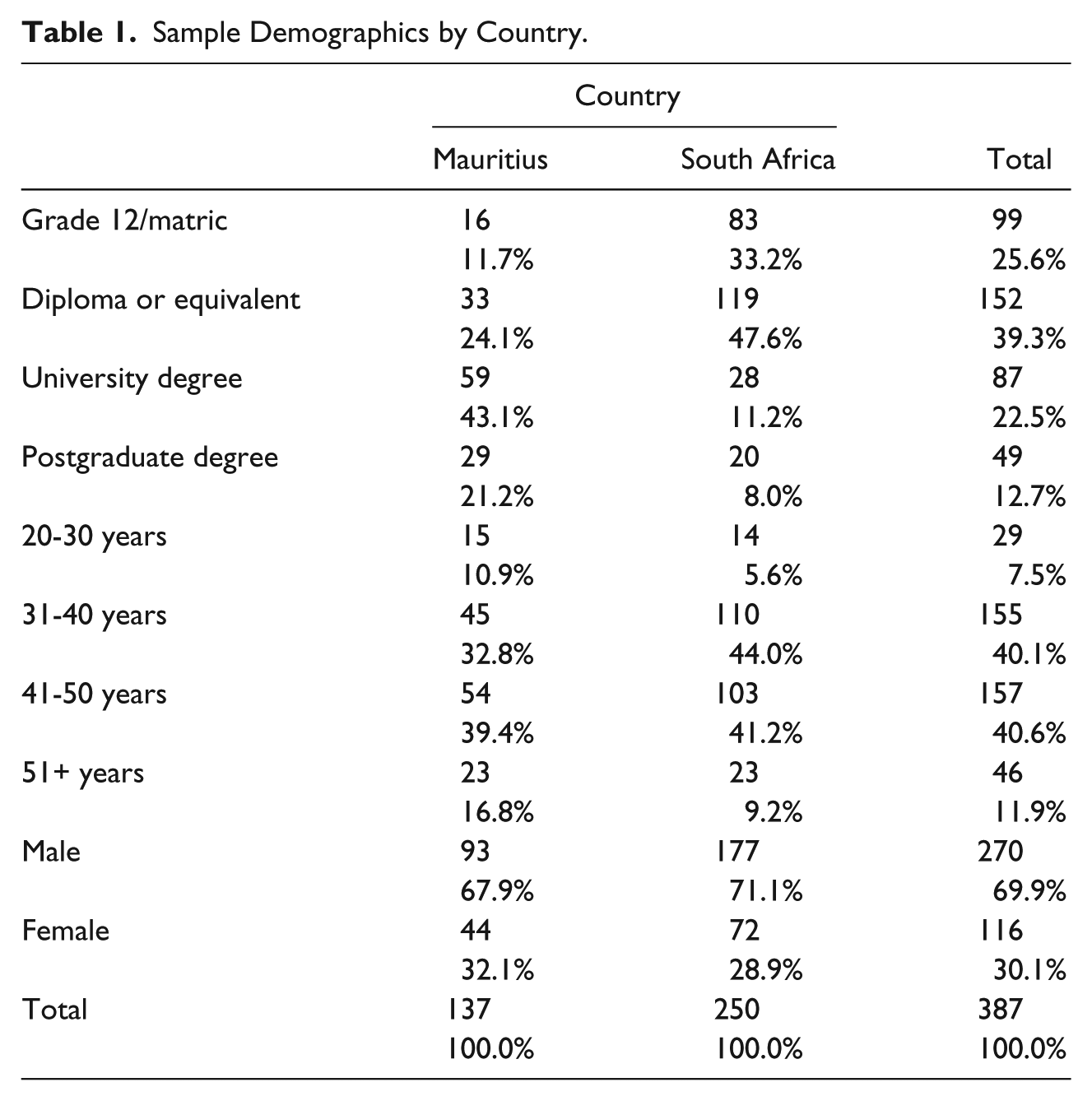
The research instrument, a structured questionnaire from Hwang et al. (2008), was adopted with adjustments shaped to specifically explore factors influencing intentions on whistle-blowing practice within the South African and Mauritian public sector context. In line with Hwang’s et al. (2008) study, we were interested in examining whistle-blowing intentions in a “culturally rich context,” accepting their challenge to “compare results of responses from other cultures.” The Hwang et al. (2008) study provides scales with a high or moderately high degree of internal consistency. For these reasons, Hwang et al.’s (2008) research instrument validates the appropriateness of its use in our study. We also incorporated a measure “Cultural Values” in this study as we were interested in exploring how cultural values affect intentions to blow the whistle. This measure was based on the dimensions of Schwartz (1994, 1999). In the case of both countries, public officials from the national level of government participated. Table 1 illustrates demographical details of participants. A self-administered questionnaire was distributed to public officials with a self-addressed stamped envelope. The structured questionnaire was completed manually by participants in both countries and data were captured using SPSS. A total of 352 and 350 questionnaires were distributed among South African public officials and Mauritian public officials respectively. The response rates of 71% for South Africa and 39% for Mauritius were noted.
Sample Demographics by Country.
Participants
Participation in the study was voluntary with anonymity guaranteed. This guarantee of anonymity was deemed crucial to the success of the study as studies on whistle-blowing requiring empirical data from people may cause a sense of discomfort. The participants (South Africa: n = 250, Mauritius: n = 137) were all employed full-time in the national level of government services across various levels in the hierarchy. In the case of South Africa, participants were from the province of KwaZulu-Natal. The selected samples were students of a public administration program, and were also employees of the various government departments in the respective countries. Data were collected over two semesters. The participant response rate is lower within the Mauritian case possibly due to country context and potential response bias. As shown in Table 1, there were significant differences between the South African and Mauritian samples in regard to education level (χ2 = 8.575, df = 3, p < .001), with the Mauritian sample being better educated than the South African sample. There was also a significant age difference (χ2 = 10.485, df = 3, p = .015) with fewer middle-aged people in the Mauritian sample than the South African sample. However, there was no significant difference in regard to gender (χ2 = .431, df = 1, p = .512) with about 70% of both samples composed of males.
Procedures
Participants were given a general statement concerning the purpose of the study: “This survey is part of a project on cross-cultural perspectives of whistle-blowing. We are investigating factors that could influence whistle-blowing intentions across different cultural settings, thereby generating a composite profile of whistle-blowing across the public service.” Participants were asked a series of demographic questions, which comprised the first section of the survey, before being asked a series of questions relating to the measures.
Measures
Whistle-blowing measures developed by Hwang et al. (2008) were adapted to include an additional measure “Cultural Values.” The items all obtained responses on a 7-point Likert-type agreement scale. These measures relate to barriers measured against (a) ethics and morality; (b) cultural reluctances; (c) fear of retaliation; (d) confidence in organizational systems; and cultural values and demographics. Exploratory and confirmatory factor analyses were used to develop measurement models for the constructs described above. For factors showing good validity, according to Byrne (2001), with root mean square error approximation (RMSEA) < .08, Comparative Fit Index (CFI) > .95, Goodness of Fit Index (GFI) > .95, Tucker–Lewis Index (TLI) > .90, Adjusted Goodness of Fit (AGFI) > .90, and good reliability, according to Hair et al. (1998), with Cronbach’s alpha above .70, averaged summated scales were created allowing the testing of the hypotheses. Exploratory factor analysis (EFA) was conducted using the principal axis factoring method with an oblimin rotation using PASW Statistics (SPSS) version 18, whereas the confirmatory factor analysis used maximum likelihood estimation using AMOS version 18.
Aggregated scales were created for each of the constructs allowing for the calculation of correlations. The testing of the first, second, and third hypothesis was carried out using structural equation modeling. A multi-factor general linear model analysis was used to test for the influence of demographic factors further testing the third hypothesis.
Results
Intention to Whistle-Blowing
For the barriers for whistle-blowing, four factors, shown in Table 2, were suggested by the EFA, explaining 62% of the shared variance and with a moderate correlation between several factors. The first factor measures the strength of attitudinal variables, the second factor relates to a cultural reluctance, the third factor refers to a fear of retaliation, and the fourth relates to confidence in organization systems, making whistle-blowing unnecessary. One item appeared to have cross-loadings across the four factors and so this item, “I would NOT be a whistle-blower because power in organizations and institutions is distributed unequally, that is, people obey orders of their superiors without questioning, and low-level employees follow orders as a matter of procedure (e.g., rigid and high),” was removed in the ensuing analyses. The confirmatory factor analysis showed that this four-factor model for reduced intentions to whistle-blow described the data well (GFI = .95, AGFI = .92, TLI = .95, CFI = .96, normed χ2 = 2.638, RMSEA = .065), providing support for H1.
Explanatory Factor Analysis for Intention to Whistle-Blow.

Cultural Values
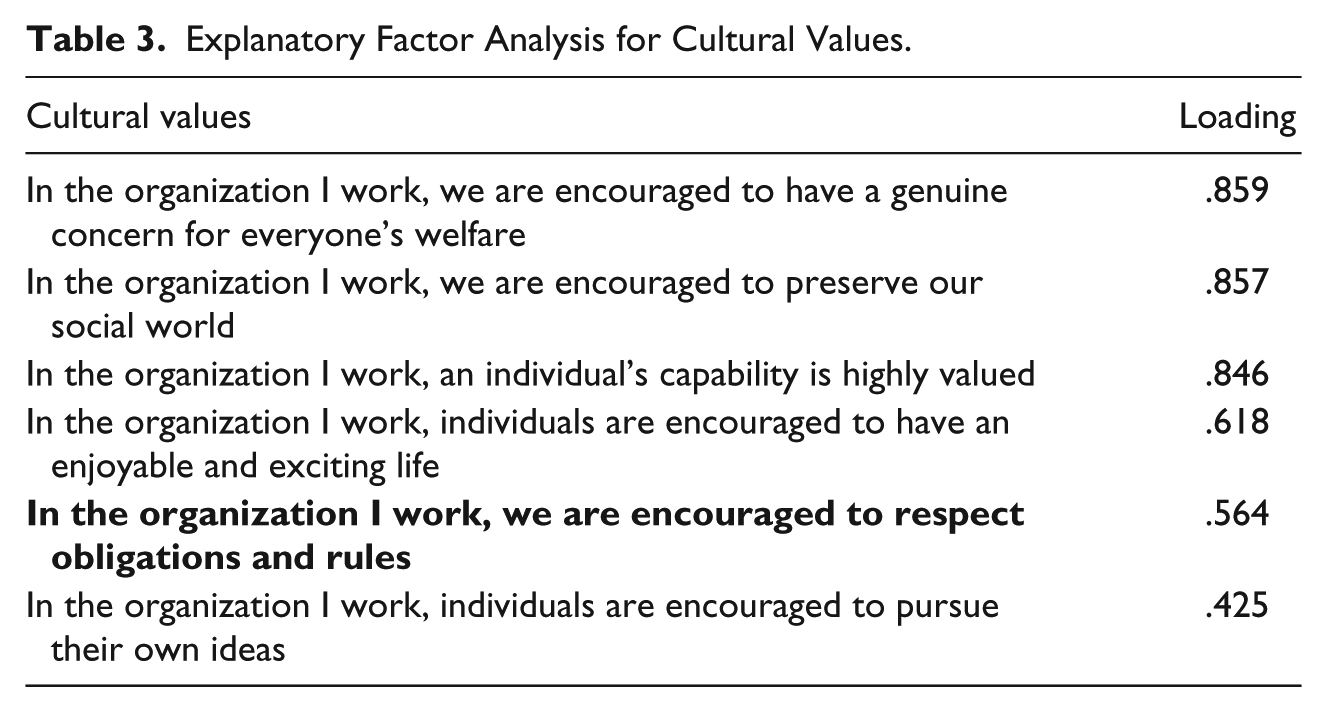
A single factor was extracted for cultural values, explaining 51% of the variation in the responses to these items as shown in Table 3. The confirmatory factor analysis suggested a good fit after the removal of one item, “In the organization I work, we are encouraged to respect obligations and rules” (normed χ2 = 2.131, GFI = .99, AGFI = .97, CFI = .99, TLI = .99, RMSEA = .054).
Explanatory Factor Analysis for Cultural Values.
Averaged summated scales were calculated for all the above constructs and correlations between the scales were computed to allow the testing of H2. Next, a multivariate general linear model analysis was conducted to determine whether the mean values for the above scales differed significantly in response to education level, age, gender, and country, allowing the testing of the H3. Finally, using the above scales, a structural model was developed to test the conceptual model (Figure 1).
Table 4 shows descriptive statistics for the scales with good reliability for all the Cronbach’s alphas. All items are measured on a 7-point Likert-type scale, so mean values above 3.5 suggest above average agreement suggesting that the barriers for whistle-blowing are significant. Morality and ethics have the lowest mean response suggesting that this is not an important barrier for whistle-blowing on average, whereas confidence in organizational systems has a relatively high mean response, suggesting that this is the most important barrier for whistle-blowing. The correlations confirm support for the first hypothesis because there are significant but weak correlations between all four of the barriers (Table 2) to whistle-blowing. However, the very weak correlation between cultural values and the four barriers for whistle-blowing suggest no support for the second hypothesis.
Descriptive Statistics and Correlations for Scales.
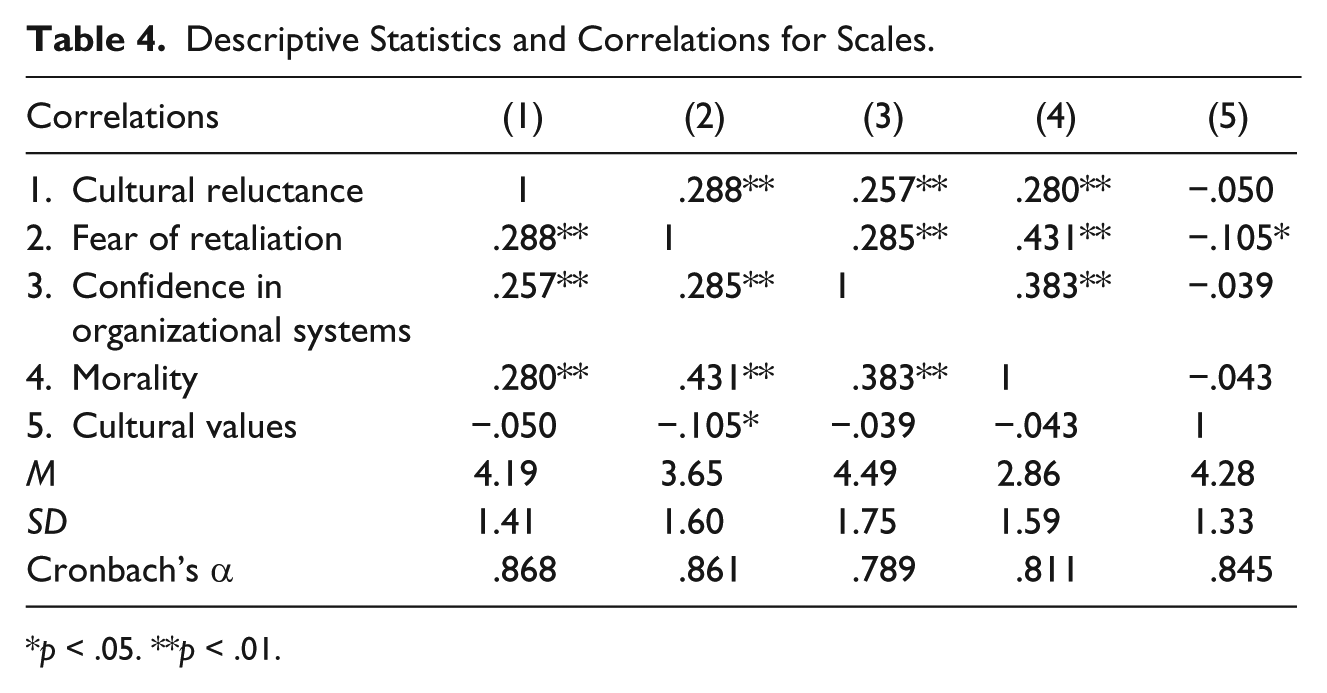
p < .05. **p < .01.
Demographical Influences
The multivariate general linear model analysis was conducted to test the significance of mean differences in the scales across gender, age, education, and country. The results provide some support for the third hypothesis. Although, contrary to expectation, there was no significant age effect, F(15, 1030) = 1.669, p = .051, there was a small but significant gender effect, F(5, 373) = 2.747, p = .019,
General Linear Model Analyses.

p < .05. **p < .01. ***p < .001.
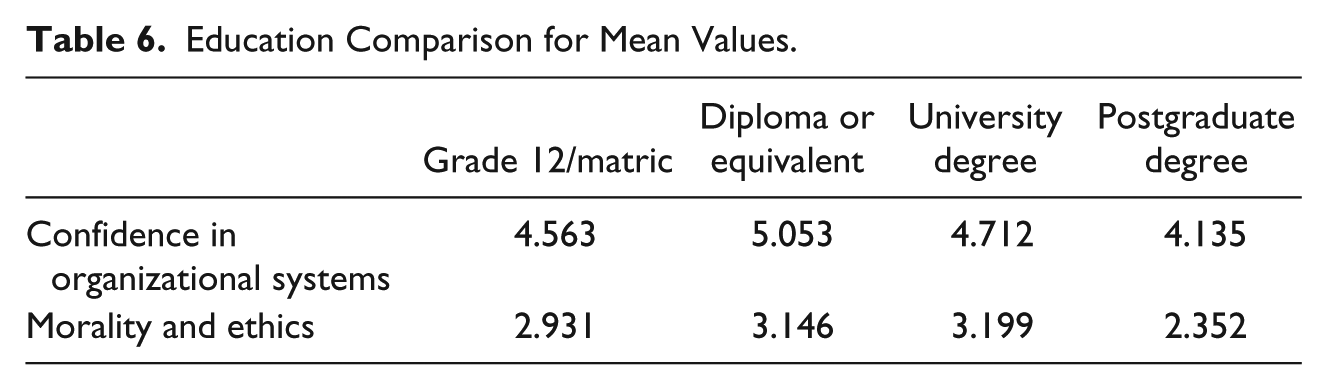
There were significant education differences for two of the barriers for whistle-blowing. As shown in Table 6, people with a postgraduate qualification were less likely to feel confident that their organizational systems could handle any wrongdoing without the need for whistle-blowing. Morality and ethics were also less of a barrier for whistle-blowing than for people with less education. In other words, as was expected, barriers to whistle-blowing were lower for people with higher education levels.
Education Comparison for Mean Values.
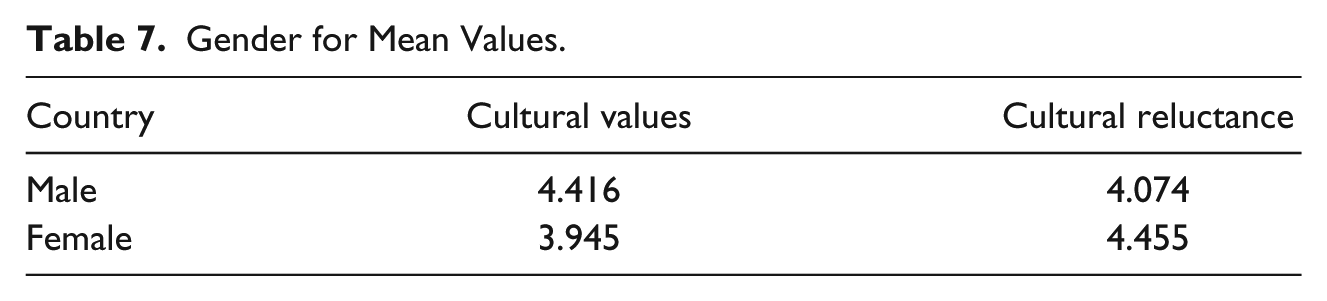
However, there were no significant gender differences for these scales; instead, as shown in Table 7, it was found that the cultural reluctance was more of a barrier for whistle-blowing for women than for men, whereas cultural values were stronger for men than for women.
Gender for Mean Values.
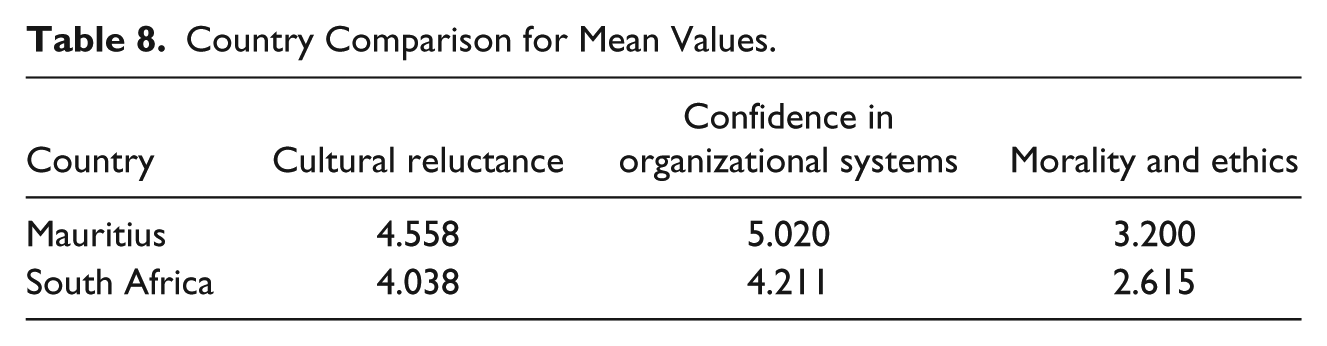
Finally, as shown in Table 8, there are significant differences between the two countries for three of the barriers for whistle-blowing: cultural reluctance, attitudinal variables, and confidence in organizational systems to handle the problem. It appears that all three of the barriers to whistle-blowing are stronger in Mauritius than in South Africa. However, on a scale of 1 to 7, the mean values for attitudinal variables are relatively low for both countries.
Country Comparison for Mean Values.
Finally, Figure 2 shows a structural model incorporating all the above results and showing the standardized weights and R2 values. In this model, the education variable has been dummy coded with 1 for Grade 12 and 2 for higher levels of education. This model explains only 8% of the variation in the barriers to whistle-blow, but provides a good fit for the data (normed χ2 = 1.499, CFI = .968, RMSEA = .036). The standardized coefficients with bootstrapped 95% confidence intervals shown in Table 9 suggest that barriers to whistle-blow have a stronger relationship with ethics and morality than the cultural reluctance, whereas the effect of cultural values on barriers to whistle-blow is not significant. Also of interest is the nature of the demographic influences on whistle-blowing. Only country has a significant relationship, with the barriers to blowing the whistle being stronger in Mauritius than South Africa.
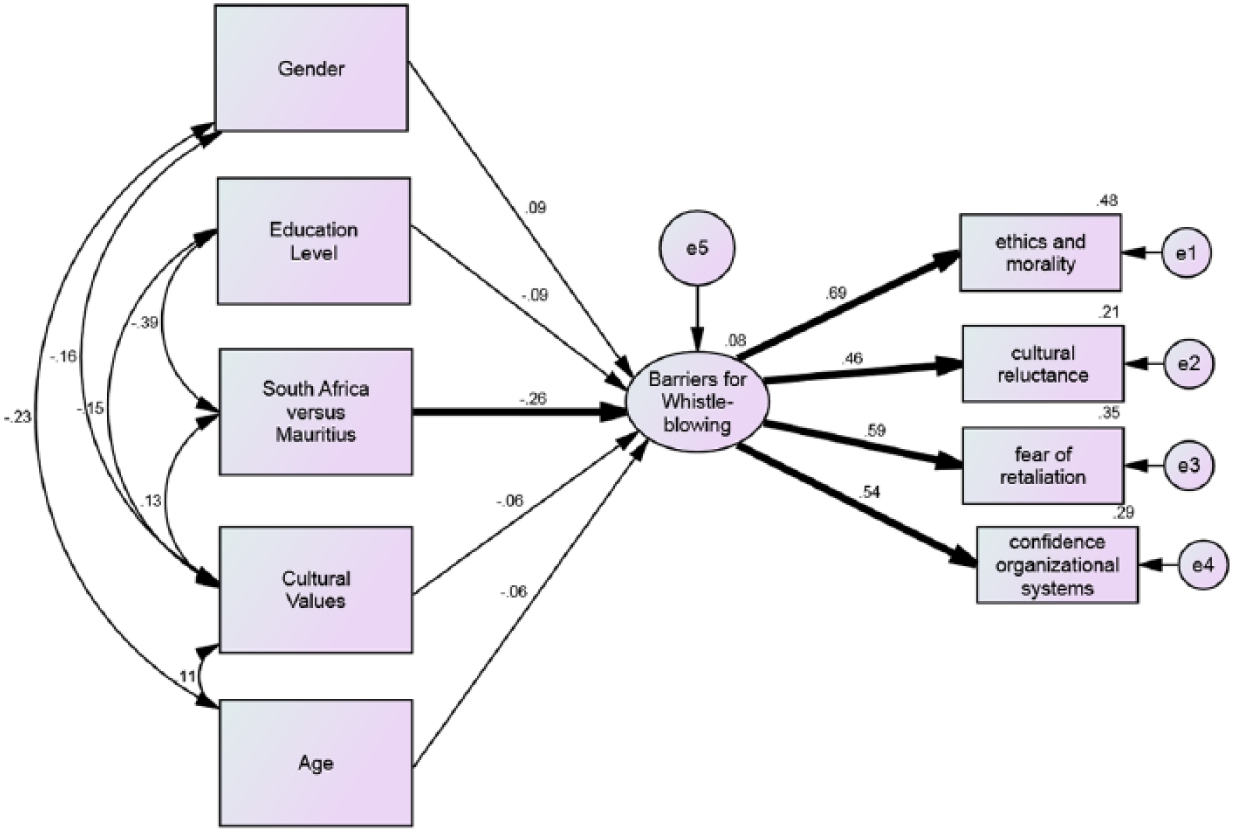
Structural model for reduced intentions to whistle-blow with standardized weights above .25 bolded.
Standardized Regression Weights With 95% Confidence Intervals.
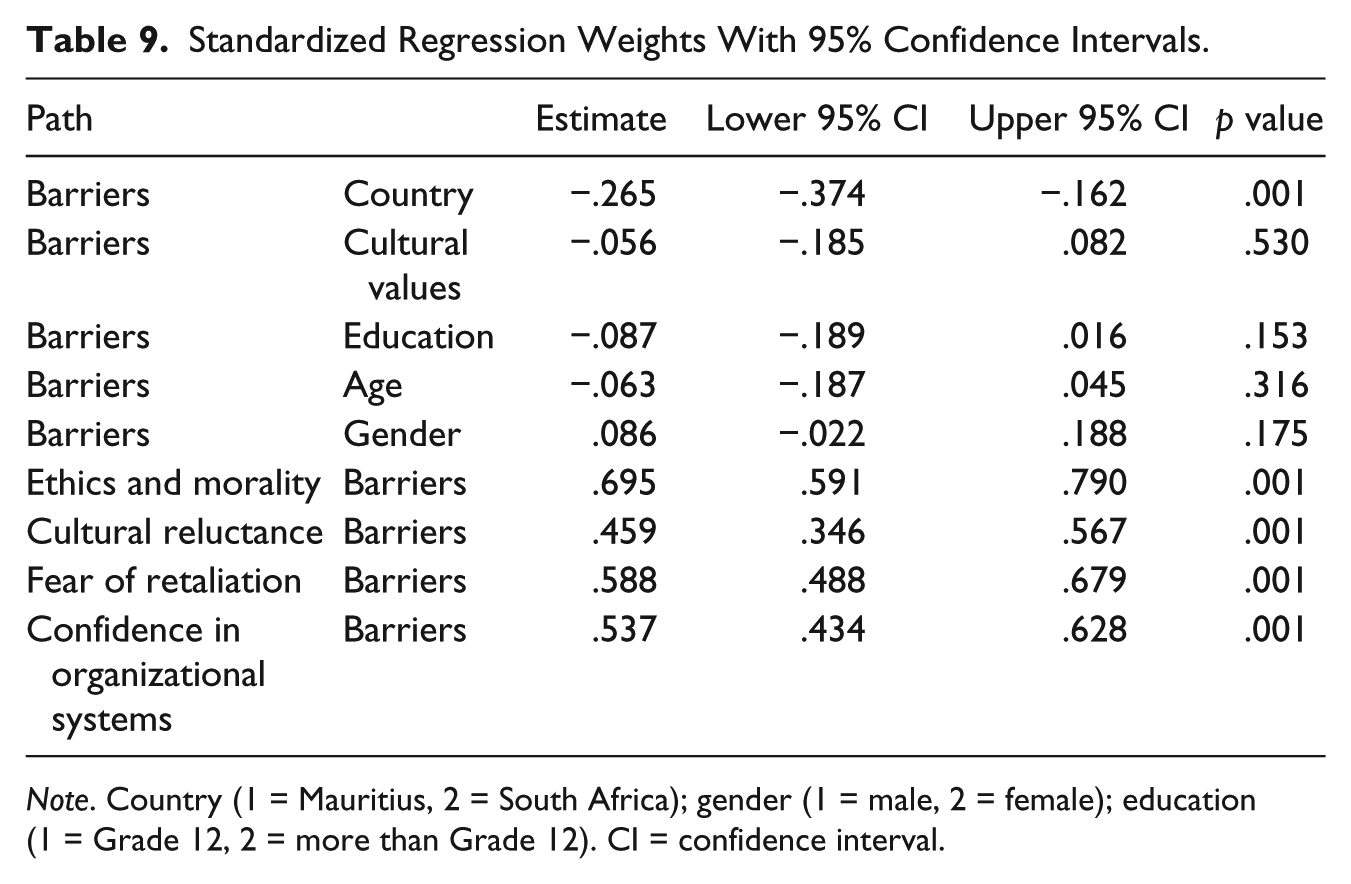
Note. Country (1 = Mauritius, 2 = South Africa); gender (1 = male, 2 = female); education (1 = Grade 12, 2 = more than Grade 12). CI = confidence interval.
Discussion
In line with other studies (Chiu, 2002, 2003; Hwang, 2008), it appears that in the case of both countries, barriers to whistle-blowing include attitudinal variables, fear of retaliation, levels of faith in organizational systems to address wrongdoing, and an uncertainty avoidance cultural reluctance. However, demographic results were not as expected. Although, as expected, the barriers for whistle-blowing were found to be weaker in the case of better educated people, no significant age effect was found. Also, the results did suggest that barriers to whistle-blow were stronger in Mauritius than South Africa.
Results indicate that, overall, South African and Mauritian participants are likely to blow the whistle despite their track record of corrupt governance practices (Pillay, 2014). However, as expected, it appears that recent developments in South Africa have been beneficial, resulting in lower barriers to blow the whistle than in Mauritius. Further progress is needed in public sector management in both these countries. Although recent legal and regulatory reforms have focused on creating an enabling environment for enhanced business practices, ensuring good governance, transparency, rule of law and accountability, both the countries’ position on the Transparency International’s CPI remains high. Mauritius stands at 5.1 and South Africa at 4.1 with 10 being the least corrupt and 1 being the most corrupt (http://www.transparency.org/research/cpi/overview).
The development of Mauritius as a center for offshore and financial services in recent years has undoubtedly increased the risk of occurrence of crimes such as corruption and money laundering. As this may affect the image of Mauritius as a financial center, the Government of Mauritius has taken the initiative against both corruption and money laundering. The Government has devised and implemented a powerful set of interlocking legislative measures to combat these phenomena. This has resulted in the establishment of both the Independent Commission Against Corruption (ICAC) and the Financial Intelligence Unit.
The South African principle of good governance enshrined in the country’s constitutional democracy was expected to transform government; however, corruption continues to vex the South African public sector (Pillay, 2014). Common contributory factors include both individual level and situational antecedents (Pillay, 2008). This, in turn, has impacted on the efficiency, effectiveness, and integrity of public administration. In South Africa, the Protected Disclosures Act No. 26 of 2000 makes provision for the protection of employees who make a disclosure in good faith and in accordance with the procedure prescribed by the employer. Whistle-blower protection was originally part of the Open Democracy Bill. Based on the comparative experiences of Australia and the United Kingdom, it became a free-standing law to give it greater recognition and promotion (Chene, 2009, p. 9). Although whistle-blowing legislation is not primarily responsible for combating corruption, it is viewed as a mechanism to encourage disclosure of acts of corruption. Since combating corruption requires a multi-faceted strategy that makes corruption unacceptable, whistle-blowing has to be used as one component of such an anti-corruption strategy to holistically contribute to good governance. When complemented by other initiatives, whistle-blowing legislation and organizational culture can help to foster an environment that rewards and encourages whistle-blowing (Kaplan, 2001, p. 37).
Our findings also indicate that the internal control system may be a barrier, if not considered to be reliable and trustworthy. People would prefer not to blow the whistle, instead leaving the fraud/irregularity up to the systems (internal or legal) to address. It thus seems reasonable to infer that employees have a willingness to hand over control to systems comprising of other individuals, such as external authorities, rather than getting involved and blowing the whistle themselves. It is evident that they do not wish for the burden of such a task as exposing illegal activity to befall them, and that, given the chance, they would rather shift this burden to others in the organization or to outsiders. This may potentially explain the small number of law suits brought under the South Africa’s PDA 2000.
In reflecting on the above discussion, it appears that the unstable social, economic, and political climate demands the prioritization of oneself and family first, which is further reflected in the eagerness and willingness of people to hand over whistle-blowing responsibility to others (internal control systems and external legal systems). It thus appears that the outcome of the interplay of variables described above most prominently contributes to whistle-blowing barriers.
However, in line with much of the whistle-blowing research (Keenan, 1995; King, 1999; Near & Miceli, 1996), our sample of participants working in the public sector reveals that the fear of retaliation is a deterrent and a major barrier.
In accordance with previous studies (Berry, 2004; Near & Miceli, 1996), we have found that there is a link between cultural values and barriers to blow the whistle. More specifically, however, these results demonstrate that for employees who perceive that the organization “values the respect for rules and obligations, the concern for everyone’s welfare, the individual’s capability, and the preserving of the surrounding social world,” for such employees, it may lower barriers to blow the whistle. This finding, therefore, highlights a new potential avenue for research, demonstrating a link between cultural values and motivation to abide by organizational policy. This link should be further investigated by whistle-blowing researchers. This finding further illuminates a facilitating solution for African public institutions—They should perhaps begin to implement and practice fair and democratic cultural values instead of only lightly encouraging them. They must become stated visions, goals, and policies, rather than stay hidden away behind the curricula of daily interactions between co-workers. Once they are clearly perceived by all of the employees as important guiding principles, then whistle-blowing intent can begin to increase.
On this note, cultural values (Hooks, Kaplan, Schultz, & Ponemon, 1994; McNair, 1991) have also been acknowledged as an influential factor in the observers’ perceptions of the seriousness of the act. For example, Hooks et al. (1994) argued that an organization’s tolerance of wrongdoing can shape the perceptions of seriousness. When the wrongdoing is seen as less ambiguous (Near & Miceli, 1985), observers will feel freer to diverge from norms and report. When values such as “in the organization I work, we are encouraged to preserve our social world” (Table 4) are clearly communicated, practiced, and upheld by an organization, the seriousness of any act that impacts negatively on the social world is magnified and placed into the spotlight. This notion of the influence of culture on the perceptions of seriousness further reinforces the need to raise awareness of business ethics issues and to uphold and communicate positive values properly. For any change in culture to occur, the practice of under-prioritizing positive values as mere benchmarks must be replaced with ethical leadership via increased communication and routine practice of such values. In addition, awareness of whistle-blowing and similar business ethics concepts should be raised within the organization, so when an employee notices an irregularity, they have the knowledge to weigh their options quickly and act in a timely matter.
On the topic of age and education, our findings are in line with other researchers (Brewer & Seiden, 1998; Goldman, 2001; Keenan, 2000; Mesmer-Magnus & Viswesvaran, 2005; Miceli & Near, 1984, 1988, 2002; Rothschild & Miethe, 1999; Sims & Keenan, 1998) who indicate that across country contexts demographics may be a significant factor in whistle-blowing intention. Power theories claiming that “more powerful employees who observe wrongdoing have less to fear from their organization than do less powerful employees, and are therefore more likely to blow the whistle” (Lee et al., 2004, p. 304) could also explain such different country contexts. However, we argue that this may be offset by the notion that senior-level employees stand to lose more if the higher organizational members retaliated. For a more accurate understanding of power/position differences, we recommend that this line of enquiry also be examined. Our findings and analysis suggest that whistle-blowing intentions should be seen as an integrated process.
Limitations
Our study’s sample of 250 for South Africa and 137 for Mauritius is relatively low for a quantitative, exploratory-type study. In addition, the data collected concentrates entirely on government officials, and is limited to only two developing nation’s perspectives, limiting its usefulness elsewhere. In addition, the number of public officials employed at national level within both the countries is significantly large; therefore, the small sample obtained for the purpose of this study makes it difficult to generalize across the country. Research on intentions is limiting, due to the weakness of the intention–behavior relationship. It has been reported that there is only a weak relationship between the intention to act and the actual performance of behavior (Miller & Grush, 1988; Mitchell, 1974). The availability to conduct research of this sensitive nature was quite limited, as participants did not appear eager to participate in the research due to the nature of the study. Also, the opportunity to carefully select similar samples for the two countries made a comparison difficult.
We believe that attention needs to be given to the validation of whistle-blowing scales used, as well as further testing of a model of whistle-blowing in a wider African context, to provide a better conceptual foundation for explanation of past research and guidance of future investigations. On the whole, however, the results are informative and encouraging, and we hope they will stimulate further research on ethics and whistle-blowing in other parts of Africa. As the world becomes more borderless (integrated) and diverse, more whistle-blowing research attention is warranted for studying whistle-blowing across cultures and across nations. Also, organizations provide support through continuous training and education. In countries such as South Africa and Mauritius, where steep bureaucracies exist, there need to be mechanisms and reinforcements for protection of whistle-blowers from fear of retaliation (Premeaux & Bedeian, 2003). Studies also suggest that if bottom-line pressures and a “don’t rock the boat” mentality prevail, corrupt practices can be expected to continue. Encouragement and support by management of training and development programs focused on bringing greater awareness about the importance of whistle-blowing are needed to change this culture.
Further studies are also needed to more fully investigate the cultures that exist in the public sectors of both these countries and to determine how these cultures impact on whistle-blowing. In addition, the surprising demographic results obtained in this study clearly require more investigation.
Conclusion
Due to varying cultural and demographic contexts, it is important to accept that transplantation of practices may be problematic. Disclosure management tools need to match individual, institutional, and country context variables.
Based on our research, we argue that, for effective management of disclosure, an encouragement of whistle-blowing and an increase in ethical business behavior in South Africa and Mauritius is needed. The solution may rest more with the raising of awareness in individual organizations instead of governmental or external regulation and law making. Future research may also wish to compare the results of responses from both the countries with respondents from other regions in Africa. Researchers may also find it fruitful to examine findings from whistle-blowers themselves, for issues regarding their primary motivations, to better understand the degree to which individual and situational motivators affect the decision to blow the whistle or not.
The findings from this study offer several implications for both theory and practice. First, we found evidence that one’s intention to blow the whistle is influenced by a range of predictors. As we hypothesized, demographics within specific cultural offer important insights into whistle-blowing intentions. Notions of morality, retaliation (Hannah, 2007; Hunton & Rose, 2011; Milliken, Morrison, & Hewlin, 2003), organizational support, and justice, that underpin public disclosure, require reassessment in light of varying institutional and cultural context. Second, we found that caution should be exercised to not make generalizations based solely on cultural stereotypes; for example, that because both countries are positioned in the African continent, the same predictors will have equal influence across both contexts. It should be acknowledged that a range of organizational, institutional, and personal variables may also affect whistle-blowing intentions. A weakness in this study is that a multi-method research design was not adopted; as this would have allowed us to significantly enrich the results and contributions of this study but also point to other factors that merit exploration in future work. Third, whistle-blowing intentions should not be viewed in isolation but, rather, as an integrated system to include other important influences such as leadership. Last, this study creates awareness for policy makers, managers, and other stakeholders to the inevitable interface between corruption control design, culture, and a multitude of other contextual forces. In doing so, we also attempt to highlight that whistle-blowing management is a culture contingent process. Therefore, understanding whistle-blowing intentions as part of an integrated system is a precursor to formulating new theoretical perspectives and effective practices.
Footnotes
Acknowledgements
We acknowledge permission granted by Hwang et al. for use of their survey. This survey was adapted to our case country context.
Declaration of Conflicting Interests
The author(s) declared no potential conflicts of interest with respect to the research, authorship, and/or publication of this article.
Funding
The author(s) received no financial support for the research, authorship, and/or publication of this article.