




Abstract
A content analysis was conducted of research published in the Journal of Black Psychology (JBP) during a 12-year period (2000-2011). A total of 276 articles were classified into 17 content categories. Similar to the previous JBP content analysis, the most frequently published authors and institutions were identified and ranked. The most highly cited articles were also identified. In addition, gender-focused articles and articles involving racial/ethnic group comparisons were identified. The most popular areas of research and publication in the JBP were in mental health and well-being, personality and identity (i.e., racial identity), culture, and physiological functioning and health psychology. These four categories accounted for 57% of the articles published. Results of this content analysis indicate a sharp increase in research on mental health and culture, while other areas remained consistent with the previous JBP content analysis. The dearth of African-centered psychological research was also noted. Implications for the field of Black psychology in the areas of African-centered research, defining Black psychology, and conducting race comparative research are discussed.
The Journal of Black Psychology (JBP) came into existence as a result of a feasibility study conducted by the Association of Black Psychologists (ABPsi) in 1970 (R. L. Williams, 2008). Later, the first issue of the JBP was published in 1974 under the editorship of William David Smith. The mission of the JBP is to publish psychological research on the experiences, attitudes, and behaviors of Black populations throughout the African Diaspora. The JBP is the flagship journal of the ABPsi and has served as the primary academic journal for publishing psychological research on people of African descent. Originally published by the ABPsi, SAGE Publishers was contracted as the new publisher in 1976. The JBP publishes quarterly with an average of five to six articles per issue and consists of an editor-in-chief, five associate editors, an editorial advisory board, editorial consultants, and a number of ad hoc reviewers. As of 2012, the JBP had an average circulation of 8,185 readers and 7,514 subscribers, with a rejection rate of 80% (Sawney, O’Rear, & Schweitzer, 2012).
The JBP has grown in popularity and prestige since being assigned an impact factor, as evidenced by a 30.5% increase in new submissions between 2010 and 2011 (Sawney et al., 2012). The impact factor is an index of ranking scientific journals by measuring the frequency with which the “average article” in a journal has been cited in a particular year. While it is a somewhat controversial metric, it nonetheless affects the professional reputation of scientific journals and is a factor that influences whether researchers and scholars will submit their work for publication. The first JBP impact factor was reported as 0.86 in 2007, followed by 0.98 in 2008, 1.55 in 2009, 0.96 in 2010, and 0.73 in 2011. Based on available 2011 impact factor data from other comparable specialty or niche journals, JBP’s impact factor is higher than some (e.g., 0.51 for Journal of Multicultural Counseling and Development, 0.50 for Hispanic Journal of Behavioral Sciences), similar to others (e.g., 0.80 for Culture & Psychology), and lower than others (e.g., 1.36 for Cultural Diversity and Ethnic Minority Psychology).
Given the influence of academic journals in shaping the research programs of scholars as well as shaping the foci of an academic field or discipline, scholars have been interested in conducting content analyses of these journals. In the quantitative social sciences, a content analysis is a methodology used to study themes related to popular topics published and identify the most productive scholars and productive institutions. A content analysis of the JBP is necessary to continue examination and articulation of a field that reflects varied interests, ideologies, and approaches among researchers and scholars. For example, some authors assume that research appropriate for the JBP must only include a sample of African descent. Other authors assume that race comparative research involving the comparison of African-descended samples with White or other racial/ethnic minority samples is appropriate for the JBP. Still other authors focus their research on using psychological constructs and measures conceptualized and normed on African-descended populations. Regardless of the underlying assumptions or approaches used, articles published in the JBP are presumed to advance the field of Black psychology.
Previous content analyses have served as important barometers for various fields within psychology. For example, Buboltz, Deemer, and Hoffman (2010) conducted a 10-year content analysis of the Journal of Counseling Psychology and found that multiculturalism and/or diversity had become a principal area of published research. This was significant because a previous content analysis (Buboltz, Miller, & Williams, 1999) did not find multiculturalism and/or diversity to be primary areas of published research in the Journal of Counseling Psychology. Multiculturalism and diversity have become increasingly stronger components of counseling psychology identity, and the content analysis reflected this change. Similarly, Blancher, Buboltz, and Soper (2010) conducted a 10-year analysis of the Journal of Counseling and Development and found that feminism, female gender identity, and foreign populations were added as subcategories under the content category Special Groups. These subcategories were not included in the previous content analysis (M. E. Williams & Buboltz, 1999) and thus reflect how the counseling field has placed more emphasis in these areas. There have also been several content analyses that focus on publication in multicultural psychology journals (Lau, Cisco, & Delgado-Romero, 2008) or focus on publication of multicultural psychology themes related to race and ethnicity (Carter, Akinsulure-Smith, Smailes, & Clauss, 1998; Delgado-Romero, Galván, Maschino, & Rowland, 2005).
We believe there are important reasons to conduct a content analysis of the JBP. First, the JBP is the official journal of the ABPsi and as such it should publish research that reflects (and does not contradict) the mission and purpose of the ABPsi. Only a content analysis of the JBP would allow for such an analysis. Second, the JBP is the only journal that promotes “psychological research, theory, and writings . . . for and about Blacks” (Smith, 1974, p. 6). William David Smith, the first editor-in-chief of the JBP, stated that “no journal promoted greater psychological understanding of Black behavior through the world; and no journal tried to enhance the psychological self of Black people” (Smith, 1974, p. 6). Thus, a content analysis of the JBP will allow researchers to determine the extent to which the JBP is publishing research from this perspective. For example, a recent study highlighting distinguished Black psychologists (A. M. White, Williams, & Majzler, 2011) is less likely to be published in other psychology journals than in the JBP.
The first content analysis of the JBP found an increase in empirical studies, a decrease in political/ideological articles, and a slight increase in articles using a deficit orientation between 1974 and 1980 (Steele & Davis, 1984). In the most recent content analysis of the JBP, Cokley, Caldwell, Miller, and Muhammad (2001) implemented the methodology used in a highly cited content analysis of the Journal of Counseling Psychology (Buboltz et al., 1999). Categories were created by using both deductive procedures and inductive procedures. The deductive procedures included the use of nine categories as identified from the mission of the JBP: (1) theoretical and conceptual, (2) cognition, (3) personality, (4) social behavior, (5) physiological functioning and health psychology, (6) child and adolescent development, (7) education, (8) clinical application, and (9) empirical research and theoretical formulations with an African-centered focus (previously named empirical research and theoretical formulations outside traditional boundaries). The inductive procedures involved using raters to independently review articles, identify additional categories, and establish consensus on these categories. As a result, six new categories were identified and added to the nine categories determined by the journal’s mission statement (Cokley et al., 2001): (1) testing and assessment, (2) research reviews, (3) research on families, (4) psychometric research on test development and other forms of assessment, (5) miscellaneous, and (6) reactions and commentaries. In addition, three of the original categories (i.e., theoretical/conceptual, physiological functioning/health psychology, and child/adolescent development) were expanded to be more inclusive of related topics. The results of this content analysis revealed that personality (mostly through racial identity research) accounted for the largest percentage of published articles. Combined with reactions and commentary, social behavior, and physiological functioning and health psychology accounted for 52% of the published articles.
The other purpose of conducting a content analysis is to identify the top contributors and institutions that publish in the JBP. Buboltz et al. (1999) state that scholars and institutions who publish frequently “play a role in defining and verifying a discipline” (p. 497) and “are presumed to be invested in furthering the empirical study in those areas” (p. 497). They go on to state that this is useful information for college students as they embark on choosing a college. Thus, this information will provide insight into the individuals and institutions that are helping define and shape the research agenda of Black psychology. This information will be especially helpful for students applying to graduate school and whose interests are in Black psychology. In the Cokley at al. (2001) content analysis, Daudi Azibo, a prominent African-centered psychologist, was the leading contributor followed by Oscar Barbarin and Jerome Taylor. Florida A&M University, a historically Black university, was the top contributing institution followed by the University of Michigan and the University of Cincinnati. One additional piece of useful data to include in the content analysis is identifying the most frequently cited JBP articles. Identifying the most frequently cited JBP articles provides important information to individuals seeking to publish in the journal. Specifically, it provides additional insight on what topics are being published frequently, as well as on what topics are most likely to be highly cited.
While content analyses across different types of journals generally have the same goals, the unique histories and challenges of each journal may prompt the collection of additional information that is germane to the specific journal. In the case of the JBP, issues related to race comparative research and gender representation are especially important to document. Individuals conducting research with Black samples have long contended with the expectation that a White comparison or control group was needed for demonstrating the validity of their research. However, there has not been the expectation that individuals conducting research with White samples should have a Black comparison or control group. Scholars in Black psychology have resisted this hegemonic stance, as perhaps best exemplified by the statement, “Whites or Europeans are no longer the standard by which the psychology of people is judged” (Khatib & Nobles, 1977, pp. 97-98). Given the history and ongoing reality of this dynamic, we believe it is important to document the amount of race comparative research that has been published and to share thoughts about the implications for the field of Black psychology. In the spirit of Sandra Graham (1992), who wrote that most psychological research published in APA journals is conducted on White, middle-class participants, we were interested in documenting research that focuses on Black females compared to Black males. We have reason to believe that a gender disparity might exist. For example, one of the four special issues published by JBP has focused on Black women while no special issue has focused on Black men. Furthermore, it is well documented that there are more Black women in college than Black men (Snyder & Dillow, 2011). Given that most psychological research is conducted with college students, it is likely that research might disproportionately focus on Black females than Black males. Examining gender-focused research can provide useful information to document whether proportional attention is being devoted to females and males and to address any potential implications of disparities in research focused on Black males or Black females.
The current study continues the ongoing, systematic analysis of content published in the JBP as called for in the last published content analysis (Cokley et al., 2001). The present content analysis will cover the years 2000 to 2011 and will chronicle the nature and quantity of topics published in the JBP. This content analysis will report the most frequently contributing authors and institutions to the JBP, build on the previous content analysis by identifying the most frequently cited articles, and identify articles with a gender focus and articles involving racial/ethnic group comparisons.
Method
Raters
Three raters conducted the content analysis. They included two female counseling psychology doctoral students (one biracial African/European American and one Nigerian American) and one African American male associate professor of counseling psychology and African and African Diaspora studies. All raters were affiliated with a predominately White university in the southwest portion of the United States. The raters are presently active in the ABPsi and actively participate in the annual national convention of the ABPsi. The raters also serve in editorial capacities for the Journal of Black Psychology. The doctoral students’ raters were trained by the first author. All raters’ training, research experience, and academic interests are related to the field of Black psychology. As such, raters are familiar with the history of Black psychology, the ABPsi, and the Journal of Black Psychology. The doctoral students provided the initial ratings for the articles, and when there was disagreement, the first author was consulted. After discussion, consensus was reached and the article was then rated. To examine interrater reliability, Cohen’s kappa was calculated for the doctoral students’ ratings, with a value of .88 being obtained.
Procedure
Similar to previous content analyses, both deductive and inductive procedures were used to determine the categories. When the raters convened to discuss the first round of ratings, we realized that the initial inclusion of 15 content categories from the previous content analysis (Cokley et al., 2001) was not sufficient given the content of articles published between 2000 and 2011. Therefore, rater agreement never took place with the original 15 categories. Instead, each rater independently reviewed the contents of the journal and convened to discuss our impressions of the types of articles published in the journal. During these initial meetings we used inductive procedures to (1) amend previous categories and (2) develop additional categories based on our assessment of the gaps between the current content and the preexisting categories. Once we established a more comprehensive set of categories, we began rater agreement. The previous categories that were amended included Cognition, Personality, Social Behavior, Psychometric Research on Test Development, Validation, and Other Forms of Assessment, Testing and Assessment, Research on Families, Miscellaneous, and Reactions and Commentaries. The two new categories added were Mental Health and Well-Being and Culture. Categorical amendments required a majority decision by the raters. The inductive procedure resulted in a total of 17 categories.
Original Categories
Theoretical and conceptual: These articles were based on specific theories or concepts as supported by research. These articles used a conceptual framework to organize and integrate research studies. The primary intent was not to perform an empirical study but, rather, to interpret the results of a collection of empirical studies or to understand a particular phenomenon within a particular conceptual framework.
Cognition, attitudes, and beliefs: This category (previously labeled Cognition) dealt with topics such as thinking, categorizing, schemas, intelligence, and perception. For example, articles that examined perceived discrimination would go into this category.
Personality and identity: Articles in this category examined the relationship between personality and correlates of personality such as performance and development. For example, articles that examined the relationship of racial identity and some other variable were coded in this category.
Social behavior: Articles in this category examined the psychological processes that take place in group behavior. Examples of articles in this category examined social behavior such as gang violence and sexual risk behavior.
Physiological functioning and health psychology: Articles that addressed psychological issues pertaining to health and physiology were placed in this category. An example of articles in this category examined AIDS in the African American community.
Child and adolescent development: Articles in this category examined psychosocial developmental issues of children and adolescents. For example, articles dealing with self-esteem and moral reasoning were placed in this category.
Education and academic achievement: Articles in this category addressed the psychological impact of education and educational environments and factors related to academic achievement. For example, articles that examined academic self-concept, stereotype threat, and academic engagement or focused on culturally structured learning environments were included in this category.
Clinical application: Articles that addressed implications for clinical practice were placed in this category. For example, articles that dealt with interventions for a specific population (e.g., African American adolescent males) were placed in this category.
Empirical research and theoretical formulations with an African-centered focus: Articles in this category used African-centered instruments and/or were explicitly written using African-centered constructs, interventions, and conceptual frameworks. For example, articles using Kambon’s (1996). African Self-Consciousness construct or examining Africentric cultural values were placed in this category.
Testing and assessment: Articles in this category discussed philosophical and methodological issues concerned with the practice of psychological testing and assessment. For example, articles that dealt with the use of The Diagnostic and Statistical Manual of Mental Disorders would be placed in this category.
Literature reviews: Articles in this category reported a comprehensive review of articles in a specific area of Black psychology. For example, an article that reviewed the empirical research about racial differences in IQ would be placed in this category.
Research on families: Articles in this category reported on research pertaining to the psychological functioning of Black families. For example, articles that addressed the role of grandparents in Black families would be placed in this category.
Psychometric research on test development, validation, and other forms of assessment: Articles in this category reported on the development of psychological instruments. A common example in this category was the development of personality measures.
Miscellaneous: Articles in this category were determined by the judges to not fit in any of the other categories. For example, one article discussed folk emotion lexica of two indigenous West African languages, which was not deemed to fit in any category.
Reactions, commentaries, and introductions: Articles in this category were reactions to an important article, commentary, or an introduction for a volume dedicated to some social issue of particular relevance to African Americans. For example, a special issue included articles that focused on psychology of health disparities among different African American populations.
New Categories
16. Mental health and well-being: Articles in this category focused on various aspects of mental health and psychological well-being. For example, articles that addressed suicide, racism, and coping were placed in this category.
17. Culture: Articles in this category focused on topics such as spirituality, racial socialization, and acculturation. For example, articles that examined Afro-cultural socialization and understanding prayer in a cultural context were placed in this category.
The current content analysis covers articles published from 2000 (Volume 26) to 2011 (Volume 37). Inclusion criteria for this content analysis included empirical studies, theoretical and/or conceptual articles, research reviews, introductions, commentaries, and reactions. Book reviews were excluded. The raters met weekly for approximately 3 months to establish consistency in the assignment of articles to one or more of the 17 categories. In instances of disagreement among the raters, a discussion took place until there was a consensus.
Consistent with previous content analyses, a credit value of one point was assigned to each article based on the categories (Buboltz et al., 1999; Buboltz et al., 2010, Cokley et al., 2001). When articles fit two categories, credit for the article was divided among the categories (0.5 for each category). Buboltz and colleagues did not make any further divisions. However, as stated by Cokley et al., that system is inadequate for a content analysis of the JBP, because the nature of the field of Black psychology is multidisciplinary and crosses multiple categories. Cross-classification of articles was often necessary, such that an article might be classified in two, three, or even four categories. Articles were rarely classified in four categories. Articles that met the criteria for two categories were assigned 0.5 points to each category. Articles that met the criteria for three categories were assigned 0.33 points to each category, and for four categories were assigned 0.25 points to each category. The importance is not on how many points a single article accumulates, but instead, on how many points a single category accumulates. As a result, categories often had fractionalized numbers (e.g., n = 3.86), where n is the number of points falling in a category.
Rankings for authorship and institutional affiliation were determined by using a weighted, proportional counting system devised by Howard, Cole, and Maxwell (1987). To determine credit, the formula
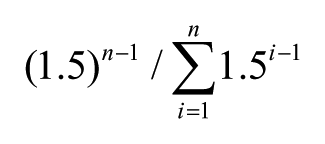
was used, where n is the total number of authors and i is the particular author’s ordinal position. A single-authored article received 1 credit. Second authorship in an article with two authors results in the first author receiving 0.60 points and the second author receiving 0.40 points. In an article with three authors, the first author received 0.47 points, the second author received 0.32 points, and the third author received 0.21 points. Four authors received 0.42, 0.28, 0.18, and 0.12 points, respectively. Five authors received 0.38, 0.26, 0.17, 0.11, and 0.08 points, respectively; six authors received 0.37, 0.24, 0.16, 0.11, 0.07, and 0.05 points, respectively; and seven authors received 0.35, 0.23, 0.15, 0.10, 0.06, 0.04, and 0.03 points, respectively. This system was also used for assigning points based on institutional affiliation. Credit was assigned to the institutional affiliation listed first if an author listed more than one institutional affiliation.
To identify the most frequently cited JBP articles, the Publish or Perish software was used (Harzing, 2007). The Publish or Perish software uses Google Scholar to conduct a comprehensive search of the Internet. Using Google Scholar, rather than Thomson Reuters Social Sciences Citation Index (SSCI; formerly ISI Web of Knowledge), provides significantly more citations for academics in the social sciences because databases include not only journals but also books, book chapters, government reports, conference proceedings, and other journals not indexed in Thomson Reuters SSCI.
Results
Table 1 shows the frequencies and percentages of the articles classified in the 17 content categories for Volumes 26 (2000) through 37 (2011). The last two rows of Table 1 indicate the total number and percentage of the articles classified in each category. The total number and percentages of the articles were calculated in the following manner. Using the culture category (17) as an example, the following values are summed: 4.36 + 17.55 + 32.01 + 7.84 + 28.5 + 11.87 + 17.22 + 11.97 + 7.42 + 1.58 + 2.08 + 13.28 + 9.32 + 8 + 8.5 + 64.93 + 30.16 = 276.59 (total N). Then, the total n for culture, 30.16, was divided by 276.59 to get 0.11, or 11%. This calculation was repeated across all categories.
Research Published in the Journal of Black Psychology by Content Category (2000-2011).
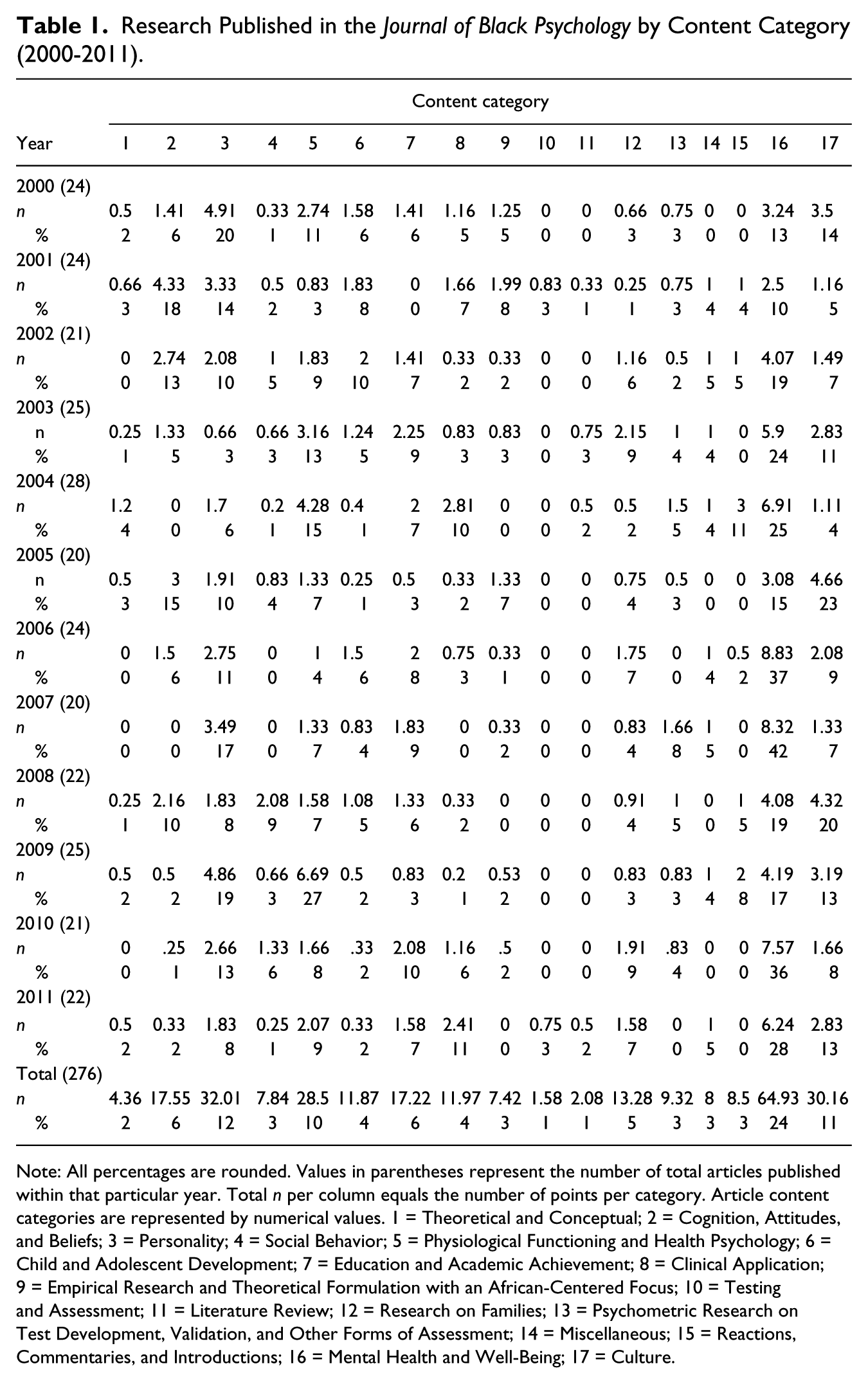
Note: All percentages are rounded. Values in parentheses represent the number of total articles published within that particular year. Total n per column equals the number of points per category. Article content categories are represented by numerical values. 1 = Theoretical and Conceptual; 2 = Cognition, Attitudes, and Beliefs; 3 = Personality; 4 = Social Behavior; 5 = Physiological Functioning and Health Psychology; 6 = Child and Adolescent Development; 7 = Education and Academic Achievement; 8 = Clinical Application; 9 = Empirical Research and Theoretical Formulation with an African-Centered Focus; 10 = Testing and Assessment; 11 = Literature Review; 12 = Research on Families; 13 = Psychometric Research on Test Development, Validation, and Other Forms of Assessment; 14 = Miscellaneous; 15 = Reactions, Commentaries, and Introductions; 16 = Mental Health and Well-Being; 17 = Culture.
The mental health and well-being category accounted for the largest percentage of articles (24%) during the 10-year time span. The second largest category focused on personality and identity (12%). Culture and physiological functioning and health psychology composed the third and fourth largest categories (11% and 10%, respectively). Altogether these categories accounted for 57% of the articles published in this 12-year span, with the remaining categories comprising approximately 43%. Of the remaining categories, 2% were cognition, attitudes, and beliefs; 6% were education and academic achievement; 3% were research on families; 4% were child and adolescent development and related to clinical application; 3% were African-centered or Afrocentric research, reactions, commentaries, and introductions, psychometric research, social behavior, and miscellaneous; and 2% were theoretical and conceptual. One percent of articles were research reviews and testing and assessment.
Table 2 lists and ranks the top 10 contributors to the JBP during this 10-year span. The author making the most contributions to the JBP during this time was Arthur Whaley. The second highest contributor was Aaronette White, 1 followed by Faye Belgrave and Joel Wade as the third and fourth highest contributors, respectively. Rodney Clark 1 was the fifth highest contributing author.
Weighted Author Contributions to the Journal of Black Psychology: 2000-2011.
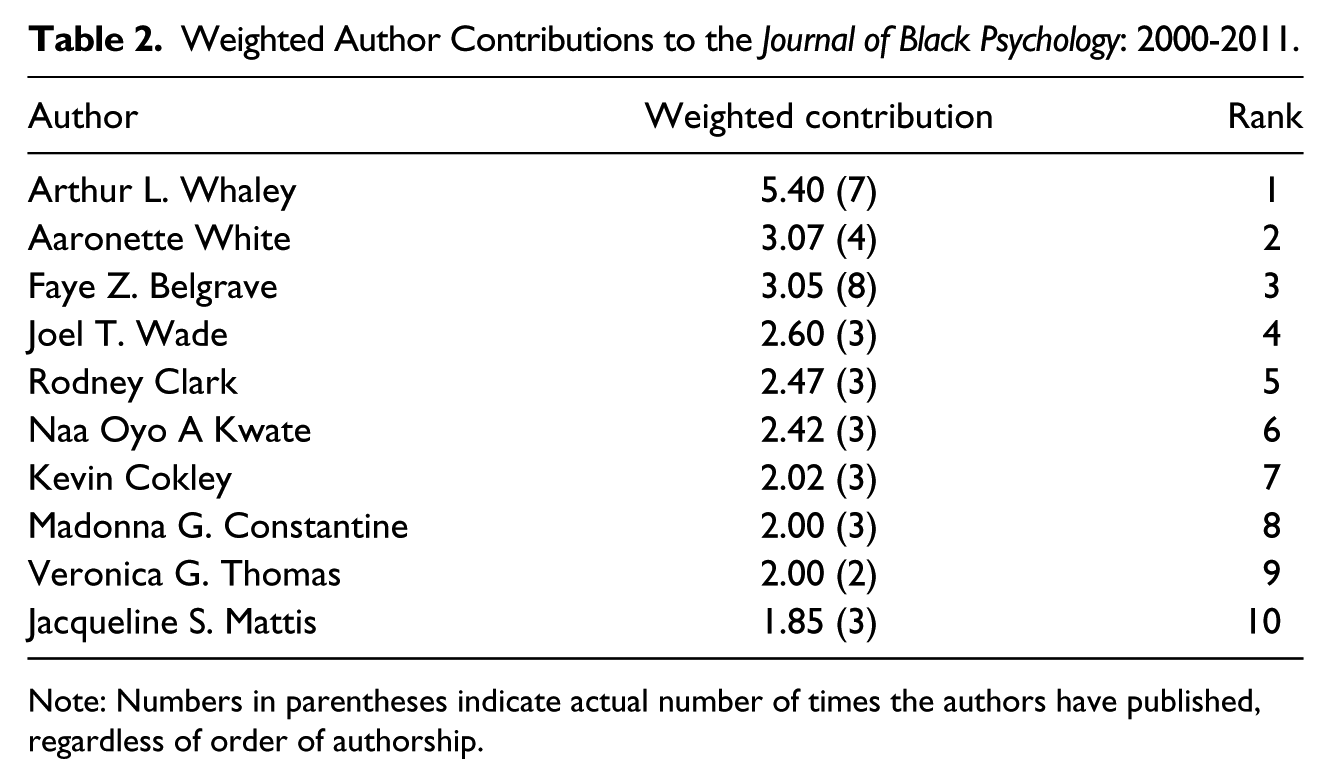
Note: Numbers in parentheses indicate actual number of times the authors have published, regardless of order of authorship.
Table 3 lists the top 10 contributing institutions during this 10-year span. The highest ranked contributing institution was the University of Michigan. The second highest ranked institution was Howard University, followed by the University of North Carolina at Chapel Hill and Virginia Commonwealth University as the third and fourth highest ranked institutions, respectively. The University of California at Riverside was the fifth highest ranked institution.
Weighted Ranking of Top Contributing Institutions: 2000-2011.
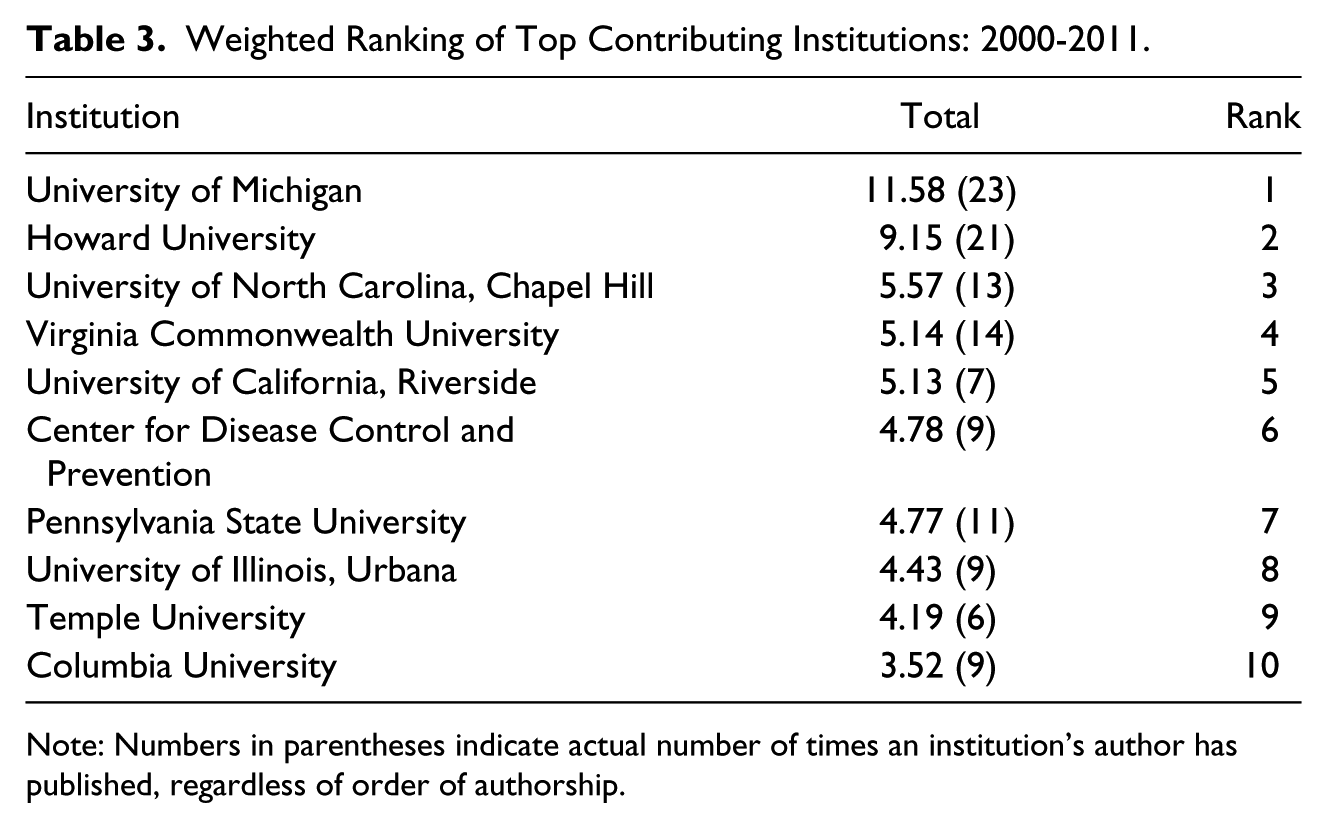
Note: Numbers in parentheses indicate actual number of times an institution’s author has published, regardless of order of authorship.
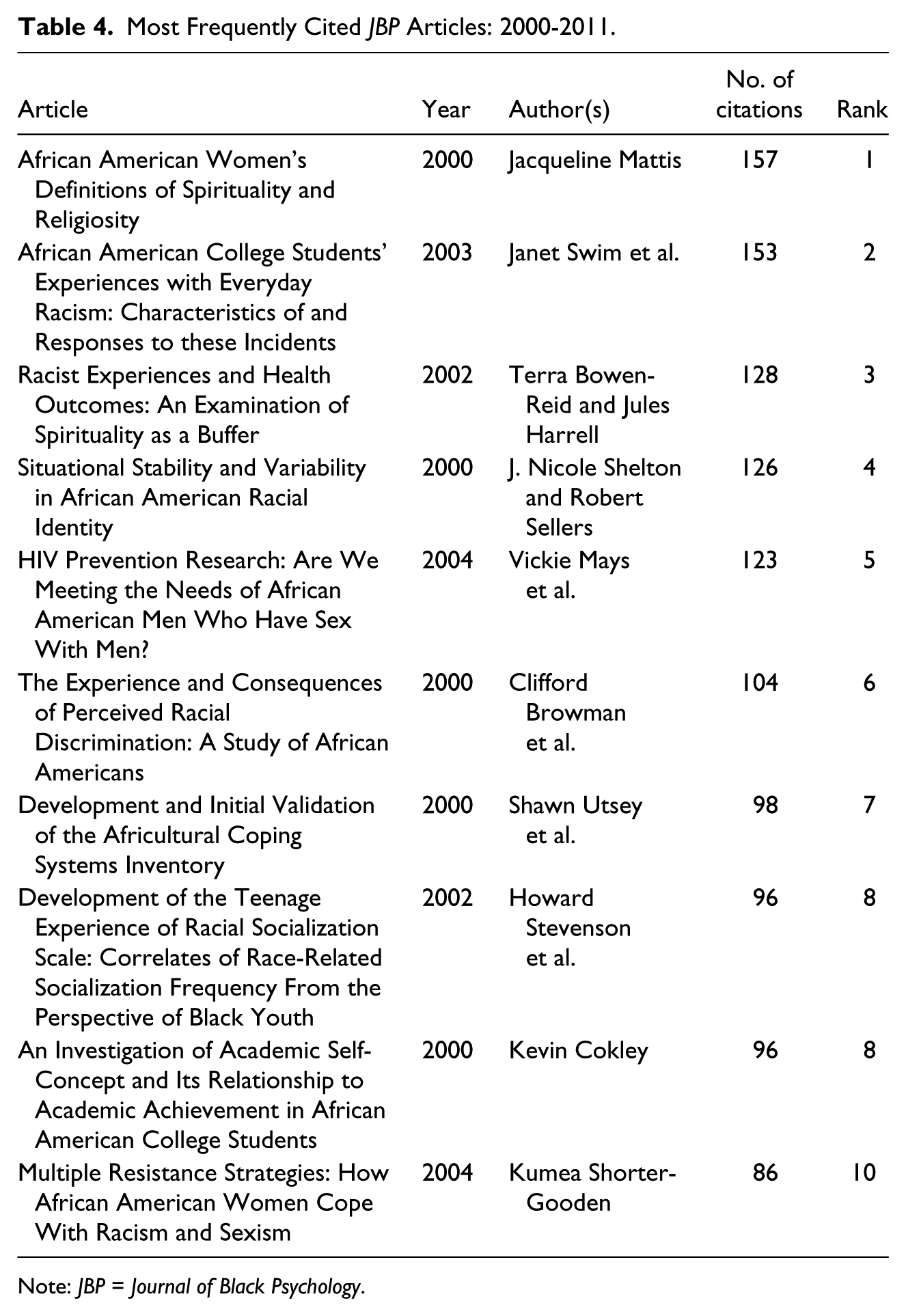
Table 4 presents the top 10 most highly cited articles during this 12-year span. These articles clustered generally around the themes of spirituality, coping, racism, racial identity, and racial socialization. The author with the most cited article was Jacqueline Mattis.
Most Frequently Cited JBP Articles: 2000-2011.
Note: JBP = Journal of Black Psychology.
Table 5 presents data on gender focused articles. There were three times more articles that focused on females than males. Additionally, Table 6 presents articles that focus on group comparisons. Approximately 9% (21 out of 276) articles involved group comparisons. All 21 articles of comparative research compared Black participants to White participants. There were also a few studies that included other ethnic minorities in these comparisons.
Articles With an Exclusive Gender Focus: 2000-2011.

Racial/Ethnic Comparative Research: 2000-2011.
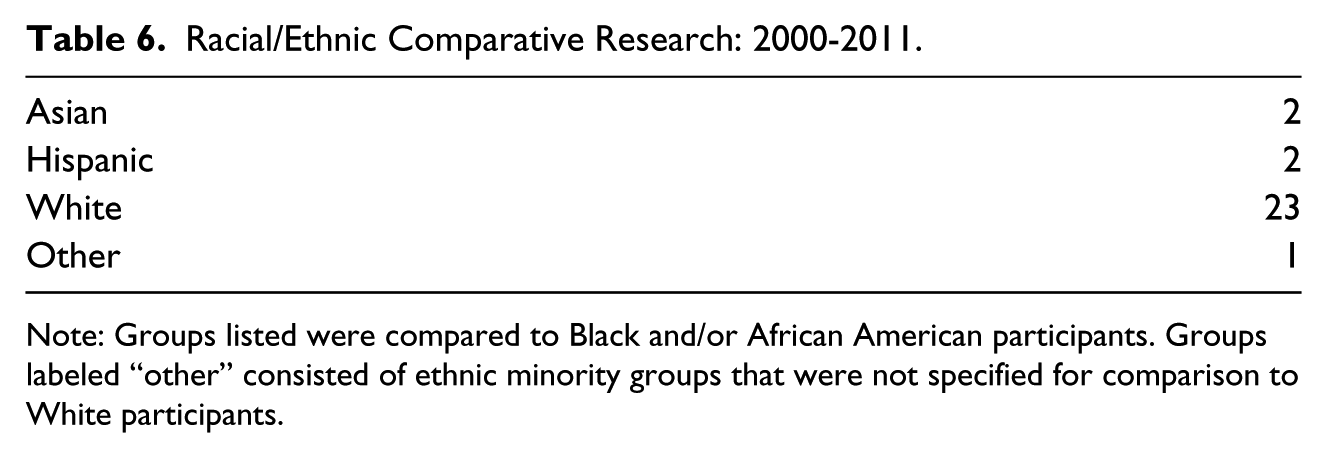
Note: Groups listed were compared to Black and/or African American participants. Groups labeled “other” consisted of ethnic minority groups that were not specified for comparison to White participants.
Discussion
The current content analysis reveals some interesting results and trends when compared to the previous content analysis conducted by Cokley et al. (2001). Both content analyses indicate a great deal of consistency in the categories identified as primary areas of research for the JBP. The results indicated that the majority of articles were published in four categories: mental health and well-being, personality and identity, culture, and physiological functioning and health psychology. The predominant categories are consistent with the mission of the JBP. It should be noted that two of the categories, mental health and well-being and culture, were not identified in the previous content analysis and are not explicitly listed in the mission statement of the JBP. Research in these two areas has increased considerably in the last decade. The popularity of mental health and well-being research is no surprise as researchers seek to better understand the impact of racism and race-related stress on people of African descent. The JBP would appear to be an ideal publication outlet for this type of research. Similarly, given the centrality of religion and spirituality to the lives of people of African descent, as well as the importance of racial socialization, it is understandable why the culture category is a popular area of Black psychological research.
Similar to the Cokley et al. (2001) content analysis, the expanded personality and identity category remained one of the most published areas of Black psychological research. While it is no longer the most published area of study that appears in the JBP, personality and identity research is still very popular. The area of personality and identity most often examined was racial identity. One area of theoretical debate is whether racial identity is a personality construct. In the previous content analysis conducted by Cokley et al. (2001), racial identity was also classified in the personality category. Given the disagreement on whether racial identity is actually personality (see Azibo, 1990; Azibo & Robinson, 2004; Baldwin & Bell, 1985; R. L. Williams, 1981, for proponents of racial identity as personality), the category was expanded to include both.
Physiological functioning and health psychology was the fourth most popular area of research. This is consistent with the previous content analysis, where physiological functioning and health psychology was also the fourth most popular area of research. This would appear to support a view that a holistic approach in Black psychology necessitates studying both the psychological and physical as interrelated and important in the overall health of people of African descent.
As described earlier, some of the 17 categories reflect potentially multiple foci. For example, the culture category includes articles that focus on spirituality, racial socialization, and acculturation. In most instances there were no predominant foci or themes within each category, which indicated that the categories were adequately represented. However, there are two exceptions worth noting. The category “Cognition, Attitudes, and Beliefs” is described as dealing with topics such as thinking, categorizing, schemas, intelligence, and perception. On close inspection of the kinds of articles published in this category, the majority of articles involved perception, specifically, perceived racial discrimination. Thus, articles focusing on thinking, categorizing, schemas, and intelligence were underrepresented. The category “Mental Health and Well-Being” is described as focusing on various aspects of mental health and psychological well-being. Closer inspection of the kinds of articles published in this category revealed that a disproportionate number focused on coping, and often coping with racism. Thus, other areas pertaining to mental health and well-being (e.g., anxiety and depression) were underrepresented.
It is notable that there has been a significant decrease in reactions and commentaries, which were among the most published articles between 1985 and 1999. Given the increased visibility of the JBP, and the increased number of empirical submissions, it is perhaps the case that the editorial staff is less compelled to publish reactions and commentaries. It could also be the case that there were more socially and racially charged issues to respond to in the late 1980s and 1990s (e.g., transracial adoption, the Bell Curve book) than in the following decade. This trend is probably in the best interests of the JBP because reactions and commentaries are rarely cited and thus do not contribute to the JBP’s impact factor.
Another trend that deserves attention is in the category of empirical research and theoretical formulations with an African-centered focus. This category is arguably what distinguishes the JBP from all other psychological journals. The previous editor-in-chief, Shawn Utsey, and current editor-in-chief, Kevin Cokley, have both stated their desire to see more submissions in the area of African-centered psychology, especially empirical research (Cokley, 2009; Utsey, 2008). However, this category remains one of the smallest areas of publication in the JBP. It is difficult to know why African-centered psychological research does not attract many submissions and is not a highly published area. The JBP is marketed as presenting the most innovative peer-reviewed, empirical, theoretical, and methodological research on the behavior and experiences of Black and other populations from Black or Afrocentric perspectives, yet Afrocentric perspectives are not highly represented in articles published in JBP. In a content analysis of the Journal of Counseling Psychology, Buboltz et al. (1999) commented that the primary identity of counseling psychology is “reinforced in the pages of the JCP” (p. 500). The mission and purpose of the ABPsi is written in explicitly African-centered language (e.g., “liberation of the African mind,” “promoting and advancing the profession of African psychology”). Based on the current content analysis, as well as the previous content analyses, it is not clear if the primary identity of the ABPsi is reinforced in the pages of the JBP. Perhaps it is the case that the philosophical and ideological orientation of African-centered psychology found in the mission and purpose of the ABPsi does not easily lend itself to the empirical methods used by authors who published in the JBP.
A second purpose of this content analysis was to rank the top contributors to the JBP between 2000 and 2011. Arthur Whaley and Aaronette White were ranked first and second, respectively, while Faye Belgrave and Joel Wade were ranked third and fourth, respectively. The majority of Whaley’s articles were in the areas of mental health/well-being and physiological functioning/health psychology. Aaronette White’s articles were in multiple areas including clinical application, empirical research with an African-centered focus, research on families, and miscellaneous. The majority of Belgrave’s articles were in the child and adolescent development, while the majority of Wade’s articles were in the area of cognition, beliefs, and attitudes. It is interesting that out of the top 10 contributors, only one contributor (Faye Belgrave) was among the top 10 contributors in the previous JBP content analysis. This may indicate a changing of the guard as younger scholars begin to publish more frequently and older scholars publish less frequently. It is also interesting that among the top 8 living contributors, only four are current members of the ABPsi (personal communication, A. Jackson, December 11, 2012).
A third purpose of this content analysis was to rank the institutions that have contributed the most publications to the JBP. The University of Michigan was the number one ranked institution. Initially, it may seem odd that the University of Michigan would be number one without having any authors ranked in the top 10, but on closer examination this can be explained by the fact that Michigan authors publish in research teams with multiple scholars. While having multiple authors is a good research strategy, it also results in lowered weighted contributions of individual authors. Michigan’s ranking improved from its number two ranking in the previous JBP content analysis. Clearly, the University of Michigan has been a leader in advancing the field of Black psychology for the past two decades. Howard University was the second ranked institution, followed by the University of North Carolina at Chapel Hill and Virginia Commonwealth University as the third and fourth ranked institutions, respectively. Three of the institutions (i.e., Michigan, Howard, and Temple) were also ranked in the top 10 in the previous JBP content analysis.
Additionally, we examined articles for their focus on gender and found that generally more focus was placed on females than males. Given the differential societal challenges facing males and females, it would seem prudent that more male focused articles also be published. There are certainly challenges carrying this out, especially at the college level where there are many more Black females in college than Black males. Nevertheless, a concerted effort to publish more research that focuses on Black males needs to take place. Finally, we examined articles that involved racial or ethnic group comparisons. The group comparisons were almost exclusively between Blacks and Whites. The use of the comparative research framework has a somewhat contested history in Black psychology (see Awad & Cokley, 2009; Azibo, 1988). Often this contestation is out of concern that Black samples are being compared to a White norm. Beyond this obviously problematic stance, there is also concern that some comparative research studies are not explicitly conceptualized to contribute to the field of Black psychology. As pertaining to the JBP, this could include comparative research articles where it is not clear why the articles are being specifically published in the JBP as opposed to, for example, more multiculturally oriented journals.
Limitations
As the results of this content analysis are taken to represent an accurate portrayal of trends within the field of Black psychology, there are limitations that should be mentioned. As is the case with all content analyses, although we attempted to use objective criteria to place articles in categories, ultimately there is a certain amount of subjectivity that goes into these categorizations. We created and coded the categories, and it is possible that another group of researchers could create and code different categories. Additionally, while the JBP is the only journal of its kind that focuses exclusively on promoting a greater understanding of the psychology of Black people, it is not the only outlet in which such articles are published. Scholars also publish research that is consistent with the missions of JBP and the ABPsi in other outlets. Thus, this content analysis does not reflect the entire body of psychological literature that may be characterized as Black psychology. Finally, while we examined gender and racial/ethnic group comparisons, we did not systematically examine characteristics of the samples. Future content analyses should include a description of the samples.
Implications
These limitations notwithstanding, we believe this content analysis contributes valuable information to inform researchers and scholars about the status of the field of Black psychology, as examined through the lens of publications in the JBP. The JBP is arguably the most important and influential outlet for publishing research in the field of Black psychology. Some of the most seminal articles in the field of Black psychology have been published in the JBP. Articles by William Cross (1978) and Robert Sellers, Tabbye Chavous, and Deanna Cooke (1998) in the area of racial identity; Hope Landrine and Elizabeth Klonoff (1996), Terra Bowen-Reid and Jules Harrell (2002), and Shawn Utsey (1998) in the area of racial discrimination; and Howard Stevenson (1994, 1995) in the area of racial socialization are among the most highly cited JBP articles in their respective areas. As evidenced by their high citations, these articles (and others) published in the JBP continue to exert great influence in shaping and informing research in Black psychology.
The results of this content analysis reflect trends as well as underscore important issues that face the field of Black psychology. Black psychology can be thought of as consisting of several perspectives or schools of thought, one of which is African-centered psychology. Based on the results, it would appear that the status of African-centered (also referred to as Afrocentric) psychological research is stagnant at best. Either the number of submissions of African-centered psychological research is low or the research is not making it through the peer review process. This trend may reflect an uncomfortable truth that many current researchers are not trained in, and thus less guided by, African-centered paradigms created and used by an older generation of psychologists. With the exception of scholars such as Kobi Kambon and Daudi Azibo, much of the early work done in African-centered psychology was more theoretical than empirical. If the philosophical and ideological orientation of the ABPsi is truly African-centered, it may be time for leaders to have a discussion about creating another complementary outlet to the JBP that is explicitly African-centered in its focus.
Defining what constitutes Black psychology, and thus what is appropriate to be published in the JBP, continues to be an important, albeit difficult, discussion. During the process of conducting this 12-year review of content, it was apparent that there are various perspectives about the field of Black psychology. For example, some researchers were interested in racial or ethnic differences, and thus used a racial comparative framework with either no reference to Black psychology literature (e.g., Weathers, Frank, & Spell, 2002) or minimal reference to Black psychology literature (e.g., Glanville & Nowicki, 2002). Other researchers used a social psychological framework of prejudice to examine attitudes toward Blacks with a predominantly White sample (e.g., O’Neal, Medlin, Walker, & Jones, 2002). Some researchers offered technically and theoretically sophisticated articles, but the explicit links to the field of Black psychology were less apparent (e.g., Madhere, Harrell, & Royal, 2009). While these examples were relatively few, they still beg the question of what constitutes research in Black psychology. The only common denominator for empirical research appears to be including a Black sample. However, it would seem to be in the best interests of the field if a higher standard were used. Otherwise, researchers with no grounding in Black psychology or experience with Black populations will believe themselves to be competent to conduct and publish research in the JBP simply because they have a Black sample. Imagine an individual trying to publish in the Journal of Family Psychology having little to no knowledge about family systems, or an individual trying to publish in Neuropsychology yet having only a cursory understanding of the brain.
Demanding high and consistent standards for the JBP guided by the question “How does this study (or scholarly contribution) contribute to advancing theory, research, and practice of Black psychology?” will encourage authors to be more thoughtful in grounding their articles in the extant Black psychology literature. Furthermore, if Black psychology is indeed a viable field of research, and not simply the application of Eurocentric psychological theories to Black people, then Black psychological research should offer culturally specific definitions, constructs, models, theories, measures, and conceptualizations of behavior and mental health rooted in the lives and experiences of Black people. In fact, the current content analysis revealed important contributions in the use of culturally specific constructs and measures, including (1) validating an Africentrism Scale (Kwate, 2003), (2) Afro-cultural value socialization (Tyler, Boykin, Boelter, & Dillihunt, 2005), (3) Africentric cultural values (Wallace & Constantine, 2005), (4) race-related stress (Franklin-Jackson & Carter, 2007), and (5) culture-specific coping (Utsey, Bolden, Lanier, & Williams, 2007). While not all research in the field of Black psychology is defined by the use of culturally specific constructs and measures, the absence or dearth of such research should be of concern.
Along these lines, research using a racial comparative framework must be carefully conducted and critically reviewed. In other words, the onus is on the researcher to make explicit how the use of a racial comparative framework is advancing Black psychology rather than engaging in what is often termed cross-cultural research. Cross-cultural psychology typically involves comparative research, is often etic in orientation, and usually seeks a “universally applicable psychological theory” (Segall, Lonner, & Berry, 1998, p. 1103). The field of Black psychology is inherently emic in orientation, born out of the necessity to understand and explain Black people on their own terms rather than using theories “developed by White psychologists to explain White people” (J. White, 1970, p. 44). That said, this is not a blanket indictment that racial comparative research is never appropriate for the JBP. Zeigler-Hill’s (2007) study is an example of a racial comparative study that is informed by foundational literature in Black psychology and has implications for research and theory in Black psychology. Clearly, the JBP has published some racial comparative studies. Rather, this is a statement that racial comparative research is appropriate under certain conditions (readers are referred to Awad & Cokley, 2009, and Azibo, 1988, for an extended discussion on these conditions). Authors submitting papers to the JBP should become familiar with the conditions under which racial comparative research is appropriate.
As individuals continue to conduct research involving people of African descent, we believe that it will be important for the editor-in-chief, associate editors, and editorial consultants to have a clear and unified vision of the field and to publish research and scholarship that is consistent with the mission and purpose of both the JBP and the ABPsi. Questions involving the sufficiency of including a sample of African descent, conducting race comparative research, and the importance of using Black/African-centered psychological theories, constructs, and measures must be continually engaged and debated as the JBP becomes an increasingly popular outlet for researchers. How these questions are answered will undoubtedly influence the direction of the field of Black psychology.
Footnotes
Author’s Note
Tamara Brown served as the action editor for this article.
Declaration of Conflicting Interests
The authors declared no potential conflicts of interest with respect to the research, authorship, and/or publication of this article.
Funding
The authors received no financial support for the research, authorship, and/or publication of this article.