



Abstract
This study used critical interpretive phenomenological analysis to explore the lived experiences and phenomena of motherhood of five young Black women in Pennsylvania as they transition into motherhood. The core themes that emerged were systemic inequities, kinship, survival, and apprehension around the transition to motherhood. Additional analysis suggested that racism, structural oppression, childhood trauma, healthcare coercion, perinatal mental health distress, family chaos, poverty and economic insecurity, and birthing trauma were also relevant. These findings suggest that experiences from throughout the life course, including early trauma, may influence the journey to motherhood and may be intimately connected to mental health before, during, and after pregnancy. If clinicians and policy makers can better understand the lived experiences of Black women transitioning into motherhood, they can better engage in authentic, collaborative, patient-centered care.
Black Women and Maternal Mortality
Maternal mortality is more than three times higher for Black mothers in the United States (U.S.) at 42.4 deaths per 100,000 live births than it is for White mothers at 13.0 (Hoyert & Miniño, 2020). In maternal healthcare, Black women are dying more than anyone else (Petersen, 2019). As highlighted by Crear-Perry et al. (2021), “In the United States, unacceptably high maternal mortality persists, and our dismal ranking relative to other developed nations is further marred by vast social inequities in the burden of loss” (para. 2). Alongside loss of life, racial health disparities cost the U.S. approximately $135 billion annually in lost productivity and excess healthcare costs (Taylor, 2020; Yearby, 2020). These disparities in maternal health and their impacts warrant deeper interrogation. Research supports that maternal mortality among Black women is a serious public health crisis that is driven by multiple complex issues, not all of which are related to biological factors (like cardiovascular disease and eclampsia) or even social determinants of health (defined as the conditions in which people are born, grow, live, work, and age) like poverty, healthcare access, or educational level alone (Sakala et al., 2018; Taylor, 2020).
Racism and Maternal Health
The literature on maternal health increasingly implicates racism as the root cause of racial health disparities (Taylor, 2020; Yearby, 2020). Racism is a complex system of oppression that disproportionality harms Black mothers and their children across the lifespan (Mekawi, 2023). Structural racism (overarching racial bias that infiltrates an entire society) refers to a form of racism that is deeply entrenched in public systems, policies, practices, and beliefs that perpetuate the systematic oppression and disempowerment of people of color (Braveman, 2017; Dean & Thorpe, 2022; Taylor, 2020). Many consider structural racism as a social determinant of health and is closely related to systemic and institutional racism. Narrower in scope, institutional racism refers to biased and unfair practices that occur in organizations, and systemic racism refers to the perpetuation of discrimination within a system. This widespread oppression has infiltrated all aspects of life and has fundamentally shaped maternal healthcare in the U.S. (Taylor, 2020). As Taylor (2020) indicated, “Structural racism is a powerful social determinant of maternal health that has roots in a historical system of oppression and devaluing of women of color, and persists today in more subtle healthcare policies and practices” (p. 506).
Historically, Black women’s reproductive capacity was a critical form of economic and social capital (Morrison, 2019). Black women were forced to bear children to generate a labor force, and many of today’s gynecological advancements in the U.S. stem from the exploitation of enslaved women’s bodies. These realities trace the deep roots of racial disparities in maternal health back to the commodification of enslaved Black women, which elucidates how structural racism is intimately connected to maternal healthcare and present realities for Black mothers. Chambers et al. (2021) used grounded theory comparative analysis to ask Black women directly to reflect on how structural racism affected their reproductive journeys. What is increasingly clear is that racism, including structural racism, is believed to be at the core of why Black mothers are dying (Crear-Perry et al., 2021).
Racism and Mental Health
Exposure to racial discrimination has been found to contribute to negative mental health among Black Americans (Khahra et al., 2019; Pieterse et al., 2012). Negative mental health includes symptoms related to depressive disorders, stress disorders, and reduced psychological health (Banks et al., 2008; Hope et al., 2015). Helplessness, or the perception of things being outside of one’s control, which may include cognitive exhaustion, is believed to be related to depression among African American young adults who experience racial discrimination (Madubata et al., 2018).
When focusing on the interplay of Black motherhood, racism, and mental health, chronic worry and anxiety about racism and discrimination may be related to pregnancy complications (Braveman et al., 2017). Research has found that women with higher depression levels are more likely to experience third trimester complications such as preterm birth compared to women with lower depression levels (Nutor et al., 2018). Maternal experiences of racism are also associated with more severe maternal depression and more severe depression in the children of those mothers, suggesting that the intergenerational and life course framework of maternal health is important (Mekawi et al., 2023). Black women specifically endure a “bone-deep accumulation of traumatizing life experiences and persistent insults” (Villarosa, 2018, para. 78) that influences their experiences of pregnancy and motherhood. Thus, the intersection of racism, mental health, and Black motherhood represent a unique public health concern that warrants consideration, particularly against the backdrop of the maternal mortality crisis among Black women in the U.S.
Theoretical Framework
The Life Course Perspective (LCP) framework is a tool for understanding human behavior (Germain, 1990, 1994) and was used to guide inquiry and the interview protocol for this study. The LCP examines how psychological, biological, and sociocultural factors contextualize and shape people’s life experiences (Hutchinson, 2019). From this perspective, we were interested in and included interview questions that addressed transitions, significant life events, and turning points in young Black mothers’ lives. A core component of the LCP framework suggests that what happens in one period of someone’s life is connected to what happens in other periods of that person’s life (Hutchinson, 2019). This approach was useful for exploring transitions to motherhood, as it explores how childhood influences adolescence and adulthood, including the journey to motherhood (Johnson et al., 2011). Using the LCP framework to understand Black women’s transitions to motherhood may improve the ability of healthcare professional to provide critical support to Black families in community-based mental health settings and beyond.
Current Study
Despite a growing urgency to address health disparities affecting Black women (McLemore & D’Efilippo, 2019), the body of research centering the viewpoints of Black women themselves, specifically on their transition into motherhood, remains limited. Although emerging literature is investigating the experiences of Black women throughout their reproductive life cycle (Chambers et al., 2021), comprehensive research concerning the various stressors faced by Black women at different life stages and how these challenges shape their views on their transitions to motherhood is lacking.
By exploring this subject through the voices of Black women, we aimed to clarify how their early experiences may shape their views on their transition to motherhood. We also sought to understand how these formative experiences affected their maternal health—mental and physical—before, during, and after pregnancy. In the current study, we examined the phenomenon of transitioning to motherhood among Black women. In doing so, we expanded on the gap noted by Spates (2020) and others, who acknowledged that although Black women have experienced distinct disparities related to their identity, the research has scarcely focused on how they have perceived these challenges while “navigating entangled systems of oppression” (Spates et al., 2020; para 1). To better understand this phenomenon and address the gap in the literature, we conducted a critical interpretative phenomenological analysis (IPA) research study using an LCP framework to explore how young Black women perceive their transition into motherhood. Specifically, this study addressed the following research question: What are the lived experiences and phenomena of transitioning to motherhood among young Black women who are participating in a maternal and child health home visiting program in Southeastern Pennsylvania?
Method
Participants
Demographic Information for Participants.
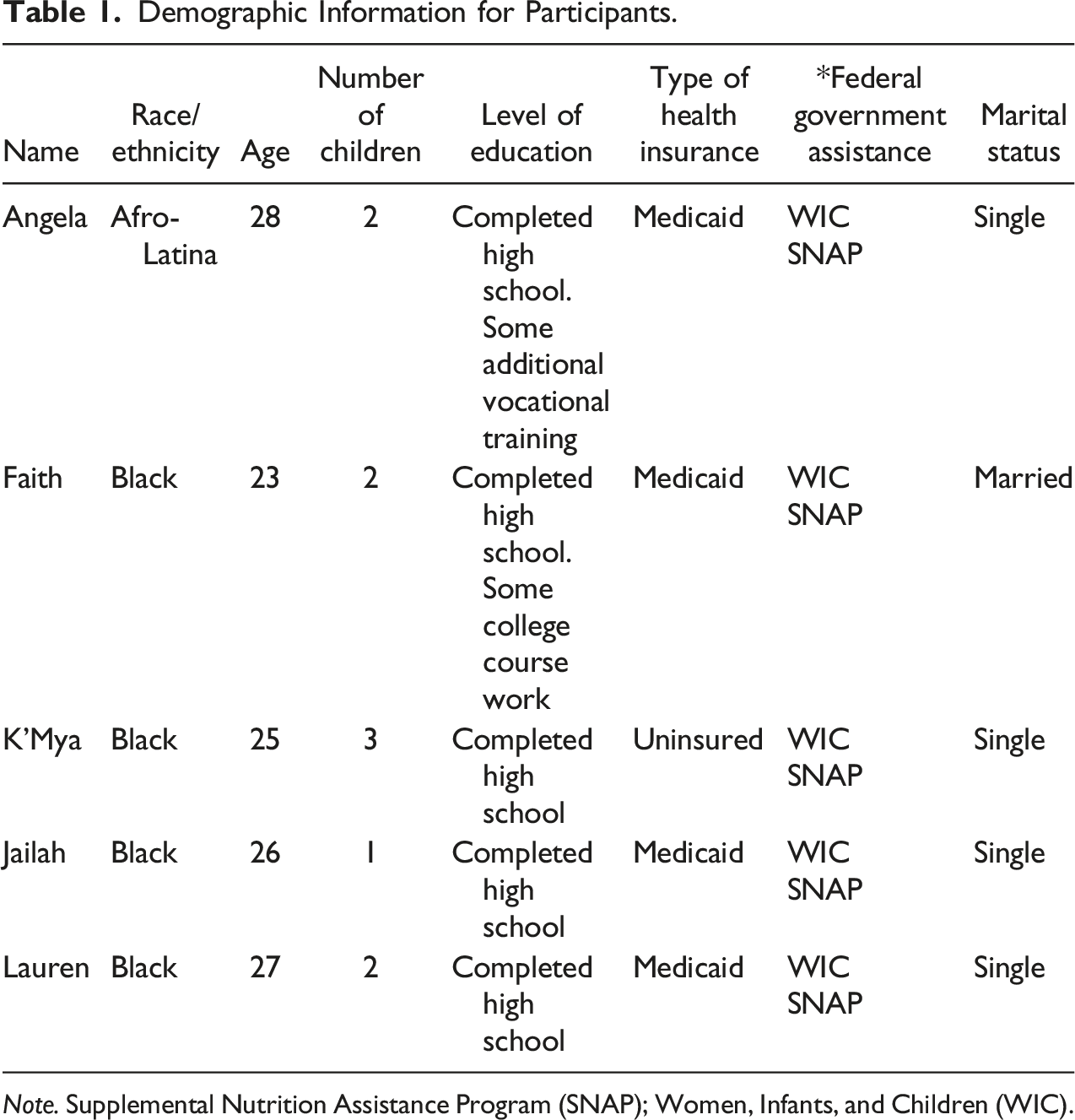
Note. Supplemental Nutrition Assistance Program (SNAP); Women, Infants, and Children (WIC).
Study Design
Arising from phenomenological and hermeneutic (interpretive) traditions, this study used IPA, which is a qualitative methodology that focuses on the core structures of human experience. This method is increasingly being used at the intersection of psychology, public health, and maternal and child health research (Aparicio, 2017; Aparicio et al., 2019; Smith & Osborne, 2009; Stephens & Aparicio, 2017).
IPA is phenomenological in that it provides an extensive, rich exploration of a specific phenomenon and hermeneutic in that it involves multiple layers of interpretation (Aparicio et al., 2019; Husserl, 1983; Smith & Osborne, 2009). It allows the researcher to conduct an in-depth exploration of the lived experiences of an individual or group of individuals around a specific phenomenon—in this case, the transition to motherhood among young Black women participating in a maternal and child health home visiting program (Aparicio, 2017; Aparicio et al., 2019; Smith & Osborne, 2009; Stephens & Aparicio, 2017).
IPA highlights the role that participants have in constructing their own world view. The participants view, understand, interpret, and make sense of the world around them through the lens of their lived experiences. Through the interview process, participants share these interpretations with the researcher, thereby engaging in a “considerable amount of reflecting, thinking, and feeling as they work through what it means” (Smith et al., 2009, p. 3). The researcher then collaboratively interprets what the participant shared and uses this information to further guide the qualitative interview process and data analysis.
This study was also embedded in a community-based participatory research (CBPR) framework. CBPR focuses on collaborative efforts involving community members, community organizations, and researchers on a topic important to the community. CBPR intends to mobilize community engagement and collaboration to address public health priorities, improve community health, decrease inequity, and bridge the gap between science and practice (Israel et al., 1998; Ragavan et al., 2020; Wallerstein & Duran, 2010). Thus, the community-based organization was instrumental in defining the research question and parameters of the study.
Study Setting
This study was conducted in the context of a partnership between a university researcher and a maternal and child health agency serving a semi-rural county in Southeastern Pennsylvania. “ABC Maternal and Child Health Agency” is a pseudonym for the actual agency. “ABC Agency” is used throughout the manuscript to protect confidentiality. ABC Agency provides a range of services, all focused on meeting the needs of vulnerable children and families across the county. All participants can be described as high-need families who are vulnerable to economic, health, and social stressors and are receiving supplemental nutrition program benefits through the federal government.
Families are generally self-referred to ABC or referred through local social services and healthcare agencies. ABC also directs outreach through various community events like health fairs and through visual advertising such as flyers placed throughout the community and on social media. ABC has multiple programs, one of which is a maternal and child home visiting program called “Healthy Start.” To be eligible for the “Healthy Start” program, mothers need to either have a confirmed pregnancy or have given birth within the last 24 months, live in the county, and qualify for federal assistance. There is no age requirement for mothers to participate in the program, but most are between the ages of 18 and 28. Consistent with CBPR approaches, the community partners and researchers worked together in an iterative and reflexive process to collaboratively identify the focus and parameters of the research. The academic members of the team were particularly interested in the experiences of Black women, and the community partners were particularly interested in the experiences of young Black women. This sample was agreed upon by members of the research team (community-based and academic-based) but also reflects a population of convenience, as this is the population that is served by the home visiting program at the agency.
While maternal health inequities occur across various levels of socioeconomic status and age, this study focused on young Black women who experience low socioeconomic status and qualify for federal assistance. Although poverty is not the explicit focus of this study, it is relevant, as it is experienced by all individuals who receive services at ABC Agency.
Procedures
Consistent with IPA, participants were selected using purposive homo- geneous sampling, which refers to the intentional selection of participants who share specific characteristics or experiences, ensuring that the sample rep- resents a particular subgroup in depth. This method is appropriate for studies using IPA because IPA explores the lived experiences and perceptions of individuals within a group, making a homogeneous sample essential for generating detailed and nuanced insights about a phenomenon.
This study included a small sample size to align with IPA methodology, which suggests the following: In a phenomenological research tradition, the size of the participants can be between 2 and 25. The selection of these participants should reflect and rep- resent the homogeneity that exists among the participants’ sample pool. The essence of conducting an IPA research study with homogenous participants is to get a better gauge and a ‘better understanding’ of the overall perceptions among the participants’ ‘lived experiences.’ (Alase, 2017, p. 13)
A small homogeneous group of participants enabled multiple rounds of interviewing to best understand the phenomena of interest, which was also most appropriate for our research question (Brocki & Wearden, 2006; Eatough et al., 2008; Smith & Osborne, 2009).
The interview process used a series of three interviews for each participant, allowing researchers to gain an in-depth, nuanced understanding of the participants’ personal experiences and the meaning that they applied to those experiences (Seidman, 2013).
We conducted 11 one-on-one, in-depth, semi-structured interviews with (N = 5) young (mean age = 23) Black mothers participating in a home visiting program in an urban community situated within a semi-rural county in Southeastern Pennsylvania. The data for this study were acquired through semi-structured interviews, and file review was conducted for triangulation.
File review involved each participant’s home visiting program file, including medical and pregnancy information, and was completed within a single, private, locked, and secure office within a community health agency. The interviews were conducted with a single researcher and video recorded. All participants were invited to participate in three interviews with a possible fourth interview if needed. At the end of the first interview, the researcher asked permission to discuss and explore racial identity in the second interview. All participants agreed, and this issue was discussed in more depth in subsequent interviews.
Potential participants were first approached in person by their home visiting community health worker. Their community health worker, who described the study and assessed interest, was someone that the potential participants already knew and was also a Black woman.
Those who were eligible and interested were then contacted by the principal investigator (PI) via phone; provided additional information; and scheduled for an in-person meeting, wherein formal informed consent was reviewed and the participant decided on enrollment. When the home visitor first told the participants about the study and gauged their interest, she informed them that the PI and interviewer was a white woman.
Interviews occurred 1–4 weeks apart, permitting prolonged engagement with each participant. Participants were told that interviews would likely last between 30 and 90 minutes. The actual interviews ranged from 47 minutes to 134 minutes (mean = 87 minutes) for a total of 806 minutes or 13.4 hours of interview data. Three of the five participants engaged in three full interviews. One of the remaining two participants engaged in the first interview and scheduled a second interview but became homeless between the first and second meeting, resulting in postponement and eventual cancellation of the interview. A fourth participant engaged in the first interview and scheduled a second interview but experienced in tandem a familial and housing emergency, resulting in postponement and eventual cancellation of the interview.
Participants were given the choice to meet for an interview at the ABC Agency, in their homes, or at another location of choice. All but one participant requested to have the interviews conducted in their homes. One participant requested that the first meeting occur at her place of employment, where she had a private office. Her subsequent interviews took place in her home at her request. The in-home interviews were typically held in the living room or kitchen, although one interview was conducted on a front porch. With the exception of two interviews, the interviewer and interviewee were the only adults in the home. In one interview, an older grandparent was upstairs during the interview. In another, a partner was in another room. There were closed doors between the area that the interview was conducted and the location of the other adults. Young children or babies were at times present during interviews. Noise levels were variable, based on the activities and needs of the infants and children who were present. When infants started crying or a child had a need, the interview was paused. Multiple interviewees chose to breast feed or bottle feed their babies during the interviews and requested that the interviews continue, despite being offered a break.
Instrumentation
Selected Sample Interview Questions.
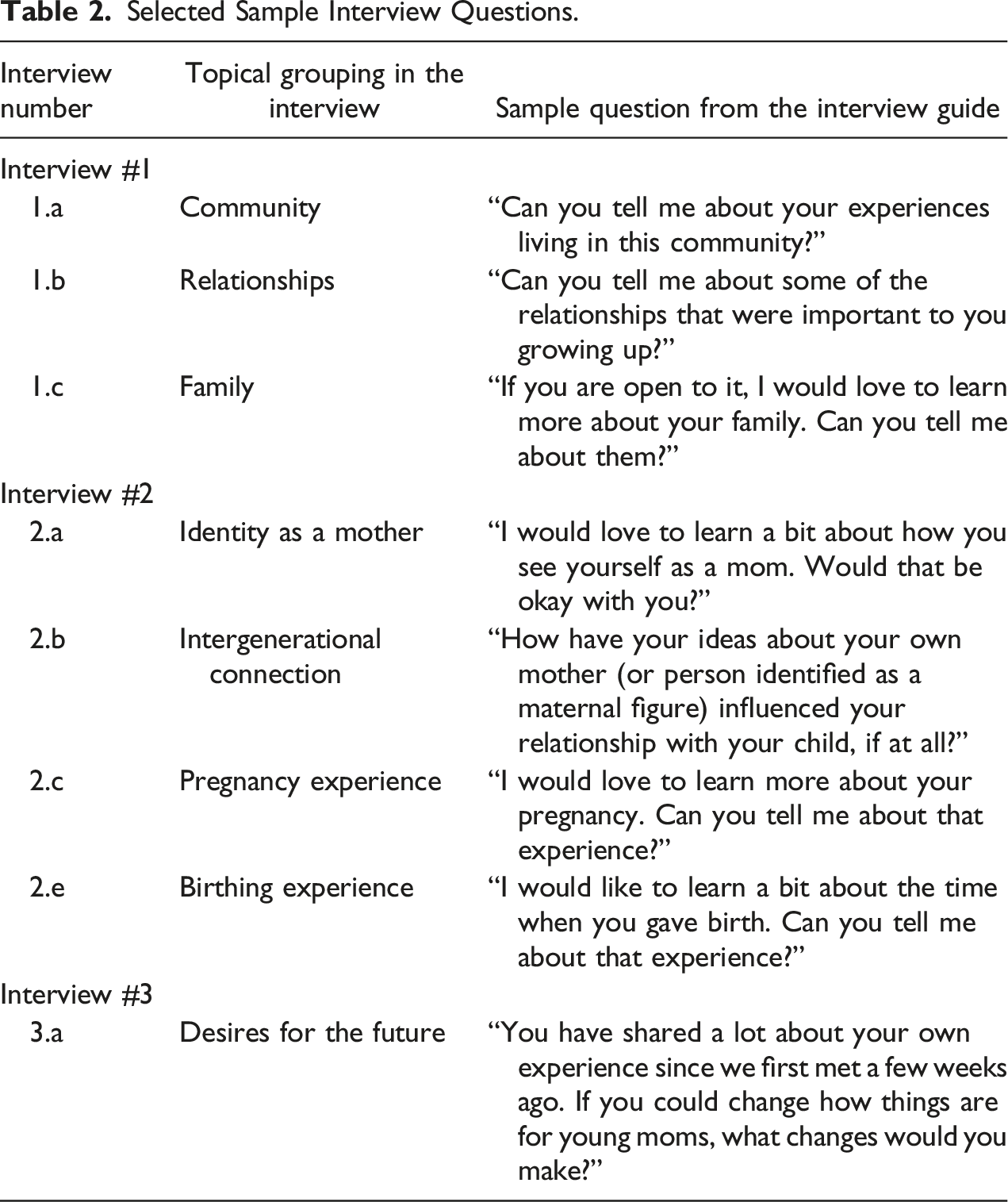
The final instrument and interview protocol was reviewed by a small, diverse panel of mental health professionals and ABC Agency staff members. Recommendations were integrated into the final version of the instrument before it was submitted to the Institutional Review Board (IRB) for review.
Ethical Considerations
IRB Approval
This study was approved by the university institutional review board College Committee for the Protection of Human Subjects. Data were collected from 2018 to 2019 over a 12-month period. Prior to commencing data collection, all participants provided formal written consent. Participants received one $10 Walmart gift card per interview; this amount was recommended by the community partner as an appropriate compensation that would not unduly influence or compel participation.
Data Management
Original audio files and transcripts were uploaded and stored in password-protected files. The audio file from each interview was recorded using a standalone device with no internet connectivity. Immediately following the interview (after the interviewer returned from conducting the interview), the audio file was securely uploaded using a USB connection to a secure, password-protected file on a secure, password-protected computer. The data were then uploaded from the computer file to a professional transcription service, where the files were kept private and protected from unauthorized access.
Once uploaded to the professional transcription service, the audio files were transcribed into readable, searchable text by professional research transcriptionists who had extensive training in privacy and confidentiality and in handling only the data required to perform the transcription. Once the data were transcribed and returned to the researcher, they were checked for accuracy by two members of the research team. All audio recorded interviews and transcriptions were then uploaded to Dedoose, a qualitative data analysis computer software package, for further processing.
Paper-based materials, including consent forms and personal information, were kept in a separate, locked filing cabinet within the PI’s private, locked office on a locked floor within a locked academic building on a University Campus, consistent with the APA ethical guidelines.
Positionality
Author 1 and sole interviewer identifies as a cisgender, White woman who is a mother. Author 2 identifies as a Black, queer, non-binary trans masculine person who is not a parent. Author 3 identifies as a cisgender, White woman who is a mother. Author 4 identifies as a cisgender, White man who is not a parent. Author 5 identifies as a cisgender, White woman who is not a parent. Author 6 identifies as a cisgender Black woman who is a mother. Author 7 identifies a cisgender Black woman who is not a parent.
The racial discordance in the interviewer-interviewee dyad was an ethical consideration related to positionality that emerged in this study. Evidence has shown that Black women may find it distressing to speak with a white woman about their experiences of marginalization and oppression (Oluo, 2019). Racial discordance in the interviewer-interviewee relationship may therefore raise racial tension and intrapersonal conflict between the interviewer and research participant. We worked to reduce this conflict by intentionally, openly, and candidly addressing these issues.
Data Analysis
The data analysis process for this study was guided by the 6-step process outlined in Smith et al. (2009). The PI, who was also the interviewer and participated in data analysis, trained other members of the coding team using the same standardized data analysis protocol (Aparicio et al., 2019; Begun et al., 2019; Smith & Osborne, 2009). These six steps include (a) reading and re-reading the data; (b) initial noting; (c) developing emergent themes; (d) searching for connection across emergent themes; (e) moving to the next case; and (f) looking for patterns across each case (or participant; Aparicio, 2017; Smith et al., 2009). The analysis is intended to be reflexive and iterative, with the analyst revisiting earlier phases throughout the process. The analyst does not become overly rigid or prescriptive but maintains a commitment to a well-codified, rigorous, IPA methodology (Larkin et al., 2006). Theoretical saturation (Hennink et al., 2017), which is a process of concurrently sampling, collecting, and analyzing data (Sandelowski, 1995), was reached when the data no longer revealed new or novel insights and began to repeat itself, such that further data collection would be redundant. By the end of the analysis process, themes were identified and organized around constructs that emerged from the data (inductive) rather than constructs that had been predicted (a priori or deductive) prior to data collection.
Qualitative Validity and Rigor.
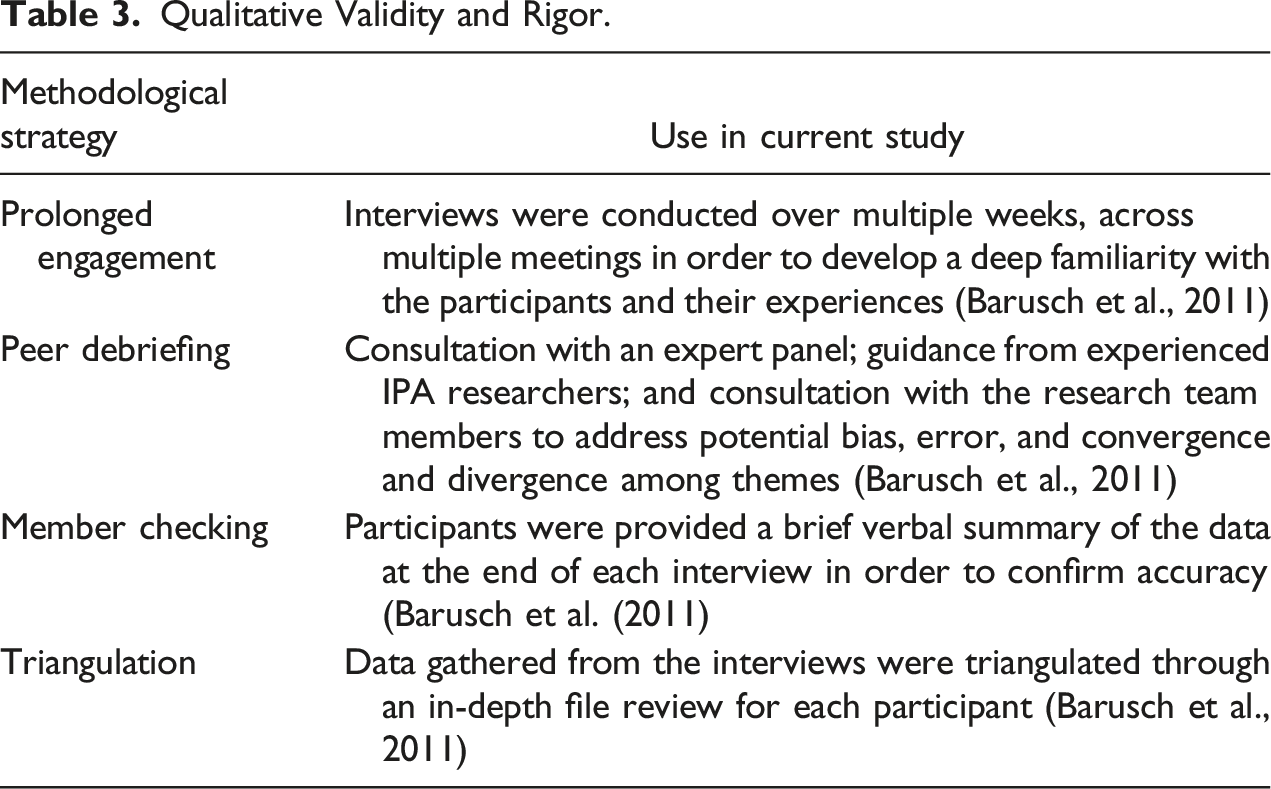
Results
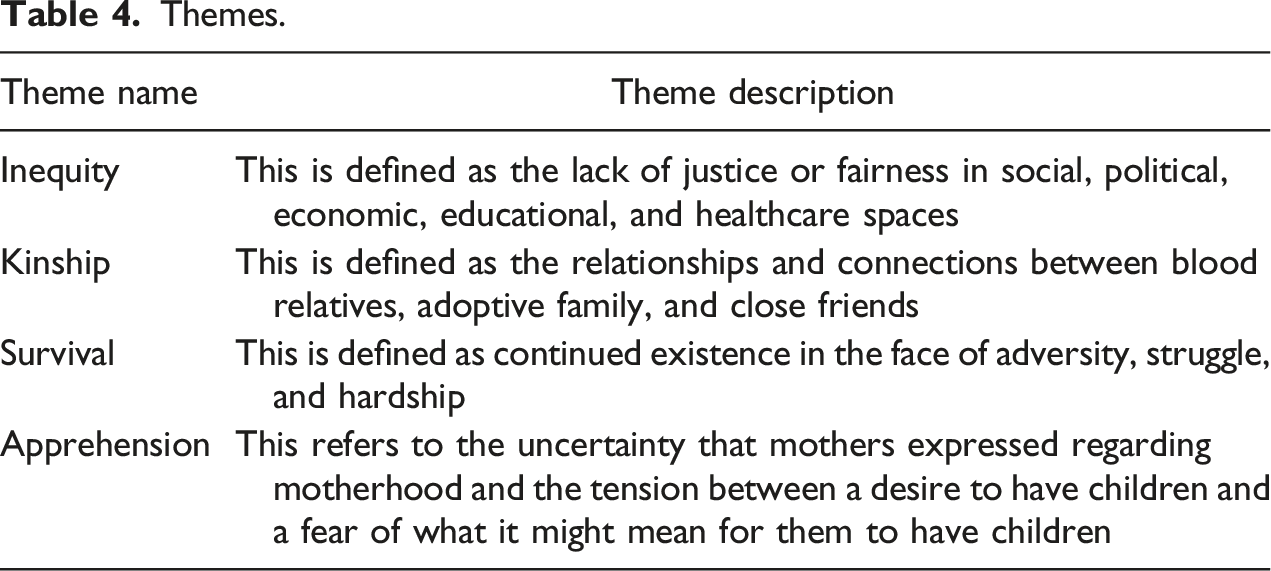
Themes.
Inequity
Inequity, which we defined as the lack of justice or fairness in social, political, economic, educational, and healthcare spaces, emerged as a primary theme in this study. The participants talked at length about the challenges and adversity they had experienced, much of which resulted in chronic stress. All participants expressed that life was hard and, at times, exasperating. They often described difficulties associated with their lack of access to equitable resources. Housing and food instability were the frequent stressors, along with the inability to access a livable wage and ongoing financial stressors. K’Mya discussed how these inequities impacted her and her children and how hard she worked to manage these stressors without resources: I don't know, like, I make things work, I do. Because one thing after the next just always comes. Like I was out of my house for what, like three months, because of mold, and I came home, and my heat didn't work. I've been making it work, trying to struggle to take care of three kids, work, pay a babysitter daily, and try to spend time with them.
Despite working multiple jobs with low wages, taking care of children (often alone), managing households, and lacking access to quality education and health facilities, each mother reported doing everything they could to make it. Faith described a feeling of constant chaos: We’re just in the midst of a natural disaster. Natural disasters you have no control over. I have no control that he's not making enough money to pay the bills. He has no control of me not making enough money to pay the bills. …. I'm just trying to make it through.
In addition to structural impacts on their health, wellness, and identities, many spoke directly and indirectly about their experiences with racism, oppression, and marginalization. Some shared narratives of overt racism, while others shared nuanced experiences that were also reported by participants as being damaging and harmful. Angela, who identifies as Afro-Latinx, shared her experiences of racism and how her reactions were pathologized, including an experience fighting with a peer in high school: She told me to go back across the border ‘cause (sic) I'm Spanish. So, I’m Black, Spanish, I'm white. I got a lot of mixtures, but like at the time, it was hard for me to like speak clear English. So, she would always say, “Go back across the border.” Like, “You don’t have a green card, you're not from here.” Well, I'm from here, so [laughs], like what the hell? So, I got mad, I mugged her, we started fightin', (sic) and I gave her 20 stitches down her face. And she dropped out of school. So, they told me that I can’t come back until I got medicine. They tried to call me crazy, but I'm not crazy.
While this occurred prior to pregnancy, Angela described how this pathologizing of her reactions contributed to her broad mistrust of others and influenced her transition to motherhood.
These inequities impact not only transgenerational relationships but also how mothers view their journey into motherhood. When Lauren shared her fears for her children (her son in particular), she expressed frustration and deep hurt and acknowledged that history often continues. She stated, “It’s tough. Yeah. Racism is like, you would think after all these years, it’s still the same things. Still. It’s very sad. You know, but I won’t raise my kids like that. No.”
All participants experienced a range of inequities and were aware that systems and structures treat women, especially Black women, unjustly. The injustice and structural and systemic racism and oppression in society was known, felt, and clearly reflected in the data.
Kinship
The second theme that emerged in this study was kinship: the role of relationships with blood relatives, adoptive family, and close friends. Kinship represents a profound yearning to belong. The term kinship demonstrates that these relationships are deeper than communities of belonging or connection or biological relations; rather, kinship embodies a vulnerability that includes but is not limited to expressions of loss and grief. While many of the participants belong to multiple communities of connection, not all of these communities are regarded as kin. When it comes to child rearing, kinship stood out as essential. Each participant spoke of people who were kin but shared no blood relation. This is important, as it is a particularly African Diasporic way of relating that is intergenerational and inherited (Sarkisian & Gerstel, 2004). Paramount relationships for participants included family friends and neighbors who are called “aunts,” friends who are “cousins,” and other traditionally under-recognized relational bonds. These kinships act both positively and negatively, impacting how participants viewed themselves and influencing their parenting, their connections, and even how they participated in and received love.
Each participant expressed a displacement they had experienced in life due to early loss, which is related to the loss of kinship. Four of the five participants were separated from at least one biological parent before age one, and all experienced early adversity related to kinship and family. This disconnection from the family system had a lasting impact. With loss came a sense of aloneness that permeated their stories. Faith spoke about this when she reflected on her first family separation: I was originally foster cared at the age of seven and a half months. Both of my parents, they abused drugs. They used drugs, and they sold drugs. I have other siblings. Total in account, my mom has eight kids. …. At the time, when both of my parents were using and selling drugs, my mom's and dad's house got raided from the police. They came in, and they obviously found drugs. My mom, at the time, she ran out the back door and placed me in a car.
A sense of belonging is essential to healthy development and attachment (Boyd-Franklin, 2013) and the presence or absence of belonging among participants was central in their stories. When their parents were available and reliable, participants felt a sense of connection and belonging, but when parents, grandparents, siblings, and extended relatives were marginally or totally unavailable, this impacted their sense of identity. Angela talked about feeling alone and unsupported, and the absence of connection had a deep impact on her. She noted, “I didn’t have anyone in my corner. I didn’t have nobody period. I mean, like, I have my mom, but I’m not on good terms with her.”
When immediate family was unavailable, participants sought other relationships. These relationships provided a sense of belonging or tethering but weren’t always helpful. Faith’s aunt, who was her custodial guardian for much of her childhood and adolescence, often reminded Faith how she “didn’t belong to anyone” suggesting that she was unwanted and unloved. She recalled her aunt using angry and hurtful words, and her resulting feelings: She’s like, “Your mom left you in a car. She used drugs when you were born. You were addicted to drugs. Your dad didn't want you. If they wanted you, they would come back for you.” So, I went through a very depressive state.
Other relationships offered connections that provided a clear sense of strength and resilience. This allowed participants to recognize that they didn’t have to be defined by who they should be connected to, but rather by whom they chose to be connected to. For example, Faith recalled a relative who was not biologically related to her who served as an aunt: I have an aunt, and she was really, really, really good spiritual friend [...] she was also helping me with maturity-wise. She knew what it's like to go through this without the other person because she's a single mom. [...]I started picking up different things, like, “Oh, I could do this. I could do this.” Part of me knew that if he wasn't around, I knew I could do it.
For all participants, belonging was an essential component of how they understood themselves and their transitions to motherhood. This seemed to increase in importance and relevance as they transitioned to motherhood and had their own children.
Survival
Another major theme was survival, which includes struggle—being worn down and reaching a breaking point—as well as strength—finding ways to carry on. For participants, persistent marginalization and oppression act as barriers necessitating survival. They disclosed the distress they experienced before, during, and after their pregnancies and births. Lauren spoke about this when she shared her struggle with single parenting and her partner’s lack of involvement. Gesturing to indicate her increased exhaustion, Lauren noted: I'm out here busting my butt to provide for my kids. You know what I mean? And I'm tired. Listen, I'm on another level of different things. It's like, I don't get a break. Don't you think that I deserve a break?
Lauren and the other participants expressed immense fatigue extending beyond new motherhood; exasperation; and feelings of being “sick and tired” of the constant struggle of motherhood and living under oppression. The idea of coming to a breaking point and living in a heightened state of chronic stress about things outside of their control was consistent among participants. Faith expressed this when she said: I tell my husband now; I say to him, babe, I'm actually done having children. It's not the fact that I don't wanna (sic) have any more children to you, it's not the fact that I don't wanna expand my family. This is enough. This is all that I could take, at this point. It's a lot of work.
All participants discussed the challenges of being a working mother and having to balance the demands of caring for children and providing an income for their families. None felt they got the support they needed before, during, or after their pregnancies. Hand-in-hand with struggle and chaos was a clear internal strength that participants drew upon and wanted to pass onto their children. This appeared to not only impact their perceptions of themselves but also the ways that they sought to parent their children. In reflecting on her own struggles, Angela talked about how she wants her children to see her strength and hopes to prepare them for life: I mean, my daughter looks up to me. It's like as long as she sees that I'm not giving up on anything. As long as they don't see me struggling. Well, I want them to see a little bit of a struggle but not so much. I want them to understand what a struggle is and how to get out of one. Because like how I look at it is, people will always say, “Don't show your kids your weakness or your struggling,” which I agree with, but then I don't. For the simple fact that if you show them everything is a cake walk and everything is ok, that is how they're going to grow up. That's where life hits them. I've seen the struggles since I was born. So, it's like I know what it is. I know life is not a cake walk.
Faith also reflected on whether she would change anything about the challenges she has experienced. Pride in her ability to survive emerged from her story, and she felt that the hard parts of her life were some of the very things that made her the person she is today. She shared, I’m so much of a better person now. As much as I have so many downfalls or some negative things that I went through, I don’t think I would be the person who I am right now. I like who I am. There’s not really much I would want to change because what it has done is allowed me to see a better perspective of things. I do think that in every decision that I do make, I try and make the best decision. It’s good.
These aspects of struggle and strength reflect internal power and resolve that benefit the participants and their children. This doesn’t negate or pardon the injustices and traumas they have endured, but it does allow them to own their experiences and author their unique stories.
Apprehension
This study’s final theme was apprehension, which refers to the uncertainty that participants felt regarding motherhood and the tension between a desire to have children and a fear of what it might mean for them to have children given their social location as Black women.
None of the participants in this study planned their first pregnancy. Feeling unprepared for motherhood is common, but Black women must navigate their desire for children and multiple barriers that could prevent them from giving birth and/or surviving postnatally.
Faith talked about feeling judged by her providers due to her young age. While she noted “I didn’t even look at it as a race thing,” she relayed that the healthcare team provided inconsistent and contradictory information, specifically around the needs of Black babies. She also recalled feeling frustrated that the healthcare team wasn’t more patient with her regarding breastfeeding and caring for her newborn. She connected the dismissive interactions that she experienced during birthing directly to her later experience with postpartum depression: Every time they came in the room, my curtains were closed, the room was dark. I don't know, I think it was more so how they were treating me. But it wasn't like I was accepting a bad negative thing [referencing her experience birthing] at the time. It was like, “Ok, this is just the way it is, first time.” Every single time the nurse would come in, she would open my curtains. [Faith asked the nurse] How do you know I want my curtains open? Then she'd say, “Oh, you need your curtains open because jaundice.” I was like, “The last doctor just told me that jaundice doesn't really run in African American babies like that, and they said that he's not premature, so why are you opening my curtains? I'm trying to feel as comfortable as possible.” I don't know, it was difficult. I think I started to replay those things in my head later as to why I went through postpartum depression.
Other participants noted apprehension about their transition to motherhood stemming from the racial dynamics on social media. Lauren shared, “I’m on Facebook. I see baby mommas and stuff. Like white women putting down Black women. Like being a mom and stuff like that, like stereotyping. I don’t know. I just feel like there’s some women that are racist.” Instead of feeling like social media is an extra support, Lauren felt that it was yet another front on which Black women’s ability to mother is questioned.
Participants were also burdened with limited resources, financial instability, and a lack of autonomy, which often led them to feel stuck at a crossroads, unsure of where to go next. Angela discussed feeling out of control with her intentions around childbearing: I didn't want kids, so let's just start with that one. I did not want kids at all; I talked about it, but I don't have patience. So, when I found out I was pregnant for the second time with my daughter, it was hard because I'm working. I want all my money to myself, and then I'm at my mom's house. I got to deal with her. Then I got to deal with my sister because I was in my sister's room, my little sister's room. So, there's no room. It's irritating that they got to hear crying. It's very hard. I wasn't on good terms with my daughter's dad.
While participants did not name apprehension specifically, many described it when speaking of times when they were stuck and unsure of what to do. K’Mya explained: Yeah. With him, I really didn't smoke, but I tried to see if it would help me. It didn't help me. With him, I just couldn't get right. I had the IV in my arm for over a month. My car had got repossessed because I stopped working; everything was just going down. I just used to cry. Depression with this baby, like I was so broken, like everything. Oh my God, I had to stop working, my bills were just catching up, my sister had to go to the store for me, they had to feed me. I couldn't do nothing. My pee was always brown because I was so dehydrated.
Whether accessing healthcare or lacking control over their pregnancies and their lives, all participants struggled with choice and agency. For many, they were denied choice and even experienced covert or overt coercion, such as Faith’s curtain story, contributing to their feelings of apprehension throughout their journey to motherhood.
Discussion
This study explored the lived experiences and transition to motherhood among young Black women participating in a maternal and child health home visiting program. This study utilized IPA to address the research question: “What are the lived experiences and phenomena of transitioning to motherhood among young Black women who are participating in a maternal and child health home visiting program in Southeastern Pennsylvania?” IPA was selected because it highlights the role that participants have in making meaning of their experiences and because its double hermeneutic approach, wherein the narrative that the participants share is interpreted by the researcher, helps explain variations in what participants describe versus what they explicitly name. For example, while the participants did not explicitly use the language of “structural and systematic racism,” what they described is consistent with these constructs.
The results from this study suggest that young Black women experience cumulative traumatic stress that impacts their transition to motherhood. Participants described their struggle to survive and their apprehension about motherhood, but also how kinships buffered against the systematic inequalities they faced.
Lived Experiences Against the Backdrop of the Black Maternal Mortality Crisis
As McLemore and D’Efilippo (2019) noted, while the maternal mortality rate has decreased globally, the U.S. maternal mortality rate has doubled since 1987. The participants in this study experienced their transition to motherhood against this sociocultural backdrop. Understanding the experiences and needs of Black women transitioning to motherhood is of critical importance, particularly with the persistence of the Black maternal mortality crisis in the U.S. Although none of the participants in this study died, they all experienced some degree of health complications. While direct causation has not yet been clearly established it is possible that the negative outcomes that Black women experience in maternal healthcare could be mitigated if healthcare systems were better equipped to provide anti-racist care. McLemore and DeFilippo (2019) argue that we must stop blaming Black women for their poor health outcomes and instead recognize that racism—not race—is at the core of why Black mothers are dying. The narratives in this study highlight the myriad ways that contextual factors—racism, trauma, loss, and history—directly impacted participants’ transitions to motherhood.
Racism and Black Maternal Health
This study supports that racism and maternal health, both physical and mental, are connected. Further, participants highlighted that history—personal and communal—matters in the Black mothering experience. Whether referencing their personal history and experiences of trauma and racism or describing their negative experiences in healthcare, which has historical roots tracing back to slavery, the narratives that participants shared demonstrate that history matters in the experiences of Black mothers. The social structures, institutions, and systems in U.S. culture perpetuate historical legacies of racial inequity and continue to systematically de-prioritize Black women (Elias & Paradies, 2021), which was evident in this study. As the participants described, the ever-present inequities that permeate their lives played a significant role in their journey to motherhood.
Historical oppression, racism, and marginalization within and around the healthcare system are connected to health inequities (Nixon, 2019) and were interwoven in the phenomena of transitioning to motherhood among participants in this study. The chronic, relentless struggle described by participants before, during, and after pregnancy and birth emerged as critical to understanding their transitions to motherhood. The endless of assault of stressors and the feeling of being “sick and tired” and “exhausted” are consistent with chronic stress. These findings contribute to previous research on the role of chronic stress in the lives of Black mothers, particularly relating to survival in the face of systemic and structural racism and inequity (Culhane et al., 2002; Somerville et al., 2021).
As noted previously, current U.S. health inequities can be traced back through history, particularly in the ways that state control of Black women’s reproductive capacities has negated Black women’s agency as mothers. This was also evidenced in this study when participants described apprehension about their journey to motherhood and tension between a desire to have children and a fear of what it means to bear children as Black women.
There is often apprehension about the possibility of being pathologized for entering into motherhood while also being poor and Black and women (Chambers et al., 2023).
In amplifying the narratives of the anger and hurt that Angela felt in her experiences of direct interpersonal racism and the dismissal and misinformation directed at Faith, this study provides deeper understanding of the participants’ transitions to motherhood and builds on existing research highlighting the deficits in patient care experienced by Black women (Wang et al., 2021). Whether reflecting on their fear and apprehension, their personal and familial histories of trauma, or the ways in which they felt worn down by the barrage of stressors in their lives, participants were clear that their journeys to motherhood were complex.
Protective Factors in the Context of Black Motherhood
While the struggle, injustice, and uncertainty that participants described highlighted how they view their transition to motherhood, kinship and resilience in the face of struggle were positive protective factors that emerged, aligning with other research in this area (Piesterse et al., 2010; Spates, 2020). The ability to create kinship and persevere in an anti-Black, anti-woman, and anti-Black woman sociocultural-historical context must be acknowledged and celebrated (Dilworth-Anderson, 2019; Spates, 2020).While these strengths do not mitigate the chronic stress of racism and trauma, kinship and survival act as psychological and communal buffers against the toll of these realities (Norris & Mitchell, 2014). All participants in this study experienced early trauma and loss, and in the face of feeling alone and untethered, kinship and feelings of belonging served as resources for coping. Our findings support previous research on the role of kinship and the significance of family connections for Black women (Cook & Williams, 2015; Field & Simmons, 2019).
Policy and Clinical Implications
While policy and practice were not the exclusive foci of this study, participants were directly asked about how they might change things for moms based on their experiences (Tables 2 and 3a). Their responses offer insights into potential opportunities to change policy and clinical practice related to Black maternal health. While Lauren did not specifically say that she would like to see policies that improve access to a living wage, she described how low wage work and income instability contributed to her significant stress in her journey to motherhood. K’Mya did not specifically articulate that fair housing policies would be a needed change in her community, but she described her experience related to the ill effects of a mold infestation and an unresponsive landlord in her mothering experience. Faith did not specifically articulate the parameters of what policy and practice changes she would like to see in hospital obstetrics or in increased access to mental health services, but she did describe how important culturally and racially competent care is and how racially incompetent care impacted her experiences of postpartum depression. When considering the findings from this study and the adjacent scholarly literature, numerous policy and clinical practice implications emerge.
Policy Implications
Maternal health must be considered in the context of complex systems including clinical care, research, and policy (Kozhimannil et al., 2017). Through the lens of social determinants of health, upstream policies that improve Black women’s access to safe and affordable housing, stable employment, and quality health insurance have the potential for positive downstream impacts on maternal physical and mental health (Gehlert et al., 2008). A critical extension of this work is to develop policies at the hospital, local, state, and federal levels that dismantle structural racism as its own unique social determinant of health (Javed et al., 2022).
Research indicates that healthcare workers’ implicit bias and racist beliefs contribute to race-based health inequities. Policies that focus on anti-bias and anti-racism training for perinatal healthcare providers and staff in hospitals and alternative birth centers may therefore be useful (Ricks et al., 2021). Financially incentivizing hospitals and alternative birth centers to engage in quality improvement initiatives and reduce health disparities among birthing women may also be beneficial (Scott et al., 2018). Expanding access to care by securing insurance coverage of community-based doula services (Moore et al., 2020; Wint et al., 2019) with adequate reimbursement rates may also improve birthing experiences for women, particularly those from historically marginalized communities.
Clinical Practice Implications
Kozhimannil et al. (2017) noted that maternal health must be considered in the context of multiple intersecting systems; clinical care is one such system that warrants exploration. All participants in this study reported that they experienced mental health struggles during challenging times (i.e., early sexual trauma, perinatal depression, and suicidality). They described significant symptomatology (depression and trauma responses) to their healthcare providers, yet none of the participants received comprehensive mental health treatment. This reflects a gap in the healthcare system that may be addressed by more seamless access to mental health treatment in healthcare (Glazer & Howell, 2021).
Integrating psychological practices into the larger maternal health ecosystem so that the burden of accessing mental health services does not fall upon the mothers themselves should be a priority in the clinical space (Glazer & Howell, 2021). Co-location of services is another area of clinical practice that should be explored further. Co-location of practices, whether mental health and primary care or mental health and specialists, has been linked to outcomes of better care, increased advocacy for patients, and higher communication between teams (Lim et al., 2022). Clinical treatment that is not accessible due to poverty, housing insecurity, job insecurity, or lack of health insurance is problematic.
The field of Black psychology, or the scientific area of inquiry focused on how people of African descent know and experience the world, has a particularly important role to play in the Black maternal health landscape (Belgrave & Allison, 2019). Black intellectual engagement, including the work of Black scholars and Black psychologists, has been described as “descriptive, corrective, and perspective” (Jamison, 2018, p. 723; Marable, 2000). Marable (2000) posits that the descriptive element is in describing “the reality of black life and experiences from the point of view of black people themselves” (p. 1), and the corrective element is in the work to “condemn and dispute theories of black people’s genetic, biological, and cultural inferiority” (p. 2). The prescriptive elements include the work “to use history and culture as tools. . . for the purpose of transforming their actual conditions” (Marable, 2000, p. 2). This framework suggests that understanding Black motherhood and addressing the needs of Black mothers against the backdrop of the maternal mortality crisis is ideally situated within the expertise of Black psychologists.
Noting the significant and central role that Black psychology has in Black maternal health does not alleviate the responsibility of white, western psychology to address their own culpability in health inequities. When answering fundamental questions such as “How does a community learn to trust doctors whose forefathers were interested only in repairing and restoring Black women’s reproductive health so that slavery could be perpetuated?” (p. 1343) posed by Owens and Fett, the psychology field must turn to Black psychologists, Black scholars, and Black mothers to identify a path forward.
Limitations
The complex, varied identities of the five participants were reflected not only in their unique experiences but also in how they shared their experiences with the interviewer, a white woman. Candor and trust were established over the course of multiple interviews, wherein the participants were able to share their experiences more openly; however, it is still very likely that participants did not reveal everything that they felt. The power dynamics between interviewer and interviewee, including racial identities, are relevant. The structure of these interviews may have made it difficult for interviewees to fully articulate the extent of the racial discrimination and oppression they have experienced, which is a limitation of the study.
This study focused on the experiences of a small, localized population and may not be representative of the experiences of other young Black women across the country, such as in the Southern U.S. or in more rural or urban areas. While this sample was both purposeful and convenient, this is a limitation. IPA is built to search for possible phenomena and identify whether these warrant further quantitative studies. The findings reported here should not be substituted for or conflated with quantitative research.
The research question that was the focus of this study addressed the broad phenomena of transitions to motherhood experienced by young Black women. The study did not exclusively focus on what participants wanted to change about their experience or desired to change about the maternal healthcare system or the providers they encountered. This is both a limitation of this study and an area for future research.
Recommendations for Future Studies
Future research is needed to understand and eliminate health inequities caused by racism through transdisciplinary, de-siloed approaches that include both research and clinical practice. The participants’ testimonies suggest that traditional, siloed approaches did not serve them well, and this warrants additional exploration. Additional scholarly inquiry is needed to further explore the phenomena identified in this study, specifically focusing on racism in maternal healthcare and the psychological impacts that are experienced by Black mothers. Centering the mental health needs of Black women before, during, and after pregnancy should be a priority.
Future studies that examine place-based factors may provide more insight into the experiences of women living in different geographical and social locations, including Black women of any reproductive age. This could be explored through two avenues of further research that aim to address the following: (a) questions about mental health systems and maternal healthcare trauma and (b) questions about policy and clinical practice in maternal healthcare. Future research should explicitly focus on what Black women need and want related to policies and interventions to improve maternal health inequities.
Conclusion
This study provides important insight into the lived experiences and phenomena of the transition to motherhood among young Black women and aligns with the assertion that racism, not race, is the core issue of Black maternal health disparities (Crear-Perry et al., 2021; McLemore & D’Efilippo, 2019). We documented how intergenerational trauma; systemic oppression; relational distress; and housing, food, and economic instability coalesced into a maelstrom that, in their words, forced them into states of “survival,” wherein they reported living in chaos and struggling to keep going. We also captured the unique attributes of Black women: Their strength, resilience, wisdom, and capacity to survive, which helped participants navigate their struggles. This study underscores that ongoing efforts to reduce maternal health inequities in the U.S. must work to mitigate and dismantle structural inequities, oppression, and racism while prioritizing the strength and wisdom of Black women.
Footnotes
Acknowledgments
We would like to acknowledge our community partners, who will remain de-identified to protect the identity of participants. We would also like to acknowledge Dr. Meghan Longacre for her mentorship related to this project. We certify that the submission is original work and is not under review at any other publication.
Declaration of conflicting interests
The author(s) declared no potential conflicts of interest with respect to the research, authorship, and/or publication of this article.
Funding
The author(s) received no financial support for the research, authorship, and/or publication of this article.

Appendix
The following summaries were generated by the research team using the data that were provided by the participants and verbal summaries were relayed to participants during the member checking process.
Faith is a 28-year-old Black woman, a mother of two and a wife, who sees herself as a strong, resilient woman, who has used her difficult life to grow. Both of Faith’s biological parents struggled with drug use and, at just seven months old, Faith was separated from them. Faith reported difficulties with postpartum depression in both of her pregnancies, although she did not receive a formal diagnosis. She has had many traumatic losses in her life but these may have also shaped the depth of her resilience.
Angela is a 23-year-old woman, who identifies as multiracial (Afro-Latinx) and has two children (infant son and toddler daughter). At five years old, Angela reported being sexually victimized over the course of two years by both her father and her uncle. Angela has also lived in a shelter for homeless individuals, survived a car accident, and experienced serious life-threatening illness during pregnancy. She experienced postpartum depression and significant suicidality during her first pregnancy. She also described experiencing persistent racism. She described a strength within her that has helped her be a better mother.
Jailah is a 25-year-old, Black woman who has one child (newborn son). She lives with her mother, grandmother, and two siblings, where she has lived for most of her life. She reported having a very difficult pregnancy (pregnancy-related hypertension) and an emergency cesarean section that she described as a scary and traumatic experience. She also described feeling disrespected and unheard in her birthing experience and experienced significant postpartum depression.
K’Mya is a 26-year-old, Black mother of two infants and an elementary age child, who was raised by her grandmother and her aunt. She reported that she did not want children and tried to have an abortion during her last pregnancy. K’Mya experienced sexual abuse by a male family member from the ages of four to six and has deep fears about her children experiencing similar trauma. She described experiencing symptoms of post-traumatic stress disorder throughout her life and is currently in an abusive relationship and has had multiple abusive relationships across her adolescent and adult life. She was also displaced from her home due to a mold infestation. During the interviews, which took place during the coldest months of the year, she did not have any heat.
Lauren is a 27-year-old, Black mother of a toddler and a newborn. As a single mother, Lauren reported experiencing significant fatigue and feelings of being overwhelmed. She struggles with perinatal mood and anxiety difficulties and reported significant stress around her return to the workplace. She works hard to provide for her two children but often feels like she is in survival mode. She wants more for her life but feels like she is always struggling. She cares deeply for her children but readily shared the challenges of single parenting. She has a stressful and conflicted relationship with her children’s father, and this causes her additional stress.