




Abstract
The article analyses the enclosure of the ejidos of the city of Bogotá in the second half of the 18th century, one century before the liberal government definitively abolished common property in Colombia. It shows how, as the land demand increased with population and economic growth, not only landowners but also the Crown sought to increase their income at the expense of common lands. Unlike the classic enclosures in England, the Cabildo kept control over the ejidos of Bogotá. By furthering the private use of municipal ejidos without expropriating Cabildos, the Crown sought to activate the agrarian economy safeguarding, at the same time, the local financial structure that sustained the empire. Emphasizing the fiscal nature of municipal ejidos, this article shows how imperial dynamics transformed land use on both sides of the Atlantic and explores the specificities of common-land enclosures in some of the Spanish colonies.
In 1792, following orders from Viceroy José Manuel de Ezpeleta, officers in the Cabildo of Bogotá began to verify, door to door and carrying a list, all the deeds recording the lease of haciendas, estancias and quintas (suburban parcels), houses, and ranchos located in the city’s ejido 1 . The officers had to confirm the names of the inhabitants, the kind of agreement they had entered into with the Cabildo, and establish if there were any current debts 2 . In case of an outstanding debt, they had to post a notice on the debtor’s house publicising their condition. Those who could not pay within an established period of time would be evicted and the vacated property would be then announced by town criers. This order, which sought to control debt collection and organize the cabildo’s revenue, was not common. It was, rather, an indication of the profound transformations of both the use of communal lands and fiscal policy in the second half of the eighteenth century. The order reveals, on the one hand, the massive occupation by then of lands defined in the sixteenth century as communal ejidos. On the other hand, it shows the active role of the Crown and its officials in America in the privatization process. Unlike those considered the classic enclosures in Europe, in Bogotá the cabildo retained control over its ejido at the same time that it encouraged its private use by granting usufruct rights to the city vecinos (Spanish householders). As I argue in this article, by furthering the private use of municipal ejidos without expropriating cabildos, the Crown sought to activate the local economy safeguarding, at the same time, the local financial structure that sustained the empire.
In the extensive literature on the subject, enclosures are understood as the forced separation of commoners from their means of production and subsistence either using violence or regulating and even abolishing customary usage rights. It has also been generally argued that the separation of commoners from the land had a double purpose: to liberate land and assets for private appropriation and commodification, and also to force landless workers to sell their labour in the capitalist economy 3 . Neo institutional economists have considered the enclosure process in England as a prime example of an institutional change that allowed higher levels of economic growth because of the greater incentives to production provided by private ownership of land 4 . From this point of view, the dissolution of English common lands provided further evidence of the economic inefficiency of common property. 5 For other writers, following the Marxist tradition, the process of enclosure is evidence of the role of violence and dispossession in capital accumulation and, thus, in the violent rise of capitalism 6 . For Marx, the enclosure of commons was a gross ‘act of violence’ that separated workers from their means of subsistence, while for E.P. Thompson, it was ‘a plain case of class robbery.’ 7 The literature on the enclosure process has extended noticeably in recent decades, questioning both persistent versions of the economic inefficiency of common property, and versions of widespread inequity in its distribution 8 . It has even made the very concept of enclosure synonymous with privatization of public assets, not just land 9 .
In spite of the constant interest on enclosures 10 , only until recently did historians begin to use the concept of enclosure in colonial contexts, some of them even understanding colonisation as global acts of enclosure. Allan Greer has analysed the colonisation of North America as a “clash of indigenous commons and a colonial commons,” showing how the dispossession of indigenous lands occurred simultaneously with the formation of colonial property regimes that included the creation of communal lands. E. P. Thompson had also pointed to the relation between the enclosures occurring within England in the eighteenth and nineteenth centuries, and the simultaneous expansion of private property across the British Empire, including New Zealand, Africa, and particularly, the violent imposition of the Permanent Settlement of Bengal in India 11 . In the latter cases, privatisation of lands that were considered communal was seen as the previous and necessary step to impose territorial an political domination but also to impose taxes that would fund the colonial power.
Comparatively, very little is known about the enclosure processes of communal lands in the hundreds of Spanish American cities during the eighteenth century. Even less is known about the impact that economic and imperial political dynamics had on this process 12 . Although historiographic production on the Atlantic world has expanded markedly in recent years, it has not addressed the processes of enclosure of commons in the late colonial period as part of the changing fiscal policy on both sides of the Atlantic, not even those studies analysing colonial relations 13 . However, considering that municipal ejidos in Spanish America became fiscal resources of the Crown very early on, sometimes as early as the sixteenth century, the analysis of the imperial fiscal project should also be taken into account when studying the process of common land privatization in Spanish American cities. As has already been extensively discussed by historians, in an attempt to respond to the pressure that successive conflicts had placed on the Royal Treasury, and facing the British threat in the Caribbean at the end of the Seven Years’ War (1756–1763), as well as the war against England in 1778, Carlos III extended some of the fiscal and economic reforms that had been previously implemented in Spain, to his American colonies 14 . Municipal reform, which included the establishment of a regulatory body to review the expenditures of the city and the private use of municipal lands, was one of them.
This study shows how, as the potential profitability of agrarian production increased with rising market demand in the eighteenth century, not only landowners but also the Crown sought to increase its wealth at the expense of common lands. In Bogotá, as in general in Spanish America, instead of encouraging the privatisation of its ejidos to impose taxes, the Crown granted rights to use the land in order to obtain revenues. By stimulating short term leaseholds and specially emphyteusis contracts, which granted the useful domain of the land (the right to use it) generally at perpetuity, the Cabildo managed to give ejido land a double function. On the one hand, it maintained control over the use and distribution of the ejidos and drew revenues from those who rented them for short periods of time as well as from possessors of perpetual rights 15 . As shall be discussed in this article, during the second half of the eighteenth century, municipal revenues increased like never before and the distribution of communal lands onto private hands was the source of this growth. On the other hand, ejidos became a source of wealth also for many vecinos of the city. Those who had leaseholds could increase their own income by subletting portions of or even the whole of the ejido land they held. For these vecinos, the private use of the ejidos was, undeniably, a rentier investment, but not only that. Perpetual leaseholds also enabled the circulation of land, encouraging an increasingly dynamic market of useful domains in an economy with reduced liquidity; increased investment in “improvements” over which the holder retained property rights; and brought greater stability to those who worked the land. As can be seen in the case of Bogotá, not only did a good portion of the ejido lands produced revenues to the holder who subdivided the land, but also capital from productive activities. While the existence of incomplete or imperfect property rights has been conventionally seen as an obstacle to the development of a land market and investment in agriculture, in the case of Bogotá, as I will show here, they stimulated a regime of shared rights which facilitated the increase of municipal revenues at the same time as they encouraged land mobility and agricultural activity in both the local and the regional markets. 16
The article is organized in three sections. The first section analyses how the sixteenth-century definition of lands under the jurisdiction of the Cabildo was central to the process of colonial territorial appropriation and the formation of fiscal institutions after the Conquest. The second section analyses the impact of agrarist thought in the Spanish Crown and its officers in America, and how they saw the dismantling of the communal regime as the way to unleash productive forces in rural areas and, at the same time, solve the treasury’s financial difficulties. The article ends discussing some of the uses of ejido lands to show how the extraction of rents were by no means an obstacle to growth. It was a fiscal measure aimed at maintaining afloat the finances of the empire, at the same time that it was a response to an increasingly active land-based commercial economy. With the analysis of the privatization of commons as part of economic and fiscal policies, this article seeks to contribute to the study of the role of land in the functioning of the empire and, in particular, of land as a fiscal resource during a period of war and fiscal pressure. Also, by understanding municipal ejidos as a fiscal resource, the article shows how imperial dynamics transformed land use on both sides of the Atlantic, as well as the specificities of the enclosure and dismantling of common lands in the Spanish colonies.
From Ejidos to Propios: The “Rural Lands of the City” as a Fiscal Resource
The early definition of the ejidos surrounding Spanish American cities was inscribed in a long urbanizing tradition that began with the Spanish conquest of the Iberian Peninsula after nearly eight centuries of Muslim rule. As evinced in numerous studies, Christians—since the eighth century—used the colonization of frontier areas, in addition to weapons, as the most efficient barrier against Muslim penetration. In some cases, the early Christian monarchy took direct possession of lands to create rural estates. In others, it granted jurisdictions and privileges to lay and ecclesiastic feudal lords, so that they could establish rural manors or set up monasteries to populate the neighboring lands. They even granted these privileges to groups of commoners to found towns. Such privileges, as well as the cartas pueblas or municipal charters, formed the basis of a system of local law that helped undermine the legal unit characteristic of Visigoth Hispania and encourage the early formation of Concilium vecinales or open councils that would become the oldest form of municipal organization. 17 These charters laid down the legal conditions for ordering, defending, and populating urban centers and establishing the boundaries or “terms” for the “rural land of the city.” 18 The process of frontier colonization was then based both on the founding of cities and the legal definition of the rural land under its jurisdiction: the so-called Castilian alfoz, the Aragonese comunidad de aldeas, or the comunidad de villa y tierra in some areas of Castilian Extremadura.
According to the cartas pueblas of the Castilian communities, which became the urban model that guided the foundation of Spanish American cities, city councils defined the distribution and uses of the “rural land of the city.” They then defined the private small farms granted to the vecinos, lands retained as propios to be administered by the council and leased to cover municipal expenses, and resources designated as commons, including water, hills, dehesas, and ejidos, which, though regulated by the Council, could be freely used by vecinos and residents. The hills were used to hunt and collect firewood, the dehesas to raise and fatten cattle for the municipal butcher shops, and the ejidos, located next to the town, provided grasslands for the “beasts” of the residents, firewood for their homes, and space for “recreation.” 19 Unlike the lands of propios that were meant to produce income, commons, as indicated in the thirteenth-century legal compendium of Siete Partidas, could “not to be sold or rented off.” 20 Urbanization then was not only a colonization strategy; it was also a means to distribute rights over common goods and obtain fiscal sources.
Territorial control in Spanish America was based, to a large extent, on the urbanization experience of the Iberian Peninsula. As Richard Morse noted, “colonization was in large part an urban venture, carried out by urban-minded people.” 21 It is not surprising, then, that between 1493—when the first fort was founded in the Americas—and 1574, 241 cities were founded in Spanish America. 22 Nonetheless, the municipal order and the urbanizing experience of the conquest of the Iberian Peninsula were not transferred to a distant and very different territory without undergoing profound changes. While the foundation of American settlements followed some of the rules of the old municipal charters—and other Spanish legal texts, they were mostly based on Derecho Indiano, which compounded elements from previous legislation, but was essentially casuistic. In fact, it was not until about 1520, when there was greater certainty about the stability of the newly-founded towns, that authorities initiated the formal definition of ejido lands. 23 Until then, urban settlements were mostly the product of scattered legal acts that legitimized conquest but not the formation of cities. 24
This was precisely the case for Bogotá. According to the chronicler Juan de Castellanos, when Gonzalo Jiménez de Quesada founded the city of Santa Fe de Bogotá on April 27, 1539, he “traced the streets and plots, the church and the plaza,” named a “regiment to govern it,” and distributed among conquistadors estancias and encomiendas (private estates and tribute-paying Indian workers), but did not define the lands for ejidos and propios. 25 At this time, Santa Fe de Bogotá was the center of a vast territory that was still being conquered, and whose limits, though still vaguely defined comprised what was, by then, the New Kingdom of Granada, which covered about half the territory of present-day Colombia. 26 In 1549, more than ten years after its foundation, the Crown established the Real Audiencia, which organized the territory of the New Kingdom into a hierarchical territorial system composed of provinces, corregimientos (intendancies), and Indian towns around which the economy and the Spanish bureaucratic structure was organized. The city of Santa Fe was located within one of these provinces and the rural land under its jurisdiction was defined by the borders of the Indian towns that surrounded the city. 27 By then, the Cabildo had already distributed much of the land within these limits to a number of vecinos, who, according to a complaint raised as early as 1543, “had not served the king before receiving them, and who did not serve him afterwards.” 28
On January 12, 1571, more than thirty years after the founding of the city, and once powerful encomenderos and members of the Cabildo had taken over much of the land around the city, the Crown authorized the allocation of land for ejidos and propios. 29 The land assigned for this purpose was an extension of little more than half a league between the city and the private estates that the Cabildo had managed to maintain, until then, as realengo land. Just as the city jurisdictional boundaries were defined after the formation of Indian towns, the common lands of the city were defined after the distribution of private estates (see Figure 1). According to the ordinance, the land was to be divided into two portions, one for the ejido that was to be used as common land by the city’s vecinos, and the other for dehesas, which would be “as a property owned by the Cabildo which it would be able to lease every year as propios of this city.” 30 The lease of the dehesa, used as land of propios in the case of Bogotá, became the city’s only fiscal resource until 1653, when the Crown extended them to include pulperías (victual shops) and tiendas de trato (merchandise shops) in response to the economic crisis that followed the decline of the Indian population and the collapse of gold production.
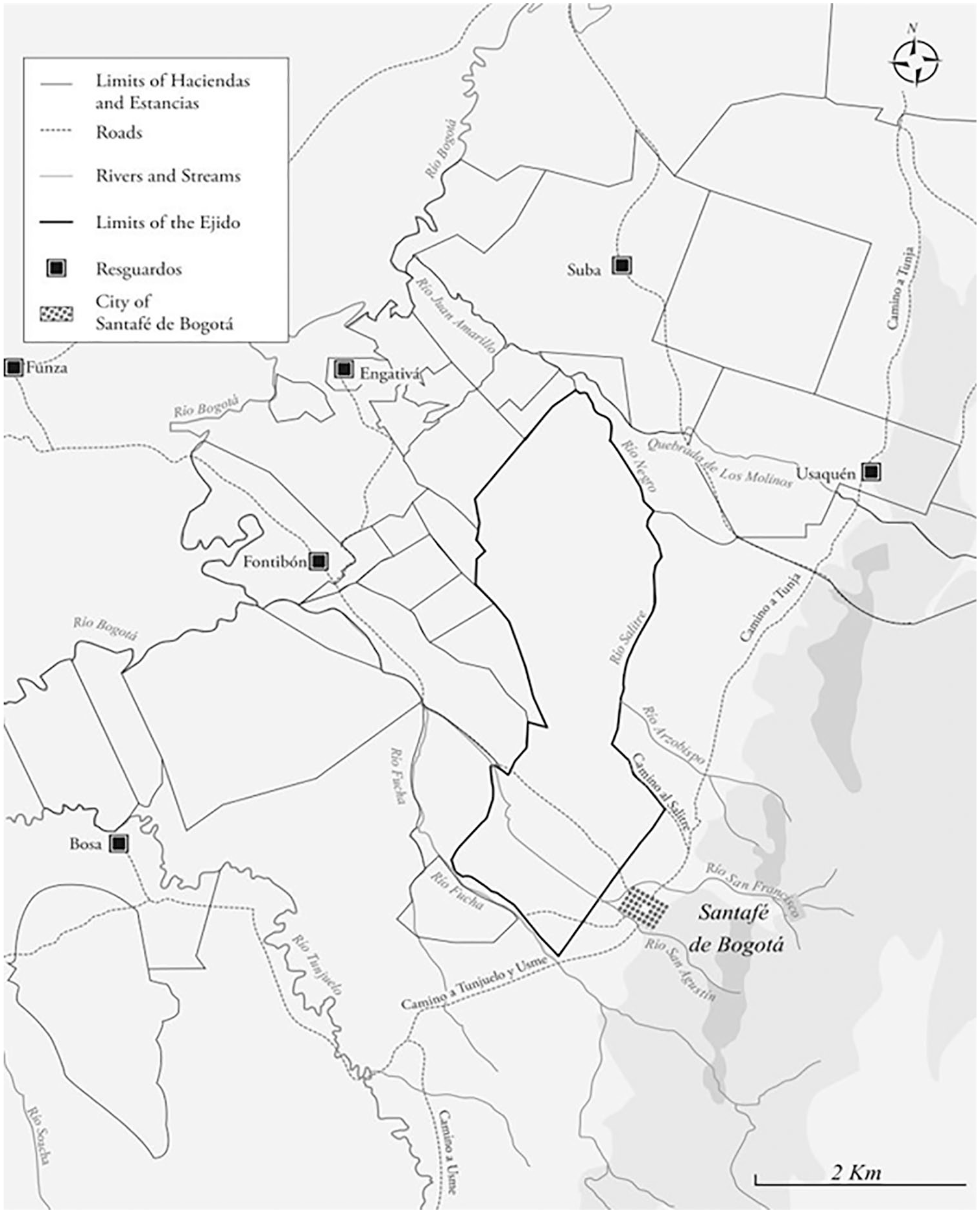
Limits of the colonial ejido, c. 1550-1600.
Most of the Cabildo archives have disappeared because of lootings and fires during the nineteenth and the twentieth centuries, and consequently there is very little information to be retrieved on how the ejido lands were used and occupied after having been defined. We do know, however, that the municipality’s finances were deeply affected by the economic crisis. For years, the Cabildo could not auction the administration of the dehesa which constituted the city’s most important source of revenue. Only few vecinos had the capital to buy cattle, transport it to Santa Fe, lease the dehesa to fatten the livestock, manage the butcher shops, and supervise meat sales, hire supervisors and workers, and also, just a few had Indians in encomienda to work at the dehesa. 31 To make matters worse, severe climate changes affected the sabana of Bogotá and the lands available for grazing. Some studies have shown that the sabana was very vulnerable to climatic upheavals and experienced long periods of drought, flooding, and frost. 32 Because of this, most of the meat consumed in Bogotá during this century came from long distance lowlands and from the Eastern Plains where the Jesuits had their haciendas. 33 Some also came from the Bogotá-Boyacá plateau –Cáqueza, Ubaté and Zipaquirá—and particularly from the hacienda El Novillero owned by Alonso de Caicedo Maldonado, a descendant of the richest encomendero of the sixteenth century. He controlled the most important encomienda in the plains surrounding the city and his hacienda was larger than the ejido lands. As one of the very few at the time, he could provide pasture land to fatten most of the cattle that arrived to Bogotá after days of transit. For most of the century El Novillero then, became the city’s de facto dehesa. 34
In these circumstances, in 1653, the Crown authorized the Cabildo to lease the ‘estates that could be allotted’ in ‘the half league of ejido and dehesa’ land. 35 Eighty years after delimiting the municipal property of Santa Fe, the Crown authorized its conversion—in its entirety and including the commons—into propios lands. From then on, all municipal land to the west of Santa Fe became known as ejido and, by this agreement, could be leased in its entirety. Yet, until the first decades of the eighteenth century the municipality only received payments from three estates, a few individuals who use portions of the land to graze mares and cows, and from the dwellers of few shacks. 36 During the first half of the 18th century the average collected from the ejidos corresponded to just 1.5% of total municipal revenues. Most came from leasing butcher shops (59%), salt mines (10%), and other shops (9.5%). These resources, along with some private contributions, enabled the Cabildo to partially cover the cost of public works such as paving cobbled streets, building pipes, aqueducts, cemeteries, and public fountains, and cleaning city streets and squares. They also enable the cabildo to cover additional administrative expenses, such as the cost of post and stationery, its contribution to the militia, the celebration of religious and civil festivities, prison maintenance, as well as the payment of wages for porters, town criers, and peons. By then, most of the ejido lands were still freely used by landless vecinos to collect firewood, stock up on water, or graze their livestock. The use of the ejidos began to change dramatically however in the second half of the eighteenth century.
Agrarianism and fiscal policy reform
Population growth, the discovery of gold in Chocó on the Colombian Pacific coast, and the revival of mining in Antioquia boosted by the Bourbon policy of reducing the royal fifth, stimulated interregional commercial circuits increasing, thereby, the demand for food and manufactured goods from the highlands. 37
Other Bourbon reforms, such as the opening of new ports in Spanish America, also activated trade among the colonies and between them and Spain. New land regulations, which sought to shift from a mostly extractive economy to a productive one, put thousands of hectares at the service of agricultural and livestock production. 38 The 1754 Cédula de San Lorenzo and the 1780 Cédula de tierras, for instance, were aimed at stimulating farming and contributed to the titling of lands that were considered productive. The economic revival also increased the demand for artisanal products and food. Bogotá became a distribution center, sending manufactured goods from Santander, meat from Huila, Tolima, and the Eastern Plains, and agricultural produce from the Sabana of Bogotá, to the mining centers of Cauca, Antioquia, and Chocó. 39 The fertile lands surrounding Bogota, suitable for the cultivation of wheat and barley, as well as the swampy lands closer to the city, apt for cattle and pig farming, became more densely populated, as did the land surrounding cities like Tunja, Pasto, and Popayán. Mining and agrarian policy contributed to the economic growth that underpinned fiscal expansion. The Crown took advantage of the growing demand of land, in particular, to increase its fiscal revenues, at the same time that it saw the opportunity to implement the ideas of the Spanish physiocrats in fashion at the time, who saw agriculture as the source of wealth. Encouraging the private use of the municipal communal lands could be the means to achieve, if possible, both aims.
In order to organize and increase the revenues for the Cabildo, the Bourbon administration established a centralized system of propios and arbitrios, which included new taxes and encouraged the private use of municipal land (See Table 1). 40 The centralization of the Spanish tax system had begun in Spain in 1760 as wars with France and England, and the occupation of Havana, Western Cuba, and Manila, pushed the Crown to increase its control over the resources of the municipal councils, which were by then an important source of public revenue on the peninsula. 41 To control municipal accounts the Crown created the Contaduría General de Propios y Arbitrios (Accountant’s Office for Municipal Property and Taxes) which reported directly to the Council of Castile. 42 Up to that point, these accounts had been recorded in ledgers kept by a treasurer and reviewed only by city council members. 43 In 1765, the Crown sent José de Gálvez to New Spain to implement similar reforms in the colonies. After facing incessant tensions with criollo officers in the ayuntamientos, Gálvez was finally able to set up a centralized General Accountant’s Office in 1771 to be in charge of municipal properties and taxes. Subsequently, he implemented the system of intendants from Spain to strengthen the oversight of local finances. 44 On March 18, 1792, more than a decade after the process began in New Spain, Viceroy José Manuel de Ezpeleta issued a decree ordering the establishment Municipal boards of propios and arbitrios in the Viceroyalty of New Granada. This decree pitted the viceroy against the Cabildo, as it did in New Spain. According to Ezpeleta, these boards were necessary to avoid the “arbitrary and irregular proceedings” that affected the administration of these revenues in the Viceroyalty and to ensure the flow of income to the royal treasury. 45 The Junta only began work five years later. In the interim, tensions between the Viceroy and the Cabildo de Santa Fe increased. A year after the decree was published, the Cabildo accused the Viceroy and the Audiencia of trying to exert inappropriate control over the city administration. In response, the Viceroy declared, “The arrogance of the Cabildo has driven it to deal with everything in the worst way,” thus disrupting “the peace of the city.” 46 Cabildo members were mostly criollos who saw the Crown’s tighter control as an arbitrary and threatening intervention in local government.
Income of the Ramo de Propios in the Eighteenth Century.
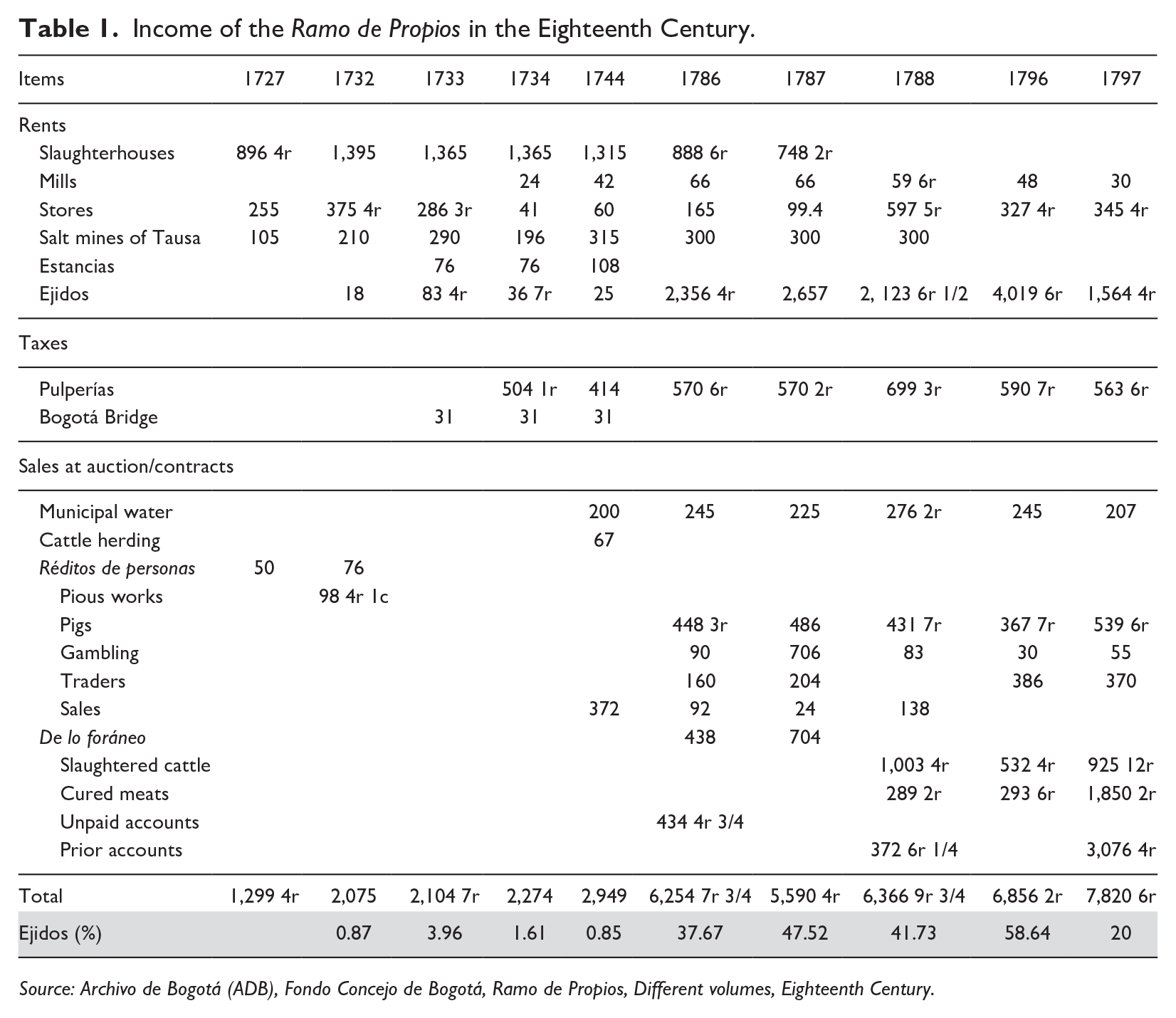
Source: Archivo de Bogotá (ADB), Fondo Concejo de Bogotá, Ramo de Propios, Different volumes, Eighteenth Century.
Despite the tensions, the Municipal Junta of Propios started to operate in Santa Fe in 1797 with several proposals that specifically altered the management of the ejidos. In the inaugural meeting, the members of de junta asked the mayordomo for a statement of all the city’s own accounts and taxes since 1792, including the rents produced by the ejidos, the name of the tenants, and the existent debts. 47 As pointed out at the beginning of this article, Cabildo officials requested ejido occupants to show the deeds that set forth the type of agreement they had established with the municipality. 48 Those who had deeds were required, in many cases, to exchange their guarantors for new ones, who proved to be owners. 49 The members of the Junta ordered the eviction of those who did not have deeds because, according to them, some ejido lands “were enjoyed by various subjects for small amounts without any lease or security.” 50
To update information on the legal status and occupation of ejido lands, the Board sent written summons to the holders of ejido lands it had on record. It also sent officers to the “field” to put up posters on the facades of debtors’ houses, thus making public their outstanding accounts with the Cabildo. The Junta also proposed to prioritize from now on emphyteusis leaseholds, which transferred usufruct rights in perpetuity, over short-term leases. While intended to stabilize municipal finances, the emphasis on emphyteusis leases was also a clear effort to encourage the long-term appropriation of the ejidos. 51 The Junta even ordered tenants to build, at their own expense, walls to enclose the portion of the ejido in their possession. Although some holders had already built walls, until then, most relied on temporary ditches or fences to demarcate their lands. Instructions of the Junta further stipulated that anyone who could not pay for the construction of a wall—which usually cost much more than the annual rent fee paid to the Cabildo—would be evicted and replaced by a new tenant able to fulfill the requirement. 52 The order adopted for ejidos evoked the 1780 Royal Decree of Lands that also required the setting of “fixed and stable boundaries” in every property in the Viceroyalty “that cannot be easily moved and that they be maintained at the expense of the owners.” According to the Decree, the construction of fixed boundaries prevented “doubts and litigation” resulting from the precariousness of existing landmarks and demarcations. 53 The Royal Decree of Lands probably influenced the construction of some of the first walls in the ejido shortly before the reform on the municipal administration ordered tenants to do the same. For instance, the 1797 “Croquis de la ciudad de Santa fé de Bogotá y sus inmediaciones” (sketch map of the city of Santa Fe de Bogota and its surroundings), by Carlos Francisco Cabrer, shows solid walls built around expensive quintas (suburban parcels) within ejido lands (see Figure 2). With the promotion of long-term possession by emphyteusis and the obligation to build walls, this decree formalized the practice of carving out private possession within the ejido, definitively replacing common-use rights with exclusive-use rights.
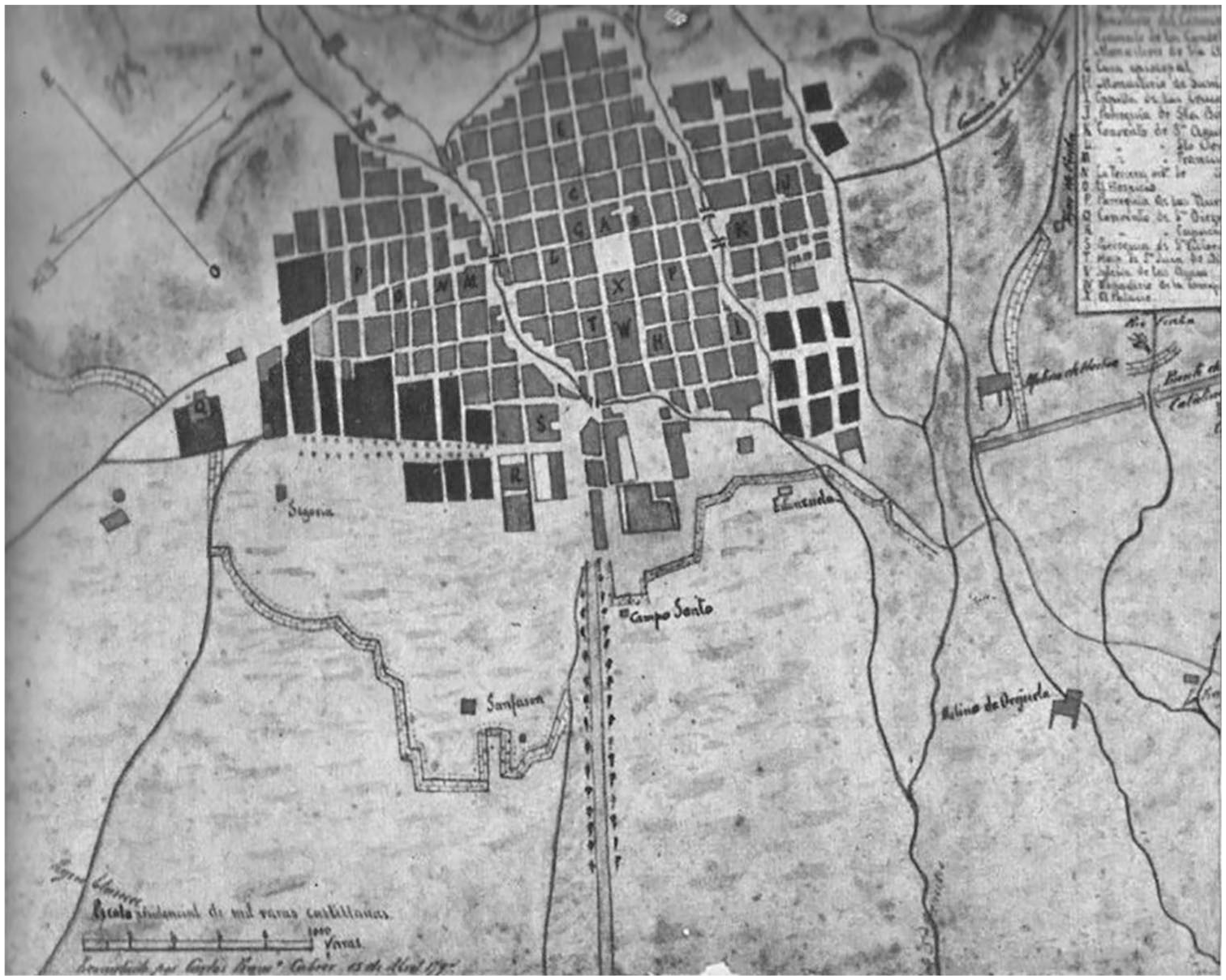
The enclosure of the ejidos of Bogotá, Plano de Carlos Francisco Cabrer, 1797 (copy made by H. Dussán).
The decree authorizing the enclosure of ejidos not only grew out of the Crown’s fiscal policy, it also conformed to a notion of wealth rooted in agriculture, private property, and free trade that Carlos III’s advisers had promulgated under the influence of contemporary European agrarist thought. For instance, Pedro Rodríguez de Campomanes, who would become Spain’s finance minister, had broached in his 1750 Bosquejo de la política económica española (A Sketch of Spanish Economic Policy), the need to encourage agricultural production and distribute ecclesiastical property to increase wealth. He also discussed the need to establish long-term transfer agreements because he considered that with short-term leases, the holder does not take affection to agriculture, nor does he grow things on the land or make improvements to it beyond what he requires to obtain his harvest, because he fears that if he improves it, the owner will want it back or increase the rent.
54
In his 1765 Tratado de la Regalía de Amortización (A Treaty on Amortization Repayment), he again argued for the distribution of municipal lands through perpetual lease. 55 In turn, Pablo de Olavide, entrusted by Carlos III to plan the settlement of parts of southern Spain, proposed, in his report on the 1768 agrarian law, to imitate what the English had done with their common lands: “Let us do for the farmers all that we have done for the cattle raisers: let us break up, cultivate as much land as can be tilled, let us reduce everything to property by promoting enclosures.” 56
Some years later, Melchor Gaspar de Jovellanos, like other enlightened officials who advocated for an agrarian law, encouraged the private use of Church property and crown lands and argued that municipal lands should be distributed according “to individual interest for useful cultivation.”
57
Such transfers should be done “not as temporary leases” but “by dividing them and handing them over in emphyteusis or through censo reservativo” so that “while remaining a property of the township . . . a large numbers of families could settle on these lands and, as they pursue their individual interest, could make them productive.”
58
According to Jovellanos, these leases guaranteed an “unquestionable and safe hold over the property” that could inspire that lively interest, without which fortunes are never advantageously improved; that kind of interest that, as it corresponds to all the desires of the owner, act as the first and strongest of incentives to overcome his laziness, and drive him to work hard and incessantly.
59
He also proposed the sale of some portions of municipal land to build ports, canals, roads, and bridges, which would benefit agriculture and industry, “facilitating the distribution to the markets and the commercialization of their crops and manufactures.” For him, as for his predecessors, only by “multiplying individual property” could “a great boost to agriculture” be achieved. 60
The ideas of Campomanes, Olavide, and Jovellanos, among others, were welcomed by the representatives of the Crown in the Americas and shared by some high-ranking creoles in the imperial administration. Viceroy Guirior proposed making property available to more inhabitants, limiting large grants of crown lands only to those who were willing to cultivate them, regardless of their social status.
61
Pedro Fermín de Vargas, officer of the secretariat of the Viceroyalty, also mentioned the need to avoid the concentration of land in few hands, whether private, communal, or corporate, since wealth increased in proportion to the number of landholders. According to him, . . . these large rural properties (heredades), in which cropland is turned into pastures, deprive the Kingdom of many people who could find their fortune where now animals are being fed. A regulation to put an end to these large estates would be of great service to this colony. In fact, in the districts of Vélez, Socorro, San Gil, and Girón, where no large haciendas have yet emerged, it is possible to see many more people than in the other parts of the Kingdom, and the reason for this is that the inhabitants are distributed in smaller estates, which they own; they cultivate them with greater interest and obtain enough from them to maintain their families. The people there live like the first Romans, and like them, they gradually increase the population.
62
The absolute privatization of the ejidos was still far from complete and, although the Crown legally respected the existence of ejidos as municipal property, the fiscal reform made them disappear as common property. The legal transformation of ejidos into propios, which began in 1653, was completed when the Cabildo privileged long-term agreements and demanded the physical separation of portions of ejido lands. The impact of these changes on municipal income was evident. While the average total revenue of the municipality during the first half of the eighteenth century was 2,000 pesos, in the second half, it had trebled to 6,577 pesos. Additionally, the largest contribution to this increase was from the ejidos, which used to be around 1.52 percent of the total revenues in the first half of the century and had reached 38.68 percent in the second half, including years like 1796, when it reached almost 60 percent (see Table 1). With the enclosure of the ejidos, the Crown abolished free access to the land as well as the common rights that the city’s vecinos had enjoyed until then. In doing so, the Crown sought to combine individual interest and its fiscal needs: it encouraged the private use of land and thus of its productivity, as established by liberal thought, but did so without expropriating the cabildos, thereby increasing their revenues.
Producers, rentiers and workers: the occupation of ejido lands
In the second half of the eighteenth century, a new landscape began to emerge in ejido lands with clearly demarcated haciendas dedicated to raising and fattening cattle, pigs, and sheep, and growing wheat, maize, potatoes, and barley. Closer to the city, suburban quintas emerged that sometimes included domestic flour mills, brick-making ovens, (see Figure 3). Demographic growth increased consumption of food, especially of meat, and, this, the amount of cattle transported to Bogota. The number of beef cattle increased from 3,696 in 1788 to 6,000 in 1799, and of pigs rose from 4,016 en 1792 to 5,346 in 1793. 63 El Novillero, which had become the de facto dehesa of Bogotá, was not able to meet the high demand of pastures during drought or flooding periods, so the owners of the neighboring lands were also taking in the animals that were being brought from other regions, sometimes by order of the cabildo, sometimes for a fee. 64 To respond to this increased demand, the Cabildo initiated a process of division of the ejidos, granting use rights to vecinos of the city to look after pastures and the cattle that was brought to be slaughtered, farm their own cattle, and use the land productively in exchange for an annual fee that was higher than the one they previously paid for just renting pastures. Some of the beneficiaries of these agreements were some members of the Cabildo themselves.
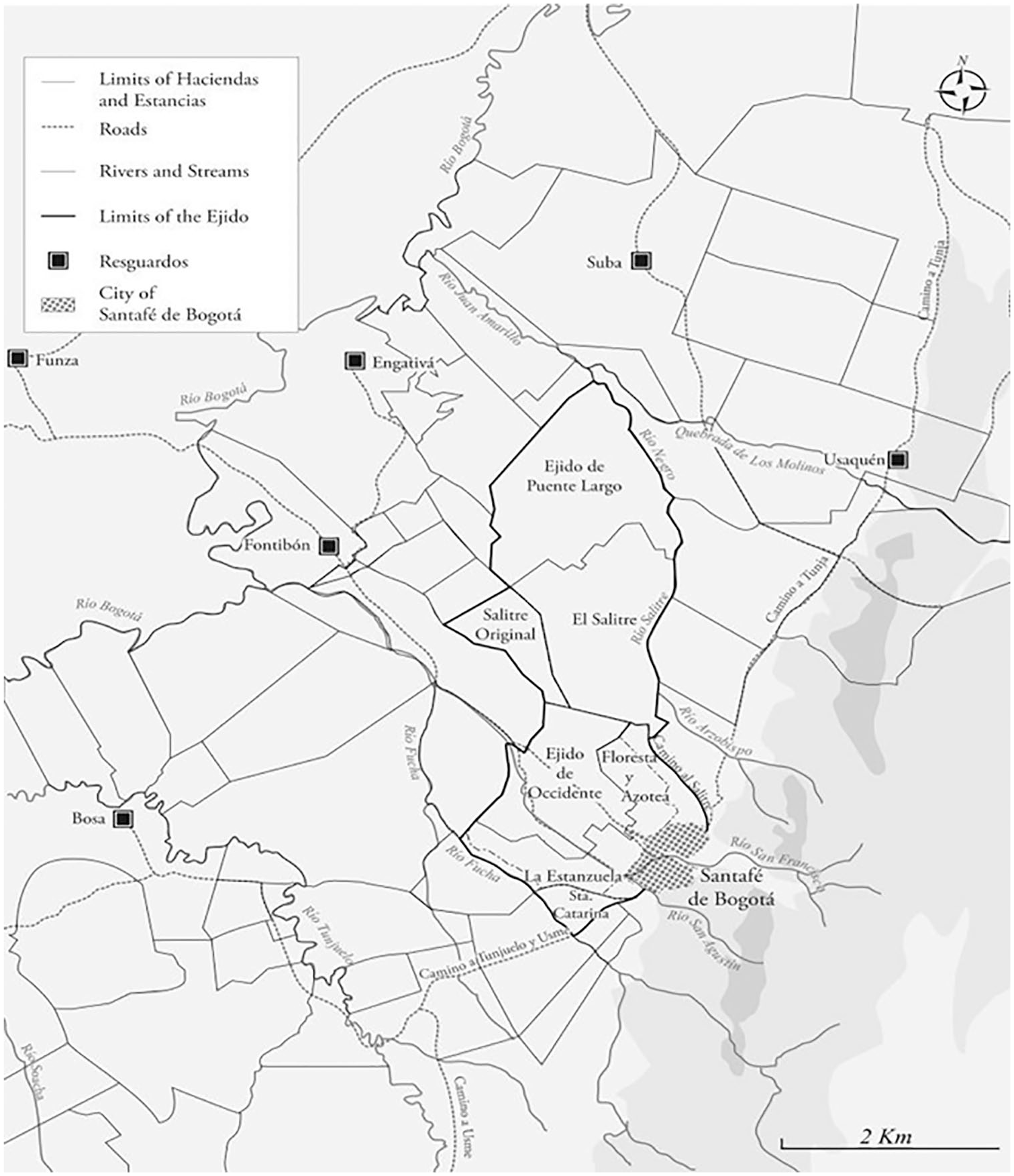
Haciendas and quintas within the ejido of Bogotá, 1750-1800.
One of them was the rich and powerful Miguel de Rivas, an attorney of the la Real Audiencia, who had been the mayor of the city, and was a perpetual councilman of the Cabildo of Bogotá. According to chronicler José María Cordovéz Moure, Rivas was so powerful and influential that he ‘was honored with visits from the Viceroys’ at his home. 65 His wealth came mainly from gold mines in Chocó and several estates in the “low lands” of Cundinamarca. He was also the owner of some of the greatest haciendas bordering the ejido of Bogota, among them, La Estanzuela, Chamicera, Techo, and Salitre which ended up expanding over large portions of the adjoining ejido lands. La Chamicera, to the west of Bogotá, was used to breed sheep and graze cattle from the many and very prosperous haciendas that the Jesuits held in other parts of the Sabana, and also in in Neiva, and in the Eastern Plains of the Viceroyalty, several days’ journey away. 66 La Chamicera was then the core of a large and sophisticated socio-economic network organized by the Jesuits along the central region of the viceroyalty since the seventeenth century. This system enabled the exchange of products from different altitudes, as well as the exchange of food and textiles in the lands of the Sabana. Additionally, a single hacienda could at the same time participate in these active commercial networks and generate ground rent when subdivided and rented out for annuities. 67 When the Jesuits were expelled from Spanish America in 1767, the Crown faced serious challenges when auctioning off these haciendas, because the new holders were expected to have the capacity to maintain the links that had been created throughout this extensive geography. Finally, in 1774, Miguel de Rivas, right after the end of one of his terms as the city’s mayor, auctioned off the haciendas around the ejidos. 68 By then, there was a legal process pending between the Cabildo and the Jesuits over the limits of the hacienda. The deed Rivas signed stated, in fact, that part of La Estanzuela was within the ejido. After some negotiations between the parts, Rivas “took possession of everything,” increasing the size of the old Estanzuela. 69 It is not clear how the religious community came to occupy part of the ejido and why the Cabildo later ceded that portion to Rivas, but the wealth produced in the adjacent lands probably had much to do with the seemingly authorized expansion of private lands over the municipal ejidos. 70 Rivas maintained the economic activity that extended throughout the central region of the viceroyalty, as well as the leased plots. By the end of the eighteenth century, the large hacienda of La Estanzuela had taken over most of the ejido, continued to be part of the extensive economic network managed by the Jesuits, and consisted, like so many other haciendas, of several cattle farming units as well as small farming leaseholds. 71
La Estanzuela was not the only portion of land Rivas occupied in ejido lands. In 1780, he established an emphyteutic lease with the Cabildo to occupy and use a third of the ejido of Bogotá. 72 He chose this big portion next to his hacienda El Salitre. Forty years later, his descendents sold El Salitre, as well as a large portion of the ejido he had obtained by emphyteusis, as private property and by a transaction the records of which have not been found. 73 With this seemingly irregular transaction, the Rivas family appropriated some of the most valuable lands around the city, and the city lost a third of its ejido (see Figure 3). As with la Estanzuela and the adjacent haciendas, the Rivas family kept some of the 1.500 hectares of El Salitre to raise sheep, cattle and pigs, but subdivided most of the land to lease out to medium-sized tenants who, in turn, sublet even smaller plots to terrazgueros and other tenants who farmed some cattle and crops. Emphyteusis holders profited from the rents obtained from subletting the plots because the market of useful domains was very dynamic. Whoever entered an emphyteusis agreement with the Cabildo could assign a portion of the rights to a third party, who in turn could eventually sublet to yet another one, provided the initial agreement with the cabildo was still in force. Holders of these rights also benefited because they could use these lands to secure loans and credits, even though they did not have full property rights over them. 74 The generalized perception of economic stagnation during that period is a misconception, for there was a dynamic property and commodity market, not only at the local level. Sebastián Herrera, who bought El Salitre in the first decades of the nineteenth century, continued subletting the land well into the twentieth century. In 1922, José Joaquín Vargas, grandnephew of Herrera, died childless, bequeathing his lands to the Beneficencia de Cundinamarca. 75 At a time of great population growth and urban densification, the fact that these lands could not be urbanized ended up defining to a great extent the elongated north–south configuration that would characterize Bogotá’s urban development in the twentieth century. As demonstrated by the case of El Salitre, the royal policy of dividing the ejido into parcels for rent, along with the political and economic power of the Cabildo, gave rise to one of the most valuable haciendas in Bogotá and defined the future urbanization of the city in the twentieth century.
The Cabildo also allowed the formation of quintas on the eastern edge of the ejidos by establishing emphyteusis agreements with some of the city’s vecinos. Even though they were in ejido lands, these quintas had remained as private possessions until 1861, when the liberal government decreed the abolition of common and corporate property, and ejido lands were expropriated and auctioned off to become absolute private property (see Figure 4). 76 By then, the owners of these emphyteusis rights had made numerous and expensive improvements on these quintas. They owned those improvements and had to receive payment from the government if the lands were to be expropriated. After 1861, in contrast to most of the ejido lands that were subdivided to be auctioned off, smaller quintas were given to their previous tenants in full ownership. The Liberal government preferred to do so, since the value of the improvements made by tenants was higher than the value of the land to be auctioned. Handing over as private property the land to the owners of the improvements was, then, a better deal for the government. The different results, at the time of confiscation, for the ejidos that were rented out and for those leased out in emphyteusis were quite evident in this case. The latter remained in the hands of their previous holders, now as private property, and eventually became neighborhoods of Bogotá in the twentieth century, retaining, over a century later, the original name of the estates formed on ejido lands. retaining, over a century later, the original name of the estates formed on ejido lands.
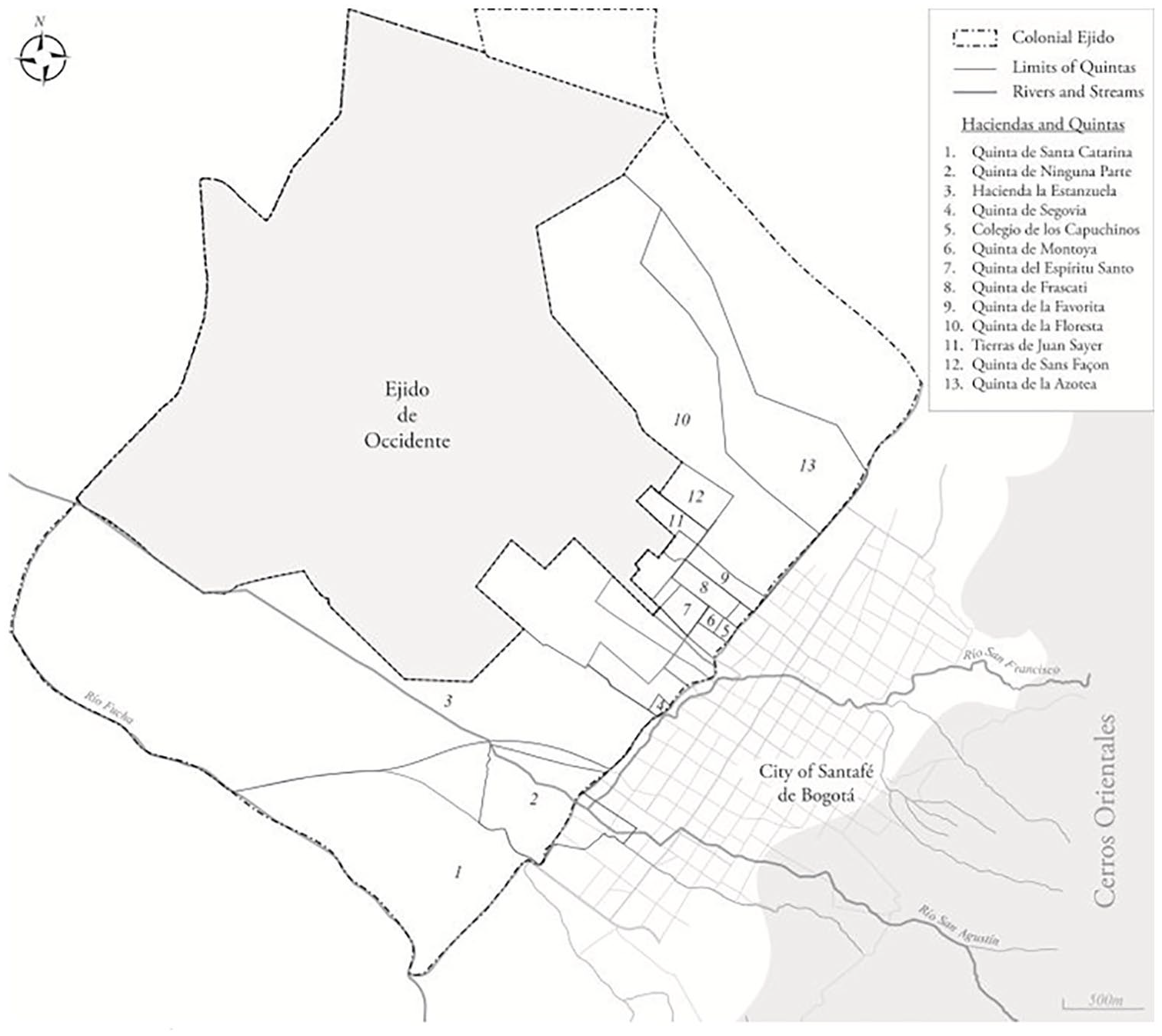
Haciendas and quintas on the western border of the city, 1848-1861.
Just as haciendas and quintas expanded over an ejido whose boundaries were vague, less prominent owners of adjacent land also tried to expand their own. Hermenegildo Ospina, for example, leased a portion of the ejido adjoining his property. In 1786, the Cabildo asked him on several occasions to mark the boundaries that divided his property from that of the municipality to avoid confusion, since it had been reported that his property was creeping over onto common lands. 77 The same thing happened with Manuel Fierro, although in this case, he had already built a wall extending the limits of his property onto the ejido. According to the mayordomo de propios, Fierro “had invaded a plot” of the ejido and consequently had to tear down what he had built. However, a year later, the same mayordomo wrote, “although I have tired of summoning him to appear before the Cabildo to answer, it has not been possible to get him to respond.” 78
While some of the city’s vecinos who had economic and political power took over the largest portion of the ejido, thanks to the establishment of long-term leases or through irregular appropriations, others leased for a number of years, generally five, with renewable agreements. Plots of different sizes were used to raise cattle and distribute land temporarily to some of the workers. Many rented plots that they were in turn being sublet from others who enjoyed longer leases. Some rented directly from the Cabildo. In 1785, at least twenty tenants were paying the Cabildo anything from 40 pesos for one- to two-hectare plots to 1,500 pesos for larger plots of some 64 to 65 hectares, such as el Ejido Grande, which was probably the largest of these pieces of land. 79 Some of these tenants were well aware that the money they paid in was important for the cabildo’s treasury. José Joaquín de Urdaneta, for instance, submitted in 1805 an application for three plots on the ejido arguing that the allocation of these plots to him would be convenient to the cabildo, as it would be more practical to charge one single tenant tan three different ones, and thus the Cabildo would obtain ‘more revenue from leasing propios and would find it easier to collect the monies.” 80
Towards the end of the eighteenth century, not only large and mid-size tenants occupied the ejidos; the poor found a place on it too. Some studies have shown that due to population growth and the increasing migration from neighboring regions in the second half of the eighteenth century, poor mestizos, mulattos, and whites settled in the vicinity of the Indian resguardos or sought to earn their livelihood in the haciendas around Bogota either as terrazgueros or as tenants. 81 But they also settled on the ejidos of the city. Numerous Indians, who had been left landless after the reduction of the resguardos in the eighteenth century, became tenant farmers in the fenced estates on the ejido where, in exchange for their labor, they could build a shack and grow subsistence crops. 82 In other cases, they rented small plots from wealthy leaseholders, as was the case in hacienda El Salitre or in the municipal lands of the Ermita de Las Cruces, among others.
Other poor residents lived in small portions of the ejido by renting small plots from other leaseholders, as was the case in El Salitre or in the municipal lands of the Ermita de Las Cruces, or by paying a lease directly to the Cabildo. 83 Starting in the mid-eighteenth century, lists of “solarcitos” and “ranchitos” (little plots and shacks) appear in the documents of the Ramo de Propios, but numbers clearly increase during the last two decades of that century, with records showing that most tenants were paying between one and three pesos to the Cabildo. If in 1734, for example, there were only six people registered as direct tenants of the municipality paying less than ten pesos per year, by 1788, there were already fifty-two leased properties paying smaller sums. 84 The municipality also leased other lands directly to members of the urban poor, and while they were not ejido lands, they fell under the jurisdiction of the Cabildo. For example, the so-called Mana de Zabaleta, located in one of the city’s slums (arrabales), was divided into small plots that were leased directly by the municipality and none of the rent canons was higher than three pesos. Like the ejido, by 1784, the arrabales of Santa Bárbara and las Cruces housed numerous small tenants who cultivated their gardens there, built shacks, and paid an annual levy to the municipality. 85
Still other poor residents settled on the city’a ejidos without authorization. In 1787, for example, the administrator of propios discovered that a woman had “usurped” a portion of the land of the ejido “below the plots of the rose garden.” To evict her, the Cabildo signed a lease with another person, Mateo Tres Palacios, for seventy pesos.
86
In some cases, the municipality formalized illegal occupations of small plots of land in exchange for a post-facto payment. In 1788, the administrator of propios accused Antonio Rodríguez of occupying a plot in the ejido of Alto de San Diego. Rodriguez argued that he had taken it because the land “was vacant,” and since “there was nobody to contradict me, I took it over and built a shack.” The administrator of propios formalized the appropriation by charging Rodriguez ten pesos for the years he had been living there.
87
These situations were the result of the Cabildo’s difficulties in controlling its own lands. There were cases where Cabildo officials discovered plots that were inhabited, with built housing, such as one on the banks of the San Augustin River in 1788, which had been “lost for more than sixty years.”
88
The control exercised over municipal finances by the Bourbon fiscal policies seemed to have no effect on these small tenants. In 1796, the majordomo of propios found that in Mana de Zabaleta, there were at least fifteen small tenants who had not paid for years.
89
In 1801, the administrator of propios, José Nariño, sent a letter to the Cabildo complaining that “it was impossible to give an accurate account” of the number of tenants or of the total revenue collected from the ejidos because only a few tenants pay the whole rent dutifully each year, most of them pay piecemeal on the street, in the fields or wherever they find me, apart from the fact that only very few of them can sign their name, and it makes no sense that, to get a bill for one or two pesos signed, I should have to go all over the place with the tenant looking for someone who can sign the bill on his behalf, especially out in rural areas.
90
It was clear that the mayordomo of propios faced a great number of problems when collecting the leases, especially from poor tenants, whose shacks and plots were far from the city, in muddy and difficult to access lands and, as such, beyond the reach of state bureaucracy.
What these data show is that by the second half of the eighteenth century, the ejido was intensely used, not as common land but through private possessions, both by rich neighbors and by workers and the urban poor. Even the so-called “potrero del común” (common pasture), the portion of ejido land that the Cabildo reserved to fatten the cattle for the municipal butchery, was densely occupied. This “potrero” was put up for public auction in 1805 because, apparently, the land was depleted and the Cabildo sought to place a new pasture elsewhere. 91 After successive and unsuccessful advertisement, the pasture was finally leased in two portions. 92 One of the new holders demanded that an inventory be made of all the homes and ranches that had been built there so that, when returning the land to the municipality, he could identify the improvements he had made and be paid for them. 93 As shown here, in the second half of the eighteenth century, the municipality divided the colonial ejido into large and medium-sized estates that were named, and in many cases fenced, as if they were private property. The poorest inhabitants stayed there as workers or small tenants in very different conditions than the large holders, but they also occupied small and distant plots within the ejidos without any authorization. By the end of the century, most of the ejido lands had ceased to be used freely.
Conclusion
The ejidos that had been used freely by the vecinos of the city to graze their animals, and to source raw and combustible materials, passed into private hands in the second half of the eighteenth century, as the cabildo entered into leasehold agreements and emphyteusis agreements granting perpetual rights to vecinos of the city. Although they remained under the control of the municipality and could not be sold, the ejidos ceased to be common lands. This process was, undoubtedly, encouraged by the growing demand for local lands, seen by the Crown as an opportunity to increase its revenues in a period of commercial expansion and imperial war. The reform of the municipal administration, fostered almost simultaneously in Spain and its colonies, was one more of the policies attempting to keep the local economies that sustained the empire afloat. 94 It prove to be successful. By the end of the eighteenth century, the enclosure process had placed the vast majority of municipal ejidos in private hands through usufruct agreements, and had made them the largest source of income for the Cabildo. At the end of the century this process had definitely transformed land tenure locally. The case of Bogotá then, sheds light on the ways in which imperial dynamics transformed land use on both sides of the Atlantic and, in particular, on the specificities of the processes of dismantling common lands in some areas of Colonial Spanish America.
As other fiscal reforms of the period, those aimed at controlling Cabildo’s expenditures and income produced a dramatic increase in municipal revenues and led to a groundswell of protest from local elites against what they regarded as a threat to municipal autonomy. However, despite the explicit tensions between Viceroy officials and local authorities, the latter did not lose their power on local matters. On the contrary, encouraging the enclosure of ejidos gave the members of the cabildo enormous power to divide, distribute, and obtain access to the land. We can see here that by acknowledging municipal autonomy to decide who would have access to municipal land, the Crown obtained access to the resources of the wealthy creating, at the same time, channels to finance the state. In fact, when the liberal government decreed the definitive privatization of the municipal land a century later, the inhabitants of Bogotá, as they sought to become owners or accustomed perhaps to the municipal land being in private hands, were not its most vehement opponents. The biggest opponents were the members of the now-called municipal council, whose power they derived still to a great extent, from the distribution of land.
Encouraging the private use of communal lands allowed the Cabildo to maintain control over the use and distribution of the ejidos and increase its revenues. The vecinos of the city could also increase their rents by subletting the land they now held, and to participate on productive activities. Ejidos were, without a doubt, part of the economic structure of the city, which towards the end of the eighteenth century was based on the distribution and exchange of agricultural goods between the haciendas and estancias of the Sabana de Bogotá, on sending food to the mining region of Choco -through Antioqueño tradesmen, and above all on grazing cattle brought from the Eastern Plains, Huila, Tolima, and the Magdalena Medio. 95 This meant that transferring the useful dominion by means of emphyteusis contracts contributed not only to an increase in the Cabildo’s revenues and a better income for those who would sublet portions of the ejido land. It also facilitated land mobility, long-distance commerce, and investment in improvements. Emphyteusis contracts, characteristic of the old regime, not only forced the holder to invest in building houses and planting trees, to look after pastures and grow crops thus increasing his capital, but they could also stimulate productivity. In fact, the portions of the ejido under emphyteusis where some capital had been invested were granted to their former holders when the ejidos were dissolved in the nineteenth century. This happened because the investments in the land surpassed the government buying capacity. Although it is not possible to say that the lands reached their productive potential, as Kalmanovitz and López would put it, not only did the commercial circuit that linked the sabana with different regions in the center and the northeast of the viceroyalty, as well as with the mining centers in the west, remained active but it actually grew. 96 As shown in other studies, emphyteusis contracts could be flexible enough to adjust to different uses and to be appropriated in creative ways, and this could explain their resilience in the face of economic and social change. 97
The implementation of fiscal reforms in the eighteenth century, and the circulation of agrarist ideas, contributed in the case of Bogotá to increase public revenue, and paved the way for the final privatization of municipal property under nineteenth-century liberalism. Thus, it is possible to understand the privatization of the ejidos decreed in 1861 not as a radical break from previous forms of tenure, but as the culmination of a long process of enclosure and private appropriation of land. The case of Bogotá is of course not emblematic of the enclosure processes in Spanish America or even of the viceroyalty of New Granada. However, by paying attention to the significance of fiscal policy in this case, one can question the widespread ideas about the dismantling of common lands derived from cases in other latitudes and to observe some of their specificities in the Spanish-American colonial world. This study can contribute to analysing the impact of of Bourbon fiscal reforms on land tenure, and the role of the land in the functioning of the empire. It also could allow us to discuss how colonial forms of land use and possession were not necessarily averse, but rather could pave the way to the privatization of property under nineteenth-century liberalism. The study of this long process can open up a much closer conversation between Spanish America agrarian history, Atlantic history, and the history of capitalism.
Footnotes
Acknowledgements
I thank Marta Herrera, Decsi Arévalo, Shawn Van Ausdal, Fabio Sánchez, Edwin López, and two anonymous readers who provided insightful comments on earlier drafts of this paper. Research for the article was conducted while being a postdoctoral research fellow in the History Department at Universidad de los Andes.
Declaration of Conflicting Interests
The author(s) declared no potential conflicts of interest with respect to the research, authorship, and/or publication of this article.
Funding
The author(s) received no financial support for the research, authorship, and/or publication of this article.
