



Abstract
The scholarly literature portrays Mao’s China as a font of gender-neutral ideals and masculine heroines, such as the “iron girl.” Although there have been few studies on breast-binding in the Maoist era, there is ample evidence it was practiced by many women. This article questions whether “defeminization,” “gender erasure,” or “gender-neutral” interpretations sufficiently explain the practice of breast-binding and women’s bodily experiences in Mao-era China. Through the analysis of in-depth interviews, periodical articles, and memoirs, this article finds that the gender-neutral framework often oversimplifies and homogenizes women’s diverse experiences. It instead argues that during the Mao era women’s bodily experiences were multifaceted and can only be understood through the reconciliation of the contradictory concepts of “femininities” and “female masculinities.” By exploring women’s silent practice of breast-binding in Mao’s China, this article yields new insight into the study of women and gender.
Xu Mingzhi was aware that she was often stared at by those around her. Her friends, classmates, teachers, and neighbors would pretend to casually glance at her upper body and would then whisper about her. She was an ordinary adolescent from a working-class family in Heilongjiang in northeastern China. On blustery days in the late 1960s, Xu preferred to walk backward when she was out, pulling at her shirt, not to avoid the biting wind but to prevent the garment from revealing the shape of her growing breasts. In her youth, like all her female friends, she bound her breasts with a piece of white cotton cloth and hid her upper body in loose garments out of fear she would be mocked as a “shameless woman” (Interview 1). 1 Experience with breast-binding is not uncommon among women who grew up in Mao’s China, although it has seldom been mentioned in written documents or studied in previous research.
Breast-binding, in which women flatten their breasts by wearing tight undergarments, is a bodily habitus in China that stretches back long before the twentieth century. Because of the “fragile beauty” aesthetic since the Ming dynasty, ample breasts symbolized vulgarity and lasciviousness, whereas a flat chest implied dignity, elegance, and chastity. These values were demonstrated in literature and visual arts (Zeng, 2014: 59–64). Based on the sartorial evidence of undergarments, historians speculate that breast-binding began to be practiced in the late Ming dynasty. Tight vests with excessive buttoning that were used for breast-binding appeared in the late Ming dynasty, along with a strapless vest worn by women that did not fit well on the body unless the wearer bound her breasts tightly (Finnane, 2008: 162–63; Zeng, 2014: 60). 2 However, the extent to which breast-binding was practiced in premodern China is still unclear.
Breast-binding was denounced in the Republican era out of the nationalist concern for “strengthening the nation and race.” Women from well-to-do families were especially criticized for being too stubborn to abandon this absurd fashion. Some scholars argue that breast-binding (usually referred to as shuxiong 束胸 or shuru 束乳 during this period) was a sign of the patriarchal oppression of women and that women had been liberated by the “Natural Breast Movement” of the late 1920s (Wu, 2006; Liu and Zeng, 2010; Zeng, 2014). 3 This argument tends to neglect women’s subjective bodily experiences, which leads to a very limited understanding of women’s motivations for breast-binding. It cannot explain the persistence of this practice even though the Republican government banned it.
While the Republican government condemned breast-binding as a form of women’s oppression (Wu, 2006; Liu and Zeng, 2010; Zeng, 2014), literary and cultural historian Jun Lei argues that the ostensibly restrictive practice of breast-binding should be seen as a form of agency through which women redefined their gender roles. It presented a generation of new women who exerted control over their own bodies and rejected the notion that women were merely sexual playthings or breast-feeding mothers (Lei, 2015: 169). Lei’s work is especially valuable in emphasizing women’s agency behind their actions, yet her interpretation overgeneralizes women’s choices in that it does not examine the coercive factors that influenced women’s decisions. Through an examination of women’s testimonies after the establishment of the People’s Republic of China (PRC), I find that women faced multiple sources of coercion, including social standards of beauty and sexual morality, peer pressure, and violence. Without denying that breast-binding demonstrates women’s control over their own bodies in some cases, I argue that some women practiced it as a strategy for coping with life in a patriarchal and hyper-political society.
Breast-binding in the Mao era (referred to as shuxiong 束胸, but often simply described as “wearing a tight vest” 穿紧背心 in articles and women’s own accounts) has garnered only a few brief mentions in the secondary literature. Harriet Evans notes that breast-binding was disparaged in the official discourse of gender and sexuality in the 1950s (Evans, 1997: 69–70), but does not examine women’s own accounts of their experiences of breast-binding, and therefore does not examine the discrepancy between the discourse in the literature and the practice itself. In her study of fashion and politics in Guangzhou during the Cultural Revolution, Sun Peidong explains the practice of breast-binding as an erasure of gender and defeminization, although she also suggests that women used other accessories to exhibit their femininity (Sun, 2013: 196–200).
Drawing on women’s own testimonies, this article addresses three questions: Why did women bind their breasts in the Mao era despite the official disapproval? Can the “gender-neutral” interpretation of femininity in the Mao era sufficiently explain the practice of breast-binding? How can we obtain a better understanding of the femininity/masculinity binary through an examination of women’s experiences of breast-binding? This article first unravels terms such as “gender erasure” and “gender neutral” that are often used to describe Mao-era women, and supports the reconciliation of “femininities” and “female masculinities” as the most fruitful approach for interpreting breast-binding. This theoretical discussion is followed by an introduction to the methodology. Then the article turns to an examination of three aspects of breast-binding: morality and the male gaze, class and ideology, and beauty and female masculinities. It argues that women’s experiences of breast-binding were multifaceted, a situation that could only be understood by combining the concepts of femininities and female masculinities.
Gender Erasure, Gender Neutral, and Female Masculinities
Over the past two decades, discussions of women’s bodies and dress during the Mao era have proliferated, leading to a consensus that the body-dress politics in women’s everyday lives is a salient point to understanding gender relations and power structures of that period. These studies predominantly debate whether women were defeminized in the Mao era. For most Chinese and Western witnesses, observers, and researchers, the Mao-era gender formation amounted to “gender erasure” 性别抹煞, “desexualization” 去性化, “defeminization” 去女性化, “masculinization” 男性化, “gender neutralization” 中性化, “androgyny” 不男不女, and the “annihilation of femininity” 女性气质的毁灭 (Zheng, 1994; Yang, 1999; Chang, 1991: 289; Honig, 2002: 255–57; Honig and Hershatter, 1988: 42; Yang and Yan, 2017).
The Mao era is widely criticized for its repression of the “natural” physical and psychological differences between men and women. The terms “defeminization,” “masculinization,” “gender erasure,” and “gender neutral” are often used interchangeably in memoirs and research on the Mao era, emphasizing that women were intrinsically different from men, yet the Mao era did not allow women to present their “natural” weakness or softness. In numerous memoirs, elite women expressed anguish that they had rejected their “feminine beauty” during the Mao era, especially after the beginning of the Cultural Revolution. In her influential essay “From Gender Erasure to Gender Difference,” Mayfair Mei-hui Yang claims that women’s bodies were “erased,” “desexualized,” and “masculinized,” as women wore unisex attire like that of the men, which consisted of baggy blue or gray clothing that hid their breasts (Yang, 1999). This line of argument, which criticized the Maoist era for suppressing women’s distinct nature of beauty, fragility, and physical weakness, has been formulated more recently as the “annihilation of femininity” (Yang and Yan, 2017). Wenqi Yang and Fei Yan (2017) argue that the Cultural Revolution misconstrued the concepts of gender equality as sameness, ignoring women’s “natural” aspirations for “women’s clothes” such as skirts and high heels, and their “incapability” for strenuous labor. This argumentation is problematic because of its gender essentialist assumption that excludes alternative experiences of women.
Other research challenges this “gender-erasure” narrative. Hung-Yok Ip argues that female beauty was an important part of women’s experience even in the first few decades of the People’s Republic of China (Ip, 2003). Sun Peidong demonstrates how women paved the way for alternative fashion symbols as resistance to the Communists’ rigid bodily discipline (Sun, 2013). The thread running through these studies is the theme of women exercising their agency in constrained social environments.
In contrast to scholars who treat “gender erasure” as a negative concept, Wang Zheng and Tina Mai Chen argue that “gender neutrality” empowered and liberated women from the gender bias that encouraged the evaluation of women based solely on their hyper-feminine appearance (Chen, 2003; Wang, 2017). Wang Zheng further contends that the prevailing criticism of women’s liberation in the Communist period in both public memory and academic research within and outside China stems from the discriminative and even misogynistic discursive maneuvers following the 1980s, which systematically disavowed women’s achievements and confined them to a position narrowly defined by hyper-femininity. In other words, in the post-Mao era, the terms “masculinization” and “gender erasure” functioned as discursive tools to stigmatize and marginalize Mao-era masculine women (Wang, 2017: 236). This hyper-focus on women’s fashions in both society and academia can be attributed to the commercialization of the female form that began in the 1980s and regards the presence of curves, makeup, high heels, and revealing dress as symbols of womanhood (Wang, 2017). By contrast, although in the Mao era men’s choices in attire were also limited to blue, green, or gray uniforms, which ignited a fervor of bell-bottoms, aviator sunglasses, and plaid shirts among men in the 1980s, post-Mao research on men and memoirs written by men seldom discusses the link between men’s appearance and masculinity. Instead they often lament men’s loss of superiority in physical ability, economic status, and political power.
In sum, although the “gender erasure” narrative of women as victims of defeminization in the Maoist era has dominated academic studies, it has been criticized for overgeneralizing women’s experiences, as women also sought alternative ways to appear feminine. The discourse of “gender erasure” is further undermined by its close relation to post-Mao misogyny and consumerism. How, then, can we make sense of the glaring contradictions among previous studies? Are the concepts of femininities, masculinities, and gender neutral useful in understanding Communist body politics? The practice of breast-binding provides an ideal case to test the validity of these ideas. Hiding one’s breasts ostensibly aligns with the “gender-erasure” and “masculinization” narrative, in which gender differences are eliminated, with the result that the female body is rendered male-like. However, arguing against this assumption by exploring women’s own testimonies, this study shows that women’s experiences, motivations and subjective feelings of breast-binding were far from homogeneous. To fully understand women’s bodily experiences in the Mao era, we examine their accounts in their historical context, while also not limiting femininity to the bounds embraced by our society today.
The diversity of breast-binding experiences demonstrates that any attempt to describe women’s subjective feelings about their body as singular or uniform is impossible. I argue that breast-binding can be only explained by the reconciliation of femininities and female masculinities. The assumption that hiding women’s breasts automatically equaled “gender erasure” is a profound misunderstanding of Chinese femininities. This article shows that, for some women, breast-binding served as a gender reminder symbolizing beautified, well-behaved, chaste, and revolutionary femininities. In addition, the notion that “gender neutrality” empowered and liberated women from traditionally narrowly defined femininity also overgeneralizes women’s experiences in the Mao’s era. It cannot explain why women bound their breasts in the search to be beautiful, nor can it reflect women’s desire to appear like men.
Compared to the “masculinization of women,” which connotes the stigmatization of women who wished to look like men, the concept of “female masculinity” is a more neutral basis for an analysis of the practice of breast-binding. Judith Halberstam defines “female masculinity” as a means of achieving destigmatization and infusing pride and power into women (Halberstam, 1998: xi). While “women’s masculinization” implies men’s exclusive entitlement to masculinity, “female masculinity” opens up the possibility for studying masculinity without men or the male body. 4 It enables us to examine the construction of masculinity, and “the complex social structures that wed masculinity to maleness and to power and domination” (Halberstam, 1998: 1–2). Female masculinity offers an analytical tool for perceiving women who identify themselves as women but would like to pursue traditional masculine traits. The women in Maoist China who practiced breast-binding seldom identified themselves as men, yet they wished to embody the appearance of a man, as a masculine appearance represented the power ascribed to the male body. Therefore, female masculinity presented a form of empowerment deployed by women to transcend the traditionally rigid gender boundaries. Although the terms “femininity” and “masculinity” imply multiple connotations, this article uses the plural to emphasize the diverse nature of “femininities” and “masculinities,” as pointed out by Susan Brownell and Jeffrey Wasserstrom (2002: 2).
The issues arising from women flattening their breasts are not specific to China. Concern over women’s breasts due to women’s embarrassment, patriarchal control, or fashion trends is a gender issue in many parts of the world, which could also be explained by the reconciliation of femininities and female masculinities. A flat chest represents femininities that are either driven by patriarchal coercions, or, alternatively, by women’s active rejection of the hyper-femininity that is centered on ample breasts. In West Africa, for example, “breast-ironing” is commonly practiced to flatten a woman’s chest because breasts can stimulate men’s sexual desire. Family members, caretakers, nurses, friends, or neighbors use objects to massage or press the breasts of girls aged eight to twelve years to flatten them (Tapscott, 2012). In Europe, The Female Confidence Report commissioned by the lingerie company Triumph found that women across generations in Europe aspire to breasts that appear youthful instead of big (Triumph, 2016). Women who wish to counter the traditional mainstream ideal of big-breasted female bodies have also bound their breasts to present an alternative femininity (Creatorsarch, 2017).
A small number of contemporary women’s practices of breast-flattening can be explained from the perspective of female masculinities. In the English-speaking world, one can find many webpages instructing women on how to bind their breasts. Their target readers are mostly lesbians and transgenders (Go Ask Alice, 2016; Halberstam, 1998; Moore, 2016). A documentary about the New Marilyn Nightclub in Tokyo shows one of the female hosts wearing a tight vest every day in order to appear mannish, as she has chosen to live as a man, yet would not be going through a transgender surgery (Longinotto and Williams, 1996). In her study of masculine girls in a junior high school in Taiwan, Wu Yihui shows that girls who deviated from the feminine gender norm—mainly tomboys—would secretly bind their breasts because they did not like feminine body curves (Wu, 2011).
The presentation of female breasts is crucial to the construction of female identities, gender relations, and power structures in any society. Therefore, the issue at stake is not only culture-specific but also of general importance and contributes to understanding the complexities of femininities and female masculinities. This article situates breast-binding in a specific time and space, namely Mao-era China, in the hope that its insights may shed light on this issue in other cultures and historical moments.
Methodology
Apart from periodical articles and memoirs, this study mainly employs oral history to address women’s subjective experiences of breast-binding. From pilot interviews, I found that breast-binding was mostly practiced by women during their adolescent years; therefore, women who went through puberty during Mao’s era were selected. From 2013 to 2015, I conducted semi-structured interviews with thirty women born between 1938 and 1959. The interviewees were approached via local Women’s Federations, Chinese researchers, friends, and family. The snowball method was also used to expand my pool of interviewees. Originally, I focused on women in and around Beijing and Shanghai. Subsequently, however, I was also introduced to women from Jilin, Heilongjiang, Anhui, and Shaanxi who had practiced breast-binding. Their experiences offer novel insights, and thus I have included their oral evidence in this article. In order to include a wide range of women’s voices, I interviewed women from different social classes. The interviewees came from families of peasants, workers, technicians, doctors, merchants, officials, military officers, and the intelligentsia.
Thus far, no one has challenged the notion that breast-binding was practiced exclusively by educated urban women from well-to-do families in metropolises such as Beijing, Tianjin, Shanghai, and Guangzhou (Wu, 2006; Liu and Zeng, 2010; Chin, 2012; Zeng, 2014). However, this notion is misleading. By presenting women from diverse backgrounds, this study challenges the assumption in previous works that breast-binding was adopted exclusively by urban middle- and upper-class women, presumably because these works are mostly based on periodicals and archival research that seldom included the voices of lower-class and rural women. In fact, rural women also adopted similar practices according to women’s experiences and observations (Interviews 2, 3, 4).
One striking discovery of this research is that despite the vast differences in the interviewees’ class, educational, and regional backgrounds, more than two-thirds explicitly recalled that in their youth they had worn tight undergarments to bind their breasts or hunched over to avoid embarrassment. Among those who did not practice breast-binding, four said that their breasts did not develop enough to bother them (Interviews 4, 5, 6, 7); one said that she did not pay attention to her bodily development (Interview 8); and three distinguished themselves from others by claiming they were more “emancipated” (Interviews 9, 10, 11). The economic background of the interviewees’ families was not a factor that determined whether or not they practiced breast-binding.
This, however, does not mean that all women who grew up in the Mao era, regardless of their age, place of origin, and occupation, had the same experiences of breast-binding. Women who bound their breasts had diverse, if not completely opposite, motivations. The means and the length of time of breast-binding were significantly different from one woman to another. While previous studies pay little attention to the age aspect of breast-binding, this study finds breast-binding was particularly age-specific. In the Mao era, women who bound their breasts or hunched over began to do so at puberty or in their early teens, from the age of about twelve to sixteen. Some stopped breast-binding after a short time—a few months—whereas others bound their breasts for years, until they started breast-feeding their children (Interview 12). 5
Nevertheless, the scale of this practice, or the urban-rural divide, is not my primary interest. These topics would require further investigation encompassing a larger sample of the population. I am interested in the diversity and complexity of this practice at the experiential level, including women’s subjective experiences of their bodies, their practice of breast-binding (unbinding, or not binding), and broader social and political factors that shaped women’s experiences and choices.
I conducted semi-structured interviews to enable women to delineate their pasts without unnecessary guidance. In doing so, I invited each interviewee to briefly introduce her family background, education, occupation, and marital status. Then I asked the interviewees to recall their everyday dress in their early years. The issue of undergarments and breast-binding, in most cases, needed prompts from me. I questioned them about how and why they bound or did not bind their breasts, and their attitudes toward this practice. I also asked women about their physical education, their relationships with male classmates, their reading and film watching experiences, and so on. The majority of them had never spoken about this remote history of breast-binding even with their mothers or daughters, as they did not consider it a worthy topic. And yet, contrary to my expectations, during the interviews, women enthusiastically shared these intimate stories rather than avoiding them. I asked interviewees who did not practice breast-binding: Do you know whether any of your friends or relatives bound their breasts? Did you pay attention to the body shape of other women when you were young? What was your attitude toward women with flat chests versus your demeanor toward those with ample breasts?
During the interviews, I tried not to influence women’s story-telling, emotional expressions, and judgments. Since the 1980s, the mainstream discourse has emphasized that Mao’s era was sexually repressive. Women’s recounting of their early experiences is inevitably influenced by this official conclusive narrative from the past. Some women repeatedly asserted that breast-binding was “feudal” 封建 and backward. Others reacted defensively by claiming that not all women in Mao’s era were so ignorant as to bind their breasts. I have found that it was important not to align with their judgment in the interviews to avoid interviewees’ possible exaggeration of their experiences with my encouragement. Instead, I asked them why they held such attitudes. A cross-examination of all the narratives shows that in some instances they corroborate each other while in others they are contradictory. In exploring the multifaceted story of breast-binding, this article reveals that one must be careful not to overgeneralize women’s lived experiences.
Moralizing the Unmarried Female Body: The Rhetoric of Violence and the Male Gaze
Femininity, as a set of acceptable or ideal practices contingent on social contexts, is constantly subject to change. It refers not only to the female bodily appearance but also to a repertoire of rules of social behavior. In the Mao era, moral obligation defined femininities, coercing women to behave in certain ways. Instead of creating gender-neutral bodies, breast-binding had more subtle ways of constructing femininities.
Women who bound their breasts in the Communist milieu shared a sense of embarrassment surrounding the breasts. Even though breast-binding became unfashionable in the 1930s and 1940s (Lei, 2015), the notion that large breasts hinted at improper sexual behavior persisted. Ju Fengzhu, born in 1939 in a suburban industrial area in Shanghai to a technician’s family, recalled that if an unmarried woman had big breasts, others would mock her by saying, “Those things [woman’s breasts] would hit male cadres before she herself appeared” 人还没到, 这个东西就跑到男同志前面去了 (Interview 13). Others might also comment that this woman had been touched by men (Interview 13). And teachers told young girls, “Behave like a [proper] girl!” 像什么小女孩样的 (Interview 14). Girls who did not hide their breasts and bodily curves were denounced as “tramps” 流氓 (Interview 15). From Xu Mingzhi’s experience, a flat chest connoted a well-behaved woman. If a young woman had prominent breasts, people would comment, “She doesn’t look like a girl. She’s like an old biddy” 老娘们儿 (Interview 1). It was almost unbearable for any woman to be the butt of this kind of comment, because it suggested that she was not sexually modest and might have lost her virginity. By contrast, after marriage and especially breast-feeding, women no longer had to worry about such comments (Interviews 1, 2, 12, 16). Thus, by breast-binding, some women were not imitating men’s bodies; on the contrary, they were learning how to become proper women. Therefore, I would argue that in Mao’s China, some women bound their breasts in order to create a well-behaved chaste female body.
This chaste feminine body was underpinned by the daily potential danger of rhetorical violence concerning women’s appearance and virginity. Jin Xiaowen remembered that in middle school in Beijing, girls were especially vulnerable to insults about their sexual activities. The slur “broken jar” 碎坛子 disturbed her the most. After decades, she found out that it meant a girl who had been raped or who had lost her virginity and thus was considered worthless, like a broken jar (Interview 8). Other such insults included “femme fatale” 女妖精, “being smug” 臭美, “seeking the limelight” 出风头, and “showing off” 显摆 (Interviews 4 and 7). Although the cult of chastity fell within the category of the “four olds” 四旧, 6 in his famous essay “In Memory of Norman Bethune”—one of three essays that all Chinese were required to recite—Mao declared that one should have “moral integrity and be above vulgar interests” (Mao, 2016 [1939]). “Vulgar interests” no doubt included sexual desire outside of marriage. The demand for women’s chastity is evidence of the patriarchal nature of Mao’s China. Hence the comments about being an “old biddy.” In those circumstances, for girls to cover their bodies up to avoid rhetorical violence was a pragmatic step.
The rhetorical violence was nonetheless based on the violence of gazing, which put women under constant moral surveillance. In his study of Western art, John Berger argues that in Western painting women are depicted as inert objects deployed for men’s viewing pleasure. Women also evaluate themselves as men do, objectivizing themselves (Berger, 2008). In her canonical articles on visual pleasures in narrative cinema, Laura Mulvey further refines the term “male gaze” as pointing to a patriarchal society, and women looking at themselves and other women through a male gaze that objectifies women, rendering them passive recipients of the active male. The imbalanced power relations between genders give women the illusion of power when they avail themselves of the male gaze. Yet this illusion of women’s empowerment ultimately reinforces the patriarchal system that oppresses women as a whole (Mulvey, 1975, 1989). This gender structure also functioned at an experiential level in women’s daily lives in Mao’s era. Women gazed at each other and themselves through a patriarchal male lens that closely monitored and disciplined their sexual behavior to privilege male demands for female chastity.
In their daily lives, women could potentially be gazed upon anywhere by anyone regardless of their gender, age, or occupation. Teenage girls experienced intense pressure from their male counterparts’ gazing, for instance, when they jogged and their breasts bounced. Born in the 1950s in Changchun, Li Meijuan started hunching over while walking after her breasts started developing. She did not even dare to run when she was late for school, as she could not bear the boys’ laughter at the sight of her jiggling breasts (Interview 17). Another woman, Zhao Xiulin, participated in a sports team in Henan when she was sixteen. Although male athletes and female athletes trained separately, male athletes would, even from a distance, tease female athletes with big breasts while they were jogging (Interview 18). The women I interviewed repeatedly told of being mocked at school because of their breasts, showing that the everyday sphere of education was a space of intensive male gazing and the objectification of women as sexualized objects.
Another space where women were on display was the public bath, which was especially common in northern provinces. In public baths, women bathed together in a large hall, without compartments, at a scheduled time. There they usually could closely observe and chat with each other. In Heilongjiang, Xu Xiaoying recalled, a young female worker in her work unit canteen had exceptionally big breasts. That woman had bound her chest so tightly that a deep mark was visible on her back. Nonetheless, when she showered in the public bath, all the old women looked at her and gossiped: “How big her breasts are, as if she had nursed several babies” (Interview 19). With the words “had nursed several babies,” these older female workers implied that big breasts equaled sex and motherhood. With this critical and teasing tone, the women expressed their disapproval of this aspect of her body, which they thought brought her virginity into question. Looking at other younger women through the male gaze, these women endorsed and acted as guardians of the patriarchal social order. Their marital status and age were deployed as moral capital, putting them in a powerful position to criticize others’ behavior.
Raised in a peasant family in Chongming, a county in Shanghai municipality, Shi Aihua witnessed sent-down youth coming to the county during the Cultural Revolution. 7 On their arrival, they were closely observed by local peasants. They faced taboos on their clothing and their bodies. Wearing red trousers was condemned as “hooliganism,” as was showing big breasts. Under the gaze of the peasants, the sent-down youth behaved cautiously and tried to make their breasts less conspicuous (Interview 2).
Teenage girls also gazed at their peers, which created peer pressure in their daily social networks. Girls, hungry for knowledge, shared their individual experiences in private among their closest friends and gossiped about other girls. Homemade camisoles for adolescent girls, called “little garments” 小衣服, were the subject of gossip among girls, and wearing one was considered to mark the start of adolescence. One of Xu Mingzhi’s friends often pretended to greet other girls by casually patting them on the shoulder; this way, she could find out whether the girls had started wearing a “little garment” (Interview 1). This act of touching showed a great curiosity about mature female bodies, about which young women could hardly obtain any knowledge at home or at school. On the other hand, it also demonstrated that girls were intensively gazed at by their peers. Any aspect of their bodily appearance that was out of the ordinary would likely end up being whispered about. In some cases, imprudence could lead to stigmatization. Interviewee Wang Yulu had a girl classmate who did not flatten her breasts and who even touched and played with her breasts at school, which astonished her classmates. This girl was eventually ostracized by all the others. As a result, Wang realized that girls had to be careful with their bodies (Interview 20).
Apart from the omnipresent gaze of others, women also gazed upon themselves with a sense of shame, which was ultimately caused by their use of the male gaze, which regarded sexual activity outside marriage as disgraceful for women. For some women, any indication of sexual activity could cause anxiety. Jin Zhinan, born in Yulin, Shaanxi, to a well-off family, was proud that she did not bind her breasts. In her view, breast-binding was a rural practice that a town girl should not engage in. However, at the age of twenty-seven or twenty-eight, after getting married, Jin Zhinan was so frightened 害怕 and ashamed 羞 of her first pregnancy that she bound her belly to hide her condition. First, she wound a length of coarse cotton around her body, then made a bellyband with a row of buttons. During the interview, another woman, Wu Yinyan, asked her about her reasons for doing so, because in Wu’s opinion, there was nothing embarrassing about pregnancy within the confines of marriage. Jin Zhinan thought that the legitimacy of the pregnancy was irrelevant; she simply thought pregnancy was ugly 难看. She attributed her behavior to the backwardness of the small and remote county in Shaanxi (Interview 4). The belief that pregnancy was shameful could also be found in suburban districts of Shanghai, as Shi Aihua recalled (Interview 2). Pregnancy was considered shameful, I would argue, because it proved one had a sex life, which some women considered shameful in itself because patriarchal morality demanded female chastity. Even after marriage, the visibility of having had sex was somehow embarrassing to women. This self-gazing through male gazing became a habit with women. As Mulvey explains, this “trans-sex identification” could easily become second nature (Mulvey, 1989: 33). Therefore, Jin Zhinan’s sense of shame came from her “trans-sex identification” as a male, judging women, including herself, by the standards of patriarchal morality.
However, this link between the patriarchal demand for female chastity and a flat chest did not go unchallenged. Occasionally, women distanced themselves from those who bound their breasts, because they believed emancipated women should not do so. Li Rufen, born in 1938 into a merchant’s family in Shanghai, recalled that some of her classmates in her secondary school bound their breasts, yet she did not because she considered herself different, a more “emancipated” woman. She attributed her liberated mindset to her pursuit of information and knowledge, as seen, for example, in the fact that she subscribed to China Youth Daily 中国青年报—the official newspaper of the Communist Youth League and one of China’s most influential periodicals—when she was an undergraduate in the late 1950s, and went to the cinema frequently (Interview 9).
The recollections of two other interviewees further show that knowledge of the female body was crucial in discouraging women from breast-binding. Thus, women with access to such knowledge had an important advantage. Fei Yuchun was born in 1943 in Shanghai to a doctor’s family. Her father was a trained private doctor and her mother was a pharmacist. When she was undergoing puberty, her mother taught her to examine herself for lumps in her breasts while showering. Her mother also reminded her, along with her sisters, to stand straight to avoid poor posture. Therefore, she never felt the need to hunch over while growing up (Interview 11). Yao Ling’an emphasized that she came from a well-educated family (Interview 10). Her mother was a teacher. Her family was open-minded and did not hold “feudal values.” The reason that other women did not similarly regard breast-binding as “feudal” will be explained in the next section.
In a word, in the Mao era, a flat chest was considered evidence of young women’s chastity. Those who did not behave according to the Maoist moral code faced the omnipresent pressure of the violence of the male gaze. Women were trained to be cautious about their appearance in order to be socially accepted.
Embodying Communist Ideology
While breast-binding conveyed the patriarchal morality that the Communist authorities publicly opposed, it was not the antithesis of Communist ideology, which emphasized class struggle and revolution. A politically correct femininity also required women to be cautious about how their breasts appeared. One of my interviewees from Beijing, Xu Shulan, said, “If you didn’t bind them flat, people would think that you had the bad bourgeois thinking 资产阶级坏思想. So we all did it secretly” (Interview 21). Xu’s concern was shared by many other women. Looking into a mirror in public, checked jackets, clothes with narrow waists, long hair, love affairs in novels, and even discussions of beauty were all condemned as “bourgeois” (Chang, 1991: 523; Mu, 2002: 294; Interviews 22 and 23). Why did large breasts symbolize the bourgeoisie? What were the consequences of being bourgeois?
The answers lie in the class and cultural symbols in Mao’s China. Throughout its history, the Communist Party attempted to create cultural symbols to represent its values and beliefs. As Elizabeth Perry suggests, “the role of cultural positioning, or the strategic deployment of a range of symbolic resources (religion, ritual, rhetoric, dress, drama, art, and so on)” was central to political persuasion (Perry, 2012: 4). The most obvious characteristics of the bourgeoisie were trivial things such as “street names, fashions, hairstyles, public discourse, daily formalities and rituals, traditional architecture, long-standing conventions,” all of which became things to be wiped out, especially once the Cultural Revolution started (Wang, 1997: 195). In the political sphere, Mao himself also occasionally used trivial things, such as his food preferences, as political metaphors. He did so to pave the way for his new policies, asserting his moral superiority by claiming to live a frugal life as the most powerful man in the country during the Great Famine of 1958–1962, and simplifying ideology for people with limited education (Lu, 2015). In their daily lives, ordinary women could not figure out exactly what “bourgeois” was. Specific habits such as dressing up, drinking coffee, watching films, and listening to Western music or radio were regarded as typical traits of the bourgeois spirit (Interview 24). In a word, during the Mao era, nothing was actually trivial, and “trivialities”—including women’s bodies and female breasts—became an essential way of determining one’s political consciousness.
Although identifying trivial things with various social classes was an omnipresent practice in Mao’s era, the rules of categorization were far from clear. According to Maurice Meisner, there were at least three different sources of classification. First, members of the urban middle class from the pre-Communist era were labeled “bourgeois.” Second, right before the Cultural Revolution, Mao redefined the new bureaucratic ruling class and new social elites as the “new bourgeoisie.” Third, one’s class status was not static but could be changed through one’s political consciousness and behavior. This ambiguity sowed conflict and confusion. One could easily adopt different versions of classification on various occasions. During the Cultural Revolution especially, individuals could easily be “labeled ‘class enemies’ on a variety of theoretical and political grounds” (Meisner, 1999: 308). According to Meisner, the source of classification clearly had a temporal dimension. Anything from the pre-1949 era could potentially be anathematized as “bourgeois” in the Mao era. In addition, one’s future depended on constantly embodying a correct class consciousness.
In Mao’s China, how women managed their breasts in the past and present was used to assess their political consciousness. Associated with pre-1949 Shanghai fashions, which were displayed by popular movie stars such as Ruan Lingyu 阮玲玉 (see Figure 1), curvaceous figures were quite visible in Republican periodical representations and on the street by qipao-wearing upper-middle-class women in the 1930s and 1940s (Lei, 2015: 202). After 1949, curvaceous figures, low-cut dresses, and tight-fitting dresses were identified as bourgeois by Communist standards. In November 1964, Renmin ribao published an article criticizing “outlandish dress” 奇装异服, including tight trousers. The report was placed at the top of the second page, right after the front page (which covered the activities of high-ranking party leaders), with the headline in large type. That the article on “outlandish dress” was in such a prominent position indicates that people’s appearances were being scrutinized by the state. Yangcheng wanbao listed the three characteristic features of outlandish clothing: first, it was flirtatious, designed to stimulate others’ sexual desire; second, it was harmful to one’s health; and third, it imitated Western fashions, which fundamentally clashed with the austere and hard-working socialist style (Guangzhou Clothing Technology Study Group, 1964). Low-neckline dresses and tight tops that narrowed at the waist and highlighted the breasts fit into this category of “outlandish dress.” Women who wore these kinds of clothes had been corrupted by capitalist thinking, idling away the day and seducing capitalists (Guanqun Clothing Cooperative Technical Team, 1964).
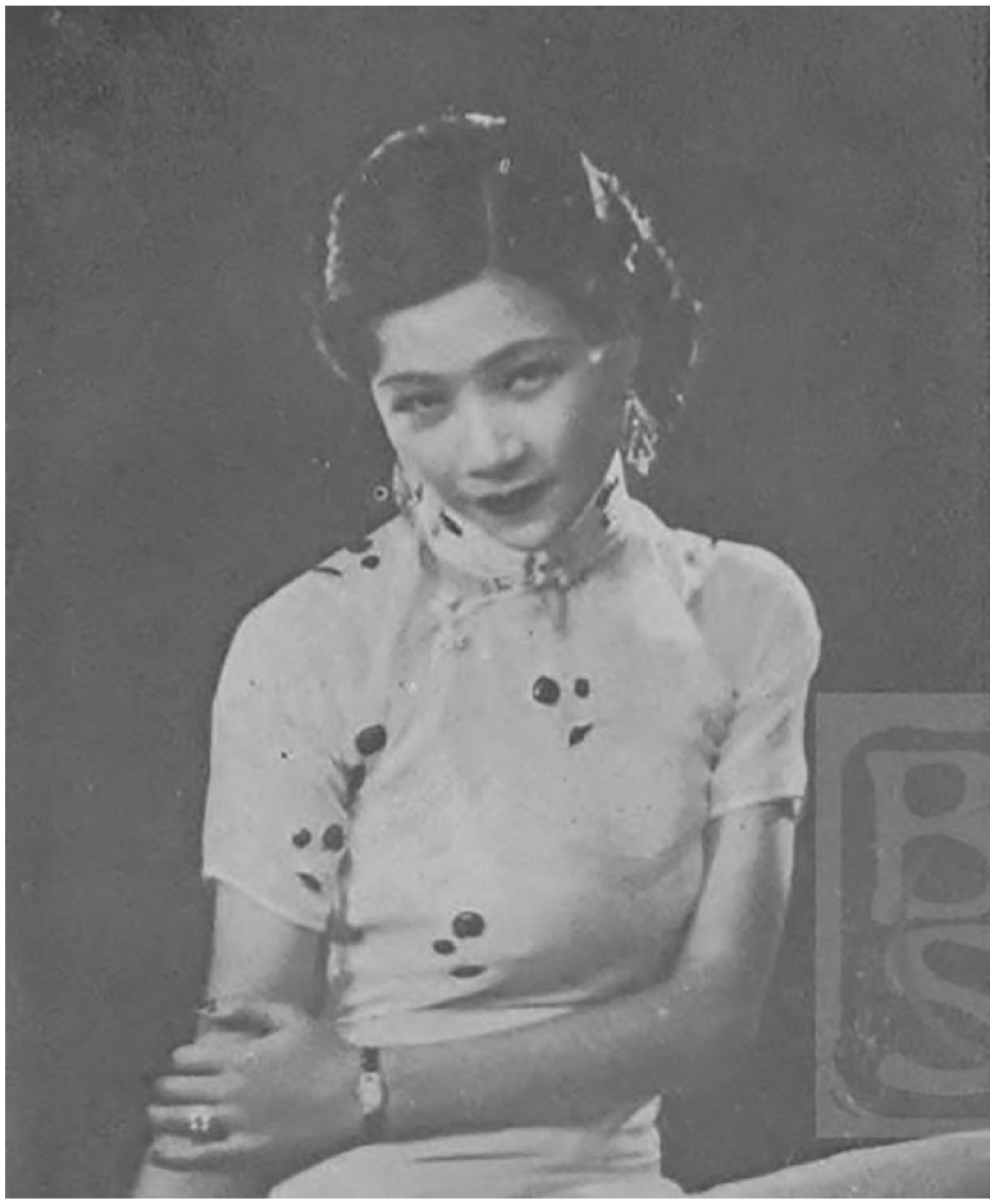
Ruan Lingyu. Lewen 1, no. 6 (1935): 13. From the Quanguo baokan suoyin database.
Apart from being criticized as bourgeois and associated with pre-1949 aesthetics, large breasts and curvaceous figures and the sexual connotations associated with them were also denounced as symbols of the so-called rightists. Advocating for curvaceous bodies could also be politically dangerous. In the Anti-Rightist campaign of 1957–1959, Zhong Dianfei 钟惦棐, a film critic and filmmaker, was harshly criticized for his shooting of exposed female bodies. He was reported to have insisted that an actress wear a bikini rather than a long-sleeved jacket and trousers, and he criticized a talented young actress for not having a curvaceous body 体形不够曲线. All these comments were regarded as “shameless” (Renmin ribao, 1957). The consequences were harsh. Zhong Dianfei was subjected to fifteen “struggle meetings” in the Ministry of Culture auditorium from August 4 to September 27, 1957. His family was evicted from their official flat and transferred to a crowded, shabby house shared with other families. Subsequently, Zhong was sent to a farm in Hebei to clean toilets, and later, in 1971, he was transferred to a farm in Tianjin to carry out the same kind of work (Luo, 2008: 58). Whether Zhong actually said those things is not known, but the report made it clear that the notion of wearing bikinis, or deliberately showing a curvaceous body, was linked to bourgeois thinking, and ran counter to the revolutionary thinking of workers, peasants, and soldiers. 8
In addition to the criticism that curvaceous body aesthetics were rightist, large breasts were also disparaged as indicative of Soviet revisionism 苏修. In 1967, an article in Renmin ribao referred to an international fashion show in the Soviet Union as the most repulsive performance of the “most repulsive civilization on earth.” The parallel fashion exhibition presented low-cut evening dresses, short skirts, oversized coats, and tight trousers, which were denounced as “demon-like.” The article claimed that the fashion exhibition symbolized the Soviet Union’s degeneration into a capitalist power. It asserted that Soviet revisionism zealously embraced outlandish Western clothing and reflected their capitalist nature (Renmin ribao, 1967).
Paradoxically, official discourse in the 1950s condemned breast-binding as a “feudal remnant.” Doctors continued to write essays for the journal Women of New China 新中国妇女, instructing women that breast-binding could lead to various medical conditions, including abnormal body development, inverted nipples, a lack of milk after childbirth, or in extreme cases, no milk at all. As a result, women were warned not to wear tight vests, especially during puberty or after marriage, so the breasts would be able to produce milk for infants (Xu, 1954; Mu, 1959). According to gynecologist Xu Linle, women felt ashamed of their “ugly” breasts, as society considered prominent breasts to be a sign of sexual immorality. Xu criticized this attitude as a remnant of the “feudal society,” in which women had been oppressed by customs like breast-binding. In the new society, women were to emancipate themselves and exercise in order to build strong and beautiful bodies (Xu, 1958).
Confusion thus reigned. Breast-binding was labeled feudal by Communist publications, yet at the same time, large breasts were defined as bourgeois, rightist, and revisionist. Contradictory and ambiguous, the definitions of feudalism, bourgeois, rightist deviation, and revisionism left women with no clear-cut rules to follow. Women often did not even distinguish among those concepts; instead, they used an acronym, fengzixiu 封资修—“feudalism, capitalism, and revisionism”—to refer to all that was not proletarian, including what was considered improper exposure of the feminine figure. Interviewee Jiang Yingli said, “You didn’t dare show off a curvaceous body. That was fengzixiu!” (Interview 16). In their daily lives, ordinary women instead tried to wear what everyone else wore, which determined the rules for clothing (Chang, 1991: 523). Flattening one’s chest was one such rule, followed by women who wished to avoid trouble.
Although breast-binding was criticized as feudal in official Communist publications, very few women considered it so while practicing it. As historian Lu Hanchao argues, “despite Mao Zedong’s declaration that China had abandoned ‘feudalism’—the Marxist label for China’s imperial past—and his often-dismissive attitude toward established culture, much of his political ideology and practices were deeply embedded in the traditions he claimed to reject” (Lu, 2015: 540). Although women used the term “feudalism,” they did not fully understand its meaning. Behaving according to the preexisting conservative “feudal” norm (of breast-binding) was much safer and fit better with the everyday call for women’s sexual morality than behaving like “bourgeois” women who did not hide their breasts. A particular dilemma for a big-breasted woman was that if she did not conceal her figure, she would be gossiped about as both an “immoral girl” and a “bourgeois.” Although the idea of promoting women’s chastity was officially criticized as “feudal thinking,” in real life, chastity still played an important role in how women were judged. A woman who did not seem to care about chastity could easily be labeled a “bourgeois individualist” who put her personal proclivities before socialist construction. The preexisting social norm converged with the “anti-bourgeois” movement and left so-called feudal thinking barely challenged during the Mao era. Breast-binding thus created a femininity that was not “bourgeois.”
After the outbreak of the Cultural Revolution, appearances deemed inappropriate often resulted in physical violence. In the 1960s, articles in Renmin ribao suggested that the struggle over dress was by no means a minor issue but was actually a reflection of class struggle (Xinhua Shanghai, 1964). The connection between dress and class struggle was significant inasmuch as it legitimized the violence against those who did not dress properly. One of the most striking events that Xu Shulan remembered from the Cultural Revolution was an attack on one of her high school teachers in Beijing. One day, a group of Red Guards confronted the teacher, who was pregnant at the time. They cut her trousers open from bottom to top in public, saying that they were too tight. Seeing her sitting and weeping in the corridor, unable to go home, Xu, a student at that school, wondered if she should help the teacher up. Instead, Xu hesitated, looked around carefully, and walked away. She was too afraid of being bullied by the Red Guards, which was likely to happen if she helped the teacher (Interview 21). Similar events took place in Shanghai and Guangdong. The author Nien Cheng witnessed Red Guards shouting at a pretty young woman: “Why do you wear shoes with pointy toes? Why do you wear slacks with narrow legs?” They removed her shoes and cut her slacks open in front of laughing and jeering spectators (Cheng, 1986: 58–59). Fei Yichun liked to dress in narrow trousers, which she believed best fit her petite figure. After the outbreak of the Cultural Revolution, her mother, aware of the violence on Shanghai’s streets, immediately bought her a pair of baggy trousers. The trousers looked like somebody had lent them to Fei, but her mother said: “You’re safe now” (Interview 11). In Guangdong, Red Guards would position themselves in department stores and on the streets, measuring the legs of women’s and men’s trousers with a rice wine bottle. If the bottle could not fit in the leg, they would cut off the bottom of the leg (Sun, 2010).
Apart from tight trousers, tight tops could also easily lead to persecution, especially against women. In a conversation in February 2014 with Mu Aiping, author of the memoir Vermilion Gate, Mu recalled that one of her father’s colleagues, a PLA general, was brought down because his daughter dressed in fitted clothes, which was taken as a sign that she was sexually “immoral” (Interview 25). She admits that, in this case, clothes had in fact been a pretext for a power struggle; the man would not have stepped down for this reason unless someone was trying to remove him. Mao had also admitted that using sexual behavior as a pretext in political struggles was common (Li, 1994). Ordinary people intuitively avoided wearing tight clothes to sidestep any trouble.
Apart from women who bound their breasts because of the coercive pressure to present a politically correct femininity, other women deliberately covered their bodies and blurred their gender identity to appear more revolutionary. Inasmuch as large breasts were seen as connected with sexual activity, marriage, and breast-feeding, the flat chest became a signifier of revolutionary women. Wang Zheng expressed her friends’ discontent with being called “women” 妇女 in the late 1970s. A “female youth” 女青年 meant an unmarried woman who might be on her way to an occupation as a professional. The word “woman” usually referred to a married woman who had lost her individuality—usually a housewife surrounded by children, pots and pans, and diapers (Wang, 2001). Performing “woman” would deprive women of their privileged position of being a youth; thus, some of them would consciously choose not to do so. Large breasts, in the view of some women, belonged only to “married women” rather than “young women.” Ju Fengzhu suggested that only breast-feeding women had large breasts, especially uneducated lower-class rural women, who usually had many children and breasts that became so saggy that they could “throw them behind their backs.” Wearing a tight vest meant civilization and a higher standard of beauty (Interviews 13 and 17).
In order to distinguish themselves from “bourgeois” women, young women who grew up in Mao-era China used breast-binding to appear more revolutionary. Prominent breasts symbolized women from the old society, who faced potential physical and institutional violence. The flat chest created a revolutionary femininity that enabled women to survive endless political campaigns and lead revolutionary social lives.
Reconciling Contradictory Narratives: Feminine Beauty and Female Masculinities
Recent research has problematized the notion that women in Mao’s China did not appreciate feminine beauty. The fact is that women in the Maoist era had the desire for beauty in a broader sense than Republican mainstream urban fashions, or the fashion nowadays that focuses on women’s sexual allure. Women also had alternative tactics to pursue beauty. For example, they used scarves, fringes, veils, and detachable collars as accessories (Ip, 2003; Sun, 2013). These scholarly findings about women’s pursuit of feminine beauty in Mao’s era are influenced by definitions of femininity in a traditional sense. This includes the belief that breast-binding is intrinsically defeminizing and masculinizing (Sun, 2013). However, breast-binding was indeed a part of the feminine beauty that women shared in the Mao period. Far from being an act of “female desexualization,” breast-binding was part of a contest for feminine beauty. Although the women I interviewed did not have any knowledge of breast-binding before the PRC, their attitudes toward feminine beauty resonated with the aesthetics shared in Chinese society from the Ming dynasty to the early Republican period, which regarded a woman’s flat chest as beautiful. At the same time, the interviewees also recounted contradictory stories that they bound their breasts to be more masculine. This section juxtaposes women’s seemingly contradictory narratives of feminine beauty and female masculinities that are embedded in the same practice of breast-binding, thereby calling into question the validity of the femininity/masculinity binary in interpretations of women’s bodily experiences in the Mao era.
Interviewee Xu Shulan considered breast-binding fashionable. Born in 1949 into a merchant’s family in Beijing, Xu Shulan went to a prestigious girls’ junior high school in 1963. Xu recalled that after starting junior high school, she, like all her classmates, mostly wore white shirts and blue trousers, and occasionally colored skirts. White shirts, as Tina Mai Chen has argued, were an embodiment of the privileged and skilled urban working class and accommodated the proletarian body in a way unlike pre-1949 work clothing. When worn by children, white shirts reflected Young Pioneers’ determination to becoming future socialist builders and their internalization of the Maoist aesthetic (Chen, 2003). Teenage girls, in their transitional years from Young Pioneers to workers, were put in an awkward position when wearing white shirts. Such shirts made it necessary to further conceal one’s nipples. 9 When she went through puberty, Xu Shulan did not want her breasts to develop. Even in an all-girls school, Xu also bound her breasts, using a piece of white cloth to sew a little garment and tie the chest flat. She wore the little garment day and night and bound it even tighter during the physical education class to avoid jiggling breasts. Although she never asked her friends how they hid their breasts and nipples, Xu is certain that almost everyone bound their breasts. “It was a competition,” Xu says. “You did the same as all the others” (Interview 21). She wore this little garment during her three years as a sent-down youth. Until the age of twenty-three, Xu attended a normal school in suburban Beijing. She stopped breast-binding at that time because a doctor warned her of the potential health consequences. Xu and a few other interviewees had practiced breast-binding much longer than most; in Xu’s case, for almost nine years.
A close examination of the interviewees’ narratives reveals that their sense of beauty often combined a particular sense of morality with an aesthetic inherited from premodern China. A flat chest, as noted earlier, was considered beautiful and preferable to large breasts, which were seen as ugly and shameful. Usually, the interviewees used the word “good-looking” 好看 instead of “beautiful” 美 to express their notion of female attractiveness (Interviews 1, 2, 5, 9, 12, 13, 16, 26, 27, 28). “Good-looking” is more ambiguous than “beautiful,” which not only signifies physical attractiveness but also virtue. In other words, a “good-looking” body was one that caused the least shame and embarrassment.
Because the feminine aesthetic entailed moral obligations that forced women to present certain femininities in public spaces, women’s tastes in private were more subtle and diverse. Xu Shulan said although a flat chest was considered beautiful, and girls competed with each other in breast-binding, her own sense of aesthetics led her to not bind her chest that tightly (Interview 21). Mu Aiping considered fitted clothes beautiful, but she did not dare wear them in public; instead, she wore fitted sweaters inside a baggy outfit (Interview 25).
While some women bound their breasts out of a desire to be “good looking,” others pursued female masculinity by binding their breasts, enacting Mao’s famous words, “Times have changed, men and women are the same” 时代不同了, 男女都一样 (Reporters from Sports News, 1965). Wang Yulu clearly expressed her aspiration to be boyish looking. Born to a military family, Wang traveled a great deal in her youth but spent most of her childhood and adolescent years in Xi’an. She had a harder time than her peers when she was young, as her body developed relatively quickly. Once her breasts emerged, she was so anxious that she started to plan how to flatten them. She bought bras from a local shop, as her mother was too busy with work to sew one for her. 10 Luckily, the family could afford bras, unlike her classmates, who were from rural areas. The bra she bought was actually a large vest; it was made of white cotton cloth and extended to the waistline, with more than ten buttons on the chest. The bra was designed with two cups, but the first thing Wang Yulu did when she got home was to sew the cups flat. Her elder sister showed her how to sew the cups without leaving a noticeable seam and checked that she wore it day and night. Wang’s outfits were also designed not to show her figure. She recalled that the girls all wore very loose garments, and their winter cotton padded coats were so large that the hems of the coats would curl up, so that the young women’s figures could not be seen. Wang repeatedly cited Chairman Mao’s famous words that daughters of China should “prefer hardy uniforms to colorful silk” (Mao, 1963 [1961], translation from Mao, 1972: 98–99). As she understood it, Mao was ordering girls to dress like boys, which meant that their chests had to be flattened (Interview 20). 11
Breast-binding also created a female masculinity that allowed women to step into a sphere that was traditionally occupied by males: heavy labor. Judith Halberstam suggests that female masculinity not only references the masculine appearance of a breastless chest and a beard, but also has a connection to conventionally perceived masculine activities, such as boxing. Participating in these activities imbues women with female masculinities and empowers them to challenge male domination (Halberstam, 1998: 267–77). By the same token, breast-binding not only changed women’s appearance in the Mao era; it also resulted in the construction of a female body that shifted conventional gender roles.
To enhance their physical ability to perform strenuous work, rural women and sent-down youth secretly bound their chests. In recalling her life as a sent-down youth in northeastern China, Zhang Naihua (2001: 15–16) vividly remembers two of her best friends from the countryside, Guirong and Lifeng, who taught her how to bind her breasts with a strip of white cloth, which they called a “little garment.” According to the two young women, they did this because the “little garment” increased their strength, “especially when doing strenuous tasks such as lifting a heavy bundle of millet to load the cart.” Zhang and her two friends were the best farmers in the village, and they were happy and proud of their ability to skillfully perform heavy labor. Zhang was a leader of a small autonomous group of farmers. Zhang’s two friends were in charge of the local brigade’s Women’s Federation and the village women’s team. Retrospectively, Zhang feels that she benefited from the “can-do” spirit that enabled the women to break down the conventional gender division of labor in the workplace. These women believed that breast-binding increased their strength, which shifted the local power dynamics based on the traditional belief that men were better equipped for physical labor.
The active pursuit of a masculine body did not mean that women suffered significant physical discomfort; women also adjusted this practice according to their environment. Although Wang Yulu yearned for a masculine body, she also constantly negotiated with this ideal. After Wang watched the ballet Red Detachment of Women, she found an excuse to loosen her little garment a bit, as actresses in the ballet showed their figures by wearing belts (Interview 20). Wang’s breast-binding was highly performative, as she used female masculinity to position herself as a progressive woman in the public sphere, while also seeking opportunities to unbind her breasts because of the physical discomfort.
Subjective feelings about breast-binding differed from woman to woman and could be full of contradictions. Some women were motivated by the desire for feminine beauty. Some presented publicly acceptable femininities by binding their breasts without fully believing in them. Others penetrated a domain that was traditionally male by embodying female masculinities. In addition, women constantly modified this practice as their sense of aesthetics surrounding breast-binding also changed through time. The complexity of women’s attitudes toward breasts and breast-binding reminds scholars of the danger of simplifying Mao-era experiences.
Conclusion
The diversity and complexity of women’s breast-binding experiences returns us to the fundamental question of the extent to which concepts such as “defeminization,” “gender erasure,” “femininities,” and “female masculinities” are useful for understanding the Communist body politic. The examination of breast-binding demonstrates that the current stigmatization of a woman’s flat chest as “gender erasure,” “defeminization,” and “masculinization” is misleading and ignores the diversity of women’s experiences. These ideas are clearly influenced by the contemporary sexualization and commodification of the female body that has again confined women to narrowly defined hyper-femininity.
Because women’s daily experiences in the Mao era were diverse and complicated, body politics in revolutionary China can only be explained through the reconciliation of “femininities” and “female masculinities.” Women’s anxiety over the feminine body was exacerbated by the discipline of sexual morality that required young women to have a flat chest, a signifier of virginity. The Communist class system also required women to distinguish themselves from the pre-1949 sexy actresses and post-1949 middle-aged housewives, and therefore young women also used breast-binding to create a revolutionary femininity. Due to the gaze of others, rhetorical and physical violence, class ideology, and other coercive pressures, some women bound their breasts to present a publicly acceptable femininity and demonstrate that they were “decent” girls, at least ostensibly. Therefore, breast-binding was not a process of “gender erasure,” and instead served as a “gender reminder.” It reminded women that they should behave properly in the patriarchal environment in which chastity constituted valuable capital that they could not afford to lose.
However, femininities cannot fully explain the complexity of breast-binding. Women also practiced breast-binding to appear mannish and perform work considered appropriate for men. Responding to Mao’s call for robust women, some women chose to appear muscular and progressive through the practice of breast-binding. Women also bound their breasts to perform strenuous work that was previously done by men. This decoupling of strenuous work and the male body constructed a female masculinity that should not be regarded as a stigma; rather, it should be interpreted as women’s efforts to shift the gender division during the Mao era.
Women’s bodily aspirations should be viewed along a gender spectrum, from the secret appreciation for a curvaceous body that might cause personal turmoil for them, to the femininity of a socially acceptable chaste and revolutionary body, to the masculine body that responded to Mao’s call for strong and robust women. Psychological anxiety surrounding the female body, patriarchal sexual morality, and Communist ideology converged to bring women into the practice of breast-binding in the specific Mao-era Communist milieu. Women used breast-binding as a coping strategy to avoid personal and political trouble. At the same time, they also exercised their agency to negotiate the coercive pressures.
Through the prism of breast-binding, the power competition between the nation, patriarchy, and women became apparent. But to get a clearer picture of how gender was constructed and defined in Mao’s China, scholars must reconsider the following: In examining ordinary people’s bodily experiences, how can we transcend the gender binary? To what extent is the concept of gender fluidity useful in interpreting Mao-era China? Recognizing the complexity of body politics in Mao’s China provides a fruitful way to examine the interactions between the party-state and ordinary people’s lives—a subject that requires more study.
Footnotes
Acknowledgements
I am grateful to the participants of the “Chinese Women in World History” conference, July 11–14, 2017, Institute of Modern History, Academia Sinica. The author also greatly appreciates the comments of the two anonymous referees.
Declaration of Conflicting Interests
The author declared no potential conflicts of interest with respect to the research, authorship, and/or publication of this article.
Funding
The author disclosed receipt of the following financial support for the research, authorship, and/or publication of this article: This research was supported by Fundamental Research Funds for the Central Universities (2017QD011).
Notes
Author Biography
Interviews
1. Xu Mingzhi was born in Liaoning into a worker’s family in 1952. She later went to Heilongjiang with her parents in the mid-1960s. She graduated from junior high school and later became a worker. Aug. 9, 2013.
2. Shi Aihua (pseudonym) was born in 1956 into a peasant’s family in Chongming county, Shanghai. After graduating from junior high school, she became a peasant and later a worker. June 30, 2013.
3. Qiao Xiuhua was born in 1944 into a peasant’s family in Shanghai. After graduating from junior high school, she worked locally both as a peasant and an accountant. Dec. 18, 2013.
4. Jin Zhinan (pseudonym) was born in 1956 into an official’s family in Shaanxi. After graduating from high school, she became a sent-down youth in rural Shaanxi. She became a civil servant after 1976 and worked in a local women’s federation for most of her life. Dec. 24, 2013.
5. He Meiqi was born in 1938 into a worker’s family in suburban Shanghai. She started working in a local factory at the age of six. She went to local night school in the 1950s and later became a teacher. June 30, 2013.
6. Wu Yinyan was born in 1955 into an official’s family in Liaoning. She moved to Beijing when she was a teenager. She joined the military in Hubei in 1970. After graduating from Military Medical School, she became a civil servant. Dec. 24, 2013.
7. Cui Xueqin (pseudonym) was born in 1956 into an official’s family. She lived in various places with her family when she was young, including Beijing, Zhejiang, and Shaanxi. After graduating from junior college, she became a teacher. Dec. 24, 2013.
8. Jin Xiaowen (pseudonym) was born in 1959 in Beijing. She lived in Beijing for most of her life. After graduating from university, she became a university professor. Aug. 15, 2013.
9. Li Rufen (pseudonym) was born in 1938 into a merchant’s family in Shanghai. After graduating from university, she became a technician. June 24, 2013.
10. Yao Ling’an was born in 1939 into a teacher’s family in Shanghai. She graduated from university. June 30, 2013.
11. Fei Yichun was born in 1943 into a doctor’s family in Shanghai and lived there before finishing medical school. She worked as a doctor later in Jiangxi and Chongqing. Dec. 20, 2013.
12. Xu Yueqiu (pseudonym) was born in 1952. Her father was an accountant, and her mother was a worker. She lived all of her life in Heilongjiang. After graduating from junior high school in 1968, she went to a forestry center as a sent-down youth and became a worker in 1970. Dec. 13, 2013.
13. Ju Fengzhu was born in 1939 in suburban Shanghai. Her father was a technician, and her mother was a worker. She graduated from junior high school and thereafter worked as a worker and became a local women’s leader. Dec. 18, 2013.
14. Tang Haifeng was born in 1948 into a worker’s family in Anhui. After graduating from normal school, she became an elementary school teacher. Dec. 18, 2013.
15. Yin Chengfang (pseudonym) was born in 1953 in Beijing. Both of her parents were party officials. She became a sent-down youth in Heilongjiang in 1969. After returning to Beijing in 1974, she went to a normal university and became a teacher after graduation.
16. Jiang Yingli was born in 1952 into a worker’s family in Shanghai. She moved to Heilongjiang with her family when she was a child. After graduating from junior high school, she became a worker. Aug. 13, 2013.
17. Li Meijuan (pseudonym) was born in the 1950s in an urban area in Jilin. She became a sent-down youth in the late 1960s and later graduated from a university. June 8, 2013.
18. Zhao Xiulin was born in 1946 in Chongqing. Her father was a Peking opera actor. She moved to Henan with her family when she was a child. After graduating from a physical education school, she became a worker. Dec. 18, 2013.
19. Xu Xiaoying (pseudonym) was born in 1959 into a worker’s family in Liaoning. She went to Heilongjiang with her parents in the mid-1960s. She dropped out of junior high school and became a worker when she was fifteen. Later she graduated from a “July 21” workers' university. Aug. 10, 2013.
20. Wang Yulu (pseudonym) was born in 1957 into a military family in Shaanxi. After graduating from junior college, she became a lab technician. Aug. 23, 2013.
21. Xu Shulan (pseudonym) was born in 1949 into a merchant’s family in Beijing. She became a sent-down youth in suburban Beijing in the late 1960s. After graduating from a normal school, she worked as a high school teacher. August 26, 2013.
22. Guo Youxin was born in 1954 into an official’s family in Beijing. She joined the military in the 1970s after graduating from high school. Later she worked as a teacher. Dec. 25, 2013.
23. Zhang Shuo was born in 1953 into an intellectual’s family in Beijing. She was sent to Heilongjiang as a sent-down youth in 1969. She became a journalist after returning to Beijing in the late 1970s. April 14, 2015.
24. Ling Ling (pseudonym) was born in 1943 into a technician’s family in Shanghai. After graduating from a technical secondary school, she worked as a technical archivist in Shanghai. Dec. 19, 2013.
25. Mu Aiping was born in 1951 into a high military official’s family in Beijing. She was sent to northwest China as a sent-down youth in 1969. After returning to Beijing, she worked as a civil servant. She worked hard to obtain a degree while working and later moved to the UK. For a detailed life history, see Vermilion Gate. Feb. 11, 2014.
26. Li Jinying was born in 1957 into a worker’s family in Shanghai. She graduated from technical school and worked as a worker. June 20, 2013.
27. Yang Yixiang was born in 1956 in Beijing into a worker’s family. After graduating from junior high school, she became a sent-down youth in suburban Beijing and later became a worker. Dec. 27, 2013.
28. Wang Yudan was born in 1943 in Shanghai. Her parents owned a small factory. She graduated from a junior college and worked as a chemist. Dec. 18, 2013.
29. Jiang Siwei was born in 1955 in Shanghai. Her father was an engineer, and her mother was a domestic worker. She worked as a worker after graduating from junior high school. She later obtained a degree from a “July 21” workers university and became a civil servant in a local women’s federation. Dec. 19, 2013.
30. Wei Lianzhi was born in 1952 in Beijing. Her grandfather ran a food business. After 1958, the family business became joint public-private enterprise, and her parents became shop assistants. After graduating from junior high school, she became a sent-down youth in suburban Beijing. She became a truck driver in the mid-1970s. Dec. 28, 2013.