



Abstract
Despite the documented rise of children’s use of mobile media devices in the United States, particularly in lower-income homes, there is limited research on how children and parents interact together with these types of devices. This study sought to describe and investigate how parents and their 3-year-old children use one type of mobile digital media – e-books. With a sample of 65 families from middle- and lower-income homes, the present study examined different parent profiles in a parent–child interaction with e-books and how parents’ attitudes around learning influenced their interactions. Results show that parents and children on average demonstrated high levels of engagement and collaboration when using an e-book, although there was wide variability in the way parents and children interacted with e-books. Using latent profile analysis, three distinct profiles of parent interactions when using e-books with their children were identified: parents with high levels of speech quality and dialogic talk but low levels of engagement, parents with low levels of speech quality, and parents with high speech quality but low dialogic talk. In addition, parent report measures of self-efficacy, growth mindset, knowledge of child development, and screen time used at home varied by the parent profiles identified in this study. The findings suggest that future research should examine parent profiles to help advance the research base in service of informing efforts to promote adult–child interactions as they relate to mobile device use.
Keywords
A recent study estimates 91% of American families have mobile device access at home (Rideout & Katz, 2016), that children from lower-income households spend more time with screen media each day than those from higher-income homes, on average, and that this gap is growing. Furthermore, some studies find negative associations between screen media use and early learning (e.g. McArthur et al., 2021), yet results are mixed based on the type of media used (e.g. Xie et al., 2018). E-books are one type of educational app available on mobile devices that are increasingly available to children (Baker & Gowda, 2018) and could potentially provide positive literacy learning opportunities for young children. E-books are digital books or stories that are available in a wide variety of formats such as through mobile applications or e-readers (e.g. Kindle) and consist of live animation and interactive components. There are now a number of experimental studies with preschool children from diverse backgrounds that measure the effect of independent use of e-books on literacy skills, and these studies demonstrate that e-books can be an effective tool for improving literacy development (e.g. for a review see Takacs et al., 2015). Despite these multiple studies, little is known about how children use these devices naturally at home with other people such as their parents. The present study examines how American parents and their preschool-aged children use e-books at home and addresses sources of variability in these interactions.
Social interactions and their role in language and literacy development
Shared intentionality, ‘the ability to participate with others in collaborative activities with shared goals and intentions’, is a unique ability that distinguishes humans from other living beings (Tomasello et al., 2005, p. 675). Shared intentionality has been at the forefront in research on language and literacy and has informed parent-focused interventions, as part of an overall strategy to support children’s language development. As part of this framework, joint attention, the shared focus of the child and adult on the same object or event, is argued to form the foundation of infant’s ability to acquire language in studies on western populations (Carpenter et al., 1998; Tomasello & Farrar, 1986). Moreover, the quantity and quality of the language interactions between parents and their children are also vital. For example, observations of mother–child dyads find that maternal lexical input during book readings and toy interactions predict children’s language growth (Pan et al., 2005), and the conversational back and forth between dyads is predictive of children’s language growth (Hirsh-Pasek et al., 2015; Rowe, 2012).
The importance of social interactions is also evident when studying children’s literacy development. Although engaging in book reading is crucial for children’s literacy development as a baseline, the way books are read also affects the magnitude of growth of children’s literacy skills (for review, see Bus et al., 2015; Noble et al., 2019). For example, the use of dialogic reading, reading where parents interject with questions and elaborate on the story content, is found to promote literacy skills such as listening and reading comprehension to greater degrees than storybook reading without such questioning on the part of the adult. Moreover, the importance of parent–child interactions for children’s learning is evident in various types of learning experiences, where the quality of parent–child interactions is shown to predict children’s later engagement with learning, as well as academic outcomes (Fletcher et al., 2014; Sonnenschein & Munsterman, 2002).
Although parent behavior and speech in parent–child interactions are the focus of much of the work in this area, we must acknowledge that children play an active role in these interactions. The interactions between parents and children are ‘interactional’ in the sense that each other’s behavior influences the other. For instance, when parents exhibit behaviors that are unrelated to story reading (e.g. yawning or checking their cellphones), children lose engagement with the story. Parents’ perceptions of a child’s interest in shared book reading are also related such that negative feedback from children in the form of low engagement or off-task behaviors reduces parent engagement and thus motivation to engage in shared book reading (Preece & Levy, 2020). All in all, beyond the speech exchanged in these interactions, the engagement of parents and children as well as connections between their behaviors are important to consider (Golinkoff et al., 2019).
Parent–child interactions with technology and media
Given the role of parent–child interactions in children’s language and literacy development, it is essential to investigate parent–child interactions with technology. It is well-documented that children learn best through social interactions with others, generally, and including while engaging with video content (Kuhl et al., 2003; Strouse et al., 2013). For example, toddlers are able to learn more new vocabulary words from live contingent interactions through Skype (interactions where a child’s verbal utterance is responded to appropriately by an adult) compared to a prerecorded video (Roseberry et al., 2014). When considering the technology that preschool children use, e-books are of increasing interest because their core purpose is to expose children to reading. Recent reports demonstrate that young American children are increasingly using e-books at home. For example, the Common Sense Media reports in 2011 and 2013 found that children under age eight did not spend any time reading e-books but in 2017 and 2020, children under age eight spent roughly 4 minutes reading e-books a day. Black children and children in lower-income families were found to spend 15 minutes a day on e-books (Rideout & Robb, 2020).
The diversity of stories and content that e-books can provide may expose children to a wealth of information that requires an adult by a child’s side. For example, a study by Strouse and Ganea (2016) suggests that not having the necessary vocabulary to understand the concepts presented in a nonfiction e-book may hinder a child’s comprehension in the absence of appropriate scaffolding by an adult. Similar results were found in an experimental study that examined parent co-use of interactive media in a sample of 40 low-income 4- and 5 year-old children. Children in the parent–child condition performed significantly better on post-tests than children who interacted with media without a parent (Griffith et al., 2021).
However, some studies have identified negative effects on reading comprehension when parents read the e-book alongside their children compared to print books (Chiong et al., 2012; Parish-Morris et al., 2013). Parents in these studies used more language concerning how their child should use the e-books and less language related to the story content (Chiong et al., 2012; Parish et al., 2013) and were found to talk less and collaborate less when using e-books rather than print books (Munzer et al., 2019). Children are also found to talk more about device-related content than story-related content with e-books than print books (Richter & Courage, 2017). However, when parents mediated the interactions with e-books without distracting language, their interactions supported children’s emergent literacy skill growth (Korat & Or, 2010; Korat et al., 2011).
One important factor to consider when interpreting the mixed findings regarding how parents engage with their children when using devices like e-books is the context in which these interactions occurred. The studies described above all took place in a laboratory setting or in a setting outside a family’s home. Therefore, it is unclear what parent–child interactions with e-books may look like when used in their homes, especially in light of the mixed findings presented above. There is one study that documents a more naturalistic representation of parent–child interactions but with educational apps. Using a sample of 36 families from mostly low-income households, the study found that children were more engaged with the apps than with a shared print book, and parents were found to be warmer and more playful with shared print book reading than with apps (Griffith & Arnold, 2019). There is one study on e-books conducted in families’ homes, but with 7- to 9-year-old children. In this study, twenty-four 7- to 9-year-old children and their mothers were videotaped sharing a storybook in both print and e-book formats. Results showed that parents exhibited less warmth with e-books than print books (Yuill & Martin, 2016). For example, mothers expressed more positive affect and were physically closer to the child while reading the print books than while reading an e-book. Together, these studies start to build an understanding of how parents and children may interact with apps and e-books, but further work is needed to have a complete understanding of the behavior and speech of parents in these interactions with e-books.
Parents’ beliefs about learning and development
Previous research on parents’ behavior and speech use around their children suggests that parent beliefs about learning and development are key to explaining variation in parent behavior and speech. For example, research finds that parents’ knowledge about child development is correlated positively with the quantity and quality (e.g. linguistic complexity, back-and-forth conversation) of talk they use with their children (Rowe, 2008; Vernon-Feagans et al., 2008). In fact, several intervention studies seeking to increase the quality of parental input find that teaching parents about child development leads to increases in the quality of talk at home (e.g. Suskind et al., 2016).
Parents’ growth mindset, the belief that intelligence is malleable, and self-efficacy around literacy practices at home have also been shown to be important predictors of their parenting behaviors. Previous research shows that parents who believed that intelligence and abilities were malleable report engaging in more reading-related activities with their children than parents who believe intelligence and abilities are fixed (Muenks et al., 2015). In fact, parents’ intelligence mindsets have been shown to moderate the effect of parent interventions. For instance, in a study by Rowe and Leech, the effect of their parent gesture intervention was stronger for parents who endorsed fixed mindsets at the start of the intervention than for parents who endorsed a growth mindset (Rowe & Leech, 2019). Similarly, parent self-efficacy has also been found to predict the type of parenting behaviors practiced at home (Green et al., 2007) and parents’ ability to create a positive home environment for their children (Bandura, 1997; Bojczyk et al., 2018; Coleman & Karraker, 1998; Hill & Bush, 2001).
Given this line of work, parents’ beliefs and knowledge must be considered when seeking to understand how parents use technology with their children. There is some work in this domain that finds that parents’ attitudes and beliefs can influence how much access to technology they give to their children (Plowman et al., 2012). For example, parents who own mobile devices (Cohen & Cowen, 2007) and who believe tablets can support children’s literacy development (Neumann, 2014) introduce their children to technology more readily. Likewise, parents’ lack of self-efficacy has been shown to predict child television and tablet viewing time (Carson & Janssen, 2012; Chen et al., 2020; Jago et al., 2013, 2015; Smith et al., 2010). Although there is no current work that looks specifically at how parent knowledge and beliefs relate to behaviors around digital media such as mobile apps or e-books, the impact of parental beliefs on parenting practices at home underscores the need to pursue this line of work further around technology use at home. Furthermore, work by Stephen and colleagues suggests that parents’ provision of technology at home along with their own parent perspectives on how young children learn shape children’s experiences with technology at home (Stephen et al., 2013).
Present study
The present study aims to provide an examination of how parents use e-books with children in the comfort of their home. For several reasons, we focused specifically on mid- to low-income American families. First, given the prevalence of American children using media at home, we hypothesize that e-books can serve as a positive learning experience, especially for lower-income children if they may be more likely to access e-books regularly than children from higher-income homes. However, we do not know how the e-books are used in this population. Second, children from lower-income households are found to have less exposure to joint attention, on average, than their peers from middle-income households, and this lack of exposure is negatively correlated with their later language development (Hoff, 2003). Yet, joint engagement with e-books can provide opportunities for joint attention. Furthermore, this population of children are found to have lower literacy skills than their peers from higher-income households, on average (Bowey, 1995; Hirsh-Pasek et al., 2015; Lee & Burkam, 2002; Lonigan et al., 1998; McDowell et al., 2007).
Therefore, this study focuses on families with young children in primarily mid- to lower-income households. In addition, this study examines whether parents’ beliefs about learning and development and reported technology use in the home predict how parents and children interact with e-books at home. We also investigate whether there are conceptually and empirically distinct profiles of parent interactions with their child and e-book. More specifically, the present study addresses the following questions:
How do parents and children from mid- to lower-income backgrounds interact with e-books?
Are parents’ beliefs about learning and development and reported technology use in the home predictive of how parents and children interact with e-books at home?
Are there conceptually and empirically distinct profiles of parent interactions when using e-books with their children and do these relate to parents’ beliefs about learning and development?
Method
Study design
This study used a subset of data from the Reach Every Reader Home and Family Engagement App Validation Study (see Rowe et al., 2021). The project investigates whether smartphone apps designed to embody and support research-based objectives for promoting literacy such as sustained conversations, rich vocabulary use, and exposure to print, can promote oral language and preliteracy skills. Each participating family used apps designed by the project team. Research teams visited families at the start of the study and again 3 weeks later after families had ample time to use the apps on their own. Families were recorded using the apps, e-books, and toys during both visits. For this study, we examine the e-book interactions during the visit at the start of the study, parent-reported measures of the home environment, and their beliefs and mindsets toward learning, and child language and literacy assessments.
Participants
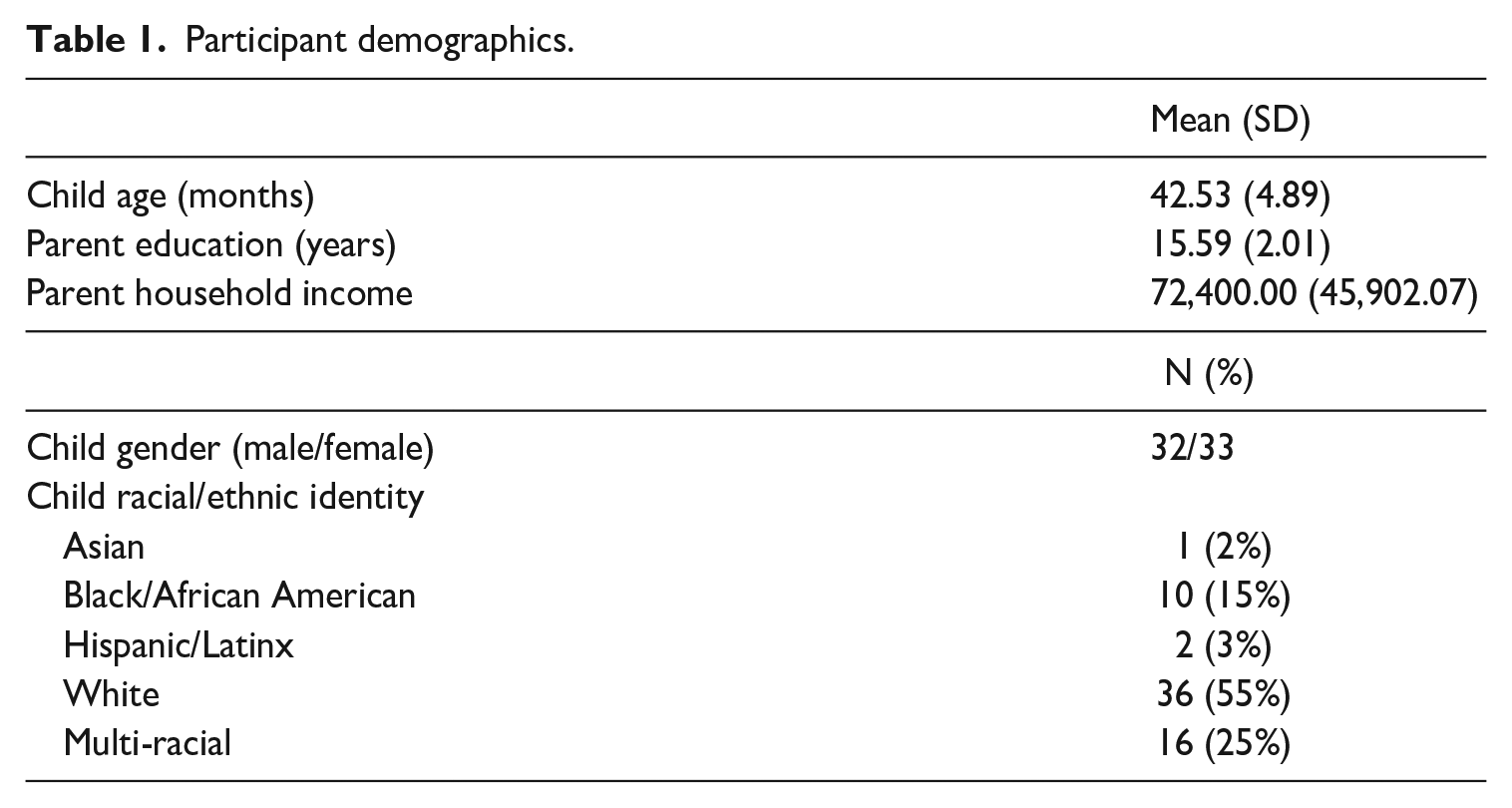
Participants consisted of families with a 3-year-old child that resided in the greater Boston and surrounding areas. Families were recruited by an online research firm that used social media platforms, panels, and email listservs to share information to prospective families about this study. To be eligible, parents had to reside within 1 hour of Boston, MA, have a yearly income less than $99,000 (the median income for a family of four in the greater Boston area), speak English as a primary language in the home at least 75% of the time, have a target child within the age range who could complete language-based games and tasks, and own a smartphone with Internet access. A total of 65 families participated. About half of the children in the study are female (51%). Child ethnicity in the sample is as follows: White: 55%, African American: 15%, Hispanic/Latino: 3%, Asian: 2%, Mixed: 25%. Table 1 shows the descriptive statistics of child age, parent education, and household income.
Participant demographics.
Procedure
During the home visit, parent–child dyads were asked to use an e-book. Parents were told we would record them for 5 minutes, but they could continue reading the story once the 5 minutes had elapsed if they chose to. All families read Peter’s Chair by Ezra Jack Keats on the One More Story app available on Kindle tablets. The story app is an interactive app with two built-in modes. One mode progresses the story automatically and words are highlighted in sync with the narration. This mode also includes music and users can click on hotspots that contain word definitions. In the second mode, a parent or the child can read the story without any voiceover or music. Hotspots are still enabled that allow users to click any word to hear it aloud and listen to word definitions. All sessions were video recorded for later coding. Parents were not instructed to use the e-book in a specific way; they could choose how to use the e-book. We decided not to instruct parents to use the e-book in a particular mode or manner to capture their authentic use of e-books and given the exploratory nature of the study.
Measures
Home Environment Questionnaire
Parents completed a questionnaire about their home literacy and digital environment to gain an understanding of the child’s environment. For this study, we specifically used questions on print and technology use at home. These questions were based on Common Sense Media surveys that have been used widely in national samples in the U.S. (e.g. Rideout & Robb, 2020). Parents were asked questions about their child’s access to mobile devices (e.g. Do you have access to mobile devices at home?), their child’s frequency of mobile device use (e.g. Please estimate the number of minutes in a day and the number of days in a week your child engages in the following activities: Watching videos or TV shows on a mobile device like a smartphone or tablet) and the kinds of touch screen devices (e.g. smartphone, e-reader, tablet) their child used. Questions about nondigital literacy activities asked parents to estimate the frequency of reading in the home and the number of books in the home.
Parent Beliefs on Learning and Development Questionnaire
Parents completed a questionnaire that measured parent self-efficacy, growth mindset, and knowledge of child development. Parent self-efficacy toward literacy was measured using 5-items. These questions included five statements that asked parents to rate their confidence in various literacy activities with their child (e.g. help my child learn to read) with a scale from 0 to 100. Parents’ intelligence mindsets were measured using the 8-items from the Theories of Intelligence questionnaire (Dweck, 1991). This measure includes four fixed statements (e.g. You have a certain amount of intelligence and you can’t really do much to change it) and four incremental statements that were reverse coded (e.g. You can always change how intelligent you are). Parents responded on a 6-point Likert-type-type scale to each item ranging from 1 (Disagree Strongly) to 6 (Agree Strongly). Higher scores represent a higher level of growth mindset. The Survey of Parent/Provider Expectations and Knowledge (SPEAK; Suskind et al., 2018) was used to measure parent’s knowledge of child development. Specifically, it measures parent knowledge of young children’s cognitive development and language learning from birth to age five. SPEAK was measured using the sum of 18-items that scale from 0 to 3 (0 – Definitely True; 1 – Probably True; 2 – Probably Not True; 3 – Definitely Not True) and 4 items that scale from 0 to 5 (0 – As an infant 0 to 6 months; 1 – As a baby 6 to 12 months; 2 – As a toddler 1 to 3 years; 3 – In preschool 3 to 5 years; 4 – In Kindergarten 5 to 6 years; 5 – In elementary school 6 years and up).
Parent–child interactions
We developed a coding scheme to characterize parent–child interactions with e-books adapted from previous work on shared book reading and digital applications (Griffith & Arnold, 2019; Munzer et al., 2019). The coding scheme is based on dimensions posited to contribute to children’s motivation and pleasure for reading: collaboration, engagement, and conversational interactions (Kucirkova et al., 2017).
Collaboration
This dimension rates the collaboration between parent and child during the e-book activity on a scale of 1 (low quality) to 5 (high quality) in each 30-second interval. The physical closeness between parent and child with e-book (e.g. rating how parent and child are sitting or positioned next to each other relative to e-book), the responsiveness of parent and child (e.g. rating of parent and/or child responses (verbally or nonverbally) to each other’s comments or questions related to e-book), and cooperation of child (e.g. lack of defiance exhibited) were examined for this dimension. For this coding scheme, two coders initially coded 15% of the videos separately. Coding was compared to establish reliability and the percent agreement was 83% with a mean Cohen’s kappa of 0.76. One of the two coders then coded the rest of the transcripts.
Engagement
The extent to which children and parents were engaged with the e-book was coded, from 1 (not at all engaged) to 7 (very engaged) in each 30-second interval. Signs such as attention to the task (e.g. not attending to/looking at/gaze direction to the e-book), enthusiasm and interest toward e-book, and nonverbal body cues and postures such as leaning in or leaning away from the task were examined for this dimension. For the engagement coding, two coders initially coded 15% of the videos separately. Coding was compared to establish reliability and the percent agreement was 80% with a mean Cohen’s kappa of 0.74. One of the two coders then coded the rest of the transcripts.
Conversational interactions
The parent–child interactions with the e-book were transcribed verbatim using the CHAT conventions of the Child Language Data Exchange System (CHILDES; MacWhinney, 2000). A separate research assistant verified each transcript for accuracy, paying particular attention to utterance boundaries and question marks. The unit of transcription was the utterance, defined as any sequence of words that is preceded or followed by a change in conversational turn, intonation, or a pause. Two dimensions of conversational interactions were measured. First, the type of conversational content was coded using a coding scheme adapted from Munzer and colleagues (2019) study on electronic readers. Parent utterances were coded for a specific type of content category: Nondialogic talk (parents make reference to content or illustrations in the story), dialogic talk (parent prompting child to expand or elaborate on content related to story; e.g. “Why do you think Peter is taking his chair from his little sister?,” text reading (parent reads directly from the story text), format related (e.g. “do you want me to turn the page?,” negative format related (e.g. “don’t keep pressing the green arrow,” and off task (e.g. “you can have water later”). Each utterance could only fall into one category. Child utterances were coded along similar content categories. These categories included: Book-related talk (e.g. “look at the baby”), negative talk (e.g. “no, I want to hold it), and off task (e.g. “Can we go to the park now?”). The total number of parent and child utterances was calculated to determine the proportion of each category present. To establish reliability, two coders initially coded 15% of the transcripts separately. For parent content coding, the percent agreement was 83% with a mean Cohen’s kappa of 0.81. For child content coding, the percent agreement was 86% with a mean Cohen’s kappa of 0.82. One of the two coders then coded the rest of the transcripts.
Second, the quantity and quality of child and parent speech was measured. Automated analyses of the transcripts using the CLAN program yielded several common measures of parent–child communication (e.g. MacWhinney, 2000) including the mean length of utterance (measured in morphemes; MLU) by each speaker, the number of total words spoken (Tokens) and the number of different words spoken (Types), which serve as a measure of overall quantity of speech and vocabulary diversity, and the number of utterances that contained a question (Questions). In the analysis of questions, we use proportions and divide the total number of questions by total utterances. One other variable that is considered for this study is the length of e-book interaction, which is measured in minutes.
Analysis plan
For research question one, which asks how the parents and children interact with e-books, we explored the descriptive and correlational analysis of each parent–child interaction dimension. Given the exploratory nature of this study, a Bonferroni correction was not used in any correlational analyses. To answer the second research question, we used Pearson correlational analysis to test whether parent growth mindset, knowledge of child development, self-efficacy around literacy, or screen time are related to the dimensions of parent–child interactions with e-books. Variables to control for reading exposure at home, ethnicity, gender, family income, and child age were included in these analyses. To answer the last research question, latent profile analysis (LPA) was used to identify patterns of parent interactions with their child while using the e-book. This analysis is motivated by seeking to investigate whether there are groups of parents who have different strengths and weaknesses that help characterize their interactions with their children and e-books and, therefore, could be used to personalize interventions aiming to support parent–child interactions. Specifically, we used Mplus Version 8.1 (Muthén & Muthén, 2017) to sequentially estimate six latent profile models with distinct numbers of profiles (K = 1 to K = 6). Given the exploratory nature of this research question and the sample size, six models were chosen based on guidance by Masyn (2013). In each of these models, we included a composite measure of ‘high-quality’ speech characteristics (MLU, types, tokens) where higher values correspond with more talk and more diverse and complex talk, a composite measure of ‘high-quality’ e-book talk, where higher values correspond with more talk and more diverse and complex talk, a measure of engagement, and a measure of collaboration.
Although a sample size of 65 might be considered small for latent profile analysis, there are a few reasons to believe that the present sample size was in fact sufficient to yield a satisfactory solution for this study. First, in their discussion of guidelines for the use of SEM in the psychological and social sciences, Anderson and Gerbing (1988) reported that small sample sizes can result in overly large deviations of the parameter estimates from their population values (Anderson and Gerbing, 1988). This in turn can create two problems: nonconvergence and improper solutions. However, the models reported below exhibited neither of these problems. Third, in the absence of convergence problems, the primary drawback to small sample size would be inadequate power for tests of statistical significance (as in traditional regression). Therefore, the interpretation of effects below highlights the magnitude of effects rather than their statistical significance. All in all, the use of LPA in this study is motivated by the need to explore possible parent profiles that can help identify the different strengths and weaknesses that parents may exhibit when interacting with their children and e-books, thus helping inform future research and interventions.
Following the guidance of Masyn (2013), we balanced statistical and substantive evidence from each of the six models to select an appropriate profile solution (Masyn, 2013). In terms of statistical criteria, we looked for lower values on three information criterion: Akaike’s information criterion (an index based on the log-likelihood and the number of parameters; AIC), Bayesian information criterion (an index based on the log-likelihood, the number of parameters, and sample size; BIC), and further sample-size-adjusted BIC (aBIC). We also considered results of the Vuong-Lo-Mendell-Rubin test (VLMR; Lo et al., 2001), which indicates the relative fit of a model (K) versus the model with one less profile (K-1). Finally, we considered the model’s entropy, a composite that indicates the overall ability of a mixture model to return well-separated profiles, with values closer to one indicating classrooms have been sorted into profiles with precision (Masyn, 2013). In terms of substantive criteria, we considered whether the profile solutions represented distinct patterns across the quality indicators. To do so, we examined the estimated means of the four profile indicators. Once we decided on a preferred profile solution, again drawing on both empirical criteria as well as conceptual and theoretical logic, we used the estimated means from this solution to describe the parent profiles. With the selected latent profile solution, we then examined whether profile membership related to parents’ beliefs about learning and development.
Results
Descriptive statistics of parent–child interactions with e-books
The descriptive statistics for the parent–child interaction measures with e-books are shown in Table 2. There was a lot of variability in this sample across measures for both parents and children. For example, the average number of tokens (words) per minute spoken by parents was 42, but this measure ranged from 3 to 156 words. For the behavioral characteristics captured in this study, parent engagement had a mean of 4.71 representing a relatively high engagement score given the range of 0–5. Children’s engagement was similarly high but had much more variability with scores ranging from 1.63 to 5.0. Collaboration was similarly variable with scores ranging 1.13 to 5.0 but the average was lower at 3.45.
Descriptive statistics of parent–child conversation characteristics during e-book interaction.
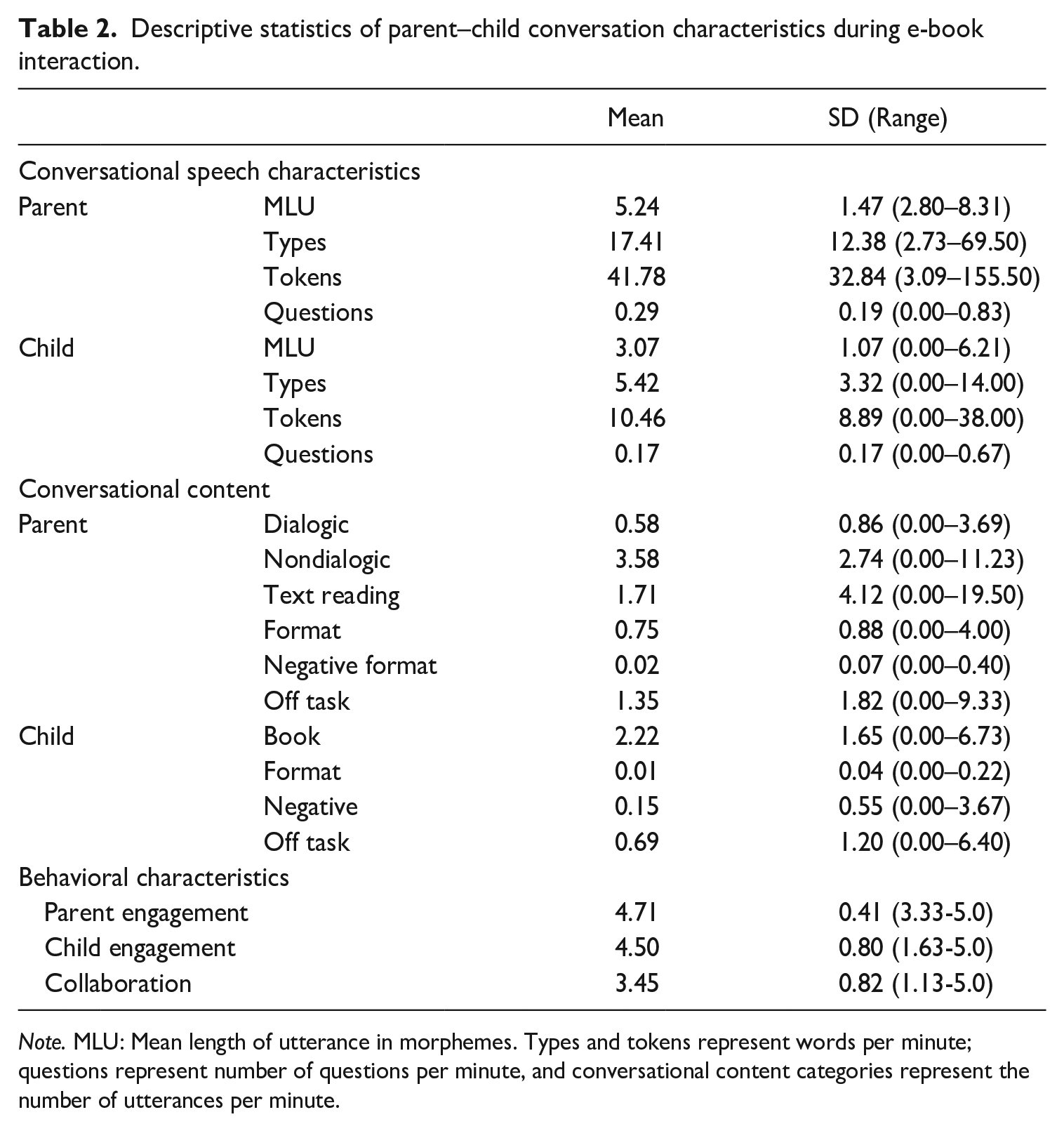
Note. MLU: Mean length of utterance in morphemes. Types and tokens represent words per minute; questions represent number of questions per minute, and conversational content categories represent the number of utterances per minute.
Correlational analysis was used to investigate the associations among parent and child conversational features during their interactions with the e-book. We first explored the correlations among
Correlations of quantity and quality of

Note. *p < 0.05, **p < 0.01, ***p < 0.001.
Correlational analysis (see Table 4) among
Correlations of quantity and quality of
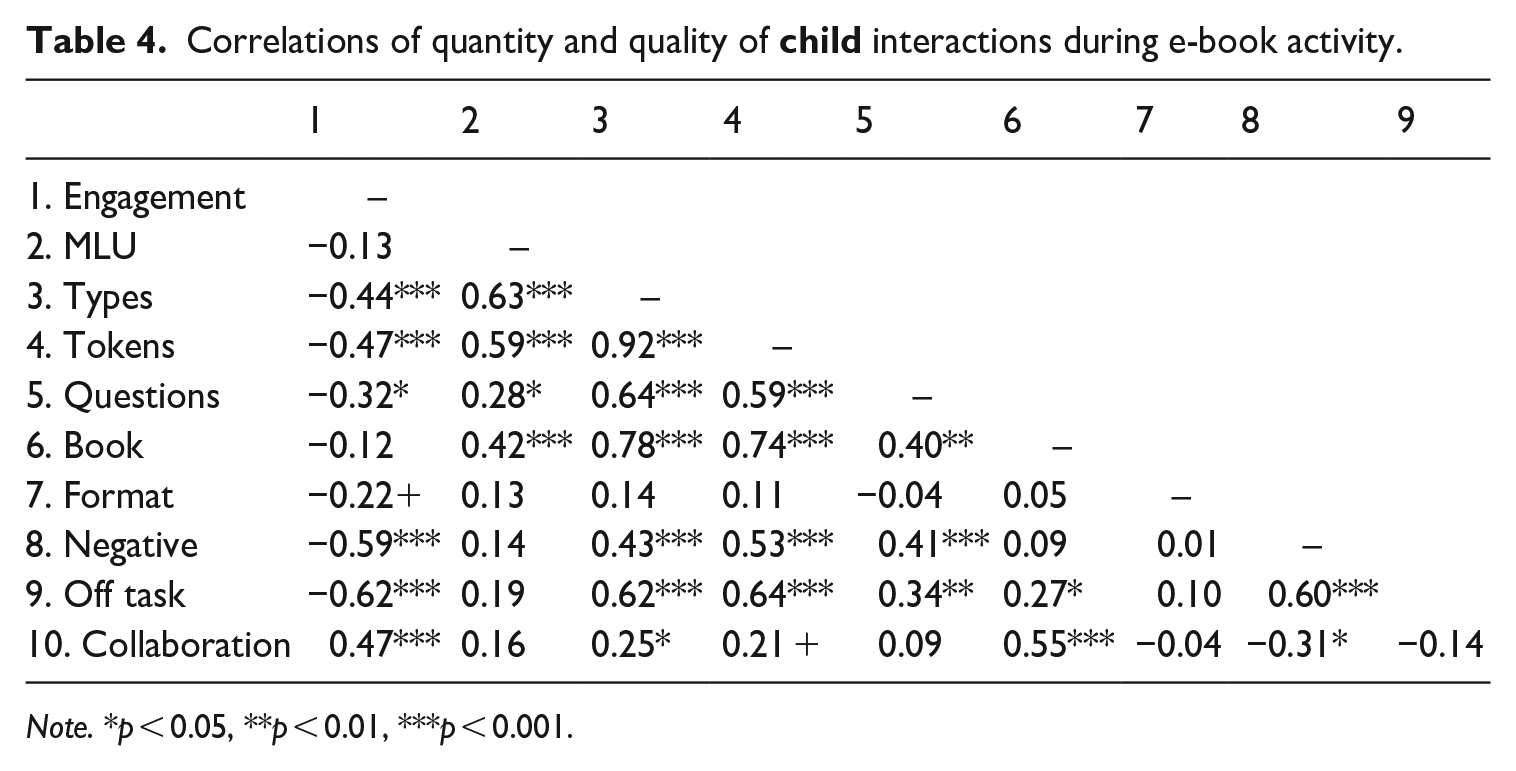
Note. *p < 0.05, **p < 0.01, ***p < 0.001.
Table 5 shows the correlations among
Correlations among quantity and quality of
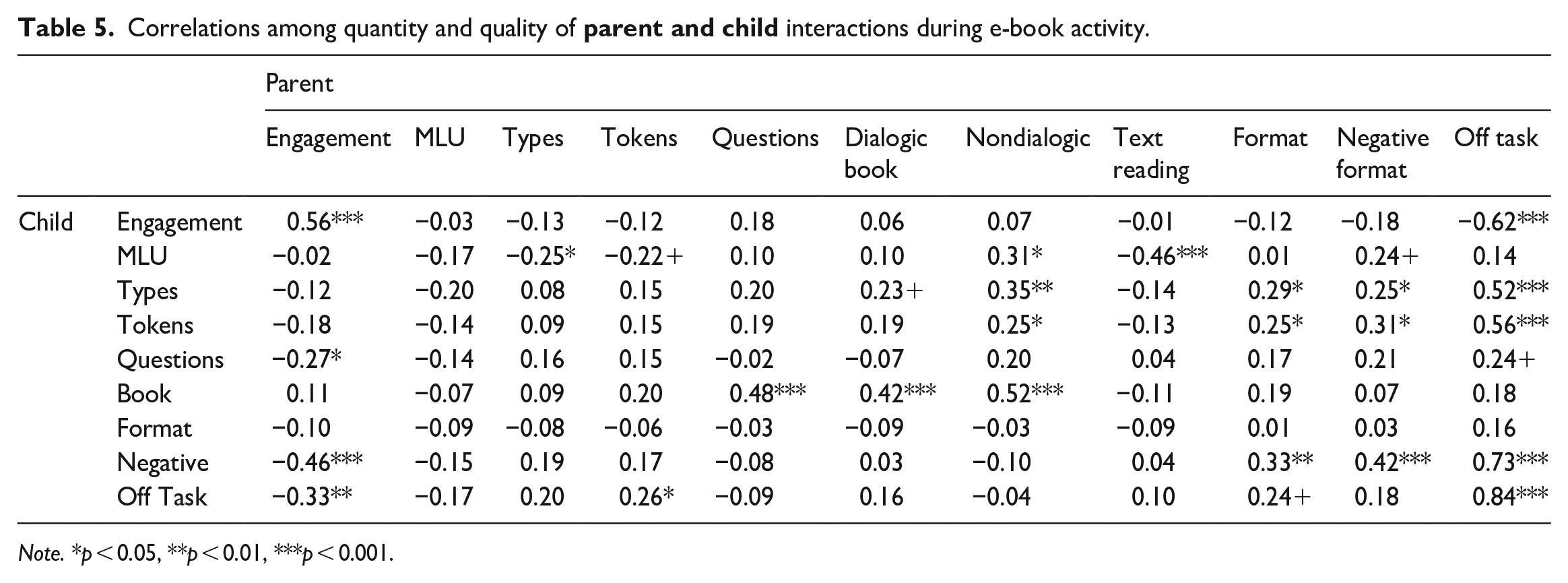
Note. *p < 0.05, **p < 0.01, ***p < 0.001.
Parents’ beliefs about learning and development and reported technology use in the home
There was variability across all measures of parents’ beliefs about learning and development and reported technology use in the home as shown in Table 6. Parents’ growth mindset in this sample was 2.04 on average but was moderately variable (SD = 0.84). Similarly, parents’ knowledge of child development as measured by the SPEAK was 53.25 points (SD = 7.28) on average. Although parents’ self-efficacy toward literacy was variable (m = 88.82; SD = 10.04), the distribution skewed toward higher levels of self-efficacy with a median value of 90. In addition, correlational analysis showed that self-efficacy and the SPEAK were significantly related to one another such that parents with higher self-efficacy had greater knowledge of child development (r = 0.28, p < 0.05). Parents with higher SPEAK scores also reported less technology use at home (r = −0.42, p < 0.001).
Descriptive statistics of parents’ beliefs about learning and development and reported technology use in the home.

To answer the second research question, we used correlational analysis to explore the associations among parents’ beliefs about learning and development and technology use in the home with the conversational features present during parent–child interactions with e-books. There were few associations found in this analysis. For example, there were no associations among parents’ beliefs about learning and development and children’s conversational features (see Table 7). However, parent self-efficacy was significantly positively correlated with parent book-related talk such that parents with higher self-efficacy engaged in more book-related talk (r = 0.28, p < 0.05). Parent and child conversational features were not associated with parent-reported measures of children screen time at home.
Correlations among quantity and quality of parent interactions during e-book activity and parents’ beliefs about learning and development.
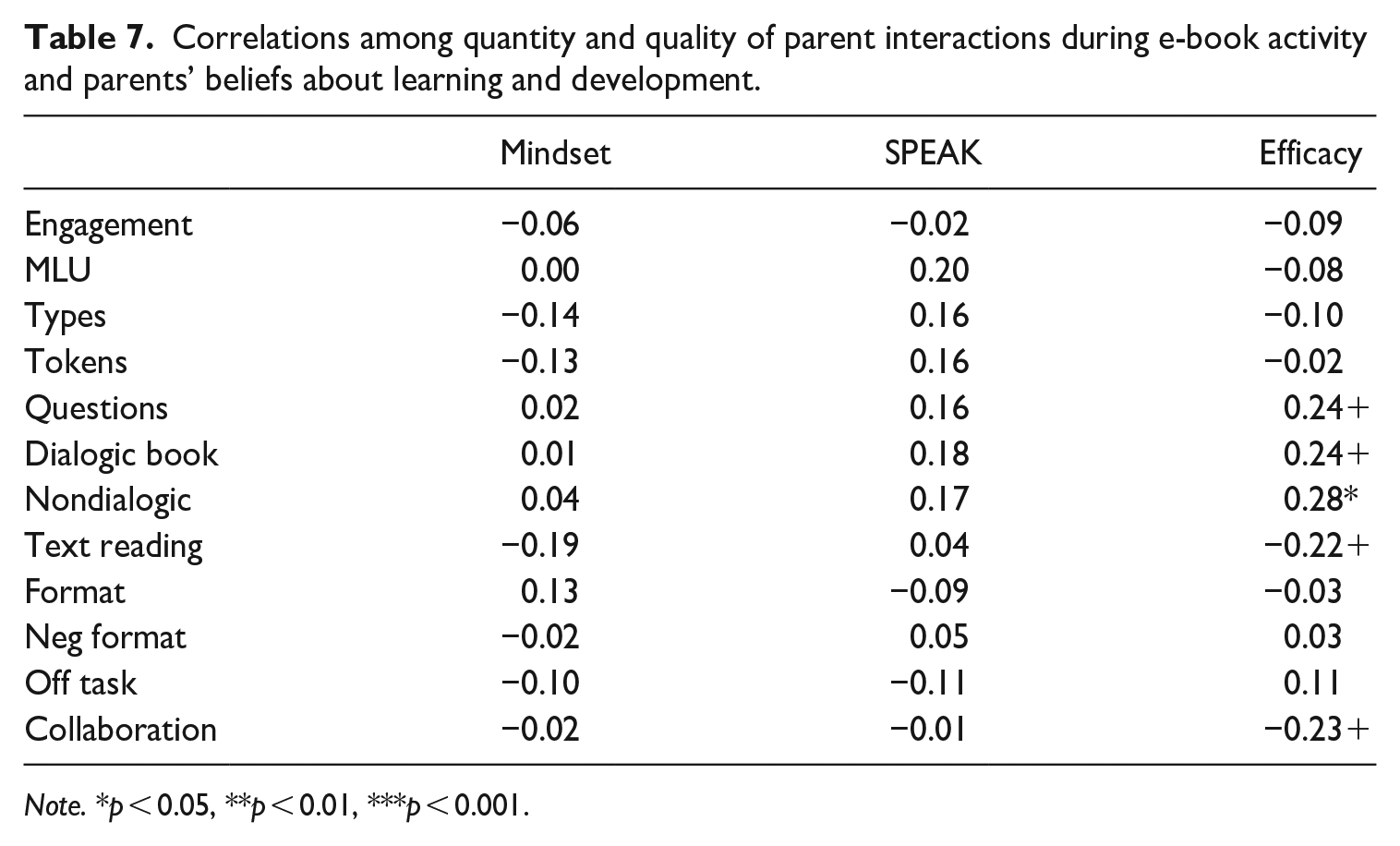
Note. *p < 0.05, **p < 0.01, ***p < 0.001.
Identifying profiles of parent interactions using e-books with children
Given the high variability present during parent–child interactions with e-books in this study, we investigated whether there were any distinct profiles to help characterize the various ways parents engaged with their child using the e-book, using four distinct indicators: a composite measure of high-quality speech characteristics, a composite measure of high-quality e-book talk, engagement, and collaboration. Table 8 presents the empirical criteria from the LPA models estimating one to six profiles. The profile solution is generally selected where the decrease in AIC, BIC, and aBIC starts to plateau, entropy values are around 0.80 or higher, and the VLMR test values provide p values that indicate whether having k number of profiles significantly improves the model fit compared to having k-1 number of profiles (Lo et al., 2001; Tofighi & Enders, 2008). In the present study’s results, as the number of profiles increases, the information criterion AIC and aBIC generally decreased, while BIC increased. Results from VLMR tests did not provide any consistent or strong justification for selecting a particular profile solution as none of them were statistically significant. The entropy was highest for the five- and six-profile solutions, although entropy of the three- and four-profile solutions was not substantively different. Given no profile solution indicated a ‘best’ fit, we took the information criterion and profile sample numbers to indicate the relative superiority of the three-profile model, with entropy suggesting this model had similar precision to models with more profiles. Therefore, we selected the three-profile model as our preferred solution.
Fit statistics for latent profiles using a composite measure of high-quality speech characteristics, a composite measure of high-quality e-book talk, engagement, and collaboration as indicators.

Note. The composite measure of high-quality speech characteristics consists of MLU, types, tokens. The composite measure of high-quality e-book talk consists dialogic talk, book talk, text reading, format talk, and nonbook talk. AIC = Akaike’s Information Criterion; BIC = Bayesian Information Criterion; SSABIC = sample-size-adjusted Bayesian Information Criterion; pVLMR = p-value for Vuong-Lo-Mendell-Rubin test.
We then considered the means of the quality indicators across the three profiles estimated by this model to understand whether they represented substantively distinct patterns of parent interactions. Figure 1 illustrates the means of the four parent interaction features (a composite measure of high-quality speech characteristics, a composite measure of high-quality e-book talk, engagement, and collaboration) estimated by the three-profile solution. Profile 1 was estimated to include 21.54% of parents (n = 14). These parents demonstrated relative strengths on speech quality and the amount of dialogic book talk used in their interactions using the e-book with their child. However, they were below average in both engagement and collaboration. Profile 2 was estimated to include 52.31% of parents (n = 34). These parents were below average on speech quality and had average performance on the amount of dialogic book talk used, engagement, and collaboration. Finally, Profile 3 was estimated to include 26.15% of parents (n = 17), and in this profile parents had high levels of speech quality and engagement but were below average in the amount of dialogic talk used. Taken together, Profiles 1 and 3 represent parents who had numerous strengths on each indicator, whereas Profile 2 represents parents with relative weaknesses or average performance on each indicator. Surprisingly, none of the profiles identified had parents who had high levels on all four dimensions measured in the present study. Profile 1 is particularly interesting as parents in this profile exhibited higher levels of speech quality and dialogic talk, but their level of engagement was low. In other words, this profile is describing parents who do not engage with the e-book and their child, but when parents do engage, they have complex conversations and elicit dialog that extends the story text. This finding may suggest that parents in Profile 1 may know what types of talk to use with their children but may struggle engaging with the e-book activity itself or struggle identifying when they should engage with their child in a digital story activity.
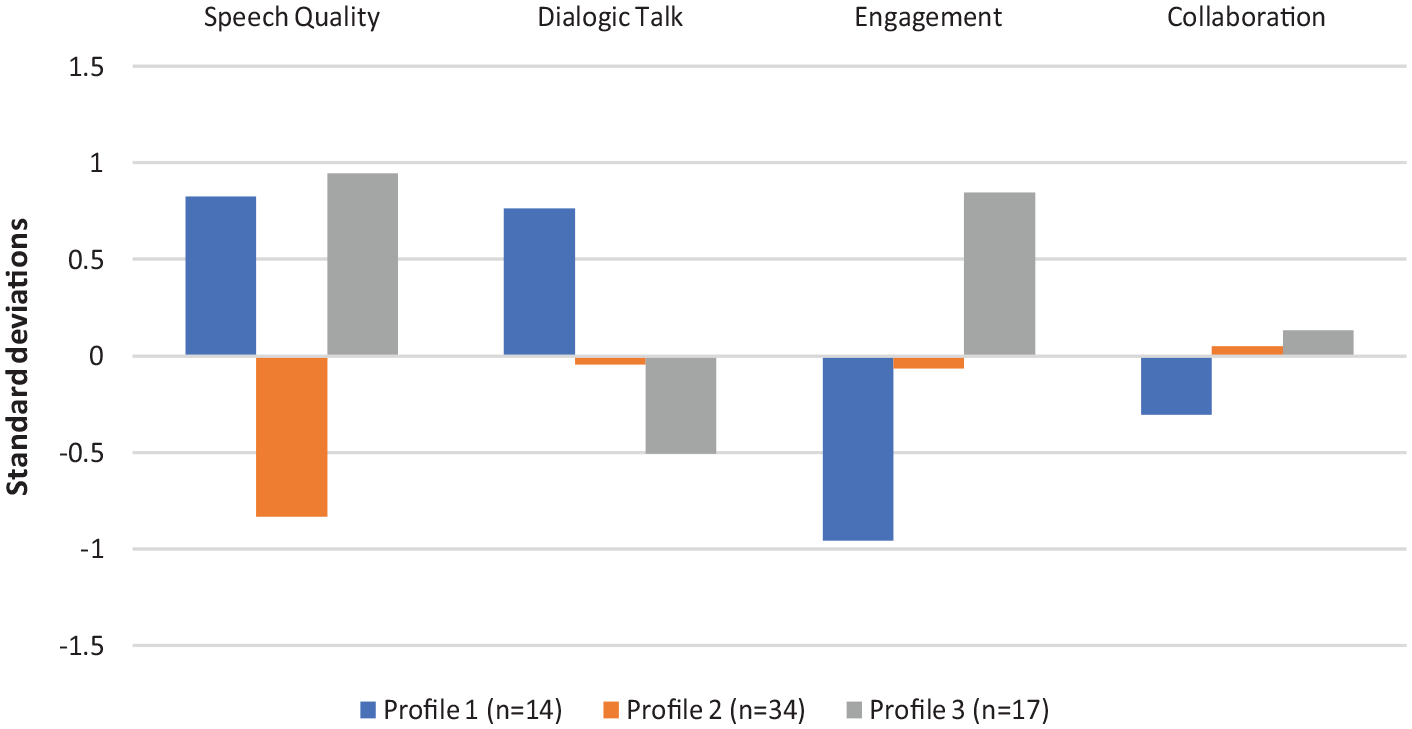
Mean of Profile Indicators across the Three Profiles using a Composite Measure of High-Quality Speech Characteristics, a Composite Measure of High-Quality e-Book Talk, Engagement, and Collaboration as Profile Indicators.
To further understand conversational features of parents, we considered how parents’ beliefs about learning and development and technology use in the home differed across profiles. Table 9 presents parents’ beliefs about learning and development and technology use in the home by profile membership. Parents in Profile 1 tended to have lower levels of self-efficacy, knowledge of child development and a lower level of growth mindset. Profiles 2 and 3 looked largely similar in terms of self-efficacy and knowledge of child development, but parents in Profile 3 had greater levels of growth mindset and greatest reported levels of screen time than parents in Profile 2. However, no statistically significant differences were found among these profiles in terms of parents’ beliefs about learning and development and technology use in the home.
Descriptive statistics of parents’ beliefs about learning and development by profile membership.
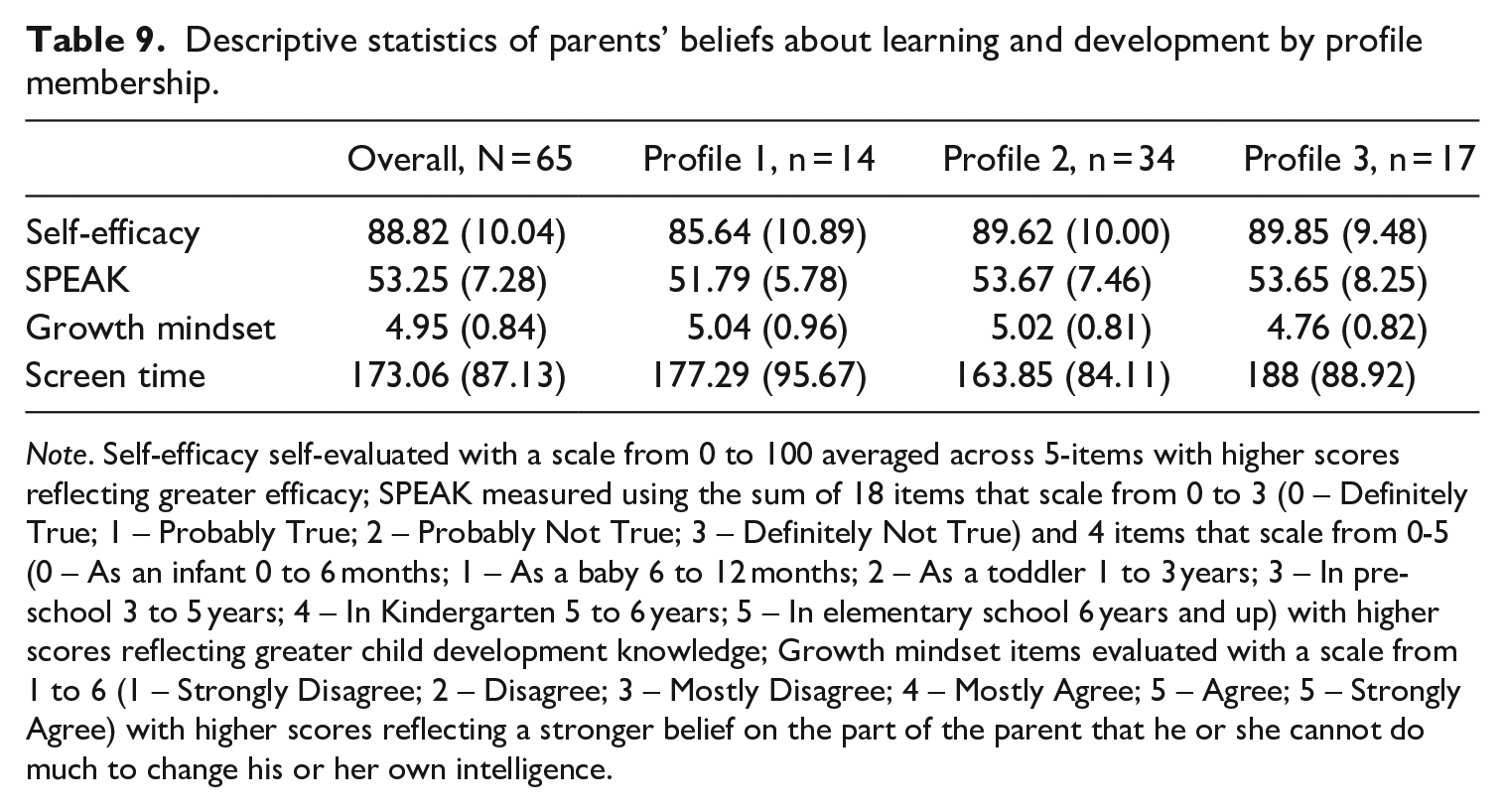
Note. Self-efficacy self-evaluated with a scale from 0 to 100 averaged across 5-items with higher scores reflecting greater efficacy; SPEAK measured using the sum of 18 items that scale from 0 to 3 (0 – Definitely True; 1 – Probably True; 2 – Probably Not True; 3 – Definitely Not True) and 4 items that scale from 0-5 (0 – As an infant 0 to 6 months; 1 – As a baby 6 to 12 months; 2 – As a toddler 1 to 3 years; 3 – In preschool 3 to 5 years; 4 – In Kindergarten 5 to 6 years; 5 – In elementary school 6 years and up) with higher scores reflecting greater child development knowledge; Growth mindset items evaluated with a scale from 1 to 6 (1 – Strongly Disagree; 2 – Disagree; 3 – Mostly Disagree; 4 – Mostly Agree; 5 – Agree; 5 – Strongly Agree) with higher scores reflecting a stronger belief on the part of the parent that he or she cannot do much to change his or her own intelligence.
Discussion
The present study aimed to explore how parents and children interacted with a mobile media device – an e-book specifically – in a sample of mid- to lower-income American families. This study also sought to examine how parents’ beliefs about learning and development and reported technology use in the home were predictive of how parents and children interacted with e-books at home. Finally, this study asked if there were conceptually and empirically distinct profiles of parent interactions with their child while reading an e-book and whether these relate to parents’ beliefs about learning and development.
With regards to the first research question, parents and children demonstrated high levels of engagement and collaboration when using the e-book, and there was wide variability in terms of the types of talk parents and children used. However, unlike previous research conducted with families from higher-income households, which found that parents used more language concerning how their child should use the e-books and less language related to the story content (Chiong et al., 2012; Parish et al., 2013), parents and children in the present study did not engage in much format-related talk but rather more e-book-related talk.
For the second research question, results showed that only parent self-efficacy was related to the amount of book-related talk parents produced while using an e-book with their child. Finally, latent profile analysis suggested that even in a small sample of families there are distinct profiles of parent interactions when using e-books with their children. Specifically, the analysis identified three profiles: parents with high levels of speech quality and dialogic talk but low levels of engagement, parents with low levels of speech quality, and parents with high speech quality but low dialogic talk.
All in all, these findings suggest that although there is wide variability in how children and parents interact with one another when using an e-book, parent behavior and speech can be classified into profiles that can help personalize interventions seeking to strengthen parent–child interactions. Furthermore, parent beliefs and knowledge about child development should also be considered when interpreting and supporting parent–child interactions.
Parent–child interactions with e-books
The majority of previous studies that examined parent–child interactions with e-books among middle- to upper-income families found that the quality of interactions between parents and children is low (Parish-Morris et al., 2013). Parents tend to focus on the technical aspects about the device e-books work on and thus produce more format-related talk or talk that is about how to use the device and less talk about the content of the e-book or story (Chiong et al., 2012). Parents have also been found to collaborate and talk less when engaging with an e-book than with a regular print book (Parish-Morris et al., 2013). The present study suggests otherwise. On average, parents demonstrated high levels of collaboration while using the e-book with their child. Both parents and children also demonstrated high levels of engagement. The average composition of conversational content of parents and children (see Figure 2) shows that both parents and children talk while using the e-book was related to content about the book rather than format-related talk. There are some important factors to consider when comparing the present’s study’s findings and those of previous work. The majority of previous work have been conducted in families from middle- to upper-income households. It is well-documented that the parent–child interactions vary by the household income level (e.g. Hart & Risley, 1995; Justice et al., 2019; Lareau, 2011; Ninio, 1980; Vandermaas-Peeler et al., 2009). Although the majority of previous work on parent–child interactions with traditional children’s activities like shared print book reading and toys suggests that the quality of parent–child interactions is higher among families from upper-income household, the same may not be true regarding technology like e-books. One possible reason for this difference is that children from lower-income households are found to engage with technology, especially mobile digital media, at a higher frequency than their peers from upper-income households (Rideout & Robb, 2020). The higher frequency of use may help explain the present study’s findings such that parents believe their children are more comfortable with devices like e-books. Thus, parents may feel less need to guide how their children are using the devices and can devote more time to discussing the content of the e-book. This study did not collect information about parent’s perspectives on media or technology and therefore we cannot test this hypothesis.
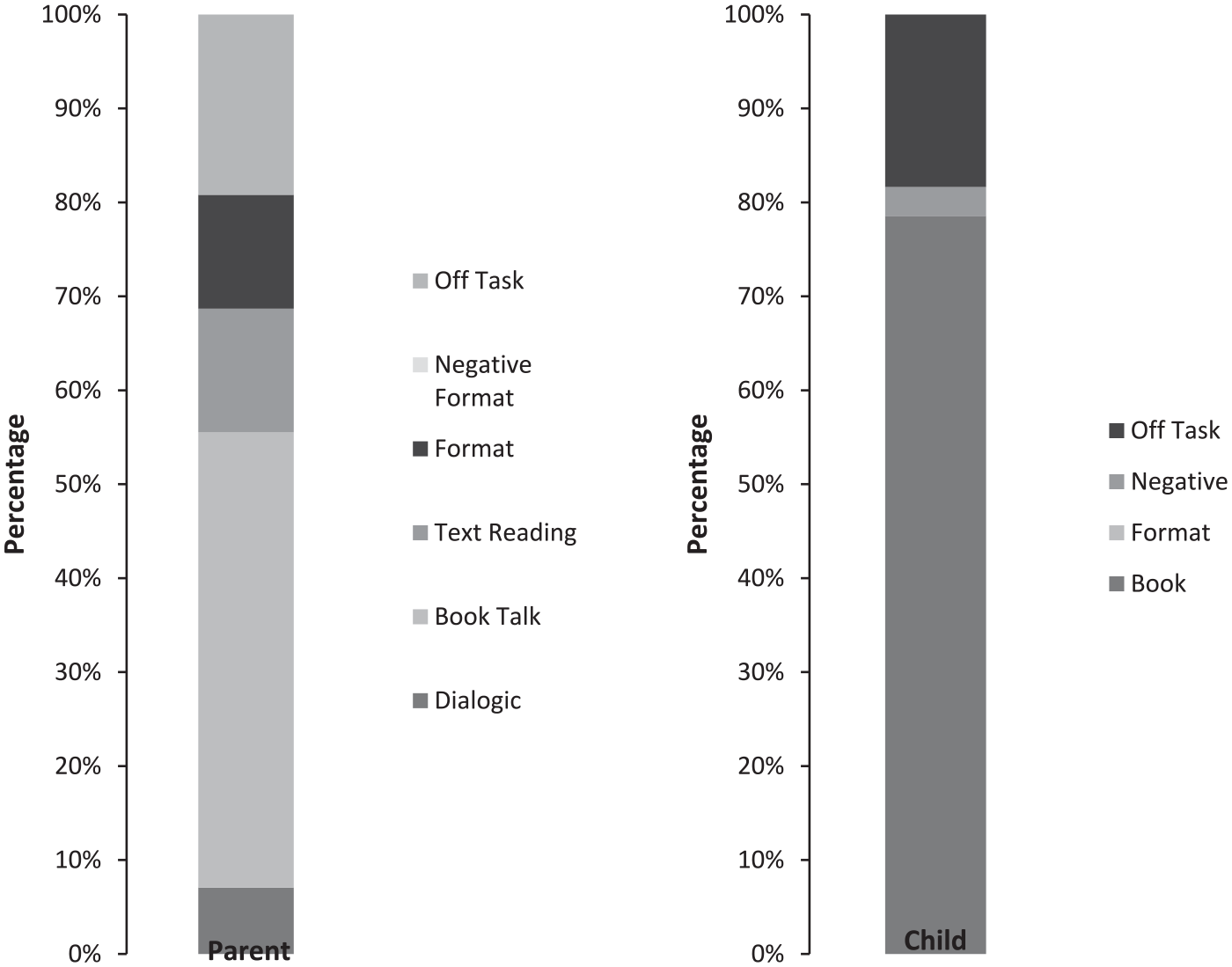
Average composition of conversational content of parents and children.
Given that this study did not have a print story book interaction to compare with an e-book interaction, it is not possible to assess whether parents were speaking more or less than if they had used a print book. The Reach Every Reader app validation study did consist of other parent–child interactions such as playing with a toy. Parent–child interactions with toys have shown similar levels of talk and engagement as with print books (e.g. Pan et al., 2005). In this larger study, parents and children produced less speech with e-books than with the toy, but the syntactic complexity of their speech was the same in both contexts (Pan et al., 2005). An interpretation of this finding is that parents and children are speaking less when engaging with an e-book. However, comparing speech production with an e-book versus a print book or toy may not be the most appropriate comparison because print books and toys require more speech output from parents and children. Parents need to read the text of a print book to collaborate in this activity and toys require that parents and children talk to collaborate. In contrast, e-books can read the story aloud thus minimizing the speech required from parents. Thus, parents and children producing less speech may be a result of the design of e-books rather than parents and children not being able to produce high-quality speech when using e-books. The lack of difference in syntactic complexity between e-books and toys helps support this claim.
The role of parents’ beliefs about learning and development and reported technology use in the home
Parents’ beliefs about learning and development have been found to play a critical role in shaping the home environment of children (e.g. Bandura, 1997; Coleman & Karraker, 1998; Green et al., 2007; Hill & Bush, 2001; Muenks et al., 2015). In the present study, we did not find any significant associations among the features of parents and child interactions with e-books and the amount of screen time children engaged in, parents’ knowledge of child development, or parents’ growth mindset. The only significant association found was that parents with greater self-efficacy engaged in more book-related talk when using an e-book with their children. This finding is consistent with previous work that finds that parents’ belief in their ability to support their children’s learning at home is associated with their provision of literacy activities in the home (Green et al., 2007). Our finding further suggests that parents who feel capable of supporting their children’s learning also feel better equipped to discuss the content of the e-book. Although other parent beliefs and knowledge were not significantly correlated with the features of parents and child interactions with e-books, they likely do play a role as evidenced by the different patterns of parent self-efficacy, growth mindset, knowledge of child development, and screen time identified by parent profiles.
Profiles of parent interactions with e-books
One important aspect of this study’s findings is the large amount of variability within the sample across every measure of speech quality, speech content, and behavioral measures. This finding confirmed the need of the third research question that sought to identify parent profiles when using e-books with their preschool-aged children. Latent profile analysis revealed three distinct parent profiles: parents with high levels of speech quality and dialogic talk but low levels of engagement; parents with low levels of speech quality; and parents with high speech quality but low dialogic talk. These profiles highlight the variability present among parents and point to the need to identify parents’ potential strengths and growth areas when interacting with e-books. Specifically, the identification of parent profiles suggests that intervention efforts can be personalized and targeted to meet the specific needs and knowledge gaps of parents, especially concerning their interaction with media and their children.
Alongside identifying these profiles, this study found that there were different patterns of parent report measures of self-efficacy, growth mindset, knowledge of child development, and screen time used at home by parent profiles. For example, parents in Profile 3 who demonstrated high levels of speech quality and engagement but low levels dialogic, also had greater knowledge of child development, greater self-efficacy, and greater fixed mindset. This particular finding suggests that if we find ways to increase their growth mindset, their level of dialogic talk may increase. Furthermore, since parents in Profile 3 demonstrate high levels of speech quality and engagement, their greater self-efficacy may help explain their higher quality of speech and level of engagement. Thus, parent interventions can supplement any trainings to ensure parents have the necessary mindset and knowledge to help implement specific activities or behaviors when interacting with their children. For example, there were parents in this sample who knew the importance of talking to their children when engaging with e-books but were not observed engaging in dialogic talk which is found to support children’s comprehension. These parents were also found to have lower levels of self-efficacy, suggesting that teaching these parents about dialogic talk and supporting their self-efficacy may help improve the overall quality of their interactions with their children when using e-books.
More broadly, parent profile analysis work may help the field of language development. Parent–child interactions play a vital role in children language development, and research in this field finds variability in parent behavior and speech (Rowe, 2018). Parent intervention programs may be strengthened if the field can identify the specific type of supports parents need. However, more work is needed to build this body of evidence: to learn more about the type of parent profiles that exist in the population, whether these profiles vary depending on the type of activity, and how to identify these profiles in parents in order to personalize supports for parents.
Limitations, practical implications, and future research
There are several limitations worth keeping in mind when considering the results of this study and its practical implications. First, the sample drew from mid- to lower-income populations in Massachusetts, and thus is not generalizable beyond these populations. There is a need to examine parent–child use of e-books in other populations and geographic regions and with populations characterized by more diversity, especially to continue to investigate ways to improve parent–child interactions more effectively through profile analysis work. Second, although this study sought to examine e-book use in a more naturalistic environment, a 5-minute e-book reading may not be enough time to capture parents’ and children’s interactions with books. Furthermore, in the attempt to elicit a naturalistic representation of parents and children using e-books, we were not able to explore whether the different e-book modes offered elicited different types of parent and child behaviors as parents and children often switched between modes during the same reading of the study. Nevertheless, future studies should aim to conduct more in-depth observational work to understand how e-books may be used in the home without time constraints.
Finally, although the latent profile analysis resulted in three distinct parent profiles, the profile solution did not have fully adequate fit statistics nor was it statistically significant. Therefore, future work should replicate this work in a larger sample in an effort to identify profiles that can be inferred to exist in the population of mid- to lower-income parents. Moreover, this type of work can extend to work beyond e-books and help identify the various ways to support parent–child interactions across all types of settings and activities as parents and children are undoubtedly engaging in a variety of activities. In the present study, we focused on e-books due to the increased use of educational mobile media among U.S. preschool children (Rideout & Robb, 2020). However, it is possible that the parents in our sample may interact differently with different types of activities and as such present with different profiles depending on the activity they engage with. All in all, the results of the profile analysis work in the present study are only exploratory; therefore, no conclusions should be drawn about the specific profiles nor the types of interventions that could support the three different profiles presented in this article.
Conclusion
The present study’s findings highlight the need to investigate the various ways parents and children engage with mobile media at home and in other more naturalistic settings. The results demonstrate that using mobile media devices such as e-books can elicit positive interactions between parents and children. There is, however, wide variation in the ways parents interact with their children using e-books that is related to parent’s self-efficacy. Exploratory profile analysis reveals there are different parent profiles that can be used to help design interventions that target specific areas in which parents need support. Such targeted interventions have valuable potential to improve the quality of parents’ interactions with children when using digital media such as e-books.
Footnotes
Author contributions
Funding
The author(s) disclosed receipt of the following financial support for the research, authorship, and/or publication of this article: Research activities were funded by the Chan Zuckerberg Initiative as part of the Reach Every Reader project at the Harvard Graduate School of Education
