




Abstract
The objective of this study was to examine the development of derivational morphological structures in the productive language of Kuwaiti Arabic (KA)-speaking children. Participants were 512 typically developing Kuwaiti children aged 3;0 years to 7;11 years (243 boys and 269 girls). Five age groups at 1-year intervals were tested; each group was divided into four sub-groups at 3-month intervals. The children were examined using a tool designed to assess structures specific to the KA dialect, and they were assessed by trained research assistants at their nurseries and public schools. There were clear developmental trajectories in the derivational morphological structures studied in KA-speaking children across the five age groups. Results showed that KA-speaking children have not reached mastery level in most of the structures examined in this study. Among the two types of derivations examined, nominal derivations emerged later than verb derivations. Error analysis showed that most errors were morphological, affecting mainly the root. The results of this study enhance our knowledge of early language development in Arabic by showing that nominal derivations develop later than verb derivations. The results are discussed in light of previous cross-linguistic studies, which also found a similar trajectory in terms of morphological development. Further, Arabic morphological theory, as well as implications for practice and the need for further research, is discussed.
Introduction
Morphology refers to the rules involved in word formation, including how words are formed and the internal structure of words (Aronoff & Fudeman, 2011). Children must understand the meaning of words and use them in utterances, and they are expected to have the ability to use increasingly complex forms and structures as they get older (Paul, 2001). Morphological development is correlated with general language development and is later associated with the development of literacy (Levesque et al., 2021; Rastle, 2019). For example, a study by Vaknin-Nusbaum and Saigh-Haddad (2020) examined 734 second graders using tasks at the beginning and end of the school year. Participants were tested on their phonological awareness skills, morphological awareness knowledge, as well as reading comprehension and word decoding. Results showed that morphological awareness measured at the beginning of grade 2 predicted reading comprehension at the end of the school year. Further, the reading comprehension of students with higher reading performance benefited from both derivational and inflectional morphology knowledge. In addition, some aspects of morphology, such as tense and agreement, appear to pose challenges for children with developmental language disorders (Abdalla et al., 2013; Marchman et al., 1999). It is, therefore, important to study the development of morphology. While these studies are common in well-studied languages such as English, Finnish, Greek, French, and Hebrew, there is, however, limited research in other languages, such as Kuwaiti Arabic (the subject of this study).
Within the field of morphology, a distinction is made between derivational and inflectional morphology (Anderson, 1982; Aronoff, 1994; Dressler, 1989; Scalise, 1986). Although the distinction is not always straightforward (Hacken, 2014), inflectional morphology is concerned with the grammatically conditioned variants of the same lexeme. Inflected forms may be marked for person, gender, number, and case. Derivational morphology, by contrast, is responsible for the creation of separate lexemes which typically, but not necessarily, differ in terms of form (except in cases of zero-derivation or conversion), meaning, and word class (Critten et al., 2014). There is evidence from both typical and atypical populations that the acquisition of inflectional morphology differs from the acquisition of derivational morphology, as children typically begin acquiring inflections before derivatives (Clark, 2017; Sengottuvel & Rao, 2015).
Further, studies across different languages have found that awareness of inflectional morphology precedes that of derivational morphology (Kuo & Anderson, 2006). Berko (1958) used drawings to elicit the production of inflectional and derivational forms and found that American English-speaking children were able to apply inflectional morphology rules to non-words as early as 4 years of age. The acquisition of derivational morphology, however, begins later and shows slower developmental progression (Kuo & Anderson, 2006; Selby, 1972). First graders typically have only basic knowledge of derived forms, much less than their knowledge of inflected forms (Anglin et al., 1993). It is not until the third or fourth grade that children begin to develop more awareness of the structure and meaning of derived forms (Anglin et al., 1993; Carlisle, 2000). Moreover, a study by Nagy et al. (1993) indicated that the principles of inflectional morphology are acquired before and at the beginning of learning to read. This is not the case for derivational morphology; however, as studies show, certain aspects of derivational morphology continue to develop later throughout the school years.
Knowledge of derivational morphology is thought to influence many aspects of language production, comprehension, and literacy skills, including vocabulary, reading comprehension, and spelling, and this knowledge is most commonly measured with elicited production tasks (Hudson Kam et al., 2024; Nagy et al., 2014; Wolter & Gibson, 2015). The involvement of derivational morphology in learning how to read and spell has been shown to be quite significant in that knowledge of roots and affixes facilitates accurate reading of unfamiliar vocabulary as well as more efficient reading comprehension (Moats & Smith, 1992). Thus, the need for ways to examine the derivational morphological skills of school-aged children cannot be overlooked. As noted in Carlisle (1987, 1988), derivations that create a phonological or orthographic change in the word are more difficult to learn and tend to result in more spelling errors. Furthermore, research in language acquisition has shown that an understanding and mastery of derivational morphology is an effective tool for building vocabulary (Hanson, 1993; Tyler & Nagy, 1989).
Cross-linguistic studies of the acquisition of derivational morphology
The acquisition of morphology has been extensively studied in various languages, and the majority of these data come from longitudinal examinations of speech samples (Clark, 2017). Despite the importance of derivational morphology in language and literacy development, most previous studies on the development of Arabic morphology have been centered around the acquisition of inflectional morphology, mainly tense and verb-subject agreement and noun morphology in relation to plurals and duals, in either typically developing children or children with developmental language delay (e.g. Abdalla & Crago, 2008; Abdalla & Mahfoudhi, 2023; Al-Akeel, 1998; Aljenaie, 2001; Basaffar & Safi, 2012; Fahim, 2017; Shaalan, 2010; Taha et al., 2021).
A priming study examining derivational morphology in 308 native speakers of Finnish, a language with a rich inflectional and derivational morphology (Vainio et al., 2019), focused on the development of the processing of derivational morphology in three age groups (6th graders, 9th graders, and adults). Participants were required to make a lexical decision on target words. An analysis of error rates and reaction times revealed that word processing is still developing in later childhood and adolescence compared to that of adults.
A cross-sectional study was conducted in Greek, another language characterized by its rich inflectional and derivational morphology (Diamanti et al., 2018). Researchers examined the development of morphological awareness in 236 Greek children aged 4–7 years. One of the tasks in this study presented the children with pictures containing target words that required manipulation of a derivational morpheme on that word to be completed correctly. A significant performance increase with age was found for all four awareness tasks.
Also, Casalis and Louis-Alexandre (2000) conducted a longitudinal study, from kindergarten to second grade, that examined 50 French-speaking children at each of the three levels mentioned. Five derivational and four inflectional subtests were administered, including a sentence completion task using an affixed derivation. Results showed that performance increased with age for all the morphological subtests. The transition from implicit to explicit awareness of derivational morphology was found to emerge as early as grade 1 among French-speaking children. Also, the children could use derivational rules with reasonable success after the first 2 years of schooling. Moreover, while inflectional morphology tends to develop relatively early, derivational morphology knowledge continues to develop throughout the school years.
A study by Squires et al. (2020) examined derivational morphology in conversational and narrative samples. They found that older elementary school students were more likely than those in early elementary school to produce non-neutral derivational suffixes. Non-neutral derivational suffixes are those that require a phonological change to the root morpheme, for example, collide + ion = collision, whereas neutral derivational suffixes (e.g. -ness, -full) do not affect the base word they are attached to. Also, developmental change in quantitative and qualitative measures of derivational morphology was apparent across early and late elementary-age children in the language samples analyzed. Further, children begin to produce derived words at 2–3 years of age, but they become more aware of the morphological structure of those words when they are around 3.5 years of age (Bowerman, 1982). Later, as children are in school, their comprehension and use of derivational morphology grow considerably (Anglin et al., 1993; Nippold & Sun, 2008; Tyler & Nagy, 1989). Another study by Windsor (1994) examined the elicited production of derivational morphemes in children in grades 3–8. Twenty-one derivational morphemes were grouped into sets of semantically similar suffixes that differed in productivity. It was found that the elicited production of the target suffixes improved with age. Further, all groups were more likely to produce a more productive suffix than a less productive one within the same semantic set.
Hebrew, a Semitic language like Arabic with similar rich morphology, may provide some insights into studying derivational morphology in Arabic. Hebrew-speaking children produce derivational morphemes by the end of their third year (Berman, 1981; Ravid, 1995), although mastering derivational morphemes in word formation does not take place until adolescence. Ravid et al. (2004) studied the development of inflection and derivation morphology in 100 Hebrew-speaking participants who belonged to five age groups: kindergarteners (mean age = 5;5), students in grade 3 (mean age 8;7), grade 6 (mean age 11;7), grade 9 (14;5), and adults (mean age = 27). She concluded that awareness of linear morphological structures (that involve inflection) appeared earlier in comparison to non-linear morphological structures (as is the case with derivational morphology). She also found that root effects precede pattern effects, with root awareness starting in kindergarten and peaking in grade 3, while pattern awareness was peaking at grade 9, though not fully mastered. Ravid et al. (2004) argued that inflectional morphemes are mastered earlier because they are ‘obligatory, productive, regular, and semantically predictable’ (p. 46), unlike derivational morphemes, which are ‘semi-productive, non-obligatory, irregular, and unpredictable’ (p. 46). Taha and Saeigh-Haddad (2017) studied morphological awareness in 143 typically developing Palestinian Arabic-speaking children in grades 2, 4, and 6. They examined root-based relatedness (3amil-ma3mel: worker/workshop) and contrasted this with word pattern relatedness (mazra3a-madrasa: farm-school), where both words follow the locative pattern in Arabic (maCCaC-ah). Students were asked to judge whether these words were derived from the same root, and results showed a significantly better performance on root-relatedness, although children in grades 2 and above scored as high as 75% for both root and word pattern relatedness, indicating an early emergence of derivational morphological awareness in Arabic-speaking children. They attributed the superior performance on root-relatedness to the centrality of root in semitic languages, which acts as a ‘salient semantic entity linking words by meaning rather than by syntactic properties’ (Taha & Saeigh-Haddad, 2017, p. 33).
Another area that warrants further investigation is the contrast between nominal and verb derivational morphology in Kuwaiti Arabic. Within derivational morphology, a distinction is made between derivations that lead to the formation of verbs (verb derivation) and those leading to the formation of nouns (nominal derivations), both of which lead to a change in syntactic category, although there are other forms of derivations that lead to a change in meaning (see Watson, 2021). Children acquire verb meanings more slowly when compared to simple noun meanings, and the proportions of verbs are lower when compared to nouns in the first few years (Gentner, 1978). However, we could not find any study that compared noun and verb derivations in Arabic, a gap that we aim to fill in with this study of derivational morphology in Kuwaiti Arabic.
To explore the development of derivational morphology in Arabic, this study examines a number of derivational structures that have not been well studied in most varieties of Arabic, and specifically in Kuwaiti Arabic. This is meant to provide a clear picture of the development of morphology in this variety, which will serve as a foundation for developing normed tests for clinical purposes and literacy instruction.
Derivational morphology in Kuwaiti Arabic
As is the case with other spoken Arabic varieties, Kuwaiti Arabic is in a state of diglossia (Ferguson, 1959; Taha, 2013), where at least two varieties are in functionally complementary distribution: a high-written variety, Modern Standard Arabic (MSA), and the spoken dialect, which in this study is Kuwaiti Arabic. MSA is only acquired via formal education and used in formal speech and for various written purposes, such as newspapers, textbooks, literary novels, and children’s books, whereas the spoken variety is the native language of the child and is used mainly for oral communication (Ferguson, 1959; Versteegh, 1997). This notable linguistic distance between the two varieties of Arabic affects the acquisition of several components of language, including morphology, syntax, phonological awareness, reading, writing, and vocabulary (Abu-Rabia & Taha, 2006; Saiegh-Haddad, 2003, 2007). Therefore, in addition to the standard variety, an Arab child is exposed to at least one spoken variety, which can be different from other local varieties in another country. In this study, expressive derivational structures were examined in the Kuwaiti Arabic dialect.
In most languages, morphological processes are linear. For instance, English morphological processes are mainly linear that involve adding affixes to the beginning or the end of a word/base to create new words or word forms (e.g. re-group-ing). Although not common, some morphological processes in English are non-linear. Kuwaiti Arabic morphology, especially derivation, is predominantly non-linear. It relies on the combination of two main morphemes to make new words and word forms: the root and the pattern (McCarthy, 1981). The root is made of ordered but not necessarily adjacent consonants and carries the core semantic meaning of the word. Roots are usually made of three consonants, but there are roots with two or four consonants. The pattern is a melodic unit that is made of both consonants and vowels, is unpronounceable on its own, and is often taught and remembered by using the triliteral root of the verb do (f-ʕ-l). The word pattern conveys mainly grammatical information and some semantic aspects, especially in the more common patterns. In terms of Arabic derivational morphology, whether nominal or verbal, it tends to be predominantly non-linear. The following structures were examined in this study:
Verb morphology: (producing a verbal form in the context of a nominal form sharing the same root) (a) Barber[SM] → 3SM-cuts hair ‘Barber’ → ‘cuts hair’ (b) Painter [SM] → 3SM-paints ‘Painter’ → ‘paints’
Nominal morphology: (producing a nominal form in the context of a related verbal form) ‘She sews’ → ‘female tailor’ ‘He plays’ →’playground’
According to the mentioned most common theory in Arabic morphology, any derivation is a process of interleaving of the root and the pattern to create a new word (e.g. McCarthy, 1981, for a modern version of this theory). An alternative theory, the stem/word-based theory, argues that derivation is stem based (e.g. Benmamoun, 1999; Ratcliffe, 1997). The latter approach is, however, not specific as to what is the direction of derivation in the different word forms (e.g. verb from noun or noun from verb). Although this study acknowledges the various implications of these different theories and will refer to them in the discussion in light of the error analysis data, its purpose is not to test any of these theories. The focus of this study is the acquisition of derivational morphology in Kuwaiti Arabic children.
Previous studies in English (e.g. Berko, 1958) and Arabic (Al-Akeel, 1998; Shaalan, 2010) show that the acquisition of morphology develops over a period of time. Much work has been conducted on the acquisition of nominal and verbal inflectional morphology in the various dialects of Arabic (Abdalla et al., 2013; Abdalla & Mahfoudhi, 2023; Aljenaie et al., 2011; Basaffar & Safi, 2012; Ravid & Farah, 1999; Taha et al., 2021), while derivational morphology has received little attention (Aljenaie, 2010).
Research on the acquisition of the morphology of Kuwaiti Arabic-speaking children has been insufficient. There are many gaps in the picture of the acquisition of morphology in Arabic, in general, and more specifically in the Kuwaiti dialect. Thus, research on expressive language, and more specifically on the acquisition of derivational morphology in the Kuwaiti Arabic dialect, will provide insight into the development of morphological structures in Kuwaiti Arabic-speaking children. A secondary objective is to identify potential differences between nominal and verbal derivations. The outcomes of this research will offer practitioners an additional instrument for evaluating children with language disorders.
Research questions
The following research questions were used to guide this study:
RQ1. What are the developmental milestones of nominal derivational morphology?
RQ2. What are the developmental milestones of verbal derivational morphology?
RQ3. What types of errors were produced for the nominal and verbal derivations?
Method
Participants
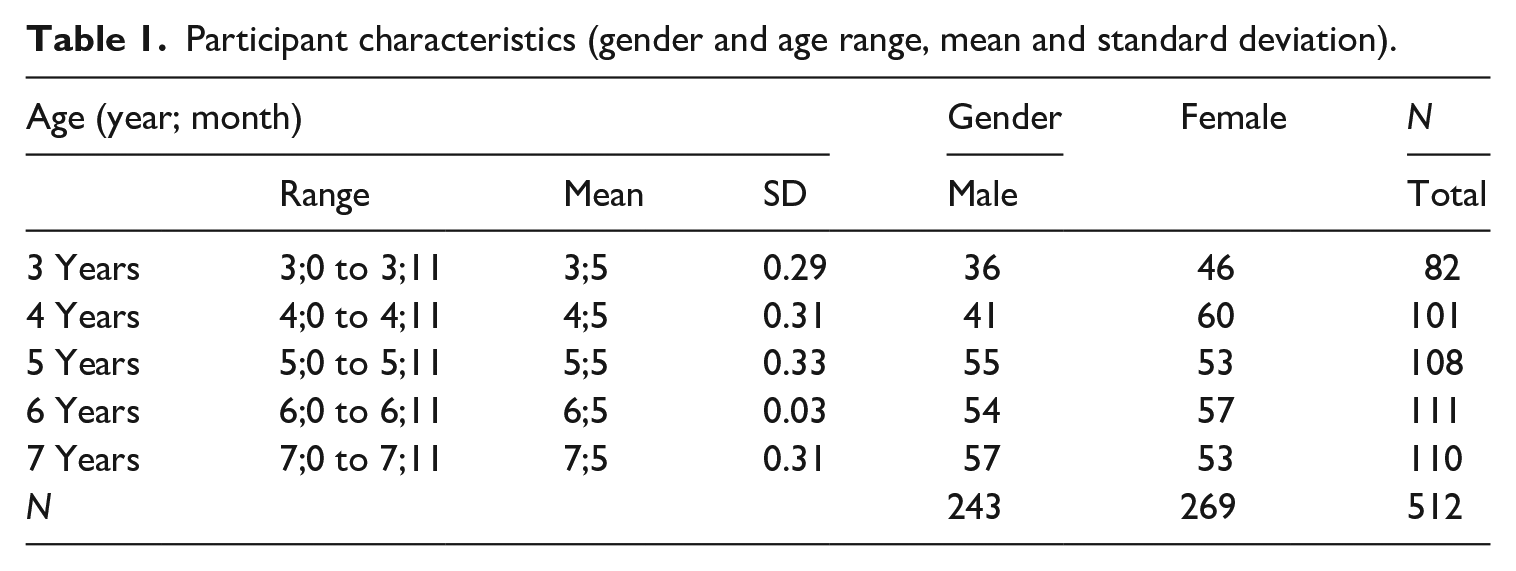
The sample consisted of 512 typically developing Kuwaiti Arabic-speaking children (243 boys and 269 girls). The children ranged in age from 3;0 to 7;11 years and were divided into five age groups at 1-year intervals. The children were enrolled in three grade levels: nursery school (n = 82), preschool (n = 209), and school age (n = 221). The mean ages and genders for each age group are shown in Table 1. A chi-square test for independence revealed no significant association between gender and age group: χ2 (4, n = 512) = 3.74, p = .44, Cramer’s V = .09.
Participant characteristics (gender and age range, mean and standard deviation).
Instrumentation
The derivational morphological structures examined in this study were taken from a general Kuwaiti Arabic language test called the Test of Arabic Morphosyntax (TAM) (Al-Sulaihim et al., 2018). The TAM examines 47 Kuwaiti Arabic morphosyntactic structures. These structures are commonly used by Kuwaiti Arabic-speaking children and were based on various sources, such as language samples obtained from typically developing children, previous research studies on Kuwaiti Arabic (e.g. Aljenaie, 2001), and speech–language therapists’ input as native speakers of this variety of Arabic (see Shaalan, 2010, 2017). The TAM was administered to 512 typically developing children and showed excellent psychometric properties (Shaalan et al., in press). The data reported in this study are derived from this cohort of children who completed the TAM test.
The TAM was piloted on 100 children of varying ages and was also used to assess 89 adults who were not part of the study. Adult data were used for benchmarking purposes only and to ensure that the test items were not ambiguous. An artist was commissioned to draw the pictures that were used for TAM. The drawings were reviewed by the authors and other speech–language therapists to ensure that they were culturally appropriate. Some modifications were made after the piloting stage.
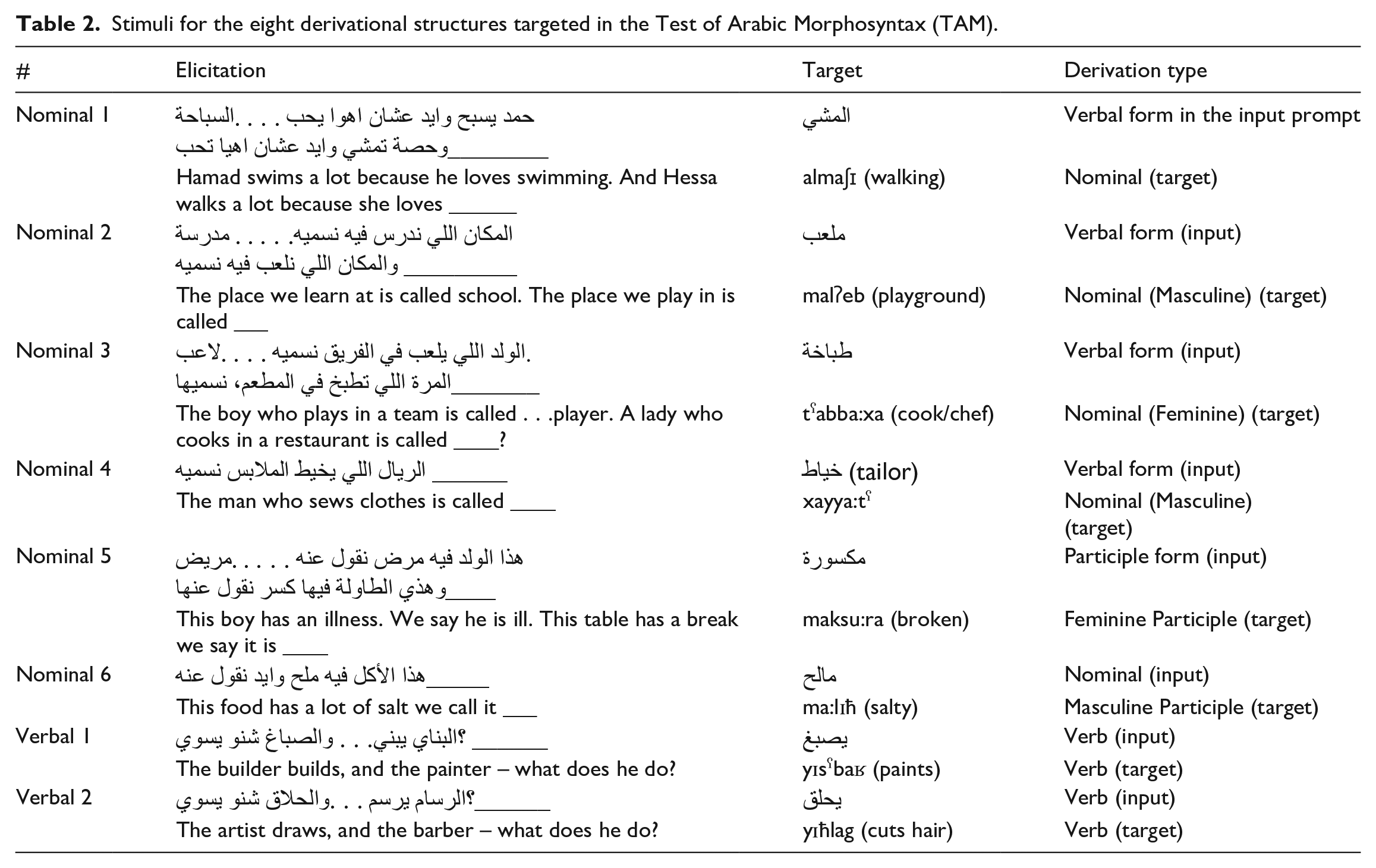
An eight-item subtest from TAM that examined derivational morphology was used as the stimulus for this study. Table 2 shows the stimuli for the target derivational morphology structures, which consisted of two types: nominal derivations and verb derivations. Nominal or verbal derivation, in this study, refers to the output item the child produces when presented with a prompt, regardless of whether the input they are presented with is a noun or a verb. This study does not assume that the derivational process is root and pattern based or stem based. The derivational subset of TAM had a high level of internal consistency, as determined by a Cronbach’s alpha coefficient of .93.
Stimuli for the eight derivational structures targeted in the Test of Arabic Morphosyntax (TAM).
Procedure
Permission was granted by the Ministry of Education in Kuwait to assess children in public schools and kindergartens. The children who participated in the study were recruited from kindergartens and public elementary schools across the six different governorates of Kuwait. The children’s respective schools took responsibility for seeking parental authorization. The examiners obtained the child’s informed consent prior to administering the test. The inclusionary criteria required the child to be below the age of 8 years, a monolingual speaker of Kuwaiti Arabic, and to have fulfilled the admission requirements for a public regular school. We opted for public regular schools because in Kuwait, children with special needs (learning disabilities, autism, language disorders, etc.) are mandated to attend special schools. The participating children were deemed to be academically performing within the expected range by their teachers. Furthermore, none of them presented with speech intelligibility issues that would have impeded understanding.
Kuwaiti Arabic-speaking research assistants assessed each child individually. Each research assistant was given specific instructions to follow during the administration of the test. They completed a training and trial phase prior to beginning testing. This included a recorded video sample by each research assistant to show how they would administer the test. This video was later observed by the authors, and the research assistants were given feedback regarding their test administration process.
The picture stimuli were presented in a booklet and were used to elicit the eight target structures from each child. Participants’ responses were audio-recorded using a digital audio recorder and scored for accuracy. Items were scored with 1 point for correct answers, 0 for incorrect answers, and a No Response (NR) if the child did not respond.
Data analysis
Raw scores for each item were converted to a percentage. The mean percent accuracy scores for the subcategories displayed in Table 2 were determined by grouping individual items into their respective categories (e.g. all nominals versus all verb derivations). A composite percentage score was obtained for each child by summing all eight items.
All statistical analyses were performed using IBM SPSS Statistics software, Version 25 (IBM Corporation, 2017). The selected p value for statistical significance was .05. However, a Bonferroni correction was applied for multiple comparisons to control for Type 1 error. The variables of interest were subjected to applicable parametric statistics to determine any between-group or within-group differences.
Results
Acquisition of derivational morphology
The children’s ability to correctly use derivational morphology was evaluated using nominal versus verbal derivation. The eight derivational items (six nominals and two verbal) are presented in Table 2. A logistic regression was conducted on a sample of 512 children to determine whether age group predicts the likelihood that the participants will produce correct responses for eight distinct derivation-dependent variables. IBM SPSS 27.0 was used, and the alpha level was set at .05. The independent variable in the model was age group, which comprised a cohort of five age levels: 3, 4, 5, 6, and 7 years. Analysis for each of the derivational types is reported below.
Nominal derivation 1
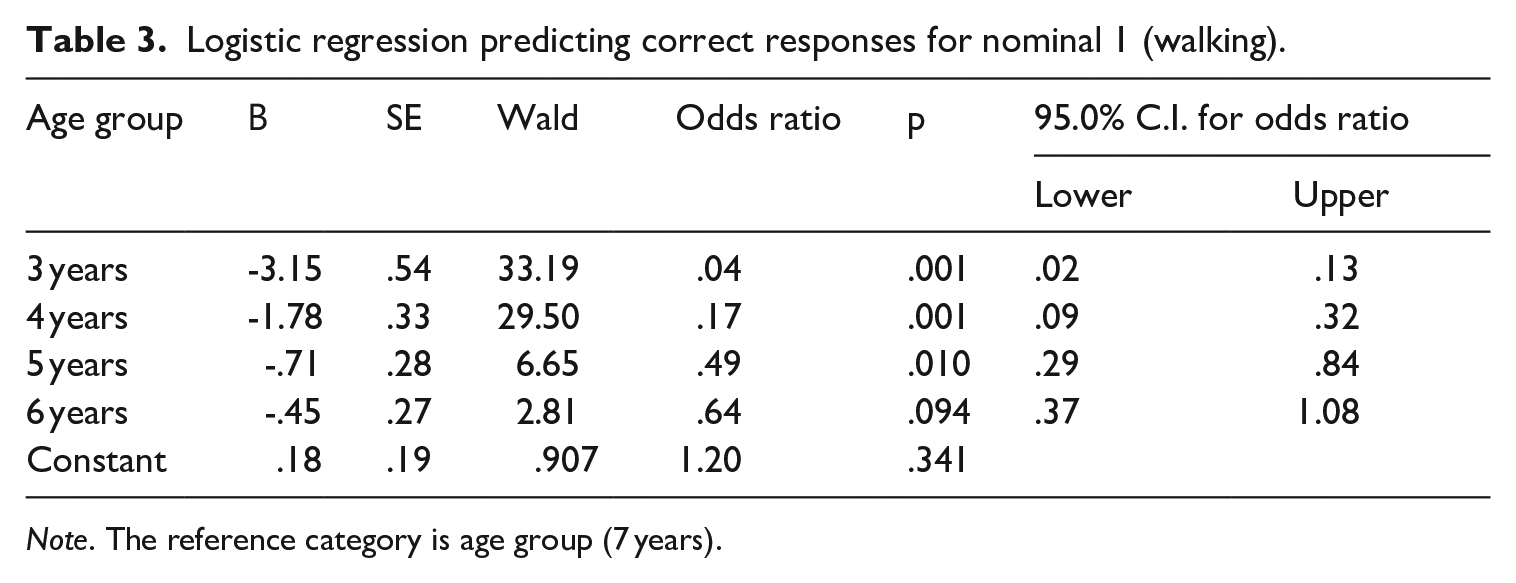
The full model with the predictor variable age group was statistically significant, χ2 (4, N = 512) = 80.14, p < .001, indicating that the model effectively predicted whether a child would provide an accurate response to nominal 1 derivation. The overall model explained between 14.5% (Cox and Snell R2) and 20.2% (Nagelkerke R2) of the variance in the dependent variable (nominal 1), with 68.9% of cases correctly classified. Sensitivity was 35.5% (60/190) suggesting that participants who provided correct responses were predicted to be correct. Specificity was 85.4%, that is, incorrect responses were predicted to be wrong. As shown in Table 3, only the first three age groups (3, 4, and 5 years) made a unique and statistically significant contribution to the model. In comparison to children aged 7 years, the odds ratios in Table 3 indicate that the 3-year age group was 0.04 less likely to answer nominal 1 correctly. The likelihood of providing an accurate response was 0.17% and 0.49% less for the 4- and 5-year groups, respectively. However, there was no significant difference between the 6- and 7-year age groups (p = .94).
Logistic regression predicting correct responses for nominal 1 (walking).
Note. The reference category is age group (7 years).
Nominal derivation 2
The full model with the predictor variable age group was statistically significant, χ2 (4, N = 512) = 101.98, p < .001, indicating that the model effectively predicted whether a child would provide an accurate response to nominal 2 derivation. The overall model explained between 18.1% (Cox and Snell R2) and 24.1% (Nagelkerke R2) of the variation in the dependent variable (nominal 2), with 68.4% of cases correctly classified. Sensitivity was 62.4% (148/234) and specificity was 73.5% (202/275). Table 4 indicates that the first three age groups (3, 4, and 5 years) made statistically significant contributions to the model. In comparison to children aged 7 years, the odds ratios in Table 4 suggest that the 3-year age group was 0.04 less likely to answer nominal 2 correctly. The likelihood of providing an accurate response was 0.18% and 0.35% less for the 4- and 5-year groups, respectively. The 6-year-old group was not significant (p = 22).
Logistic regression predicting correct responses for nominal 2 (playground).

Note. The reference category is age group (7 years).
Nominal derivation 3
Age group was a statistically significant predictor, χ2 (4, N = 512) = 153.05, p < .001 for the dependent variable nominal 3 derivation. Variation in the dependent variable for nominal 3 was explained between 25.8% (Cox and Snell R2) and 34.5% (Nagelkerke R2) and 72.9% of cases correctly classified. Sensitivity was 89.3% (216/242) and specificity was 58.1% (157/270). The odds ratio and significance for nominal 3 are presented in Table 5. The 3-, 4-, and 5-year age groups contributed significantly to the model. In comparison to children aged 7 years, the 3-year-age group was 0.03 less likely to answer nominal 3 correctly. The likelihood of providing an accurate response was 0.76% and 0.37% less for the 4- and 5-year groups, respectively. No significance emerged for the 6-year-old children (p = .08).
Logistic regression predicting correct responses for nominal 3 (chef).

Note. The reference category is age group (7 years).
Nominal derivation 4
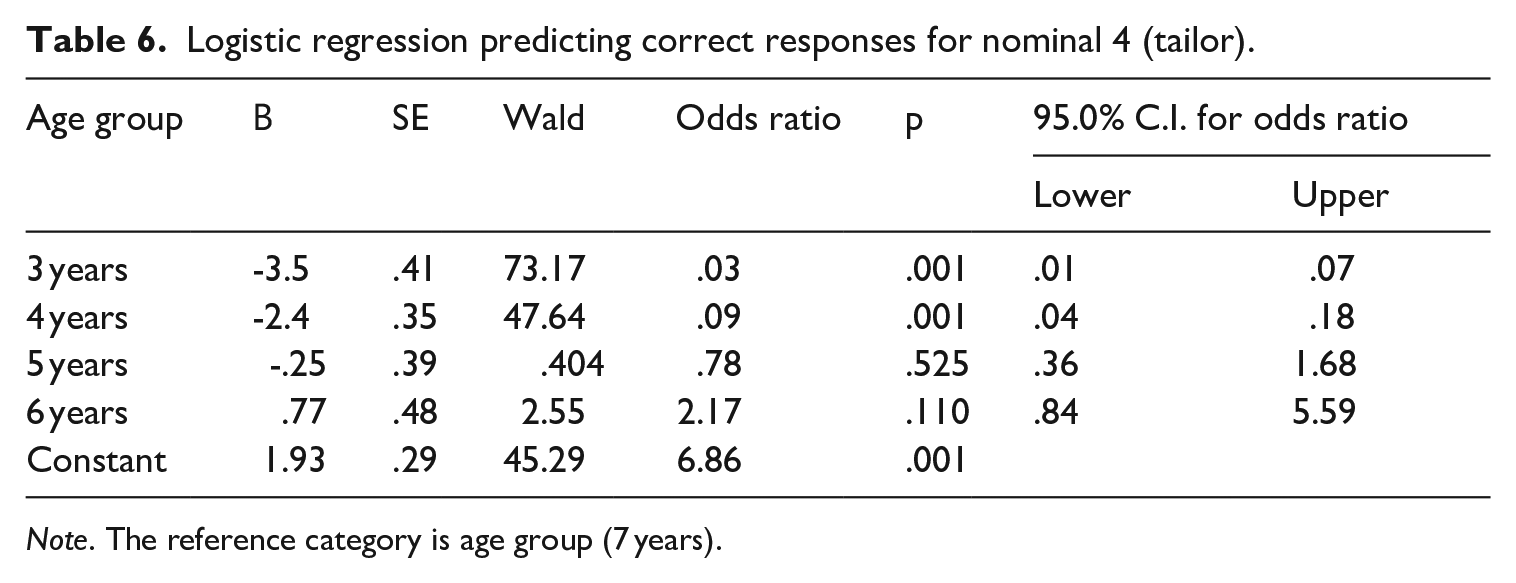
With regard to nominal 4, the full model with the predictor variable age group was statistically significant, χ2 (4, N = 512) = 210.61, p < .001. The overall model explained between 33.7% (Cox and Snell R2) and 46.9% (Nagelkerke R2) of the variance in the nominal 4 dependent variable, with 82.4% of cases correctly classified. Sensitivity was 84.8% (291/243) and specificity was 77.5% (131/169). As shown in Table 6, only the 3- and 4-year age groups contributed significantly to the model. In comparison to children aged 7 years, the odds ratios in Table 6 indicate that the likelihood of providing an accurate response was .03% and .08% less for the 3- and 4-year groups, respectively. The odds ratio for the 5- and 6-year age groups did not reach significance (p > .01).
Logistic regression predicting correct responses for nominal 4 (tailor).
Note. The reference category is age group (7 years).
Nominal derivation 5
Age group was a significant predictor, χ2 (4, N = 512) = 63.15, p < .001 for the nominal 5 dependent variable. The overall model explained between 11.6% (Cox and Snell R2) and 15.6% (Nagelkerke R2) of the variance in this dependent variable (nominal 5), with 65.4% of cases correctly classified. Sensitivity was 60.5% (83/210) and specificity was 68.9% (208/302). Table 7 presents logistic regression results for nominal 5. As evident from the odds ratio, the three younger age groups (3, 4, and 5 years) made a unique and statistically significant contribution to the model. In comparison to children aged 7 years, the odds ratios in Table 7 display that the 3-year age group was 0.11 less likely to produce nominal 5 correctly. The likelihood of providing an accurate response was 0.26% and 0.51% less for the 4- and 5-year groups, respectively. The odds ratio for the 6-year-old group was not significant (p = .83).
Logistic regression predicting correct responses for nominal 5 (broken).

Note. The reference category is age group (7 years).
Nominal derivation 6
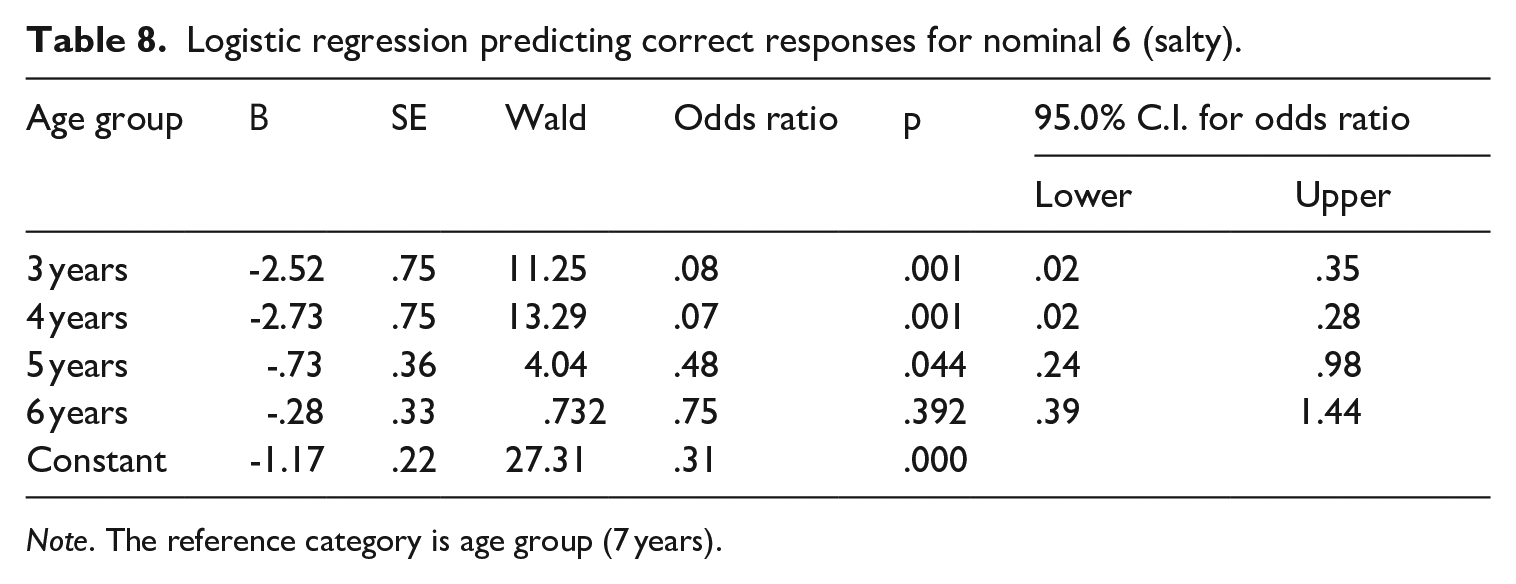
The full model with the predictor variable age group was statistically significant, χ2 (4, N = 512) = 39.94, p < .001 for the nominal 6 derivation. The overall model explained between 7.5% (Cox and Snell R2) and 14.1% (Nagelkerke R2) of the variation in this dependent, with 87.3% of cases correctly classified. Specificity was 100% (447/447). Only the youngest age groups (3 and 4 years) made a unique and statistically significant contribution to the model. As compared to the 7-year-old age group, the odds ratios shown in Table 8 indicate that the likelihood of providing an accurate response was 0.08% and 0.07% less for the 3- and 4-year groups, respectively.
Logistic regression predicting correct responses for nominal 6 (salty).
Note. The reference category is age group (7 years).
Verbal derivation 1
The predictor variable age group was statistically significant, χ2 (4, N = 512) = 211.46, p < .001, for verbal derivation 1. The overall model explained between 33.8% (Cox and Snell R2) and 46.0% (Nagelkerke R2) of the variation for verbal derivation 1, with 80.1% of cases correctly classified. Sensitivity was 85.8% (272/317) and specificity was 70.8% (138/195). The three younger groups (3, 4, and 5 years) significantly contributed to the model as evident from Table 9. Further, the odds ratios in Table 9 indicate that as compared to the 7-year-olds, the 3-year-old group was 0.02 less likely to answer verb 1 correctly. The likelihood of providing an accurate response was 0.05% and 0.19% less for the 4- and 5-year groups, respectively. The odds ratio for the 6-year-old group was not significant (p = .98).
Logistic regression predicting correct responses for verbal 1 (paint).

Note. The reference category is age group (7 years).
Verbal derivation 2
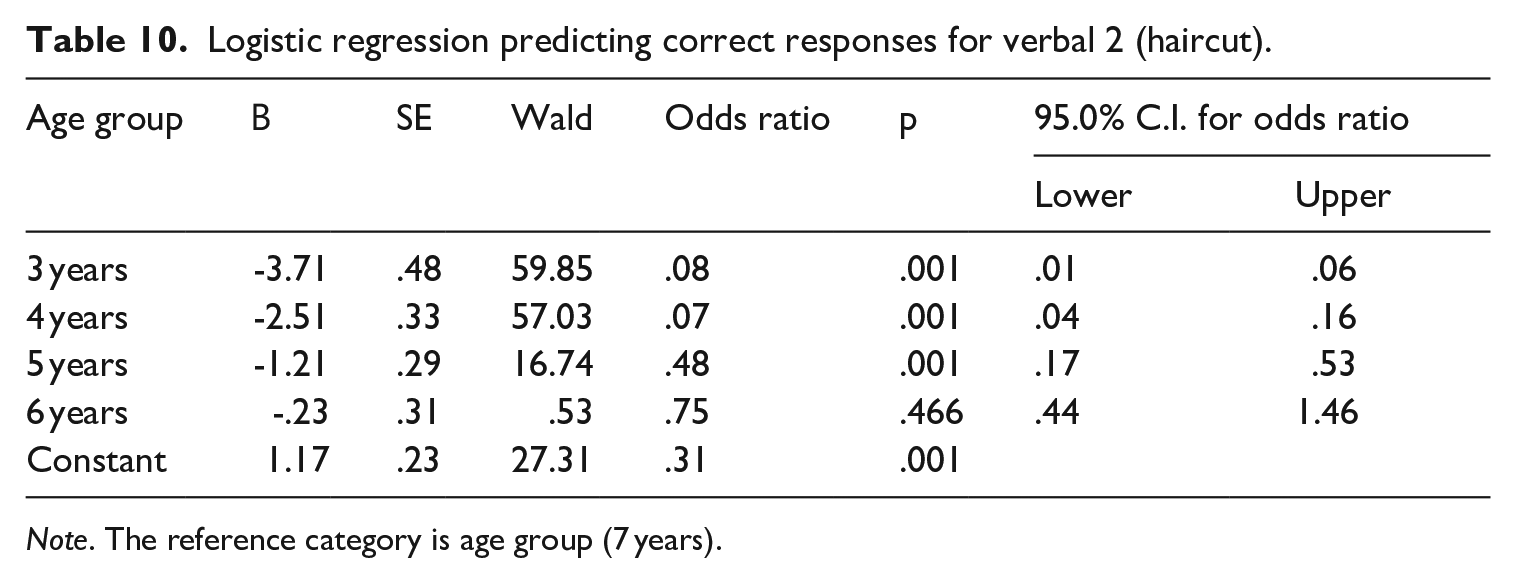
Age group was a statistically significant predictor, χ2 (4, N = 512) = 160.99, p < .001 for the dependent variable – the second verbal derivation. The overall model explained between 27% (Cox and Snell R2) and 36% (Nagelkerke R2) of the variance in the dependent variable (verb 2), with 73.2% of cases correctly classified. Sensitivity was 67.2% (164/244) and specificity was 78.7% (211/268). The first three age groups (3, 4, and 5 years) made a unique and statistically significant contribution to the model. In comparison to children aged 7 years, the odds ratios in Table 10 indicate that the 3-year age group was 0.02 less likely to answer verb 2 correctly. The likelihood of providing an accurate response was 0.08% and 0.298% less for the 4- and 5-year groups, respectively.
Logistic regression predicting correct responses for verbal 2 (haircut).
Note. The reference category is age group (7 years).
Within-group comparisons for derivation
A series of dependent t tests were conducted to compare the percentage correct use of nominal derivations and the verbal derivations within each group. Table 2 in the ‘Method’ section presents examples for the six nominal and two verbal derivations. The Bonferroni-adjusted alpha level was .01 per test (.05/5). The mean percentage correct scores for each derivation type across the five age groups are displayed in Table 11. Within each group, the scores on the verbal derivations were consistently higher than those of the nominal (p < .01). Overall, the children performed significantly better on verbal derivations (M = 54.8, SD = 43.4) than nominal derivations (M = 41.2, SD = 30.1), t(511) = 9.44, p < .001.
Mean percentage correct scores for the nominal and verbal derivations (standard deviation in brackets) by the five age groups.
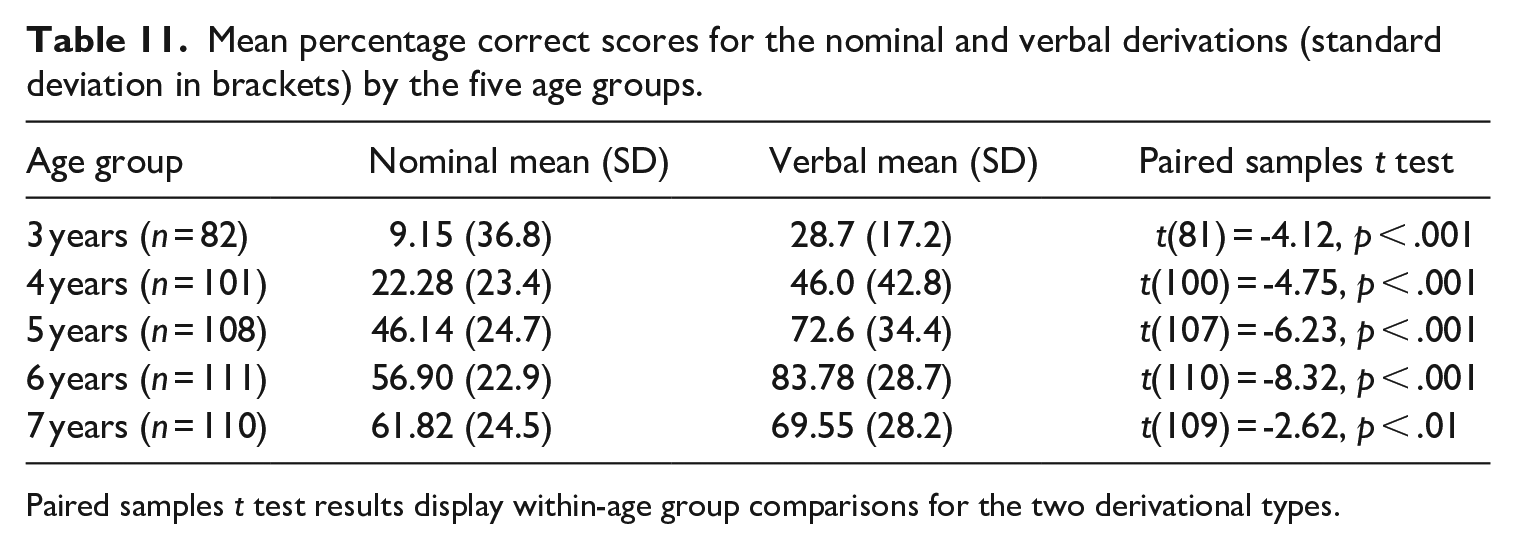
Paired samples t test results display within-age group comparisons for the two derivational types.
Error analysis
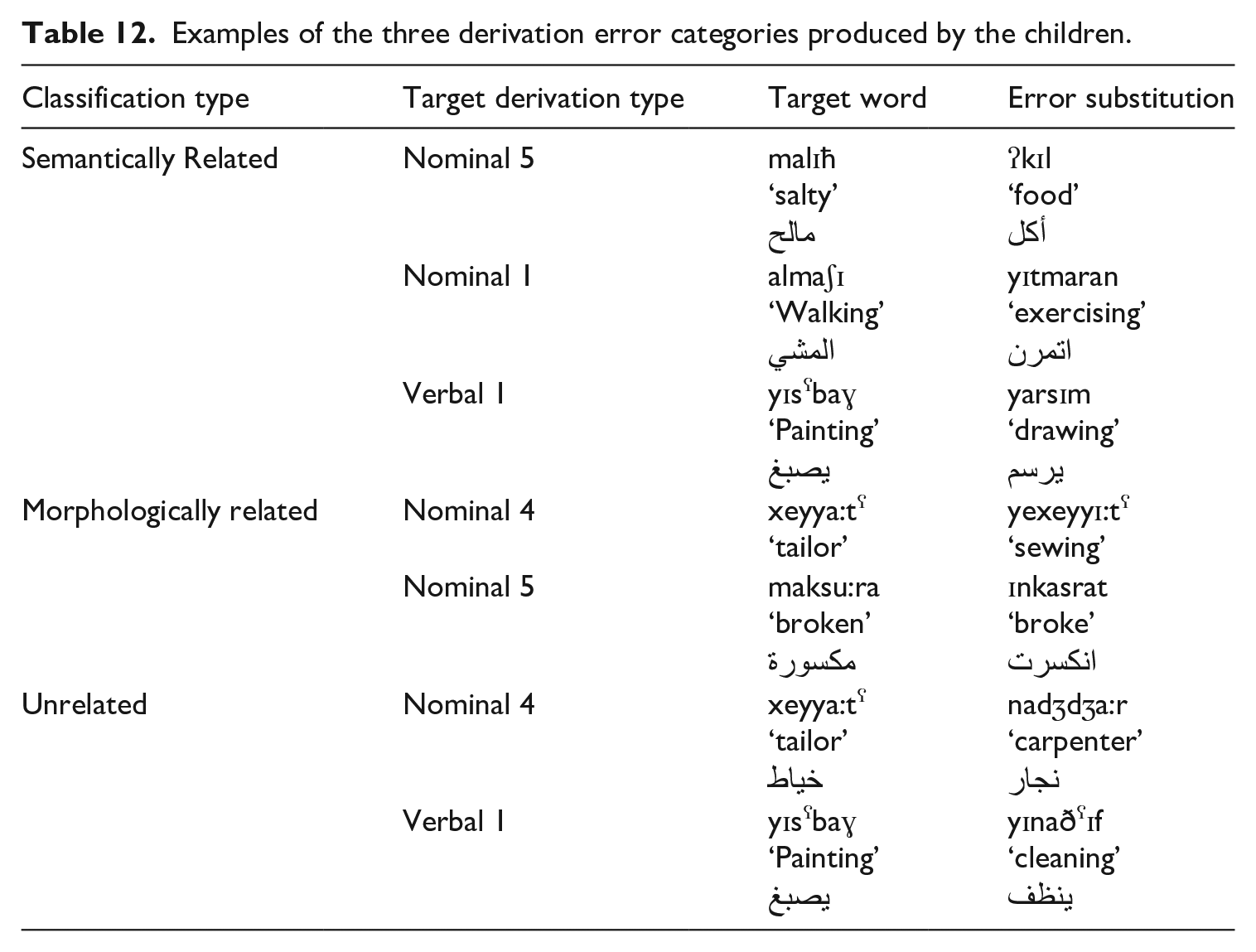
The children’s errors in nominal and verbal derivations were categorized into three categories. Semantically related errors consisted of errors that were related to the target in meaning. Morphologically related errors comprised errors that shared the same morphological root as the target. Unrelated errors had no semantic or morphological relationship to the target. For example, a semantically related error with a nominal derivation target was (food) instead of (salty), while a semantically related error with a verbal derivation target was (draws) instead of (paints). An example of a morphologically (root) related target was sewing (yexeyya:
Examples of the three derivation error categories produced by the children.
Overall error patterns
More than half of all errors produced by the children (M = 53.9%, SD = 30.5) were morphologically related to the target (shared the same root). Semantically related errors (M = 33.2%, SD = 27.4) were the second most frequent. The class of unrelated errors was relatively smaller (M = 12.8, SD = 19.8). A paired-samples t test confirmed that the error category types were significantly different with Unrelated < Semantically related, t (378) = −10.8, p < .001, and Semantically related < Morphologically related, t (378) = −7.3, p < .001.
An analysis of error patterns by derivation type revealed that these results appear to be more applicable to nominal derivation than verb derivation forms. As depicted in Figure 1, the proportion of errors in all three categories (unrelated, semantically related, and morphologically related) for nominal derivation forms was greater than that of verb derivations. The error patterns identified in the nominal derivation forms followed the aforementioned statistically significant trend: Unrelated (M = 8.8%) < Semantically related (M = 23.9%) < Morphologically related (M = 53.1%). In contrast, the frequency of morphologically related verb derivation errors was lower than that of semantic or unrelated errors.
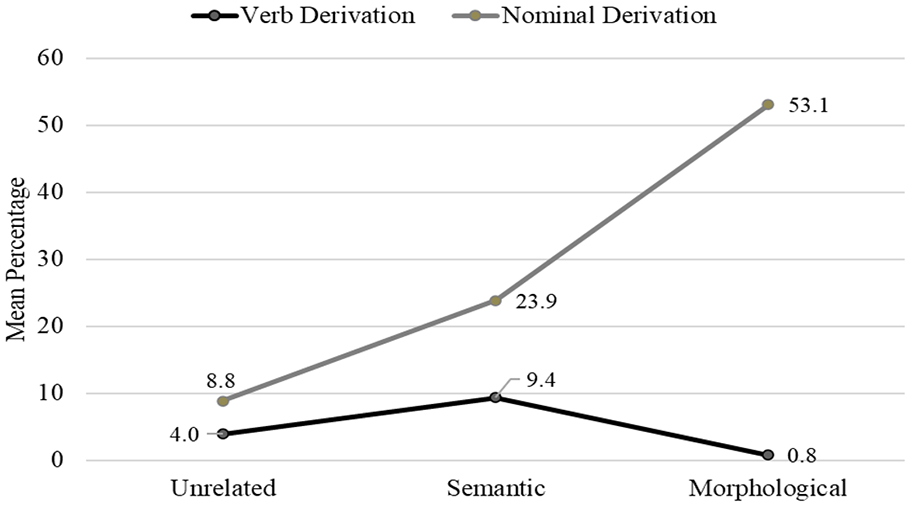
Mean Percentage of the Three Error Categories by Derivation Type.
Error patterns based on age group
Figure 2 presents the frequency of the three classes of errors (unrelated, semantic, and morphological) by age group. The prevalence of unrelated error types appeared to decrease with age. For example, the mean frequency of unrelated errors made by the 3-year-old group (M = 32.4, SD = 24.5) was approximately 5 times that of the 7-year-old group (M = 6.1, SD = 17.6). This was not the case for the semantically related errors, the frequency of which was comparable across age groups. In general, morphological type substitutions demonstrated an age trend, with the older children (5-, 6-, and 7-year-olds) employing them more often than the younger 3- and 4-year-old children.
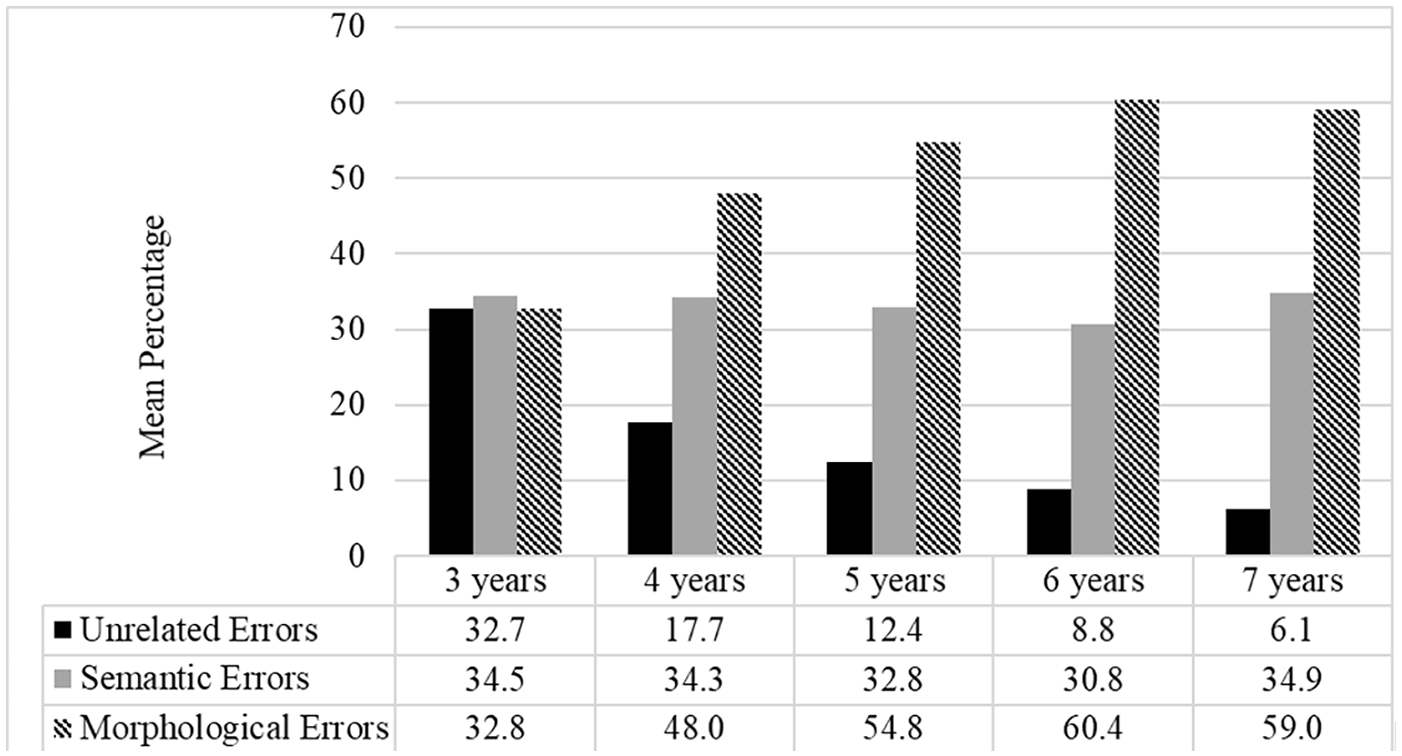
Mean Proportions for the Three Error Categories Across the Five Age Groups.
Discussion
The aim of this study was to contribute to the existing research on derivational morphological development. The study explored the elicited productions of nominal and verbal derivations in Kuwaiti Arabic-speaking children. The main objectives of the study were to determine (a) whether a developmental trend exists in the acquisition of nominal and verb derivational morphology, and (b) through an error analysis, which category of errors the children produced for the nominal and verb derivations.
As predicted, a strong developmental trend was found in the elicited production of derivational morphology in that as children grew, their mastery of these linguistic structures improved, from approximately 20% in 3-year-olds to 80% in 7-year-old Kuwaiti Arabic-speaking children. These increases in production accuracy were overall proportional to the participants’ age, although the scores of 6 and 7-year-olds were close to each other. Interestingly, it was found that the children did not reach mastery level in most of the derivational morphological structures examined in this study. This is very similar to the developmental trajectory of derivational morphology in many languages (e.g. Fejzo et al., 2018, for English and French).
Compared to data on the acquisition of several inflections from the same participants in this study (Shaalan et al., in press), derivational morphology is acquired later than inflectional morphology. The inflections studied were verbal inflection (first, second, plural, and third person tense and agreement) and nominal inflection (masculine and feminine dual, feminine and masculine plural, both regular and irregular). Also within inflection, verbal inflection was mastered earlier than nominal inflection. This finding is in line with previous studies on the acquisition of inflectional morphology in Kuwaiti Arabic, which show that children master verb inflection early. For instance, Aljenaie (2010) found that by age 3 years, children had almost mastered verb agreement and tense. Likewise, regular plural inflection is acquired before age 4 years (Abdalla et al., 2013). Similar results have also been reported for other Arabic dialects, such as Saudi Hijazi Arabic (Basaffar & Safi, 2012) and Egyptian Arabic (Fahim, 2017). This relative delay in the acquisition of derivational morphology compared to inflectional morphology is consistent with other cross-linguistic findings (Kuo & Anderson, 2006; Ravid et al., 2004). This is due to the nature of derivational morphology in Arabic and Semitic languages, which is less functionally useful, less frequent, and less regular (see review in Ravid, 2019). As suggested by an anonymous reviewer, related to the regularity is the notion of linear (concatenative) versus non-linear morphology, where inflectional morphology is mostly linear and its affixation rules are less diverse and therefore easier to learn and remember.
The results of this study also showed that nominal derivation tends to develop later than verb derivation, although this result is only tentative, given the fact that the number of verbal structures is far less than the nominals in this study and relatively less complex. While verbal derivation is acquired relatively early, around age 6 years, nominal derivation is still not totally acquired by age 7 years. For example, deriving a verb based on a noun input, such as deriving the verb ye-
The error analysis has shown that the root has a central role in Kuwaiti Arabic language acquisition. Most errors shared the root with the target. This is in line with previous studies in Arabic language acquisition (Badry, 2009), speech errors in typical speakers (Abd-El-Jawad & Abu-Salim, 1987), patients with aphasia (Prunet et al., 2000), and lexical processing (e.g. Boudelaa & Marslen-Wilson, 2001, 2011, 2013). This is further support for the root and pattern theory of Arabic morphology (e.g. Cantineau, 1950; McCarthy, 1981), that derivation is based on the interleaving of the two non-linear morphemes of pattern and root, although this does not exclude a stem-based interpretation as the target and the input share the phonemes of the root (see discussion in Idrissi, 2018). However, there is no clear evidence in this study that children are using the pattern, the other morpheme in the root pattern theory, in language acquisition. This is not unexpected, as previous studies in lexical processing found that the role (effect) of the pattern is less robust (e.g. Boudelaa & Marslen-Wilson, 2005; Mimouni et al., 1998). This is likely because of the low productivity of patterns compared to roots (Boudelaa & Marslen-Wilson, 2011). The central role of the root in language acquisition is also well established in Hebrew, another Semitic language with similar derivational morphology (e.g. review in Ashkenazi et al., 2020).
Practical and clinical implications
The development of a clinically relevant tool for the assessment of children with speech and language delays is crucial. Research on expressive morphology will provide insight into the acquisition of morphological structures by Kuwaiti Arabic-speaking children and other similar dialects. An important purpose of gathering morphological data is to interpret the data in a way that will allow speech–language pathologists to better understand possible clinical markers for expressive language disorders. Finally, this work will lay the foundation for further studies on the development of standardized tests to assess children with language disorders, as most tests available currently in Kuwait are translations or adaptations rather than novel tests.
This study has offered several important factors with regard to practical implementation by speech and language clinicians as well as teachers. These include information on developmental milestones pertaining to Arabic derivational morphology. For example, clinicians can incorporate teaching derivational morphological structures in order of difficulty (from easiest or earliest to later developing morphemes).
There are also practical implications for teachers as they can integrate derivational morphology into the reading and spelling curriculum, given that a growing body of research indicates a positive effect of morphological awareness on literacy acquisition, spelling, and reading comprehension (Carlisle, 2010; Kirk & Gillon, 2009; Sparks & Deacon, 2015; Wolter & Dilworth, 2014). Further, a possible impact of including morphology in reading and spelling instruction is that children can gradually master the many complex relations involved in morphology, phonology, and orthography (Carlisle, 2003).
Cross-linguistic research on morphological components has been shown to be beneficial in determining the potential factors that have positive or negative effects on grammatical morphology in children (Kuo & Anderson, 2006; Marks et al., 2022; Xie & Yeung, 2023). In addition, the plural derivations in Arabic are not the same as in other languages, such as English, which should be taken into account by clinicians working with children. The scarcity of research in the Arab world warrants further empirical investigations of the linguistic features with respect to essential factors impacting the development of these morphological markers.
Limitations and directions for future research
The authors would like to acknowledge the limitations of this study. Due to the fact that data from a subtest of the TAM were used to analyze specific derivational morphological structures, there were not enough items for each structure examined. Because the verbal items are far less than the nominals, the results of the comparison between the acquisition of these structures are only tentative. Future studies may examine the target structures using more items per structure. Also, this study did not control for the frequency or productivity of the target items, which can be a focus of future studies on the Arabic language. Finally, the cross-sectional emphasis of this study can be supported with longitudinal data that can shed more light on the acquisition of derivational morphology in other dialects of Arabic.
Footnotes
Author contributions
Funding
The author(s) received no financial support for the research, authorship, and/or publication of this article.
