




Abstract
Adaptive facade systems play a crucial role in improving energy efficiency and visual comfort in office buildings, yet their operation often depends on sensor-based feedback or rule-driven logic that limits scalability and robustness. This study introduces a sensor-free machine learning framework for optimising venetian blind slat angles using only weather and temporal parameters. A south-facing single-zone office in Munich, Germany was modelled using Honeybee/EnergyPlus to generate a simulation-based dataset of hourly energy performance under varying slat-angle configurations. Two supervised learning models, Random Forest and XGBoost, were trained to solve a multi-class classification problem in which each hourly sample was assigned one of 18 discrete blind-slat angle classes (0°-170° in 10° increments), representing the energy-optimal configuration. Among the tested models, XGBoost achieved the highest predictive performance with 88% accuracy and a circular mean absolute error of 3.61°. When implemented for adaptive control, the proposed strategy reduced total summer energy consumption by 21.4% compared to the best-performing fixed-angle configuration. The results demonstrate that simulation-based, data-driven shading control can effectively replace sensor-dependent systems, offering a scalable, low-cost solution for intelligent facade management and energy optimisation in modern office buildings.
Keywords
Practical application
This study offers building services engineers, façade designers, and facility managers a practical sensor-free method for optimising automated venetian blind control in office buildings. By using weather and time-based inputs rather than indoor sensing infrastructure, the framework can support low-cost integration into building automation systems and retrofit projects. The proposed machine-learning control strategy enables hourly blind-angle adjustment to reduce combined cooling, lighting, and heating demand, achieving 21.4% lower summer energy use than the best fixed-angle case. It provides a scalable pathway for more energy-efficient and responsive office façade operation.
Introduction
The building sector is a dominant contributor to global energy demand, responsible for about 30% of total final energy consumption and 26% of CO2 emissions worldwide. 1 In the European Union, building operations represent roughly 40% of overall energy use, 2 and similar figures are observed in the United States where residential and commercial buildings together use around 40% of the nation’s total energy. 3 Within this sector, office buildings account for a significant share of non-residential energy use owing to their intensive operation of heating, ventilation, air-conditioning (HVAC), and lighting. 1 Office energy use has risen notably in recent years due to larger spaces, longer occupancy, increased Information Technology or computation loads, and extensive air-conditioning use beyond occupant control. 4 The building facade strongly influences an office’s thermal and lighting performance. Solar gains through glazing significantly affect cooling loads, as highly glazed facades provide ample daylight but can cause overheating if unmanaged. A simulation study in Barcelona showed that cooling accounted for over 80% of total HVAC energy, with solar radiation identified as the dominant factor influencing performance. In Mediterranean climates, the challenge lies in balancing daylight access with cooling control, where selective glazing, external shading, and adaptive facades offer effective strategies for mitigating heat gains while preserving daylight quality. 5 Adaptive facades that respond to changing environmental conditions present additional opportunities to overcome this challenge and enhance overall building performance.
Adaptive facades are broadly defined as building envelopes capable of dynamically responding to changing environmental conditions to improve energy efficiency and comfort. They function as morphogenetic or evolutionary systems that adjust their properties, either passively or actively, over time to optimise. Unlike conventional shading devices that follow fixed operational rules, adaptive facades employ performance-based criteria, allowing flexible configurations and user-driven adjustments. 6 Among the various adaptive solutions, external venetian blinds (German: Raffstores) represent one of the most effective strategies for office buildings. By tilting adjustable horizontal slats, these systems block solar heat before it enters the glazing, thereby reducing cooling demand and maintaining comfort. Experimental studies have demonstrated that external venetian blinds significantly improve thermal comfort and reduce overheating in highly glazed office spaces, even during transitional seasons, with blinds set at a 45° angle lowering indoor air temperatures by up to 12.3°C and reducing discomfort hours by 92%. 7 In addition to thermal benefits, automated blinds have been shown to enhance daylight quality by maintaining work-plane illuminance between 500 and 2000 lux for over 80% of occupied hours while minimising glare. 8 Further studies using optimisation algorithms have demonstrated that data-driven and parametric methods can refine shading geometry to enhance daylight quality, occupant comfort, and energy efficiency, reinforcing the value of adaptive and intelligently designed shading systems in modern office facades.9,10
Shading systems can generally be divided into two categories; fixed (static) and dynamic (operable). Fixed devices, such as roof overhangs and exterior fins, are permanent architectural features optimised to block sunlight during specific periods, particularly during periods of high solar altitude in summer. 11 Fixed shading configurations were evaluated to assess how window orientation and shading device geometry affect facade energy performance in Tallinn, Milan, and Cairo, using a parametric model to optimise horizontal and vertical fixed shading devices and achieving annual energy reductions of up to 25% in Milan, 28% in Tallinn, and 45% in Cairo, with maximum benefits on south facades. 12
Dynamic shading systems consist of movable elements controlled by algorithms that enable continuous interaction with both indoor and outdoor environments. Often integrated into intelligent facade technologies, they enhance occupant comfort and energy efficiency by automatically responding to environmental conditions. These systems operate through a sensor-controller-actuator loop, where sensors collect climatic data, the controller determines the optimal response, and actuators adjust the shading elements accordingly. Their defining characteristic is this automatic, adaptive operation, which allows facades to maintain optimal lighting and thermal conditions throughout varying weather and time periods. 13 Static and dynamic shading systems were compared in a simulated office in Tallinn, showing that the dynamic system provided the most balanced performance by consistently lowering cooling energy while minimising penalties in heating and lighting demand. 11 Overall, automatically controlled dynamic blinds equipped with sensors and actuators consistently outperformed static systems, achieving notable reductions in primary energy demand across all orientations.
Shading control strategies are typically classified as schedule-based, rule-based, or sensor-driven, each varying in complexity and adaptability. Rule-based systems operate deterministically, activating shading when parameters such as solar radiation or indoor illuminance exceed set thresholds. Studies have shown their effectiveness in managing solar gains and glare,14,15 although optimised dynamic methods can achieve greater energy savings, up to almost 39%, compared to conventional rules. 16
Schedule-based shading controls are among the simplest and most widely used facade strategies, operating on predefined time settings or fixed thresholds rather than continuous sensing. Most commercial shading-control systems still rely on schedule or sensor-based logic, which, while practical, can lead to unnecessary adjustments and reduced efficiency under short-term environmental fluctuations. 17 Nevertheless, optimisation through algorithms such as genetic programming can enhance their performance, reduce lighting and HVAC energy use while provide sufficient levels of daylight. 18
Sensor-based control strategies form the core of modern automated shading systems, enabling real-time adjustments to environmental changes. Their effectiveness, however, depends strongly on sensor configuration. The importance of optimal sensor placement has been emphasised, with decision-making tools such as TOPSIS used to identify suitable locations for daylight and glare sensors. 19 Sensor distance from windows has been shown to alter energy performance by 4–12%, whereas sensor orientation has minimal impact. 20 Simulation-based logic design of sensor type and placement can further enhance both occupant comfort and energy efficiency. 21
Machine learning (ML) is a subfield of artificial intelligence that enables computer programs to learn patterns and relationships from data and to improve their predictive or decision-making performance based on experience. ML methods rely on data-driven algorithms and statistical techniques to construct models that approximate complex system behaviour and support forecasting and optimisation tasks without requiring explicit rule-based programming. Owing to the increasing availability of large datasets and computational resources, machine learning has been increasingly applied in engineering contexts to support prediction, forecasting, and optimisation tasks without the need for extensive real-time experimentation. 22 In building energy applications, machine learning is transforming prediction, control, and optimisation processes, surpassing traditional rule-based and simulation approaches. A comprehensive overview of machine-learning applications in smart buildings has been provided, covering areas such as grid interaction, energy management, maintenance, and occupant-based control. 23
Systematic reviews highlight the growing dominance of hybrid and ensemble ML models in building energy research. Deep learning and ensemble methods have been shown to consistently outperform conventional algorithms in predicting building energy demand and system behaviour. 24 Key machine-learning techniques, including artificial neural networks (ANN), support vector machines (SVM), and Gaussian regression, have similarly been identified as widely used approaches for forecasting and performance analysis. 25 More recently, the application of Fast Machine Learning (FastML) in building management has been reviewed, with particular emphasis on Long Short-Term Memory (LSTM) networks for energy forecasting and hardware acceleration that enable low-latency, high-throughput processing. 26 Frameworks such as HLS4ML have been shown to facilitate the efficient deployment of machine-learning models in resource-limited environments, bridging the gap between algorithmic complexity and practical building operations. 26
Machine learning (ML) is increasingly applied to enable adaptive facade and shading systems that balance daylighting, visual comfort, and energy efficiency. An ML-based model predictive control (MPC) system has been developed to predict glare in real time, achieving up to 99% glare reduction and 60-63% lighting energy savings. 27 Similarly, an AI-driven surrogate modelling framework combined with evolutionary optimisation has been introduced, demonstrating high predictive accuracy (R2 = 0.95) and enabling multi-objective facade control across various climates. 28 Random forest models have also been applied to optimise photovoltaic shading in Hong Kong housing, demonstrating over 85% prediction accuracy. 29
More advanced systems integrate ML with kinetic facades and sensor-free approaches. Reinforcement learning has been employed to manage independently operated kinetic facades, improving glare reduction and illuminance control. 30 A sensor-free artificial neural network (ANN) model trained on Radiance simulations and sky models has been proposed, reducing cooling-season energy by almost 17% compared with fixed blinds configurations at 90°. 31 ANN-based controllers have further been shown to determine optimal slat angles minimising total energy use, 32 while Python-EnergyPlus co-simulation optimising hourly blind angles have demonstrated total energy savings of approximately 7–12%. 33 Collectively, these studies confirm that ML-driven shading control, whether sensor-based or simulation-trained, enables real-time optimisation of thermal and visual conditions, providing a scalable path toward intelligent, energy-responsive facades.
Because real-world data collection for building performance is often costly and inconsistent, simulation-based approaches have become a key method for producing large, reliable datasets for machine learning (ML) applications. Building performance simulations (BPS) can systematically vary parameters such as occupancy, climate, and control settings to generate synthetic datasets for training machine learning models in prediction, calibration, and fault detection tasks. 34 Similarly, the BuilDa framework has been introduced as a flexible solution enabling parallel generation of high-fidelity thermal time-series data, supporting transfer learning without extensive simulation expertise. 35
New hybrid tools combine physics-based and data-driven modelling. SimbaML combines mechanistic models with machine-learning pipelines to support data augmentation and benchmarking, 36 while Sinergym serves as a reinforcement-learning testbed that unifies simulation, control, and data generation for building energy optimisation. 37 In facade research, a Honeybee-Ansys Fluent workflow has been developed to simulate thermal and daylight performance across green facade configurations, with parametric analyses achieving reductions of up to nearly 73% in global irradiation alongside notable temperature decreases. 38 These results demonstrate how simulation-based workflows can generate high-resolution datasets suitable for training machine-learning models in adaptive facade and energy-optimisation research.
Although extensive research has explored adaptive facade technologies and machine-learning-based control systems, several key gaps remain. Many existing approaches rely on sensor-driven or rule-based algorithms that increase hardware complexity and limit scalability, particularly in retrofit or cost-sensitive applications. Furthermore, most ML-based shading studies have not explicitly targeted overall energy minimisation, often evaluating only partial aspects such as lighting or cooling performance rather than integrated energy demand. The lack of comprehensive, high-resolution datasets also constrains the development of accurate and transferable models, as real-world data collection remains costly and inconsistent across climates. To address these limitations, this study develops a sensor-free, machine-learning framework that predicts optimal blind angles to minimise combined cooling, lighting, and heating loads using simulation-generated datasets. Blind-angle control is formulated as a supervised multi-class classification task rather than a continuous regression problem, with 18 candidate slat-angle classes defined at 10° intervals from 0° to 170°. The proposed approach establishes a reproducible, scalable pathway for intelligent facade control, advancing energy-efficient operation in office buildings without dependence on extensive sensor networks.
Methods
Research framework and tools
This study adopts a simulation-based and data-driven framework integrating building-performance modelling with machine-learning predictive control to develop a sensor-free blind-angle optimisation strategy for reducing lighting, cooling, and heating energy demand in a south-facing Munich office. The framework merges physically based simulation with data analytics, ensuring reproducibility and practical applicability. The methodological workflow is shown in Figure 1. Weather and temporal data from the Munich EPW file were combined with a parametric office model defining facade geometry and venetian-blind configuration. These inputs established the environmental drivers and boundary conditions for evaluating shading strategies, processed in Grasshopper using Ladybug Tools. Research methodological framework.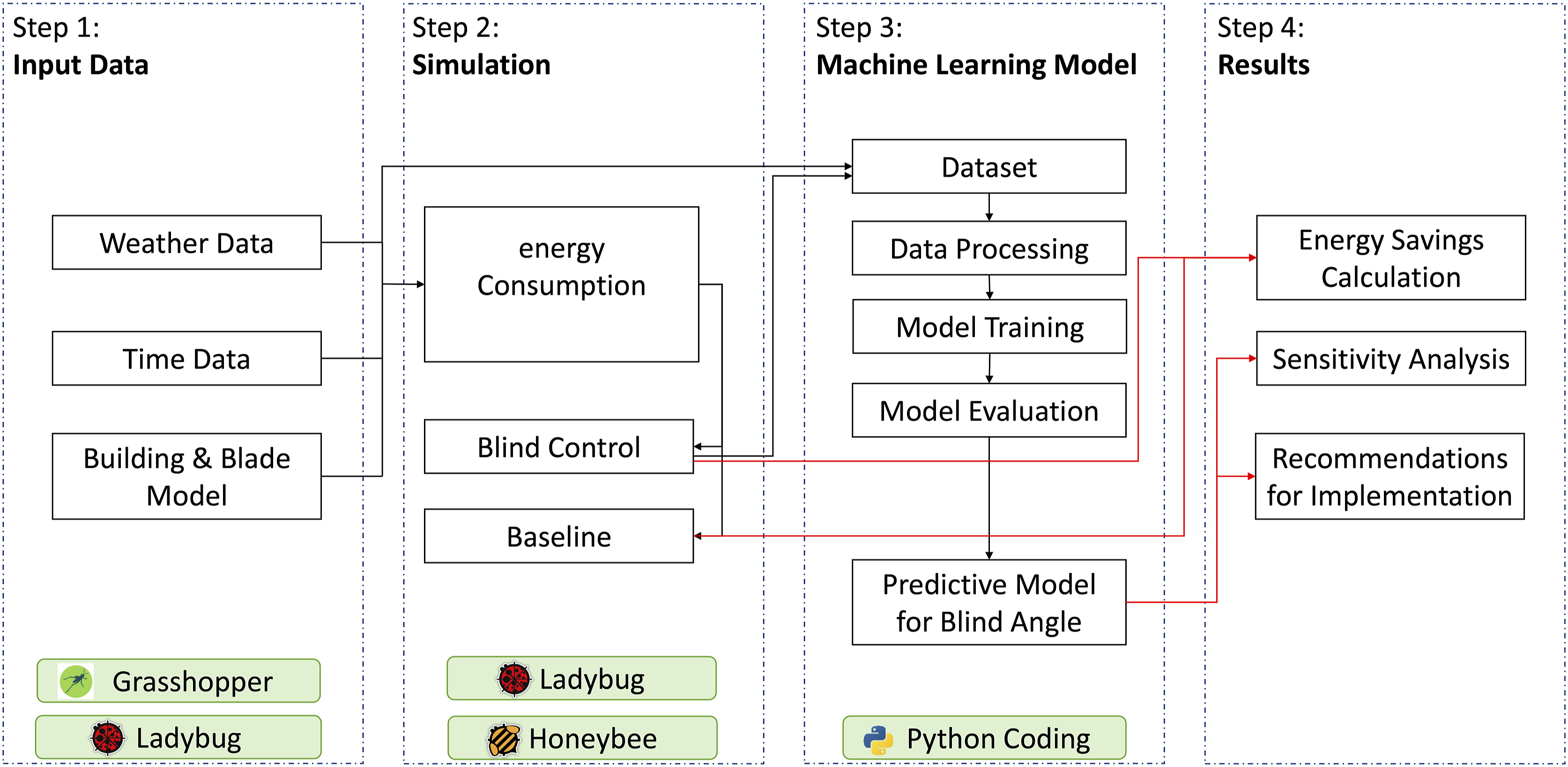
Simulations were carried out in Rhinoceros 7 and Grasshopper 1.0.0007 with Ladybug Tools 1.9.0. Honeybee-Energy connected to EnergyPlus 24.2.0 for thermal and HVAC modelling, Radiance 6.0 for daylight analysis, and OpenStudio 3.9.0 as the interface layer. The office model was simulated for slat angles from 0° to 170°, recording hourly lighting, cooling, and heating demand. Results were exported via TT Toolbox for structured post-processing.
The outputs were synchronised with temporal and solar-geometry variables (hour of day, day of year, solar altitude, and azimuth). Using Python 3.13.7 and scikit-learn, Random Forest and XGBoost algorithms were trained to predict the hourly optimal blind angle from weather-based features, capturing nonlinear relationships between environmental conditions and facade performance. The predictive framework was evaluated against fixed-angle baselines to quantify potential energy savings, while a feature-importance analysis identified the most influential climatic and temporal parameters. Overall, this integrated method provides a scalable, sensor-independent approach for adaptive facade control and energy-efficient building operation.
Office model description
The investigation was conducted on a single-zone, south-facing office module representative of typical multi-storey office buildings as is applicable for Central European workplaces. The model geometry, developed within the previously described simulation environment, represents an office measuring 3.5 m × 5.0 m × 2.8 m (width × depth × height), corresponding to a total floor area of 17.5 m2 and an internal height of 2.8 m. The south-facing facade was modelled with a 60% window-to-wall ratio (WWR). Figure 2 illustrates the geometric configuration of the office unit extracted from a typical facade grid and the corresponding three-dimensional model used in the simulations. As the study focuses on a representative office module rather than a whole-building model, the reported results are presented at zone level. Three-dimensional model of the south-facing single-zone office module extracted from a typical facade grid.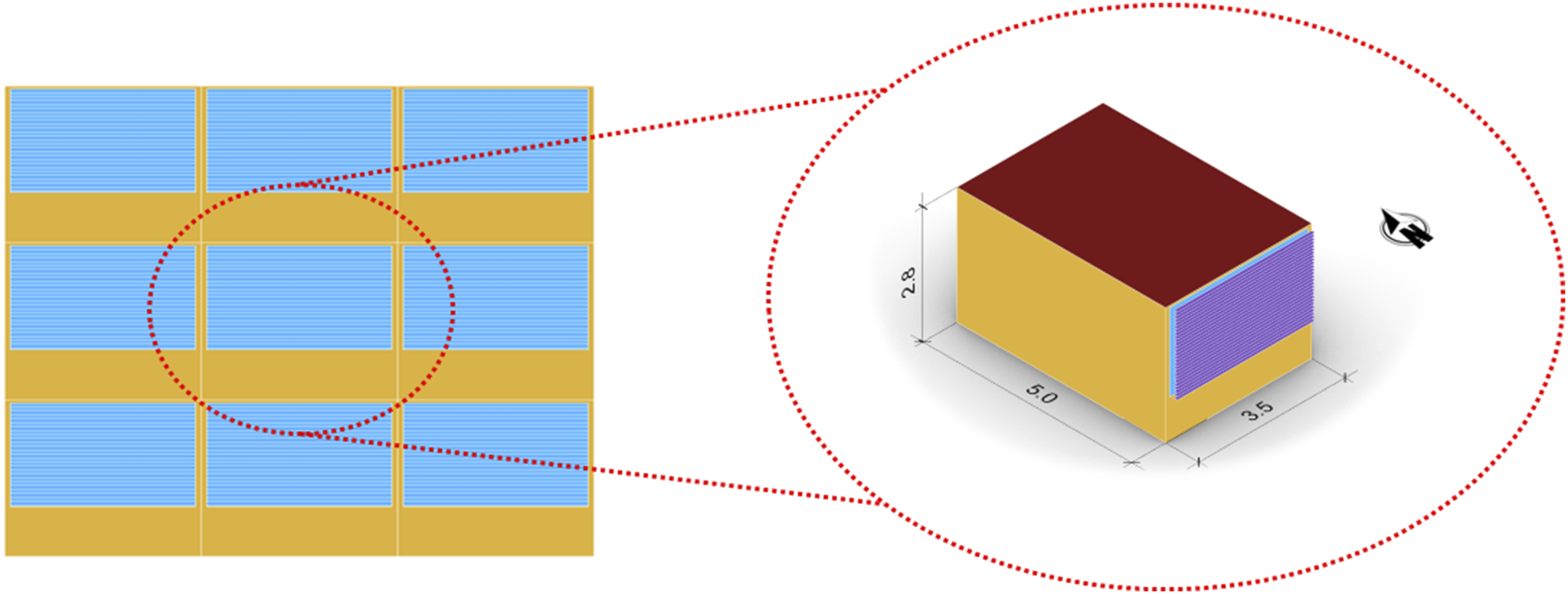
Simulation setup and boundary conditions
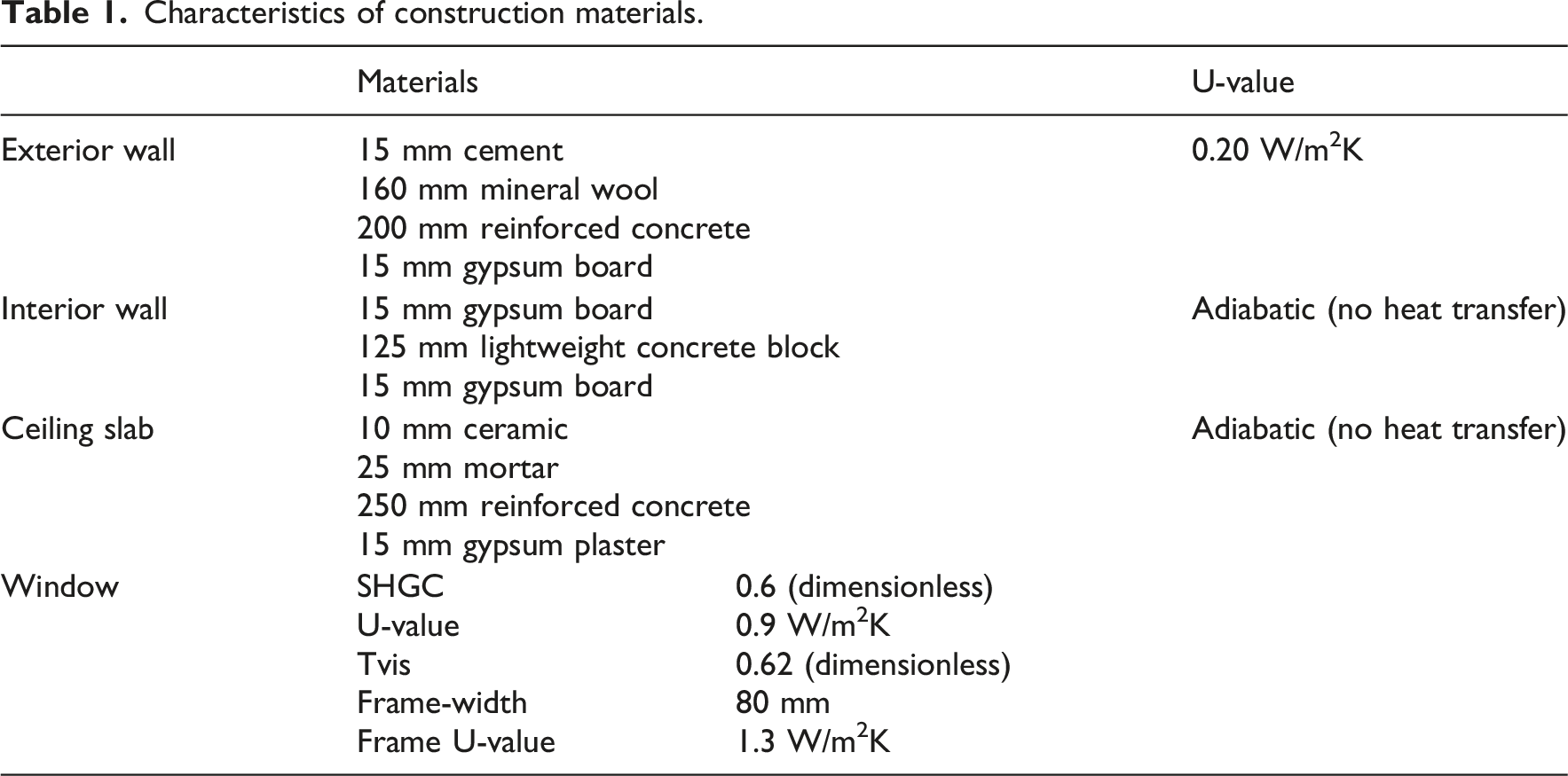
Characteristics of construction materials.
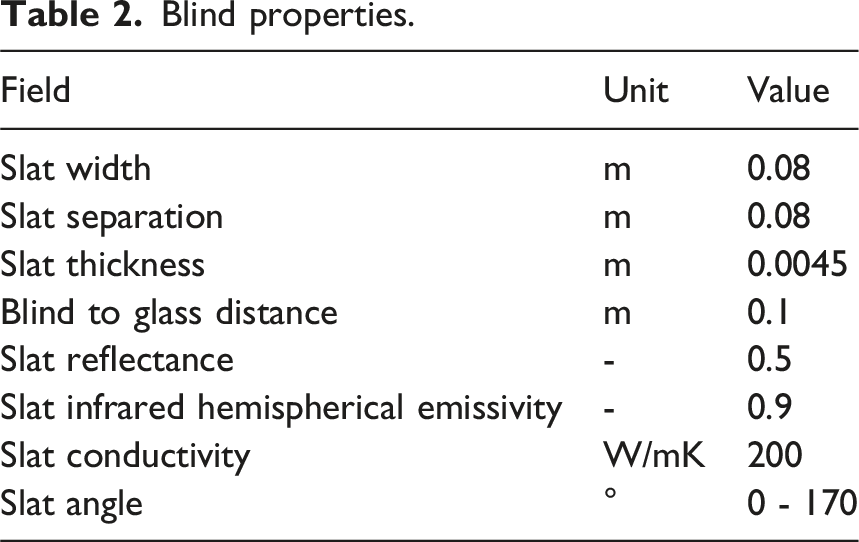
Blind properties.
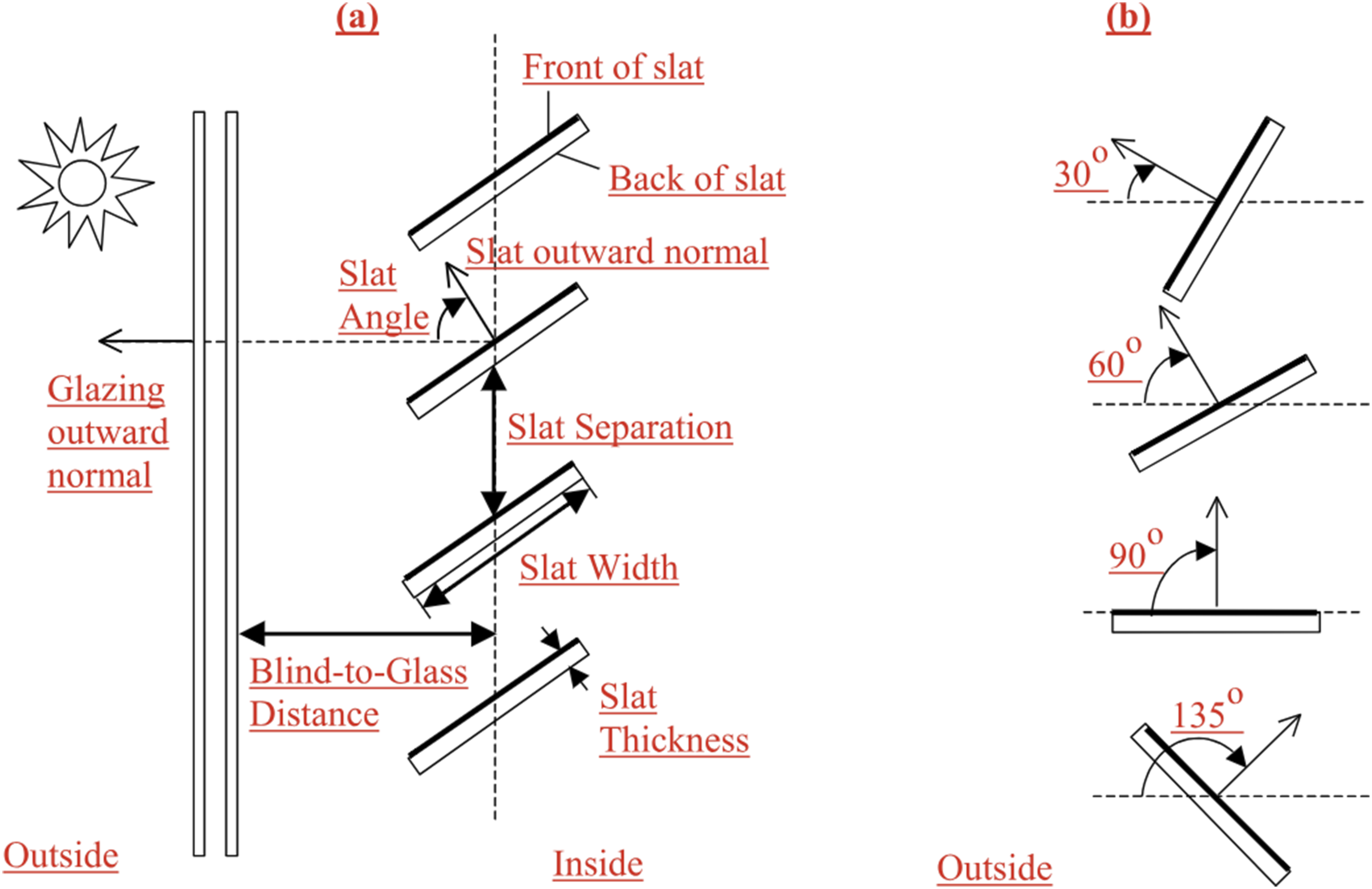
Blind slat-angle control visualization. Source: U.S. Department of Energy 39 .
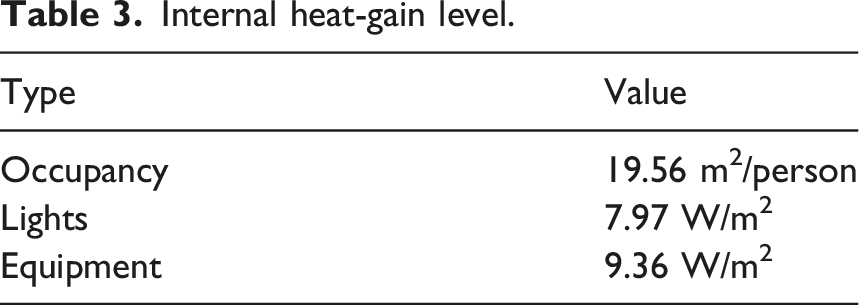
Internal heat-gain level.
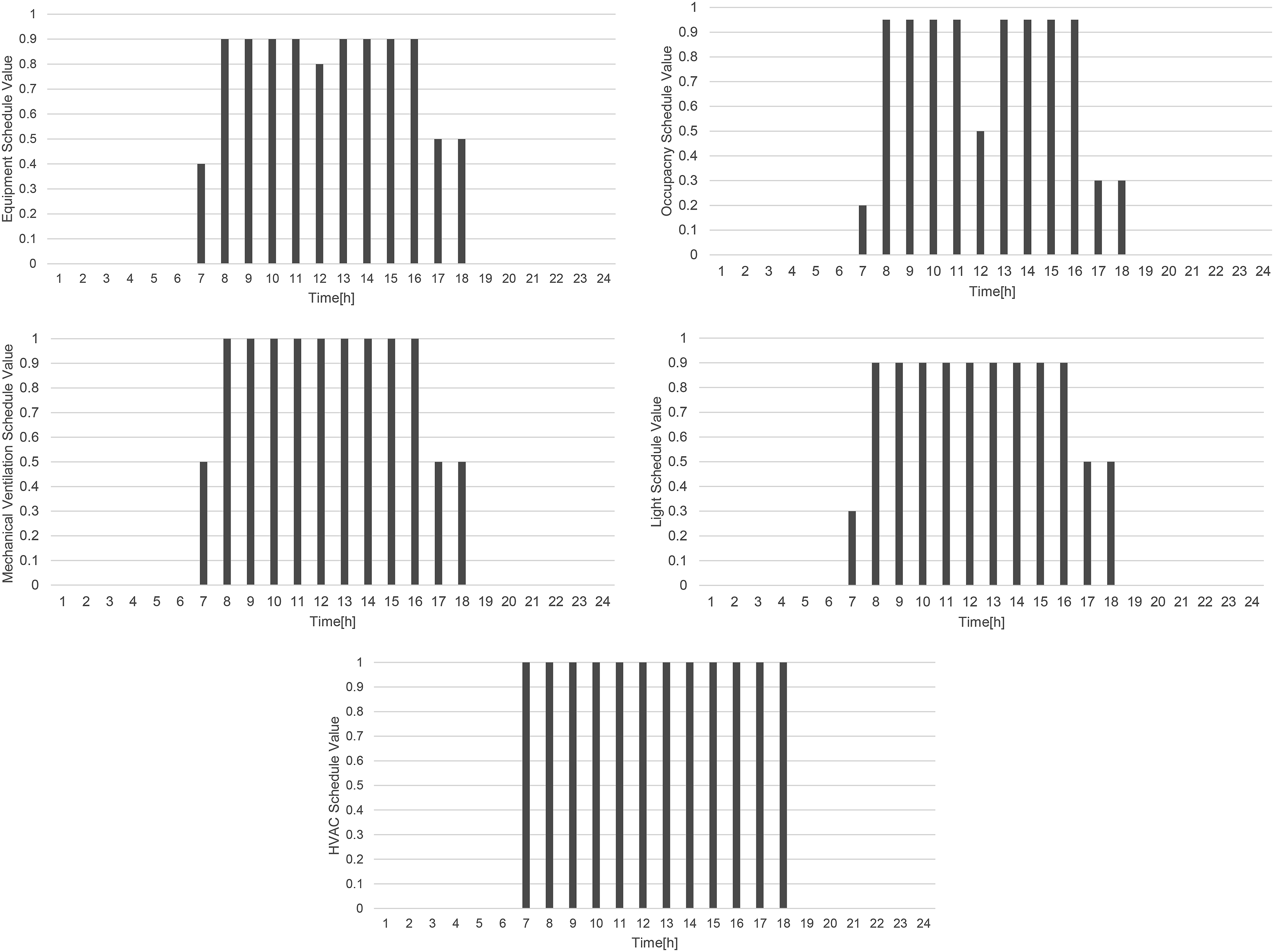
Equipment, occupancy, lighting, mechanical ventilation, and HVAC schedule.
Dimming control
Electric lighting was modelled using a continuous dimming strategy to maintain adequate visual conditions while minimising energy use of artificial lighting. The control system adjusted lighting output in response to work-plane illuminance levels calculated through Radiance-based daylight simulations.
Figure 5 sketches the positioning of the control reference point in the simulation model. At the position of the control reference point (Figure 5) a target illuminance of 500 lux was specified at the desk height (0.8 m above the floor). When daylight availability exceeded the target level, electric lighting power was proportionally reduced. The lighting control operated only during occupied hours (07:00–18:00), synchronized with the internal heat-gain and HVAC operation schedules described previously. Dimming control reference point (height = 0.8 m, 500 lux).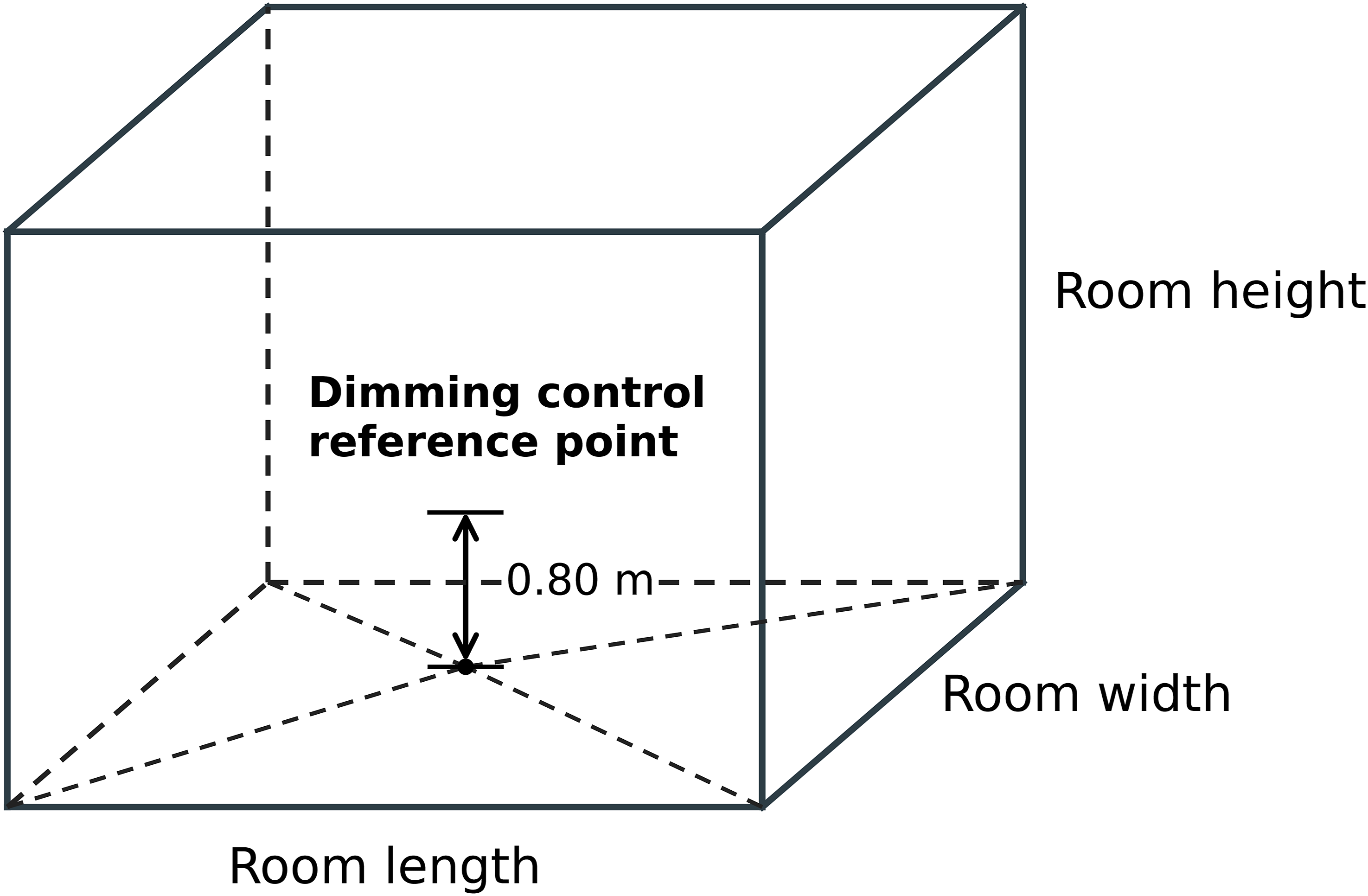
Climatic data and feature extraction
The simulations used the typical meteorological year (TMY) weather file for Munich, Germany, obtained from the EnergyPlus database. Hourly values of dry-bulb temperature, relative humidity, direct normal irradiance (DNI), diffuse horizontal irradiance (DHI), global horizontal irradiance (GHI), and total sky cover were processed using Ladybug Tools in Grasshopper.
Figure 6 provides an overview of the climatic context relevant to the case study. The hourly dry-bulb temperature distribution over the year (Figure 6(a)) indicates pronounced seasonal and diurnal variability, with winter temperatures reaching approximately −16.5°C and summer peaks exceeding 33°C. Figure 6(b) shows the annual total, diffuse, and direct solar radiation, highlighting high solar exposure on the south facade during summer months when adaptive shading control is most critical. Climatic overview for Munich: (a) hourly dry-bulb temperature variation over the year; (b) annual solar radiation distribution (total, direct, and diffuse).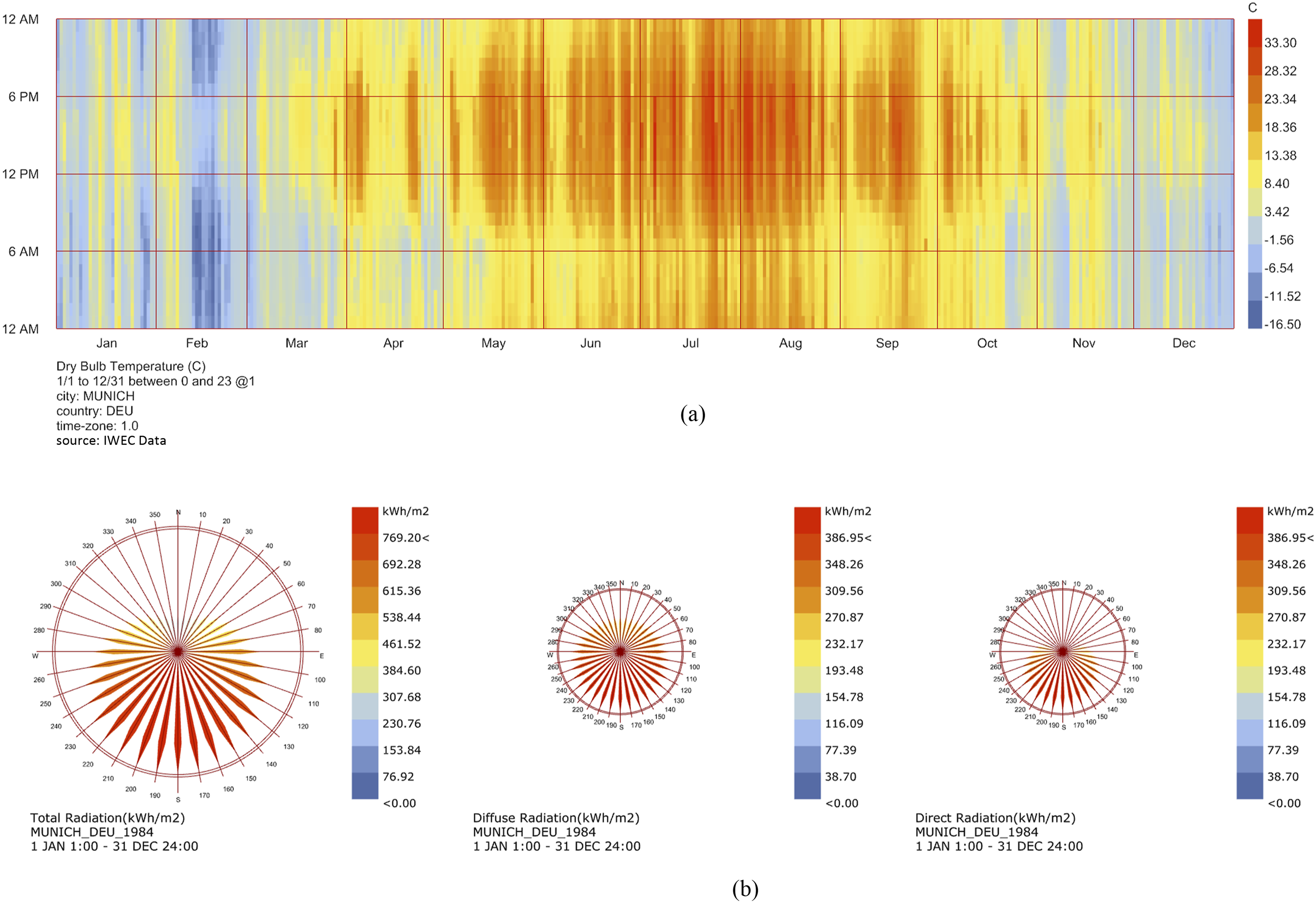
For the machine-learning workflow, all climatic variables were resampled to hourly resolution and filtered for occupied summer hours (June-August, 07:00–18:00 h). Additional features, solar altitude and solar azimuth, were derived from the same EPW file to maintain consistency between meteorological and geometric data. Each data record was also tagged with hour of day and day of year, forming a compact climatic feature set used as predictors for the subsequent simulation-based energy evaluation and machine-learning model training.
Simulation-based dataset generation
A comprehensive dataset was generated through parametric simulations in Honeybee/EnergyPlus to establish the relationship between climatic variables and the corresponding energy demand under different blind-angle positions. The south-facing office model was simulated for 18 discrete slat angles between 0° and 170° in 10° increments during the summer period (June-August, 07:00–18:00 h). For each hour, the total energy demand was computed as the sum of lighting, cooling, and heating loads.
Simulation results for all blind-angle configurations were exported using the TT Toolbox plug-in into structured Excel files containing hourly energy data matched with the corresponding weather and solar-geometry inputs. The optimal blind angle for each occupied hour was then determined as the configuration yielding the minimum combined energy consumption.
The final dataset thus comprised, for every time step, a set of input features (environmental and temporal variables) and a target label representing the optimal slat angle. This simulation-based labelling ensured that the subsequent machine-learning models were trained on physically consistent data reflecting the true energy-minimisation behaviour of the office facade system.
Data preparation and feature engineering
The simulation outputs were consolidated into a single, time-indexed dataset and filtered to include only summer working hours (June-August, 07:00–18:00 h). Missing records were removed, resulting in a continuous hourly sequence of N = 792 samples for model input. The target variable was a categorical label representing the hourly optimal blind-slat angle class corresponding to the minimum combined lighting, cooling, and heating energy demand. Eighteen classes were defined at 10° intervals from 0° to 170°.
The feature set included weather parameters (dry-bulb temperature, relative humidity, DNI, DHI, GHI, sky cover), solar geometry (altitude, azimuth), and temporal indicators (hour of day, day of year). To capture short-term dynamics, lagged values (1 h, 3 h) and rolling means (3 h, 6 h, shifted 1 h) were generated for key predictors, along with two interaction terms, (solar altitude × DNI) and (solar altitude × GHI). All features were standardized and encoded into numerical format, while the target output was encoded as 18 discrete blind-angle classes in 10° increments. This process produced a clean and structured dataset for subsequent model training and validation.
Model training and validation setup
The processed dataset was used to train supervised classification models predicting the hourly optimal blind-slat angle from environmental and temporal features. Two ensemble algorithms were applied: the Random Forest Classifier (RF) and the Extreme Gradient Boosting Classifier (XGBoost), both well suited for structured datasets with nonlinear dependencies.
The data were divided chronologically, assigning the first 80% of samples to model training and the remaining 20% to independent testing, ensuring evaluation on unseen future conditions. All predictors were standardized, and class labels represented 18 discrete blind-angle positions ranging from 0° to 170° in 10° increments. Model implementation and testing were conducted in Python 3.13.7 within a Jupyter Notebook environment using the scikit-learn and XGBoost libraries. Hyperparameter selection was performed on the training subset using a structured manual candidate search combined with five-fold time-series cross-validation (TimeSeriesSplit), thereby preserving chronological order and reducing temporal leakage. For XGBoost, the candidate search varied max_depth (3, 4, 5) and learning_rate (0.05, 0.1), while n_estimators was fixed at 600 together with subsample = 0.9, colsample_bytree = 0.9, and reg_lambda = 1.0. For Random Forest, max_depth was tested for None and 20, while n_estimators was fixed at 600 and class_weight = “balanced” was applied to reduce class-imbalance effects. Candidate models were compared primarily using mean cross-validated circular mean absolute error (cMAE), while accuracy, Top-2 accuracy, and macro F1-score were also monitored. The best-performing configuration was then retrained on the full training subset and evaluated on the held-out chronological test set.
Model evaluation and benchmarking
Model evaluation was carried out in two complementary stages. In the first stage, the predictive performance of the machine-learning models was assessed by comparing the predicted blind angles with the simulation-derived optimal angles for each occupied hour in the test dataset. This evaluation quantified how accurately the models reproduced the reference shading decisions generated by the simulation framework. Model accuracy was evaluated using both circular and classification-based metrics, including the circular mean absolute error (cMAE), accuracy, Top-2 accuracy, and macro F1-score, providing a comprehensive measure of prediction reliability across all blind-angle classes.
In the second stage, an energy-based benchmarking analysis was performed across different control strategies. Total summer energy consumption was calculated for all fixed-angle scenarios (0°–170° in 10° increments) and compared with the hourly optimal-angle strategy, which represents the theoretical minimum achievable energy demand. This comparison established a reference baseline for quantifying the potential performance gains of the proposed adaptive, data-driven approach over conventional static operation.
Results and discussion
Energy performance of fixed and adaptive blind angles
Figure 7 presents the stacked summer energy comprising lighting, cooling, and heating loads for all fixed slat positions ranging from 0° to 170° in 10° increments, alongside the adaptive hourly optimisation strategy. Among the fixed configurations, the fully closed position at 0° yielded the lowest total energy consumption of approximately 132.6 kWh (7.58 kWh/m2). This performance resulted from substantially reduced solar gains, which limited cooling demand, while daylight admission remained sufficient to keep lighting energy at manageable levels. Conversely, the 150° angle configuration proved least efficient, consuming approximately 216.4 kWh (12.37 kWh/m2) due to elevated cooling demand driven by high solar admission. Heating loads remained negligible across all cases during the summer period, so the trade-off is primarily between lighting and cooling. Total summer energy consumption for fixed blind slat angles and the adaptive optimal-control case, including cooling, heating, and lighting loads.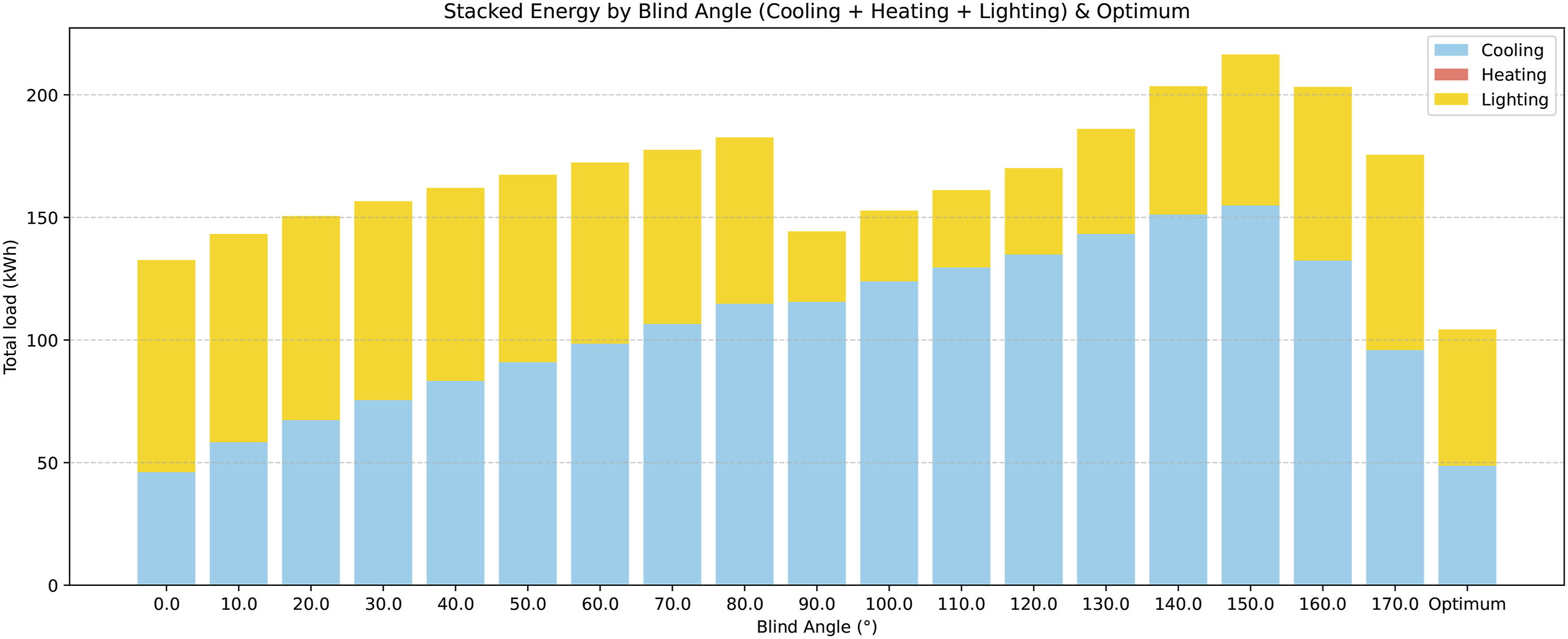
The adaptive hourly strategy selecting the minimum energy angle each hour achieves 104.3 kWh (5.96 kWh/m2) total summer energy consumption. This represents substantial improvements over fixed-angle operation with reductions of 21.4% compared to the best-performing fixed angle at 0°, 27.7% below the commonly practiced 90° position, and 51.8% lower than the worst-performing 150° configuration. These quantified savings demonstrate the consistent advantage of adaptive control over static operation, validating the potential for significant energy savings through dynamic facade management responsive to hourly environmental variations.
The distribution of optimal blind angles throughout the summer period, illustrated in Figure 8, reveals three distinct operational modes. A pronounced peak occurs at 0° representing fully closed conditions, two adjacent peaks appear around 90° to 100° corresponding to partially open configurations, and a secondary cluster emerges between 130° and 150°. Notably, angles between 10° and 20° show negligible occurrence frequency. These modal patterns indicate distinct operating regimes that recur systematically under different combinations of sky conditions and solar geometry during occupied weekday hours from 07:00 to 18:00. The multimodal distribution suggests that optimal facade behaviour does not follow a continuous gradient but rather switches between discrete operational states corresponding to qualitatively different environmental scenarios. Distribution of optimal blind angles during weekdays from 07:00 to 18:00 in the summer analysis period.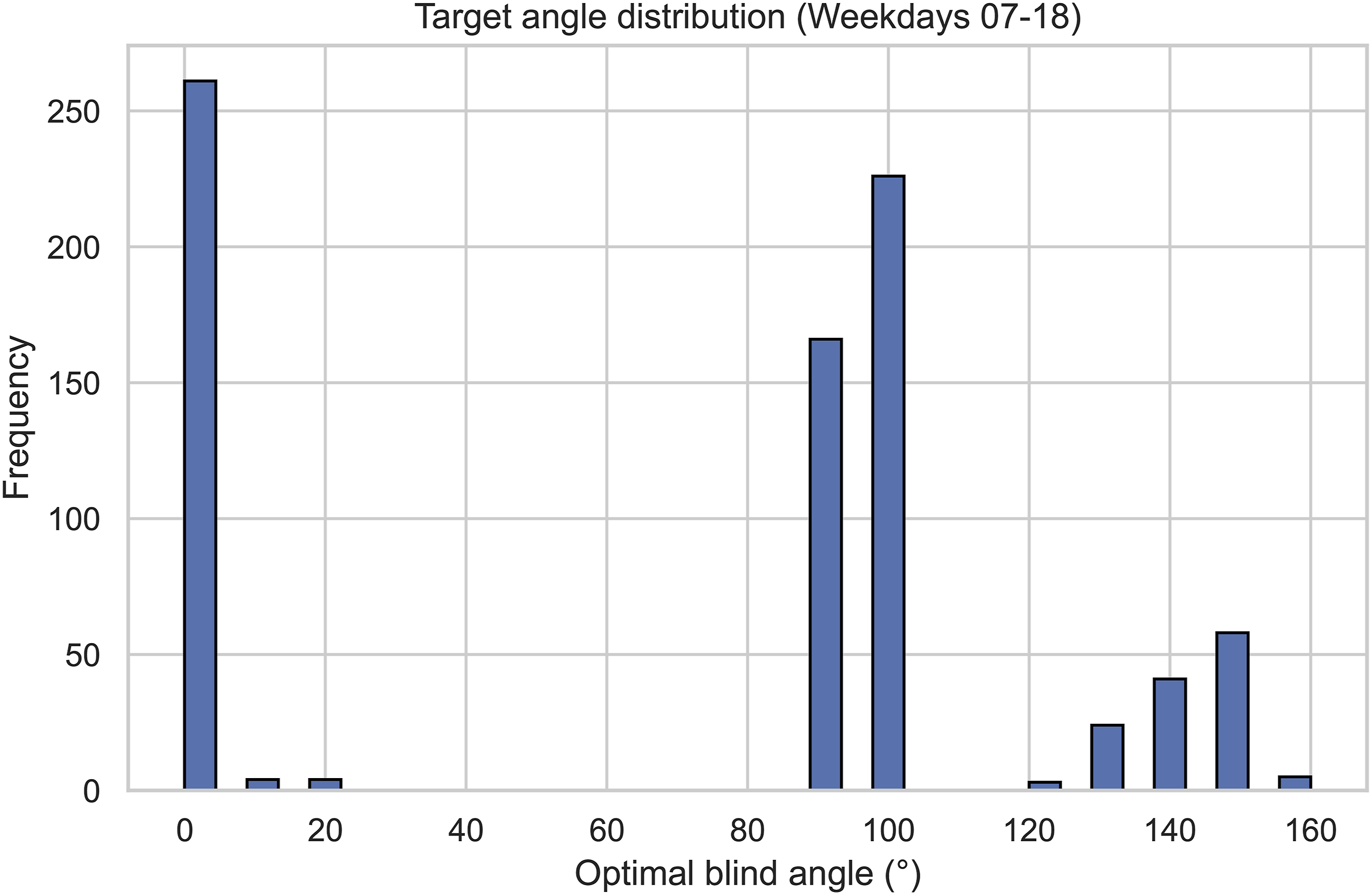
From an operational perspective, this pattern implies that blind control would not require constant angle-by-angle adjustment. Instead, the system would remain in a small number of recurring states for extended periods, with transitions occurring only when weather conditions or solar exposure alter the balance between cooling demand and daylight availability. This behaviour strengthens the practical relevance of the optimised strategy for implementation in real building control systems.
Machine-learning prediction accuracy
The trained models were evaluated on their capability to reproduce the simulation-derived optimal blind angles for unseen summer hours. Figure 9 demonstrates that the predicted slat-angle trajectories closely follow the reference optimal values derived from comprehensive energy simulations. Comparison of actual optimal blind angles and XGBoost-predicted blind angles over a selected period in August.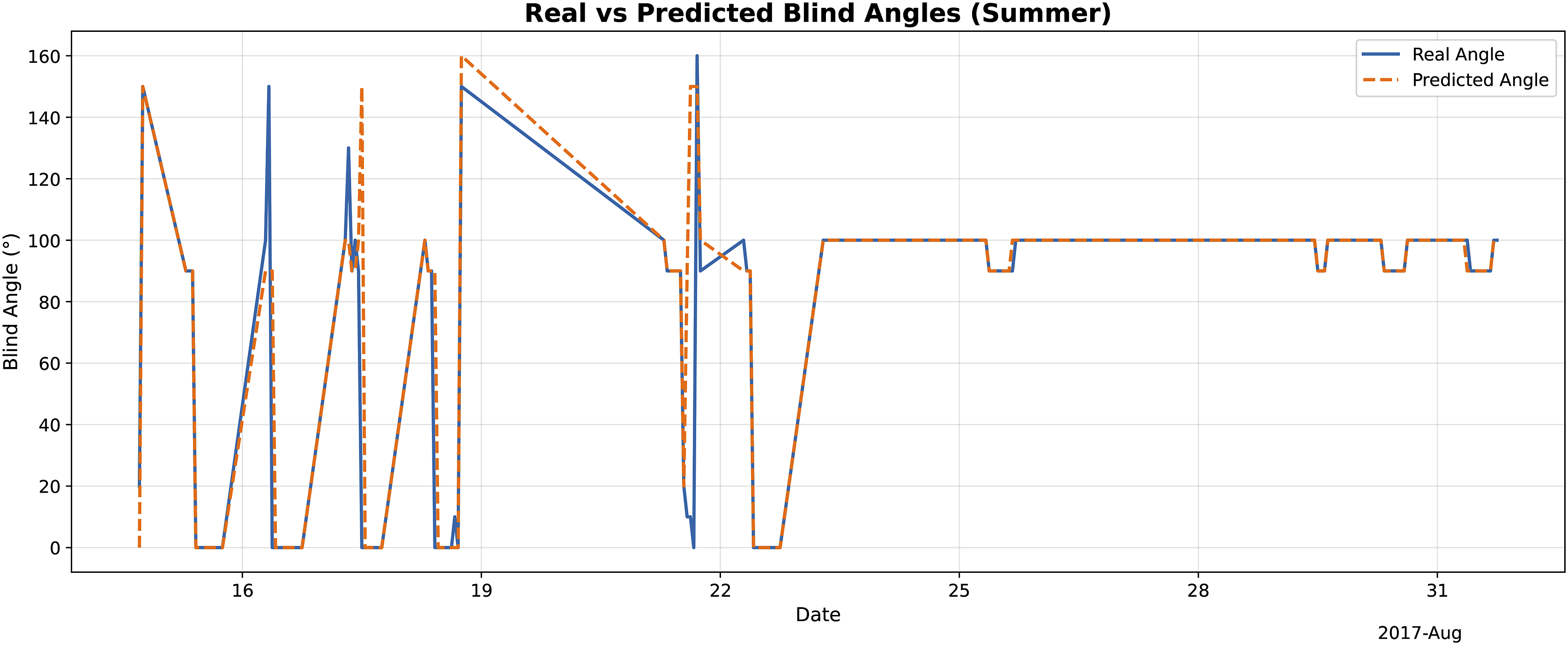
The models accurately track both sustained stable periods where optimal angles remain constant and abrupt transitions between discrete slat positions triggered by changing weather conditions. Only minor short-term deviations from optimal values occur during periods of highly variable solar irradiance, confirming the model’s robust ability to generalise to dynamic facade behaviour under realistic meteorological variability.
Quantitative performance metrics reveal that the XGBoost classifier substantially outperformed the Random Forest baseline across all evaluation criteria. The XGBoost model achieved a circular mean absolute error of 3.61°, accounting for the angular periodicity of slat positions, alongside an overall classification accuracy of 88% in predicting the exact optimal angle class. The model demonstrated a Top-2 accuracy of 94.3%, indicating that the true optimal angle appeared among the two highest-probability predictions in nearly all cases, which is particularly relevant given that adjacent angle classes often yield similar energy performance. The macro-averaged F1-score of 0.457 reflects moderate but consistent performance across all eighteen angle classes, including less frequent configurations. The Random Forest model achieved slightly lower values across all metrics, indicating reduced robustness in capturing the complex nonlinear dependencies among meteorological features, solar geometry, and optimal facade response.
These results confirm that the XGBoost-based approach effectively replicates optimal control behaviour with minimal deviation from the simulation-derived reference strategy. The high predictive accuracy demonstrates practical reliability for real-time adaptive facade control deployment without requiring external sensors for indoor conditions or computationally intensive online building energy simulations at each decision point. The model’s capacity to maintain performance under dynamic weather variability validates its suitability for operational implementation in building automation systems.
Feature importance and interpretability
The interpretability of the trained XGBoost model was examined using a combined feature-importance analysis, as illustrated in Figure 10. Two complementary approaches were applied: model-based feature importance derived from the trained ensemble (Figure 10(a)) and permutation importance quantified by the increase in circular mean absolute error (cMAE) following random feature shuffling (Figure 10(b)). Feature importance analysis of the XGBoost model: (a) model-based feature importance; (b) permutation importance (cMAE-based).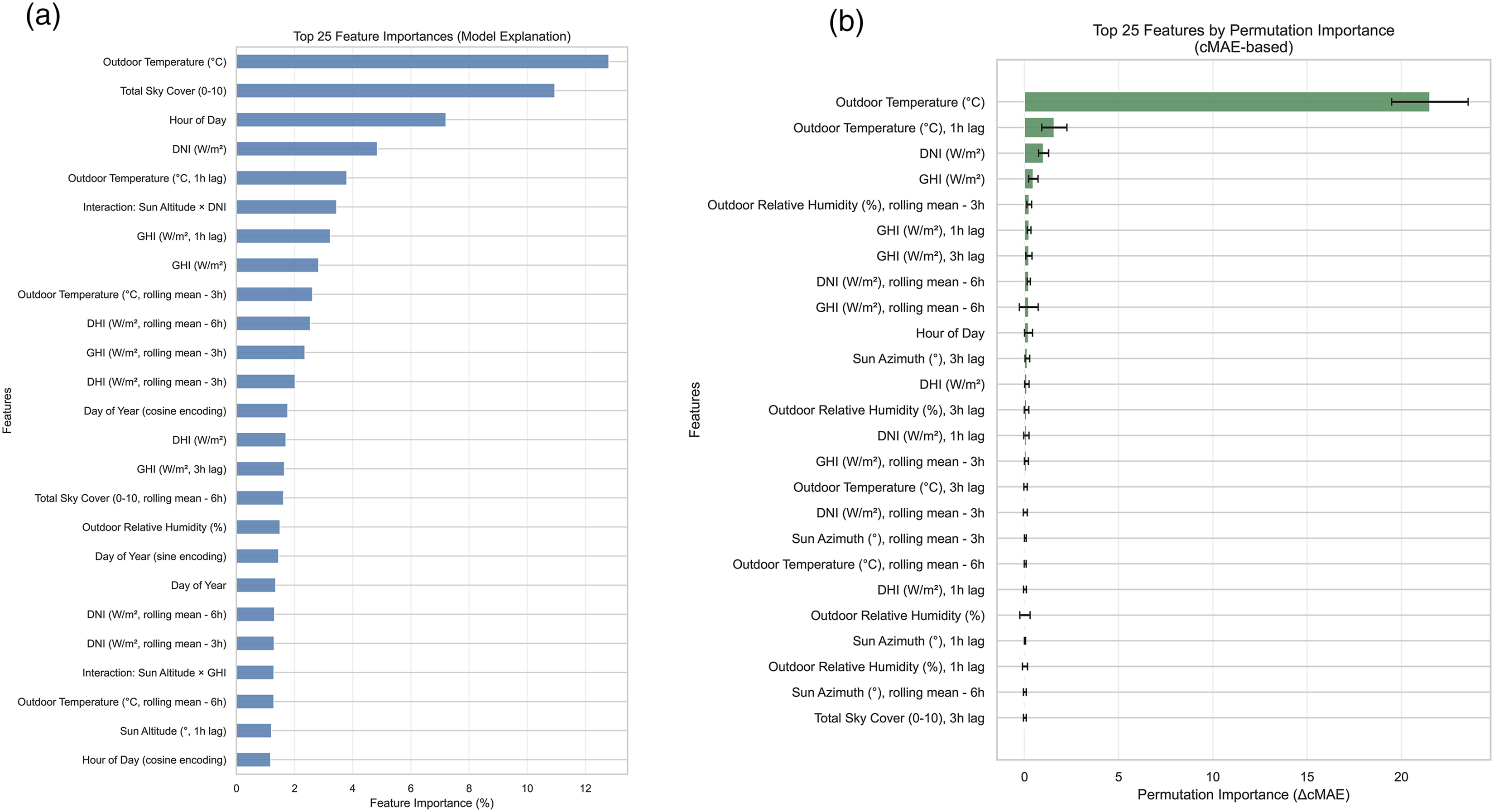
The model-based importance ranking shows that outdoor dry-bulb temperature is the dominant predictor, followed by total sky cover and hour of day, indicating that ambient thermal conditions, cloudiness, and diurnal solar patterns govern optimal blind-angle selection. Direct and global solar radiation variables (DNI and GHI), together with interaction terms involving solar altitude, contribute additional explanatory power by representing the magnitude and angular dependence of incident solar radiation. Lagged and rolling-mean outdoor temperature features further improve prediction robustness by encoding short-term thermal persistence under changing weather conditions.
The permutation-importance analysis reinforces these results by indicating that randomising outdoor dry-bulb temperature and its short-term lagged values produces the largest increase in prediction error. This confirms that ambient thermal conditions are the primary drivers of adaptive facade behaviour, while solar-radiation and temporal features provide secondary but complementary information. Variables such as relative humidity and diffuse irradiance exhibit comparatively low importance, indicating that their influence is largely captured indirectly through correlated predictors. Overall, the strong agreement between model-based and permutation-based analyses supports the physical interpretability of the learned relationships and reinforces confidence in the suitability of the data-driven model for sensor-free adaptive facade control.
Comparative energy savings and practical implications
The adaptive blind-angle strategy consistently outperformed all fixed-angle configurations, yielding a total summer energy consumption of 104.3 kWh (5.96 kWh/m2). This represents a 21.4% reduction relative to the best-performing fixed-angle case at 0°, which recorded 132.6 kWh (7.58 kWh/m2), a 27.7% reduction compared with the commonly used 90° position, with 144.3 kWh (8.25 kWh/m2), and a 51.8% reduction relative to the least efficient 150° configuration, which reached 216.4 kWh (12.37 kWh/m2). These findings demonstrate the clear advantage of adaptive blind control in reducing overall summer energy demand through hour-by-hour adjustment to changing solar and daylight conditions, rather than relying on a static compromise position. Notably, the performance gain relative to the fully closed 0° configuration demonstrates that meaningful efficiency improvements remain achievable even beyond well-informed static strategies. By selectively increasing daylight admission during favourable periods and reverting to restrictive positions under high solar intensity, the adaptive approach exploits dynamic trade-offs that fixed-angle control cannot capture.
From a practical perspective, the sensor-free machine learning framework reproduces near-optimal performance using only standard meteorological data and temporal features, avoiding the cost, maintenance, and integration challenges associated with indoor sensing infrastructure. Its low computational requirements enable deployment on conventional building controllers or edge devices, supporting scalable integration into building automation systems. This simplicity and transparency make the approach particularly suitable for retrofit applications, where extensive sensor installation would be impractical.
The practical significance of these results is further supported by comparison with previous studies on intelligent blind control under summer conditions. Yeon et al. 32 reported that ANN-based slat-angle control reduced total load by 24.5% relative to 0°/180°, 10.8% relative to 40°, 26.3% relative to 90°, and 26.5% relative to 130° fixed-angle cases during the summer operating period. Although direct numerical comparison is limited by differences in building configuration, blind system, climate, and modelling assumptions, the magnitude of the present savings is broadly consistent with the literature and reinforces the practical relevance of the proposed adaptive control strategy.
Limitations
This study is based entirely on simulation-generated data, which, while consistent and reproducible, cannot fully capture the transient thermal effects, actuator behaviour, and operational constraints that occur in real buildings. As a result, the reported energy savings represent an idealized performance baseline rather than a guaranteed real-world outcome. Experimental validation in a full-scale test room or occupied office is therefore needed to assess system behaviour under true solar dynamics, varying sky conditions, and occupant interactions.
The framework also simplifies visual-comfort assessment by relying on a single illuminance-based dimming target. Real comfort perception depends on multiple factors, such as glare, view quality, and occupant preferences, that are not represented in the current model. These aspects will require dedicated measurements and user studies to be meaningfully incorporated into the control logic.
A further limitation is the restricted scope of the case study. The analysis was conducted for one representative south-facing office module under one facade configuration and one climate condition. Accordingly, the findings should be interpreted at the zone level. Although similar relative trends may be expected for repetitive perimeter office modules with comparable geometric and operational characteristics, extrapolation to whole-building facade performance should be undertaken with caution, since the overall impact will depend on orientation distribution, zoning arrangement, floor layout, and use patterns. In addition, because shading performance and optimal slat behaviour depend strongly on climate, solar geometry, and facade design, the trained model cannot be assumed to generalise directly to other contexts without retraining or domain adaptation. This limitation could be reduced through re-calibration or retraining using simulation data representative of the new context, or through the development of broader multi-climate and multi-orientation training datasets. In such cases, adaptation would most likely involve the climate, solar, and time-dependent predictors used in the present framework, including weather variables, solar geometry variables, temporal indicators, and derived interaction terms, since the relative influence of these inputs may change across climates, orientations, and facade configurations. Extending the framework to other climates or facade settings would therefore require additional simulation data covering the corresponding boundary conditions; however, the exact amount of data would depend on the intended transfer range and the diversity of climates, orientations, and envelope settings to be represented.
In addition, glazing properties, window-to-wall ratio, and internal gains were treated as fixed case-study assumptions rather than varied parametrically. Consequently, no formal sensitivity or uncertainty analysis was performed for these parameters, and the reported results should therefore be interpreted with respect to the defined reference office configuration. Variations in window-to-wall ratio, glazing properties, or internal load intensity may influence both the absolute energy demand and the distribution of energy-optimal blind angles. Despite these constraints, the study demonstrates the technical feasibility and potential benefits of sensor-free, data-driven shading control, while highlighting the need for future experimental validation, multi-climate extension, multi-zone or whole-building assessment, and targeted robustness analysis under alternative envelope and load assumptions.
Conclusion
This study investigated a sensor-free, machine-learning-based control framework for venetian blinds in a highly glazed, south-facing office in Munich, using building performance simulations as a data source for model training and benchmarking. By systematically varying slat angles and combining Honeybee/EnergyPlus results with weather and temporal features, a high-resolution dataset was created that captures the coupled effects of solar geometry, outdoor conditions, and facade configuration on lighting, cooling, and heating demand. On this basis, two ensemble learning models, Random Forest and XGBoost, were trained to predict the hourly optimal blind angle class that minimises total energy use. The XGBoost classifier achieved 88% accuracy and a circular mean absolute error of 3.61°, closely reproducing the simulation-based optimum across all 18 discrete slat positions, including both frequently and rarely occurring angle classes.
From a performance perspective, the adaptive control strategy derived from the trained model delivered substantial energy benefits compared with conventional fixed-angle operation. The dynamic approach reduced total summer energy demand by 21.4% relative to the best static configuration at 0°, by 27.7% compared with the commonly used 90° position, and by 51.8% compared with the least efficient 150° case. These results highlight that even when a fixed angle is already chosen with energy performance in mind, there remains significant additional potential that can only be unlocked through adaptive, hour-by-hour facade response. Comparison with previous summer blind-control studies further indicates that the proposed framework achieves energy-saving performance within a practically meaningful range for adaptive facade operation.
The analysis of optimal angle distributions further revealed three dominant operational regimes rather than a smooth continuum of preferred positions, indicating that the facade naturally switches between distinct “modes” in response to changing sky conditions and solar exposure. Feature-importance and permutation-importance evaluations confirmed that outdoor temperature, sky condition, and solar geometry form the primary drivers of optimal blind behaviour, while short-term thermal history enhances stability under variable weather. The reliance on standard meteorological and temporal inputs demonstrates that accurate, near-optimal shading control can be achieved without indoor sensors, extensive instrumentation, or real-time simulation, offering a scalable, low-cost pathway for integrating intelligent facade operation into building automation systems and retrofits.
Future work should focus on extending and validating this framework beyond the controlled conditions explored here. Year-round and multi-season simulations, including winter and shoulder periods, would enable assessment of heating performance and more explicit treatment of glare and daylight-based comfort metrics. Experimental testing in a full-scale test room or occupied office is needed to verify real-world performance, capture transient thermal effects, and observe occupant override behaviour. In parallel, studies covering multiple orientations, climates, and blind/glazing configurations, supported by re-calibration or retraining with expanded simulation datasets representative of different boundary conditions, would clarify how robustly the trained models can be transferred or adapted to other building contexts. Additional parametric sensitivity analysis of glazing properties, window-to-wall ratio, and internal gains would further help assess the robustness of the proposed framework under alternative envelope and load assumptions.
Footnotes
Acknowledgements
The authors gratefully acknowledge the European Campus Rottal-Inn (ECRI) at Deggendorf Institute of Technology for providing research support and resources. An AI-based language model (ChatGPT, OpenAI) was used to assist with language editing and stylistic refinement only. All scientific content, methodological design, analysis, and interpretation were carried out by the authors. The AI tool did not contribute to the conceptual development of the study and is not listed as an author.

Consent to participate
This study did not involve human participants, animals, or identifiable personal data.
Funding
The authors received no financial support for the research, authorship, and/or publication of this article.
Declaration of conflicting interests
The authors declared no potential conflicts of interest with respect to the research, authorship, and/or publication of this article.
Data Availability Statement
The data supporting the findings of this study are available from the corresponding author upon reasonable request.