



Abstract
Many studies on labour–management relations have focused on formal cooperation in manufacturing. This calls for further research and theory development on labour–management interactions in private service companies, where cooperation practices appear to be less formal. In this article, a typology of cooperation between managers and employees is developed, based on a microsociological study conducted in the Danish retail trade in 2013. Drawing on six in-depth case studies, the article identifies four different physical spaces of labour–management cooperation: open collective, closed collective, open individual and closed individual. The article discusses the potential and limitations of the four spaces of cooperation for employee influence.
Introduction
The tertiarization of the economy in the Western world has moved job creation from the manufacturing industries to private services. This means that the number of workplaces is decreasing in well-organized sectors with union presence, collective agreement coverage and local work councils, whereas it is increasing in less-organized sectors without the same level of formal institutions representing employees (Bosch and Lehndorff, 2005; Dølvik, 2001). One of the significant examples in Denmark is retail, which is the largest sector in private services in terms of number of employees. Collective agreement coverage is lower and only one in four employees in retail is covered by a shop steward compared to one in two employees in manufacturing (Larsen et al., 2010).
Despite all this, we know little about the cooperation practices that develop between managers and employees in private services. Does an absence of formal cooperation mean an absence of cooperation as such? Which forms of cooperation can we observe? Do informal forms of cooperation contribute to employee influence? Based on an empirical investigation in Danish retail, this article argues that physical spaces in the shop play an important role in shaping cooperative practices at workplace level. The article uses a microsociological approach to develop a typology of four physical spaces of labour–management cooperation that is useful for the analysis and discussion of cooperation practices in private services.
There are two main theoretical approaches to the study of cooperation between management and labour. The first is the employment relations literature, which is based on the argument that employees can get access to influence on their pay and working conditions if they organize in unions and/or elect employee representatives that can negotiate and cooperate with employers (Freeman et al., 2007; Markey and Knudsen, 2014; Rogers and Streeck, 1995). Second, the human resource management literature focuses on informal labour–management cooperation and has a different perspective on employee influence (Alfes et al., 2010; Cotton, 1993; MacLeod and Clarke, 2009). This literature is mainly concerned with the effects of employee influence on employee performance and company results – and less concerned with the gains for the individual employee. In recent years, it has been argued that we lack a framework for a more detailed study of the labour–management relations in private services that can grasp different forms of (informal) cooperation and their potentials and limitations (Barry and Wilkinson, 2015; Marchington and Suter, 2013).
The article seeks inspiration in microsociological theory and methods for an explorative investigation of the cooperation between managers and employees in Danish retail (Collins, 2005; Goffman, 1959). More specifically, the article draws on the theory of interaction rituals, which addresses the power aspect of social interaction in different physical spaces (Collins, 2005). This is highly relevant for a study on labour–management relations, which are characterized by an asymmetry of power. Retail is characterized by a number of specific working conditions at shop floor level that might challenge the cooperation between managers and employees (customer presence, high personnel turnover, part-time employees, etc.) depending on the physical spaces available. Customer presence might challenge the use of the shop floor as a physical space for cooperation, which makes the presence of back offices or storage rooms important. The fact that employees might not be regularly present in the shop at the same time as managers also puts the physical space of the shop into question as an arena for the development of cooperation practices. The microsociological perspective allows us to investigate the various physical spaces in the shop as important contexts for the development of cooperative practices between managers and employees who possess different amounts of power. Our work is based upon six in-depth case studies in Danish shops that combine visits at shop floor level with a total of 45 interviews with managers and employees at different levels and in different job functions. The article is structured as follows: first, the background of the study and the theory used are presented. After this, we present the methods section and the analysis. Finally, our typology of cooperative practices is presented and the implications of our findings discussed.
Background
Today, job creation in the Western world primarily takes place within private services. This is also the case in Denmark, where employment in manufacturing has decreased over the last 10 years, whereas employment in different parts of the service sector has increased (Dansk Erhverv, 2009). Most of the literature on labour–management relations has had a strong focus on the manufacturing industries both empirically and theoretically (Knudsen, 1995; Walton et al., 1994).
There are important differences between the service sector and manufacturing that make the application of the methods and concepts developed in manufacturing to the service sector difficult if not misleading. Private services are often characterized by lower union density, fewer union representatives and works councils and less coverage by collective agreements, just to mention a few (Bosch and Lehndorff, 2005; Edwards et al., 2006). This means that formal cooperation bodies are more or less absent, which is also the case in Denmark. However, we do not know which cooperation practices are in fact used, what managers and employees cooperate about and whether this cooperation contributes to employee influence. Cooperation is defined broadly to include all forms of interaction and dialogue between managers and employees.
The article focuses on cooperation practices in retail as a significant example of cooperation in private services. The Danish retail trade is the largest industry within private services (Dansk Erhverv, 2009). It also represents some of the key features found in private services in general, when it comes to the actors and structures that shape labour–management relations.
First, fewer institutions for formal cooperation are found in retail than in manufacturing. Three in four manufacturing companies are covered by sector-level agreements, and three in four employees are members of trade unions. Furthermore, half of the employees in manufacturing have local shop stewards present that are elected among union members at the workplace, and five in six shop stewards have negotiated local agreements (Due et al., 2010; Larsen et al., 2010). Retail is a different story. Available figures on retail, hotels and restaurants reveal that agreement coverage and union density are somewhat lower in this part of private services than in manufacturing. Six in ten employers report agreement coverage, and about the same share of employees report union membership (Due et al., 2010). Other analyses using a segmentation approach report a union density among sales and postal workers of less than a third (Toubøl et al., 2015). The biggest difference is perhaps found in the presence of shop stewards. Only one in four retail workers are represented by a local shop steward, and only one in four shop stewards have negotiated local agreements (Larsen et al., 2010). The absence of shop stewards in many retail outlets might result in less formal employee influence, but possibly also lead to more direct forms of employee influence.
Second, retail is characterized by customer presence (Bélanger and Edwards, 2013; Korczynski et al., 2000). This means that managers and employees often cooperate in front of customers. Unlike an industrial plant, where customers are rarely in the room, managers and employees need to reflect on whether the topic and the wording of their conversation are suitable for customer ears. Customer presence might therefore limit cooperation practices in retail.
Third, retail in Denmark (and in a number of other Western countries) is characterized by a preponderance of transitional workers, i.e. young, unskilled workers who work part-time and for a shorter period of time (Alsos and Olberg, 2012; Esbjerg et al., 2007; Price et al., 2011). This is contrary to manufacturing, where the typical worker is a middle-aged skilled worker who works full-time and has been with the company for some time (Ilsøe, 2009). The number of young people working part-time in retail has even increased since 1 October 2012, when the Danish Shops Act was revised to allow all shops to extend their opening hours significantly (Felbo-Kolding, 2014). The large number of transitional workers working part-time and unusual hours challenges the cooperation between managers and employees, in a very practical way because managers and employees might not be present at the same time.
Fourth, retail shops often experience a high personnel turnover, which is costly (Booth and Hamer, 2007; Grugulis and Bozkurt, 2011). It is difficult to retain transitional workers, and it is difficult to recruit other types of employees. This means a less stable workforce and limited time and incentive for both employees and managers to engage in labour–management cooperation. Typically, young people in Denmark take on jobs in retail while they study, and leave retail again once they have finished their studies. Young students do not identify with the sector, because they are on the move, and they do not join the union that negotiates the collective agreement (Felbo-Kolding, 2014; Konnerup et al., 2011).
Given the characteristics of the actors and structures that shape labour–management cooperation in Danish retail, not only formal cooperation seems to be difficult. The conditions might also make it difficult to establish other forms of cooperation practices on the shop floor. This calls for an investigation of how the physical space in retail shops facilitates the establishment of cooperative practices between management and labour.
Employment relations and human resource management – two theoretical perspectives on cooperation
The literature that deals with cooperation and management–employee relations draws on two very different theoretical traditions, which sometimes are used separately and sometimes in combination (Marchington, 2015; Wilkinson and Fay, 2011; Wilkinson et al., 2013). Both traditions rest on the basic assumption of the asymmetry of power between managers and employees due to managers’ right to hire and fire and the managerial prerogative.
First, there is the employment relations (ER) literature, which has addressed cooperation at workplace level in terms like employee representation, employee participation or employee voice (Freeman et al., 2007; Markey and Knudsen, 2014; Rogers and Streeck, 1995). The core argument in this approach is that employees can get access to influence on their pay and working conditions if they organize in unions and/or elect employee representatives that can negotiate or cooperate with management. Union and non-union representatives attain a bargaining power that to a smaller or larger extent can balance the bargaining power of management. In this perspective, employee influence is understood as a formalized influence and an influence that is to the benefit of employees. Studies that draw on this tradition often demonstrate that employees gain influence on their own pay and working conditions at workplaces where employees have formal representation in the form of union representatives and/or employee representatives. Methodologically, these studies often draw on surveys and/or interviews with managers and union/employee representatives. Empirically, the ER literature has first and foremost focused on cooperation in manufacturing and related industries (Knudsen, 1995; Rogers and Streeck, 1995), but in recent years more studies have investigated cooperation in the public sector and selected service industries like telecommunications (Doellgast et al., 2009; Hansen, 2015).
Second, there is the human resource management (HRM) literature, which has addressed cooperation in terms like employee involvement, employee commitment or employee engagement (Alfes et al., 2010; Cotton, 1993; MacLeod and Clarke, 2009). Here, cooperation is perceived as a tool for management to improve employee performance and overall company results. Changes in management, work organization and performance systems are used to spark employees to engage in their work and the organization and to lift their voice when they spot opportunities for improvement in performance and results. Employee influence is gained via informal cooperation between managers and employees and/or informal cooperation between different (groups) of employees. The cooperation is informal in the sense that it is not based on the participation of employee representatives or union representatives. Studies in line with this tradition often argue that employee involvement and commitment improve employee performance. Empirical investigations are frequently based on surveys among HR managers, and they include a variety of sectors like manufacturing, private services and public services (Alfes et al., 2010; Cotton, 1993; MacLeod and Clarke, 2009).
To sum up, the ER literature has mainly focused on empirical studies of formal cooperation in well-organized sectors and whether this has been to the benefit of employees, whereas the HRM literature has mainly focused on empirical studies of management’s perception of informal cooperation in a broad range of sectors and whether this has been to the benefit of the company. This leaves us with a potential blind spot. Employment relations research rarely focuses on less-organized sectors. These sectors are covered by the HRM literature, however, not with a similarly strong focus on how cooperation can benefit employees. As we are looking at retail, which is a less-organized sector with little formal cooperation between managers and employees, we therefore need a different approach to grasp possible employee gains from cooperation. Here, we seek inspiration in the microsociological approach.
The microsociological approach – a new perspective on labour–management cooperation?
The impact of physical spaces on social interaction has received increasing attention in many areas of social science in the last decades including social geography (Halford, 2008; Soja, 1989) and social psychology (Sundstrom and Sundstrom, 1986). This ‘spatial turn’ has also included a revitalization of microsociology, which has always had a strong focus on how the physical space situates social interaction (Collins, 2008; Heinskou and Liebst, 2016). In this study, we seek inspiration in microsociology to investigate how cooperation practices between management and employees are shaped by the physical space in retail shops (which is challenged by customers, transitional workers, etc.). This allows us to incorporate what Halford (2008) calls a spatial sensibility to the study of labour–management relations. Furthermore, it allows us to study how all forms of interaction (including informal interaction) between managers and employees are situated within specific physical spaces (see also Baldry and Hallier, 2010). Finally, and more specifically, we draw on the microsociological theory of interaction rituals, which addresses the power aspect among participants (Collins, 2005). This is a core aspect of the relationship between managers and employees due to the managerial prerogative and makes microsociology a very relevant choice of analytical approach.
Microsociology is a tradition within sociology that deals with interaction among people in everyday life and the roles and rituals that develop there (Collins, 1981; Jacobsen and Kristiansen, 2002). The research questions are open, and the methodological approach is often exploratory and involves observations and/or interviews. The sociologist Erving Goffman can in many ways be described as the founding father within the microsociological tradition. He perceives social interaction as a role-play, which takes place on a stage and has very specific rules (Goffman, 1959). The rules vary according to the stage, which means that social interaction is understood in a ‘situational perspective’ (Goffman, 1961, 1967). Goffman distinguishes between a ‘frontstage’ and a ‘backstage’ (1959). On the frontstage you are among people in the public sphere (on the train, in the classroom, in the cinema, etc.), which means that certain behavioural rules must be followed. On the backstage, you are among people in the private sphere (in your family, among friends, with your partner). Here, you are somehow free of the rules in the public sphere, but you must follow the rules of the private sphere in question.
Applying Goffman’s concepts to the cooperation between managers and employees in retail, at least one form of frontstage and one form of backstage can be found. If managers and employees talk together ‘in front of the customer’, they might be expected to follow one set of rules, whereas if they talk to each other ‘behind the customer’, they might follow another.
Goffman’s work on frontstage and backstage has inspired numerous empirical and theoretical studies. The sociologist Randall Collins developed a theory of interaction rituals in which he adds new details and perspectives to the field of social interaction – among other things he underlines the power perspective of social interaction, which we will address later. In his famous work Interaction Ritual Chains, he points out four significant ingredients in interaction rituals (Collins, 2005: 47–48):
Bodily co-presence (two or more people are physically present in the same place).
Barriers to outsiders (boundaries make participants aware of who is and who is not taking part).
Mutual focus of attention (people focus on a common object or activity and communicate about it).
Shared mood (they share an emotional experience).
The ingredients are perceived as initiating conditions/processes. The processes are interconnected with feedback loops that reinforce the ritual. Collins mentions tobacco rituals as significant examples of a ‘relaxation and withdrawal ritual’ (2005: 306). Two or more people withdraw from a party or a workplace (bodily co-presence; barriers to outsiders) to enjoy a cigarette (focus on common object and activity). While they light their cigarettes, smoke and talk, they share an emotional experience of relaxation.
As briefly mentioned earlier, Collins underlines the power aspect of interaction rituals. Power rituals are defined as interaction rituals between individuals with unequal resources (Collins, 2005: 112ff.). Rituals are still characterized by bodily co-presence, barriers to outsiders, mutual focus of attention and a shared mood. However, the unequal distribution of resources makes some participants become order-givers and others order-takers. This can result in conflict or avoidance, but it can also result in the production of a power ritual that is reproduced and reinforced over time. The mutual focus of attention in a power ritual is the order-giving process and not the order itself. Order-givers have a Goffmanian frontstage personality. They are attached to their frontstage roles as initiators and organizers. Order-takers have a Goffmanian backstage personality. They can in principle only resist and criticize orders if they are out of sight from the order-givers.
If these insights are applied to the workplace level in retail, it becomes evident that customer presence might not be the only factor influencing the cooperation between managers and employees. Managers are by definition order-givers and employees order-takers. This means that managers are potentially tied to their frontstage personality as those who give orders; whereas employees are potentially tied to their backstage personality as those who take orders on the frontstage and only disobey orders on the backstage. It is therefore a relevant question whether employees and managers in retail are able to establish a common ‘backstage’ at work where employees and managers can cooperate on issues that are not suitable for the frontstage.
The preponderance of transitional workers and the high personnel turnover in retail might enhance the power asymmetry of labour–management relations on a day-to-day basis, making it difficult to withdraw from the order-giving and order-taking roles. In addition, customer presence is connected to frontstage performance and customers are (potentially) present in most of the shop. This can make it difficult for managers and/or employees to find a physical space where they can establish a backstage in a retail shop. However, Collins underlines that the difference between frontstage and backstage is to be conceived as a continuum (Collins, 2005: 116ff.). Social density (to which extent individuals are in other people’s presence) determines where individuals are situated on that continuum. In this perspective, it might be possible to create a backstage somewhere in the shop, where customers are more or less absent.
Drawing inspiration from Goffman’s and Collins’ microsociological theory, the article explores the cooperation practices between managers and employees in Danish retail as interaction rituals. The following explorative research questions guide our investigation:
Who participates in the cooperation and who does not participate (bodily co-presence)?
Where do managers and employees cooperate (barriers to outsiders)?
What is their mutual focus of attention (object or activity)?
Which emotional experiences do they share (shared moods)?
Methodology and methods
The explorative character of our research questions called for the use of qualitative methods in our empirical investigation of the cooperation between managers and employees in Danish retail. Goffman’s and Collins’ microsociological studies, based on observations and interviews in single cases (Goffman, 1959) and audio-visual recordings and observations of numerous cases (Collins, 2008), inspired the article. However, a limited number of case companies were chosen, as such the design allowed us to capture both the scope and depth of the field, as cases and methods of data collection were selected carefully (Flyvbjerg, 1996). We decided upon a combination of observation and interviews to collect relevant data. Observations on the shop floor contributed to our identification of different forms of cooperation, as well as our understanding of the interplay between space and forms of cooperation. Interviews with managers and employees contributed both to the identification of different forms of cooperation and to the evaluation of their possible contribution to employee influence.
In-depth case studies of local cooperation in six Danish shops were conducted. Cases were selected to represent a maximum variation among Danish shops on a number of important characteristics (size, ownership, etc.) (see Table 1). This strategy of maximum variation contributed to the scope of the study (Flyvbjerg, 1996). Furthermore, the six cases were selected among shops that are known to cooperate with their employees on issues that are currently on the agenda for local managers and individual employees in Denmark (working time, further training and recruitment/retention) to make sure that each case could contribute to findings. This information-oriented selection strategy added to the depth of the study (Flyvbjerg, 1996). The cases were selected in cooperation with the union and the employers’ organization that negotiate the sector-level agreement in retail, the Union of Commercial and Clerical Employees – Retail (HK Handel) and the Danish Chamber of Commerce (Dansk Erhverv), respectively. All shops were covered by the sector-level agreement in retail, namely the National Collective Agreement for Shops 2012–2014.
Overview of the six cases.

As previous studies have identified a heterogeneity among managers and workers in Danish retail (Esbjerg et al., 2007), the study aimed to interview managers at different levels (shop manager/line manager) and employees (full-time/part-time, skilled/unskilled) at each shop to explore whether or not cooperation differed among these groups. Interview guides were prepared based on secondary studies of literature on Danish retail and pilot interviews conducted with a manager and an employee in a Danish supermarket. Furthermore, three representatives from the union HK Handel and three representatives from Dansk Erhverv were interviewed to prepare the interview guides. The interview guides for managers were semi-structured and included background questions (company background, manager profile, employee profiles, etc.) and questions on cooperative practices (who engages in cooperation, where they cooperate, on what issues, the quality of the cooperation and the outcomes from an employer/employee perspective). The interview guides for employees were kept very similar to be able to compare their answers with the answers from management.
Inspired by Goffman, all shops were visited and field notes taken, to include the interplay between space and local cooperation in the study. Furthermore, two interviewers conducted all interviews in the shops together (one did the interview, one observed and took notes). Three to 12 persons were interviewed at each shop, representing not just managers and employees but also different levels of management as well as different departments and job functions among employees. Additional interviews at company headquarters in three of the shops were conducted, as these shops were owned by large business chains. In total 45 persons were interviewed as part of our study.
All interviews were fully transcribed before analysis. As a general principle, both interviewers conducted separate analyses of the transcriptions that were then afterwards compared and discussed. Only in cases of interpretative agreement were citations from transcripts included. Our inclusion of several employees and managers in each case also made it possible to ‘test’ the validity of individual informants’ statements against the statements of other informants. Specifically this meant that only in cases where an informant’s statement could be confirmed by other informants was the perspective included. The analytical strategy was twofold. First, we drew a floor plan of each shop and wrote a separate case description (10–15 pages) of local cooperation practices in each shop based on our field notes and the interview transcriptions. Case descriptions and floor plans were sent back to interviewees for comments to ensure the truth-value of our interpretations (Pedrosa et al., 2012). Second, the interviews were coded thematically and a comparative analysis of local cooperation practices across the six cases based on our field notes and the interview transcriptions was performed to identify differences and similarities. Citations used from the interviews were approved by interviewees. Finally, a typology of cooperation practices based on our analysis was developed.
Analysis
As expected, most of the cooperation practices observed on shop floor level and reported in the interviews were informal interactions during everyday work. However, the comparative analysis displays a strong variation in cooperative practices across the six cases, different groups of employees and not least different physical spaces. Below, these practices are presented and discussed in relation to the research questions. We here make a distinction between open and closed physical spaces and a distinction between individual and collective physical spaces. Four significant examples of labour–management cooperation have been selected, which will structure the first part of our analysis. These examples have been selected as representative of findings from several cases. The second part introduces the wider variety of practices and the typology of labour–management cooperation developed.
Cooperation in open versus closed spaces
The physical space in the shops plays an important role with regard to cooperation between employees and management. Walls and doors function as barriers to outsiders and differentiate open rooms from closed rooms. The smaller shops in the sample offer different physical opportunities for cooperation than the larger shops, because the small shops provide limited access to rooms where labour and management can exclude potential audiences to their cooperation. This affects the quality of the interaction.
Figure 1 shows a floor plan of one of the case companies, Case I. In this small speciality shop the only room where you can close the door is the toilet. Most of the walls in this shop are partitions, which are open at the top. The physical layout means that potentially everybody on the shop floor can hear what is said in the lunchroom or in the office. When managers and employees talk to each other in the shop, it takes place in front of customers and/or colleagues. The situation is quite different in the larger shops. In Case IV, a large supermarket, all managers and employees have access to several rooms, where it is possible to close the door (see Figure 2). This allows managers and employees to establish conversations backstage – away from the customers (for instance in the canteen or the meeting rooms) or away from both customers and other colleagues (for instance in the offices).
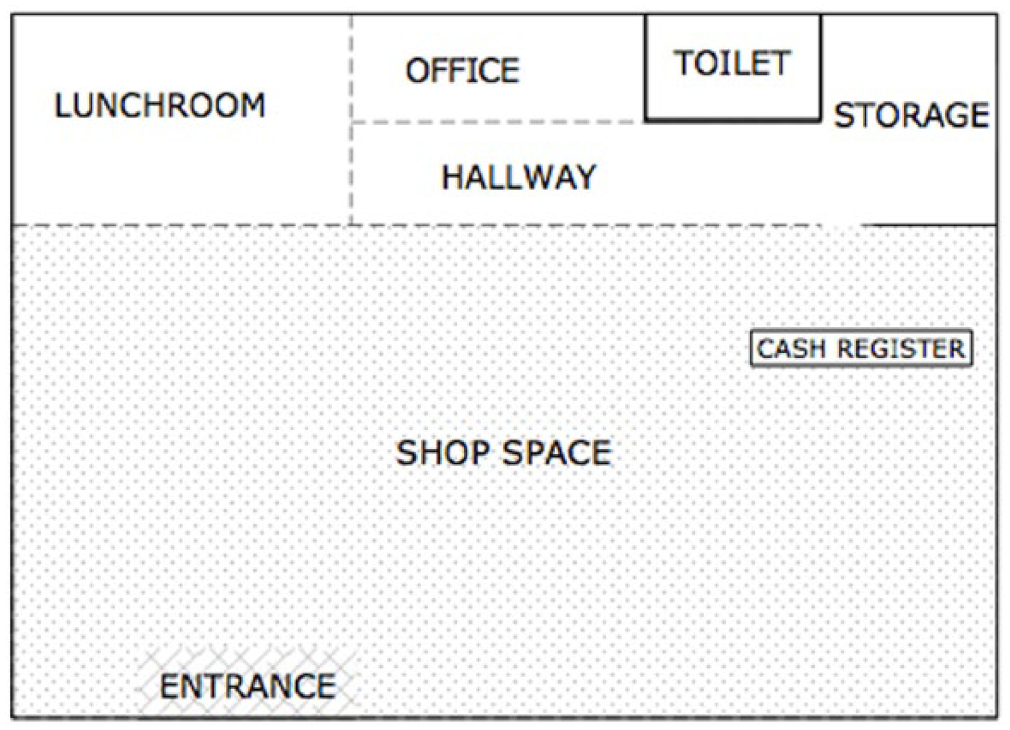
Illustration of floor plan for small speciality shop (Case I).
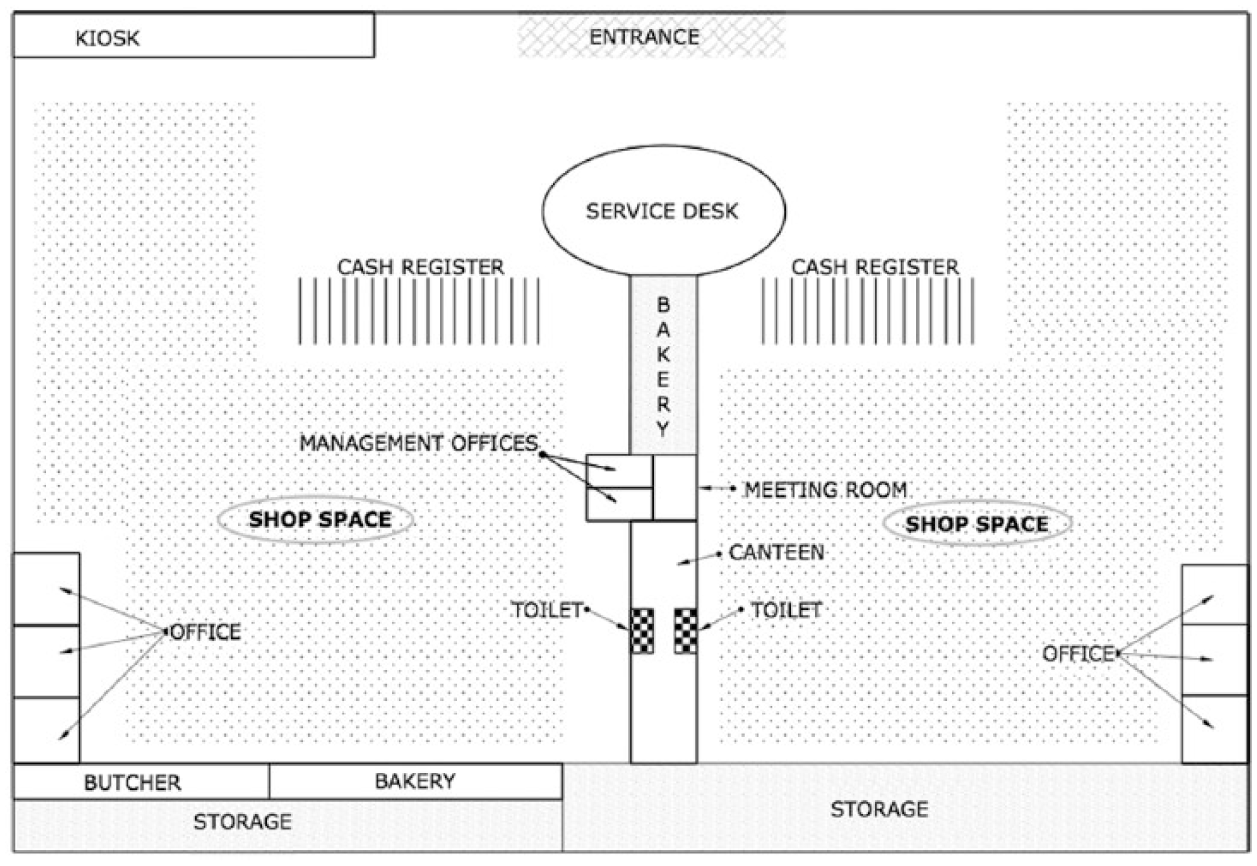
Illustration of floor plan for large supermarket (Case IV).
Despite the physical differences, most conversations between managers and employees take place in open space on the shop floor in both the small and large shops. The shop floor is where managers and employees spend most of their time, when they work. In all cases, both managers and employees strongly emphasize that they have an open and warm dialogue on the shop floor during opening hours. Many describe their relationship as family-like or an atmosphere of good vibes including warm feelings, helpfulness and only minor conflicts. However, employees and managers mostly talk about specific work tasks and the social life at work. They also plan social activities, whereas topics that relate to personal problems are less often talked about. The shared mood on the shop floor includes both potential and limitations for cooperation and influence. One shop manager explains: Since it is a small shop, we are socially engaged with one another. Jack and John are friends, and Bill meets up with some of the young guys outside work. They talk a lot. Sometimes Jeff has problems with his house, and he calls me if there is water in the basement. So, I guess we are a family. It is tough if you need to fire someone. It is also tough for new employees to become part of the group. It is really important for us to tell new employees that they need to socialize themselves. It does not work if they sit in the corner and are sad. It is a tough message but that is the workplace you enter. … We had to let workers go because they were not good at that. That is why we prioritize personal and social competences! We accept differences, we accept handicaps, but we require that they be on the beat. If they are unable to do that, it is better if they say it straight away. We are very honest and direct and that is important. (Shop manager, Case I)
The example illustrates how the open space on the shop floor functions as a frontstage in every meaning of the word. The family-like atmosphere is not a backstage, where you can share individual weaknesses and doubts. Employees in all shops emphasize this form of cooperation as important for their immediate job satisfaction as they gain influence over their own work and on social events. The atmosphere makes them recommend other people to work in the shop. This is why it is also valued and prioritized by employers. However, it is also a demanding form of cooperation, which leaves out certain topics, emotions and employees. Employers expect employees to socialize and be involved.
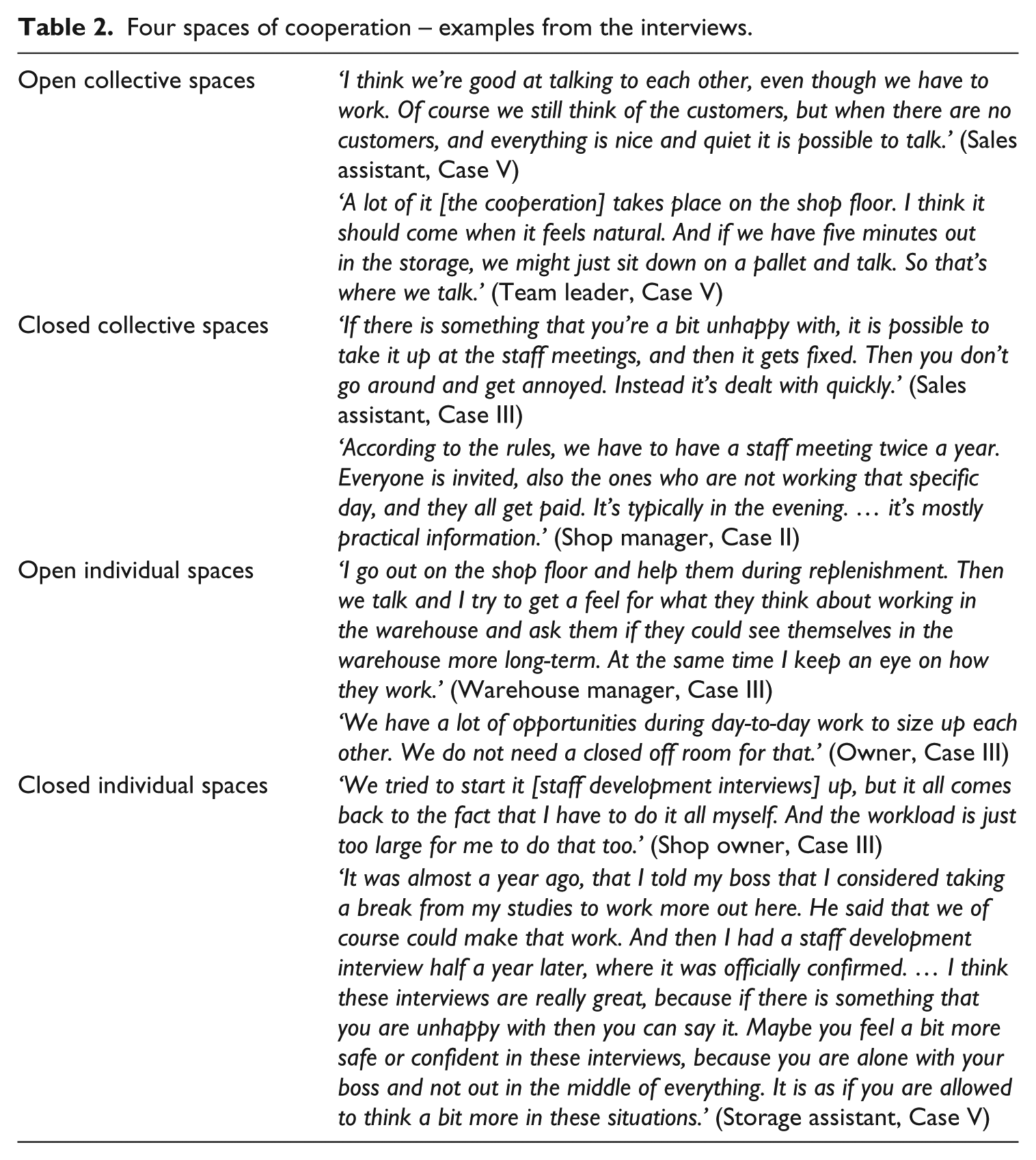
Conversations between a manager and an employee in closed spaces (away from customers and colleagues) are less used cooperation practices in the case companies. Staff development interviews are more or less a systematic practice in the larger shops (Cases II, IV and V), whereas this rarely takes place in the smaller shops, where access to closed rooms is limited (see Table 2 for examples). In the smaller shops, managers and employees create situational closed spaces around other objects or activities. They speak over the phone, in the car or during cigarette breaks in the backyard. One shop manager from a small speciality shop (Case I) invited his employees to a nearby café to have private conversations with them. This variety of activities offers other barriers to relevant outsiders than closed doors within the shop. Here, managers and employees discuss similar topics as the managers and employees in closed spaces in the larger shops (further training, change in job positions, etc.). When conversations take place behind barriers to relevant outsiders, such topics are not only raised by managers but also by employees. This is illustrated by the following example from Case I. Similar examples were found in Cases IV and V.
Four spaces of cooperation – examples from the interviews.
A couple of years before the manager in a small speciality shop (Case I) had hired an employee who had been involved in an accident on a part-time contract. Over time, she became a key employee in the shop. Recently, she had applied for a job at a shop closer to home and had received a contract proposal. Just before she gave in her notice, management called her in for a staff development interview – something they usually did not do. Here, the manager and the employee made an agreement about a pay increase, further training and a change in contract hours (from part-time to full-time), which made her stay in her current job. The employee explains the process: I had a part-time contract, but got a full-time contract just before Christmas. We agreed on a package that included a significant pay raise. They offered me further training to become a skilled worker, and I said yes. Actually, I wanted them to appreciate my work more. Therefore, it was a good deal for all of us. It meant that I could take up a loan to buy a car, which reduced my time spent on commuting by an hour and a half per day. Now I spend this time working instead of sitting on the train. … It happened one day, when my manager said: ‘Actually, it is too bad that we have not done a staff development interview.’ Then I said, ‘I also think it is too bad.’ Two days later, I was invited for an interview. I felt like I had to tell them something. Because I had applied for a job in another city, and I already more or less had an agreement with them to work there instead. (Sales assistant, Case I)
During this conversation in a closed room, the employee dares to talk about her personal ambitions and problems. The employee has generally been happy with the atmosphere and the work environment in the shop, but she has held back on her worries in shop floor conversations even though these worries are quite decisive (she does not feel appreciated and has found a new job). A number of similar examples are found in the other case companies (Cases II, III, IV and VI), where employees do not express their wishes or dissatisfaction until they meet with management in a closed room (see Table 2). The risk of interruption is lower, and neither managers nor employees are confronted with the social requirements of having to maintain a family-like atmosphere, which makes it possible to establish a kind of backstage.
Managers and employees in retail seem to need a closed room to develop a shared mood different from the family-like atmosphere. The frontstage personality of managers in open spaces as order-givers might make employees hesitant to initiate talks about positive/negative critique and career choices. When employees and managers successfully create a closed room, they enter a space of confidentiality, where they can distance themselves from the immediate order-giver and order-taker roles.
Cooperation in individual versus collective spaces
The limited access to closed rooms within a retail shop does not mean that individual conversations between managers and employees as such are limited. However, these conversations often take place on the shop floor (potentially in front of customers and colleagues) or in the storage or the canteen (potentially in front of colleagues). Many conversations are characterized by a bodily co-presence between one manager and one employee.
Individual conversations in such open spaces often deal with specific work tasks. However, managers sometimes also raise topics like individual changes in contract hours, managerial training and change in jobs during individual conversations in open spaces. This is the case in Case III, where the warehouse manager talks about how he recruits new trainees among young part-time workers on the shop floor (similar examples are found in Cases II, V and VI, see Table 2): I go out on the shop floor and help them during replenishment. Then we talk and I try to get a feel for what they think about working in the warehouse and ask them if they could see themselves in the warehouse more long-term. At the same time I keep an eye on how they work. (Warehouse manager, Case III)
These conversations are often quite short, but the example shows how managers and employees sometimes coordinate their long-term interests in an open space, mostly on the initiative of the manager. In this case, the manager succeeds in recruiting a new trainee and the employee gets a job that she can keep for a longer period. The example also shows how the manager checks up on the potential trainee during the seemingly informal conversation, which illustrates the asymmetrical relation between the manager and the employee. At the same time, the manager stresses the importance of listening to the wishes of the employees during these talks.
However, transitional workers in general seem to participate less in the cooperation with management than core workers do. This is also true for collective forms of cooperation in the retail shops. In the large shops (Cases IV and V) management organize weekly or monthly staff meetings, where employees meet with management in meeting rooms/lunchrooms to inform employees about important changes. At these meetings, employees have the possibility to raise questions and suggestions for improvement with management and their colleagues. Employees and managers alike appreciate this form of cooperation, because it helps to improve the work environment. However, it is mainly full-time staff who participate in staff meetings, and they prefer individual conversations to take place during the day on weekdays. Transitional workers usually work outside these hours.
One shop manager has tried to address the challenge of cooperation with transitional workers by establishing monthly pizza meetings for young part-time workers (Case IV). Here, the pizza eating activity creates a shared mood among managers and young workers of being part of a working community. In some of the larger shops (Cases IV, V and VI), management has developed closed groups on Facebook, where young part-time workers can swap shifts and afterwards report it to management, and managers can disseminate important information to these employees. Managers grant employees flexibility, because they in turn depend on the flexibility of the young staff to work evenings and weekends and to take on extra shifts. The young employees, characterized as transitional workers, on their part value the cooperation via Facebook very much, because it allows them to coordinate their working hours to fit with their schedule at school and to work the same shifts as their friends. This cooperative practice gives the transitional workers influence over their working hours, which improves their work–life balance and their social life at work. One manager explains: This year, I created groups on Facebook, and the group for the service department has 74 members. It is a closed forum, and we have rules about, what to write and not to write. Some write, ‘I have a shift Sunday morning, can anyone swap?’ Or managers write about a bowling event. It is a mixture of work and social stuff. Or I can write about new work rules, because Facebook is the only way I can communicate with those, who work every second Sunday. It works. … When you get your work schedule, you get access to the work schedule of 50 colleagues. If you are invited to a party on Friday, you can check out ‘Okay, these three colleagues do not work on Friday, I will write to them.’ This is what is important for them. That they are well and can get some time off when they need it. They just swap shifts and inform customer services. It does not have to be me as long as we know who will take the shift. All I ask is that I want to know who will work the shift 5 minutes before it begins. (Service manager, Case IV)
Four spaces of cooperation – a typology of cooperative practices
Above, four significant examples of cooperative practices that to varying degrees are used in all six cases have been presented: a collective dialogue on the shop floor, a staff development interview in an office, an individual talk on the shop floor and a collective dialogue in a closed group on Facebook. However, additional examples of cooperative practices like individual talks at a café or collective conversations at pizza meetings are also discussed. The complete range of cooperative practices identified in the six cases is illustrated in Figure 3.
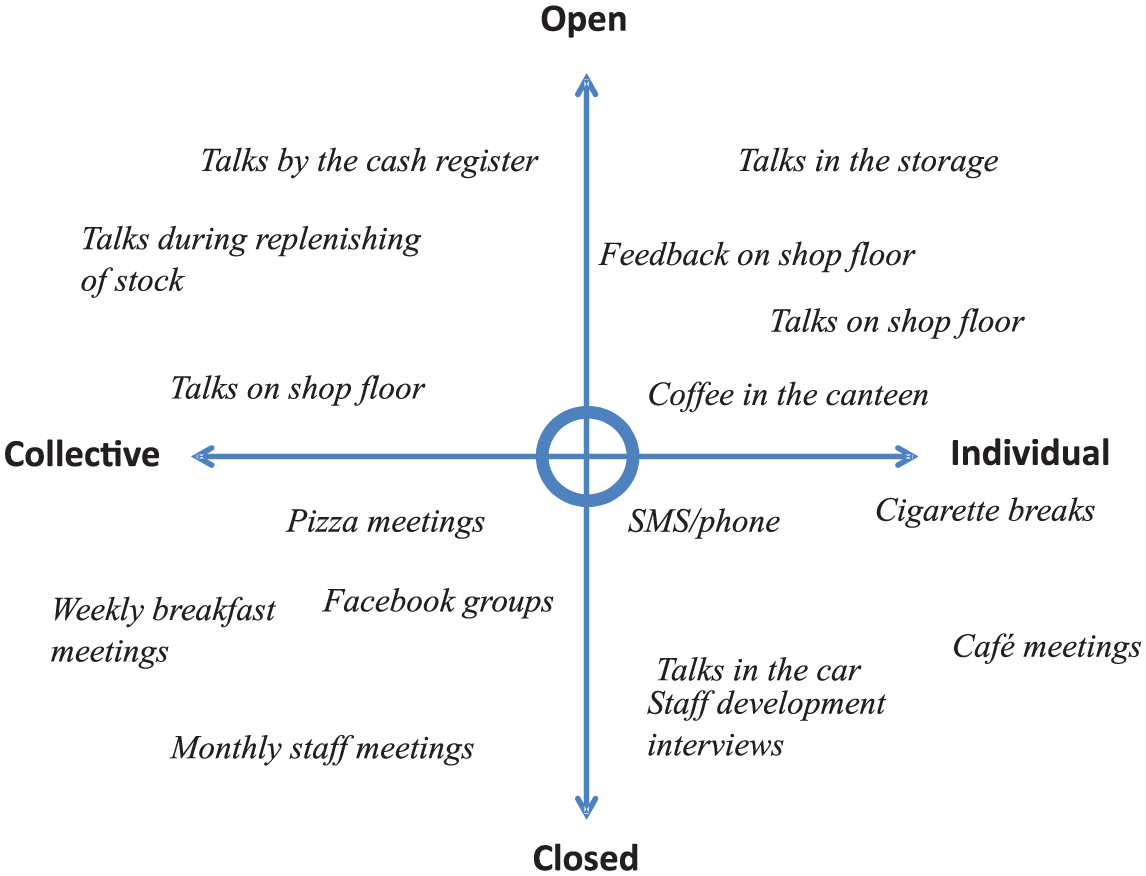
Four spaces of cooperation – cooperative practices in the six cases.
All these cooperative practices vary on two important aspects (whether they take place in open or closed spaces and whether they take place in individual or collective spaces), which makes it possible to develop a typology of practices. In sum, four different physical spaces of cooperation across the cases are identified:
Open collective spaces
In these spaces several managers and employees talk together, while customers and/or colleagues are present (for example talks by the cash register, talks during replenishment of stock, talks on the shop floor). Open collective spaces are characterized by high social density and no barriers to outsiders. Managers and employees focus on specific work tasks and social life and share a family-like atmosphere.
Closed collective spaces
In these spaces several managers and employees talk together, without customers and/or colleagues being present (for example closed groups on Facebook, pizza meetings for the young staff in the canteen, general staff meetings in a meeting room). Closed collective spaces are characterized by a high social density and significant barriers to outsiders. Managers and employees focus on sharing new information regarding the shop, swapping shifts and planning social events. It creates a sense of being a workplace community.
Open individual spaces
In these spaces, one manager and one employee talk, while customers and/or colleagues are present (for example a talk on the shop floor, a talk in the storage room, a coffee meeting in the canteen). Open individual spaces are characterized by low social density and no barriers to outsiders. Managers and employees focus on both specific work-related issues and issues like further training, change in job positions and/or contract hours. Managers feel comfortable to raise the latter issues.
Closed individual spaces
In these spaces, one manager and one employee talk, without customers and/or colleagues being present (for example a staff development interview, a meeting at a café, smoking a cigarette together in the courtyard). Closed individual spaces are characterized by low social density and significant barriers to outsiders. Managers and employees focus on both concrete work-related issues and topics like pay, further training and change in contract hours. Both employers and employees feel confident to initiate discussions on the latter issues.
All four physical spaces of cooperation – open collective, closed collective, open individual, closed individual – are used in all six cases. However, they are not used in the same way or to the same extent. It seems that managers and employees in the six shops mostly cooperate in open spaces, whereas closed spaces are used less often. Most of the cooperation takes place with no physical barriers to outsiders and potentially in front of customers and/or colleagues. This is especially true in the smaller shops, where access to rooms with doors that can be closed is limited. Access to canteens, meeting rooms and offices in the larger shops allows managers and employees more easily to establish closed collective spaces or closed individual spaces that can supplement the cooperation in open spaces. Closed collective spaces are also created on Facebook, whereas closed individual spaces are created in cars, cafés and on the phone.
The four spaces of cooperation relate to different topics and different forms of potential employee influence. Collective spaces, open or closed, are used to deal with specific work tasks, plan social events or swap shifts. This leaves room for employee influence on topics with short-term effects on working conditions (working time scheduling, immediate working environment, etc.). Cooperation in individual spaces also includes issues like change in contract hours, participation in training programmes and recruitment to certain job functions. Here, employees can gain influence on decisions with long-term effects on their individual pay and working conditions. However, their potential to gain influence on such topics seems to be greater in closed individual spaces than in open individual spaces. In open individual spaces, such conversations seem to be initiated by management only, whereas employees feel more confident to take the initiative to discuss pay, contract hours and further training in closed individual spaces.
The differences raise the question of whether a closed individual space, with a physical barrier to outsiders in the form of walls and doors, can be matched by alternatives. Turning back to the insights of microsociology, Collins introduces the concept social density to underline that frontstages can function as backstages, if the frontstages are sparsely populated. Accordingly, it can be argued that managers and employees can create closed spaces in corners of the shop if only a few customers are present. Shared activities (replenishing stock) can support this process of creating an experience of a closed space. However, the cooperative practices found in the six cases illustrate that the shop floor is not the preferred arena for employees who are seeking to gain influence on decisions with long-term individual effects. Employees prefer some sort of physical barrier to customers and colleagues (office, car, café, phone, etc.) when they take such initiatives. The type of object, activity or shared mood cannot make up for the importance of talking in private with a physical barrier to outsiders.
This brings us back to the discussion on labour–management relations as a power ritual between order-givers (management) and order-takers (employees). The asymmetry of power between managers and employees is never completely erased on the frontstage (on the shop floor). Although managers might feel confident to raise issues like change in contract hours and further training in open individual spaces, employees do not feel the same. They need a closed individual space to voice their concerns on such issues. Confidential conversations between one manager and one employee in closed individual spaces seem to offer the greatest potential for employee influence in a retail shop, i.e. employee influence on issues with long-term effects on their own pay and working conditions. Our case studies demonstrate that it is possible to develop such a backstage with a variety of activities, rules and shared moods off the shop floor or outside the shop.
Conclusion and discussion
Inspired by Goffman’s and Collins’ microsociological theories, this article seeks to explore the cooperation practices between managers and employees in Danish retail and discuss their potential contribution to employee influence. The article investigates their cooperation practices as social interaction and seeks to answer the questions: Who participates in the cooperation and who does not participate? Where do managers and employees cooperate? What is their mutual focus of attention and which emotional experiences do they share? Empirically, the article is based on in-depth case studies in six very different Danish retail shops including observations and interviews with a variety of managers and employees.
Our empirical contribution relates to how physical space matters when it comes to the topics raised and the influence gained in more informal forms of labour–management cooperation. Inspired by Collins’ theory on interaction rituals, the article develops a typology of cooperation that relates to the physical space in which the cooperation takes place and to the actors participating. The typology lists four spaces of cooperation: open collective, closed collective, open individual, closed individual. All four spaces of cooperation are to varying degrees used in all six cases. However, they relate to different topics and different forms of employee influence. Our typology can be of potential use to future studies that seek to differentiate between different forms of informal cooperation and their contribution to employee influence.
Closed individual spaces seem to play a special role with regard to employee influence in retail. Only here do employees dare to take the initiative themselves to talk about issues with long-term effects on their individual working conditions like changes in contracts, contract hours or training programmes. However, further research is needed to investigate how frequently the different forms of cooperation are used in different spaces in retail (and other service industries). Additionally, it would be relevant to investigate how the identified forms of cooperation interact with formal forms of labour–management cooperation (works councils, etc.), where such institutions exist (see Brøgger, 2010). Some studies suggest that a combination of formal and informal cooperation is the most efficient set-up when it comes to increasing employee influence (Marchington and Suter, 2013; Markey and Knudsen, 2014). However, experiences with the implementation of local Staff Councils in British retail do not support this idea (Badigannavar and Kelly, 2005).
This article contributes theoretically and methodologically by including microsociology in the study of labour–management relations and combining observation studies and in-depth worker and manager interviews. A current debate in the literature on cooperation is how research traditions that focus on formal labour–management cooperation and research traditions that focus on informal interaction between management and labour can be combined (Marchington, 2015; Wilkinson and Fay, 2011; Wilkinson et al., 2013). Our results suggest that not only the degree of formality needs to be taken into consideration, when identifying different forms of cooperation and their contribution to employee influence. The variation in informal cooperative practices to identify potential for employee influence is important. Physical space matters and therefore not all forms of informal cooperation have the same potential. Informal cooperation between managers and employees can in many ways be characterized as a power ritual and physical barriers to outsiders as well as lower social density are necessary to create a backstage, where managers and employees can take a break from their roles as order-givers and order-takers. This makes the microsociological approach – and especially Collins’ theory of interaction rituals – highly relevant for future studies of labour–management relations at workplace level, as it integrates the power aspect (which is present in all labour–management relations) and the spatial focus (which has been less researched in labour market studies at workplace level).
The limitations of our empirical investigations need to be considered, when we evaluate the findings. Unions and employers’ organizations supported us in making contact with relevant cases. This might have contributed to a positive bias in the case selection with regard to cooperation practices. However, our results cut across a variation among companies, among employees and among managers, which demonstrates that our findings are not specific to certain cases. When assessing the employee influence gained through informal cooperation and its effects, this variation also needs to be considered. However, as both sides of the industry were interviewed it has been possible to compare statements and only include conclusions that have been confirmed by both sides of the table.
Footnotes
Acknowledgements
The authors would like to thank a number of colleagues who have commented on and made valuable suggestions to earlier versions of this article. This includes Senior Researcher Frederik Thuesen, SFI, Denmark, Assistant Professor Lasse Liebst, University of Copenhagen, and our colleagues at the Employment Relations Research Centre (FAOS), University of Copenhagen. Furthermore, we would like to thank colleagues participating in conferences, where results have been presented and discussed. This includes workshop sessions at the 10th European ILERA Conference, Amsterdam, 20–22 June 2013; the Danish Sociological Conference, Copenhagen, 23–24 January 2014; the 28th AIRAANZ Conference, Melbourne, 5–7 February 2014; and the 7th Nordic Working Life Conference, Gothenburg, 11–13 June 2014. Finally, we would like to thank the two anonymous referees, who have made fruitful comments that helped us improve the final manuscript.
Declaration of Conflicting Interests
The author(s) declared no potential conflicts of interest with respect to the research, authorship, and/or publication of this article.
Funding
This research was supported by a mutual grant from the union and the employers’ organization that negotiate the sector-level agreement in Danish retail: the Union of Commercial and Clerical Employees – Retail (HK Handel) and the Danish Chamber of Commerce (Dansk Erhverv).