



Abstract
Northern Xinjiang, China, hosts globally recognized Carboniferous–Permian super basins with abundant hydrocarbon resources. However, previous research has predominantly focused on the northwestern region, while the eastern part, despite its significant exploration potential, remains underexplored. Guided by the exploration concept of the “Northern Xinjiang Megalake”, this study investigates key basins in eastern Northern Xinjiang, including the eastern Junggar Basin, Santanghu Basin, and Turpan–Hami Basin. Results indicate that the Lucaogou Formation in the Santanghu Basin and the Pingdiquan Formation in the Junggar Basin share similar characteristics. Both represent good to excellent source rocks dominated by Type II1 kerogen, currently at the mature stage, with high hydrocarbon generation potential and significant shale oil prospects. Their organic matter is primarily derived from microbial-algal sources, especially Tasmanites and algal mats, with low contributions from higher plants, and deposited under anoxic, slightly brackish to saline conditions. In contrast, the Taodonggou Group in the Turpan-Hami Basin comprises medium to very good quality source rocks, with mixed Type II1–III kerogen, also in the mature stage, capable of generating both oil and gas. The organic matter has a complex origin, with contributions from both microbial-algal communities and higher plants, and was deposited in relatively lower salinity waters. Marine source rocks of the Shiqiantan Formation in the Junggar Basin are of medium to very good quality, dominated by Type III kerogen, and are also in the mature stage. Their organic matter is mainly sourced from higher plants, indicating gas-prone characteristics. This study provides the first systematic comparison of source rocks across these basins, offering valuable insights into regional hydrocarbon exploration, as well as into the mechanisms of organic matter enrichment and source rock development in the Carboniferous–Permian systems of Northern Xinjiang.
Keywords
Introduction
During the Carboniferous–Permian period, a vast marginal lake known as the Paleo-Junggar Lake (∼270,000 km²) existed in the northern Xinjiang region of the North Pangea continent. Its surface area was more than three times that of present-day Lake Superior (82,100 km²), the largest freshwater lake, and may have rivaled the modern Caspian Sea (370,000 km²) during its maximum transgressive phase (Cao et al., 2024, 2025; Carroll and Wartes, 2003). Paleo-Junggar Lake formed in the tectonic context of the closure of the Paleo-Asian Ocean and is one of the largest known lakes of the Phanerozoic Eon (Cao et al., 2025, Zhang et al., 2024a). Its sedimentary domain extended across the Junggar Basin, Turpan-Hami Basin, and Santanghu Basin, and it contains the thickest known succession of transitional to lacustrine source rocks (>1000 m), which are rich in hydrocarbon resources (Carroll, 1998; Chen et al., 2019a; Tang et al., 2024). However, previous studies have mainly focused on the Mahu Depression Fengcheng Formation and Jimusaer Sag Lucaogou Formation within the Junggar Basin (Tang et al., 2019; Zhi et al., 2019; Cao et al., 2020, 2024, 2025; Gong et al., 2024a), while research on the Carboniferous–Permian source rocks in the eastern part of northern Xinjiang remains limited. To enhance hydrocarbon exploration under the concept of a “Northern Xinjiang Megalake (super basin)” in northern Xinjiang, it is essential to investigate the source rocks in this eastern region.
The eastern part of northern Xinjiang (as referred to in this study, the Turpan-Hami Oilfield Company's exploration area) includes the Turpan-Hami Basin, the Santanghu Basin, and the eastern Junggar Basin (Figure 1). These areas share similar sedimentary environments and tectono-paleogeographic evolution during the Carboniferous–Permian period, and host high-quality source rocks such as the Middle Permian lacustrine Lucaogou, Pingdiquan, and Taodonggou formations, as well as the Carboniferous marine Shiqiantan Formation (Chen et al., 2019b; Liang, 2020; Zhi et al., 2023). Prior to 2000, hydrocarbon exploration in these three regions was relatively independent and primarily focused on individual basins (Zhi et al., 2023). With the advancement of exploration, however, there is an urgent need for comparative studies among these basins to identify differences and develop an integrated understanding of Carboniferous–Permian source rock development, which is of great significance for sustaining exploration activities in the Turpan-Hami region.
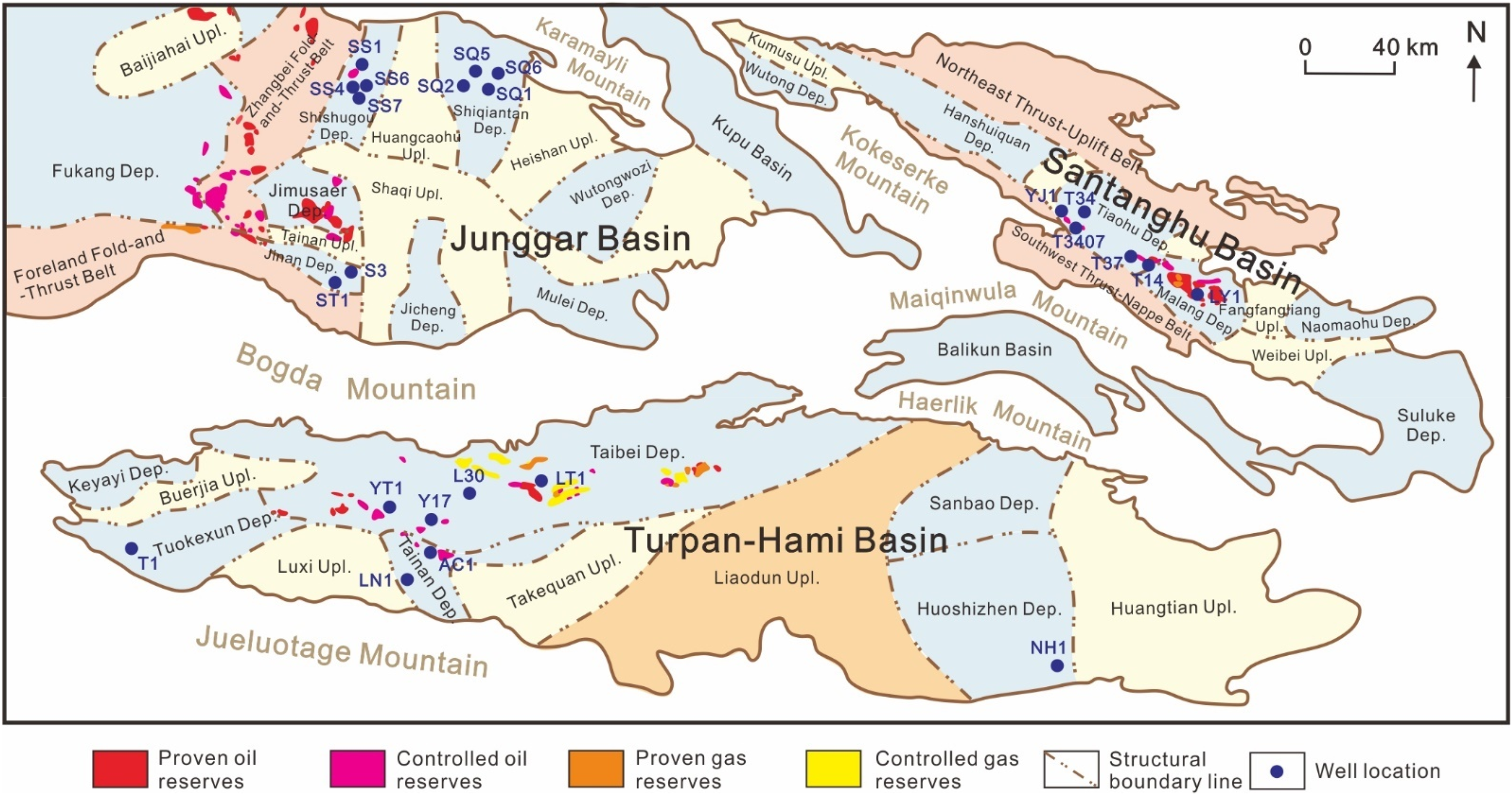
Tectonic subdivision, hydrocarbon exploration maturity, and well locations involved in this study in the eastern part of northern Xinjiang (modified from Zhi et al., 2023). Dep. = Depression; Upl. = Uplift. Samples of the Lucaogou Formation were collected from wells LY1, T34, T3407, T37, T14, and YJ1; the Pingdiquan Formation from wells SS1, SS4, SS6, SS7, S3, and ST1; the Taodonggou Group from wells YT1, L30, LT1, Y17, AC1, LN1, T1, and NH1; and the Shiqiantan Formation from wells SQ1, SQ2, SQ5, and SQ6.
To address this need, the present study conducts a comparative analysis of Carboniferous–Permian source rocks (Shiqiantan, Lucaogou, Pingdiquan, and Taodonggou formations) in the eastern Junggar Basin, Santanghu Basin, and Turpan-Hami Basin (Figure 2). Using organic petrology and geochemical techniques, we evaluate the organic matter abundance, type, and thermal maturity of the source rocks. Based on these parameters, we further assess the composition of hydrocarbon-producing biota, resource potential, and depositional environments, and conduct a regional comparison of similarities and differences among the basins. The results complement existing studies on Carboniferous–Permian source rocks in northern Xinjiang and provide valuable insights for hydrocarbon exploration in the Turpan-Hami exploration area.
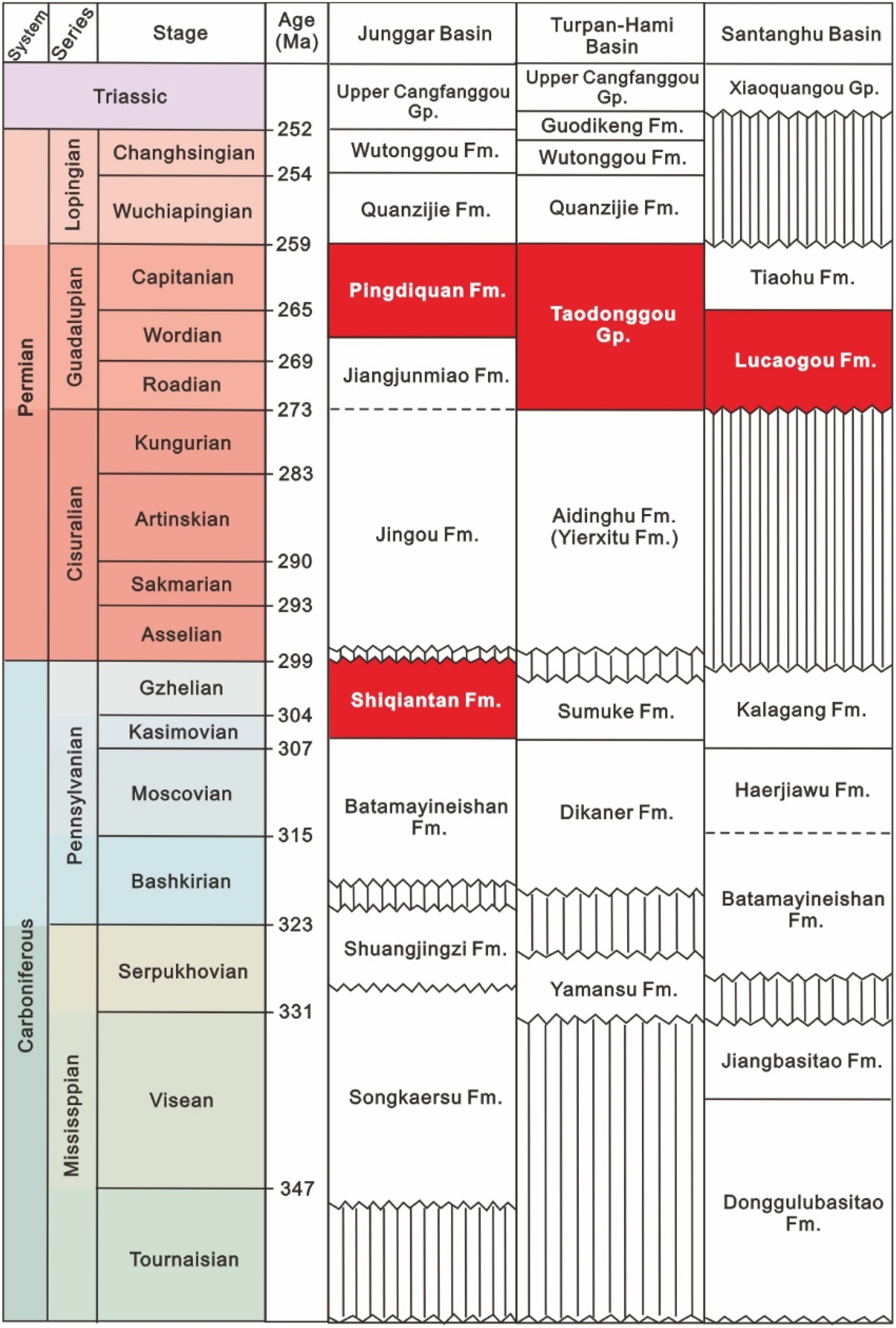
Stratigraphic correlation of carboniferous–Permian successions among the eastern Junggar Basin, Turpan-Hami Basin, and Santanghu Basin (modified from Zhen et al., 2024). The targeted intervals in this study are highlighted in red. Fm. = Formation; Gp. = Group.
Geological background
The eastern part of northern Xinjiang is situated at the convergent zone of the Siberian, North China, Tarim, and Kazakhstan plates, which is closely associated with the closure of the Paleo-Asian Ocean and records a complex history of accretionary tectonics and plate collisions (Li et al., 2021; Zhang, 1993). During the Early Paleozoic, regional extensional tectonics led to the formation of the Kalamaili back-arc oceanic basin and the North Tianshan Ocean, resulting in an archipelagic oceanic setting. The tectono-paleogeographic evolution of the region can be divided into three major stages (Chen et al., 2019a; Xing et al., 2004; Zhi et al., 2023): (1) Carboniferous – A critical period of ocean–continent transition characterized by a north-land–south-ocean paleogeography. The Kalamaili Ocean closed in a scissor-like fashion from east to west, resulting in multi-island arc collisions and the onset of continental sedimentation. The northeastern margins of the Junggar-Turpan-Hami blocks evolved into a foreland basin setting. (2) Permian – Following the closure of the South Tianshan and Kangguer oceans, the region entered a post-collisional intracontinental extensional regime. Similar paleogeographic conditions prevailed across the eastern Junggar and Turpan-Hami basins. While residual marine deposition persisted in the Turpan-Hami Basin, widespread lacustrine sedimentation occurred in surrounding areas. (3) Triassic to Present – The region experienced multiple tectonic episodes, including the Indosinian (Lopingian–Triassic, ∼258–205 Ma), Yanshanian (Jurassic–Cretaceous, ∼205–65 Ma), and Himalayan (Oligocene–Pleistocene, ∼24.6–0.78 Ma) orogenies, which reworked the Carboniferous–Permian successions. During the Triassic–Jurassic, uplift of the Bogda Mountains resulted in the segmentation of the region into three independent foreland basins (Chen et al., 2019a; Zhi et al., 2023).
Overall, Carboniferous strata in the study area are characterized by shallow marine to transitional facies, typified by the Shiqiantan Formation in the Shiqiantan Depression of the Junggar Basin, which hosts significant source rocks. The Permian records syn-rift lacustrine deposition within a series of isolated, saline lake basins, leading to the development of dark lacustrine mudstones interbedded with dolomitic and tuffaceous layers. Representative source rocks include the Lucaogou Formation in the Santanghu Basin, the Pingdiquan Formation in the Junggar Basin, and the Taodonggou Group in the Turpan-Hami Basin.
Samples and methods
A total of 95 samples were collected in this study and grouped into four sets: (1) Lucaogou Formation, Santanghu Basin (52 samples): including 44 from Well LY1 in the Malang Depression, 2 from Well T34, 1 from Well T3407, 1 from Well T37, 1 from Well T14, 3 from Well YJ1 in the Tiaohu Depression. The lithologies are mainly dolomitic mudstone and tuffaceous mudstone; (2) Pingdiquan Formation, Junggar Basin (16 samples): including 4 from Well SS1, 4 from Well SS4, 2 from Well SS6, and 1 from Well SS7 in the Shishugou Depression, and 3 from Well S3 and 1 from Well ST1 in the Jinan Depression. The lithologies are dominated by dolomitic mudstone and mudstone; (3) Taodonggou Group, Turpan-Hami Basin (17 samples): including 1 each from Wells YT1, L30, LT1, and Y17 in the Taibei Depression; 7 from Well AC1 and 2 from Well LN1 in the Tainan Depression; 2 from Well T1 in the Tuokexun Depression; and 2 from Well NH1 on the southern margin of the Hami Depression. The lithologies mainly consist of silty mudstone, dolomitic mudstone, and mudstone; (4) Shiqiantan Formation, Junggar Basin (10 samples): including 4 from Well SQ1, 2 from Well SQ2, 2 from Well SQ5, and 2 from Well SQ6 in the Shiqiantan Depression. The lithologies are primarily bioclastic-bearing mudstone and mudstone (Figures 1–2). Comprehensive organic petrographic and organic geochemical analyses were conducted.
Organic petrographic analysis was mainly performed using an optical microscope. Thin sections were prepared from vertical core samples fixed and polished with a homogeneous mixture of Buehler epoxy resin and hardener (5:1 ratio). The thin sections were examined under a Nikon ECLIPSE LV100N optical microscope using transmitted light in plane-polarized, cross-polarized, and fluorescence modes to identify hydrocarbon-generating biological components (Zhang et al., 2024a).
Organic geochemical analyses included total organic carbon (TOC), organic carbon isotopes, Rock-Eval pyrolysis, and biomarker analysis. For TOC determination, samples were ground to less than 100 mesh, treated with 1 mol·L–1 dilute HCl at 60°C to remove inorganic carbon, centrifuged, and dried at 50°C. TOC was measured using a LECO-CS-200 carbon-sulfur analyzer. Organic carbon isotopes were analyzed using a Flash 2000 HT elemental analyzer (EA) coupled with a ConFlo IV-Thermo MAT 253 stable isotope ratio mass spectrometer (IRMS). Homogenized carbonate-free powders were weighed (1–50 mg depending on organic carbon content), placed into tin capsules, and combusted at 960 °C. The resulting CO2 was introduced into the IRMS for isotopic measurement. The working standard was L-glutamic acid (USGS40; δ¹³Corg PDB = –26.39‰), and results are reported relative to the PDB standard, with an analytical precision better than ±0.2‰. Rock-Eval pyrolysis was performed on powdered samples using a Rock-Eval VI instrument, heating at 300°C for 3 min to obtain free hydrocarbons (S1), then raising the temperature to 600°C to measure pyrolyzed hydrocarbons (S2). The hydrogen index (HI) was calculated as HI = (S2 / TOC) × 100 (mg/g TOC).
Biomarker geochemical analysis utilized a CEM microwave accelerated extractor. Dried rock powders (<200 mesh) were extracted with a 9:1 mixture of dichloromethane (DCM) and methanol (MeOH) at 100°C for 15 min to obtain chloroform bitumen “A.” Elemental sulfur was removed from the chloroform bitumen using activated copper sheets treated with HCl and solvents. The desulfurized bitumen was separated by column chromatography on dry silica gel (36–70 mesh, baked at 150°C for 5 h) into saturated hydrocarbons, aromatic hydrocarbons, and polar fractions. Saturated hydrocarbons were eluted with n-hexane; aromatic hydrocarbons with 1:1 n-hexane/DCM (v/v); and polar fractions with 3:1 DCM/MeOH (v/v). Further biomarker analysis of the saturated hydrocarbon fraction was conducted using gas chromatography (GC) and gas chromatography–mass spectrometry (GC-MS). GC analyses were performed on an HP-6890 GC equipped with an HP-5 elastic quartz capillary column (0.25 μm film thickness) using nitrogen as the carrier gas. The temperature program held at 80°C for 5 min, ramped at 4°C/min to 290°C, and held for 30 min. GC-MS analyses were performed on an Agilent 5973N mass spectrometer with helium as the carrier gas. The oven temperature was held at 60°C for 5 min, increased at 8°C/min to 120°C, then at 2°C/min to 290°C, followed by a 30-min hold at 290°C.
Results and discussion
Organic petrology
The organic matter in the source rocks of the Lucaogou Formation in the Santanghu Basin is primarily derived from algae and bacteria, with a low content of higher plants. Among the algae, Tasmanites and benthic algal mats dominate (Figures 3A, 3B). Tasmanites is a unicellular, planktonic green alga characterized by thick walls and wall pores, exhibiting strong fluorescence and significant hydrocarbon-generating potential (Figure 3A; Zhang et al., 2024b). In contrast to unicellular planktonic algae, algal mats mainly consist of multicellular benthic algae, which appear as layered, banded, and laterally continuous structures in thin sections with strong fluorescence and similarly high hydrocarbon-generation capability (Figure 3B). Regarding bacteria, Fu et al. (2025) reported the presence of cyanobacteria in the Santanghu Basin, which contribute to hydrocarbon generation. The organic matter composition of the Pingdiquan Formation source rocks in the Junggar Basin is similar to that of the Lucaogou Formation in the Santanghu Basin, dominated by algae and bacteria with a low abundance of higher plants (Figure 3C). The organic matter in the Taodonggou Formation source rocks of the Turpan-Hami Basin is more complex and variable, primarily derived from algae, bacteria, and to some extent higher plants. Some samples contain abundant Tasmanites with strong fluorescence (Figure 3D), while others are dominated by higher plants, where vascular bundle structures and fusinite are visible under oil immersion reflected light (Figure 3E). The Carboniferous marine source rocks of the Shiqiantan Formation in the Junggar Basin mainly derive their organic matter from higher plants, as evidenced by abundant vitrinite structures of plant origin observed in thin sections (Figure 3F).
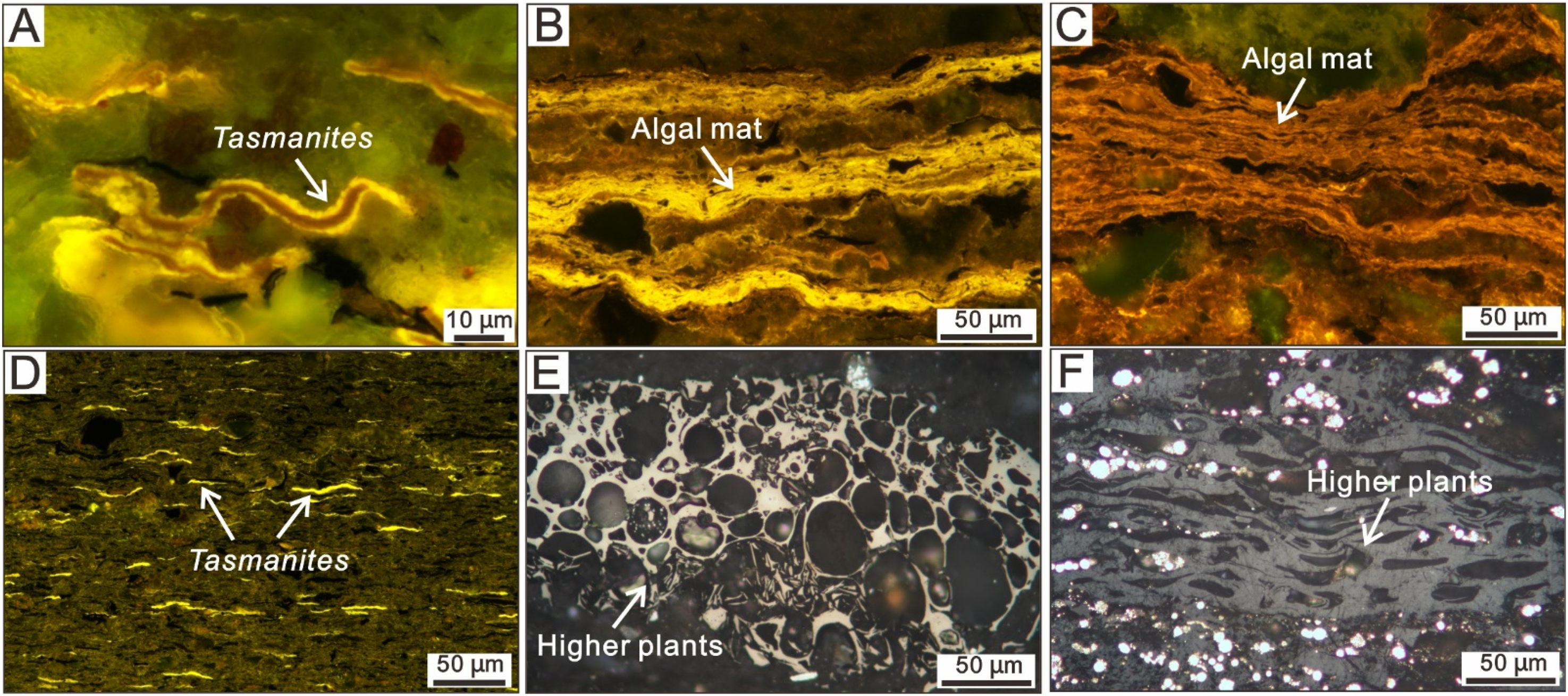
Optical microscopy images for hydrocarbon-generating organisms in carboniferous-permian source rocks from eastern Northern Xinjiang. (A) Tasmanites, blue light fluorescence, Lucaogou Formation, Well LY 1, Malang Depression, Santanghu Basin, 3269.00 m; (B) Algal mat, blue light fluorescence, Lucaogou Formation, Well LY 1, Malang Depression, Santanghu Basin, 3303.65 m; (C) Algal mat, blue light fluorescence, Pingdiquan Formation, Well SS 1, Shishugou Depression, Junggar Basin, 2363.50 m; (D) Tasmanites, blue light fluorescence, Taodonggou Formation, Well AC 1, Tainan Depression, Turpan-Hami Basin, 3293.30 m; (E) Higher plants, oil immersion reflected light, Taodonggou Formation, Well YT 1, Taibei Depression, Turpan-Hami Basin, 6144.34 m; (F) Higher plants, oil immersion reflected light, Shiqiantan Formation, Well SQ 1, Shiqiantan Depression, Junggar Basin, 3898.50 m.
In summary, the Lucaogou Formation in the Santanghu Basin and the Pingdiquan Formation in the Junggar Basin share similar organic matter sources, dominated by Tasmanites, algal mats, and bacteria, with low higher plant content. The Taodonggou Formation in the Turpan-Hami Basin shows mixed contributions from algae, bacteria, and higher plants. The Carboniferous Shiqiantan Formation in the Junggar Basin has a relatively high content of higher plant-derived organic matter.
Source rock geochemistry
Organic matter abundance
High organic matter abundance is a necessary condition for hydrocarbon generation in source rocks and is critically important in evaluating source rock quality and resource potential (Maier et al., 2011; Pei et al., 2016; Zhang et al., 2002). In this study, total organic carbon (TOC), free hydrocarbons (S1), and hydrocarbon generation potential (PG = S1 + S2) were used as indicators to assess the organic matter abundance of Carboniferous-Permian source rocks in eastern Northern Xinjiang.
Specifically, TOC contents of samples from the Lucaogou Formation range from 0.11% to 25.81%, averaging 7.87%; from the Pingdiquan Formation range from 0.94% to 23.16%, averaging 9.14%; from the Taodonggou Formation range from 0.16% to 12.31%, averaging 2.16%; and from the Shiqiantan Formation range from 0.15% to 5.22%, averaging 2.25%. The TOC contents of the four formations follow the trend: Pingdiquan Formation > Lucaogou Formation > Shiqiantan Formation > Taodonggou Formation (Figure 4A, Table 1).

Organic matter abundance and type of Carboniferous-Permian source rocks in eastern Northern Xinjiang. (A) Free hydrocarbons (S1) versus TOC; (B) Hydrocarbon generation potential (PG = S1 + S2) versus TOC; (C) δ¹³Ckerogen versus TOC; (D) Hydrogen Index (HI) versus Oxygen Index (OI); (E) Hydrogen Index (HI) versus Tmax. NS: Non-source rocks; F: Fair source rocks; G: Good source rocks; VG: Very good source rocks; E: Excellent source rocks.
The PG values for the Lucaogou, Pingdiquan, Taodonggou, and Shiqiantan formations are 0.04–136.63 mg/g (average 32.31 mg/g), 0.06–134.73 mg/g (average 45.40 mg/g), 0.04–17.29 mg/g (average 2.47 mg/g), and 0.04–1.91 mg/g (average 0.51 mg/g), respectively. Both free hydrocarbons (S1) and hydrocarbon generation potential (PG) show a strong positive correlation with TOC and exhibit similar variation patterns (Figures 4A–4B).
In summary, samples from the Lucaogou and Pingdiquan formations are predominantly very good to excellent source rocks, whereas the Taodonggou and Shiqiantan formations are medium to very good source rocks, with only a small portion classified as excellent source rocks (based on Peters and Cassa, 1994 classification).
Organic matter types
The generation of oil or gas by source rocks depends primarily on the type of organic matter present (Cheng et al., 2008; Makeen et al., 2015). Geochemical parameters commonly used to evaluate the organic matter type of source rocks include kerogen δ¹³C values, HI–OI plots, and HI–Tmax diagrams. For the Santanghu Basin, the δ¹³C values of the Lucaogou Formation range from −32.13‰ to −19.83‰ (average −27.08‰, Figure 4C), indicating that the organic matter is mainly Type I–II2, with a small amount of Type III. This is consistent with the HI–OI and HI–Tmax evaluations (Figures 4D, 4E) and corresponds to the high abundance of fluorescent Tasmanites and algal mats observed by organic petrography (Figures 3A, 3B), suggesting high hydrocarbon generation potential. In the Pingdiquan Formation of the Junggar Basin, δ¹³C values range from −31.52‰ to −22.56‰ (average −28.33‰), with organic matter predominantly Type II1 and minor amounts of Type I and II2 (Figure 4C), which aligns with HI–OI and HI–Tmax results (Figures 4D, 4E), indicating good hydrocarbon generation potential. The Taodonggou Group in the Tuha Basin shows δ¹³C values ranging from −28.78‰ to −20.05‰ (average −23.39‰). HI–OI and HI–Tmax plots indicate mainly Type III organic matter, with some samples classified as Type II1–II2 (Figures 4C–4E), reflecting a relatively complex organic matter source capable of generating both oil and gas. For the Carboniferous Shiqiantan Formation in the Shiqiantan Depression, δ¹³C values range from −28.44‰ to −21.21‰ (average −22.92‰). HI–OI and HI–Tmax plots show mainly Type III organic matter, with some Type II2 samples (Figures 4C–4E), consistent with the organic petrography observation of abundant higher plant material, indicating a primarily gas-prone source.
In summary, the Lucaogou and Pingdiquan formations have better organic matter types dominated by Type II1 with high hydrocarbon generation potential. The Taodonggou Group has a complex organic matter composition, mainly Type II1–III, capable of generating both oil and gas. The Shiqiantan Formation has poorer organic matter dominated by Type III, mainly gas-prone.
Organic matter maturity
The ability of source rocks with high organic matter abundance and good organic matter types to generate significant amounts of oil and gas depends on the maturity of the organic matter. Hydrocarbon generation only occurs when maturity reaches a certain threshold (Harouna et al., 2017; Wang et al., 2003). The Lucaogou Formation in the Santanghu Basin and the Pingdiquan Formation in the Junggar Basin contain little vitrinite (Hackley et al., 2016; Zhang et al., 2022); therefore, vitrinite reflectance cannot be used to evaluate organic matter maturity. Instead, this study uses Tmax, C29 sterane ααα 20S/(20R + 20S), C29 sterane αββ/(ααα+αββ), odd–even predominance parameters CPI and OEP, C31 hopane 22S/(22S + 22R), C31 hopane βα/(αβ+βα), and Ts/(Ts + Tm) ratios to assess maturity (Peters et al., 2005).
Tmax indicates that the thermal evolution of the four source rock formations ranges from immature to highly mature (Figure 4E). Specifically, Tmax shows that the Lucaogou and Pingdiquan formations have similar maturity levels, ranging from immature to mature stages; the Taodonggou Group is mainly mature; and the Shiqiantan Formation has higher maturity, predominantly in the high maturity stage.
Biomarker maturity indicators generally show consistent maturity characteristics (Figures 5A–5D). According to the thermal maturity evolution criteria established by Peters et al. (2005), C29 sterane ααα 20S/(20R + 20S) positively correlates with C29 sterane αββ/(ααα+αββ) (Figure 5A), collectively indicating that most samples from the four formations are mature (>0.4), with only a few samples from Lucaogou, Pingdiquan, and Taodonggou being less mature (0.1–0.4). Some samples from Taodonggou and Shiqiantan show C29 sterane ααα 20S/(20R + 20S) values near 0.55, indicating higher maturity.

Organic matter maturity of Carboniferous-Permian source rocks in eastern Northern Xinjiang. (A) C29 sterane ααα 20S/(20R + 20S) versus C29 sterane αββ/(ααα+αββ); (B) CPI versus OEP; (C) C29 sterane ααα 20S/(20R + 20S) versus OEP; (D) C31 hopane 22S/(S + R) versus Ts/(Ts + Tm). The organic matter maturity classification standards are from Peters et al. (2005). CPI = [(C25 + C27 + C29 + C31 + C33)/(C24 + C26 + C28 + C30 + C32) + (C25 + C27 + C29 + C31 + C33)/ (C26 + C28 + C30 + C32 + C34)]/2 (Farrimond et al., 2004), OEP = [(Ci + 6Ci + 2 + Ci + 4)/(4Ci + 1 + 4Ci + 3)](–1)i + 1, where i + 2 corresponds to the main peak of the n-alkanes (Bray and Evans, 1961).
There is also a weak positive correlation between the odd–even predominance indices CPI and OEP (Figure 5B), both decreasing toward an equilibrium value of ∼1.0 as maturity increases. Most samples have CPI and OEP values below 1.5, indicating maturity, while a few samples from Lucaogou, Pingdiquan, and Taodonggou are immature to low mature, consistent with the C29 sterane results. C29 sterane ααα 20S/(20R + 20S) is negatively correlated with OEP, with increasing maturity marked by increasing ααα 20S/(20R + 20S) values and decreasing OEP toward 1.0 (Figure 5C).
With increasing maturity, C31 hopane βα/(αβ+βα) and Ts/(Ts + Tm) values increase gradually. During the late oil generation window, Tm fully converts to Ts, and Ts/(Ts + Tm) approaches 1.0 (Farrimond et al., 2004). None of the studied samples show Ts/(Ts + Tm) values close to 1.0, indicating no overmature samples (Figure 5D).
Notably, based on biomarker data, the Lucaogou and Pingdiquan formations are at the low-mature to mature stage (Figure 5), whereas Tmax-based estimates indicate an immature to low-mature stage (Figure 4E), significantly lower than the biomarker-based maturity, reflecting a suppression effect of Tmax. This discrepancy may be attributed to the relatively high total organic carbon (TOC) and free hydrocarbon (S1) content in these samples, which advance the S2 peak and interfere with the Tmax measurement (Yang and Horsfield, 2020). These observations indicate that the assessment of source rock maturity should integrate organic petrography, geochemistry, and biomarker analyses.
In summary, the organic matter maturity of the Lucaogou and Pingdiquan formations is similar, mostly mature with a few low maturity samples; the Taodonggou Group organic matter is mainly mature; and the Shiqiantan Formation source rocks are relatively highly mature, ranging from mature to high maturity stages.
Hydrocarbon generation capacity
The hydrocarbon generation capacity depends on both the quantity and quality of organic matter in the source rock. The quantity of organic matter is primarily controlled by its abundance and, to some extent, by thermal maturity. The quality of organic matter depends on the type of organic matter and hydrocarbon-generating organisms (Erik et al., 2005; Hakimi and Abdullah, 2013; Tissot and Welte, 1984). In this study, the hydrocarbon generation capacity is evaluated using the ratio of hydrocarbon potential (PG) to total organic carbon (TOC). The hydrocarbon generation capacity of samples from the Taodonggou Formation and Shiqiantan Formation is lower than that of the Lucaogou Formation and Pingdiquan Formation (Figure 6A). Specifically, the Lucaogou and Pingdiquan samples exhibit very high hydrocarbon generation capacities, with nearly all samples showing PG/TOC ratios greater than 100 mg/g TOC. The Taodonggou samples demonstrate moderate to relatively high hydrocarbon generation capacity, with an average PG/TOC of 55.16 mg/g TOC, whereas the Shiqiantan samples show relatively low capacity, averaging 22.54 mg/g TOC.
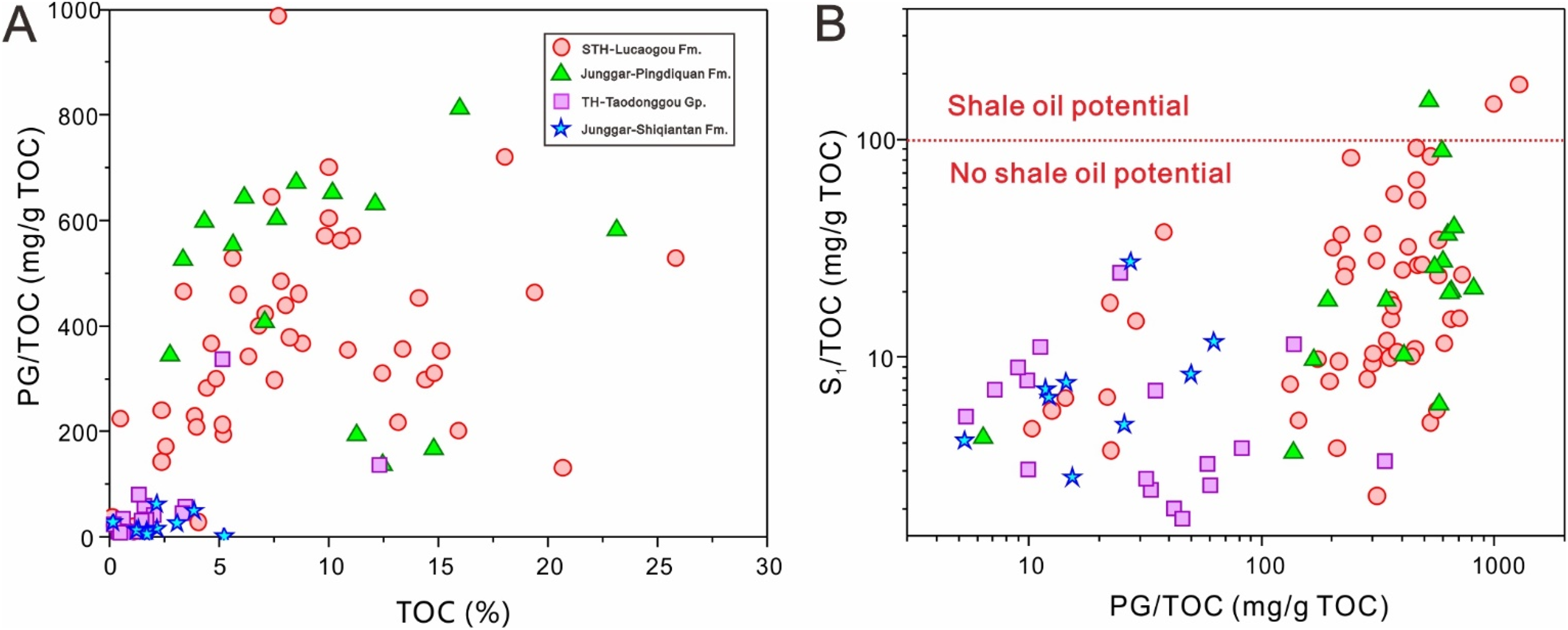
Hydrocarbon generation capacity of Carboniferous-Permian source rocks in eastern Northern Xinjiang. (A) PG/TOC versus TOC; (B) S1/TOC versus PG/TOC.
Shale oil is the liquid petroleum retained within shale during hydrocarbon generation and expulsion processes (Clarkson and Pedersen, 2010), and shale oil exploration has become increasingly important in China (Zou et al., 2014). The shale oil index (OSI = S1/TOC × 100) is used to infer the shale oil potential of source rocks. When OSI > 100, the source rock is considered to have shale oil potential; when OSI < 100, it lacks shale oil potential (Jarvie, 2012). Some samples from the Lucaogou and Pingdiquan formations have OSI values greater than 100, indicating shale oil potential. In contrast, all samples from the Taodonggou and Shiqiantan formations have OSI values less than 100, indicating no shale oil potential (Figure 6B).
In summary, the Lucaogou and Pingdiquan formations exhibit high hydrocarbon generation capacity and shale oil potential, whereas the Taodonggou and Shiqiantan formations have lower hydrocarbon generation capacity and limited shale oil potential.
Biomarker characteristics of source rocks
Organic matter sources indicated by biomarkers
The distribution of n-alkanes can be used to evaluate the organic matter (OM) source (Figure 7). The distribution of n-alkanes can be used to indicate the relative abundance of aquatic microorganisms and higher terrestrial plants, with the former typically peaking at carbon numbers below C23, the latter above C27, and mixed sources falling in between (Peters et al., 2005). As shown in Figure 7, the representative Shiqiantan Formation exhibits an n-alkane peak at C18, while the Taodonggou Group, Pingdiquan Formation, and Lucaogou Formation peak at C23, indicating that the organic matter in these samples is predominantly derived from aquatic microorganisms. However, it is affected by thermal maturity and should be interpreted in conjunction with other indicators (Peters et al., 2005). The cross-plot of Pr/n-C17 versus Ph/n-C18 reflects the redox conditions of the depositional environment and OM sources of source rocks (Shanmugam, 1985). Approximately 80% of Lucaogou Formation samples fall within the marine/saline lake organic matter region, indicating that the organic matter is mainly derived from microorganisms (Figures 8A), consistent with organic petrological observations of abundant Tasmanites and algal mats (Figures 3A–3C). About 60% of Pingdiquan Formation samples are located in the mixed organic matter region, reflecting a combination of microbial and higher plant-derived organic matter (Figure 8A). The Taodonggou Group samples mainly fall in the mixed and terrestrial OM fields (Figure 8A), reflecting complex OM sources with contributions from both bacteria/algae and higher plants, consistent with petrographic observations (Figures 3D, 3E). The Shiqiantan Formation samples plot in marine/saline lacustrine and mixed OM fields (Figure 8A), which contradicts the petrographic observation of abundant higher plants (Figure 3F). This discrepancy may be due to the higher maturity of the Shiqiantan samples causing depletion of Pr and Ph, making this proxy less reliable and requiring combined evaluation with higher plant biomarkers.
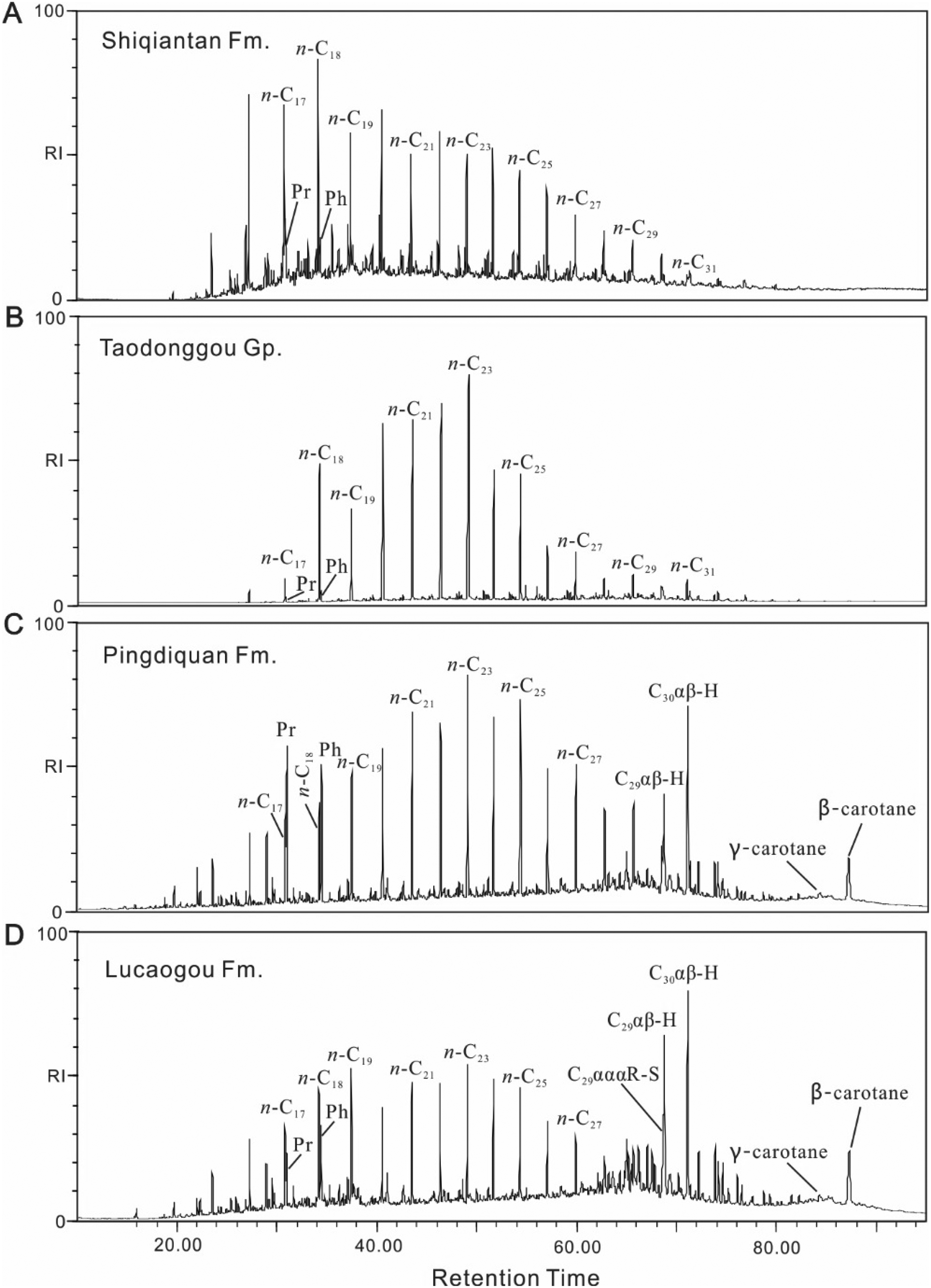
Typical total ion chromatograms (TIC) of saturated hydrocarbons from carboniferous–permian source rocks in Eastern Northern Xinjiang. (A) Saturated hydrocarbon TIC of Shiqiantan Formation, Shiqiantan Depression, Junggar Basin (Well SQ2, 2692.60 m); (B) Saturated hydrocarbon TIC of Taodonggou Group, Taibei Depression, Turpan-Hami Basin (Well L30, 5064.47 m); (C) Saturated hydrocarbon TIC of Pingdiquan Formation, Shishugou Depression, Junggar Basin (Well SS4, 2573.33 m); (D) Saturated hydrocarbon TIC of Lucaogou Formation, Malang Depression, Santanghu Basin (Well LY1, 3285.21 m).
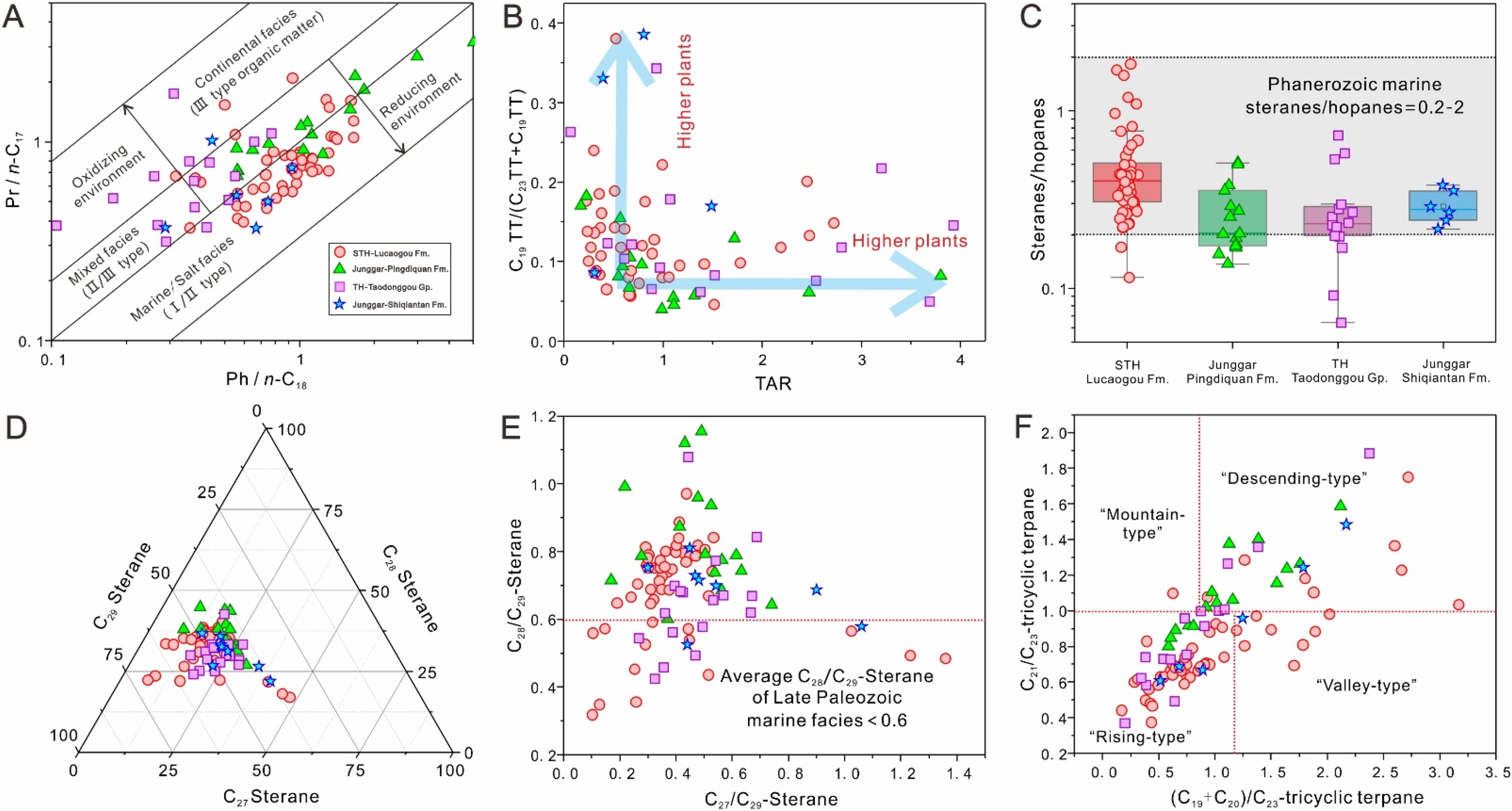
Biomarker characteristics related to organic matter sources of carboniferous–permian source rocks in Eastern Northern Xinjiang. (A) Relationship between Ph/n-C18 and Pr/n-C17; (B) TAR and C19/(C23 + C19) tricyclic terpanes; (C) Steranes/hopanes ratios of source rocks from different regions; (D) Distribution of C27-C29 steranes in source rocks from different regions; (E) C27/C29 sterane ratio versus C28/C29 sterane ratio; (F) C21/C23 tricyclic terpane and (C19 + C20)/C23 tricyclic terpane ratios.
The TAR [(C27 + C29 + C31)/(C15 + C17 + C19)] and C19/(C23 + C19) tricyclic terpane ratios are useful for estimating the relative contribution of terrestrial higher plants versus aquatic bacterial and algal sources. Higher TAR and C19/(C23 + C19) values indicate greater terrestrial plant input (Peters et al., 2005). Compared with the Lucaogou and Pingdiquan formations, the Taodonggou and Shiqiantan formations have higher values of these ratios (Figure 8B), reflecting a greater contribution from higher plants, consistent with petrographic observations in these formations (Figures 3E, 3F).
Steranes mainly derive from algae and other eukaryotes, whereas hopanes primarily originate from aerobic bacteria, including cyanobacteria (Volkman, 2003). The sterane/hopane ratio reflects the relative contributions of eukaryotes (mainly algae) versus prokaryotes (mainly bacteria) (Bobrovskiy et al., 2020). In Phanerozoic marine sediments where algae dominate over bacteria as primary producers, approximately 70% of samples have sterane/hopane ratios between 0.2 and 2. Most samples from the four formations fall within this Phanerozoic marine range (Figure 8C), indicating algae as the dominant OM source. However, some samples from the Lucaogou, Pingdiquan, and Taodonggou formations show sterane/hopane ratios below 0.2, indicating bacterial dominance and limited algal development.
The relative abundances of C27–C29 regular steranes are indicative of OM sources, with C27 mainly representing lower algae and C29 reflecting higher plants or green algae inputs (Volkman, 2003). The C28/C29 sterane ratio is age-dependent: before the Triassic, C28 steranes were mainly from specific green algal species; in the post-Triassic Mesozoic–Cenozoic, higher C28/C29 ratios are associated with chlorophyte algae such as prasinophytes, diatoms, and eustigmatophytes. Except for some Lucaogou and Shiqiantan samples where C27 steranes exceed C28, most samples exhibit the trend C27 < C28 < C29 (Figure 8D), indicating green algae as the primary algal contributor. Most samples have C28/C29 sterane ratios above the Paleozoic marine average of 0.6 (Figure 8E), suggesting a significant contribution from Tasmanites or Dunaliella-like green algae (Xia et al., 2021; Zhang et al., 2024b). Since Dunaliella mainly develops in alkaline lakes and Tasmanites in micro- to hypersaline lakes—and considering the study area is not alkaline—the anomalously high C28/C29 ratios more likely derive from Tasmanites, consistent with petrographic observations of abundant Tasmanites (Figures 3A, 3D).
The C21/C23 tricyclic terpane and (C19 + C20)/C23 tricyclic terpane cross-plot reflects tricyclic terpane distribution patterns and OM sources (Peters et al., 2005; Tao et al., 2019). Most samples plot in the ascending and descending fields, while a few Lucaogou samples fall in the valley field, indicating complex OM sources requiring integrated interpretation with other proxies (Figure 8F).
In summary, the Lucaogou and Pingdiquan formations share similar OM sources dominated by bacteria and algae, especially high Tasmanites content with low higher plant input; the Taodonggou Group has complex OM sources with both bacterial/algal and higher plant contributions; the Shiqiantan Formation OM is mainly from higher plants.
Sedimentary environment indicated by biomarkers
Many biomarkers can be used to infer the depositional environment. In the following, the discussion focuses on pristane (Pr)/phytane (Ph) ratio, β-carotane index [(β-carotane)/n-alkane peak], gammacerane index (gammacerane/C30αβ hopane), C35S/C34S hopane–C29αβ/C30αβ hopane, and C22/C21–C24/C23 tricyclic terpane correlation diagrams.
Generally, Pr/Ph < 1 and Pr/Ph > 1 indicate reducing and oxidizing environments, respectively (Peters et al., 2005; Tao et al., 2019). Most samples from the Lucaogou Formation and Pingdiquan Formation have Pr/Ph < 1, with a few samples > 1, reflecting predominantly reducing environments consistent with environmental interpretations based on Ph/n-C18 and Pr/n-C17 ratios. Over 90% of Lucaogou Formation samples have Pr/Ph < 1, indicating deposition mainly under reducing conditions, consistent with the environment inferred from Ph/n-C18 and Pr/n-C17 ratios. In the Pingdiquan Formation, about 50% of samples have Pr/Ph < 1, reflecting a complex depositional environment with both reducing and oxidizing conditions. Most samples from the Shiqiantan Formation also show Pr/Ph < 1, indicating deposition in reducing environments consistent with Ph/n-C18 and Pr/n-C17 results. However, maturity effects on Pr/Ph must be considered and combined with other indicators for comprehensive interpretation.
High β-carotane index reflects a reducing high-salinity environment. Unlike the Fengcheng Formation in the Maku Depression of the Junggar Basin and the Lucaogou Formation in the Jimusar Depression, where β-carotane index reaches up to 3 (Gong et al., 2024b; Xia et al., 2021), all samples in the study area show β-carotane indices below 0.5 (Figure 9A), indicating significantly lower salinity than those basins. Specifically, β-carotane index decreases in the order: Lucaogou Formation > Pingdiquan Formation > Taodonggou Formation > Shiqiantan Formation. The Lucaogou Formation in the Santanghu Basin has the highest β-carotane index, reflecting higher salinity and more reducing water conditions. Most samples from the Taodonggou and Shiqiantan formations have β-carotane indices below 0.1, indicating lower salinity and more oxidizing water. The Pingdiquan Formation has an average β-carotane index of 0.1, falling between the Lucaoqu Group and Taodonggou Group samples, reflecting an intermediate salinity level.
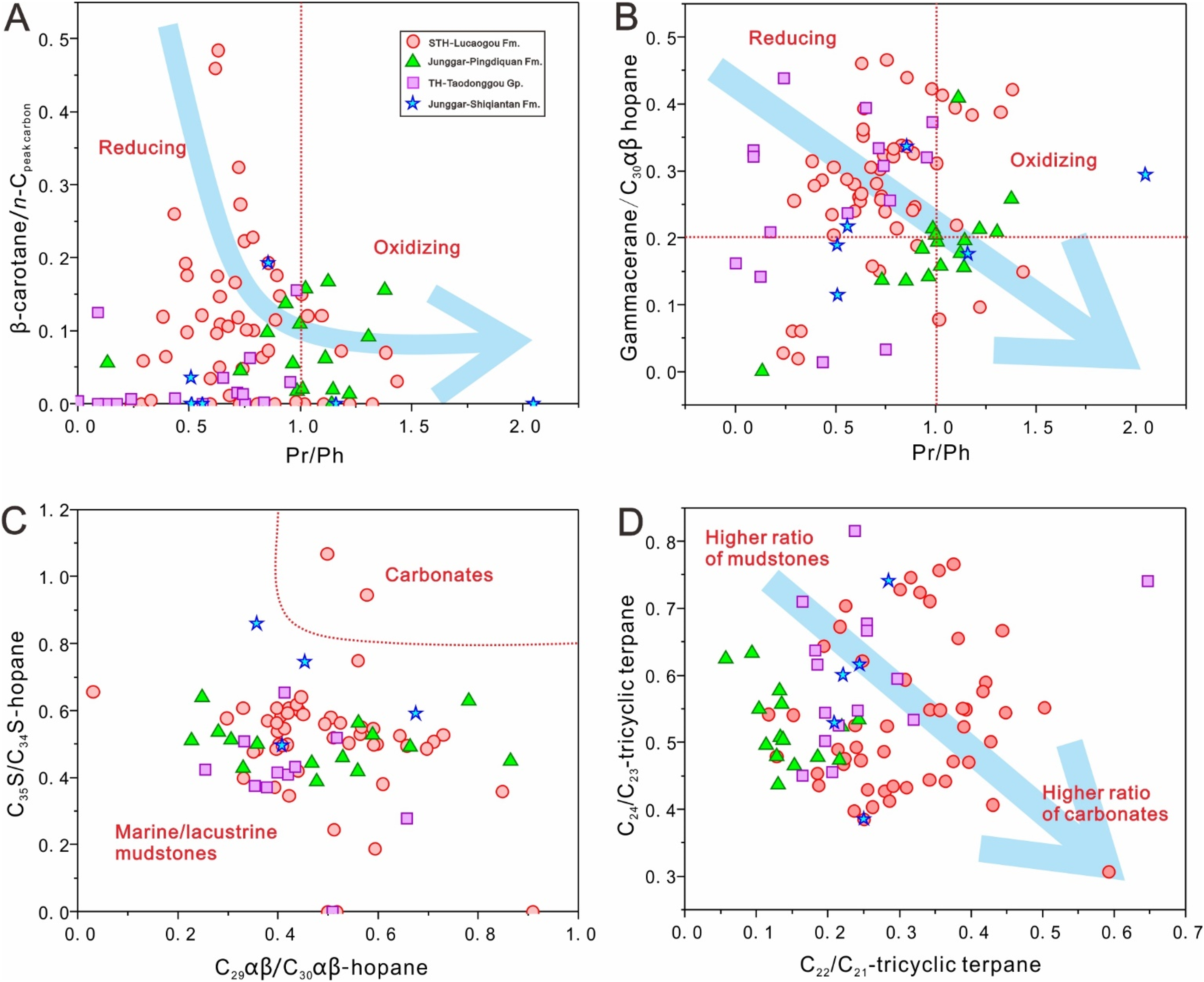
Biomarker characteristics related to Carboniferous-Permian source rocks and depositional environments in eastern Northern Xinjiang. (A) Pr/Ph versus (β-carotane)/n-alkane peak; (B) Pr/Ph versus gammacerane/C30αβ hopane; (C) C29αβ/C30αβ hopane versus C35S/C34S hopane; (D) C22/C21 tricyclic terpane versus C24/C23 tricyclic terpane.
Gammacerane is considered a diagenetic product of tetrahymanol, which is produced by ciliates living at the redox interface of stratified water bodies. Therefore, the gammacerane index is commonly used to indicate water column stratification (Sinninghe Damsté et al., 1995). Results show that most samples from the Lucaogou, Taodonggou, and Shiqiantan formations have gammacerane indices above 0.2 (Figure 9B), indicating intermittent water stratification. The Pingdiquan Formation shows low Pr/Ph values despite weak water column stratification, which results from intermediate water salinity, localized anoxia, and a generally well-mixed water body. This indicates that, in sedimentary studies, reducing conditions do not necessarily coincide with strong stratification, and a comprehensive assessment should consider multiple indicators, such as salinity, Pr/Ph, and the β-carotane index.
The C35S/C34S hopane–C29αβ/C30αβ hopane and C22/C21–C24/C23 tricyclic terpane correlation diagrams can differentiate carbonate-derived from clay-derived sedimentary rocks (Peters et al., 2005; Tao et al., 2019). Most samples in the study area fall within the marine/lacustrine mudstone field (Figure 9C), with only a few Lucaogou Formation samples plotting in the carbonate field. This indicates that most samples were deposited in environments with weak evaporation, and only a few reached salinities conducive to carbonate formation, consistent with the micro-saline environment inferred from β-carotane and gammacerane indices. Higher C22/C21 and lower C24/C23 tricyclic terpane ratios often indicate a higher carbonate/mudstone ratio. The Lucaogou Formation shows higher C22/C21 and lower C24/C23 ratios compared to the Pingdiquan, Taodonggou, and Shiqiantan formations (Figure 9D), indicating a higher carbonate/mudstone ratio that corresponds with the higher salinity suggested by the β-carotane index.
In summary, the Lucaogou Formation was mainly deposited in an intermittently stratified, reducing–dysoxic, micro-saline to saline water body; the Pingdiquan Formation in a dysoxic to suboxic, micro-saline environment with weak stratification; and the Taodonggou and Shiqiantan formations in reducing–dysoxic environments with relatively lower salinity. Biomarker data indicate that most samples in the study area exhibit distinct mudstone depositional characteristics, but a comprehensive assessment should be made in conjunction with sedimentary facies data from the geological background.
Conclusions
This study focuses on the Carboniferous-Permian source rocks in eastern Northern Xinjiang (Shiqiantan Formation, Lucaogou Formation, Pingdiquan Formation, and Taodonggou Group). For the first time, a systematic comparative study of organic petrography and organic geochemistry was conducted from the perspective of the “ Northern Xinjiang Megalake,” discussing resource potential, organic matter composition, and depositional environment. This provides important reference information for hydrocarbon exploration in superbasins.
The Lucaogou Formation in the Santanghu Basin and the Pingdiquan Formation in the Junggar Basin mainly consist of very good to excellent quality source rocks, predominantly of type II₁, mostly in the mature stage, with high hydrocarbon generation potential and shale oil prospectivity. The Taodonggou Group and Shiqiantan Formation mainly consist of moderate to very good quality source rocks; the Taodonggou Group is primarily type II₁–III, mature in stage, capable of generating both oil and gas, while the Shiqiantan Formation is mainly type III, in an overmature stage, with relatively low shale oil potential. Organic petrography and biomarker data indicate similar organic matter sources for the Lucaogou Formation in Santanghu Basin and the Pingdiquan Formation in Junggar Basin, dominated by bacterial and algal input, especially high contents of Tasmanites and algal mats, with relatively low higher plant input. The Taodonggou Group shows a complex organic matter source with contributions from both bacterial-algal and higher plants. The Shiqiantan Formation is dominated by higher plant-derived organic matter with limited algal development. The Lucaogou Formation in the Santanghu Basin was primarily deposited in a reducing to dysoxic, brackish to saline, intermittently stratified water column environment; the Pingdiquan Formation in the Junggar Basin was deposited in a dysoxic to suboxic, brackish environment with weak water stratification; the Taodonggou Group and Shiqiantan Formation were deposited under reducing to dysoxic conditions with relatively low salinity. Most samples in the study area show clear characteristics of mudstone deposition.
Summary table of geochemical and biomarker data of Carboniferous–Permian source rocks in the eastern Northern Xinjiang.

Footnotes
Acknowledgements
We thank two reviewers for their insightful comments that helped us improve the manuscript. This work was supported by the “Tianshan Talents” Scientific Innovation Project of Xinjiang Uygur Autonomous Region (Grant No. 2022TSYCLJ0070) and CNPC Key Scientific and Technological Project (Grant Nos. 2023YQX10109 and 2023ZZ24YJ01).

Funding
The authors disclosed receipt of the following financial support for the research, authorship, and/or publication of this article: This work was supported by the CNPC Key Scientific and Technological Project, “Tianshan Talents” Scientific Innovation Project of Xinjiang Uygur Autonomous Region, (grant number 2023YQX10109, 2023ZZ24YJ01, 2022TSYCLJ0070).
Declaration of conflicting interests
The authors declared no potential conflicts of interest with respect to the research, authorship, and/or publication of this article.