




Abstract
The Lower Paleozoic Qiongzhusi Formation is an important next target for shale gas exploration and development in South China, following the Wufeng–Longmaxi Formation. The total organic carbon (TOC) content is a key indicator of shale gas enrichment; however, systematic comparative studies of the factors controlling the organic matter enrichment of the Qiongzhusi Formation shales across the western Hunan–Hubei and northern Guizhou region are lacking. In this study, we compared the sedimentological and geochemical characteristics of the Qiongzhusi Formation shale deposited at the passive continental margin versus within the cratonic depression in the western Hunan–Hubei and northern Guizhou region and explored the main controlling factors and formation models of the differential organic matter enrichment. The results show that the shale intervals with high TOC values are located at the base of the Qiongzhusi Formation and were formed in environments characterized by low terrigenous input, high paleoproductivity, and favorable preservation conditions. Subsequently, the basin rifting gradually weakened, and the sea level continuously fell, which manifested as increased terrigenous input and deteriorating preservation conditions. In addition, the ocean current activity weakened as the sea level fell, resulting in a corresponding decline in the paleoproductivity. Therefore, the vertical decrease in the TOC content of the Qiongzhusi Formation was jointly controlled by the reduced paleoproductivity, poorer preservation conditions, and increased terrigenous input. Laterally, from the passive continental margin toward the interior of the cratonic depression, both the sea level and the intensity of the oceanic circulation exhibited decreasing trends, accompanied by simultaneous deterioration of the preservation conditions and paleoproductivity, resulting in progressively lower TOC contents.
Keywords
Introduction
Large-scale Paleozoic marine organic-rich shales are widely developed in the Yangtze region in South China, among which the Lower Cambrian Qiongzhusi Formation has been listed as an important target for future marine shale gas exploration and development, following the Upper Silurian Wufeng–Longmaxi Formation (Liu et al., 2017; Wu et al., 2020; Lin et al., 2024a; Lin et al., 2024b; Lin et al., 2025). The total organic carbon (TOC) content of shale is a key indicator of the reservoir quality (Zhao et al., 2016; Xia et al., 2017), and the paleo-depositional environment is a critical factor controlling the formation and enrichment of organic matter in shale (Curtis, 2002; Zou et al., 2010; Huang et al., 2012). Therefore, investigations of the sedimentary environment of organic-rich shales provide a scientific basis for predicting the distribution of high-quality shales and for optimizing the selection of sweet-spot intervals (Zhao et al., 2016; Xia et al., 2017; Zhao et al., 2019).
The Qiongzhusi Formation shales were formed during a major transitional period in the Early Cambrian, during which the global paleoclimate experienced a transition from glacial conditions to greenhouse conditions, resulting in drastic changes in biological evolution and marine environments. Global sea-level rise and widespread transgression caused large-scale replacement of the carbonate platforms across the Yangtze Block with deep-water argillaceous shelf deposits (Hoffman et al., 1998; Hoffman et al., 2017; Wang et al., 2018a; Zhu et al., 2020; Liu et al., 2022). The western Hunan–Hubei and northern Guizhou region in the study area was located in a slope to deep-water shelf depositional setting, and the shales deposited during this period are characterized by high TOC contents, great thickness, and a wide distribution, indicating that they have enormous potential for shale gas exploration and development (Zhu et al., 2020). Considering the complex geological background of this shale system, previous studies on the Qiongzhusi Formation shales in the western Hunan–Hubei and northern Guizhou region have mainly focused on reservoir performance evaluation, such as the main factors controlling the gas content, pore development characteristics, and vertical heterogeneity of the petrophysical properties (Wang et al., 2016; Xu et al., 2017; Wang et al., 2018b; Xi et al., 2022). In contrast, studies on the paleo-depositional environments are relatively limited, and there is no consensus regarding the factors controlling the development of the organic-rich shale in the Qiongzhusi Formation. Using sensitive elements (U, Mo, and V) and traditional element ratios (e.g., U/Th, Ni/Co, and V/Cr) as discriminative indicators, which tend to become more enriched as the water-column conditions become more reducing, some studies have suggested that anoxic reducing environments controlled the development of the organic-rich shales in the western Hunan–Hubei and northern Guizhou region (Canfield et al., 2008; Zhu et al., 2020; Xia et al., 2020; He et al., 2021). Using the TOC content, P content, excess Si, and Ba as discriminative indicators, other studies have argued that higher paleoproductivity influenced the organic matter enrichment (Ma et al., 2019; Xiang et al., 2018; Wang et al., 2020). Using indicators such as Ti/Al, Th/Al, and Zr/Al to reflect the changes in the terrigenous input intensity, some studies have suggested that the low terrigenous input had a small dilution effect on the organic matter and was favorable for organic matter enrichment (Wang et al., 2013; Liu et al., 2017). In addition, some studies have pointed out that upwelling currents or hydrothermal activity in deep-water slope areas supplied nutrient materials, leading to a relatively high paleoproductivity in the surface waters and facilitating the formation of organic-rich shales in the bottom water (Xia et al., 2017; Awan et al., 2020; Liu et al., 2022). Overall, substantial differences remain in the understanding of the main factors controlling the organic matter enrichment of the shales in this region. Moreover, the TOC content of the shales in western Hubei (the Western Hubei Trough) is consistently lower than that of the shales in northern Guizhou (passive continental margin) across various periods, yet the underlying causes of this distribution have not been systematically compared or adequately explained (Wang et al., 2016).
Accordingly, in this study, we focused on the Lower Cambrian Qiongzhusi Formation in the western Hunan–Hubei and northern Guizhou region. The samples were mainly collected from the Weng’an Duodingguan section and the Guzhang Morong section in the passive continental margin, as well as from the Changyang Baizhuling section in the Western Hubei Trough. Using core/outcrop observations, whole-rock X-ray diffraction, and thin-section petrography, as well as organic geochemical and elemental geochemical analyses, in this study, we compared the sedimentological and geochemical variations in the Qiongzhusi Formation in the two sub-regions. We also systematically investigated the differences in the paleo-depositional environments from the passive continental margin to the interior of the Western Hubei Trough, clarified the relationship between the paleoenvironmental evolution and organic matter enrichment, and established a sedimentary evolution model for the shales, providing a basis for predicting the distribution of high-quality shales in the Lower Cambrian Qiongzhusi Formation in this region.
Regional geologic setting
The study area mainly includes western Hunan Province, western Hubei Province, and northern Guizhou Province (Figure 1(a)). In terms of the present-day tectonics, the northern part belongs to the southern Daba Mountain thrust-fold belt, while the southern part belongs to the western Hunan–Hubei trough-like fold belt and the eastern Sichuan comb-like fold belt (Shi and Shi, 2014; Liu et al., 2016). During the deposition of the Early Cambrian Qiongzhusi Formation, due to the breakup of the Neoproterozoic Rodinia supercontinent, global transgression led to a large-scale rise in sea level. Under this extensional tectonic setting, the Yangtze Block gradually evolved from a rift basin to a cratonic basin during the Ediacaran–Cambrian transition (Zhang et al., 2005; Ma et al., 2019). Paleogeographic reconstructions indicate that the Yangtze Block was located near the paleo-equator (Figure 1(b)) (Zhang et al., 2005), and there was an ocean to the west and an eastward-opening passive continental margin slope to the east. Marine shales are widely distributed in the Yangtze region and, controlled by extensional rifting, the organic-rich shales attained a greater thickness in the western Sichuan Deyang–Anyue rift trough and the Western Hubei Trough (Zhao et al., 2016). The Lower Cambrian strata in the region are well developed and, from their base to top, they consist of the Yanjiahe Formation, the Qiongzhusi Formation, and the Shipai Formation (Figure 1(c)). Among them, the lower part of the Yanjiahe Formation is mainly composed of siliceous rocks and carbonaceous shales, which commonly contain stone coal and phosphate nodules; while the upper part transitions to limestone and dolomite interbedded with siliceous rocks and shales, conformably overlies the underlying Sinian Dengying Formation, and is mainly composed of algal dolostone. The Qiongzhusi Formation conformably overlies the Yanjiahe Formation or unconformably overlies the Dengying Formation (Wang et al., 2015). Based on the lithology, electrical properties, and geochemical characteristics, from base to top it can be divided into three members, from Q1 Member to Q3 Member. The TOC and biogenic silica contents, as well as the logging Gamma Ray values, gradually decrease upward, while the calcareous and silty material contents gradually increase. The lithology gradually transitions from black carbonaceous–siliceous shale to gray-white silty shale and calcareous shale. The Shipai Formation is mainly composed of argillaceous/sandy shale and marl, and it is in conformable contact with the underlying Qiongzhusi Formation (Figure 1(c)). During the depositional period of the Qiongzhusi Formation, a complete depositional sequence developed in the study area from north to south, comprising shallow-water shelf facies, deep-water shelf facies, and slope facies in turn (Figure 1(a)) (Liu et al., 2017).
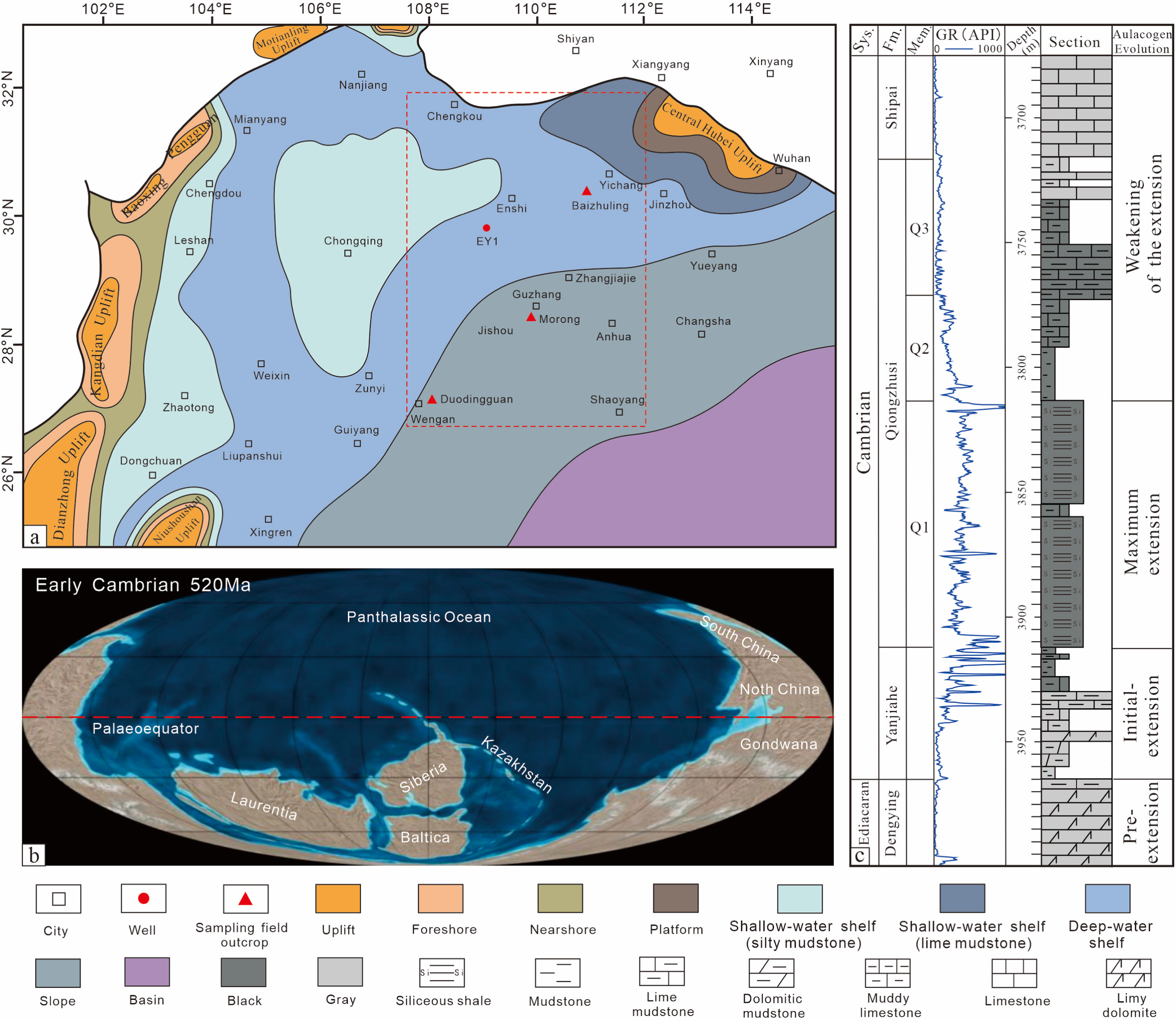
(A) Paleogeographic map showing the lithofacies in the Middle–Upper Yangtze region in the Early Cambrian Qiongzhusi period (adapted from Ma et al., 2009); (b) global paleogeographic framework in the Early Cambrian (adapted from Ma et al., 2009); (c) composite stratigraphic column of the Qiongzhusi Formation in the study area (from Well Enye 1), with tectonic stage division following Liu et al. (2016).
Sample collection and experimental methods
In this study, a total of 134 samples were collected from the black shale intervals of the Qiongzhusi Formation. Among them, 82 black shale samples were collected from the passive continental margin, including 28 samples from the Guzhang Morong section and 54 samples from the Weng’an Duodingguan section, and 52 samples were collected from the Changyang Baizhuling section in the Western Hubei Trough. These samples were first subjected to TOC content, mineral composition, microfossil identification, and petrographic characteristic analyses. Based on the above experimental results, 7, 13, and 17 samples were selected from the Morong, Duodingguan, and Baizhuling sections, respectively, for elemental analysis.
All of the analytical and testing work on the shale samples in this study was completed at the Oriental Mineral Development Technology Research Institute. The TOC content was determined using a CS230 carbon/sulfur analyzer in accordance with standard GB/T 19145-2003 (Determination of Total Organic Carbon in Sedimentary Rock). The X-ray diffraction analysis was performed using an XL20042174 X-ray diffractometer (D453) according to standard SY/T 5163-2010 (Analysis Method for Clay Minerals and Ordinary Non-clay Minerals in Sedimentary Rocks by X-ray Diffraction). The petrographic thin-section identification was carried out using an Axio polarizing microscope (34074) in accordance with standard SY/T 5368-2016 (Rock Thin-Section Identification Method). The elemental analyses were conducted using an ELAN 9000 inductively coupled plasma mass spectrometer and a Thermo Fisher Scientific IRIS Intrepid II XSP ICP-OES according to standards GB/T 20260-2006 (Chemical Analysis Methods for Marine Sediment) and GB/T 14506.3-2010 (Methods for Chemical Analysis of Silicate Rocks—Part 3: Determination of Silicon Dioxide Content).
Data processing
To eliminate the influences of terrigenous input and other factors, the enrichment factor (EF) was calculated during the processing of the elemental data (Tribovillard et al., 2006; Ma et al., 2019; He et al., 2021). The EF of a given element, XEF, is calculated as follows:

X and Al represent the contents of element X and Al in the sample, respectively, and their ratio was normalized to Post-Archean Australian Shale (PAAS).
The Corg/P value in the C–S–Fe–P system is commonly used to indicate the redox conditions of the water column (Ma et al., 2019), and it is calculated as follows:

The Ba and Si contents of marine sediments have been widely used as proxies for paleoproductivity (Algeo and Liu, 2020). Most of the elements in sedimentary rocks are derived from biogenic and terrigenous inputs. However, the paleoproductivity should be evaluated using only the biogenic component after removing the influence of the terrigenous input. The biogenic-derived portion is referred to as excess elements (BaXS, SiXS) (Tribovillard et al., 2006). The calculation formula is as follows:

In the formula, X and Al represent the contents of element X and Al in the sample, respectively, and PAAS is used for normalization.
Basic geological characteristics of the shale
Based on core/outcrop observations, petrographic thin-section characteristics, and whole-rock X-ray diffraction data, we conducted a systematic comparative analysis of the TOC content, sedimentological characteristics, and petrological-mineralogical features of the Longmaxi Formation shales across the study area, tracing the transition from the passive continental margin to the rift trough (Figures 2–4). The aim of this analysis was to reveal the basic characteristics, variation patterns, and formation differences of the shales.
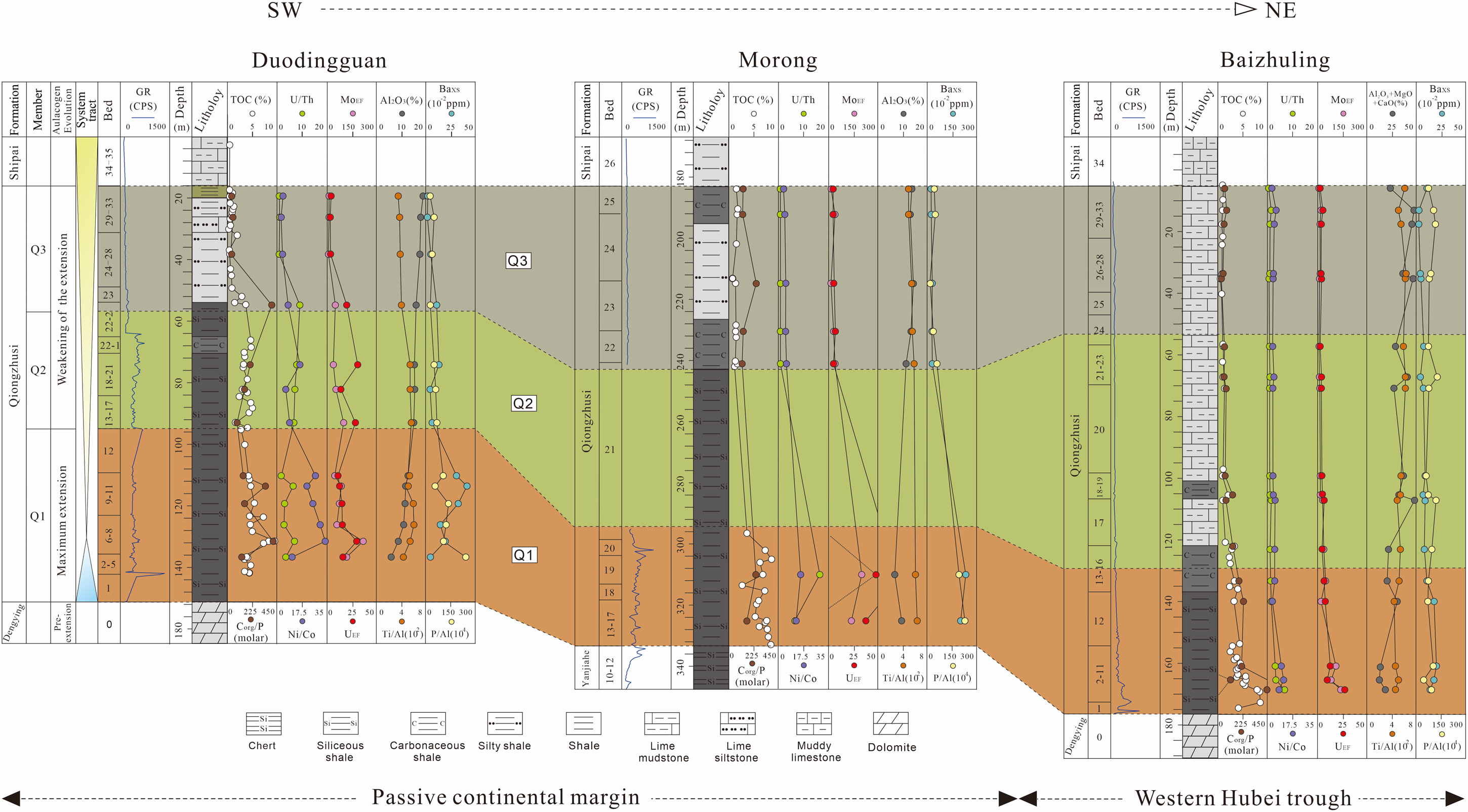
Variations in the TOC content, paleo-redox conditions (U/Th, Ni/Co, MoEF, UEF, and Corg/P), terrigenous input (Al2O3, Al2O3 + MgO + CaO, Ti/Al × 102), and paleoproductivity (BaXS and P/Al × 104) during the different depositional periods of the Qiongzhusi Formation in the study area. The natural gamma-ray data of the Morong, Duodingguan, and Baizhuling outcrops were measured using an HD-2000 handheld radiometer manufactured by the Beijing Research Institute of Uranium Geology, with a sampling interval of 0.2–0.5 m; cps represents counts per second. Submember 21 of the Morong section is covered by vegetation, and thus, its GR data were not obtained.
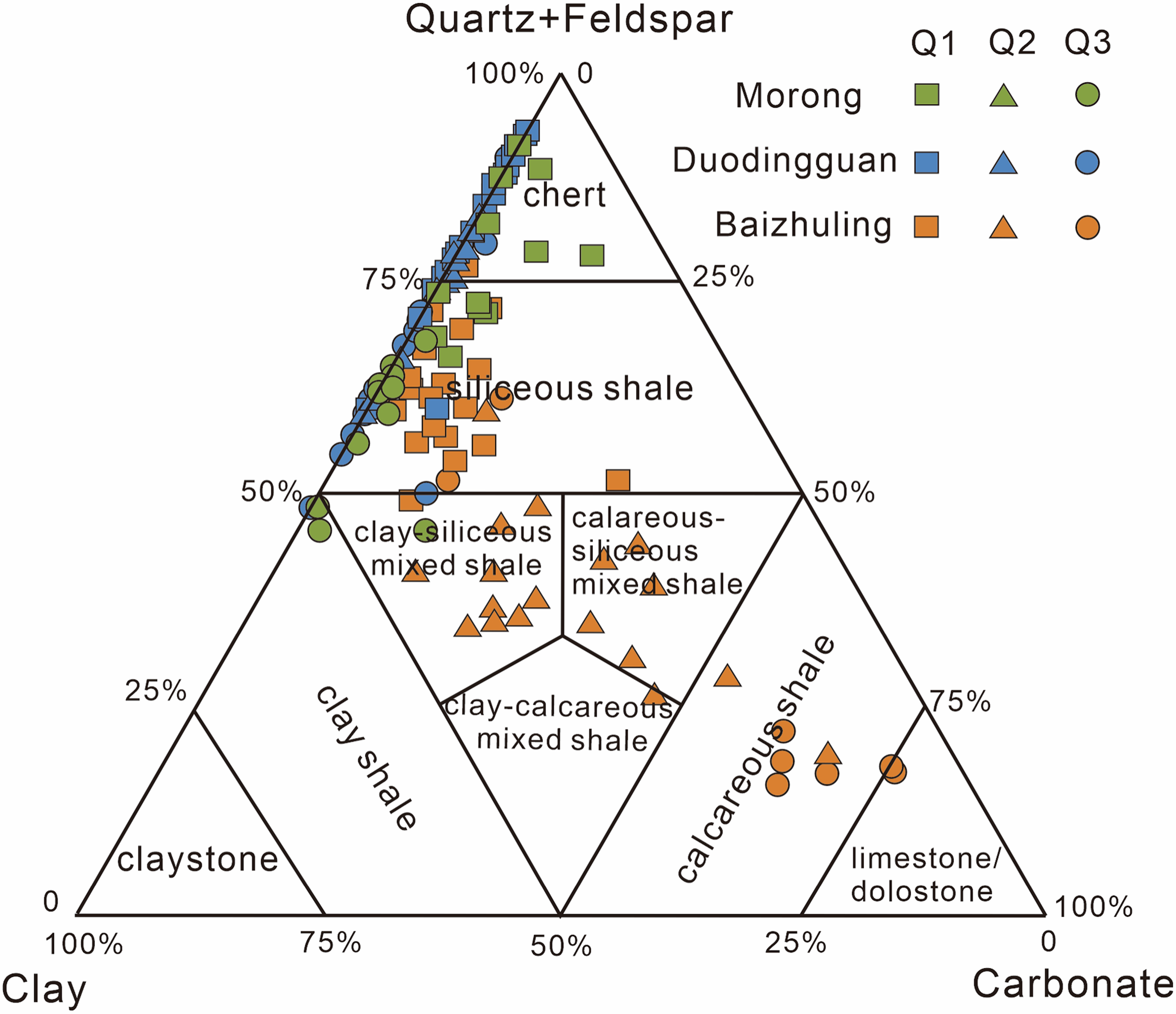
Ternary diagram of the lithologic types formed during the different depositional periods of the Qiongzhusi Formation in the western Middle Yangtze region (lithofacies classification criteria as described by Wang et al., 2021).
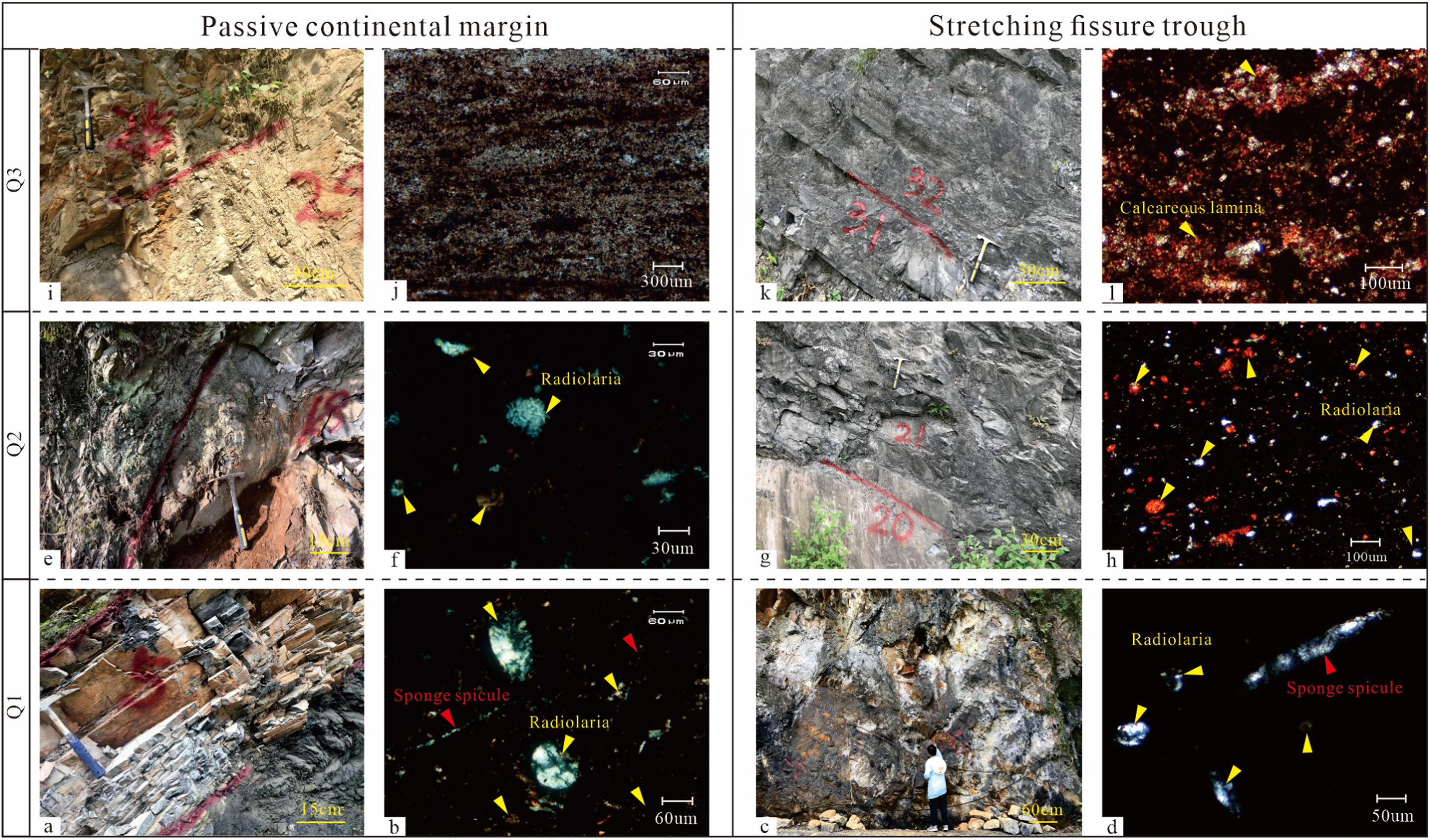
Sedimentological and mineralogical-petrological characteristics of the Early Cambrian Qiongzhusi Formation in the passive continental margin and rift trough in the study area. (a) Black siliceous rock, Submember 5, Duodingguan; (b) Siliceous rock rich in siliceous radiolarians and sponge spicules, Submember 4, Duodingguan, under cross-polarized light; (c) Black siliceous shale, Submembers 3–7, Baizhuling; (d) Siliceous shale rich in radiolarians and spicules, Submember 9, Baizhuling, under cross-polarized light; (e) Gray-black siliceous shale, Submember 18, Duodingguan; (f) Siliceous shale rich in siliceous radiolarians and siliceous bioclastic debris, with some organisms replaced by pyrite, Submember 18, Duodingguan, under cross-polarized light; (g) Gray-black calcareous-siliceous mixed shale with abundant calcareous laminae, easily weathered, Submembers 20–21, Baizhuling; (h) Calcareous-siliceous mixed shale containing radiolarians, with some radiolarians completely replaced by calcite, Submember 20, Baizhuling, under cross-polarized light; (i) Gray silty shale, easily weathered and exhibiting bamboo-leaf-like shapes after weathering, Submembers 24–25, Duodingguan; (j) Silty shale with fine- to silt-sized quartz grains dispersed in a clay-rich matrix, occurring as interlayers, Submember 24, Duodingguan, under plane-polarized light; (k) Gray calcareous shale, Submembers 31–32, Baizhuling; and (l) Calcareous shale with vertically alternating calcareous-rich and clay-rich laminae of unequal thicknesses, Submember 27, Baizhuling, under plane-polarized light.
TOC content
During the depositional period of the Q1 Member at the passive continental margin in the study area, the TOC content ranged from 2.7% to 9.5%, with an average of 5.7%. During the depositional period of the Q2 Member, the TOC content ranged from 1.4% to 5.0%, with an average of 3.6%. During the depositional period of the Q3 Member, the TOC content ranged from 0.2% to 2.0%, with an average of 1.0%. In the rift trough, during the depositional period of the Q1 Member, the TOC content ranged from 1.9% to 8.5%, with an average of 4.1%. During the depositional period of the Q2 Member, the TOC content ranged from 0.4% to 3.3%, with an average of 1.8%. During the depositional period of the Q3 Member, the TOC content ranged from 0.8% to 1.1%, with an average of 0.9% (Figure 2). Overall, the high-TOC intervals of the Qiongzhusi Formation shales are located at the base. The TOC content gradually decreases both vertically, from base to top, and laterally, from the passive continental margin to the rift trough.
Sedimentological and mineralogical–petrological characteristics
Q1 Member: At the passive continental margin, deposition was dominated by black massive siliceous rocks containing abundant radiolarians (Figures 3 and 4(a) and (b)). The content of the siliceous minerals (quartz + feldspar) is the highest among the three members, with an average of 76.4%. It is dominated by quartz (average of 65.6%) and mostly consists of microcrystalline to silt-size biogenic rounded to subrounded grains. The carbonate rock and clay mineral contents are both at relatively low levels, with average values of 2.3% and 15.7%, respectively. In the Western Hubei Trough, the lithology is mainly gray-black siliceous shale, with poorly developed internal lamination. Microscopic observations reveal the occurrence of abundant radiolarians (Figures 4(c) and (d)), but the quartz content exhibits a significant decrease compared with that in the passive continental margin in northern Guizhou, with a lower average of 44.7%. In contrast, the carbonate rock and clay mineral contents increase markedly, with greater averages of 7.9% and 27.4%, respectively.
Q2 Member: At the passive continental margin, deposition was mainly characterized by interbedded gray-black massive siliceous rocks and siliceous shales, with poorly developed internal lamination. The quartz content (average of 62.7%) decreases compared with the earlier stage, and the framework grains are mainly composed of radiolarians and siliceous bioclastic debris (Figures 3 and 4(e) and (f)). The clay mineral content increases significantly, with a greater average of 24.2%, whereas the carbonate rock content decreases markedly, with an average of only 0.2%. In the Western Hubei Trough, the lithology is mainly interbedded argillaceous–siliceous mixed shale and calcareous–siliceous mixed shale. The quartz content (average of 28.4%) exhibits a significant decrease both vertically and laterally and is still dominated by biogenic radiolarians, but most of them are later replaced by calcite. In contrast, the carbonate rock content increases significantly, with a greater average of 30.9%. Calcareous debris can be observed as laminae interbedded within black shale in the section, while microscopic lamination is relatively weak. The clay mineral content (average of 28.6%) exhibits little change (Figures 3 and 4(g) and h).
Q3 Member: At the passive continental margin, deposition mainly consisted of dark gray silty shale. The quartz content (average of 53.1%) is relatively high, and it is mostly subangular terrigenous in origin (Figures 3 and 4(i) and (j)). The clay mineral content increases significantly compared with the Q2 Member period, with a greater average of 35.9%, while the carbonate rock content (average of 1.6%) exhibits little change. After entering the Western Hubei Trough, the lithology is mainly calcareous shale. The quartz (average of 18.4%) and clay mineral (average of 19.0%) contents both decrease significantly in the vertical and lateral directions, whereas the content of carbonate rocks continues to increase, with a greater average of 51.2%. A large number of calcareous bands, approximately 5 cm thick, were observed in outcrops, and calcareous laminae were also visible under the microscope (Figure 4(k) and l).
Overall, during the early stage of the deposition of the Qiongzhusi Formation, biogenic siliceous rocks dominated in the passive continental margin area, while within the rift trough, the content of siliceous material decreased and the clay mineral content increased, and the deposition remaining dominated by biogenic siliceous shales. During the middle to late stages of the shale deposition, accompanied by continuous sea-level fall, the biogenic silica content gradually decreased. During the depositional period of Q2 to Q3, the passive continental margin area was influenced by the central Sichuan paleo-uplift (clastic rocks), resulting in gradual increases in the contents of the clay minerals and terrigenous quartz debris, whereas the Western Hubei Trough was influenced by the central Hubei paleo-land (carbonate rocks), leading to a gradual increase in the content of carbonate rock minerals.
Comparative analysis of paleo-depositional environments
Terrigenous input
In sediments, Al and Ti are very stable and are rarely affected by weathering and diagenesis. Al usually only occurs in aluminosilicate minerals such as clay minerals, while Ti mainly occurs in Ti-bearing heavy minerals such as rutile and ilmenite. Therefore, the Al2O3 content and Ti/Al ratio are often used to evaluate the terrigenous input in sediments (Tribovillard et al., 2006). During the depositional period of the Qiongzhusi Formation, in the passive continental margin area, the Al2O3 content exhibited an increasing trend from Q1 Member to Q3 Member (mean values of 9.8%→15.5%→15.1%), whereas the Ti/Al (×102) values exhibited a decreasing trend (mean values of 5.6→5.2→4.8). Within the rift trough, because the terrigenous clastic supply mainly originated from the central Hubei carbonate paleo-land, the Al2O3 content (10.3%→10.4%→8.8%) and Ti/Al (×102) values (mean values of 4.8→5.6→5.8) can no longer accurately indicate the variations in the terrigenous input. In contrast, the Al2O3 + MgO + CaO content (mean values of 19.1%→33.6%→40.0%)—accounting for the influence of carbonate minerals—exhibits an increasing trend (Figure 2), which is consistent with the variation patterns of the petro-mineralogical characteristics (Figure 4), indicating that it is a more effective proxy.
By integrating terrigenous input proxies with petro-mineralogical variations, we concluded that the terrigenous input in the Qiongzhusi Formation in the study area exhibits a gradual increasing trend from base to top. This trend is mainly attributed to the continuous sea-level fall and changes in tectonic activity, particularly the progressive weakening of the rift-related extensional activity during the depositional period of the Qiongzhusi Formation (Liu et al., 2016).
Paleo-redox conditions
Redox-sensitive elements such as U, Th, and Mo, as well as the Corg/P value of modern marine sediments, are commonly used to assess marine redox conditions (Tribovillard et al., 2006; Rong and Huang, 2014; Huang et al., 2018; Xi et al., 2019; Lin et al., 2024b). Generally, the contents of U and Mo are positively correlated with the degree of anoxia. In oxic environments, U and Mo dissolve in water as high-valence state forms, resulting in low concentrations in sediments. In reducing environments, U and Mo precipitate in the form of low-valence authigenic minerals and become enriched in sediments (Algeo and Liu, 2020). U/Th ratio, along with EFs corrected for terrigenous sources, are used as redox indicators. The U/Th ratio is greater than 1.25 in anoxic environments, ranges from 0.75 to 1.25 in dysoxic environments, and is less than 0.75 in oxic environments (Murray and Leinen, 1996). Under oxic conditions, the element P is retained in sediments through adsorption onto iron oxides, whereas under reducing conditions, P is released from sediments into the water column during the reductive dissolution of iron oxyhydroxides or organic matter mineralization. Algeo et al. (2011) reported that the Corg/P ratio is mostly greater than 100 in anoxic environments, ranges from 50 to 100 in dysoxic environments, and is less than 50 in oxic environments. In addition, trace element indicators such as Ni/Co are also commonly used to indicate the redox conditions of a water column: the Ni/Co ratio is greater than 7 in anoxic environments, ranges from 5 to 7 in dysoxic environments, and is less than 5 in oxic environments (Jones and Manning, 1994). During the depositional period of the Qiongzhusi Formation, the U/Th, Ni/Co, U-EF, Mo-EF, and Corg/P ratios in the passive continental margin area all gradually decreased from the deposition of the Q1 Member to the deposition of the Q3 Member (average values of 6.0→7.8→0.7, 22.2→9.7→4.4, 29.3→23.3→3.3, 116.6→58.5→18.1, and 220.4→212.0→110.2, respectively), indicating gradual weakening of the reducing conditions of the bottom water. Among them, the Q1 and Q2 Members were dominated by anoxic environments, whereas the Q3 Member was dominated by dysoxic to oxic environments. Similar trends occurred within the rift trough (average values of 3.2→0.9→0.9, 7.5→4.2→4.3, 12.7→3.9→3.4, 80.1→18.1→11.7, and 327.7→80.8→52.4, respectively), where the bottom-water environment transitioned from anoxic to dysoxic–oxic and finally to oxic conditions (Figure 2).
As indicated above, the reducing degree of the bottom water during the deposition of the Qiongzhusi Formation shales gradually weakened from base to the top of the formation, and the reducing degree in the passive continental margin area was generally higher than that within the cratonic depression.
Paleoproductivity
P is an important constituent of organisms. After the death of organisms, P is transferred to sediments in the form of organic phosphorus and is preserved as authigenic phosphate minerals during subsequent mineralization processes. Oxic environments are favorable for the retention of P in sediments, whereas lower Fe concentrations (due to low clastic input) limit the preservation of organic P in sediments. Al-normalized P (P/Al) is commonly used to remove the influence of terrigenous input and to indicate productivity (Ma et al., 2019; Algeo and Liu, 2020; He et al., 2021; Xi et al., 2021). Barium (Ba) mainly occurs as BaSO4 in sediments and water bodies. Except in areas with hydrothermal activity, the Ba in sediments is mainly derived from biogenic and terrigenous sources; therefore, biogenic barium (BaXS) can be used to evaluate paleoproductivity. However, sulfate reduction under anoxic conditions can lead to the decomposition of BaSO4, resulting in lower Ba contents and thus underestimation of the paleoproductivity (Jones and Manning, 1994; Tribovillard et al., 2006; Ma et al., 2019; Algeo and Liu, 2020). During the depositional period of the Qiongzhusi Formation, the BaXS content in the passive continental margin area (7329.5→879.0→1845.1 ppm) initially decreased and then increased from the deposition of the Q1 Member to the deposition of the Q3 Member, whereas the P/Al value (149.7→51.3→40.1) gradually decreased. The increase in the BaXS value in the Q3 Member is inferred to be related to the presence of active upwelling currents in this area (which carried large amounts of Ba from deep waters), together with an increase in the oxygen content of the bottom water (favorable for Ba preservation). Within the rift trough, the BaXS content (1599.8→738.9→495.3 ppm, gradually decreasing) and P/Al value (76.9→89.6→93.0 ppm, gradually increasing) exhibited completely opposite trends. It is inferred that the increase in the P/Al value was related to an increase in the input of phosphate-rich carbonate rock debris derived from the central Hubei paleo-land (Figure 2).
These results indicate that during the deposition of the Qiongzhusi Formation, the paleoproductivity in the study area exhibited a general decreasing trend. In addition, during all of the depositional periods, the paleoproductivity at the passive continental margin was consistently higher than that within the cratonic depression.
Paleo-hydrological characteristics
Upwelling currents are generally oxygen-deficient but rich in nutrients and silica and can promote high biological proliferation in surface waters, while enhanced nutrient flux and organic matter degradation consume large amounts of oxygen, leading to high organic matter productivity and promoting organic matter accumulation and preservation (Lu et al., 2019). Sweere et al. (2016) suggested that Co and Mn exhibit similar distribution patterns but exhibit strong differences among different environments. In upwelling systems, nutrients supplied from deep ocean waters are typically deficient in Co and Mn, and enrichment of these elements is therefore limited by the nutrient supply. In restricted basin environments, the supply of Co and Mn is controlled by river inflow rich in Co and Mn, and the system therefore does not reach a stage in which authigenic enrichment becomes limited by the supply of Co and Mn. A threshold value of 0.5 for CoEF × MnEF is used to distinguish upwelling systems from restricted basin settings (Figure 5) (Sweere et al., 2016). The ratio of the redox-sensitive element Mo to the TOC content is commonly used to indicate the degree of seawater restriction: low Mo/TOC values indicate a strong degree of water-mass restriction, whereas higher values indicate weaker restriction (Figure 6). However, this method is only applicable to anoxic environments with a certain degree of water-mass restriction (Tribovillard et al., 2006). In this study, CoEF × MnEF/Al and Mo/TOC cross-plots were jointly used to comparatively analyze the upwelling and water-mass restriction characteristics of the two shale successions and to explore their paleo-hydrological evolution patterns. During the deposition period of the Qiongzhusi Formation, the CoEF × MnEF/Al cross-plot indicates that the passive continental margin is mainly characterized by open/upwelling environments. From the Q1 Member to the Q3 Member, the CoEF × MnEF values (0.110→0.018→0.17) exhibit an overall increasing trend, reflecting weakening of the current activity. In contrast, the Mo/TOC values (9.7→19.7→12.0) suggest decreasing water-mass restriction, which is inconsistent with both the CoEF × MnEF signal and the background of sea-level fall (Figures 5 and 6). This is because open-ocean environments at the passive continental margin simultaneously favor the enrichment of organic matter and the trace element Mo. When Mo and TOC are enriched simultaneously, the Mo/TOC value becomes relatively low, rendering this proxy ineffective for assessing water-mass restriction (Xiao et al., 2016). Within the rift trough, the CoEF × MnEF/TOC cross-plot indicates that the deposition of the Q1 Member was mainly characterized by a transitional setting between open-marine conditions and seasonally current-influenced conditions, followed by dominance of seasonal currents. The current activity in the rift trough during the different periods was consistently weaker than that at the passive continental margin. The CoEF × MnEF values (0.752→0.921→0.908) and Mo/TOC values (8.5→7.1; the oxic conditions of Q3 Member render Mo/TOC inapplicable) exhibit consistent paleo-hydrological evolution trends (Figures 5 and 6), indicating the occurrence of weakened current activity and enhanced restriction.
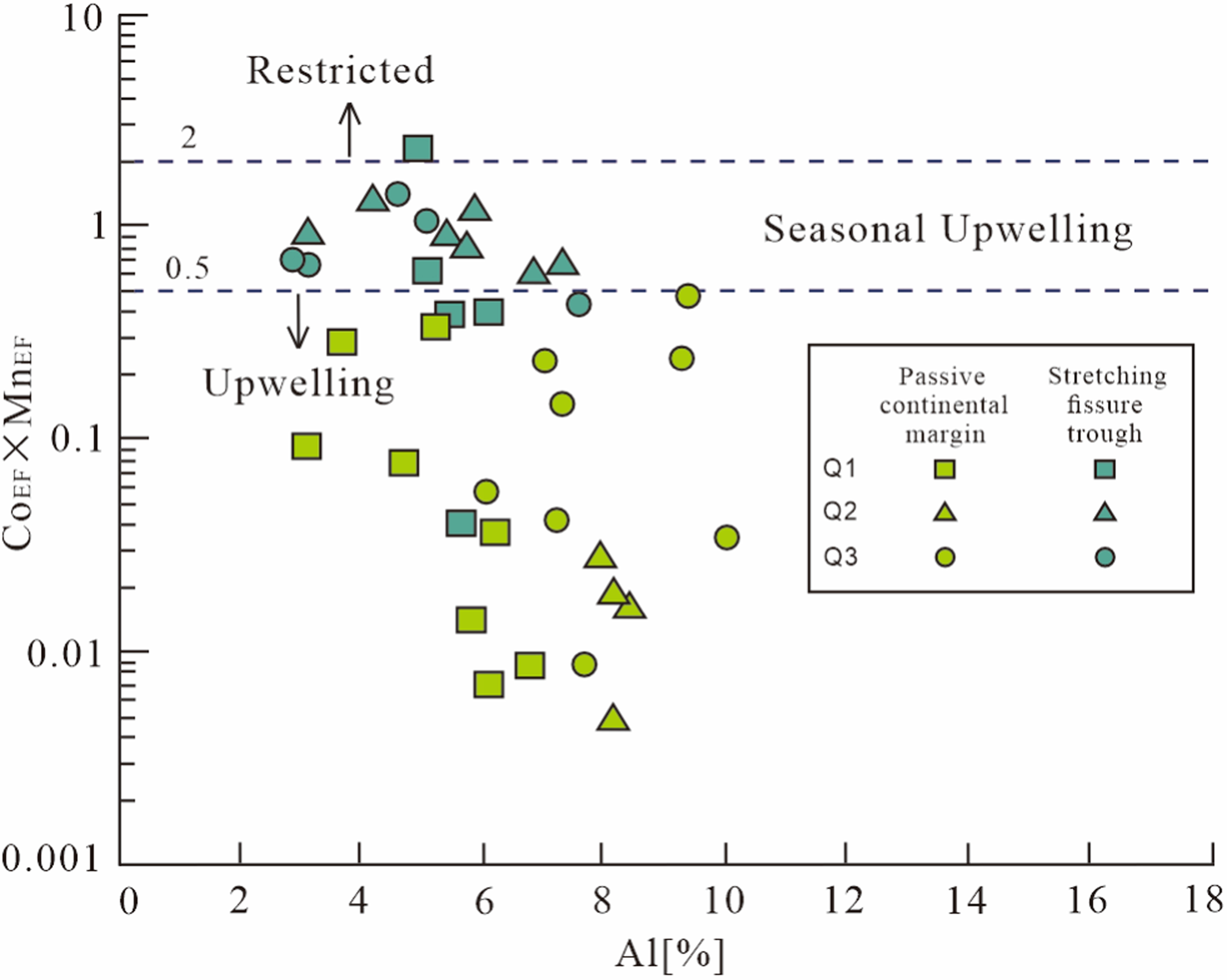
Relationship between CoEF × MnEF and Al content during the depositional period of the Qiongzhusi Formation in the study area (cross-plot adapted from Sweere et al., 2016). The data for the passive continental margin are from Morong and Duodingguan, and the data for the rift trough are from Baizhuling.
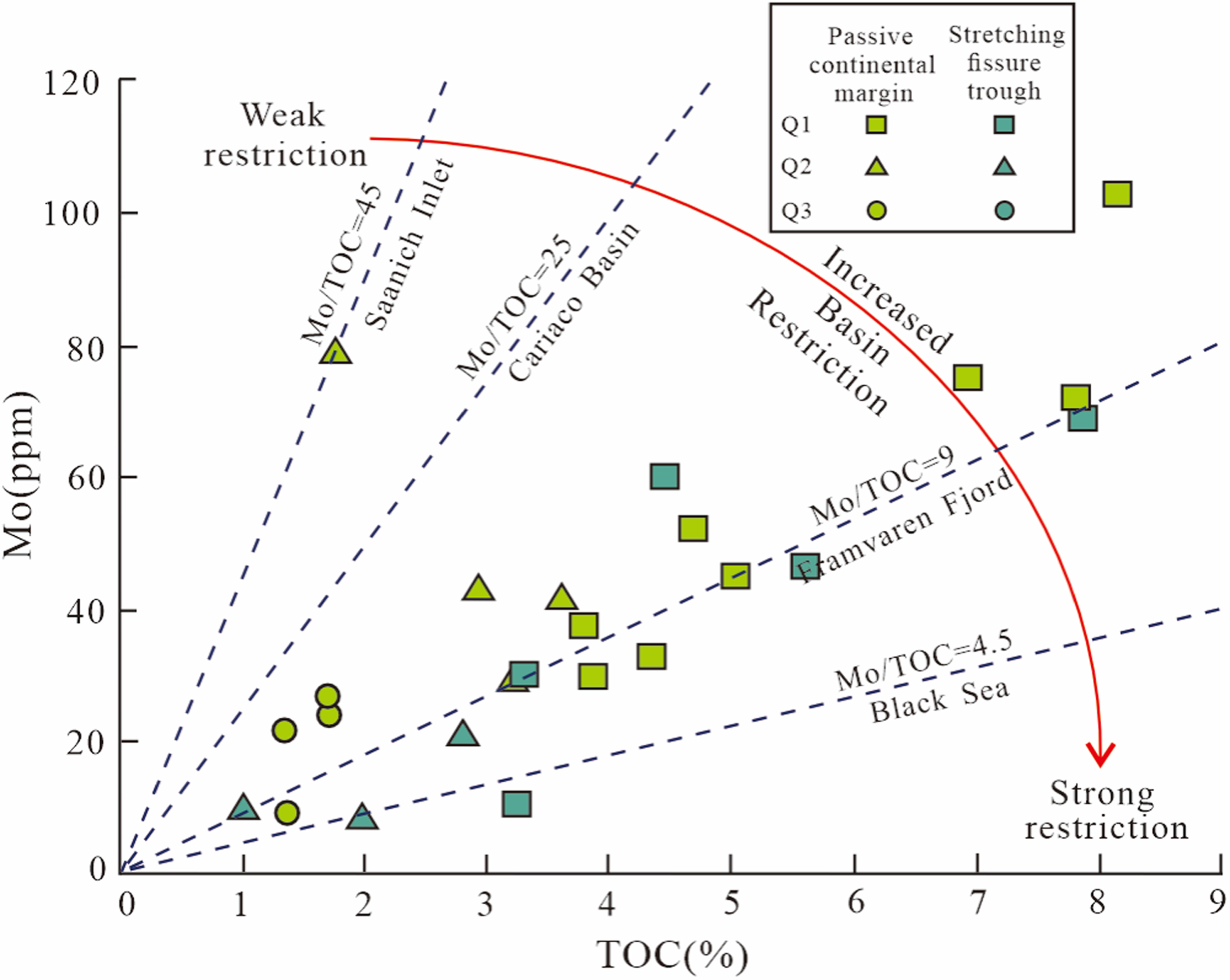
Relationship between Mo and TOC during the depositional period of the Qiongzhusi Formation in the study area. Data points representing oxic environments have been excluded. The Mo/TOC values of the four modern marine basins are from Tribovillard et al. (2006) and Algeo and Liu (2020). The data for the passive continental margin are from Morong and Duodingguan, and the data for the rift trough are from Baizhuling.
Overall, the Qiongzhusi Formation in the study area exhibits vertical trends of weakened current activity and enhanced water-mass restriction, both of which were strongly controlled by sea-level fluctuations. Laterally, the passive continental margin consistently experienced stronger current activity than the cratonic depression during the different depositional periods.
Main controlling factors and models of organic matter enrichment
Based on the analyses of the sedimentology, mineralogical-petrological characteristics, and paleo-depositional environments of the Qiongzhusi Formation shales, in this study, we focused on the genesis of the high-TOC shale interval at the base of the formation and analyzed the main factors controlling the vertical decrease in the TOC content of the shale.
During the depositional period of the high-TOC shale interval at the base of the Qiongzhusi Formation (Q1 Member), the extensional rifting in the region was at its strongest (Liu et al., 2016), resulting in a rapid increase in the accommodation space. Concurrently, the sea level rose rapidly in response to climatic warming, leading to the development of widespread low-energy, underfilled, and anoxic conditions across the Yangtze Platform. During the depositional period of the Q1 Member, upwelling currents were active and could transport large amounts of nutrients from the deep ocean into the Yangtze Sea Basin. In addition, under the background of sea-level rise, the connectivity between the Yangtze Sea Basin and the open ocean was relatively good (a semi-restricted sea basin), and nutrients in surface waters of the open ocean could also enter in large quantities through exchange processes, allowing siliceous organisms such as algae, radiolarians, and sponges, to flourish and thus leading to generally high paleoproductivity. In particular, the BaXS and P/Al values indicate that the Q1 Member was deposited during a period with a higher paleoproductivity. During this period, the terrigenous input was relatively low and had a limited impact on the organic matter enrichment. In addition, from the passive continental margin to the cratonic depression during the deposition period of the Q1 Member, both the sea-level height (controlled by paleotopography) and current activity (farther from the open ocean and closer to the paleo-landmass) decreased, resulting in simultaneous deterioration of the preservation conditions and paleoproductivity, thus leading to a decrease in the TOC content (Figure 7(a)).
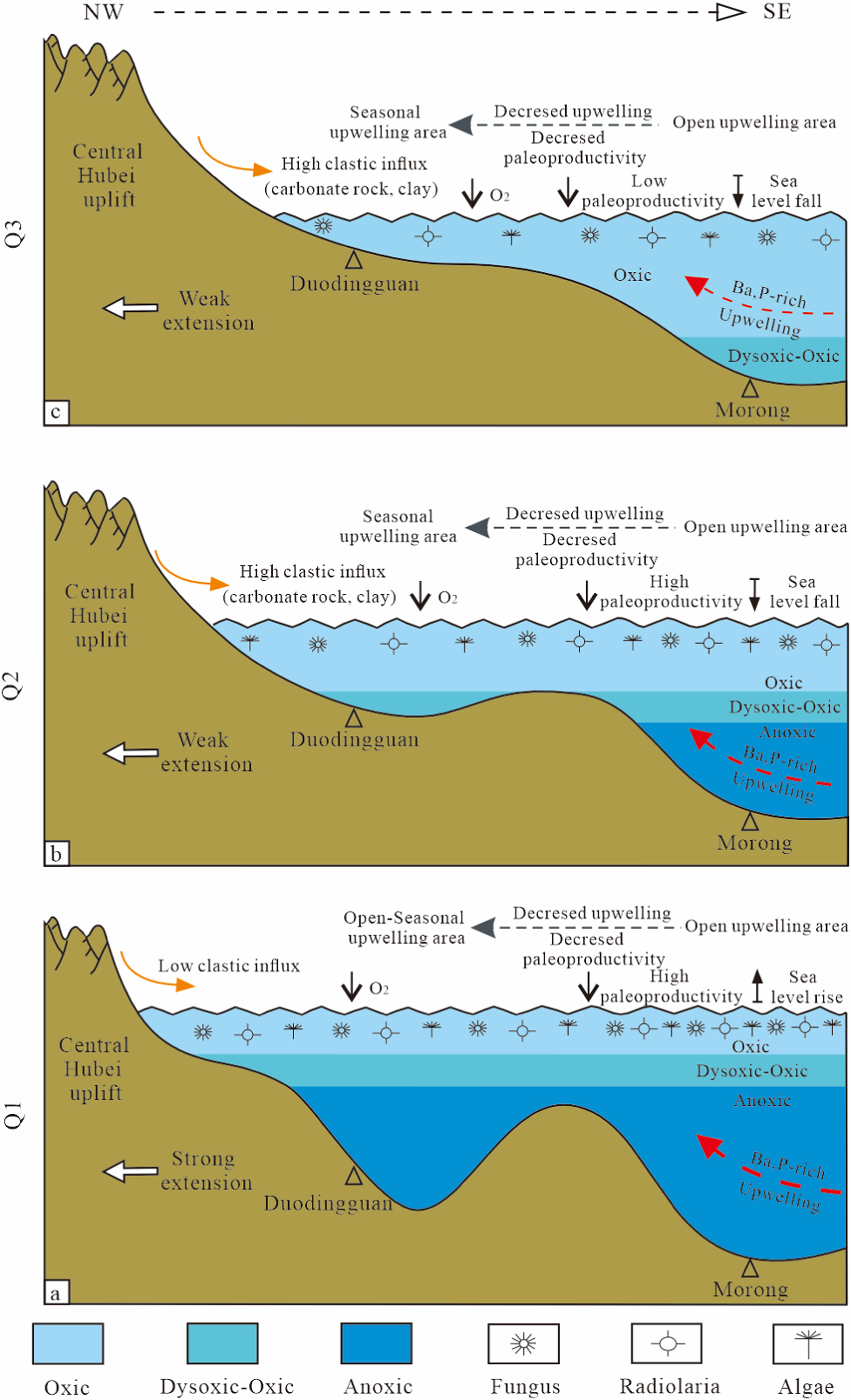
Organic matter enrichment models of the Qiongzhusi Formation during the different depositional periods in the study area.
During the depositional periods of the Q2 and Q3 Members, the basin rifting continued to weaken, and the tectonic regime transitioned from a rift expansion stage to a filling stage (Liu et al., 2016). Concurrently, the sea level continued to fall, the oxygen content of the bottom water increased progressively, and the preservation conditions deteriorated. In addition, the terrigenous input increased (the biogenic silica content decreased, while the contents of the clay minerals and carbonate rock minerals increased), resulting in enhanced sedimentary infilling. The upwelling activity weakened, the water-mass restriction intensified, the paleoproductivity declined, and the TOC content of the shales gradually decreased (Figure 7(b) and (c)).
The above analyses indicate that vertically, the decrease in the TOC content of the Qiongzhusi Formation was mainly controlled by the joint effects of the increased terrigenous input, reduced paleoproductivity, and deteriorating preservation conditions. Laterally, the factors controlling the decrease in the TOC content of this shale succession from the passive continental margin to the cratonic depression were consistent with those operating during the deposition of the basal high-TOC interval (Q1 Member) (Figure 7(b) and (c)).
Significance for shale gas exploration
The TOC content governs both the hydrocarbon generation and storage capacity of shale reservoirs and is a key determinant of shale gas enrichment and productivity (Zou et al., 2010; Zhao et al., 2016). The Qiongzhusi Formation shales have been identified as an important future target for marine shale gas exploration and development following the Upper Silurian Wufeng–Longmaxi Formation. Investigation of its organic matter formation environment and controlling factors is therefore of great significance for predicting shale gas sweet spots and optimizing the exploitation of favorable exploration areas.
The base of the Qiongzhusi Formation is characterized by high paleoproductivity, favorable preservation conditions, and low terrigenous input, which are conducive to large-scale organic matter enrichment. The deposited shales have a high TOC content, high brittle mineral content (mainly biogenic silica), and low clay mineral content, as well as a strong gas generation potential and high hydraulic fracturing potential. From the base to the top, the conditions favorable for organic matter enrichment were gradually destroyed. The TOC content gradually decreases, while the clay mineral or carbonate mineral content gradually increases. Therefore, shale gas sweet spots within the Qiongzhusi Formation are all located at the base. Laterally, from the northeast to the southwest, the current activity gradually strengthened, and the organic matter enrichment environment gradually improved. The thickness of the organic-rich shale increases with decreasing distance to the center of the extensional rifting (the Western Hubei Trough). Accordingly, shale gas exploration and development should preferentially be focused on the southwestern part of the study area.
Conclusions
Vertically, the base of the Qiongzhusi Formation (Q1 Member) is mainly characterized by the deposition of organic-rich biogenic siliceous shale. From the base to the top, consistent with the trend of continuous sea-level fall, both the TOC and biogenic silica contents exhibit decreasing trends, whereas the clay or carbonate rock mineral contents exhibit increasing trends. Laterally, for the different depositional periods, controlled by the paleotopography, the TOC and biogenic silica contents exhibit decreasing trends from the passive continental margin to the cratonic depression.
The high-TOC shale interval at the base of the Qiongzhusi Formation formed in an environment characterized by a low terrigenous input, high paleoproductivity, and favorable preservation conditions. Subsequently, accompanied by continuous sea-level fall, the shale succession experienced increased terrigenous input, deteriorating preservation conditions, and reduced paleoproductivity, which were the main reasons for the vertical decrease in the TOC content of the Qiongzhusi Formation. Laterally, from the passive continental margin to the cratonic depression, both the sea-level height and current activity decreased, leading to simultaneous deterioration of the preservation conditions and paleoproductivity and a corresponding reduction in the TOC content.
Within the paleo-depositional and paleogeographic framework, shale gas exploration and development of the Qiongzhusi Formation in the study area should be focused in the southwest region. During the Qiongzhusi period, the organic matter enrichment environment gradually improved toward the southwest, and the thickness of the organic-rich shale increases with decreasing distance from the center of the extensional rifting.
Footnotes

Funding
The authors received no financial support for the research, authorship, and/or publication of this article.
Declaration of conflicting interests
The authors declared no potential conflicts of interest with respect to the research, authorship, and/or publication of this article.